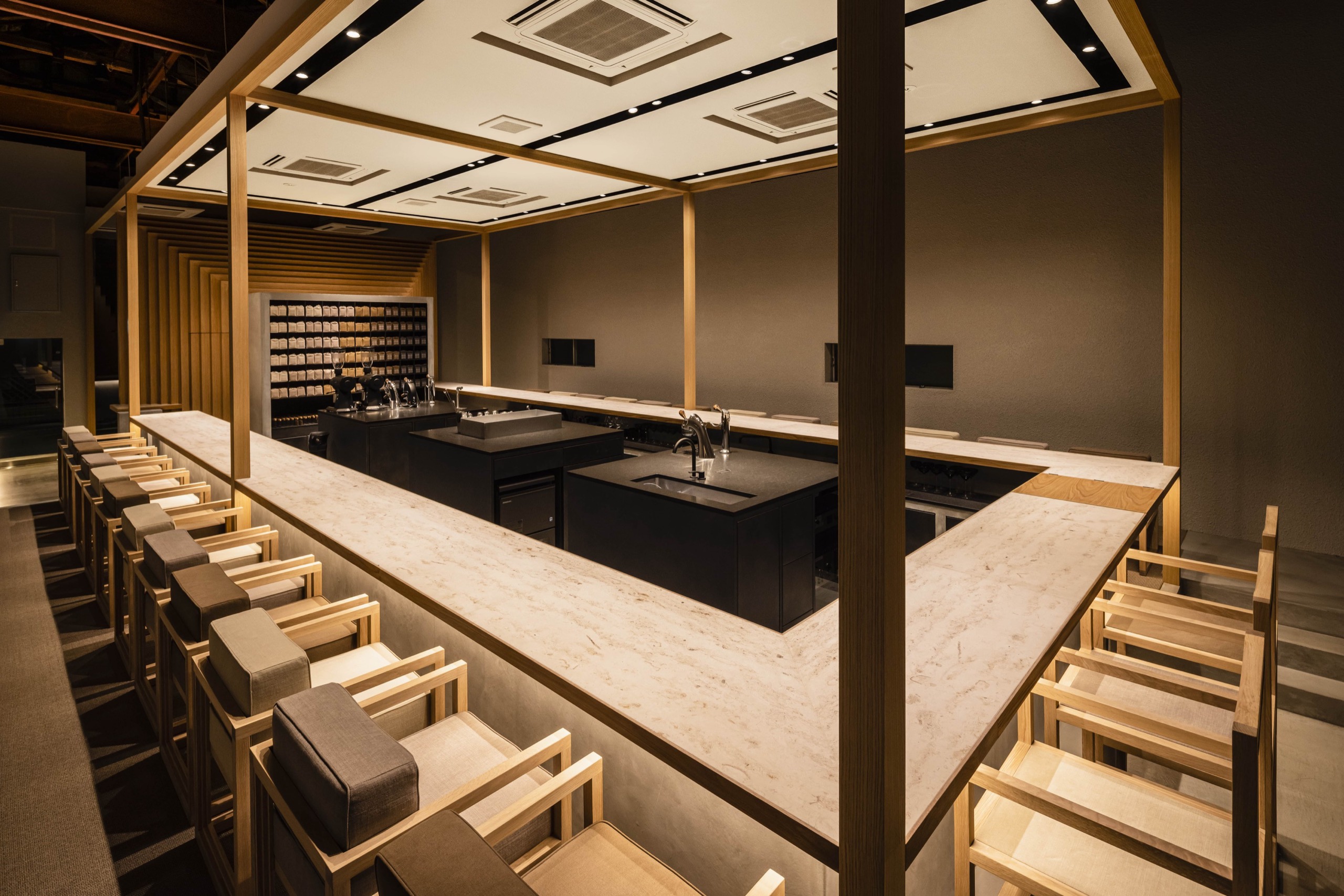
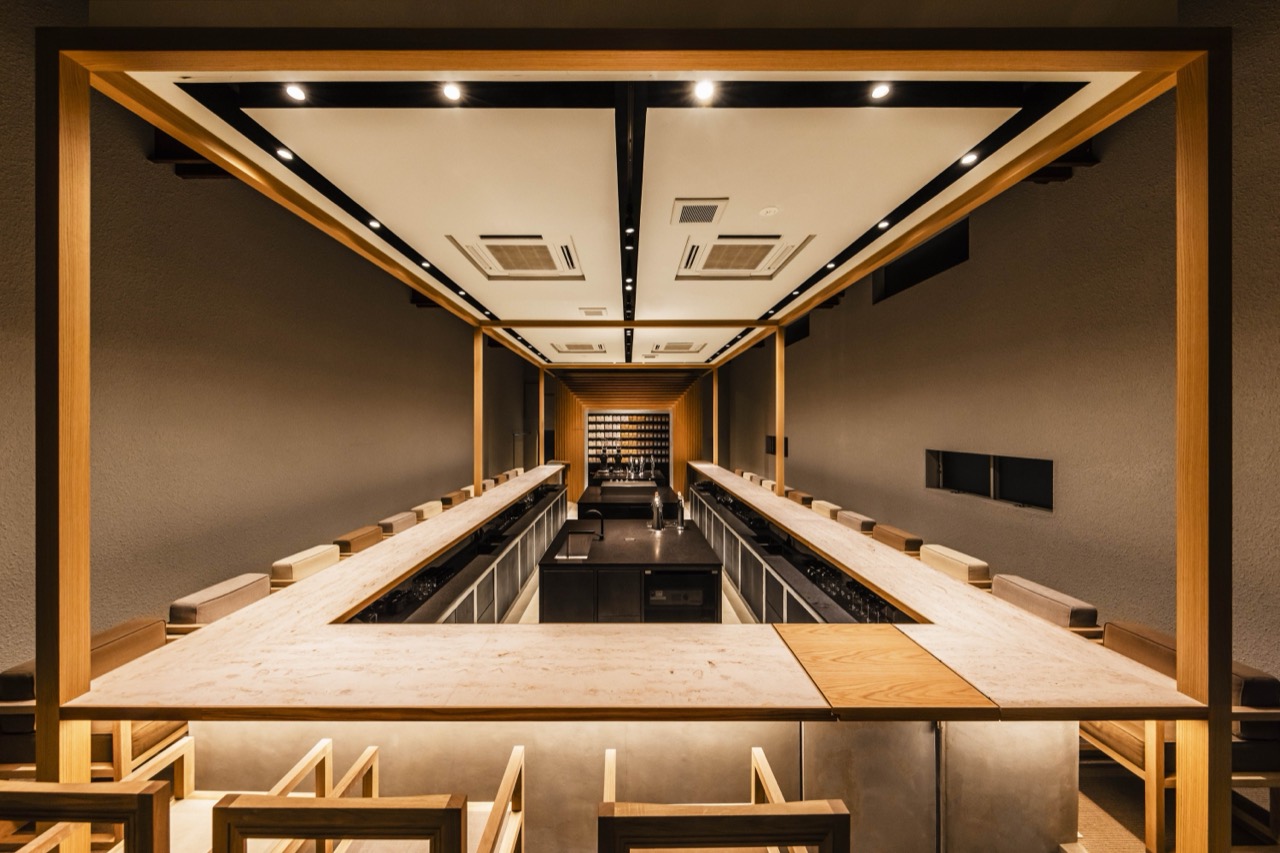
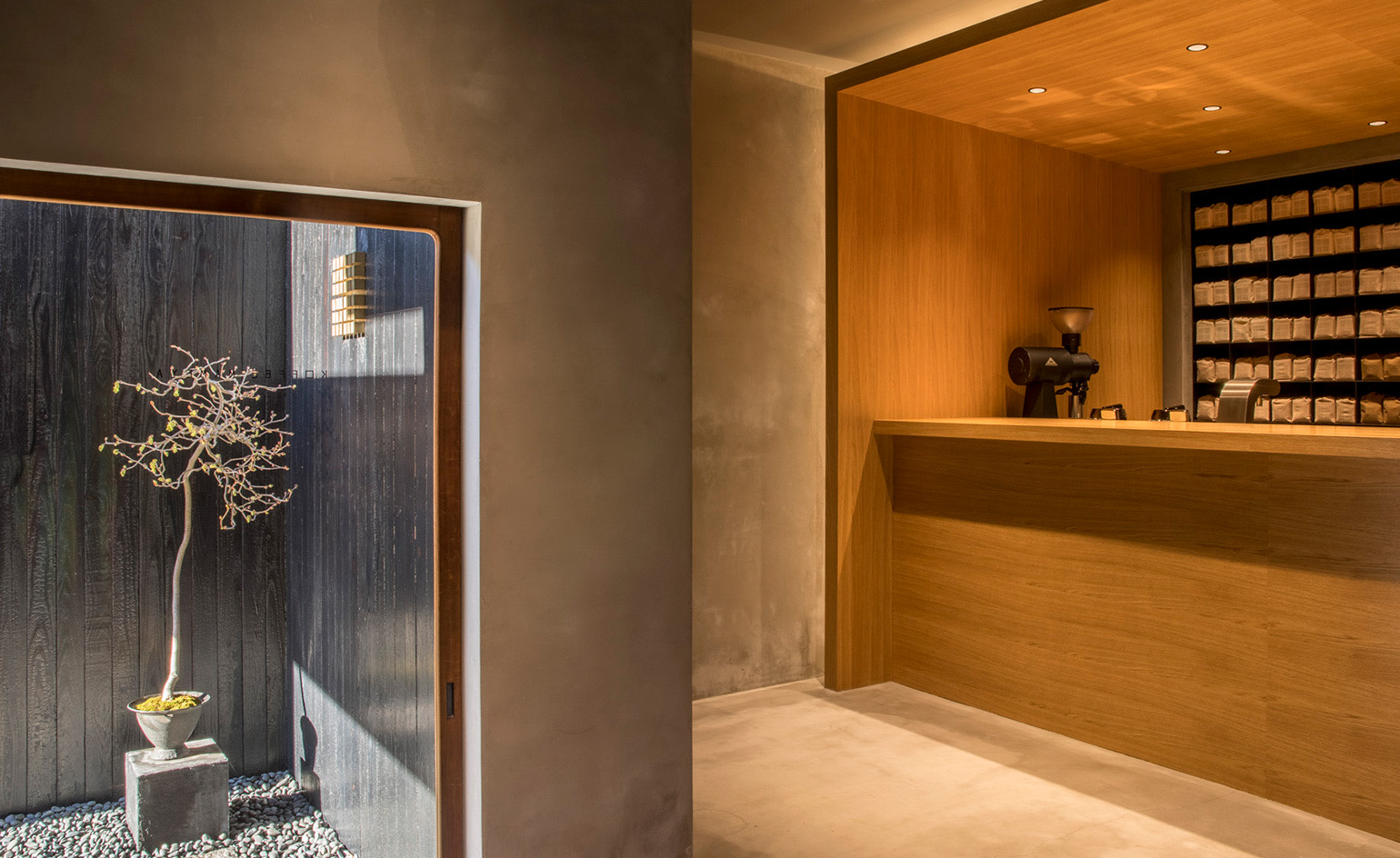
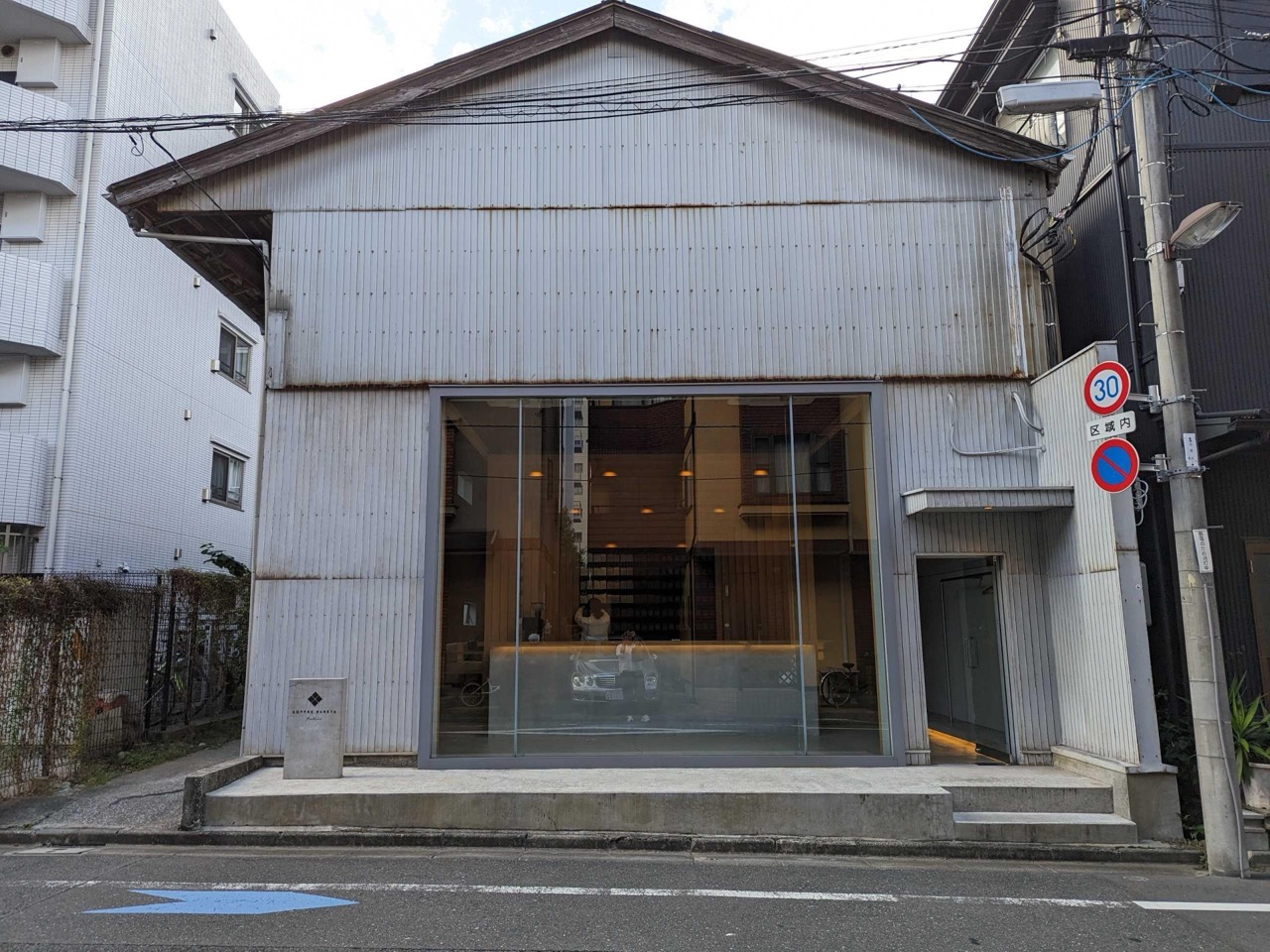
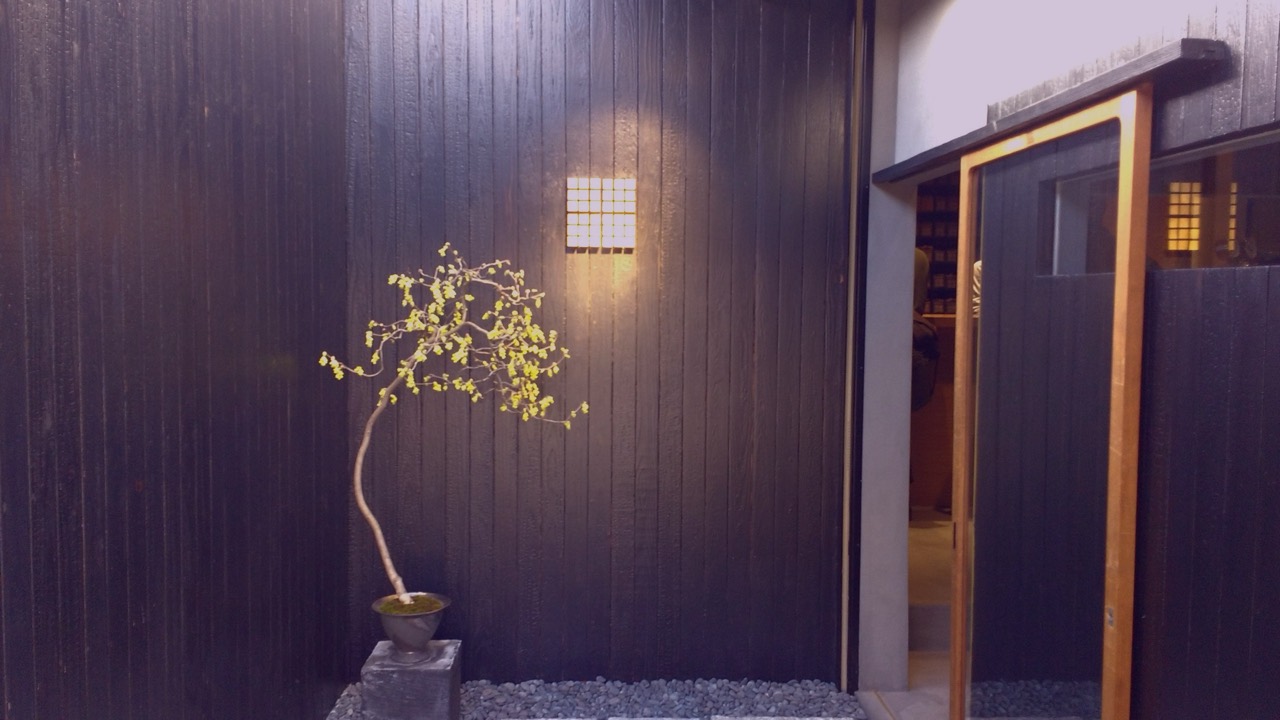
An old warehouse turned coffee theaterA timber and warehouse district in Kiyosumi-Shirakawa, converted. The old shell stays as it was, and a new timber structure sits inside it, setting old against new. ⓒ KOFFEE MAMEYA / 14sd Fourteen Stones Design
Daily Cafe
KOFFEE MAMEYA Kakeru, the coffee omakase that sells time instead of cups
2026.07.25
In an old warehouse in Kiyosumi-Shirakawa, Tokyo, there is a shop that sells a cup of coffee the way a sushi counter sells omakase. KOFFEE MAMEYA Kakeru. You need a reservation to get in, a barista works in front of you and pours several roasts in turn as cold brew, hand drip, milk base, cocktail and mocktail, and the course runs from 5,000 yen up to 12,000 yen. In a neighborhood where a regular specialty cup goes for 600 yen, this shop turned one coffee seat into a course priced from KRW 46,000 to KRW 110,000. What it sells is not caffeine. It is an hour of understanding coffee. For our first issue, we look at how a small floor plate breaks through the ceiling on spend per head.
1.What opened. KOFFEE MAMEYA Kakeru opened in early 2021, in a converted old warehouse in Kiyosumi-Shirakawa, Tokyo. It seats 27 and runs as a reservation-only coffee omakase. There are three courses, starting at 5,000 yen (100 yen ≈ KRW 930 throughout).
2.The man behind it is Eiichi Kunitomo, a figure who stands for the Japanese specialty scene. He started with coffee in Osaka in 2001 and trained in Naples. His path is easy to trace. The legendary pop-up Omotesando Koffee (closed December 2015 when the building came down), then the bean boutique KOFFEE MAMEYA (January 2017, Aoyama), then the coffee omakase Kakeru (2021).
3.'Kakeru' means to multiply (×) in Japanese. The name is the business model. Small floor area, high spend per head and a story about learning, multiplied together, lift the price of one cup to the level of a tasting menu. In a market where the large chains win on scale, this is a small team multiplying spend per head with one idea.
4.Start with the space. The design is by 14sd (Fourteen Stones Design), an iF Design Award winner. The brick and timber warehouse, a trace of Edo-era river logistics, keeps its original skin, while a newly framed interior was slotted inside the building. Old and new collide in one room.
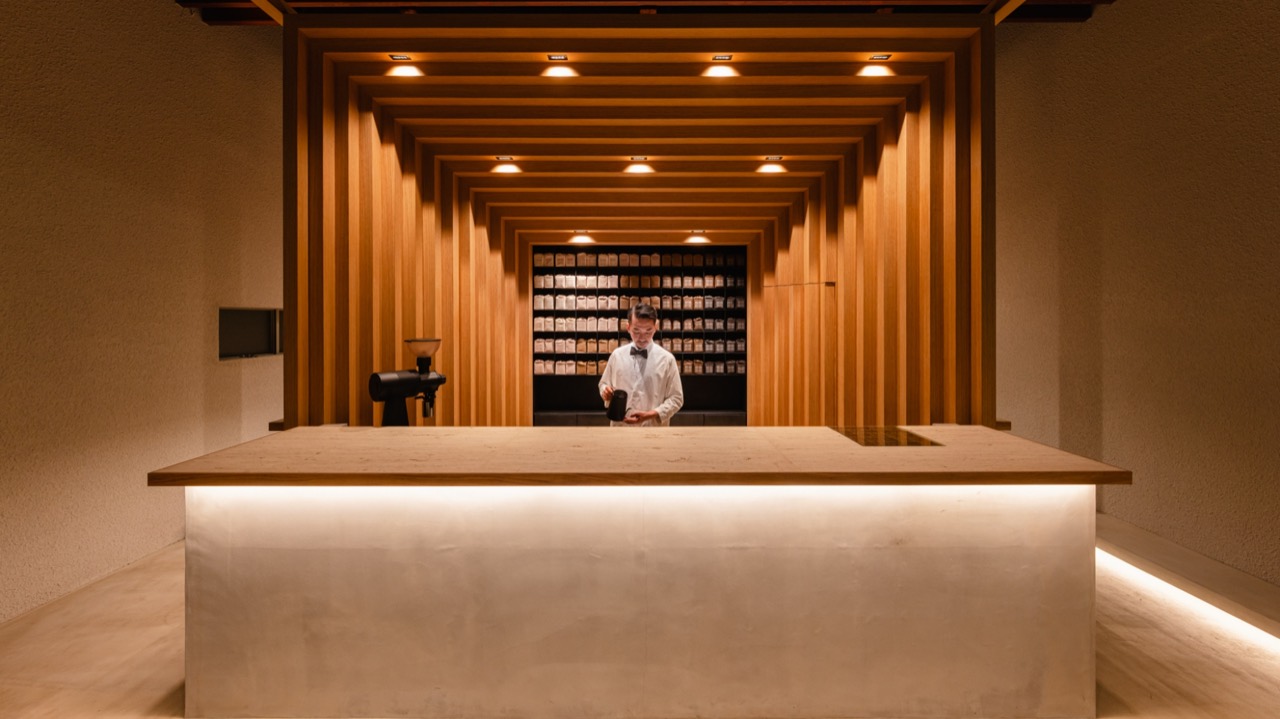
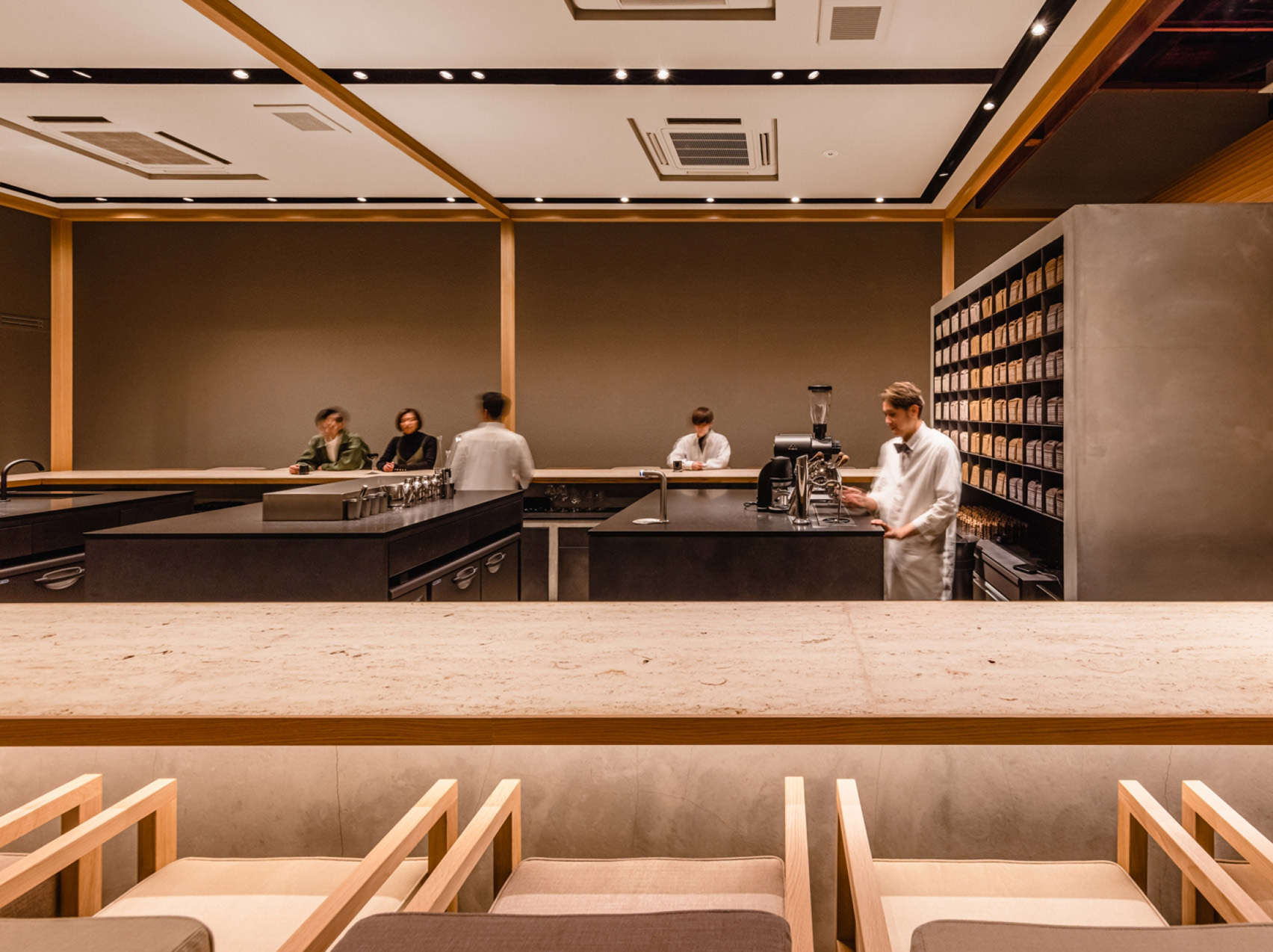
5.The heart of the space is a huge frame of interlocking white oak. This timber structure, which dominates the room from the entrance, takes the brand's bean packaging design, interlocking squares, and blows it up to architectural scale. Instead of hanging a logo on the wall, they made the skeleton of the building the brand.
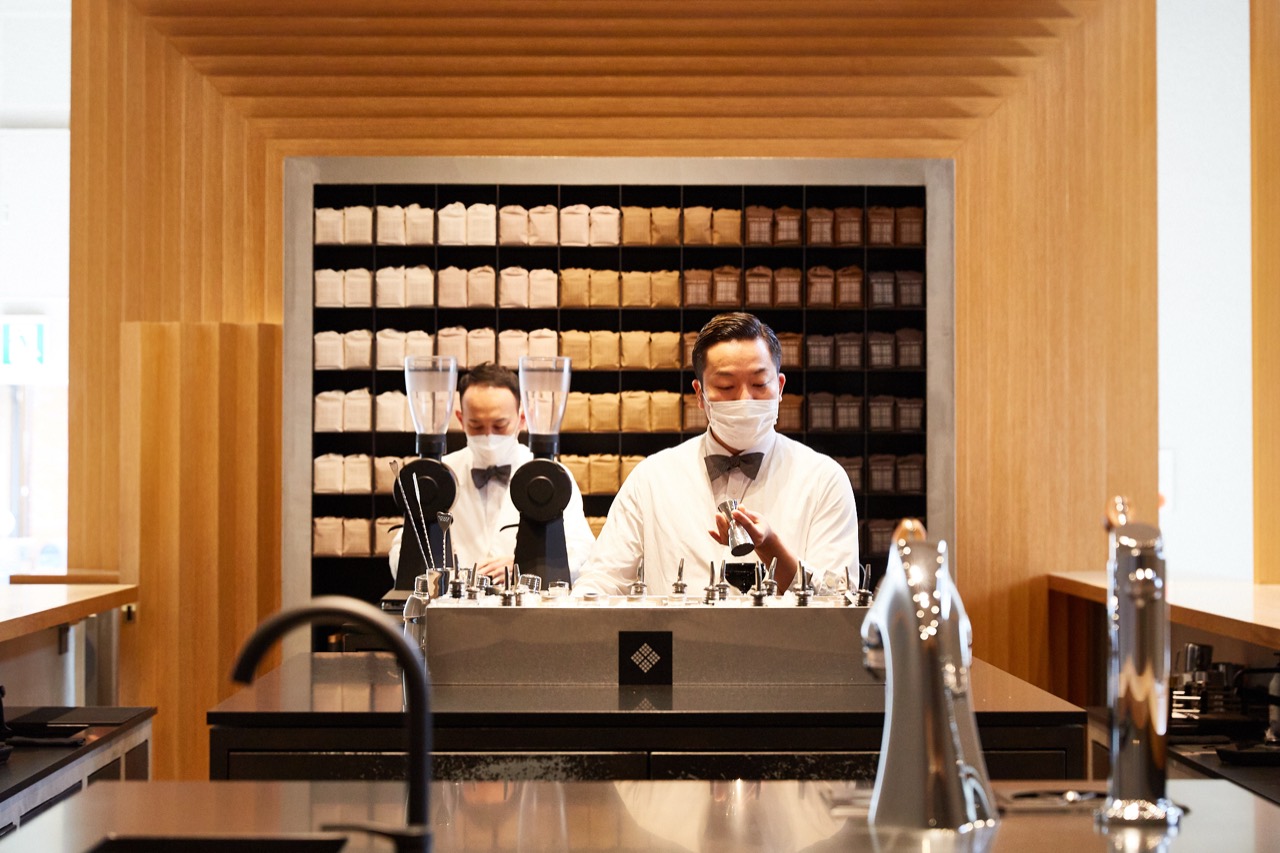
6.Then a stone counter wrapping three sides. The barista stands in the middle and guests sit around that counter. The grammar of a sushi counter, moved straight onto coffee. The bar is the stage, the seats are the audience. The whole extraction, the weighing, the grinding, the angle of the pour, plays out in front of you like a performance.
7.There are 27 seats. For a specialty cafe that is not large. But these 27 are not seats that fit many people, they are seats that face the bar. This is not a structure that earns through seat count. It is built so one seat stays longer and spends more. That difference decides everything about the economics that follow.
The bar is the stage, the seats are the audienceA stone counter wrapping three sides. The grammar of a sushi omakase counter, grafted onto coffee. The whole extraction becomes a performance in front of you, and watching it becomes the ground for the price. ⓒ KOFFEE MAMEYA / 14sd
8.Now the operation and the economics. This is the heart of the issue. Start with the courses. The base is 5,000 yen (about KRW 46,000), above it sit tiers at 10,000, 10,500 and 12,000 yen (about KRW 110,000), and the upper courses attach four dishes plus dessert plus drinks, or coffee cocktails plus a food course, to the coffee. Coffee is the axis, and F&B is stacked on top to push spend per head up.
9.Set it against the market. A cup at a regular specialty cafe in Japan runs 500 to 700 yen, and spend per head lands around 1,000 to 1,500 yen (about KRW 9,300 to 14,000). Put Kakeru's omakase spend per head at a midpoint of roughly 8,000 yen (about KRW 74,000, estimated), and it comes to five to eight times the spend of a comparable cafe. Same coffee, spend per head multiplied by a single-digit factor.
10.What it gave up in exchange is turnover. A regular cafe turns a seat three to five times a day, while one omakase session runs 60 to 90 minutes. Reservations cap turnover at two to three times a day (estimated). So the business is a trade, one that gives up turnover and buys the loss back with spend per head. Even with turnover gone, five times the spend leaves revenue per seat higher than before.
11.Convert it to revenue per seat (estimated). 8,000 yen per head × 2.5 turns a day comes to about 20,000 yen per seat per day (about KRW 186,000). On a day when all 27 seats fill, that is daily revenue of about 540,000 yen (about KRW 5 million). Given that a regular specialty cafe earns 4,000 to 6,000 yen per seat per day, the same one pyeong of floor earns three to four times as much. This is the textbook way to pull revenue per pyeong out of a small floor plate.
12.Cost lever one, reservations. Because it takes bookings only, no-shows, idle seats and excess inventory are close to zero. They know how many people are coming that day and prepare beans, milk and desserts to match, so waste runs low. That is the opposite of a walk-in cafe living with the swing between peak and quiet hours and the inventory loss that comes with it. Reservations are not an inconvenience here, they are a cost control device.
13.Cost lever two, labor gathered in one place. With 27 seats collected around a single bar, a handful of baristas serve every seat. Floor service paths are short and staff sit at the counter. This cuts both ways. As the later section shows, dependence on skilled baristas is the largest risk in this model.
Extraction is the serviceThe barista pours cold brew, hand drip, milk base and cocktails in front of the seat, one after another. The labor is the content, and that time is what justifies the price. Turnover given up, spend per head bought back. ⓒ KOFFEE MAMEYA / 14sd
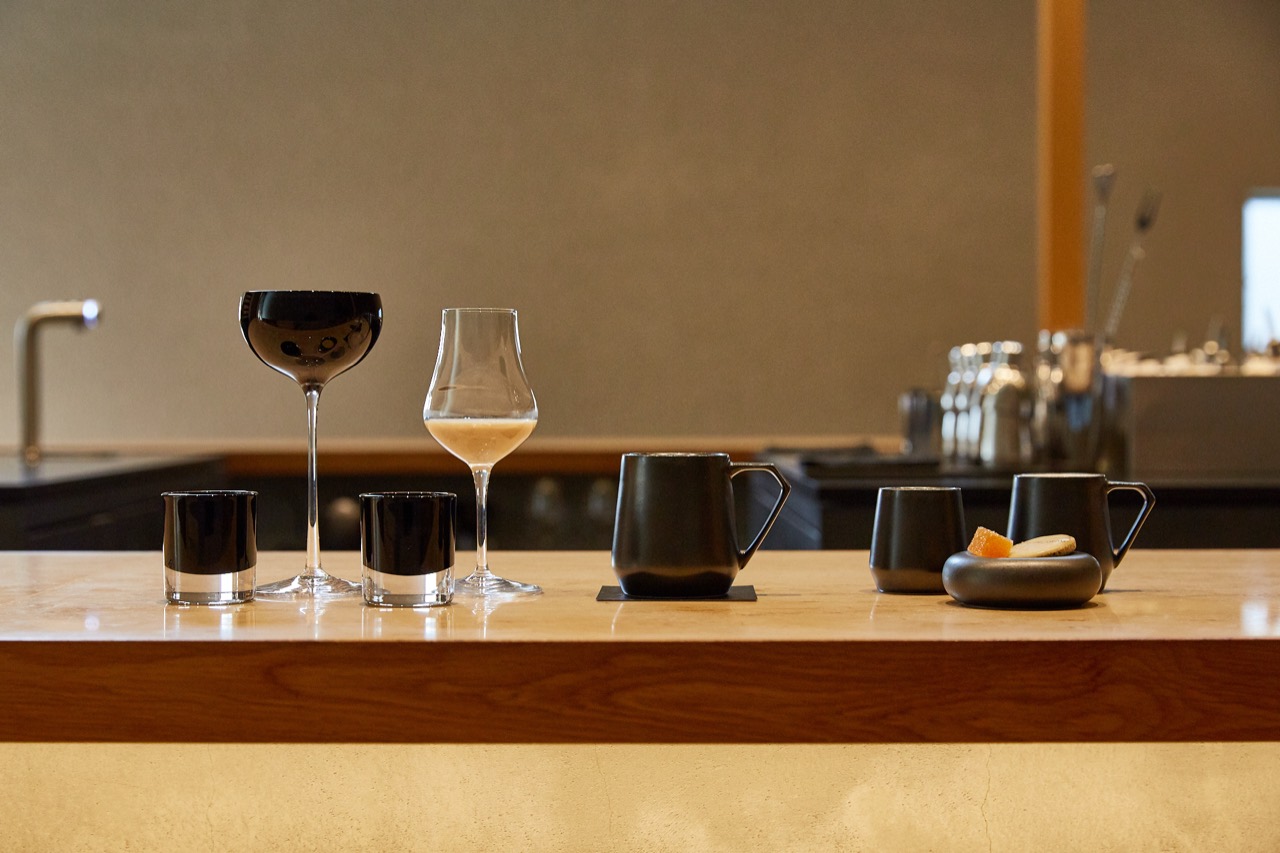
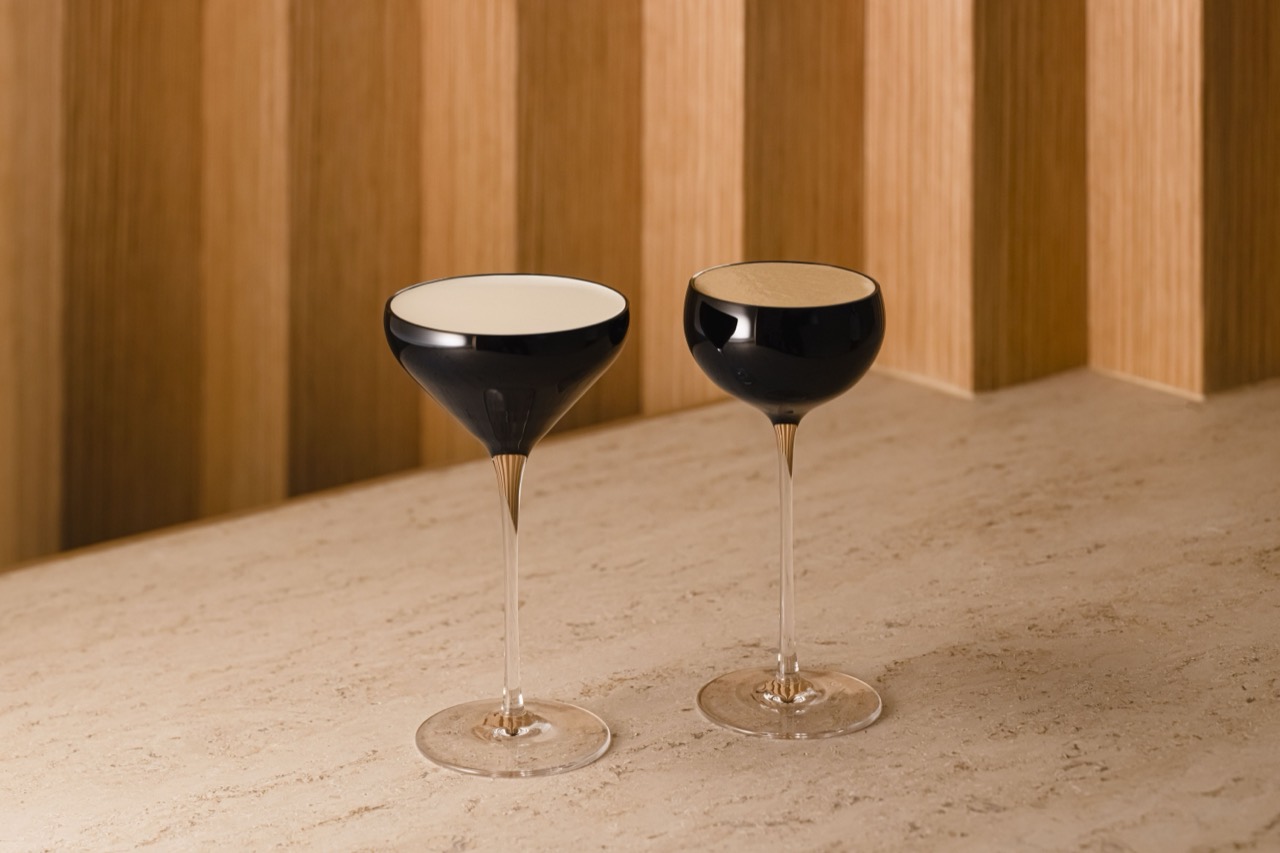
14.What is actually sold, the signature. A Kakeru course takes one bean and varies it. The same coffee arrives as cold brew, as hand drip, on a milk base, and as a coffee cocktail and a non-alcoholic mocktail, opening out the spectrum of flavor. Each cup comes with a paired sweet they call Koffee Kashi. It sits closer to coffee kaiseki.
15.The beans are the core, and this shop does not roast. The identity of KOFFEE MAMEYA is curator rather than roaster. They pick beans from the best roasters in the world the way a wine sommelier does. They pulled out of the crowded field of in-house roasting and differentiated on editing and curation.
16.The lineup tells you the rest. Tokado (Fukuoka), MAME (Zurich), Ditta Artigianale (Florence), The Coffee Collective (Copenhagen), Code Black (Melbourne), and Momos Coffee of Busan. Top roasters from the world specialty map, gathered at one counter. Beans are sorted across five roast levels from light to dark, with up to five single origins on each level.
17.Varietals and processing aim just as high. Premium varietals such as Geisha, and scarce micro lots, come in, and cup notes split by processing, washed, natural, honey. Panama Geisha grade costs several times a standard bean at wholesale, and the high bean cost is folded into the course price, which makes the high spend per head read naturally.
18.At the Aoyama flagship, KOFFEE MAMEYA, those beans sit in a matrix of glass cases. They rotate 15 to 20 varieties by season, and you drink by the cup or take home 150g bags. If Kakeru sells experience, the flagship is the retail that lets you carry that experience home. Experience and bean retail overlap inside one brand.
How to multiply spend per headA regular cafe runs low spend and high turnover, a coffee omakase runs high spend and low turnover. Give up turnover, and five to eight times the spend flips revenue per seat. Spend per head, turnover and revenue are the writer's estimates laid over published facts.
19.Community, the heart of this newsletter. The way Kakeru builds regulars is teaching. Just as the name Kakeru multiplies the surprise of omakase by learning, the barista explains, one by one, where this bean comes from and why it is brewed this way. Guests do not come to drink, they come to learn. Learning is addictive, and it makes you curious about next season's lineup.
20.The bean boutique at the flagship is the reservoir for that community. Taking a sommelier-style recommendation from 15 to 20 seasonal varieties and carrying it home builds a return routine. Learn at Kakeru, buy beans at the flagship, brew at home, come back for the new season. The loop of experience, retail, return keeps turning.
21.And it became a pilgrimage site. Kiyosumi-Shirakawa hardened into Tokyo's coffee neighborhood after Blue Bottle Japan opened its first shop there, and Kakeru is the summit of that ground. As the two Japanese entries on the World's 100 Best Coffee Shops in 2026 suggest, it has become a required stop in Tokyo for coffee people everywhere. The reservation is the ticket.
Learn, buy, come backThe bean case at the flagship. Take a sommelier's recommendation from 15 to 20 seasonal varieties and carry it home in a 150g bag. The experience at Kakeru and the retail at the flagship lock into a return loop. ⓒ KOFFEE MAMEYA
22.It is not the first. Selling coffee as a course has two roots. One is Japan's sushi and kaiseki omakase, the grammar of a chef serving seasonal ingredients in order at a counter. The other is the third wave single origin flight, several cups compared side by side. Kakeru put the two together.
23.Kunitomo's own record is just as clear. Omotesando Koffee, the pop-up, made coffee a theater, KOFFEE MAMEYA, the boutique, made coffee a curation, and Kakeru, the omakase, made coffee a course. One person moved the same philosophy through three formats. The idea came from moving the format, not from changing the material.
24.The real disease of the specialty cafe is the ceiling on spend per head. However good the bean, it is hard to cross the psychological limit of a cup at KRW 6,000 to 7,000. Costs climb, premium green coffee, labor, rent, while the cup price cannot, and the margin gets squeezed. Kakeru's answer was to stop selling cups and start selling time. The moment coffee is redefined from a drink into an experience, the KRW 6,000 ceiling disappears and a KRW 50,000 course opens up.
25.Second, not roasting turns out to be a strength. In-house roasting demands equipment, skill and risk, and the field is already crowded. Kakeru outsources roasting to the best roasters in the world and puts everything into what to choose and how to brew it. A lineup nobody else can assemble, plus brewing skill, is the moat. It is a model that wins by editing, not by producing.
26.Third, the weak point, stated plainly. This model rests entirely on skilled baristas. What moves 27 seats is, in the end, a person. An omakase collapses without that person. Scalability is low, labor cost is high, and the departure of a key person is itself a brand risk. Reservations also fix the revenue ceiling at seats × turnover. It is a business that gained spend per head and handed back scalability. The opposite road from a franchise stamping out branches.
A pairing with every cupKoffee Kashi, the small sweet matched to each cup. It composes coffee like kaiseki so that what sells is not one cup but one course. The pairing is the alibi for the price. ⓒ KOFFEE MAMEYA
Summary
KOFFEE MAMEYA Kakeru, a coffee omakase with 27 seats and courses from 5,000 to 12,000 yen, opened in 2021 in an old warehouse in Kiyosumi-Shirakawa, Tokyo. A barista varies one bean into cold brew, drip, milk and cocktail in front of you, and a paired sweet comes with every cup. It is coffee kaiseki.
The match is decided on spend per head. A regular specialty cafe sits at 1,200 yen, and by redefining coffee as an experience Kakeru multiplied that five to eight times, to roughly 8,000 yen (estimated). Turnover is gone, yet revenue per seat and per pyeong flip to three or four times. Reservations are the cost device that erases no-shows and waste.
The beans are curated, not roasted, editing top roasters such as Tokado, The Coffee Collective and Momos of Busan the way a sommelier would. Expensive beans, Geisha and micro lots, dissolve into the course price. Regulars are tied in by teaching, and by the return loop of bean retail at the flagship.
The turn: the ceiling for a specialty cafe is a cup at KRW 6,000. Kakeru broke through it by stopping the sale of cups and selling time. The price of that is dependence on skilled baristas and low scalability. It gained spend per head and handed back growth.
★ What to steal ★
Three things for anyone planning or running a cafe that pulls revenue per pyeong out of a small floor plate. And what happens if you move it to Korea
1. Stop selling cups, sell time, and break the ceiling on spend per head with a reservation course
What squeezes the margin of a specialty cafe is the psychological ceiling of a cup at KRW 6,000. Redefine coffee as a reservation course and a pairing experience, and that ceiling disappears. Works in Korea: omakase culture is already mature here. Sushi, beef and dessert omakase have all settled in, and resistance to fine dining style reservation spending is low. A coffee course is easy to picture. Does not work, watch for: charging KRW 100,000 for coffee alone meets heavy resistance here. You have to build an alibi for the price with dessert, food or drink pairings. But once you pour alcohol, the Food Sanitation Act requirements for liquor sales (general restaurant), late-night operating rules and liquor taxation come in, and once you serve food, kitchen equipment and hygiene grading move you from a cafe (rest restaurant) to a general restaurant. Register as a coffee-only cafe and this course is closed to you.
2. Do not roast, curate. Win by editing rather than producing
In-house roasting demands equipment, skill and risk, and the field is already crowded. Edit the top roasters like a sommelier and the lineup itself, one nobody else can assemble, becomes the difference. Works in Korea: with domestic in-house roasting cafes saturated, curation that competes on what you choose is an open seat. Now that Momos of Busan sits on the world matrix, an edit mixing top Korean roasters with roasters not yet imported makes a strong concept. Does not work, watch for: to bring in foreign beans for retail or resale you take on import declaration and Korean-language labeling (origin, expiry date, importer) under the Special Act on Imported Food Safety Control, and customs and quarantine become the bottleneck. Brewing beans in the shop and selling them in a bag are governed differently. Clear the food distribution requirements first if you want to retail beans.
3. Make the bar a stage and the seats an audience. Graft the sushi counter grammar onto coffee
Kakeru made the extraction itself the content with a three-sided counter, and gathered staff at the bar to pull high spend per head out of a small floor plate. For a destination reservation cafe rather than a street shop living on footfall, bar-centered design maximizes spend per head against labor cost. Works in Korea: putting the counter on stage in a small floor plate is already proven here, in small cafes and bars (omakase bars, hand drip bars). Cutting seats and raising spend per head suits small downtown units with high rent especially well. Does not work, watch for: this model rests entirely on that one barista. Depending on one or two skilled people is a brand risk, and it falls apart when the key person leaves. Scalability is low and the revenue ceiling is fixed at seats × turnover, so it is fundamentally different from a business that earns by rolling out branches. Decide at the start whether you are earning deep in one building or wide across many. On any given site, permits and staffing structure have to be checked together.
The coffee neighborhood that became a pilgrimageKiyosumi-Shirakawa hardened into Tokyo's coffee neighborhood after Blue Bottle Japan opened its first shop there. Kakeru is the summit of that ground, and the reservation is the entry ticket. ⓒ Go TokyoPackaging blown up to architectureThe interlocking white oak frame that dominates the entrance moves the bean packaging design to architectural scale. Instead of hanging a logo, they made the skeleton of the building the brand. ⓒ KOFFEE MAMEYA / 14sdOne bean, different facesA single coffee varied into cold brew, drip, milk, cocktail and mocktail, opening the spectrum of flavor. Comparative tasting, composed as a course, lets you experience the breadth of coffee. ⓒ KOFFEE MAMEYAThe flagship, reservoir of the experienceKOFFEE MAMEYA in Aoyama. It took over the site of the legendary pop-up Omotesando Koffee and opened as a bean boutique. The omakase at Kakeru carries through to retail here. ⓒ KOFFEE MAMEYAThe person is the productWeighing, grinding, even the angle of the pour happens in front of you. That skill justifies the price and is at the same time the biggest risk in this model. An omakase rests on a person. ⓒ KOFFEE MAMEYA / 14sd