retailHoteldiningdrinkCultureSpaceCafeBrand
ArticlesTravel
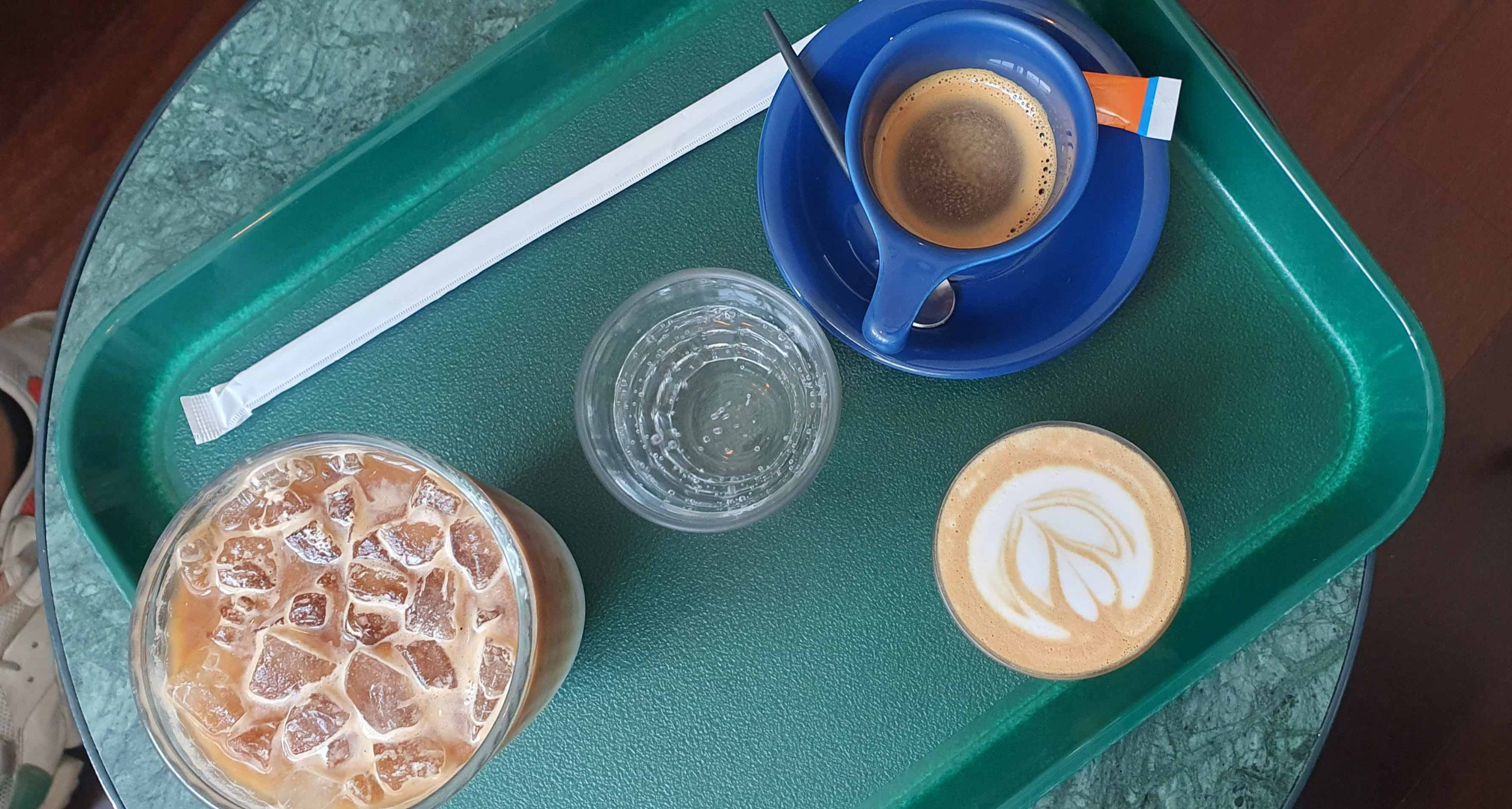
Four cups on one tray · Espresso arrives in a blue cup, the latte in glass. Water and a sugar stick come with them. ©Hongdaemin
Four cups on one trayEspresso arrives in a blue cup, the latte in glass. Water and a sugar stick come with them. ©Hongdaemin
Daily drink

A roastery that tastes 23 samples and buys four now draws foreign visitors (Seoul, micro-roastery)

2026.09.21

In early September Forbes turned to Seoul's coffee scene and singled out a blue three-story building in Mangwon-dong, Mapo-gu. The country now counts 95,337 coffee and beverage shops, roughly one for every 540 people. In a market where an americano starts at 1,500 won, this place asks 17,000 won for a bag of beans.

1.The address is 11 Poeun-ro 6-gil, Mapo-gu, a residential alley a few steps in from Mangwon Market. Deep Blue Lake takes the whole of a three-story building whose brick has been painted blue. Bar and roasting lab on the ground floor, seating on the second and third, though floor area and seat count have never been published. The sign reads coffee roasters, not cafe.
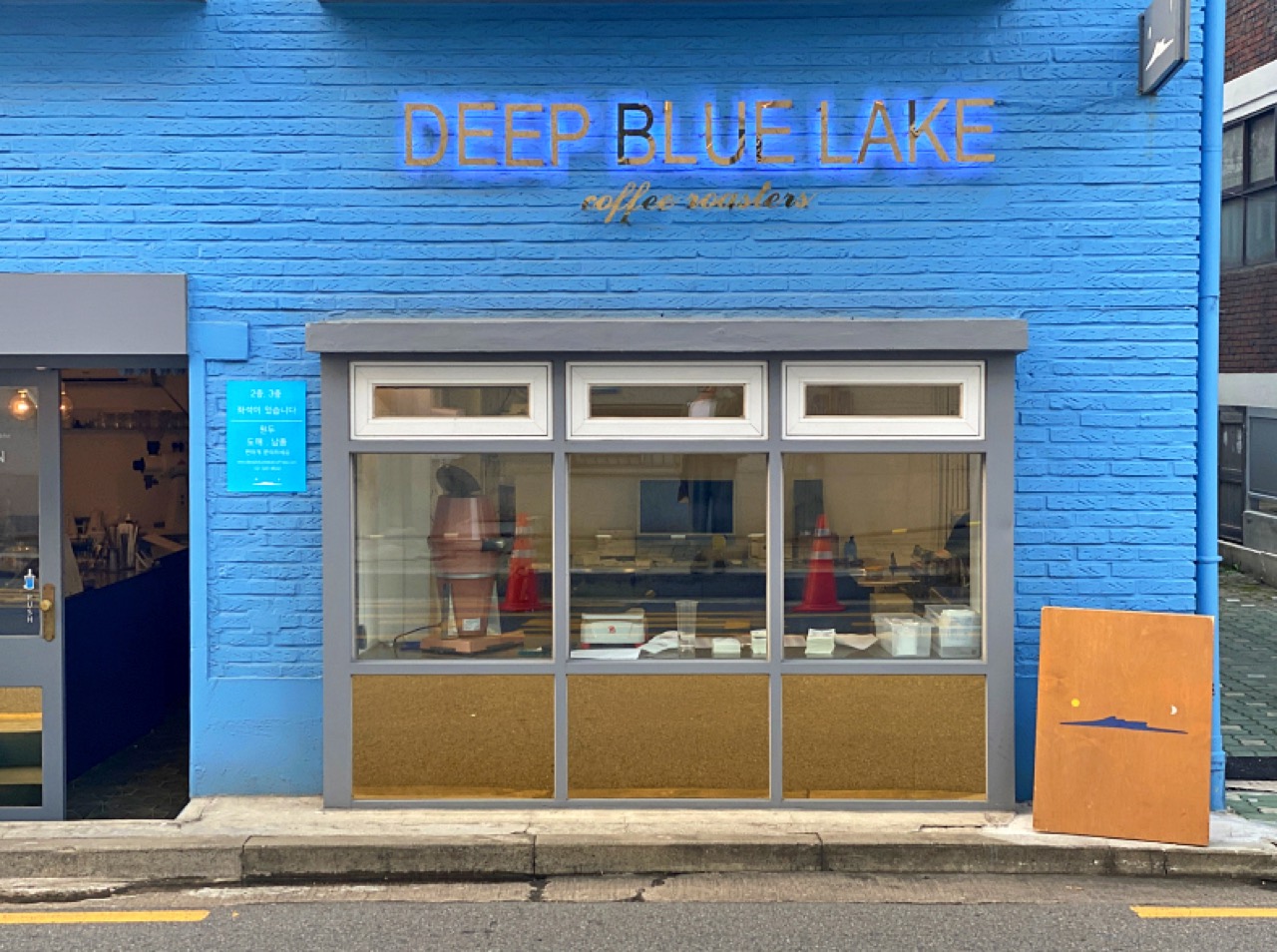
Brick painted blue · The sign is one line of gold lettering. Behind the window sits the ground-floor work counter. ©Hongdaemin
Brick painted blueThe sign is one line of gold lettering. Behind the window sits the ground-floor work counter. ©Hongdaemin
2.Coffee and beverage shops have doubled in seven years to 95,337, about one per 540 residents, on National Tax Service figures. The pace is said to have slowed after 2024. The floor price of an americano has come down to 1,500 won. Not competing at that floor is where this shop starts.
커피·음료점은 7년 만에 두 배가 됐다 단위 곳 · 국세청 사업자 현황 2018년 초 45,203 2024년 초 96,080 2025년 1분기 95,337 늘어나는 속도는 2024년을 지나며 꺾였다 인구 540명에 한 곳. 같은 시장 안에서 아메리카노 가격의 바닥은 1,500원이다
More shops, lower pricesBusiness counts come from National Tax Service data as carried by Seoul Economic Daily and Asia Economy.
3.From the alley the first thing you see is the work counter behind the ground-floor window. Push the door and the coffee bar is on the left, the barista's station on the right, bags of beans lined along a stainless top. A handwritten slip stands between them, naming origin, farm and processing.
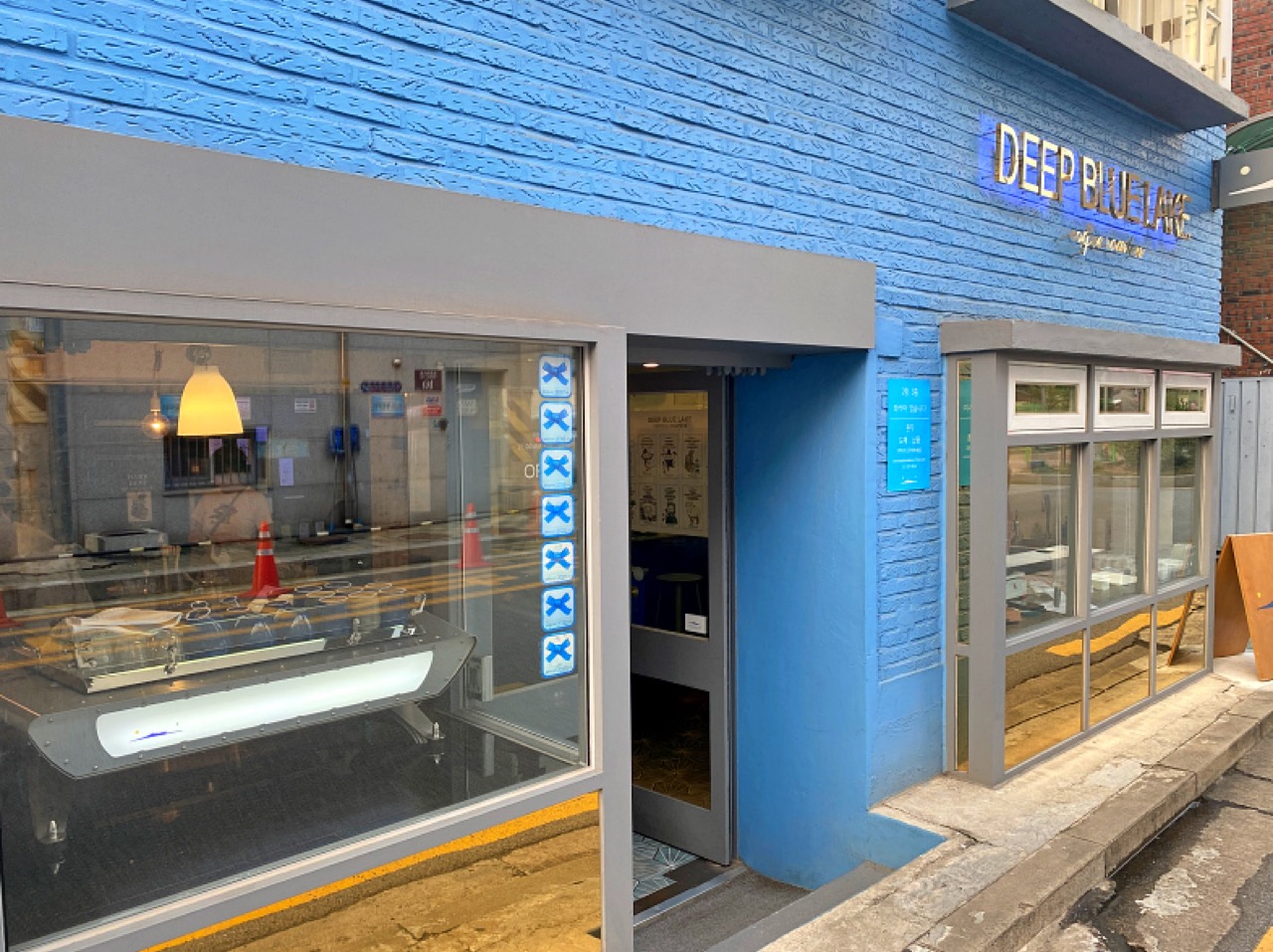
Straight off the alley · The left-hand window is the work counter; the inner door leads to the stairs. ©Hongdaemin
Straight off the alleyThe left-hand window is the work counter; the inner door leads to the stairs. ©Hongdaemin
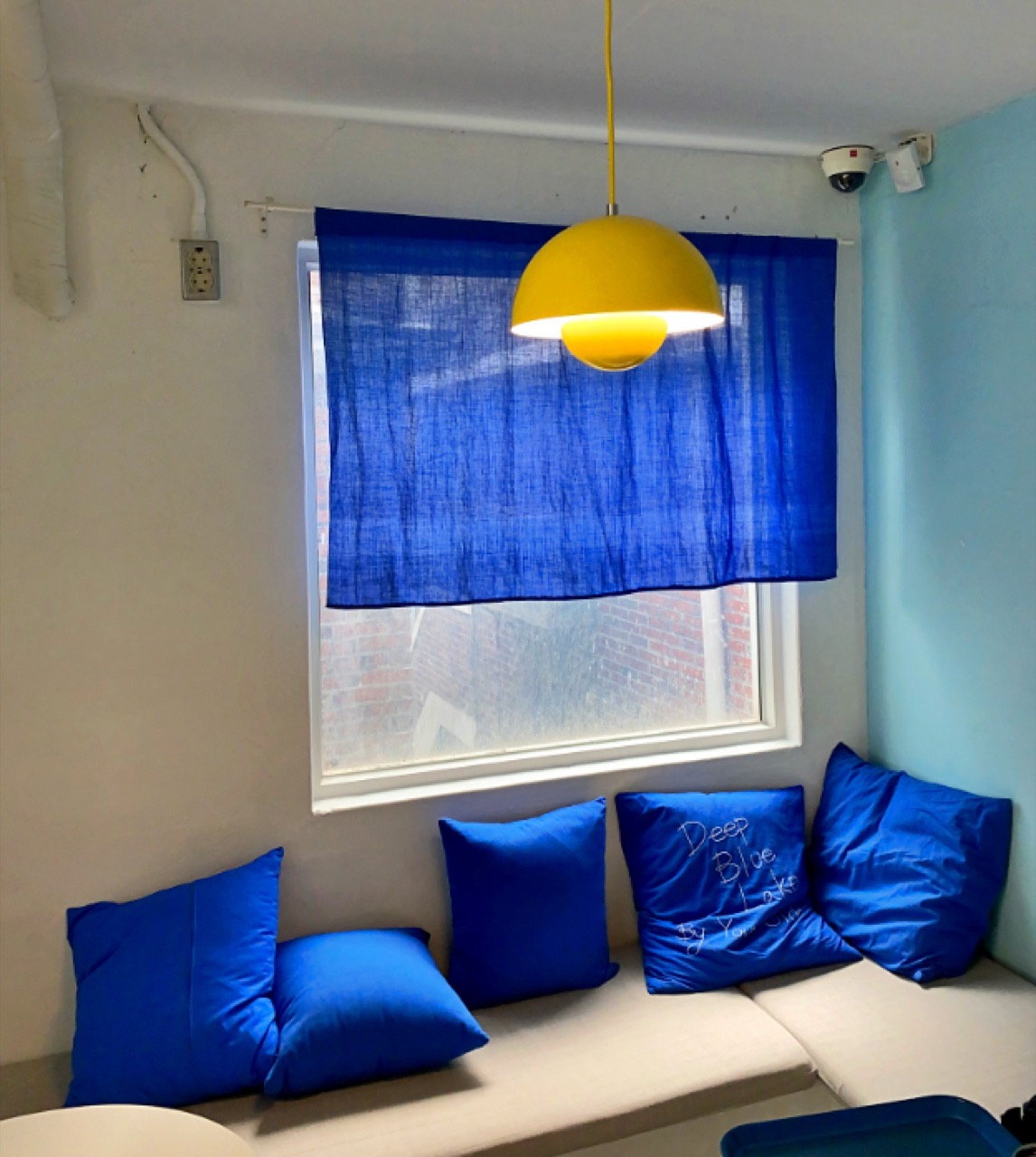
4.The upper floors are divided by color. The stair rail is blue and framed pictures lean against the landing. The second floor is pushed toward green with plants and mirrors, and the third puts blue cushions and a yellow dome lamp by the window. Painting the whole building blue is the cheapest advertising on this alley.
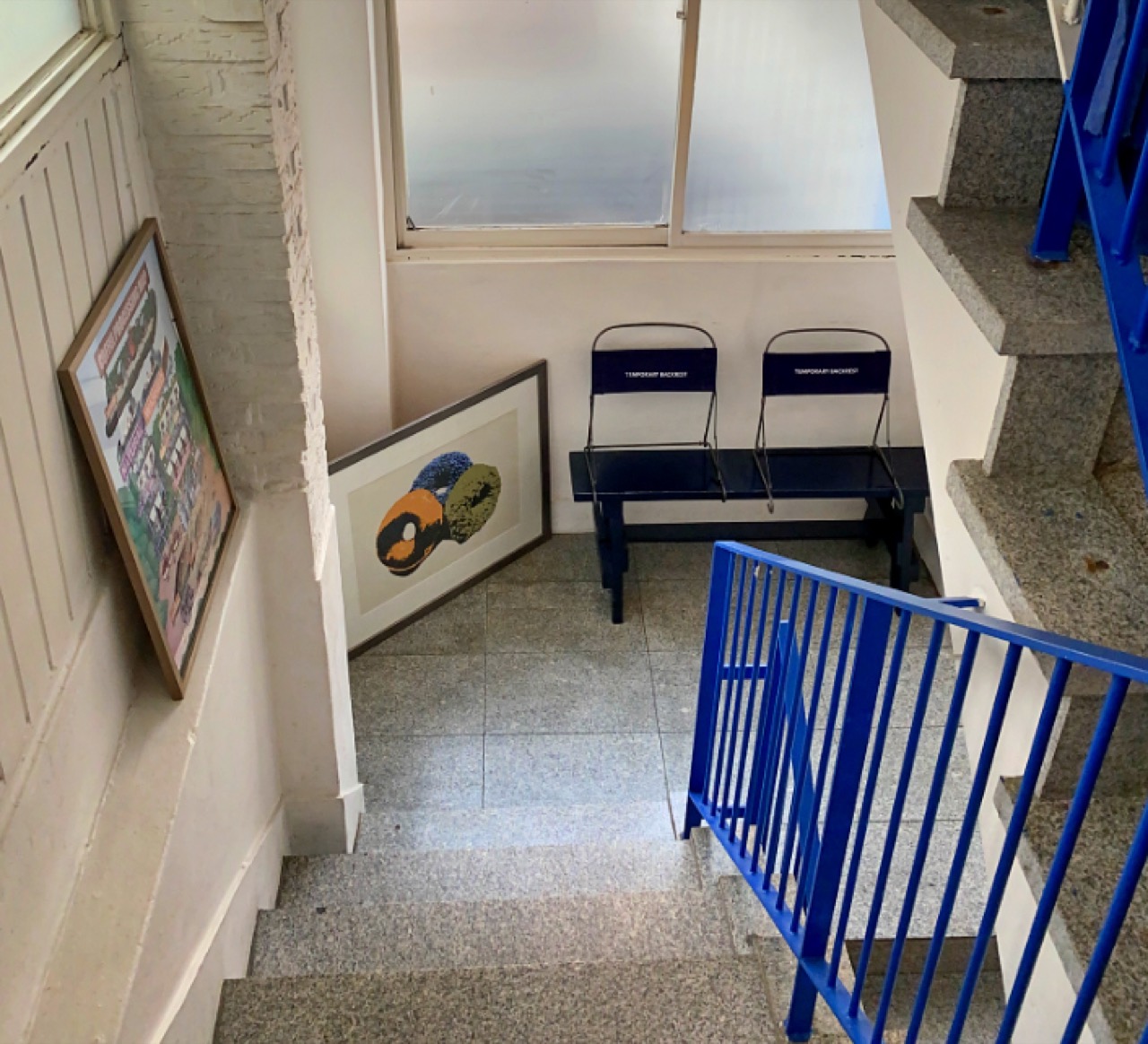
Two chairs on the landing · Blue rail and framed pictures. When the seats fill, people wait here. ©Hongdaemin
Two chairs on the landingBlue rail and framed pictures. When the seats fill, people wait here. ©Hongdaemin
By the upper window · One cushion carries the shop name in handwriting. ©Hongdaemin
By the upper windowOne cushion carries the shop name in handwriting. ©Hongdaemin
5.A Loring roaster sits at the back of the ground floor. It recirculates exhaust heat, which the maker says cuts fuel by around 60 percent. Lee Chul-won picks stones and debris out of the green coffee before roasting and adjusts the roast to moisture content. Afterward he measures bean color against his target.
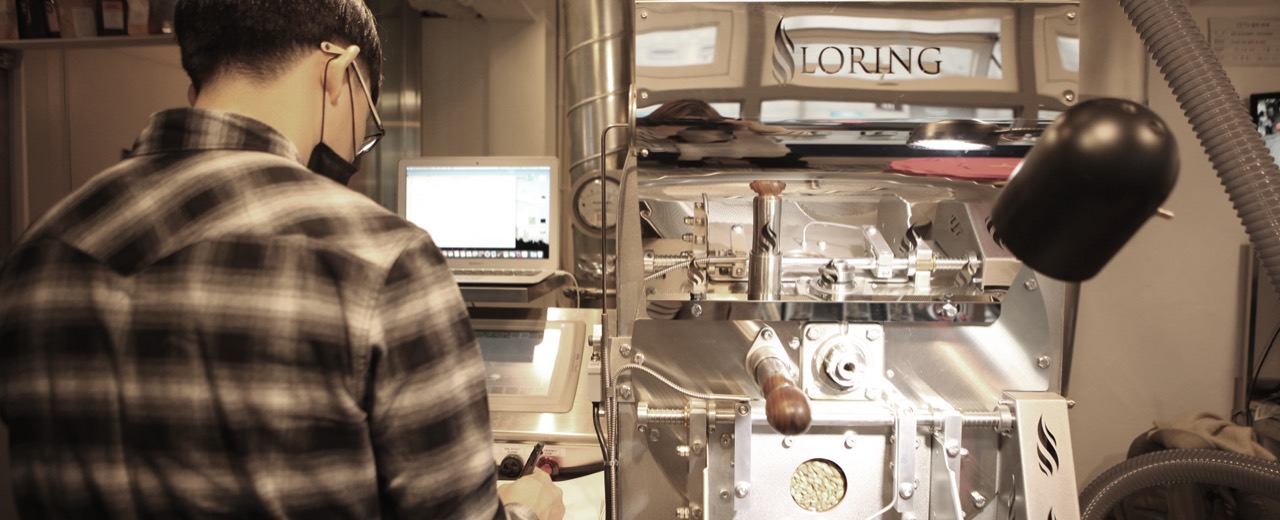
Where the roasting happens · The roast curve stays on a laptop beside the machine. Green beans show through the round window on the front. ©Deep Blue Lake Coffee & Roasters
Where the roasting happensThe roast curve stays on a laptop beside the machine. Green beans show through the round window on the front. ©Deep Blue Lake Coffee & Roasters
6.Because the roast is light, what rises from the cup first is fruit rather than char. The Ethiopia Guji Laro Boda washed leans citrus and floral, the Colombia El Placer Geisha honey carries a long sweetness. Lee tastes his brew again at 10, 20 and 40 minutes. That window separates coffee that collapses as it cools from coffee that holds.
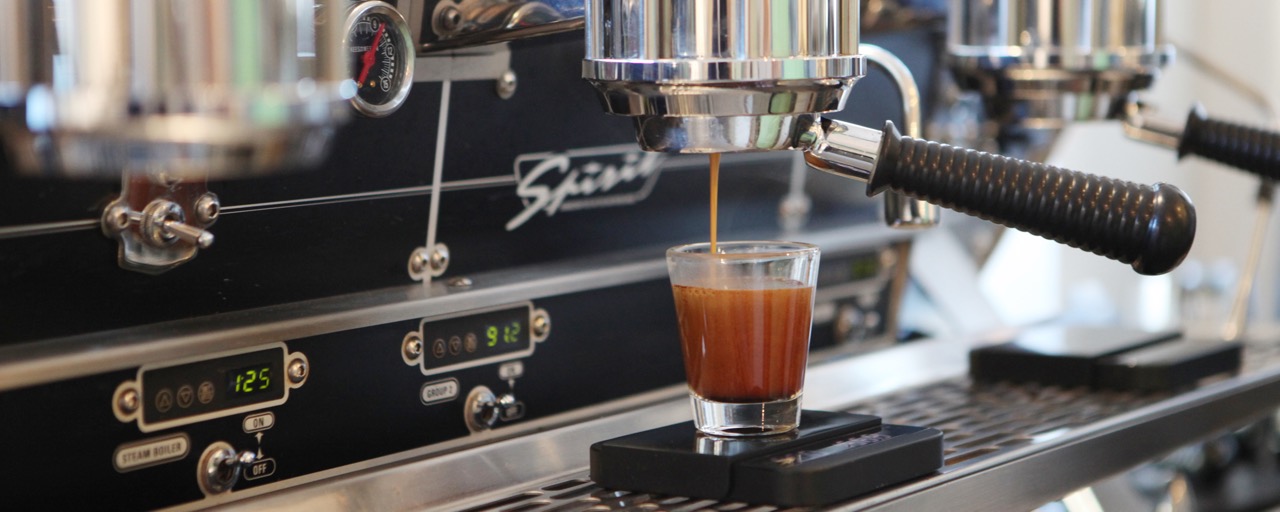
Pulled onto a scale · The espresso machine is a Dutch-built Kees van der Westen Spirit. ©Deep Blue Lake Coffee & Roasters
Pulled onto a scaleThe espresso machine is a Dutch-built Kees van der Westen Spirit. ©Deep Blue Lake Coffee & Roasters
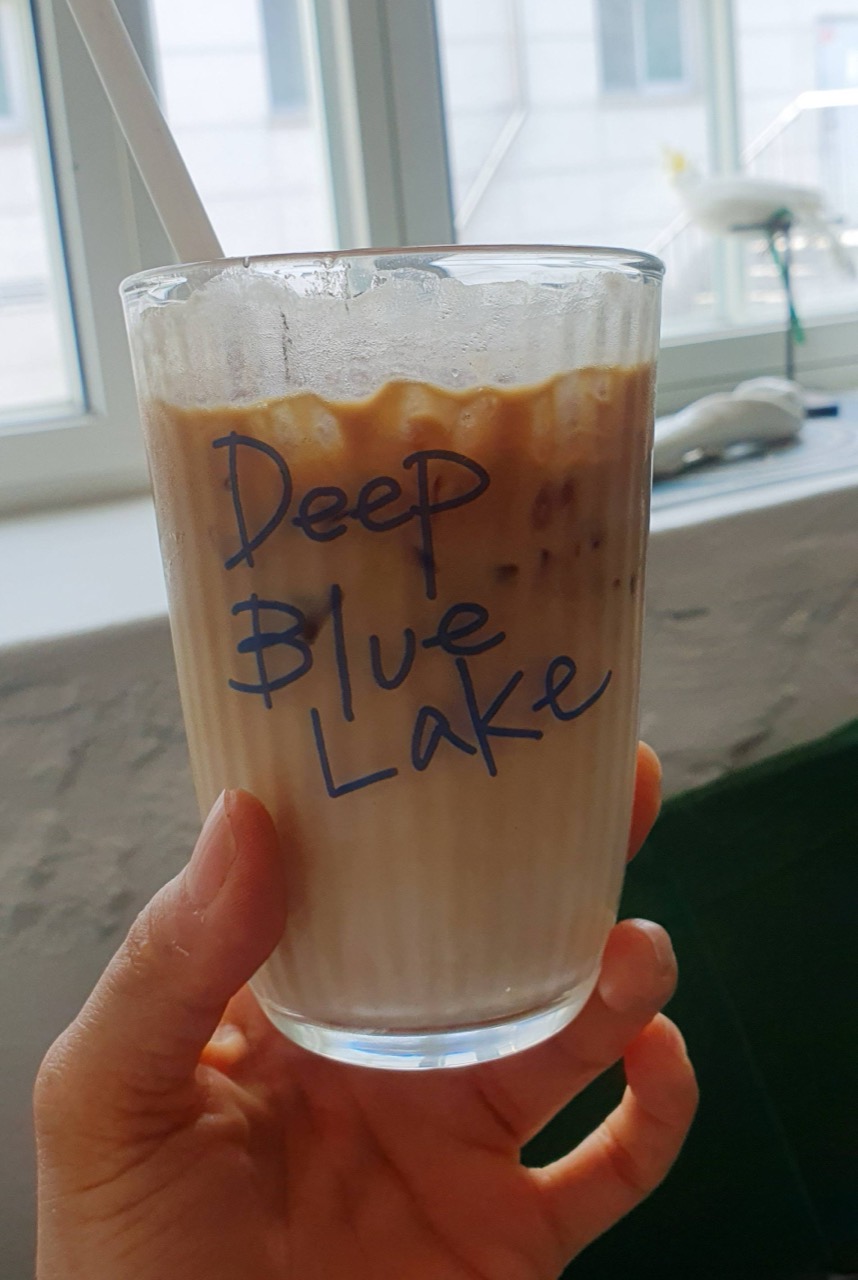
A name written on the glass · The shop name goes onto the glass by hand. This is where the photographs get taken. ©Hongdaemin
A name written on the glassThe shop name goes onto the glass by hand. This is where the photographs get taken. ©Hongdaemin
7.One line sits apart on the menu board at the register. Order an americano and you may choose between two coffees. At that moment the customer stops drinking and starts choosing. Deep Blending mixes India, Guatemala and Ethiopia while Blue Blending pushes Ethiopia to 60 percent, and whoever remembers which one they picked is the one who leaves with a bag next time.
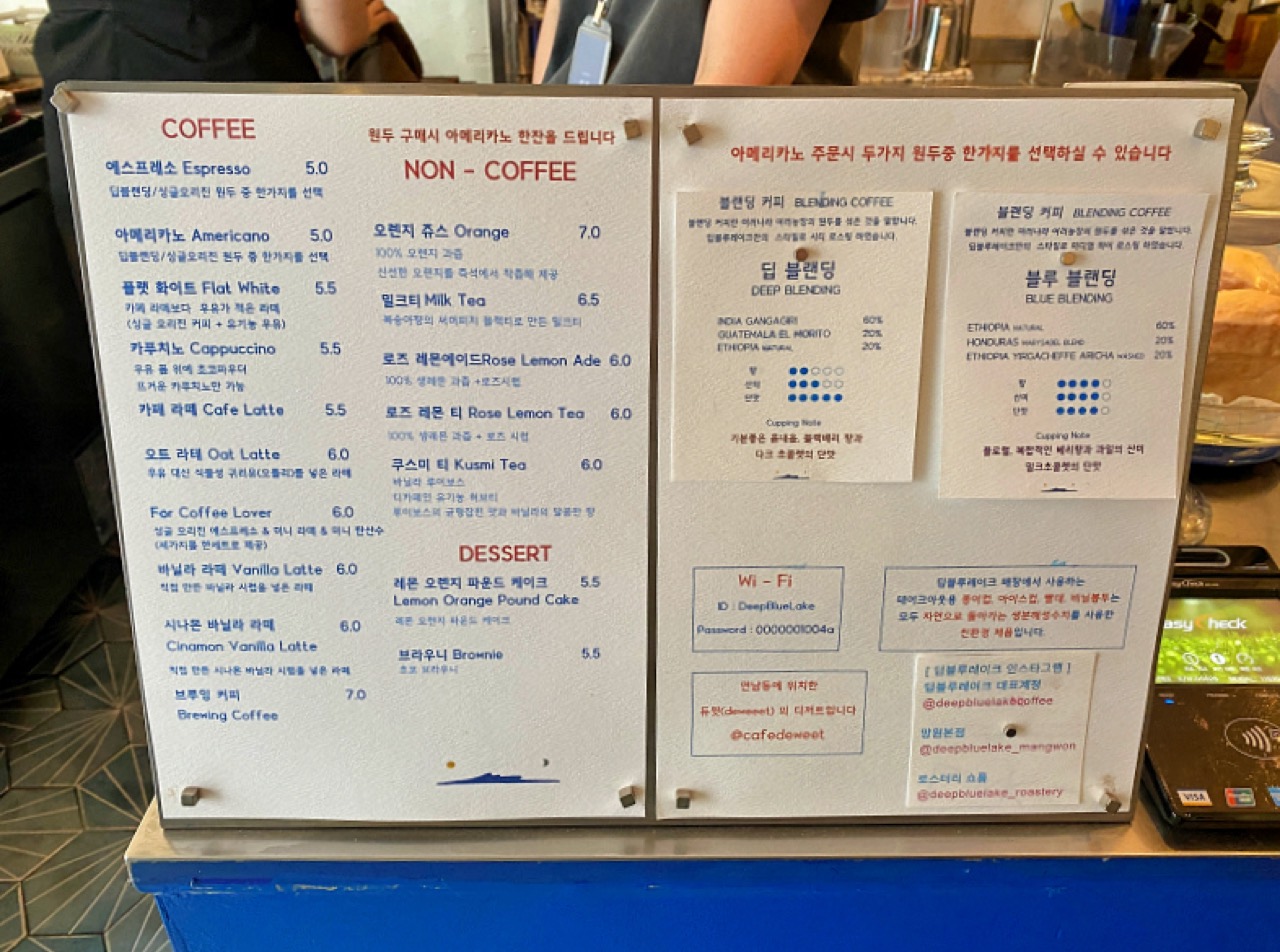
A menu with the blend sheet attached · Prices on the left, origin ratios and cupping notes for the two blends on the right. ©Hongdaemin
A menu with the blend sheet attachedPrices on the left, origin ratios and cupping notes for the two blends on the right. ©Hongdaemin
8.Forbes wrote in early September that in a market where anyone can sell a cheap iced americano, making unusual coffee has become a survival strategy. The roastery named in that piece, as carried by Seoul Economic Daily, is this one. Foreign visitors do not change trains for Mangwon-dong because of the room or a famous dessert. They come for a cup they can drink nowhere else.
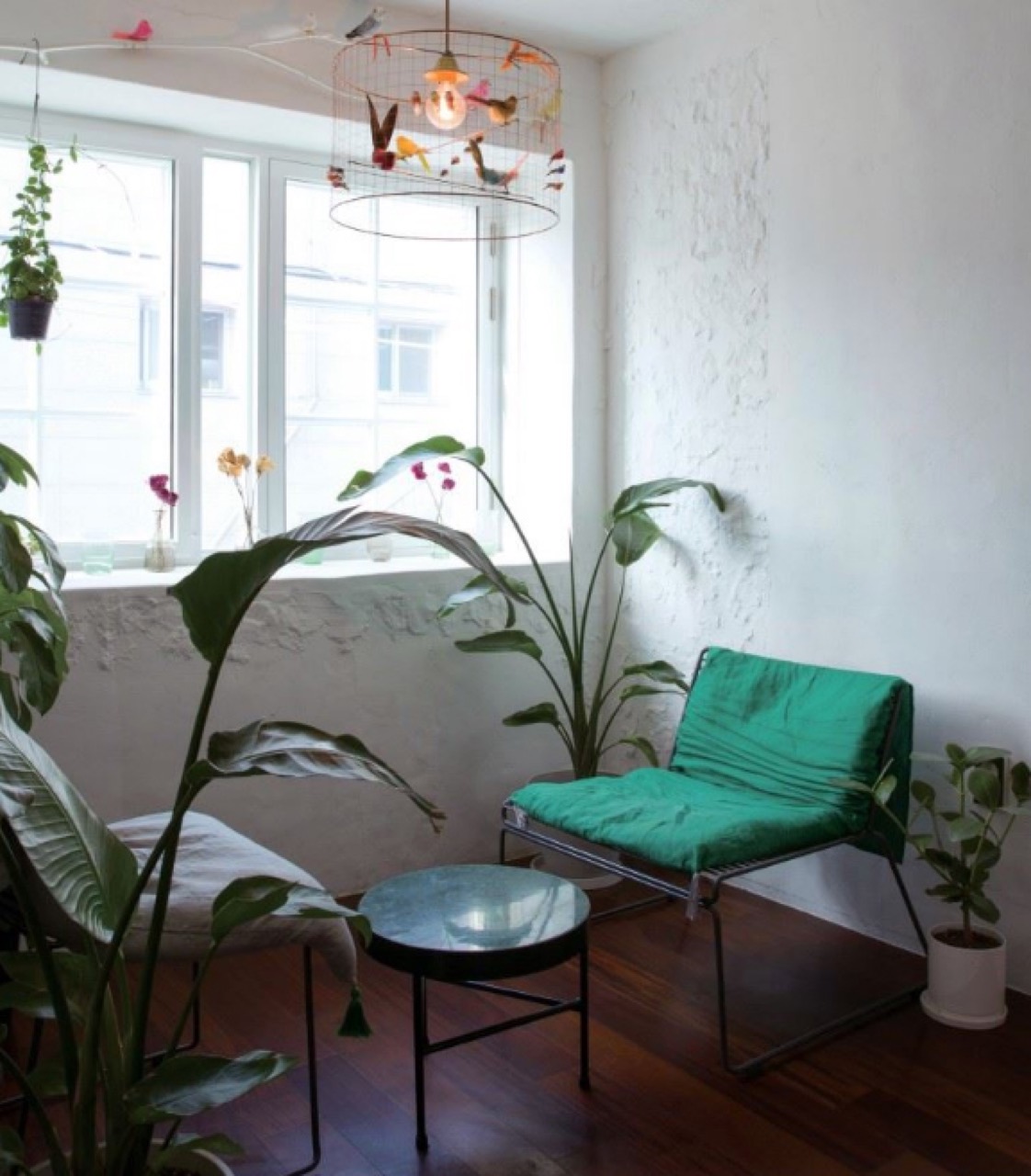
The upper floor pushed green · Plants and a bird ornament. Each floor holds only about a dozen seats. ©Hongdaemin
The upper floor pushed greenPlants and a bird ornament. Each floor holds only about a dozen seats. ©Hongdaemin
9.On a recent sourcing round Lee tasted 23 samples and bought four. Rare microlots at auction can pass 1.5 million won per kilogram, the English edition of Seoul Economic Daily reports. Roasting only after an order comes in is the house rule.
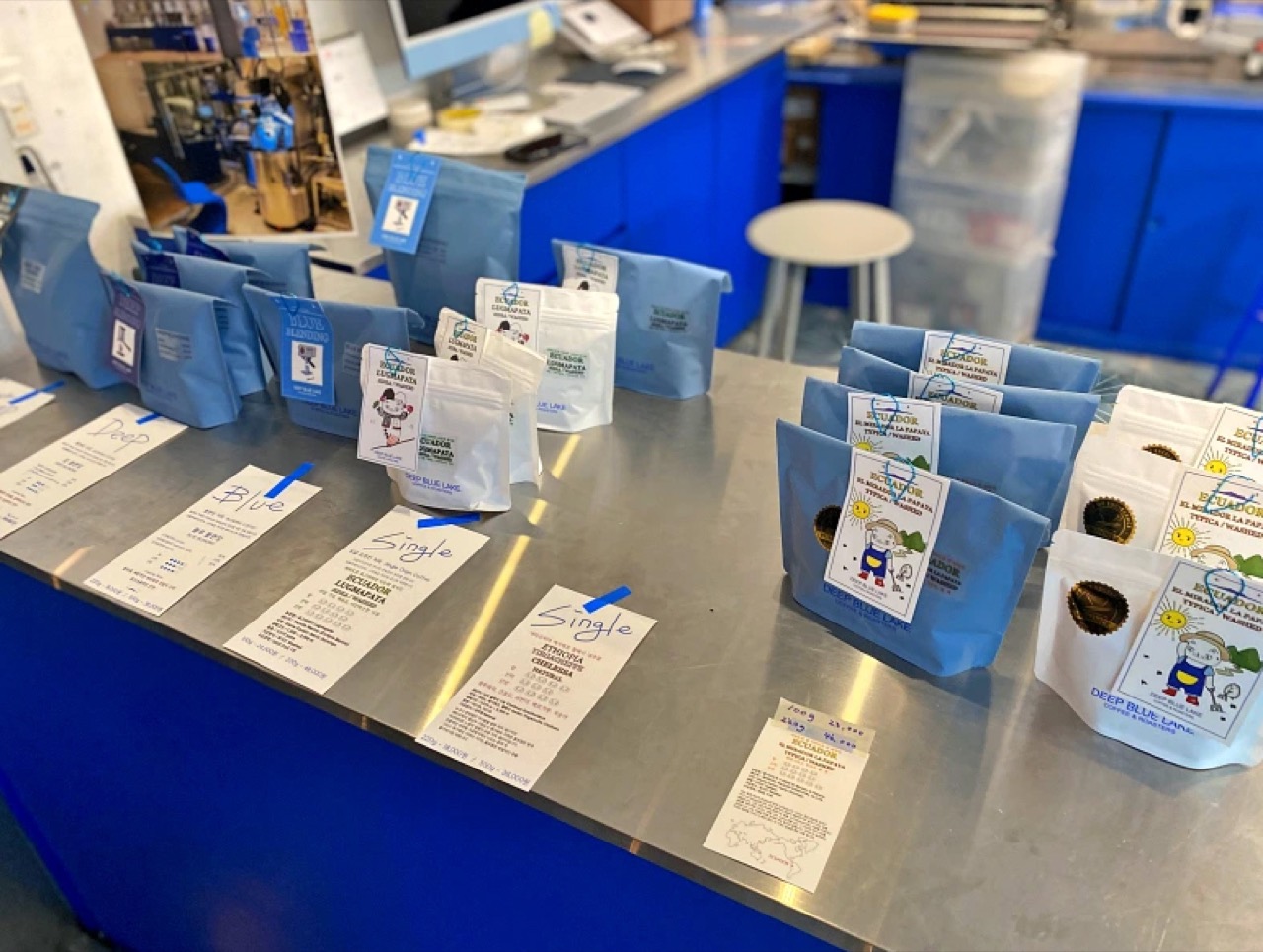
A slip for every bag · Origin, farm and processing, written by hand and tucked between the bags. ©Hongdaemin
A slip for every bagOrigin, farm and processing, written by hand and tucked between the bags. ©Hongdaemin
10.Drinks run 5,000 won for espresso, 5,500 for an americano and up to 7,000 for brewed coffee. Three or four times a budget chain americano. Swapping dairy for oat milk costs nothing extra, and this is widely credited as the first shop in the country to bring in Oatly.
11.A 220g bag of beans starts at 17,000 won and climbs to 30,000. The menu board says a bag of beans comes with a free americano. A 5,500 won cup handed over in exchange for a 17,000 won bag.
같은 220g이 갈 수 있는 두 갈래 단위 원 · 짙은 막대는 자리와 사람이 붙는 쪽 봉지로 판다 17,000 · 한 번에 끝 잔으로 뽑는다 66,000 · 12잔 · 자리 12번 잔 쪽에 따라붙는 것 좌석·체류시간·우유·설거지·서빙 봉지 쪽에 따라붙는 것 종이봉투·라벨·포장 액수는 잔이 네 배, 손이 덜 가는 쪽은 봉지 한 잔에 원두 18g을 쓴다고 보고 계산한 추정치다
Bag against cupPrices follow the official online shop and the in-store menu board. Cup counts and timings are estimates.
12.In pure revenue the cups come to nearly four times as much. Those twelve cups drag seats, time, milk and washing up along with them. A bag costs paper and a label, and that customer never takes a seat. Which is why the free cup for a bean buyer is arithmetic rather than generosity.
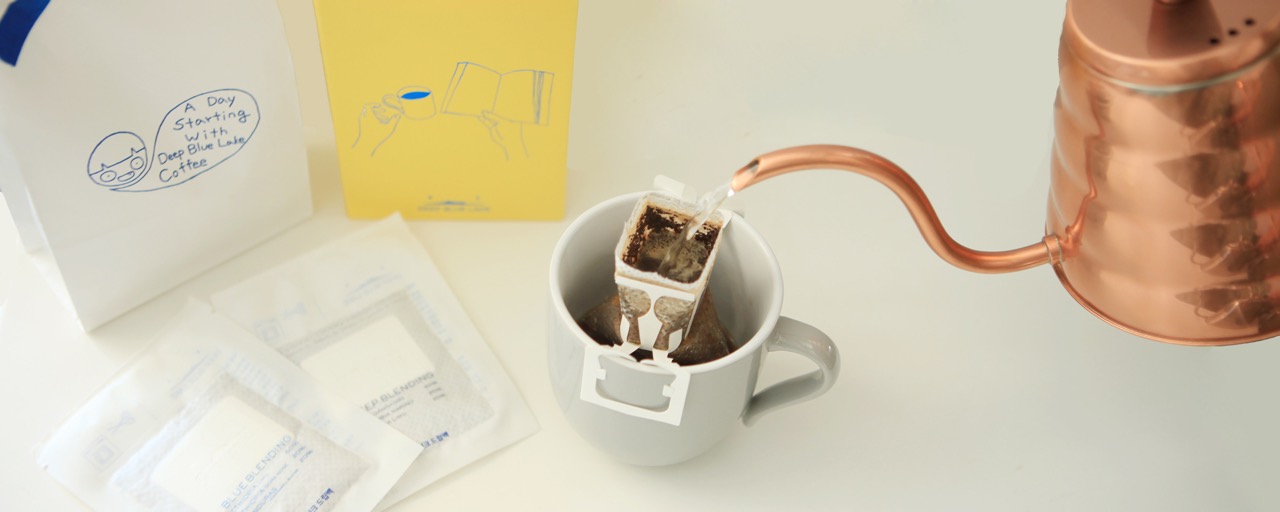
Drip bags · Sold singly and in sets. The boxes carry hand-drawn artwork. ©Deep Blue Lake Coffee & Roasters
Drip bagsSold singly and in sets. The boxes carry hand-drawn artwork. ©Deep Blue Lake Coffee & Roasters
13.Occupancy costs more when you take a whole building. A ground-floor retail unit of 49.5 square meters in Mangwon-dong is listed at around 30 million won deposit and 2.5 million won a month. Going up to the third floor raises rent by that much and adds someone to carry and clear cups on every floor. Putting the roasting lab on the ground floor is not free either. It costs selling area and buys the sight of roasting from the street.
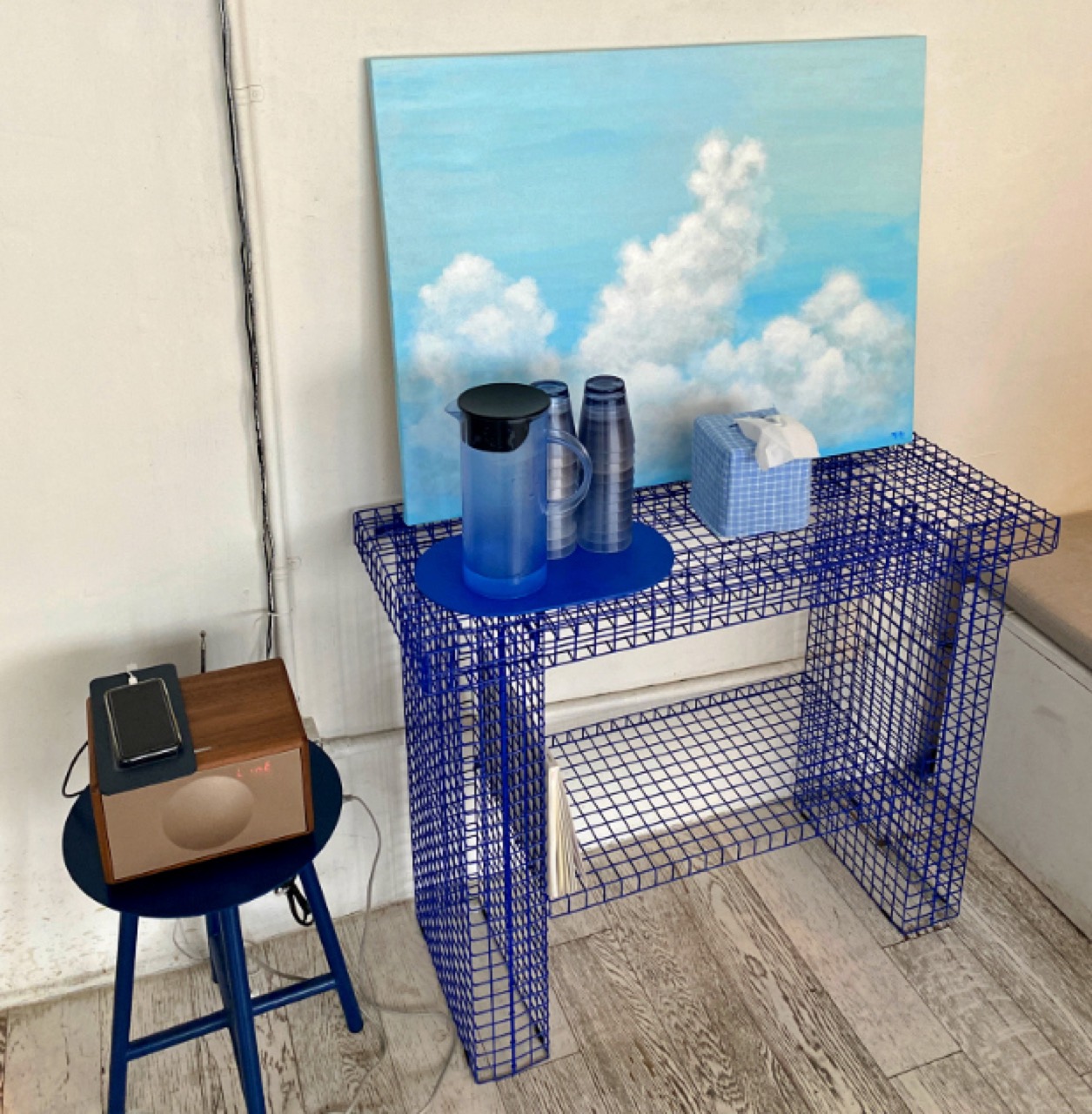
Guests pour their own water · A water station on each floor shortens staff trips. ©Hongdaemin
Guests pour their own waterA water station on each floor shortens staff trips. ©Hongdaemin
14.The root of this approach is Nordic. The light, acidity-forward roasting style reached Korea in the mid-2010s, and this shop has long been counted among its leading names. On equipment alone it is an American roaster and a Dutch espresso machine. A small roastery on a Seoul residential street standing in the same line as a European workshop.
15.Is a flood of tourists always good for a micro-roastery? More guests who sit long and leave with a photograph means more washing up and fewer bags out the door. Letting customers choose the coffee, writing the name on the glass, adding a cup for the bean buyer, all of it points the same way. Toward standing the customer in front of the bags rather than the register.
16.The blue three-story building Forbes singled out sells an americano at 5,500 won, sends out bean bags at 17,000, and throws in that cup for whoever buys a bag. Anyone building the same structure in Korea splits at business registration. Roasting on site and selling bags to customers there runs under an on-site manufacturing and sales filing, but the moment it turns into wholesale to other cafes it needs a separate food manufacturing and processing registration. Plan a roastery on a simple beverage-service filing alone and the bag revenue never reaches the books.
Daily Drink #041 · 2026.09.21 · Sources. This piece follows Forbes, “Tourists Have Discovered Seoul's Coffee Culture, And There's Nowhere Else Like It In Asia,” as carried by the English edition of Seoul Economic Daily, “Seoul's Micro-Roasteries Emerge as Tourist Draw” (8 September 2026), and by Asia Economy (Lee Chul-won; a Mapo-gu roastery; 23 samples tasted and four bought; rare microlots up to $1,500 per kilogram; debris removed and roast adjusted to moisture before roasting; bean color measured after roasting; the brew retasted at 10, 20 and 40 minutes; National Tax Service counts of 45,203 shops in early 2018 and 95,337 in Q1 2025, peaking at 96,080 in early 2024; one shop per 540 people; Mega Coffee and Compose Coffee americanos at 1,500 to 2,000 won). Address and bean prices come from the official online shop dblcoffee.com (11 Poeun-ro 6-gil, Mapo-gu, Seoul; Deep Blending 17,000 won; Ethiopia Guji Laro Boda washed 19,000 won; Ethiopia Yirgacheffe Gedeb Chorso washed 20,000 won; Colombia El Bosque Pink Bourbon honey 25,000 won; Colombia El Placer Geisha honey 30,000 won; 220g). Drink prices and blend ratios come from a photograph of the in-store menu board (espresso 5,000 won; americano 5,500 won; cafe latte and oat latte 6,000 won; brewed coffee 7,000 won; one americano with a bean purchase; a choice of two coffees with an americano order; Deep Blending India 60, Guatemala El Morito 20, Ethiopia natural 20; Blue Blending Ethiopia natural 60, Honduras natural 20, Ethiopia Yirgacheffe Aroha washed 20). The three-story layout, floor colors, the Loring roaster, the Kees van der Westen Spirit and the claim of being first in Korea with Oatly come from The Edit's Mangwon-dong coffee guide, the Brunch essay on the shop, and the Blackwater Issue interview with Lee Chul-won (60 percent heat recirculation; roasting only after an order; three-stage quality control from green sorting to cupping). Annual Blue Ribbon Survey listings since 2017 come from Diningcode. The Mangwon-dong rent figure is a single 49.5 square meter listing on Daangn Real Estate (30 million won deposit, 2.5 million won monthly) and not a market average. The 18g dose, twelve cups per 220g and 66,000 won are the writer's estimates. The split in business registration for bean sales follows the Korea Ministry of Government Legislation guide to opening a coffee shop. Photographs are from Hongdaemin's visit report and the official Deep Blue Lake Coffee & Roasters online shop. Seat count and floor area are not given because no public figures exist.