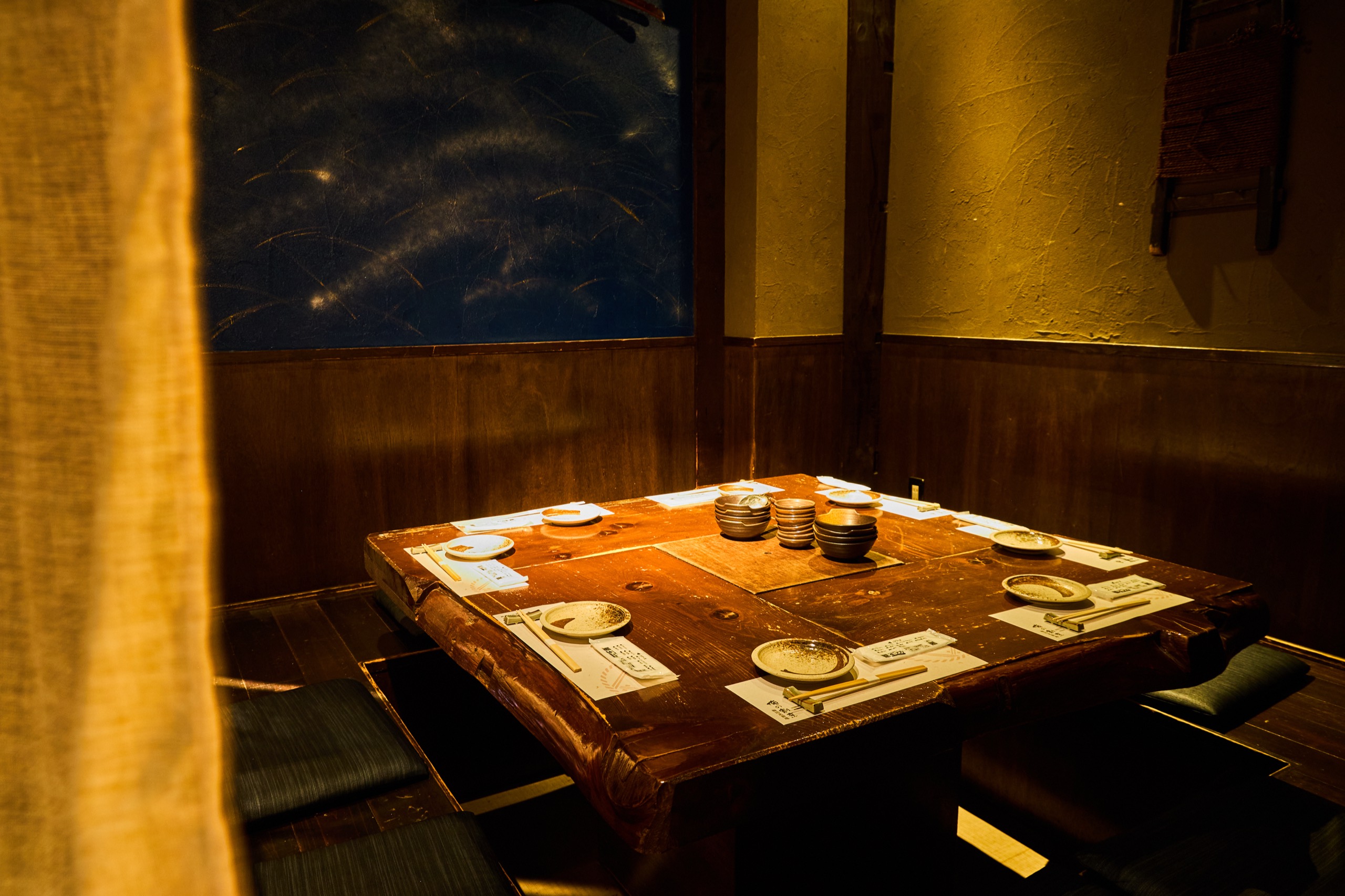
A company once took top-tier chefs, sold plates running a 60% food cost at 3,000 yen, and kept guests on their feet so the seats turned over more than three times a night. That company has just laid 96 shoes-off seats on the sixth floor of a building in Osaka's corporate entertainment district. The course price includes unlimited drinks, and the clock on your seat runs two hours.
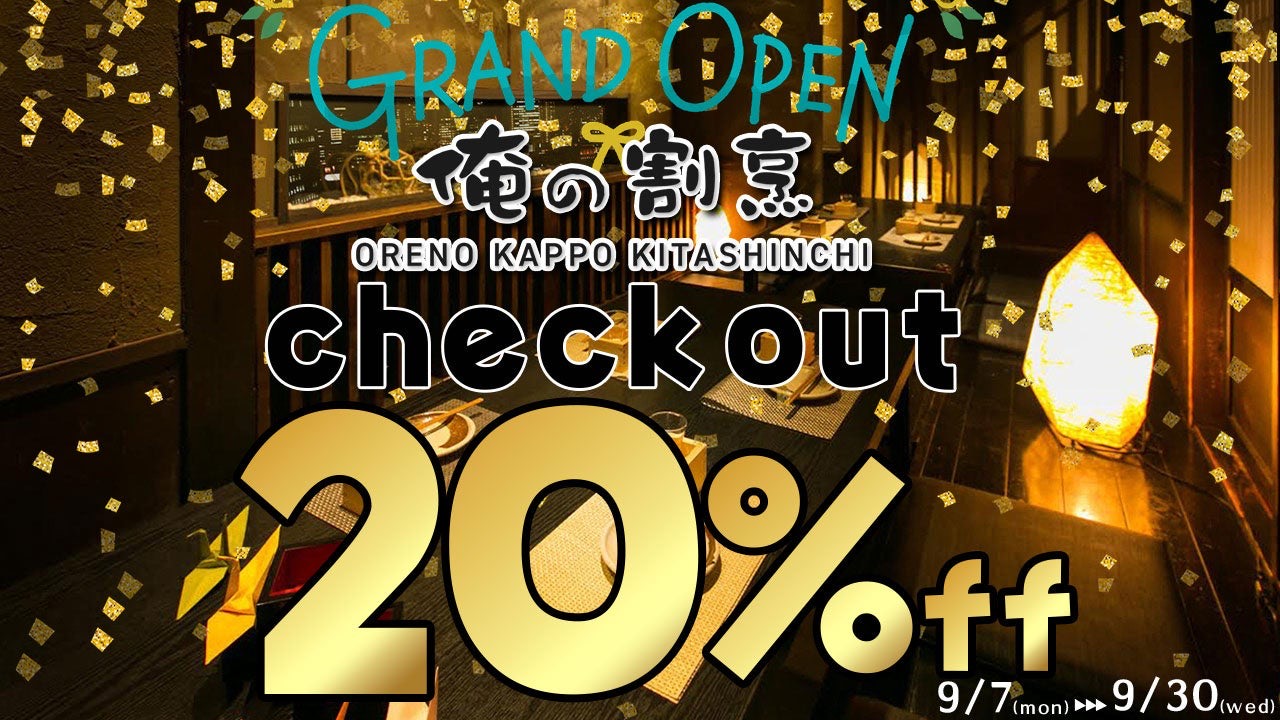
1.Sonezaki-Shinchi 1-chome, Kita Ward, Osaka, three minutes on foot from Kitashinchi Station on the JR Tozai Line. Oreno Kappo Umeda Kitashinchi opened on September 7 on the sixth floor of a building there. Roughly 218 square meters, about 66 pyeong, holding 96 seats. This is the first time the Japanese-cuisine format of Oreno Corporation has entered Kansai, and the twelfth location under that same sign. Hours run 5 p.m. to 11 p.m., open every day of the year. No lunch service.
2.Every seat is a horigotatsu. There are private rooms with doors, and one room takes up to 45 people. Three banquet plans. All three prices include unlimited drinks. Seven courses at 5,500 yen, eight at 6,500 yen, eight at 7,500 yen. Another 800 yen adds six sakes to the unlimited list. An opening promotion takes 20% off dinner bills through September 30, and printed in its conditions is a two-hour limit.
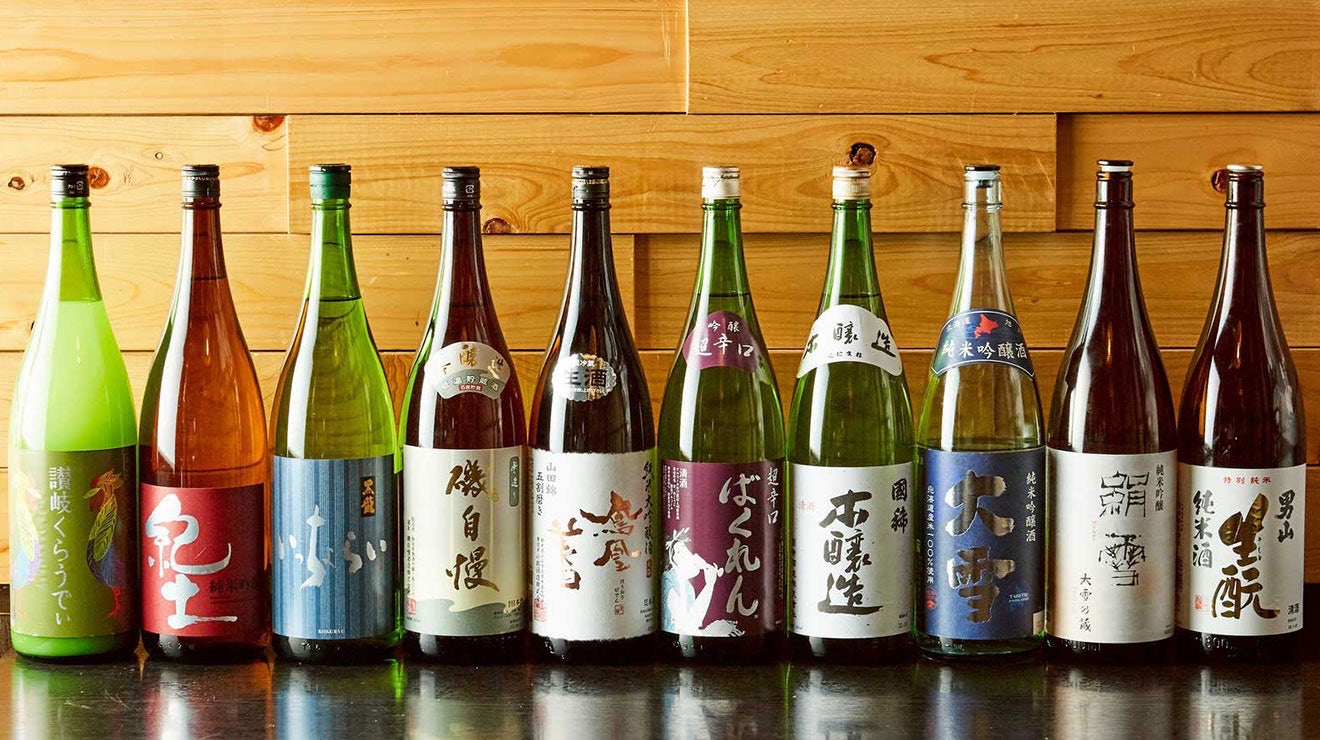
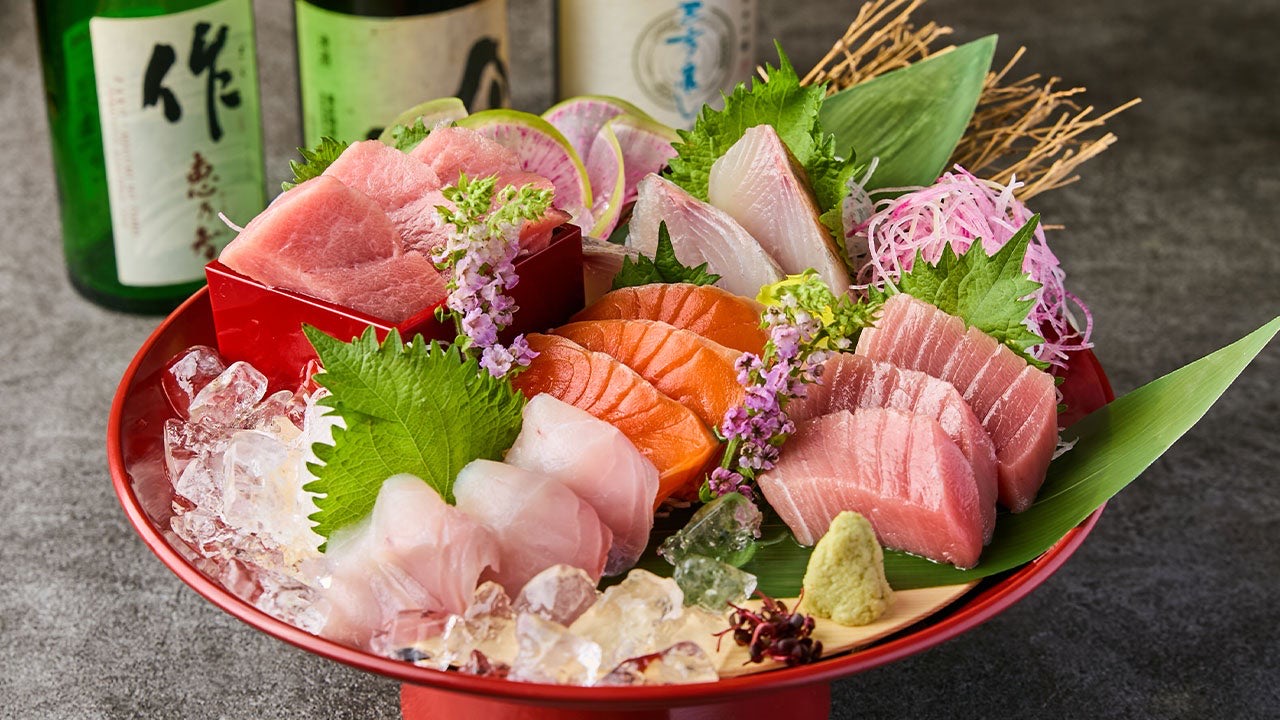
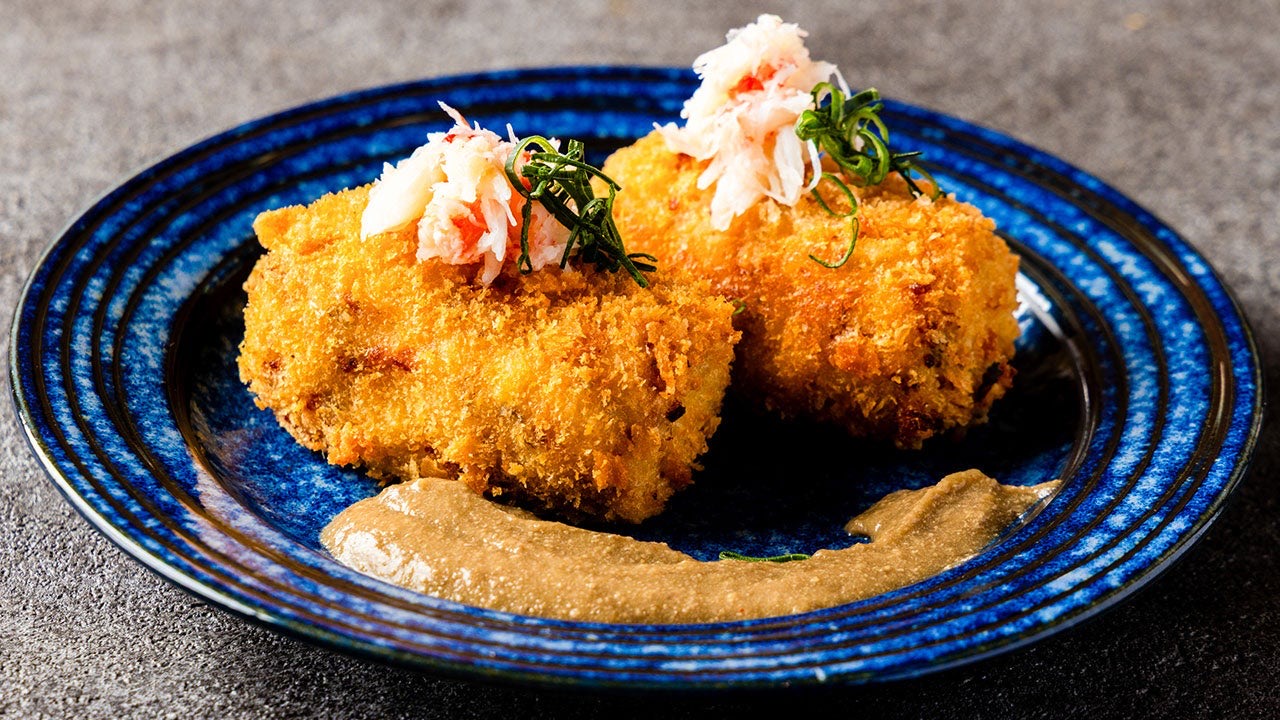
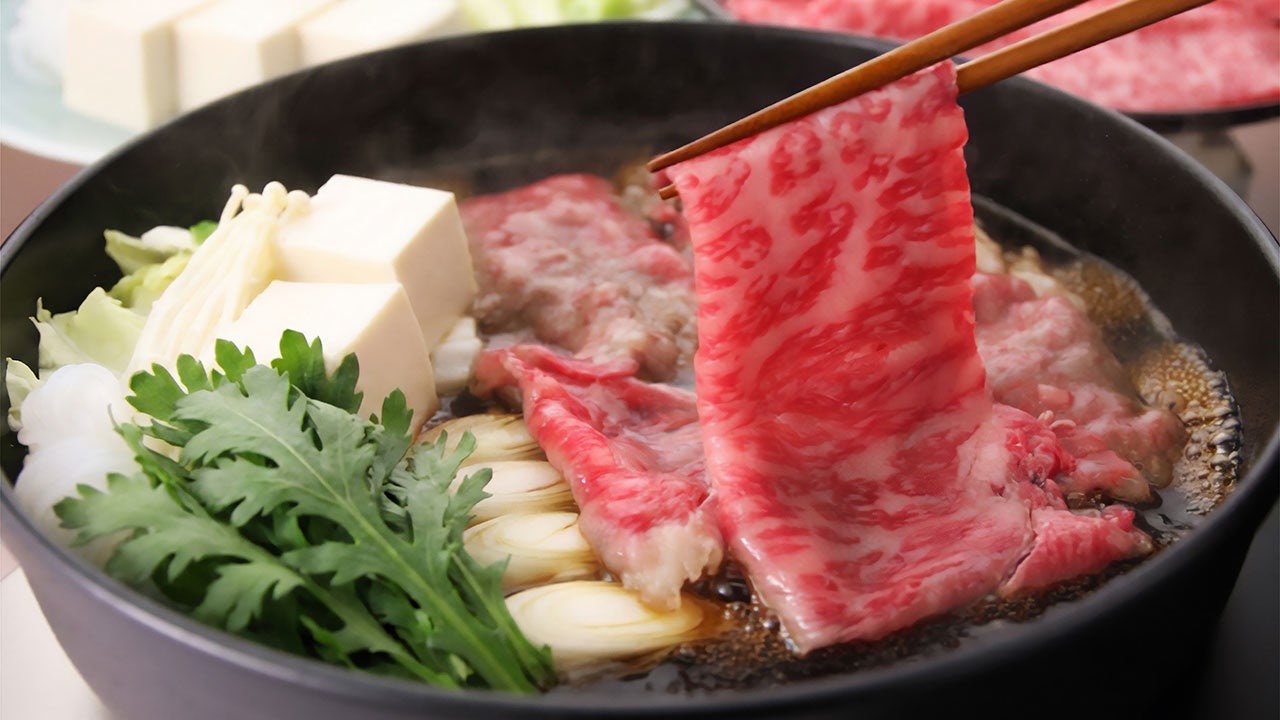
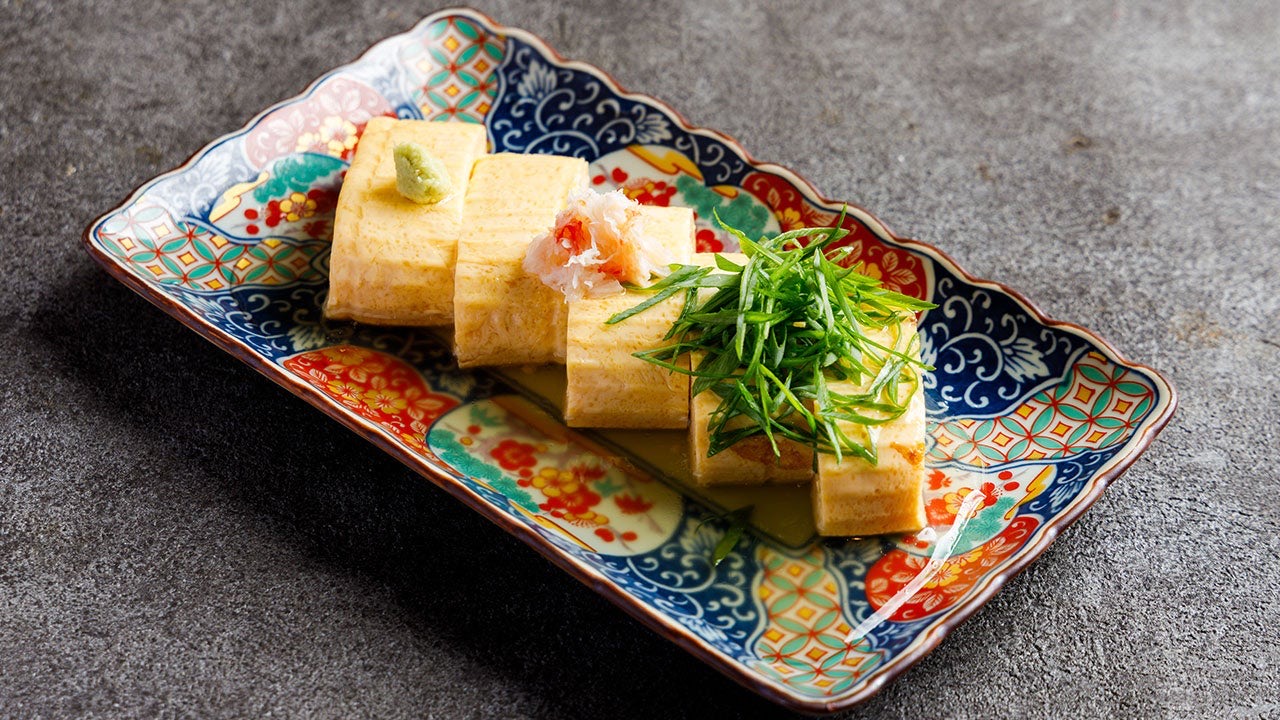
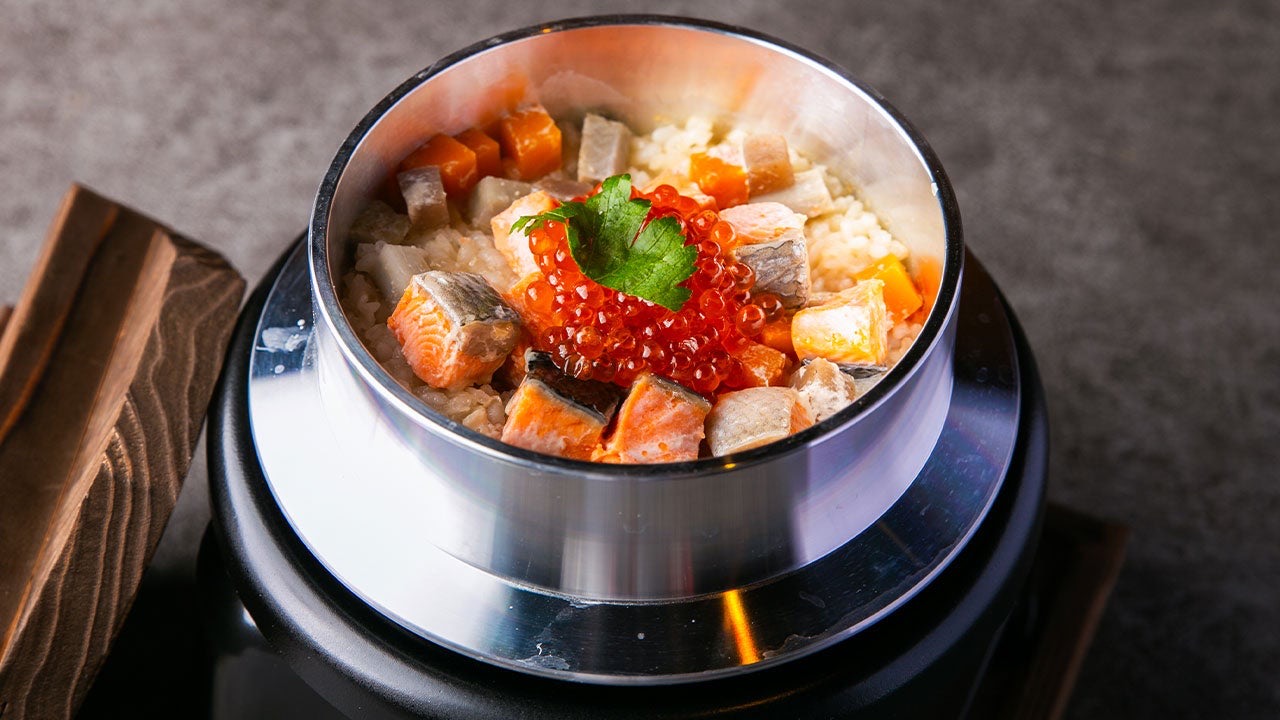
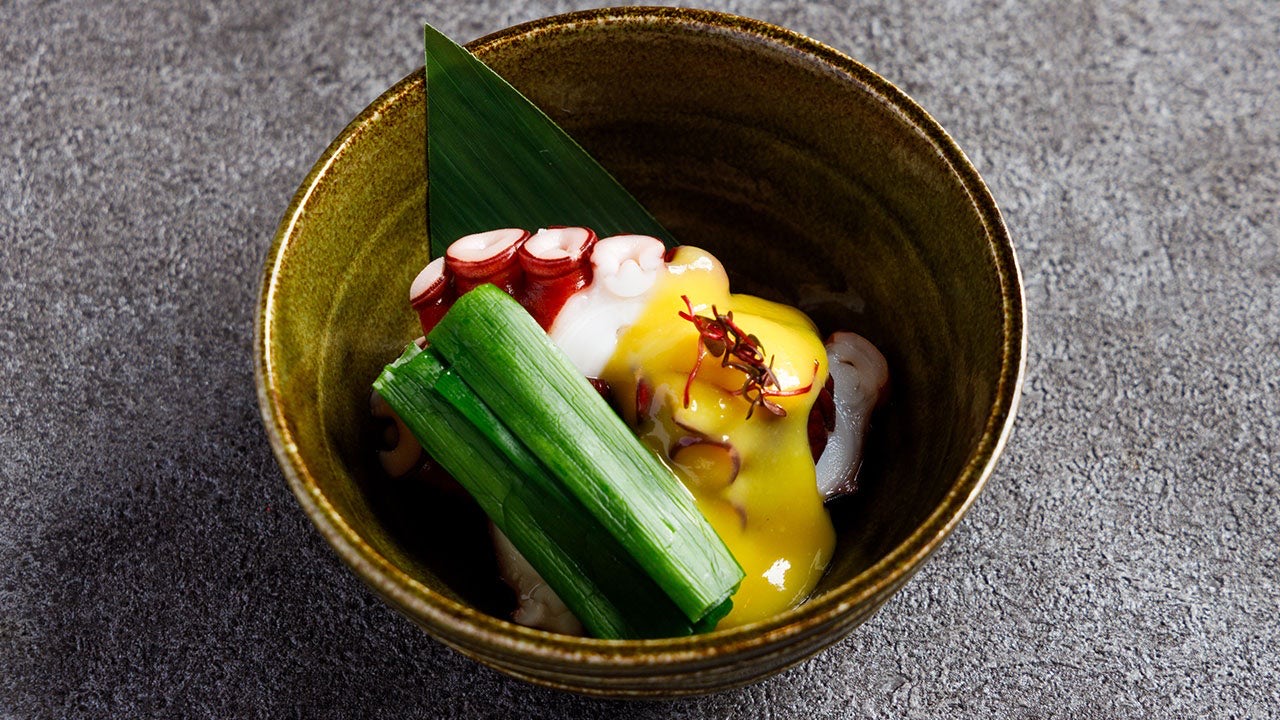
3.The Ginza flagship's signature dishes came down intact. Karasumi soba at 1,518 yen, crab cream croquette at 968 yen. Onto those they layered Kansai produce: Senshu eggplant and sea bass from Osaka, yuba, Manganji peppers and Kujo scallions from Kyoto, raw whitebait from Hyogo. Sukiyaki using Matsusaka beef from Mie runs 2,508 yen. Fish, the restaurant says, is ordered in real time from that day's landings.
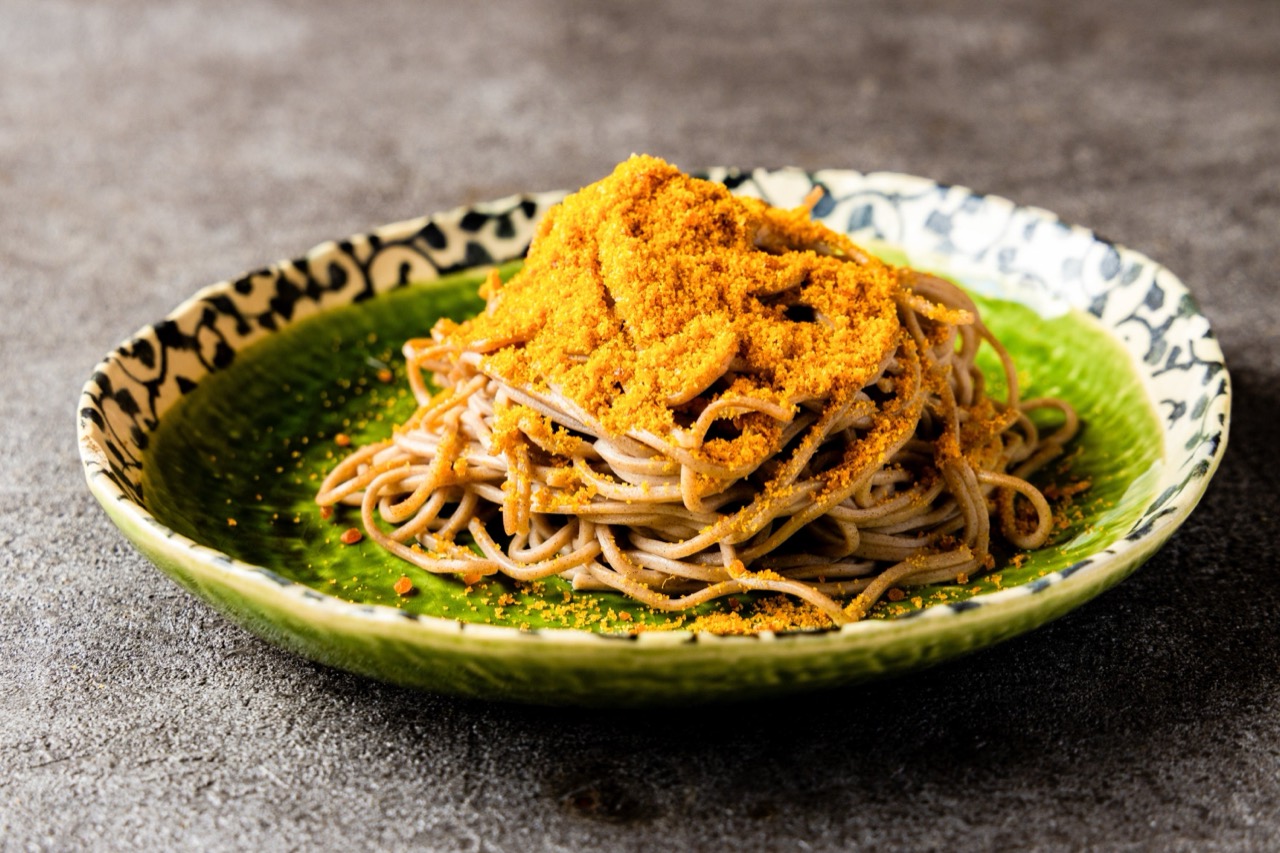
4.Put chopsticks into the karasumi soba and the orange powder slides down the strands. Salt arrives first in the mouth, and behind it the smell of dried sea rises into the nose. Nothing oily stays on the tongue, so one mouthful sends your hand to the glass. A dish built to pull drinks. Carried down from Ginza unchanged.
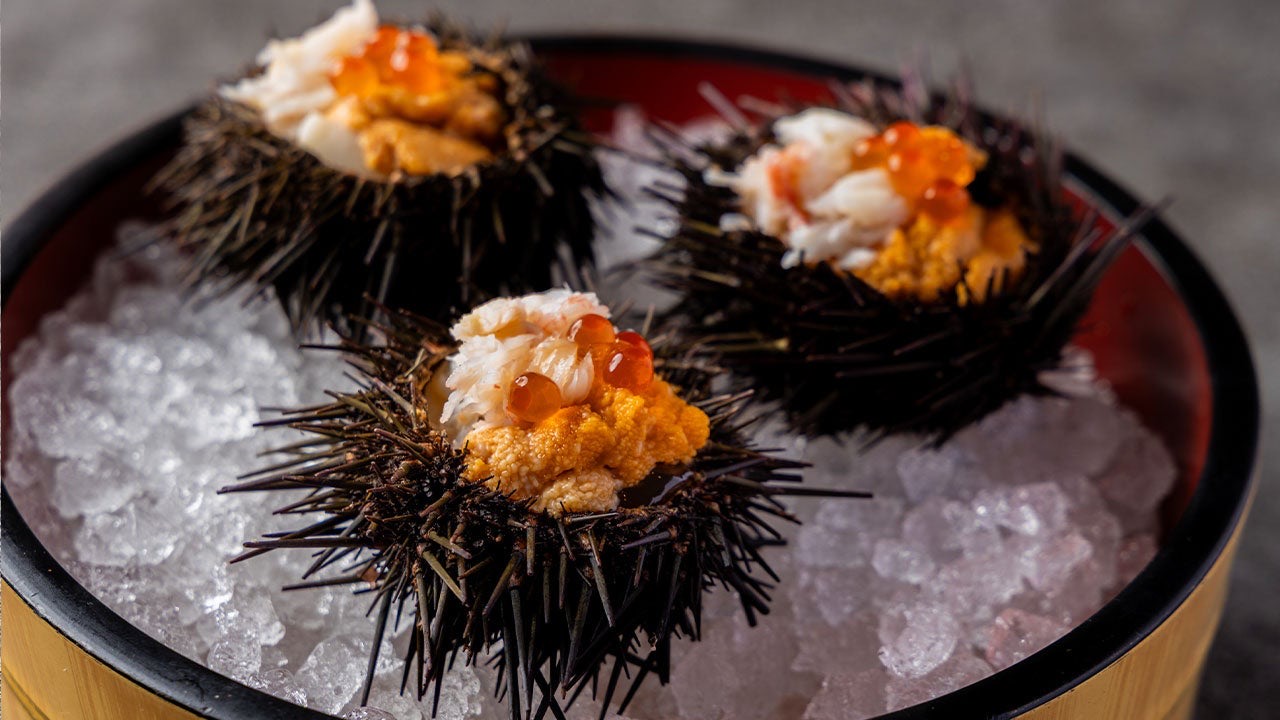
5.Uni-gara no Kyoen comes out in the spiny shell itself. What the guest receives is not a dish but the outer casing of something that was alive a moment ago. Three of them sit in a tub packed with ice, so the center of the table runs cold, and a spoon scraping the inside of a shell makes a sound. Hanging this much apparatus on a single 968-yen bite is an old habit at this company.
6.Kitashinchi packs 3,000 restaurants into Sonezaki-Shinchi 1-chome and Dojima 1-chome. The money moving here at night comes off corporate cards, not personal wallets. Guests bring clients, and they want to know the size of the bill before they sit down. Bundling drinks into the course price is not a question of taste but a device for fixing the check in advance.
7.The 45-person private room points the same way. When a company books a table, headcount and budget are set first and the menu gets attached later. This restaurant built its products in that order. Seven courses at 5,500 yen for a department dinner, eight at 7,500 yen for entertaining a client. Either way, the number that goes on the expense form appears the moment the booking is made.
8.Taking guests' shoes off works the other way. Someone who has slipped off their shoes and dropped their legs in does not get up easily. Long stays kill turnover. So the opening promotion nails a two-hour limit into its conditions. A design that keeps people seated longer and a rule that keeps them from staying sit inside one restaurant together. In a Japanese izakaya that pairing is hardly unusual.
9.What this company originally sold was turnover. Takashi Sakamoto, founder of Book Off, started at seventy and opened Oreno Italian in Shimbashi in 2011, telling top chefs to use whatever ingredients they wanted and then putting guests on their feet. Food cost ran past 60%. In exchange he turned the seats 3.5 times across eight evening hours at an average check of 3,000 yen. The reasoning behind the format was that at four turns even an 88% food cost pencils out.
10.That reasoning did not hold forever. A company that posted 9.2 billion yen in sales for the fiscal year ending October 2015 and was eyeing a listing dropped to a 100 million yen net loss for the year ending October 2018. When the fashion for eating standing up cooled, turnover went first, and once turnover goes a 60% food cost becomes a straight loss. Oreno French in Tokyo today seats everyone, and the Rossini that once cost 1,980 yen sells at 3,980.
11.Ownership changed too. In July 2024 Next Capital Partners bought up all the shares, and in November it merged the company with Olive, converting 8 of Olive's 28 locations to the Oreno sign. There are 65 locations now, with sales for the year ending October 2025 projected at 12 billion yen. The company says it is targeting a listing around 2027 and opening two new locations a year.
12.Here are the numbers for the Kitashinchi location (estimated). At 96 seats across 66 pyeong that is 1.5 seats per pyeong, dense for floor-seating tables. Six evening hours under a two-hour limit allows three turns in theory, but the 5 p.m. crowd is thin, so call it 1.3. If 125 guests a day each spend 7,050 yen including the 550-yen cover charge, that is 23 million yen a month, or 350,000 yen per pyeong.
13.Pull apart the outflows and you can see where the unlimited drinks eat (estimated). Unlimited drink cost at a Japanese izakaya runs 600 to 900 yen per head, and putting food cost at 35% brings the two together to 3,080 yen. That is 44% of 7,050 yen. High against the roughly 30% a standard kappo holds to, but a long way from the 60% of the standing years. Average rent in Kitashinchi is 22,765 yen per pyeong and ground-floor frontage runs to 50,000, while this restaurant sits on the sixth floor.
14.That sixth floor is the quiet premise of the whole model. Giving up walk-in traffic holds rent below half of street level. In return, a night without bookings leaves the floor empty. The three banquet plans and the 45-person private room are products built to fill that blank in advance, and the 20% opening discount does the same job.
15.Feeding people on their feet was not this company's invention. Japan has had standing soba and standing sushi for a long time, and what Oreno did was try that form on foie gras and truffles. When the combination ran its course as a fashion, what remained was not the form but the ingredients. The urchin shells and the Matsusaka beef are unchanged, the guests are sitting down, and the price has doubled.
16.A company that made its name on turnover gave up turnover and doubled its average check. What fills the gap is a course that bundles drinks to fix the check in advance and a private room holding 45 people, and by these estimates 1,250 yen of the 7,050 yen a guest pays is left over. Anyone building this in Korea hits the clock first. A Korean restaurant that posts a two-hour limit draws complaints, and without that rule one party will hold a floor-seating private room for three hours. Once you take the shoes off, turnover only comes from a rule.