retailHoteldiningdrinkCultureSpaceCafeBrand
ArticlesTravel
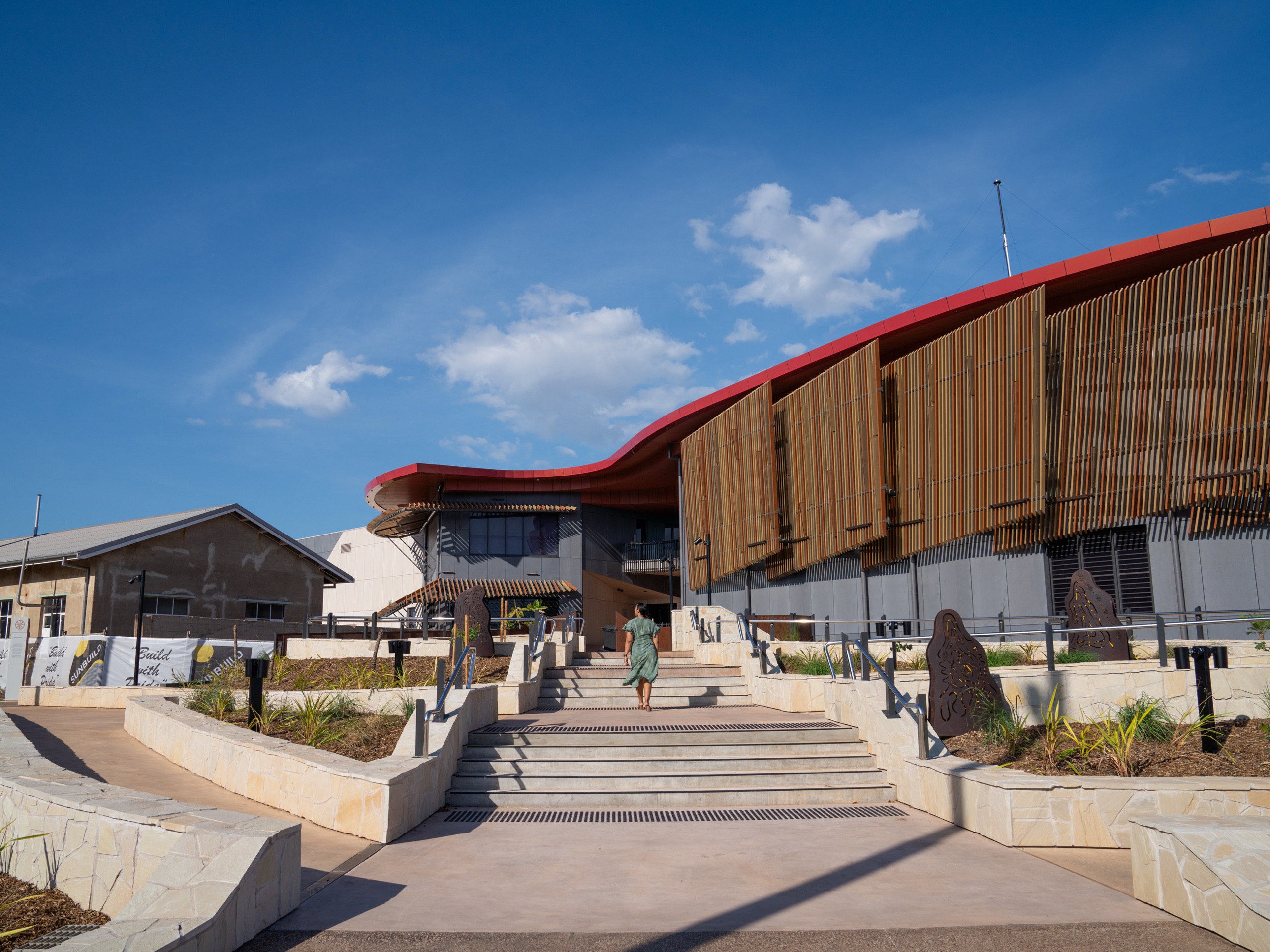
The centre seen head on · A red eave curves like a wave, and timber battens run beneath it. The grasses and rocks flanking the stairs bring Larrakia country up to the door. ⓒElena Caldaci
The centre seen head onA red eave curves like a wave, and timber battens run beneath it. The grasses and rocks flanking the stairs bring Larrakia country up to the door. ⓒElena Caldaci
Daily Space

Beaten in court, they built AUD 58.6 million on the harbour they claimed (Australia, cultural architecture)

2026.09.21

An Aboriginal cultural centre has opened on the Darwin waterfront in Australia. The AUD 58.6 million build was paid for out of a mining royalty fund, and the land came from the territory government. This is the same city where, twenty years ago, a court threw out the native title claim over that ground.

1.On 7 September a cultural centre opened on the waterfront in Darwin, Australia. Its name is the Larrakia Cultural Centre, and it sits below Stokes Hill on the site of the old aquarium. The build cost AUD 58.6 million, roughly KRW 57.4 billion.
2.The building belongs to Larrakia Development Corporation. The Larrakia are the Traditional Owners of Darwin and its waters, nine family groups and some 2,600 people. Design came from Rossi Architects of Darwin together with Susan Dugdale and Associates of Alice Springs. The idea first surfaced in 2002, which puts 24 years between the thought and the door opening.
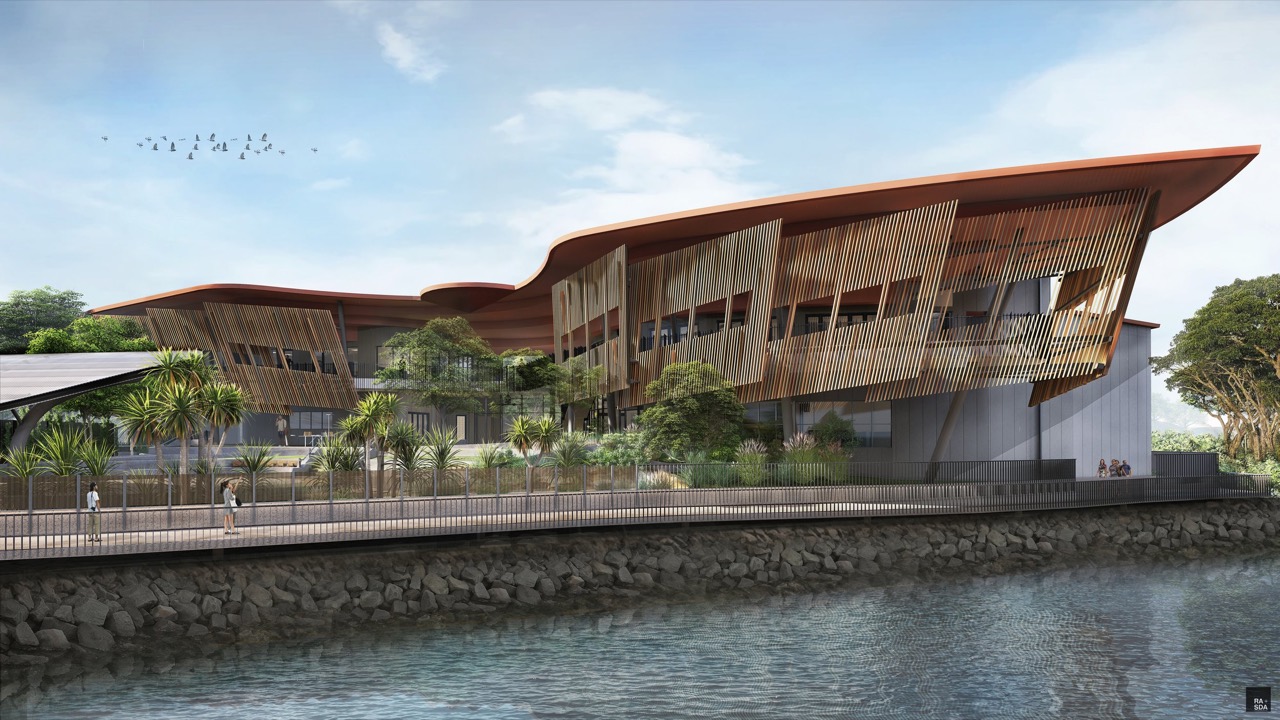
3.The roof is a bird. The roofline traces a tawny frogmouth lifting off Stokes Hill to watch over country, and the timber screens wrapping the walls stand in for its feathers. No two panels sit at the same angle, so from the front the plumage looks raised.
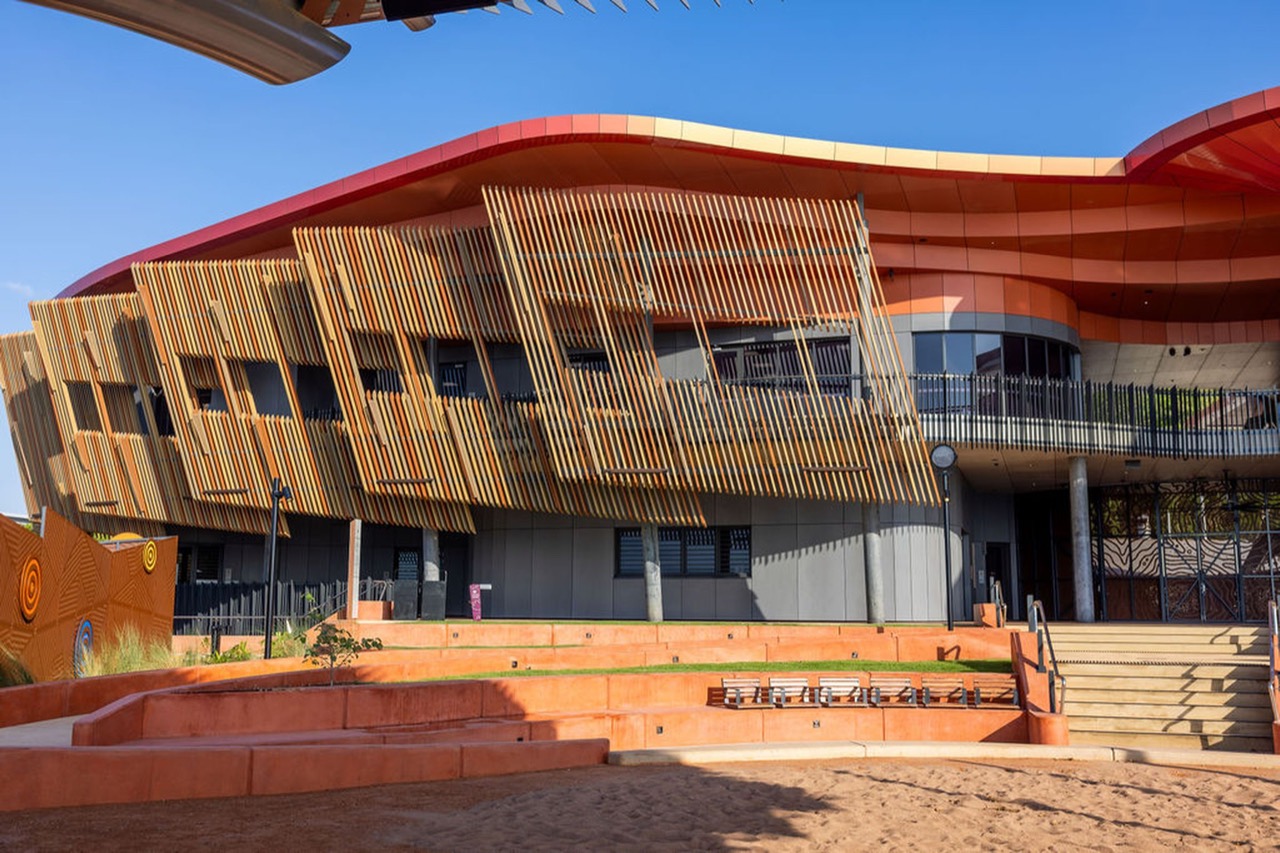
Timber screens set at angles · Each panel tilts differently, which reads as raised feathers. Below is the stepped outdoor theatre with its sand floor. ⓒLarrakia Cultural Centre
Timber screens set at anglesEach panel tilts differently, which reads as raised feathers. Below is the stepped outdoor theatre with its sand floor. ⓒLarrakia Cultural Centre
4.Two floors sit on a half basement. One wing reaches out over the water on a handful of slim columns, and the harbour runs straight in underneath. The eave, clad in red metal sheet, curves down and stops at the terrace rail. In a tropical monsoon climate an eave is not decoration but an air conditioning bill.
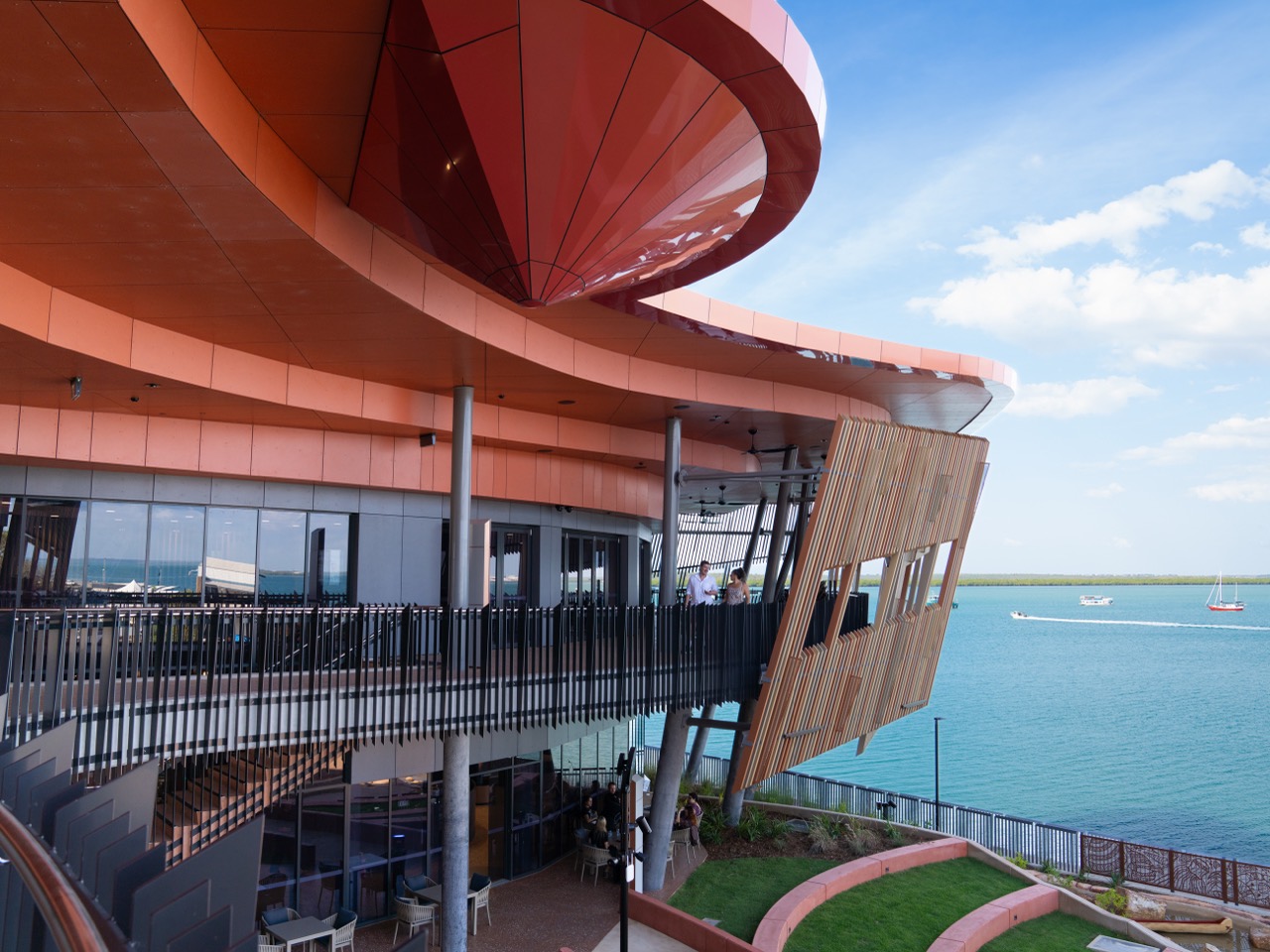
The wing over the water · The eave swings out in a curve with the terrace tucked beneath it. Darwin Harbour lies to the right. ⓒElena Caldaci
The wing over the waterThe eave swings out in a curve with the terrace tucked beneath it. Darwin Harbour lies to the right. ⓒElena Caldaci
Full elevation from the water (rendering) · One roof runs like a wave across two low, long volumes. In front are the rock revetment and the walkway. ⓒRossi Architects + Susan Dugdale and Associates
Full elevation from the water (rendering)One roof runs like a wave across two low, long volumes. In front are the rock revetment and the walkway. ⓒRossi Architects + Susan Dugdale and Associates
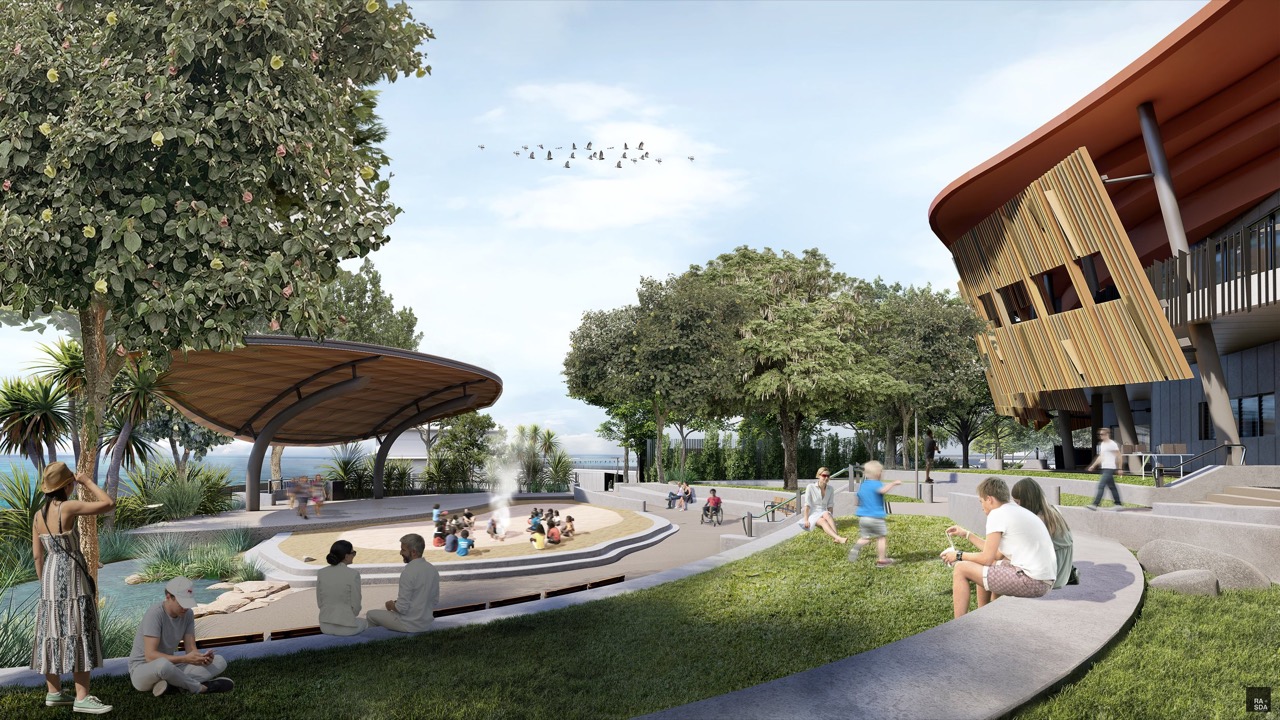
5.The grounds are as big as the building. Monsoon, savanna and coastal planting are laid out separately, and one of them sets the seven Larrakia seasons in order. At the centre sits a ceremony pond fed with saltwater. The stepped outdoor theatre is floored in red earth toned concrete and sand, so you can sit with your shoes off, and on a dry season evening the breeze comes up off the harbour.
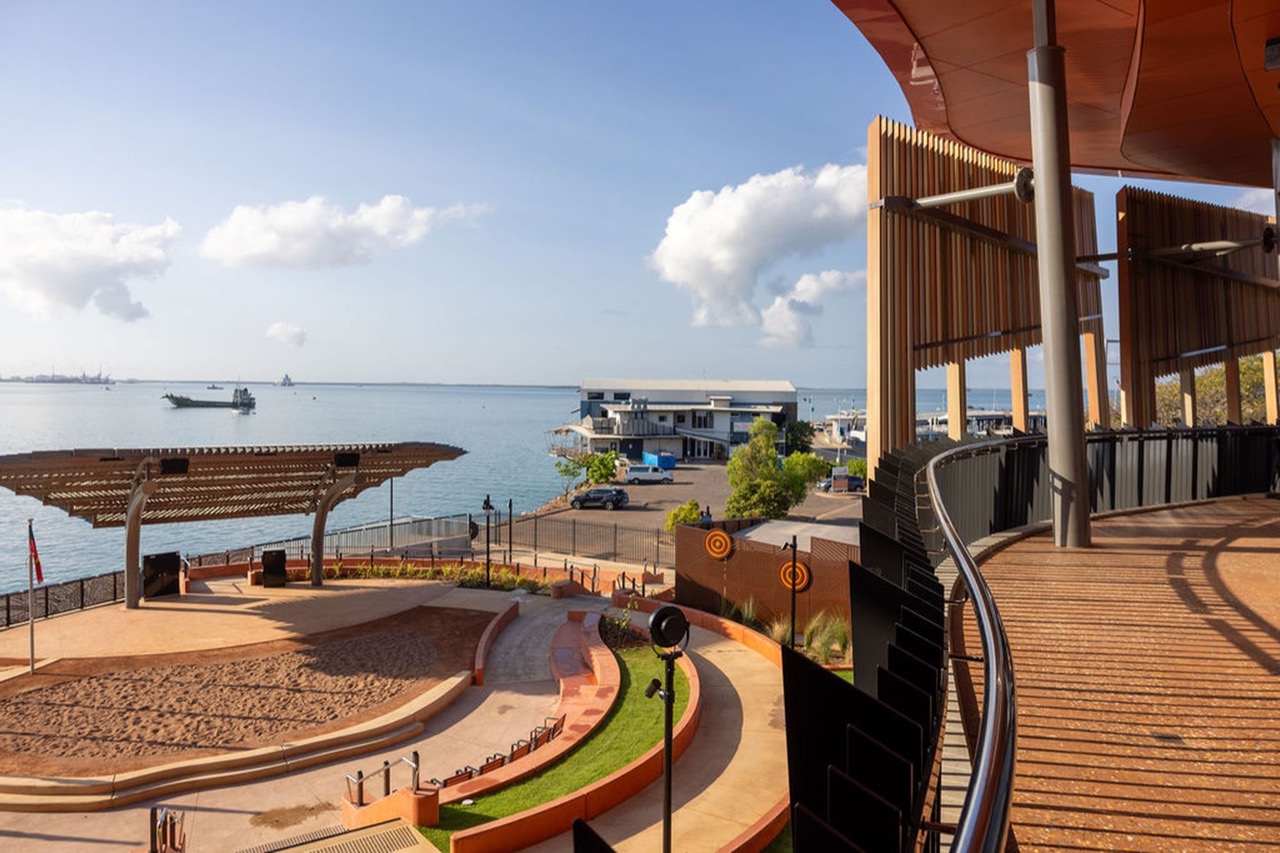
Grounds and harbour from the terrace · The wharf carries on past the curling outdoor theatre. On the water side stands a shade canopy topped with black panels. ⓒLarrakia Cultural Centre
Grounds and harbour from the terraceThe wharf carries on past the curling outdoor theatre. On the water side stands a shade canopy topped with black panels. ⓒLarrakia Cultural Centre
Outdoor theatre and lawn (rendering) · People gather around the sand floor. Top right is the underside of the wing over the water. ⓒRossi Architects + Susan Dugdale and Associates
Outdoor theatre and lawn (rendering)People gather around the sand floor. Top right is the underside of the wing over the water. ⓒRossi Architects + Susan Dugdale and Associates
6.Larrakia rights over this ground were refused in court twenty years ago. On 13 April 2006 the Federal Court dismissed the native title claim covering Darwin, Palmerston and Litchfield. Justice John Mansfield found that Larrakia presence had been interrupted at several points through the twentieth century, and that the evidence of traditional law and custom passing down the generations was insufficient. The appeal the following year failed, as did the application for special leave to the High Court.
7.The two parties that fought the claim hardest were the Northern Territory government and the Darwin City Council. The territory tendered a respondent anthropologist's report, a first in a Northern Territory native title case. Twenty years on, that same territory government handed over prime harbour land. Crown land valued at AUD 16.9 million, about KRW 16.6 billion.
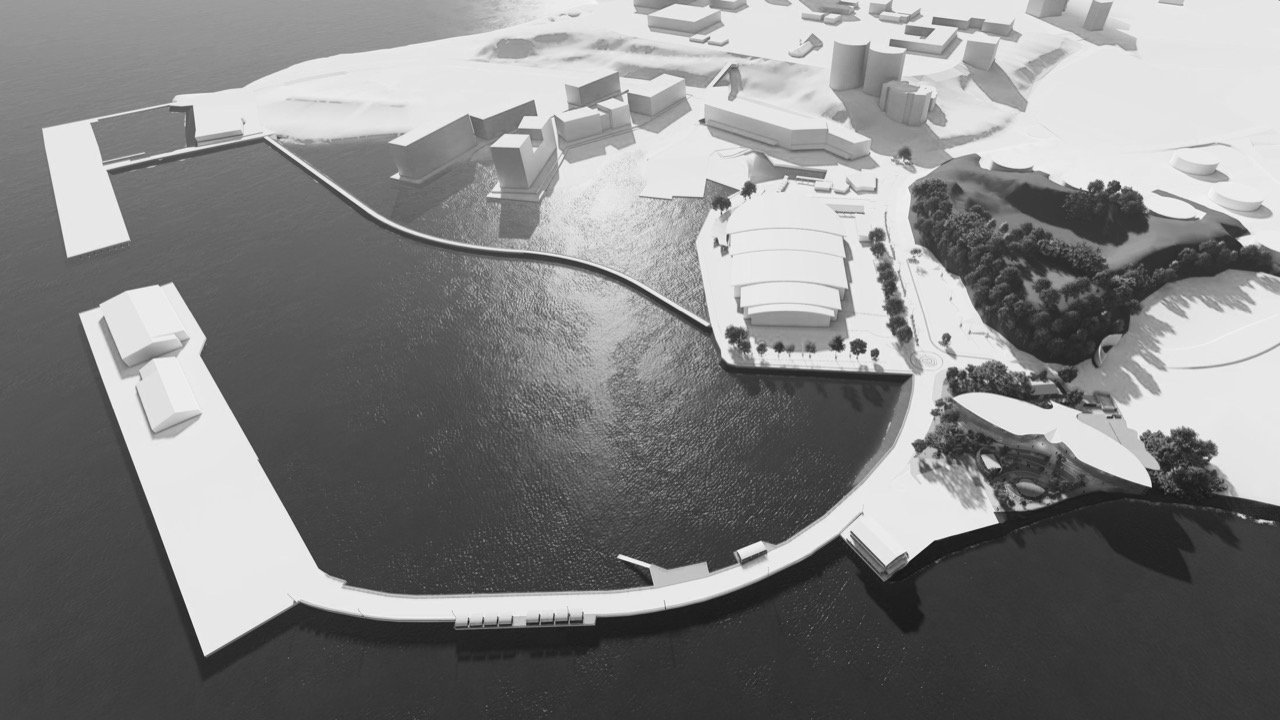
Site model of the harbour · The curved roof at lower right is the centre. Wharves and walkways ring the water. ⓒRossi Architects + Susan Dugdale and Associates
Site model of the harbourThe curved roof at lower right is the centre. Wharves and walkways ring the water. ⓒRossi Architects + Susan Dugdale and Associates
8.What the law withheld, a building took. Mark Motlop, chair of Larrakia Development Corporation, puts it simply: until now there was nowhere in Darwin to meet the Larrakia. The permanent display holds 23 repatriated items and a facsimile of the 1972 land rights petition the Larrakia sent to Elizabeth II.
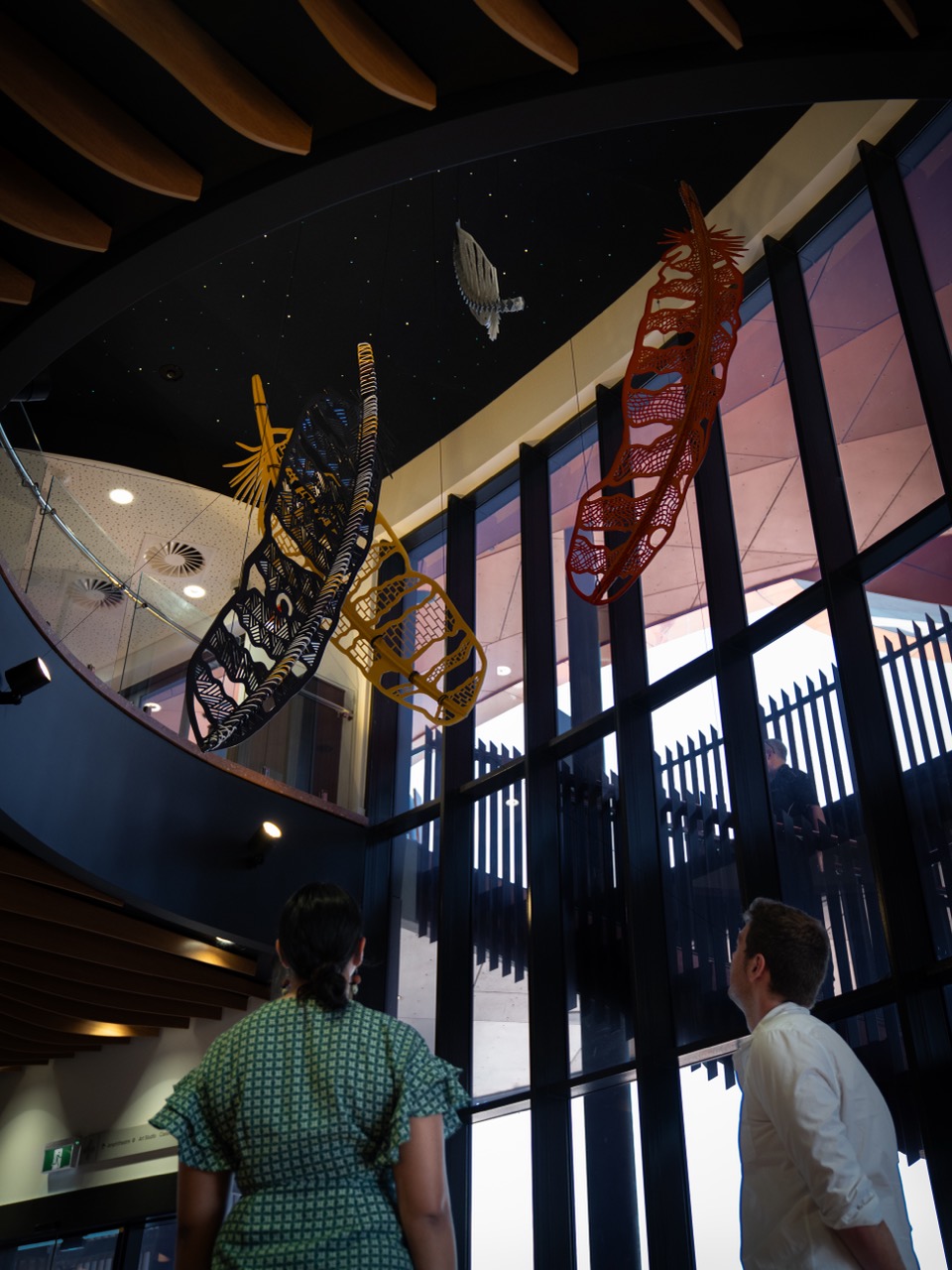
Hung above the lobby · Four woven pieces shaped like fish traps hang overhead. The ceiling is a black field studded with stars. ⓒElena Caldaci
Hung above the lobbyFour woven pieces shaped like fish traps hang overhead. The ceiling is a black field studded with stars. ⓒElena Caldaci
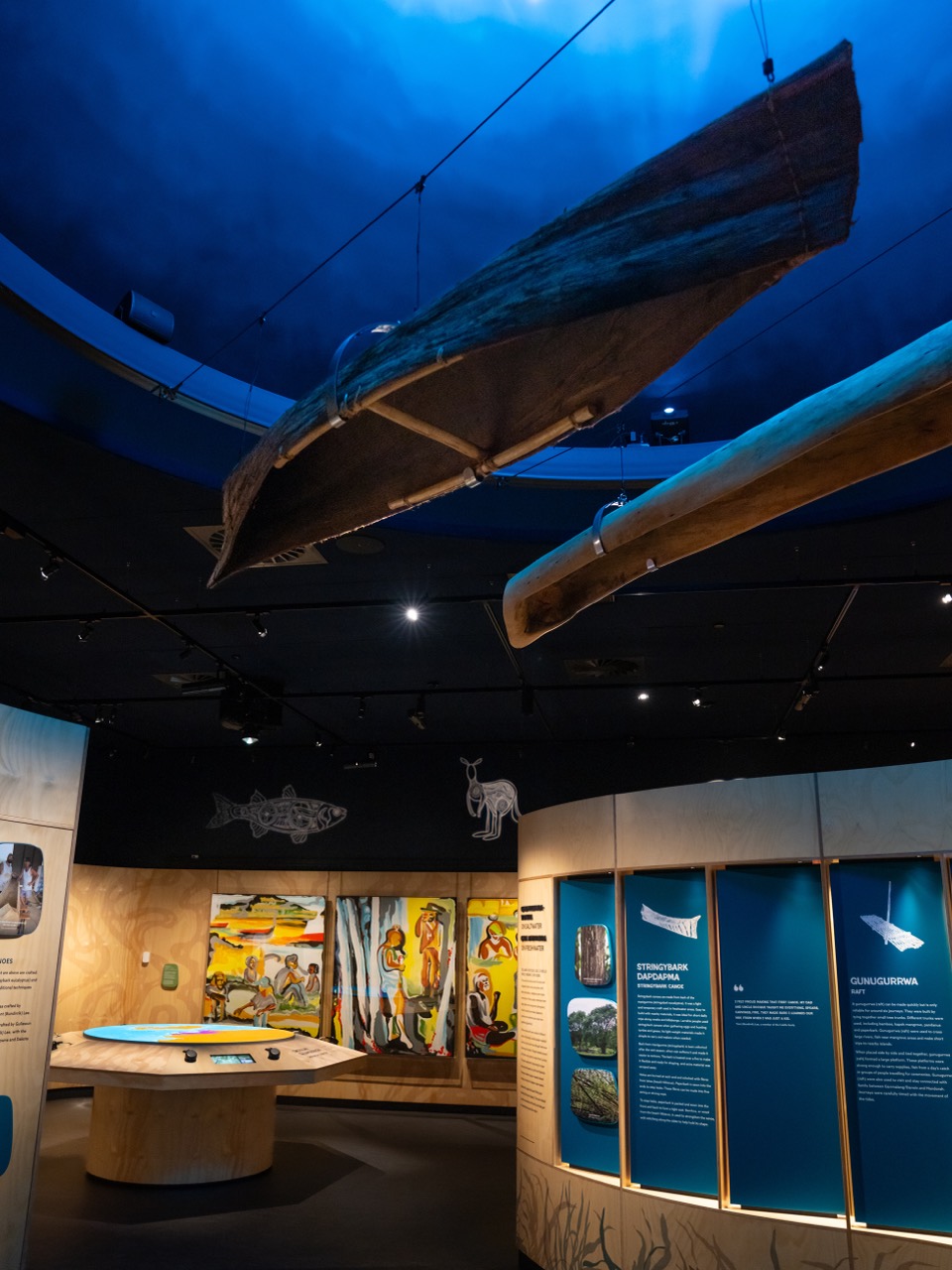
Canoe hung from the ceiling · A dugout canoe hangs under a blue ceiling that stands in for the sea. The walls carry fish and kangaroo paintings alongside interpretive panels. ⓒElena Caldaci
Canoe hung from the ceilingA dugout canoe hangs under a blue ceiling that stands in for the sea. The walls carry fish and kangaroo paintings alongside interpretive panels. ⓒElena Caldaci
9.The money came from mining. All AUD 58.6 million came out of the Aboriginals Benefit Account, a Commonwealth account that sets aside an amount equal to royalties from mining on Aboriginal land in the Northern Territory. It was created by the 1976 land rights act, and control of it has since passed to a body run by Aboriginal people themselves.
10.Sunbuild, a Darwin firm, took the construction contract at AUD 44 million, with 160 jobs riding on the site. The Aboriginal employment target was 30 per cent of the workforce and 15 per cent of subcontracting. NTEX, which handled the 2023 demolition, reached 53 per cent.
11.The revenue side does not rest on a single admission ticket. General entry runs AUD 30 for an adult, while a guided tour led by Elders is AUD 65, a little over double, with separate child, concession and family rates. Add a bush food restaurant overlooking the harbour, a store selling work by Aboriginal makers, and Elder led workshops in string making and spear crafting.
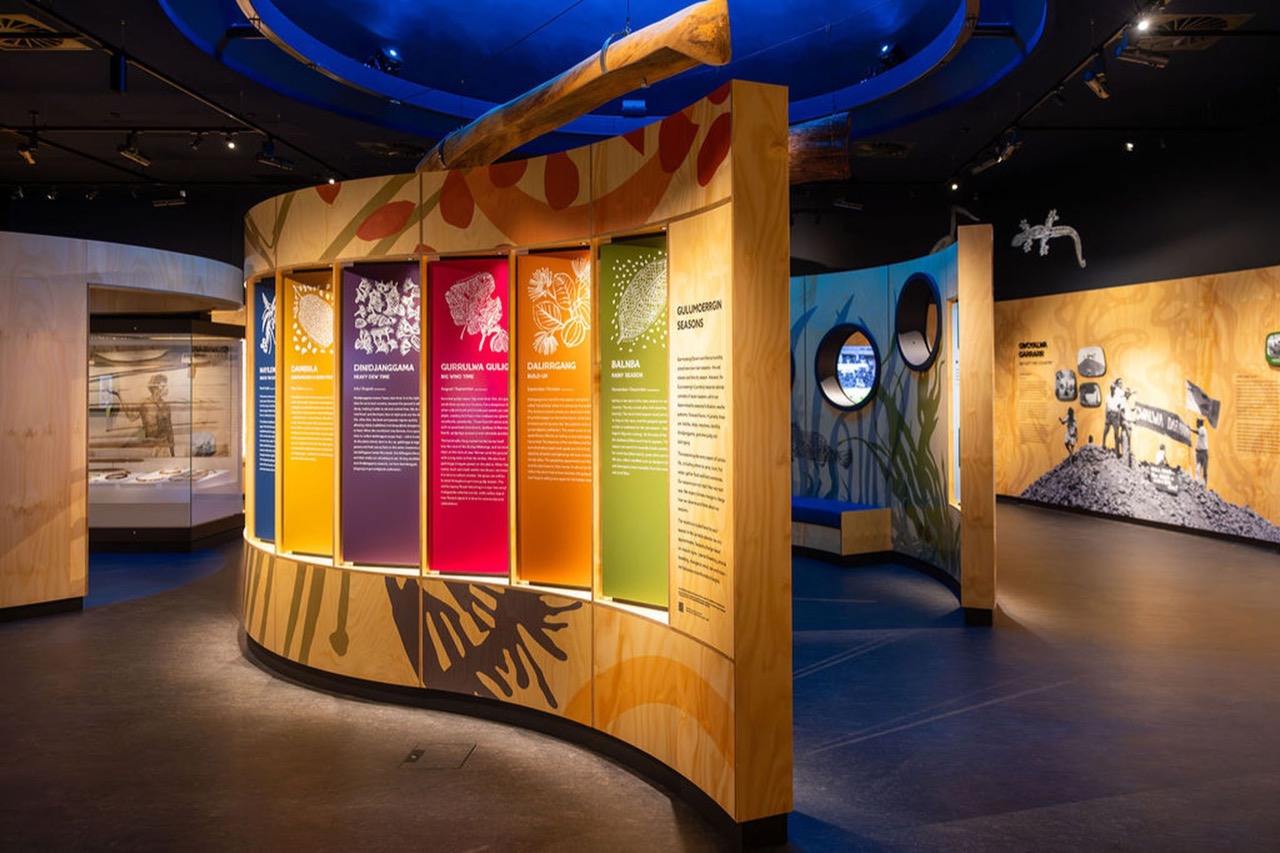
Seven seasons sorted by colour · Gulumoerrgin seasons, in Larrakia language. Panels in a different colour for each season wrap the curved display case. ⓒLarrakia Cultural Centre
Seven seasons sorted by colourGulumoerrgin seasons, in Larrakia language. Panels in a different colour for each season wrap the curved display case. ⓒLarrakia Cultural Centre
12.There is one yardstick for the scale of this. Tjapukai, the Aboriginal cultural park that lasted 33 years in Cairns. It took three million visitors before it shut, on revenue of AUD 40 million across that run. Spread over a year, that is about 90,000 visitors.
13.Say the Larrakia Cultural Centre draws the same. With the rates split as they are, put net takings at AUD 25 a head and annual admission revenue lands around AUD 2.25 million. Paying off the build on tickets alone would take 26 years. Operating costs are not deducted anywhere in that sum, so it does not hold.
7,550만 호주달러가 어디서 왔나 단위 백만 호주달러 · 현금과 현물을 함께 놓았다 광산 로열티 기금 58.6 준주 토지 16.9 기금은 노던준주 원주민 토지의 광물 로열티를 연방이 적립해 두는 계정이다 토지는 준주 정부가 감정가대로 현물로 넣었고, 갚을 원금은 어느 쪽에도 없다 입장권으로만 갚는다면 한 해 방문객 9만 명에 1인당 25호주달러를 곱한 단순 계산 사업비 58.6 한 해 입장 수입 2.25 갚는 데 걸리는 해 26년 방문객 9만 명은 33년 영업한 차푸카이의 한 해 평균치를 빌린 값이고, 운영비는 빼지 않았다.
Where the money came from, and what tickets bringBuilt with money that carries no principal to repay, while ticket revenue never gets near the build cost.
14.Tjapukai closed in January 2021. A structure with its revenue pinned to international tourists could not survive closed borders, and visitor numbers had been sliding before that. Its founders said publicly that the government body holding ownership for twelve years had managed neither financial self sufficiency nor the upkeep of assets. That is why the Larrakia side looked first at models in Canada, Alaska and New Zealand.
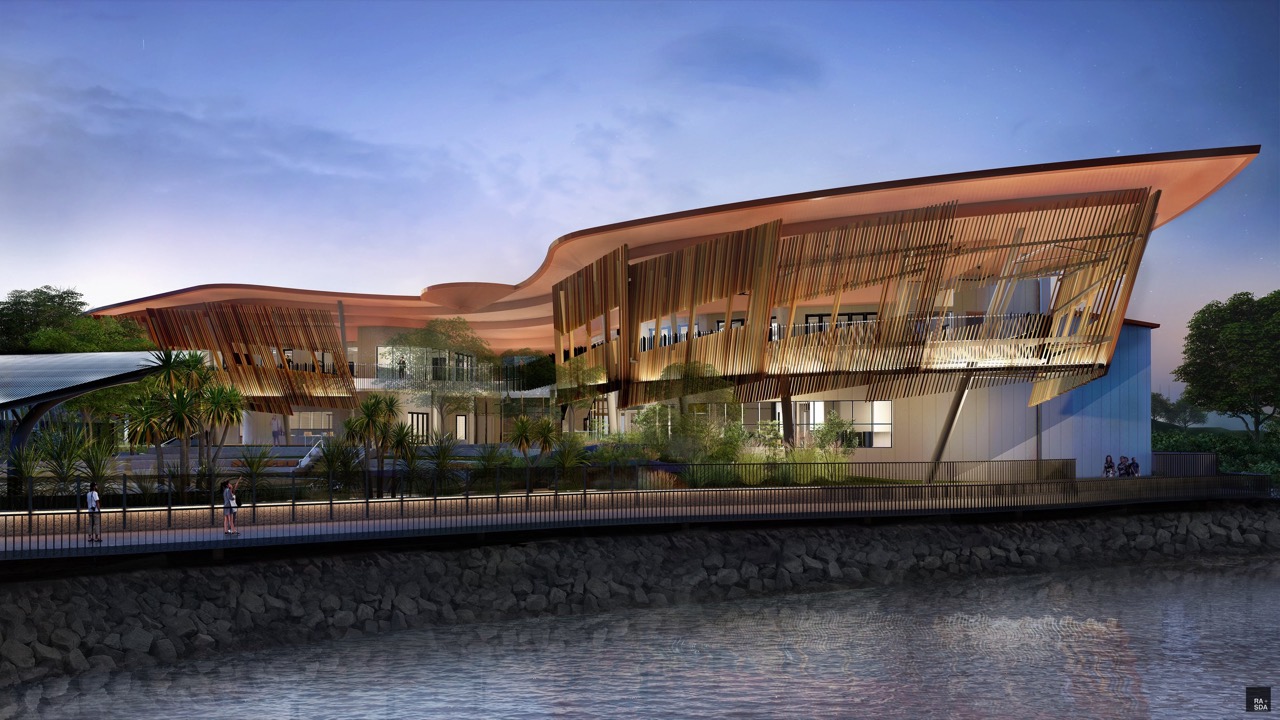
Water side elevation after dark (rendering) · Light leaks through the timber screens and the underside of the roof glows orange. The view looks up from the harbour. ⓒRossi Architects + Susan Dugdale and Associates
Water side elevation after dark (rendering)Light leaks through the timber screens and the underside of the roof glows orange. The view looks up from the harbour. ⓒRossi Architects + Susan Dugdale and Associates
15.So the test for this building is not payback. Money out of the Aboriginals Benefit Account is a distribution rather than a loan, carrying no obligation to repay principal, and the land went in as a contribution in kind from the territory. What remains is covering the annual cost of cooling and staffing two floors plus a half basement in a tropical climate, out of the restaurant, the store, tours and venue hire. How much other business the corporation runs alongside it will decide the next five years.
16.Twenty years after losing in court, a KRW 57.4 billion building stands on prime harbour land on that same ground, paid for by mining royalties, on land handed over by the territory government that once fought the case. Anyone trying this in Korea runs first into where the money comes from. There is no resource royalty account set aside for a particular community here, so the path runs through municipal grants or open calls, and that money follows the construction only, with operations passing to a management contract. If ownership does not stay with a local entity, there is no reason to wait 24 years either.
Daily Space #052 · 2026.09.21
Sources. ArchitectureAu 'Indigenous cultural centre opens its doors to Darwin' and 'Ancestral bird inspires Indigenous cultural centre in Darwin', ABC News 'Darwin's $58m Larrakia Cultural Centre opens to the public after 24-year wait' (7 Sep 2026), Time Out Australia 'Australia's newest $58.6 million cultural landmark has finally opened in Darwin', Australian Traveller 'Larrakia Cultural Centre', Larrakia Cultural Centre official site 'Development' and 'About Us', Rossi Architects project page 'Larrakia Cultural Centre', Sunbuild project page, Territory Q 'Sunbuild flies with Larrakia project', Ministers' Media Centre 'Larrakia Cultural Centre soars with new bird-shaped roof' (2025) and 'Larrakia Cultural Centre construction set to begin' (2023), National Indigenous Times 'Darwin's $58.6 million Larrakia Cultural Centre nears completion as roof lands in place', Risk v Northern Territory [2006] FCA 404 and [2007] FCAFC 46, AIATSIS Native Title Newsletter (Mar-Apr 2006), ABC News 'Cairns' Tjapukai Aboriginal Cultural Park shuts for good as COVID wreaks tourism havoc' (8 Jan 2021).
Won conversions use AUD 1 = KRW 980. Floor area has not been published, so it is not given here. The AUD 58.6 million build cost came entirely from the Aboriginals Benefit Account, and the AUD 16.9 million of territory land was a contribution in kind. The AUD 44 million contract value and the 160 jobs are as announced by the builder in 2023. The figure of 90,000 visitors a year is borrowed from Tjapukai's three million over 33 years, and AUD 25 a head is likewise an estimate read off the rate card. The 26 years is a plain calculation with no operating costs removed.