retailHoteldiningdrinkCultureSpaceCafeBrand
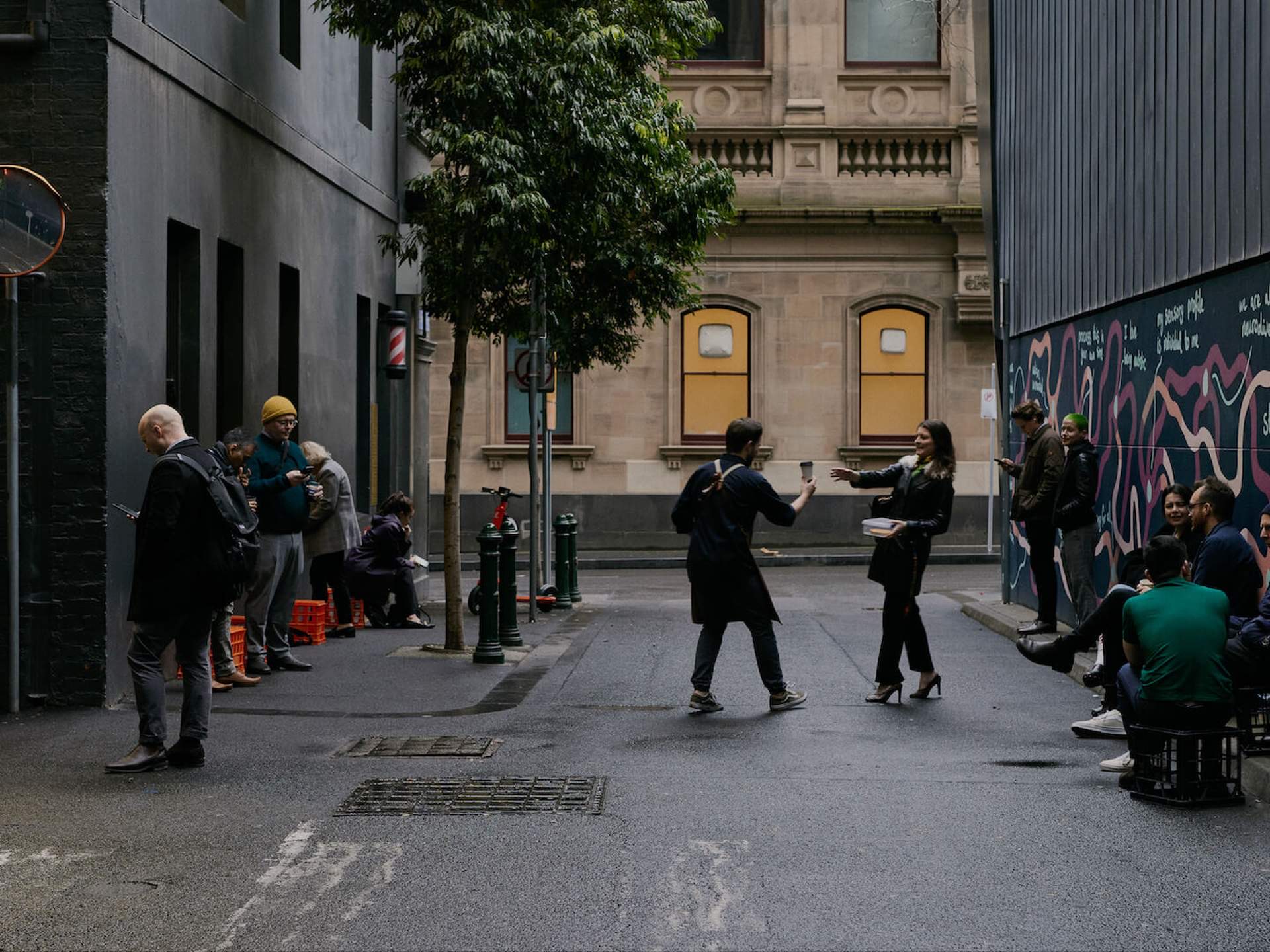
ArticlesTravel
The scene outside a shop with nowhere to sit · The lane behind 493-495 Little Bourke Street. There has never been a chair inside since it opened at the end of 2011. Guests take their cup and step out into the lane. ⓒConcrete Playground / Ben Clement
The scene outside a shop with nowhere to sitThe lane behind 493-495 Little Bourke Street. There has never been a chair inside since it opened at the end of 2011. Guests take their cup and step out into the lane. ⓒConcrete Playground / Ben Clement
Daily drink

Patricia in Melbourne: fifteen years, 700 people a day and not one chair

2026.07.27

A coffee bar in central Melbourne has gone fifteen years without making anywhere to sit. The words STANDING ROOM ONLY are set into the floor tiles at the entrance, and 700 people a day stand there, drink and leave. In May 2026 that shop opened a second room for the first time. There are no chairs in it either. Count what moved into the space the chairs were removed from.

1.Behind 493-495 Little Bourke Street in central Melbourne, where a narrow lane turns, there is a coffee bar with not one chair. It opened at the end of 2011 and is called Patricia. In May 2026 that shop opened a second site at 50 Lonsdale Street, inside the Black Eagle Hotel building put up in 1850.
2.Put the numbers down first. It trades from 7 in the morning to 4 in the afternoon, Monday to Friday, closed weekends and public holidays. The original pulls 1,200 espresso shots a day and serves about 700 people, according to co-founder Bowen Holden. 700 people in nine hours is seventy-eight an hour. The menu is three lines, black, white and filter, in one size.
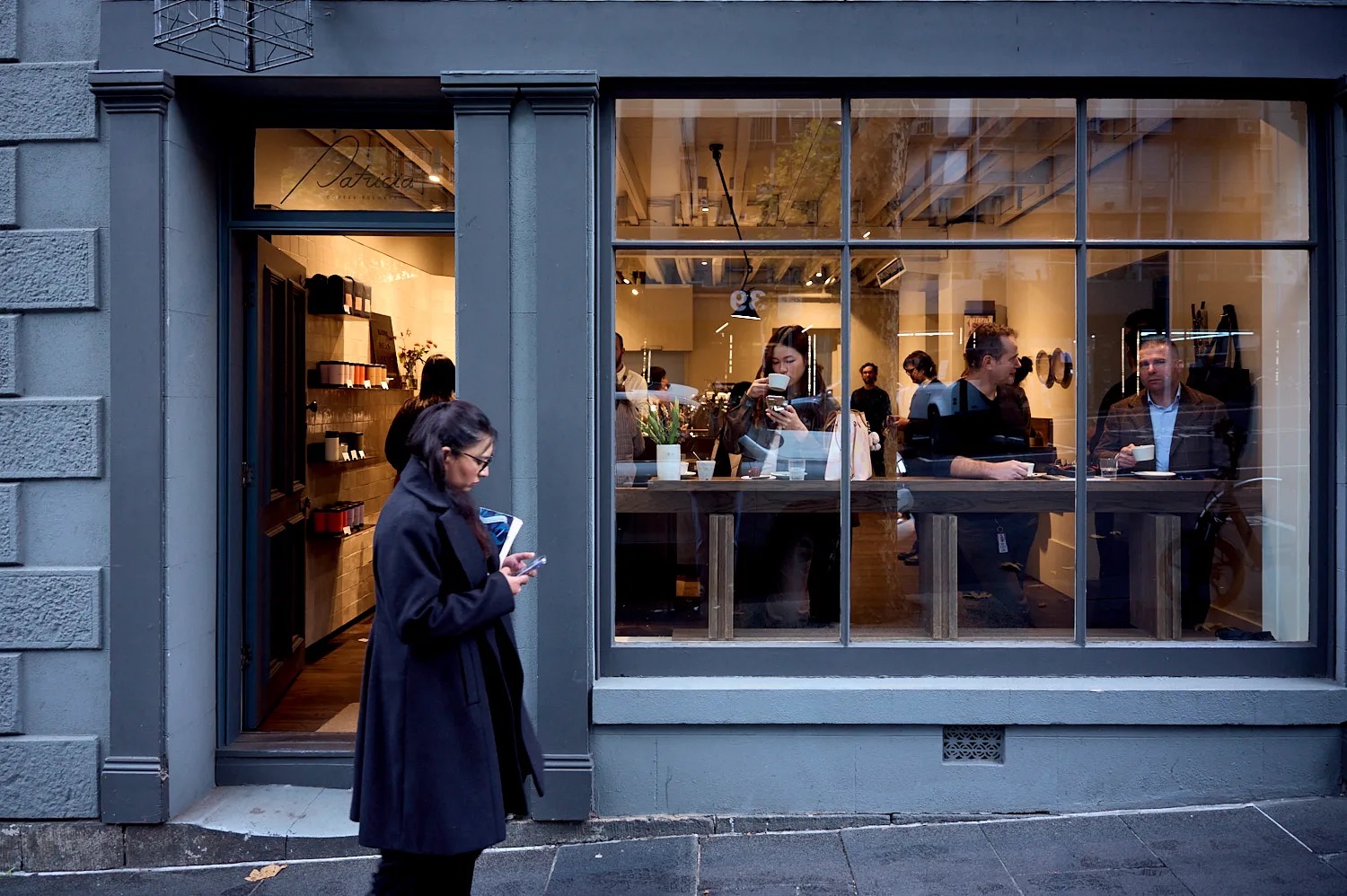
3.The original sits in the back of a building that housed a law office. The interior is by Foolscap Studio and the graphics by Che Douglas of Beyond the Pixels, with the logo laid once in gold leaf on the glass. The signage is small enough to walk past in the lane, and instead you find the place because someone is always standing at the door. Before stepping in, a guest reads this shop's contract underfoot.
4.The grinder runs briefly, the steam wand shrieks and stops, a cup meets a saucer. These are the sounds of eight in the morning. The smell of milk heating arrives ahead of the coffee. Conversation does not run long. People standing do not linger, and in a room with nowhere to sit the sound does not scatter but gathers toward the counter. That density pushes the queue along.
A rule written on the floor rather than a sign · Graphics by Beyond the Pixels. The logo is laid once in gold leaf on the glass, and STANDING ROOM ONLY is set into the entrance floor tiles. Almost nothing projects into the lane. ⓒIdentity Designed
A rule written on the floor rather than a signGraphics by Beyond the Pixels. The logo is laid once in gold leaf on the glass, and STANDING ROOM ONLY is set into the entrance floor tiles. Almost nothing projects into the lane. ⓒIdentity Designed
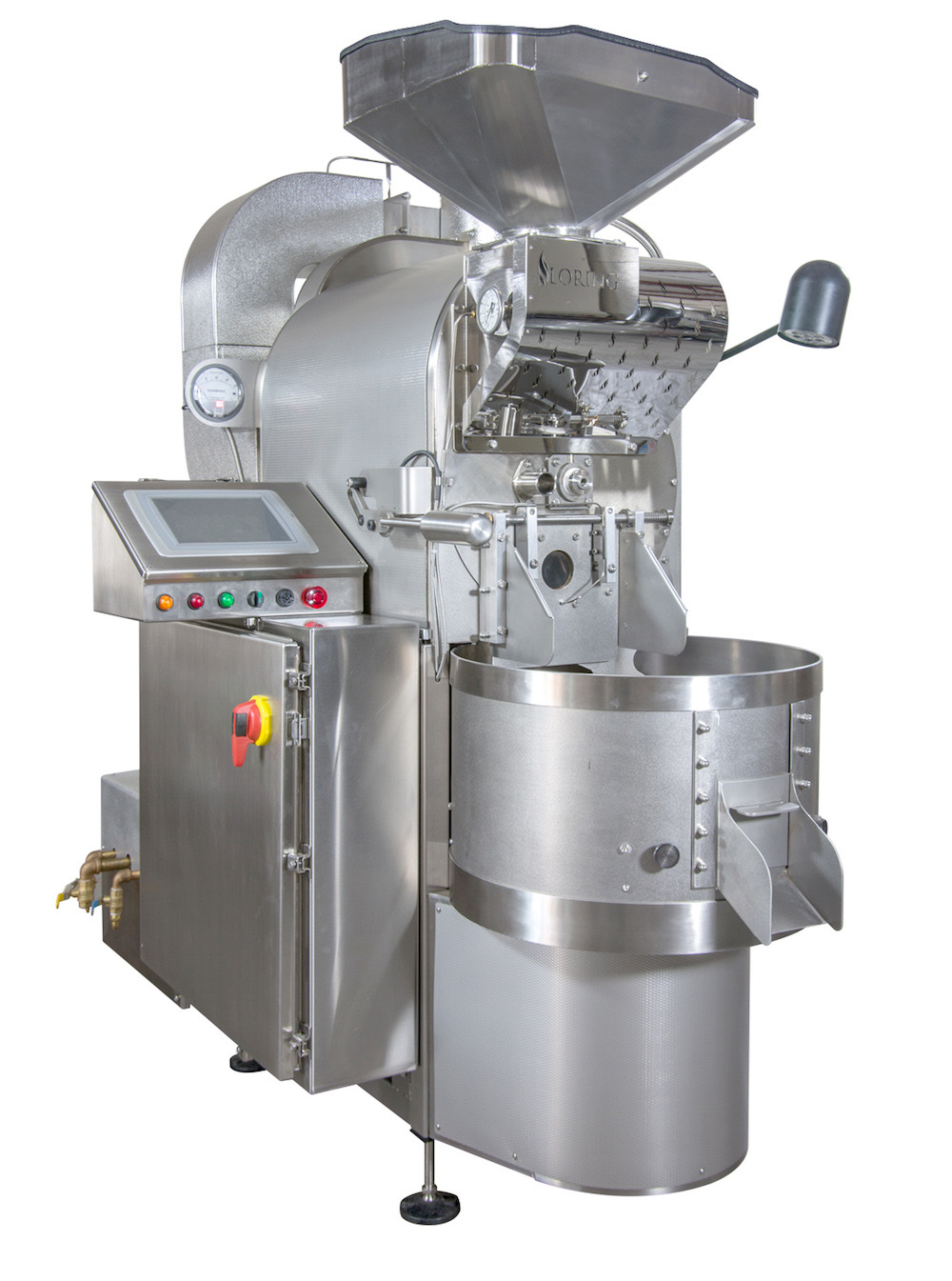
5.The cups were made by the potter Malcolm Greenwood. This shop did not roast its own coffee at the start, beginning as an edit shop rotating beans from Melbourne roasters such as Seven Seeds, Market Lane and Proud Mary. It started roasting under its own name in 2016 and built a roastery in Coburg North in April 2024, on a Loring S15 Falcon. The espresso line now runs Colombia Los Monjes as the house, with Brazil Sucuri and Peru Elias Sanchez alongside. A composition leaning toward sweetness and weight rather than the Nordic style that leads with acidity.
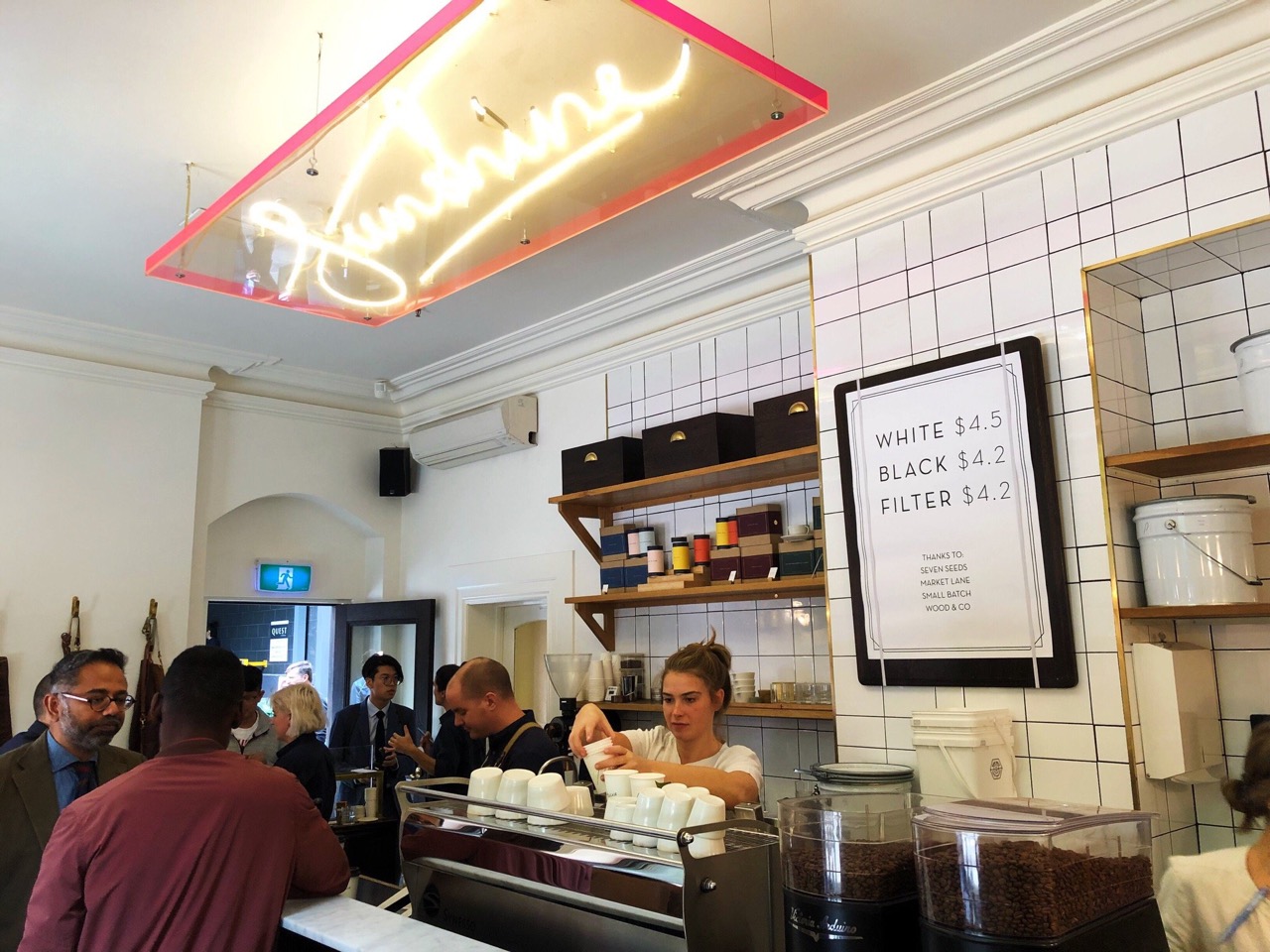
Inside there is a counter and room to stand · The rear of a building that was a law office. The interior is by Foolscap Studio. The menu is three lines, black, white and filter, in one size. ⓒTripadvisor
Inside there is a counter and room to standThe rear of a building that was a law office. The interior is by Foolscap Studio. The menu is three lines, black, white and filter, in one size. ⓒTripadvisor
6.The new site was handled by Hecker Guthrie, with Samuel McIntyre, who worked here, in charge. There are two rooms. The larger holds the espresso bar and the pastry display, and in the middle of the smaller stands a filter bar you use standing up. Pour-over, dropped at the original, returned here, poured by the cup from two Colombians. The espresso machine at both sites is a La Marzocco Strada. There are still no chairs.
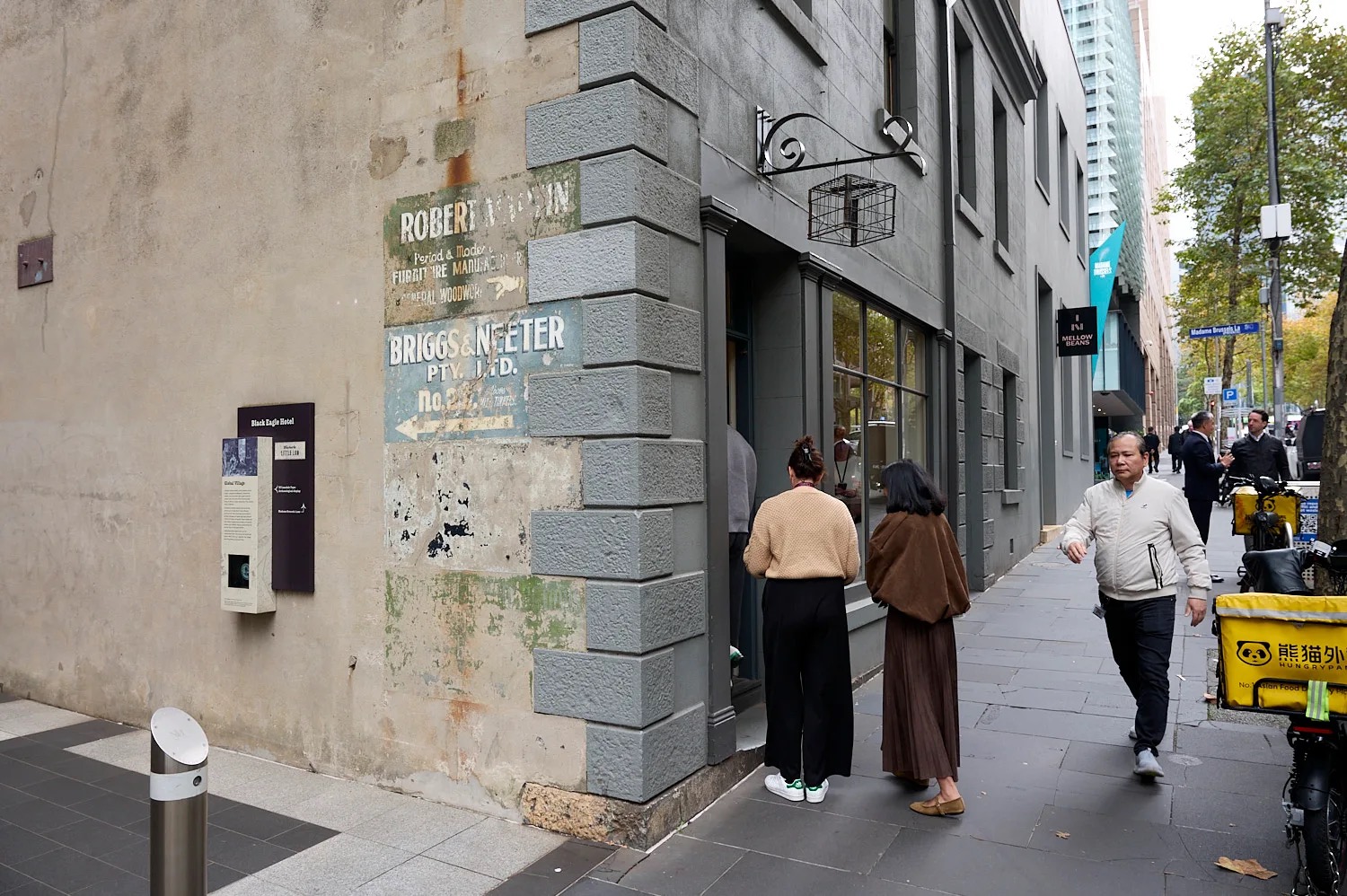
A second room after fifteen years · Opened May 2026 at 50 Lonsdale Street, in the Black Eagle Hotel building of 1850. Built by Westmark, with furniture by Andy Ryan and Illogical Study. ⓒBroadsheet
A second room after fifteen yearsOpened May 2026 at 50 Lonsdale Street, in the Black Eagle Hotel building of 1850. Built by Westmark, with furniture by Andy Ryan and Illogical Study. ⓒBroadsheet
7.Count the money. As of March 2026 the average flat white in central Melbourne is A$4.90, and most cafes sit between A$4.50 and 5.50. With one size here, put the price per cup at about A$5, and taking one guest in four to buy a pastry as well, spend per head lands around A$6.5. At 700 people that is about A$4,550 a day, KRW 4.1 million. With weekends closed the trading year runs about 250 days, giving annual revenue around KRW 1 billion.
8.The floor area has never been published. From photographs and layout it looks like about ten pyeong, a little over thirty square meters. Divide KRW 1 billion by that area and you get KRW 100 million per pyeong a year, or KRW 8.3 million per pyeong a month. Set against Korean cafes that trade well at KRW 1 to 2 million per pyeong a month, that is a different order of magnitude.
9.Seat turnover as a measure has no denominator here. What to look at instead is how many people the meter in front of the counter passes in an hour. Three to five minutes for one person to order, receive and leave, with maybe ten people standing inside at once (estimated). A cafe where one seated guest spends an hour cannot pass 100 people a day in the same area.
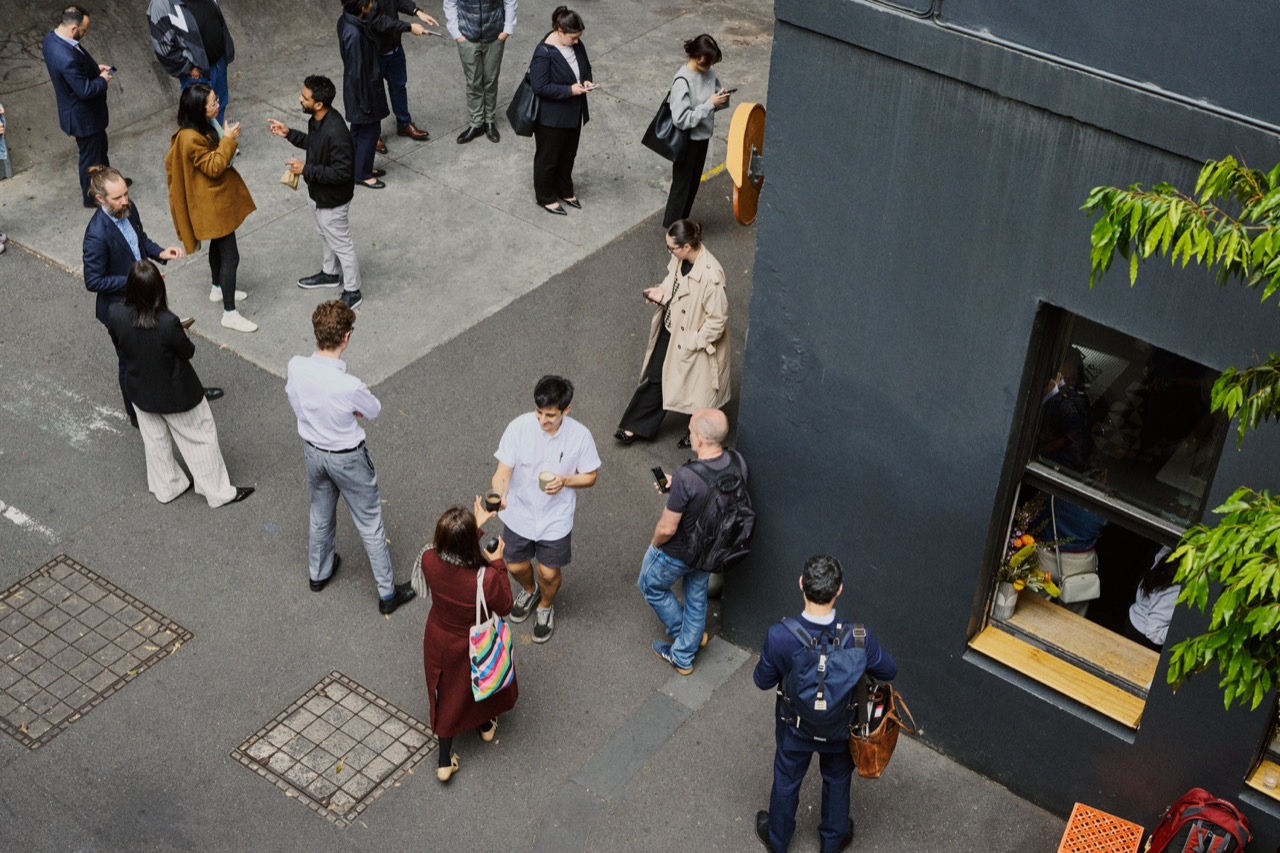
The lane outside counts as trading area · Looking down on the lane behind Little Bourke Street. People with cups line the wall, and those who do not fit inside fill the lane. With no seats, the queue is the dining room. ⓒPatricia Coffee Brewers
The lane outside counts as trading areaLooking down on the lane behind Little Bourke Street. People with cups line the wall, and those who do not fit inside fill the lane. With no seats, the queue is the dining room. ⓒPatricia Coffee Brewers
10.Put self-roasted beans at A$25 a kilo and a double costs A$0.45, and with milk, cup and lid the cost lands around A$1.15 a cup, a cost ratio of about 23% (estimated). The heavy side is people. The casual level one rate under the Australian Restaurant Industry Award is A$33.05 from July 2026, and with four on at peak, daily labor comes to A$1,190, 26% of revenue. On Saturday that rate carries 150%, on Sunday 175%.
11.Which is why closing at weekends is arithmetic rather than sentiment. A central office trade area loses its guests on Saturday and Sunday while labor costs the most. Rent still runs 365 days. Prime street-front retail in central Melbourne passes A$1,000 per square meter a year and rear-lane space sits below that, and even calculating 33 square meters at A$1,000 gives A$33,000 a year, about KRW 30 million. Against annual revenue that is about 3%, or 6% at double. Set that beside Korean cafes spending 10 to 15% of revenue on rent and you can see where this shop's weapon is.
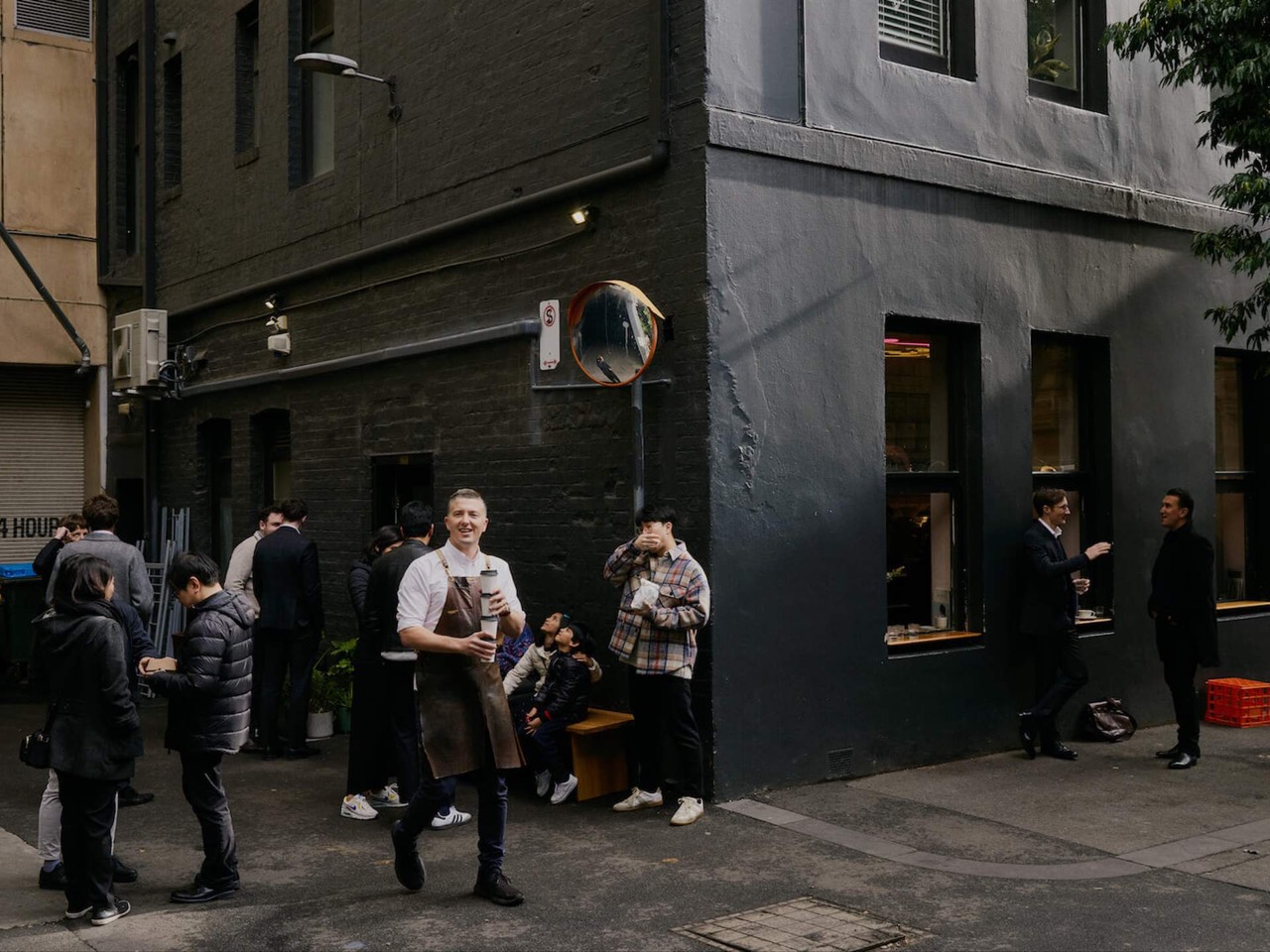
One size, and cups made by a potter · The cups are by the potter Malcolm Greenwood. The average flat white in central Melbourne is A$4.90 as of March 2026, and this shop offers no size choice. ⓒConcrete Playground / Ben Clement
One size, and cups made by a potterThe cups are by the potter Malcolm Greenwood. The average flat white in central Melbourne is A$4.90 as of March 2026, and this shop offers no size choice. ⓒConcrete Playground / Ben Clement
12.What a guest buys here is not only coffee but time. Half past eight in the morning, an exact cup in hand in the fifteen minutes before a meeting. Cutting the menu to three lines is not meanness, it is a device to remove the guest's decision time. With nothing to choose the queue moves faster, and when the queue moves faster more people join it.
13.That a shop with nowhere to sit builds regulars looks wrong at first glance. Seated, people open a laptop and hide their face, standing, they meet the eyes of the person across the counter. What the two founders name as the force that carried fifteen years is not the coffee but the service. The attempt to remember 700 faces a day, that is this shop's product.
The room was split in two · The larger room holds the espresso bar and pastry display. The machine at both sites is a La Marzocco Strada. Hours match the original, Monday to Friday, 7:00 to 16:00. ⓒBroadsheet
The room was split in twoThe larger room holds the espresso bar and pastry display. The machine at both sites is a La Marzocco Strada. Hours match the original, Monday to Friday, 7:00 to 16:00. ⓒBroadsheet
14.Drinking coffee standing came from the banco of the Italian bar, and Melbourne, with its narrow lanes and office demand, was a city built to take up that form. What is new is not the form but the order. While putting off a second site for fifteen years, this shop built the roastery first. One shop for fifteen years, then a roastery, then a shop. The usual route is to add shops to create roasting volume, and here it ran backwards.
15.The Loring S15 is a 15kg batch machine. Put the two shops at about 20kg of beans a day and that is a little over 100kg a week, which this machine produces in three hours. The structure only returns if the spare capacity is filled with retail, subscription and wholesale, which appears to be why a second point of consumption was needed (estimated). More interesting is that what went into that second site is a room for standing and staying. No chairs were put in, and yet people spend three to five minutes at the filter bar, with pour-over, high in price per cup, laid onto exactly that time.
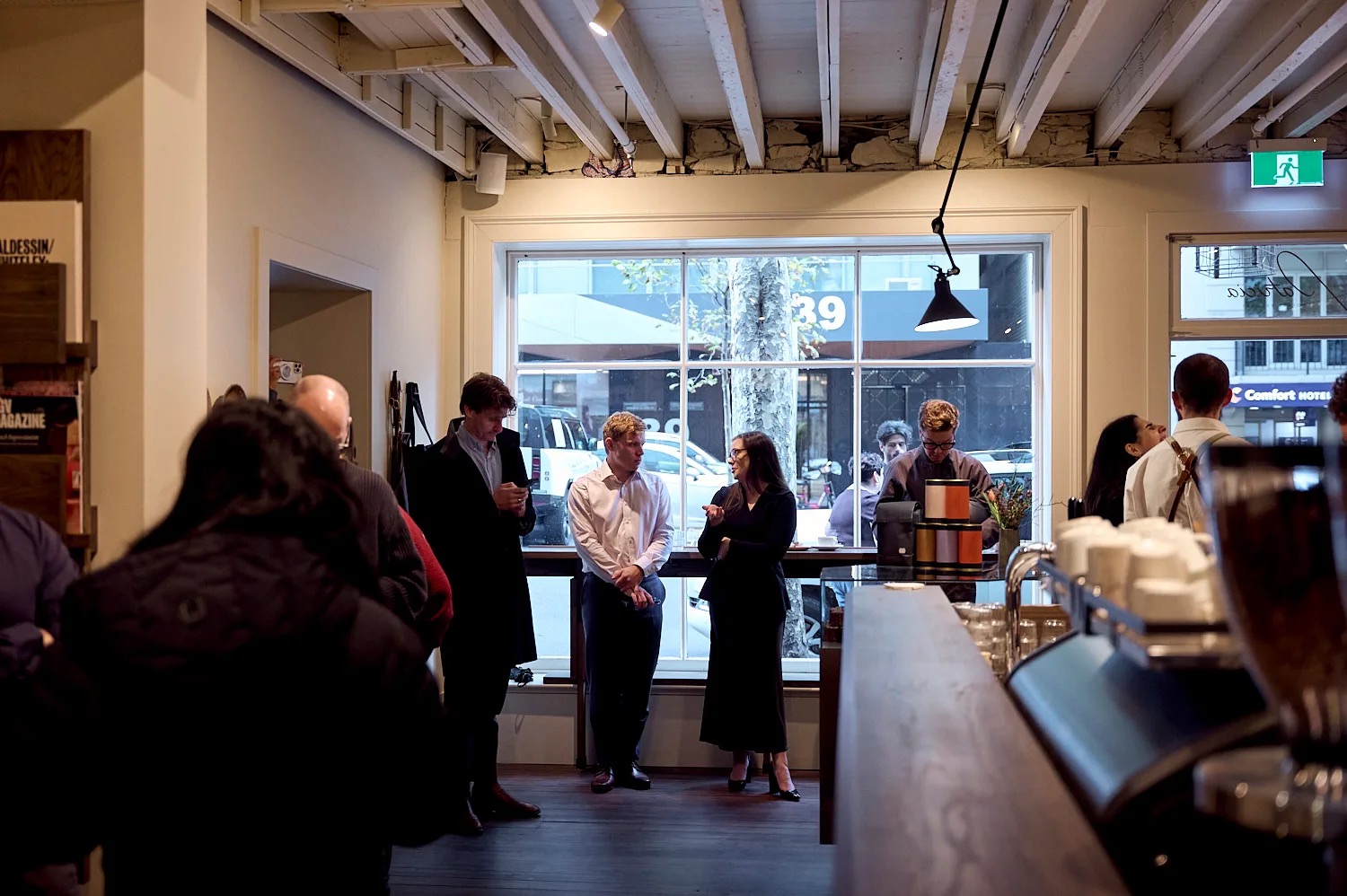
No chairs, and yet built to hold you · The standing filter bar in the middle of the smaller room. Pour-over, dropped at the original, returned here, poured by the cup from two Colombians. A spend-per-head device fitted into a turnover business. ⓒBroadsheet
No chairs, and yet built to hold youThe standing filter bar in the middle of the smaller room. Pour-over, dropped at the original, returned here, poured by the cup from two Colombians. A spend-per-head device fitted into a turnover business. ⓒBroadsheet
The roastery came before the shop · Self-roasting started in 2016 and a roastery was built in Coburg North in April 2024. The machine is a Loring S15 Falcon, a 15kg batch. The two shops are estimated to use a little over 100kg a week, so retail, subscription and wholesale have to fill the spare capacity. ⓒLoring Smart Roast
The roastery came before the shopSelf-roasting started in 2016 and a roastery was built in Coburg North in April 2024. The machine is a Loring S15 Falcon, a 15kg batch. The two shops are estimated to use a little over 100kg a week, so retail, subscription and wholesale have to fill the spare capacity. ⓒLoring Smart Roast
좌석 0석이 만드는 숫자 (추정) 공표치는 하루 700명·1,200샷·영업 7~16시 월~금뿐. 나머지는 공개 시세로 계산한 추정이다 좌석 0석 스탠딩 커피바 (도심 오피스 상권) 객단가 A$6.5 · 하루 700명 하루 매출 A$4,550 (약 410만원) 연 250영업일 → 연매출 약 10억원 면적 10평 추정 → 월 평당 830만원 임대료 비중 3~6% · 원가율 23% · 인건비 26% 체류 3~5분 · 동시 체류 10명 안팎 앉는 카페 (국내 통상) 객단가 6,000원 · 하루 100명 하루 매출 60만원 연 350영업일 → 연매출 약 2.1억원 면적 15평 → 월 평당 117만원 임대료 비중 10~15% · 좌석 회전 3~4회 체류 40~90분 · 좌석당 하루 3~4명 같은 잔값, 일곱 배 다른 면적 생산성 잔당 단가는 두 쪽이 거의 같다. 갈리는 건 한 사람이 그 면적을 몇 분 점유하느냐다. 40분을 3분으로 줄이면 같은 평수가 열 배의 사람을 통과시킨다. 좌석을 없앤다는 건 그 산수를 택했다는 말. 주말을 닫는 이유도 숫자다 호주 캐주얼 시급 A$33.05(2026년 7월) · 토요일 150% · 일요일 175% · 오피스 상권 주말 수요는 평일의 일부
How the money circulatesArea productivity at a coffee bar with no seats against a cafe with them. The dividing line is not price per cup but how long one person occupies the floor. Revenue, area, cost and labor are estimates based on published market rates, not figures published by the shop.
16.A central coffee bar that has taken 700 people a day for fifteen years without a chair opened a second room for the first time, and put no chairs in it either. The number that remains is area productivity of KRW 8.3 million per pyeong a month (estimated), and that came not from cutting seats but from removing them entirely and turning the space into a queue. What gets in the way of putting this model in Korea is neither the interior nor the beans, it is the arithmetic of the lease. A shop open nine hours a day five days a week has to cover twelve months of rent with 250 days of revenue, and it has to prove through speed, not through the menu board, why a guest taught that a cafe is somewhere to sit should stand instead.
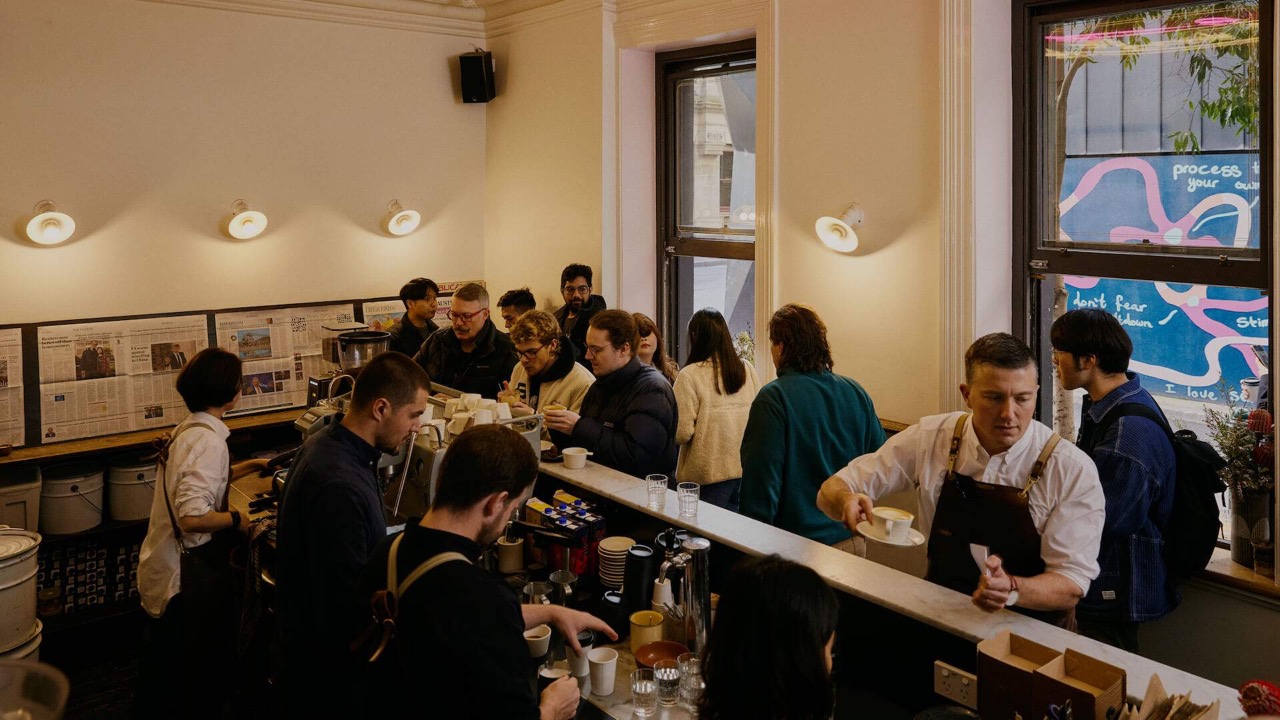
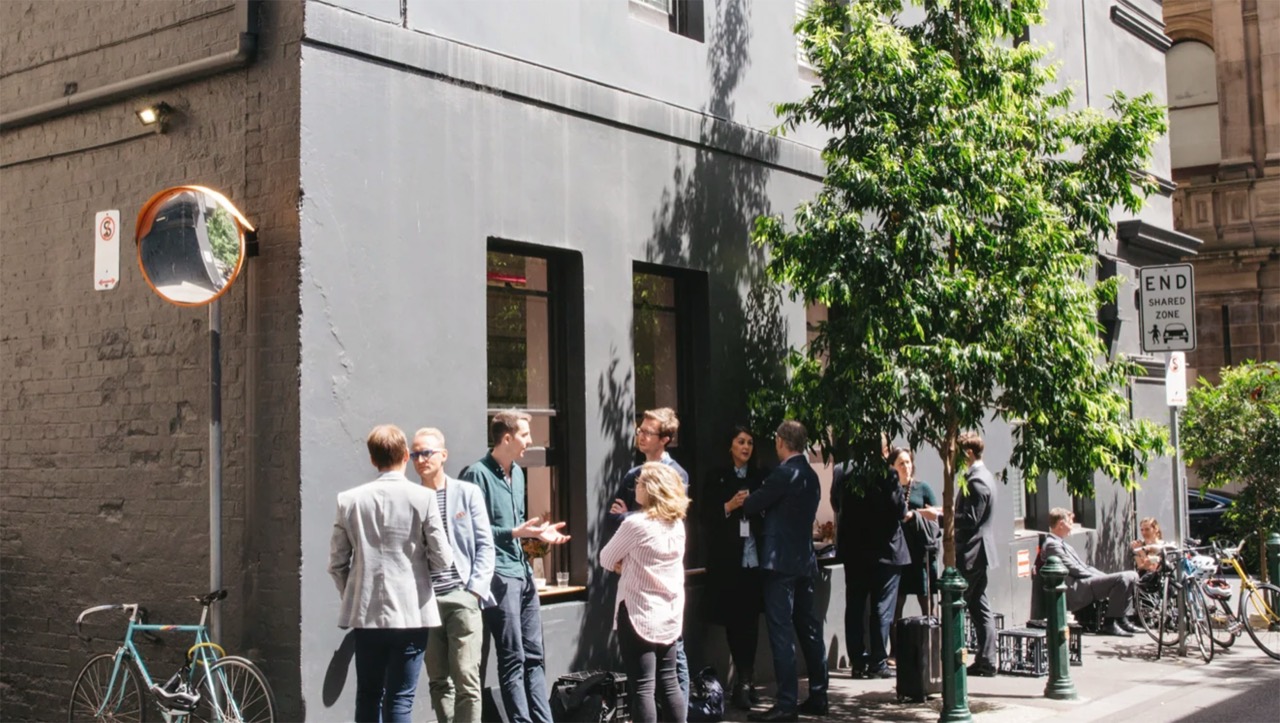
The condition called Melbourne · A city where narrow lanes and central office demand made the standing format easy to take up. The form came from the banco of the Italian bar, and what this shop made new is not the form but the order, shop, roastery, shop. ⓒTravel + Leisure
The condition called MelbourneA city where narrow lanes and central office demand made the standing format easy to take up. The form came from the banco of the Italian bar, and what this shop made new is not the form but the order, shop, roastery, shop. ⓒTravel + Leisure
Sources: Patricia Coffee Brewers official (opened 2011, rear of 493-495 Little Bourke Street, second site at Shop 15, 50 Lonsdale Street, both sites Monday to Friday 7:00 to 16:00 and closed weekends and public holidays, self-roasting from 2016, all roasting from April 2024 on a Loring S15 Falcon at the roastery at 54 Gaffney Street, Coburg North, guest roasters including Seven Seeds, Market Lane and Proud Mary in the early years, espresso from Colombia Los Monjes, Brazil Sucuri and Peru Elias Sanchez, filter including Colombia El Jardin, retail beans A$20 to 30, filter A$25 to 49, subscription A$45 to 50 a month, pastries from Mork, Miette and Wild Life). Broadsheet (opened May 2026, the Black Eagle Hotel building of 1850, designed by Hecker Guthrie, led by Samuel McIntyre, built by Westmark, furniture by Andy Ryan and Illogical Study, two rooms and a standing filter bar, pour-over reintroduced with two Colombians, La Marzocco Strada, 1,200 shots and about 700 people a day at the original are co-founder Bowen Holden's estimate, pre-opening reports gave the address as number 44 while the official listing is Shop 15, number 50). Identity Designed and Sprudge (interior by Foolscap Studio, graphics by Beyond the Pixels, STANDING ROOM ONLY set into the entrance floor tiles, cups by the potter Malcolm Greenwood, a menu of black, white and filter in a single size). Melbourne coffee price surveys (average central flat white of A$4.90 as of March 2026, commonly A$4.50 to 5.50). Australian Restaurant Industry Award MA000009 (as of July 1, 2026, level one base A$26.44 and casual A$33.05, casual Saturday 150% and Sunday 175%). Central Melbourne retail rents (prime sites above A$1,000 per square meter a year). The floor area of ten pyeong, spend per head of A$6.5, daily and annual revenue, KRW 8.3 million per pyeong a month, the 23% cost ratio, 26% labor, a rent share of 3 to 6%, 20kg of beans a day and a little over 100kg a week, and a dwell of three to five minutes are all the writer's estimates based on published data, not figures published by the shop. Korean comparison figures (KRW 1 to 2 million per pyeong a month, a rent share of 10 to 15%, seat turnover of 3 to 4) are customary industry ranges and vary widely by site. The claims that the roastery came first, that the queue is the dining room, and the structure shown in the diagram are the writer's interpretation based on published facts. Currency is converted at A$1 ≈ KRW 900. Photos ⓒ each outlet and brand as credited in the captions, press and publicity images cited with sources for private reading. The roaster image is a manufacturer image used to explain the model. Statements on applying this in Korea are general to the sector, and each site should be checked for trade area, rent, staffing and food hygiene conditions.