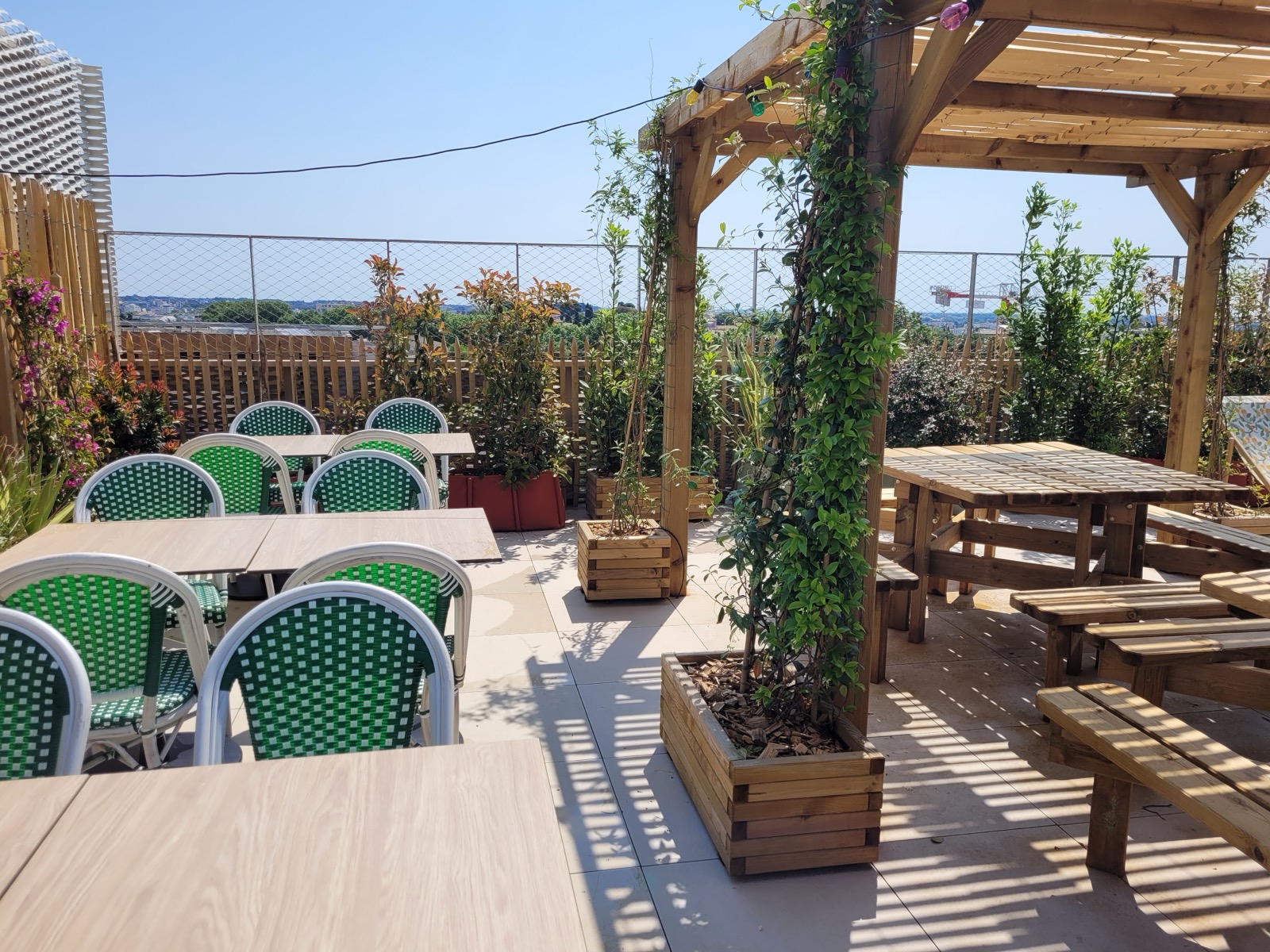
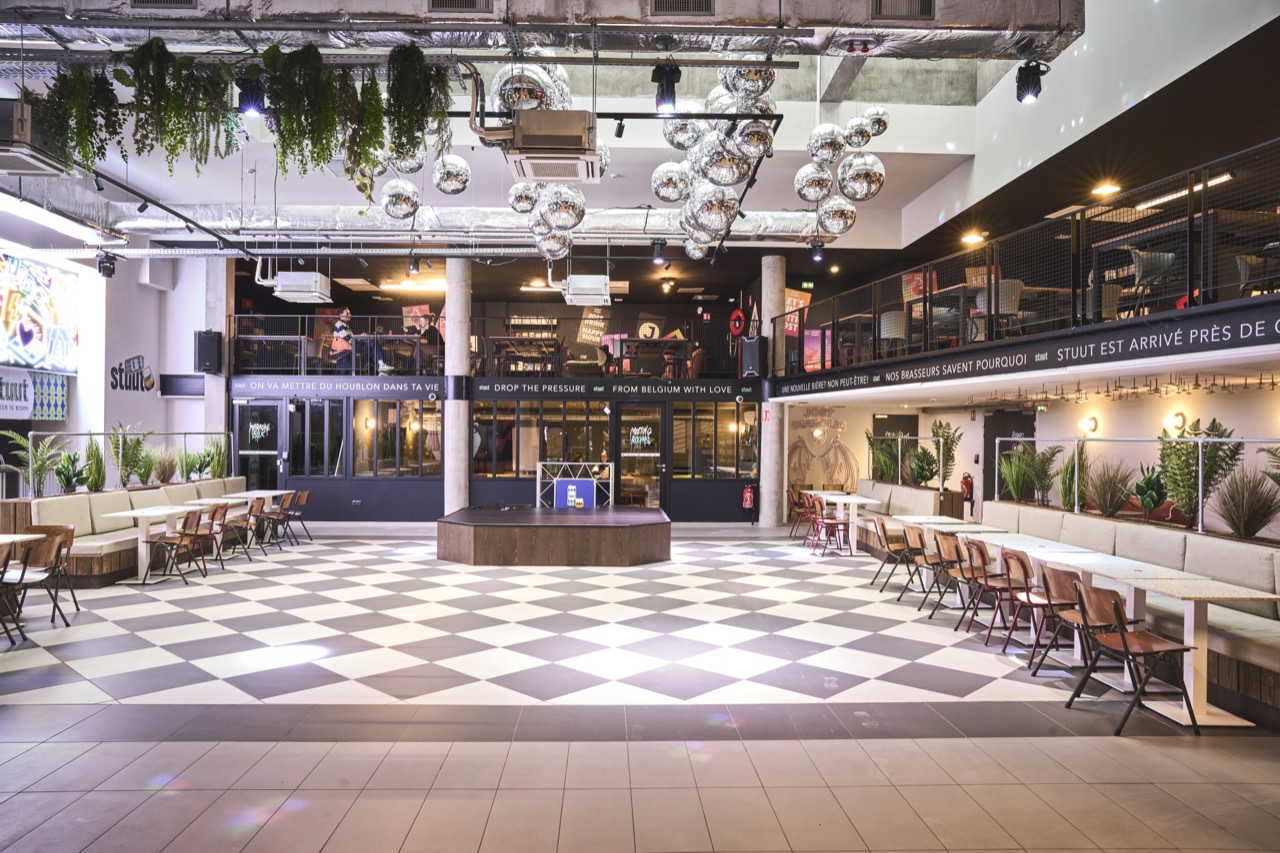
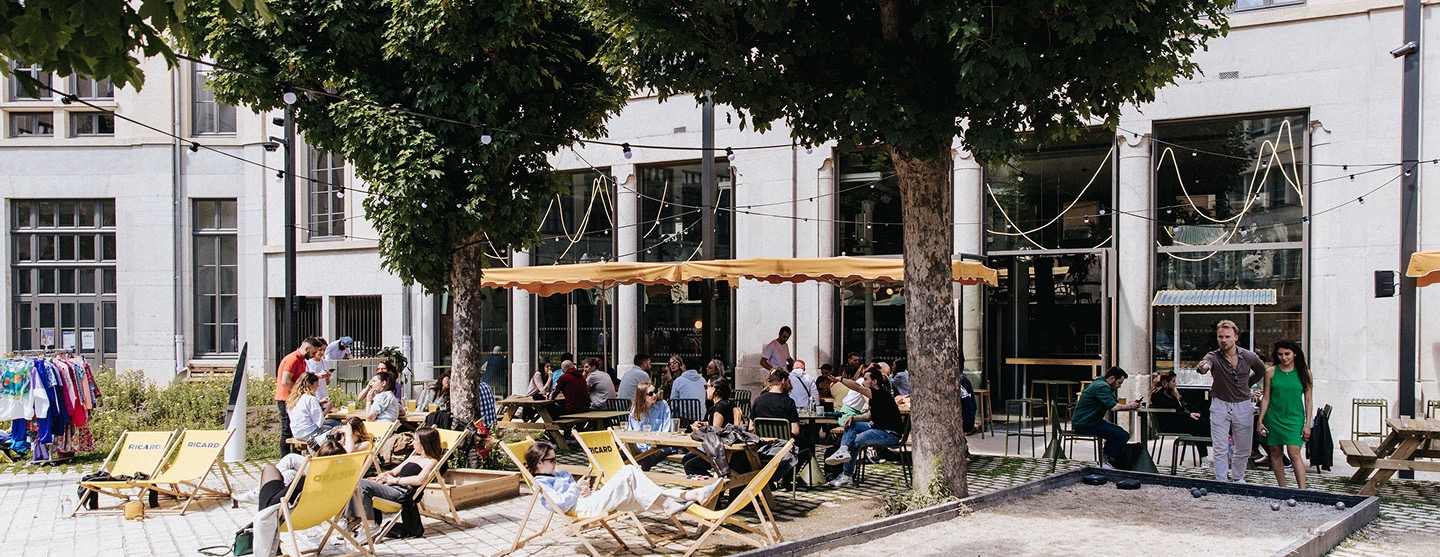
The rooftop at JOST Montpellier. The emblem of the hybrid format, hotel and food service laid onto a hostel body (ⓒMarine HESS / Montpellier Tourisme)
Daily Hotel
France's Hybrid Hostels: The Private Room Now Costs Less Than a Dorm Bed
2026.07.22
Hybrid hostels in France have more than doubled in the past five years. Dormitories and private rooms mixed in one building, a pool and a bar on the roof, a food court filling the lower floor. Open a booking site, though, and the lowest private room rate comes in below one dormitory bed. This piece takes apart why that inversion happened and what arithmetic this format stands on.
1.France has about 65 hybrid hostels and more than 16,000 beds in total. In 2020 there were fewer than 30. The trade press summed the trend up in two clauses: the hybrid has taken hold, and the price war has begun.
2.JOST leads. Behind the operator Vicartem stands Meliá Hotels of Spain. Three sites now, Montpellier, Le Havre and Lille, 797 beds in total. Marseille is in preparation for 2026.
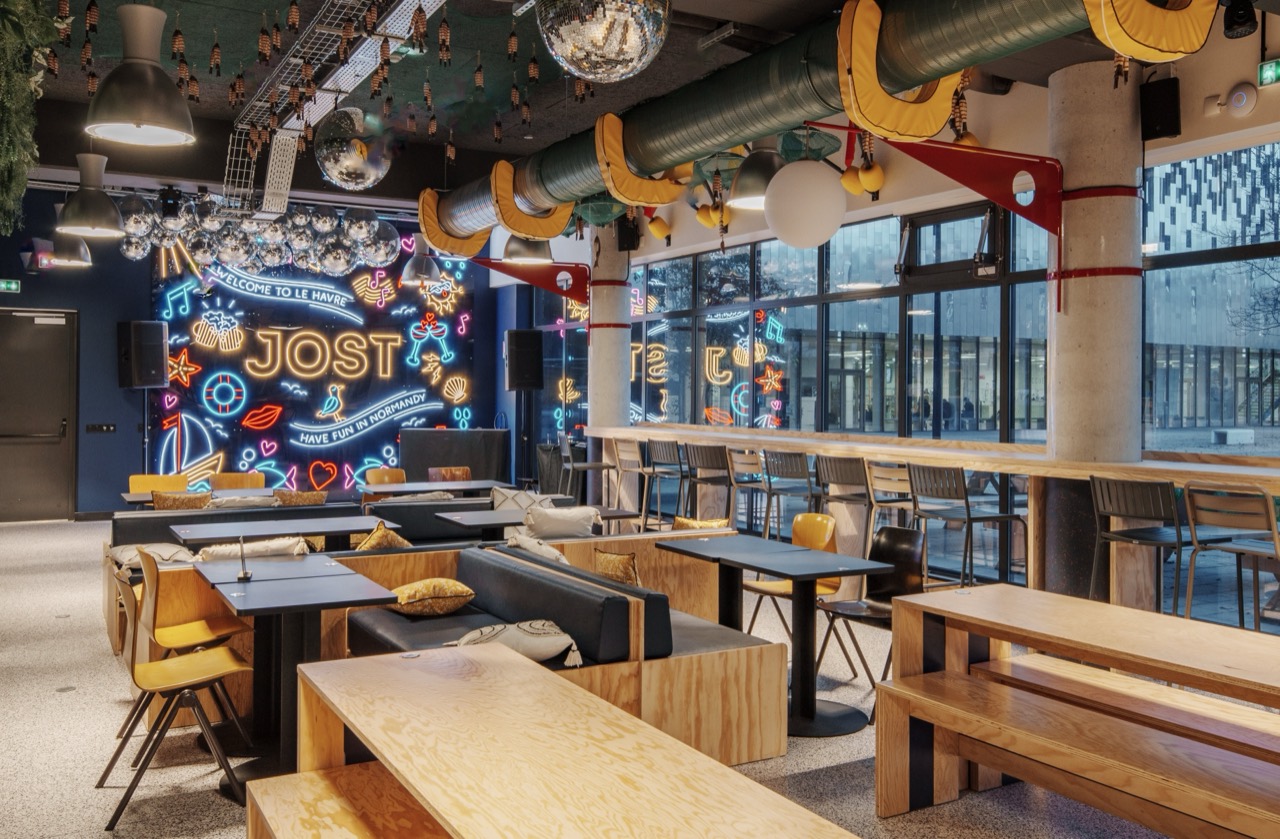
3.The Montpellier spec is the specimen of this format. 84 rooms and apartments plus 52 dormitory beds. On top go a rooftop pool with a 360 degree view, a rooftop bar, the restaurant Gabie, four floors of coworking, and karaoke.
4.At Lille, 11 of 91 rooms are dormitories, four to eight beds. The location is Wazemmes, a working-class district known for its street market. An existing building was renovated whole, with a food court and event space put in.
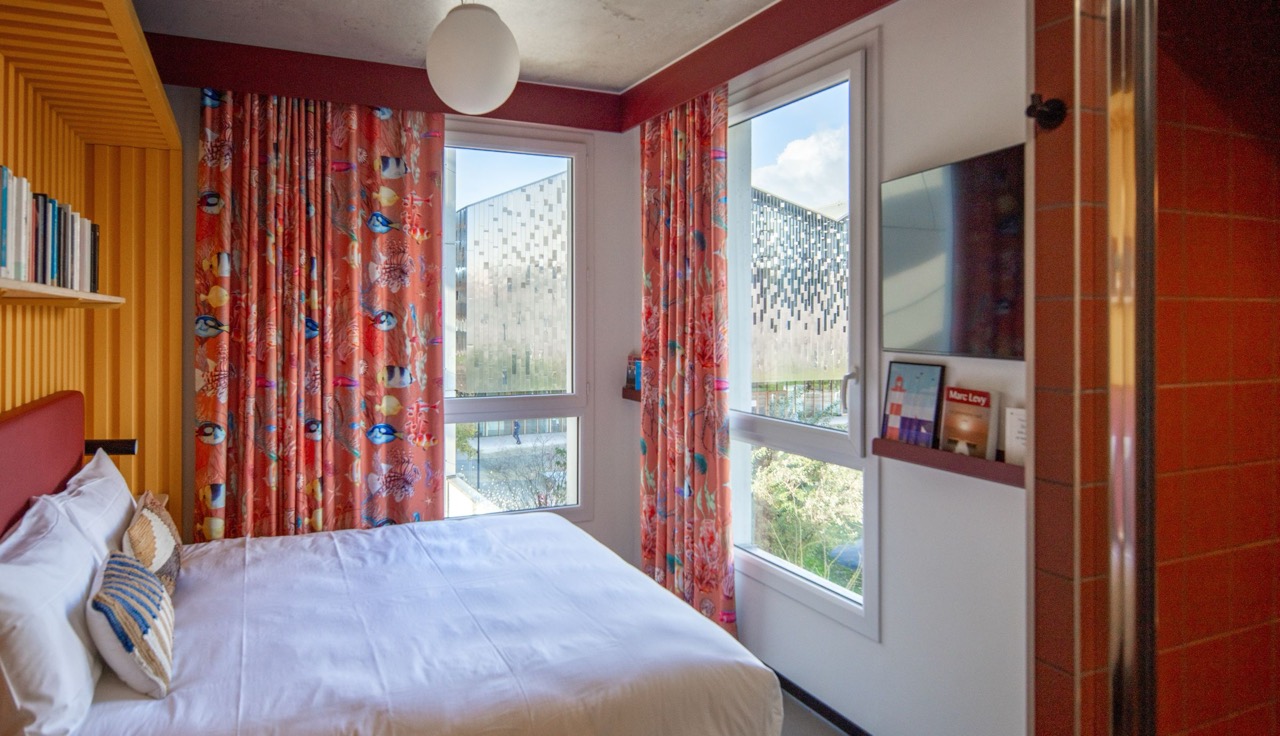
5.At Le Havre, 9 of 81 rooms are dormitories, and it is within walking distance of the train station. All three sites use one formula. Station district, conversion, food and drink attached.
JOST Lille (ⓒJOST Lille)
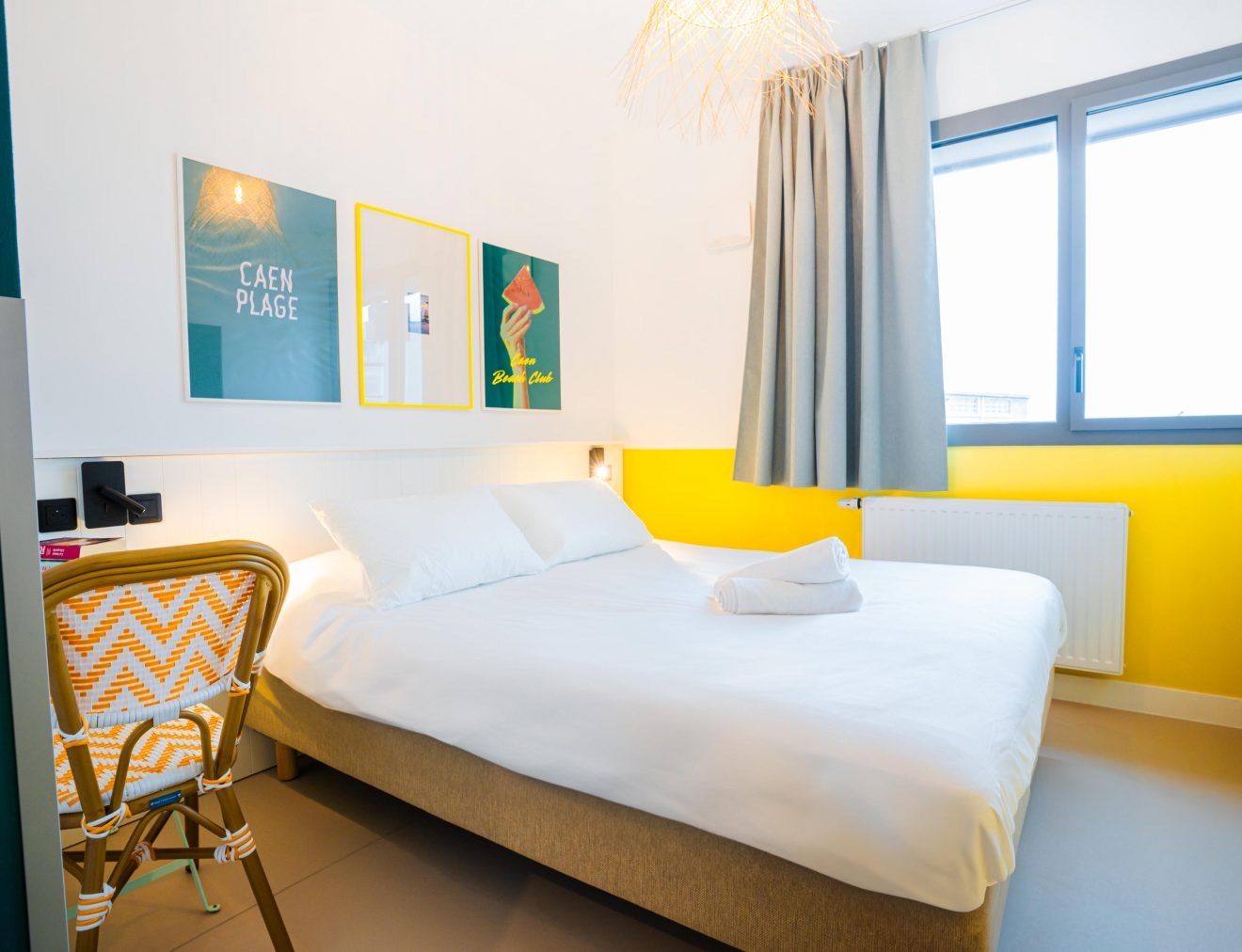
6.Competitors run the same way. The People is a brand created by Grape Hospitality and owned by Eurazeo, running 12 sites in France alone. Caen has 60 rooms and 210 beds, Lyon has 100 dormitory beds plus 30 private rooms. The independent brand Central is expanding into La Rochelle, Lille and Bordeaux.
A room at The People (ⓒThe People Hostel)
7.Take it apart. The first thing to look at is not the name, it is the ratio. Lille has 11 dormitories out of 91 rooms, 12%, and Le Havre 9 out of 81, 11%. This is not a dormitory with a few private rooms attached. It is closer to a hotel body with dormitories slipped in at a single-digit share.
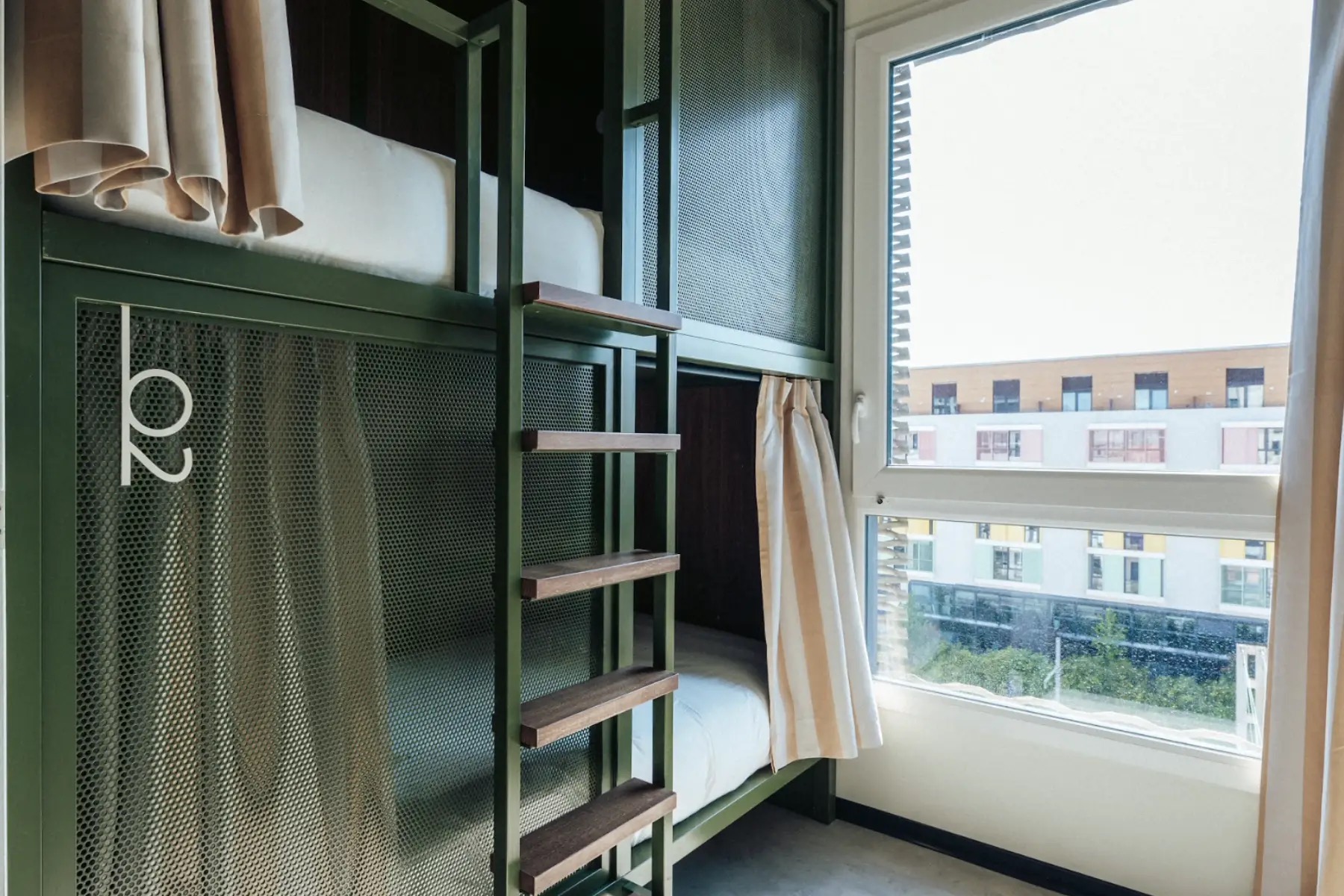
8.Start with the dormitory unit. Six to eight people per room, single beds at 90×190cm. Each bed carries its own reading light, USB and USB-C charging and blackout curtain. Locking lockers, air conditioning, a bar on each floor with tea, coffee and filtered water, a shared kitchen, 24-hour luggage storage.
9.That spec list matters. Blackout curtains, individual lighting and individual charging are the pod grammar capsule hotels settled over twenty years, transplanted onto bunk beds. Those three are exactly the minimum spec that redefines a dormitory from a cheap room into a small room.
A room at JOST Le Havre (ⓒJOST Hôtel Le Havre)
10.What comes next is clever. They made a separate product that sells the dormitory whole and called it Gang. Bunks become 140×200cm doubles with a rain shower and a private bathroom. The same room sells six to eight ways individually or as one booking for a group.
11.Women-only dormitories were split out as a separate product too. The same hardware was cut into three product lines, mixed, women-only and whole-room hire, without building one more wall, by adding products in the booking engine alone. Product expansion at zero construction cost.
The dormitory at JOST Montpellier. A pod-style shared room sold as mixed, women-only and whole-room hire, Gang, from the same hardware (ⓒJOST Hôtel Montpellier)
12.Last is the rooftop. Montpellier has the pool and bar on the roof, and the restaurant runs weekday lunch from noon to 2pm and dinner from 7 to 10pm. Not a lounge for guests only but a restaurant local people come to eat at. This structure explains half of the numbers that follow.
The bar at JOST Le Havre (ⓒNicolas Grosmond / Seine-Maritime Tourisme)
€110 / night
€200 / night
dormitory 1.8 times · dormitory 4 times
13.Into operations and revenue structure. If private rooms cost more, why keep dormitories. The answer is not room rate, it is revenue per unit of area.
14.Run the numbers. What follows is an estimate and not any site's published figure. Split 30㎡ into two private rooms and sell each at €55 and you get €110 a night, €3.7 per ㎡. Put an eight-bed dormitory in the same 30㎡ at €25 a bed and you get €200, €6.7 per ㎡. The dormitory is 1.8 times.
15.There is a price for it. Two private rooms mean two servicings a day, eight dormitory beds mean eight. Linen changes, check-in handling and lost property all multiply by four. What decides labor cost in small lodging is not the number of rooms but the number of times hands touch them, and the dormitory raises revenue and labor cost at once.
16.So they do not fill everything with dormitories. The rule of thumb in the trade is that a mix of 60:40 or 70:30 between dormitories and private rooms gives the best revenue per available bed, RevPAB. Private rooms create rate elasticity and dormitories fill volume.
17.JOST's actual mix leans far further toward private rooms than that rule. Lille 12%, Le Havre 11%. Montpellier too, 84 rooms against 52 dormitory beds. The brand speaks hostel language while the financial structure is already a hotel, and the dormitory survives as a device for setting the starting point of the price list low.
18.Lead rates listed on booking platforms for Montpellier are €24.84 for a dormitory and €24.59 for a private room. These are lowest rates that swing with season and availability, and still the private room starts below one dormitory bed. That one line is the title of this piece and the current coordinate of this market.
19.Next is non-room revenue. Restaurant, rooftop bar, pool, food court, events, four floors of coworking. The trade diagnosis agrees. The key to performance is the balance between dormitory occupancy, which is volume, and private room rate, RevPAR, with high-margin food and events underneath flattening the low season.
20.That is the real engine of this format. Lodging follows the seasons and provincial cities feel it harder, while a restaurant and bar that locals come to turn regardless of occupancy. In a month when rooms fall to 60%, the rooftop can still be full. A structure that builds two revenue axes to hedge volatility.
The food and drink space at The People (ⓒThe People Hostel)
21.Staffing splits here too. A pure hotel has dedicated front desk, rooms and housekeeping, while a hybrid has the same people covering the bar and reception. Putting a self-service bar with tea, coffee and water on each floor and dropping room service, and adding a shared kitchen to reduce breakfast pressure, are all designed to hold labor cost as a constant.
22.Channels are the hidden gain of this format. A pure hotel only uses hotel OTAs, while a hybrid opens hostel-specialist channels and hotel channels at the same time and puts one building onto two distribution networks. In exchange, two channels with different commission rates and cancellation policies have to be run on one rate structure. That is the most tiresome part in practice.
23.First, the group that will pay to sleep alone got thicker. Dormitories used to be where you went for lack of money, and once curtains, lighting and charging arrived they became a product worth choosing even with money. What changed the demand was the spec, not the price.
24.Second, the demand of arriving alone without wanting to be alone. A hotel is quiet and nothing happens in it. A hybrid designs the odds of people mixing through bars, events and shared kitchens, and runs programs from brunch and after-work to bingo. A device that produces repeat visits rather than a service.
25.Third, daytime does not sit empty. Four floors of coworking are not romance. The common areas of a lodging facility die completely from 11am to 3pm, and putting people who come to work in that window makes the same area work twice.
26.Fourth, the city helped. Semi-central districts with low rent and real footfall, like Wazemmes in Lille or the station redevelopment zone in Montpellier, are the standard location for this format. Stand at the front of the tourist strip and rent breaks you, go too far out and food and drink stop turning, so they aim exactly at the narrow band in between.
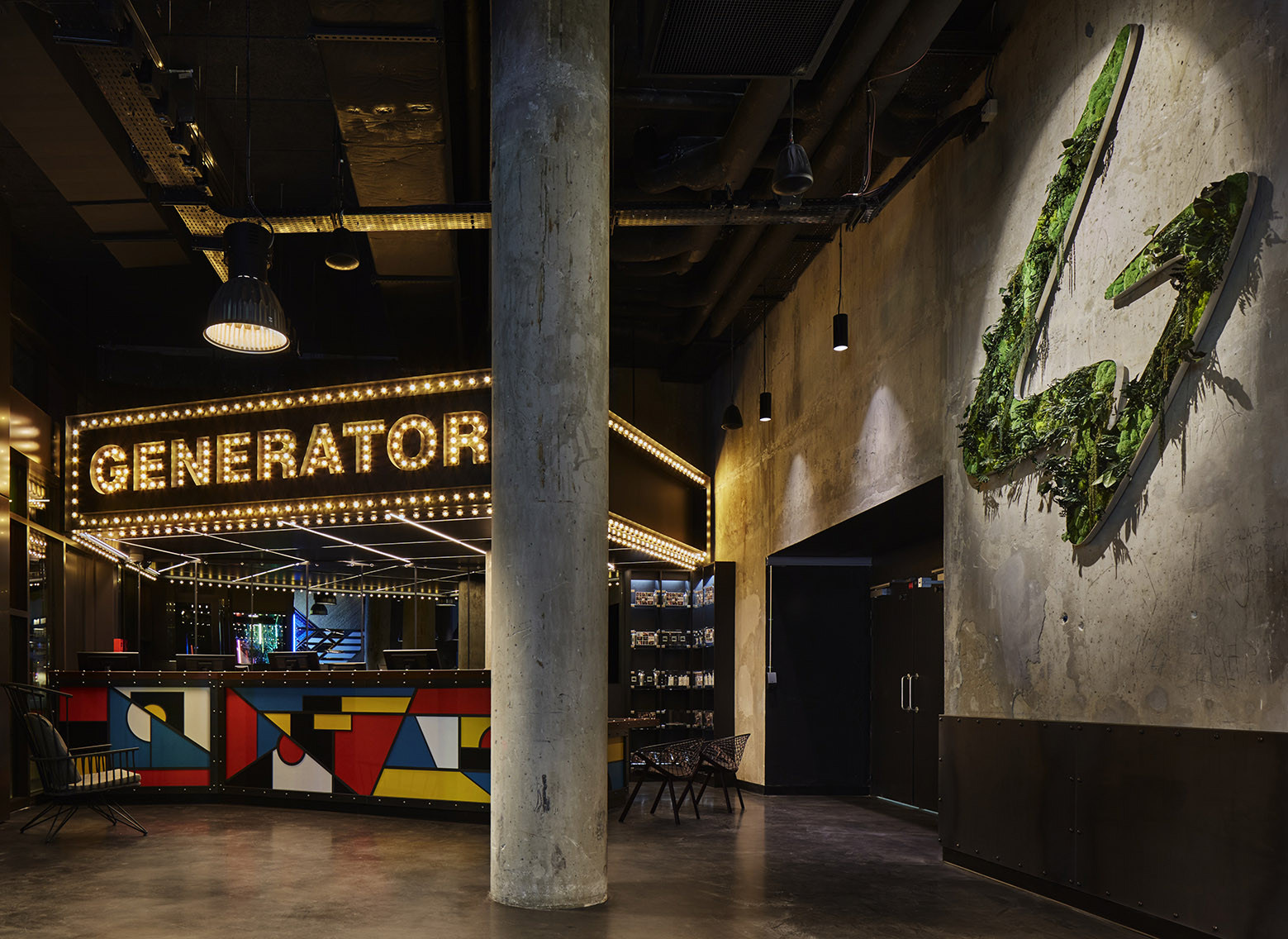
27.This is not the first. The prototype of the design hostel is Generator. Take a large building in a major European city, build the lobby like a club, put a designer on the dormitory. Most of the grammar the French brands use now came from there.
The Generator Paris lobby (ⓒDesignAgency / ArchDaily)
28.How that line ended matters more, though. In May 2025 Brookfield acquired Generator's European business for 776 million euros. Fifteen assets and 2,749 rooms across Amsterdam, Berlin, Barcelona, Copenhagen, Dublin, Hamburg, London, Madrid, Paris, Rome, Stockholm and Venice. The seller, Queensgate, had bought it in 2017 for about 450 million euros.
The Generator Paris floor plan (ⓒDesignAgency / ArchDaily)
29.Roll the numbers. 1.72 times over eight years, about 7% compounded annually. Divided by room it is about 280,000 euros a room. Hostel assets have become a product institutions hold at that scale. The talk of IRR reaching 25% on freehold purchases in selected European cities handed to a specialist chain sits in the same context.
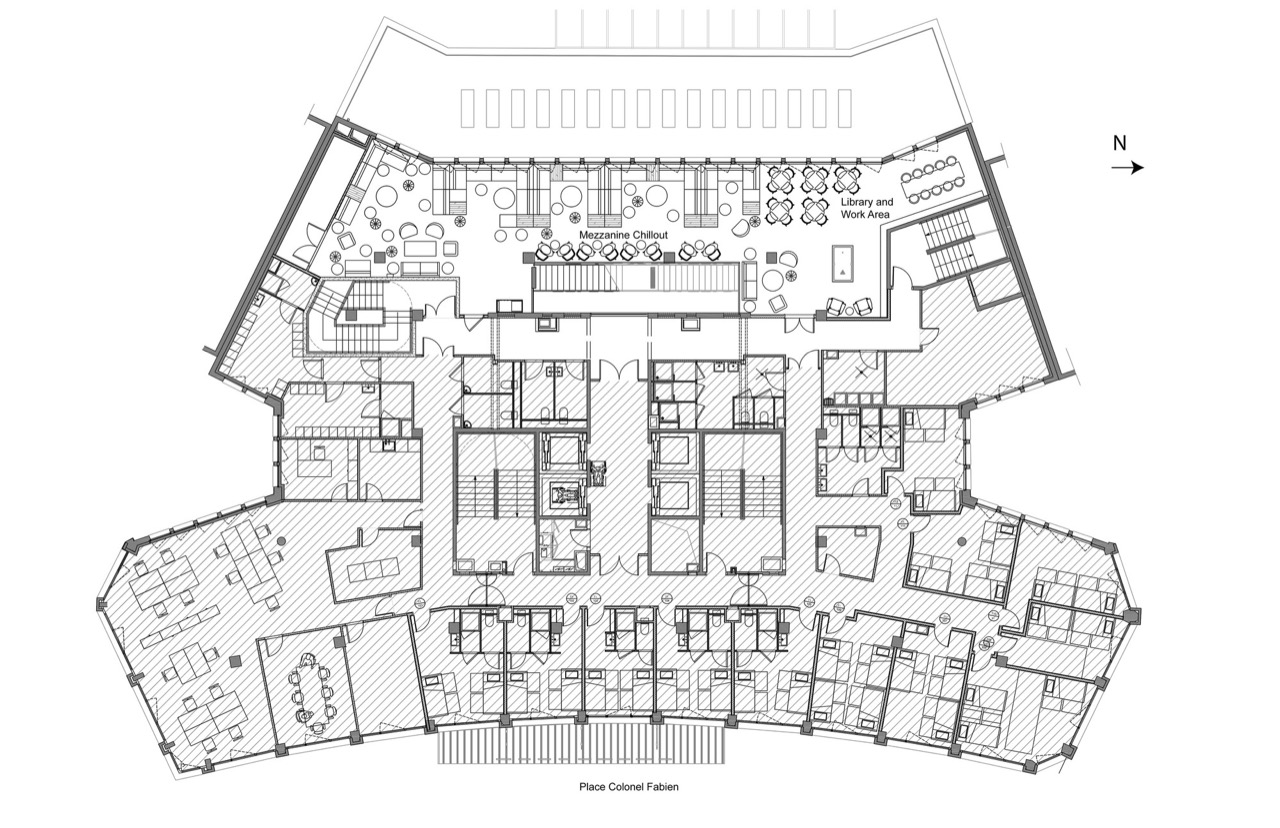
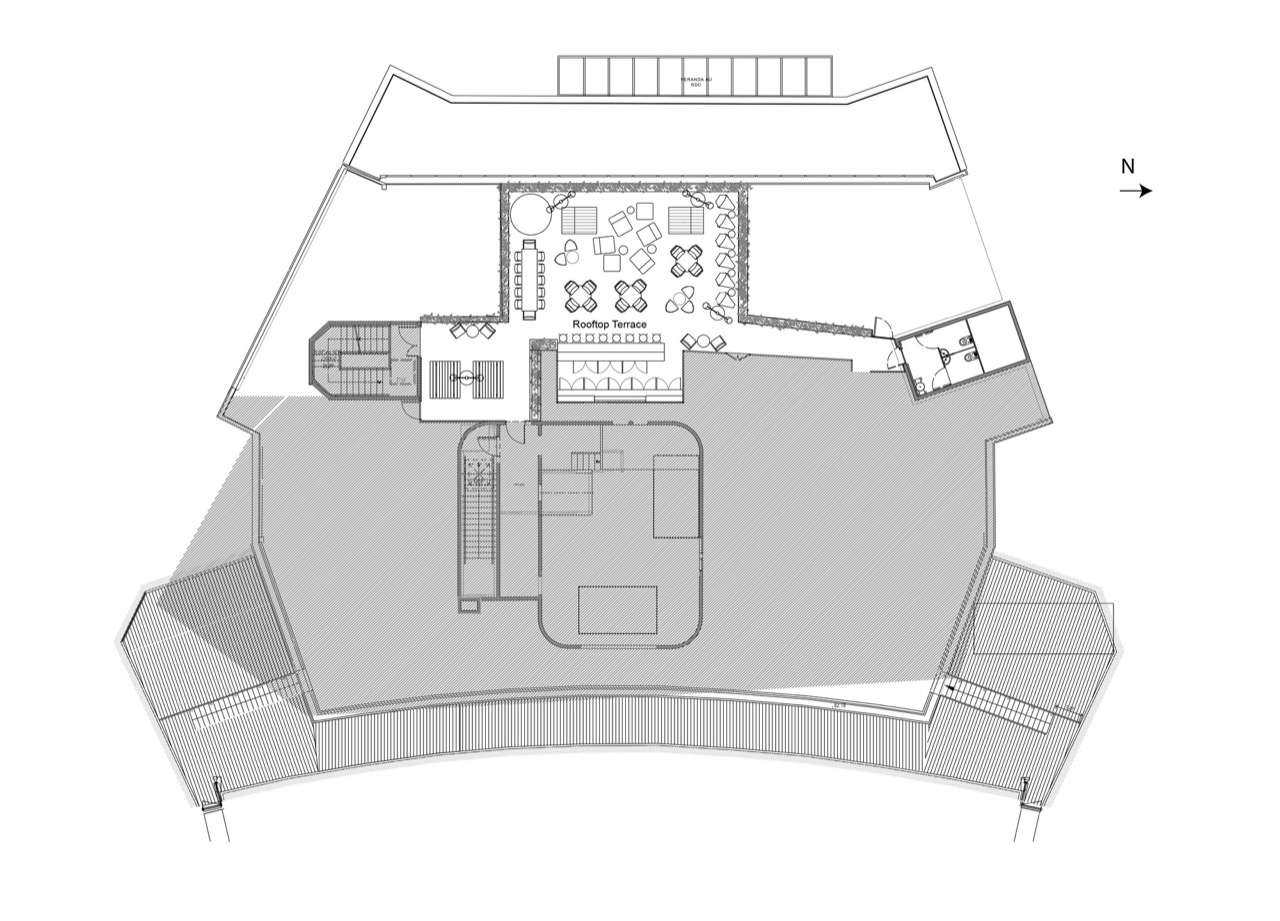
The rooftop terrace plan at Generator Paris (ⓒDesignAgency / ArchDaily)
30.Going in on the strength of that IRR figure may already be late. The diagnosis the trade attached to this market was not the hybrid has taken hold, it was the hybrid has taken hold and the price war has begun. The second clause is the substance.
31.Site numbers doubled in five years, beds reached 16,000. Every brand sells the same formula in the same band of location. When supply rises the first thing to break is the dormitory rate, because it is the hardest to differentiate and it sells through price-sorted listings on booking channels.
32.Hence the inversion, €24.59 private and €24.84 dormitory. It is less that private rooms got cheap and more that dormitories hit a floor below which they cannot go, and private rooms came down to that floor to fill volume. Drop the private lead rate below the dormitory and you take the top of the channel sort.
33.Then what is the dormitory for. Area, not price. Dormitories survive not to sell cheaply but to pull 1.8 times out of the same floor. In a market where rate will not hold, what has to grow is non-room revenue rather than dormitories. That is why the French brands all ran to rooftops and food courts, and they already know there is no way to win a bed rate war.
French hybrid hostels went from under 30 sites to 65 sites and 16,000 beds in five years. JOST runs three sites and 797 beds with Marseille coming in 2026, and The People runs 12 sites. The name says hostel and the dormitories are a minority. JOST Lille has 11 of 91 rooms, 12%, and Le Havre 9 of 81, 11%. It is a hotel body with dormitories slipped in, and the dormitory survives as a device for setting the starting point of the price list low. Dormitories survive on revenue per unit of area, since in the same 30㎡ two private rooms give €3.7 per ㎡ while an eight-bed dormitory gives €6.7, 1.8 times, by estimate. In exchange servicing multiplies by four, and that exchange rate sets the mix. The turn is in the price list. Lead rates on booking platforms are €24.59 private and €24.84 dormitory. Supply grew and bed rates hit the floor, which is why the brands all ran to non-room revenue, rooftops, food courts and coworking. Product expansion that splits only the selling unit in the booking engine without building walls still gets copied today at no construction cost, but what stops anyone moving this format to Korea first is the shared room. A dormitory-type shared room falls under completely different requirements depending on whether it is registered as a hostel under the Tourism Promotion Act or as lodging under the Public Health Control Act, and fire escape standards and room capacity limits overlay that, so eleven eight-bed dormitories is a permitting decision rather than an interior one.