A café in the back alleys of Euljiro lost ground to redevelopment. Its owner toured some 40 buildings across Seoul, picked an old inn behind Gyeongdong Market, and opened the doors before the renovation was finished.
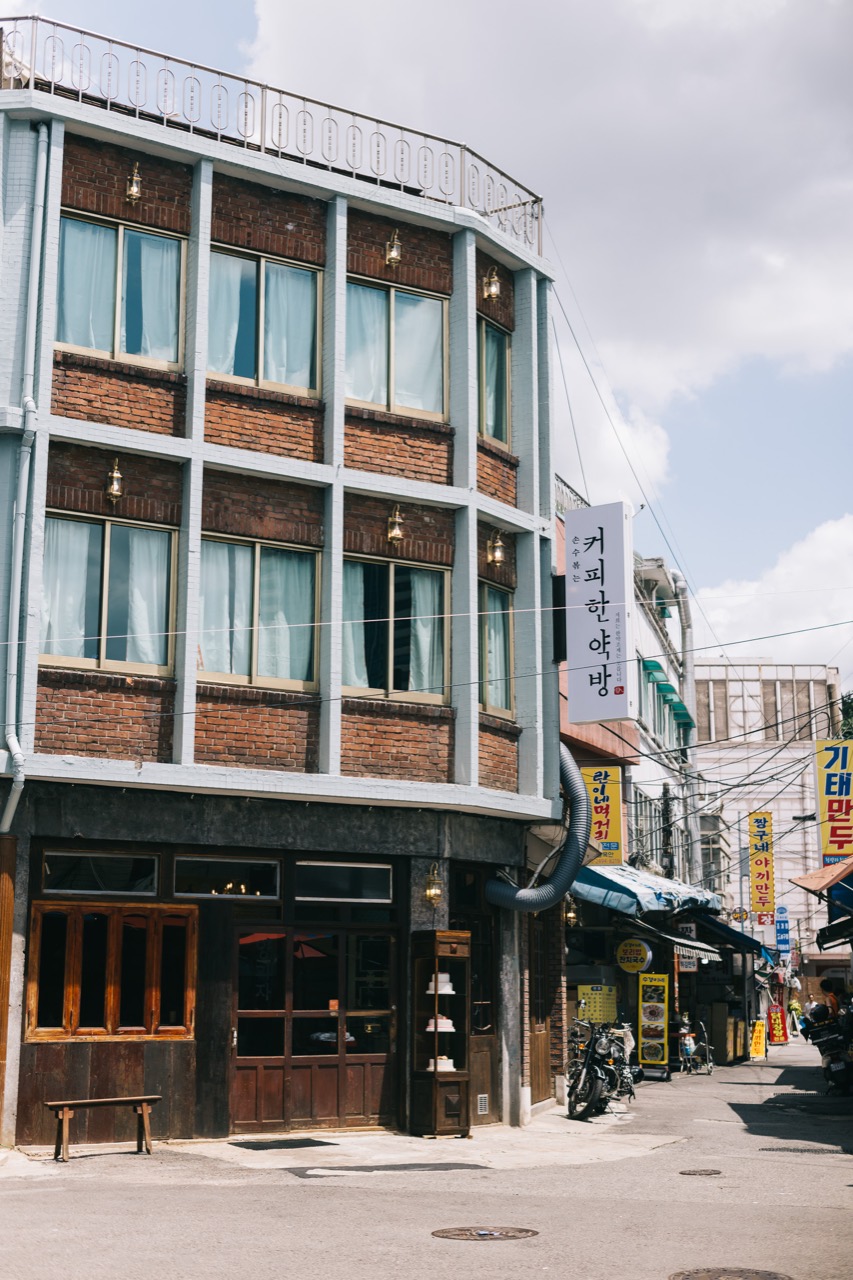
1.In an alley behind Gyeongdong Market in Dongdaemun-gu, Seoul, Coffee Hanyakbang opened its Cheongnyangni branch this July in a three-storey red-brick building. It used to be an inn with 50 rooms. Hand-poured filter coffee is the core of the menu, and desserts come from Hyemindang, a dessert shop run by the same owner. By the owner Kang Yun-seok's own count, the place is about 60% finished.
2.This is a shop that moved. The original opened around 2013 in a back alley of Euljiro 3-ga, on the site of Hyeminseo, the Joseon-era medical office for commoners, and a few years later Hyemindang opened across the way. When the area was folded into a redevelopment zone, the shop was told to vacate the Hyemindang building by the end of March this year, and the Euljiro branch now runs at a reduced size. Kang then walked inside and outside the old city walls, looked at 40 to 50 buildings, and settled on this one.
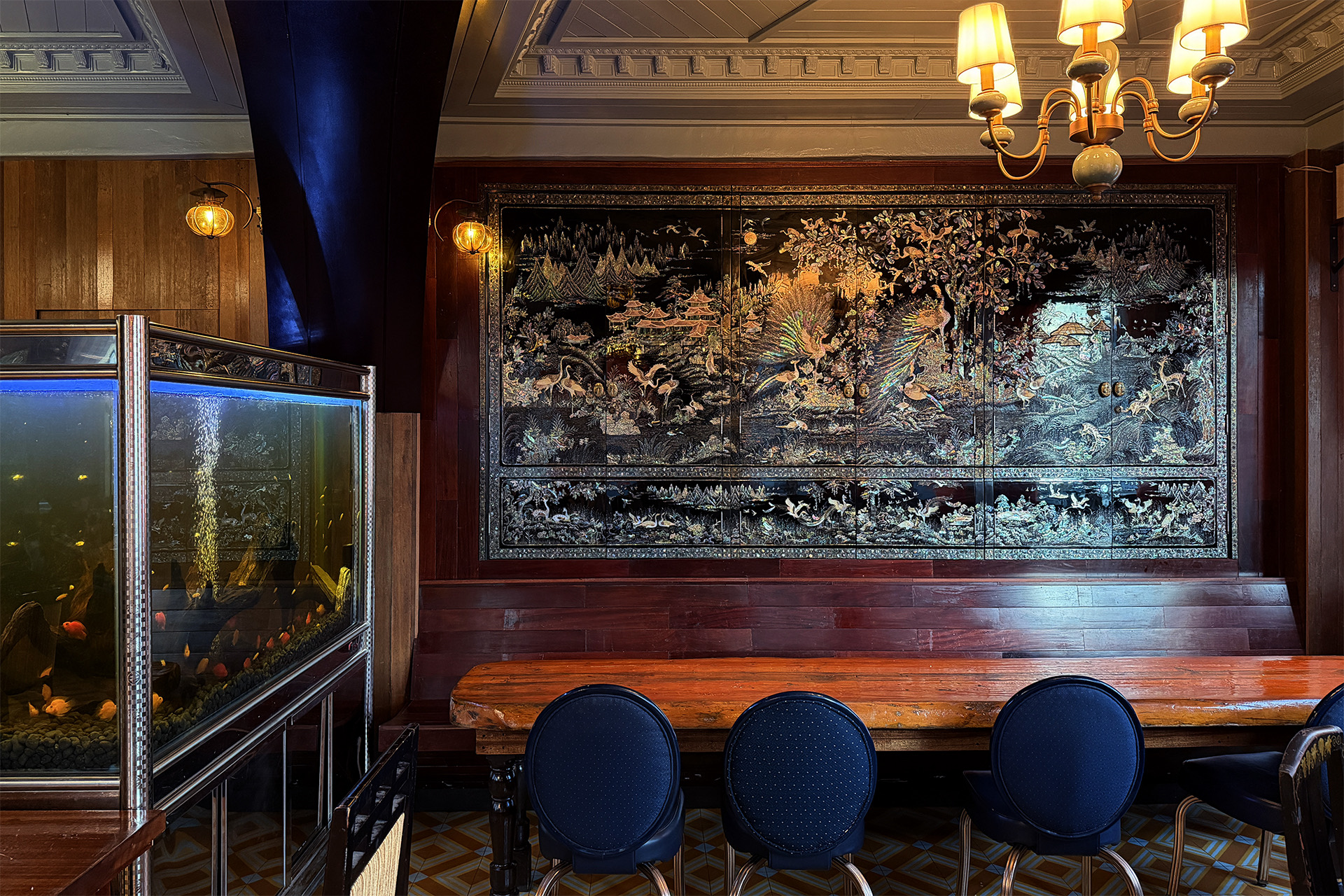
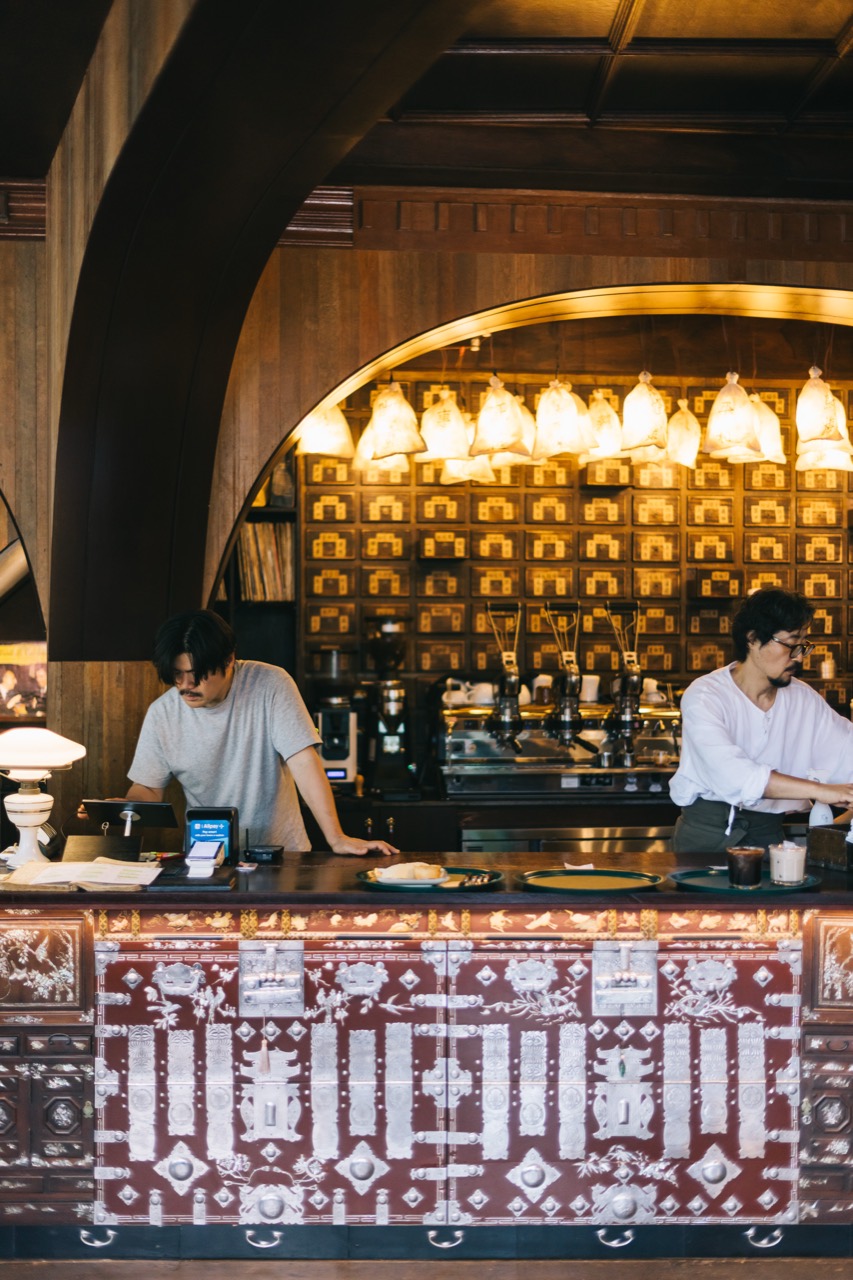
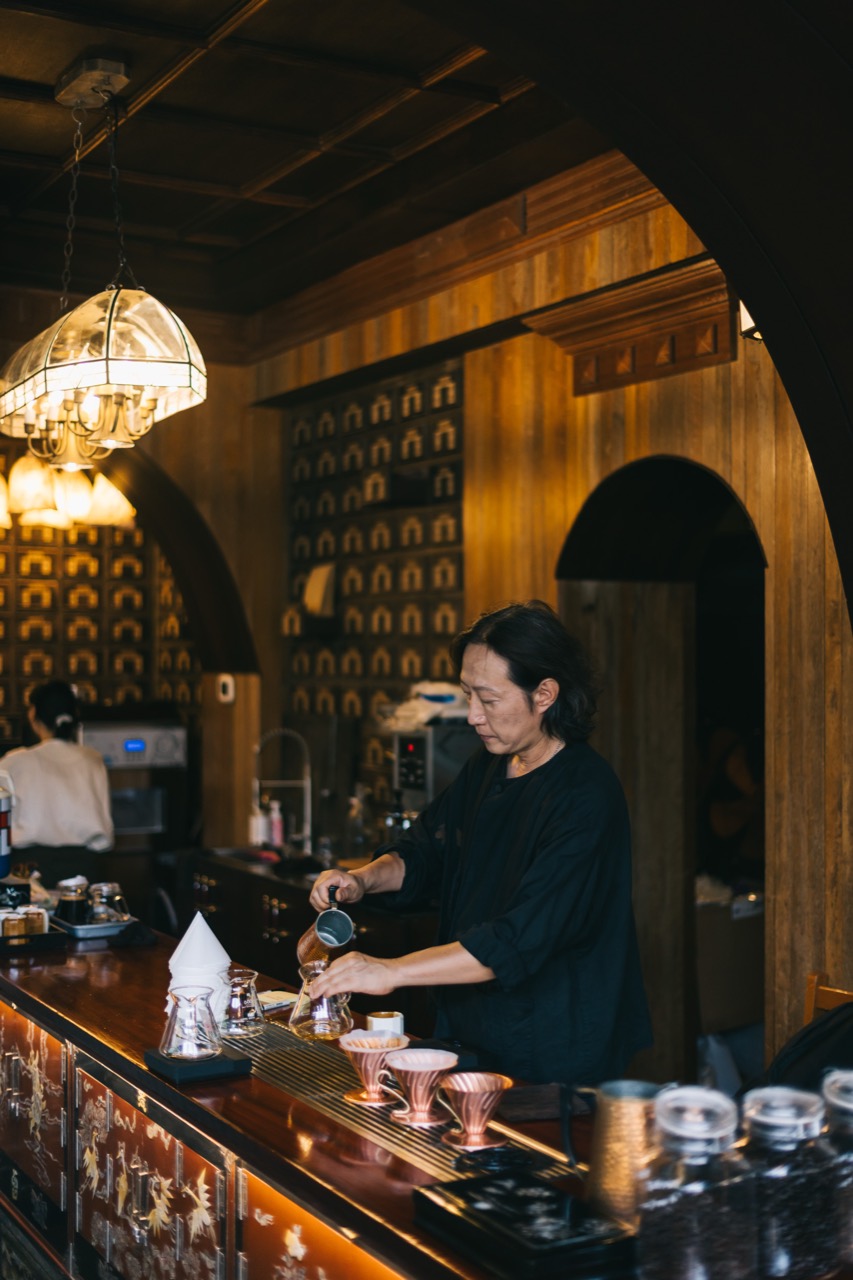
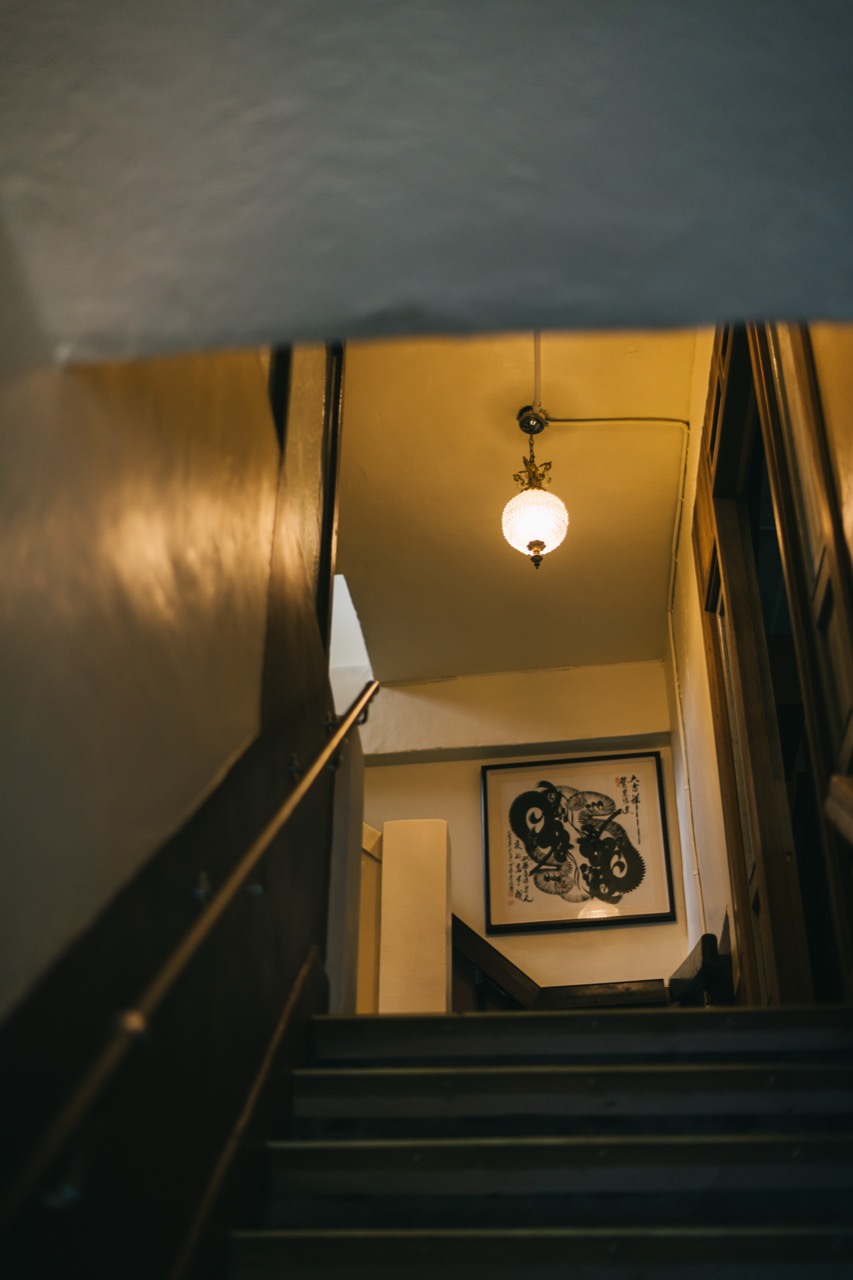
3.Step inside and a wall of herbal-medicine drawers fills the space under a round arch, while the front of the counter is clad in mother-of-pearl. The roasting happens in a separate room at the back of the ground floor. Upstairs are the mother-of-pearl screen, an aquarium and a wooden table said to date from the Song dynasty, and the corridor still has the guest-room doors from the inn days. Kang set the overall direction of the interior as the Savoy Hotel.
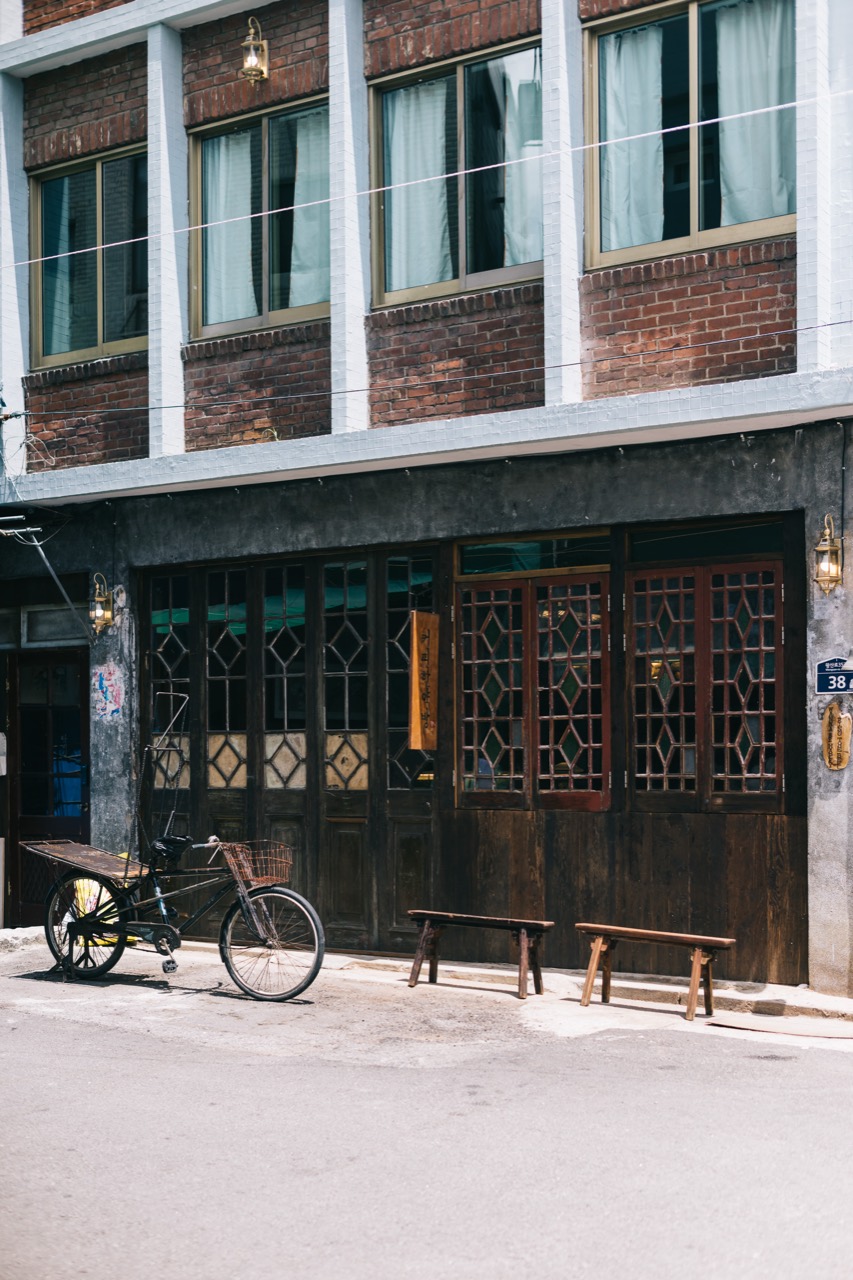
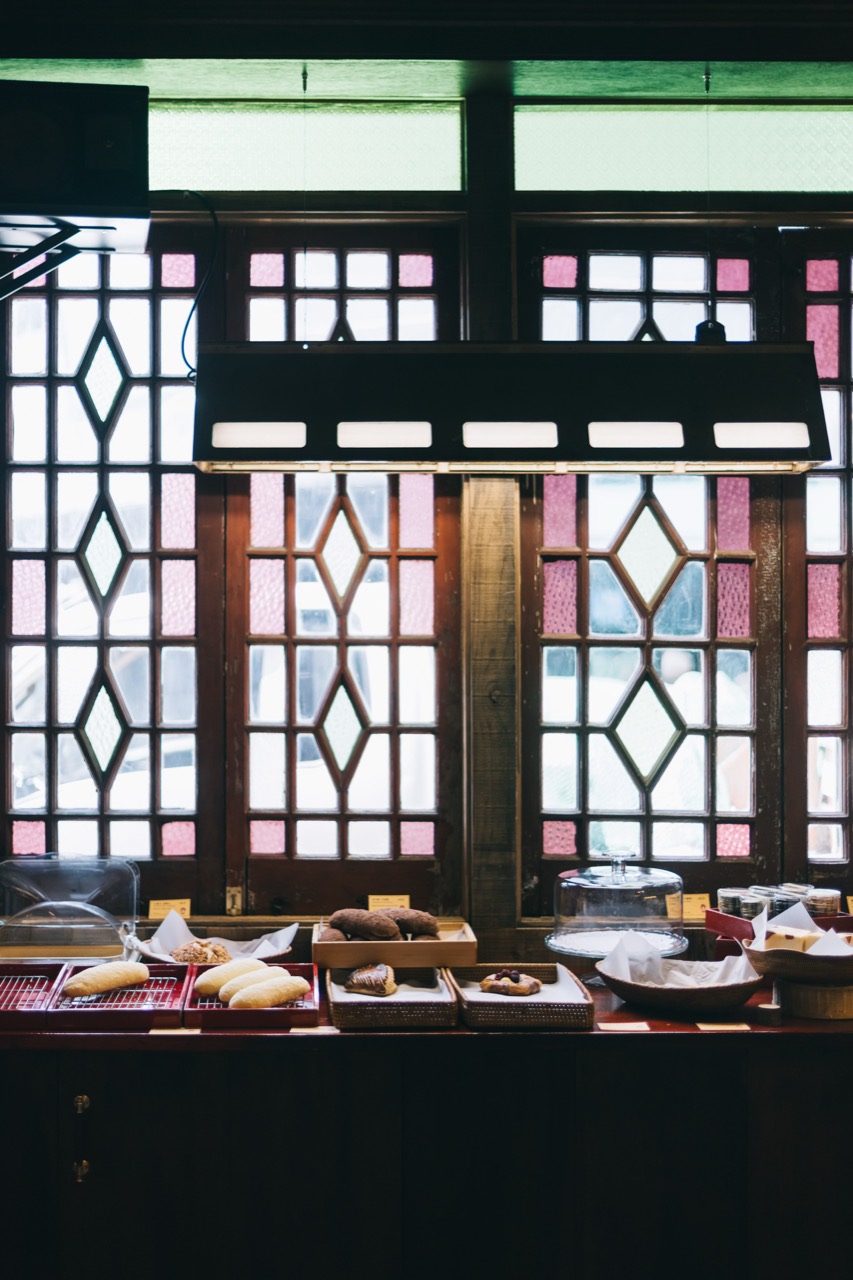
4.Most of the partition walls that divided the 50 rooms came out, and Kang says the demolition was hard going. What stayed were the windows, the floor and the ceiling: oriental stained glass with pink and pale green panes in diamond-shaped frames, a marble floor in geometric patterns, chandeliers. No public record gives the year the building went up.
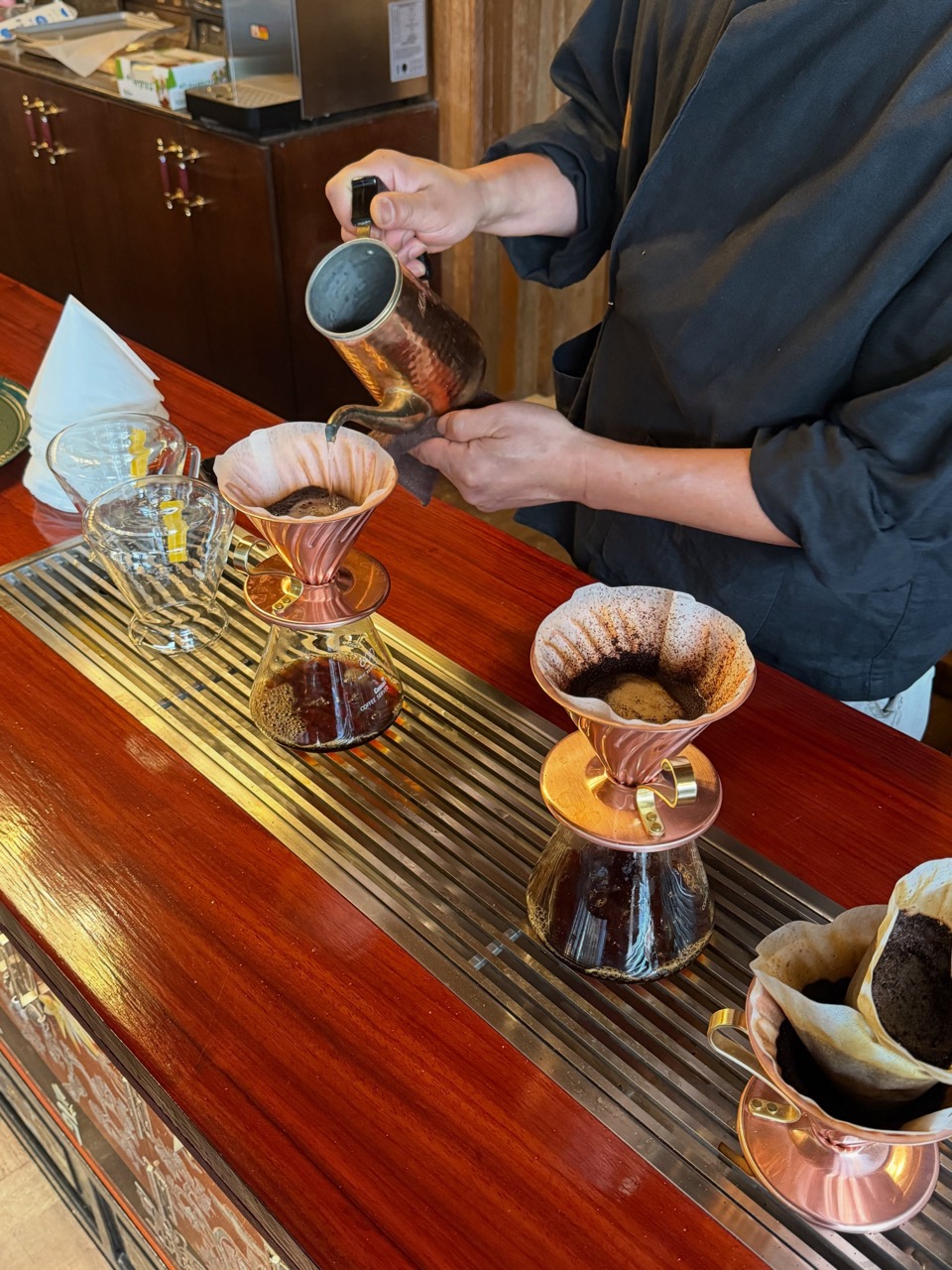
5.Copper drippers stand in a row on the red lacquered counter, and a barista pours water from a copper kettle in a thin, slow circle. The name comes from the idea of brewing coffee drop by drop, the way herbal medicine is simmered. A cup takes several minutes, so guests wait at their seats, and while they wait their eyes land on the drawers, the mother-of-pearl and the coloured glass. The room carries a slow-turnover menu. This was never built for customers who drink fast and leave.
6.The first reason people come is that the place has an interior Seoul is steadily losing. At Hyemindang in Euljiro, many of the morning customers were foreigners, about 30% overall (Bizhankook, March 2026). Redevelopment tears down exactly this kind of building, so the shops that move into the old buildings left standing become rarer and more valuable. That was what Kang regretted when he left Euljiro: that a space able to show Korea, at a time when K-culture draws attention, could not be kept.
7.The second reason is that the interior is hard for anyone else to buy. Kang worked as a musical actor, is also a carpenter who founded a theatre company named Moksu (carpenter), and did the interior and construction of the Euljiro shop himself. He says he put a message into every piece of furniture, every object and every song, and the Euljiro shop is the result of ten years of fixing and filling it day by day. Order the same mood from a contractor and you get a quote. The same years cannot be ordered.
8.Going by the menu at the original Euljiro shop, an Americano costs KRW 4,500, a café latte KRW 5,500, and seasonal drinks such as fresh fruit juice KRW 7,000. No price list for the Cheongnyangni branch has been published yet. On the Euljiro figures, coffee costs about the same as a tall Americano at Starbucks, and what lifts each customer's bill is the Hyemindang dessert that comes alongside.
9.The biggest cost is construction. The building's floor area has not been disclosed. Even at a modest 2 pyeong (about 6.6㎡) per room, the former guest rooms alone come to roughly 330㎡. Contractors commonly quote KRW 2 to 3 million per pyeong for a café interior (estimate), so buying all the work of tearing out partitions and refitting three floors at that rate would run into hundreds of millions of won. Kang covers much of it by hand.
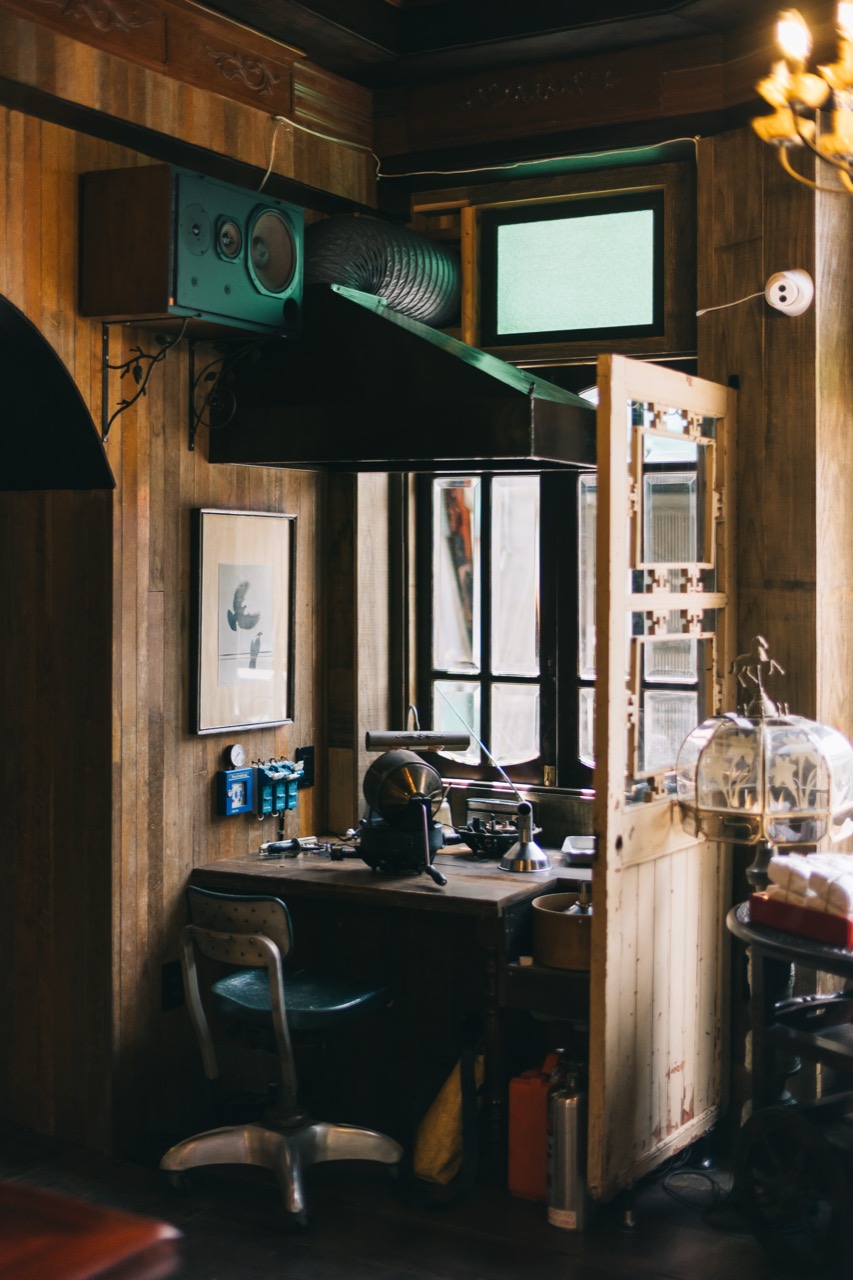
10.Opening at 60% changed the order in which money moves. Open after finishing, and the construction bill is paid in full before any revenue arrives. Open half-done, and sales from the first two floors fund the rest of the work. Part of the third floor is planned as an exhibition space for artists' work. It is the same way the Euljiro shop filled its ten years.
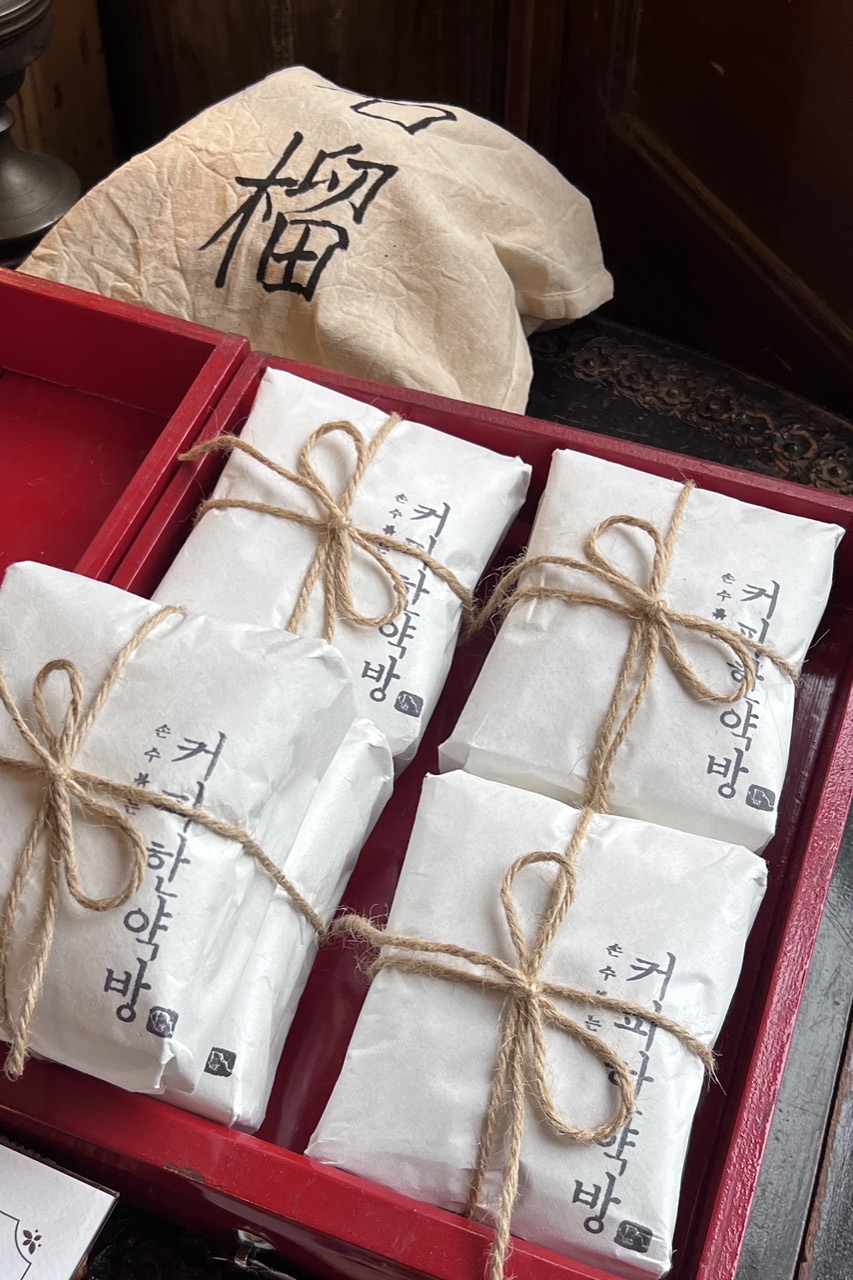
11.No visitor numbers have been published. If each customer spends KRW 10,000 on coffee and dessert and 300 people come a day, monthly sales would be around KRW 90 million (assumption). Some products also leave the shop: beans and drip bags, wrapped in paper and tied with twine. Carried home by customers, that packaging takes the shop's name beyond Gyeongdong Market.
12.The same market has an earlier example. In December 2022, Starbucks converted the Gyeongdong Theater, empty for 28 years, in the main building of Gyeongdong Market into a store. It is called Gyeongdong 1960, and for every item sold it sets aside KRW 300 for a market co-prosperity fund. Both shops sell the atmosphere of an old building to bring people into the market.
커피한약방이 청량리에 오기까지
13.The development that pushed the café out of Euljiro has reached Cheongnyangni too. In July 2023, residents moved into Lotte Castle SKY-L65 at Cheongnyangni Station, up to 65 storeys and 1,425 households. The new residents become new customers for a café in the market's back alley, but the same force that raised the towers will one day reach the alley's old buildings as well. Nothing guarantees that what happened in Euljiro will not happen here.
14.A Euljiro café that lost ground to redevelopment has opened a new shop in an old inn behind Gyeongdong Market. With the walls of its 50 rooms torn out and the building only 60% finished, it trades now and pays for the rest out of sales. Turning an old lodging building into a café in Korea first means changing the building's registered use from lodging to neighbourhood commercial facility, and that change often requires parking and septic-tank standards to be brought in line with the new use.