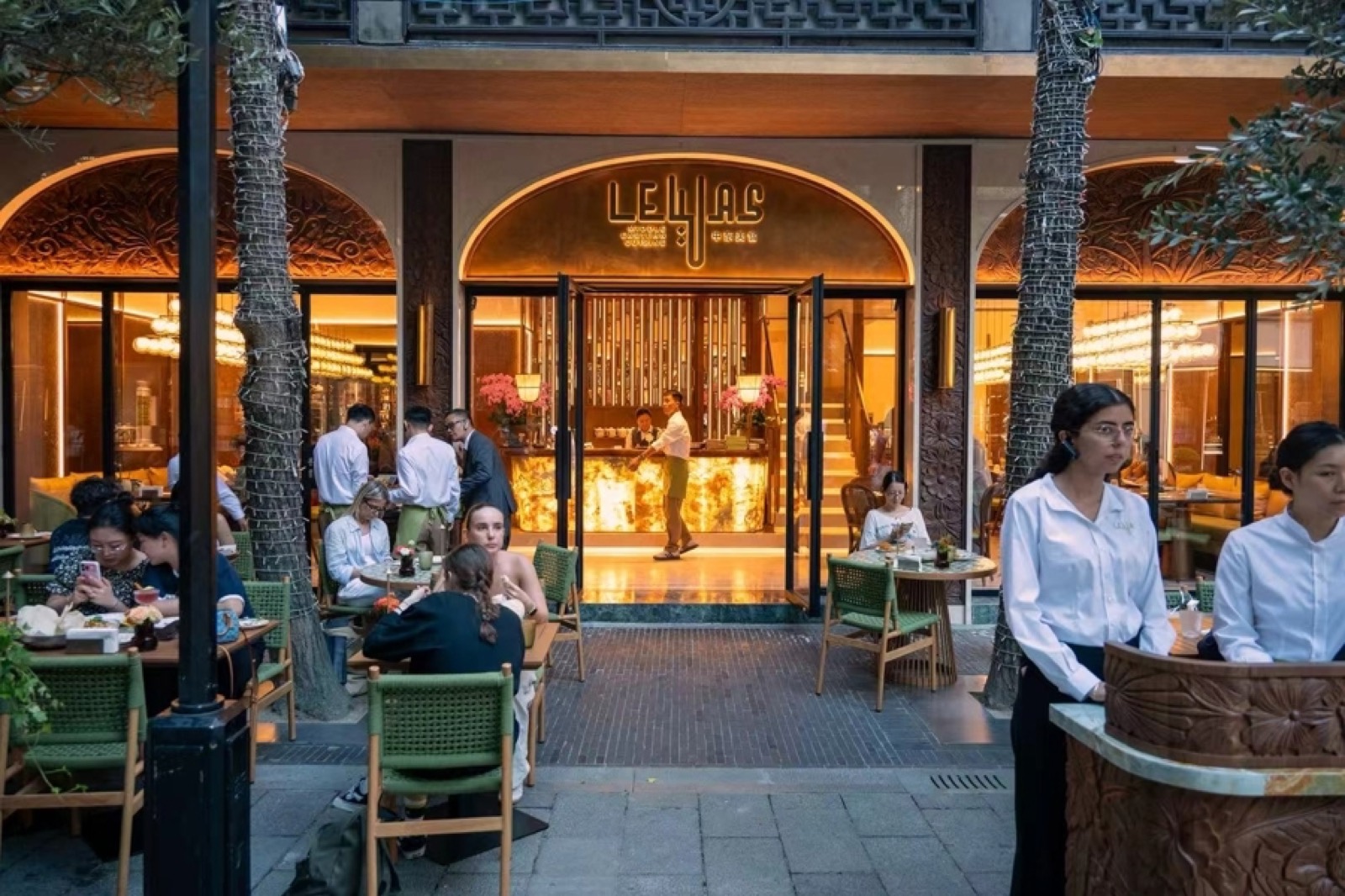
A Lebanese-born founder who started with a falafel shop in Shanghai has opened Leyas, a Middle Eastern restaurant in a three-storey shikumen house in Xintiandi. In its first few days, four in ten guests were foreigners.
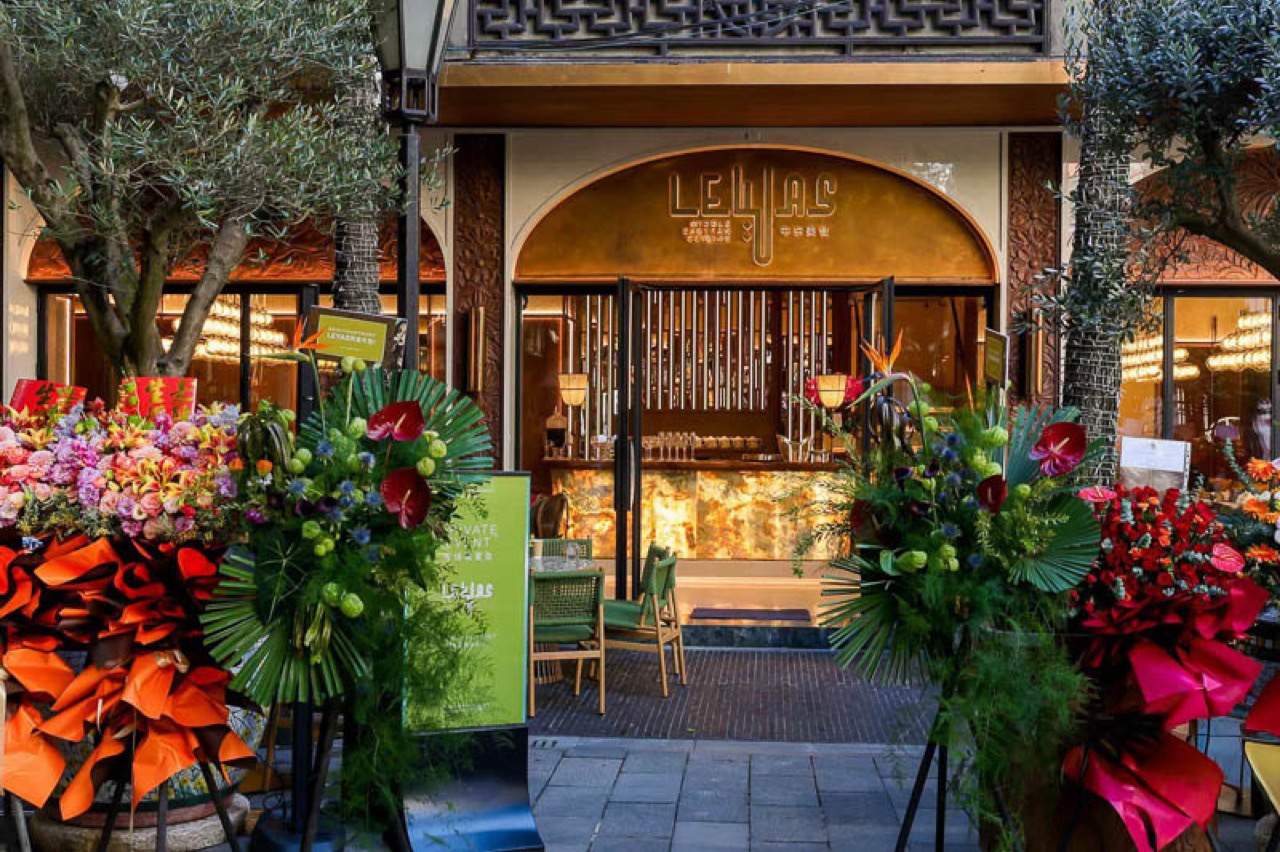
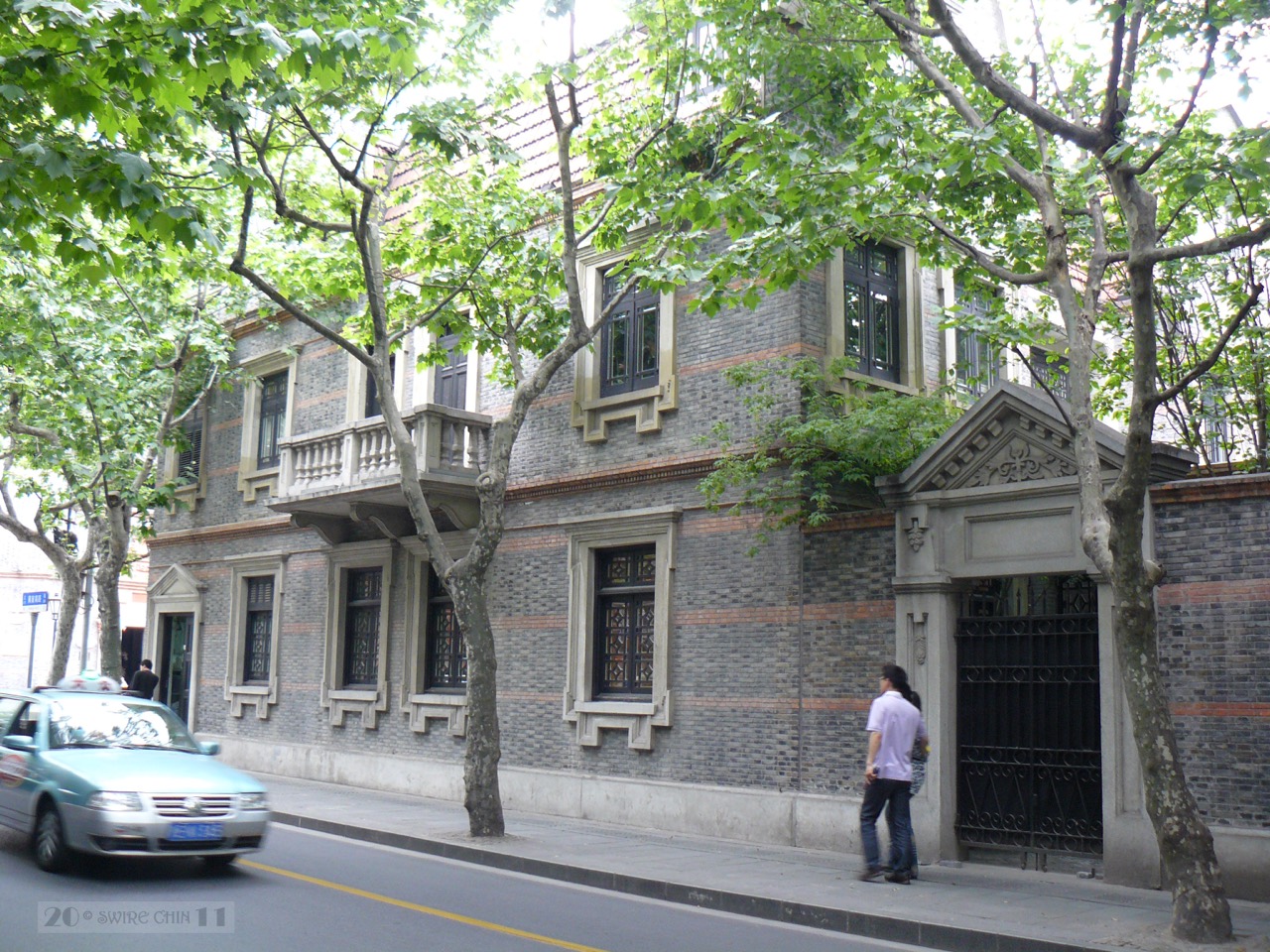
1.North Block, Xintiandi, Shanghai: No. 18, Lane 181, Taicang Road. Leyas, a Middle Eastern restaurant that occupies an entire shikumen, the lane house typical of 1920s Shanghai, opened in September 2026. Three floors, 500 square metres of floor area, open daily from 11am to 11pm.
2.The founder is Wael Accad. Born in Lebanon, he has lived in Shanghai for 22 years and still works as Asia-Pacific head of an international freight company. Without quitting that job he opened falafel shops in Shanghai and then Beijing, and Leyas is his sixth restaurant in Shanghai.
3.Under a ceiling with its rafters exposed, a long wooden-topped bar runs along one side, bottles stacked almost to the ceiling behind it. In the dining room, lime-green half-moon sofas wrap around round tables. Across the three floors there is one private room for groups and two terraces. Shisha is served on the terraces only.
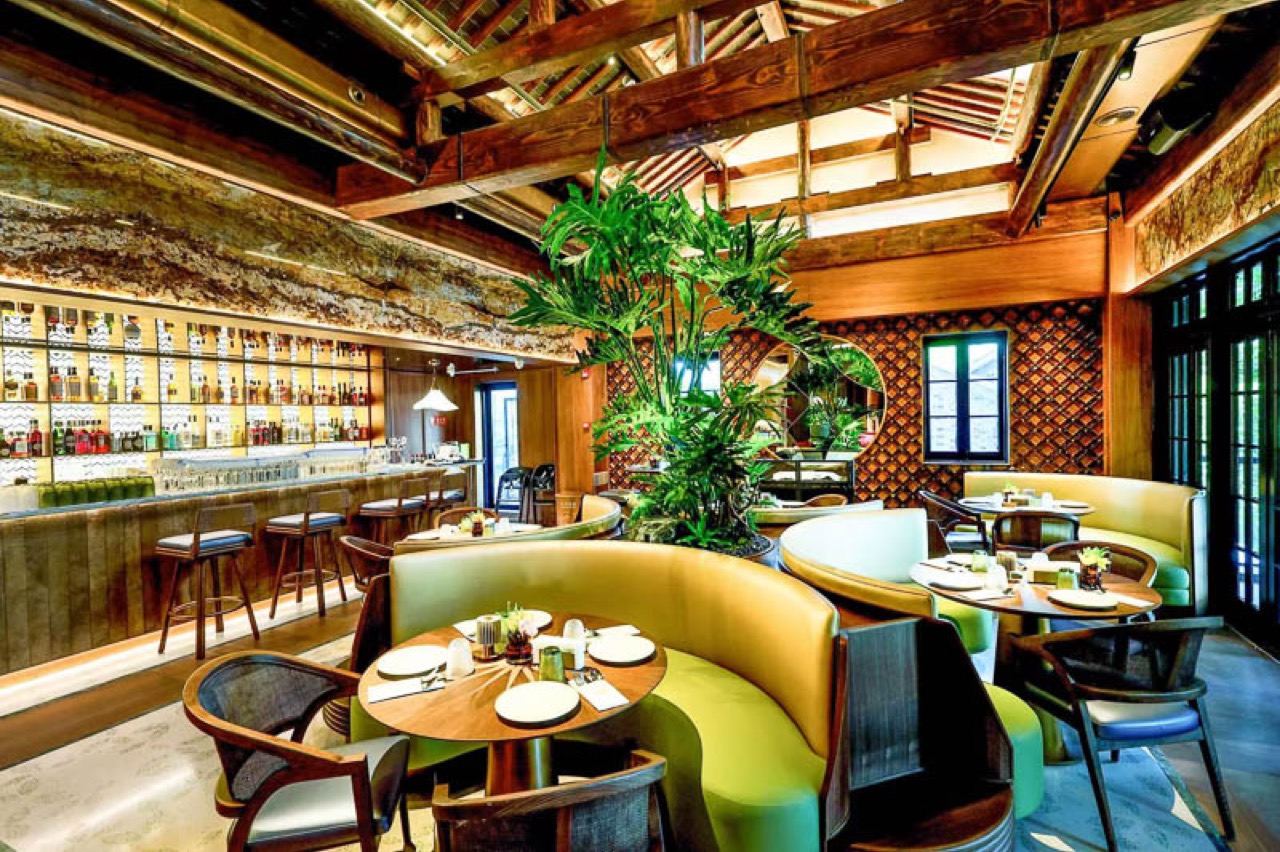
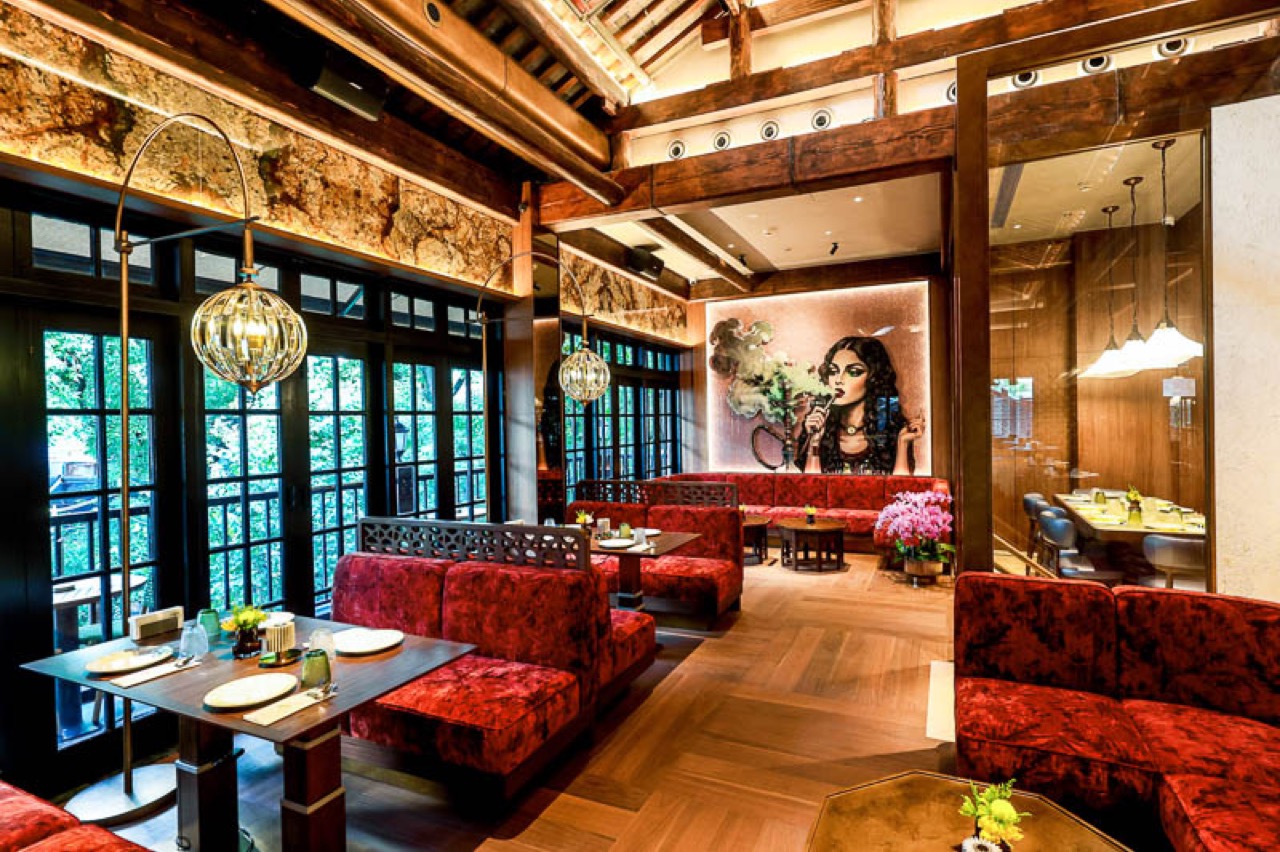
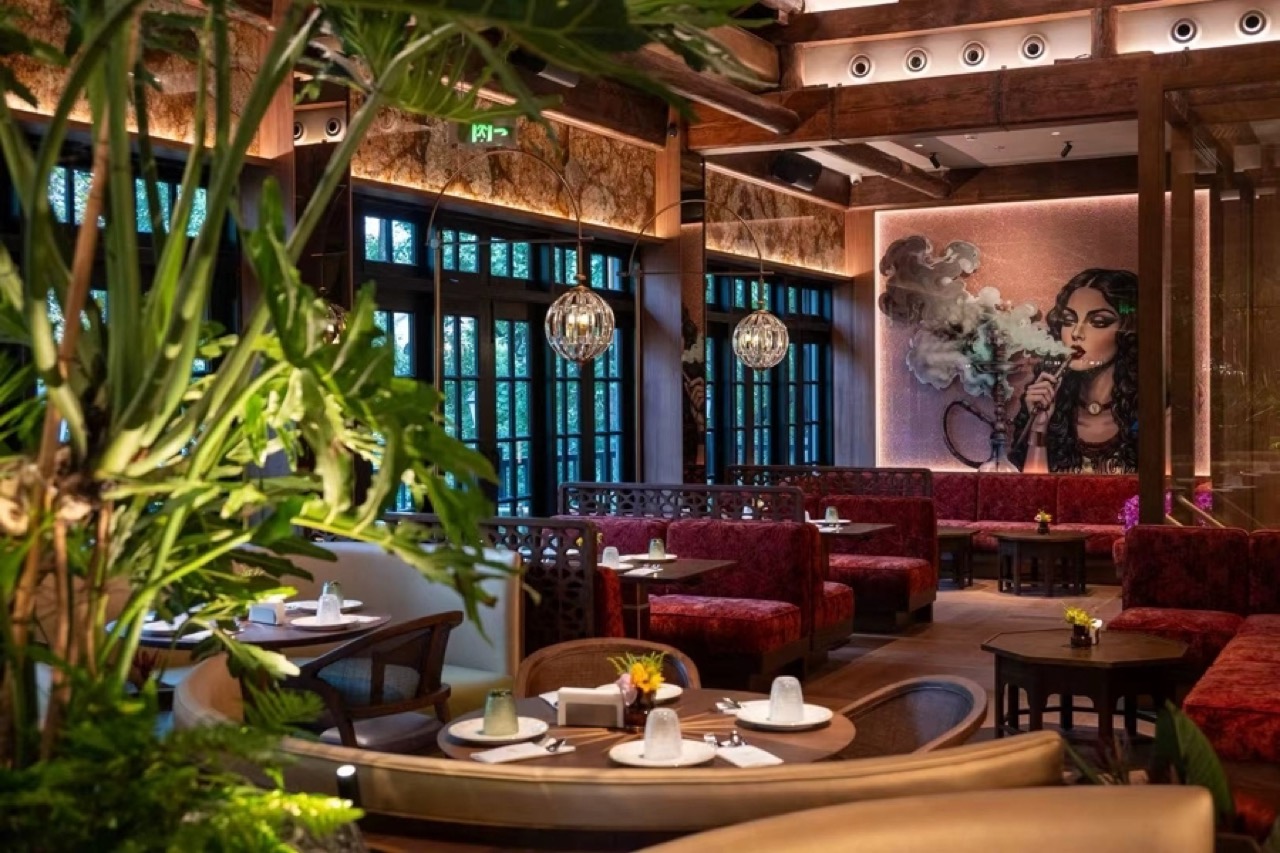
4.The bones of the shikumen were left alone. Beneath the carved wooden window lattices and the Chinese-style roof hang Middle Eastern murals and brass lamps. Above the red velvet banquettes, the wall belongs to a woman's face exhaling shisha smoke.
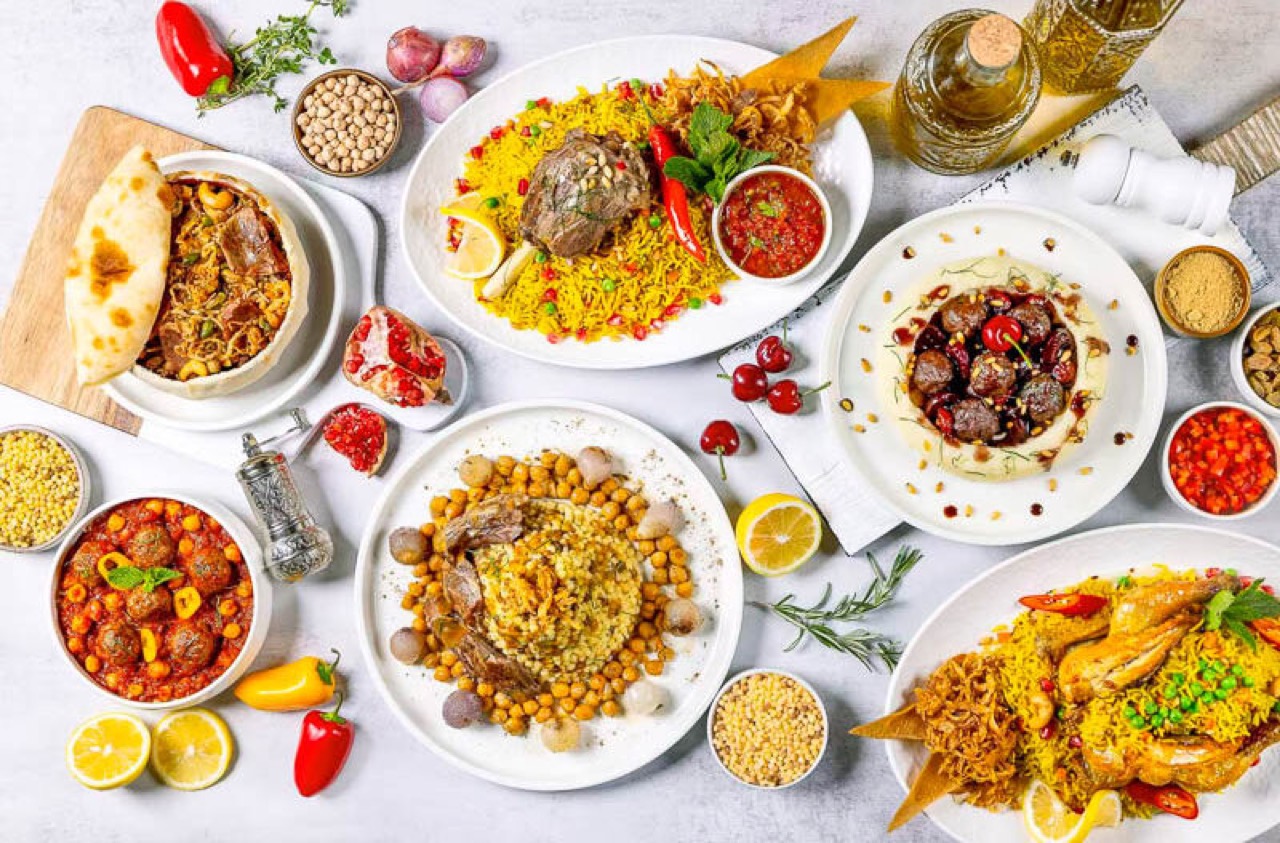
5.The menu does not stop at Lebanon. Dishes from Kuwait, Qatar, Saudi Arabia and the UAE sit on the same page. Batata harra, spicy fried potatoes. Sambousek, pastries baked with minced meat and pine nuts. Braised lamb shank on saffron rice. A whole baked fish. Instead of ending at mezze and kebabs, the menu widens into large plates meant for sharing.
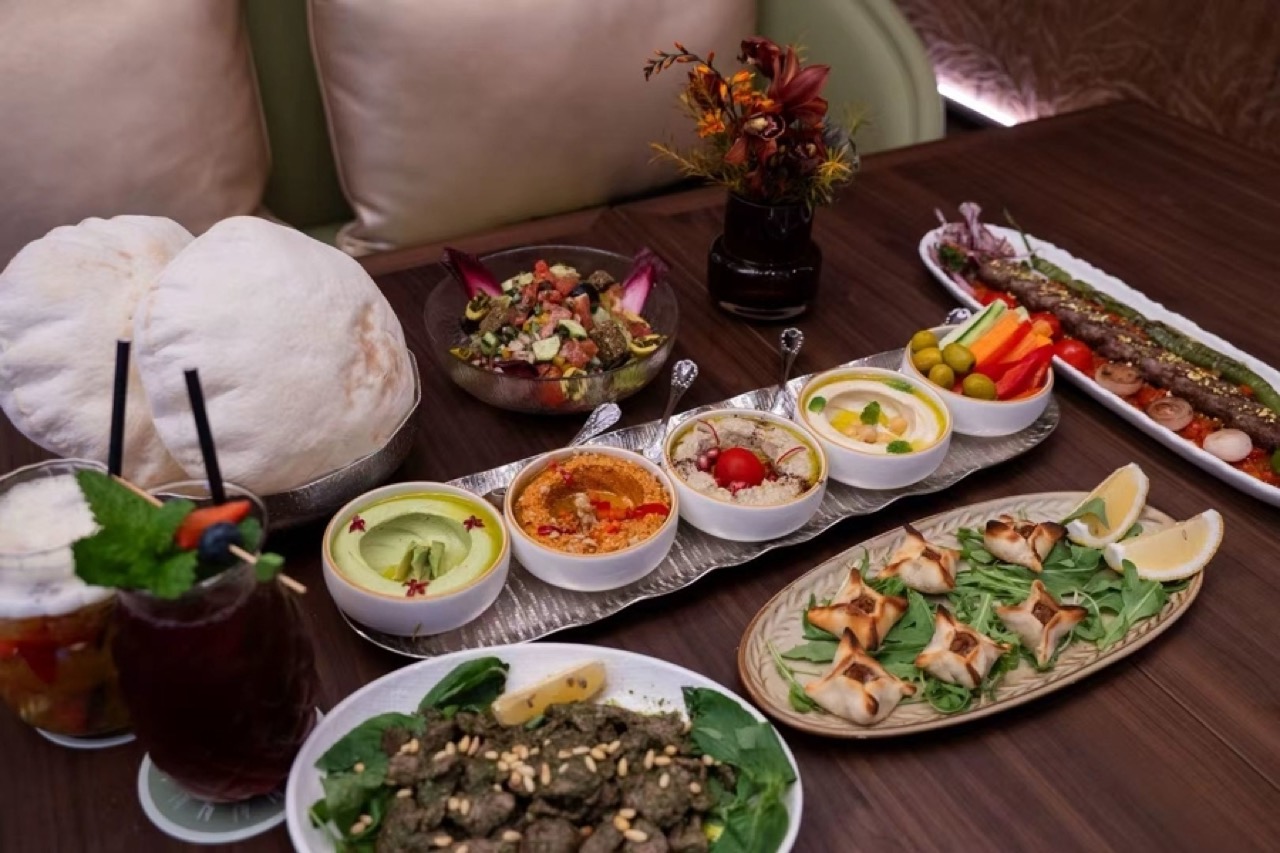
6.The mezze board arrives first. Hummus, an aubergine tahini dip and muhammara, red pepper ground with walnuts, line up in small bowls, and beside them sits bread that has puffed up like a balloon in the oven. Tear it open and the trapped steam escapes first. Since the dips are scooped with torn bread, hands get busy before cutlery does.
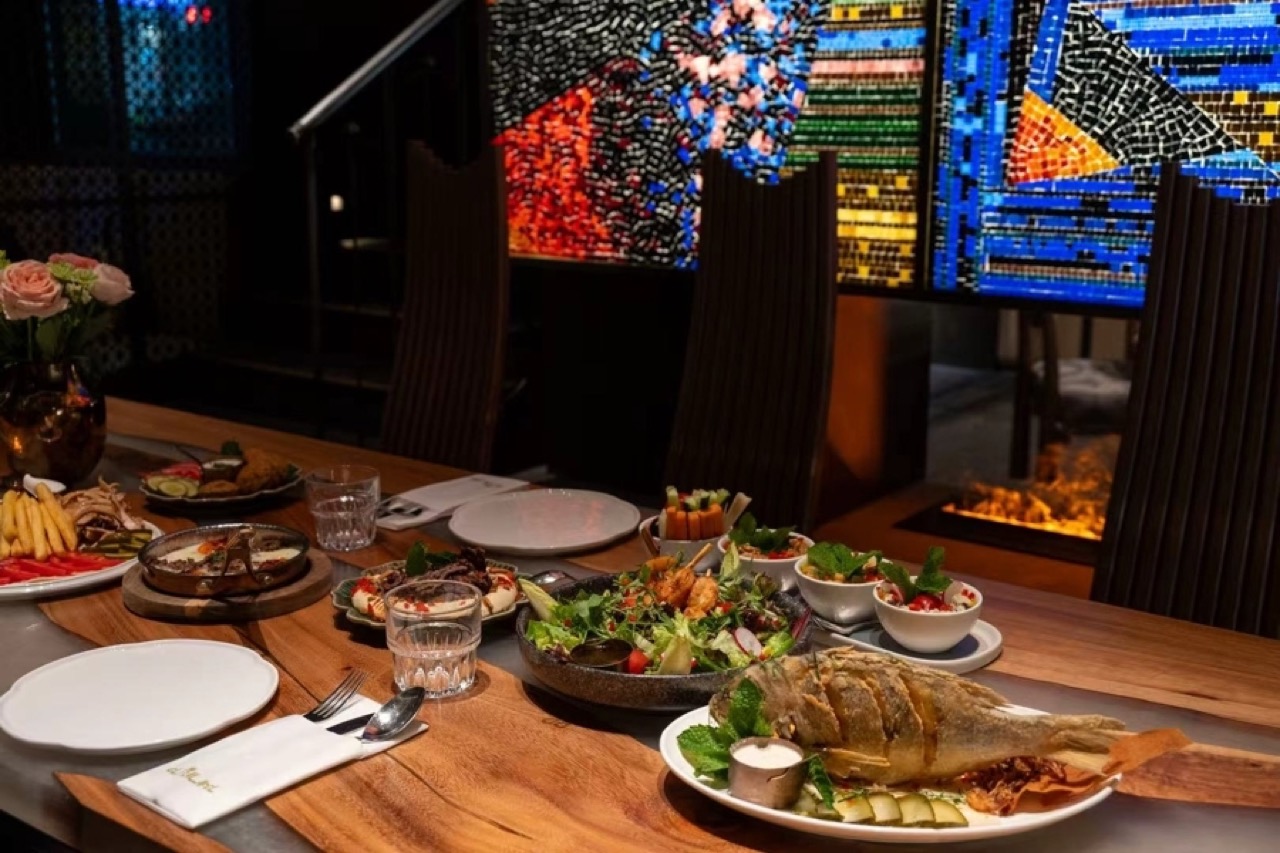
7.At the group tables, long wooden tables sit beneath a stained-glass wall, with whole fish and meat platters massed in the centre. Skewered kebabs glisten with fat, and the saffron rice announces itself the moment the plate touches the table. Large sharing plates are also a way to raise how much each table orders.
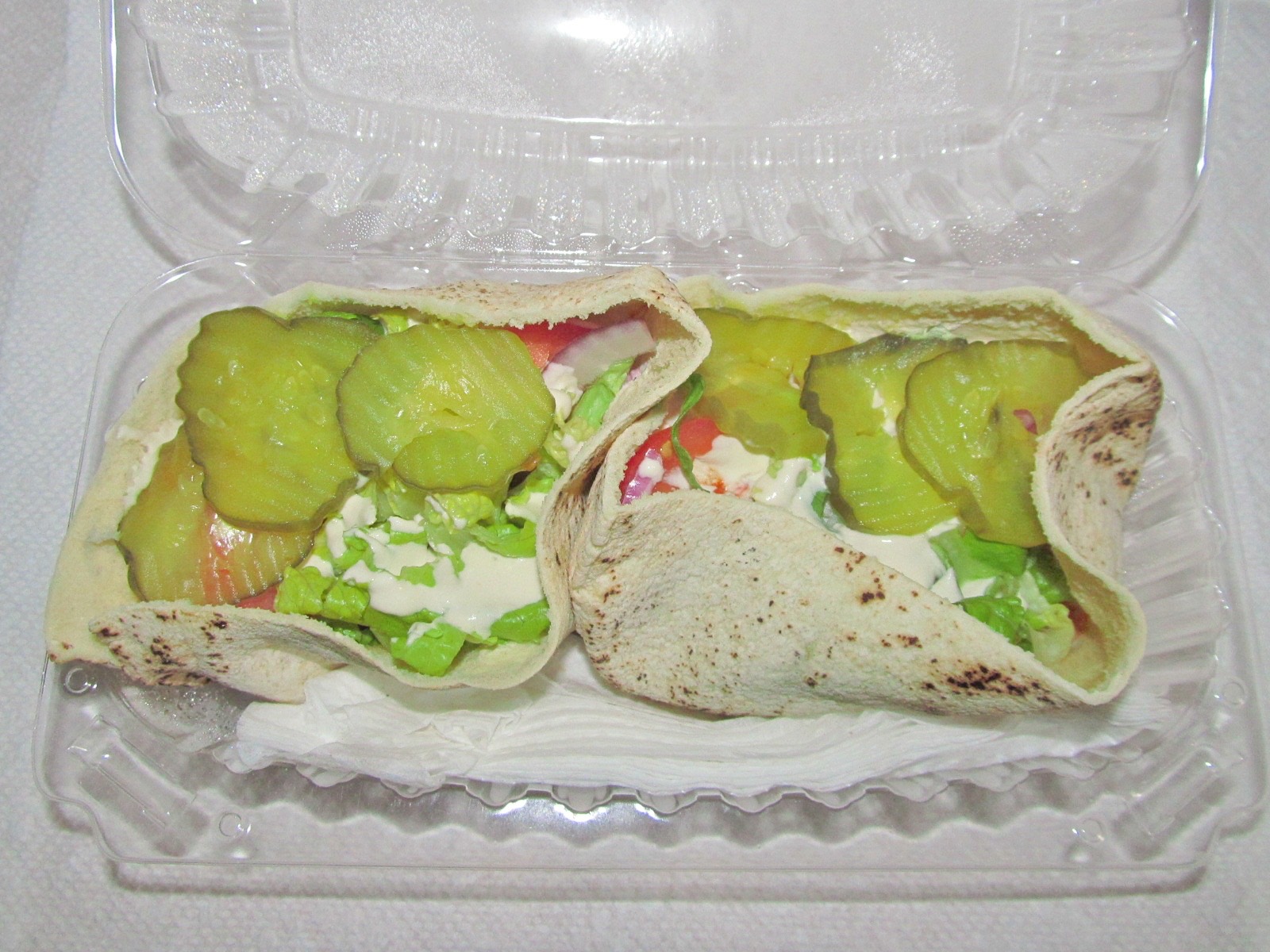
8.It began as a pop-up booth at market events. Accad fried falafel at a booth in 2016, and the following year opened his first shop, Eli Falafel, on Wulumuqi Road. The falafel, ground chickpeas fried in oil, follows a family recipe. As a casual restaurant where a guest spends RMB 75-225, it spread to Jiujiang Road, Shanghai Centre on Nanjing West Road, and Pudong. Accad says six in ten customers are regulars.
9.In the Xintiandi restaurant's first days, 40% of guests were foreigners, and Arabic-speaking diners were noticeably more common, according to the restaurant. Visas opened the road. The UAE and Qatar have had mutual visa exemption with China since 2018, and since summer 2025 citizens of Saudi Arabia, Oman, Kuwait and Bahrain also enter without a visa. The five countries on the menu nearly match that list.
10.What Gulf travellers look for in Shanghai is halal meat, familiar spices, and somewhere a group can sit for a long time. The falafel shops were casual places where a local could drop in alone. Xintiandi sits in the middle of the route tourists walk in the evening, and Leyas placed terraces, shisha and a group room along that route.
11.Seat numbers have not been published. Counting three floors and two terraces, I put it at 140 seats, with 70 at lunch and 130 at dinner, 200 guests a day. Spend per head: RMB 220, the top end of the falafel shops' range. Monthly sales come to RMB 1.32 million, roughly KRW 250 million (all estimates).
12.With food and drink costs at 30%, that is RMB 400,000. Running three floors, a bar and terraces takes at least 40 people across floor and kitchen, so labour is RMB 360,000. At RMB 13 per square metre per day, 500 square metres of Xintiandi shikumen costs RMB 200,000 a month. Put utilities, delivery commissions, shisha supplies and marketing at RMB 160,000, and RMB 200,000 is left, 15% of sales (all estimates).
13.Covering RMB 720,000 in fixed costs takes 156 guests a day at RMB 220 each. If spend per head stays at RMB 150, the middle of the falafel shops' range, that number climbs to 230. Three floors cannot be filled at falafel prices. So where does the extra RMB 70 come from? Sharing plates, the bar, and shisha.
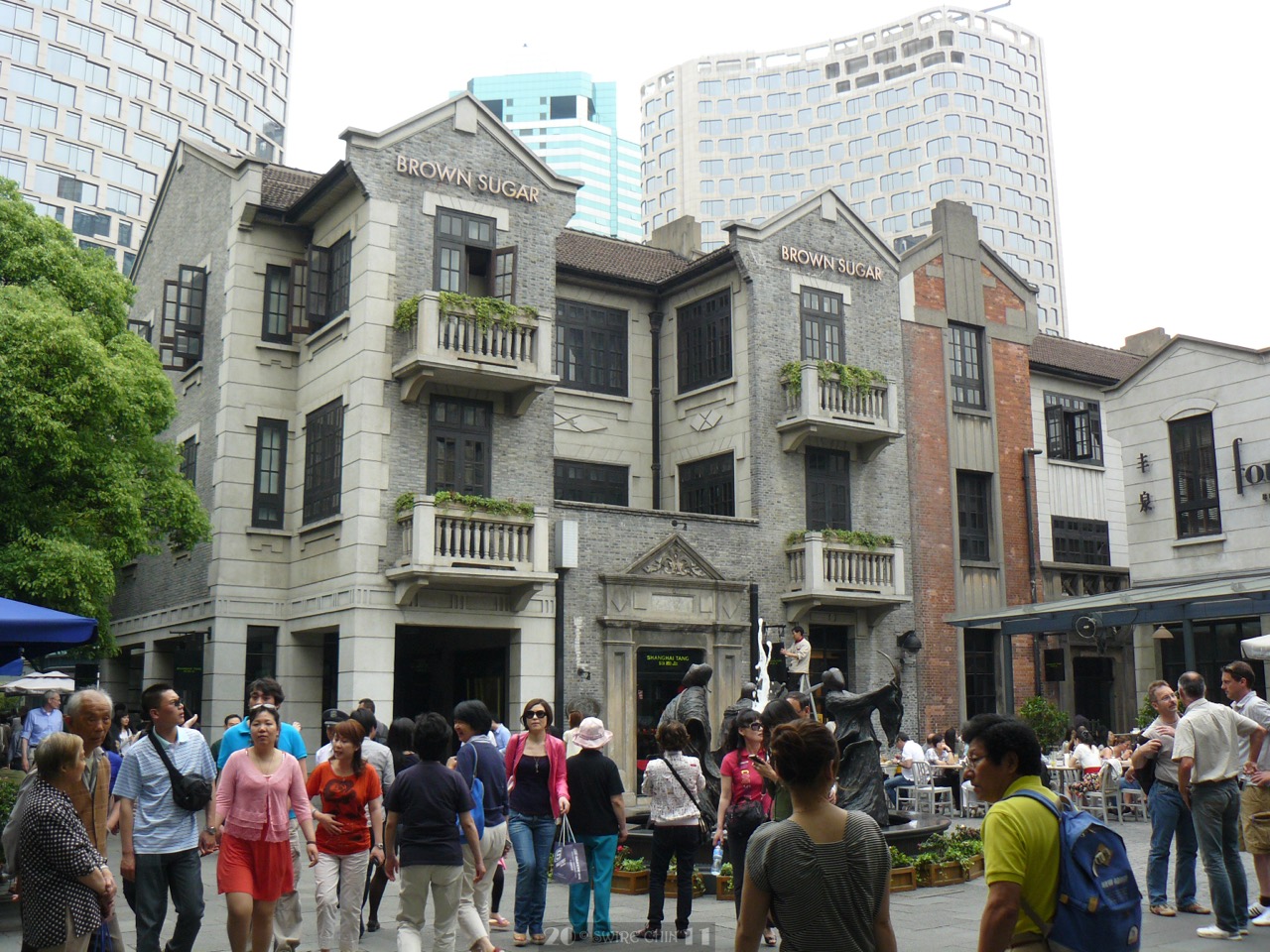
14.Xintiandi is a commercial district that Hong Kong developer Shui On Land opened in 2001 after tearing down and rebuilding old shikumen lanes. Wulumuqi Road, where Eli Falafel first settled, lies further west, inside the former French Concession, in a neighbourhood with many foreign residents. For nine years, Accad's shops were filled by that neighbourhood's regulars.
15.Leyas is betting on a different customer: not foreigners living nearby, but Gulf travellers who fly in and stay a few days. Yet visa-free entry for those four countries began as a one-year trial and has been extended once, to 31 December 2026, and nothing has been announced about what comes after. When Leyas signed for 500 square metres and opened in September, the policy had a little over three months left.
16.A man who spent nine years growing falafel shops opened a 500-square-metre Middle Eastern restaurant on the lanes tourists walk in Xintiandi, and filled 40% of his first days with foreign guests. At 200 guests a day spending RMB 220, the month brings in RMB 1.32 million and keeps 15% (estimate). Open the same restaurant in Korea and the terrace is the first problem. A restaurant can only put tables outside the building in zones where the local government permits outdoor service, and shisha has to be checked against indoor and outdoor no-smoking rules as well.