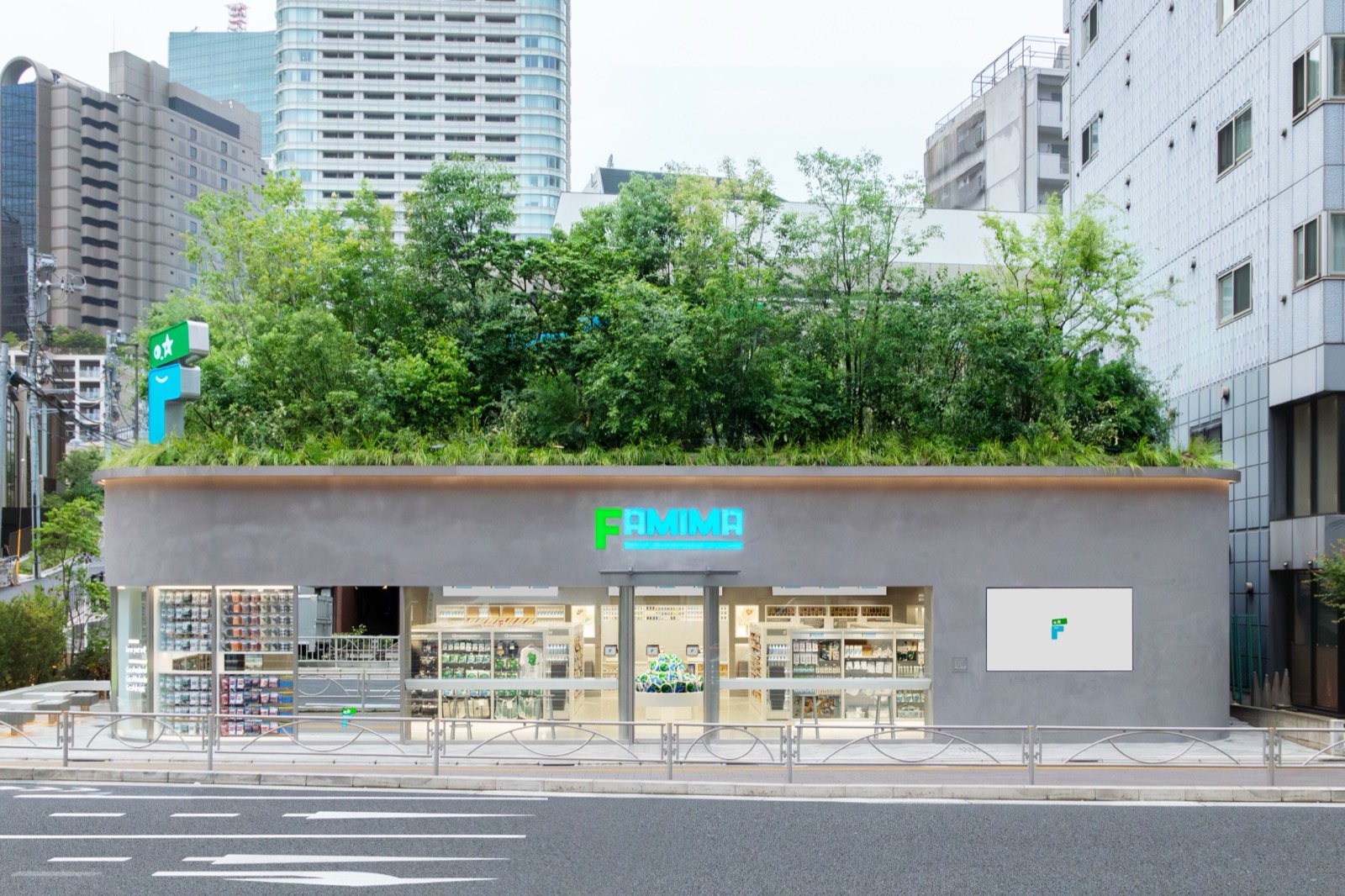
At 10 in the morning on July 10, 2026, a convenience store opened in Minato ward, Tokyo. It is called FAMIMA PARK AZABUDAI, the first flagship the 45-year-old chain FamilyMart has ever built. Sales floor area 217.05㎡, 65.7 pyeong. Barely a hand's width larger than a standard convenience store. Yet the queue on opening day ran two hours, and purchase quantities were capped. What people queued to buy was not an onigiri, it was a pair of socks at 429 yen. This issue takes apart, in numbers, why those socks are a better business than a bento.
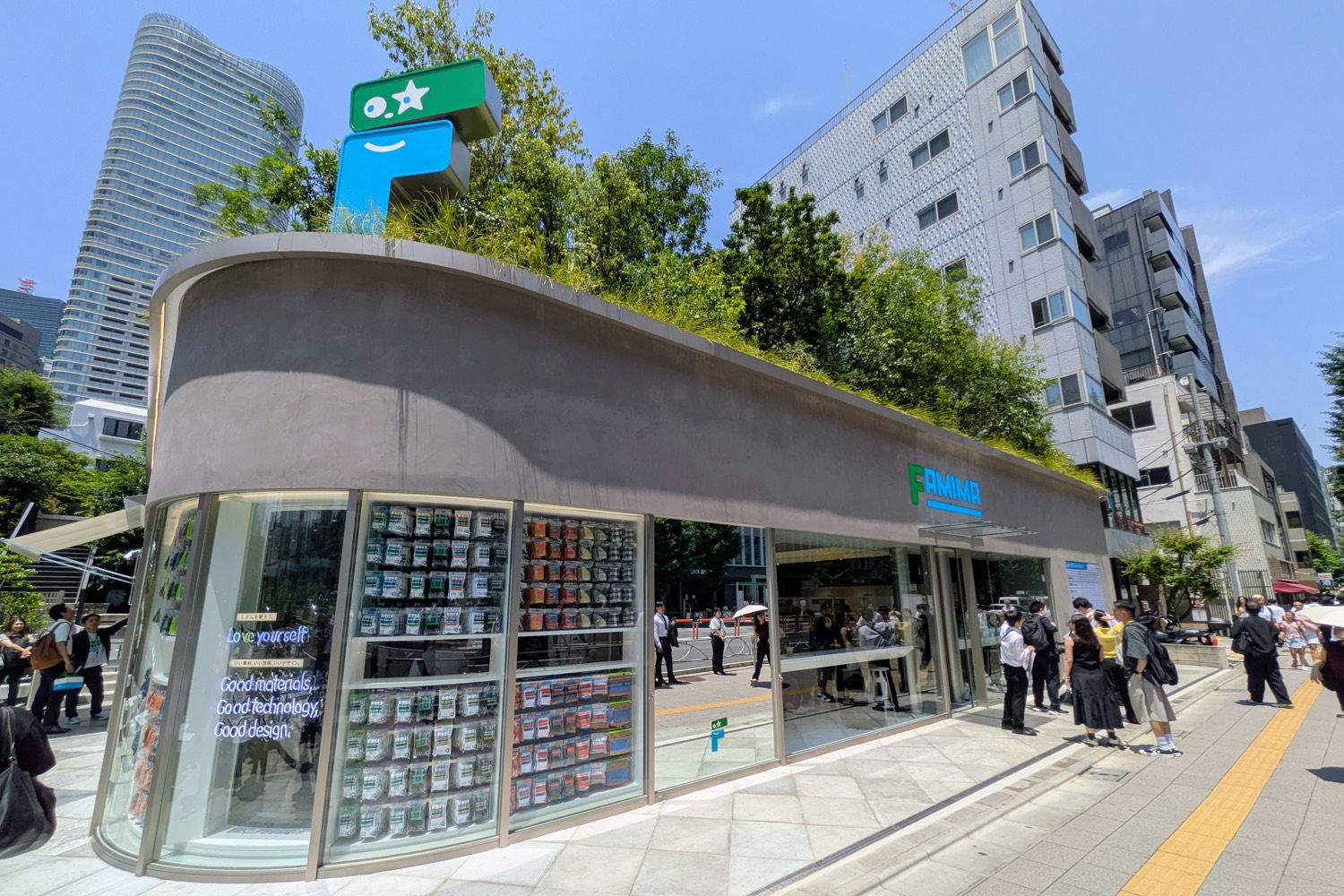
1.The facts first. FAMIMA PARK AZABUDAI opened at 10 in the morning on Friday, July 10, 2026. The address is 5-2-10 Toranomon, Minato ward, Tokyo, at the foot of Azabudai Hills. The announced sales floor area is 217.05㎡, trading 24 hours.
2.This is not simply a well-made store. In 2026, its 45th year, FamilyMart launched the Next FamilyMart Project and set up a separate brand, FAMIMA, to test the convenience store of the next generation. This store is its first flagship.
3.The names are formidable. Creative direction by NIGO, the person who made A Bathing Ape and HUMAN MADE. The space went to Masamichi Katayama of Wonderwall, the clothing to Hiromichi Ochiai of FACETASM, and the coffee to Tetsu Kasuya, the 2016 World Brewers Cup champion. The face of the advertising is the actor Tadanobu Asano.
4.The scene on opening day did not belong to a convenience store either. A two-hour queue, caps on purchase quantities. Stickers went to the first 2,026 people, and tote bags to the first 2,000 who spent 5,000 yen or more. Exactly the grammar of a sneaker store on release day.
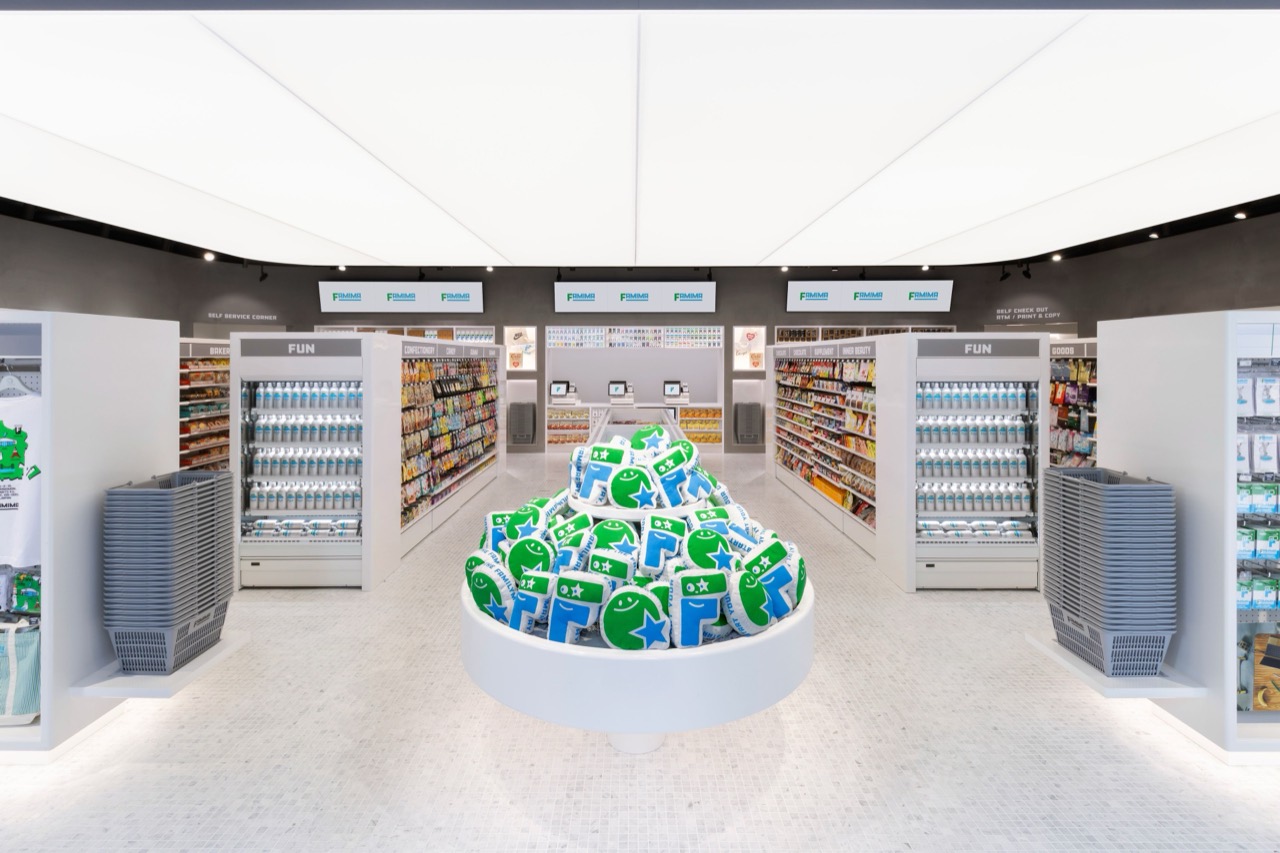
5.A standard Japanese convenience store runs roughly 50 to 60 pyeong (about 165 to 200㎡), and this flagship is 65.7. Not a landmark four times the usual size but one unit with half a unit added. Which is to say they did not buy the attention with floor area.
6.The zoning goes like this. Outside the store sits FAMIMA STAND, a takeaway window where you buy coffee, tea or famichiki and leave without coming in. Counter seating runs along the glass facade, there are seats outside, and on the roof sits a green space called the Rooftop Forest.
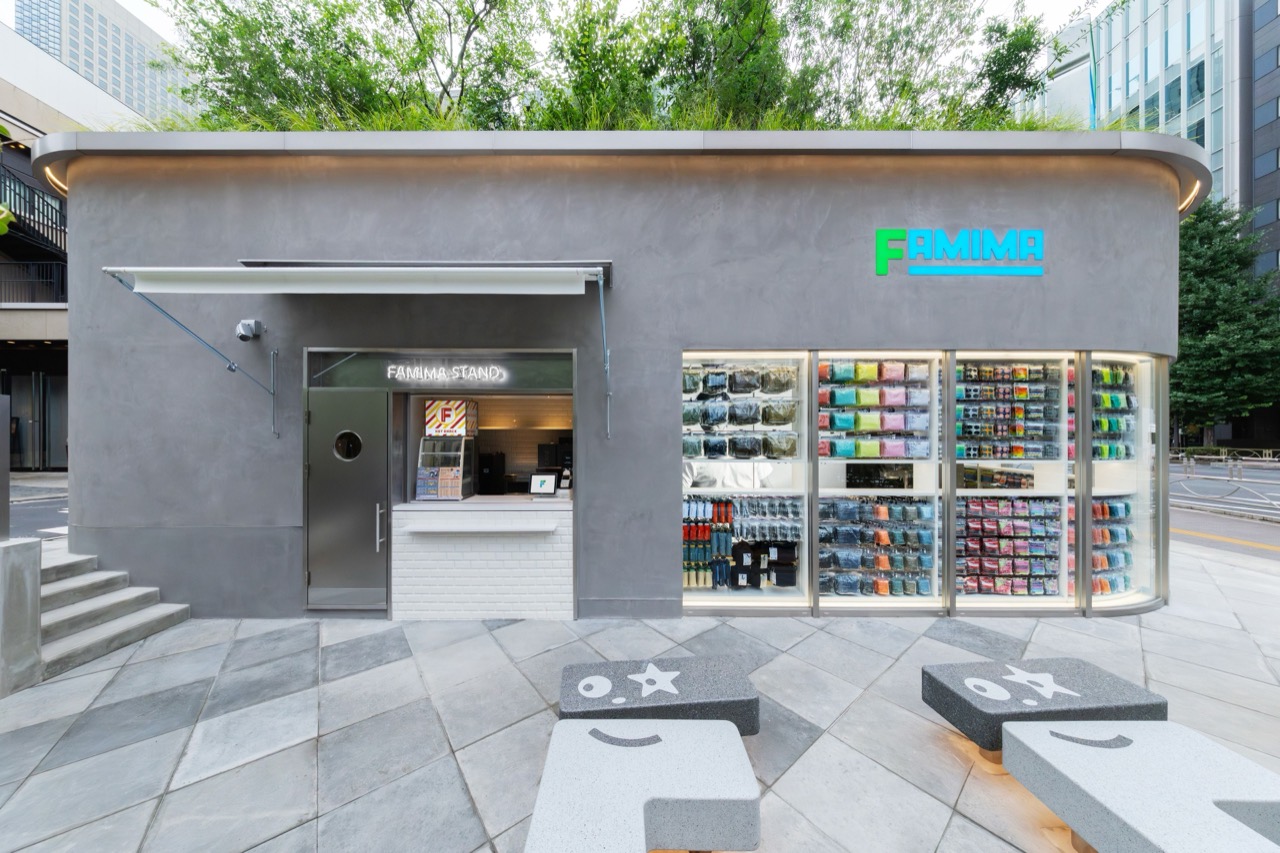
7.That stand is a quiet invention. The greatest enemy of a convenience store is the checkout queue, and when it grows long the customer who came for one coffee walks away. The stand pulls that customer out of the store entirely. On a floor of 65 pyeong it physically separates purpose buying from browsing. Inside, the people who look around, outside, the people who buy and go.
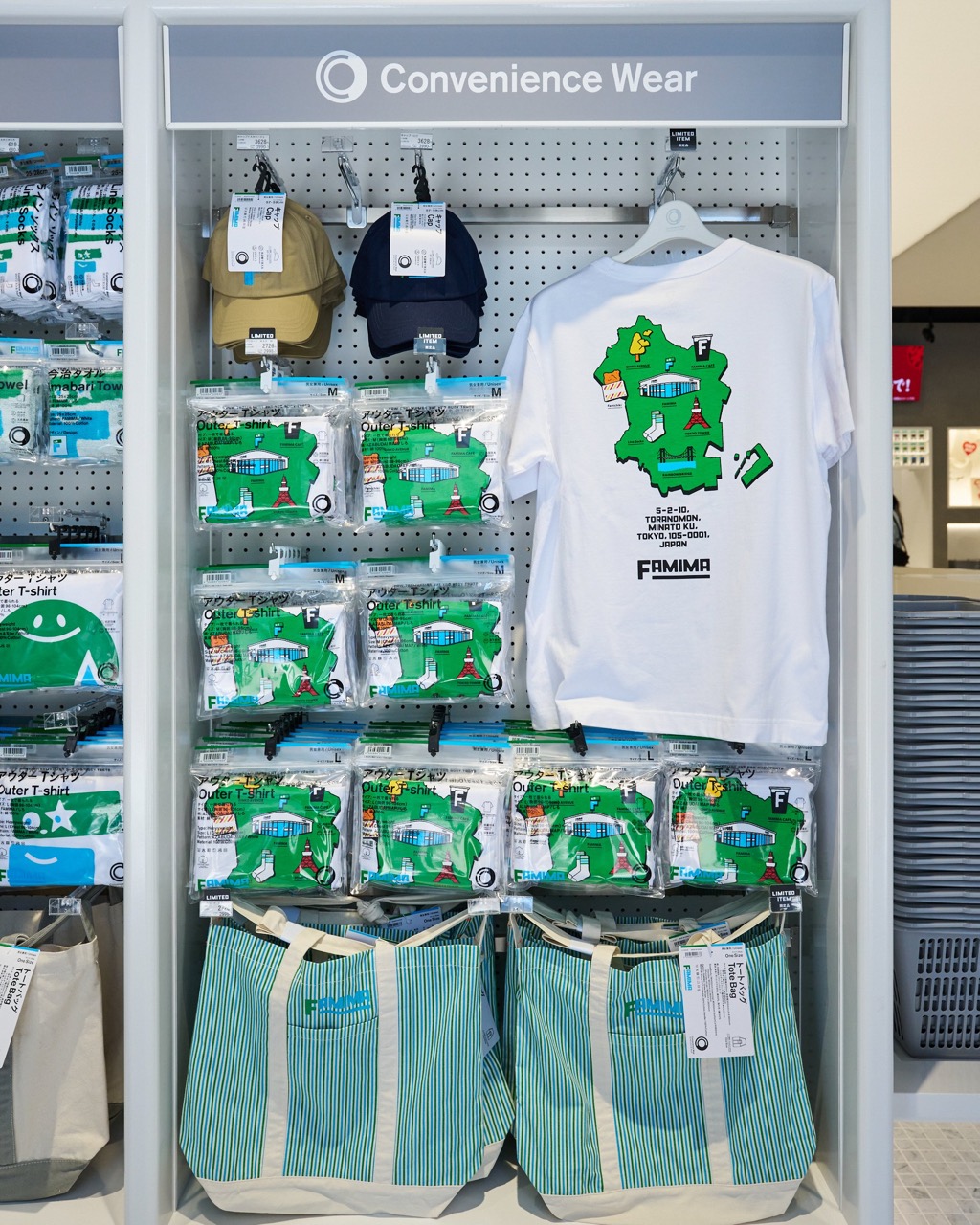
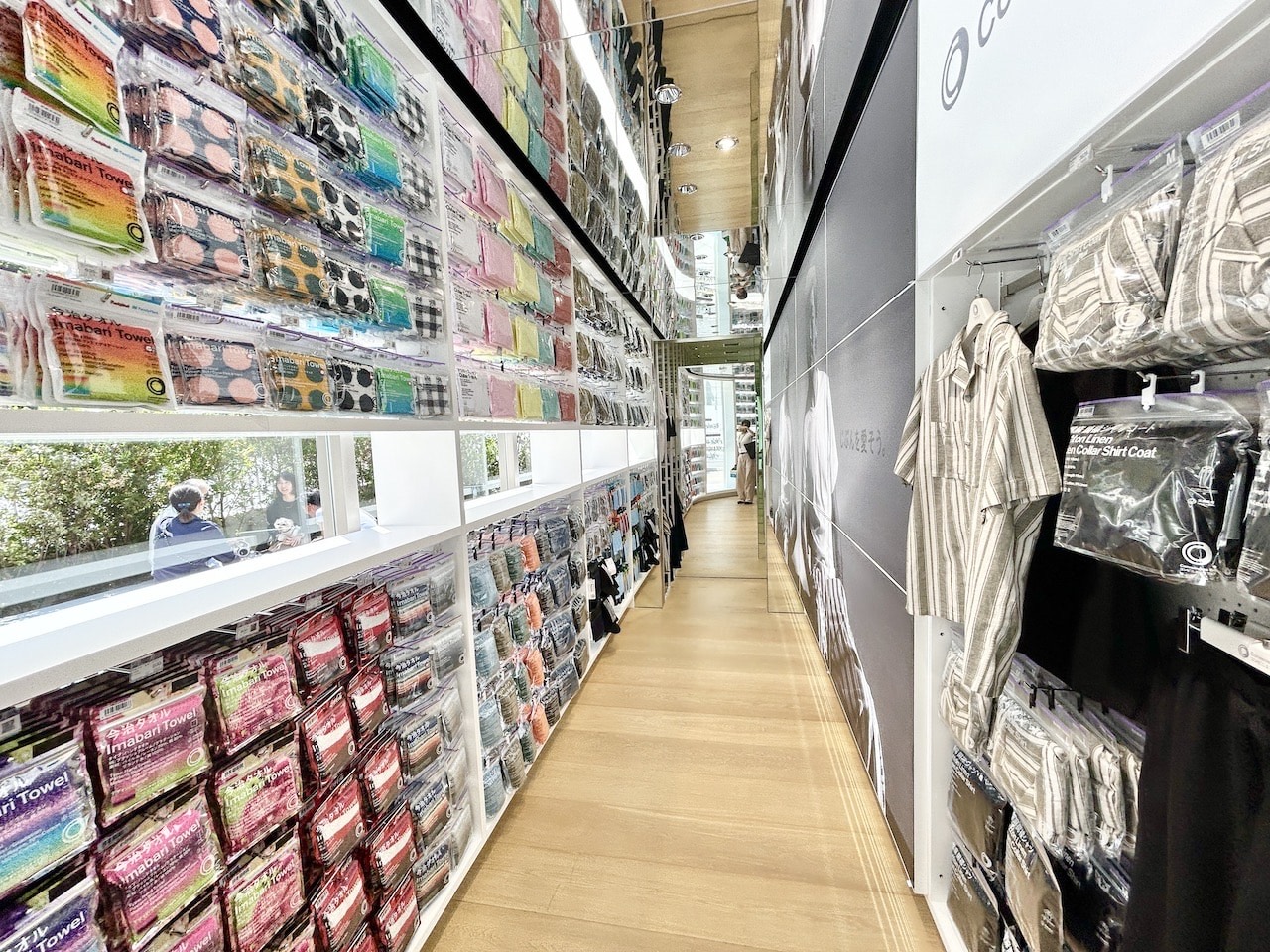
8.Three things convenience stores never had came inside. A fitting room, an advisor who helps you choose clothes, and a touchscreen that suggests outfits. The apparel brand Convenience Wear took a shop-in-shop position, and store-exclusive items were added to the full seasonal lineup. Checkout was pushed onto kiosks, and the wall in front of them was filled with merchandise.
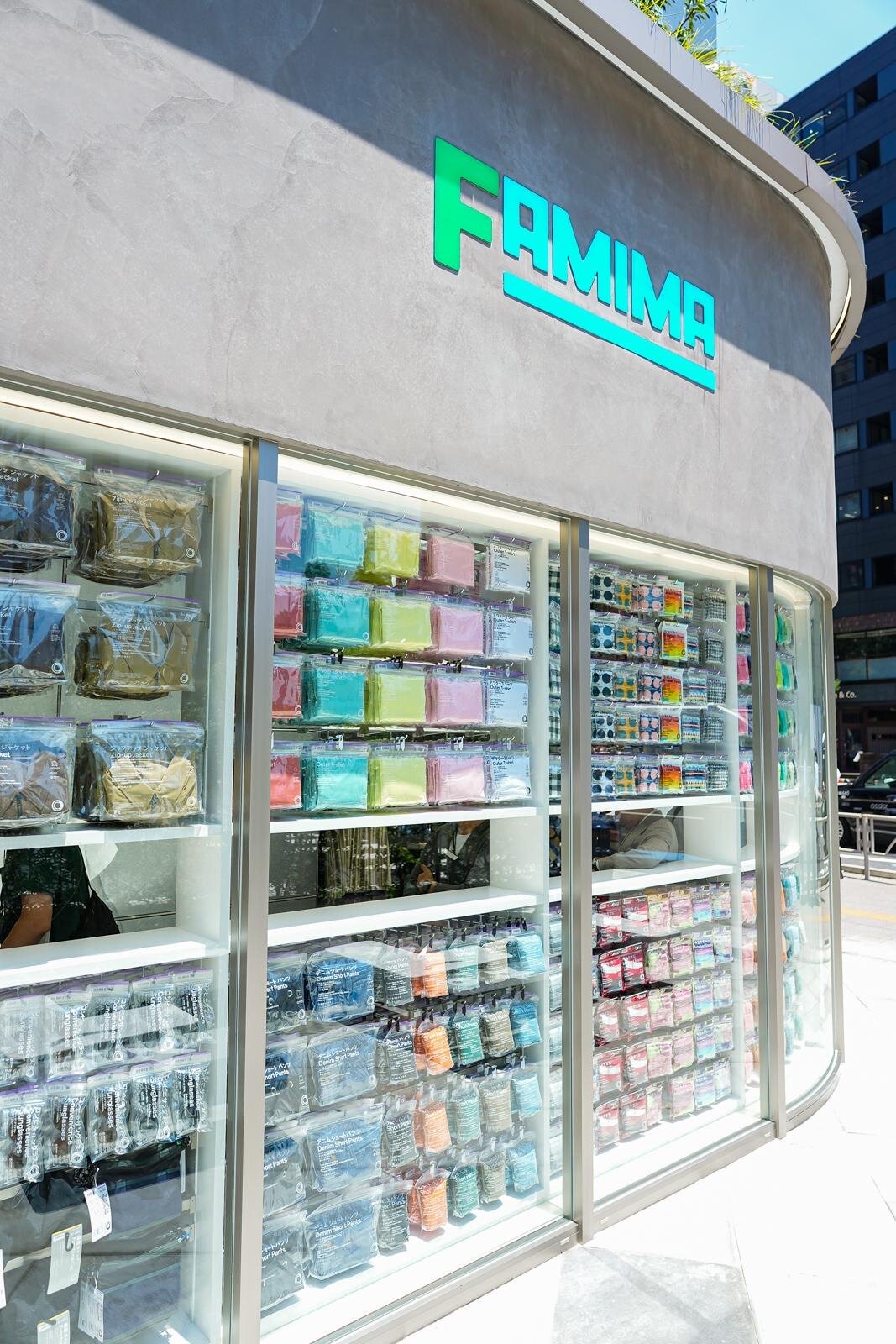
9.You have to know what Convenience Wear is to read this store. On March 23, 2021, FamilyMart began selling clothes simultaneously at about 16,600 stores nationwide. The designer is Hiromichi Ochiai of FACETASM, a Tokyo collection brand. The signature product is line socks, priced at 390 yen before tax and 429 yen with tax.
10.The cumulative figure passes out of the range of convenience store sundries. These FamilyMart socks passed 20 million pairs cumulatively at the end of May 2024, and have crossed 30 million pairs as of 2026. Brand revenue passed 10 billion yen in fiscal 2023. A convenience store built a mid-sized fashion brand in five years.
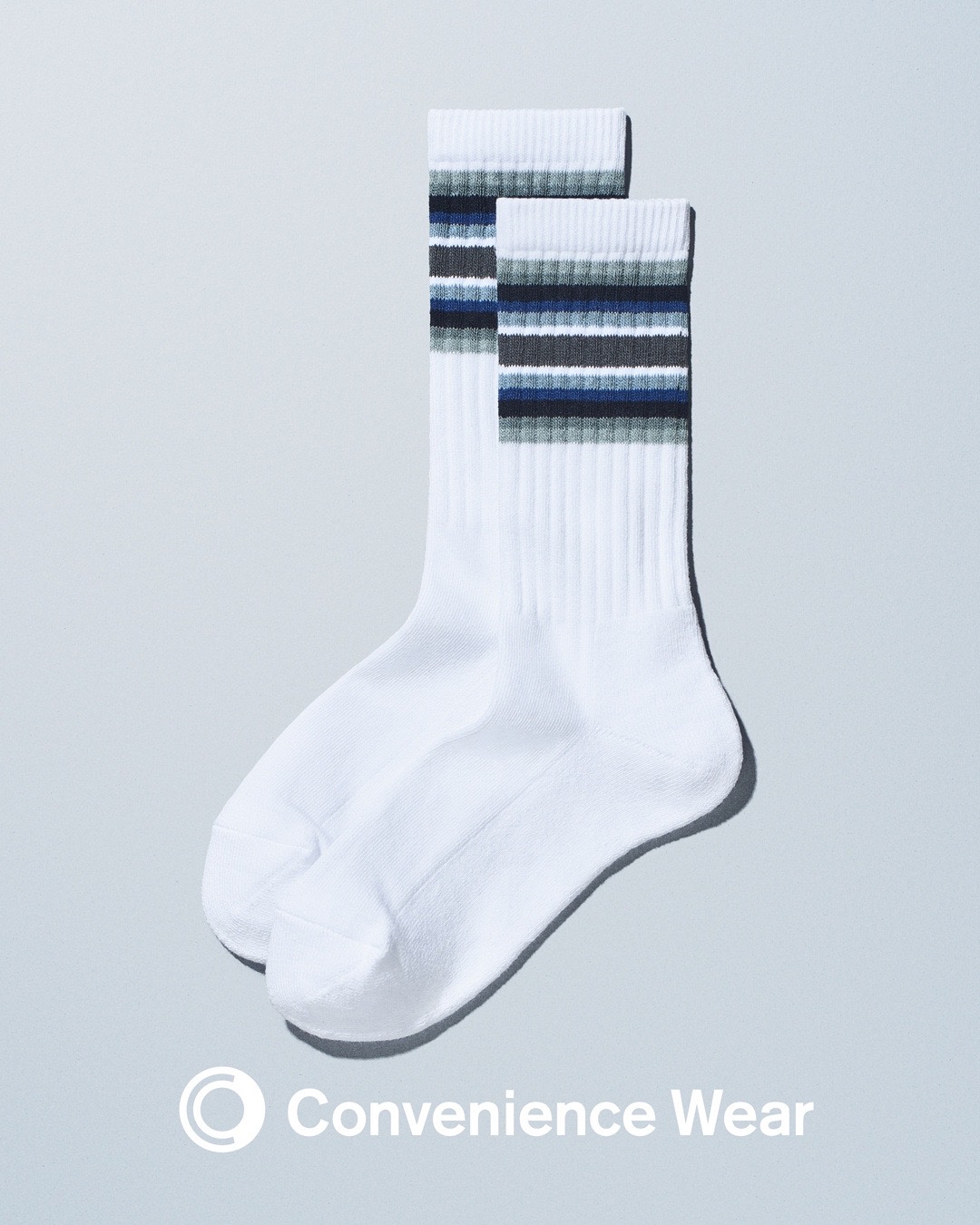
11.First, it is the cheapest form of self-expression. The minimum cost of showing a taste keeps falling. Not a luxury bag, not a designer sneaker, but 429 yen. Color and line drawn by a collection designer hang there for less than a cup of coffee. People did not buy socks, they bought the signal that they know what to look at, for 400 yen.
12.Second, it made the familiar strange. Had this come from a startup nobody would queue. It becomes an event because the place you dropped into every day for 45 years suddenly put in a fitting room. Novelty from an unfamiliar brand needs explaining, betrayal by a familiar one does not.
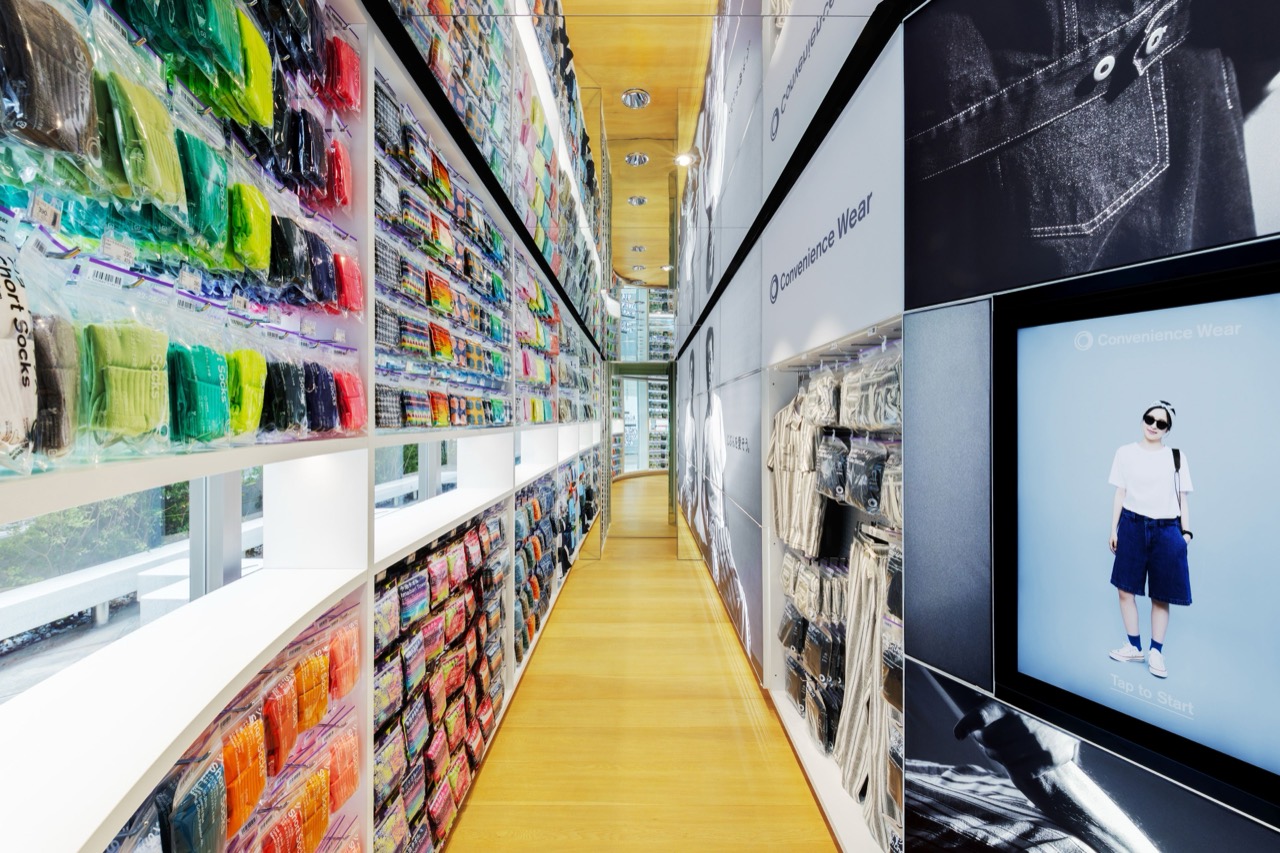
13.Third, it is an inbound gift. For visitors to Japan the convenience store is already a destination, and yet those visitors cannot carry a bento home. It spoils, it is heavy, it does not clear customs. Socks, towels and tote bags are different. Light, they keep, they carry a logo, and you can hand them out. A whole souvenir category appeared on convenience store shelves.
14.Fourth, the halo of the creators. NIGO, Wonderwall, FACETASM, a World Brewers Cup champion, Tadanobu Asano. This store does not call itself a convenience store, it packages itself as a collective of creators. What a guest buys is not the product of a 45-year-old retailer but an object carrying the signatures of people they already admired.
15.It is not the first. The prototype for a retailer's own product becoming an independent brand is Muji. It started in 1980 as a no-brand private label at the supermarket Seiyu and ended up a global brand more famous than its parent. The grammar of a thing made by a retailer growing larger than the retailer was opened in Japan 40 years ago.
16.The second line is masstige collaboration. Target in the United States pulled collection designers onto big-box shelves from the 2000s and produced sellouts on release day. What FamilyMart did was run that grammar with the shelf shrunk to a hundredth and the store count raised to 16,000.
17.The spatial line is just as clear. Masamichi Katayama of Wonderwall is the hand behind the Bape stores and the Uniqlo global flagships. That someone who spent 20 years writing the retail grammar of street and fast fashion came down onto a convenience store floor plan is half of this event by itself.
18.A convenience store is a 30% margin business. Against published industry data, gross margins by category look like this. Cigarettes about 10%, snacks about 30%, bento and onigiri 30 to 35%, PET drinks about 40%, sundries and daily goods 40 to 50%, counter coffee 70 to 85%. The all-store average is about 30%.
19.So where do 429 yen socks sit. With customary SPA apparel cost ratios at 25 to 35%, gross margin lands at 65 to 75% (estimated). Six or seven times cigarettes, twice a bento. The same floor as counter coffee. Products producing that kind of margin on a convenience store shelf can be counted on one hand.
20.But the real difference is not the margin rate. It is whether it spoils. A bento carries 30% margin when sold and becomes waste when it does not, and under the current Japanese convenience store contract the franchisee bears about 85% of that waste loss (headquarters 15%, changing to 50-50 under the new contract in autumn 2027). Socks? Unsold, they are simply inventory. Only the cost is tied up, nothing is thrown away, and when the season passes they clear on sale.
21.Here the replacement of a 45-year grammar becomes visible. A convenience store was originally a business that made you come daily with things that spoil, bento and onigiri, and filled spend per head with things that do not, cigarettes and magazines. Cigarettes fell to 10% margin and became a regulated industry, and magazines died. Apparel fits exactly into the place where those two non-spoiling pillars collapsed. This flagship is a declaration of that replacement carved onto a floor plan.
22.The profit and loss of this store was never the point. FamilyMart's all-store average daily sales for the fiscal year to February 2026 hit a record 585,000 yen, and operating profit was 100.2 billion yen. Stores in Japan number about 16,300 to 16,400. That is where the calculator sits.
23.Run the numbers. If what comes out of this experiment lifts all-store daily sales by just 1,000 yen, that is 16,300 stores × 1,000 yen × 365 days, about 5.9 billion yen. Whatever profit comes out of one 65 pyeong store is a rounding error. The company has already said it will spread elements of FAMIMA to regular stores nationwide. The identity of this store is not a store but an R&D lab and a billboard.
24.The traps are clear too. Clothes have sizes and seasons. Convenience store logistics are optimized for fresh food turning three times a day. Stock by size, carryover between seasons, returns, colors out of stock. This baggage apparel brings along did not exist in the convenience store system. Half the reason socks succeeded is that socks effectively have no size. The further it climbs toward jackets and denim, the larger this problem grows.
25.The second trap is that the brand hangs on people. NIGO, Ochiai, Katayama. The real test is what remains when those names leave. Creator collaboration is best for early attention and worst for continuation. If the halo goes out before the brand transfers from the person onto the product itself, what is left from then on is simply an expensive convenience store label.
26.This store is an assembly of three layers. First, apparel pushed into the high-margin, no-waste slot cigarettes emptied. Second, circulation split by the stand inside a standard 65 pyeong footprint, catching turnover and dwell at once. Third, the daily sales of 16,300 stores taken as the recovery measure instead of one store's profit and loss. There is no new invention. It was a question of where to put the calculator.
27.Move it to Korea and you get caught at the shelf first. Korean convenience stores and retail already draw crowds well. A fresh fruit highball sold 4.2 million units in a quarter for KRW 16 billion, and IP collaboration ready meals move 5 million units at a time, and all of it is on the spoiling side. The empty slot is on the side that does not spoil and carries margin above 60%, socks, towels, tote bags, stationery. The catch is that the Korean standard store is 20 to 25 pyeong, smaller than Japan's, the shelves are already full, and what holds those places is fast-turning liquor and drinks. The recovery logic also rides on store count. A company with fifteen branches raising daily sales by KRW 1,000 gets KRW 55 million a year, money one flagship fit-out spends in a single go.