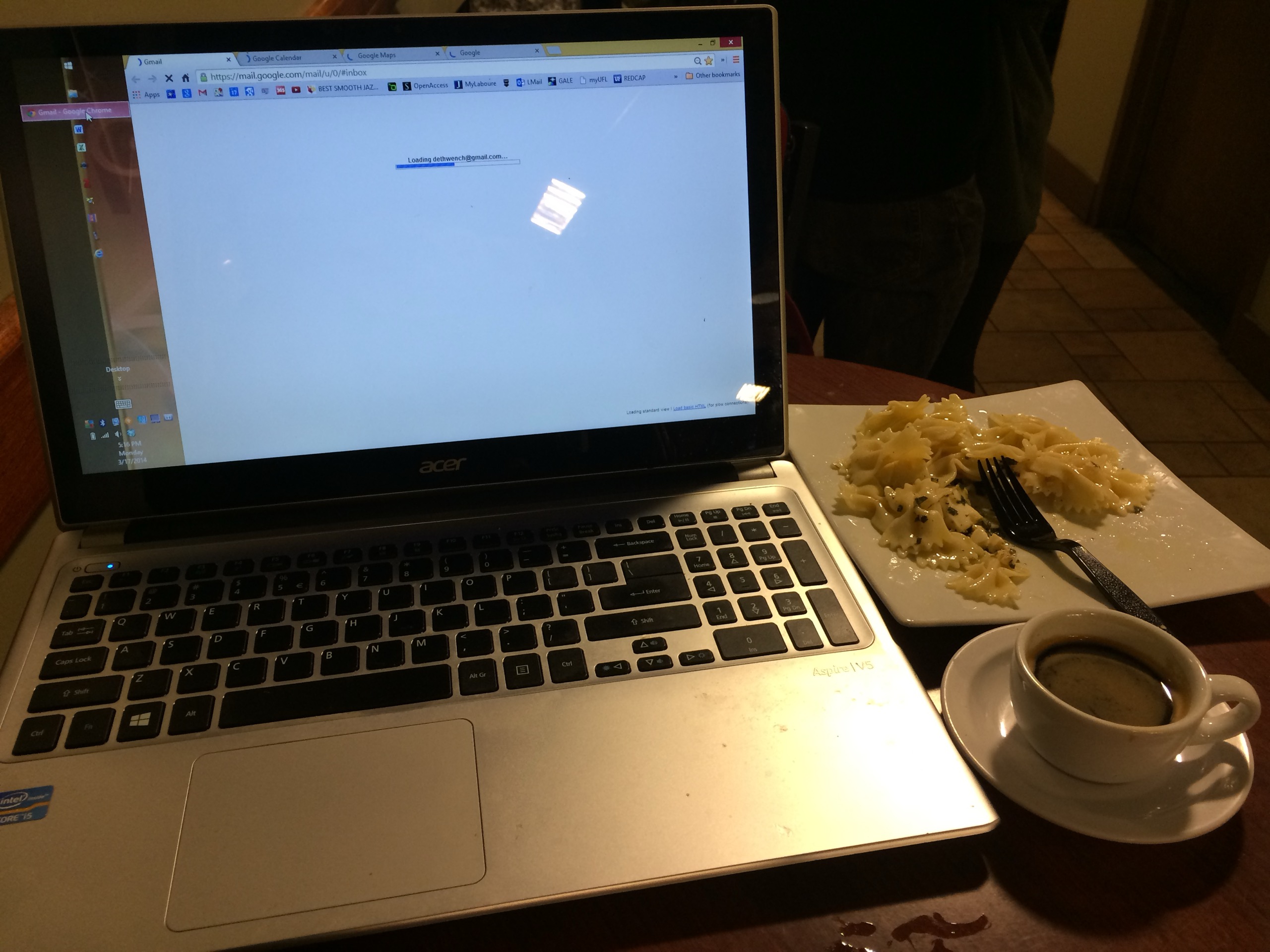
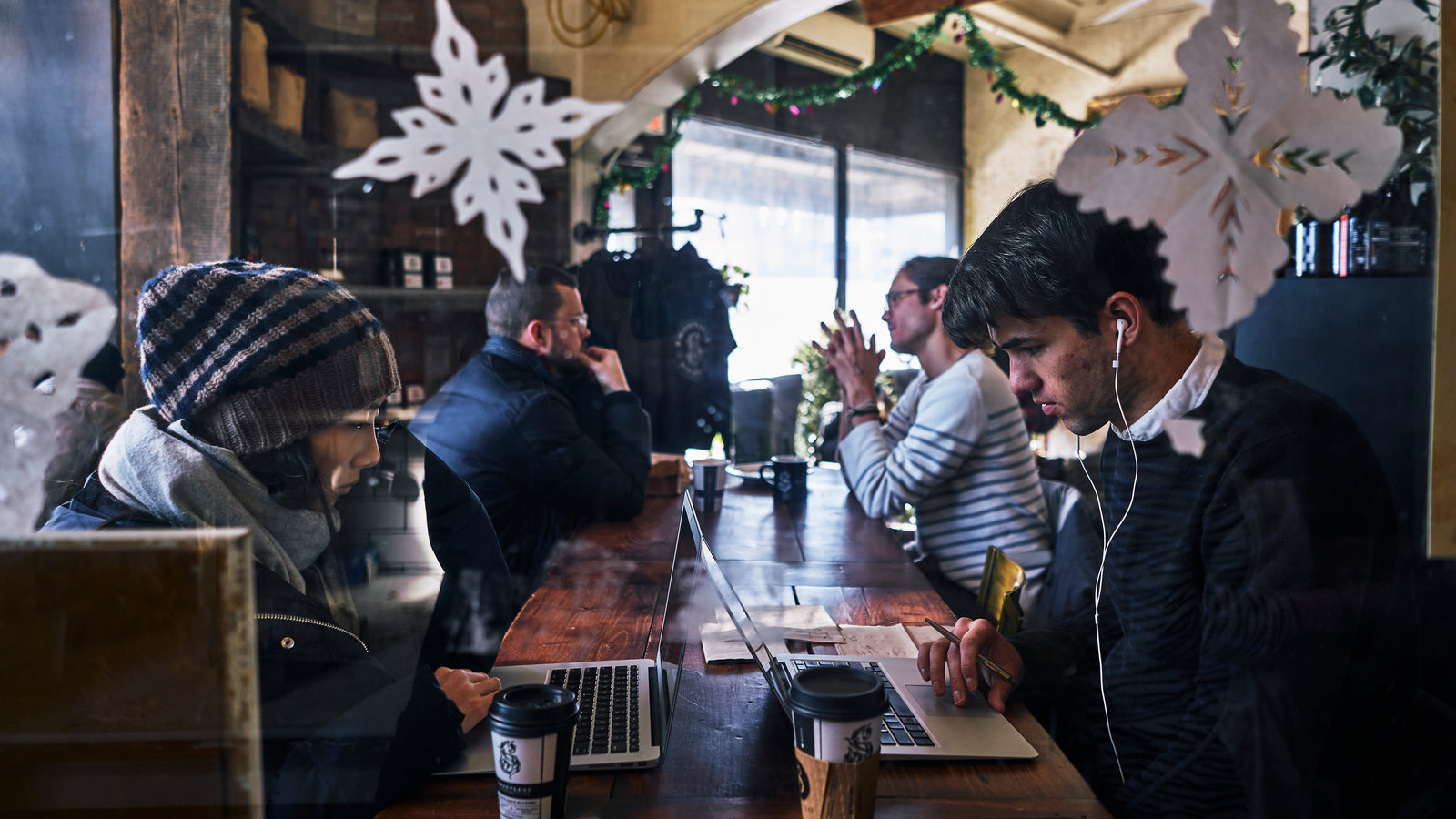
A laptop and a drink on a cafe table. The arithmetic around the customer who holds this one seat for hours has changed (ⓒMonika Wahi·CC BY-SA 3.0)
Daily Culture
From Turnover to Occupancy: Cafes Now Sell the Seat, Not the Coffee
2026.07.19
A year ago the customer who opened a laptop for hours in a cafe was the enemy of table turnover, and felt it the whole time they sat there. Now a large franchise is building seats designed for them. A cafe that lets you sit all day for 5,900 won has grown to 55 branches. What cafes sell has quietly changed.
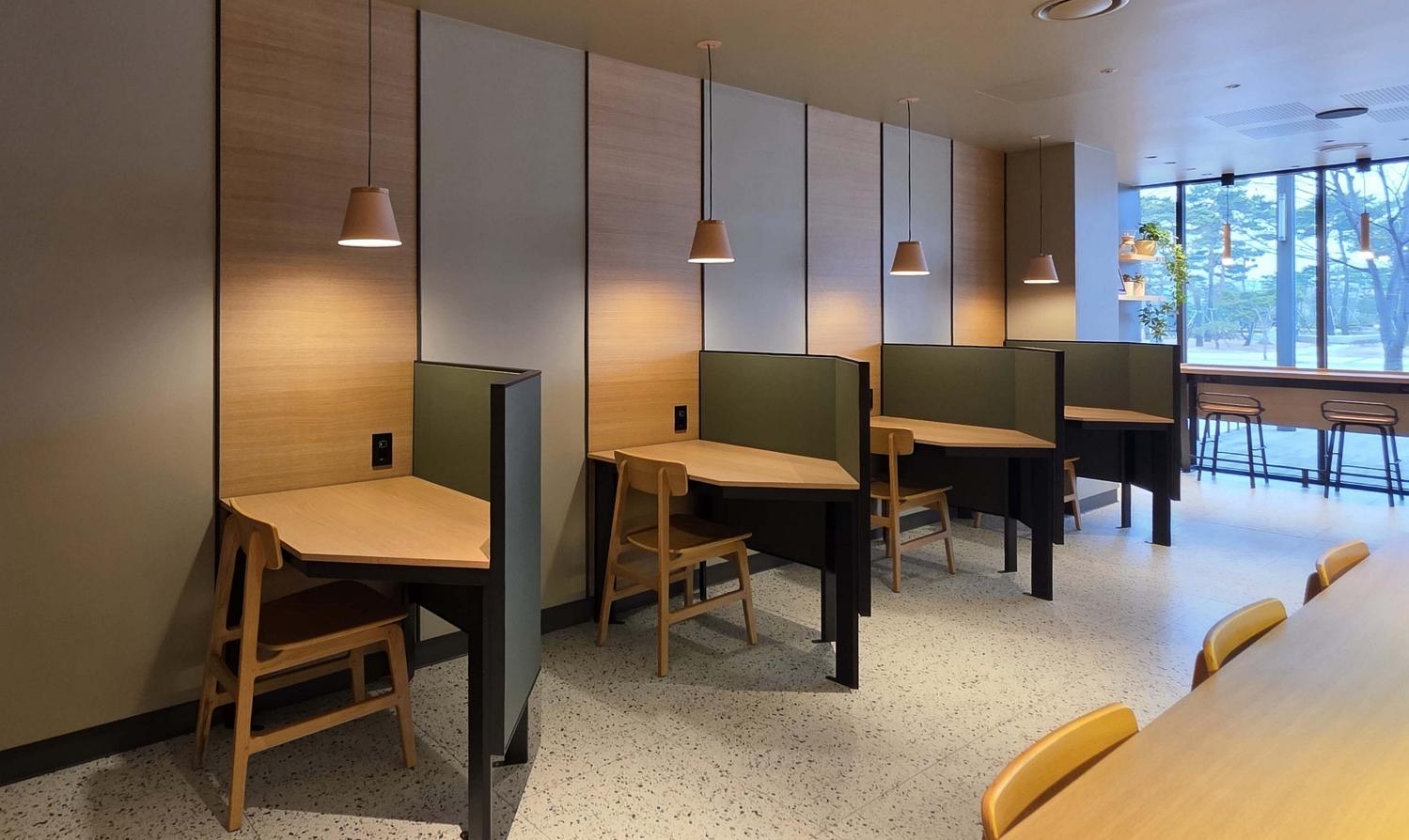
1.Starbucks has built a zone for the Kagongjok, the customers who study and work for hours in cafes. It is called the Focus Zone. Six stores already have it, Sillim Nokdu-geori, Songpa Bang-i, Ilsan Hugok, Gwanggyo Sanghyeon Station, Sejong University and Hanyang University ERICA, with one and two person seats fitted with partitions, desk lamps and individual power outlets.
A Starbucks Focus Zone store, with partitions and desk lamps at one and two person seats (ⓒ동아일보)
2.The campus stores go further. The new Sejong University and Hanyang University ERICA branches laid about half of all seating as Focus Zone. Only last August the same brand was posting notices against table hogging, and it turned within a year.
3.A few years ago the frame was the opposite. The Kagongjok ate into turnover, and doors carried signs refusing them. Now the headline reads stop giving them dirty looks. The customer being chased out became the customer to court.
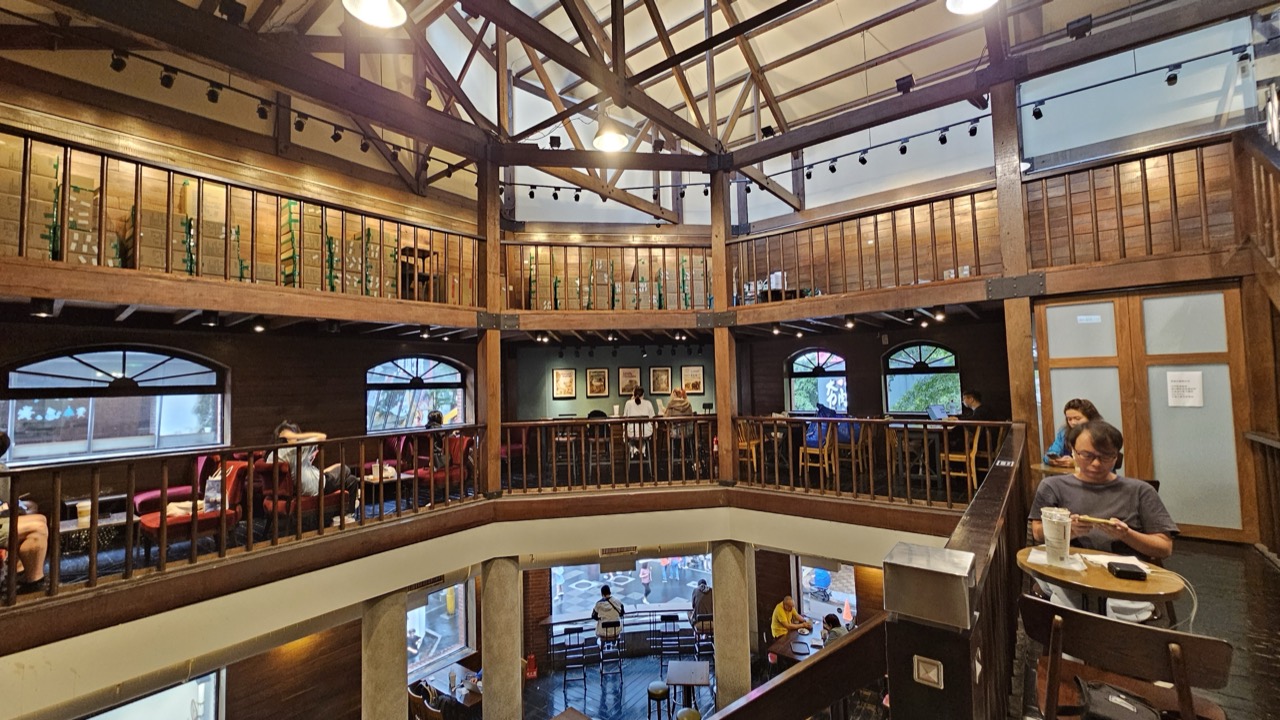
The upper hall of Starbucks Hanzhong in Ximending, Taipei (ⓒGanmatthew·CC BY 4.0)
4.This is not only a franchise story. There is a brand born for these customers, and it is named after them, Kagongjok. Fifty-five branches across the main commercial districts of the capital region. The fee is 5,900 won a day, no time limit, unlimited blended coffee.
5.It aimed at the gap between an ordinary cafe and a study cafe. Outside food allowed, minus anything strongly scented, up to two hours out with your things left behind, outlets at every seat, a lounge layout and white noise on top. The core customers are freelancers, sole traders and university students.
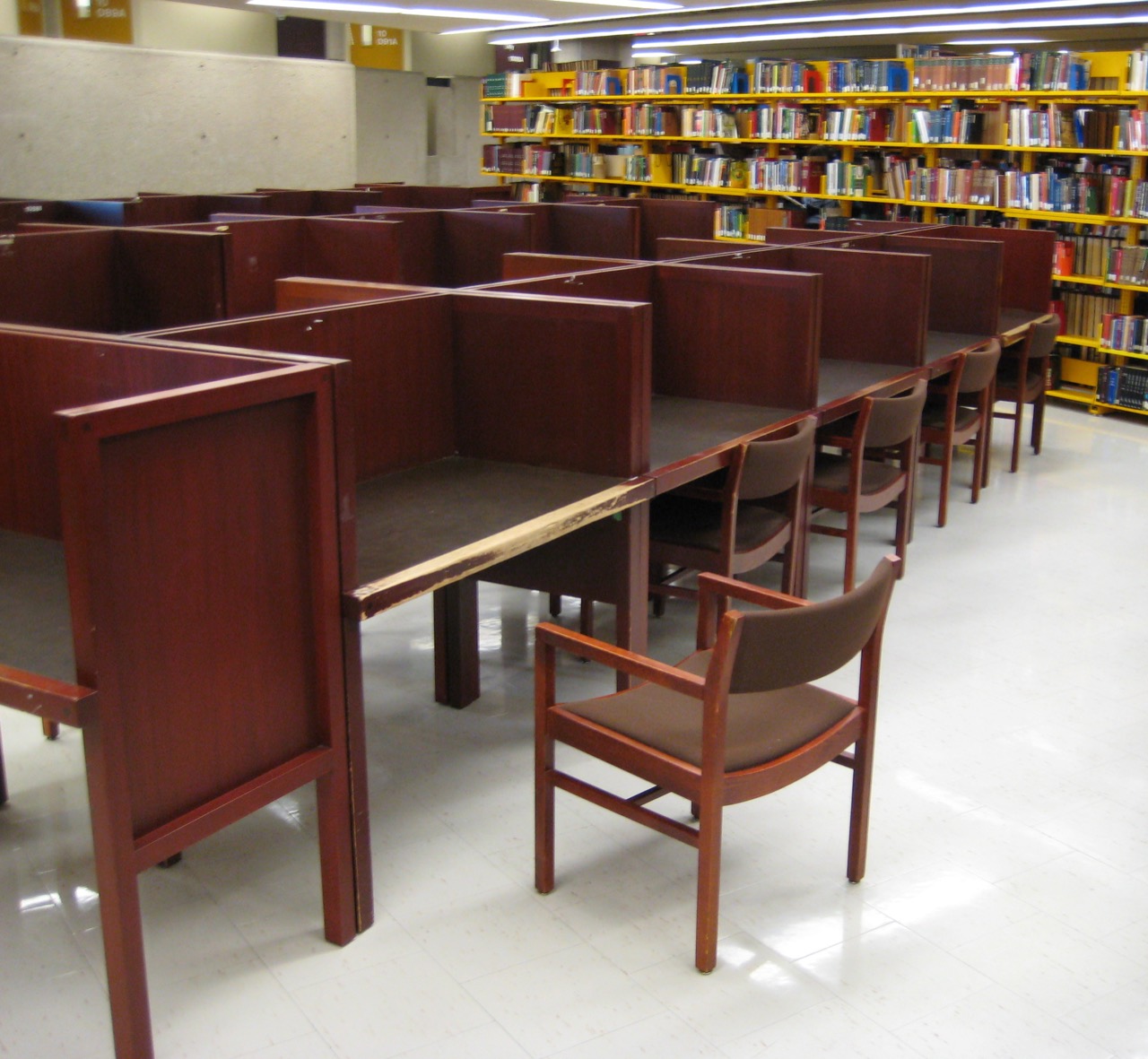
Library carrels partitioned into one person's share. The form study cafes inherited (Robarts Library, Toronto, ⓒSimonP·CC BY-SA 3.0)
6.The two models catch the same customer in opposite ways. One divides, the other redefines outright.
7.The franchise way is separation. The existing floor stays as it is and a zone is sold to customers who want to concentrate quietly. Talkers and workers are split by space, and the partitions, lamps and outlets signal that this is where you focus. The conflict was solved by circulation design rather than by screening customers.
A seat with an outlet, a lamp and white noise. A lounge cafe selling the chair for 5,900 won a day (ⓒCarbonNYC·CC BY 2.0)
8.The specialist way is redefinition. The whole store is a workroom, and it sells the seat rather than the coffee. That 5,900 won is not the price of a drink, it is a day's rent on a chair. Coffee became the bait thrown in with it.
9.Take the price structure apart and the answer shows. A cup of coffee now runs around 5,000 won, and for that price you get a seat all day and unlimited coffee. What is on sale is time, not a beverage.
The fight over seats between laptop customers and cafes is an old argument in the United States too (ⓒThe New York Times)
10.The two-hour outing rule is decisive. It does not hold the customer down, it holds the seat for them. Make the seat theirs and they come back tomorrow. What gets sold instead of captivity is ownership.
11.Why is a business that lived on turnover now running the other way.
12.One answer. What it sells has changed, from coffee to the seat. The Kagongjok cut turnover but create occupancy, and an empty seat is stock that rots. The customer sitting all day converts a seat that would have vanished unsold into money.
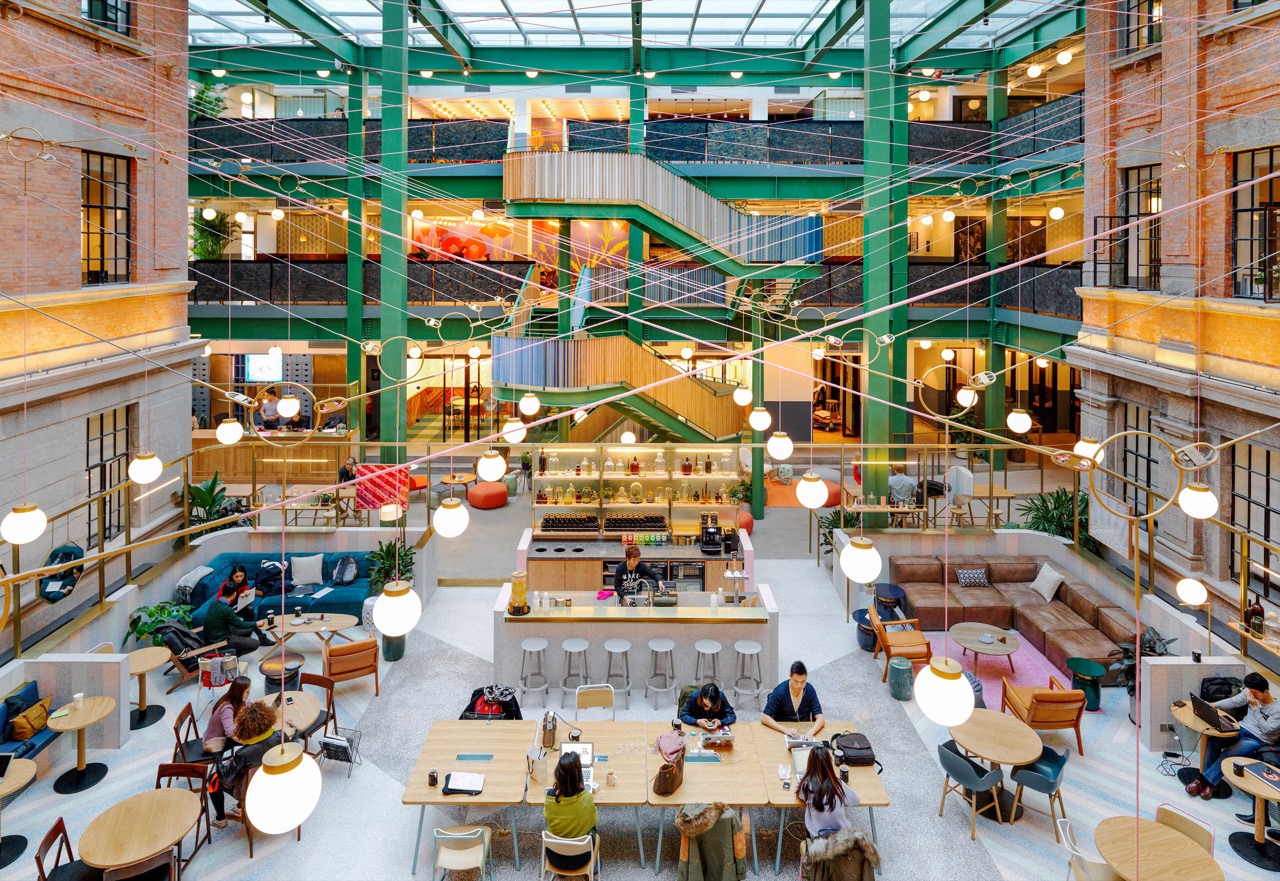
The lounge of a coworking office. Cafes have cut this seat, once sold by the month, into single days (WeWork Shanghai, ⓒFohlio)
13.Demand exploded. Remote work, freelancing, single-person households. Homes are small and offices do not exist. Cities are full of people looking for a third place that is neither home, the first place, nor the company, the second, where nobody watches them. Cafes aimed straight at that.
14.Back when the Kagongjok were being chased out there was an illusion. Turnover was high at lunch and dinner while the rest of the day sat empty, so most of the day's revenue piled into a few hours. The customer who stays long fills exactly that dead time.
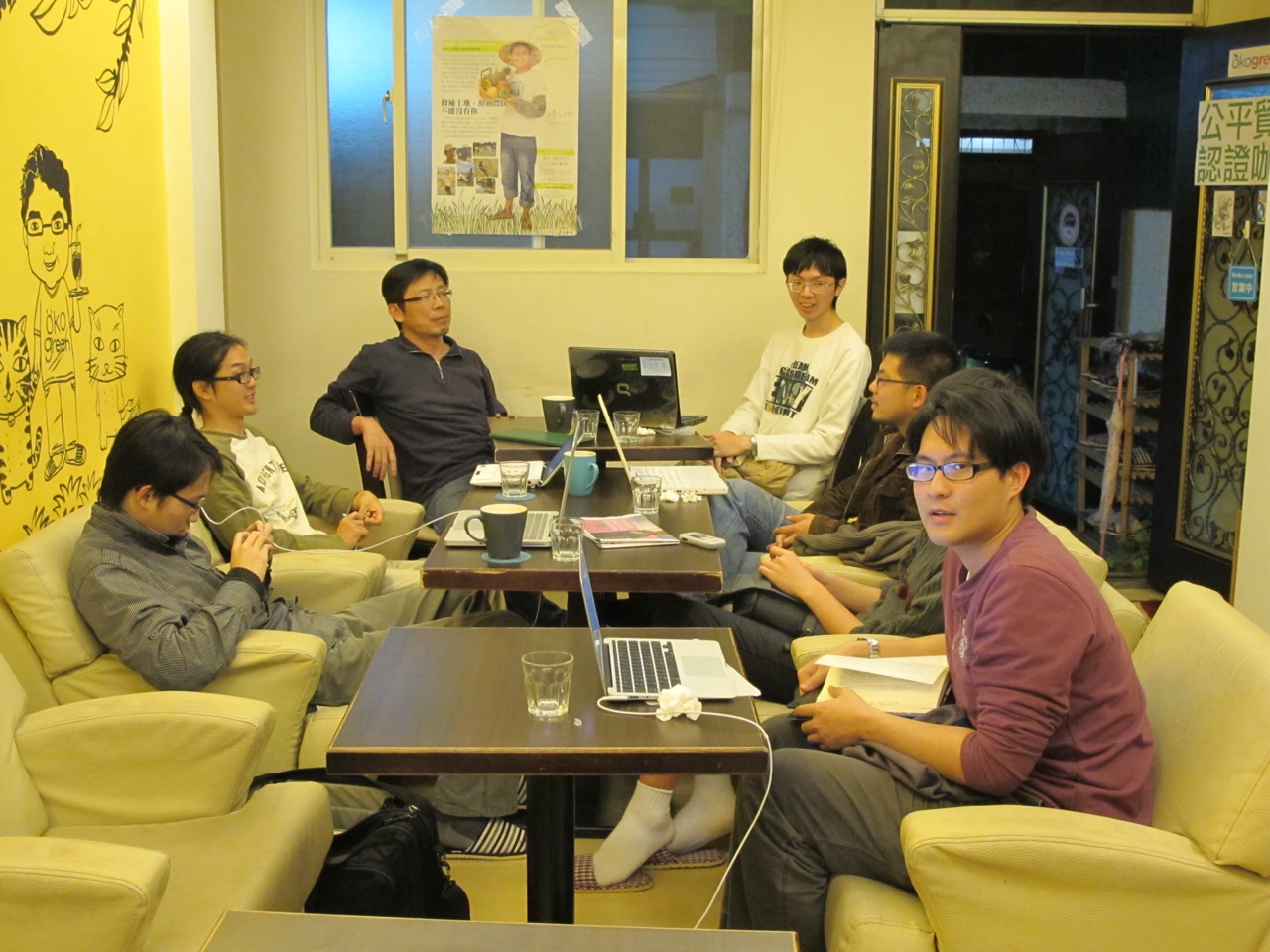
People gathered around open laptops in a Taipei cafe (ⓒCh.Andrew·CC BY 3.0)
15.And a crowd is free advertising. A full cafe signals to passers-by that the place is worth entering, while an empty one has a high threshold no matter how pretty it is. The Kagongjok are unpaid actors who make the room look full.
16.None of this is new. The phrase third place is how Starbucks defined itself in the 1990s. Between home, the first place, and work, the second, a comfortable seat belonging to nobody. That was the cafe's own introduction to begin with, and the seat it has come back to is that starting point.
17.Korea built its own current on top. Reading rooms, then unattended hourly study cafes, then coworking offices, then lounge workspaces. A brand like Kagongjok is the cheap mass edition of that line, cutting coworking that cost hundreds of thousands of won a month into 5,900 won a day.
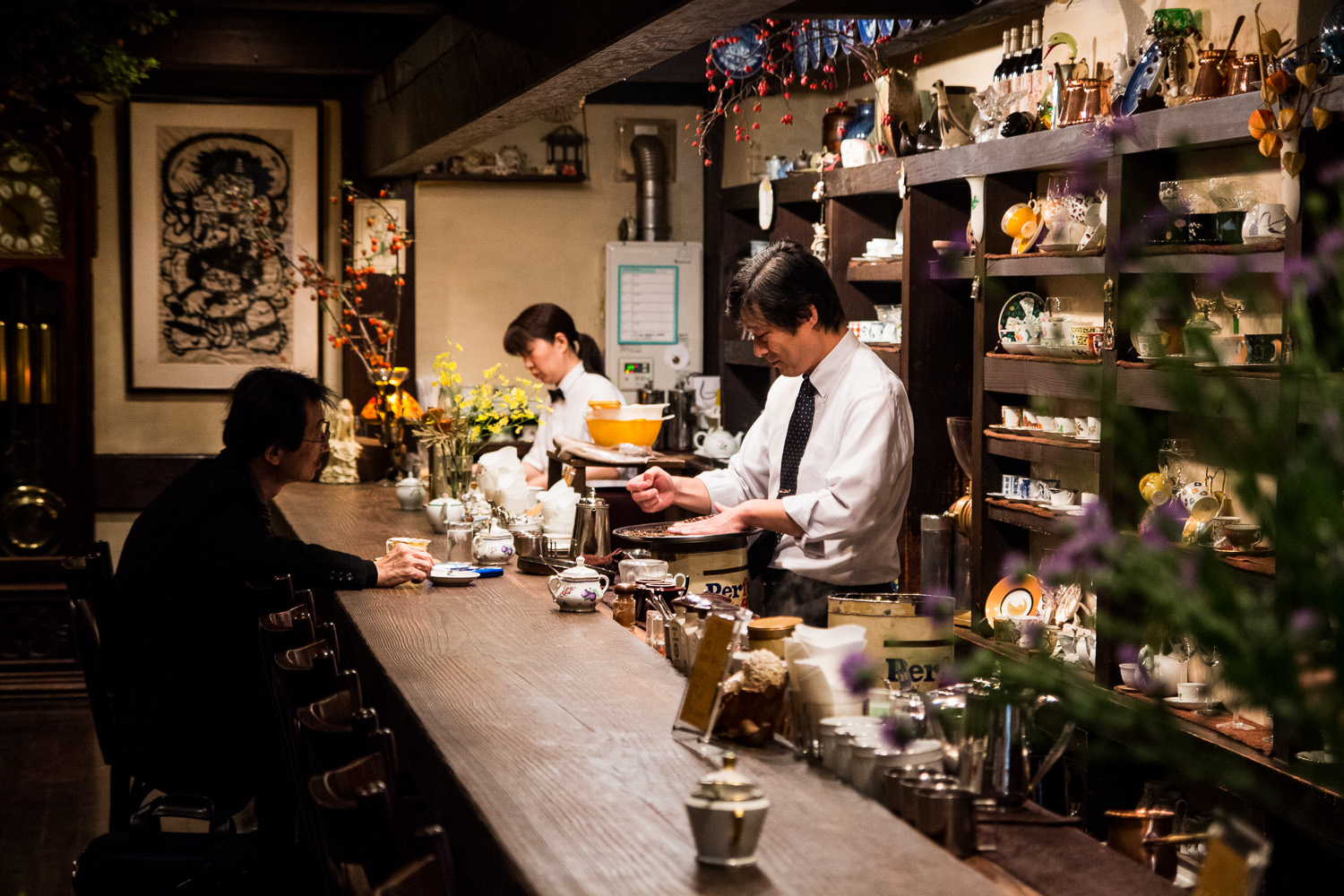
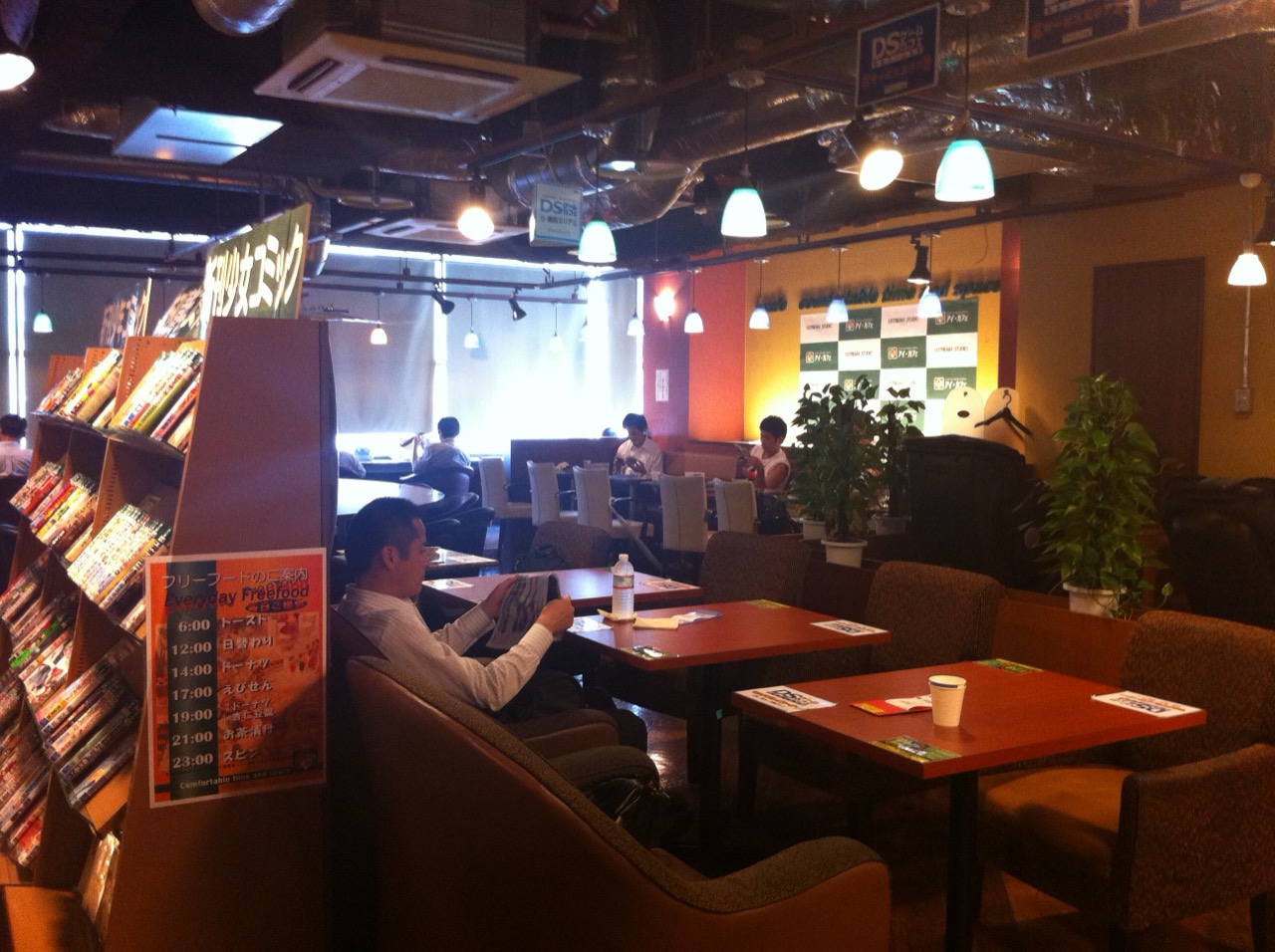
The counter of a Tokyo kissaten pouring hand drip. A format built on the assumption that customers stay (ⓒMel's Coffee Travels)
18.Look further out and Japan's kissaten and manga kissa built long stays, and net cafes built hourly billing, a long time ago. Selling a seat by time is an old idea in itself. What is new is that large franchises have taken up the same grammar.
Inside a manga kissa in Akihabara, Tokyo (ⓒSteve Nagata·CC BY 2.0)
19.Turnover was abandoned and the money went up anyway. How. Three devices sit underneath.
20.First, the axis of revenue moved from how many cups get sold to how long and how steadily a seat is occupied. Day passes and season passes are predictable revenue. Second, a long stay sells meals. That is a second opening of the wallet during the visit, and it is why cafes keep adding food.
21.Third, the conflict was solved by design. Instead of forcing talkers and workers to make peace, the space was divided, and the Focus Zone is a separation device that satisfies both. Customers were arranged rather than selected. That is the difference between refused and welcome.
22.The cafe has quietly changed trade, from selling coffee to selling time and seats. The view that a long-sitting customer is a loss has flipped. The question is no longer how fast you can move them out, it is how long and how often you can hold them.
It took less than a year for the customer branded an enemy of turnover to become a VIP. Starbucks has laid Focus Zones in six stores, and the brand born for the Kagongjok runs 55 branches at 5,900 won a day with no limit on time or coffee. Keep one number and it is 5,900 won, a day's rent on a chair attached to the price of one cup. An empty seat is stock that can never be sold once the day passes, so the customer who fills the dead hours is revenue rather than loss, and a full room comes with advertising thrown in. What stops anyone moving this grammar, though, is not the giving away of the seat. It is whether a device to open that customer's wallet a second time was laid down along with it. Permission without a second wallet means the seat is simply taken.