retailHoteldiningdrinkCultureSpaceCafeBrand
ArticlesTravel
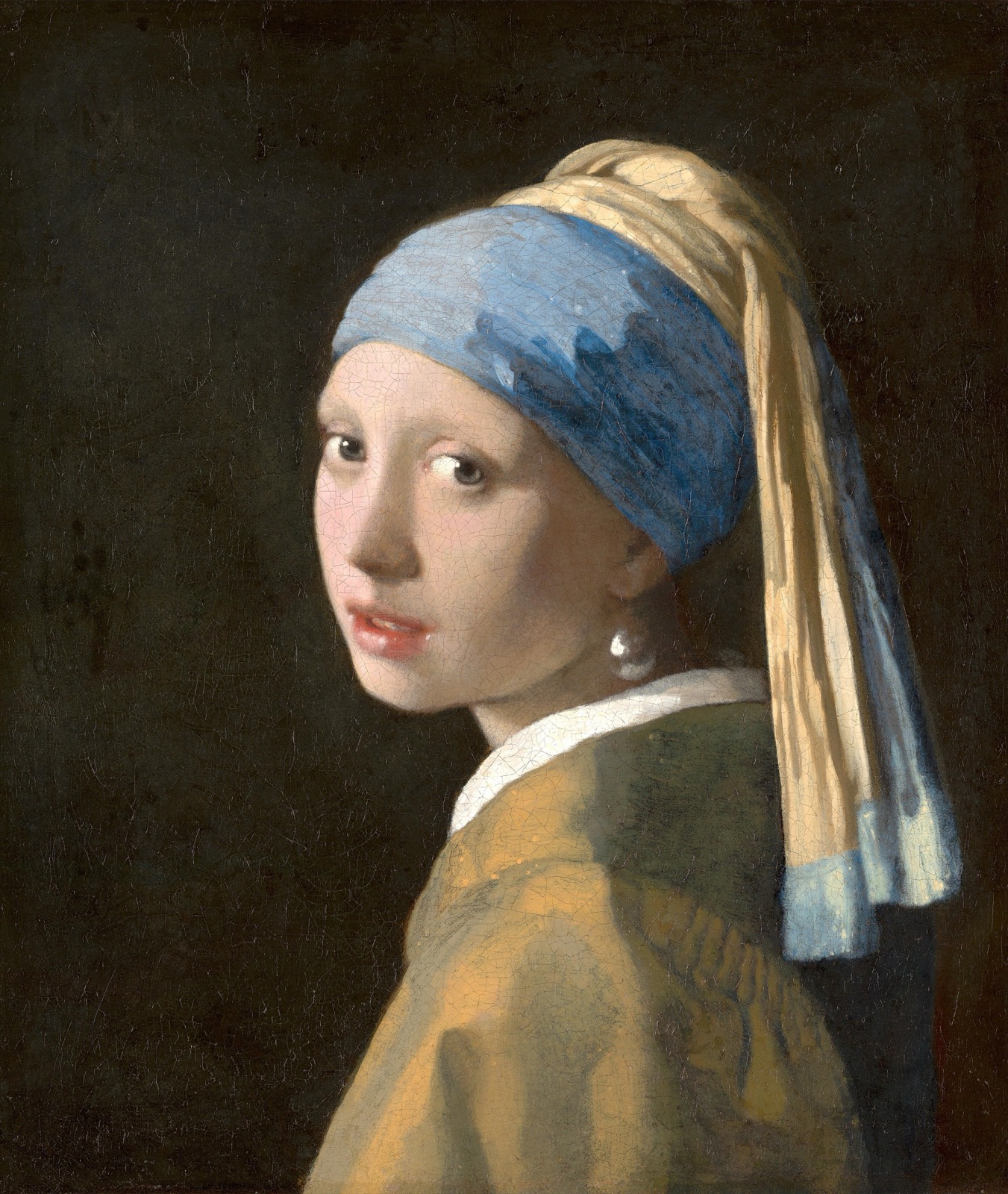
The one painting this run is built on · Girl with a Pearl Earring, painted around 1665. A small picture, 44.5cm by 39cm. ⓒJohannes Vermeer, Public domain, Wikimedia Commons
The one painting this run is built onGirl with a Pearl Earring, painted around 1665. A small picture, 44.5cm by 39cm. ⓒJohannes Vermeer, Public domain, Wikimedia Commons
Daily Culture

Twelve Paintings, Two Hours to See Them, Three Hours to Pay (Vermeer's Girl with a Pearl Earring in Osaka)

2026.08.27

An exhibition of twelve paintings opened in Osaka on August 21. Every entry slot was sold by lottery, and there is no way left to buy one. Admission is 3,000 yen, roughly 28,000 Korean won. That works out to 250 yen per painting, eight times what the 2012 show charged for the same picture. Yet the longest queue is not in front of the painting. It is at the cash register.

1.Fifth-floor gallery, Nakanoshima Museum of Art, Osaka. The run lasts 38 days, from August 21 to September 27, with no closing days in between. Twelve seventeenth-century Dutch paintings have come from the Mauritshuis in The Hague, and two of them are by Johannes Vermeer: Girl with a Pearl Earring and the early Diana and her Nymphs.
2.Admission runs 3,000 yen for adults, 1,500 for high school and university students, 500 for elementary and middle school pupils. Every slot is timed and allocated by lottery, and the museum sells no same-day tickets at the door. After the first draw on June 1, four more rounds were run through August. There is no tour. It shows in Osaka only.
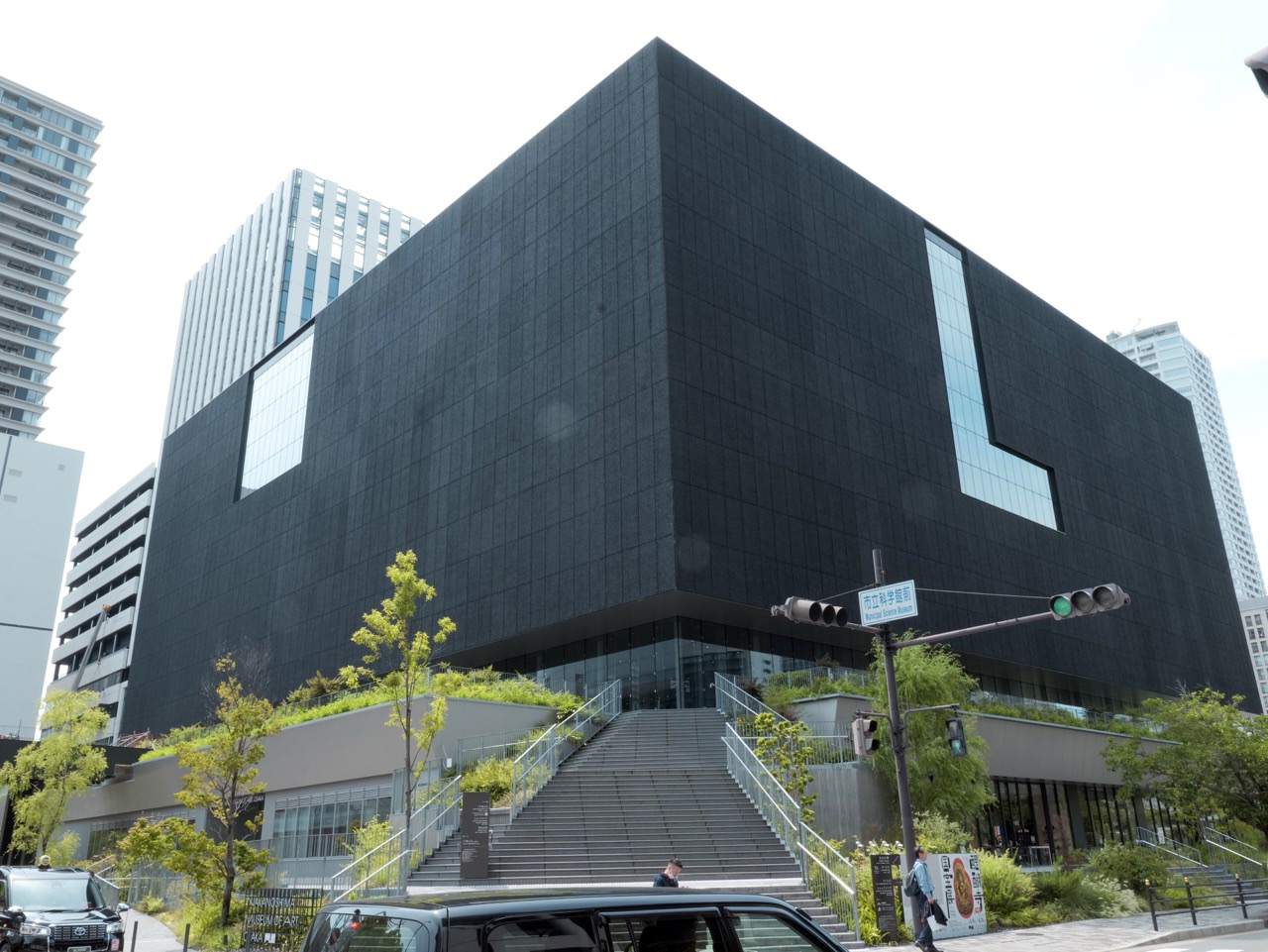
The building holding the paintings · Nakanoshima Museum of Art, Osaka. Opened in February 2022, designed by Katsuhiko Endo, a black box of 20,012 square metres. ⓒHyppolyte de Saint-Rambert, CC BY 4.0, Wikimedia Commons
The building holding the paintingsNakanoshima Museum of Art, Osaka. Opened in February 2022, designed by Katsuhiko Endo, a black box of 20,012 square metres. ⓒHyppolyte de Saint-Rambert, CC BY 4.0, Wikimedia Commons
3.Follow the route and you can see how twelve paintings were stretched into 38 days. Chapters one through six divide ten works across six themes: history, portrait, genre, church interior, landscape and still life. Four of those are shown in Japan for the first time. Then comes the Vermeer Theatre, a 20-metre screen running the painter's life and his century.
4.Past the theatre comes the Johannes Vermeer zone, where all 37 surviving Vermeers hang as life-size photographic reproductions. Visitors who came for two originals are shown the other 35 as pictures first. What is sold here is not the painting but the time stacked up before you reach it.
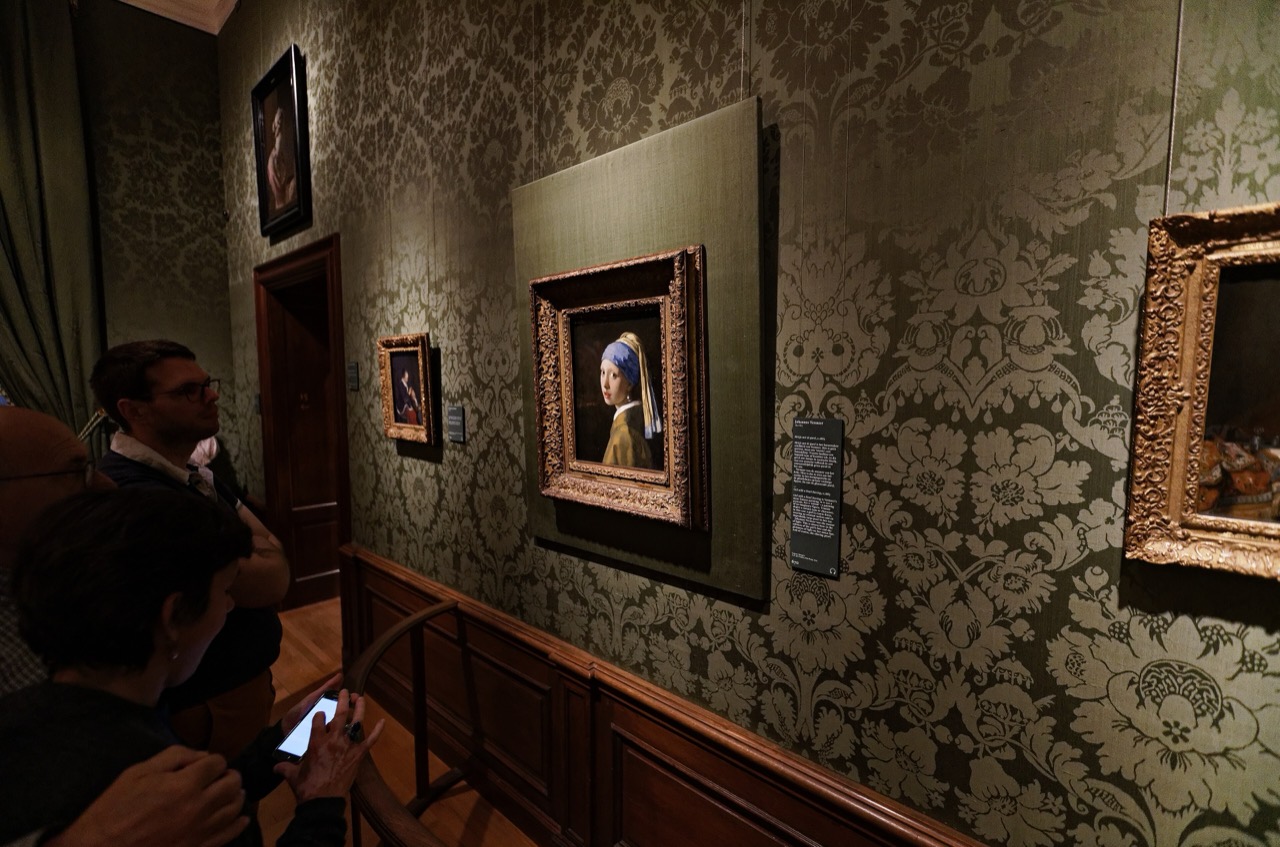
Where it normally hangs · Girl with a Pearl Earring in Room 15 of the Mauritshuis, The Hague. The picture usually on this wall is now in Osaka. ⓒTxllxt TxllxT, CC BY-SA 4.0, Wikimedia Commons
Where it normally hangsGirl with a Pearl Earring in Room 15 of the Mauritshuis, The Hague. The picture usually on this wall is now in Osaka. ⓒTxllxt TxllxT, CC BY-SA 4.0, Wikimedia Commons
5.The final room is cut into three gentle tiers. The front row sits low and the back row high, so a crowd shares one eye level at once. Photography is allowed for the two Vermeers, flash excluded. One number keeps recurring in visitor accounts: the hour it takes to stand directly in front of the painting.
6.The floor is 1,700 square metres with a six-metre ceiling. Twelve paintings across that floor means about 140 square metres each. For a painting show that leaves walls to spare, and video and photographic panels fill them. Borrowing fewer works and using more space has become the standard shape of the big touring exhibition.
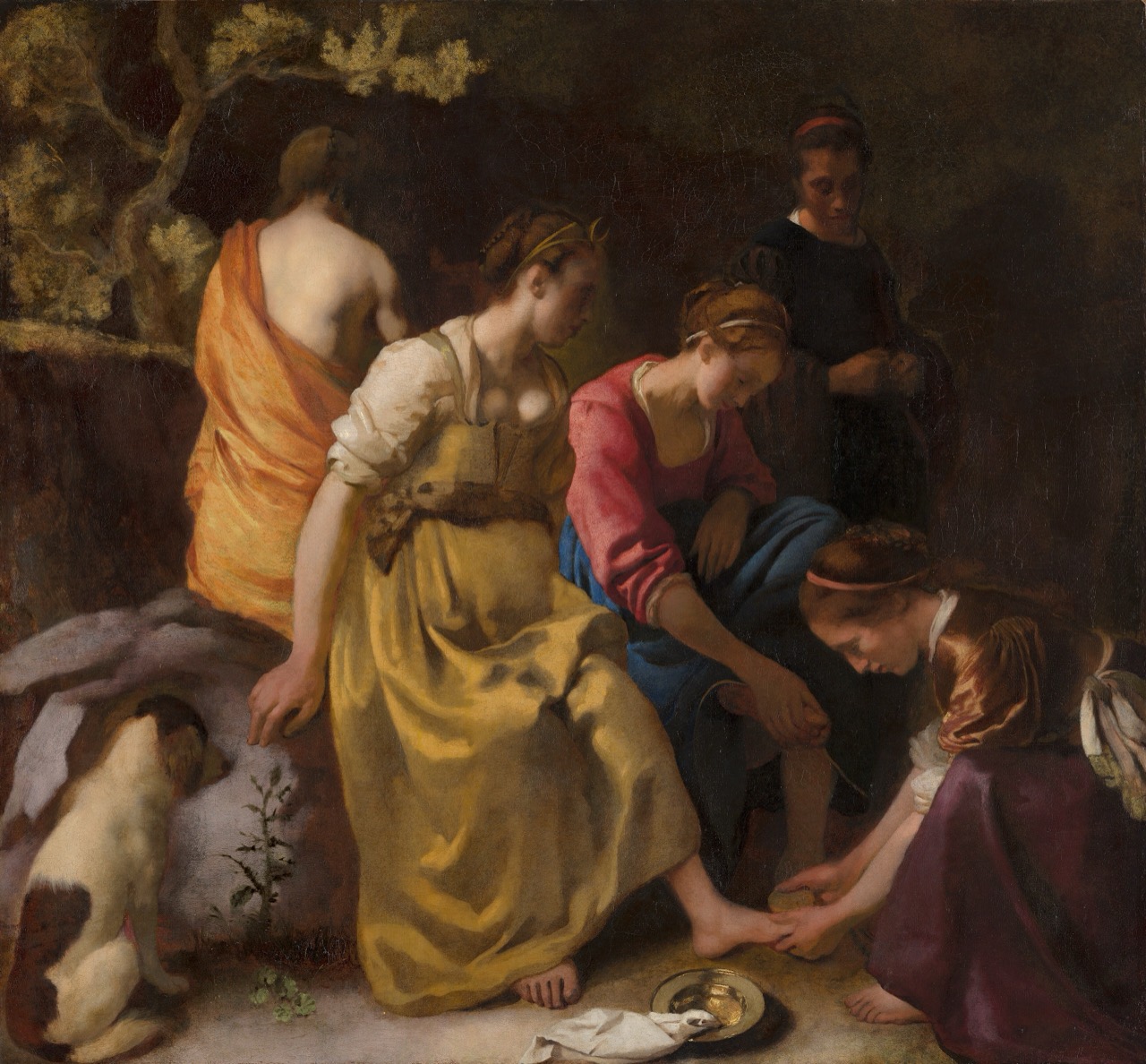
The other one that travelled · Vermeer, Diana and her Nymphs (about 1653 to 1654). One of the earliest works the painter left. ⓒJohannes Vermeer, Public domain, Wikimedia Commons
The other one that travelledVermeer, Diana and her Nymphs (about 1653 to 1654). One of the earliest works the painter left. ⓒJohannes Vermeer, Public domain, Wikimedia Commons
7.People are not queuing only because the painting is good. The last time it came to Japan was 2012, fourteen years ago. That show travelled to Tokyo and Kobe, while this one hangs in a single city for 38 days. Nobody will say when the next chance comes, and that silence is itself the sales condition.
8.The threshold was pushed the other way. The official ambassador is Miffy. A picture-book rabbit born in the Netherlands stands at the entrance, and even the children's caption panels carry that face. A separate tie-in display for the manga Frieren: Beyond Journey's End sits in front of the doors. Two more reasons to buy a ticket, for someone who knows nothing about Dutch painting.
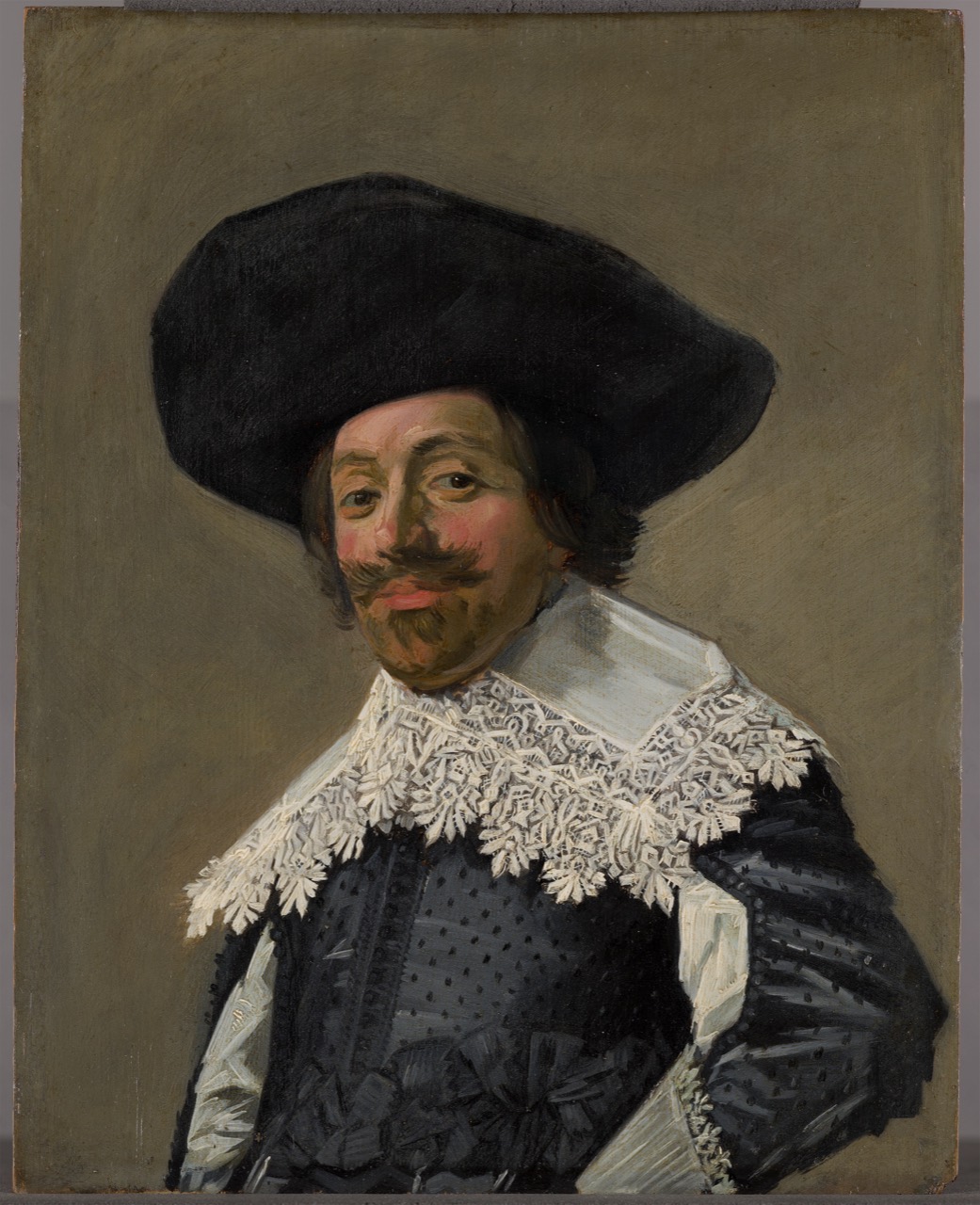
One of the ten across six themes · Frans Hals, Portrait of a Man (about 1634), in the portrait section. ⓒFrans Hals, Public domain, Wikimedia Commons
One of the ten across six themesFrans Hals, Portrait of a Man (about 1634), in the portrait section. ⓒFrans Hals, Public domain, Wikimedia Commons
9.Line the price up against earlier shows and you can see how steep it is. The 2012 Mauritshuis exhibition charged 1,600 yen for about 50 works, the 2018 Vermeer show 2,500 yen for about 50, the 2022 Vermeer show 2,100 yen for 71. A figure that had hovered around 30 yen per painting has jumped to 250.
Admission per painting
Admission divided by the number of works, in yen 2012 · 50 works 32 yen of 1,600 2018 · 50 works 50 yen of 2,500 2022 · 71 works 30 yen of 2,100 2026 · 12 works 250 yen of 3,000 Work counts follow each show's own figures; 2012 and 2018 are rounded to about 50. Based on the full adult price, booking fees excluded.
The number of works fell while the price went the other way.
10.Even so, nothing is left unsold. Daytime entry runs from 9:30 to 16:00 in fourteen half-hourly slots, and on extended evenings the museum adds slots until 19:00. Capacity has not been published, but at 4,500 visitors a day the full run comes to roughly 170,000. Take an effective 2,800 yen after discounts and admissions alone reach 480 million yen, about 4.5 billion Korean won. With no published capacity, this is only an estimate.
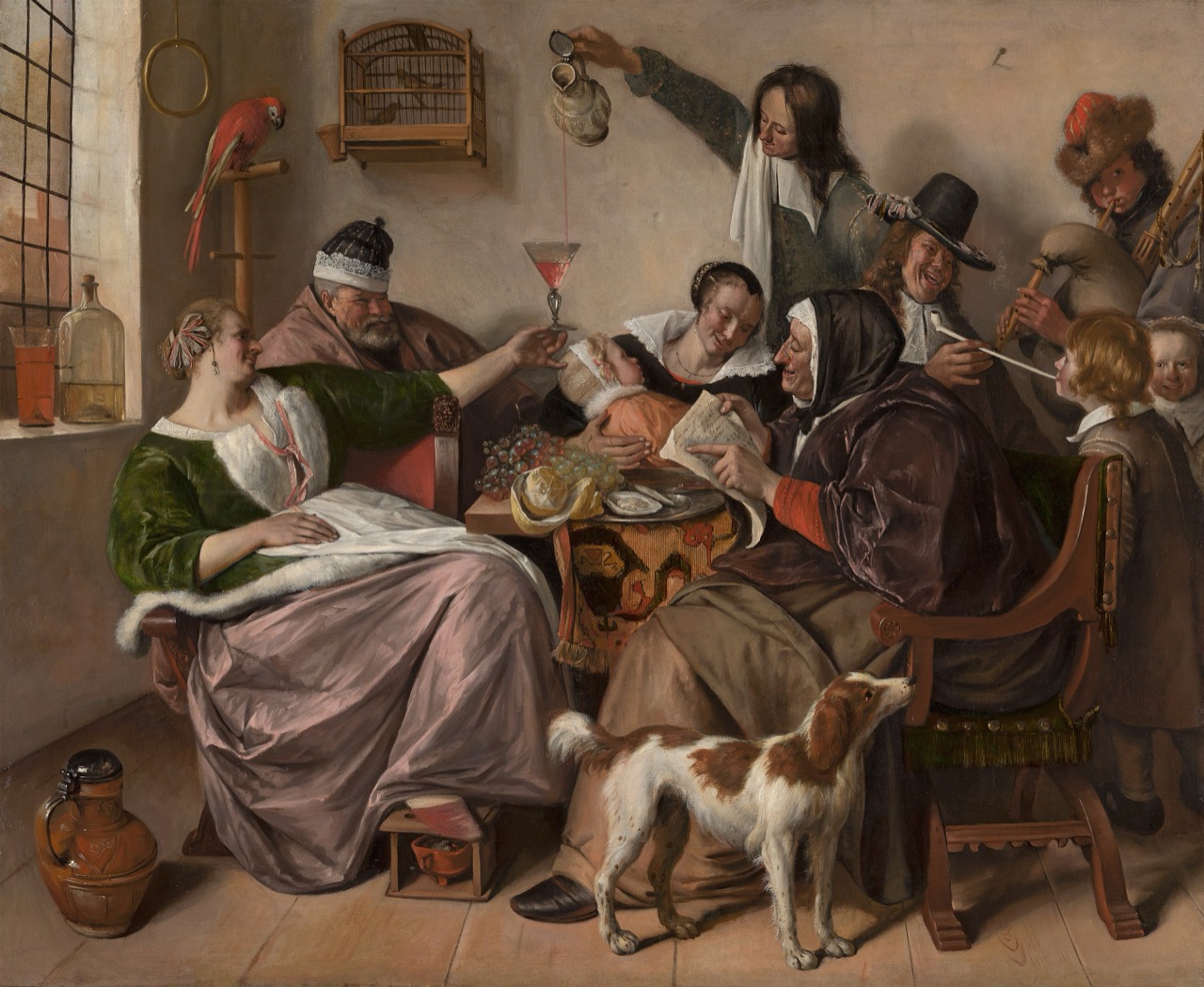
Genre painting section · Jan Steen, As the Old Sing, So Pipe the Young (about 1663 to 1665). ⓒJan Steen, Public domain, Wikimedia Commons
Genre painting sectionJan Steen, As the Old Sing, So Pipe the Young (about 1663 to 1665). ⓒJan Steen, Public domain, Wikimedia Commons
11.The merchandise is the more interesting half. The shop sits outside the gallery exit as a separate room. Entry requires a same-day shop pass, and you get one checkout, after the viewing. The catalogue is 2,600 yen for 170 pages, a Miffy plush 5,500 yen, Dutch-knitted dolls 4,180 and 10,780 yen. A T-shirt runs 18,700 yen and a reversible jacket 88,000.
12.So the longest line here is not in front of a painting. Visitor accounts put the checkout wait at ninety minutes, over three hours by the afternoon. The viewing itself takes ninety minutes to two hours, which means buying now takes longer than looking. At just 2,000 yen a head, merchandise brings 340 million yen, about 3.2 billion won. The register adds two-thirds of the admissions take on top.
How long one visitor stands
Times reported by visitors, in minutes To reach the painting about 60 min Entry to exit 90 to 120 min Checkout queue 90 min, over 180 in the afternoon Compiled from visitor accounts, not organiser figures. Bar length follows the maximum of each range. Figures vary widely by hour and day of the week.
That the longest wait is not in front of the paintings tells you how this exhibition is built.
13.Having earned that much from tickets and goods, the organisers still took money from 29 companies. The museum shares the billing with Asahi Shimbun and Asahi Television Broadcasting, seven firms are special sponsors, including Kansai Electric Power, Keihan Holdings, JR West and Takenaka Corporation, and eighteen more come in as ordinary sponsors. KLM Royal Dutch Airlines appears among the cooperating partners, which is to say the airline that flew the paintings in. The name that stands out among the special sponsors is Mikimoto, a company built on cultured pearls paying into a Girl with a Pearl Earring show.
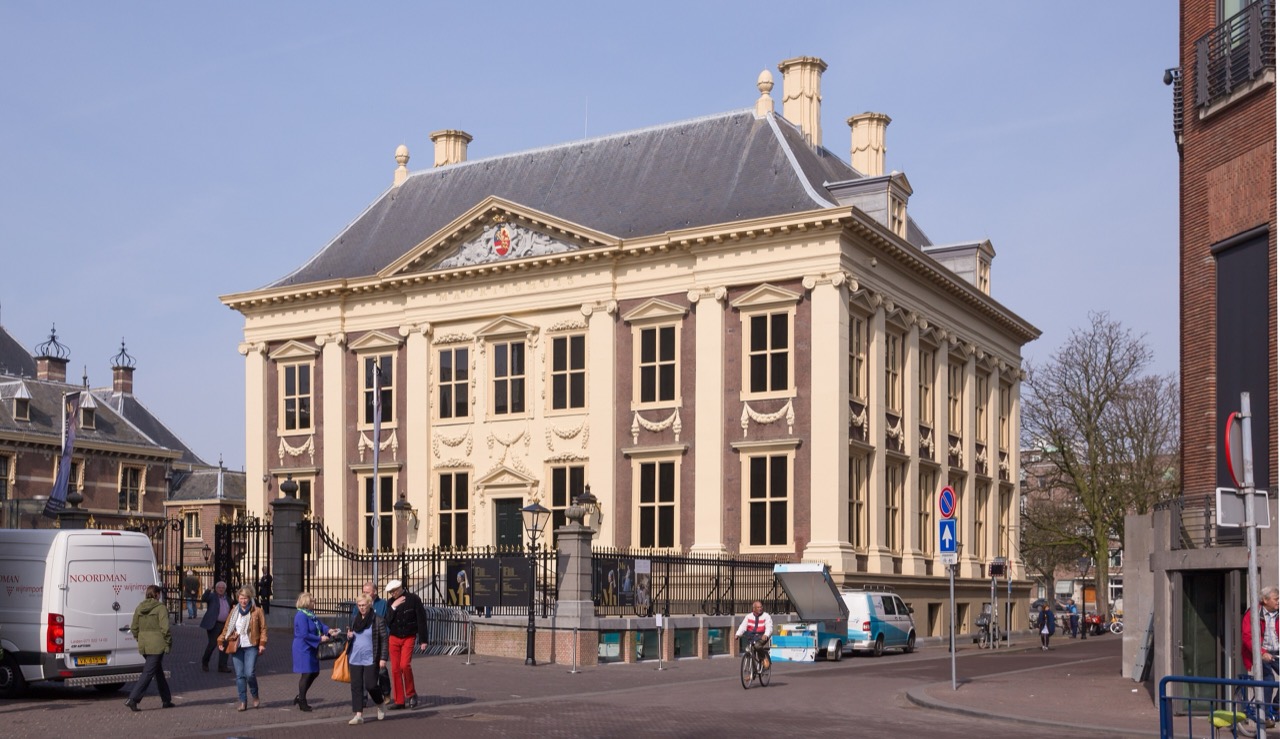
The lender · The Mauritshuis in The Hague. A seventeenth-century townhouse used as a museum, holding three Vermeers in all. ⓒHubertl, CC BY-SA 4.0, Wikimedia Commons
The lenderThe Mauritshuis in The Hague. A seventeenth-century townhouse used as a museum, holding three Vermeers in all. ⓒHubertl, CC BY-SA 4.0, Wikimedia Commons
14.The 2012 figures make the design of this one clearer. That year the Mauritshuis exhibition at the Tokyo Metropolitan Art Museum drew 709,260 visitors over 80 days, more than 8,800 a day, at 1,600 yen and in a far larger hall. The model has shifted from packing more people in to letting fewer in and charging each of them more.
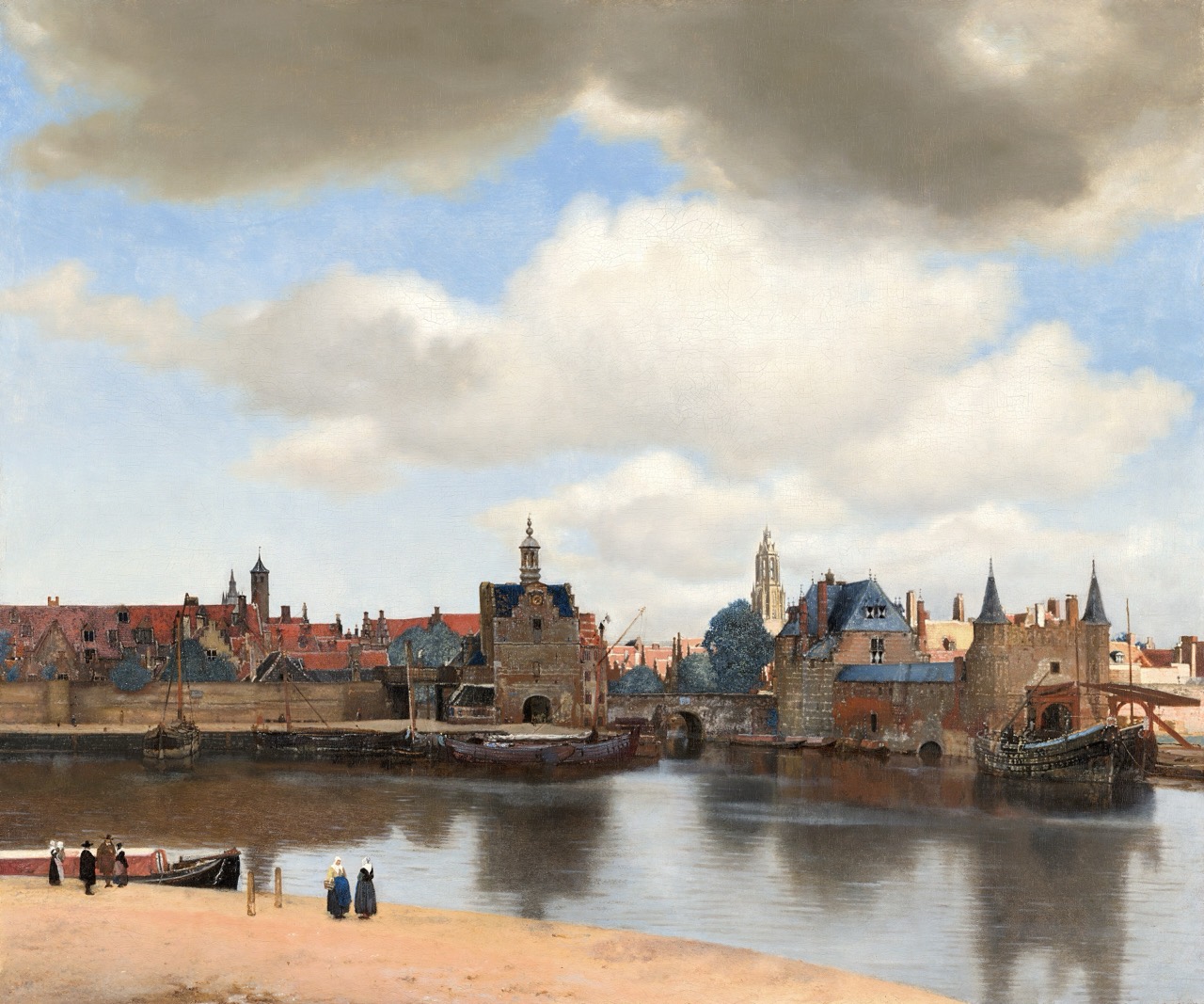
The third one that stayed home · Vermeer, View of Delft (about 1660 to 1661). One of the three Vermeers the Mauritshuis owns, and left off this loan list. ⓒJohannes Vermeer, Public domain, Wikimedia Commons
The third one that stayed homeVermeer, View of Delft (about 1660 to 1661). One of the three Vermeers the Mauritshuis owns, and left off this loan list. ⓒJohannes Vermeer, Public domain, Wikimedia Commons
15.The lender's arithmetic matters too. The Mauritshuis owns three Vermeers and sent two. The most famous of them, View of Delft, stayed in The Hague. Empty the headline works entirely and there is no reason left to visit the home museum, so a loan is always a deal that gives up half.
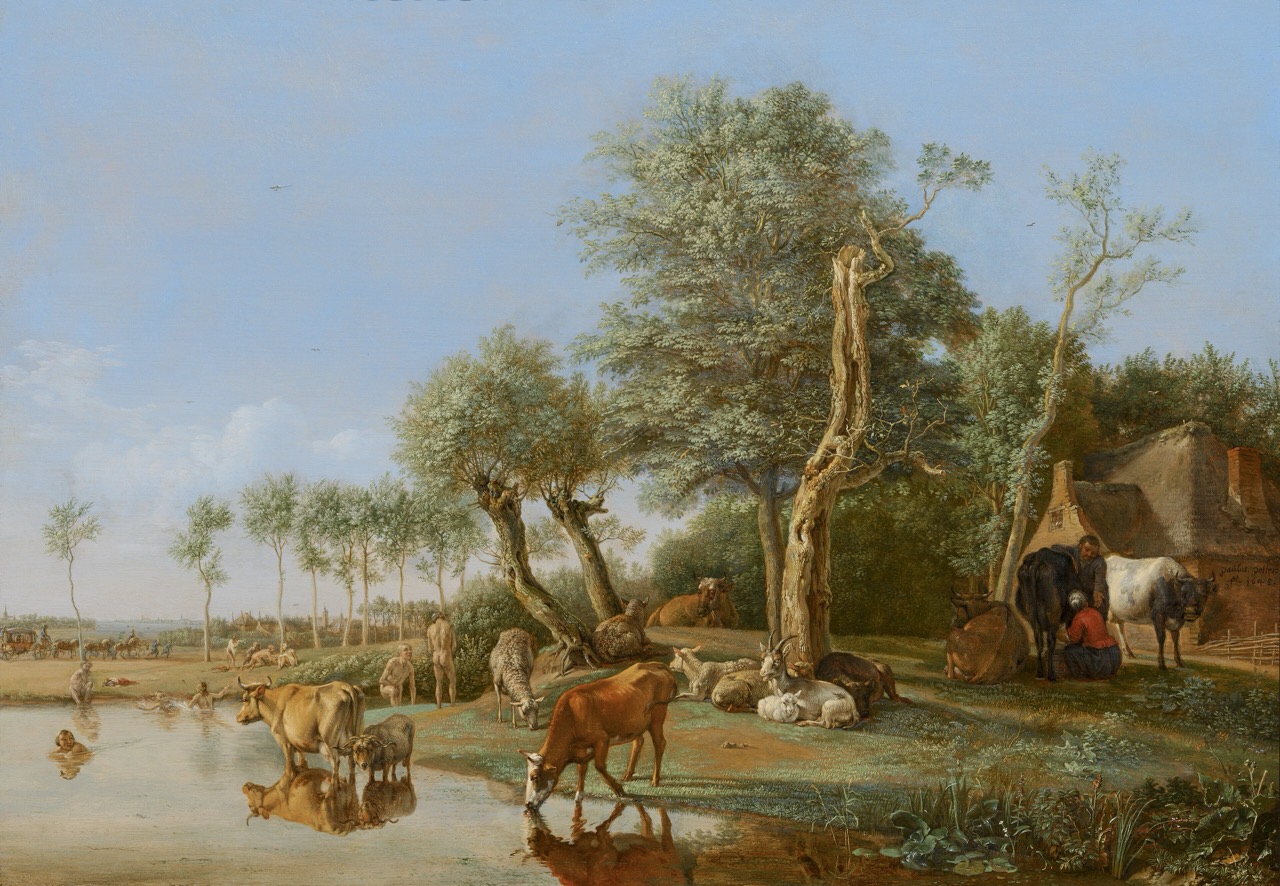
Landscape section · Paulus Potter, Cows Reflected in the Water (1648). ⓒPaulus Potter, Public domain, Wikimedia Commons
Landscape sectionPaulus Potter, Cows Reflected in the Water (1648). ⓒPaulus Potter, Public domain, Wikimedia Commons
What happens on one floor · The outer wall seen from below. The top floor of this building holds the exhibition. ⓒHyppolyte de Saint-Rambert, CC BY 4.0, Wikimedia Commons
What happens on one floorThe outer wall seen from below. The top floor of this building holds the exhibition. ⓒHyppolyte de Saint-Rambert, CC BY 4.0, Wikimedia Commons
16.Twelve paintings hung for 38 days are turning about 4.5 billion won at the door and 3.2 billion won across the counter, and that is running in Osaka right now. Anyone staging this kind of show at home will lose money not at the loan fee or the insurance premium but at the register. The moment the checkout wait hits three hours it starts eating into how the day is remembered, and most venues still hand the shop a thirty-square-metre corner beside the exit and leave it at that. Unless floor area and register count are worked backwards from visitor numbers, the most profitable stretch of the visit becomes its worst memory.
Daily Culture #031 · 2026.08.27 · 「フェルメール《真珠の耳飾りの少女》展 17世紀オランダ絵画の名品、奇跡の再来日」 runs from August 21 to September 27, 2026 in the fifth-floor gallery of the Nakanoshima Museum of Art, Osaka (大阪中之島美術館). The dates, opening hours (9:30 to 17:00, extended to 20:00 on Fridays and selected dates), admission (3,000 yen general, 1,500 yen high school and university students, 500 yen elementary and middle school pupils), the checklist (12 works from the Mauritshuis, two of them by Vermeer, arranged in six themes), the organisers (Nakanoshima Museum of Art, 朝日新聞社, 朝日放送テレビ), the patron (Embassy of the Kingdom of the Netherlands), seven special sponsors (関西電力, 京阪ホールディングス, JR西日本, 竹中工務店, TOPPANクロレ, トヨタモビリティ新大阪, ミキモト), eighteen ordinary sponsors and four cooperating partners (朝日ビルディング, Osaka Metro, KLM Royal Dutch Airlines, 阪急電鉄) follow the museum's official page and the exhibition's official site. The timed lottery system, the absence of same-day sales at the museum and the draw schedule (advance draw from June 1, four additional draws through August) follow the official ticket page. The gallery layout (four Japanese premieres among the ten works in chapters one to six, the 20-metre Vermeer Theatre, the zone of 37 life-size reproductions, the three-tiered final room, photography permitted for the two Vermeers) and the merchandise details (catalogue 2,600 yen and 170 pages, Miffy plush 5,500 yen, knitted dolls 4,180 and 10,780 yen, T-shirt 18,700 yen, reversible jacket 88,000 yen, shop pass required and one checkout after viewing) are cited from Travel Watch (Impress) preview reports of August 20, 2026. Viewing times of 90 to 120 minutes, about 60 minutes to reach the painting itself and checkout waits of 90 to over 180 minutes come from compiled visitor accounts and are not figures released by the organisers. The comparison figures (2012 マウリッツハイス美術館展, about 50 works at 1,600 yen; 2018 フェルメール展, about 50 works at 2,500 yen; 2022 フェルメール展, 71 works at 2,100 yen) are cited from a Japanese art writer's published summary. The 709,260 visitors to the 2012 Mauritshuis exhibition at the Tokyo Metropolitan Art Museum follow published attendance tallies for Western art exhibitions in Japan. The gallery area of 1,700 square metres with a six-metre ceiling, the museum's total floor area of 20,012.43 square metres and building area of 6,680.56 square metres, its February 2022 opening and its design by 遠藤克彦建築研究所 follow museum and construction records. The figures of 4,500 visitors a day, 170,000 over the run, an effective 2,800 yen ticket price, 480 million yen in admissions, 2,000 yen of merchandise per head and 340 million yen in merchandise sales are the writer's estimates based on public information and bear no relation to the organisers' results. Won conversions use a rough rate of 950 won to 100 yen. Photo credits appear in each caption.