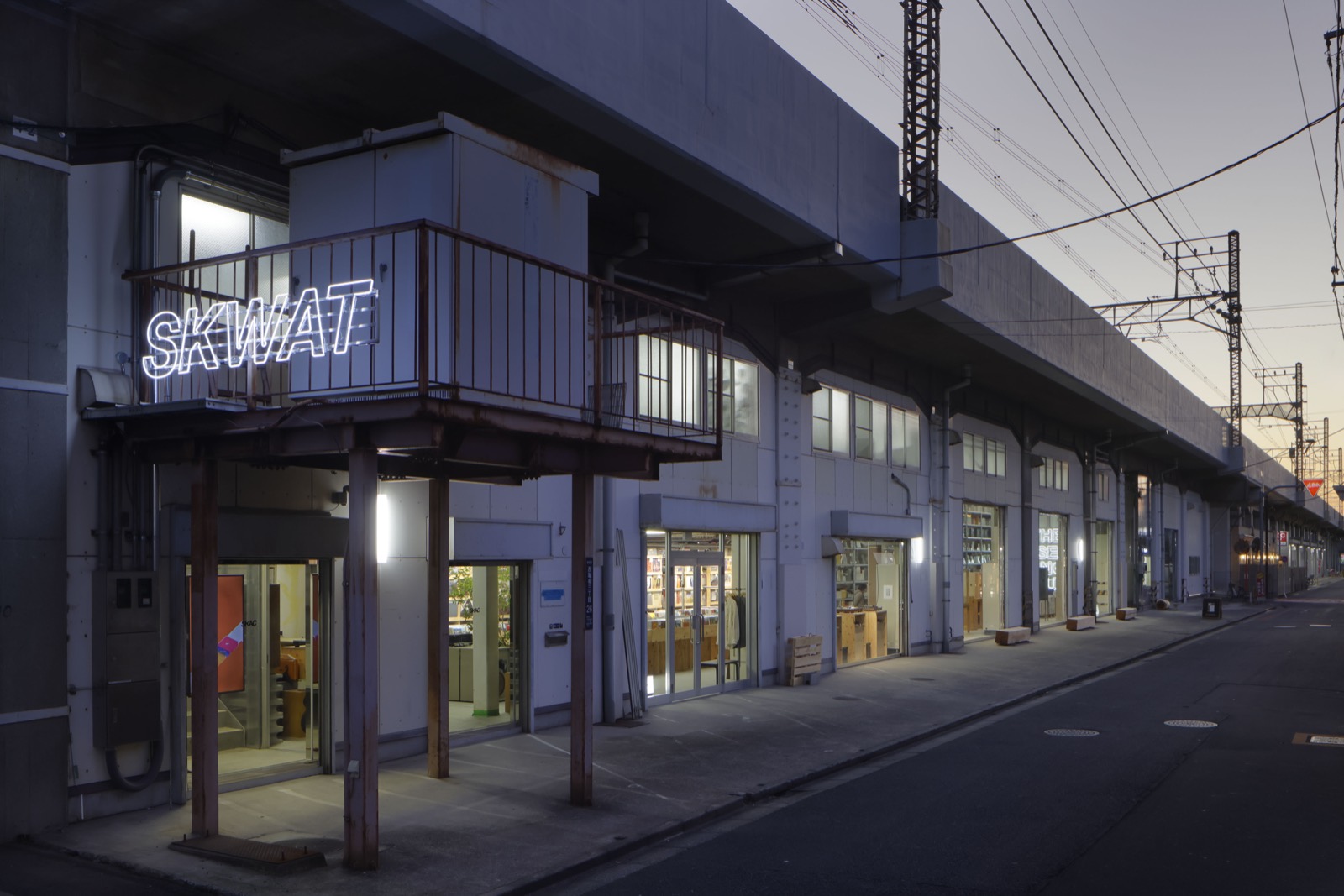
The name means squatting. A team known for slipping into buildings their owners were not using, staying a while and moving on, now sits under a JR viaduct on a multi-year lease. A month-long record fair is running there right now, and admission is free.
1.At 3-26-4 Nishi-Kameari, Katsushika Ward, Tokyo, under the elevated tracks of the JR Joban Line, Analog Market runs from 2 September to 4 October. Audio-Technica is the organiser, joined in planning and production by the record shop VDS and by SKWAT. Admission free. Closed Mondays and Tuesdays, open 11am to 7pm.
2.The venue is SKAC (SKWAT KAMEARI ART CENTRE). Twelve minutes on foot from Kameari Station, it opened on 2 November 2024 under the Joban Line between Kameari and Ayase. A record market fills the place on 12 and 13 September with more than 20 shops. London's Church of Sound plays on the 19th, and a field recording workshop and flea market follow on the 26th and 27th.
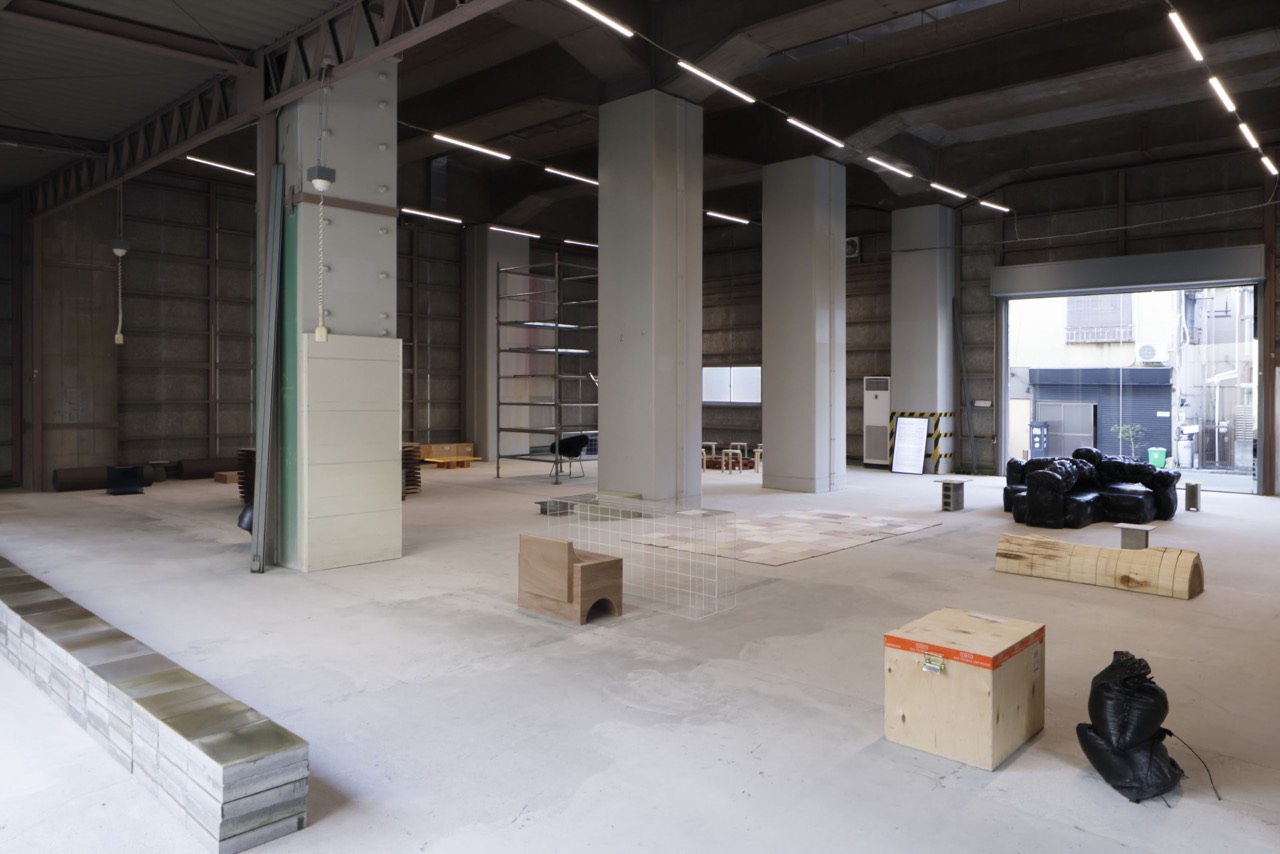
3.Under a viaduct you do not get to choose the width. The spacing of the columns sets the width of every room, and trains run above the ceiling. Press reports put SKAC's floor area at a little over 3,500 square metres. It is not a tidy rectangle, though, but a long strip stretched out along the tracks.
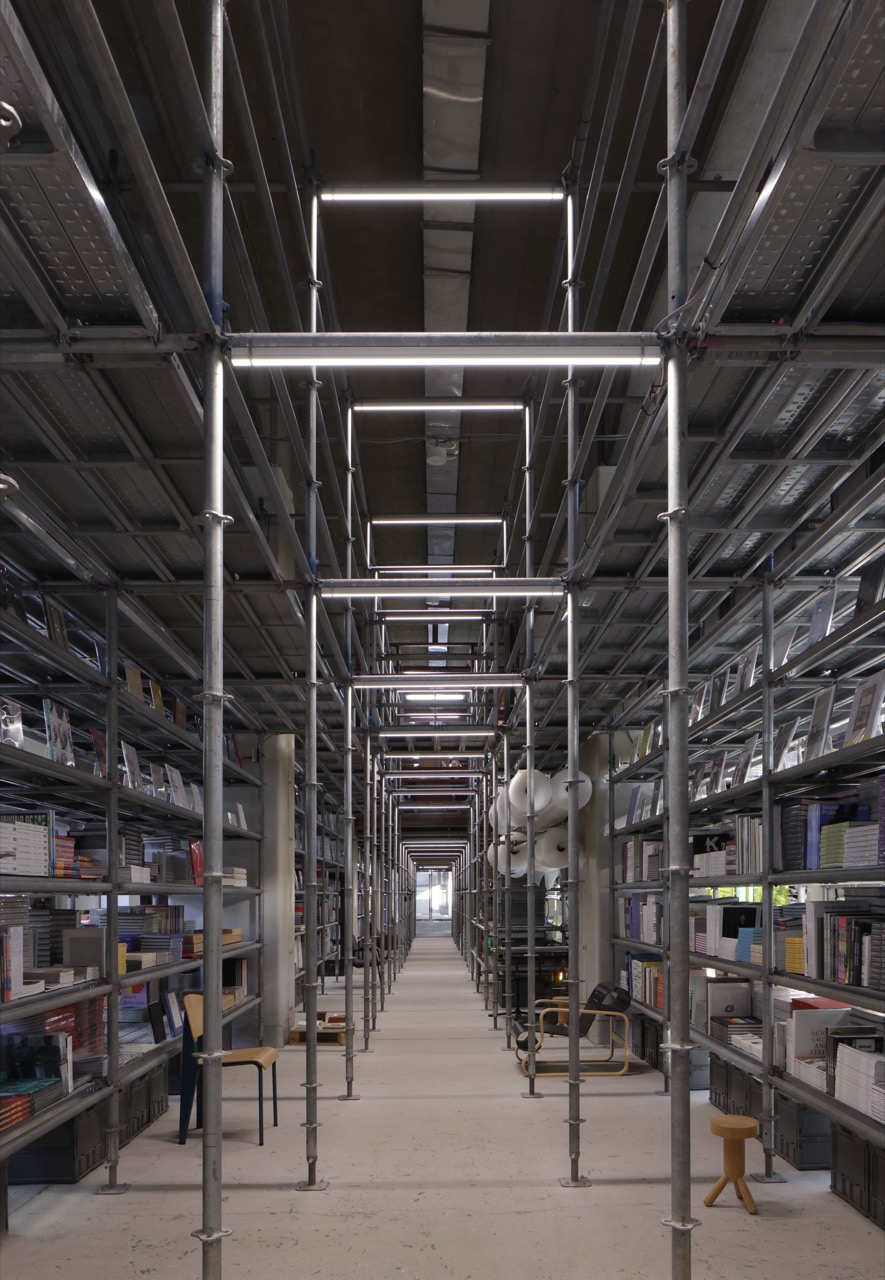
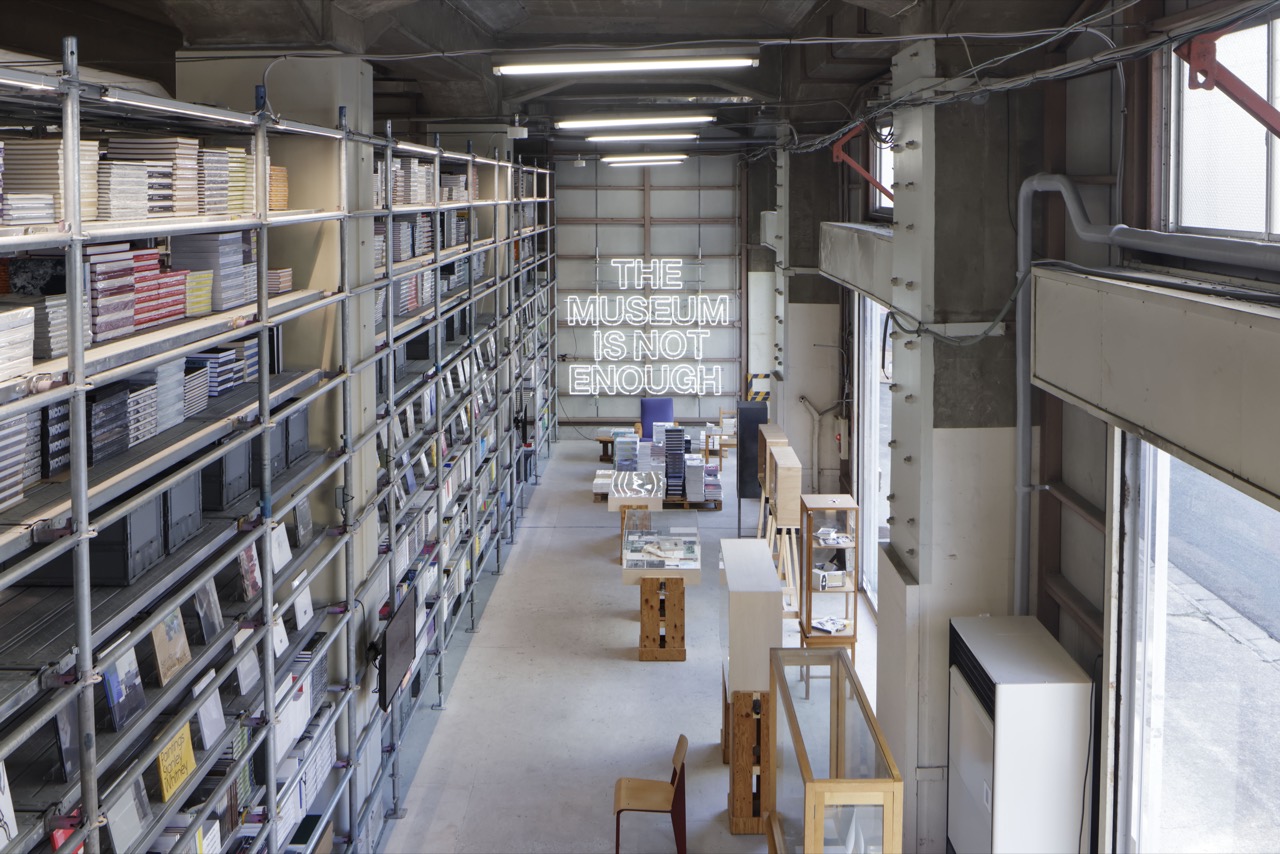
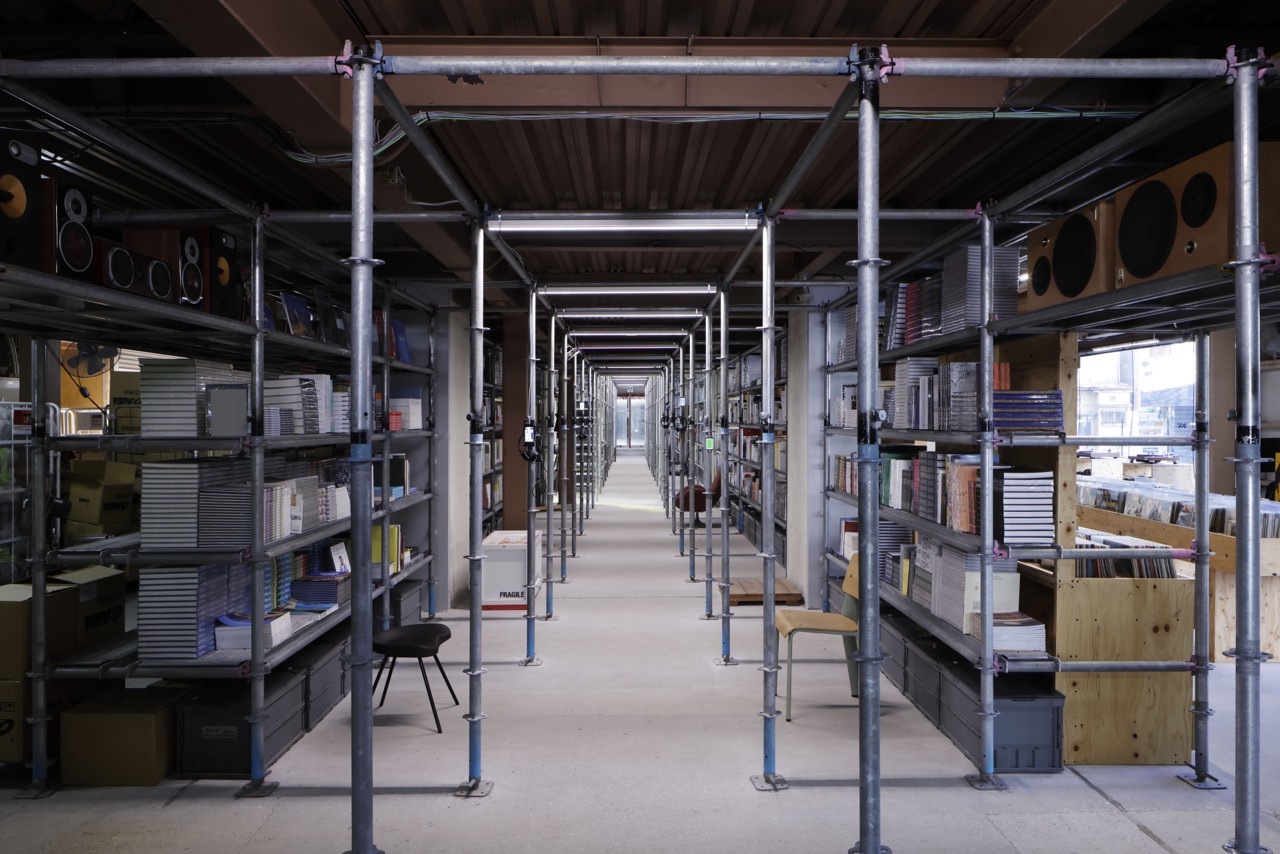
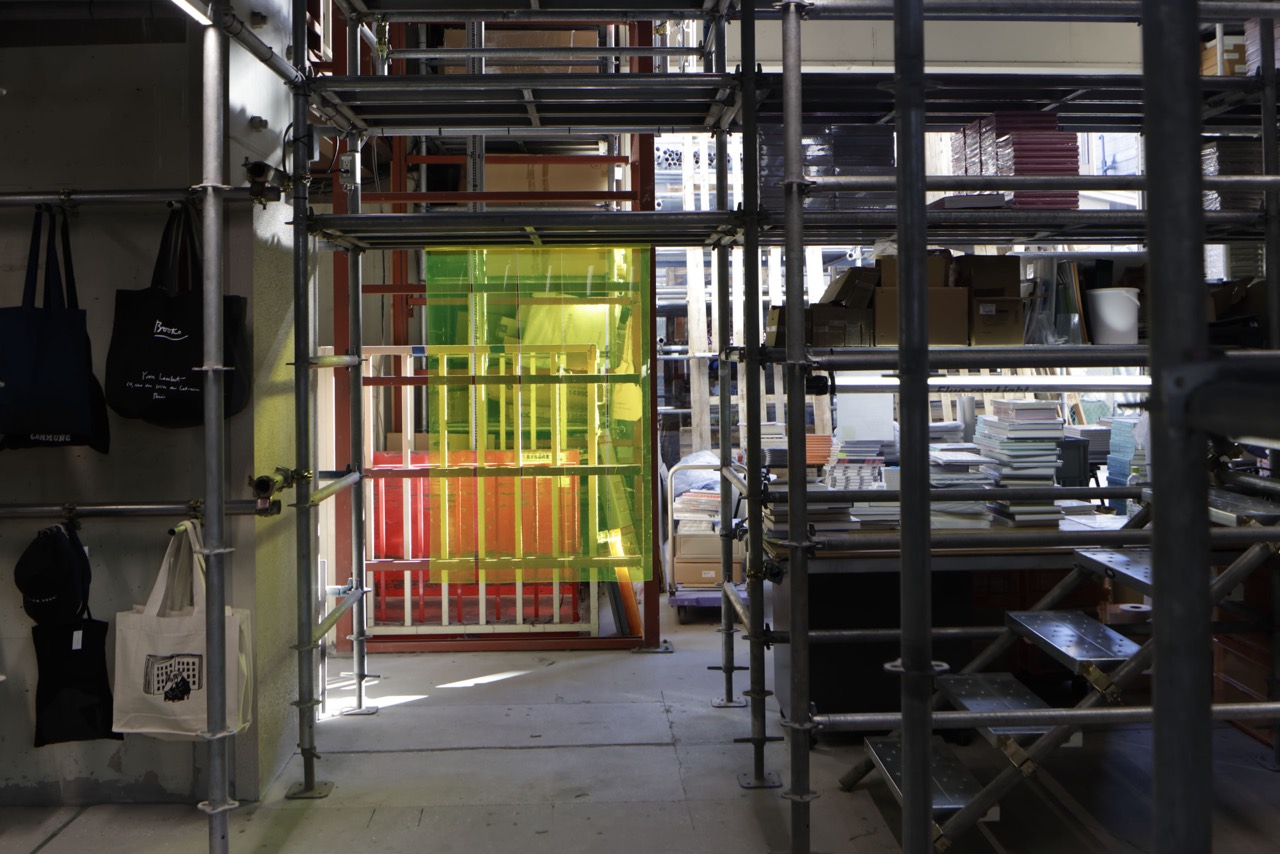
4.The finish inside is builder's scaffolding. Steel pipe was stood up, shelves hung from it, books slotted in, and the light fittings left dangling from the same pipes. The art book distributor twelvebooks keeps 80,000 volumes brought in from overseas publishers here, part warehouse and part shop. The aisle runs so far you can barely see the end of it, and every few minutes a train passes overhead and the floor gives a low shudder.
5.On the wall at the end of the stacks, in neon: THE MUSEUM IS NOT ENOUGH. That is also why the place calls itself an art centre rather than a museum. Bundles of books sit on the floor still on their pallets. Nothing separates what is for sale from what is on show.
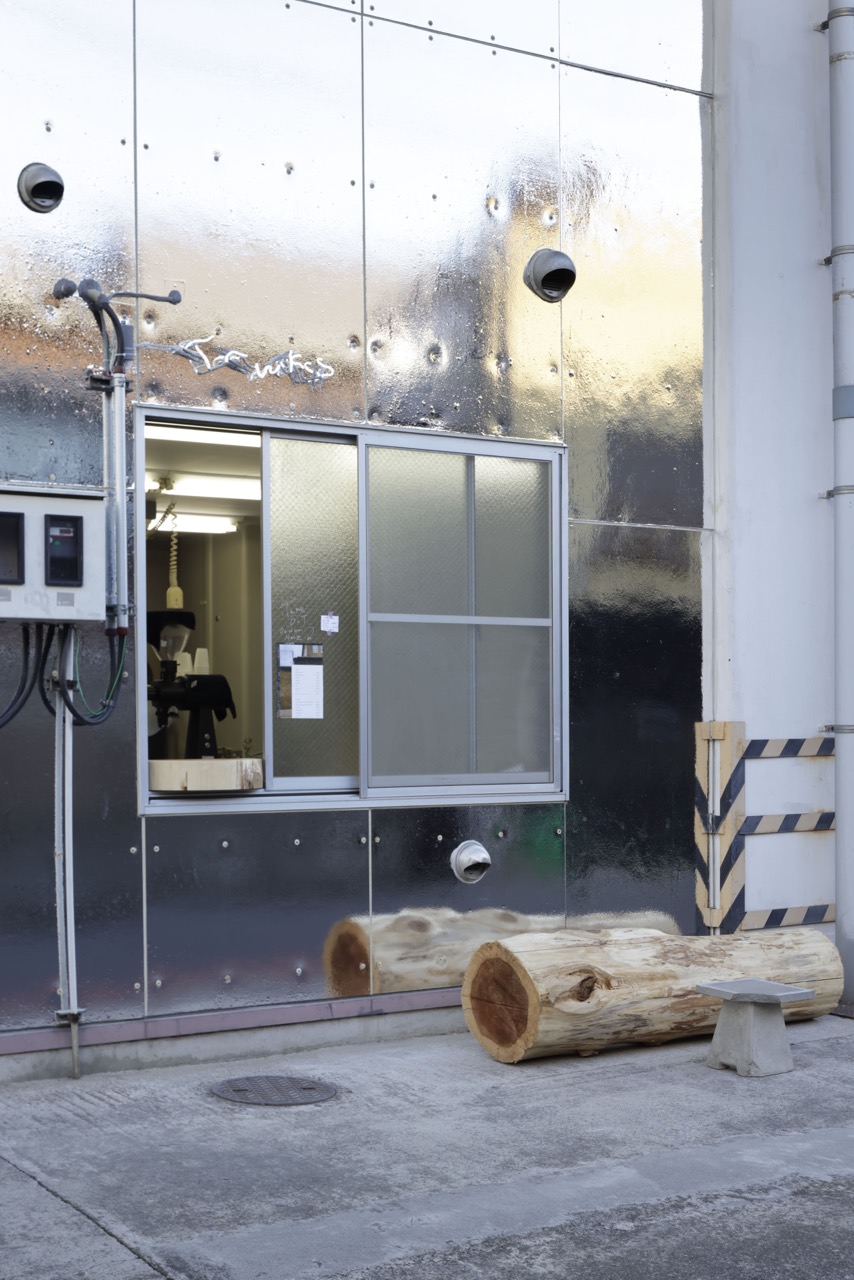
6.There are four tenants. The architecture practice DAIKEI MILLS keeps its office here and twelvebooks runs the stacks. The record shop VDS (Vinyl Delivery Service) is the first Japanese outpost of its London original. The cafe tawks has opened a free, park-like space alongside it. Two of the four came out of design and book distribution rather than retail.
7.SKWAT comes from the English word squat. Keisuke Nakamura took his cue from the squatting movement he saw in 1970s London and changed a single letter. Born in 1983 in Hamamatsu, Shizuoka Prefecture. In 2009, aged 24, he and four others opened the free space VACANT in Ura-Harajuku and ran it for a decade, then founded the architecture practice DAIKEI MILLS in 2011. SKWAT began in December 2019 in an empty wooden house in Harajuku.
8.The next site was 200 square metres across the first and second floors of a commercial building in Minami-Aoyama, in May 2020. Take a spot facing Miyuki-dori for a few months, then leave. For the landlord it filled a floor that would otherwise have sat empty until the next tenant arrived; for the occupier it bought an Aoyama address for close to nothing. A deal that only works in a period when empty floors are piling up.

9.Kameari is not a tourist destination. It is an old residential district at Tokyo's eastern edge, too far out to pull people from the centre. What it does have are three things the centre does not: floor area, ceiling height, and permission to play music loudly. The first two can be bought; the third only comes with moving. Under a viaduct a train passes every few minutes, so the ambient noise floor is already high. Where in central Tokyo would you find all three at once?
10.Look at the money and the nature of the site becomes clear. Published land prices for residential plots around Kameari run to 1.35 million yen per tsubo in 2026. Buying 1,059 tsubo outright would cost 1.43 billion yen. The railway company, though, bought this ground when it laid the line. Under a viaduct the acquisition cost is already zero, and rental income is the only new thing.
11.The company letting that space is JR East Urban Development. Founded in April 1989 as JR East Viaduct Development, with capital of 1.45 billion yen, 699 staff and revenue of 10.135 billion yen for the year to March 2025. It is developing the 800 metres between Kameari and Ayase in stages under the name Pochikame, with completion due in fiscal 2026.
고가 아래 800미터에 들어간 것들
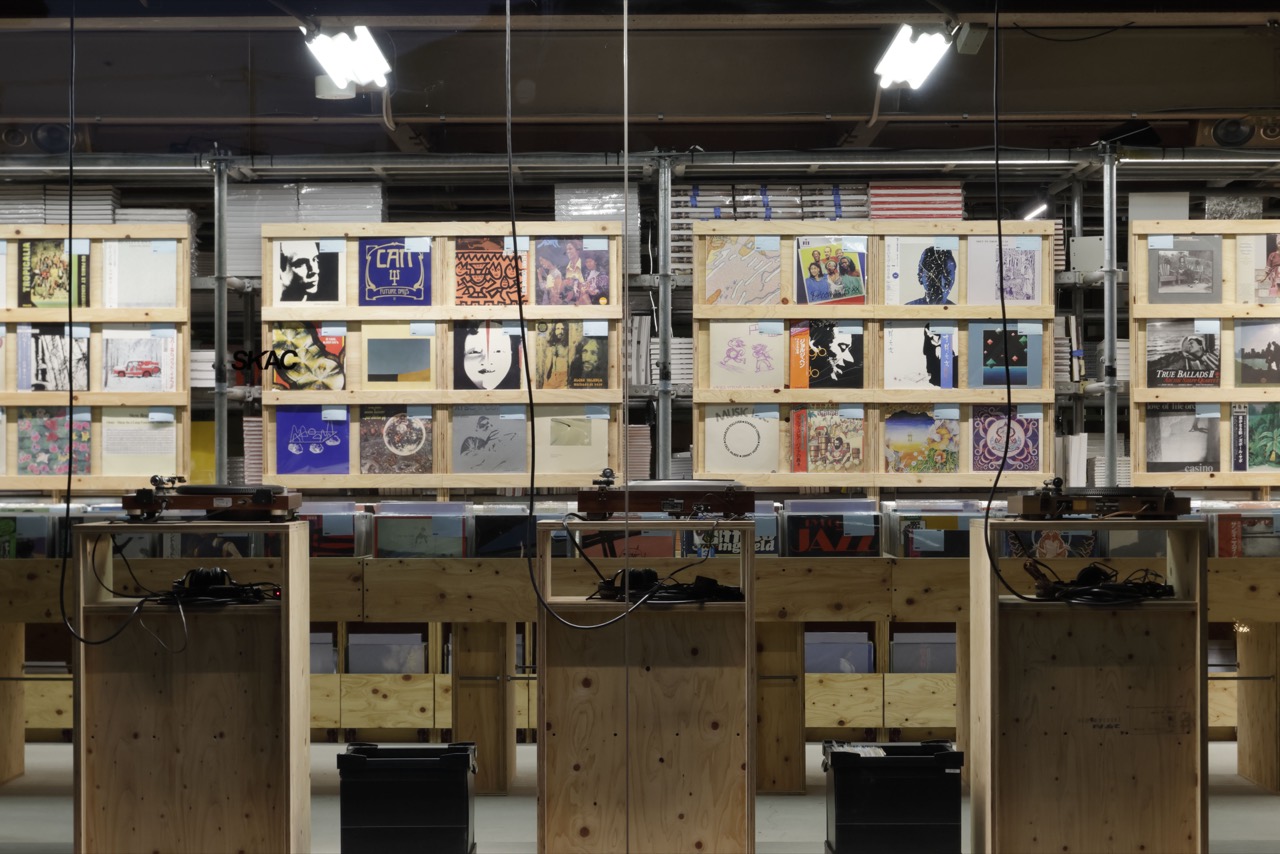
12.The organiser's arithmetic runs differently. Audio-Technica posted consolidated revenue of 67.7 billion yen for the year to March 2025, a fourth consecutive record. Japan's annual production value for vinyl, meanwhile, only just cleared 8 billion yen in 2025. The industry welcomed that as a 37-year high. Company revenue is global, so the two are not strictly comparable, but the gap of roughly eight times still stands. A company that size spends 33 days on vinyl because vinyl is not what it is selling.
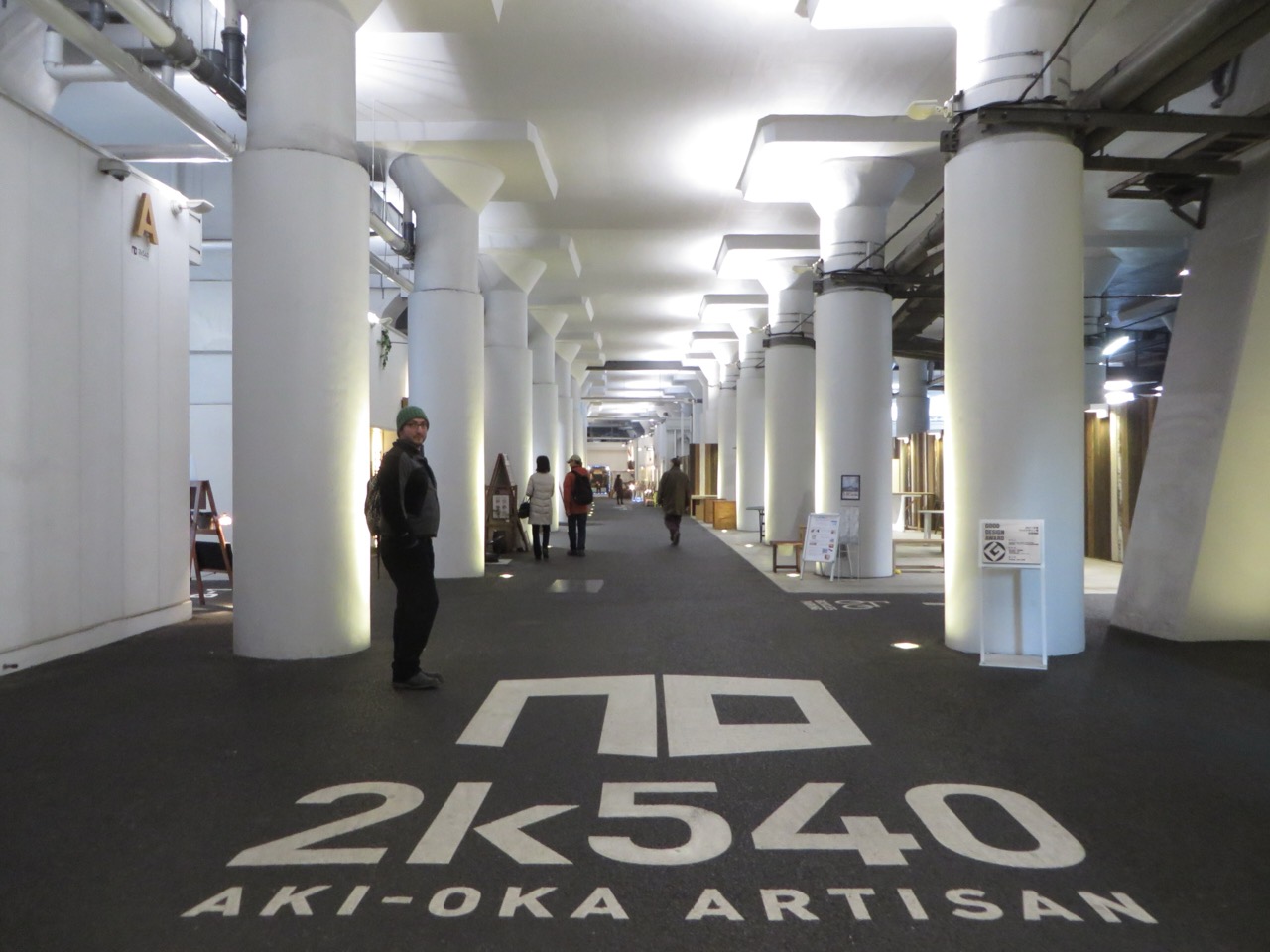
레코드는 작고 바늘 파는 회사는 크다
13.Hence the listening stations at the centre of the floor. Visitors can compare, on the spot, how headphone materials and cartridge stylus shapes change the sound. That is why nobody needs to sell a ticket. Letting people in free and putting your own stylus against their ears for a month returns more than charging a few thousand yen and packing up after three days.
14.Turning viaduct undersides into retail is something this company has done for a long time. 2k540 AKI-OKA ARTISAN, a craft arcade between Akihabara and Okachimachi, opened in 2010; Edo Noren under Ryogoku Station in 2016; Hibiya OKUROJI, which kept its brick arches, after that. The difference is that those were planned as retail from the start, while at Kameari the tenants arrived before anyone had decided what the space was for.
15.What changed in a single year shows what this site is worth. Last year Analog Market ran for two days only, 2 and 3 November, in the forecourt of Tsukiji Hongwanji. Eighty exhibitors, 20 record shops, free entry. The same event runs 33 days this year. A temple forecourt has to be cleared after two days; the space under a viaduct does not. SKAC itself came in through a short call for a few months' occupancy and ended up on a multi-year lease. An expansion into the neighbouring building, roughly doubling its size, continues through this year, and a section devoted to building materials called Material Matters opens this autumn.
16.A team on a proper lease, keeping only the word squat in its name, is running a 33-day fair for free across 1,059 tsubo whose acquisition cost was zero. Try the same thing in Korea and the first obstacle is not rent but duration. Almost all land under railway and motorway viaducts belongs to the state or a public corporation, so it is used under occupancy or use permits rather than a lease, and those permits are cut into terms of a few years and renewed. Nobody builds ten years of shelving on a five-year permit. What sets the value of leftover land is not how wide it is but how many years you are guaranteed.