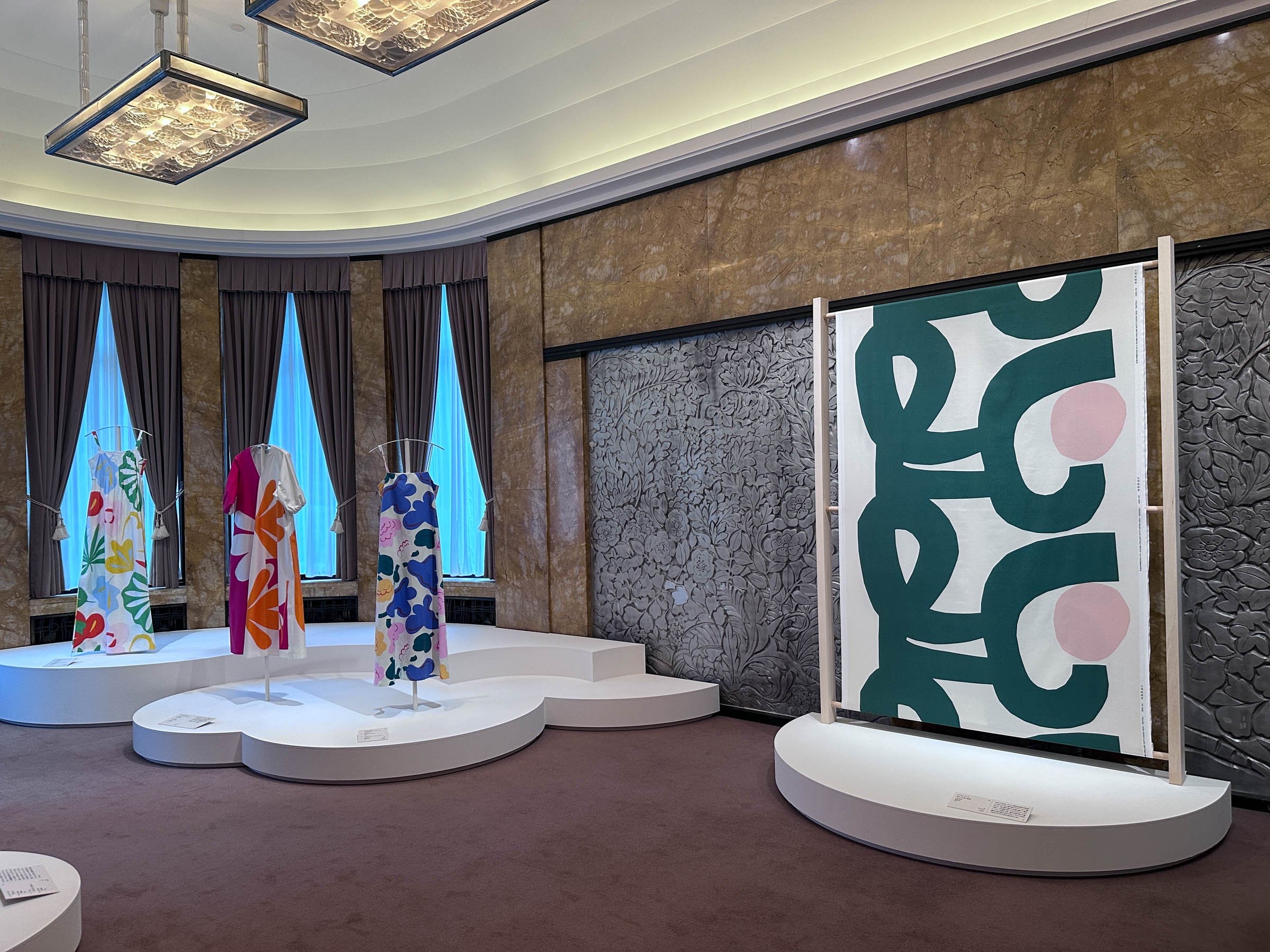
Marimekko, a Finnish company, now has more stores in Asia than in Finland. Its dresses and fabrics have gone up in an Art Deco mansion built in Tokyo in 1933, and a ticket costs 1,400 yen.
1."Marimekko: Art of Printmaking, Beauty, Dream, Love" (マリメッコ展 模様のちから) opened on October 3 at the Tokyo Metropolitan Teien Art Museum. It runs until December 20, from 10 a.m. to 6 p.m., and entry is by reservation for a set date and time. General admission is 1,400 yen, university students 1,120 yen, high school students and visitors 65 and over 700 yen.
2.It is a touring show that began in July at the Museum of Kyoto, and after Tokyo it moves to the Hiroshima Museum of Art next January. From there it travels to Kitakyushu, Toyama, Nagoya and Nagasaki over two years. Japan has not seen a Marimekko tour on this scale in ten years. The company, founded in Helsinki in 1951, has made more than 3,500 prints, and some 60 dresses from the 1960s to recent seasons were borrowed from Design Museum Helsinki and the Marimekko archive.
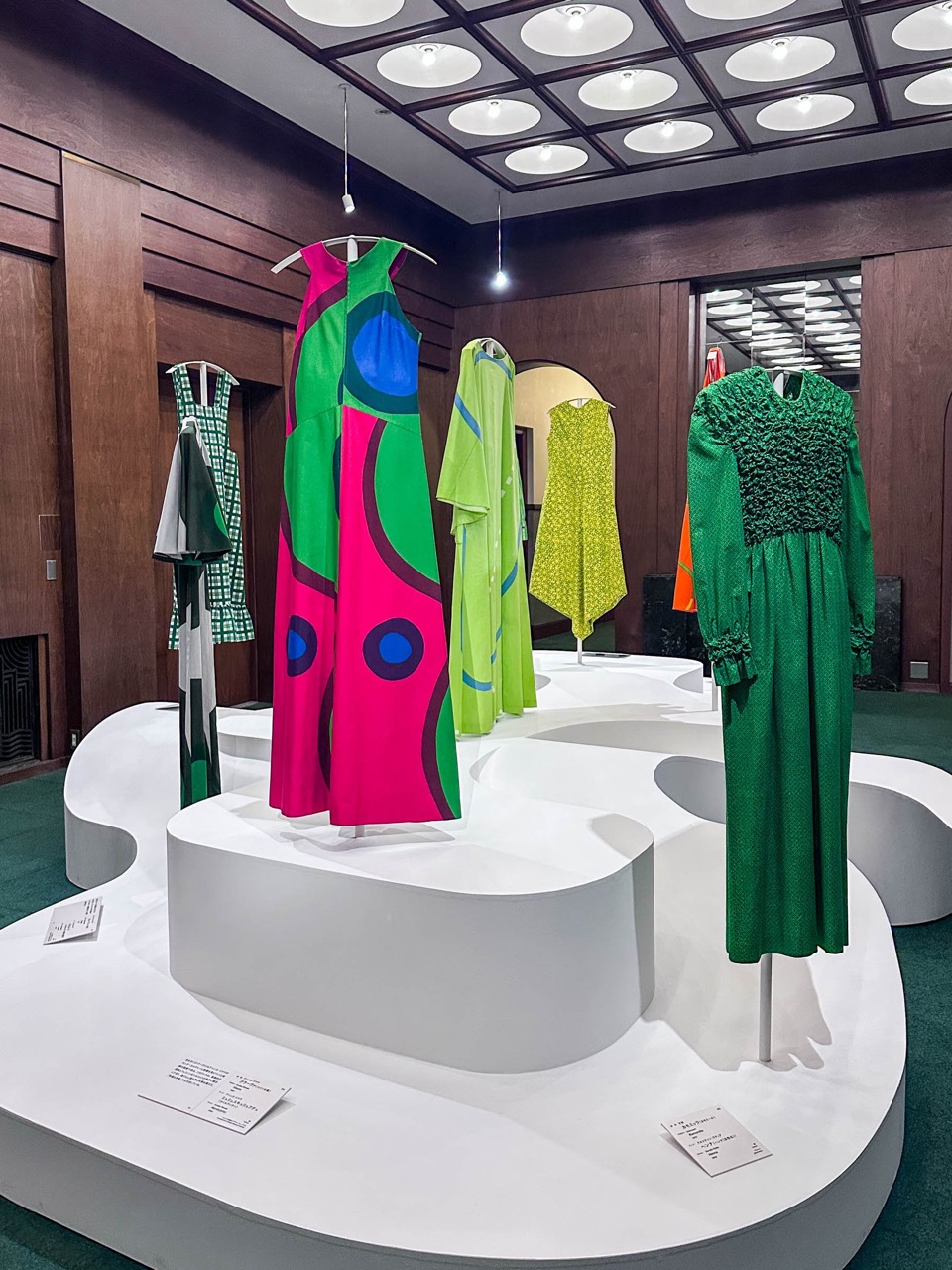
3.The building that became the venue was the home of Prince Asaka Yasuhiko. It was completed in 1933; the French designer Henri Rapin drew up the interiors, and René Lalique made the glass doors and some of the lighting. It became a museum in 1983 and was designated an Important Cultural Property in 2015. For this show, the curtains in the main building were swapped for Marimekko fabric.
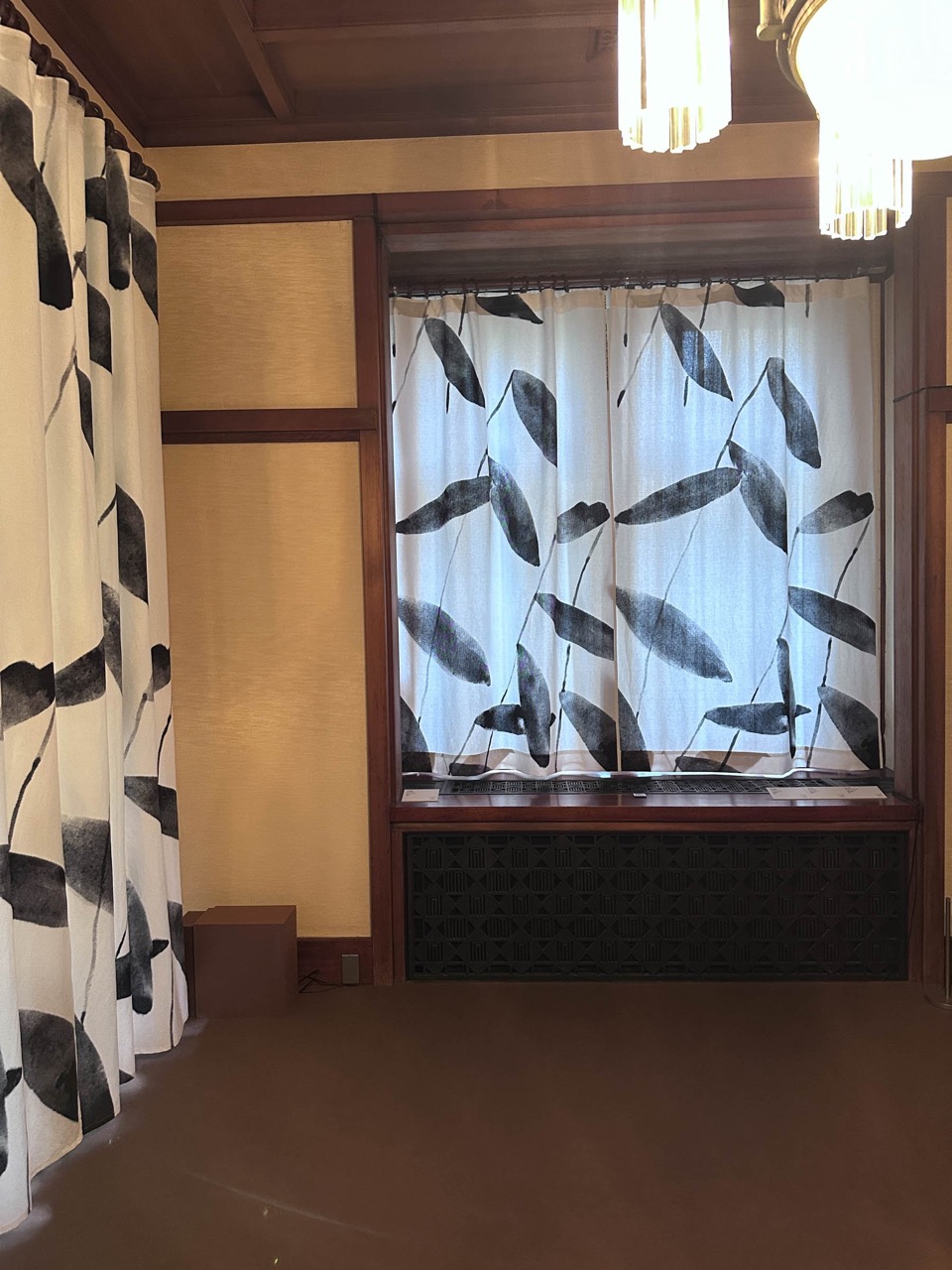
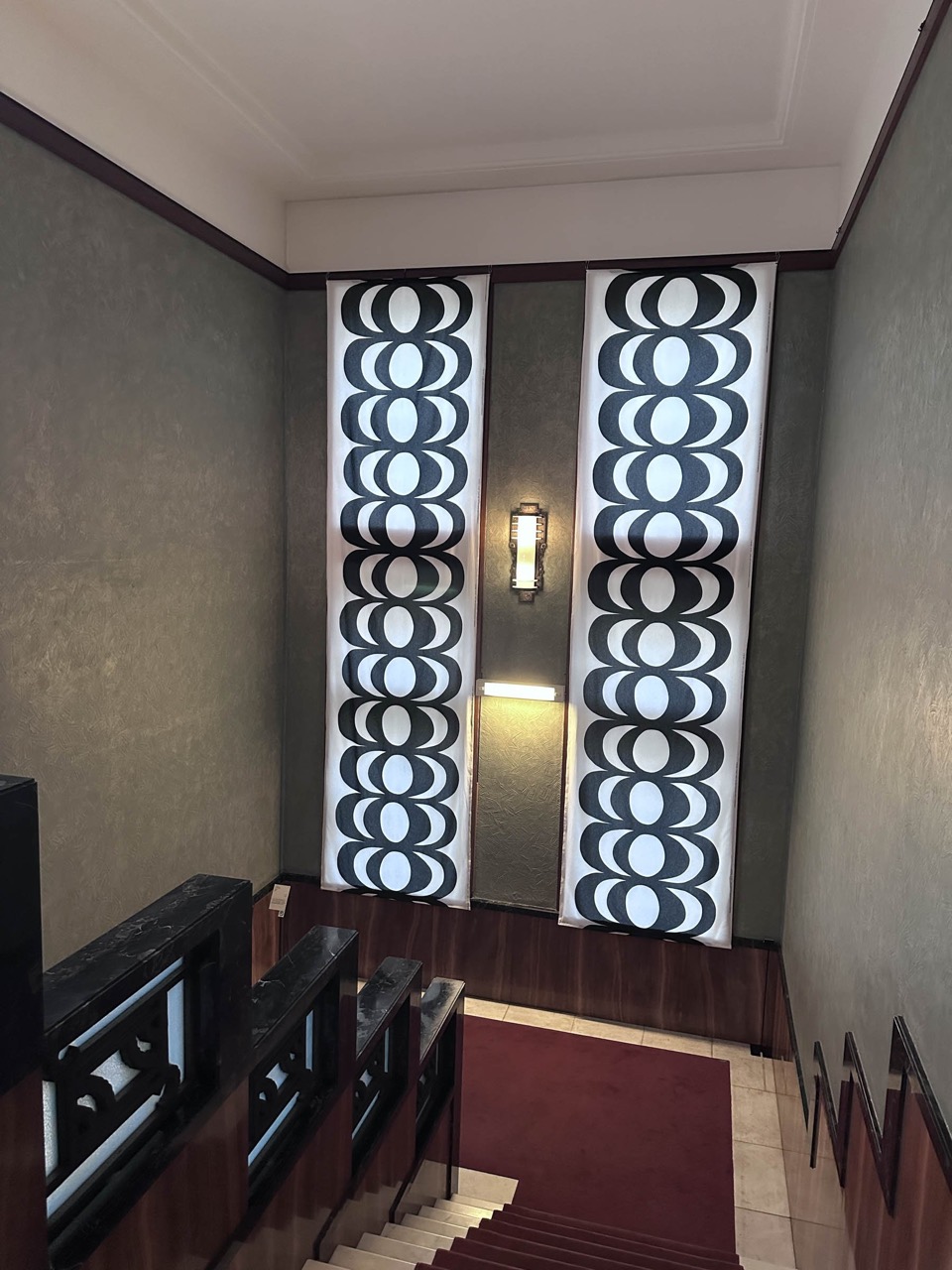
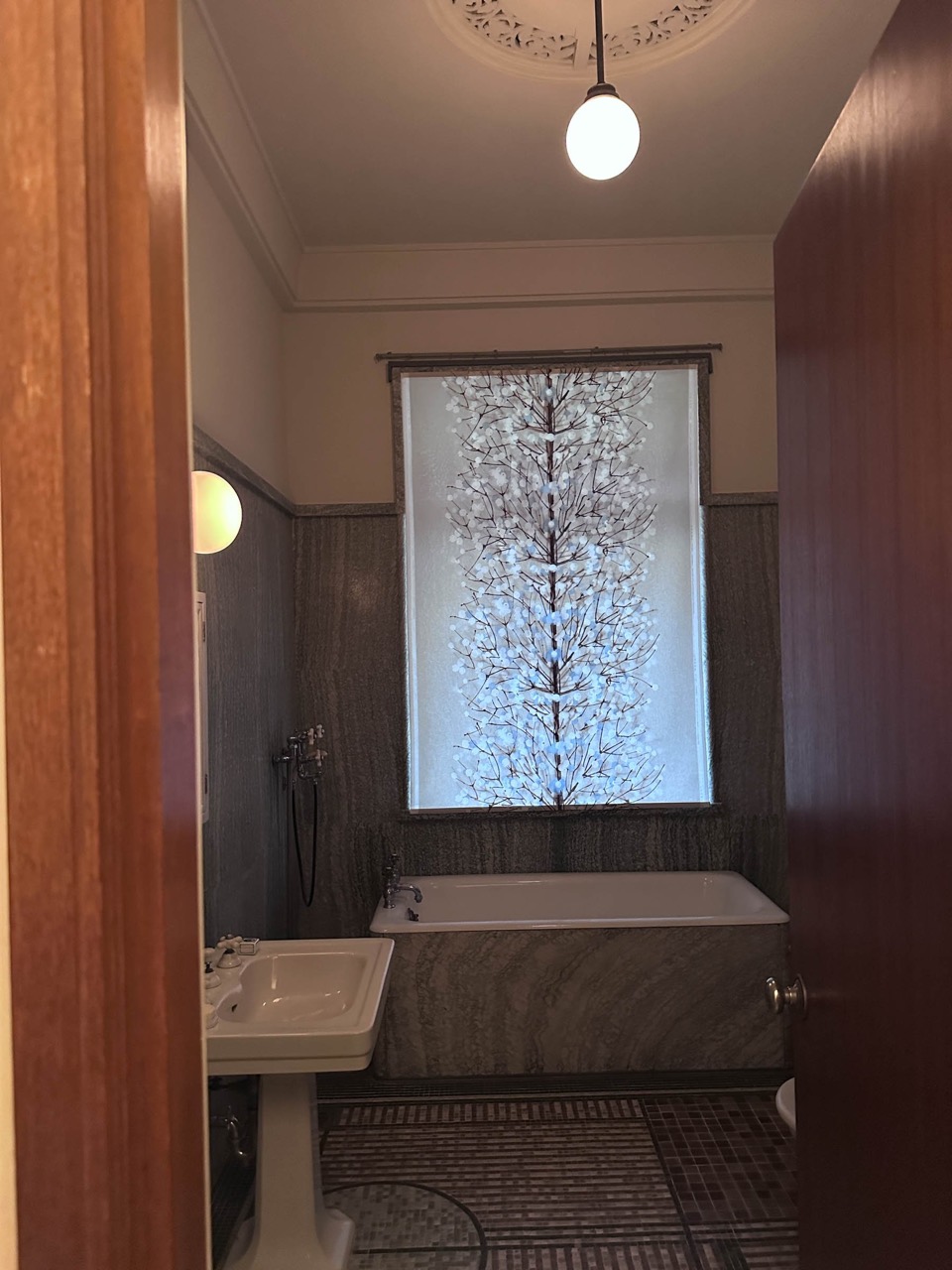
4.The dresses do not stand in chronological order. They are grouped by color and pattern room by room, so clothes made decades apart share a single plinth. On the stair landing, two lengths of fabric lined with black circles drop from ceiling to floor, and the bathroom window is covered in printed cloth so daylight comes in through the pattern. Instead of white-walled galleries, visitors walk through someone else's living room, staircase and bathroom and see the fabric where it would actually hang.
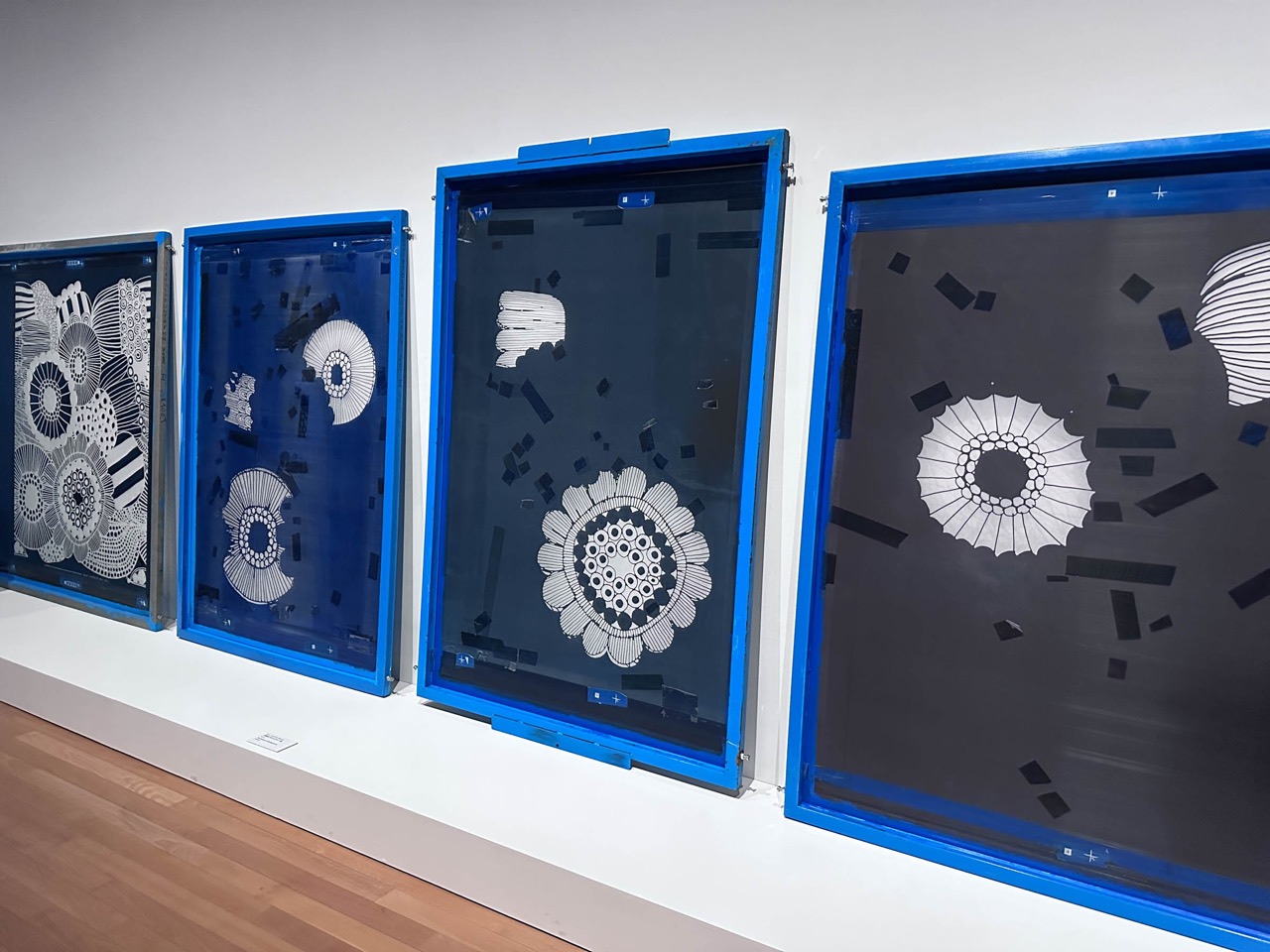
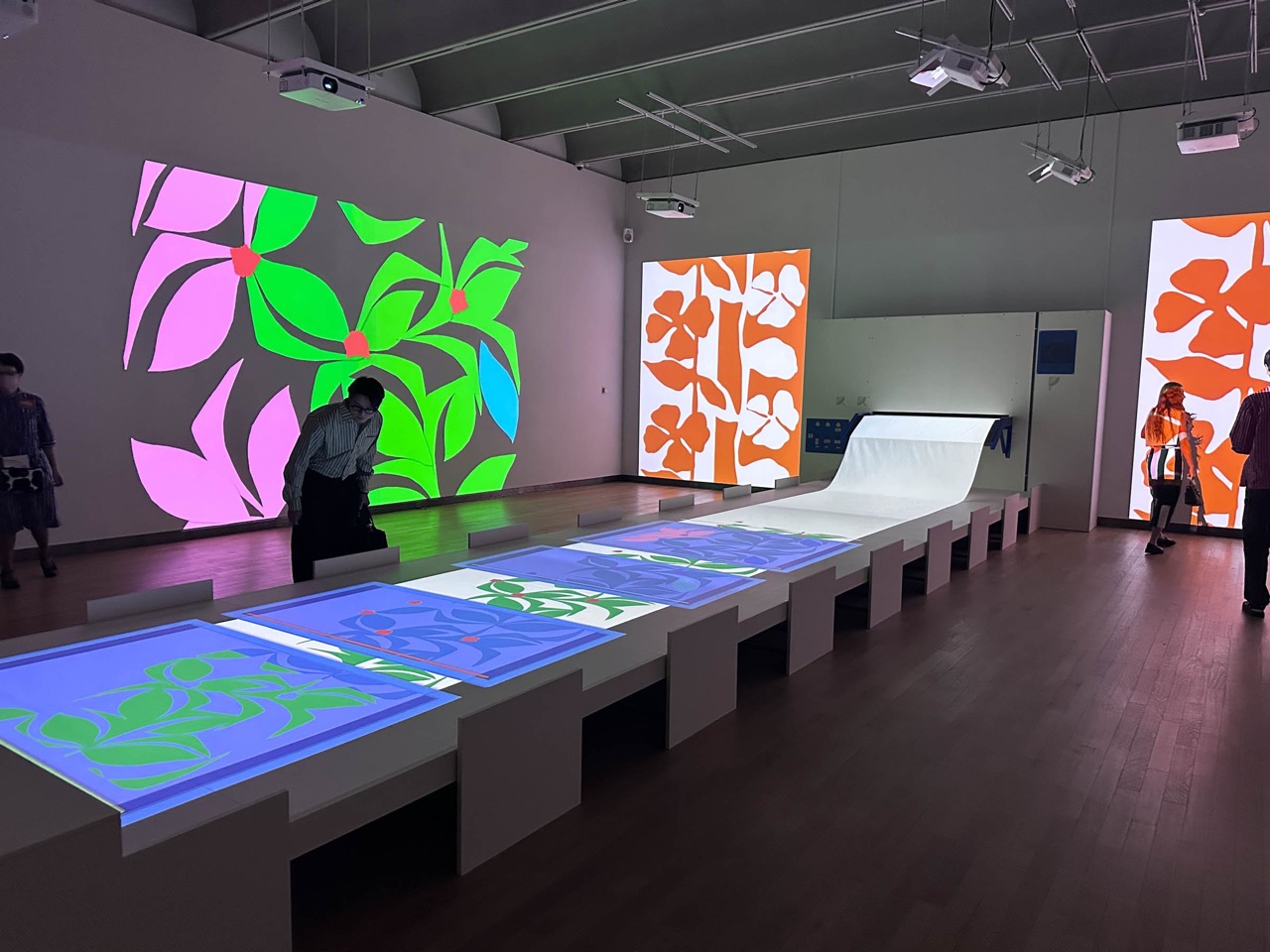
5.The new wing, built in 2014, shows how the fabric is made. Silkscreens set in blue frames line the wall, and the art unit plaplax turns the flat screen printing at the Helsinki factory into video projected onto a long table. Each time a color screen is laid down, one more layer of the pattern appears, and visitors watch it build on the table.
6.What draws people here is the rooms more than the clothes. Marimekko sells cushions, tableware and curtains as much as it sells clothing, and what customers take home is a pattern for their own house. Fabric pinned to a white wall is an artwork; fabric hung at a window is a home. A 90-year-old mansion's windows stage that scene, so for 1,400 yen visitors get a preview of their own living room.
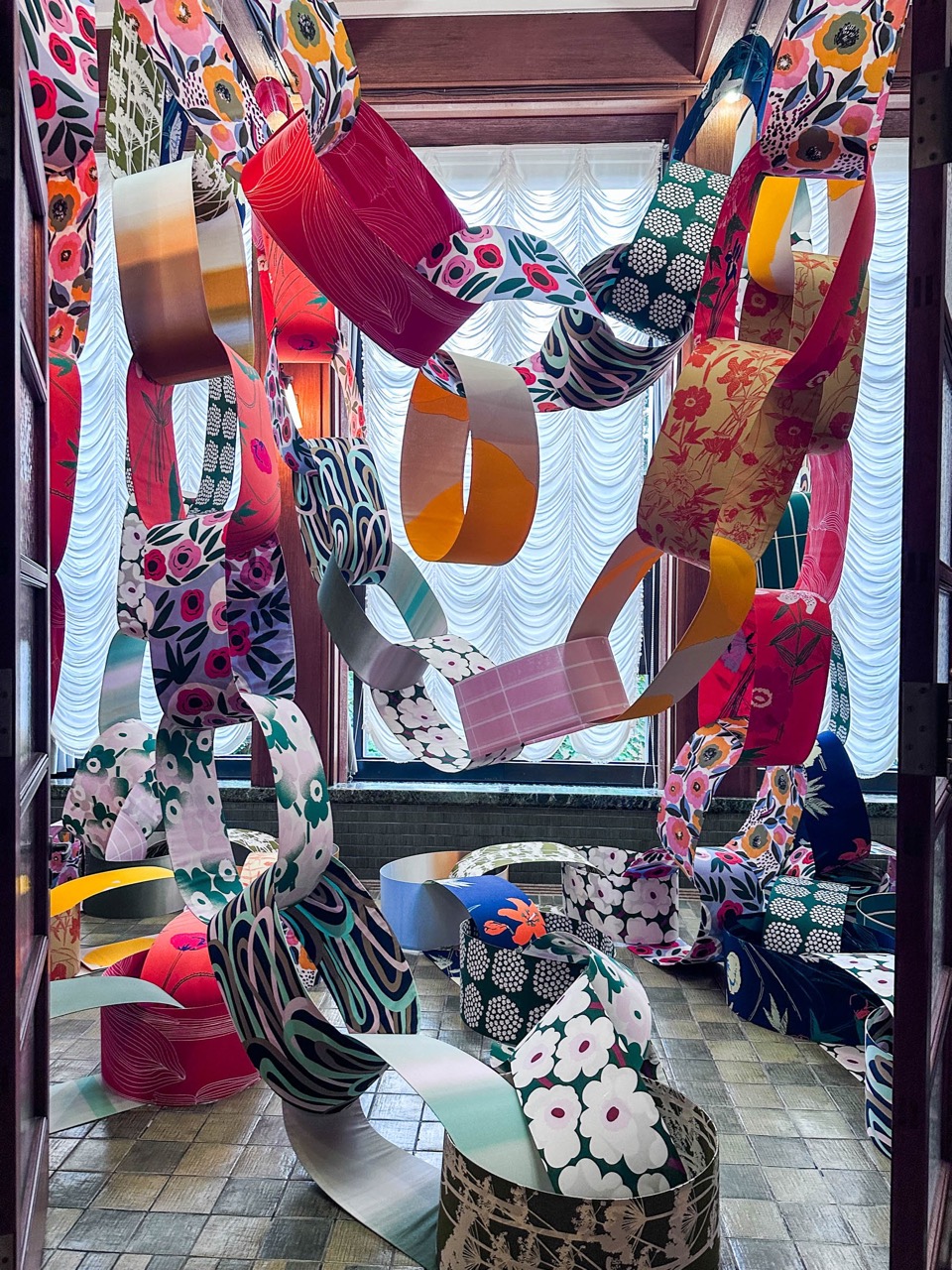
7.Japan has its own claim on the brand. Katsuji Wakisaka (脇阪克二) joined Marimekko as a designer in 1968, and Fujiwo Ishimoto (石本藤雄) drew patterns in Helsinki from 1974 to 2006. For this show, Akira Minagawa (皆川明), founder of minä perhonen, made a new installation of fabric loops running from ceiling to floor. A Japanese brand with a Finnish name lending a hand to a Finnish brand's exhibition.
8.Marimekko's 2025 net sales were 189.6 million euros, and comparable operating profit was 32.3 million euros, or 17.1% of sales. Asia-Pacific sales of 40.0 million euros make it the second-largest market after Finland. By store count, the order flips. Of 174 stores and shop-in-shops worldwide at the end of last year, 94 were in Asia-Pacific; Finland, the home market, had just 67.
마리메꼬 2025년 지역별 매출과 매장 수
9.Most of the Asian stores are run by local partners. Marimekko ships goods to those partners and collects the wholesale price. Add the retail value sold in partner stores and brand sales come to 385.1 million euros, about twice the company's own net sales. In Japan the partner is the fashion company Look Holdings (ルックホールディングス), which had 41 Marimekko stores in the country at the end of last year. In October 2025 it added one more, at Daimaru Tokyo.
10.The exhibition itself does not make much money. Take out closing days from the 79-day run and it is open a little over 70 days; even if 1,000 people a day all bought general tickets, admissions would come to less than 100 million yen (an estimate). Ticket income goes to the museum, while Marimekko is credited for special cooperation and lends its material. The film company Toei is listed for planning cooperation, which looks like the role of packaging one touring show and placing it with museum after museum.
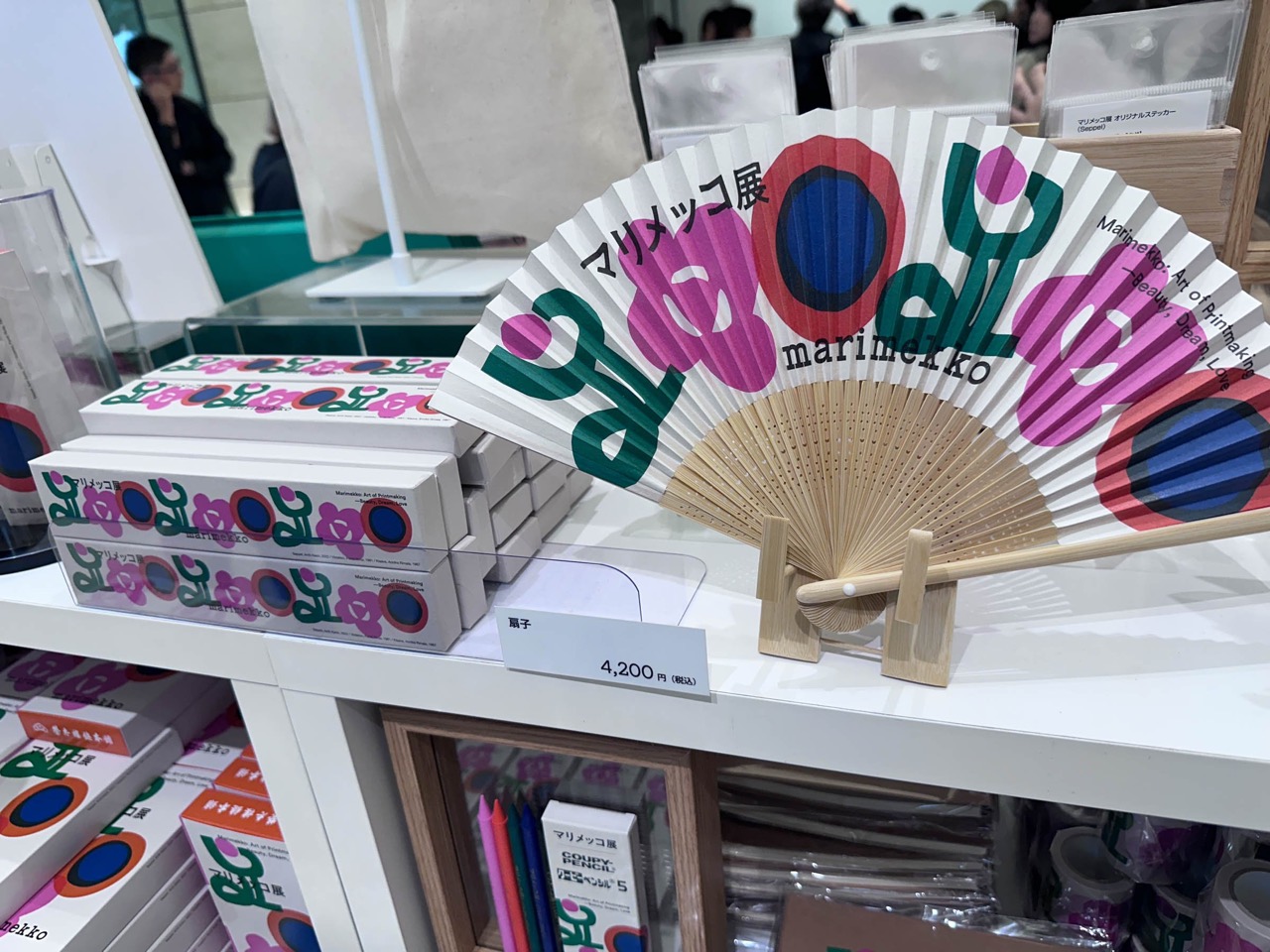
11.The money moves at the shop by the exit. At the Kyoto venue, a folding fan made by Kyoto artisans sold for 4,200 yen and a three-flavor yokan set for 1,944 yen; in Tokyo, a limited-edition tea made with the tea shop LUPICIA sits beside tote bags and masking tape. The same shop also sells regular Marimekko goods such as bags and tableware. Visitors pass the register after walking through room after room of pattern.
12.The two years of touring coincide with the company's push to open more stores in Asia. It has disclosed plans to open 10 to 15 new stores and shop-in-shops this year, most of them in Asia. Its name will sit on museum calendars in Hiroshima, Nagoya and Nagasaki for two years, and there is no public record of Marimekko paying for that space as advertising.
13.The face of the show now is a flower, yet founder Armi Ratia once said the company should not make floral prints. Her reason: a flower copied onto cloth can never beat the real thing. In 1964 designer Maija Isola ignored her and drew a huge poppy, and that became Unikko, the pattern that now stands for the whole company.
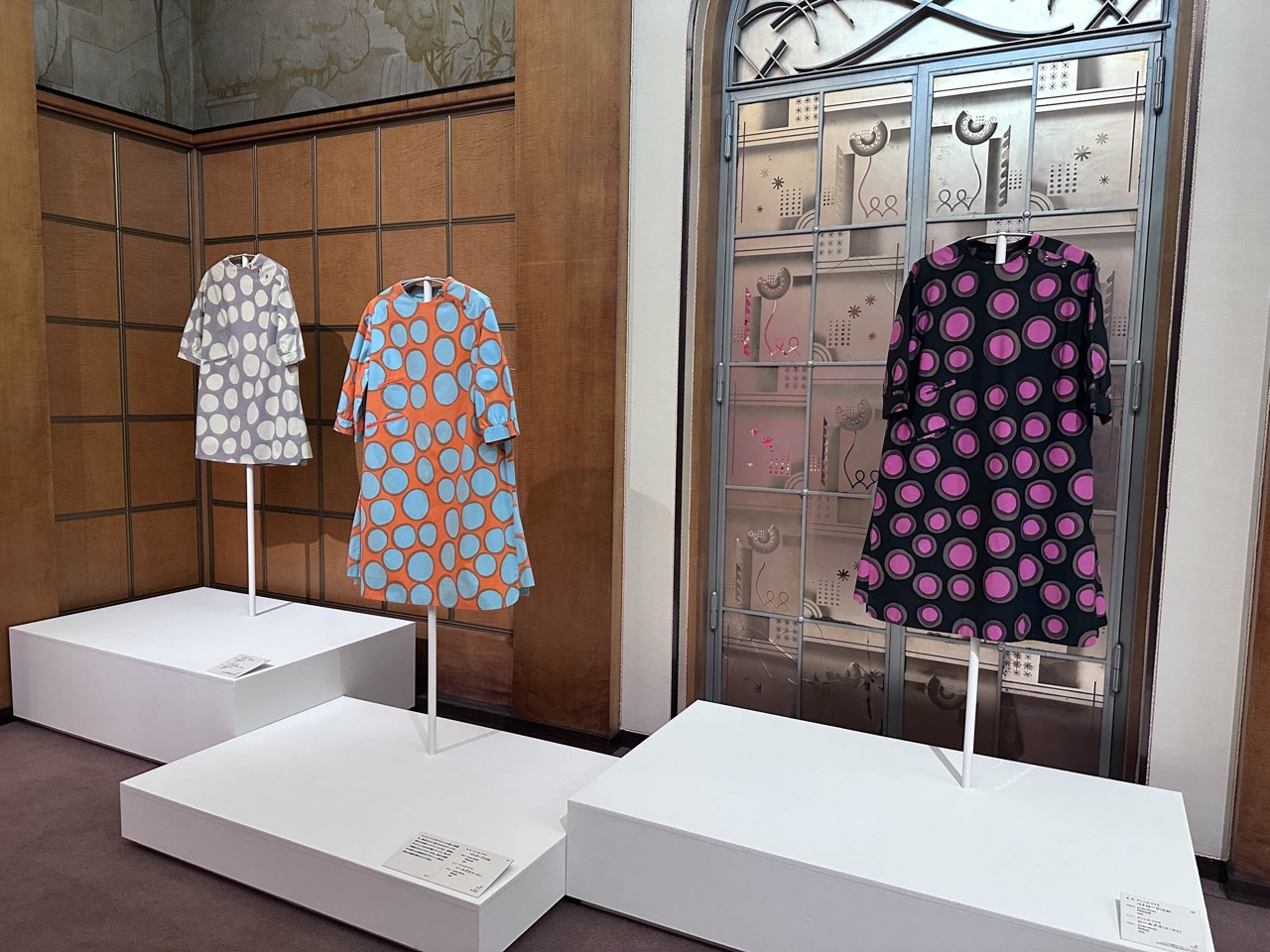
14.In 1933 this was a house decorated with ornament imported from France. More than 90 years later, Finnish fabric hangs in its rooms, and a large share of the customers who buy that fabric are now in Asia. In Kyoto the same touring show used white-walled museum galleries. Only the Tokyo venue got a house.
15.In Asia, where it keeps more than half its stores, Marimekko lands on the museum calendars of seven cities over two years through a touring show with a 1,400-yen ticket. In Tokyo it even changed the curtains of a mansion listed as an Important Cultural Property. Anyone trying the same show in Korea would hit the building first. Hanging fabric inside a designated heritage building often requires a permit, and that process tends to take longer than the exhibition schedule.