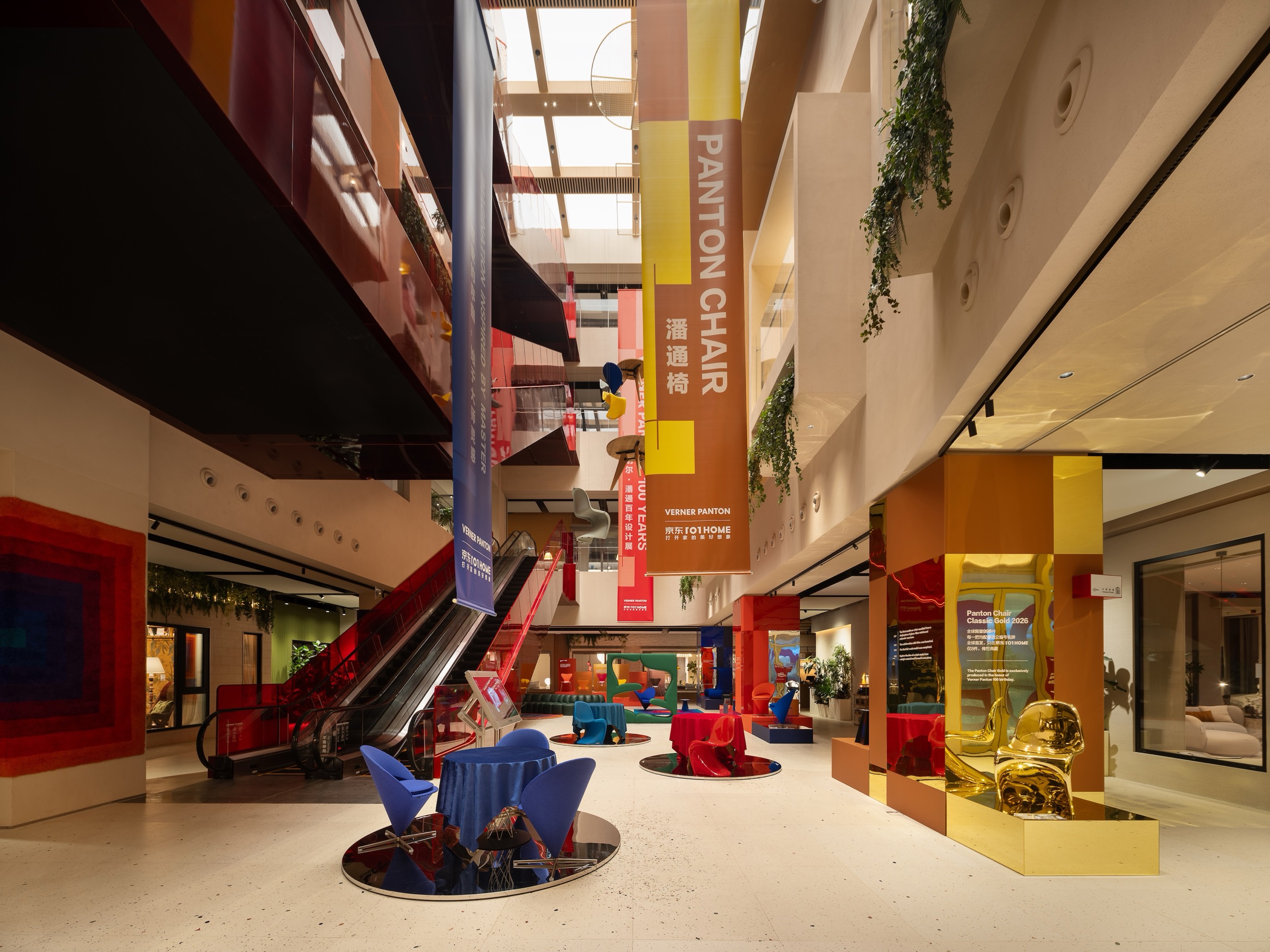
China's online retailer JD.com has opened 101HOME, a four-storey furniture and homeware store, inside Shanghai's former city air terminal on Nanjing West Road. Furniture malls are losing revenue and IKEA is closing suburban stores. In that gap, an online retailer took its own inventory and moved in on top of a subway station.
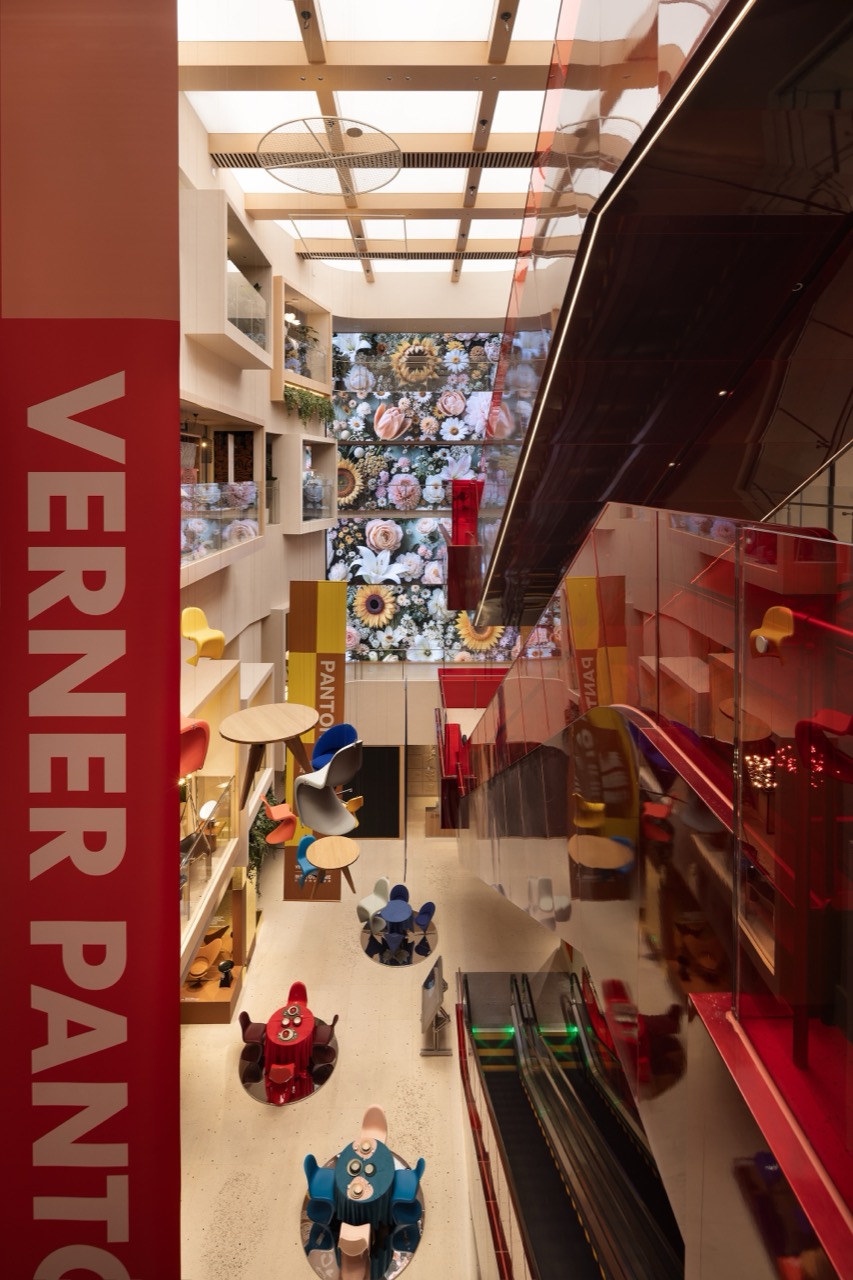
1.On September 28, JD.com (京东) opened the first 101HOME at 1600 Nanjing West Road in Shanghai. Four floors, roughly 12,000 square metres (about 3,630 pyeong), hold a little over 1,000 furniture, lighting and homeware brands and around 15,000 products. The 101 in the name stands for ages 0 to 101, and some 30 overseas brands entered China for the first time through this store.
2.The building has an unusual past. This was the Shanghai City Air Terminal (上海机场城市航站楼), opened in September 2002 as mainland China's first facility where travellers could check in and drop bags downtown. Airlines pulled out one by one, and when Shanghai Airlines stopped ticketing and baggage check-in in January 2012, the second-floor ticket hall went empty. Jing'an District and the airport group agreed on a renovation in 2020, and the building that came out of the works in 2024 is now called Wanhang International Center (万航国际中心). An exit of Metro Line 2's Jing'an Temple station was brought inside it.
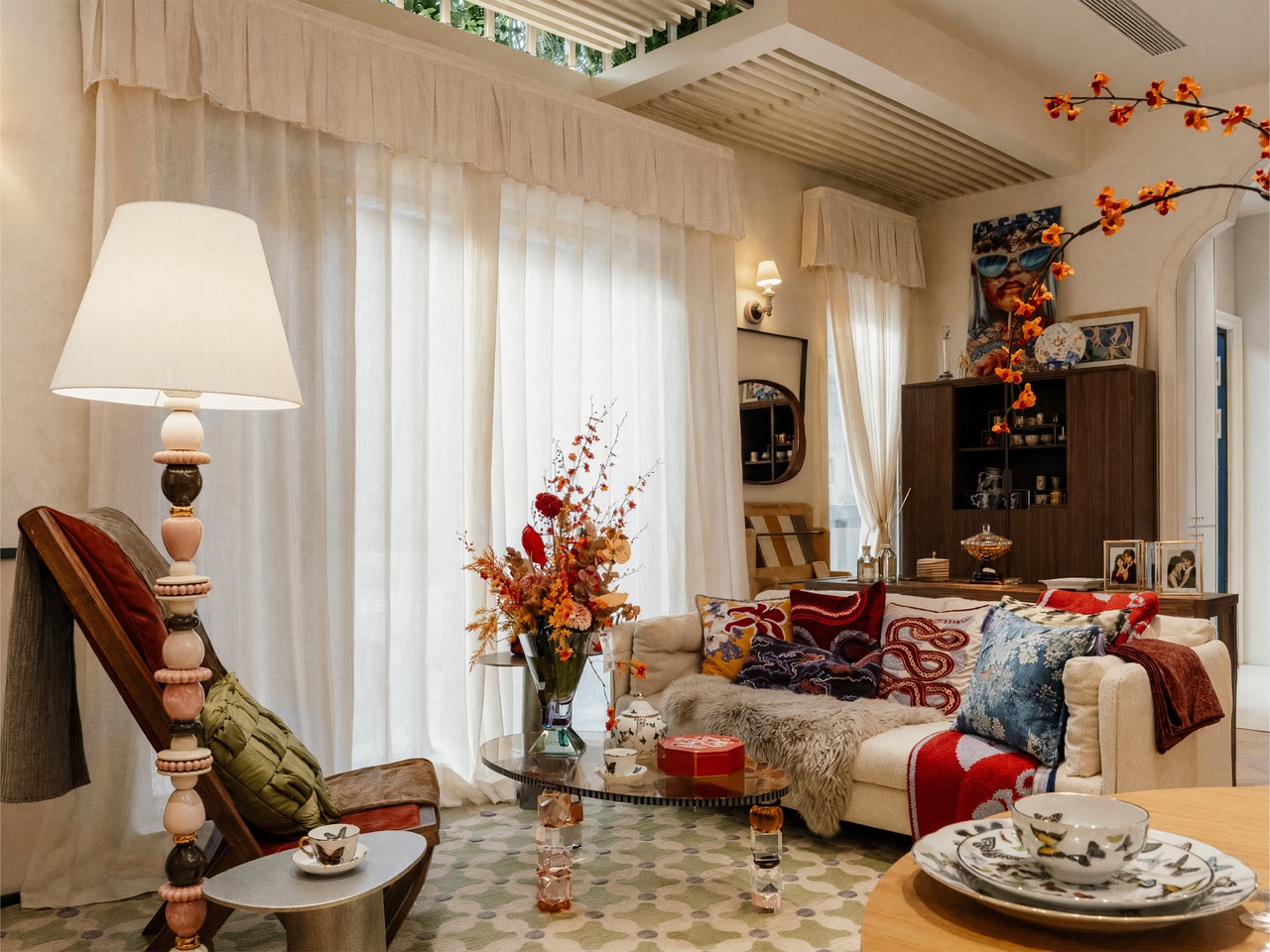
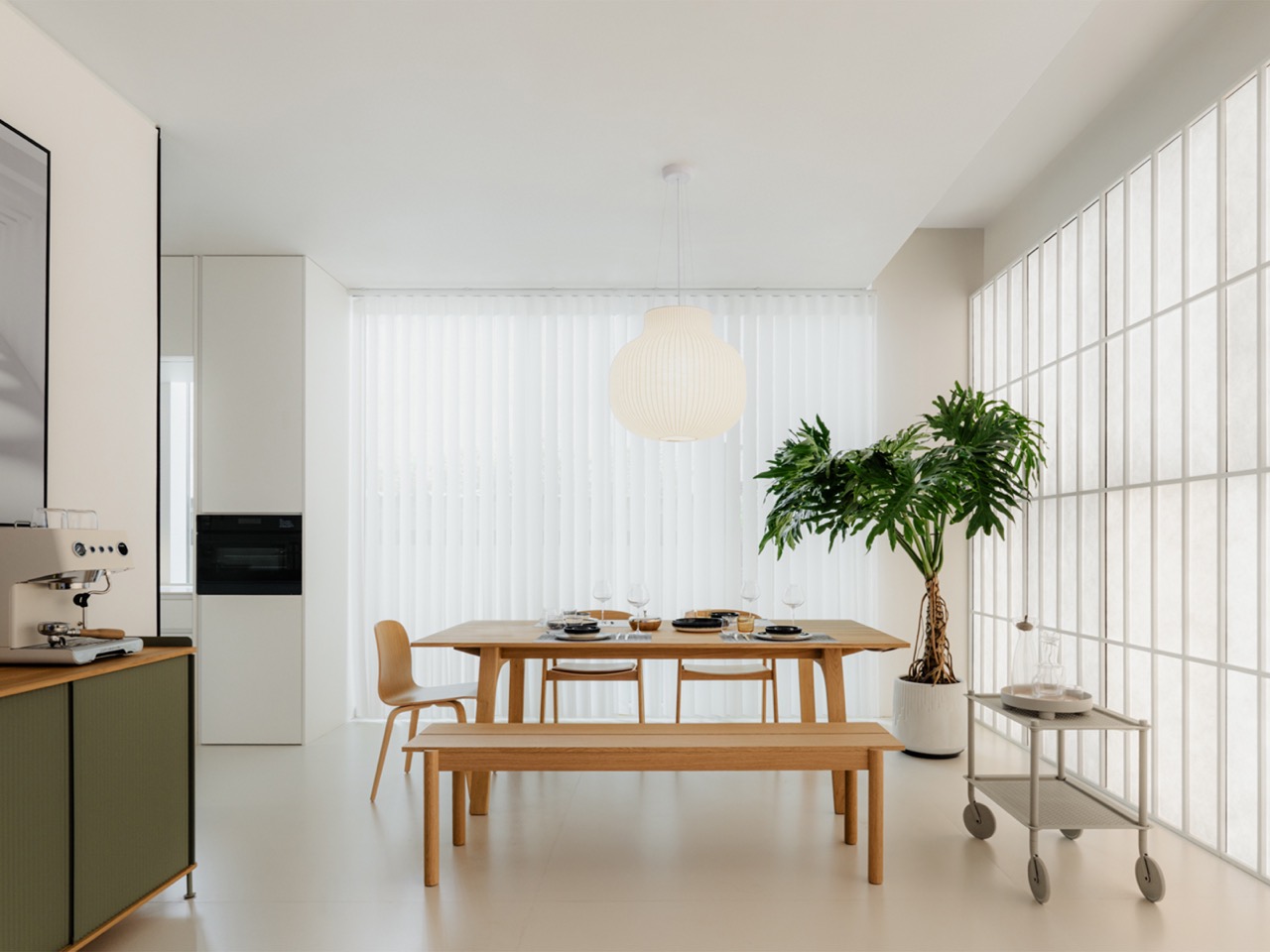
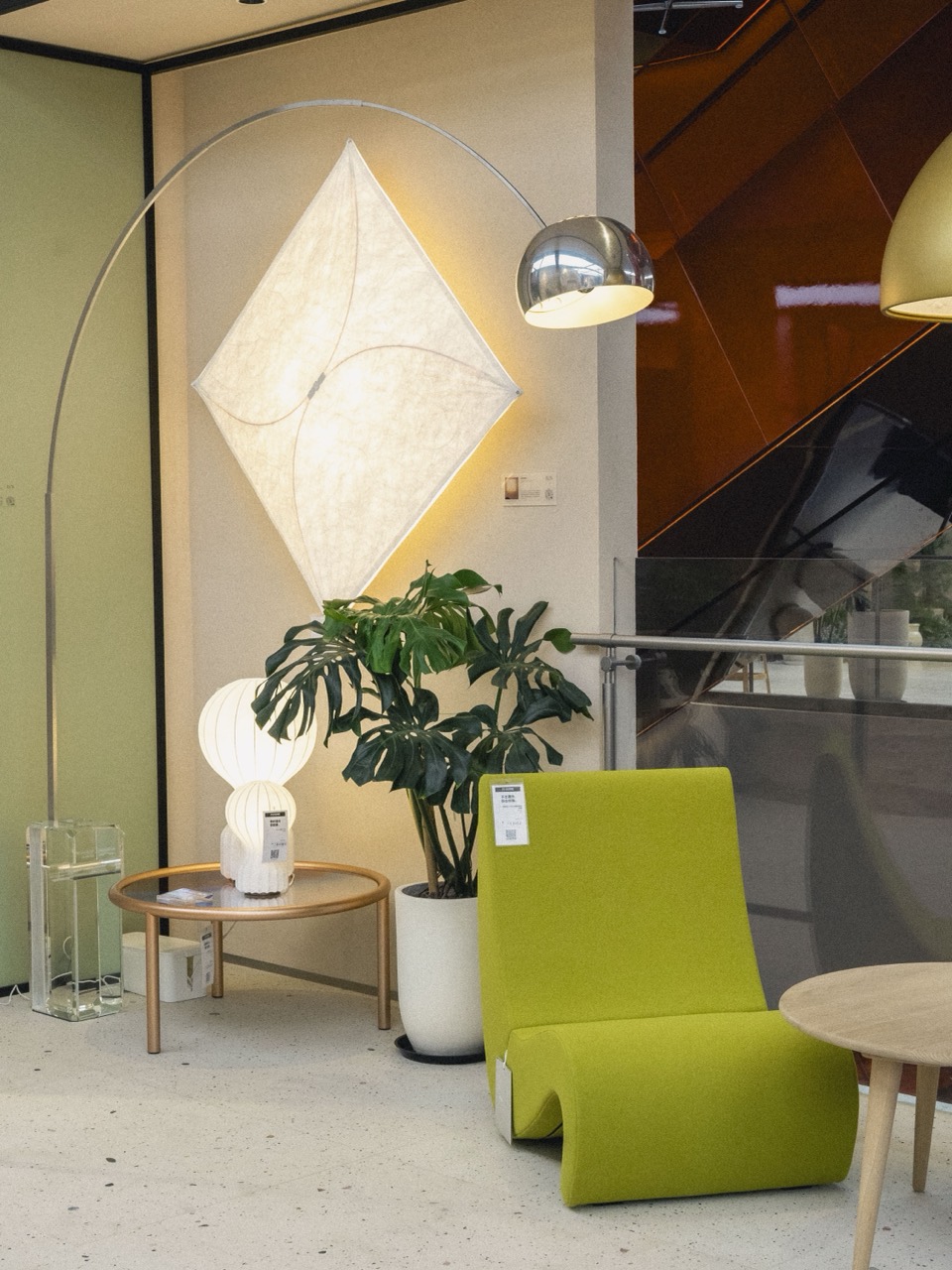
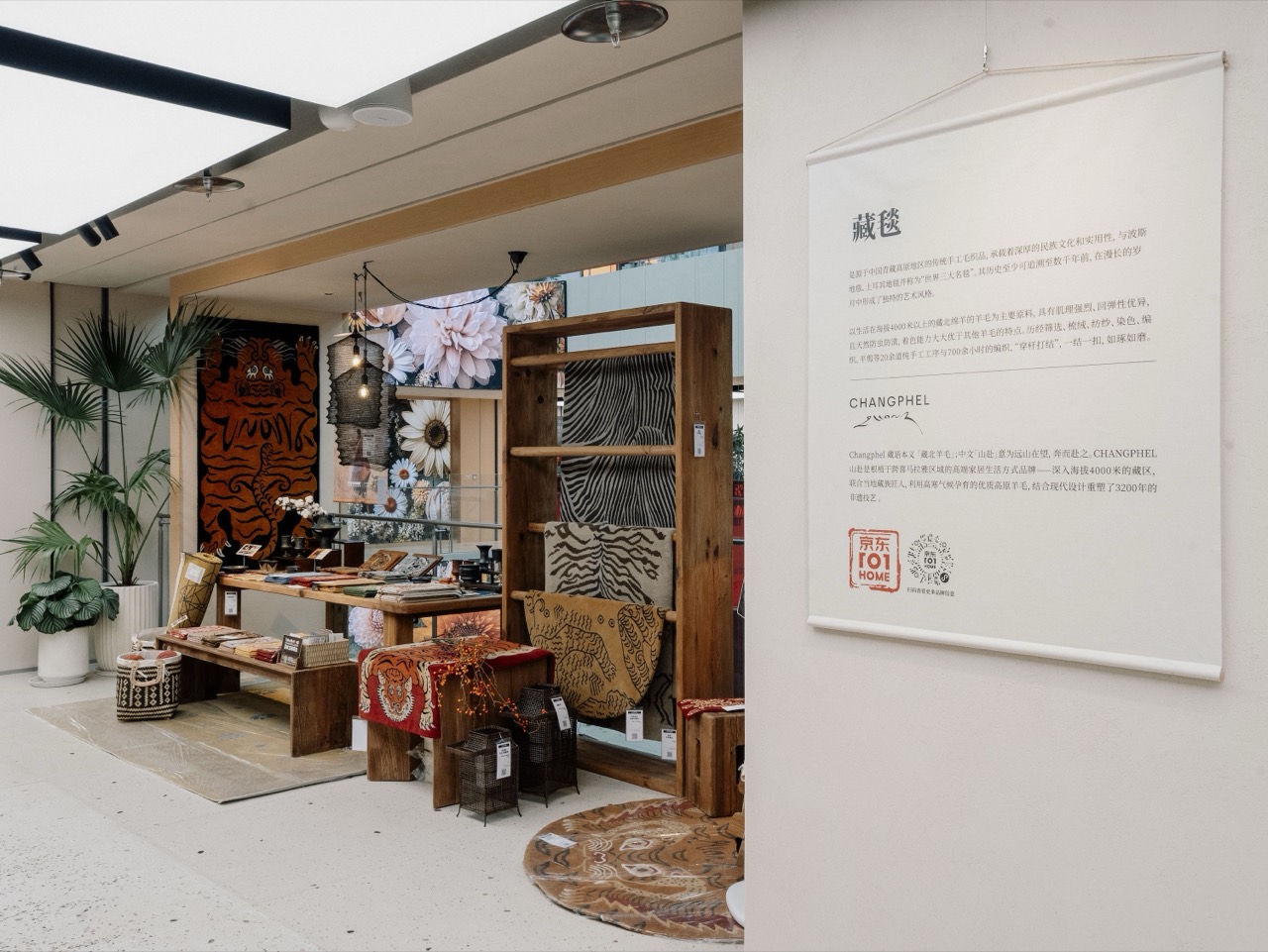
3.Inside, rooms replace shelves. JD built 33 "Dream Homes" across the floors, complete with living rooms, kitchens and dining rooms, split into 20 styles including modern, Japanese vintage, new Chinese and Nordic. 101 designers from China and abroad worked on them, and Britain's Kelly Hoppen took one. A customer who came to look at a sofa ends up seeing the curtains beside it, the teacups and the rug underfoot as one scene.
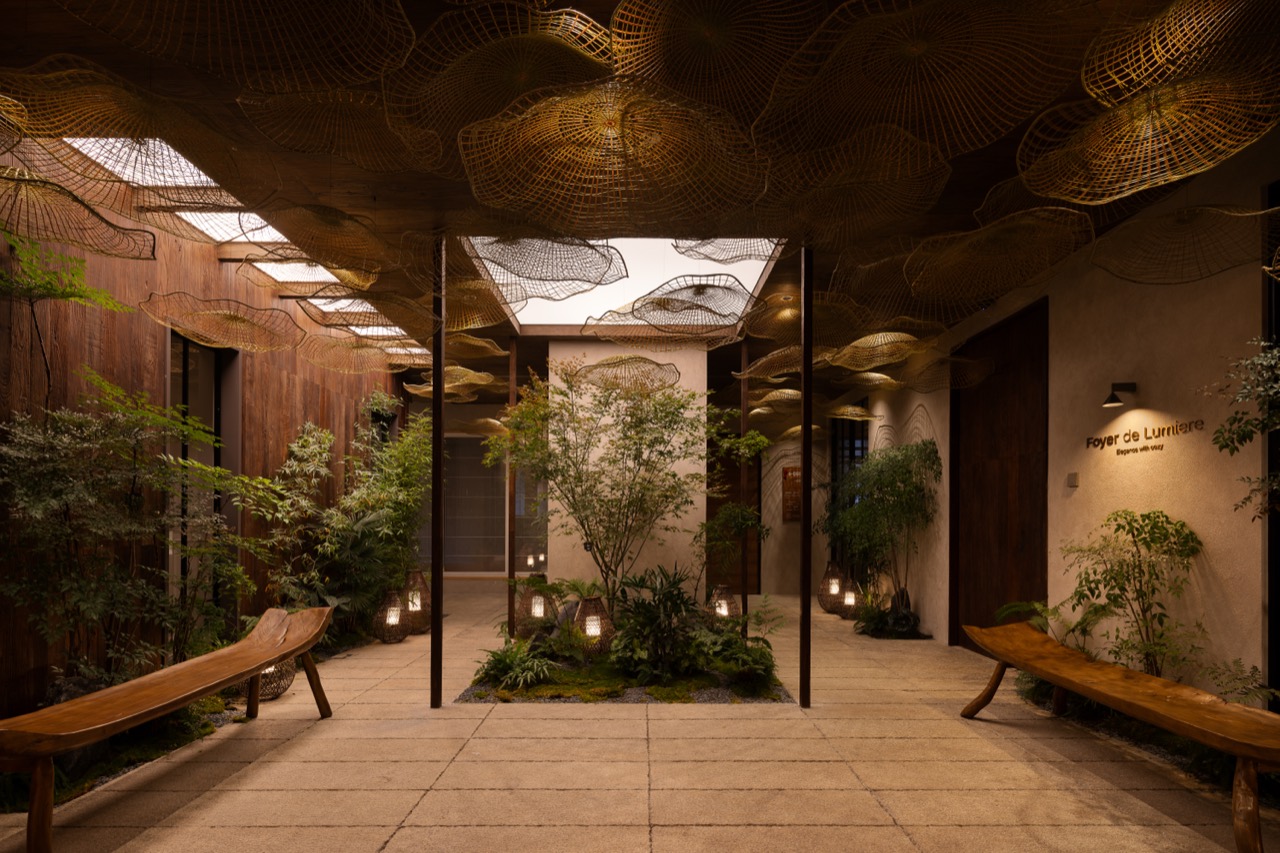
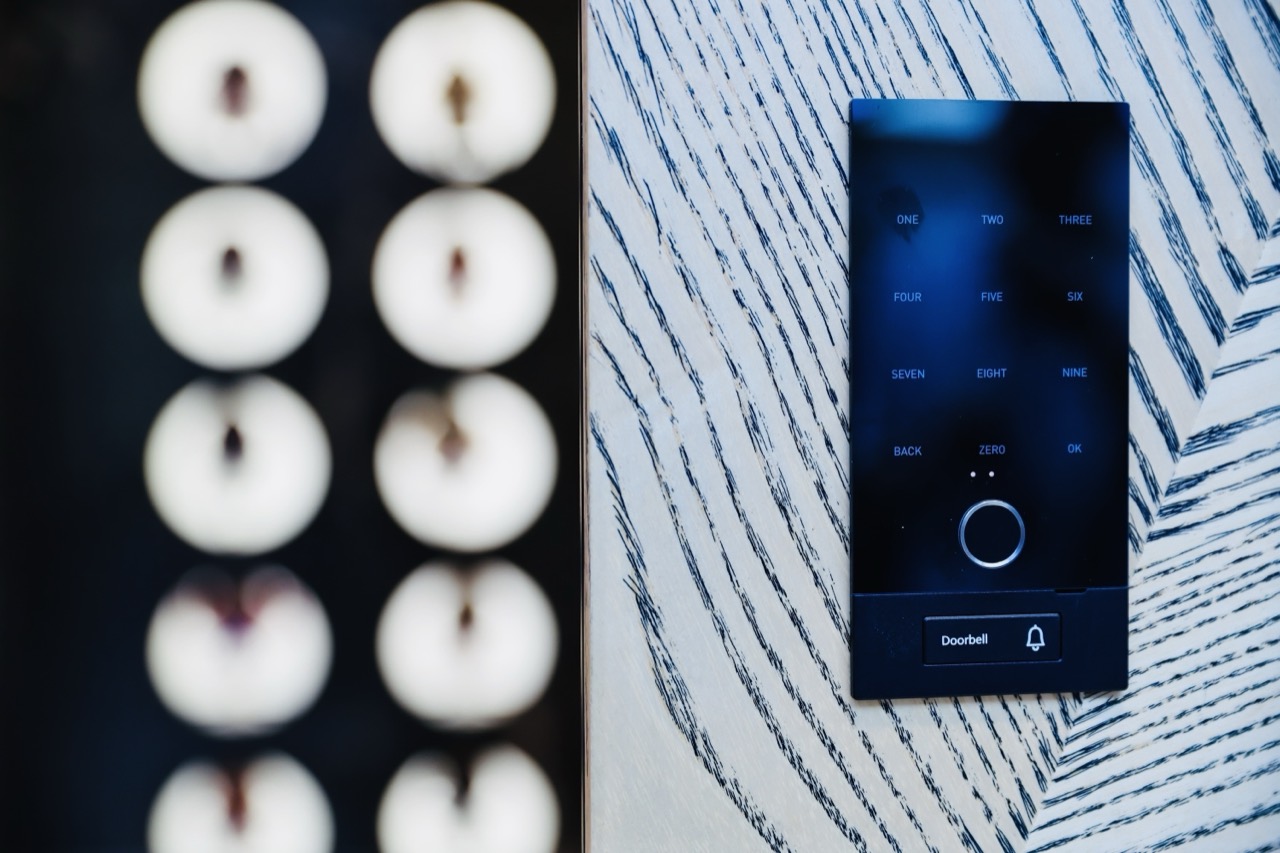
4.In one space, rattan shades woven like clouds hang in layers from the ceiling. Light passes through the mesh and drops loose shadows on the rough plaster, while a tree grows from a planter set into the stone-paved floor. Along both walls run long benches cut from logs. The entrance wall carries the words Foyer de Lumière, and the door beside it is dark wood that looks hand-worn.
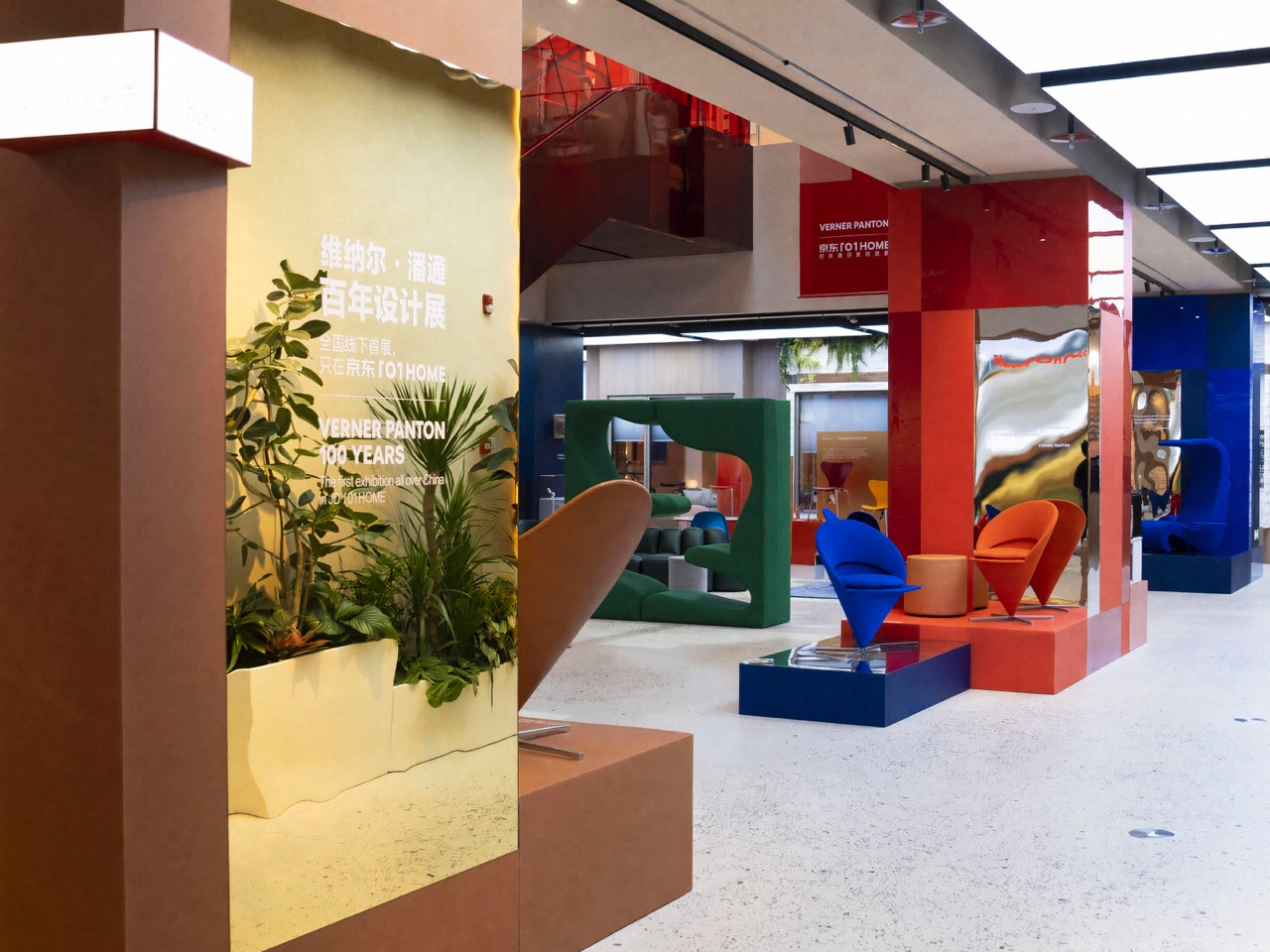
5.The central atrium is not a place to sell. For the opening, JD hung an exhibition marking 100 years since the birth of Danish designer Verner Panton, setting red and blue chairs and a green modular sofa on mirrored discs. A gold Panton Chair made for the centenary is limited to 999 pieces worldwide. The operator says the exhibition will change every quarter, and seven public artworks, cafés, a French bistro and the bookshop 卷宗书店 sit between the floors.
6.China's furniture market is heading the other way. In 2025, floor area of China's larger building-materials and furniture stores fell 11.38% from the year before. On February 2 this year IKEA shut seven stores in China at once, including Shanghai Baoshan, which was once the largest IKEA in Asia. Fewer people are driving out to big suburban stores to look at furniture.
7.Shoppers in the Jing'an Temple district sit outside that trend. The operator says the area's core customers are aged 25 to 45, and 62% of them are middle class. Because the store rises straight from a subway exit, they can walk through 33 Dream Homes without giving up a weekend for a suburban trip. It is a store that brings the job of the suburban warehouse store up to the station.
8.Products in the store connect to JD online. Imported furniture is bought and stocked by JD itself, so some items reach Shanghai customers the next day and the rest of East China within three to five days. One section houses JD's AI smart-home showroom, with household robots on display. A JD representative called the store "a mini JD" in the business daily 每日经济新闻, explaining that whatever customers see here ultimately flows back into JD's supply chain and checkout.
9.This setup flips the standard model of Chinese furniture retail. Furniture malls such as Red Star Macalline (红星美凯龙) lease space to brands and collect rent and management fees, while the brands hold the inventory. Red Star Macalline's 2025 revenue fell 15.85% in a year to RMB 6.582 billion, and occupancy across its self-run malls averaged 85.0%. JD chose the opposite: buy, stock and earn the margin.
10.In exchange, JD pays the rent. The lease terms are not public. If you apply the asking retail rent at Shanghai Centre (上海商城), next door at 1376 Nanjing West Road, to 12,000 square metres, you get about RMB 28 million to 50 million a year (about KRW 5.5 billion to 9.8 billion), an estimate. Tenants taking this much space usually sign below asking, so treat the figure as a ceiling.
11.To keep rent within 10% of sales, the store would need to sell RMB 780,000 to 1.38 million a day (estimate). At its best, the now-closed IKEA Baoshan took more than RMB 2 million a day. A downtown store far smaller than that would need to make around half of it every single day of the year. With an exhibition and cafés inside, not everyone who walks in is a buyer. So the numbers only work if this store's ledger also counts orders placed later on the app, at home, rather than at the till.
12.Displaying furniture room by room is not a new idea. IKEA has staged whole living rooms since its first store in Älmhult, Sweden, in the 1950s, and America's RH keeps shoppers longer with "Galleries" that put a restaurant on top of the furniture floors. Both are companies that make furniture selling their own goods.
13.JD makes no furniture. It buys from 1,000 other brands, holds the stock and finishes delivery the next day through its own logistics network. A logistics company is trying to erase furniture retail's oldest weakness: see it, then wait weeks. In June 2025 JD received approval to acquire the interiors company 生活家, and in March this year it launched JD Home Renovation (京东家装). 101HOME is the store at the end of that line.
14.Holding inventory means unsold goods belong to JD. The 30-odd overseas brands that entered China through this store have no proven demand yet, and stock bought outright that does not move has to be cleared at a discount. 101HOME head Billy Bao (包庆) said the company will open more stores, changing the format to suit each city and customer base. What will decide the size of the next one? Most likely, how fast inventory turns in this first store.
15.An online retailer has filled a city air terminal, empty for 14 years after the airlines left, with a 12,000-square-metre furniture store, and by neighbouring asking rents the rent ceiling is a little over RMB 50 million a year (estimate). Trying the same in Korea, inventory is the first wall. Furniture on Korean online platforms is usually stocked and shipped by individual marketplace sellers, so next-day delivery of imported furniture would require the platform to buy outright and secure a warehouse first. Finding a building by a station on a main road willing to hand over 3,600 pyeong in one piece comes after that.