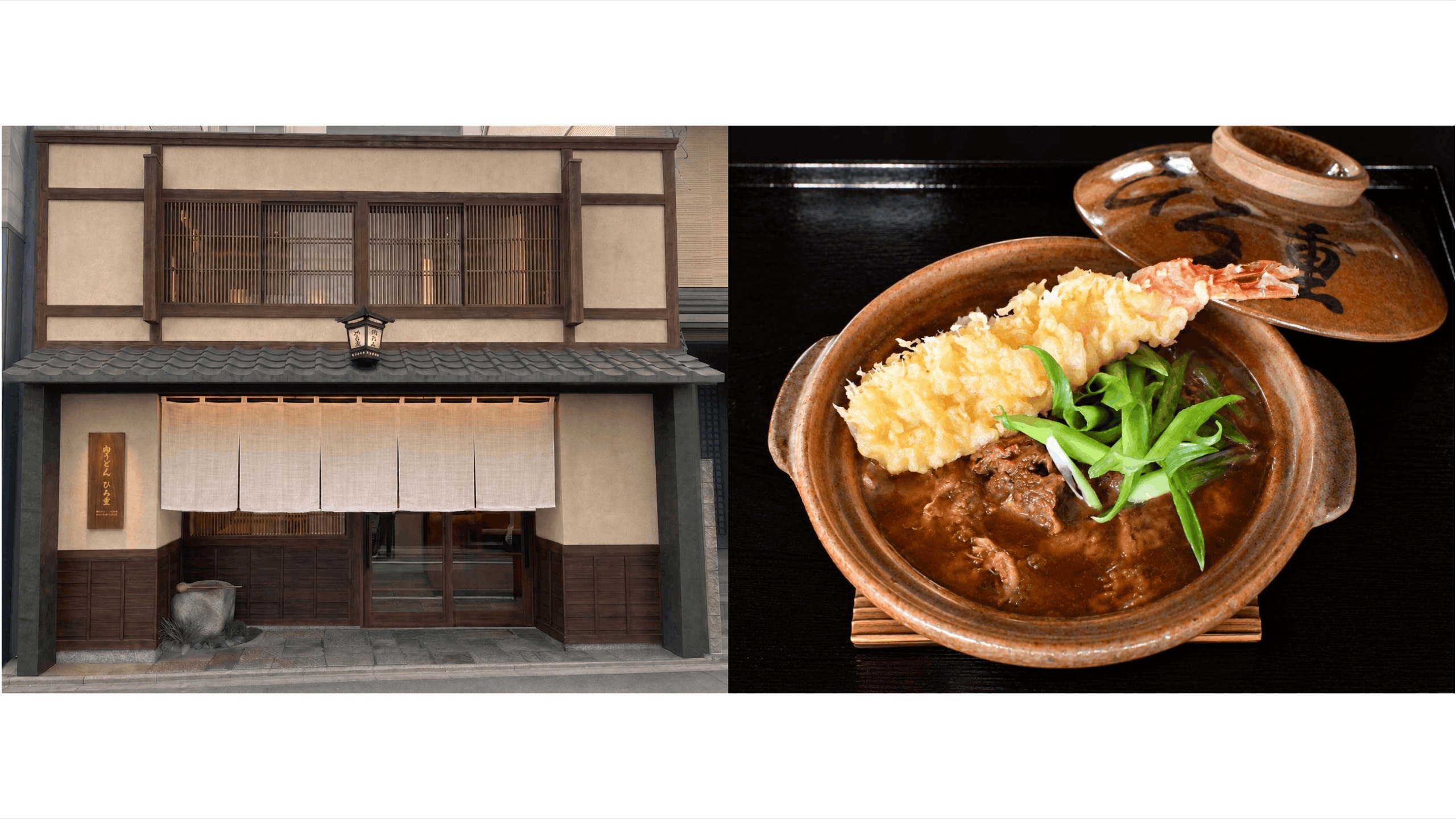
A company that runs four sukiyaki houses in central Kyoto has opened an udon shop as its fifth outlet. Every bowl carries A5 wagyu, and the most expensive one costs 3,380 yen.
1.On October 1, 2026, Niku Udon Hiroshige opened on Gokomachi-dori in Nakagyo Ward, Kyoto, a short walk south of Oike. It is three minutes on foot from Kyoto Shiyakusho-mae subway station. The 28 seats on the ground floor are all there is, and the shop runs from 11 a.m. to 8 p.m. without an afternoon break. No regular closing day, all year round.
2.The company behind it is the sukiyaki specialist Niku no Hiroshige. It started in Muromachi, opened a second shop in Nishiki Market, and in June 2024 restored a 180-year-old machiya into the 86-seat Takatsuji shop. The fourth, Oikeno, opened in April 2025 inside an old Taisho-era residence with 72 seats. The fifth shop is the first one without a sukiyaki pot.
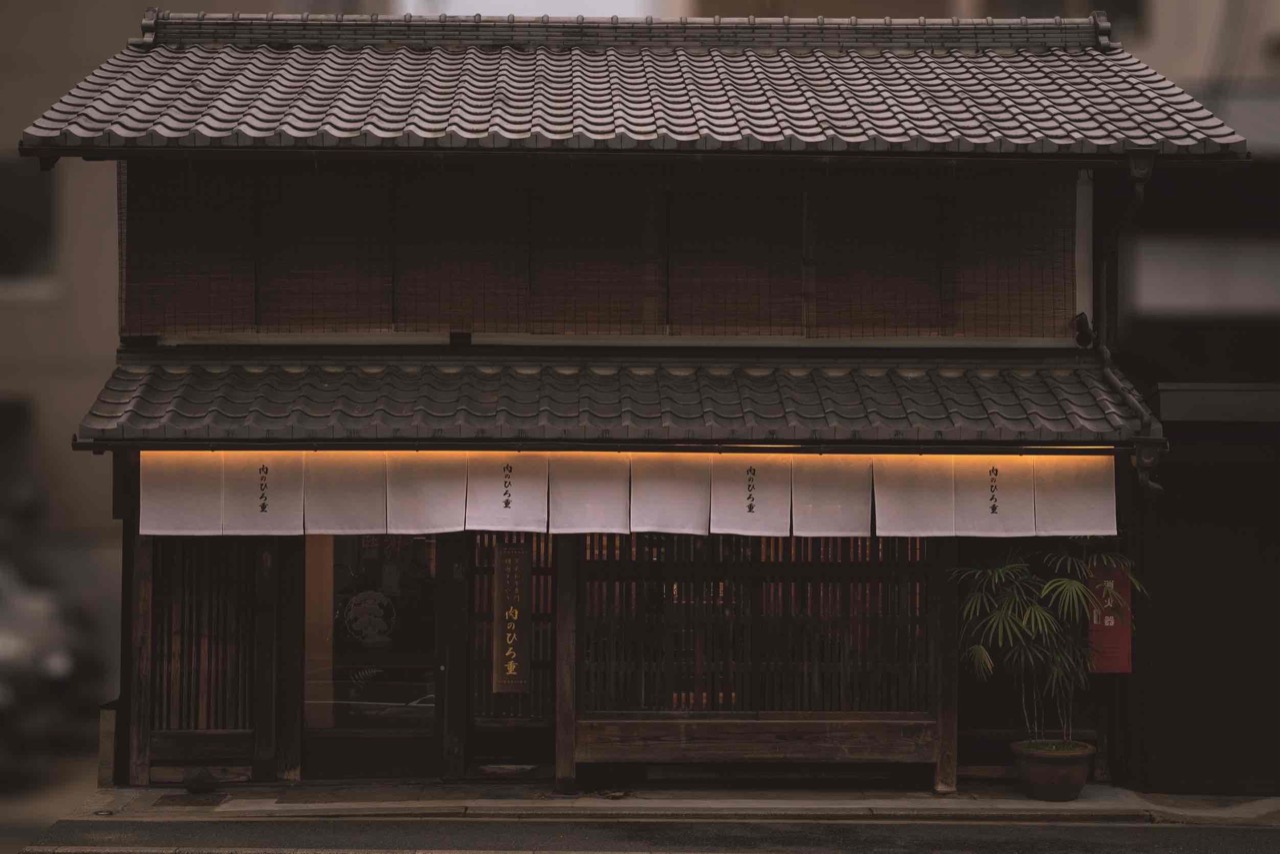
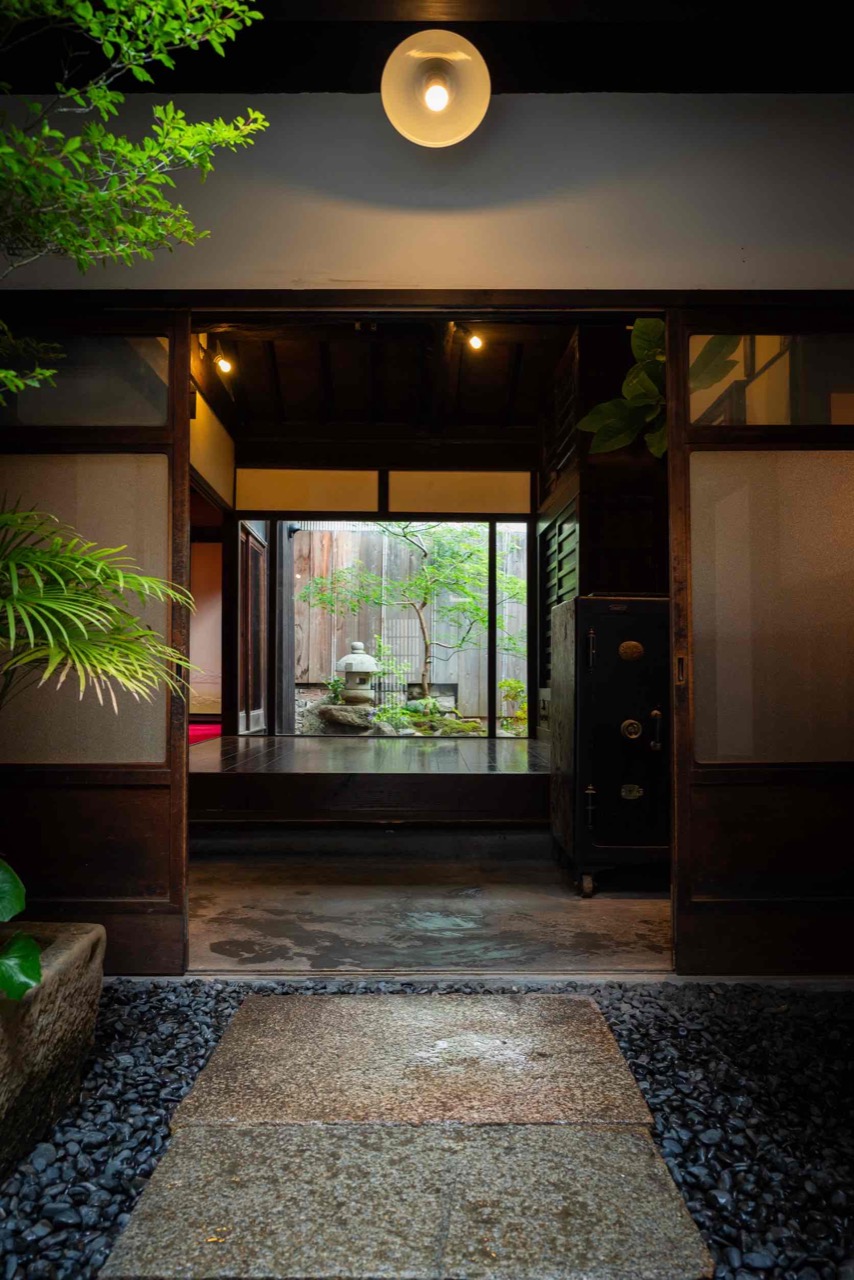
3.The udon shop is a machiya too. A linen noren and a brush-lettered sign hang at the front, a lantern sits beside the lattice door. Black tiles on the roof, and only two colors outside, ink black and natural wood, so the house sinks back among its neighbors on the street.
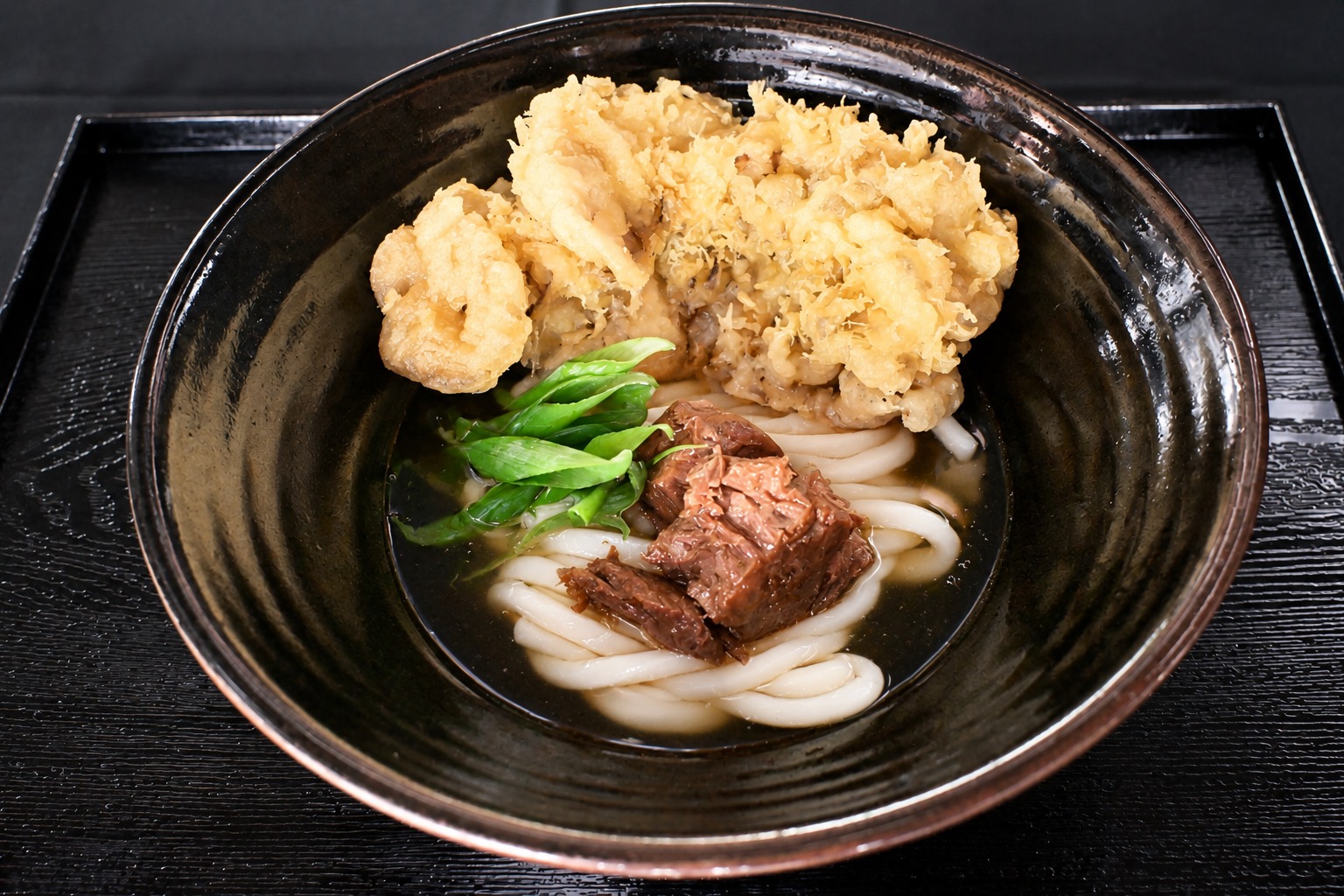
4.There are five kinds of udon. In broth: Ichiban Dashi udon at 2,000 yen and maitake tempura udon at 2,780 yen. In curry: Kujo negi curry udon at 2,480 yen, seared cheese curry udon at 3,080 yen and jumbo shrimp tempura curry udon at 3,380 yen. All prices exclude tax, and three of the five are curry.
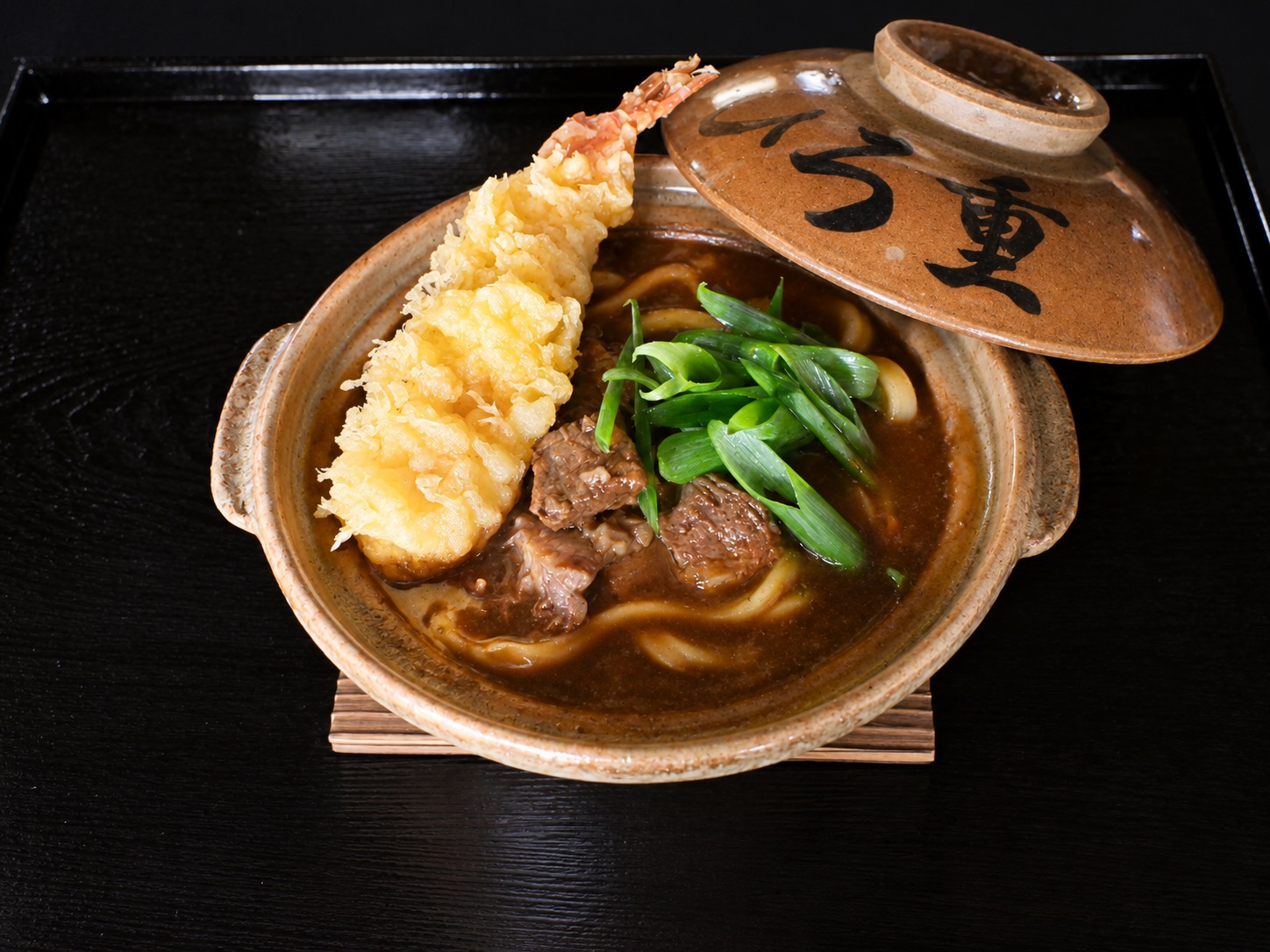
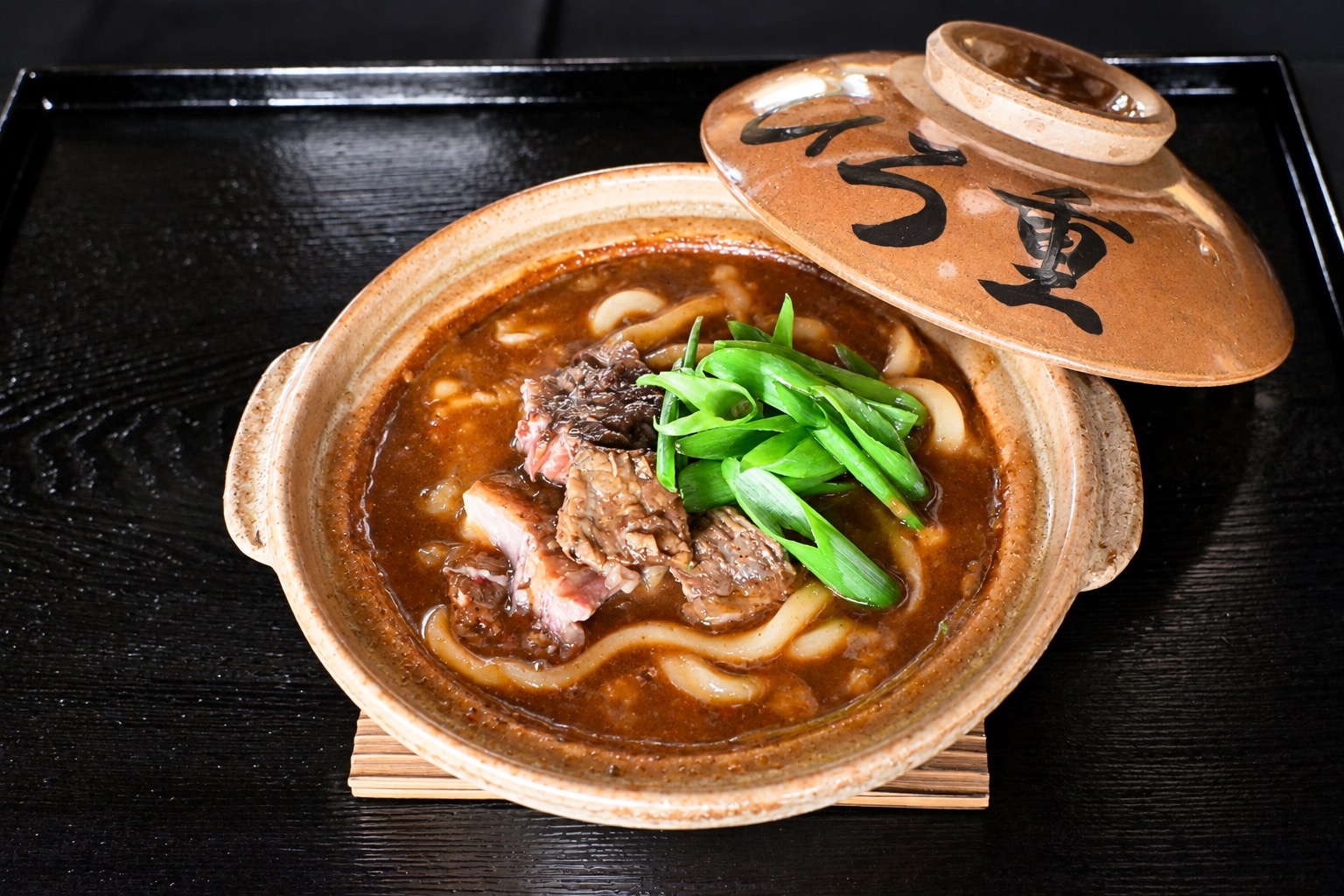
5.The beef is not thin sukiyaki slices but chunks. A5 wagyu is cooked slowly in a pressure cooker until it pulls apart along the grain at the touch of a chopstick. The curry is built on first-press dashi of kombu and katsuobushi, layered with the liquid the beef was cooked in. The beef stock adds sweetness and fat to the curry, and the dashi takes some of that weight off. The bowl is a clay donabe stamped with the shop name, so the steam stays trapped until the lid comes off.
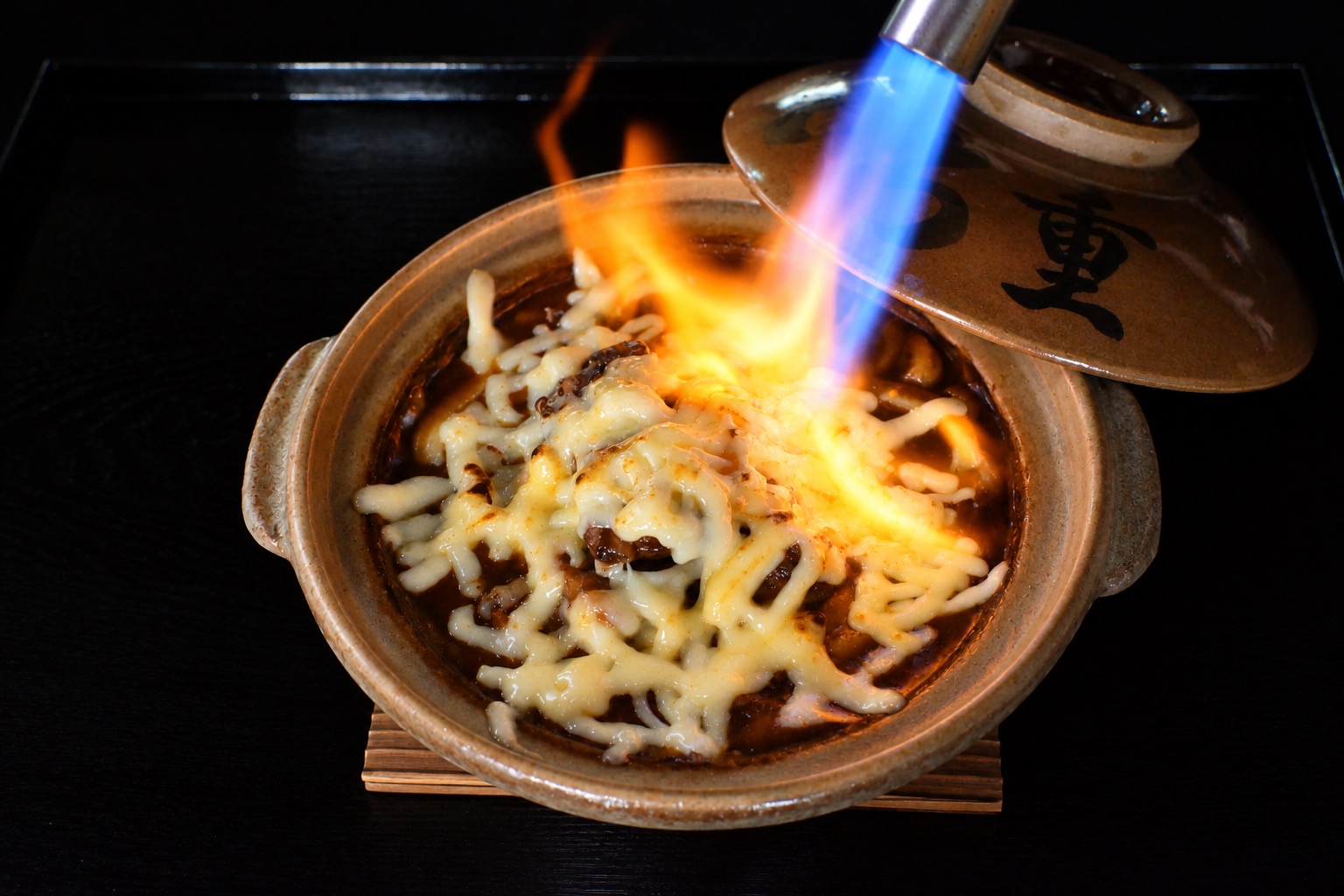
6.The cheese curry udon arrives with its cheese seared under a blowtorch. The Ichiban Dashi udon drops the curry and sets the braised beef in clear broth. Tea is Uji sencha at 800 yen and gyokuro at 1,200 yen. Each guest gets their own small kyusu teapot and follows the flavor as it shifts over a second and third steeping.
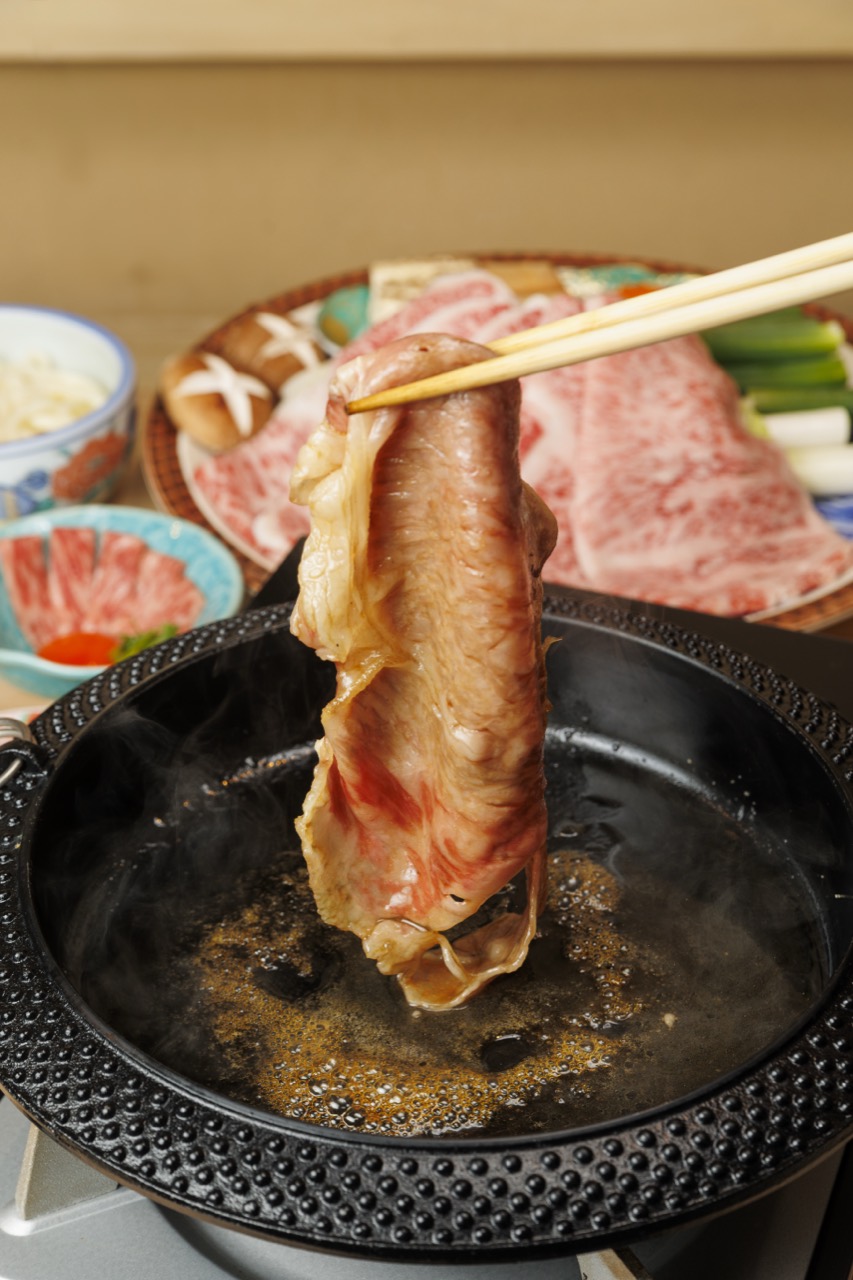
7.Udon was already on this company's menu. The sukiyaki courses at Takatsuji come in two tiers, 8,000 yen (8,800 yen with tax) and 10,000 yen per person, and both run through braised green onion, wagyu yukhoe, sukiyaki and vegetables before closing, in the shime slot, with "Hiroshige's udon." This opening takes the last plate of the course and builds a whole shop around it.
8.Takatsuji opens at 5 p.m. and closes at 10. Oikeno serves lunch, but its courses start at 15,000 yen. Tourists walk Kyoto in daylight, and this company had almost nowhere to sell its wagyu during those hours. The guests the operator names are visitors to Kyoto, and the hours it targets sit between a late lunch and an early dinner. Guests who walk in without a booking, eat one bowl and leave.
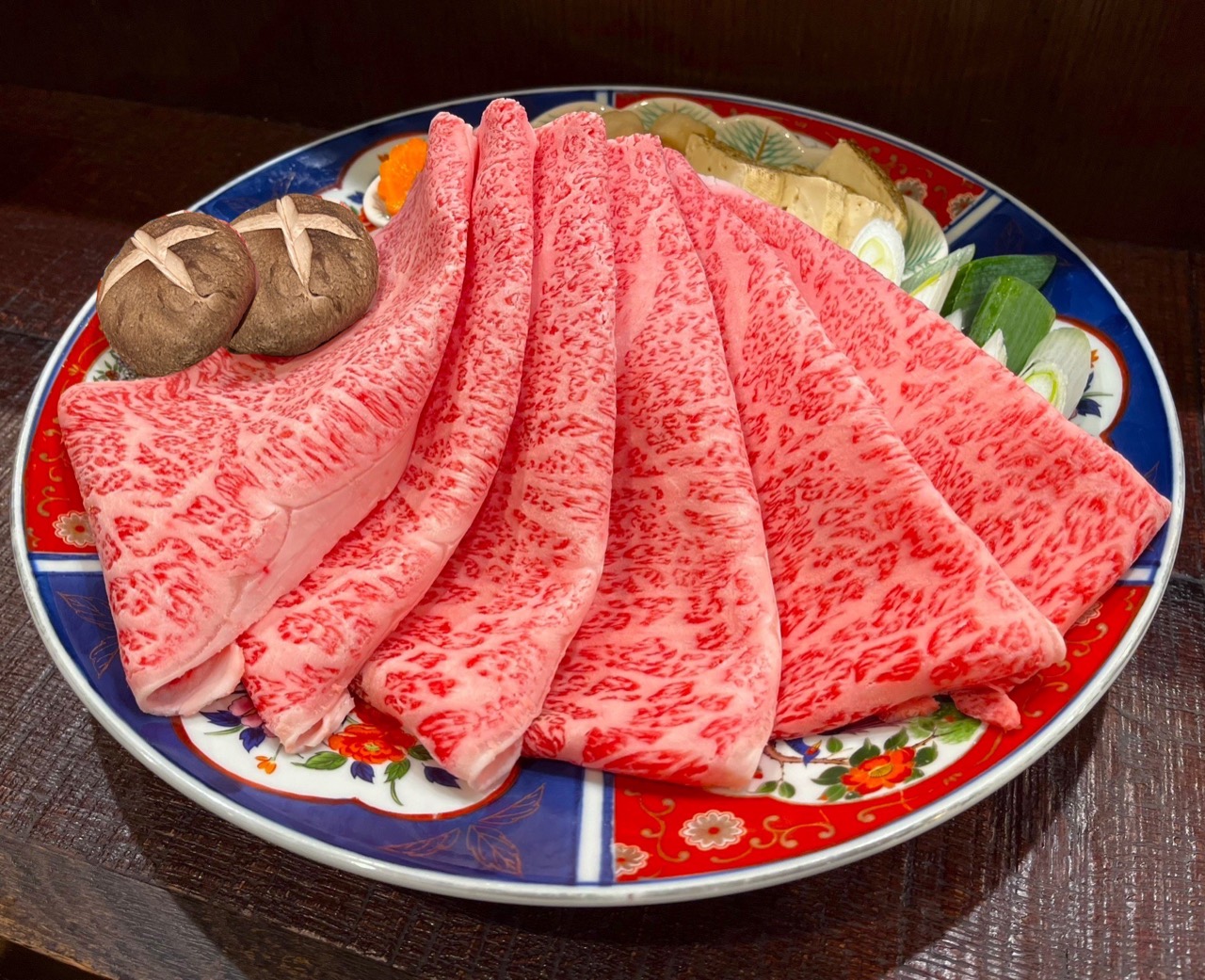
9.Line the prices up and the udon finds its place. The cheapest bowl, Ichiban Dashi udon at 2,000 yen, is 1/7.5 of Oikeno's cheapest course at 15,000 yen. The same "A5 wagyu" label now has a lower door. A neighborhood kitsune udon in Kyoto costs under 1,000 yen, so as udon goes, this is two to three times the price.
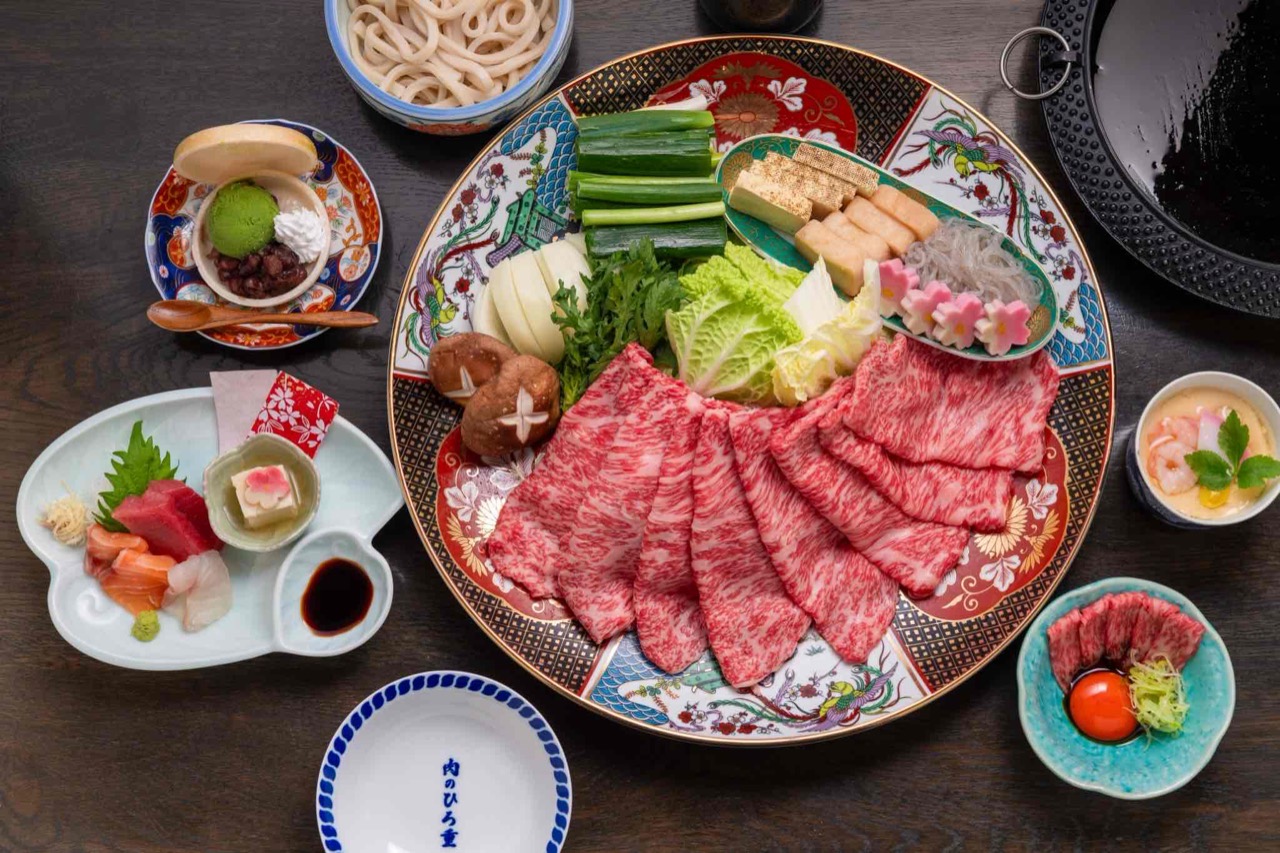
10.We put spending per guest at about 3,300 yen, mixing bowls with and without an added tempura or tea (estimate). If an udon meal keeps a seat for 35 minutes, 28 seats turn 4.6 times a day for 130 guests. Open 30 days without a break, that comes to about 12.9 million yen a month.
11.The cost side is light. Pressure braising suits cuts that need long cooking to loosen, not sirloin for slicing, and those cuts run about 5,000 yen per kilo even at A5 (estimate). At 60 grams a bowl, the beef costs 300 yen. Shrimp tempura is the expensive ingredient, but it is also sold on its own for 1,380 yen. We set the food cost ratio at 25%. Gyokuro at 1,200 yen costs little more than leaves and hot water, which makes it the highest-margin item in the shop (estimate).
12.In the kitchen, a bowl is done once the noodles are boiled, the broth poured and the braise laid on top. It takes fewer hands than a sukiyaki course that sends out plate after plate from the braised onion to the shime, so we assumed about six staff on shift at a time across nine unbroken hours and set labor at 4 million yen. Take off 0.7 million yen in rent and 1.4 million yen in utilities, card fees and supplies, and 3.58 million yen remains. About 28% of sales.
13.This table leans on one kind of guest. For people who live in Kyoto, 2,000-yen udon is not an everyday price, and the operator aimed at travelers from the start. If the yen or the number of overseas visitors moves, 130 guests a day moves with it. The sukiyaki houses have a reservation book. The udon shop depends on whoever passes the door.
14.Niku udon has always been a working-class dish in Kansai. At Chitose in Namba, Osaka, the comedian Hanaki Kyo, nursing a hangover, asked for niku udon without the noodles, and the order became a menu item of its own, nikusui. Beef, dashi and noodles have always traveled together at a low price. Hiroshige put A5 grade on that combination and doubled or tripled the price.
15.President Takahiro Kuromatsu says the shop that knows the best way to eat wagyu is the one that has handled wagyu all along. The word the operator attached to this udon is shimatsu, the Kyoto merchant habit of wasting nothing. The price tag is high, but the math beneath it is shimatsu. The stock left from cooking the beef becomes curry, and cuts that would not make a sukiyaki platter become the braise (cuts are an estimate).
16.A Kyoto sukiyaki company took the udon off the end of its course and opened a 28-seat shop that trades in daylight. If the estimate holds, those 28 seats sell 12.9 million yen a month. Korean hanwoo barbecue houses already sell galbitang and yukhoe bibimbap at lunch, but charging 20,000 won for a bowl of noodles takes a street where tourists walk during the day. On streets like that, ground-floor rent claims the money first.