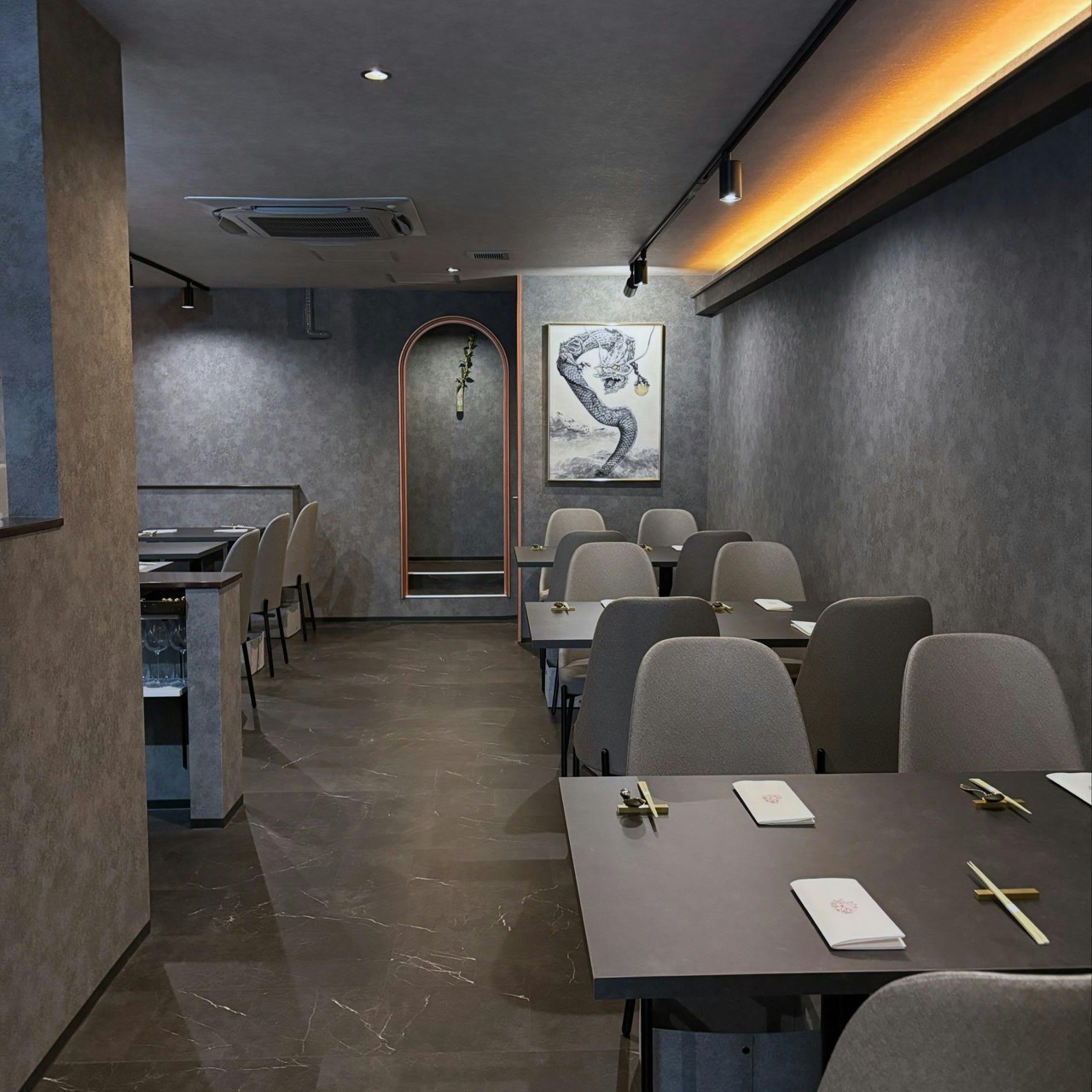
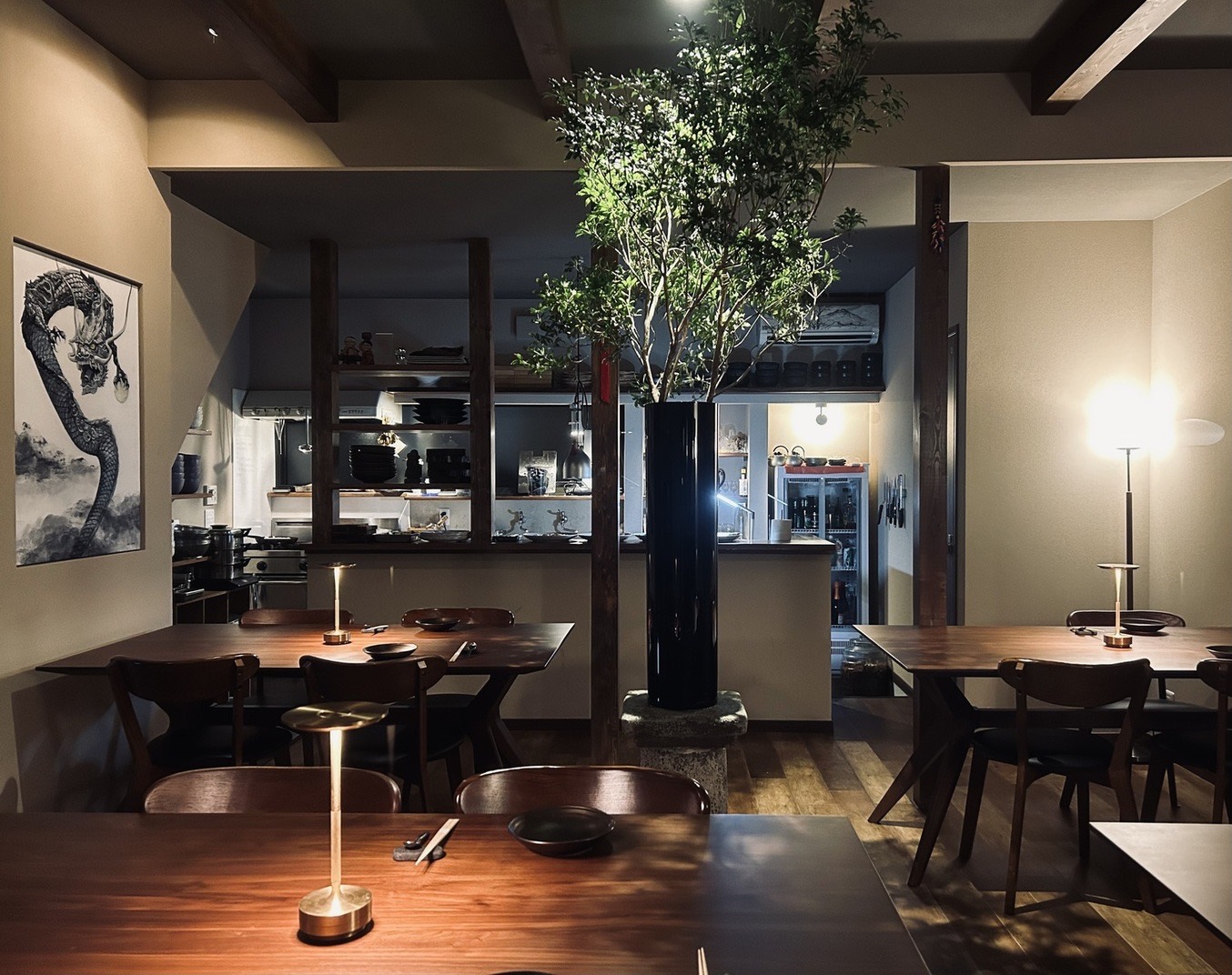
A Korean course with 18 seatsGround floor of the F One Building, 5-16-15 Nishitenma, Kita ward, Osaka. It reopened at this site on September 22, 2025, with 18 seats and no private room. The seasonal dinner course is 18,000 yen with all alcoholic and non-alcoholic drinks included. ⓒIkyu.com Restaurant
Daily dining
Mugunfa in Osaka: a Korean tasting menu that put the drinks inside the price
2026.07.28
On July 23, 2026, the MICHELIN Guide gave an early release of twelve new restaurants in Kyoto and Osaka. One of the six in Osaka serves Korean food, and it is called Mugunfa. The dinner course is 18,000 yen, and drinks come with it without limit. It is a price list that pushed the place where fine dining draws a large share of its margin entirely inside the course price. What matters here is not the Michelin mark but the decision to cut the bill down to one line.
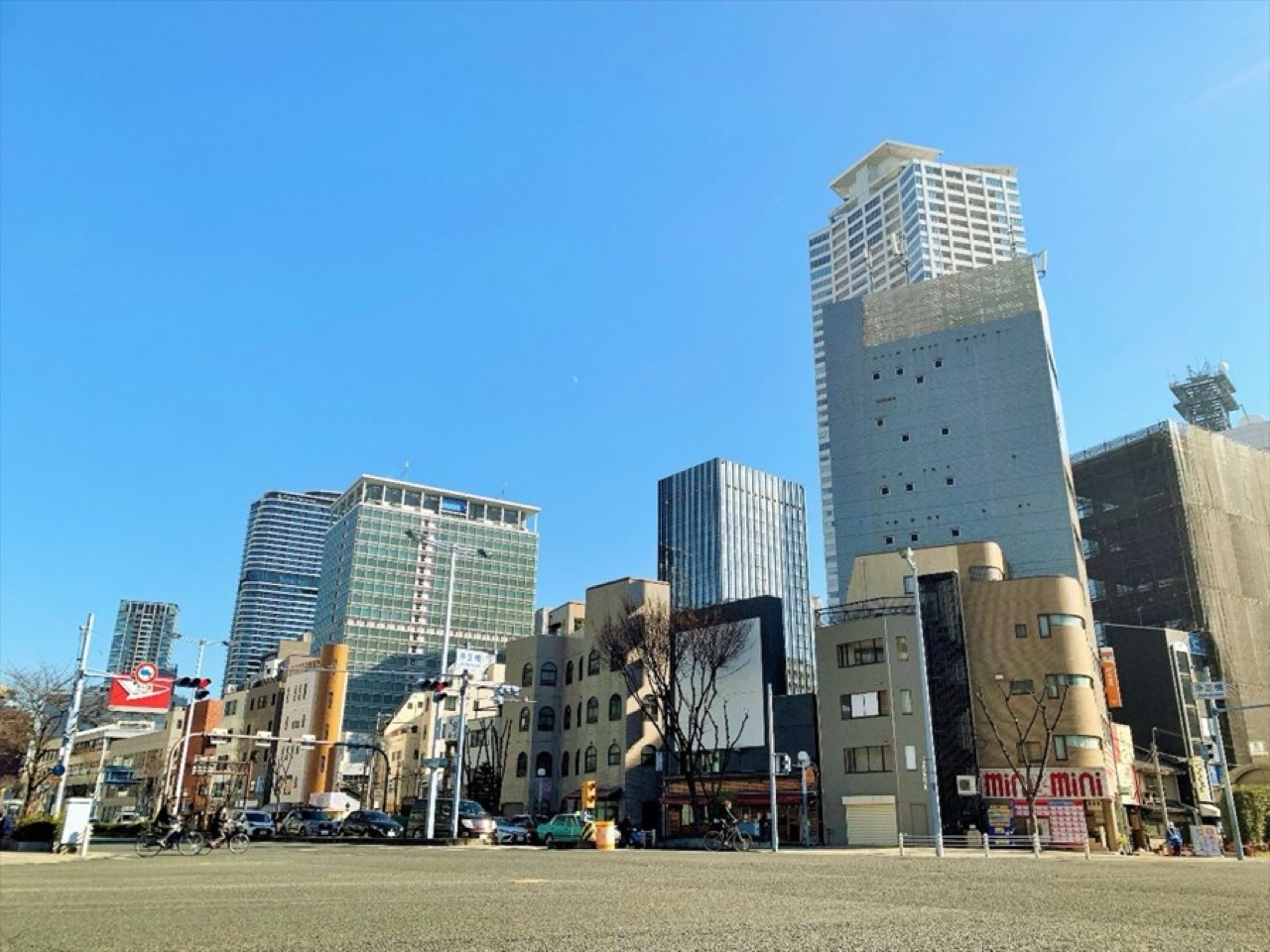
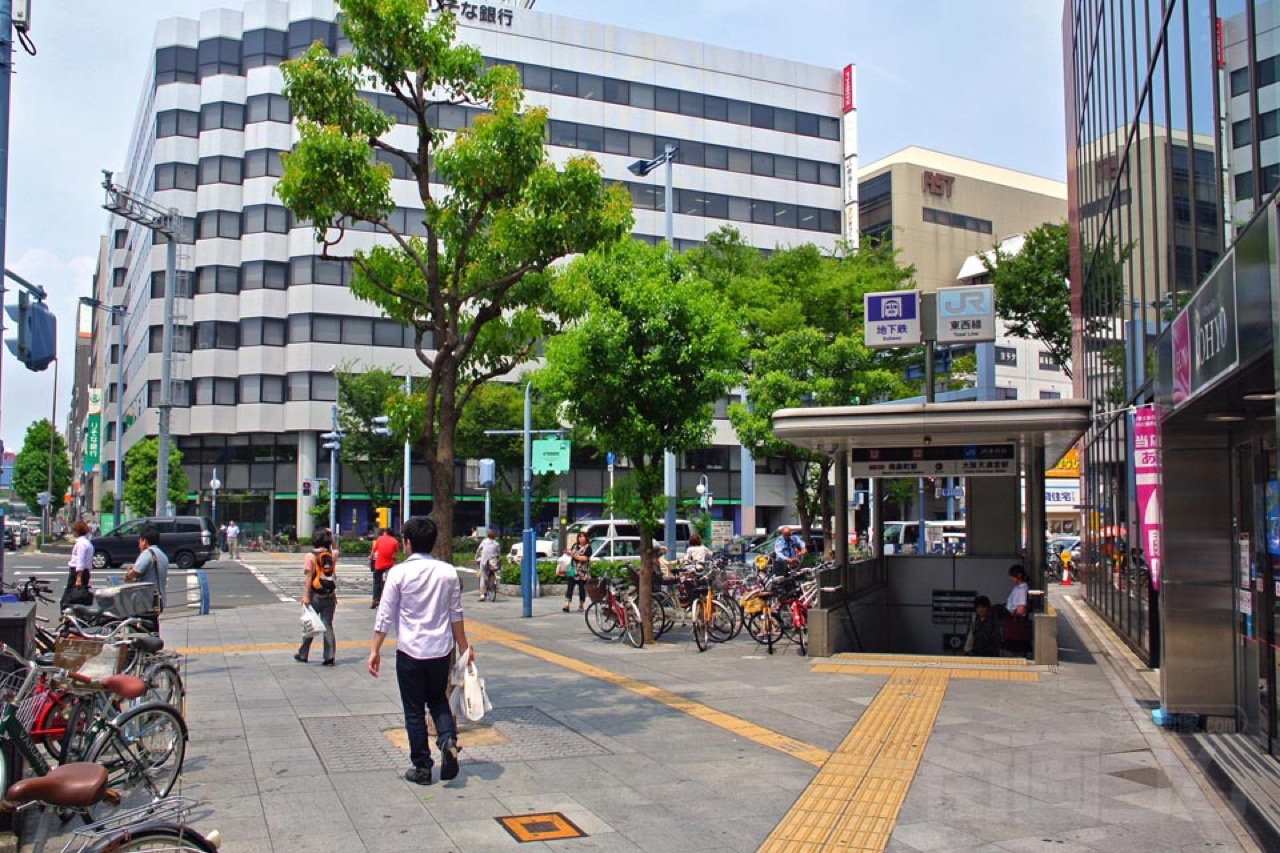
1.Start with the site. 5-16-15 Nishitenma, Kita ward, Osaka, on the ground floor of the F One Building, five minutes on foot from Minamimorimachi station. The format is modern Korean. The seasonal dinner course is 18,000 yen with all alcoholic and non-alcoholic drinks included, and the lunch course is listed separately at 8,800 yen. At 9.5 won to the yen that is KRW 171,000 and KRW 84,000.
2.The current site opened on September 22, 2025. 18 seats, no private room, closed Sundays, trading from 17:10 to 22:00 with last orders for food at 19:30. Its Tabelog score is 3.74 across 73 reviews, and it is listed in the Asian and ethnic WEST section of the Hyakumeiten 2026.
3.The previous site was in the same ward but different in character. A residential area at 3-1-15 Oyodonaka, ten to fifteen minutes on foot from JR Fukushima station, 15 seats. It took no cards and had no parking. Reservations did not open continuously, and cancellations were posted on Instagram when they appeared, visitor accounts record. The move added three seats and brought in card payment.
4.The first thing that catches at the new site is the opening time of 17:10. An awkward ten minutes on the clock usually signals a schedule, and set against last orders for food at 19:30 it makes a two-sitting arrangement (estimated). A structure where an 18-seat course restaurant seats thirty-six people in an evening.
A site fifteen minutes from the stationThe previous restaurant was in a residential area of Oyodonaka, Kita ward. Ten to fifteen minutes on foot from JR Fukushima station, 15 seats, no cards, no parking. Nobody walked in off the street, and reservations opened only through cancellation notices on Instagram. ⓒMonthly 48
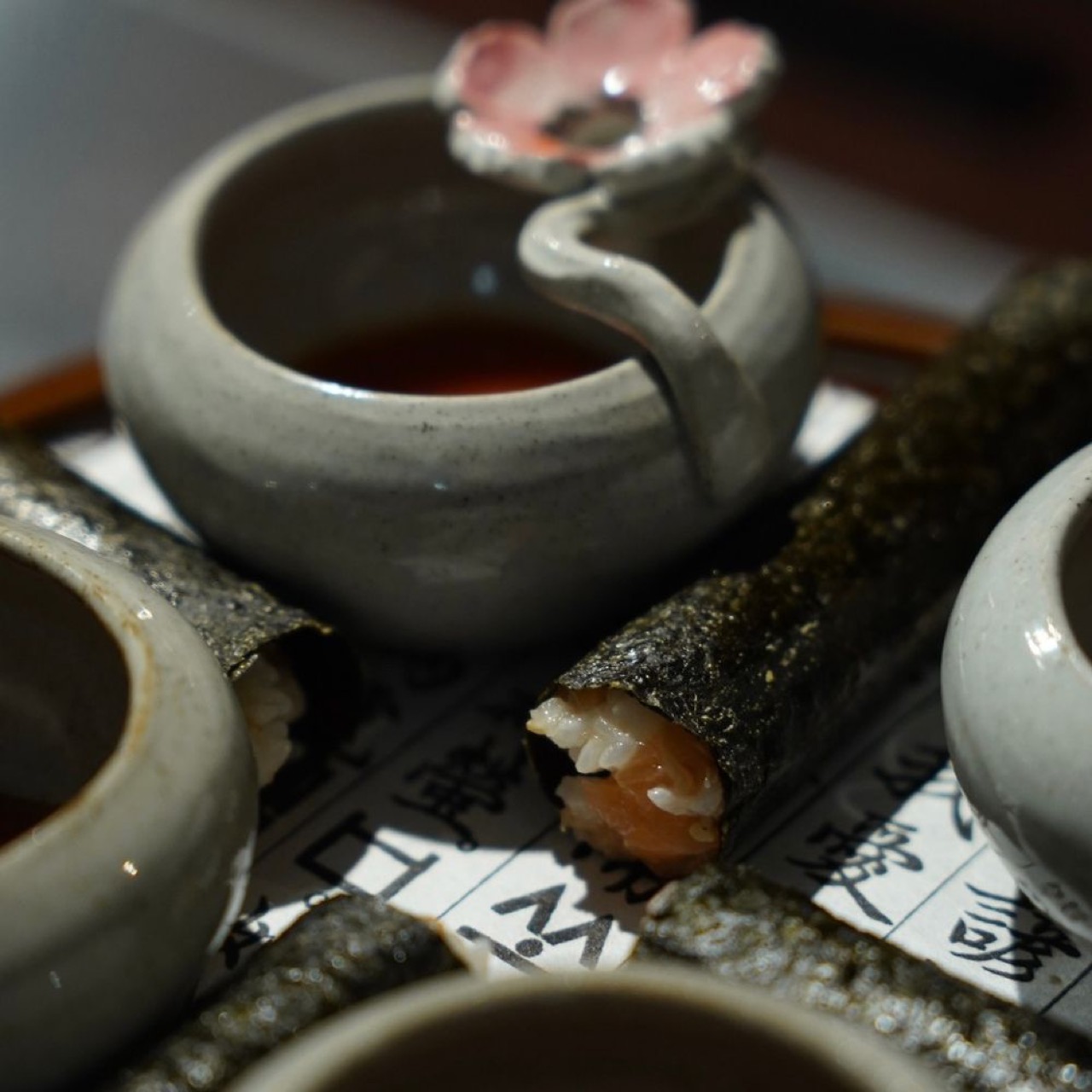
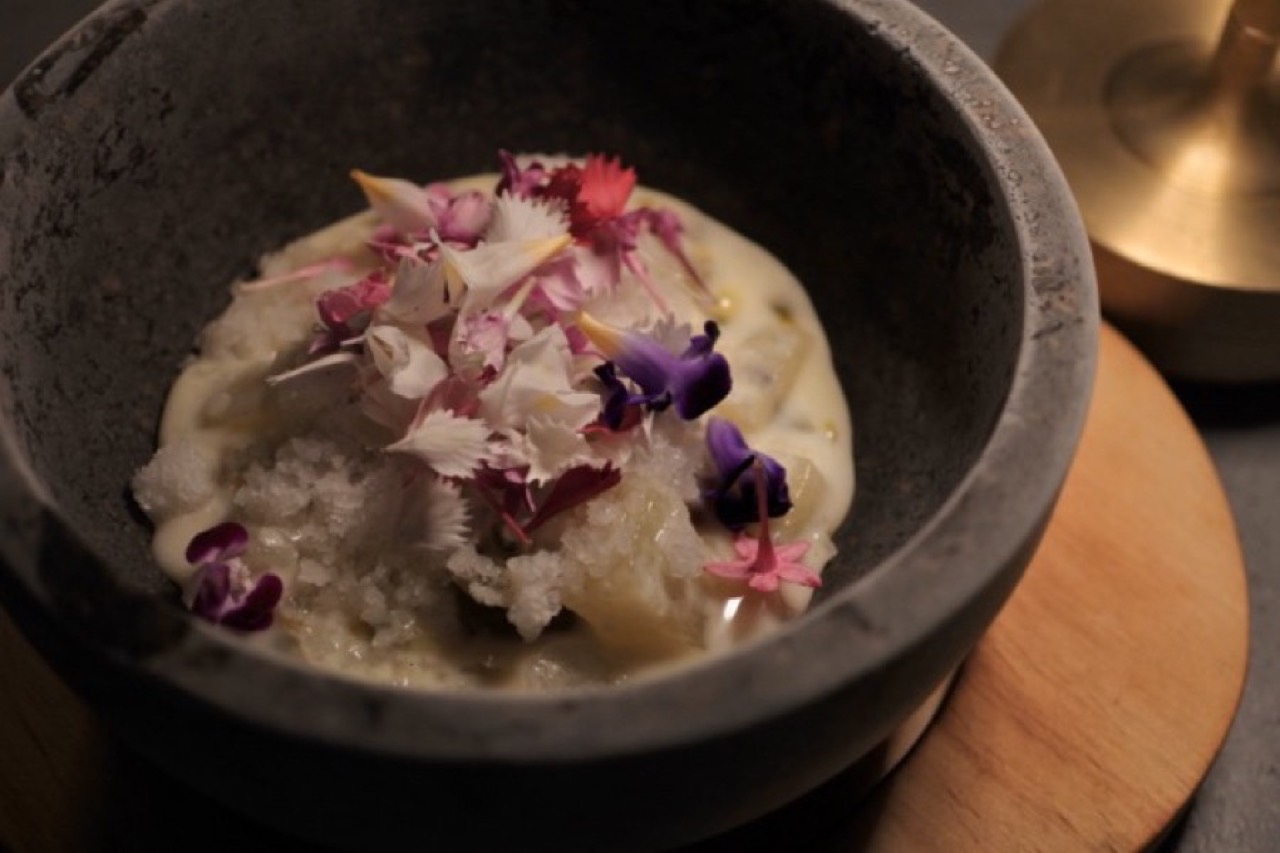
5.The course opens with porridge, visitor accounts report. Cream cheese over yakgwa, gimbap rolled with crab and avocado, tofu with a pine nut sauce, a milt pancake with a green laver soup, roast duck with a new onion paste and kimchi, noodles drawn from prawn, and at the end a pistachio ice cream monaka with strawberry paste. The examples the Michelin write-up gives are gimbap fried as a crepe and a plate of caviar under kiwi sauce.
6.The green laver soup releases the smell of the sea the moment the lid comes off, and the milt pancake arrives as a sound from the oil before it arrives as a plate. Fermented sourness and salt come in alternately, and that arrangement keeps emptying the glass. That a restaurant offering unlimited drinks serves cooking built on fermentation is exactly where this model is vulnerable.
Familiar ingredients, unfamiliar formsThe MICHELIN Guide introduces it as a place fusing Korean food culture with Western cooking, citing gimbap fried as a crepe and caviar under kiwi sauce. It was named among the twelve in the July early release on July 23, 2026. ⓒMICHELIN GuideAn arrangement that empties the glassVisitor accounts describe a course opening with porridge and running through yakgwa with cream cheese, crab gimbap, tofu with pine nut sauce, milt pancake with green laver soup, roast duck, prawn noodles and a monaka to close. Fermented sourness and salt alternate, and in a restaurant with unlimited drinks that arrangement becomes a variable on the cost side. ⓒMICHELIN Guide
7.So what is the guest responding to in this price list. The noisiest moment of arithmetic in a tasting menu comes after the food ends. While choosing between a pairing, glasses or a bottle, numbers keep turning in your head, and those numbers eat the last thirty minutes of the meal. One line at 18,000 yen erases those thirty minutes.
Grounding the price in unfamiliarityIn Japan, Korean food sat for a long time with yakiniku, jjigae and drinking snacks. Lay a tasting course and caviar over that perception and the grounds for the price come from unfamiliar form rather than from the grade of the ingredients. ⓒTabelog
8.Second, Korean food was cheap food in Japan for a long time. Yakiniku, jjigae, something to drink alongside. Lay a course and caviar over that perception and the grounds for the price come from unfamiliar form rather than ingredient grade. Guests come to see familiar ingredients arrive in unfamiliar shapes.
9.Third, being hard to book was itself the product. At the old site the restaurant did not take reservations continuously and posted only cancellations on its account. It is a scarcity device that costs no advertising money, and at the same time a device for choosing guests. The cost discussion that follows hangs on this.
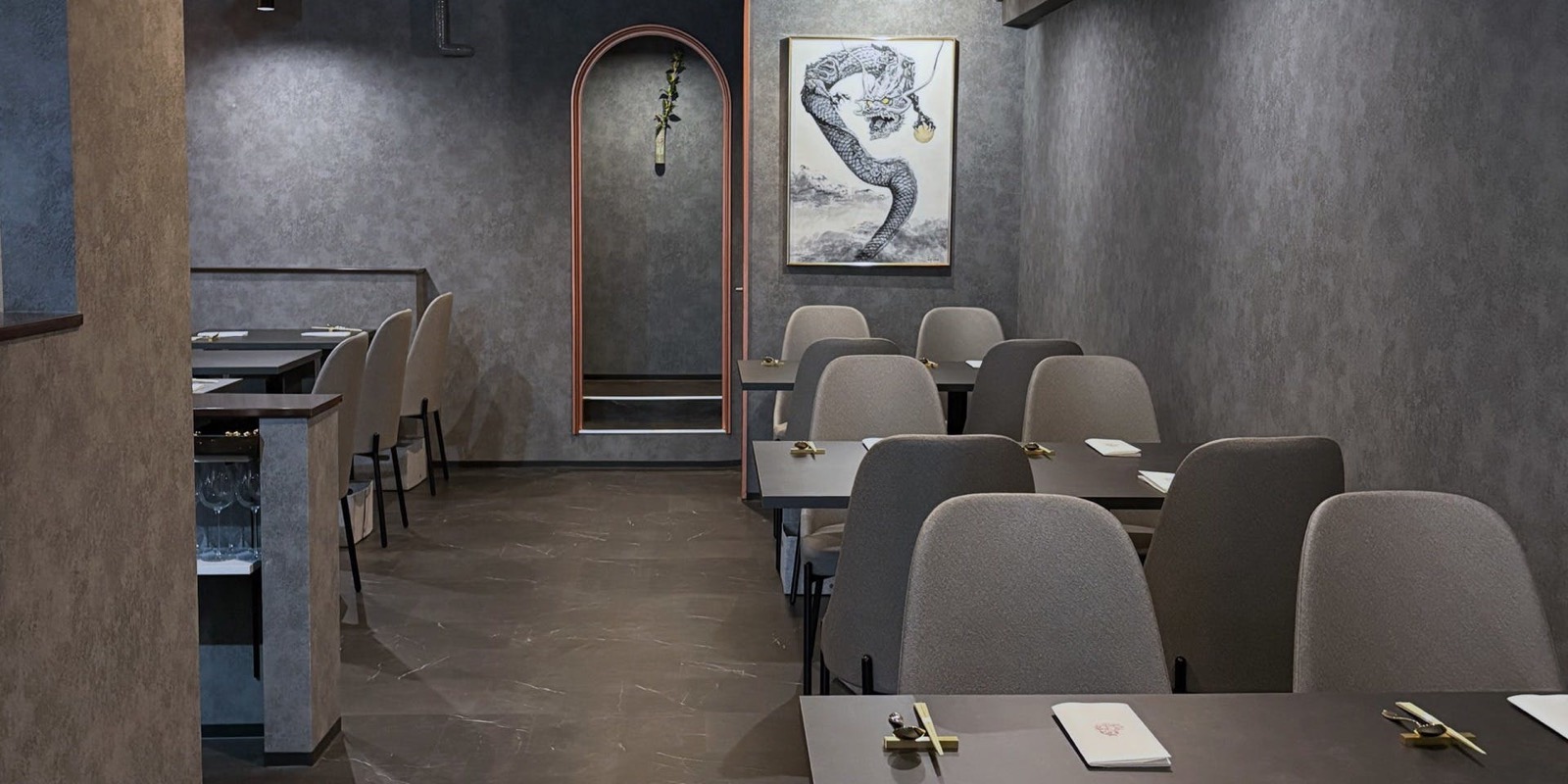
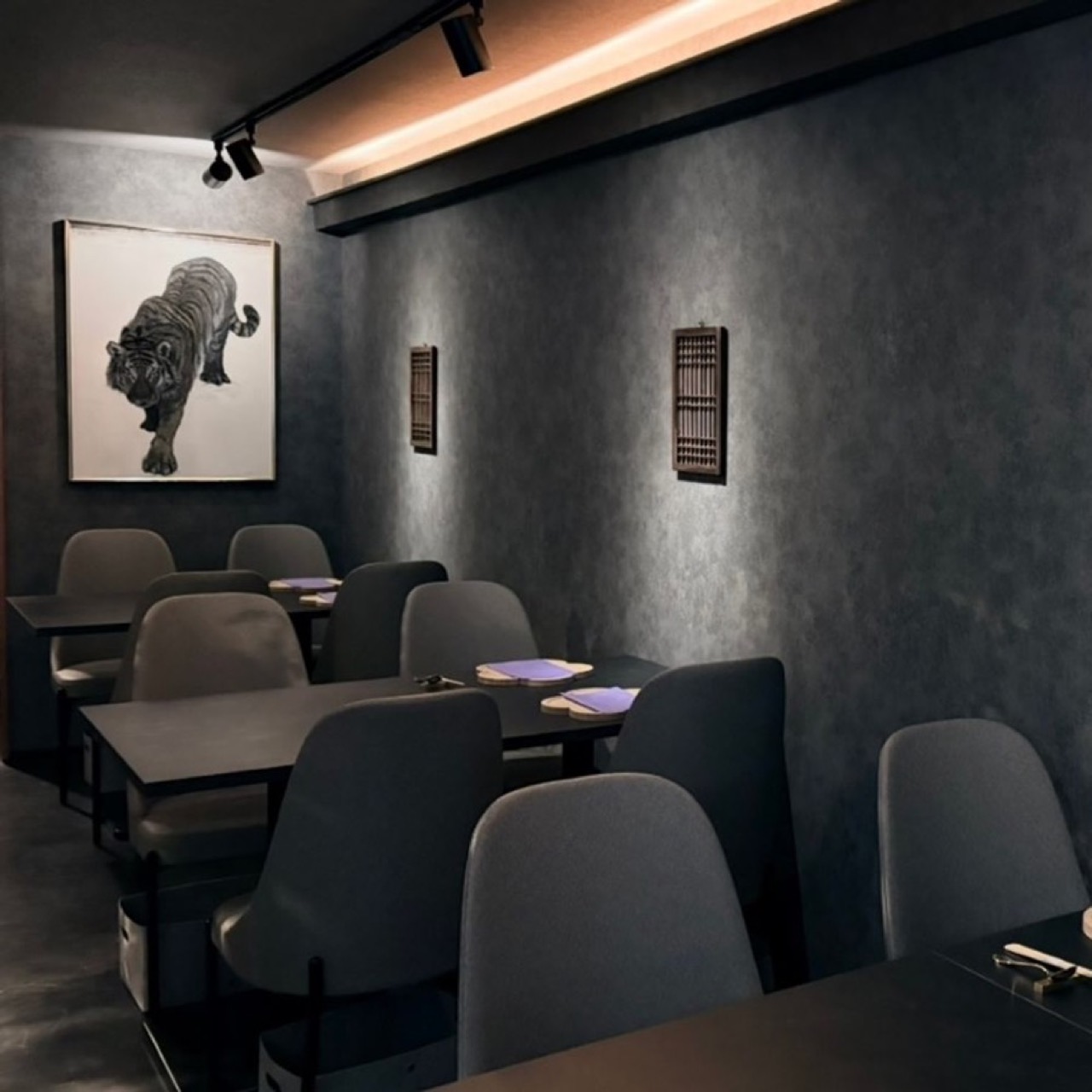
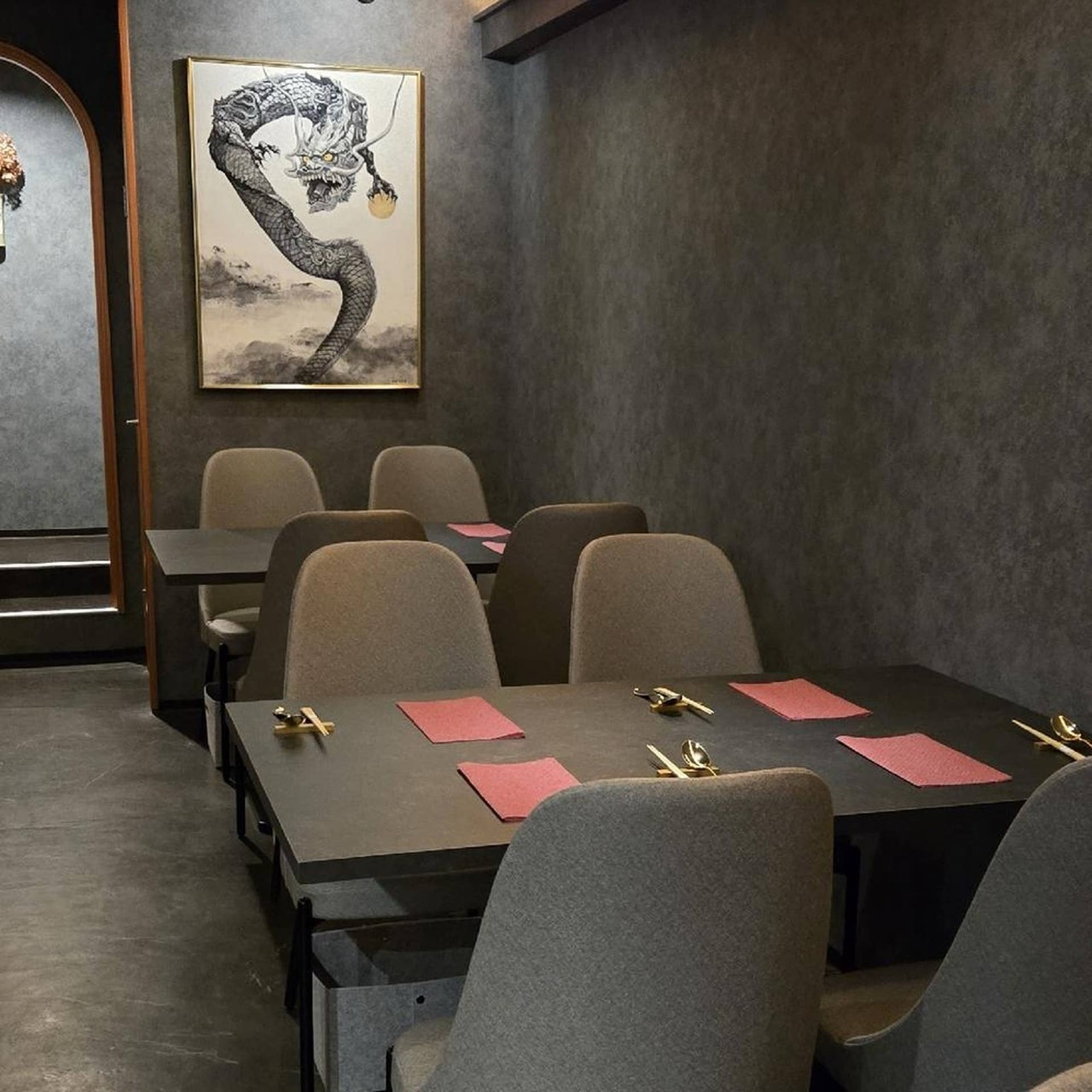
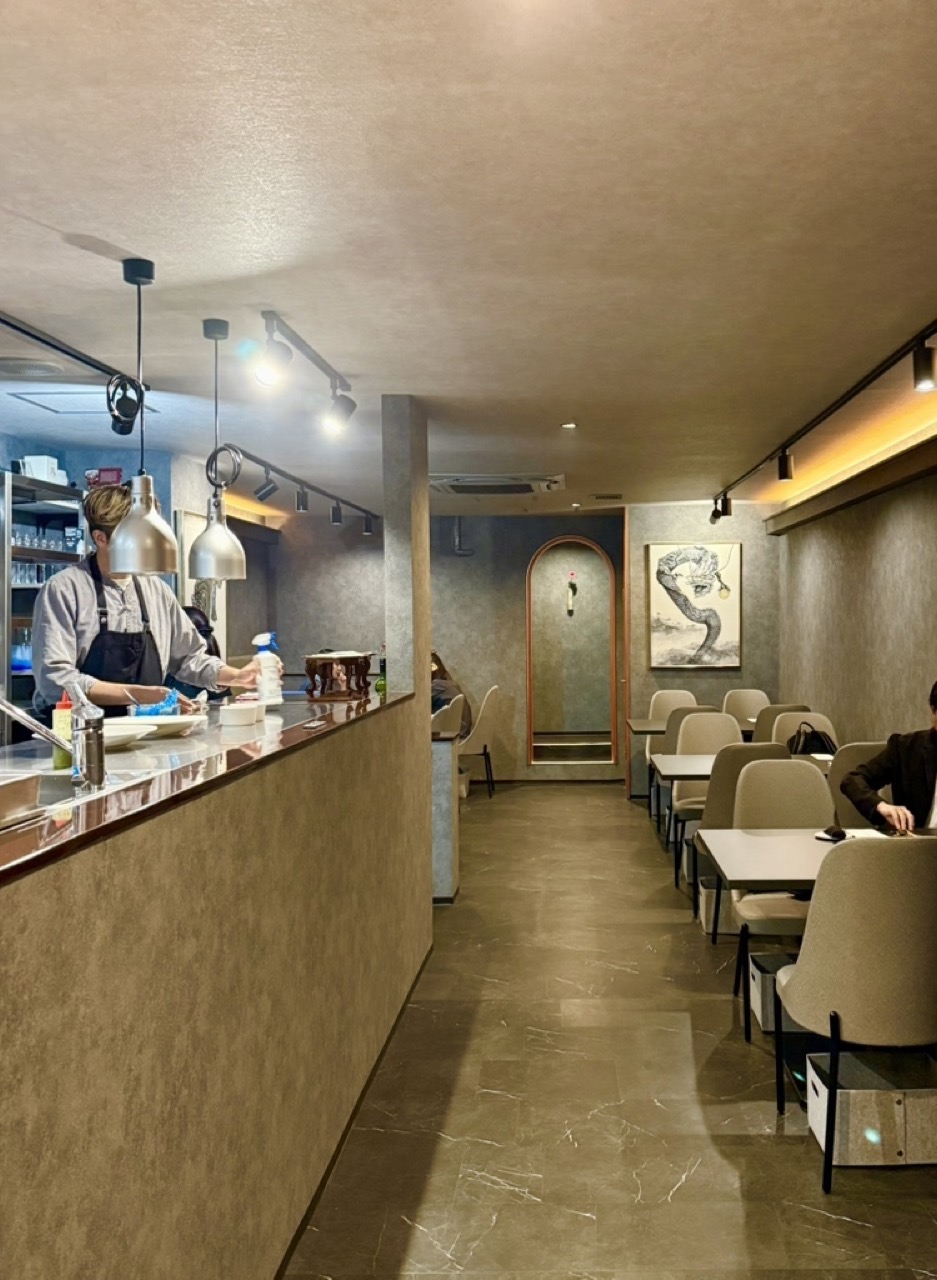
18 seats with no private roomA grey wall with one dragon painting, red napkins and brass chopstick rests. With no partitions the room reads at a glance. Trading runs 17:10 to 22:00 with last orders for food at 19:30, closed Sundays. Set the awkward opening time against the early last orders and a two-sitting arrangement follows (estimated). ⓒRetty
10.Now the arithmetic. At 18 seats with one evening sitting, a full house is 324,000 yen a day, and over 26 days a month excluding Sundays that is 8.42 million yen. Run two sittings and it doubles to 16.85 million yen, about KRW 160 million. Even dropping occupancy to 75% it is 12.64 million yen (estimated).
11.Put the floor area at 20 pyeong (estimated) and monthly revenue per pyeong splits at about 320,000 yen on one sitting and about 630,000 on two. The same lease, the same kitchen, the same people, and the number doubles. Profit at a small dining room is decided by the number of sittings before it is decided by spend per head.
Sittings decide a factor of twoAt 18 seats, 18,000 yen a head, 26 days a month and 75% occupancy, monthly revenue is 6.32 million yen on one sitting and 12.64 million on two. On 20 pyeong that is about 320,000 and about 630,000 yen per pyeong a month. Only the seat count and the price are published, the rest is the writer's estimate.What five minutes from the station costsThe new site is five minutes on foot from Minamimorimachi station, in a central area beside Osaka Tenmangu. Moving from a residential area to a station district raises the lease terms, and that increase has to be paid back by raising spend per head or adding turnover. ⓒGaigaku.com
12.Take one 18,000 yen ticket apart (all estimated below). Food 4,500 yen, drink cost 1,900 yen, labor 3,800 yen, rent 1,600 yen, utilities, consumables and depreciation 3,400 yen, leaving 2,800 yen. A cost ratio including drinks of around 36%, which sits comfortably for a tasting menu.
The line item that appears when drinks go into the coursePutting spend per head of 18,000 yen against food at 4,500, labor at 3,800, utilities, consumables and depreciation at 3,400, drink cost at 1,900 and rent at 1,600 leaves 2,800 yen. All are the writer's estimates using customary industry rates, not figures published by the restaurant.
13.The real risk in unlimited drinks lies in the variance rather than the average. If one party drinks twice what others do, that table's 2,800 yen of profit disappears for the day, and on days when such parties overlap the arithmetic collapses. Take reservations only by direct message and choose your guests, and that variance narrows. What looked like a device blocking access is in fact a device managing cost.
The variance unlimited drinks createWhat shakes profit under a flat unlimited price is the deviation rather than the average volume. Not opening reservations continuously and taking them through account notices looks like restricted access, and it also works to narrow the deviation in how much people drink. ⓒTabelog
14.The record is not far away. Nomihodai, two hours of drinks at a flat price, is an old grammar of the Japanese popular izakaya, grown in places pouring cheap drink fast. What this restaurant did was lift that grammar onto a tasting menu. A device transplanted from below to above arrives upstairs with a face nobody has seen.
15.What actually turns over is the price. A modern Korean fine dining course in Seoul runs KRW 250,000 to 400,000 a head with drinks usually separate and corkage at KRW 30,000 to 50,000 a bottle. In Osaka, Korean food including drinks is KRW 171,000, while in Seoul it asks double that without drinks. The city pricing the Korean premium highest is neither Tokyo nor Osaka.
Nomihodai lifted onto a courseTwo hours of drinks at a flat price is a grammar grown in the Japanese popular izakaya. Move a device built for pouring cheap drink fast onto a tasting menu and it arrives upstairs with a face nobody has seen. ⓒIkyu.com RestaurantSeoul is dearerA modern Korean fine dining course in Seoul runs KRW 250,000 to 400,000 a head with drinks generally separate and corkage at KRW 30,000 to 50,000 a bottle. Against the Osaka side charging KRW 171,000 including drinks, the direction of the pricing sits opposite to the assumption. ⓒTabelog
16.A modern Korean restaurant that moved from 15 seats in a residential area to 18 on the ground floor of a central building, bringing in card payment and lunch, was named among the twelve restaurants in the MICHELIN Guide's July early release on July 23, 2026. Cut this restaurant's design to one line and it is an 18,000 yen price list that put the drinks in and ended the arithmetic. What to hold on to when moving it to Korea is the labor side. This model leans on a timetable selling 18 seats twice in an evening, and in Korea Article 55 of the Labor Standards Act guarantees a paid weekly rest day to anyone working 15 hours a week or more. Japan's Labor Standards Act obliges a rest day and carries no paid provision. Run the same staff on the same timetable and one week's extra pay attaches in Korea, and in an 18-seat restaurant two percentage points on the labor ratio carry the same weight as the entire operating profit.