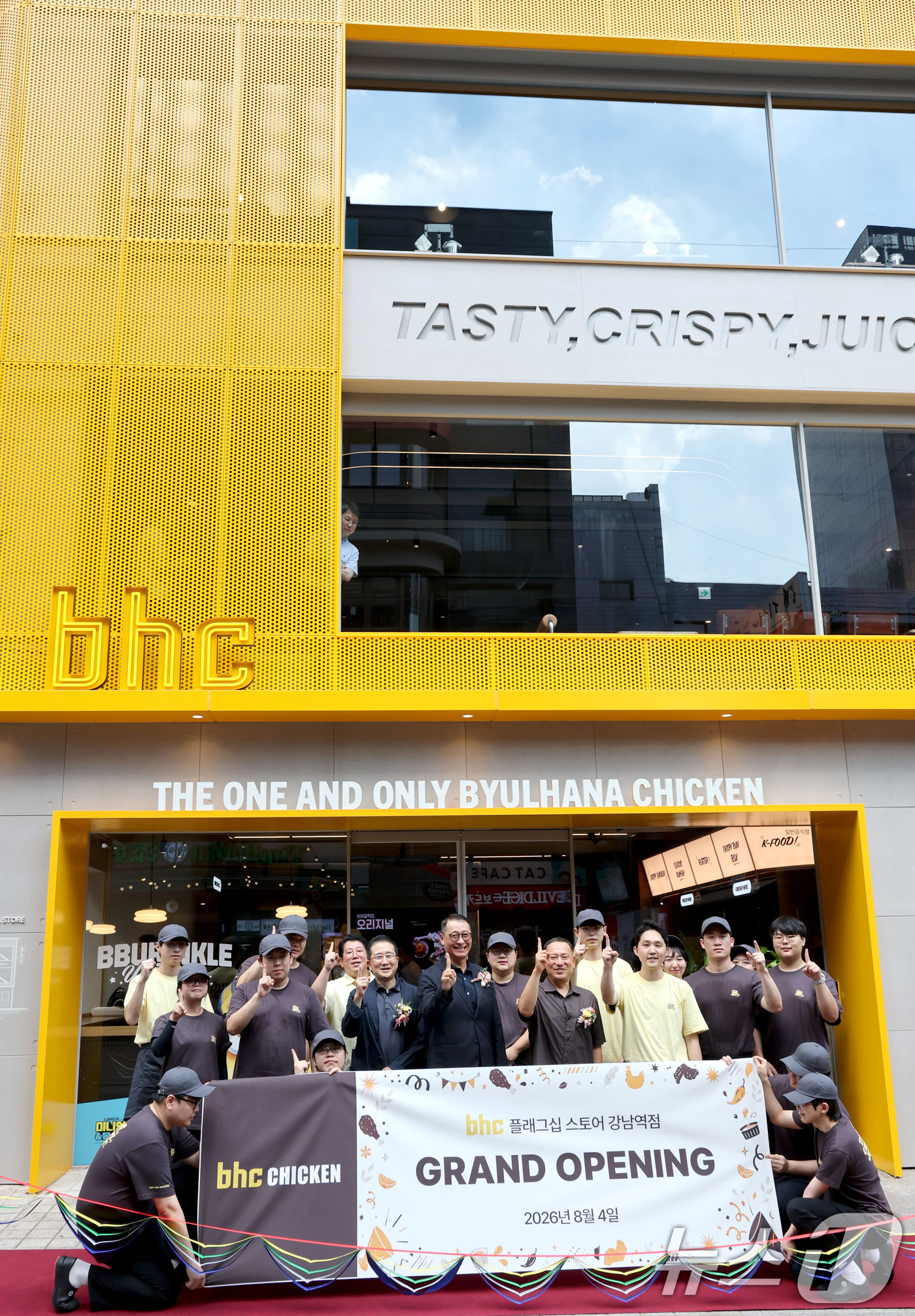
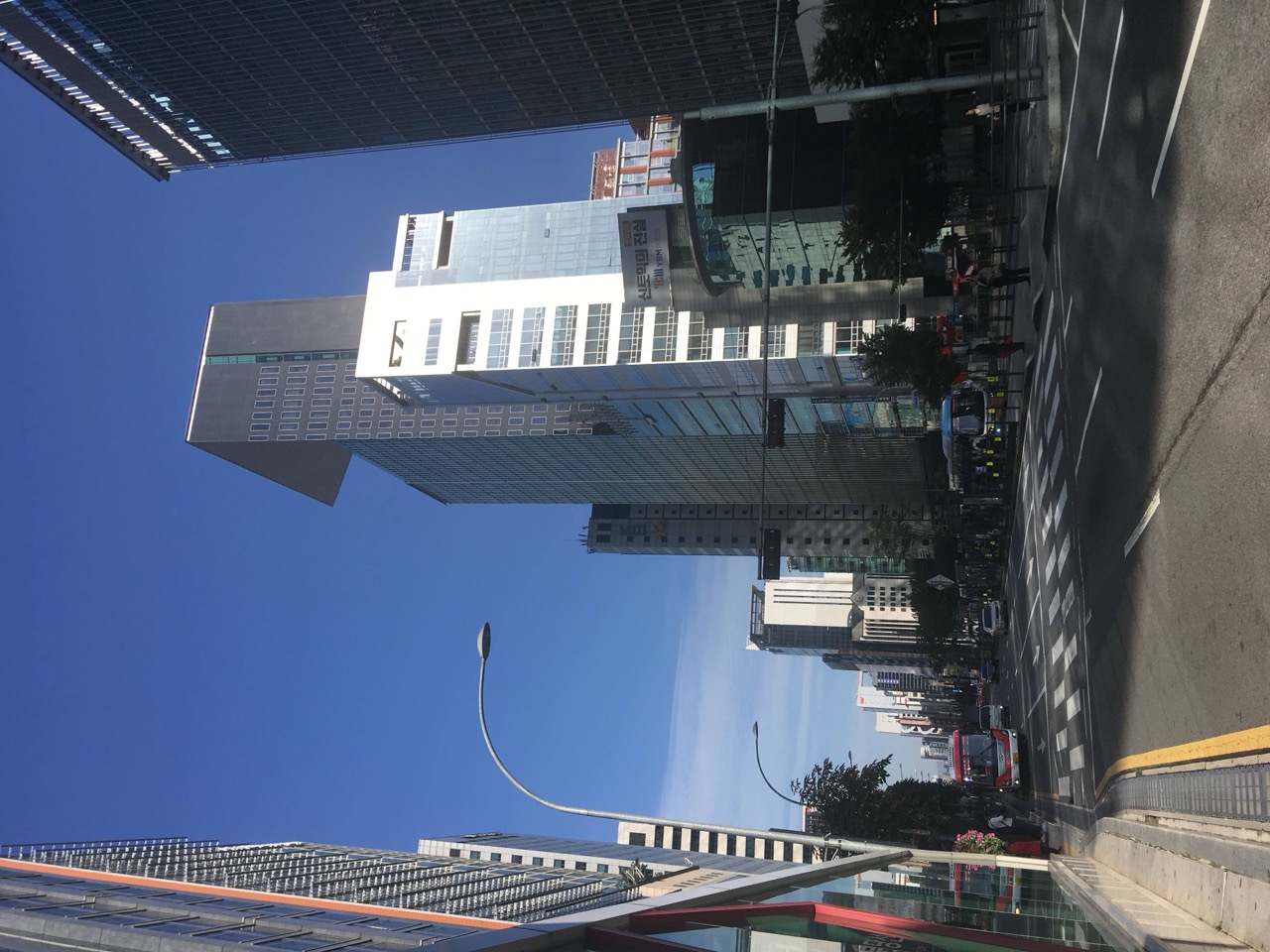
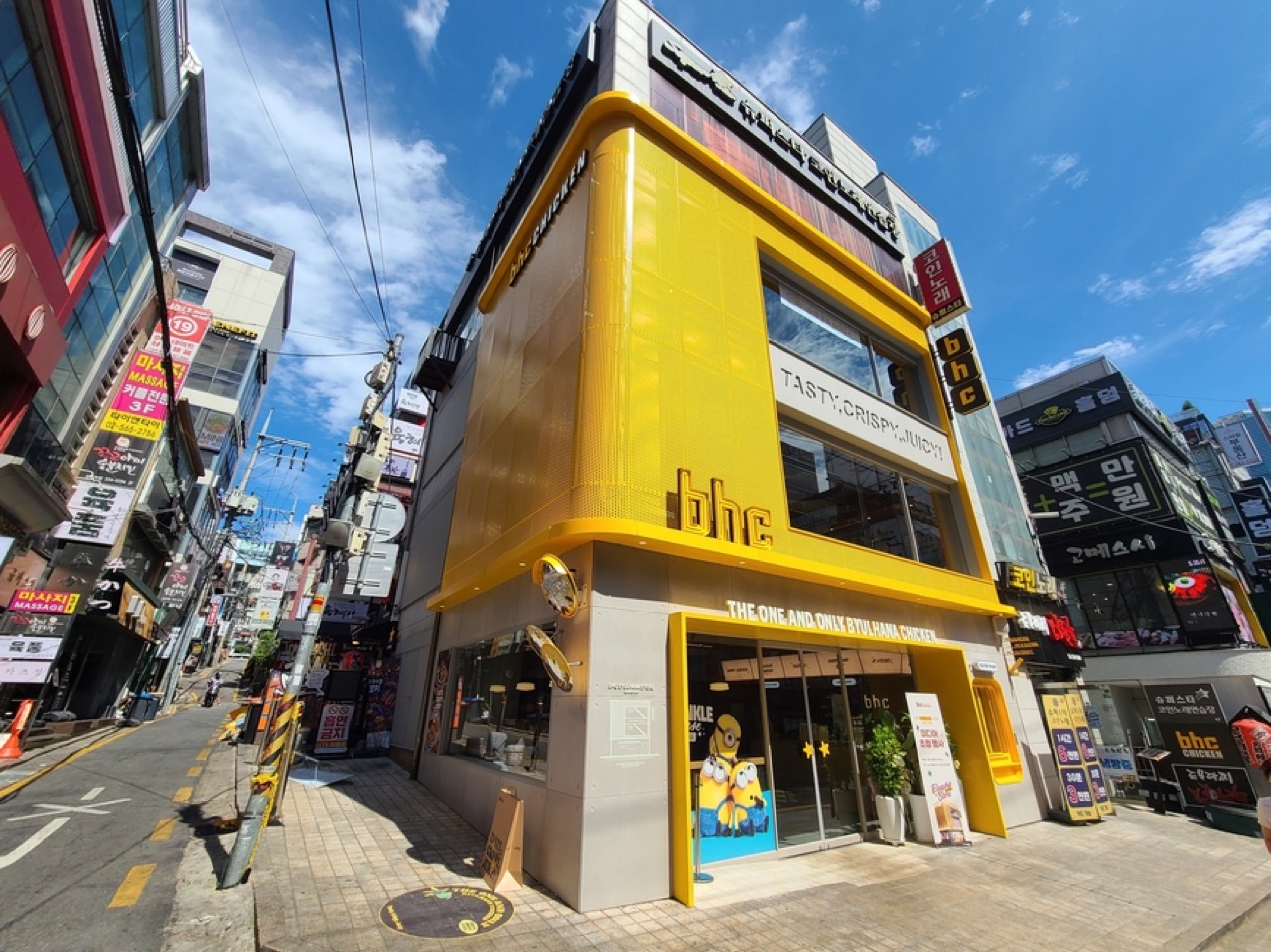
On August 4, a three-story building a three-minute walk from Gangnam Station became a fried chicken restaurant, all of it. Robots fry on the ground floor, diners pick pieces on the second, and the third serves tteokbokki with draft beer. One directly operated store, three years in the making, from a brand with 2,200 franchisees.
1.bhc, the chicken brand of Dining Brands Group, opened a three-story flagship store on August 4, a three-minute walk from Exit 11 of Gangnam Station. It is the first directly operated flagship for a brand that started in 1997, and the company says planning took three years. The pre-opening two days earlier drew 130 people. Applications passed 1,000.
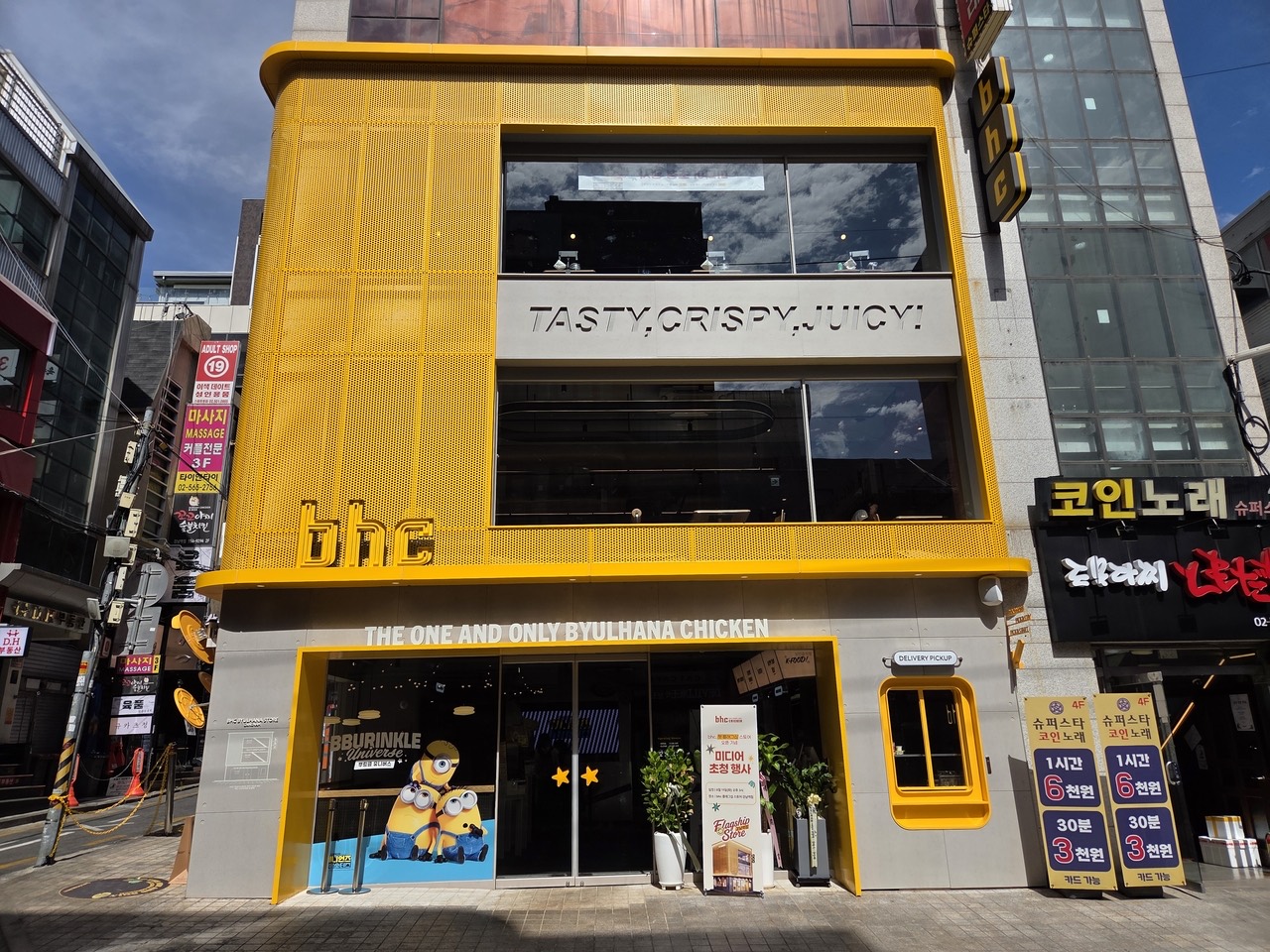
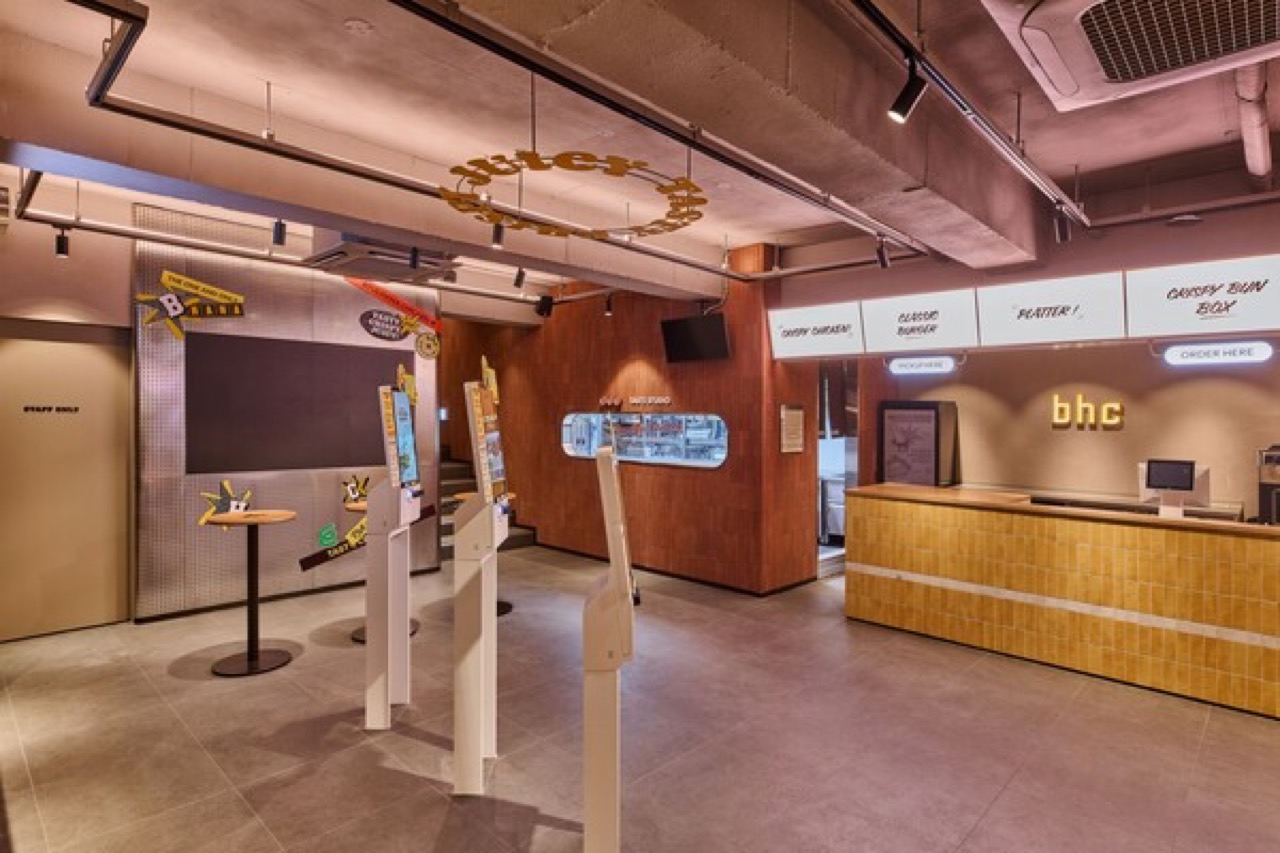
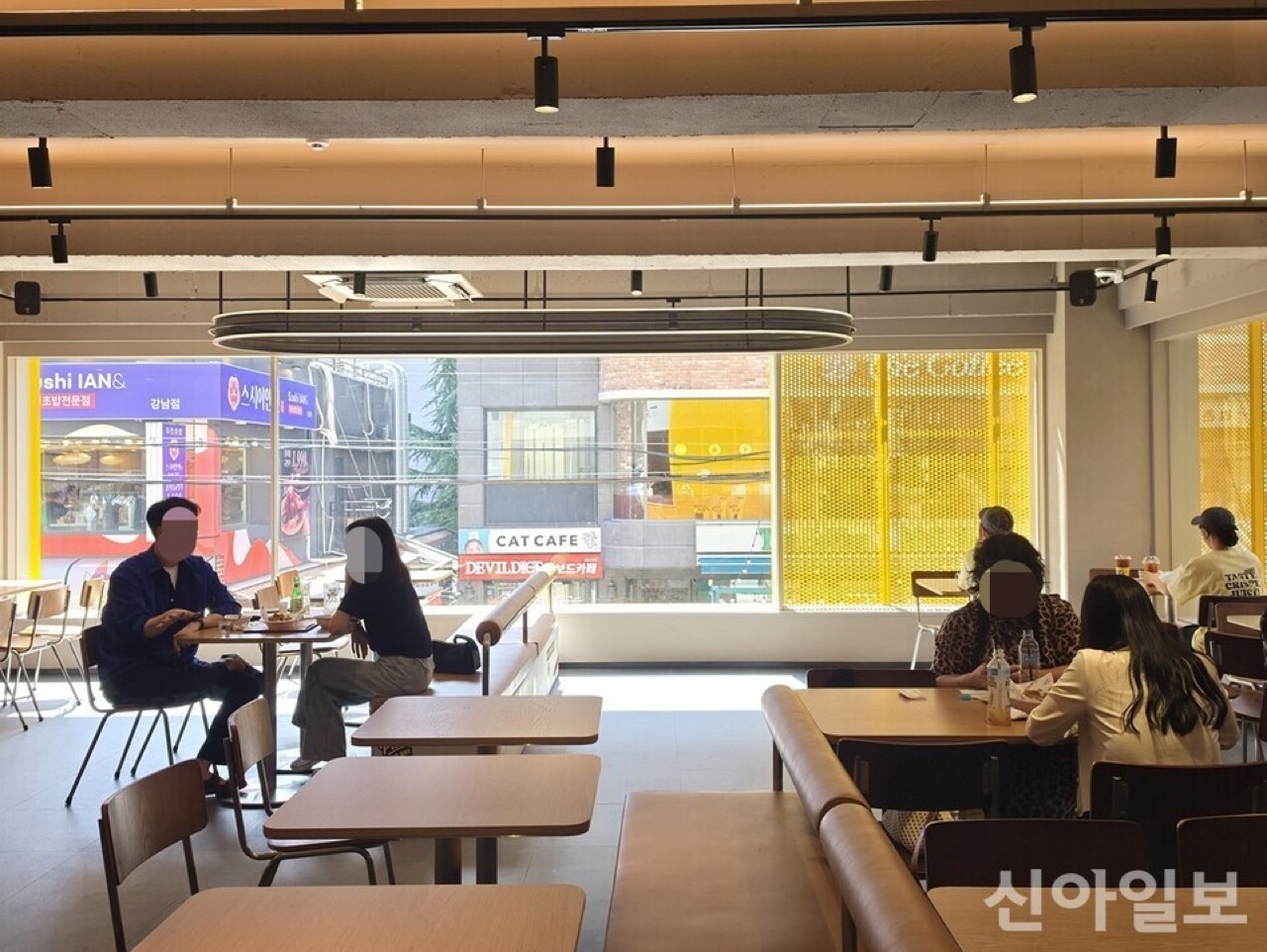
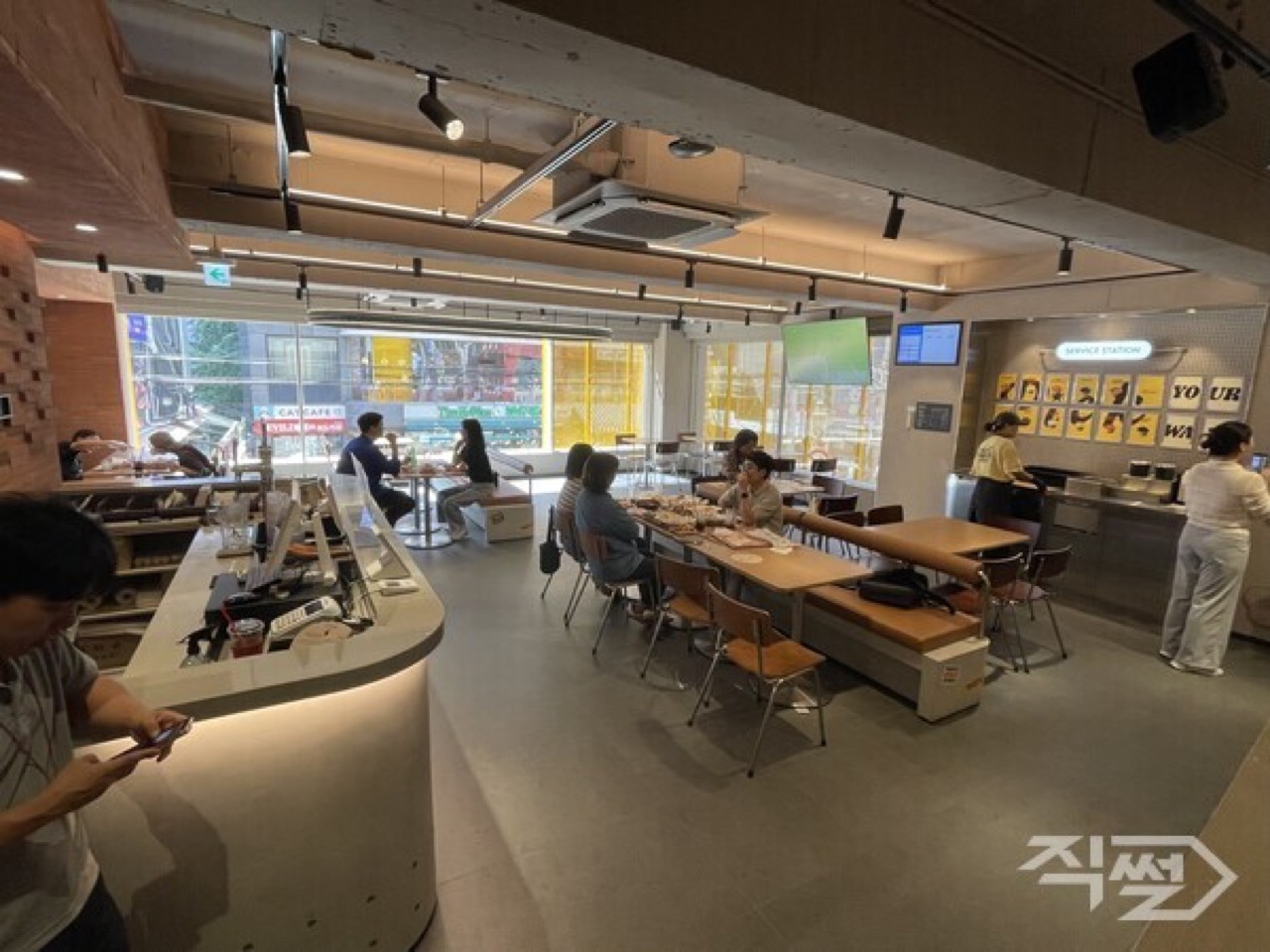
2.Each floor sells something different. The ground floor handles takeout and quick meals, the second seats solo diners, the third hosts groups with alcohol. THE ONE AND ONLY BYULHANA CHICKEN runs across the perforated yellow facade, and at its right edge a separate delivery pickup window is cut into the wall. The hall got bigger, but delivery did not go away. The company opened it as a directly operated store so its 2,200 franchisees would carry none of the cost, and calls it a testbed.
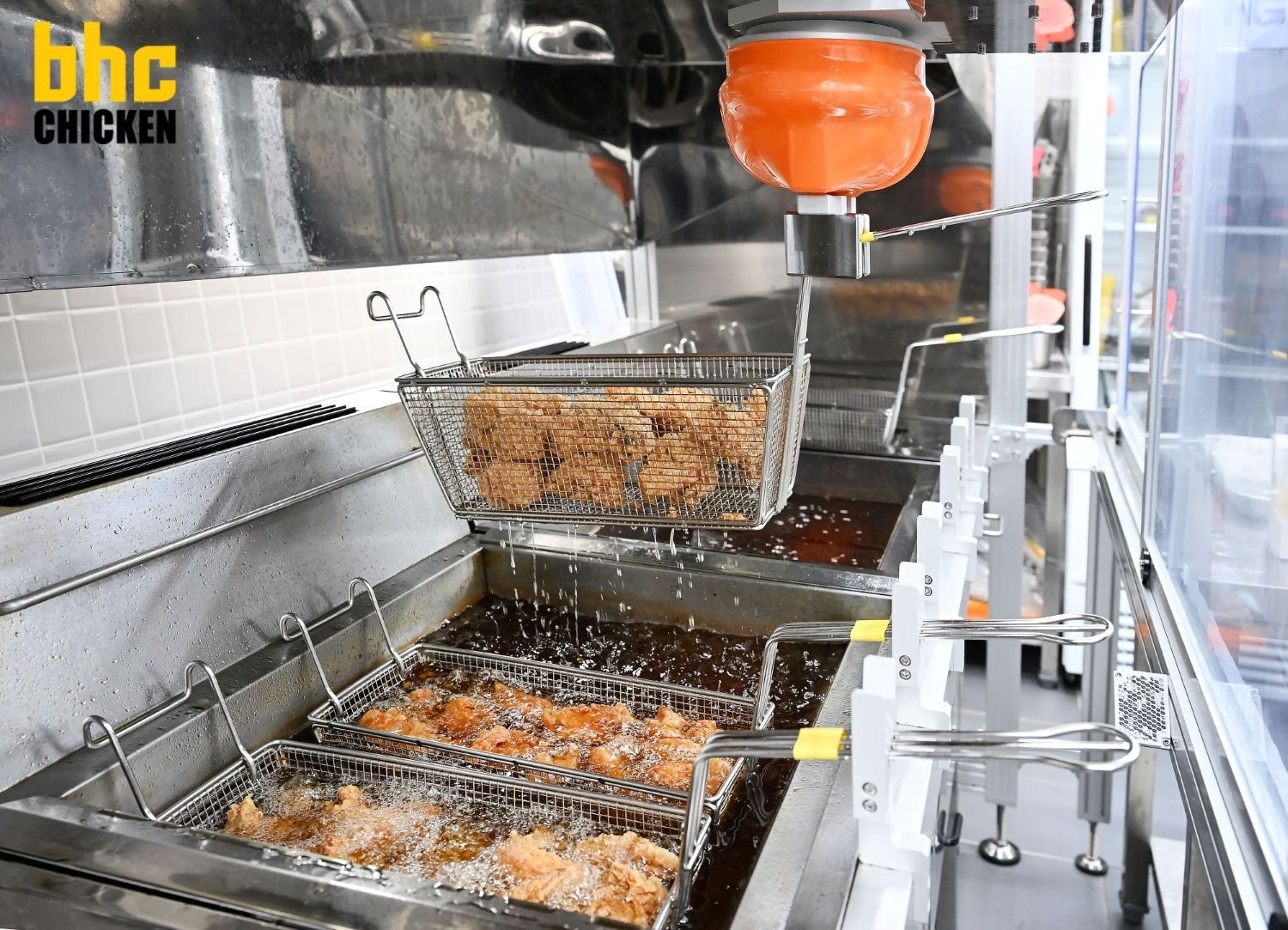
3.Step into the ground floor and a machine stands at the fryer instead of a person. This is TuiBot. Drop in battered chicken and it lowers the basket, shakes it, and drains the oil on its own. Built with Bear Robotics, an LG Electronics subsidiary, and already installed in 40 stores nationwide, here it stands not inside the kitchen but behind glass where customers can watch.
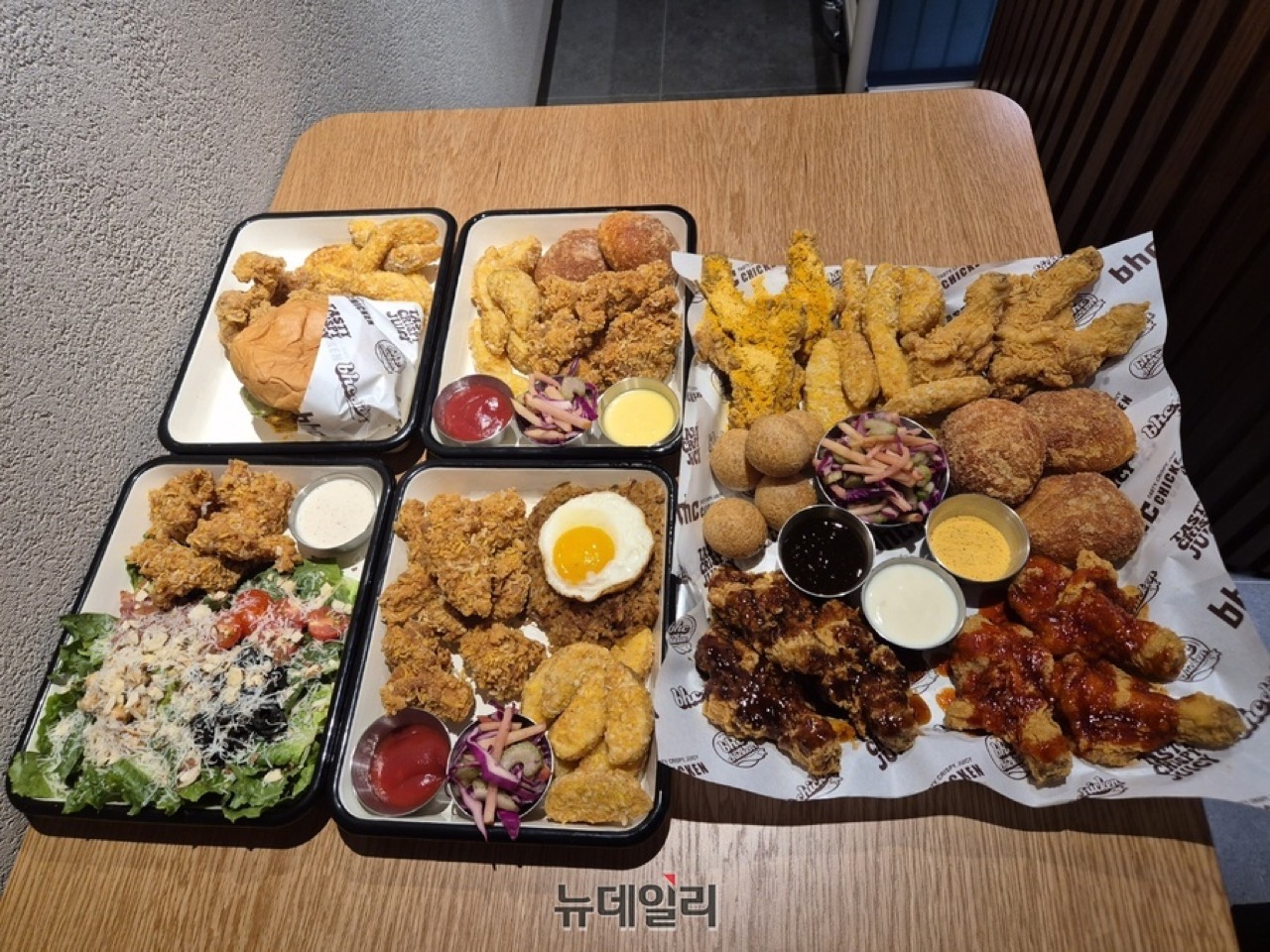
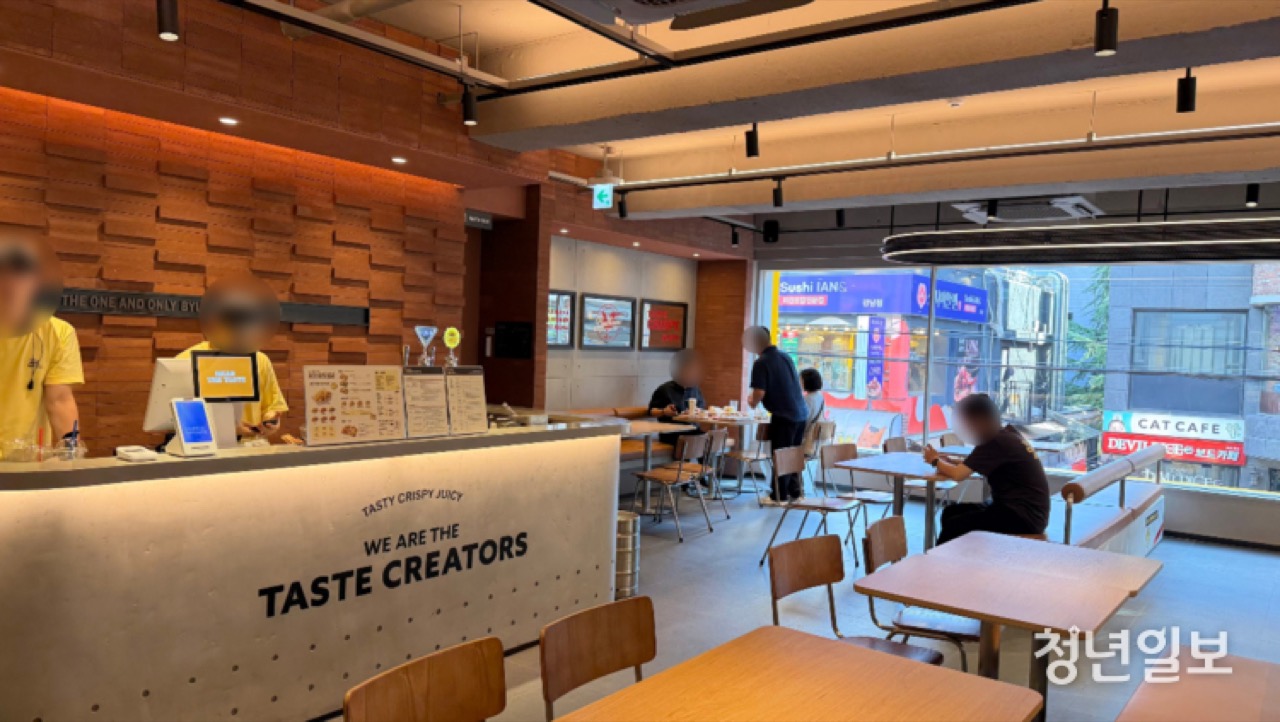
4.The second floor menu reads like a combination chart. Under the name CrisPick, customers choose the cut, the frying style, the size, the seasoning and the dipping sauce, and the company counts more than 3,000 possible combinations. Beside it sits a single serving box holding chicken with rice, salad or a burger. The whole bird, long a unit meant for sharing, has been broken into pieces.
5.Frying oil carries. Every time the ground floor door opens, the dry smell of batter puffing in hot oil reaches the sidewalk, and behind it comes the rhythm of a basket shaking off oil. A person shaking it loses the beat. The machine does not. Making a passerby stop once is what that glass is for.
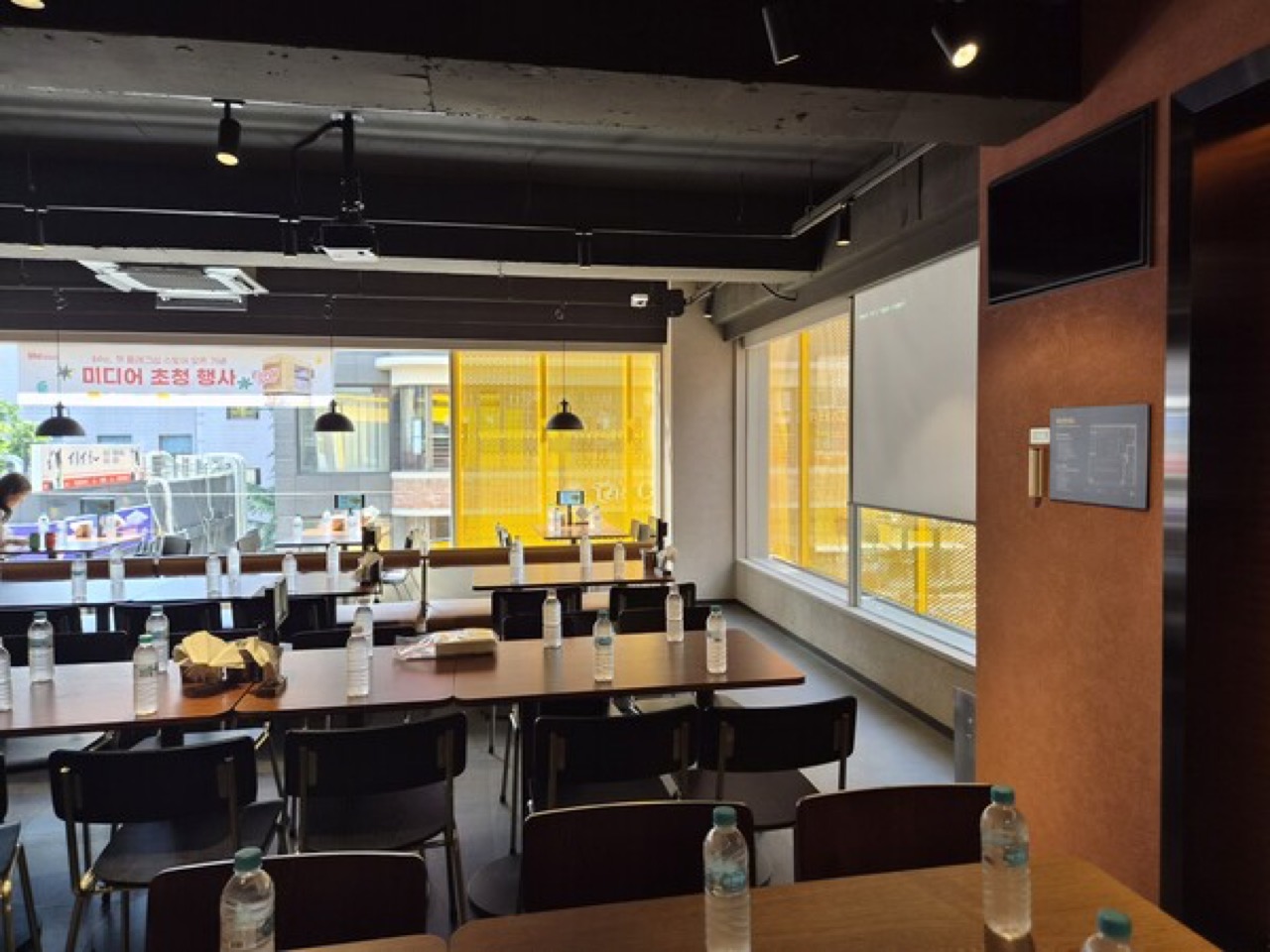
6.The third floor smells the opposite. Tteokbokki in broth and fish cake soup come up here, so chili powder and anchovy stock replace the oil, with glasses knocking above it. Seasoned whelks, grilled dried pollack, fried chicken neck, kimchi fried rice: eight dishes built for drinking. In the first week about 30% of visitors were foreign, and on weekends many came from China and Japan.
7.The company calls it all day chicken. The idea is to move consumption that used to be one bird in the evening into daytime, but the gap this experiment targets is not lunch. A chicken shop owner's day is compressed into the six hours from six in the evening to midnight, and most sales land inside that window. Same rent, same kitchen, idle all afternoon. Stretching hours costs less than adding seats.
8.The foreign share is no accident either. Korean fried chicken has already sold itself through drama and variety shows, yet a tourist arriving in Seoul had few places to sit down and eat it. What existed were narrow shops built for delivery, or bars. Solo lunch eaters faced much the same. A whole bird assumes at least two people.
9.In 2024 there were 31,397 franchise chicken shops in Korea, up 5.3% in a year. Over the same period annual sales per shop came to 279.6 million won, essentially flat. In a market where the number of shops grows and the volume per shop does not, a brand has two ways to sell more. Open more shops, or keep one shop open longer.
10.That works out to 23.3 million won a month. This category draws 75.7% of its sales through delivery platforms, and 24.0% of delivery sales leaves as fees. Chicken carries the heaviest delivery dependence among franchise categories, so it moves first whenever platform rates change.
11.Multiply the two and 4.23 million won a month goes to the platforms. Operating profit at the same shop is 1.51 million won a month. What goes out is more than double what stays. With every delivery order, more money leaves for the intermediary than the owner will keep.
12.That ratio kept climbing. Fees as a share of delivery sales stood at 17.1% as recently as October 2023, and delivery fees now account for 10.8% of a shop's operating costs. This is where the line about delivery costing more than labor comes from. Owners do not set the rate.
13.So a bird sold in the dining room and a bird sold through delivery leave different amounts behind, even at the same price. Sell a 20,000 won bird in house and 4,800 won never leaves. Then what moves into that space? Seats, rent, floor staff. This is a district where ground floor frontage on the main road has been quoted above 2 million won per 3.3㎡ a month, and being three minutes off it does not make the trade light. Floor area, seat count and lease terms have not been disclosed.
14.So this store was not opened to break even. The company says menu items proven here, burgers among them, will pass to franchisees in stages, and it is looking at prime districts, department stores and shopping malls for a second flagship. On a separate basis in 2025 the group posted 614.7 billion won in revenue and 164.5 billion won in operating profit. It can absorb losses at one directly operated store, and the return comes from 2,200 shops.
15.Where this grammar came from is written in the chief executive's record. Song Ho-seop built Starbucks Korea into a 2 trillion won business, and Starbucks sells brand experience through large company-owned stores. The claim that the space carries the feel of 1960s Byulhana Chicken belongs to the same line. Except the brand began as Byulhana Chicken in 1997 and took its current name in 2000, which makes the 1960s a period this company chose rather than lived.
16.Starbucks and chicken differ in one thing: ownership. Every Starbucks Korea store is company-owned, so money spent on a flagship stays inside the parent, while here 2,200 shops belong to other people. Whatever the three-story building that opened on August 4 proves, franchisees will pay to receive it, and the 1.51 million won a shop keeps each month is the number they will judge it by. Trading delivery fees for hall rent and floor staff rarely works out at Gangnam Station. That is likely why the company named department stores and malls as its next sites. Mall rent moves with sales and falls in a slow month, while rent at Gangnam Station does not.