Basement two of a bookstore building wired straight into Jonggak Station, 823 sq m. A buffet that opened there in May served 60,000 people in its first 80 days. Weekday lunch runs 23,900 won and the counters carry about 130 dishes. The company behind it makes its money in contract catering.
1.On Cheonggyecheon-ro in Jongno, Seoul, the buffet TAKE opened on 1 May in the second basement of the Youngpoong building. 823 sq m, about 250 pyeong. It joins the Jonggak Station underpass on Line 1 directly, so nobody has to step outside on a rainy day.
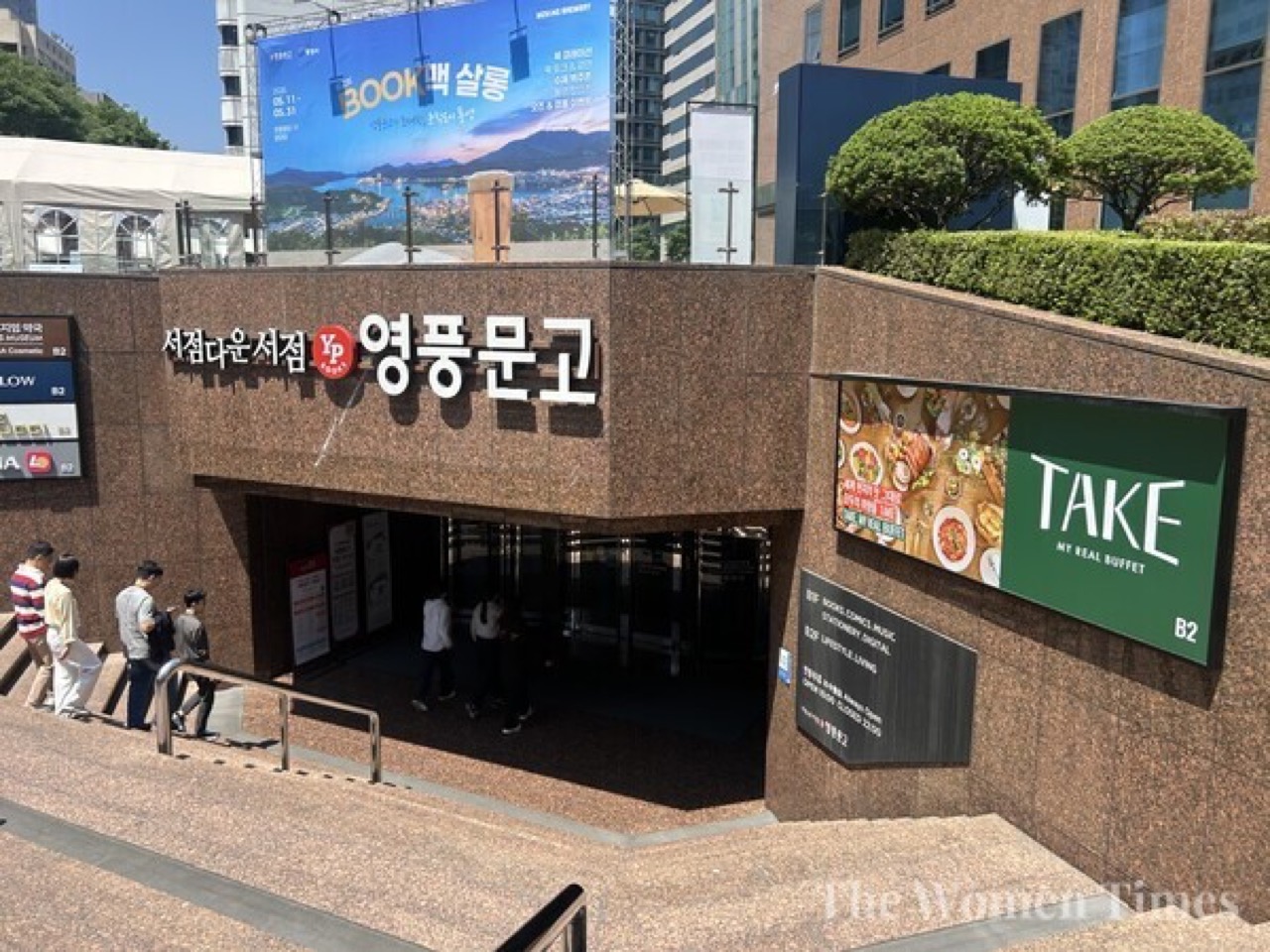
2.The operator is Ourhome. It has spent decades filling corporate and school canteens, and TAKE is its first outlet that charges consumers directly. The company says 60,000 people came through in the first 80 days. About 750 a day.
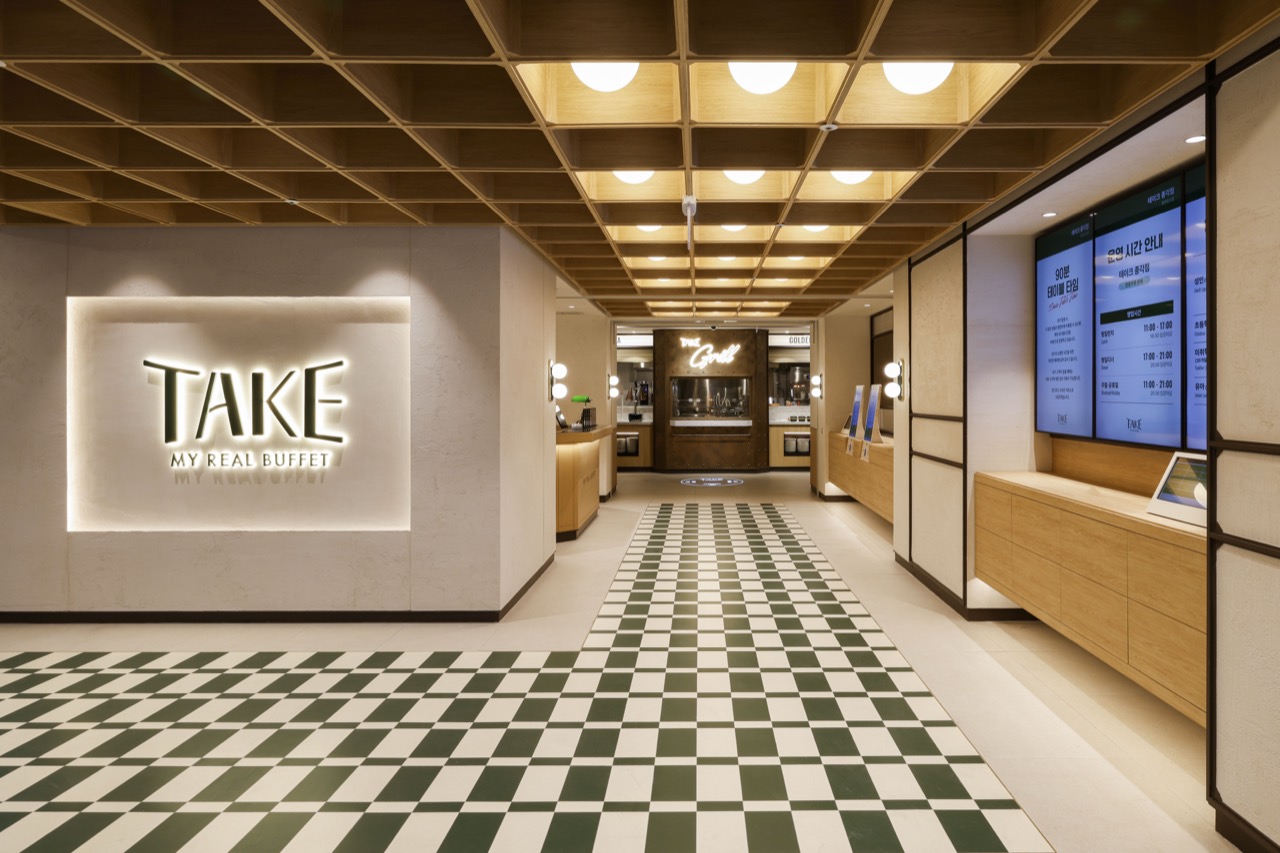
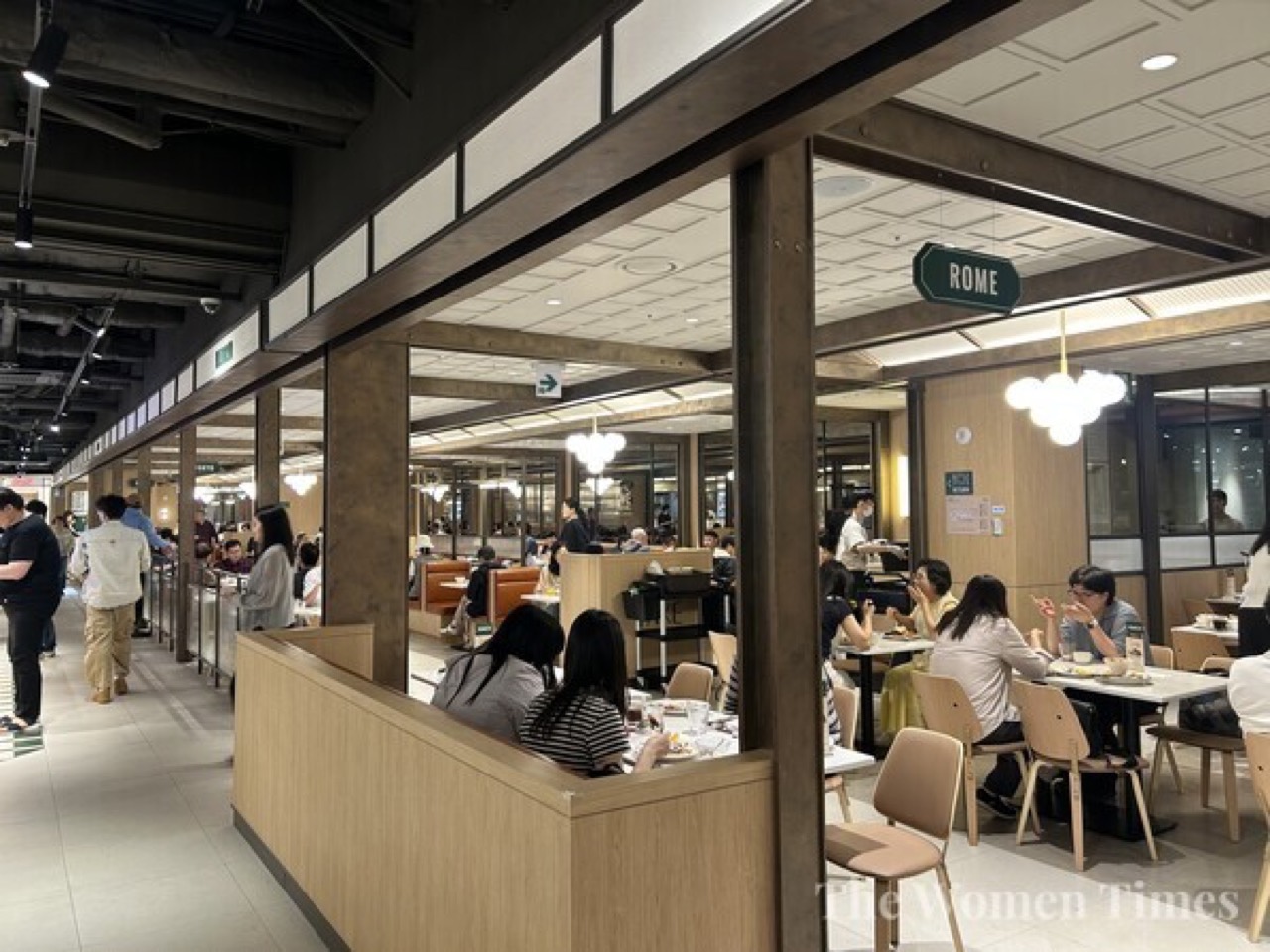
3.Inside, the signs name countries rather than cuisines. AMERICA, ITALY, SPAIN, JAPAN. Even the seating zones carry plaques reading ROME or TOKYO. It tells guests there are 130 dishes without asking them to count.
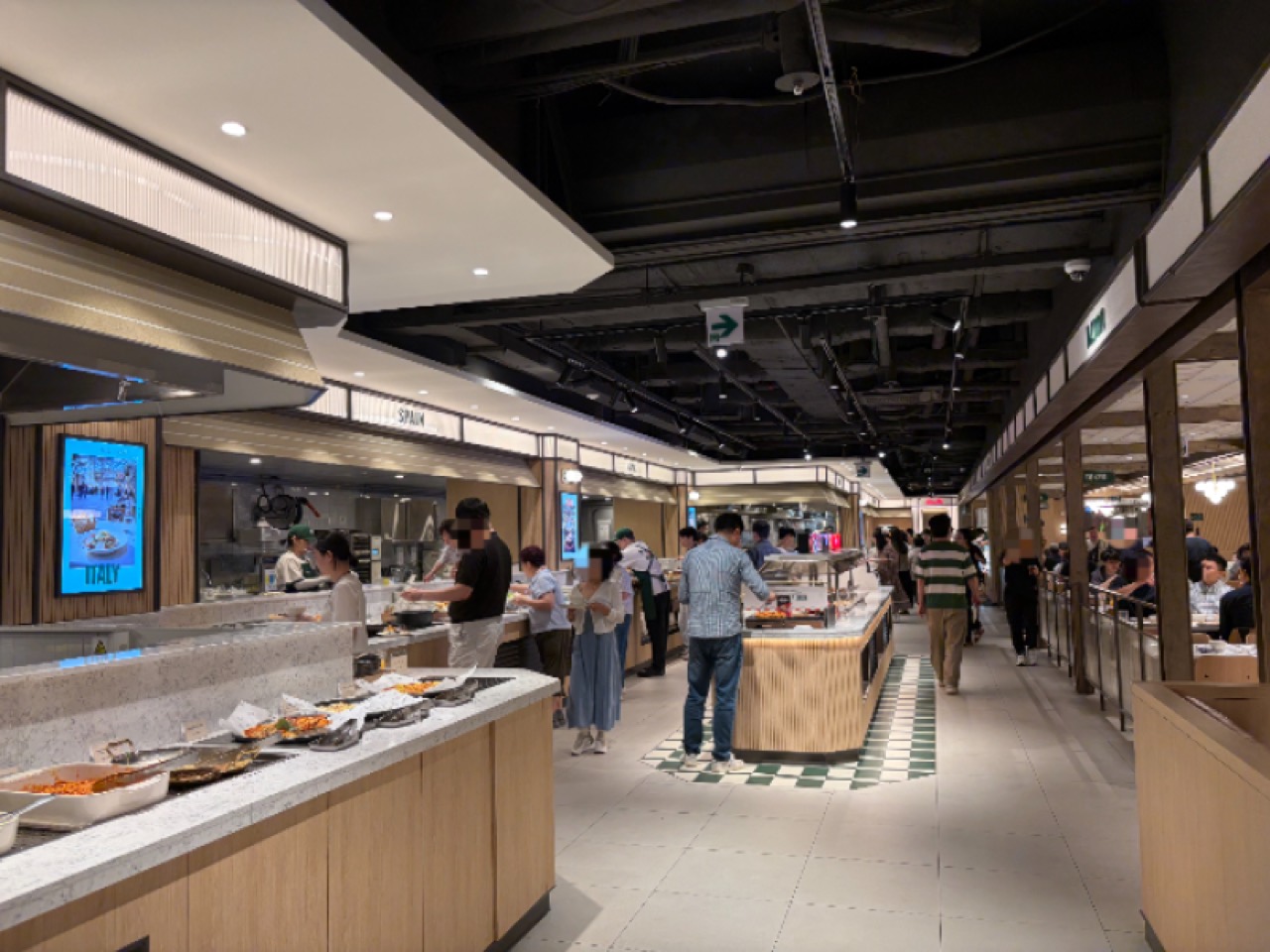
4.The counters run the length of both walls and the middle stays empty. The layout pushes anyone holding a plate in one direction, and the pop-up counter in the middle interrupts that flow once. In a format where 130 people eat and rise for refills at the same time, aisle width becomes waiting time.
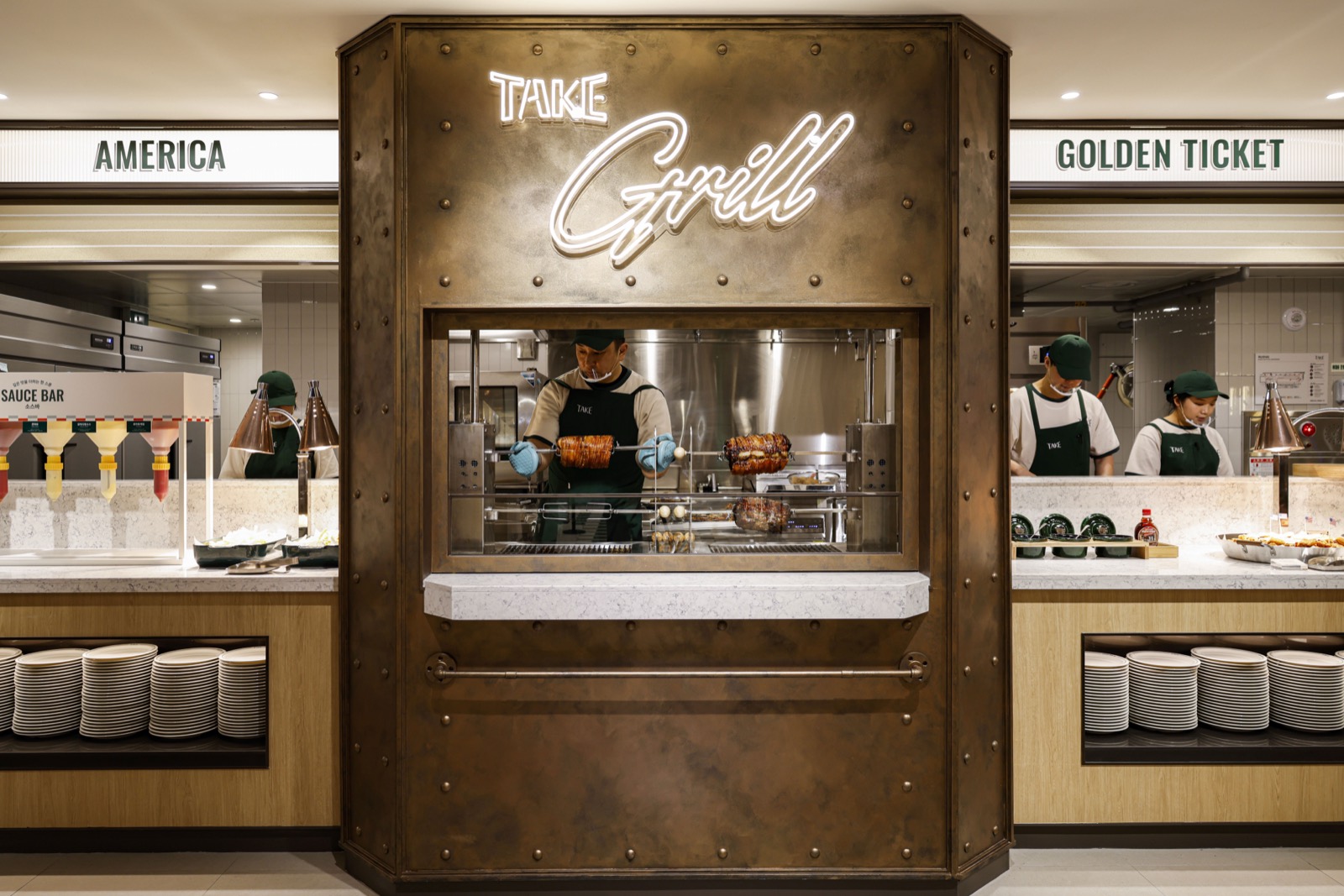
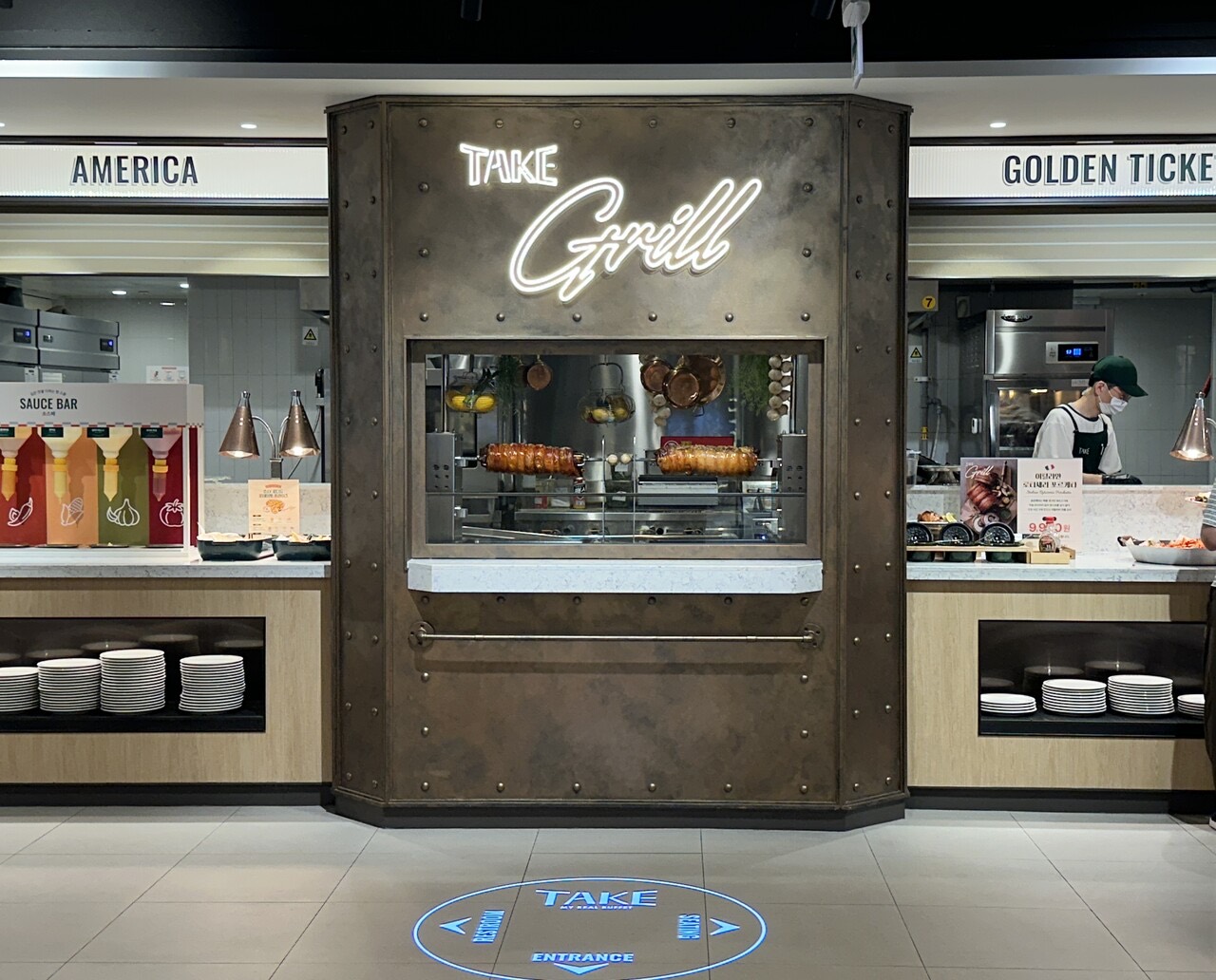
5.One column in the middle of the floor is wrapped in copper-toned steel with a window cut into it. Two porchetta roasts turn slowly on spits behind the glass. The skin puffs and splits, fat drips into the tray below, and that smell becomes the base note of the whole room. The old weakness of a buffet is that every dish blurs into the next, and setting one smell loud enough makes the rest fall in line under it.
6.The sign beside the grill reads GOLDEN TICKET. Porchetta and chicken steak leave only from that counter, at 9,900 won extra. Inside a room advertised as all you can eat, one bay carries its own price.
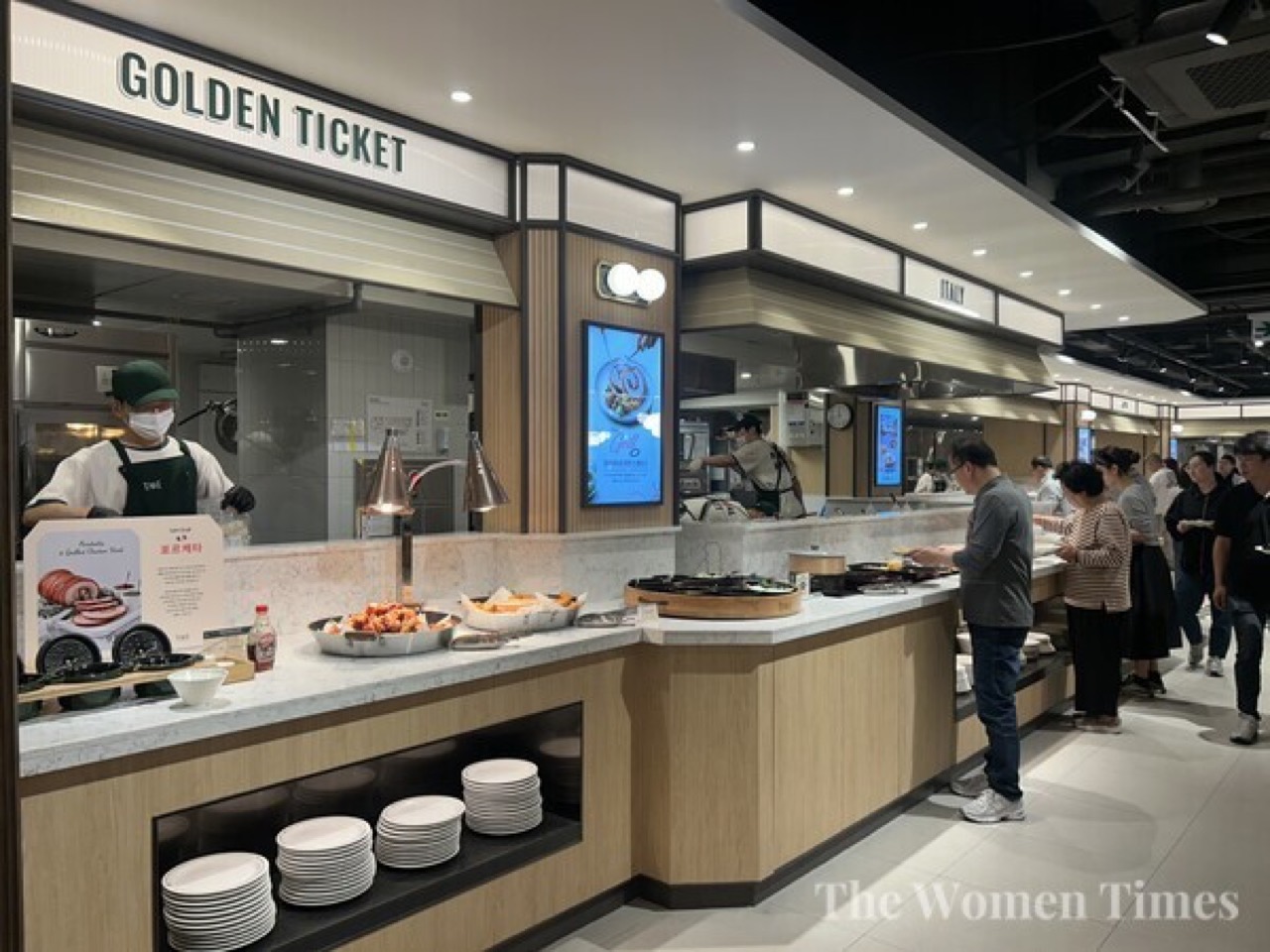
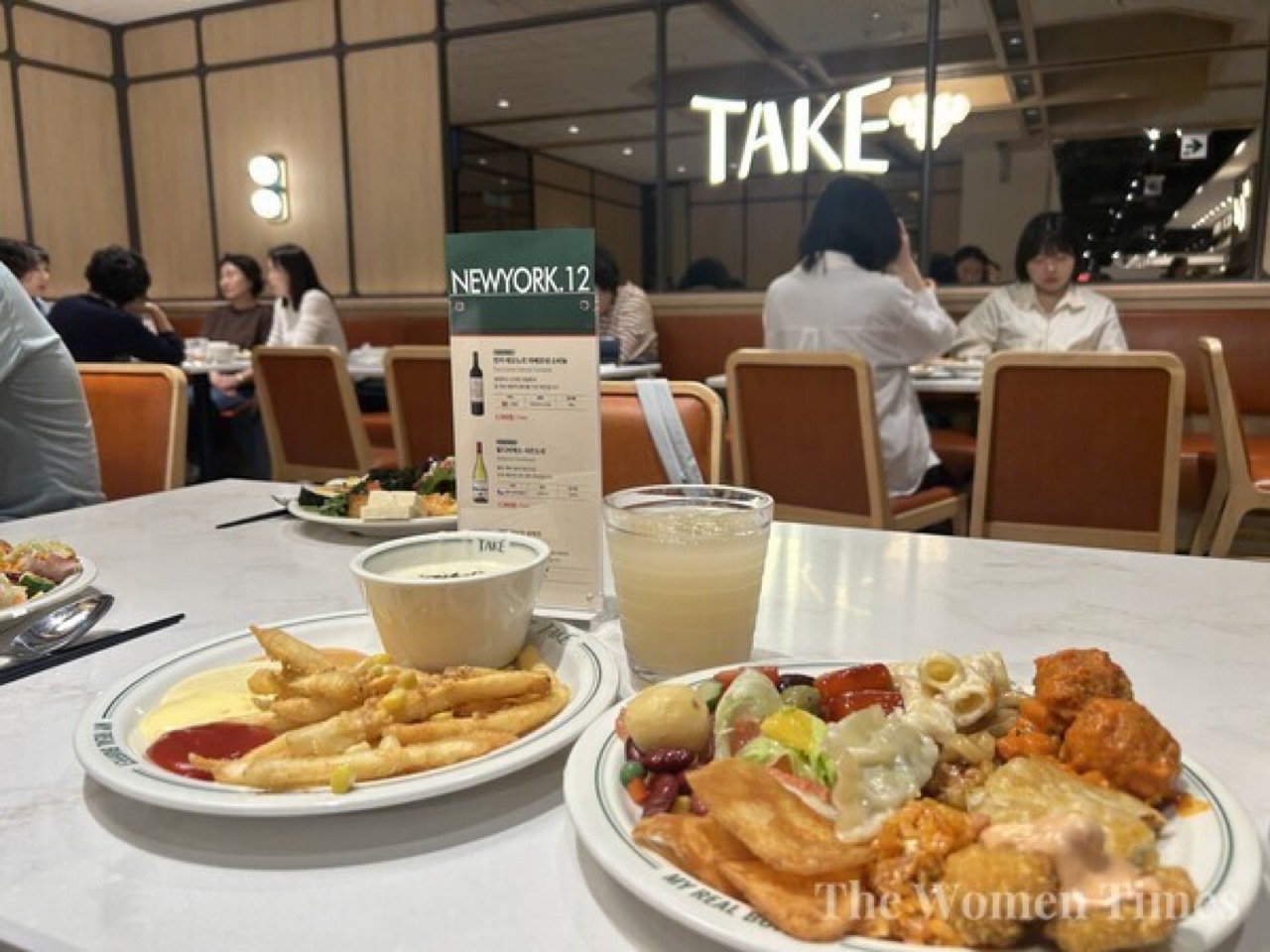
7.There is one kind of plate, white. Texas-style smoked ribs and pulled pork tacos sit next to mala xiang guo and Indian curry, while the Gangneung seafood jjamppong sundubu is made to order. Salt and heat alternate, so people reach for water often, and draft beer or wine costs 3,900 won a glass.
8.Seating tops out at 130. At 750 guests a day, each seat sells 5.8 times. In a buffet, turnover is set by the queue at the door rather than the speed of the kitchen.
9.Weekday lunch carries the volume while dinner and weekends lift the average. Blended at 27,000 won a head, that comes to 20 million won a day and roughly 600 million won a month. The company has published the price list and nothing past it, so the rest here is an estimate.
10.Divided across 250 pyeong, that works out to about 2.4 million won per pyeong per month. It is not a common number for a restaurant in central Seoul. Apply the industry rule that rent above 10 percent of revenue turns dangerous, and a second basement in the middle of Jongno fits inside it.
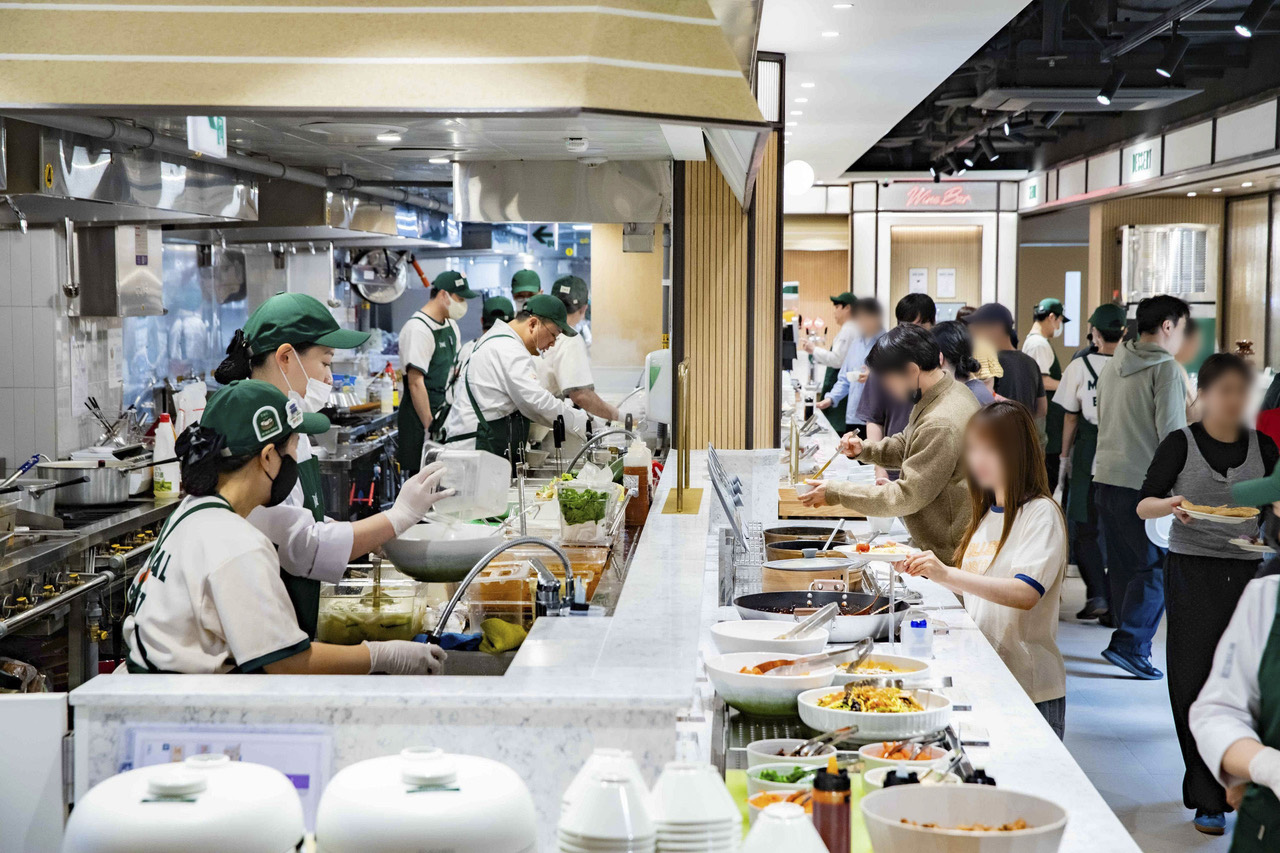
11.The weak point of a buffet is food cost. A normal restaurant spends 35 to 40 percent of revenue on ingredients, a buffet climbs to 50. So where does the cost come down while the price holds. A company that plans canteen menus every day does not buy at the same price as a single restaurant, and making its own sauces and cured meats says the same thing.
12.This one outlet accounts for less than 1 percent of group revenue. A second is booked anyway. October, under Lotte World Adventure in Jamsil, 240 seats. Catering contracts are a business where the company name stays invisible, while a buffet is where guests learn it.
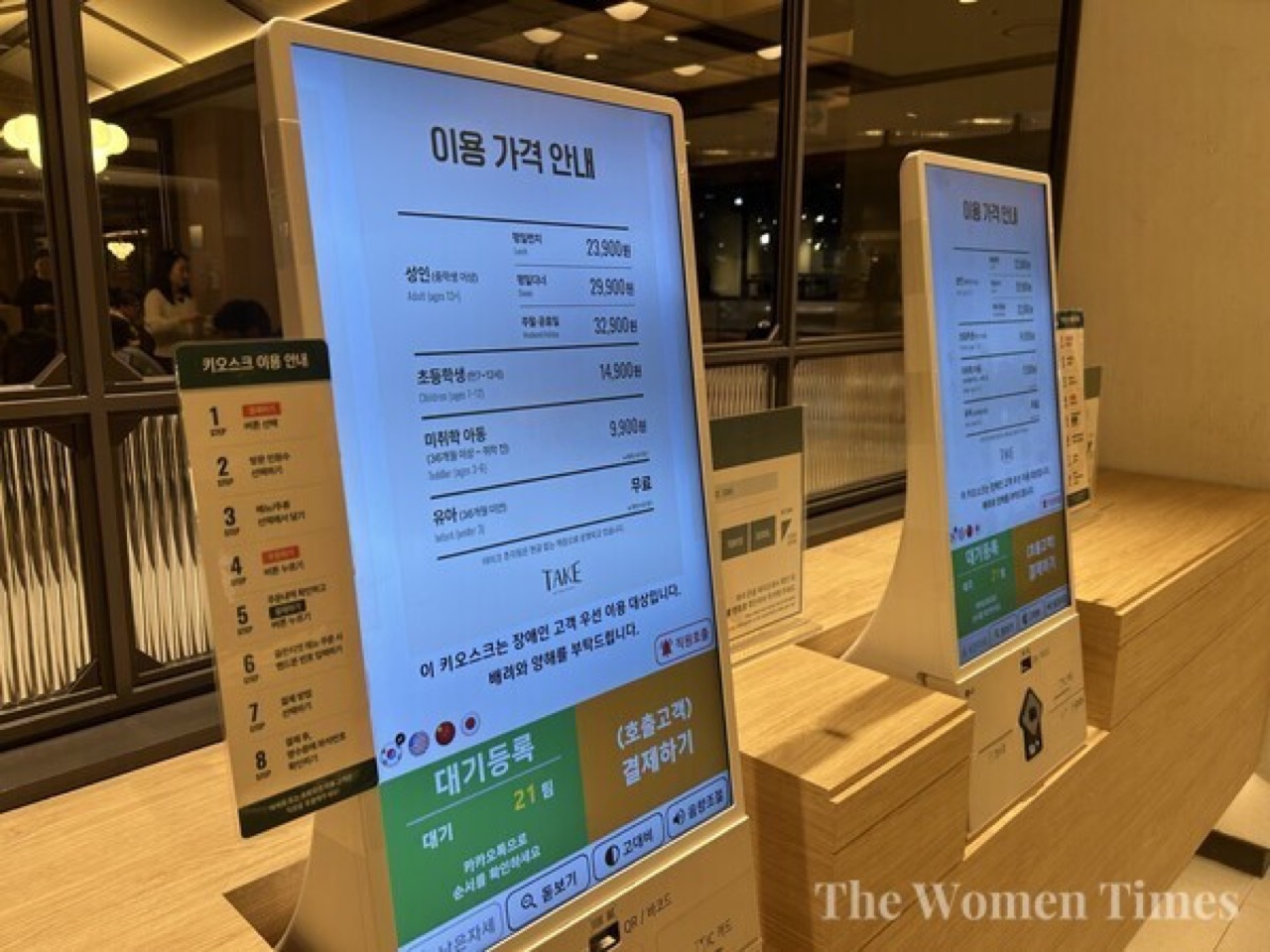
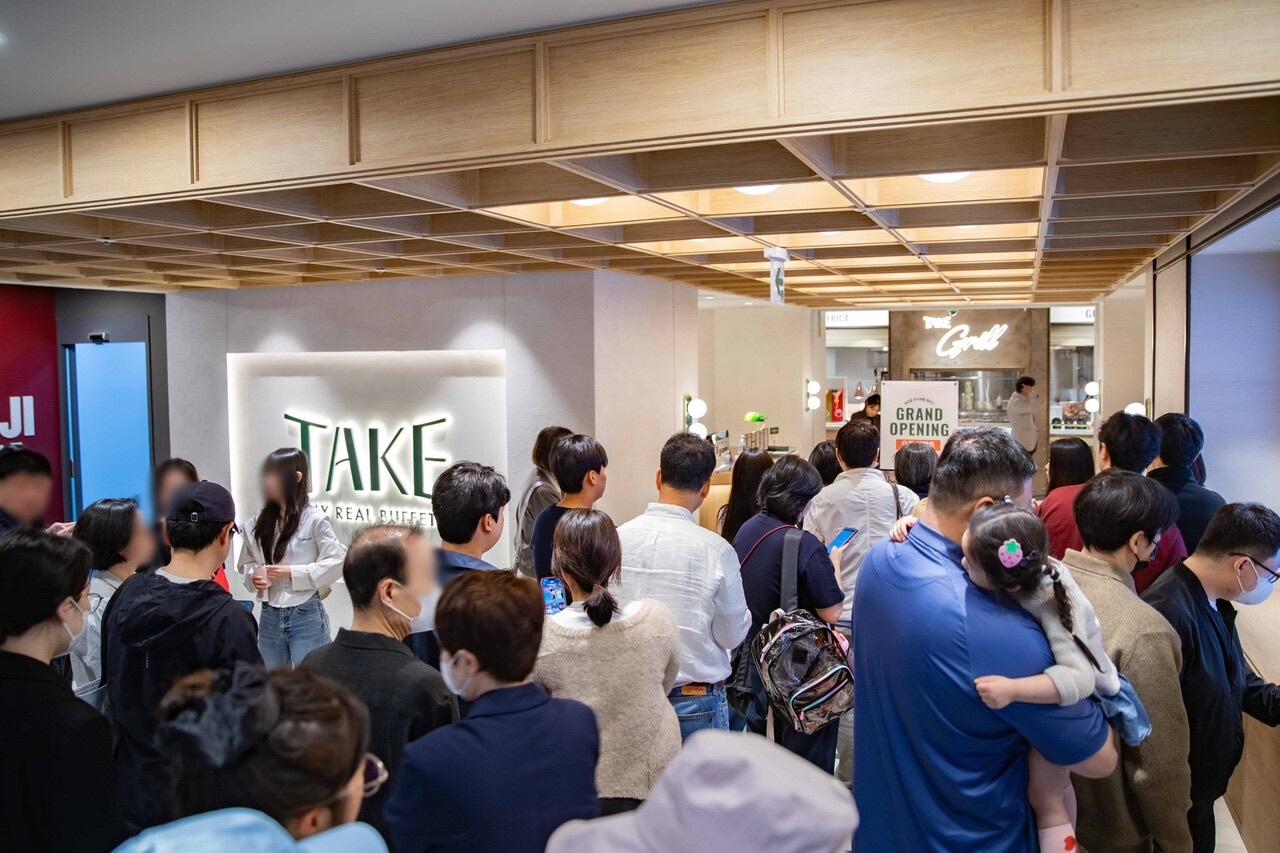
13.Jongno carries a heavy lunch population that drains in the evening. Office workers walking over from Gwanghwamun and Euljiro fill the middle of the day, visitors circling Insadong and Cheonggyecheon cover the afternoon, and families arrive on weekends. Reports of more than 60 groups waiting at weekday lunch, with waits reaching 90 minutes, measure that queue.
14.Choosing among 130 dishes in the 20,000 won range sells options rather than a price. It erases the work dinner where nobody can agree, and the table where a child and a grandparent have nothing in common. One report quoted an office worker in their forties saying the range of cuisines kept the whole team happy. What a buffet sells is not food but agreement.
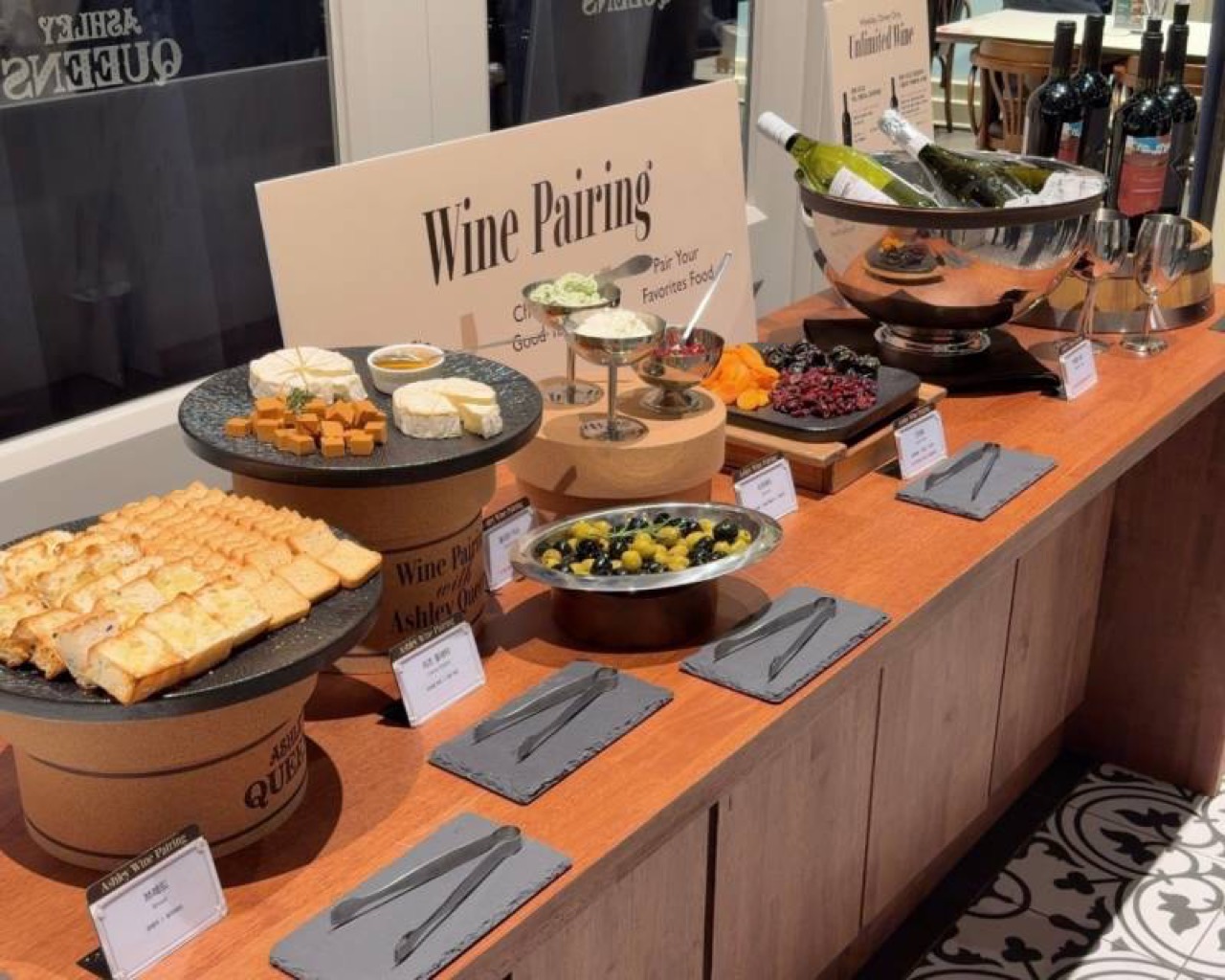
15.Family restaurant buffets competed by cutting prices and closed outlets doing it. Ashley Queens charges 19,900 won for weekday lunch, and VIPS has widened its private rooms to chase groups. TAKE did not go under that line. It asked for 4,000 won more. While Kim Dong-seon of Hanwha sold Five Guys and shut the robot pasta venture after taking over Ourhome, what he built new was a brand made from what his own company does best.
16.A company grown on canteen contracts now seats 750 people a day in 250 pyeong of second basement. A seat selling 5.8 times is rare in this format, and what produced it was purchasing, not interior design. Anyone trying the same thing in Korea hits that first. Buffet food cost runs to half of revenue, and the sourcing that pushes that half down is not something a single restaurant can buy.