retailHoteldiningdrinkCultureSpaceCafeBrand
ArticlesTravel
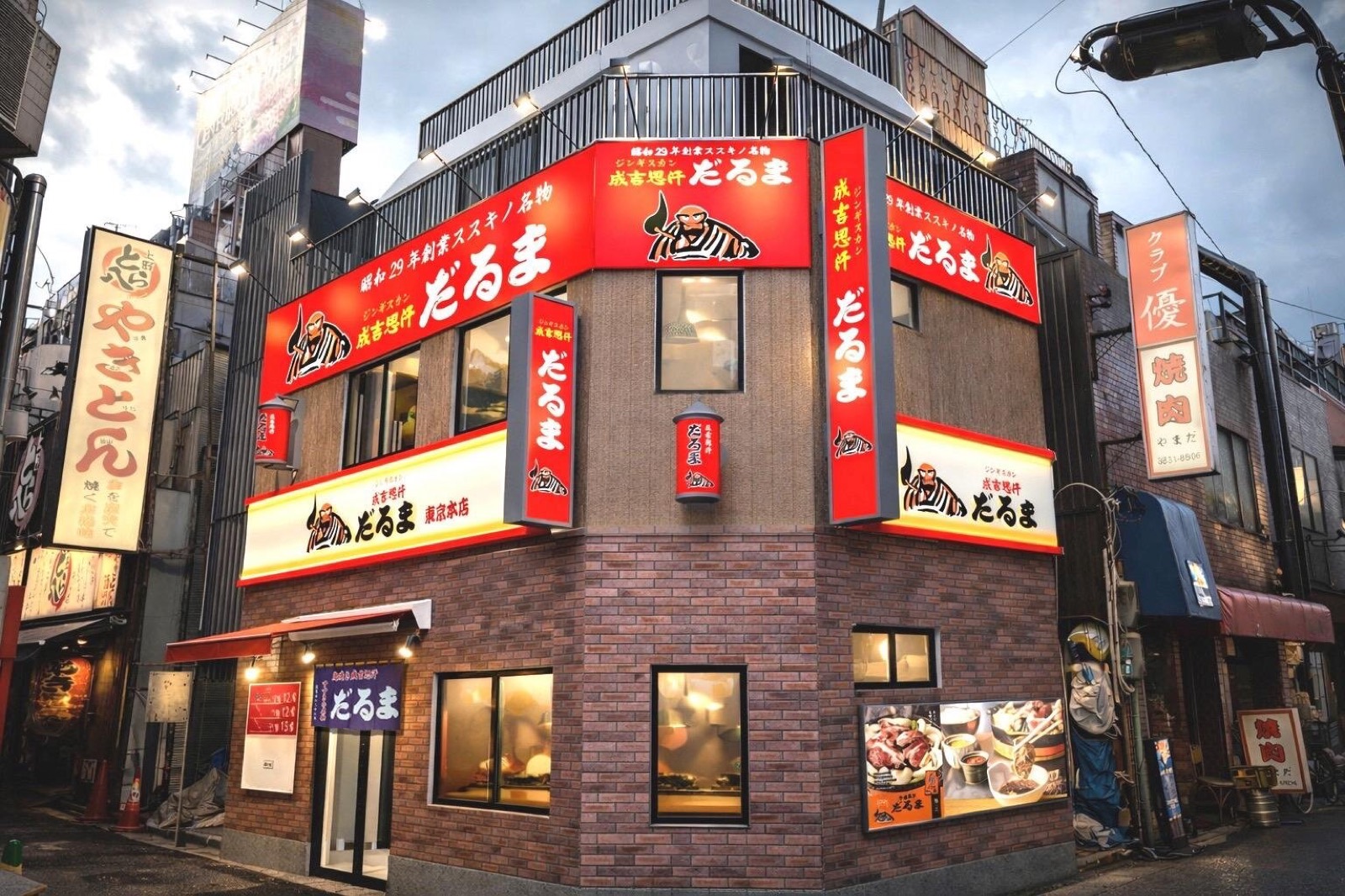
A corner in Ueno 2-chome · The company built this one itself. That is why a second Tokyo shop gets called the Tokyo flagship. ©Jingisukan Daruma
A corner in Ueno 2-chomeThe company built this one itself. That is why a second Tokyo shop gets called the Tokyo flagship. ©Jingisukan Daruma
Daily dining

They built a Tokyo building to raise the plate by 10 yen (Tokyo · jingisukan)

2026.08.31

A mutton grill that spent 72 years inside one Sapporo district opened a Tokyo flagship in Ueno on July 31. Three floors on land the company owns, 39 seats in total. The plate that sells for 1,280 yen in Sapporo sells here for 1,290.

1.At 5pm on July 31, Jingisukan Daruma opened its Tokyo flagship in Ueno 2-chome, Taito Ward. One minute on foot from Ueno-Hirokoji station. The first building ever owned by a mutton grill that started in Sapporo's Susukino in 1954.
2.Two floors above ground, one below, 39 seats all told. The first and second floors carry 12 counter seats each, and the basement holds three tables for 15. Table seating is new to this brand. Doors open at 5pm and close at 5am, every day of the year.
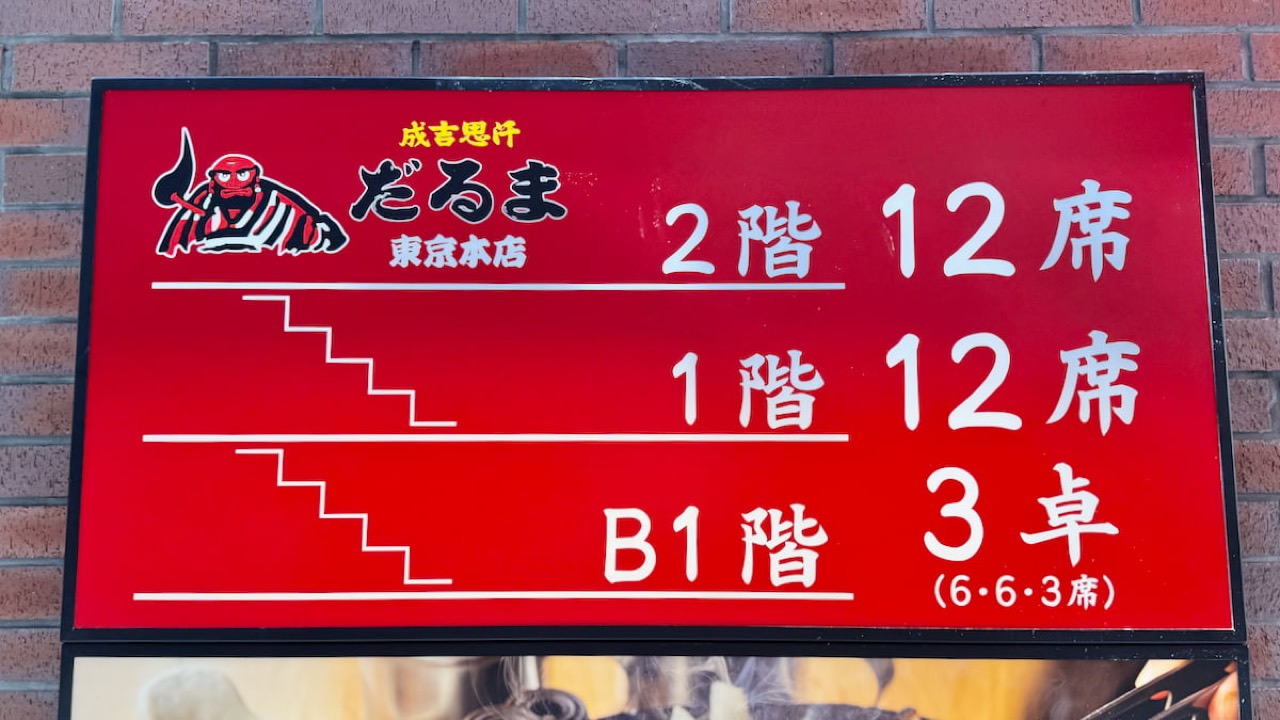
The sign is the seating plan · 12 upstairs, 12 on the ground floor, three tables below. The split across three floors is posted at the door. ©Tokyo Sanpopo
The sign is the seating plan12 upstairs, 12 on the ground floor, three tables below. The split across three floors is posted at the door. ©Tokyo Sanpopo
3.The counter curves like a horseshoe. Guests sit around the outside facing in, and a staff member stands at the center of that curve. A shichirin brazier is set into the top at every seat, so twelve people each cook over their own fire.
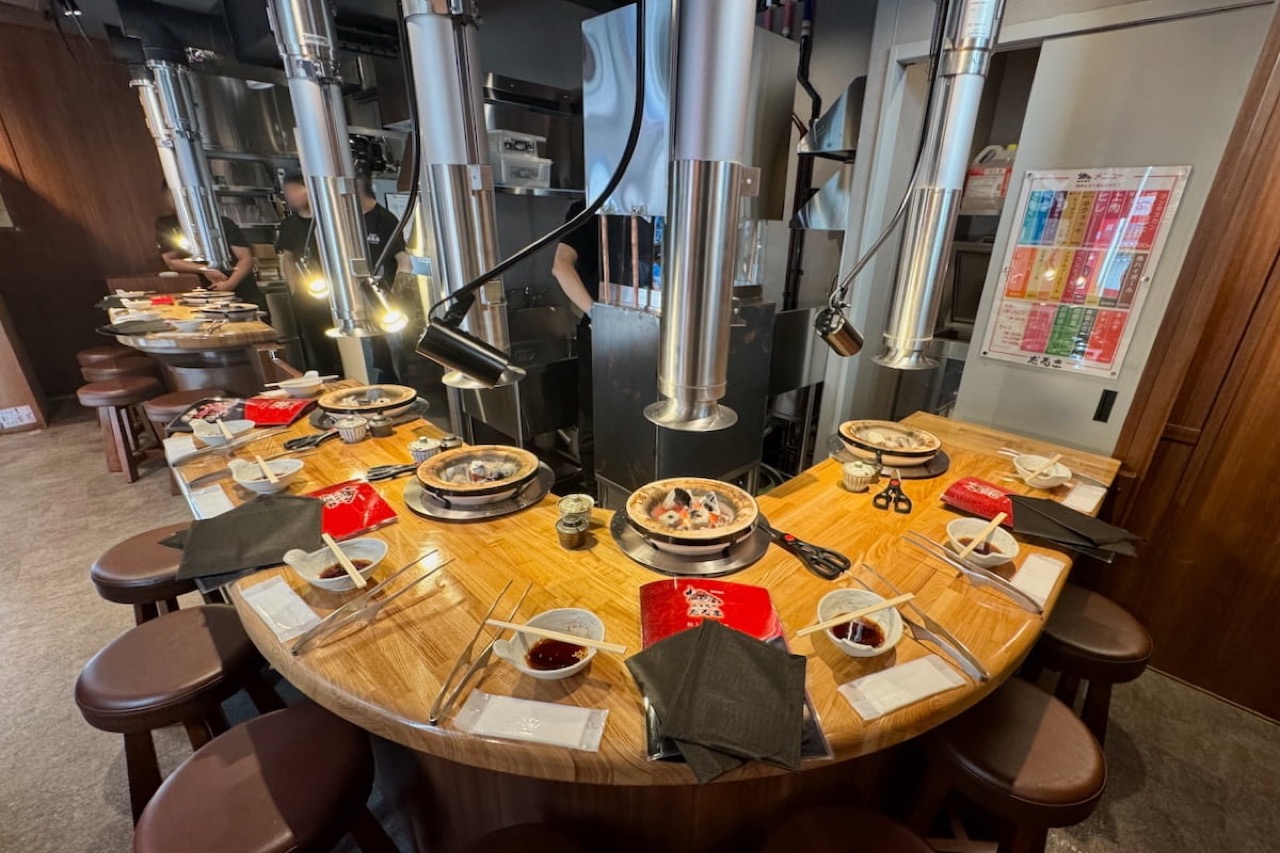
One floor of counter · Staff work the hollow on the inside. One brazier per seat, one duct above each. ©Tokyo Sanpopo
One floor of counterStaff work the hollow on the inside. One brazier per seat, one duct above each. ©Tokyo Sanpopo
4.The pan domes upward like a helmet. Onion and leek go around the rim first, then a lump of mutton fat, and as the iron heats the fat runs down the slope into the vegetables. Smoke gets pulled straight into the duct overhead the moment meat hits the surface, and the row of wooden lockers at the back of the ground floor is there for coats.
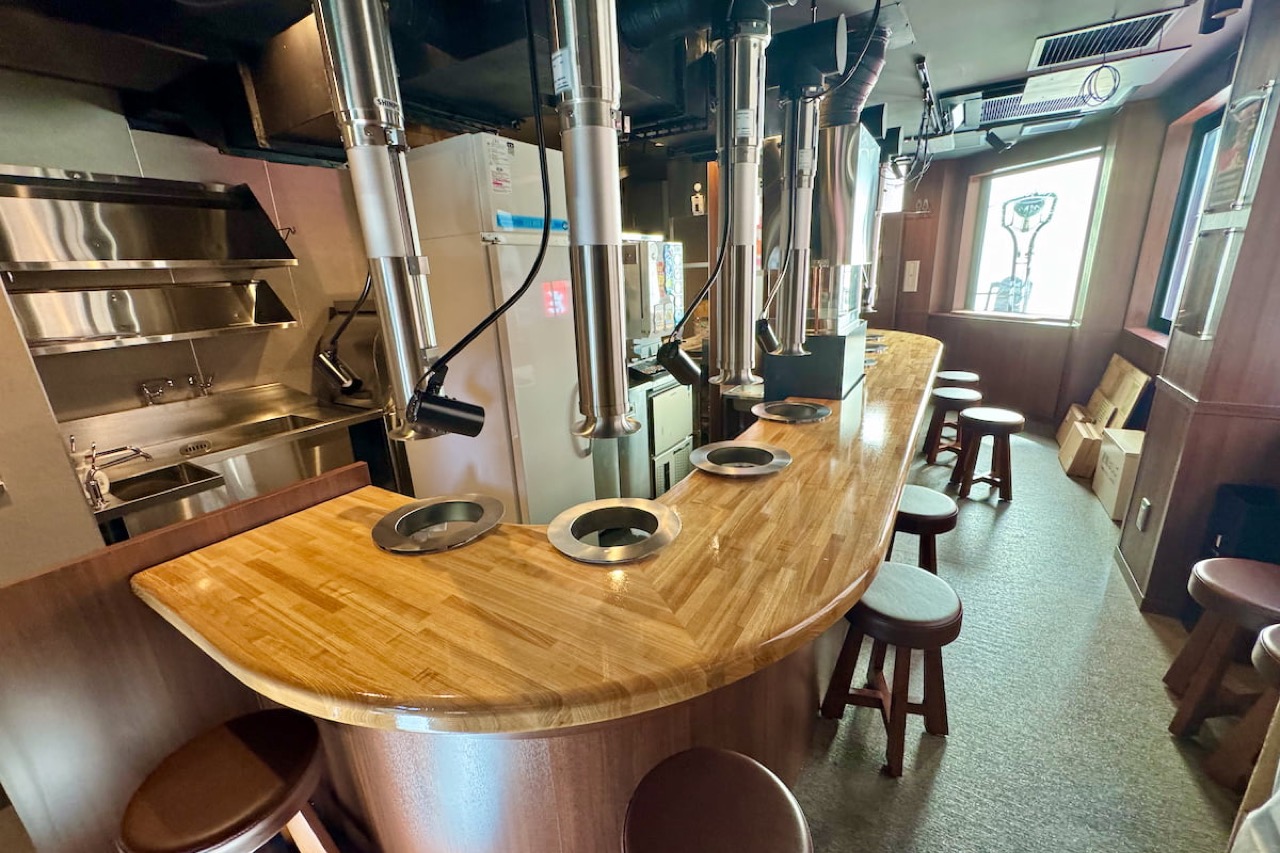
The size of one seat · One brazier in the top, one duct above it. That set is the unit of a seat. ©Tokyo Sanpopo
The size of one seatOne brazier in the top, one duct above it. That set is the unit of a seat. ©Tokyo Sanpopo
5.Mutton smells stronger than lamb. The surface dries before any gaminess rises, and a dip in the soy tare covers whatever is left with coarsely grated garlic and a mild Korean chili. Regulars in Sapporo have long finished by pouring the leftover tare over rice and topping it with bancha tea.
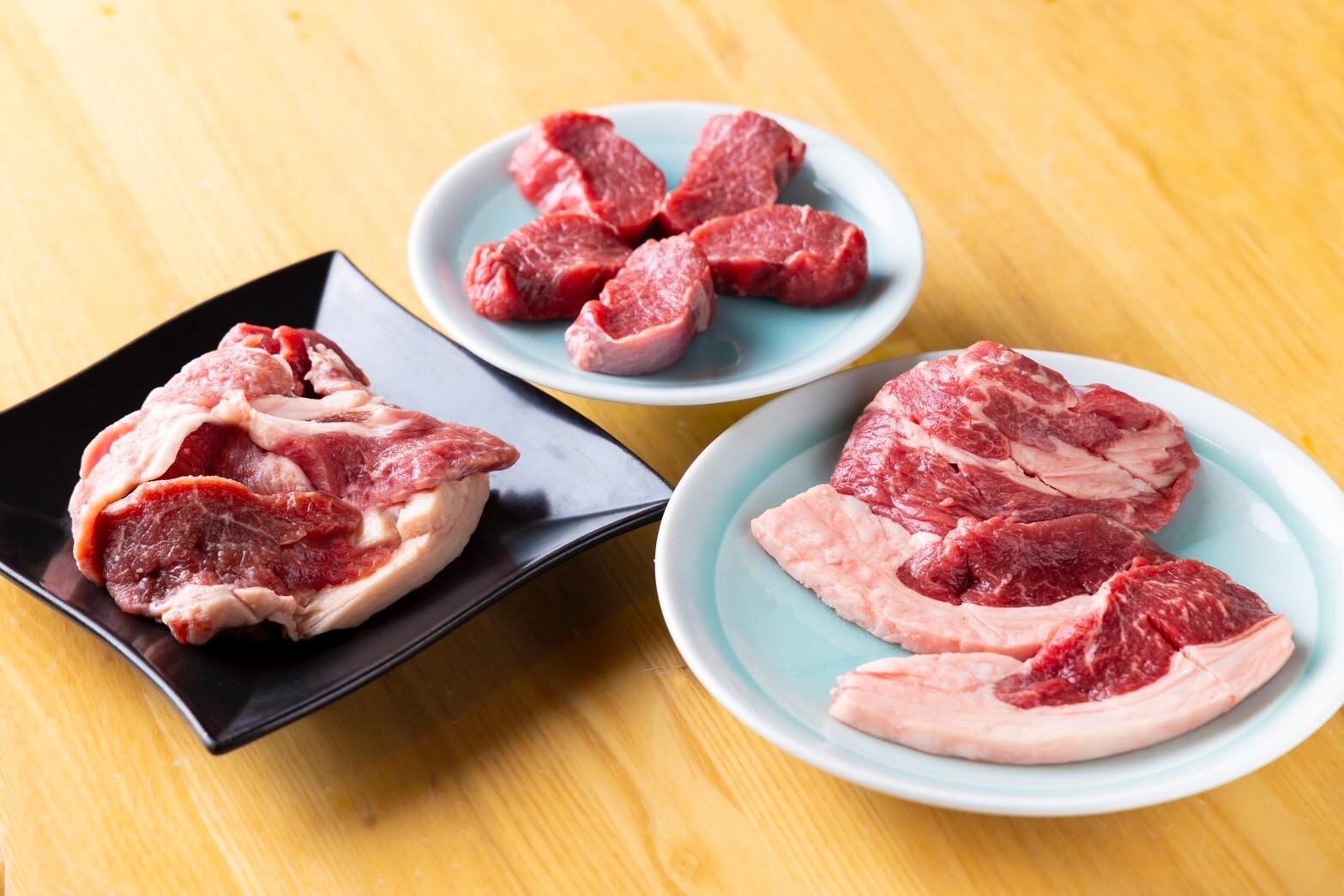
Three plates · Thick-cut shoulder loin, tenderloin trimmed to lean, and the signature five-cut plate. Staff cut it by hand just before opening. ©Jingisukan Daruma
Three platesThick-cut shoulder loin, tenderloin trimmed to lean, and the signature five-cut plate. Staff cut it by hand just before opening. ©Jingisukan Daruma
6.The basement is reached by an outdoor stair. Black leather banquettes wrap semicircular wooden tops, with one or two braziers per table. Upstairs takes solo diners, downstairs takes groups. Two different businesses under one roof.
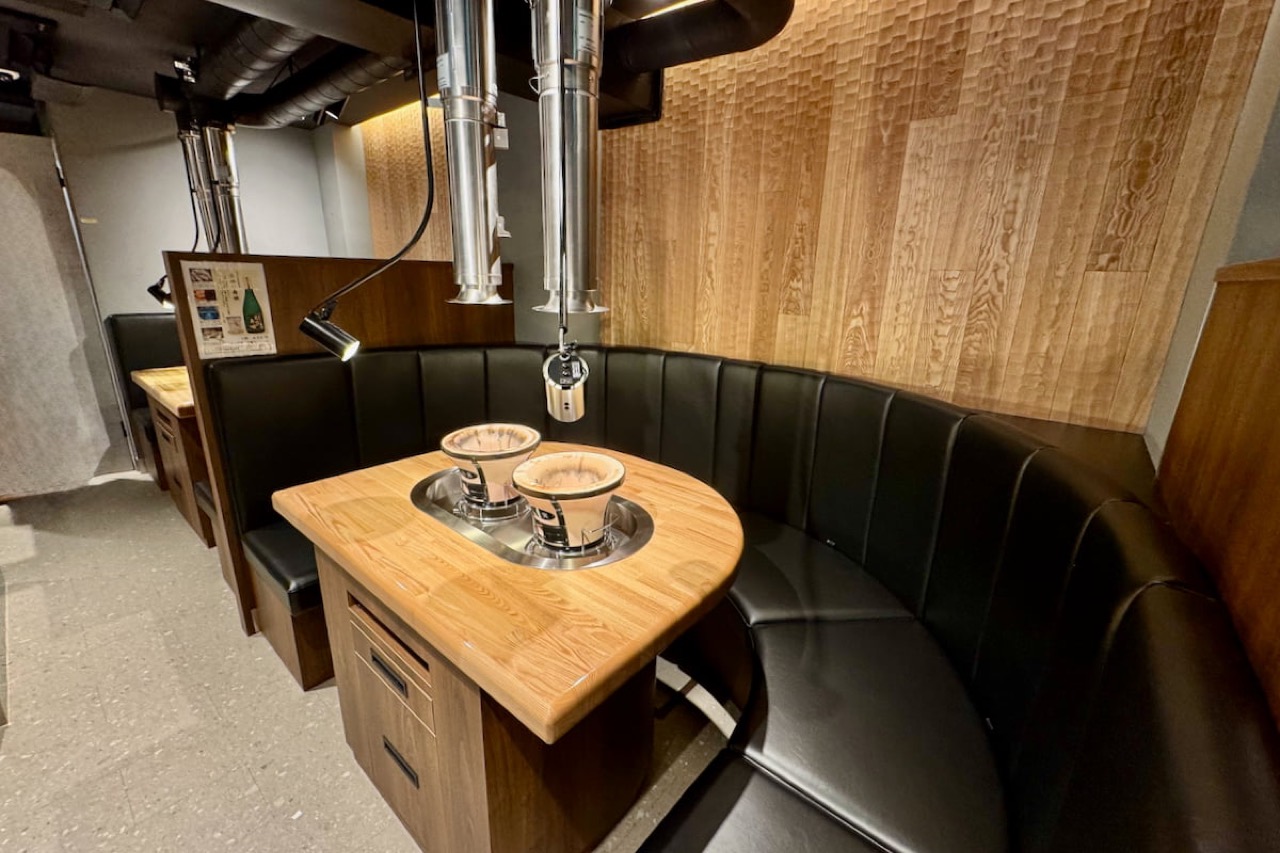
Basement · The brand's first table seats. Three tables, 15 seats, split 6, 6 and 3. ©Tokyo Sanpopo
BasementThe brand's first table seats. Three tables, 15 seats, split 6, 6 and 3. ©Tokyo Sanpopo
7.Three cuts of meat, and that is the list. The signature Jingisukan runs 1,290 yen, a thick-cut shoulder loin 1,790, and tenderloin 1,690. A Tokyo-only salt-grilled version at 1,490 sits alongside them. Kimchi, chanja and Korean seaweed all land in the 300s.
8.A plate that costs 1,280 yen in Sapporo costs 1,290 in Tokyo. The shoulder loin and the tenderloin carry the same 10-yen gap. The company calls that 10 yen freight. Chilled mutton moving from Hokkaido to Tokyo, priced at 10 yen a plate.
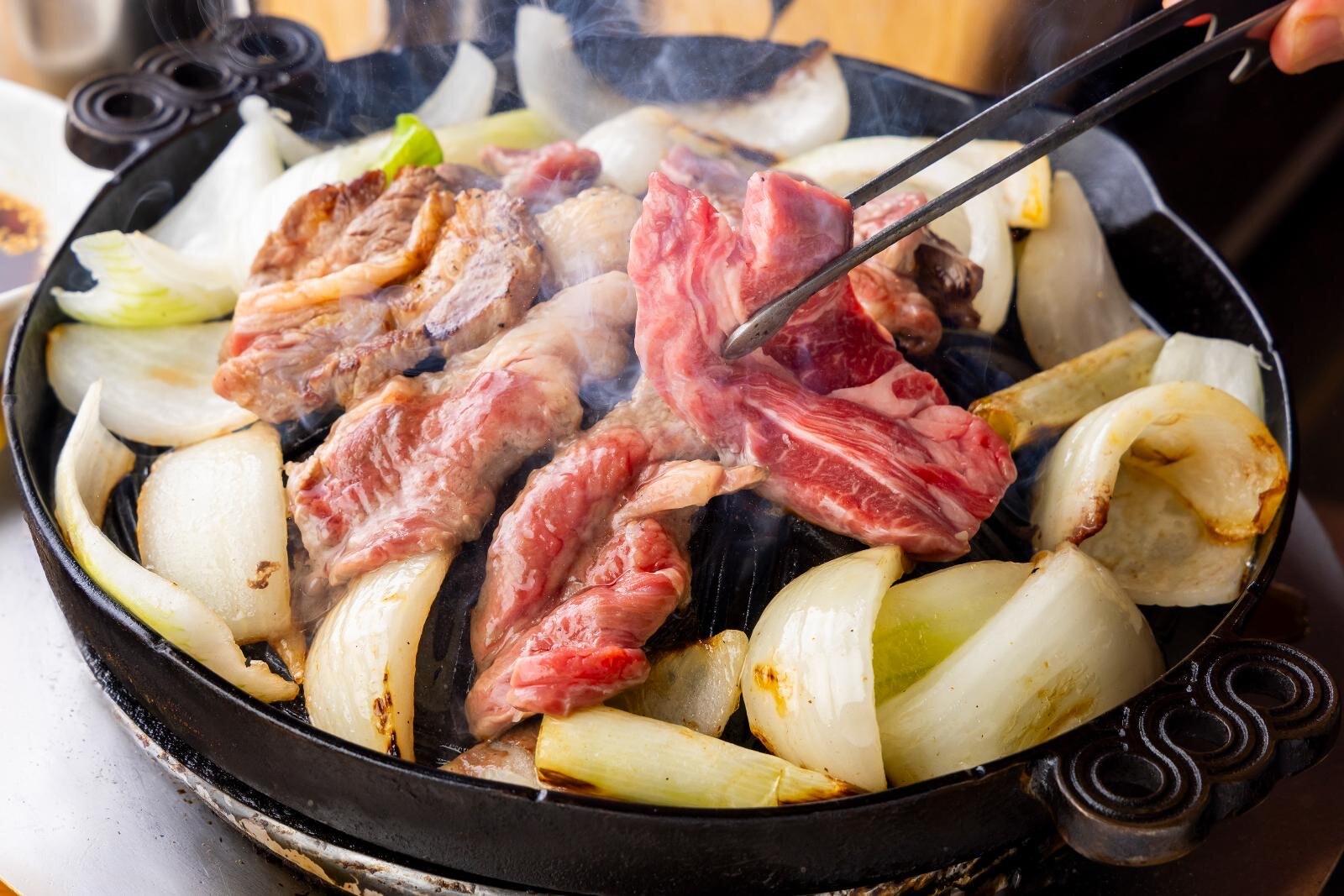
Guests do the grilling · Staff watch the fire when hands are free, but the default is self-service. That one decision thins the floor crew. ©Jingisukan Daruma
Guests do the grillingStaff watch the fire when hands are free, but the default is self-service. That one decision thins the floor crew. ©Jingisukan Daruma
9.Average spend runs around 4,500 yen. Meals are capped at an hour. With twelve hours between 5pm and 5am, the calendar allows twelve turns per seat. Does any night fill all twelve? No.
10.What makes the hour work is the kitchen, not the floor. The meat is cut before opening, and a plate reaches a seated guest inside a minute. Guests grill their own, and with only three cuts to sell, almost no time goes into taking and running orders.
11.Costs run the other way. Japan imports more than 99 percent of its mutton, and the November 2025 import price hit 1,735 yen a kilo, up 40 percent in six months. Drought in Australia cut flock numbers, and a weak yen landed on top.
싸서 골랐던 고기가 10년 새 2.7배 일본 양고기 수입가 · 1kg당 엔 · 2025년 5월은 반년 전 값을 역산한 추정 2016.03 647 2025.05 1,240 안팎 2025.11 1,735 · 10년 만의 최고 같은 기간 간판 메뉴 한 접시는 1,290엔에 묶여 있다
Costs up, price flatThe founder chose mutton over lamb so people could eat their fill cheaply. That premise is shaking now. ©Cash and Space
12.Owning the building matters for something other than saved rent. A trade that throws charcoal smoke and mutton odor until 5am struggles to meet a landlord's terms. A layout that scatters 39 seats across three floors, twelve per floor, also collapses the moment rent is charged by the tsubo. Ground-floor restaurant space near Ueno-Hirokoji averages about 30,000 yen per tsubo a month.
13.The horseshoe counter earns that looseness back in labor. Twelve seats sit inside one person's field of view, so one staffer per floor runs the room. Splitting 39 seats over three floors usually costs more people, and this one cut each floor down to a single body instead.
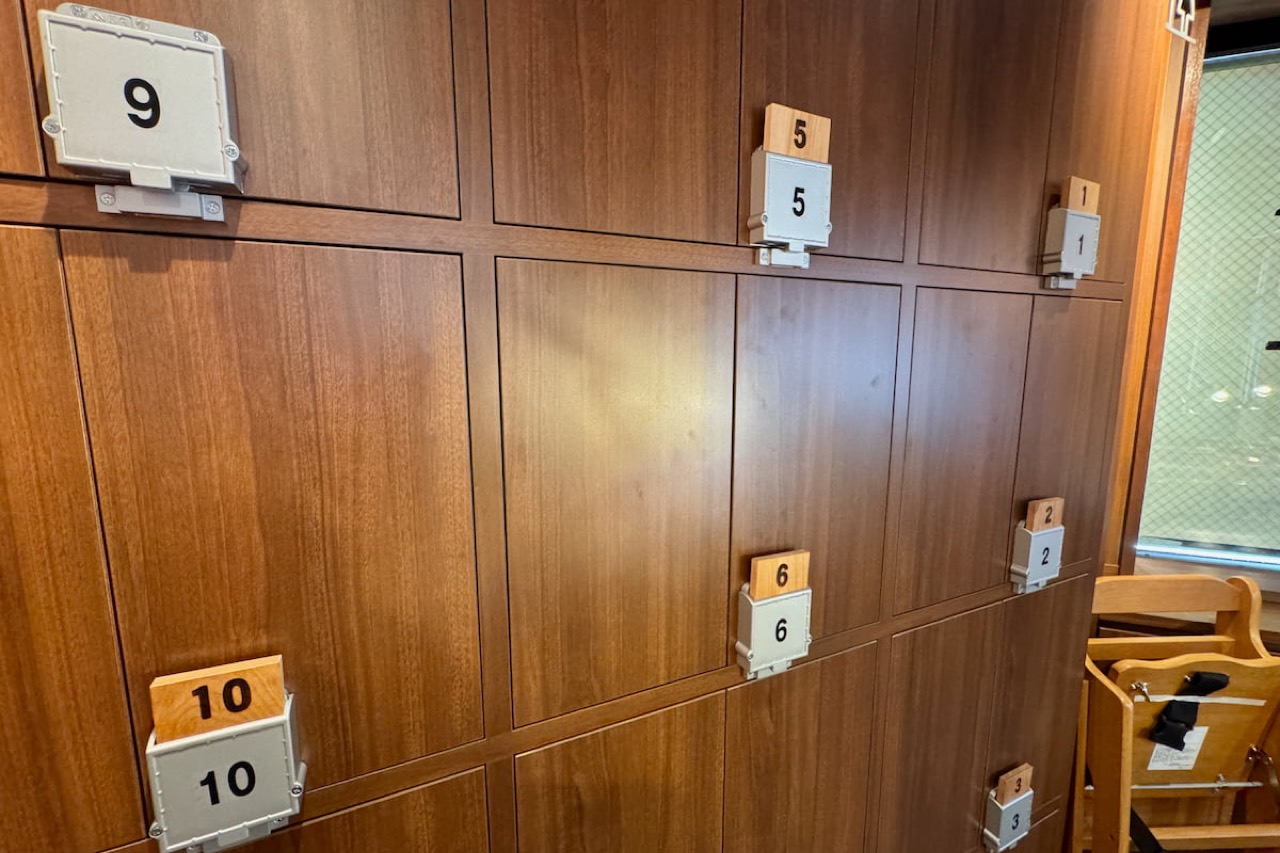
Back of the ground floor · Where coats and bags go. In a trade that puts smoke in your clothes, this is equipment rather than service. ©Tokyo Sanpopo
Back of the ground floorWhere coats and bags go. In a trade that puts smoke in your clothes, this is equipment rather than service. ©Tokyo Sanpopo
14.For 70 years the company never left Hokkaido. It opened six shops inside Susukino alone, and the shop names are literally grid coordinates. The 4.4 shop sits at Minami 4-jo Nishi 4-chome, the 6.4 shop at Minami 6-jo Nishi 4-chome. It grew only by planting six doors in one district.
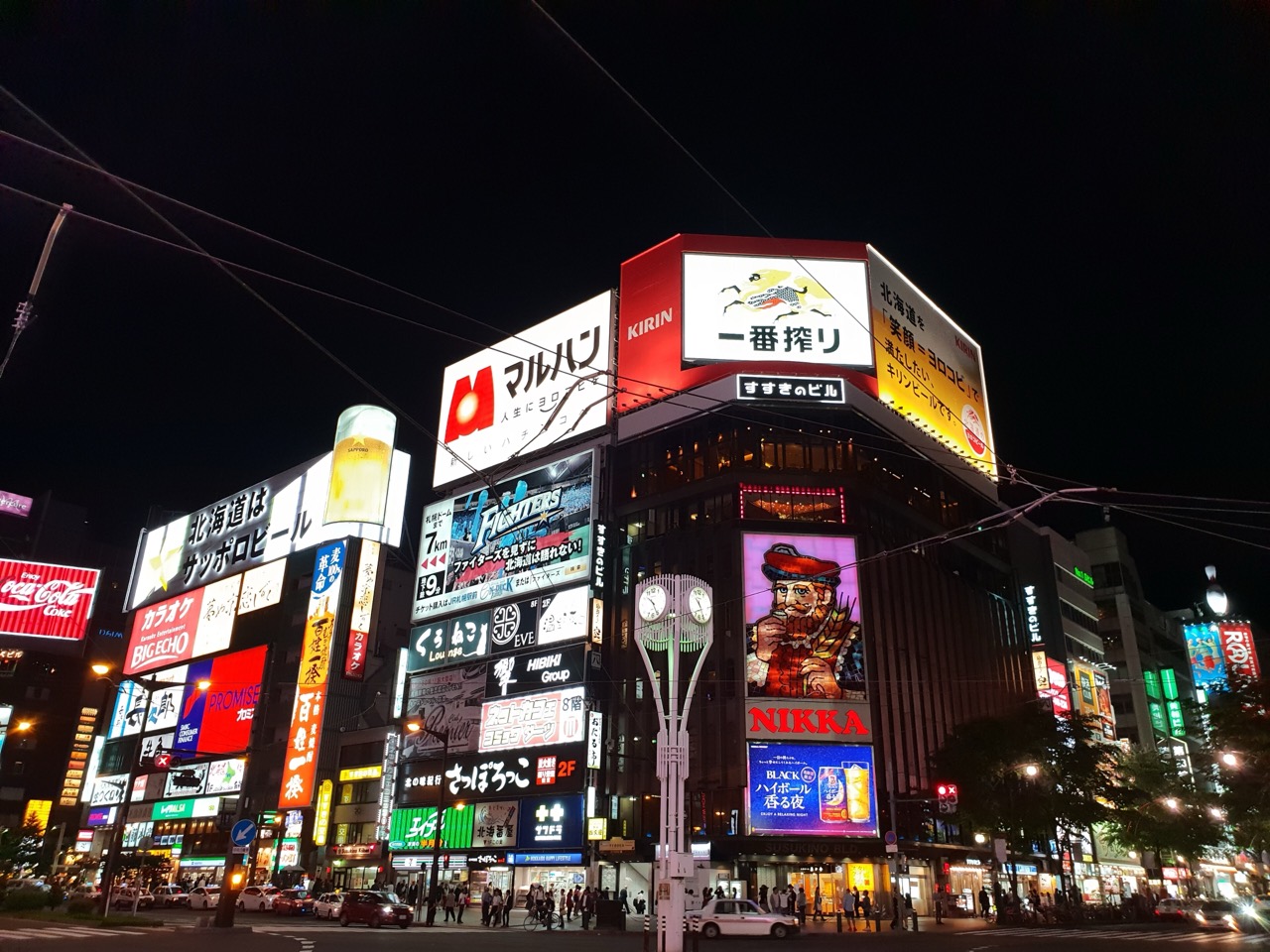
Susukino · Six of them stand inside this area. The numbers in the shop names point to the block. ©Choi2451 · CC BY-SA 4.0
SusukinoSix of them stand inside this area. The numbers in the shop names point to the block. ©Choi2451 · CC BY-SA 4.0
15.The refusal to come to Tokyo was the second generation's call. Fresh mutton and tare could not travel from Hokkaido to Tokyo, and bringing Sapporo staff along would not reproduce the room. Chilled logistics reversed that. When the first Tokyo shop opened with 20 seats in July 2024, 140 people were queued before the doors opened and the last guest got in six and a half hours later. Putting the second shop right beside it is Susukino practice too.
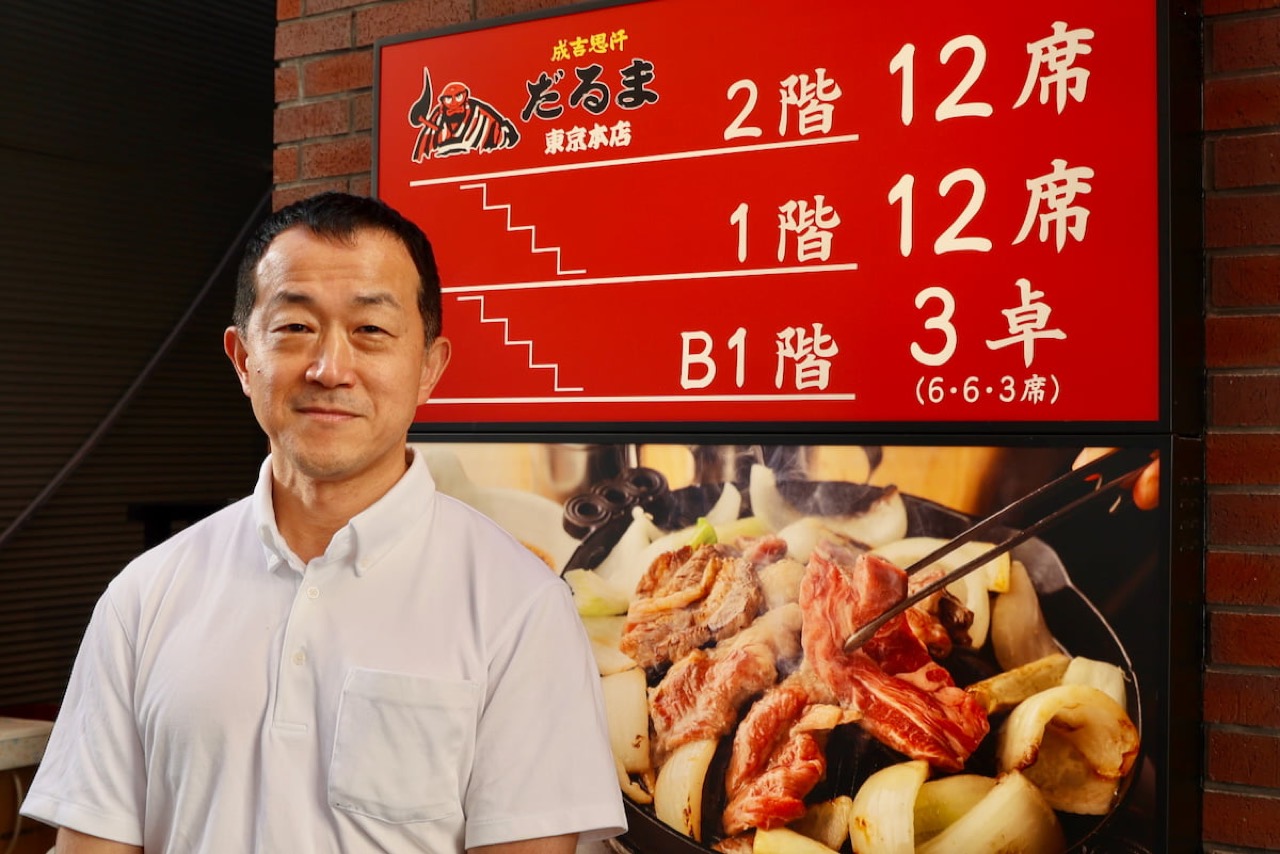
Third-generation owner · Kim Yu-seop, president of DARUMA Company. Same taste, same price as Sapporo was the condition for this opening. ©Tokyo Sanpopo
Third-generation ownerKim Yu-seop, president of DARUMA Company. Same taste, same price as Sapporo was the condition for this opening. ©Tokyo Sanpopo
열두 시간 중 일곱 시간이 밤 10시 뒤에 있다 한국 근로기준법은 밤 10시부터 아침 6시까지를 야간근로로 보고 임금에 5할을 더 얹는다 영업 밤 10시 뒤 · 가산 구간 17:00 22:00 05:00 낮 시간대 5시간 가산 없음 밤 시간대 7시간 시급에 50% 가산 · 연장이 겹치면 더 붙는다 일본은 야간 가산율이 25%다. 같은 달력을 한국에서 쓰면 이 칸의 비용이 두 배가 된다
Same clock, different costThe column to price first when moving these hours to Korea. ©Cash and Space
16.A Sapporo institution put up a 39-seat building in Tokyo and raised the plate by 10 yen. Anyone trying the same thing in Korea hits the clock before the calendar. Of the twelve hours between 5pm and 5am, seven fall inside the statutory night-work window, and wages in that window carry a 50 percent premium. Japan's premium is 25 percent, so lifting the same timetable doubles that column. Rent erased by owning the building comes back as payroll. Without a district where late-night sales clearly beat daytime, this clock is unusable.
Daily Dining #025 · 2026.08.31 · Cash and Space
Sources · Sapporo Jingisukan Daruma official site, Tokyo flagship and shop listings (accessed 2026.08) · Shokuhin Sangyo Shimbunsha, "Jingisukan Daruma Tokyo flagship opens in Ueno with Sapporo's taste and prices" (2026.08) · Tokyo Sanpopo, "Sapporo's Jingisukan Daruma Tokyo flagship opens in Ueno-Okachimachi with the brand's first table seats" (2026.07.31) · Fashion Press, "Sapporo jingisukan Daruma opens its second Tokyo shop in Ueno-Okachimachi" (2026.07) · Yahoo! News Expert, Manabu Nakagawa, "Jingisukan Daruma Tokyo flagship opens in the Ueno-Okachimachi area" (2026.08) · RESTA, "Sapporo's Jingisukan Daruma opens in Tokyo to daily queues" · GF-Support, "Why Jingisukan Daruma turned down Tokyo for 70 years" (2024.09) · Time Out Tokyo, "We visited Jingisukan Daruma Ueno-Okachimachi, the Sapporo institution's first Tokyo shop" (2024.07) · Hokkaido Shimbun, "Runaway mutton prices shake Hokkaido's jingisukan culture" · Tabelog listing for Jingisukan Daruma Tokyo flagship · Inshokuten.com rent data for Ueno-Hirokoji station
The 4,500-yen average spend comes from press reporting; turn counts and daily revenue are not calculated here. The 30,000 yen per tsubo figure is an average of listings over the past year near Ueno-Hirokoji and has no direct bearing on this building. The May 2025 mutton price of roughly 1,240 yen is back-calculated from the reported 40 percent rise over six months. The 15 basement seats are three tables split 6, 6 and 3; floor area has not been disclosed. The Susukino street photograph shows the district, not this shop.