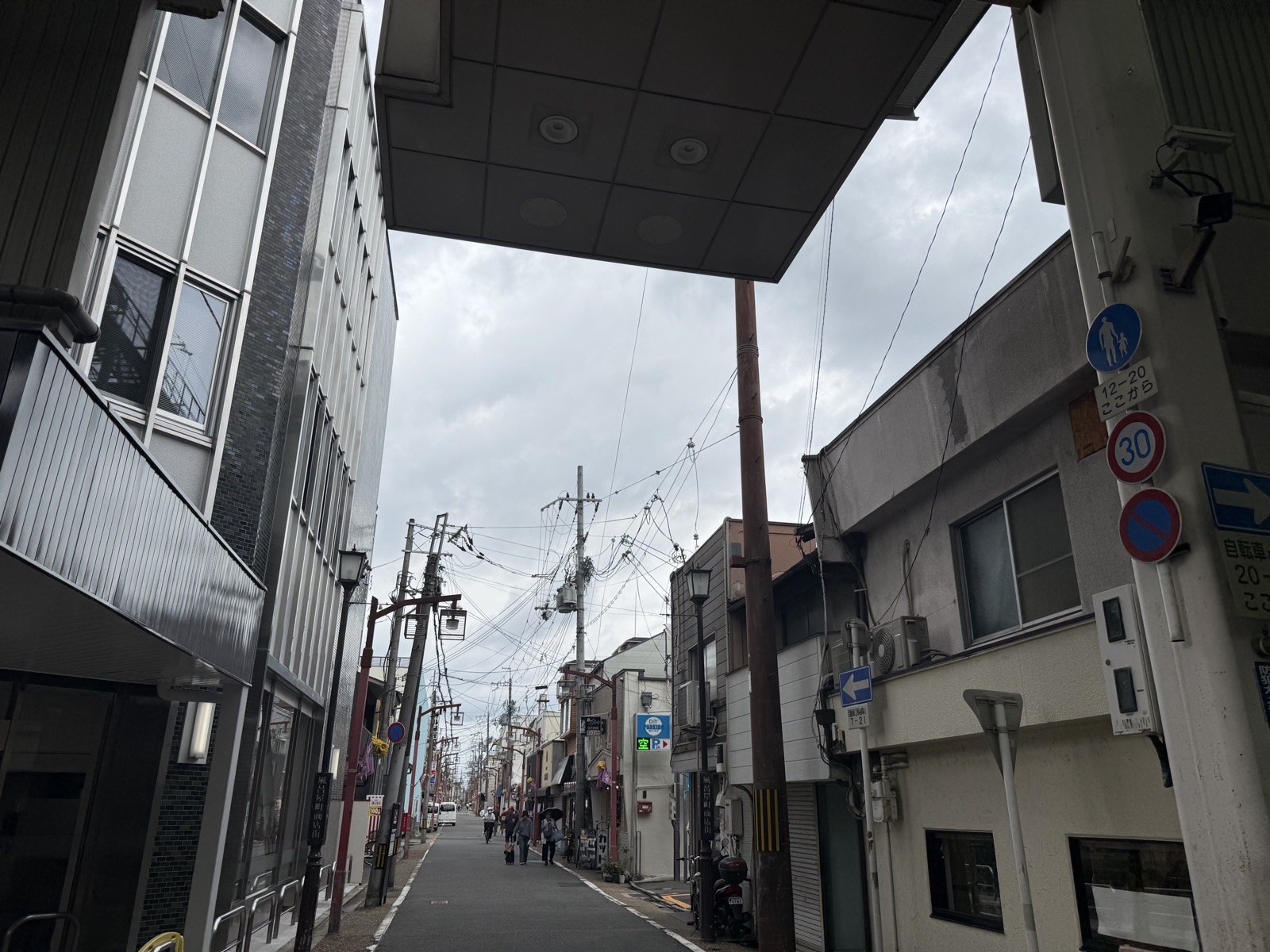
A 20-seat Italian restaurant opened on September 1 in an old shopping street in Fushimi, Kyoto. The street has no arcade roof and sits off the tourist route. The lunch course costs 2,200 yen, while the same composition runs close to 3,000 yen in Shijo-Kawaramachi. Where that gap comes from is written not on the floor plan but on the rent statement.
1.On September 1 an Italian restaurant opened on the Furoyacho shopping street in Fushimi Ward, Kyoto. The name is TURA. It sits a few minutes' walk between Keihan Fushimi-Momoyama station and Kintetsu Momoyama-Goryomae station. The space was a shoe shop, and the interior was stripped out entirely. Around 20 seats: a counter facing the kitchen with a few tables added.
2.The chef spent years as head chef at IL PAPPALARDO, often called the source of Kyoto's Italian scene. A wood-fired pizza restaurant in Higashiyama Shichijo, it held a Michelin Bib Gourmand in 2014 and 2015. While preparing to open his own place he trained separately at a dessert shop. His name has not been made public.
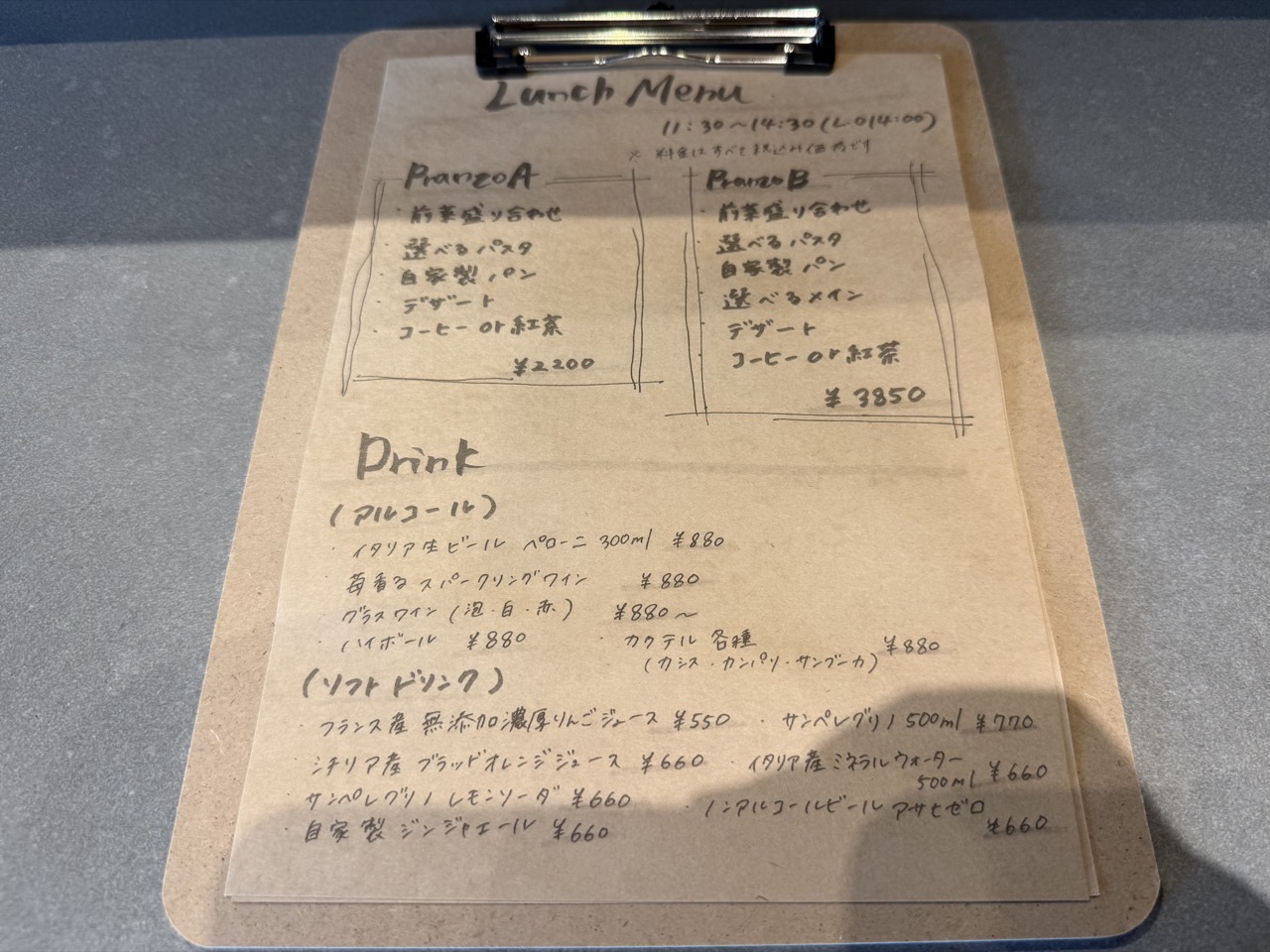
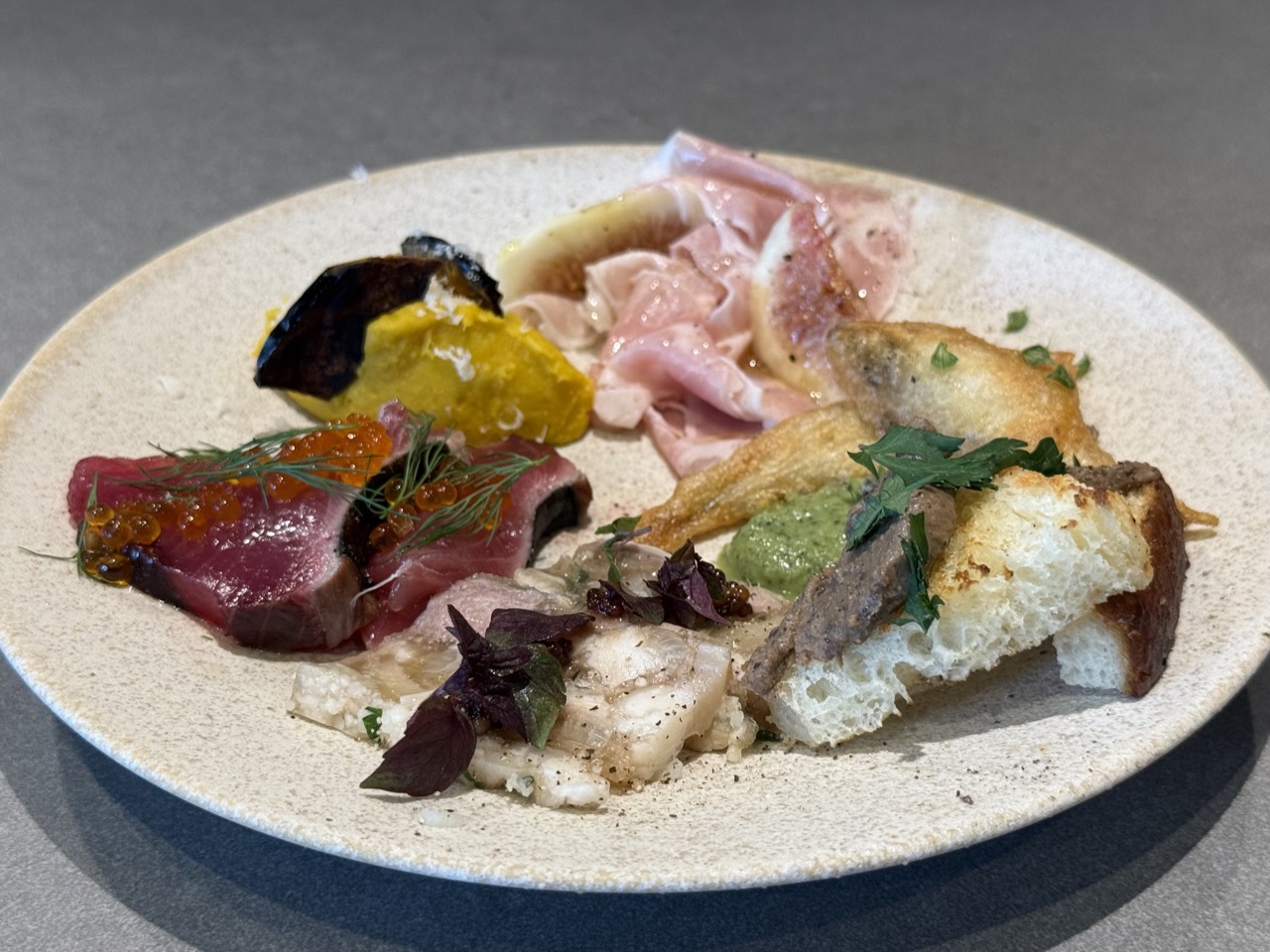
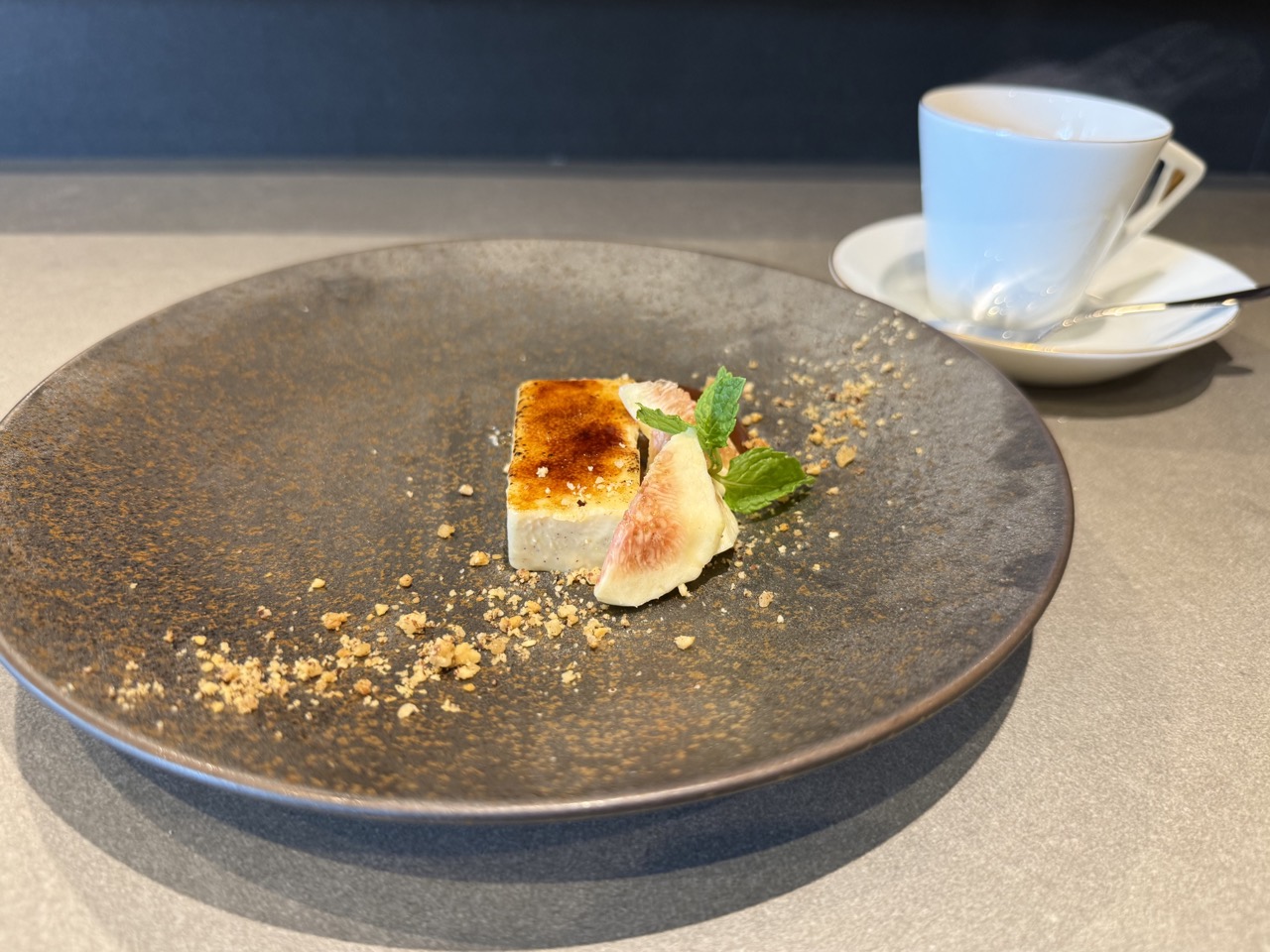
3.Pricing runs on two tracks. Lunch opens at 11:30 and closes at 14:00, with Pranzo A at 2,200 yen covering an antipasto platter, pasta, house-baked bread, dessert and coffee. Add a main and it becomes Pranzo B at 3,850 yen. Dinner runs 17:30 to 21:00, à la carte only.
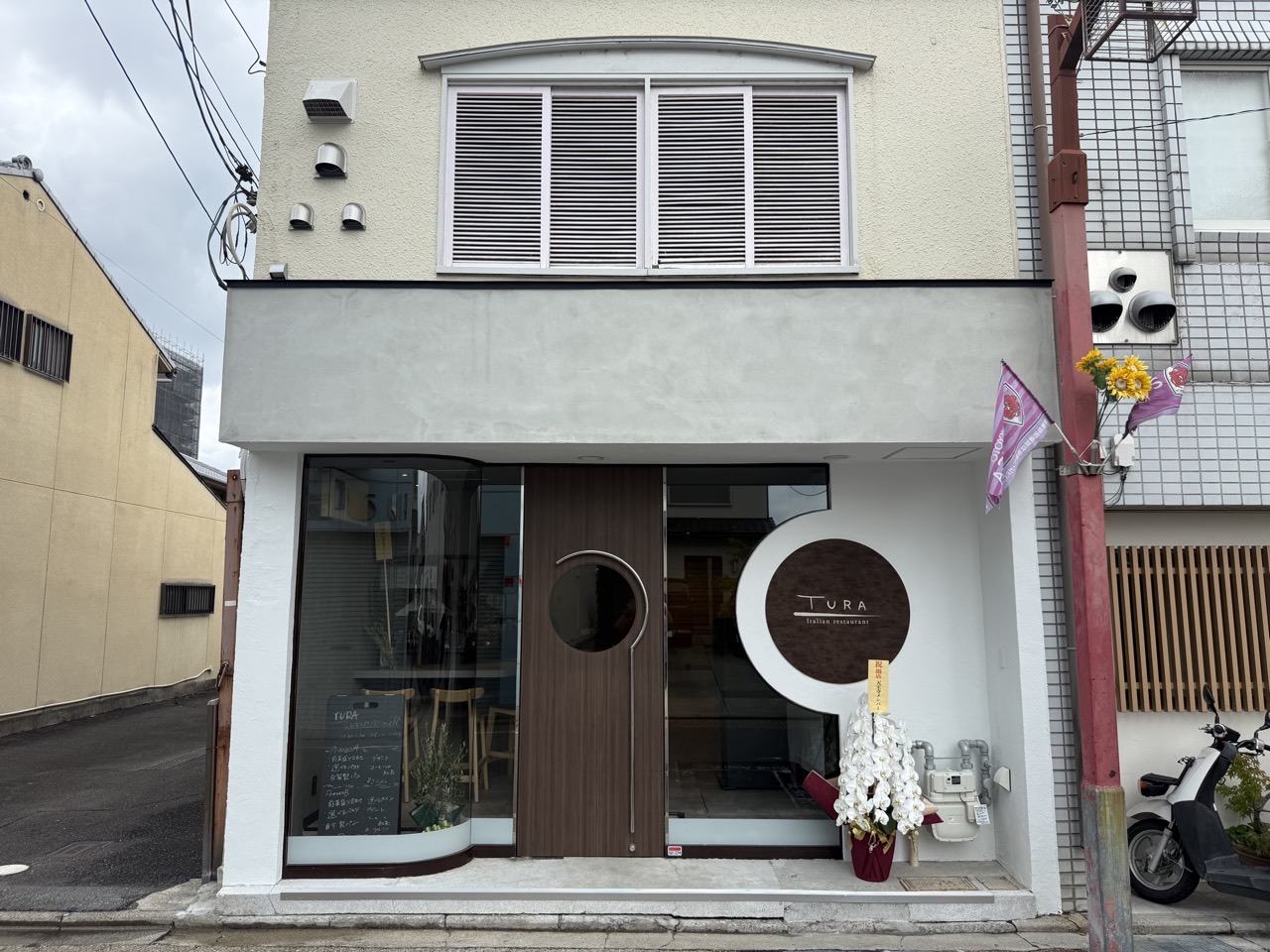
4.Inside, the counter faces the cooking line. It is a seat for someone eating alone and watching the fire, and evening customers on a shopping street tend to come alone or in pairs. The wall that held the shoe displays was cleared, and the narrow, deep floor plate was kept as it was. A room holding 20 seats runs somewhere between 50 and 60 square metres.
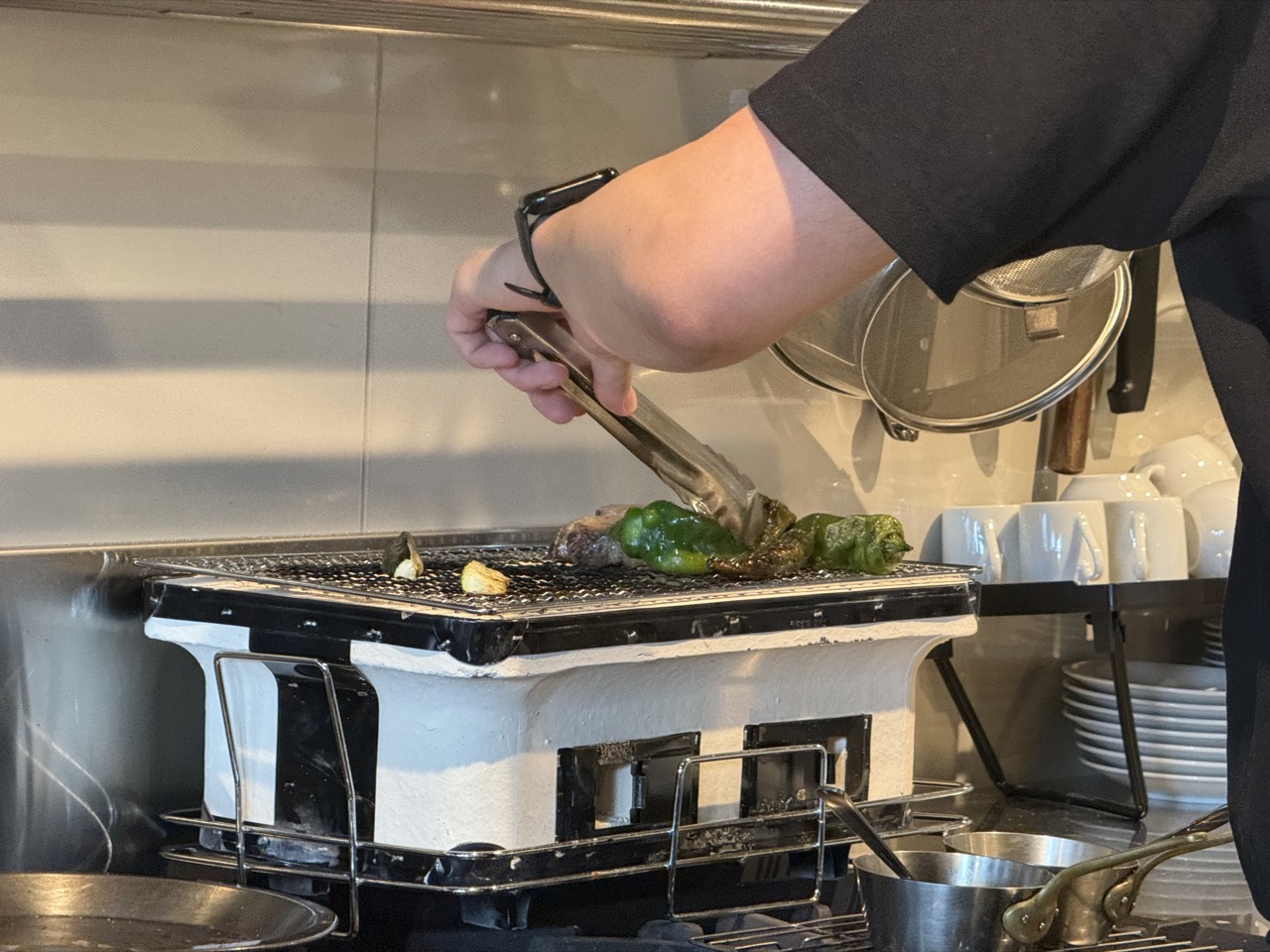
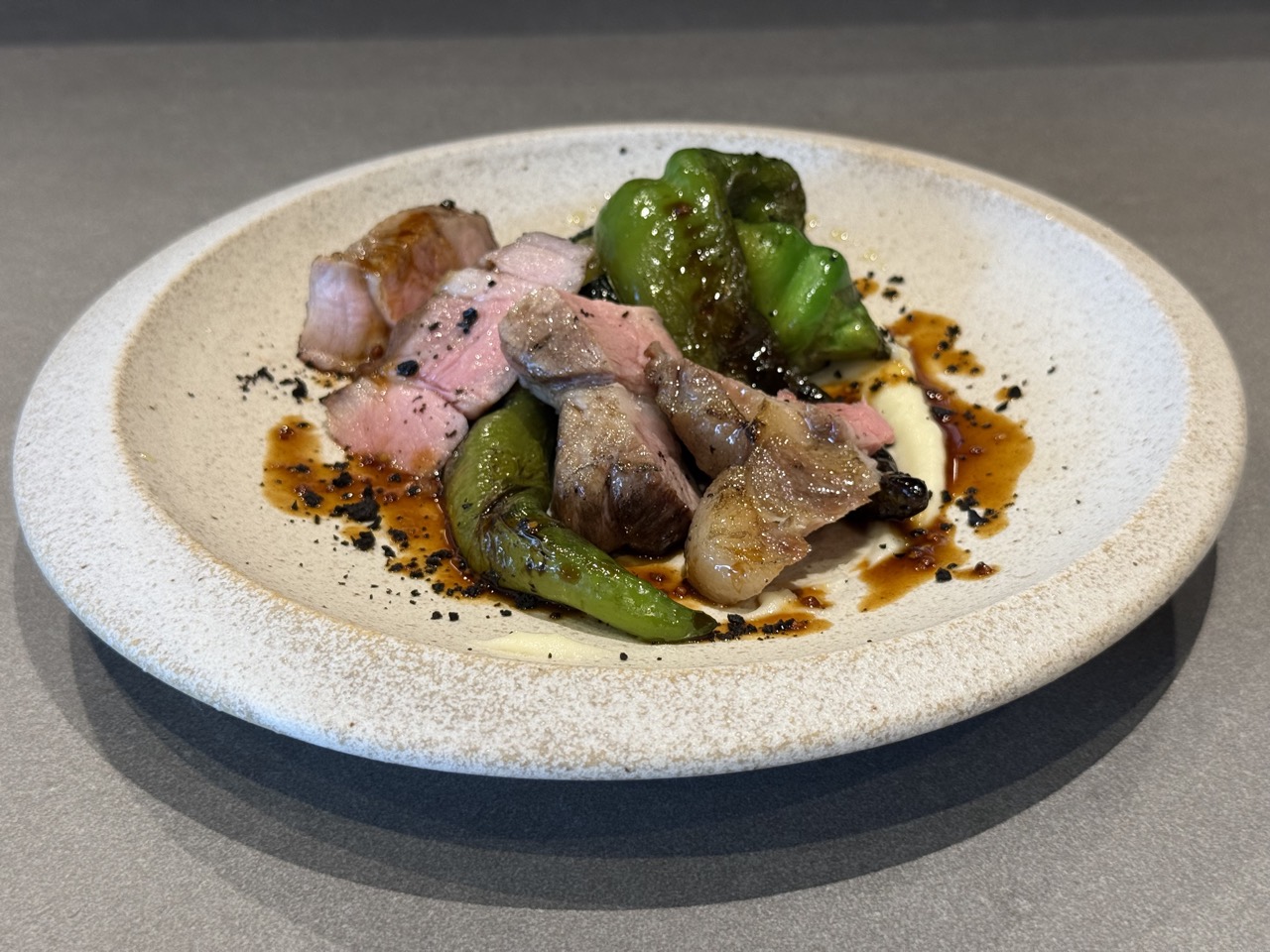
5.Charcoal grilling runs through the menu. Meat set over charcoal changes its sound as the surface moisture dries off first, and that sound reaches the counter directly. Liver pâté and house-made charcuterie come out alongside. Both are made a day or two ahead. The work after an order lands is short.
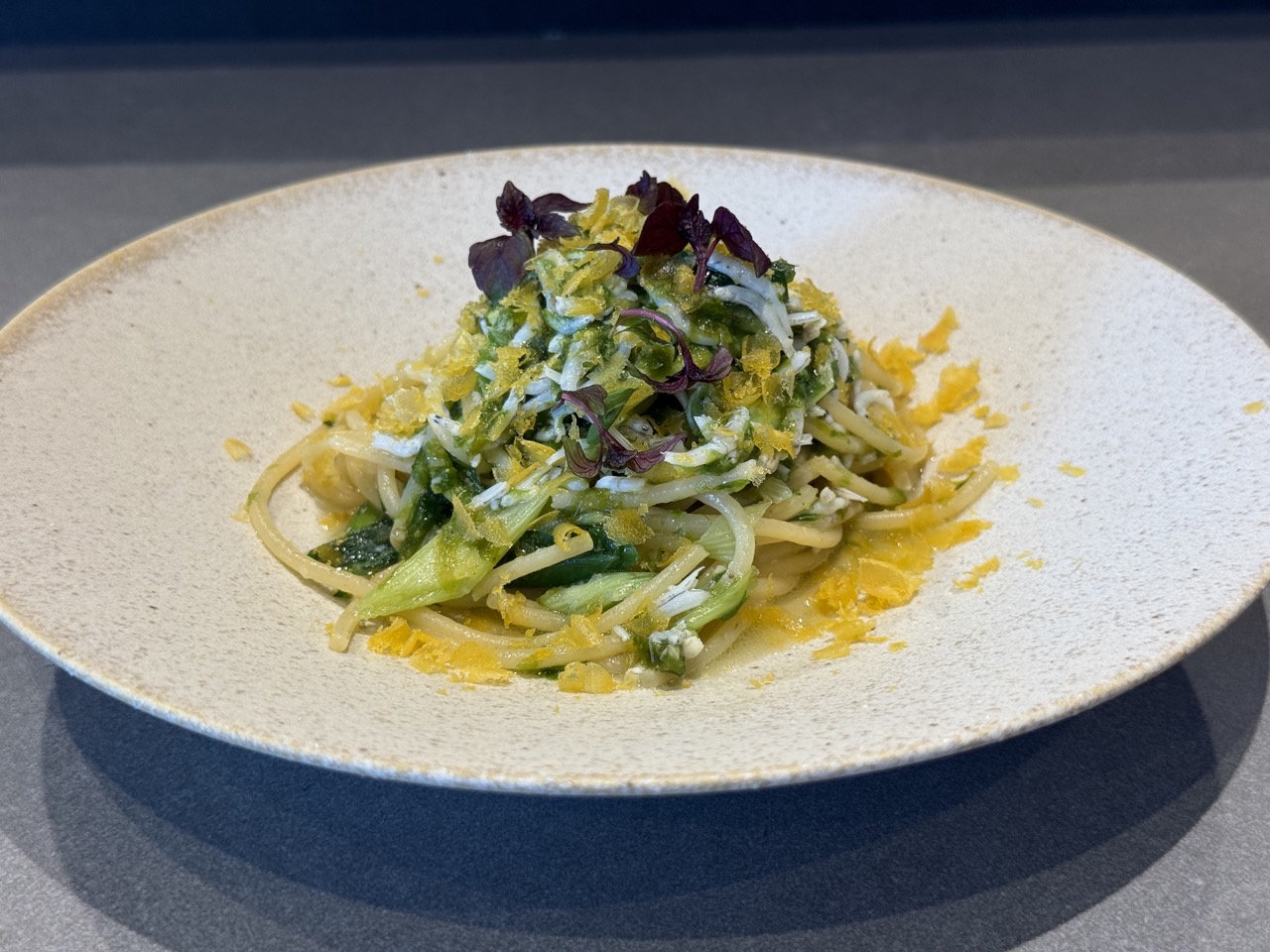
6.The pasta list carries amatriciana and cacio e pepe. Both are Roman regional dishes, cheap in ingredients but unforgiving of the hand that makes them. Cacio e pepe builds its sauce from cheese, pepper and pasta water alone, and the cheese seizes if the temperature runs even slightly high. The meat comes from Shimanto pork, beef, lamb and duck.
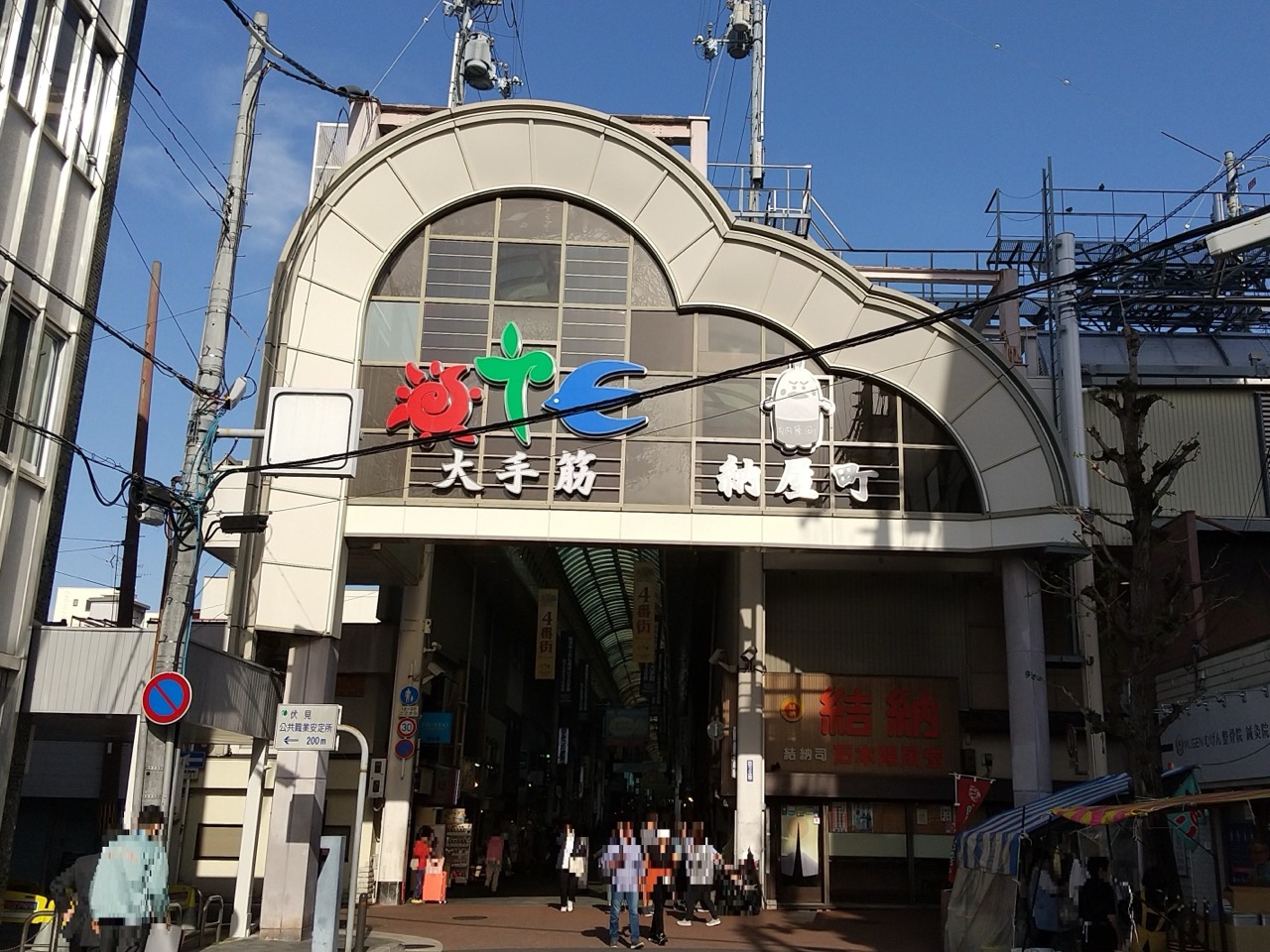
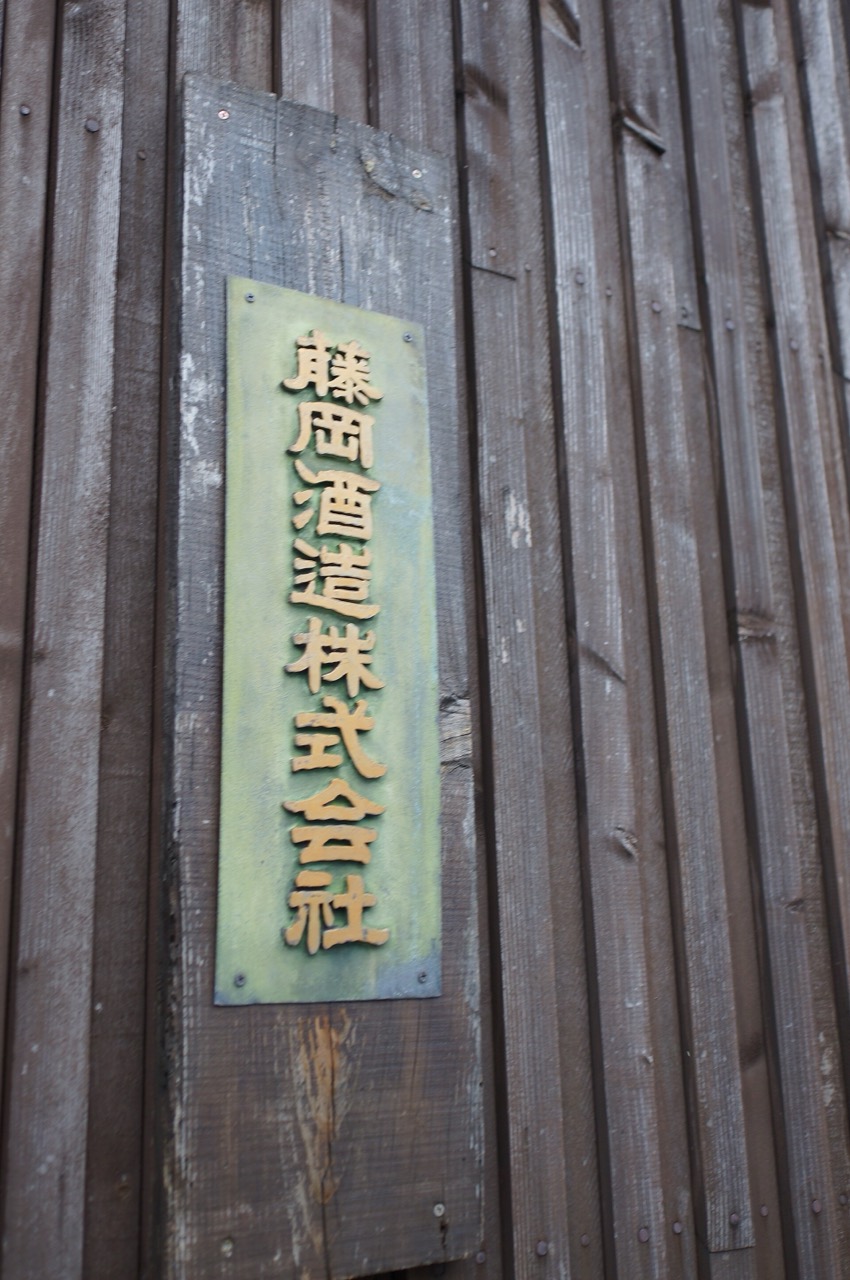
7.This is a neighbourhood that makes alcohol. Fushimi ranks among Japan's major sake regions, and 15 breweries cluster around the Otesuji shopping street. The Gekkeikan and Kizakura museums stand within walking distance, and tourists come to see those breweries. A place serving food to drink with, standing next to the places that make the drink, follows a natural order.
8.Those tourists do not reach this particular street, though. Otesuji runs 400 metres east to west with 114 shops under an arcade and 25,000 people a day, but Furoyacho, where TURA sits, is at its western end with no roof. The same stretch also houses the public job placement office. It is the edge of the tourist route and the middle of the residential one.
9.So who is the customer. The answer sits in the slot the restaurant chose for its 2,200 yen. A normal shopping street lunch runs around 1,000 yen, so this is more than double, while Italian lunch courses in Shijo-Kawaramachi run 2,970 to 5,000 yen, putting this below them. Expensive for the neighbourhood, cheap for the centre.
10.The reason that price holds sits on another line of the ledger. Street-level rent in central Kyoto runs 20,000 to 70,000 yen per tsubo per month, and the busiest blocks clear 50,000. Move to the outskirts and it falls to 10,000 or 20,000. Fushimi belongs to the second group.
11.Taking 17 tsubo as the basis, Fushimi runs around 250,000 yen a month against roughly 680,000 in Shijo-Kawaramachi (estimated). The gap is 430,000. Serving 20 lunches a day for 25 days gives 500 covers, and cutting 800 yen from each of them costs 400,000. The two figures land on top of each other.
12.Now the revenue. Lunch runs 2.5 hours across 20 seats, and since course diners stay a little over an hour, that gives 20 to 26 covers. Dinner runs 3.5 hours à la carte with longer stays, giving 16 to 24. Put lunch spend at 2,700 yen and dinner at 6,500 including two glasses of wine, and the day lands between 150,000 and 220,000 yen. Four days after opening, take the lower end. Around 4 million yen a month is the safer figure.
13.The benchmark for Italian restaurants in Japan is 32% on ingredients and 28% on labour, an FL ratio of 60%. Rent is held under 10% of revenue. On 4 million yen of revenue, rent of 250,000 lands at 6.3% with room to spare, and what remains is 950,000 yen. Put the same restaurant in the centre and that figure drops to 520,000, at which point lunch cannot be sold at 2,200 yen.
14.The break-even sits low too. Rent of 250,000, floor labour of 600,000 and 200,000 in remaining fixed costs put 1.05 million yen a month on the fixed side, with variable costs including ingredients at 37% of revenue. That splits profit and loss at 1.67 million yen a month. Per day, 67,000 yen, or 20 customers. Filling half the seats clears it.
15.For a long time there was one route out for an Italian chef in Kyoto. Take a small counter in the centre, push the spend above 10,000 yen and fill the reservation book, with the Higashiyama district around IL PAPPALARDO as the stage. TURA did not take that route. It cut the price and chose to take volume instead, and a risk follows. Shopping street trade empties out after seven in the evening, and the night in Fushimi ends far earlier than in the centre. If dinner cannot turn its seats once a day, the arithmetic above collapses.
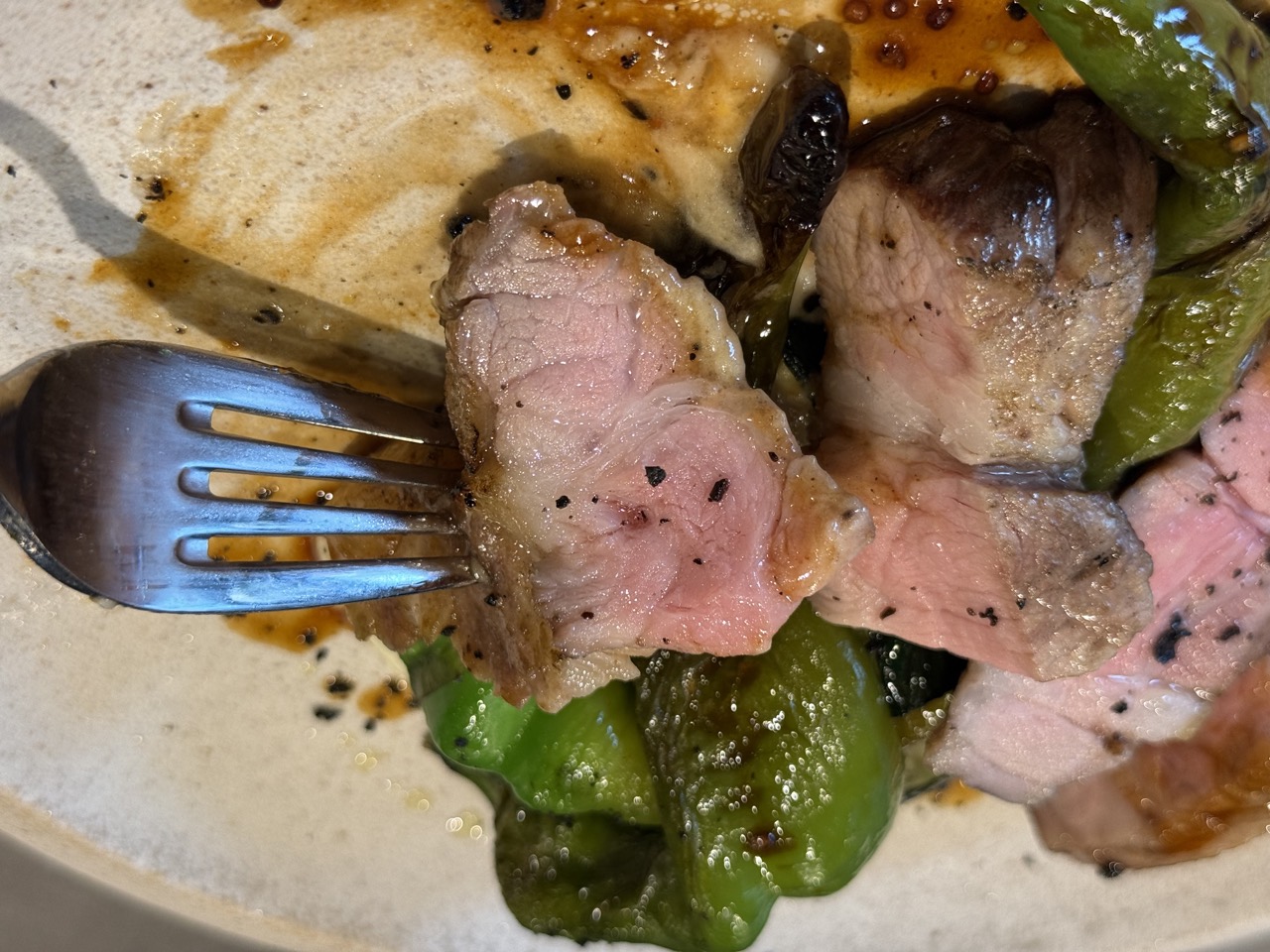
16.Training in desserts belongs to the same calculation. To put dessert and coffee inside a 2,200 yen lunch without losing money, neither can be bought in, and not buying them in means knowing how to make them. That is why a man who had been making pasta went back to learn dough and cream before opening.
17.A head chef from a Michelin-listed kitchen moved outside the tourist route, took over a shoe shop and passed the 430,000 yen a month saved on rent straight onto the lunch price. Anyone doing the same in Korea hits key money before rent. In older neighbourhood districts the cost of a location sits in key money rather than the deposit, so cutting monthly rent to a third simply pulls that capital forward. Add the fact that evenings end early in neighbourhood trade, and the arithmetic where half the seats clear break-even holds for lunch only. Dinner has to be built again from scratch.