A 50-square-metre grill house in Deungchon-dong, western Seoul, does not sell pork belly. It sells one cut, the picnic shoulder, split across three Korean black pork breeds. The man who opened it spent 30 years as a food merchandiser, and the first thing he rebuilt was the cut sheet. At wholesale, pork belly runs about KRW 23,000 per kilo. Picnic shoulder runs about 11,000. That gap is the first line of this restaurant's P&L.
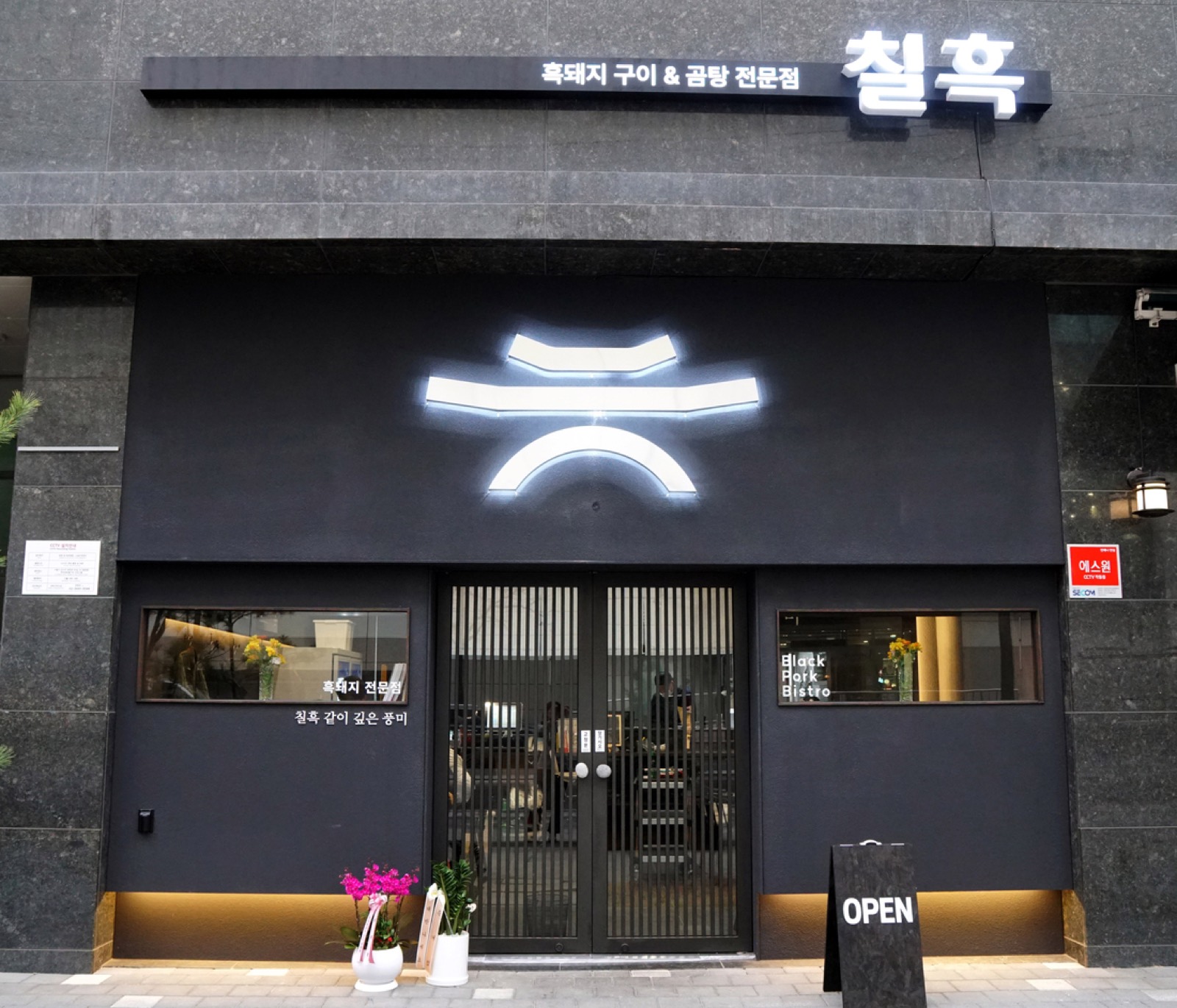
1.Hwagok-ro 66-gil in Deungchon-dong, Gangseo-gu, Seoul, a ground-floor unit three minutes on foot from Gayang Station on Line 9. A big-box supermarket sits across the road and a cinema is a few minutes further. A large white stroke of the Korean letter ㅊ is mounted on the black facade, and the sign above it reads Black Pork Grill & Gomtang. The name is Chilheuk. It opened in March 2025.
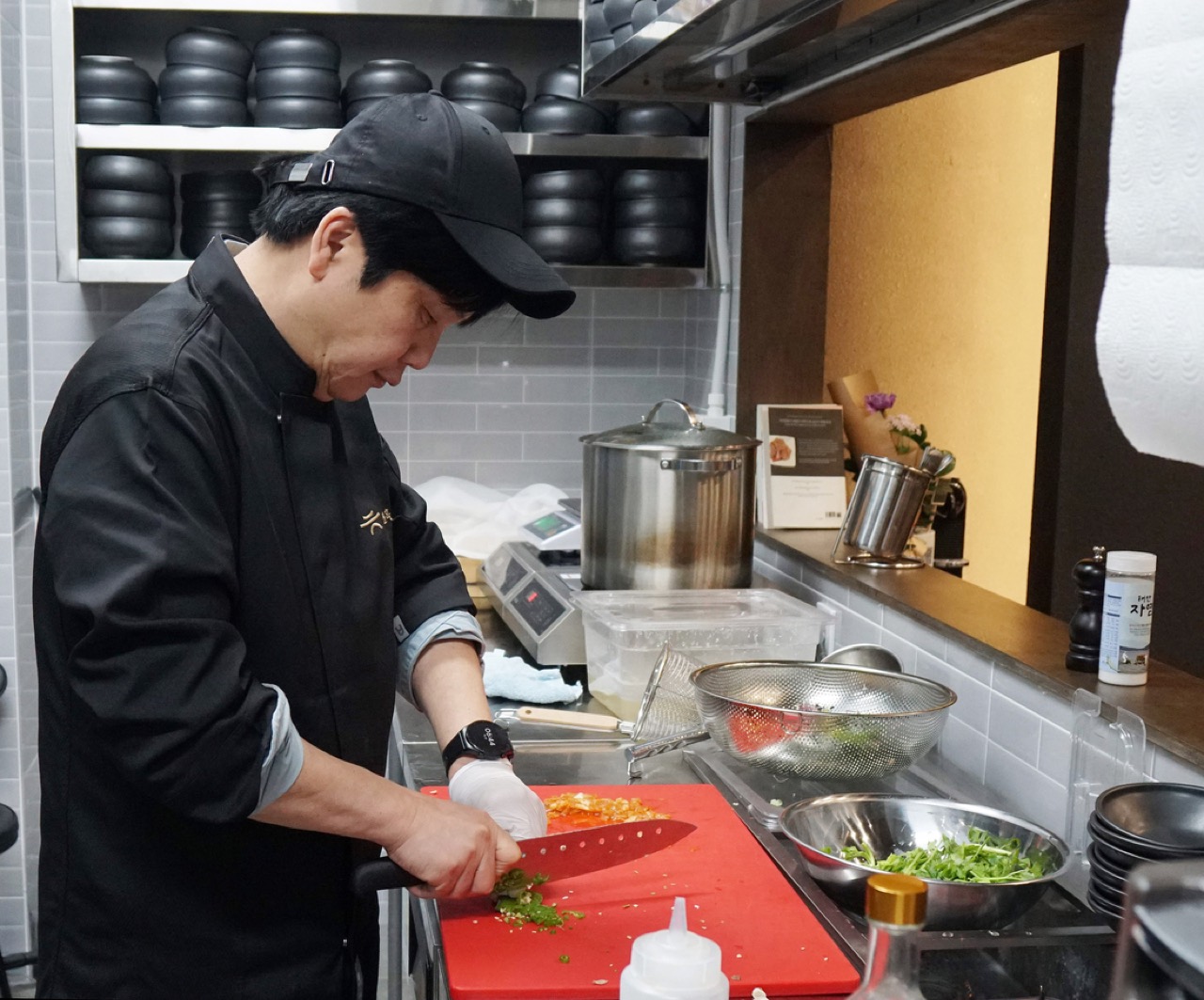
2.The man in the kitchen is Kim Jin-young. He worked 30 years as a food merchandiser and wrote a newspaper column on markets and seasonal produce for five years before opening this, his first restaurant. He calls it a black pork select shop. Customers here choose by breed, he says, not by cut.
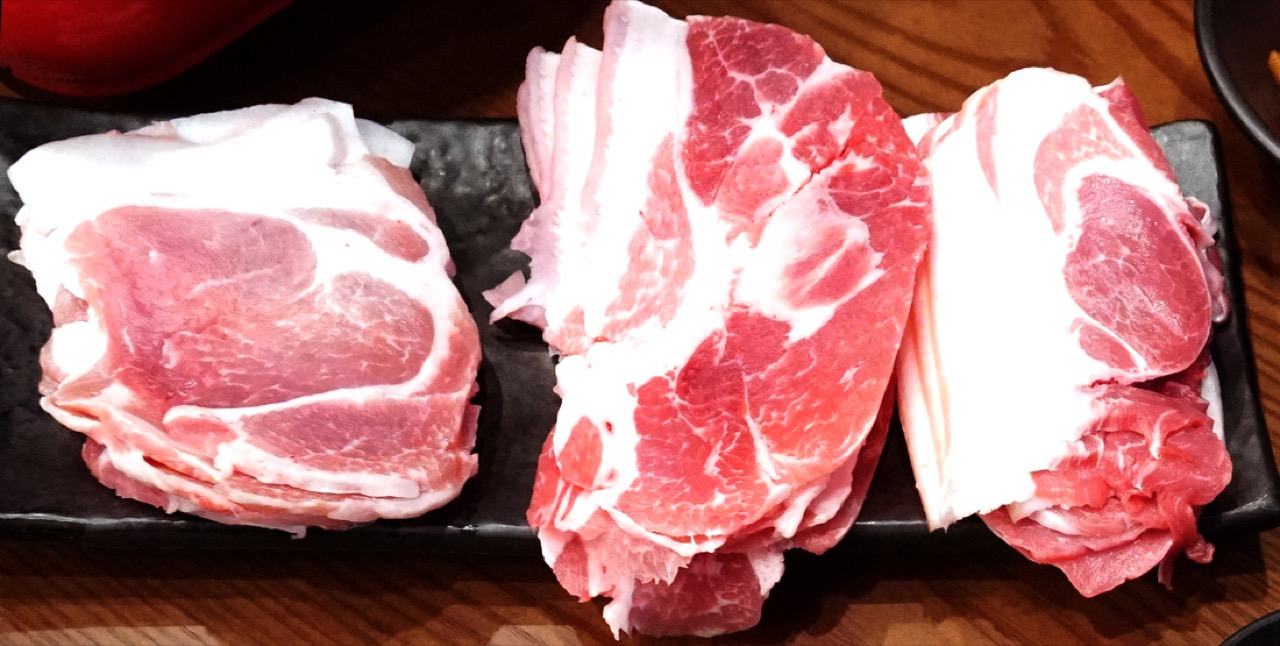
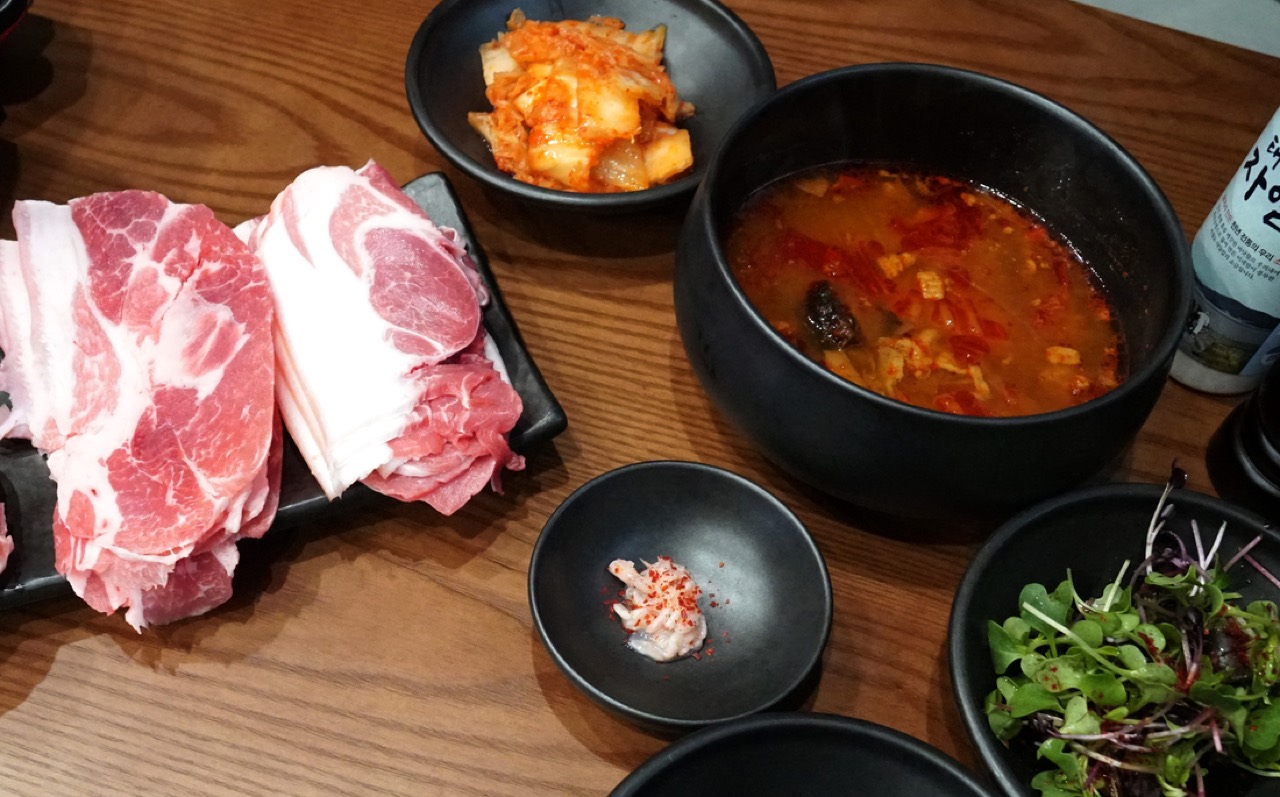
3.Three black pork breeds appear on the dinner menu. Nanchukmatdon, bred from the Jeju native pig; Berkshire K, raised in the Jirisan region; and Urihukdon, crossed from Korean native and improved stock. Serving all three side by side on one plate is the house format. Only one cut goes on it: the picnic shoulder. A 170-gram portion costs KRW 14,000, and a single diner can order a single plate.
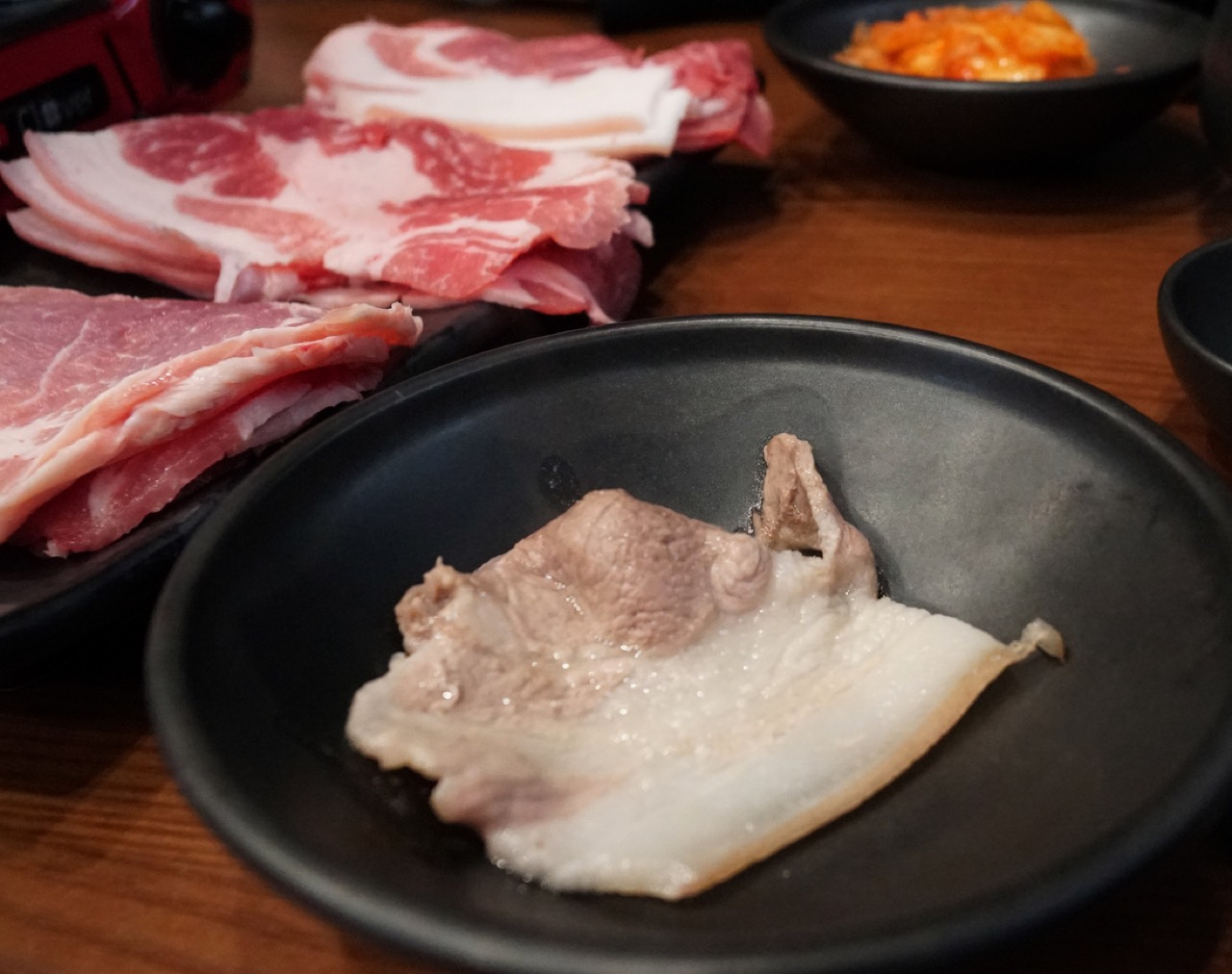
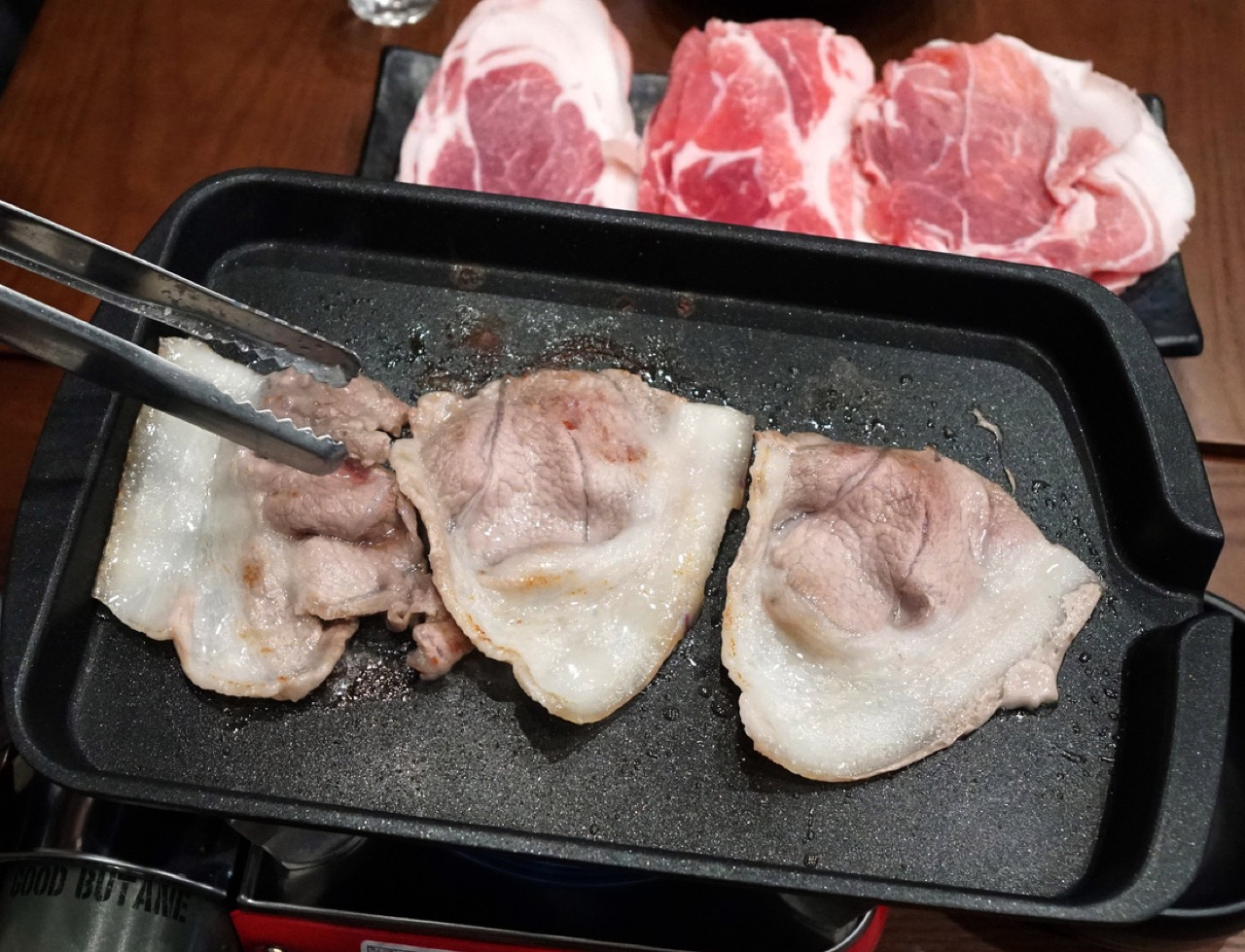
4.The grill is a cast-iron rectangle set over a butane burner. Lay a thin slice of picnic shoulder on it and the fat along the edge turns clear first, the meat in the middle losing colour a beat later. Past that point the cut stiffens fast. Cooking pork until it is well done is old thinking, he says, a habit left over from when night soil went on the fields.
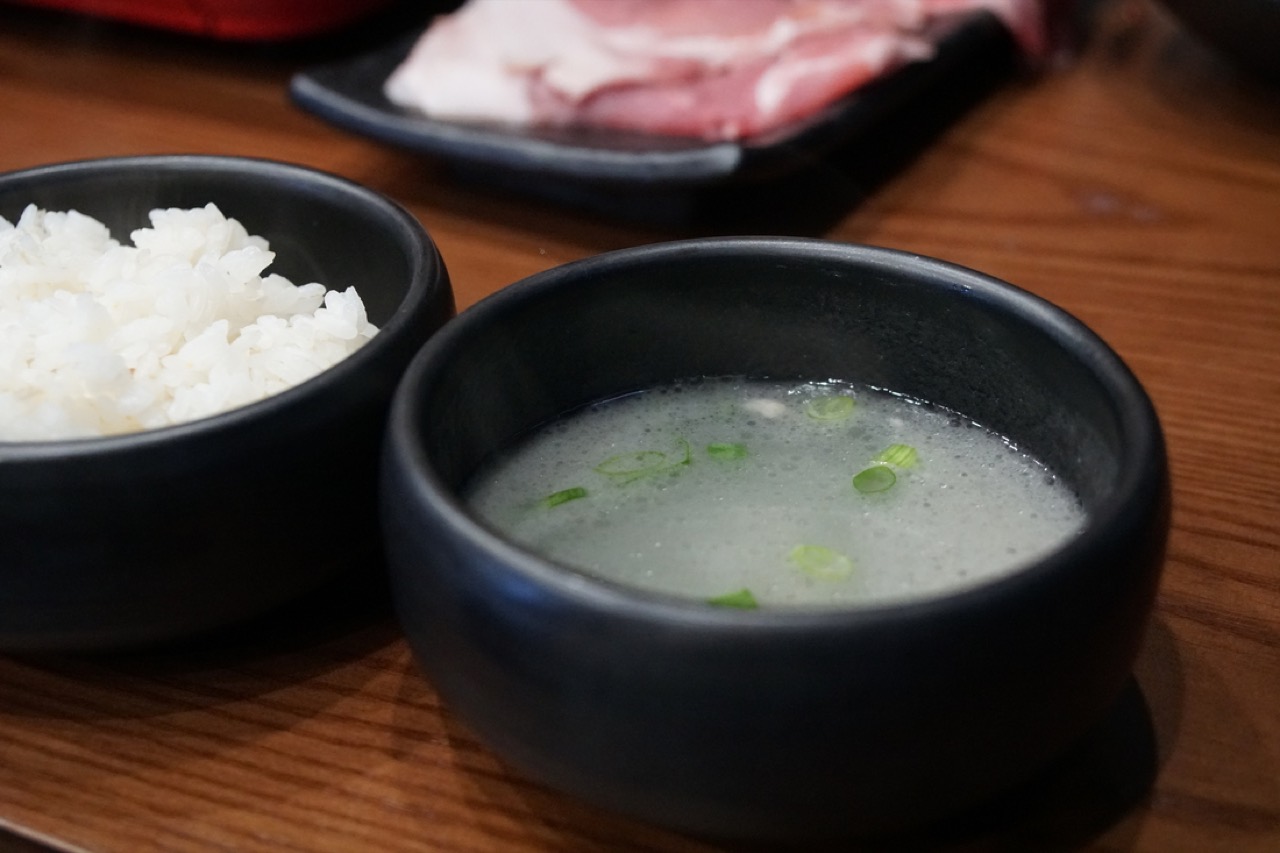
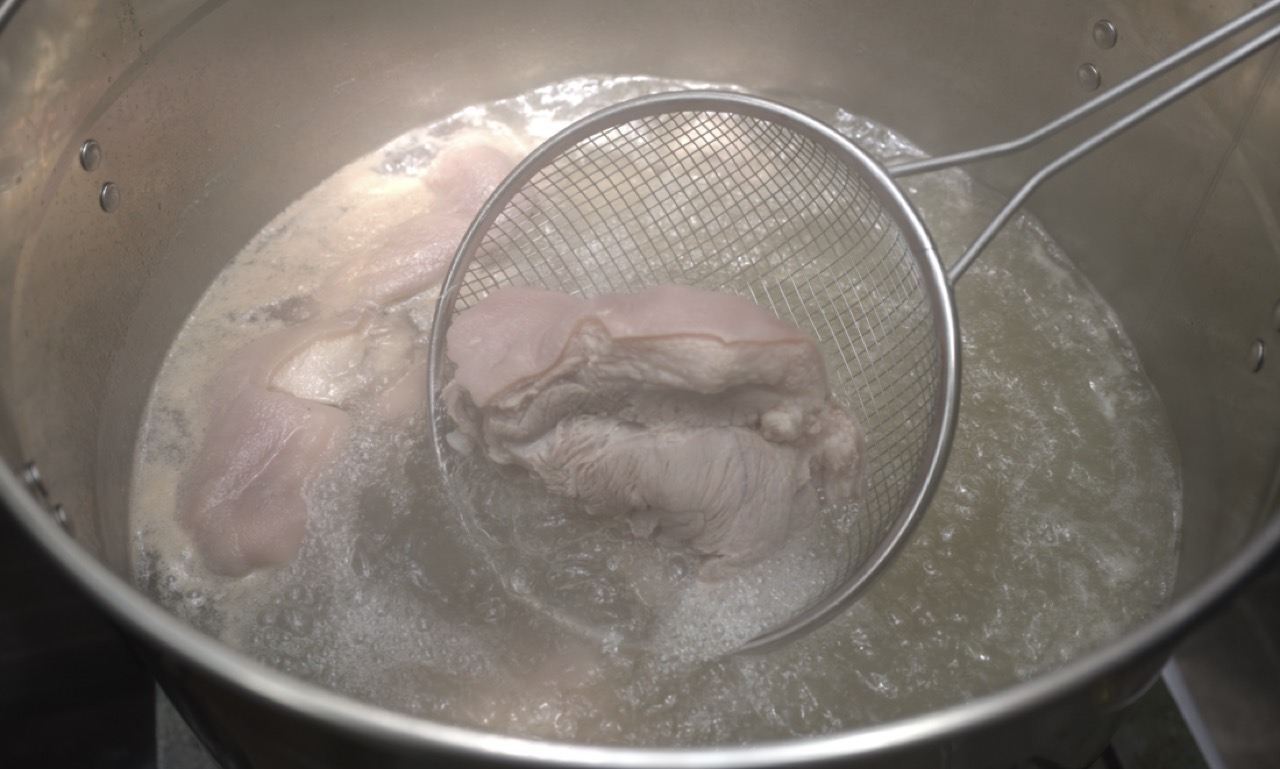
5.Lunch is soup. Hind shank simmers for an hour and twenty minutes and the set lard is skimmed off, according to press accounts. In the bowl the broth is not the milky white of seolleongtang but close to a clear chicken stock. Beyond a few rings of scallion nothing has been added, so diners season it themselves with salted shrimp. Domestic salted shrimp, aged 18 months.
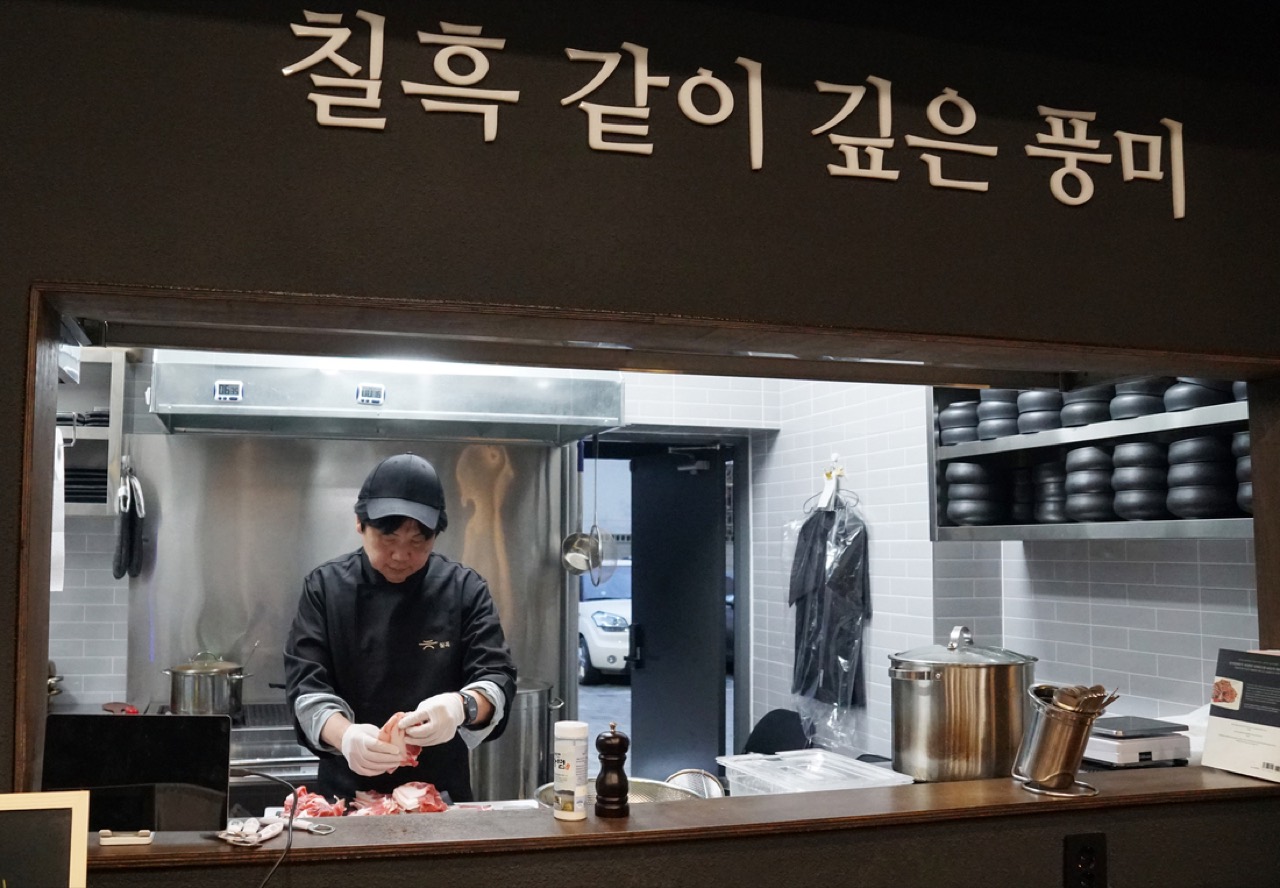
6.One wall of the dining room is the kitchen pass. Above it hangs the line "depth as deep as pitch black", and below it the owner's hands work the meat in plain view of every seat. Twenty seats, 50 square metres. There was never room to hide a kitchen. With no rice warmer on the premises, rice is cooked to order and no charge is added for it.
7.Black pork has been sold under that name for a long time. But how many shops ever told you which pig it actually was. A region of origin stood in for the breed for years. Diners paid the premium without knowing what was on the plate, and with no way to compare, no way to check what the premium bought. That blank became this restaurant's product.
8.To let people choose by breed, the cut has to be fixed. Stock pork belly and collar in three breeds each and you are running nine lines, which a 50-square-metre walk-in cannot carry. Fix on picnic shoulder and inventory drops to three, leaving breed as the only axis of comparison. A constraint forced by floor area turned into the product design.
9.Picnic shoulder can carry that load because of the breeds. Nanchukmatdon runs around 10 percent intramuscular fat, enough that lean cuts still grill well, and Urihukdon sits at 4.3 percent against 3 percent for standard pork. The breed fills the range that belly fat used to cover. Changing the cut alone would not hold this menu up.
10."Butcher a 110-kilo pig and you only get 16 to 20 kilos of belly, so its share of your cost runs really high." That is how the owner explains the switch. National demand piles onto the cut that yields least, and the price follows. This is where the first line of a grill house P&L gets set.
11.Per 170 grams the raw picnic shoulder costs around KRW 1,900 against 3,900 for belly. Add the breed premium, strip out the middlemen through direct farm purchasing, and put the raw cost of one plate at roughly 3,000 won (estimated): food cost lands in the low 20s as a share of the menu price. Fill the same plate with belly and it doubles, and at that ratio this price list does not stand up.
12.Rent is pushed the same direction. The lease terms here are not public, but a comparable ground-floor unit in nearby Hwagok-dong is listed at a KRW 25 million deposit and 1.7 million a month. Allow for the station frontage and put it in the low 2 millions (estimated), and rent comes in under 7 percent of revenue. On a Gangnam-daero ground floor this arithmetic never starts.
13.Say lunch moves about 40 bowls of gomtang and the 20 seats turn one and a half times at dinner, at KRW 27,000 a head (estimated). That puts monthly revenue somewhere around 32 million won. Divided by the floor area, a little over 660,000 won per square metre per month.
14.What creates the margin is the cost sheet, not the sales line. Food cost across Korean restaurants has climbed to 40.7 percent of revenue while operating margins have fallen to 8.7. A kitchen holding ingredients in the low 20s is not sitting inside that average. Lowering the cut and lowering the location both pay into the same column.
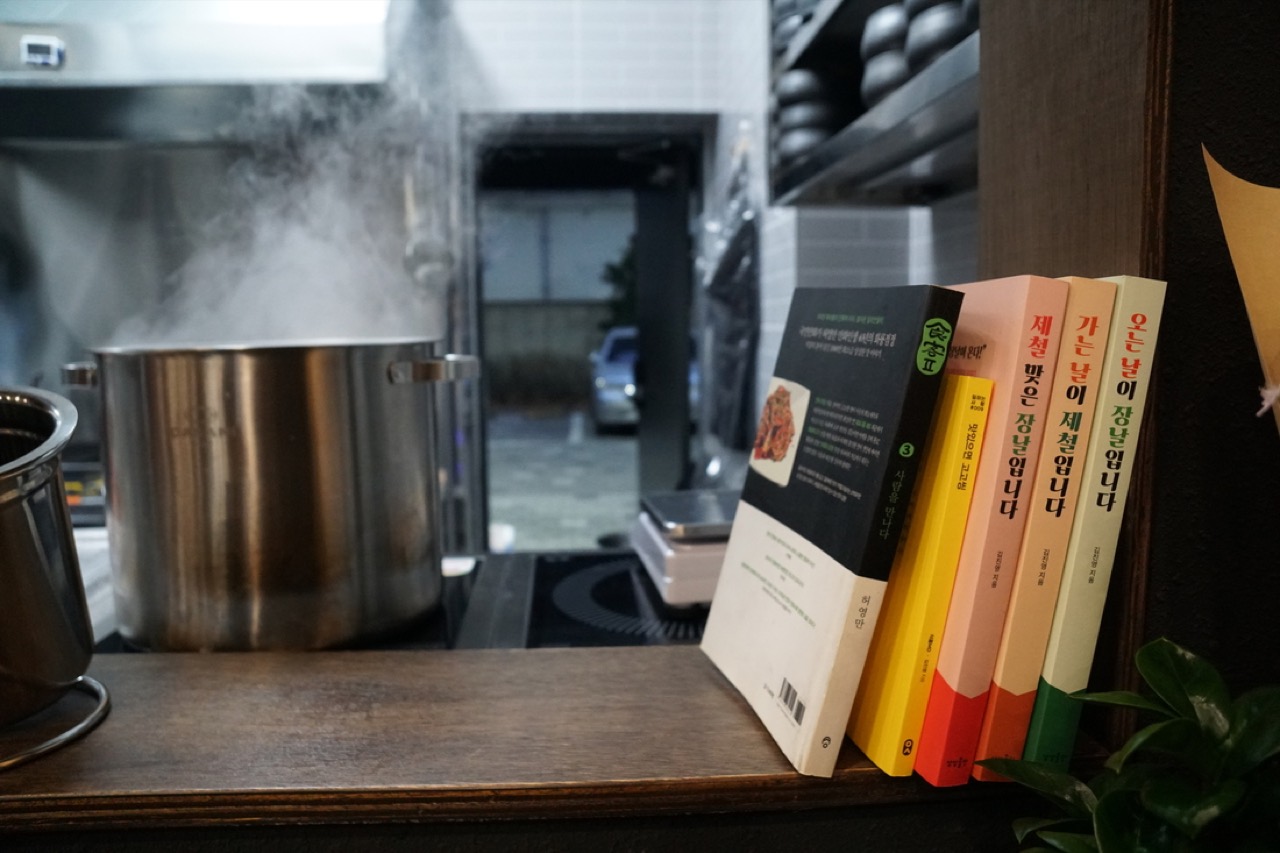
15.A clear pork broth made another restaurant's name first. Okdongsik started in Seogyo-dong with a single bowl of pork gomtang, opened a second location in New York, then went on to Hawaii and Tokyo. Everything stripped away but the broth. Chilheuk parks that broth at lunch and puts the grill in the dinner slot, running one kitchen two different ways a day. The weakness sits behind that. Nanchukmatdon, Berkshire K and Urihukdon are raised by few farms, so supply wobbles easily, and since the product is the three breeds side by side, one empty slot collapses the product itself.
16.A man who spent 30 years picking other people's products put 20 seats into 50 square metres, dropped pork belly, filled the gap with three breeds of picnic shoulder and pulled food cost down into the low 20s. Anyone running this in Korea hits the labour problem before the meat problem. Taking raw cuts by breed direct from farms, reading their condition and trimming them, only works if every site has one person who knows how, and the moment that person leaves, picnic shoulder goes back to being cheap meat. Whether this cost sheet only stands in 50 square metres with the owner at the stove, or survives with hired hands, gets settled at the second location.