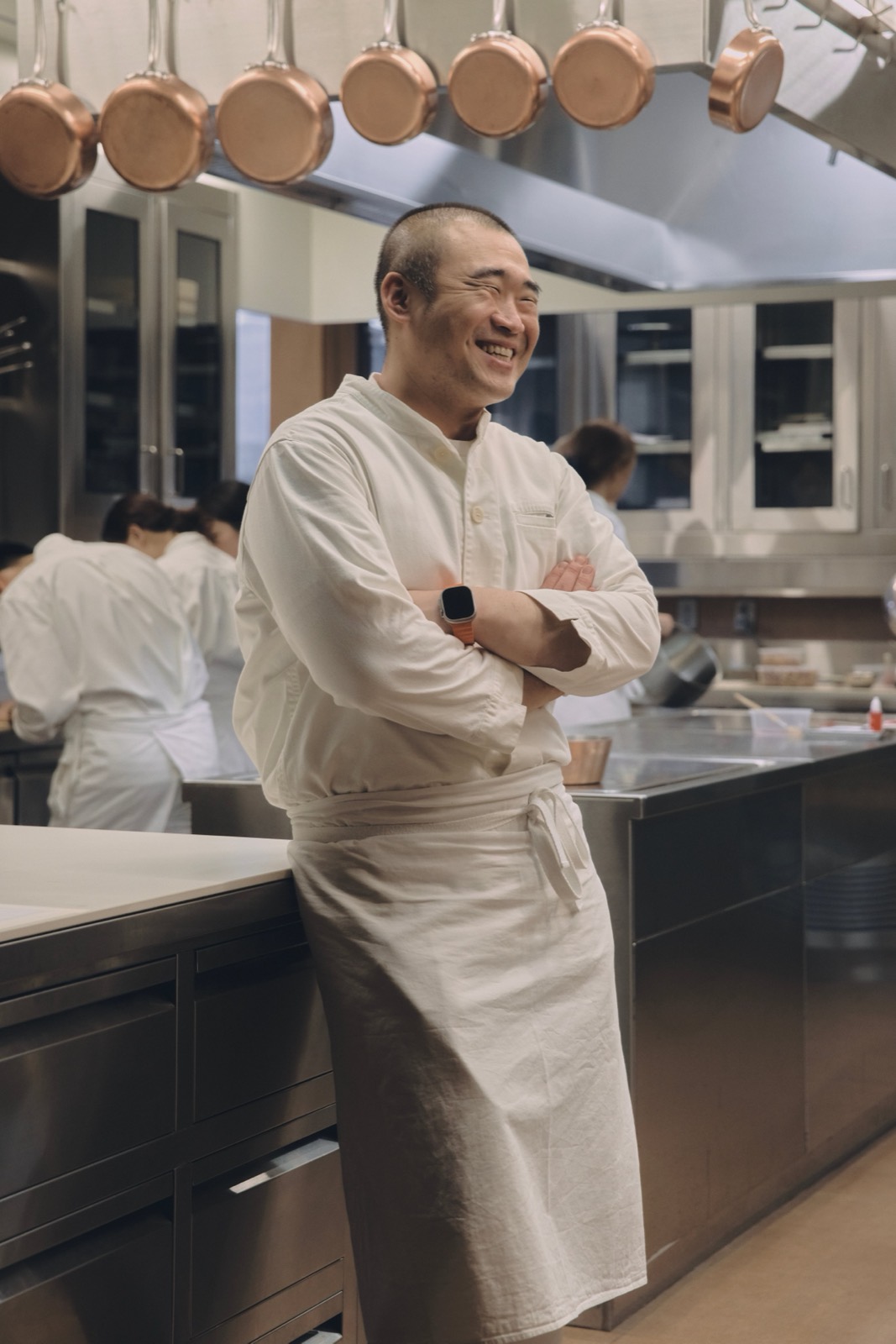
In a basement on Eonju-ro 168-gil in Sinsa-dong, Gangnam, Seoul, Restaurant SAN now charges the same KRW 380,000 for its lunch course as for its dinner course. A visitor's review from June last year listed lunch at KRW 180,000 and dinner at KRW 300,000. In between, this basement picked up the One To Watch award from Asia's 50 Best Restaurants and a MICHELIN star.
1.It opened in mid-2024, and the name SAN comes from chef Jo Seung-hyun's son. Dinner runs Tuesday through Saturday, lunch only on Friday and Saturday. Last orders are at 7 p.m. and 1 p.m. There is one course and nothing to add to it.
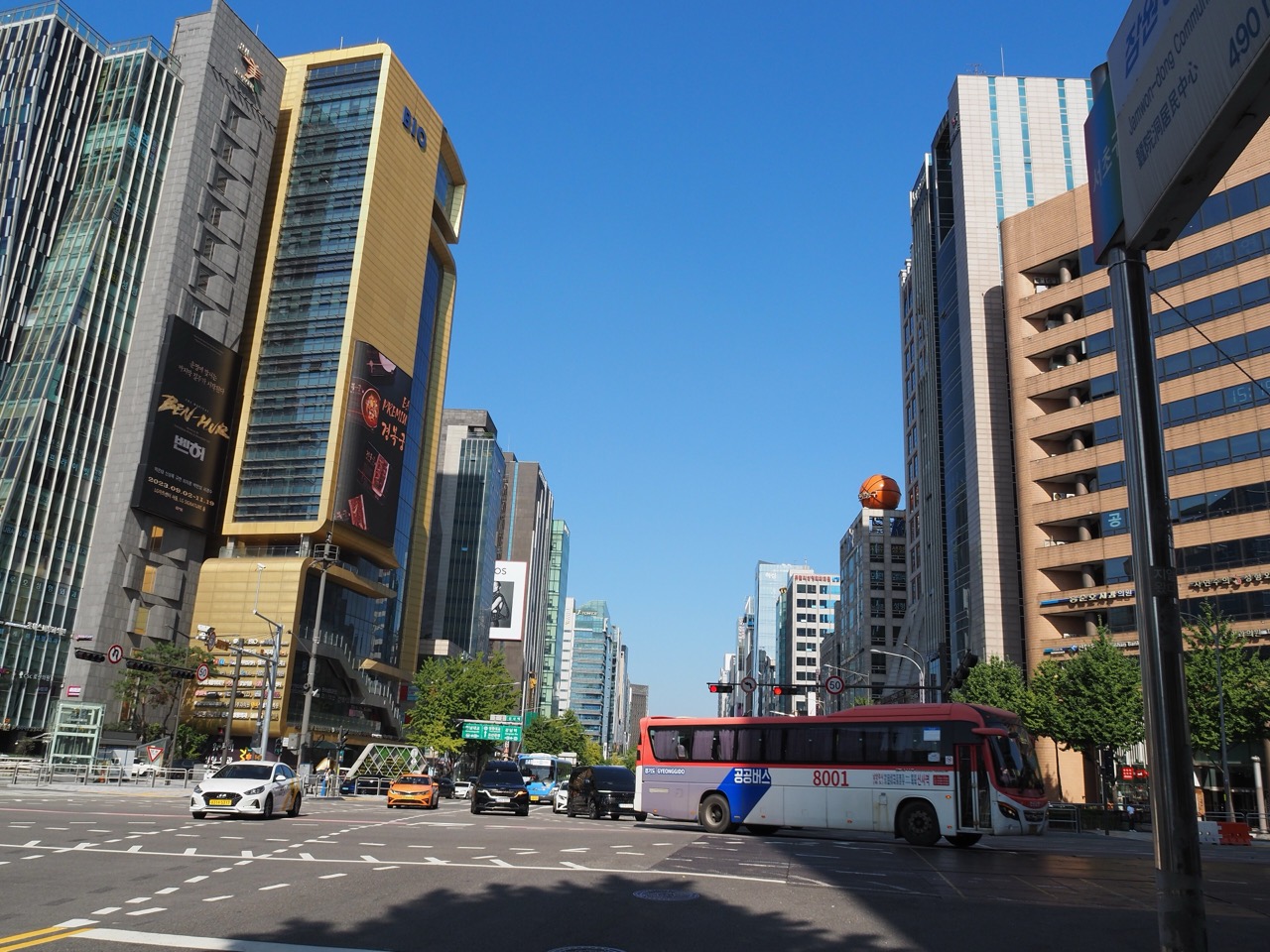
2.The awards came fast. In February, Asia's 50 Best gave SAN its One To Watch award for a promising new restaurant, and it was the first time a Seoul restaurant had won it since 2017. On the 51-100 list published on March 12 it placed 54th, and the MICHELIN Guide Seoul & Busan 2026 gave it one star. A restaurant not yet two years old landed on three lists in a single year.
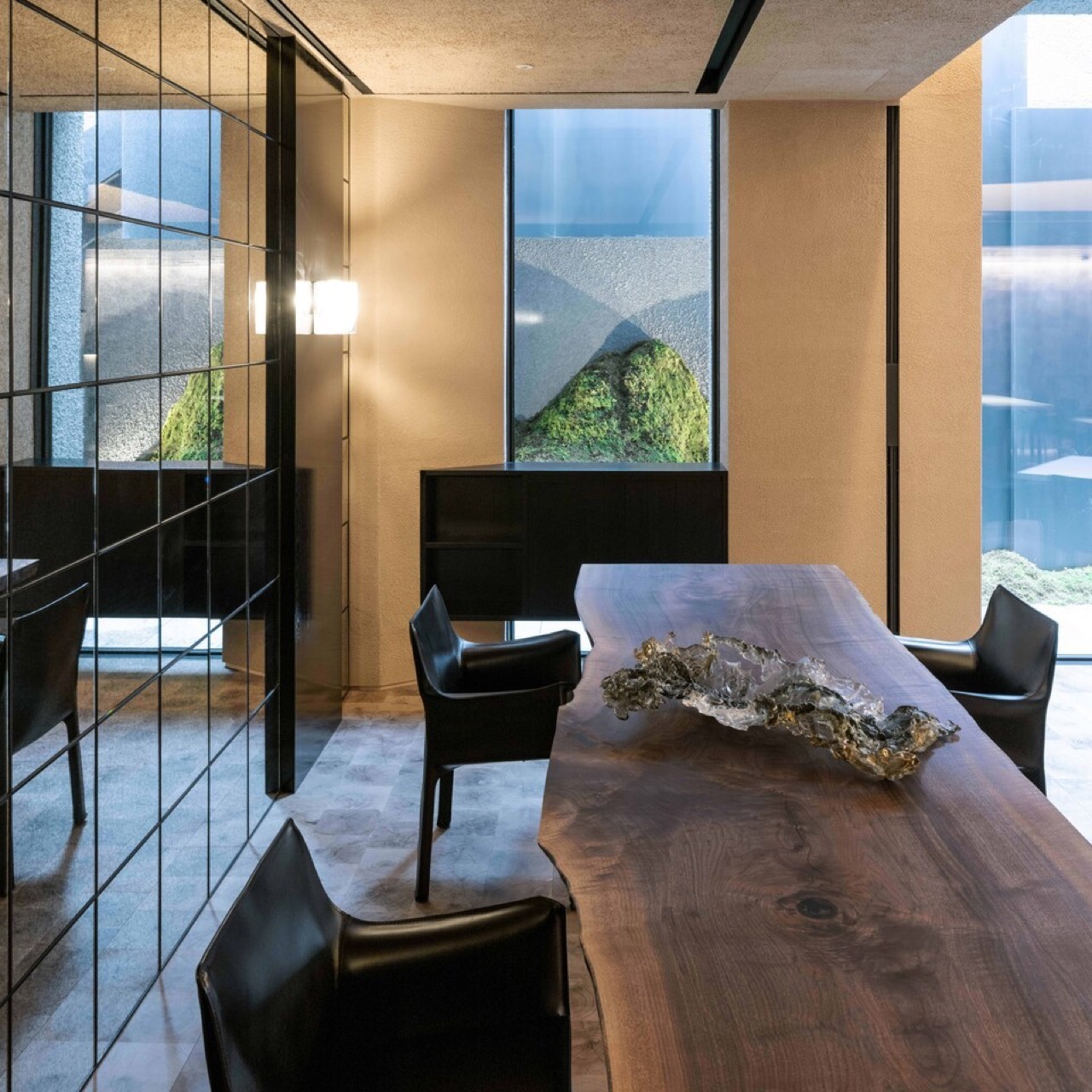
3.The address is underground, yet the room is not dark. Asia's 50 Best describes it in soft stone and neutral tones, and in published photos the walls and ceiling run on in a single sand color. One long slab of wood takes up the middle of the room, and beyond the window at its end, a moss-covered rock sits against a grey wall. The wall beside the window is black-gridded glass, so the next room flickers through it. The private room seats four to six as standard, and groups of seven to ten book by phone.
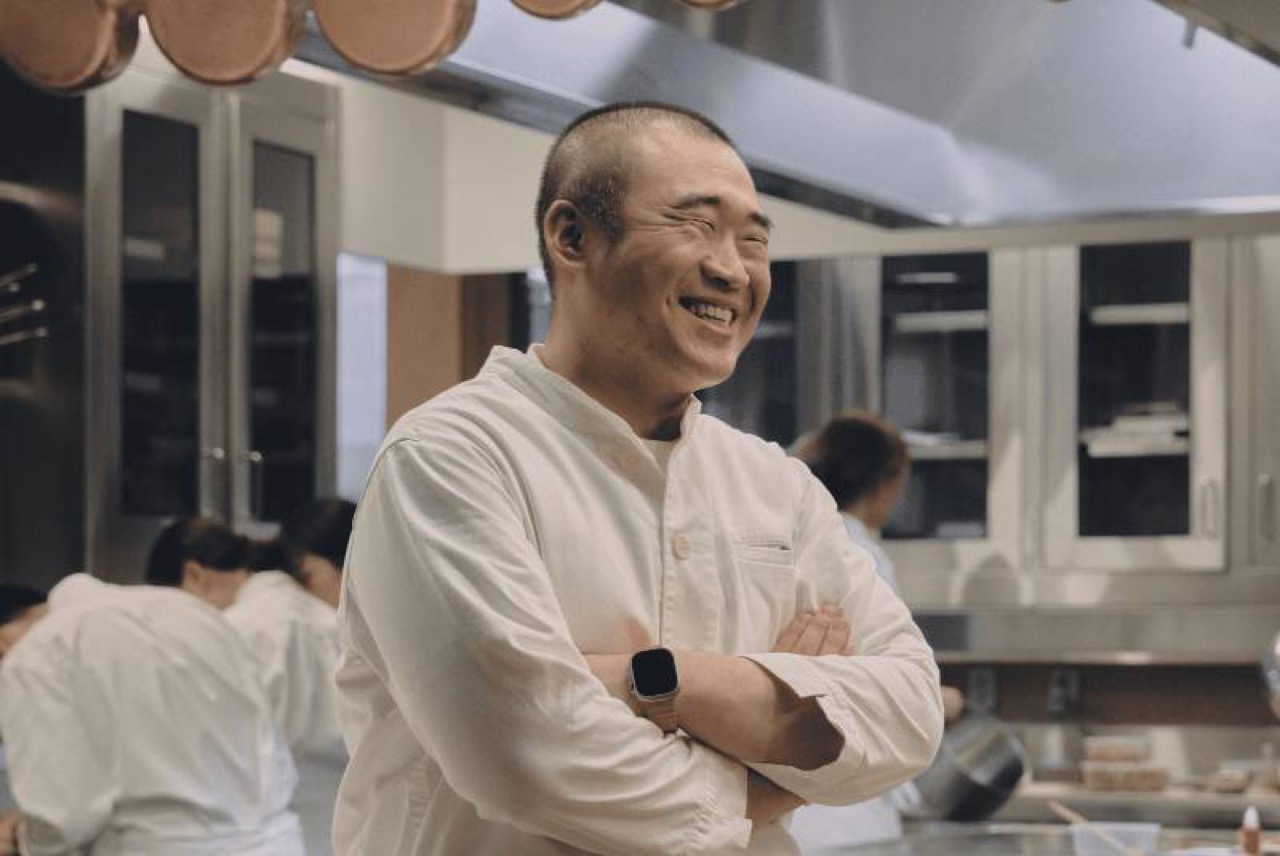
4.There is no wall between the dining room and the kitchen. The sous chef is British-born Michael Chwu, who came through The Kitchin in Edinburgh, Chapter One in Dublin, and Benu. Jo Hyun-a, a nutritionist and graduate of the Culinary Institute of America (CIA), was on the opening team, and sommelier Joo Jae-min builds two wine pairings, five glasses or eight. Jo Seung-hyun names three fundamentals. Hot food served hot, service that truly satisfies the guest, consistent quality.
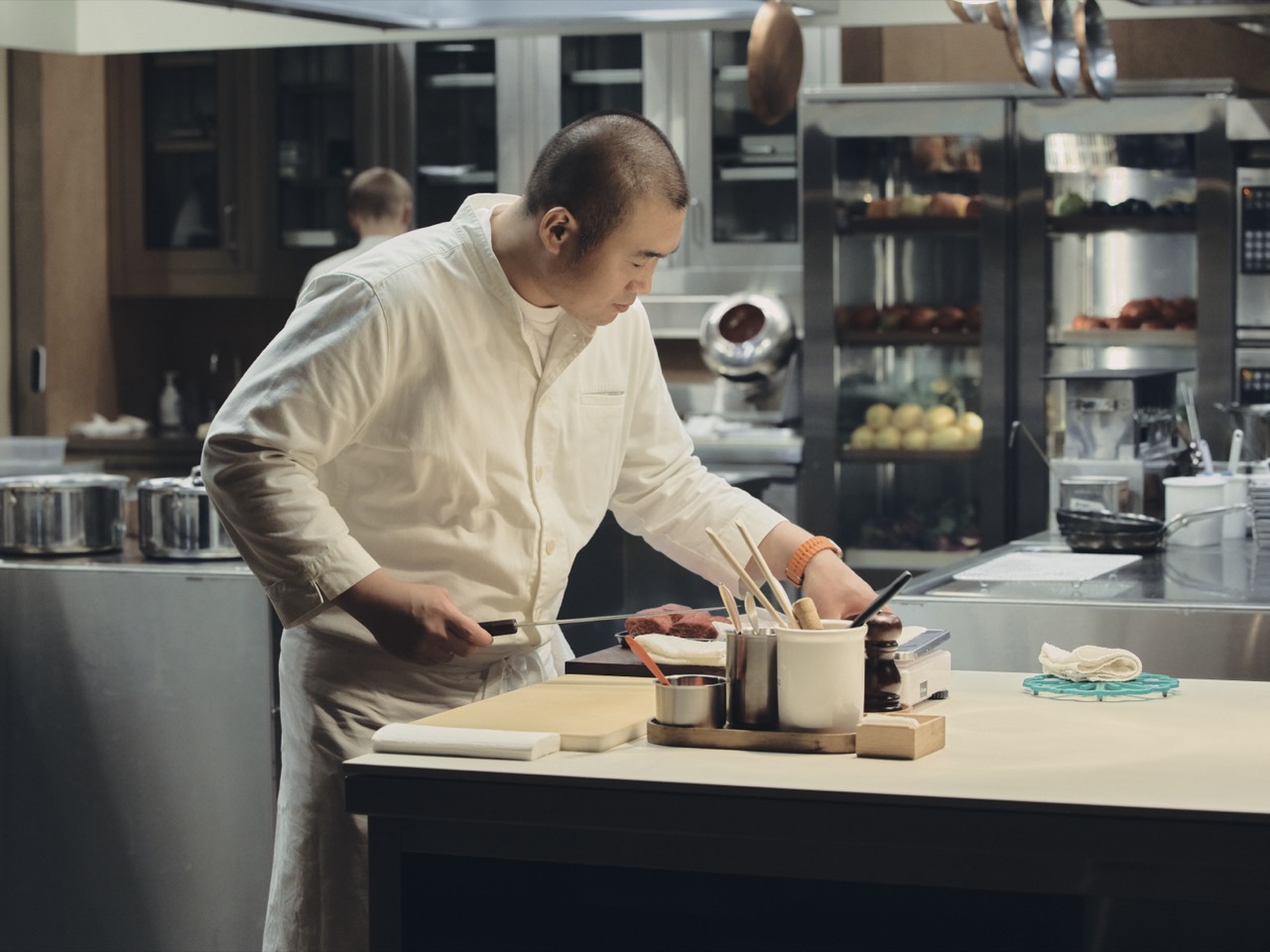
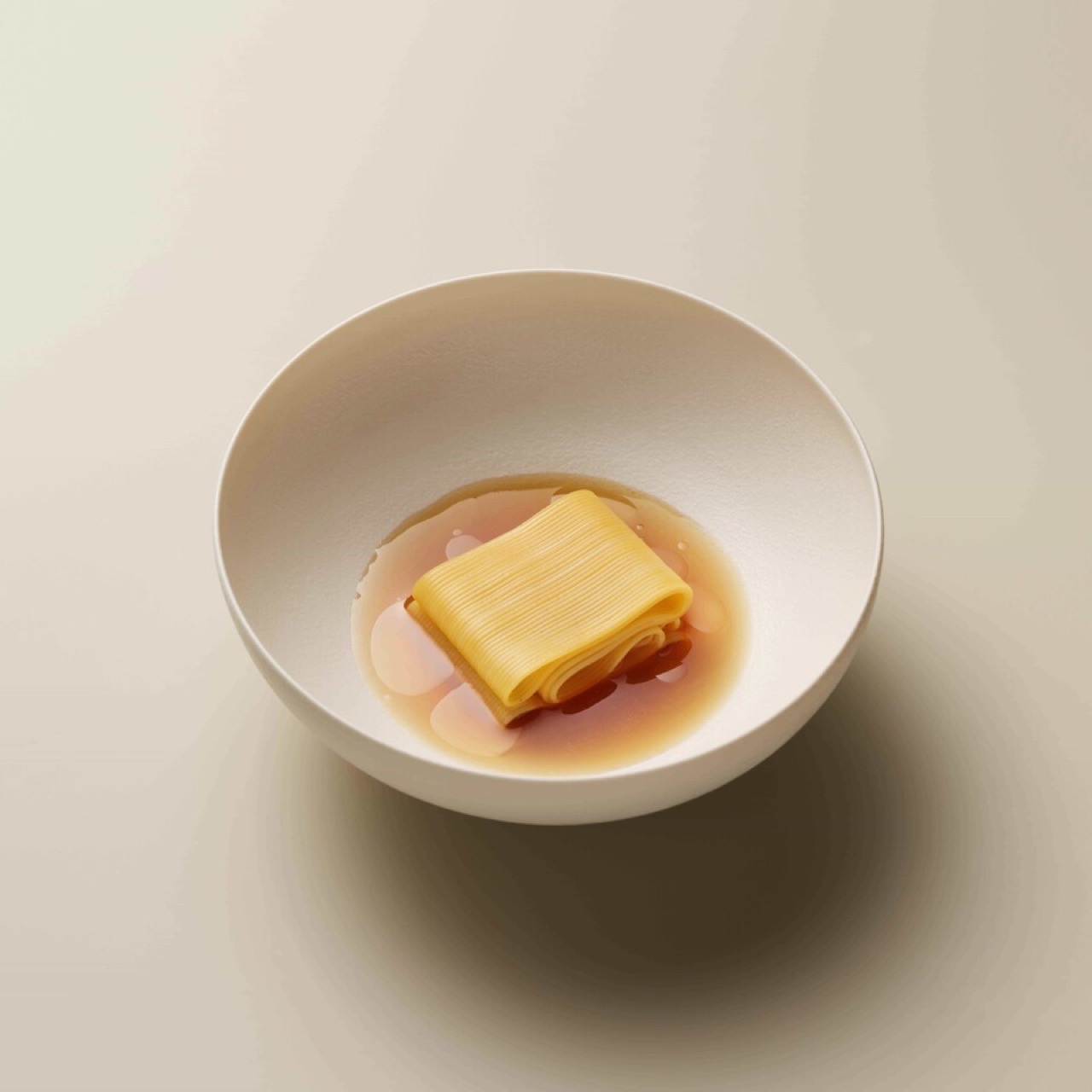
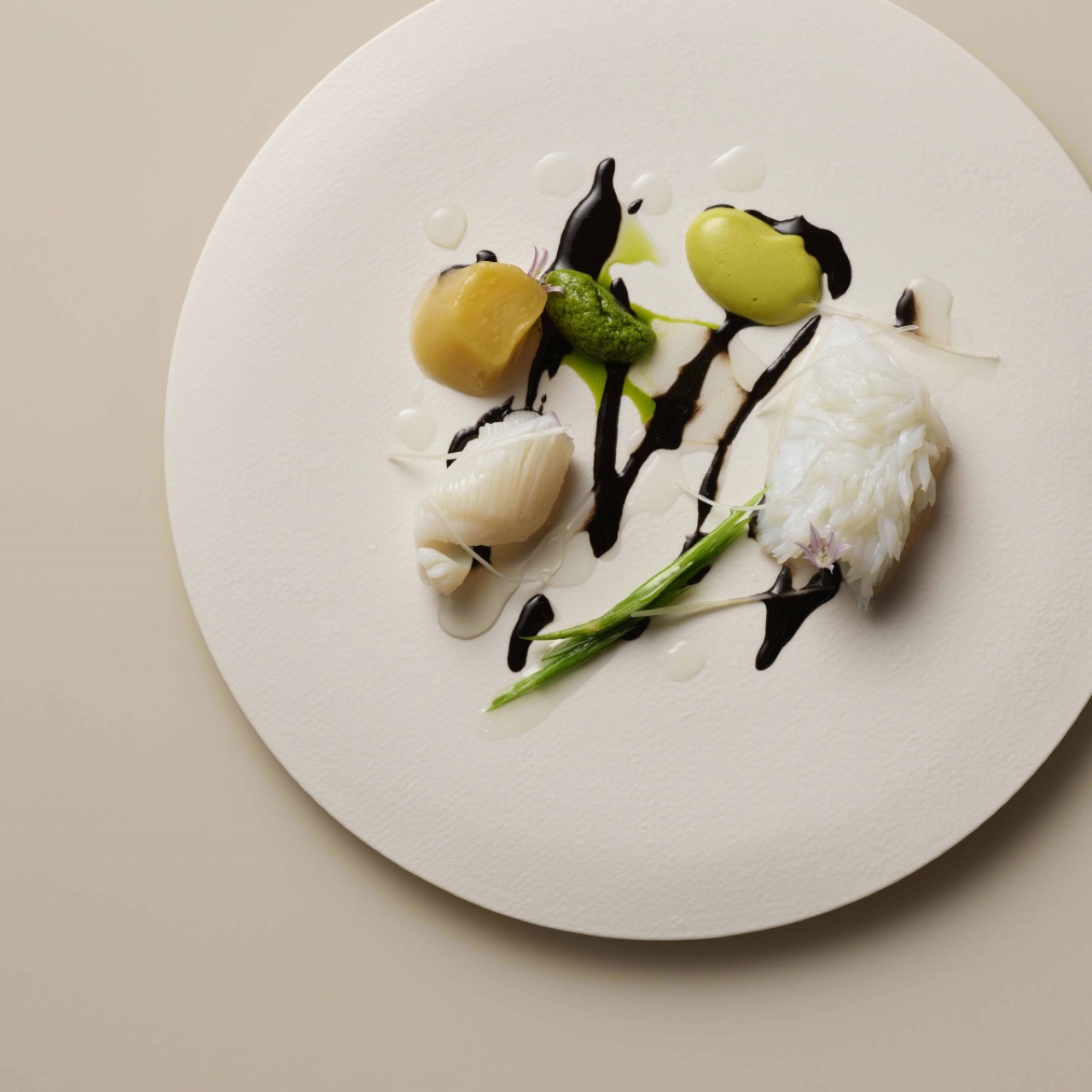
5.The course runs to 13 dishes. Look at the plates introduced early this year and the ingredients feel familiar. Shrimp comes on a dense stock reduced from the heads, with gochujang. Squid is lightly blanched as sukhoe, and a squid-ink vinaigrette is drawn across the white plate in black lines. The milmyeon the chef ate growing up in Busan arrives with the noodles folded into a square on amber broth, finished with caviar. Dwaeji gukbap, the Busan pork and rice soup, and a chamoe (Korean melon) dongchimi are on the course too.
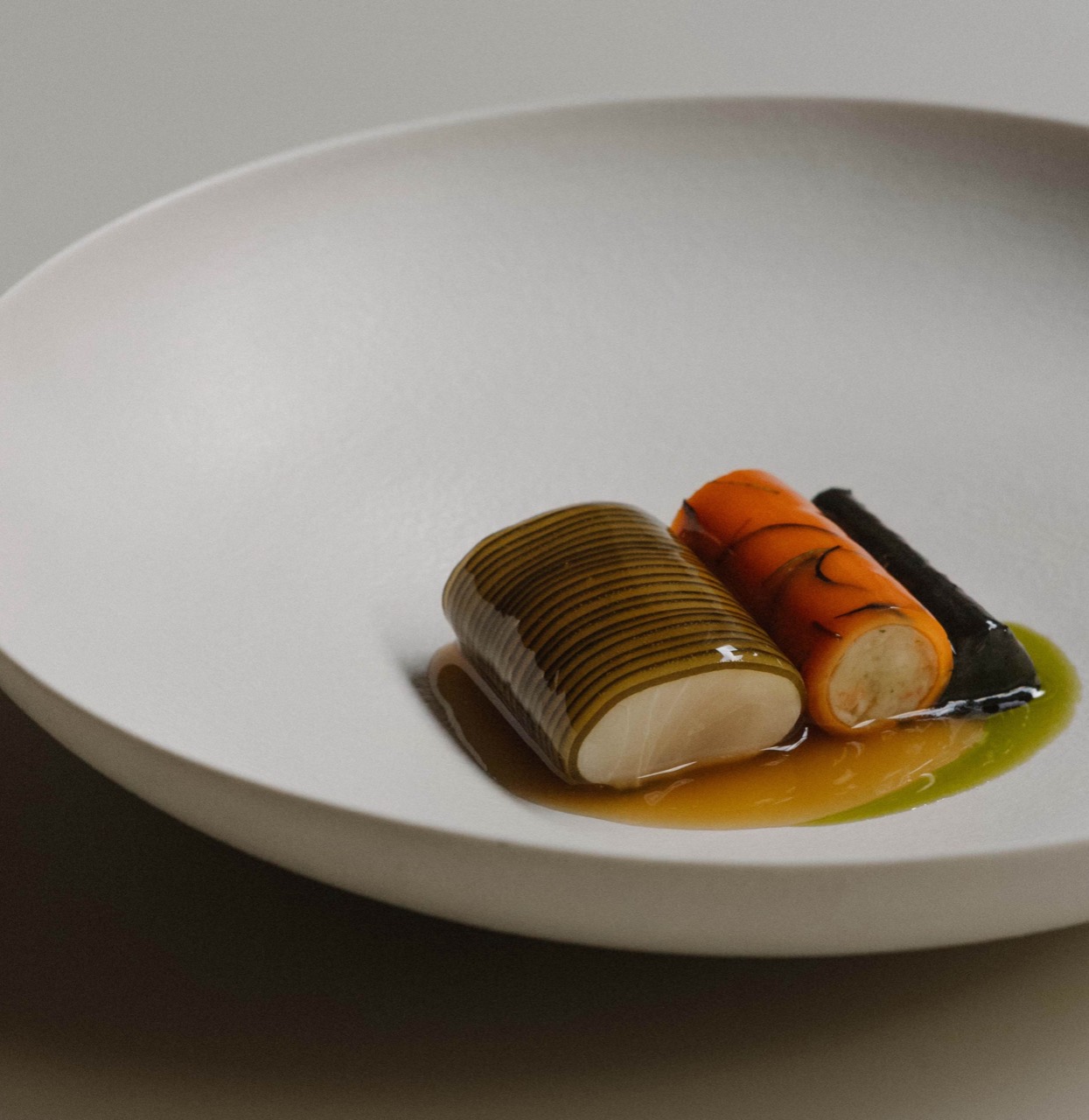
6.The plates shown for winter run in another direction. Snow crab with caviar and an egg-yolk pudding, beef topped with black truffle. Dessert is toasted-rice ice cream with persimmon. According to a visitor's review, the silverware is by artist Huh Yoo-jung and the lacquered chopsticks by artist Park Mi-kyung. With a single course, the reservation count decides how much produce comes in each day.
7.Korean diners know the original. Milmyeon and gukbap are dishes you get for around KRW 10,000 a bowl in a Busan back street, and when those names appear in a KRW 380,000 course, the diner compares every spoonful with the bowl they know. A restaurant where the guest walks in carrying the benchmark. If it tastes worse than the original, that shows at once. If it tastes better, nothing needs explaining.
8.More people are booking expensive seats alone, too. Data CatchTable released this month shows solo reservations rose 38.1% in January to July this year over the same period last year, and solo bookings at restaurants with an average check above KRW 200,000 rose 38.7%, the steepest rise of any price band. The Asia's 50 Best list is also the first list overseas diners check when they come to Seoul to eat.
9.The price list changed in the meantime. A visitor's review from last June and a booking platform listing still show lunch at KRW 180,000 and dinner at KRW 300,000, while the official site now carries a single line: tasting menu KRW 380,000, same for lunch and dinner. Lunch more than doubled, dinner rose 27%. The slot that sold lunch cheaper than dinner is gone.
10.The seat count has not been published. A booking platform says each sitting takes 8-9 tables, so we put it at about 20 seats (estimate). Assume seven services a week, one sitting each, every seat full, and weekly course revenue comes out 43% higher than before the price change (estimate).
11.Over a month, the course alone comes to nearly KRW 230 million (estimate). Wine pairings and corkage at KRW 100,000 a bottle come on top.
12.The outgoing side is heavy too. Put cooks, servers and sommeliers at around 15 people (estimate) and payroll alone runs about KRW 60 million a month, and fine dining is a trade that budgets ingredients at more than 30% of sales. Then take out rent and maintenance fees for a Gangnam basement, plus broken plates and glasses. How much is left?
13.Seoul fine dining usually sells its lunch course for less than dinner. It is the door first-time guests walk through. But the kitchen's work barely shrinks at lunch, and SAN now serves the same course at lunch as at dinner. When the same people do the same prep and the price is 60% of dinner, the two Friday and Saturday lunches become services where the labor arrives before the revenue. A restaurant whose bookings fill first after the awards has no reason to keep that door cheap.
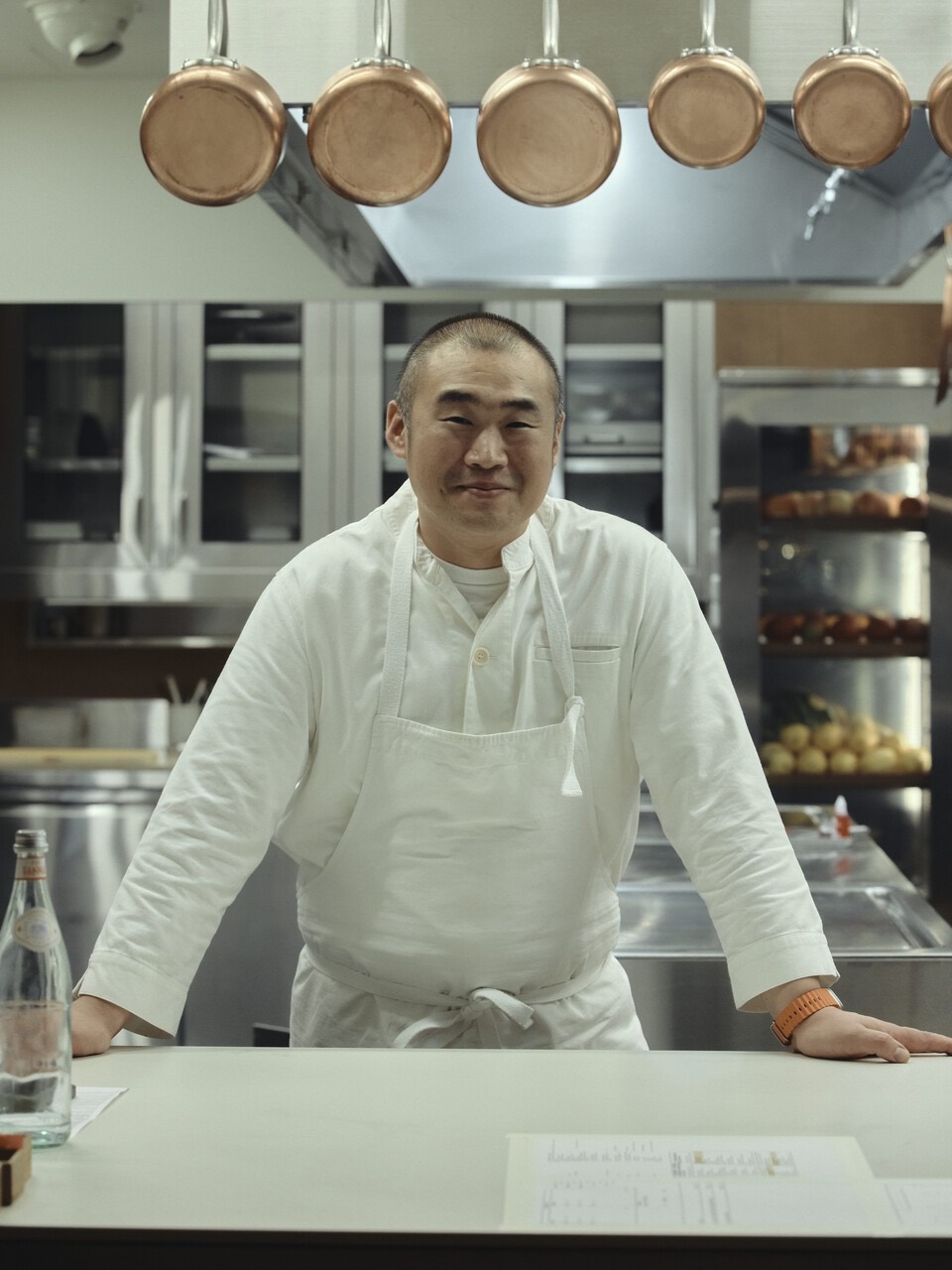
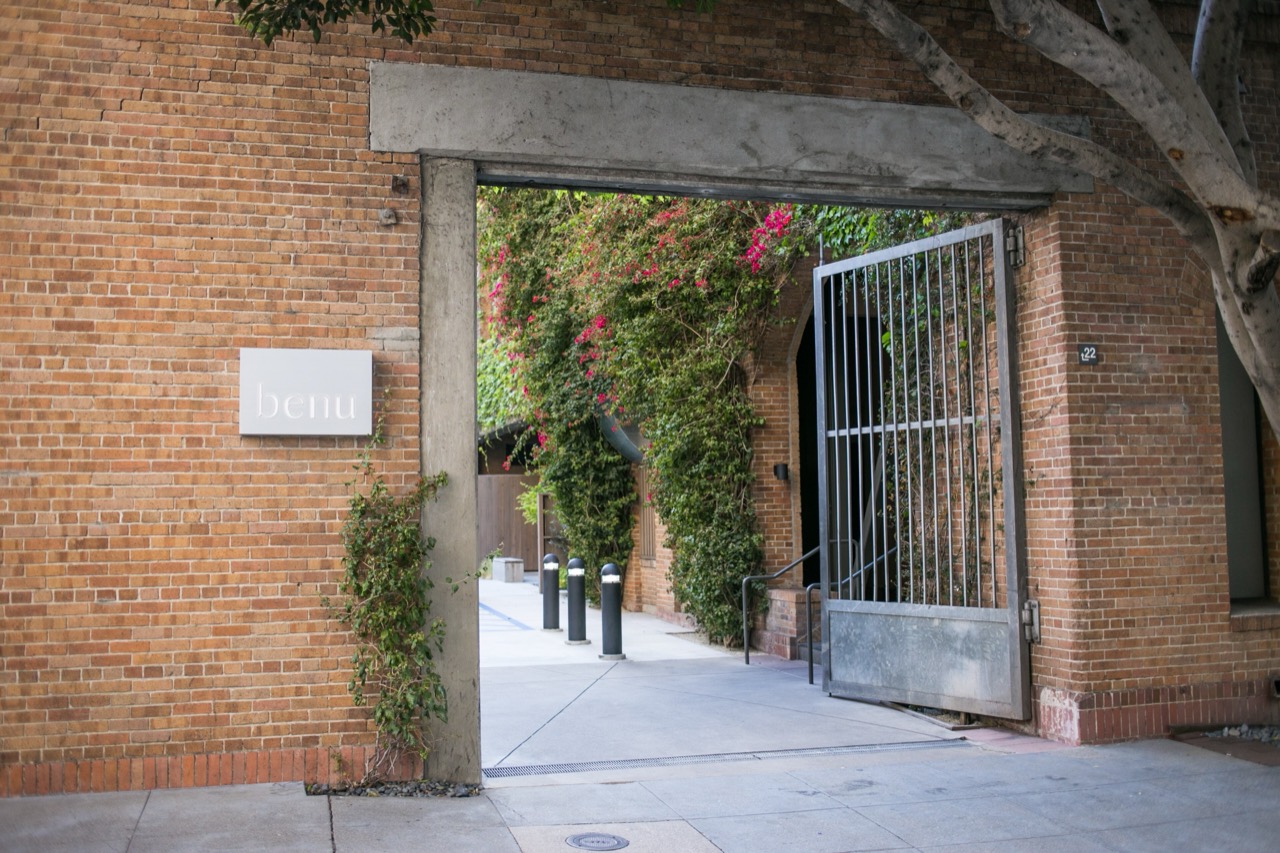
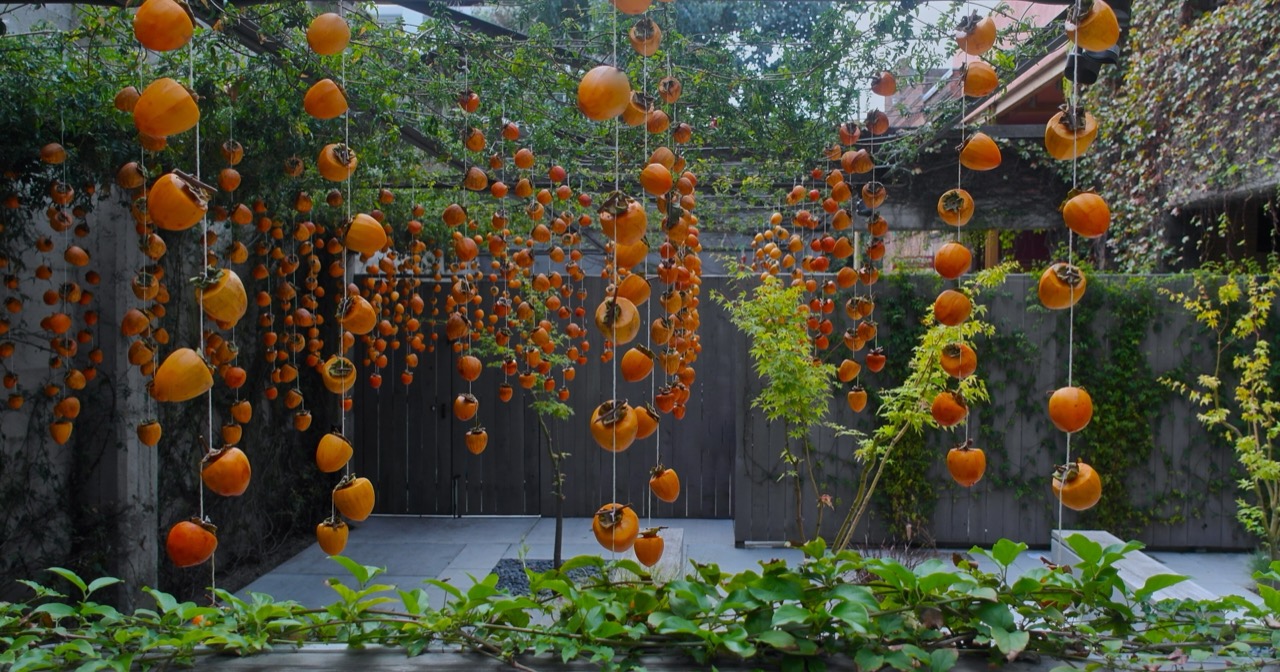
14.Benu, where Jo ran the kitchen for eight years, is the restaurant Corey Lee opened in San Francisco in 2010, and it earned three MICHELIN stars. Both men came out of Thomas Keller's The French Laundry. Benu put Korean and Chinese flavors through French technique for American diners, and it is also known for the persimmons it hangs to dry in its courtyard.
15.Diners in San Francisco had no original bowl to compare against. Diners in Sinsa-dong know the milmyeon and gukbap shops of Busan. Even with the same hands at the stove, the scorecard sits with the guest, and the food being scored carries a KRW 380,000 price. The first to hand out marks were not local diners but an overseas list and MICHELIN.
16.Two years after opening, SAN dropped its lunch discount and tied lunch and dinner to a single KRW 380,000 price. With every seat full, weekly course revenue reaches KRW 53.2 million (estimate). Anyone in Korea hoping to stretch a lunch at this price into the weekdays runs first into the Improper Solicitation and Graft Act. Any table that includes public officials, journalists or teachers is capped at KRW 50,000 per meal, so a KRW 380,000 course cannot be used to host them. The math starts with one weekday lunch crowd missing from the outset.