A Hong Kong restaurant has opened on the third floor of a shopping mall in Nihonbashi, Tokyo. It was built by a company that runs franchised photo studios, cram schools and udon shops. Nine years ago the same company brought the first Japanese branch of a Hong Kong seafood house to Ginza. This time it hung its own name over the door.
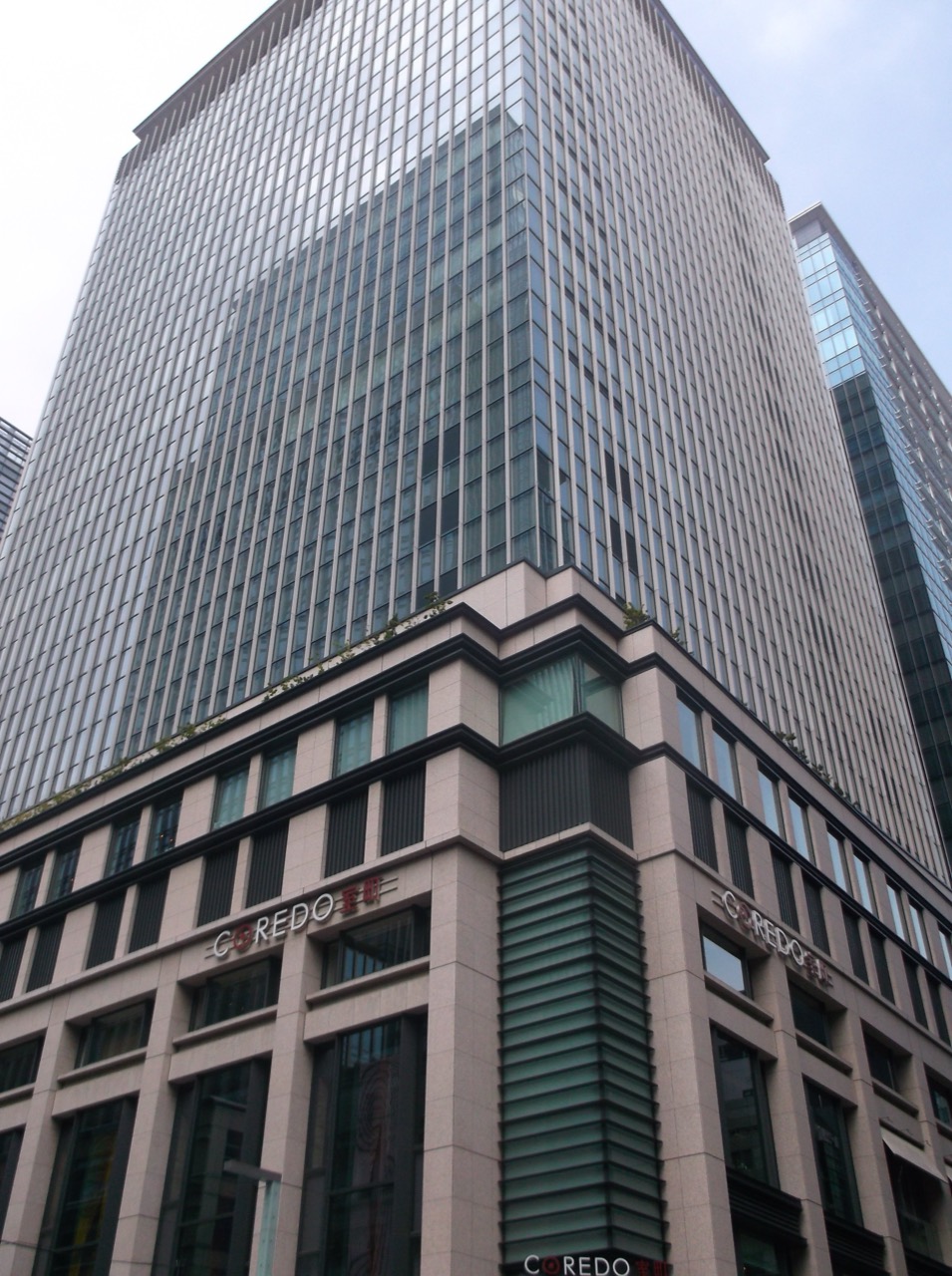
1.ABERDEEN opened on September 2 on the third floor of COREDO Muromachi 1, a shopping complex in Nihonbashi Muromachi that sits one street away from the Mitsukoshi flagship. It covers 45.7 tsubo, about 151㎡, with 62 seats and separate private rooms. The name comes from Aberdeen, the fishing harbour on the south side of Hong Kong Island.
2.The operator puts average spend at about ¥2,000 at lunch and ¥6,000-7,000 at dinner. Behind it is Tanaka Corporation, headquartered in Ryogoku, Tokyo. Founded in 1938 as a machinery maker, it turned to photo studios and restaurants from 1995 and now runs 25 franchised stores of other people's brands alongside a portfolio of rental buildings.
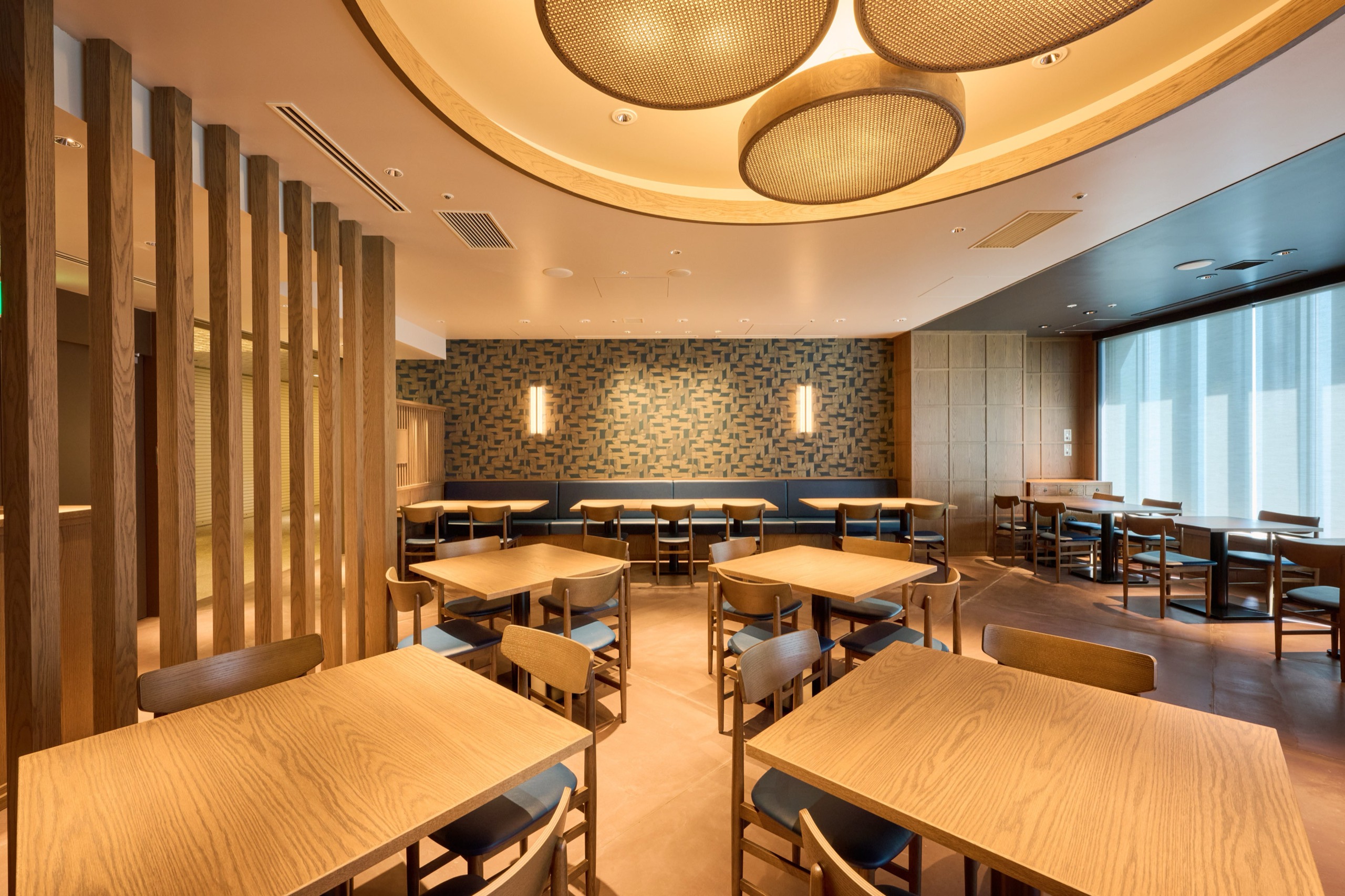
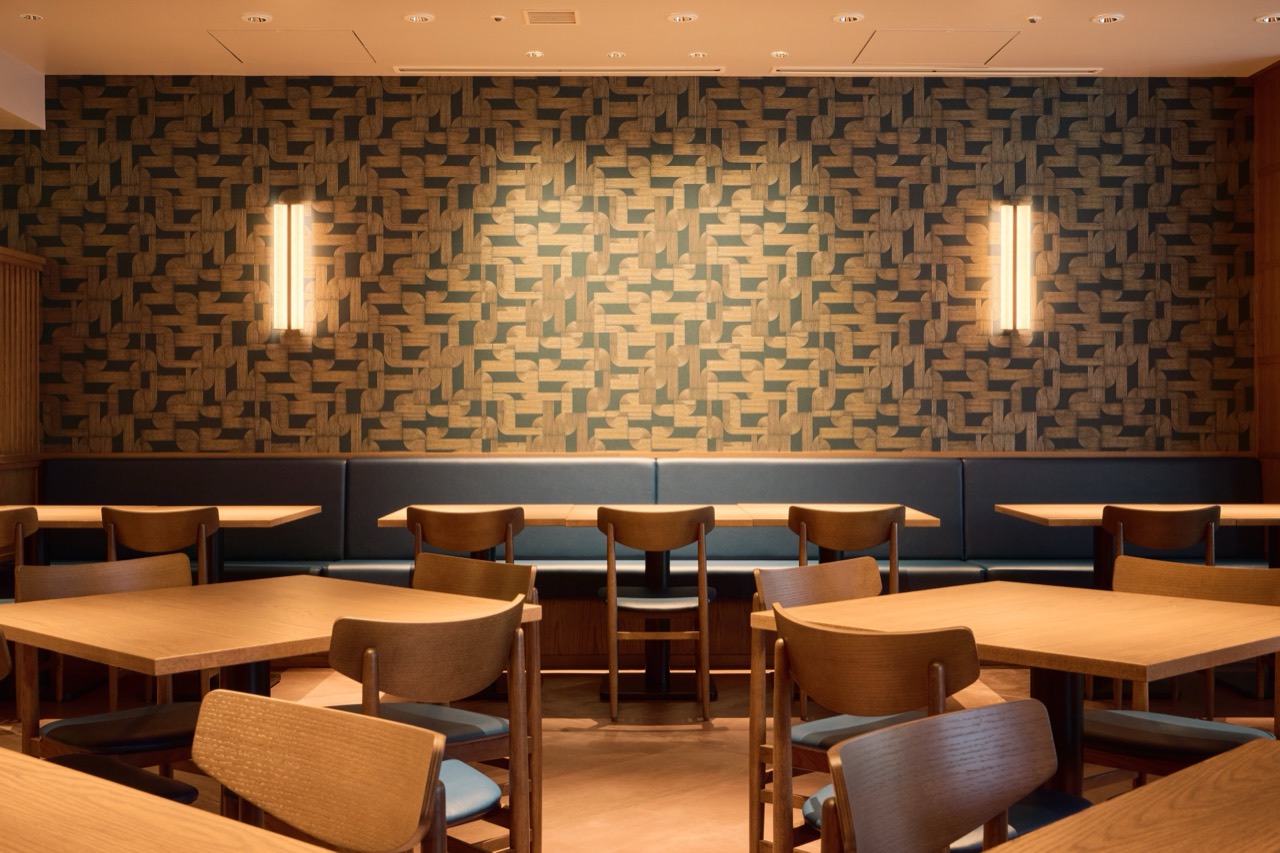
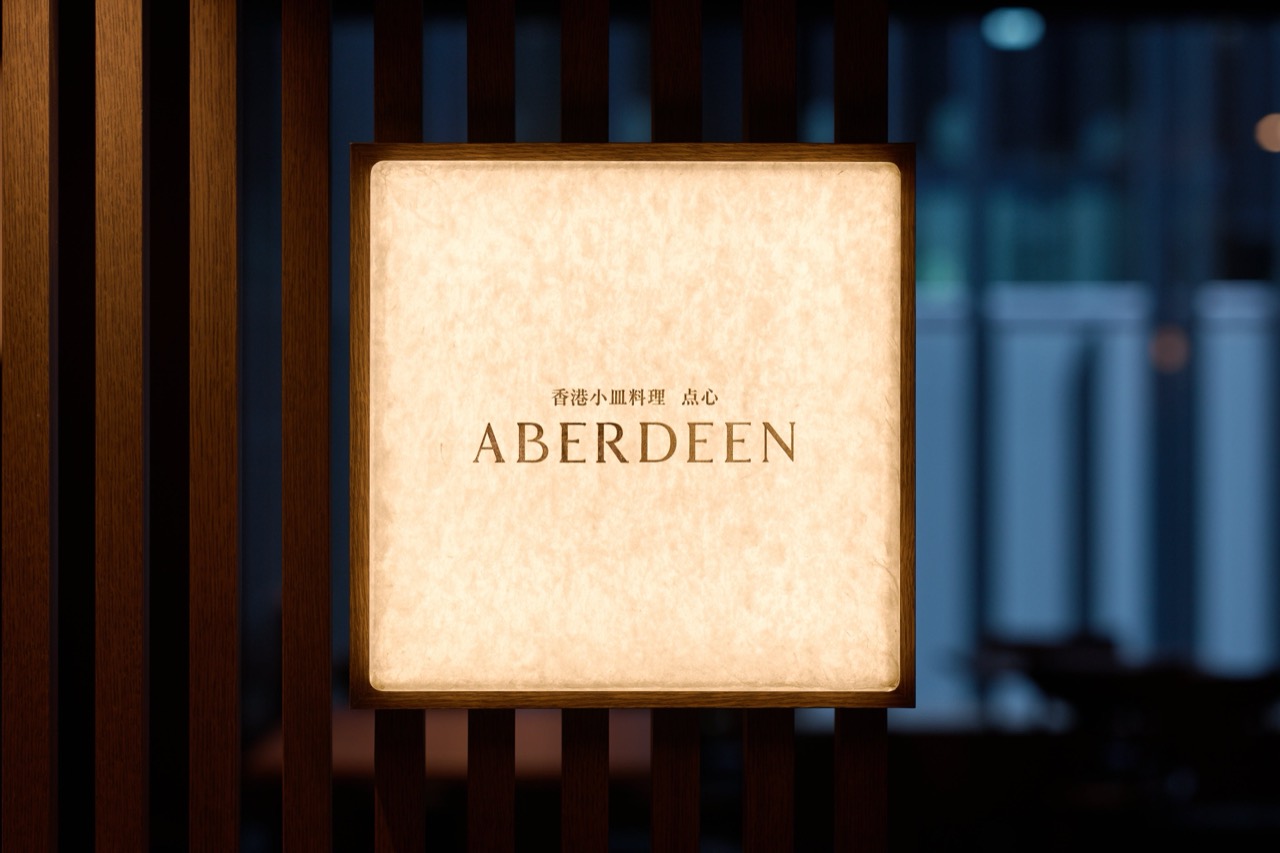
3.In the photographs the dining room sticks to one pale wood tone. Wooden tables, wooden chairs with rounded backs, and a long banquette in navy leather along the wall. One wall is tiled in staggered teal and brown pieces that read from a distance like woven basketwork, and tall slim sconces let light fall only up and down across it. At the entrance, a translucent light box stands between wooden slats with the words 香港小皿料理 点心 on its face.
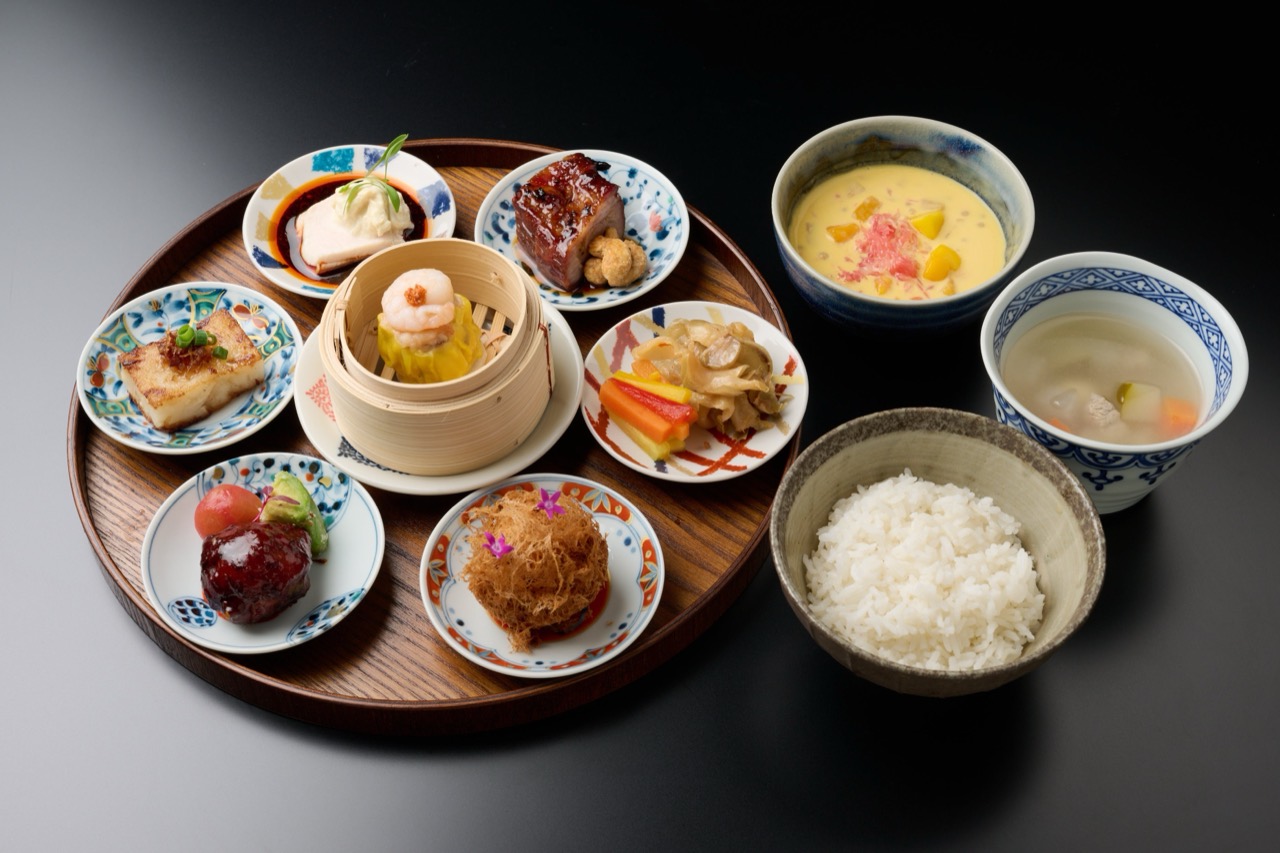
4.Lunch and dinner are built differently. The lunch headliner, TSUMUGI, puts seven small plates, rice, a medicinal soup and dessert on a single tray. Above it sit one dim sum course and two dinner courses, and the most expensive, which includes a shark fin custard, stops at ¥7,000.
5.In the press photo, TSUMUGI arranges blue-and-white porcelain dishes in a ring on a round wooden tray, with a bamboo steamer in the middle. Inside the steamer, shumai topped with shrimp. Lift the lid and the steam goes first. The dishes around it hold tofu under a glossy sauce, bright pickled vegetables, lacquered braised pork and a pan-browned turnip cake. Only the steamer and the soup need to be hot, so the kitchen can send out a tray quickly.
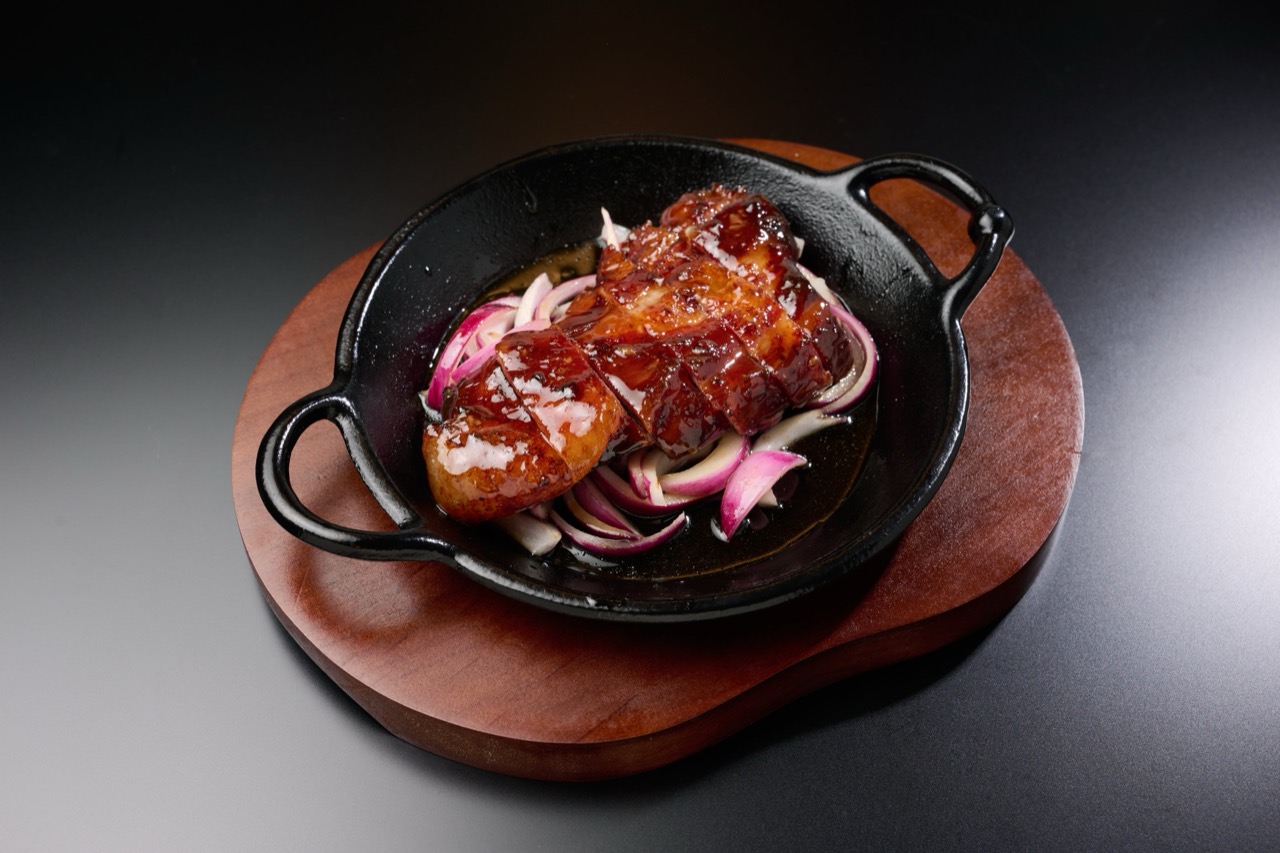
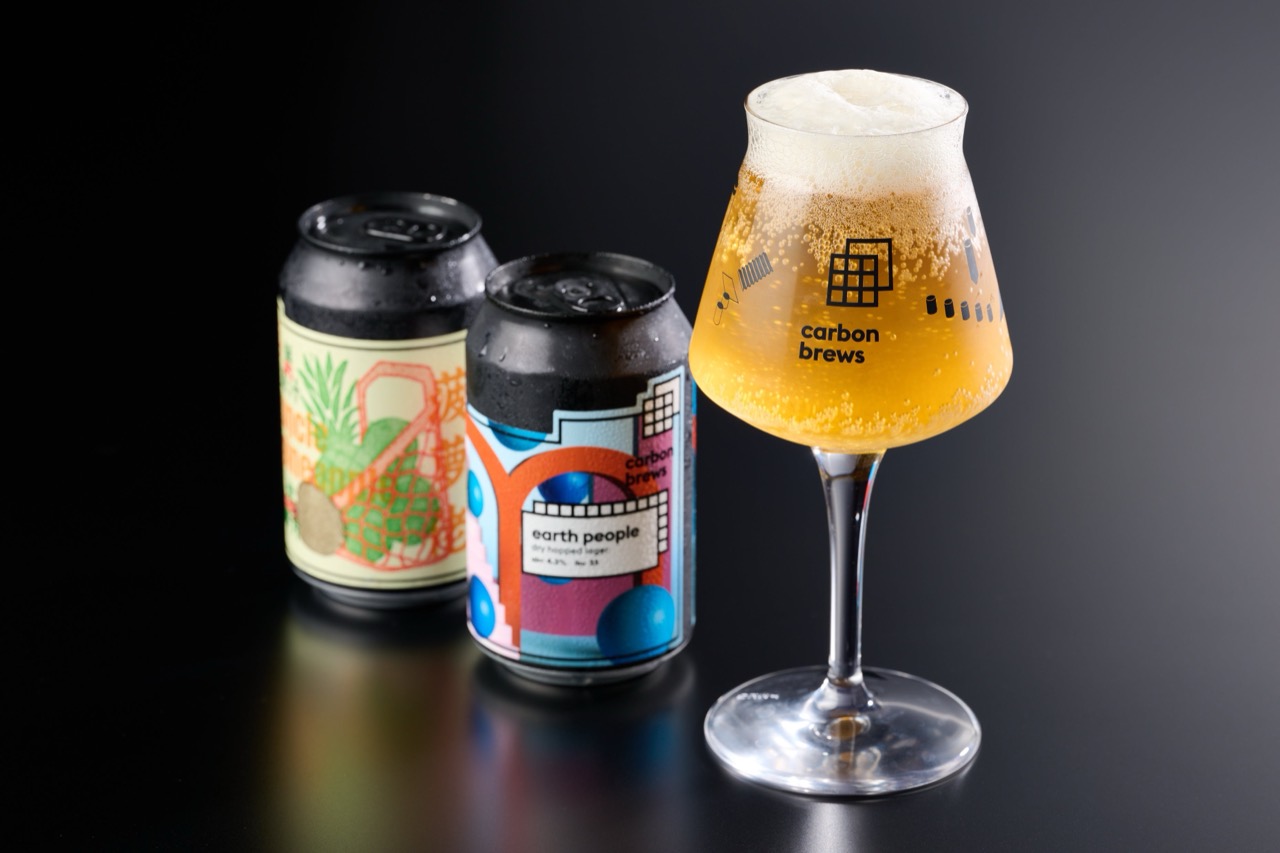
6.At dinner the headliner is char siu served on a heated cast-iron pan. Red onion goes down first, sauce-brushed pork on top, and the whole thing arrives on a wooden board. After the pan touches the table the sauce keeps bubbling and catches at the edges, and the sizzle carries to the next table. The glasses get Hong Kong craft beer from carbon brews. What the restaurant is aiming for at night is a table crowded with small plates and passed around by a group.
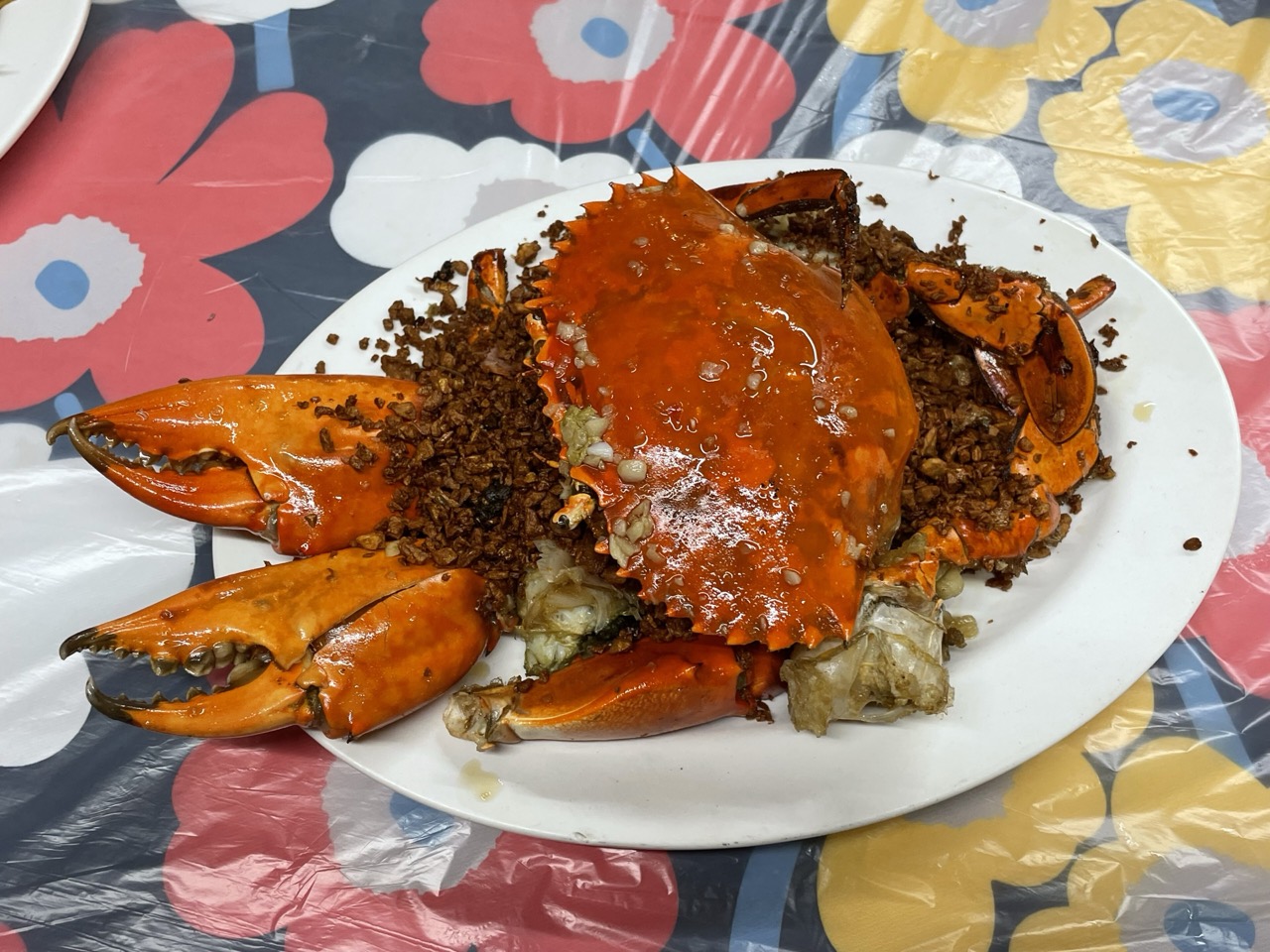
7.Head chef Yamazaki comes from Hei Kee Ginza, which the same company runs in Ginza. Hei Kee is a typhoon shelter seafood house that started in Causeway Bay, Hong Kong, in 1965, and its signature is crab fried under heaps of garlic and chilli. Tanaka Corporation opened its first Japanese branch in Ginza in 2017. It was the first Hei Kee outside Greater China.
8.Who picked that restaurant? The current president. He graduated in 1996, joined the Bank of Tokyo-Mitsubishi and was posted to Taipei, Hong Kong, Shenzhen and Shanghai. He joined the company in 2012 and became president in 2018, so Hei Kee Japan opened a year before he took the top job. A shop chosen by a former Hong Kong expat banker has been run for nine years by staff trained on photo studios and udon franchises.
9.The lunch crowd in Nihonbashi Muromachi splits into office workers from the surrounding towers and Mitsukoshi shoppers. Both want to eat a little of many things within an hour, and a single tray of seven plates settles that order with one bill. In the evening the private rooms take business dinners. When Hei Kee Ginza moved in 2022 and added three private rooms, it was chasing the same customer.
10.The two restaurants split the market by price. When Hei Kee Ginza moved, it went from 30 to 58 seats and started dinner courses at ¥8,800. ABERDEEN's most expensive course is ¥1,800 cheaper. Crab and whole fish stay in Ginza, and Nihonbashi sells small plates like dim sum and char siu. It is a price list drawn so that two restaurants run by the same kitchen lineage do not take each other's customers.
11.If the 62 seats turn 1.1 times at lunch and 0.7 times at dinner, 111 people sit down a day. Multiply by ¥2,000 at lunch and ¥6,500 at dinner over 30 days and monthly sales come to about ¥12.5 million (estimate). Divided by 45.7 tsubo, that is about ¥270,000 per tsubo per month.
12.Restaurant floors in Japanese malls usually charge rent linked to sales. At 12% that is ¥1.5 million a month (estimate). Chinese restaurants typically run food costs of 30-35% and labour around 30%, so after utilities a little over 20% of sales is left, and depreciation comes out of that (estimate).
13.At the company's Hanamaru Udon and Gyukaku Yakiniku Shokudo stores, headquarters sets the menu and prices, and the franchisee pays a royalty out of sales. Hei Kee was also opened under an agreement with the Hong Kong original, so a similar share most likely leaves the company (estimate). The operator describes ABERDEEN as its own brand. There is no one to pay, neither in Hong Kong nor at a franchise headquarters. Put the royalty at 3-5% of sales and ¥4.5 million to ¥7.5 million a year stays inside the company (estimate). So do the cost of building a name and the full loss if it fails.
14.Aberdeen, the harbour that lent its name, was home to the Jumbo Floating Restaurant. It opened in 1976 and tourists took small boats across to reach it. It stopped trading in March 2020, and in June 2022, while being towed away, it capsized in the South China Sea, according to its operator. The harbour's name now hangs on the third floor of a Nihonbashi mall.
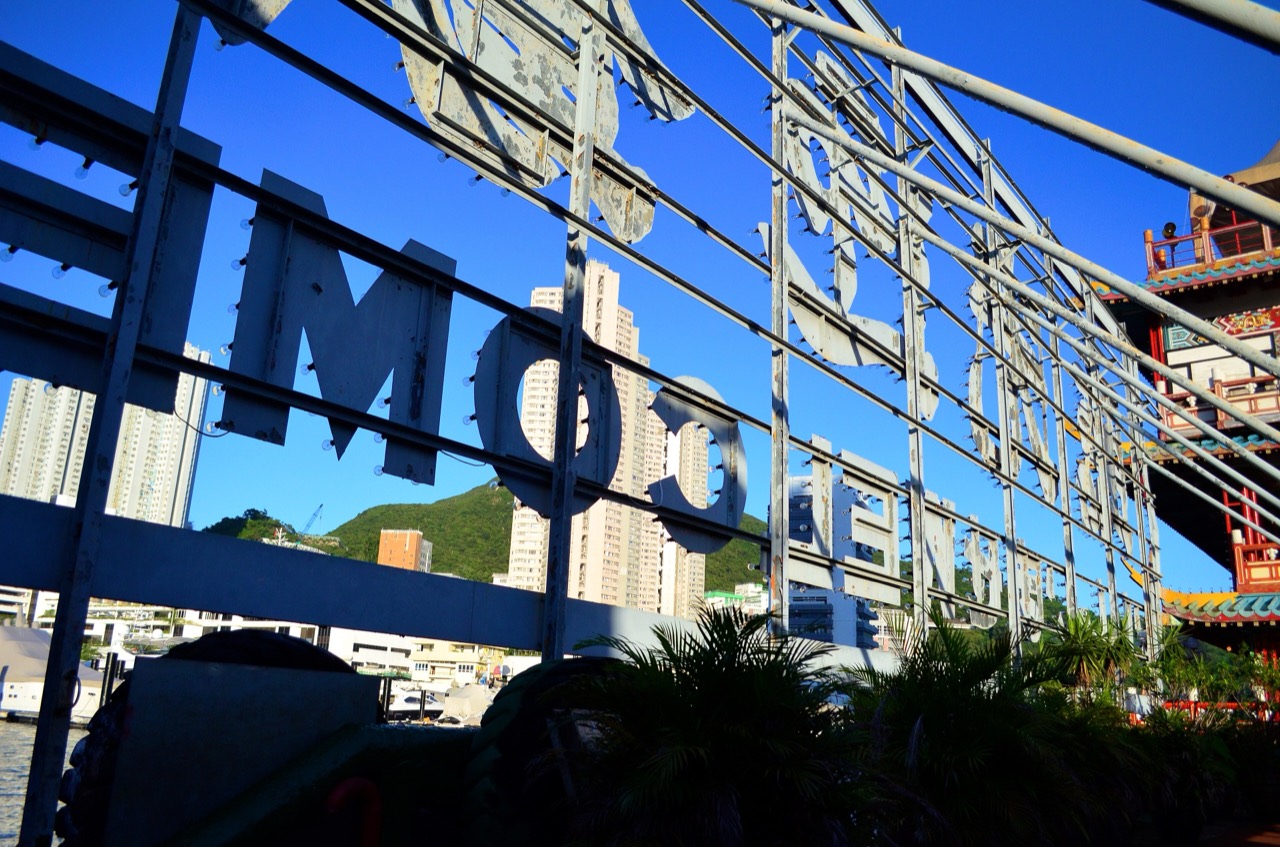
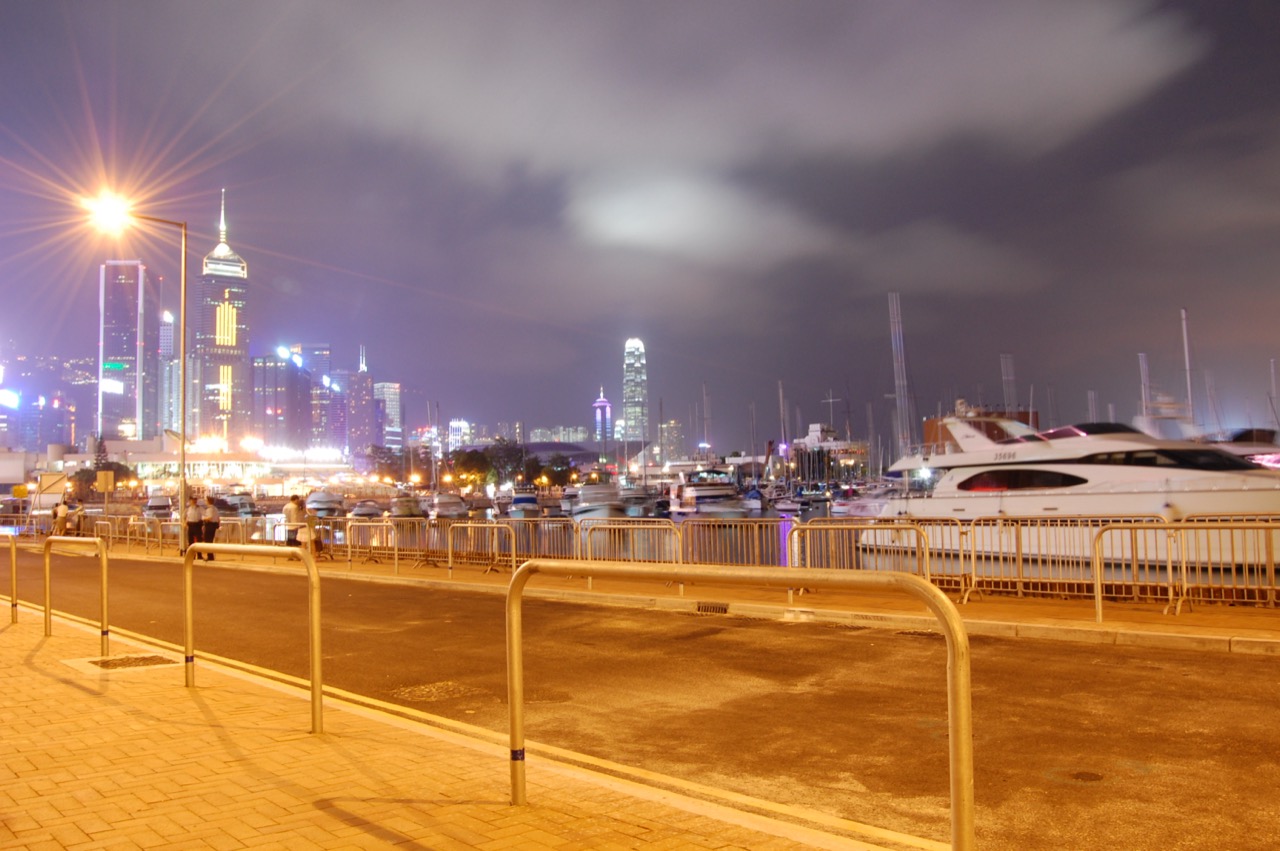
15.Typhoon shelter cooking was also born on the water. Fishing families and floating restaurants moored in the Causeway Bay shelter fried crab and clams on their boats, and when they came ashore they opened under the Canal Road flyover and along Jaffe Road and Lockhart Road. The boats disappeared, but the cooking moved, first onto land and then across the sea. In Tokyo, the company that took it in used to make machinery.
16.A franchise operator from Ryogoku spent nine years running a Japanese licence for a Hong Kong seafood house, then opened a Hong Kong restaurant under its own name in Nihonbashi. At ¥12.5 million a month, the share it no longer hands to someone else's brand runs to several million yen a year (estimate). A Korean franchise operator that tried to franchise such a brand in turn would run into a time requirement. Since July 2024, Korea's Franchise Business Act has required at least one company-run store operated for over a year before a disclosure document can be registered. The first shop under your own sign is one you cannot sell to anyone else for at least a year.