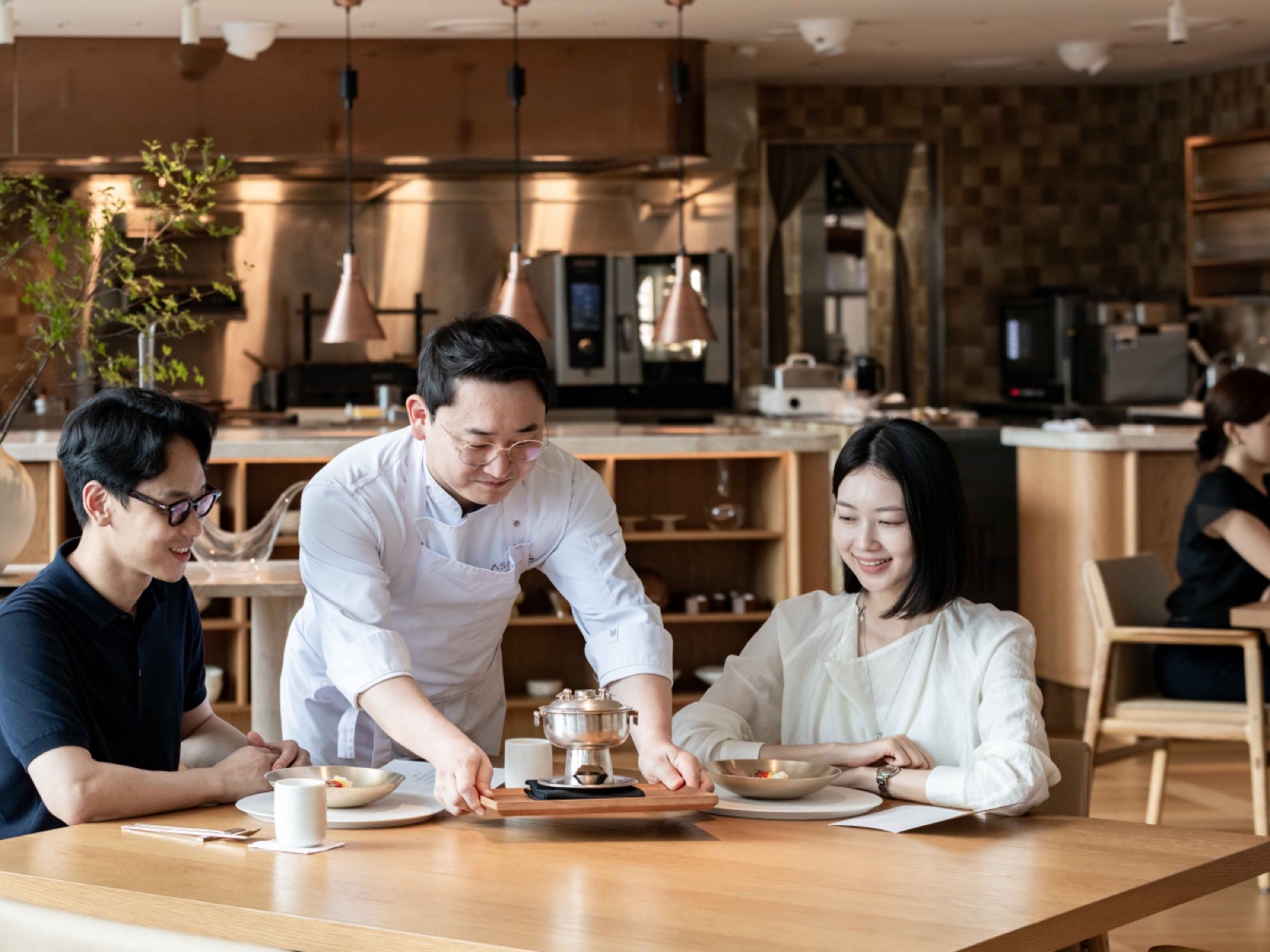
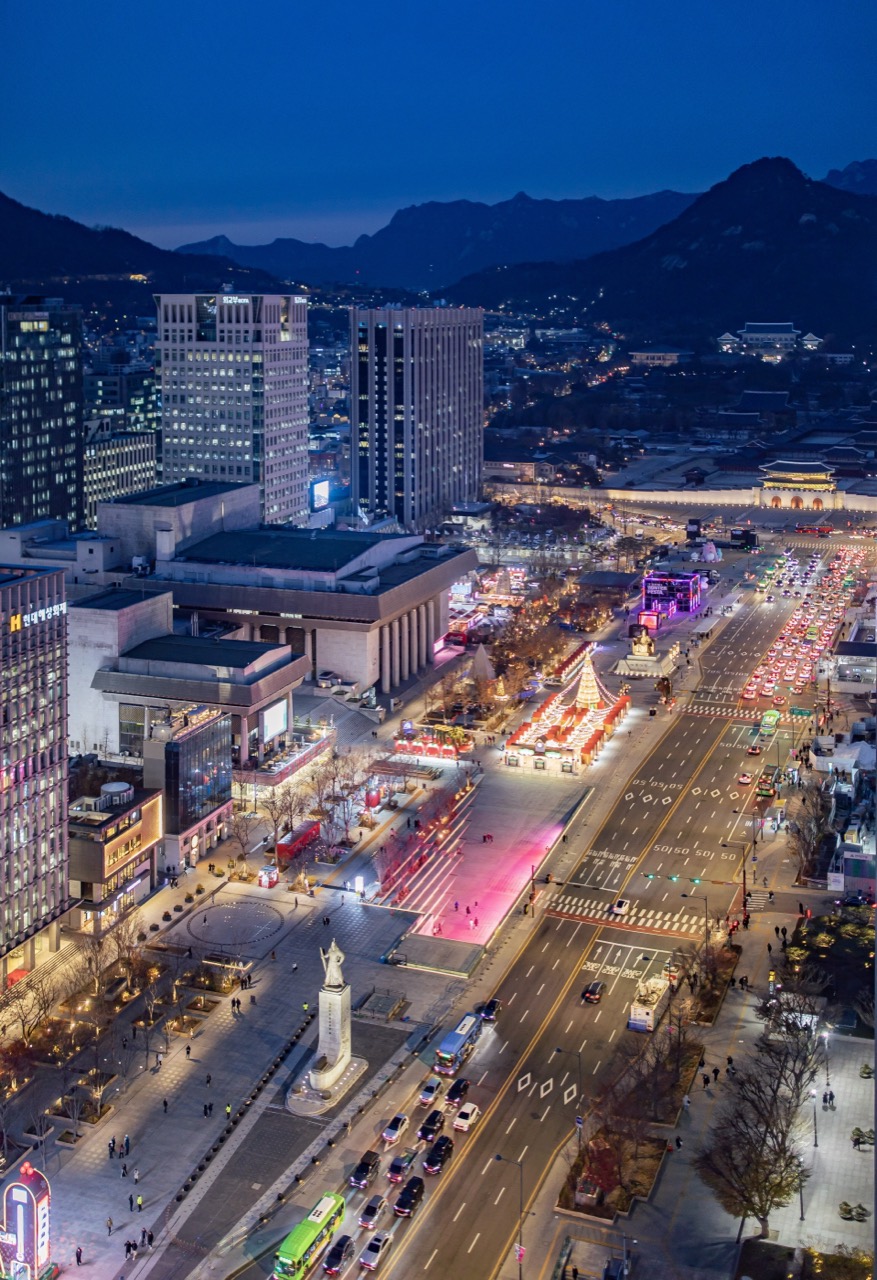
The Plaza hotel across from Seoul City Hall turns 50 this year and stops trading at the end of September. Asadal, the Korean restaurant it opened in 1986, took its name back after some twenty years, reopened on the 15th floor of an office building in Gwanghwamun, and has lunch and dinner booked through the end of October.
1.On April 24, The Plaza Dining opened on the 15th floor of KT Gwanghwamun Building West in central Seoul. It covers 450 pyeong (1,486㎡) with 232 seats and 13 private rooms. Three restaurants share the floor: Korean at Asadal, Chinese at Dowon·S, and a new grill, Pablo Grill & Bar. The operator is Hanwha Food Tech, the dining affiliate of Hanwha Hotels & Resorts.
2.On September 15, Hanwha Food Tech said Asadal's August visitors had passed twenty times the figure for its opening month, and that every lunch and dinner slot was taken through the end of October. On the 30th of the same month, The Plaza hotel by City Hall, where Asadal and Dowon first opened, closes its doors. A full renovation of about three years starts next year.
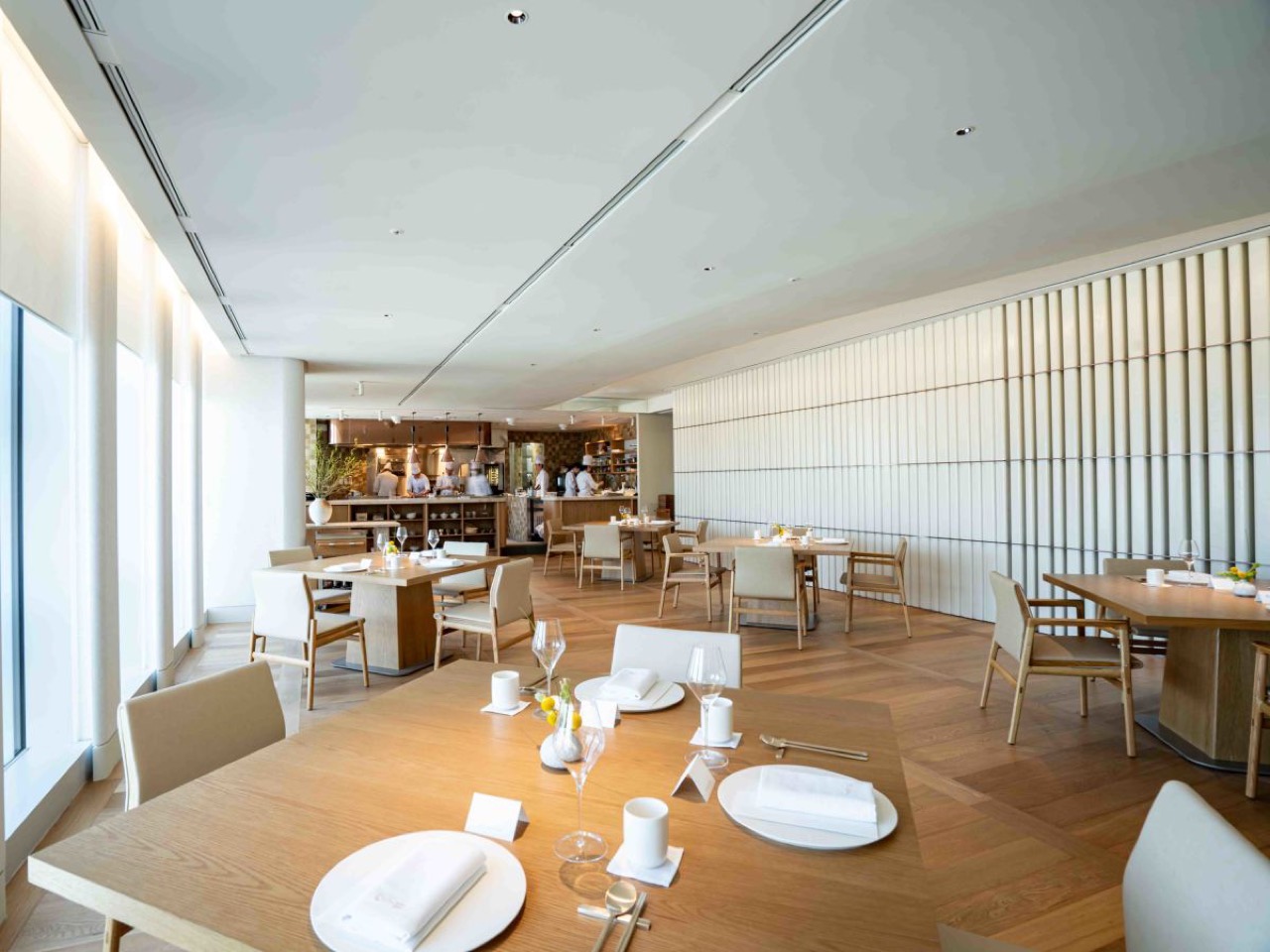
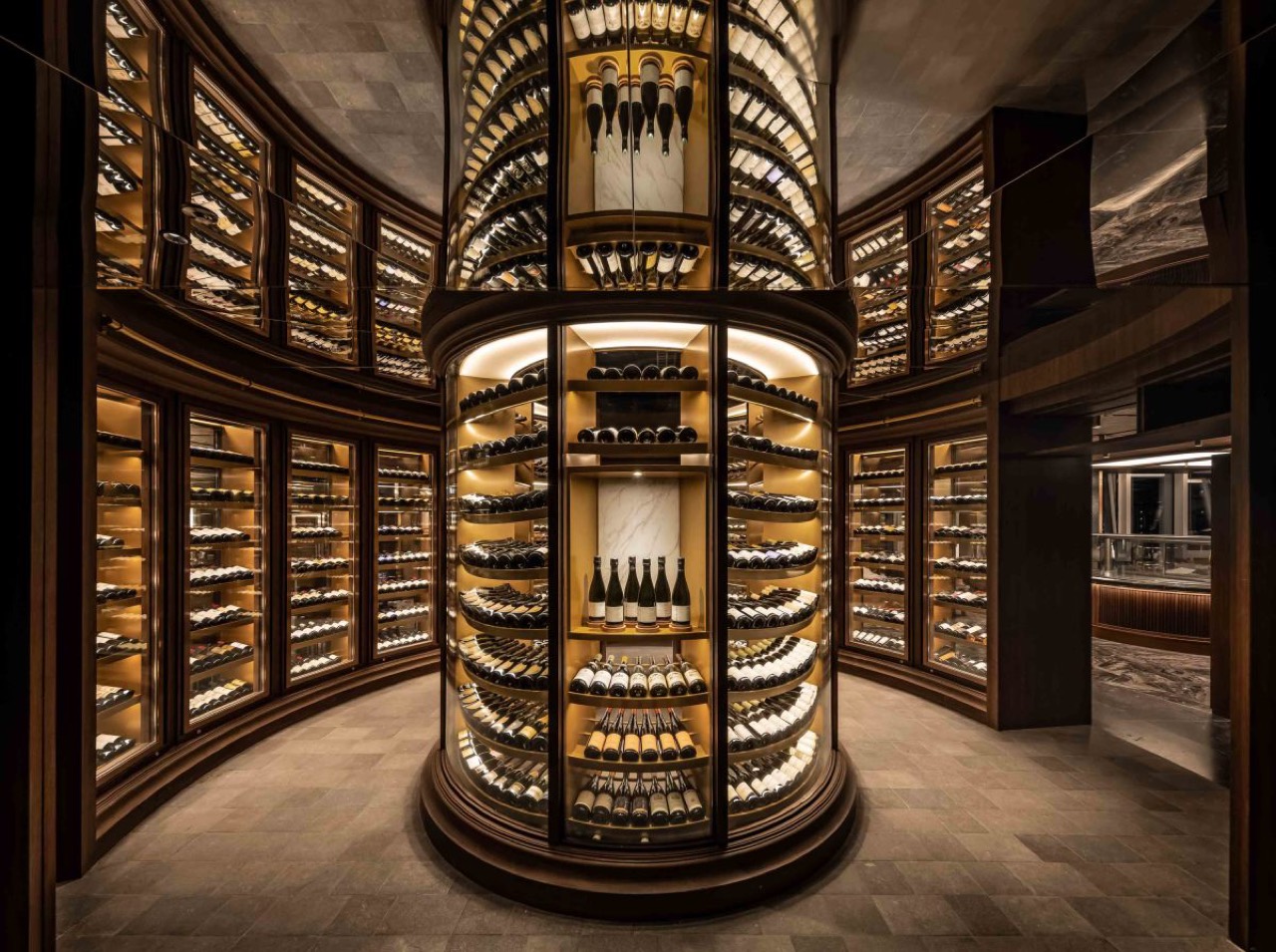
3.Tables are pushed toward the windows, so most seats look out on Gyeongbokgung Palace, the Blue House and Bugaksan mountain. Dowon·S puts a large seafood tank at its entrance, and a wine tower holding some 1,000 labels stands in the middle. On Pablo's side, an aging room with meat hung by cut sits behind glass, and Asadal runs an open kitchen. Each of the three restaurants puts one thing to look at by its door.
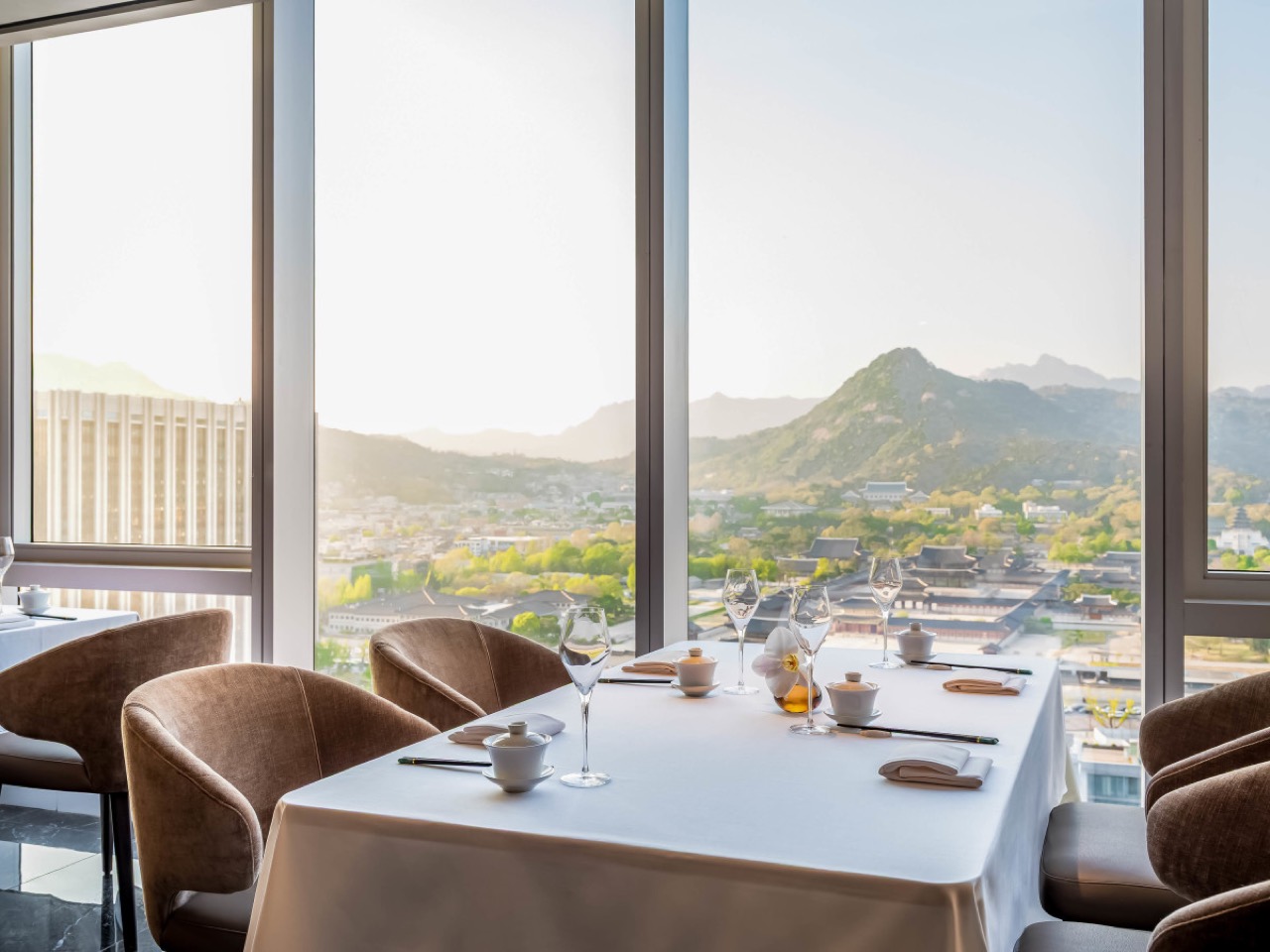
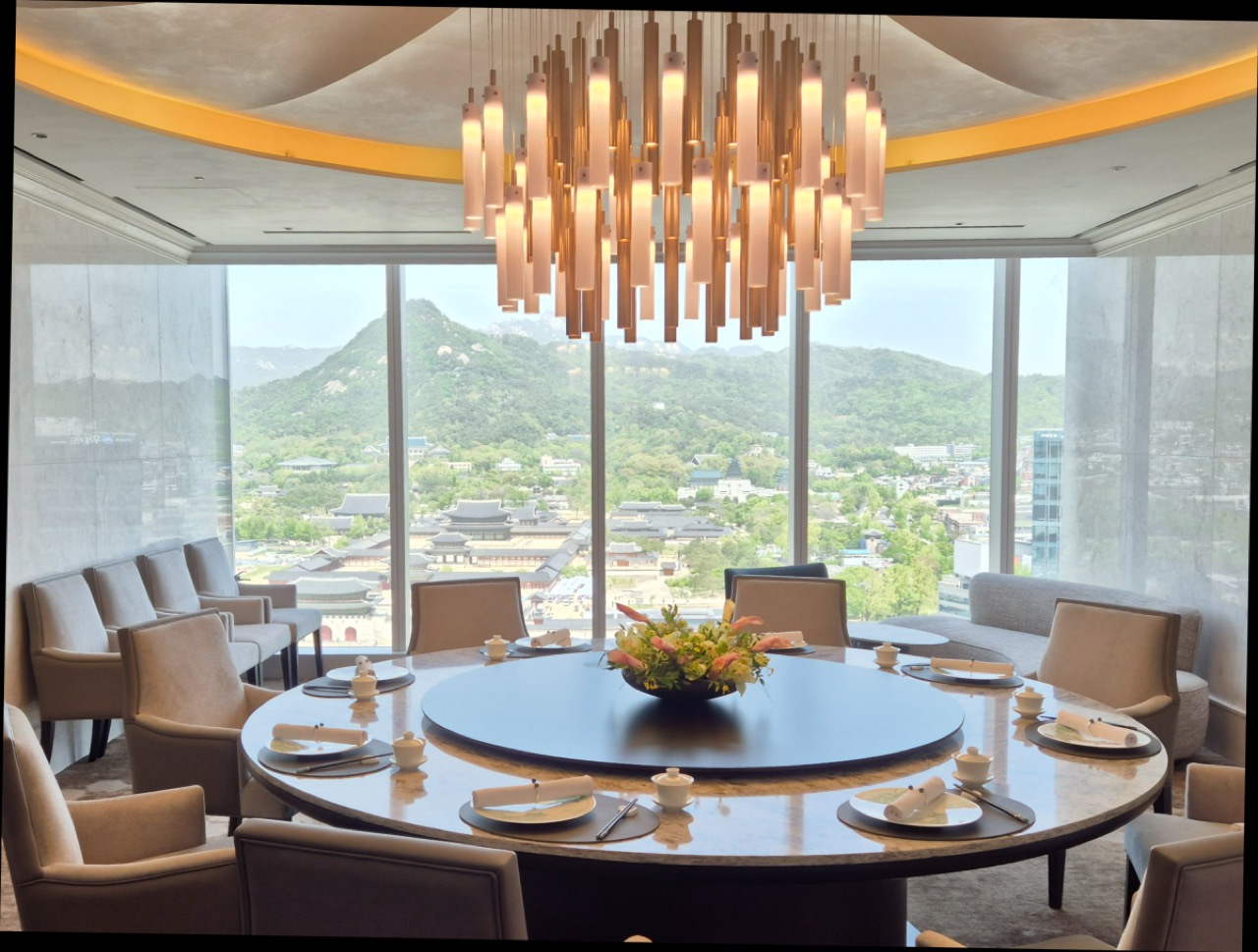
4.Of the 232 seats, 106 belong to Dowon·S, and Asadal and Pablo split the rest. That works out to about half a seat per pyeong, the wide table spacing of a hotel dining room carried over intact. Dowon·S has a VIP room for twelve, and one wall between two rooms was opened so they can be joined for a banquet.
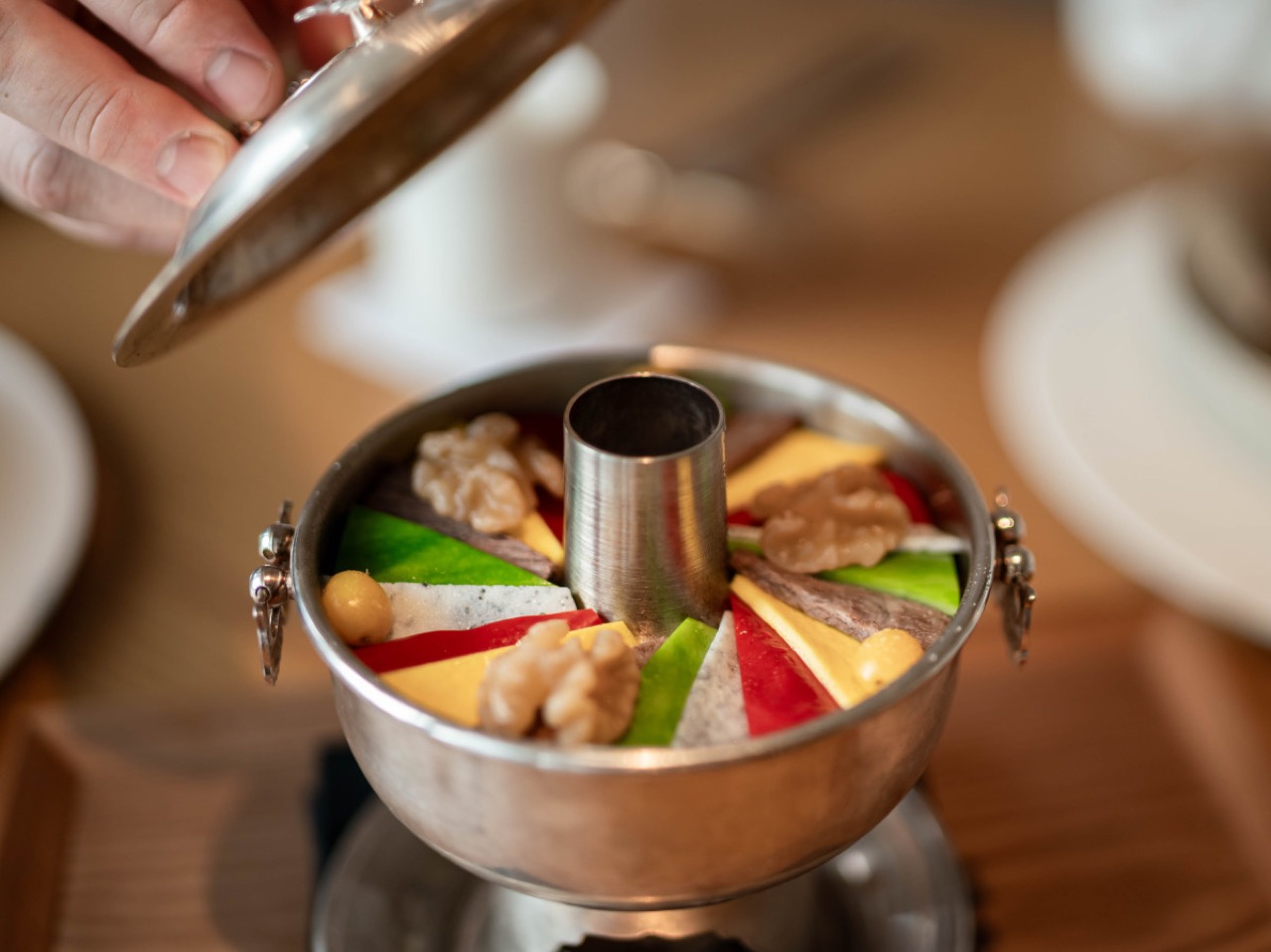
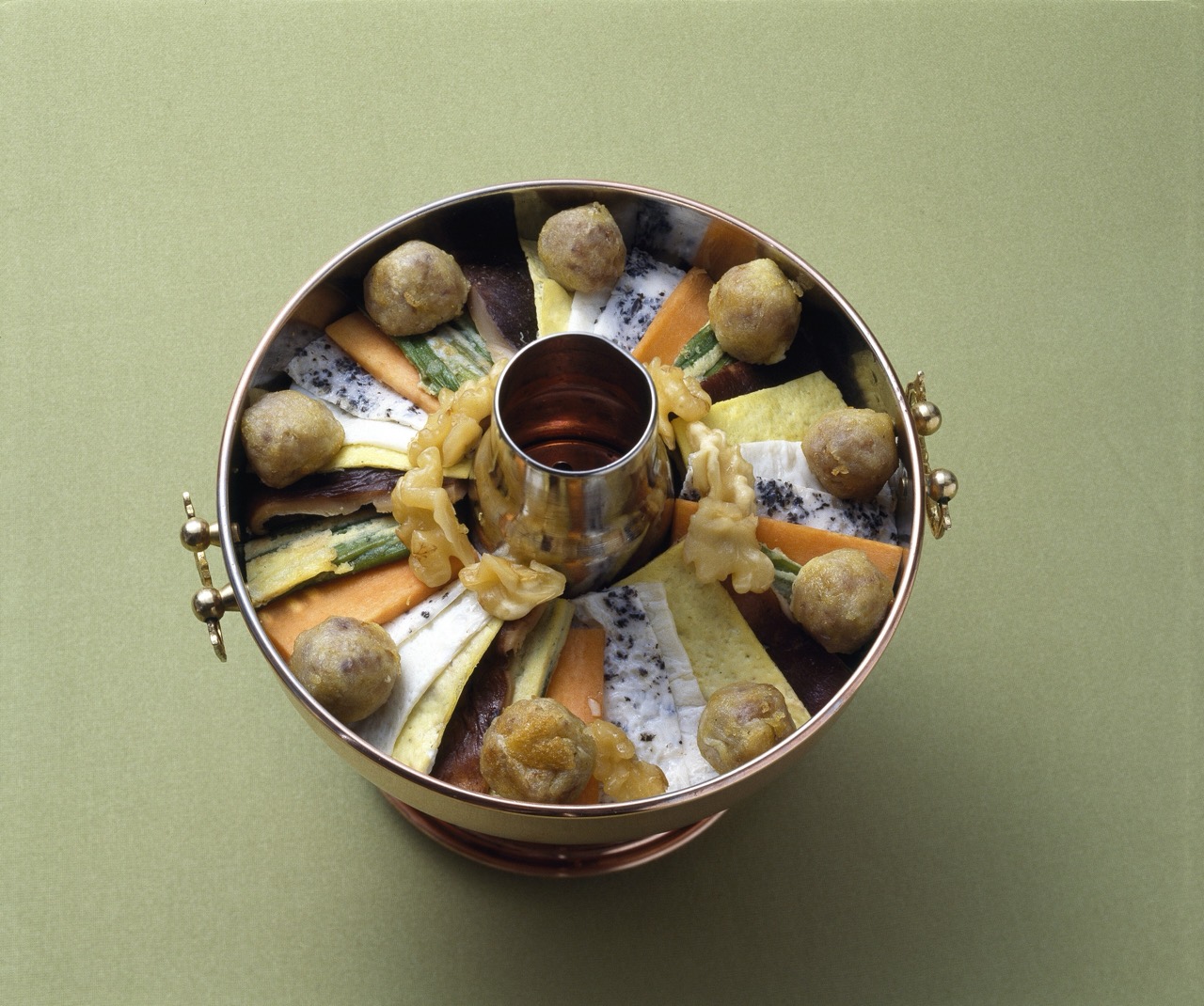
5.A meal at Asadal begins with choosing chopsticks. Guests pick one of five colors, blue, white, yellow, red and black, and each color carries one of the five blessings. The first plate is a set of small bites: sea urchin roe on fermented rice cake, and Korean beef tartare wrapped in an onion crisp. Next comes sinseollo, the old Asadal's signature. It is a court vessel with a central chimney once filled with charcoal so the broth boiled at the table, with pancakes and vegetables arranged in a ring around it. Croaker in summer, and from September 15, hairtail.
6.Bossam kimchi, or bokimchi, is a Joseon court dish: octopus and Korean beef brisket wrapped in kimchi leaves and left to ferment for about a month. A month-old kimchi hits the tongue with sourness first, and the brisket and octopus inside give it something to chew. Chef Kim Jung-hwan, who worked at Kwonsooksoo (two Michelin stars) and Eatanic Garden (one star), says he aimed for the ingredients to linger rather than for strong flavors. At the end, three kinds of dasik tea cookies go home in a box. The meal opens with chopsticks and closes with a cookie box, which gives a business dinner one talking point at the start and another at the end.
7.Gwanghwamun is where government offices, corporate headquarters and embassies cluster, and lunch and dinner here usually mean entertaining. The 13 private rooms take that demand. Gyeongbokgung outside the window needs no explanation in front of a foreign guest, and the table carries sinseollo and bokimchi, dishes once served at the Joseon court.
8.The name helps. Asadal opened in 1986 at the Seoul Plaza Hotel, today's The Plaza, and is known as the place Laura Bush visited during the 2002 US presidential trip to Korea. Hanwha brought back a name that disappeared some twenty years ago, along with old dishes like sinseollo. The money a new restaurant would spend making its name known is paid instead by the memories of old customers.
9.The twentyfold figure also comes from a small base. The opening date was April 24, so if the first month means April, the restaurant traded for only seven days. As a daily average, August visitors come to roughly 4.5 times the first month. Even so, lunch and dinner being booked two months out holds whichever base you use.
10.Course prices have not been published. Korean tasting menus at Seoul's luxury hotels usually run from the ₩100,000 range at lunch to ₩200,000 to ₩300,000 at dinner, so Asadal's spend per head is estimated to fall in that band. So what makes the bill grow? Wine. A paid signature pairing is sold separately, and the wine tower holds bottles priced above ₩20 million.
11.The 15th floor is an office floor, not street-level retail, so rent works differently. The terms agreed with KT have not been disclosed. Assume rent and service charges together at ₩200,000 per pyeong a month, and 450 pyeong costs ₩90 million a month, or about ₩390,000 per seat. With a dinner course at ₩200,000, two guests in a seat over a month cover that seat's rent.
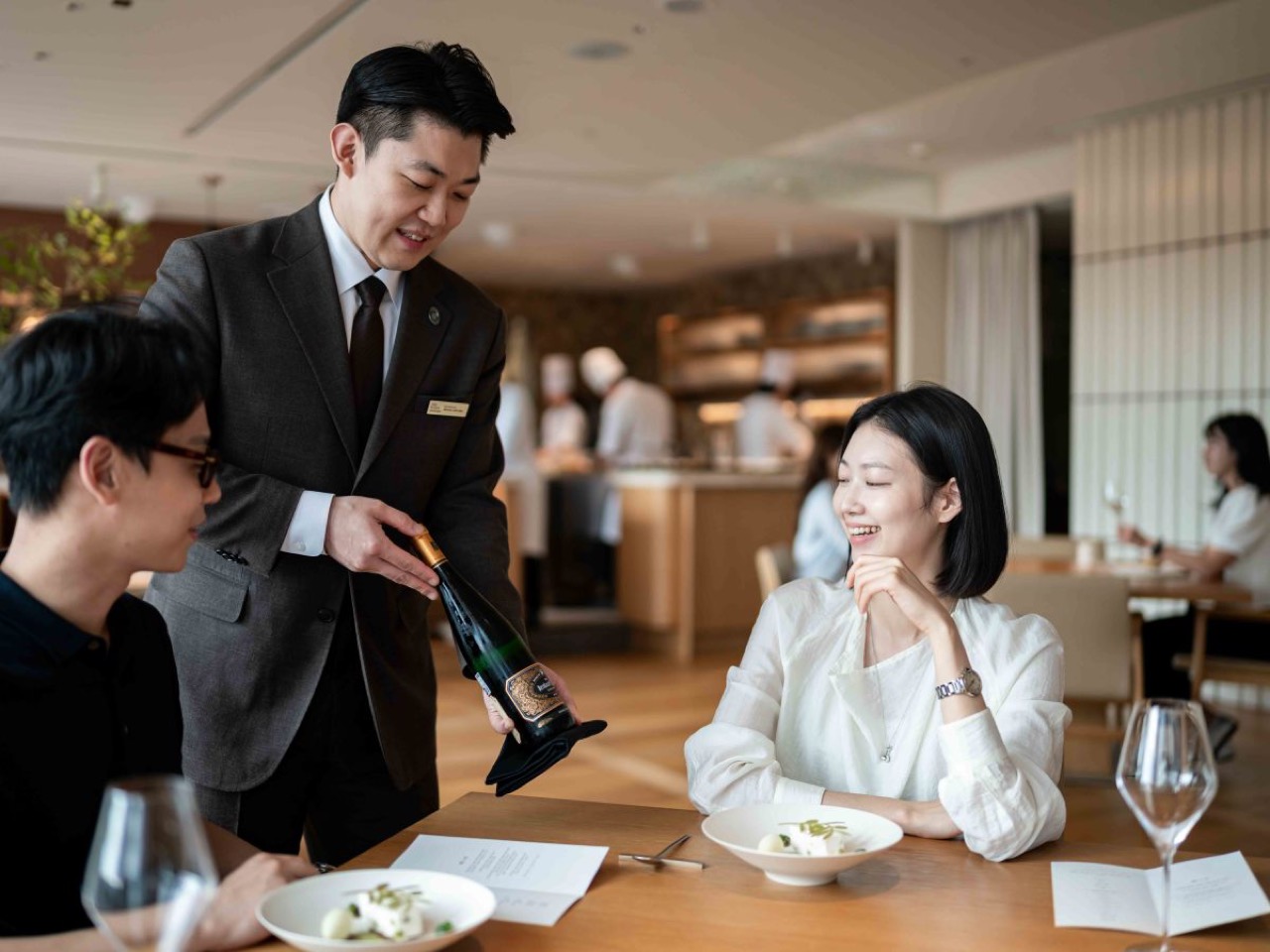
12.The heavier load is labor. A tasting-menu restaurant needs people at every table to explain dishes and change plates, so staff grows faster than seats. Putting three restaurants on one floor shows a way to cut that cost. One sommelier team, led by head sommelier Bae Sung-min, winner of Korea's 2025 sommelier competition, and one cellar handle the wine for all three.
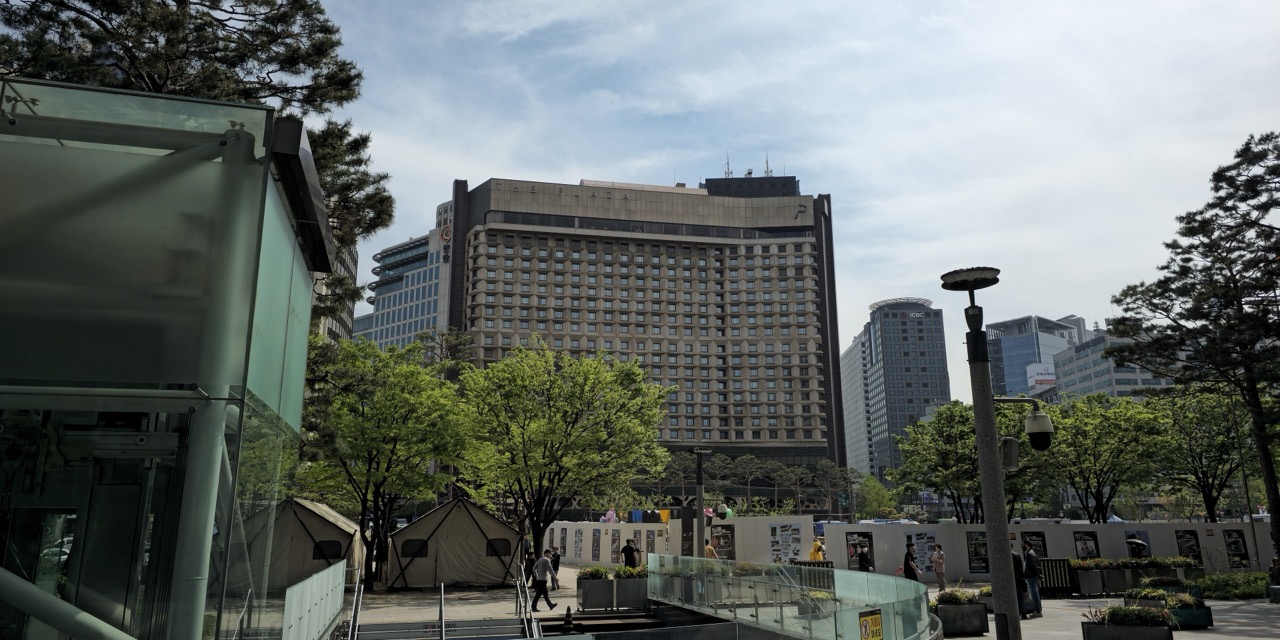
13.The Seoul Plaza Hotel opened across from City Hall in 1976, and Dowon has been its Chinese restaurant since that year. Hanwha later outsourced the hotel's food and beverage and spun its restaurant business off as Hanwha Food Tech. Restaurant names that used to wait for hotel guests now take customers directly, in an office building outside the hotel.
14.The renovated hotel aims to be a so-called seven-star property for global VIPs, with plans to turn rooms into mostly suites and bring in Michelin-starred restaurants. Whether Asadal and Dowon will return to the hotel then has not been disclosed. What is certain is that both names keep trading in Gwanghwamun while the building sits closed. The restaurants found their own way to keep regulars through the three years of construction.
15.In the month its 50-year-old hotel closes, the Korean restaurant that hotel opened in 1986 sold out every seat through October from the 15th floor of an office building. It spread 232 seats over 450 pyeong of office floor and filled two months of bookings with an old name and a palace outside the window. Anyone trying the same in another downtown office tower gets stuck at the kitchen first. An office floor has to be converted to restaurant use, and the drawings have to show a shaft that can carry kitchen exhaust all the way to the roof.