A Vancouver-style seafood restaurant on Shanghai's Yuyuan Lu ended a ten-year run in August. Forty-six days later, the same owner lit the grills of a Korean barbecue joint in the same room. It is a brand that closed on the Bund during COVID.
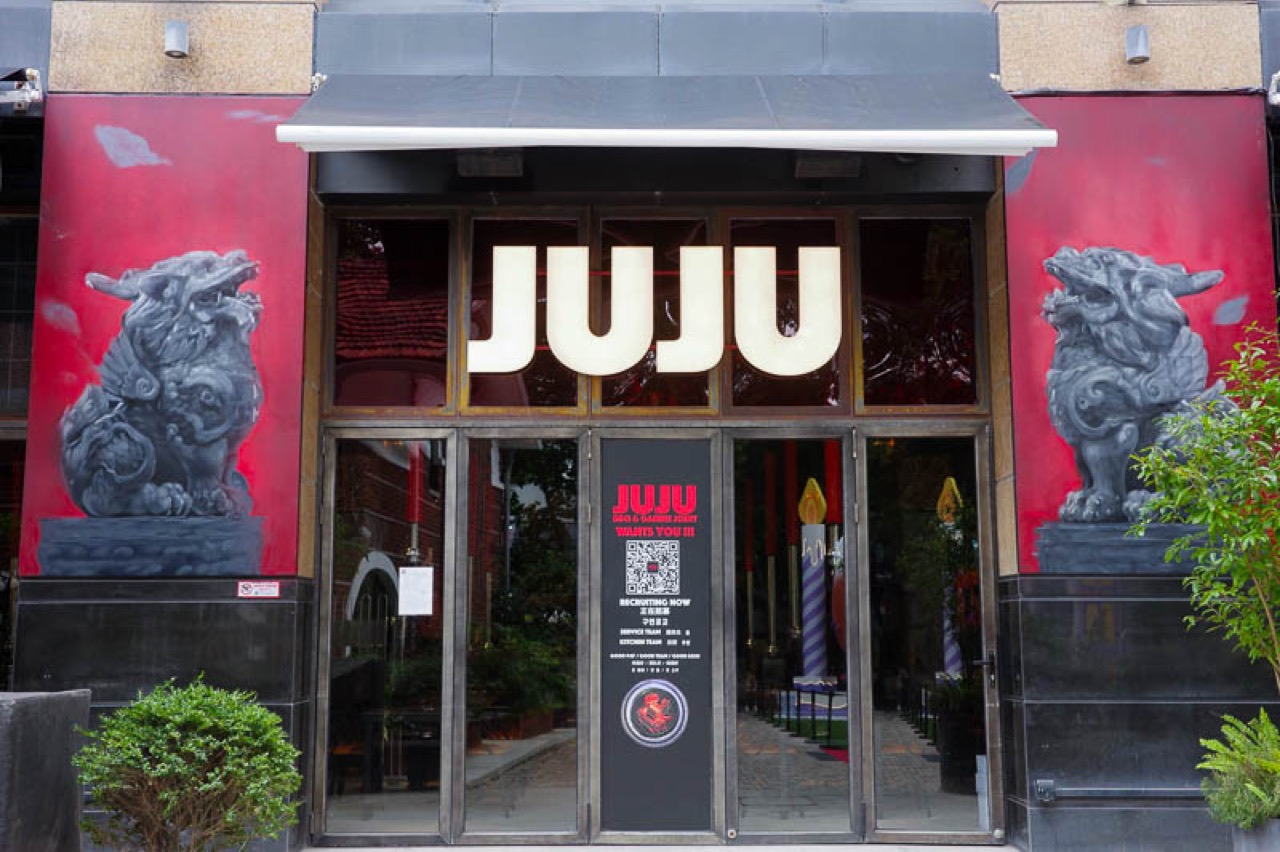
1.On Monday, September 21, the Korean barbecue restaurant JUJU soft-opened at 1107 Yuyuan Lu in Shanghai's Changning District. It seats just under 200, with a central bar and one private room for 16. No reservations yet. First come, first seated.
2.The previous tenant was The Cannery, open until August 6. Vancouver native Mark Klingspon opened the seafood restaurant in 2016, and it lasted ten years on a lawn, a salmon firepit and weekend brunch. JUJU is also Klingspon's brand. It started in 2019 on the second floor of Three on the Bund, closed in October 2020 in the middle of the pandemic, and six years later he relit it in the space he had run for a decade.
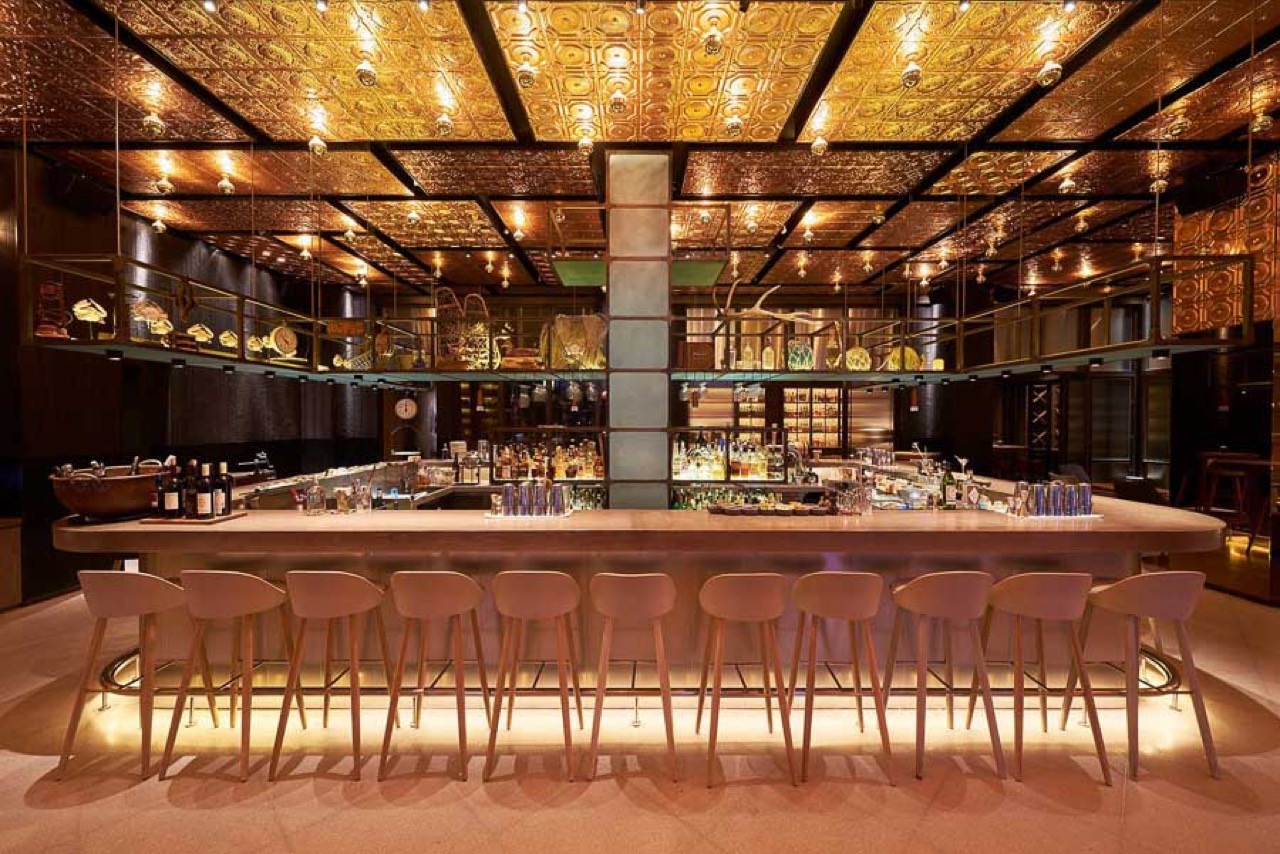
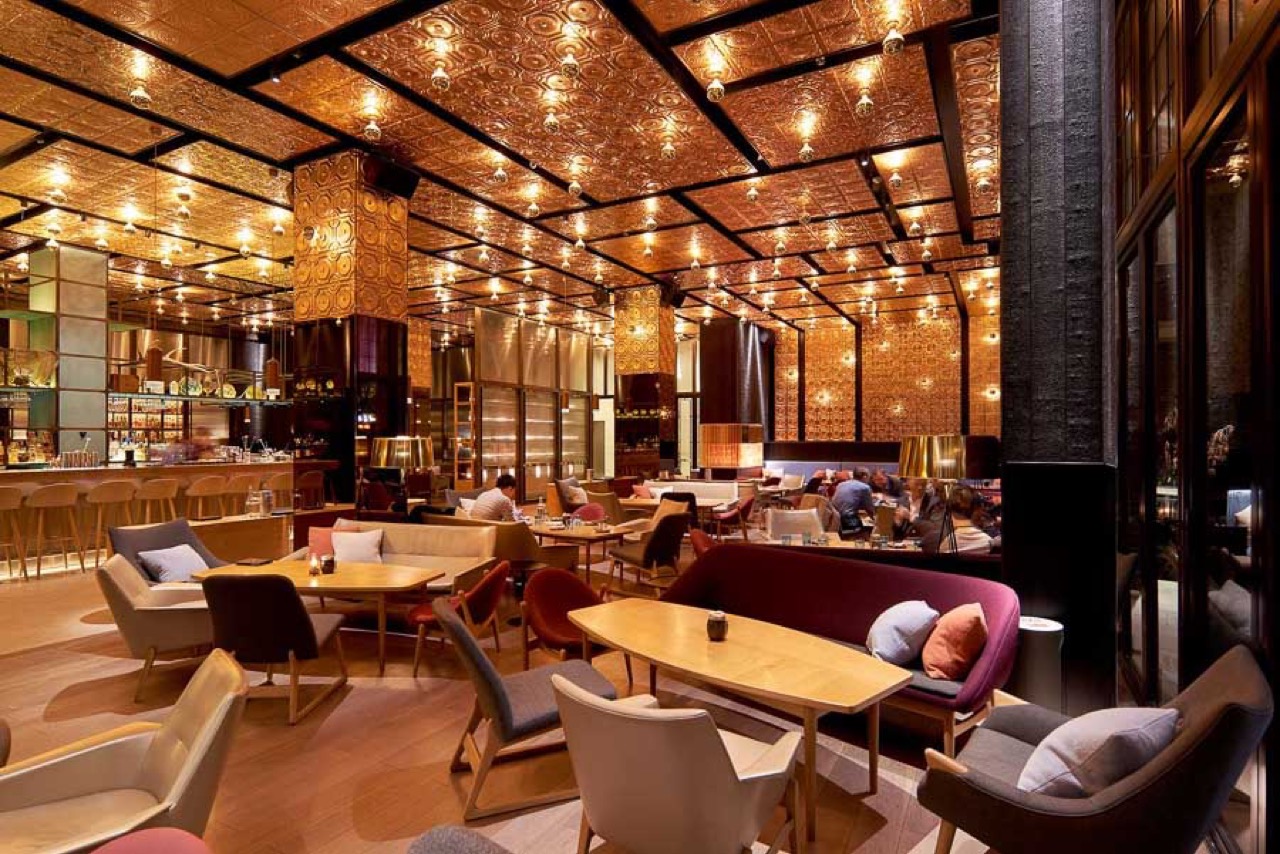
3.The Cannery's interior was designed by Andy Hall. Charred, fire-resistant timber covered the walls and mock copper tiles lined the ceiling. A seafood steamer sat in the central bar, and floor-to-ceiling windows faced the lawn. Klingspon has said he only ever uses amber light because people look their best under it.
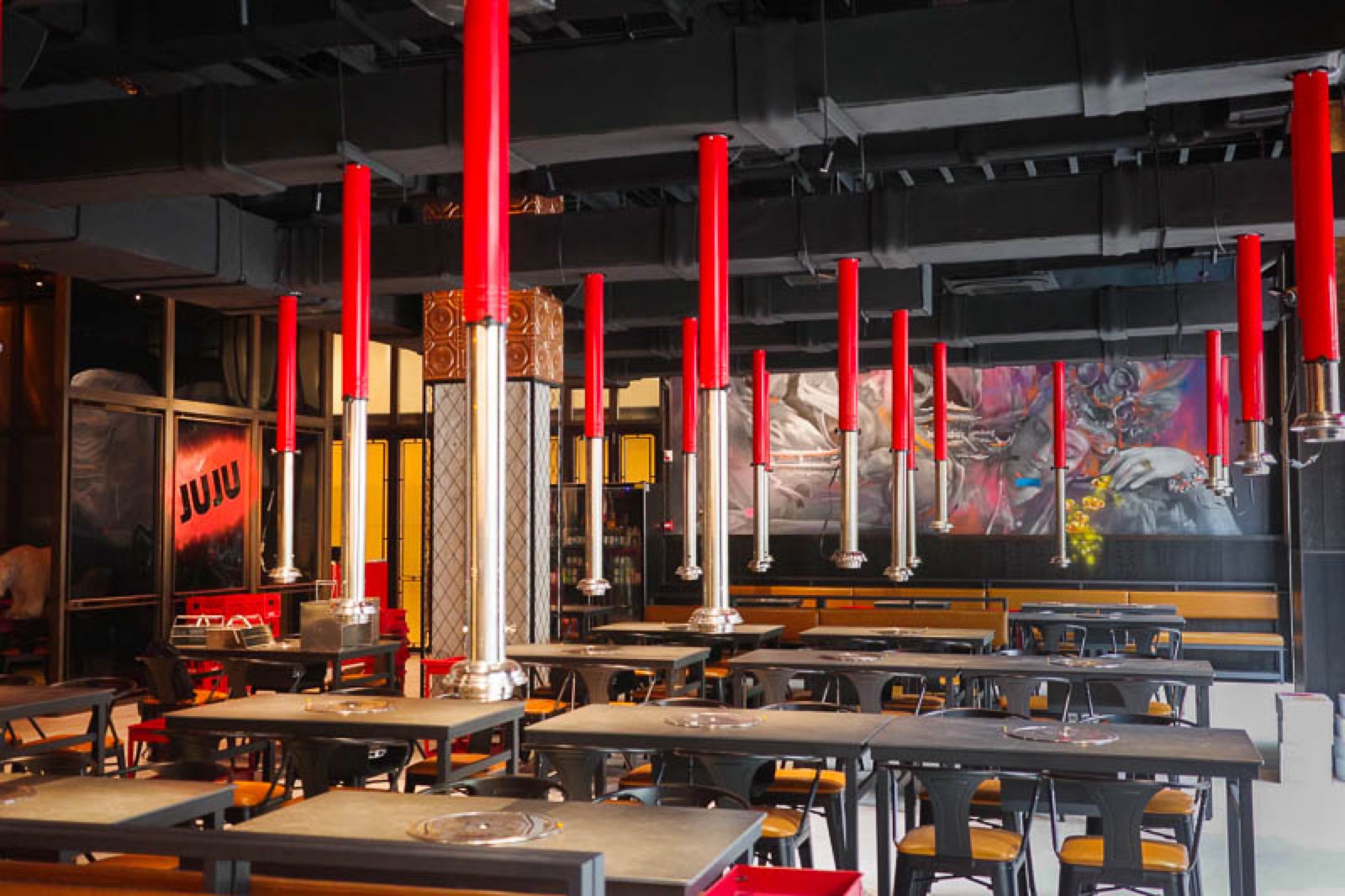
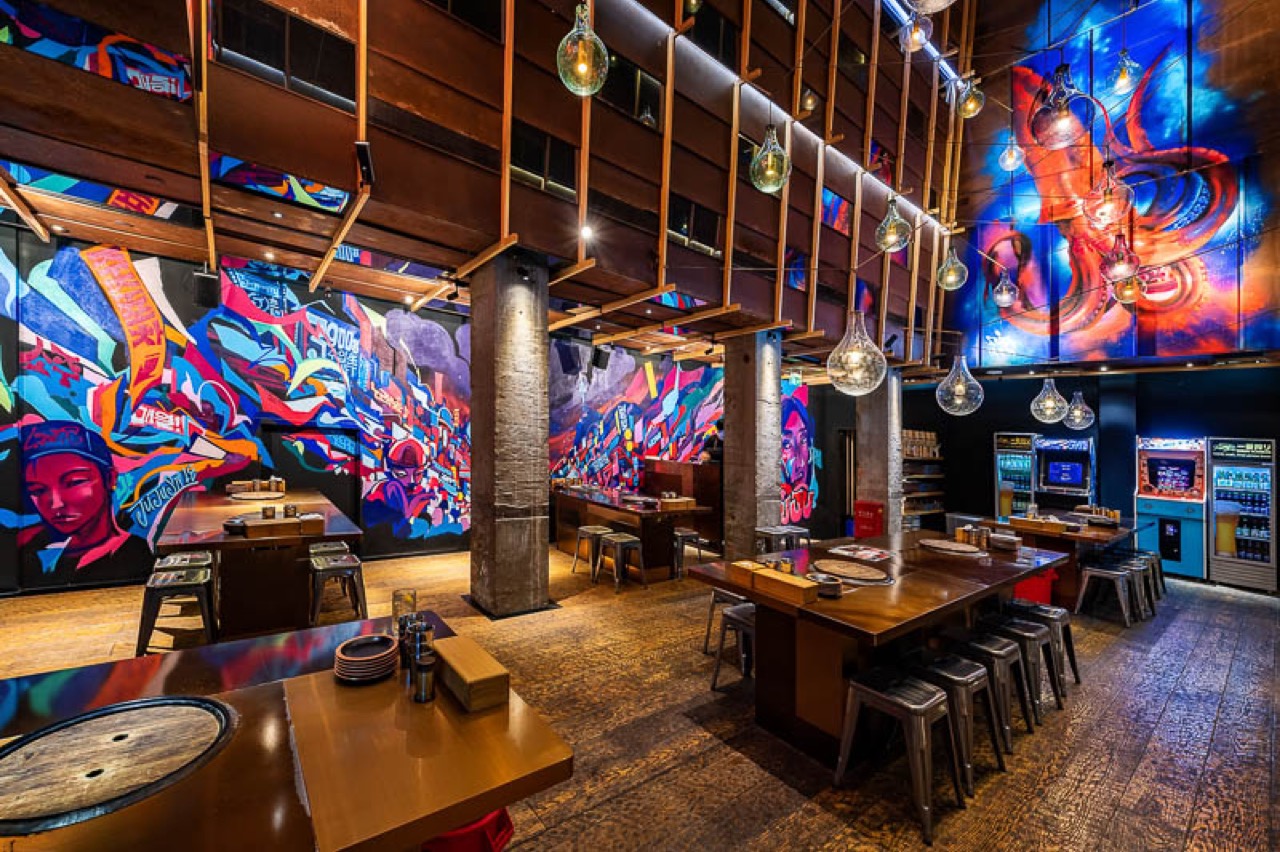
4.In the new room, a red cylindrical duct comes down from the ceiling to each table and stops just above the grill. The ceiling pipes are painted black and left exposed, and a graffiti mural fills the back wall. Metal chairs with yellow seat pads line up at dark grey tables, with long benches along the walls. A room that sold lawn and firepit now sells fire and smoke at every table.
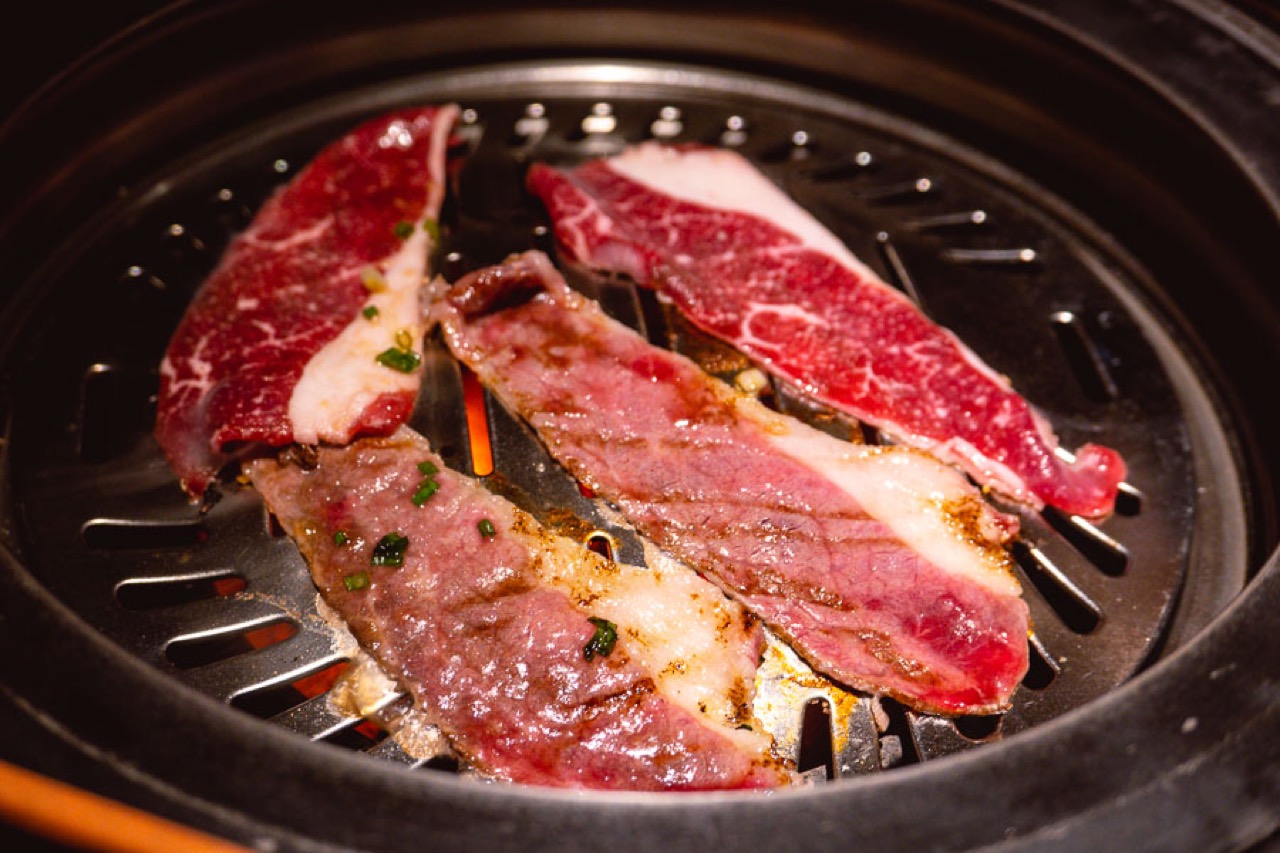
5.Beef leads. Highly marbled cuts from UYYU, a Uruguayan wagyu brand, come in several forms, with pork in support. Fatty meat hisses louder the moment it touches the grill, and rendered fat runs to the edge and burns off as smoke. The duct overhead pulls that smoke straight up, and it disappears into the ceiling before it reaches the next table.
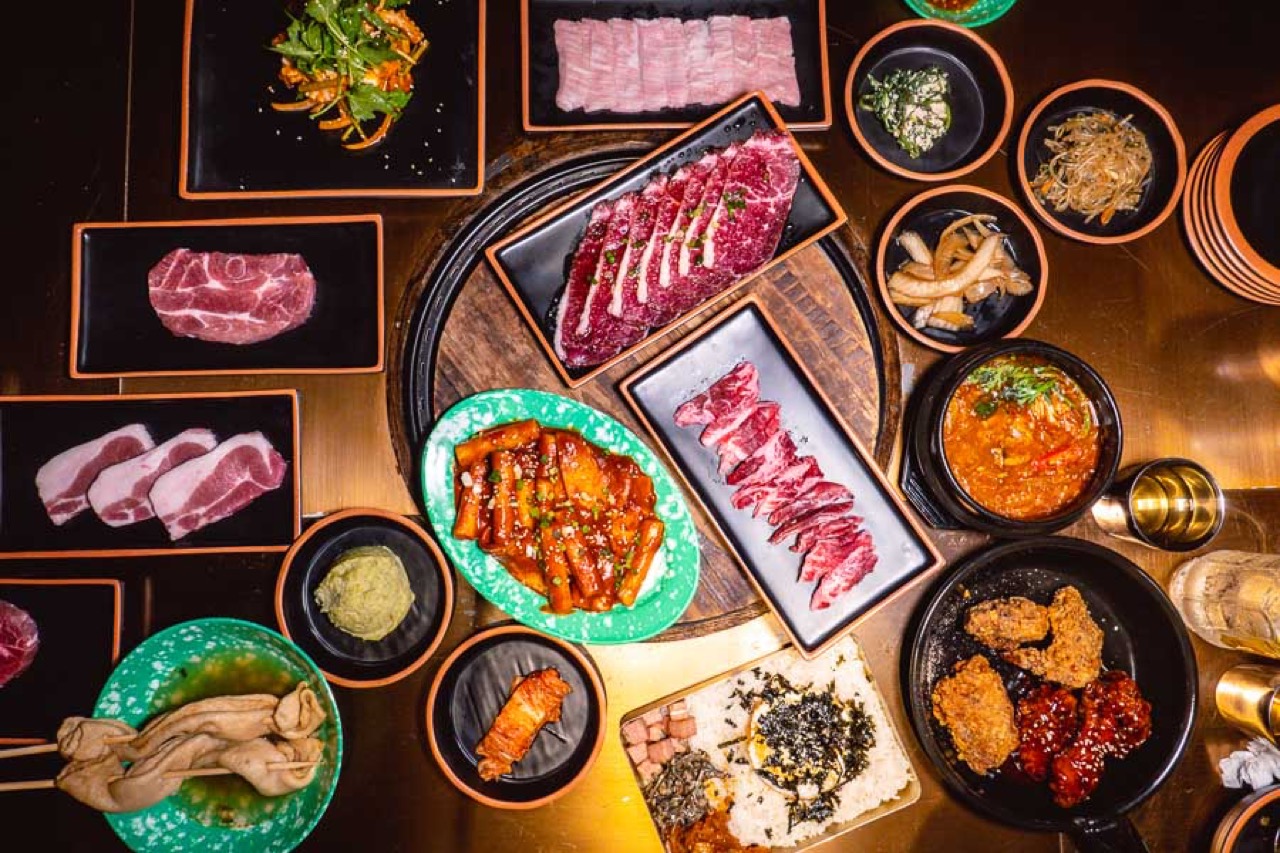
6.On the side: japchae, crisp Korean pancakes, jjigae stew and spicy noodles. The buldak topped with cheese and tteokbokki comes in two heat levels, 'fire' and 'nuclear'. One corner of the menu holds a bulgogi and kimchi poutine. Fries under cheese curds and gravy is a Canadian dish, and here it is a nod to The Cannery. The new venue has also promised soju bombs and live karaoke.
7.The name comes from Seoul. Klingspon says that when he lived there he loved the tent bars that went up on neighborhood corners at night, and that is where he found this place. A single fire in the middle, a crowd around it grilling meat and clinking glasses. The venue's own description is 'grill-and-ganbei', a place to grill and toast. What it sells is closer to an evening of two or three loud hours at one table than a meal.
8.This kind of business fills a big room differently from brunch. Brunch spots and whisky lounges draw pairs who stay long and spend a little each. A barbecue joint draws groups of four or six who cover one table with plate after plate of meat. Closing The Cannery, Klingspon said a venue this big was cool ten years ago and pointed to a changed Yuyuan Lu. He did not shrink the room. He brought in a business that can fill it.
9.It opens only in the evening. Monday to Thursday from 5pm to midnight, Friday and Saturday until 1am, Sunday until 10pm. That adds up to 49 hours a week, just 29% of the 168 hours the rent covers. It gave up lunch and put its people and its fire into the hours when 200 seats can fill at once.
10.Prices are not yet public. The headline at the 2019 Bund location was a 288 yuan set with unlimited beef, pork and vegetables. Take an average spend a little lower, at 250 yuan, assume one full turn on weeknights and one and a half on Fridays and Saturdays, and monthly revenue comes to a little over 1.7 million yuan. That is an estimate, not a company figure.
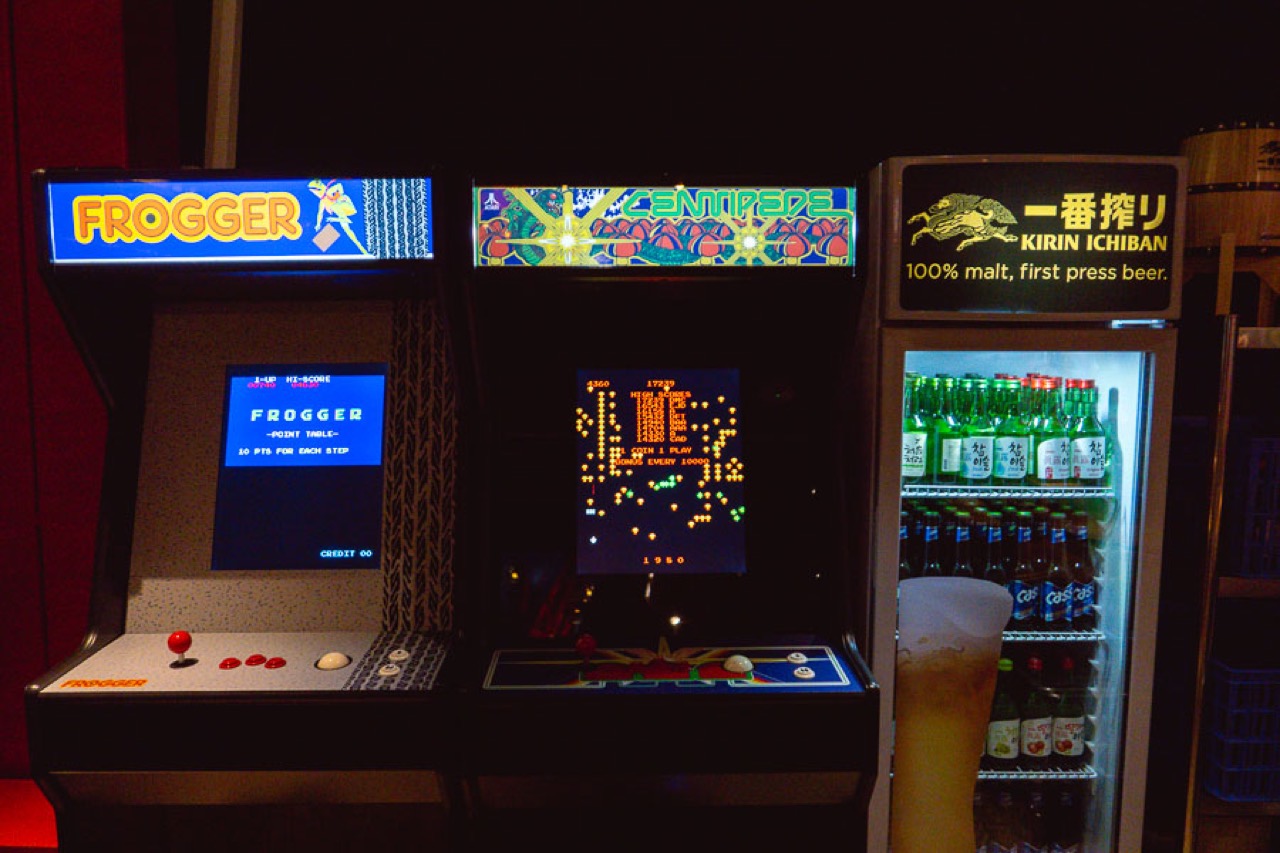
11.Barbecue carries a high food cost. The industry usually puts it at 35 to 40%, and making imported wagyu the star pushes it to the top of that range. Two things close the gap. Guests do the grilling, so the kitchen's work ends at slicing meat and plating banchan, and drinks sold by the bottle cost far less than food. In 2019 the venue left its wall fridges open and let guests pull Jinro soju at 50 yuan a bottle and Cass at 25 yuan themselves.
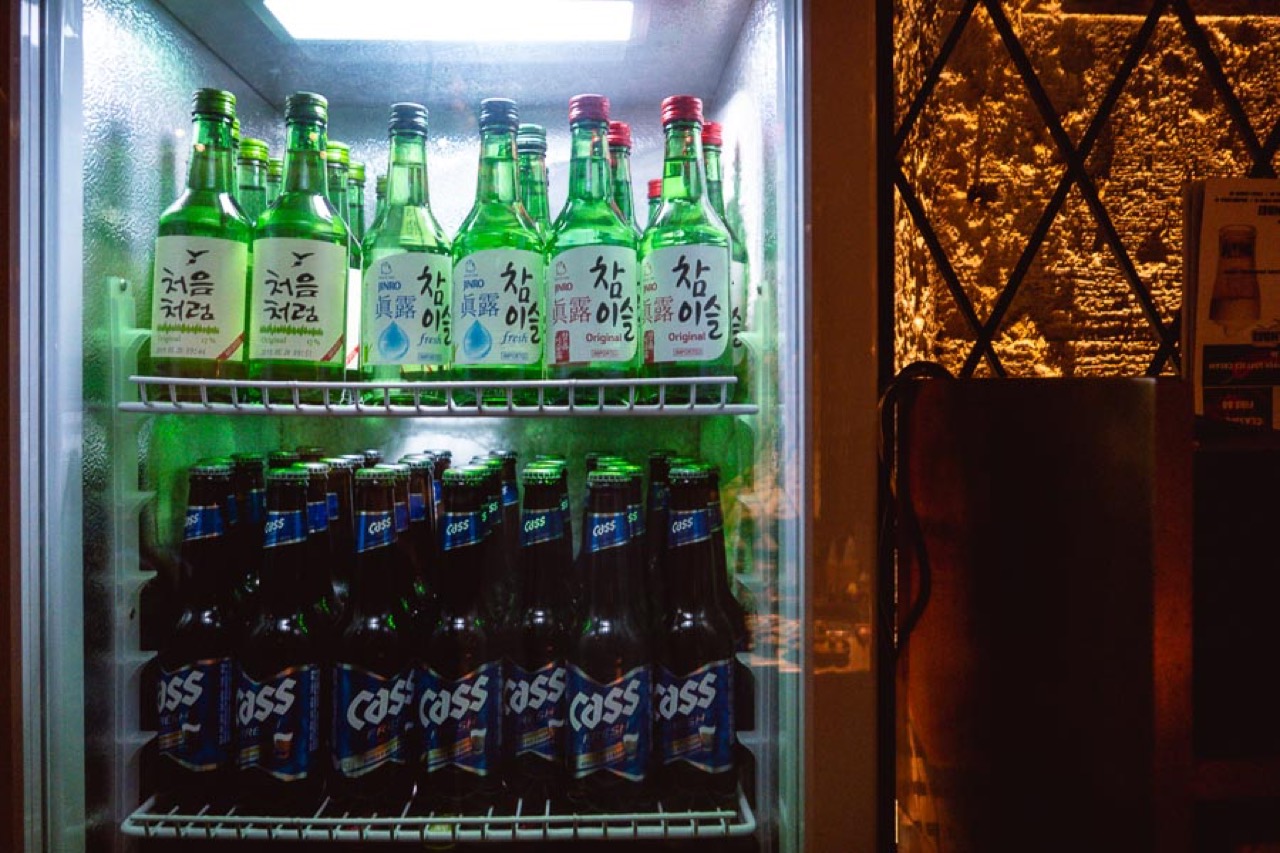
12.Whether the 288 yuan unlimited set will return has not been decided, and local outlet Nomfluence reported it is likely to appear for special events. Serve wagyu without limit and the ceiling on food cost is set by the guest's appetite. Selling à la carte day to day and using the unlimited set to fill slow nights is the version where the numbers work.
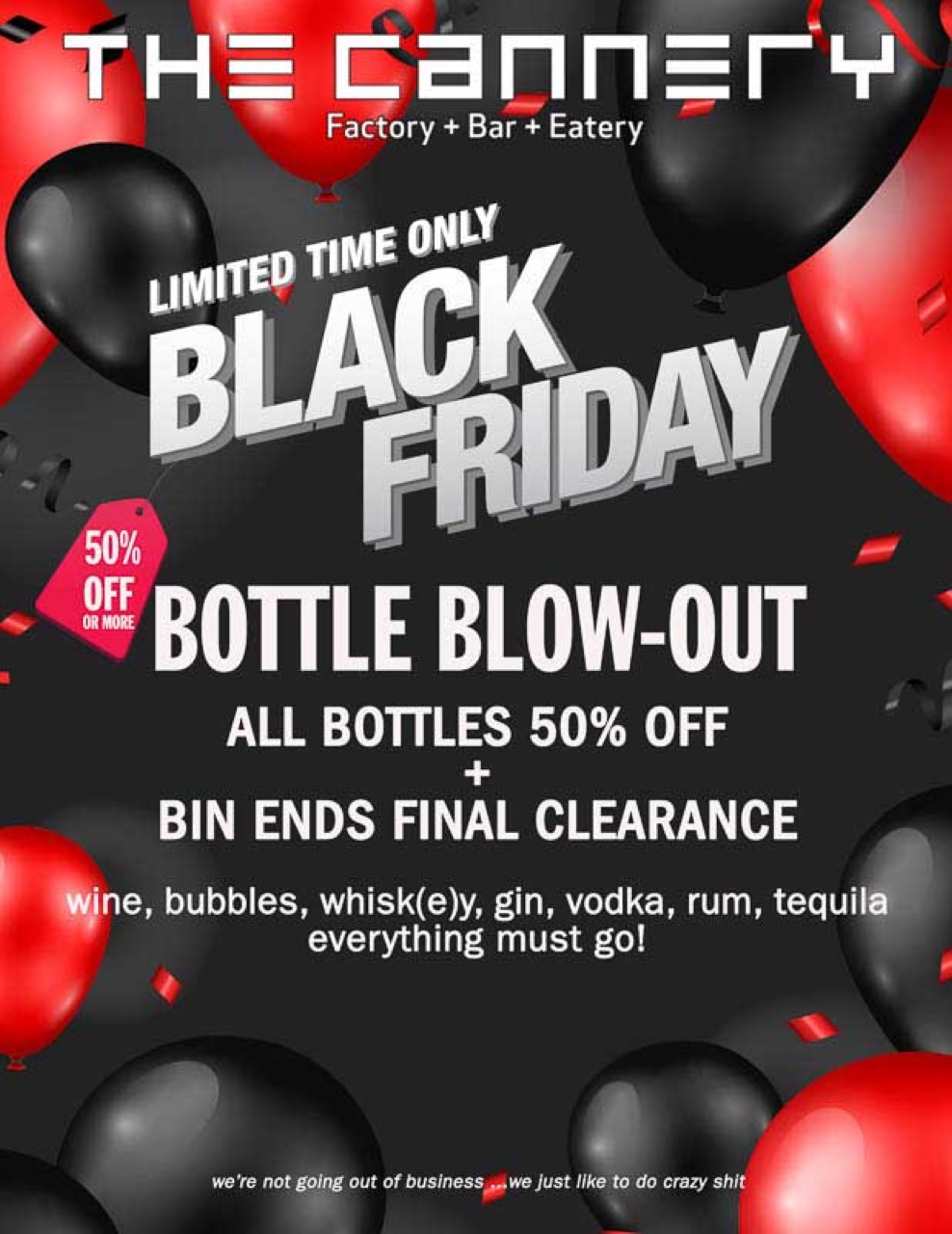
13.Forty-six days passed between The Cannery's last service on August 6 and JUJU's soft opening. In the week it announced the closure, The Cannery put every bottle on the list, wine through whisky, at half price. A new site would have meant a fresh deposit and a new interior shell. Here the building and the lease stayed put, and what came in was table grills and ducts, murals and signage. It also avoided the reinstatement works of vacating a big venue and the rent on an empty one.
14.JUJU's first home, the second floor of Three on the Bund, was the room where Jean-Georges Vongerichten had run his Korean barbecue Chi-Q, in a space designed by Neri&Hu. JUJU covered its walls with murals by Korean and Chinese street artists and put two live octopus tanks where the wine room had been. In the corners, Centipede, Donkey Kong and Frogger arcade machines and a DJ booth. Official opening November 1, 2019. Closed the following October.
15.Klingspon came to Shanghai around 2008 as head of TaylorMade-adidas Golf in China and stayed. He opened the Nordic-style The Nest on the Bund in 2014 and The Cannery on Yuyuan Lu in 2016, and has long said he builds places he wants to hang out in rather than aiming at any one crowd. This time he is swapping brands and sites. He brought the closed JUJU back into his own space, and The Cannery, having given up the room, plans to reopen smaller somewhere else, salmon firepit included.
16.Where a Vancouver-style seafood restaurant closed after ten years, the Korean barbecue joint the same owner shut six years ago lit up 46 days later. Build the same evening in Korea and the first thing that stops you is the singing. Korea's Food Sanitation Act enforcement decree puts businesses where guests sing into a separate category, the danran bar, so the general restaurant license a barbecue place holds does not allow live karaoke.