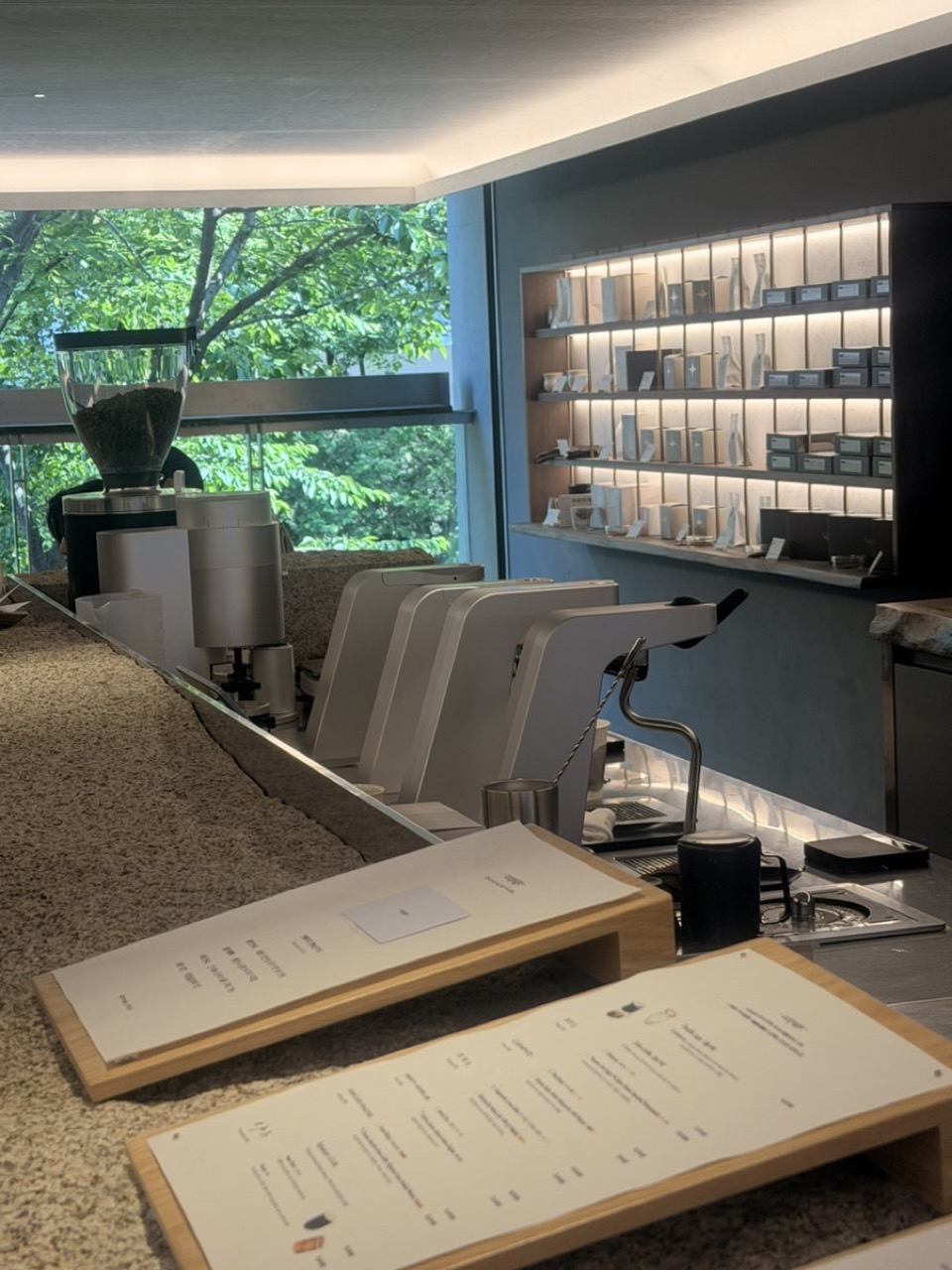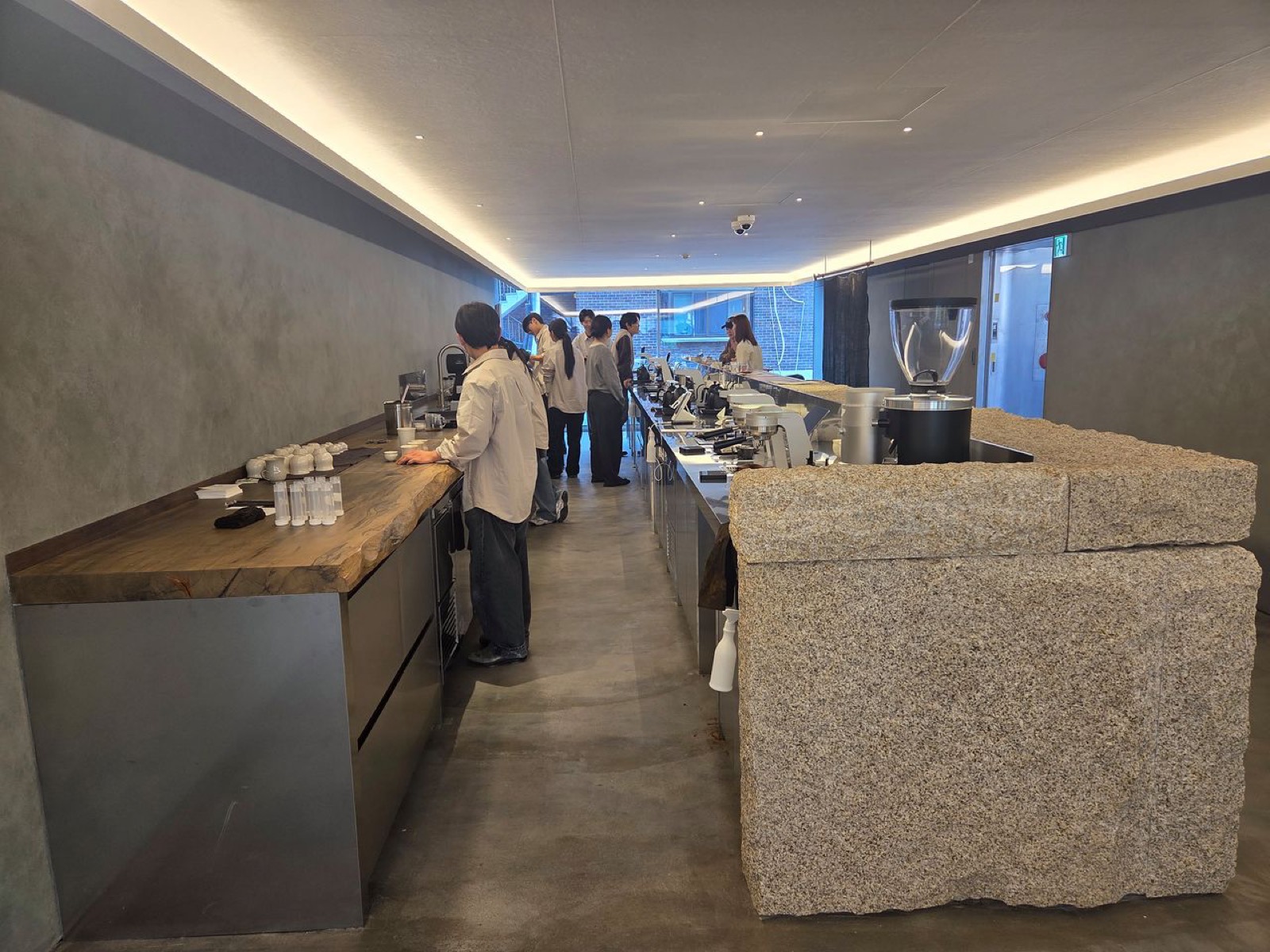
On April 17, 2026, a coffee shop with a little over twenty seats opened on the second floor of a back street in Hannam-dong, Seoul. A cup starts at KRW 14,000 and there is no americano on the menu. The wait on opening day was three hours. Four months on, a queue still forms on a weekday afternoon. This shop's result does not come from the cups.
1.Second floor, 13 Hannam-daero 27ga-gil, Yongsan-gu, Seoul. unpage opened on April 17, 2026. It trades seven hours, 11 a.m. to 6 p.m., closed Mondays. Seating runs eight to ten at the bar, under ten at tables, and standing room for the rest. Double latte 14,000 won, signature drinks 15,000. There is no americano on the menu.
2.The man who opened it is Ahn Chi-hoon. He spent six years posting about coffee and cafe start-ups on YouTube under the name Ahnstar, and has more than 200,000 subscribers. Unspecialty, the bean curation shop he started in 2020, passed 2.6 billion won in revenue in 2023 and 4 billion in 2024, and reached 6 billion in 2025, the company says. It has taken no investment and no loans and has spent nothing on advertising, by its own account. This store is the first offline space that company has opened.
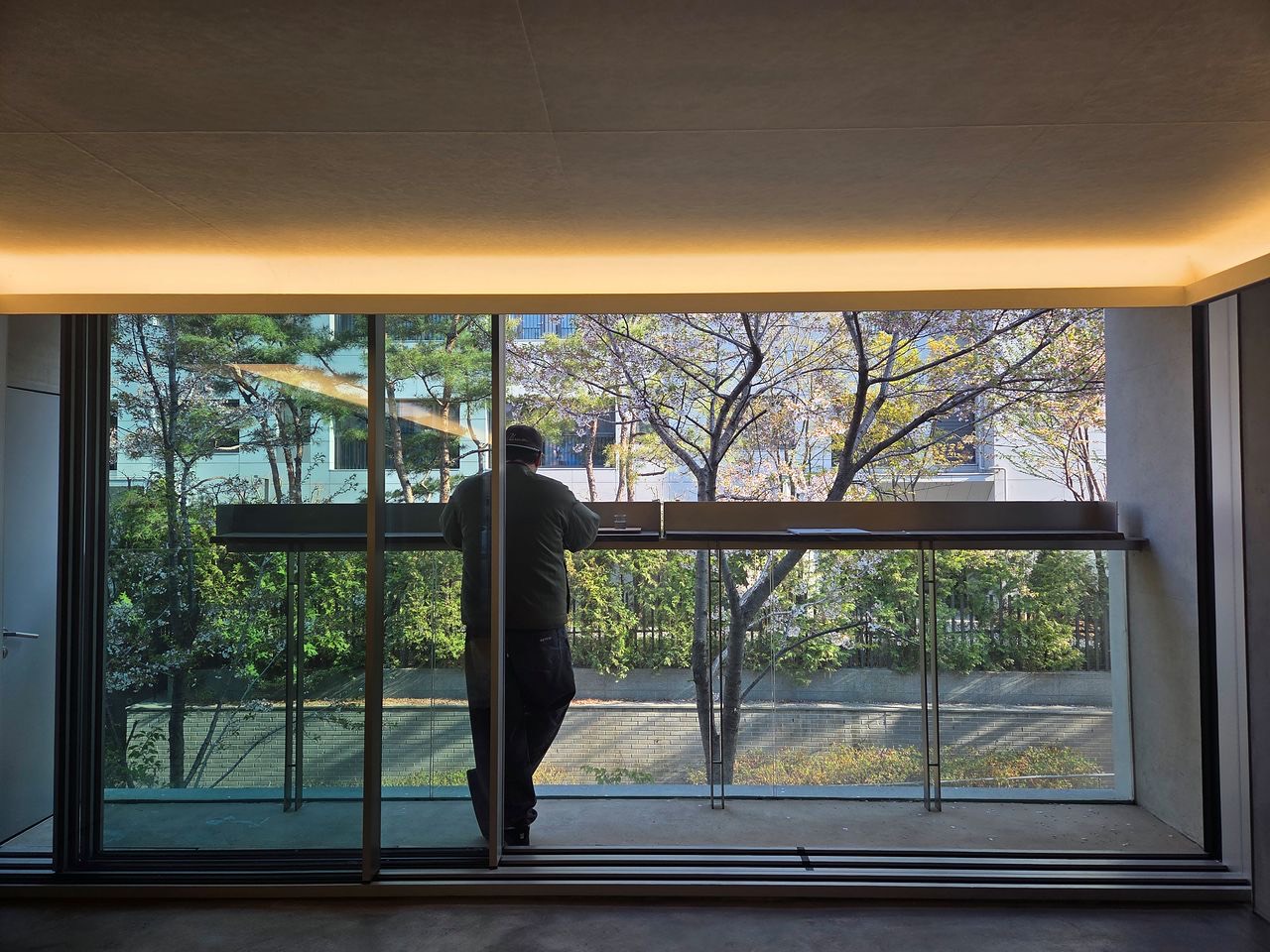
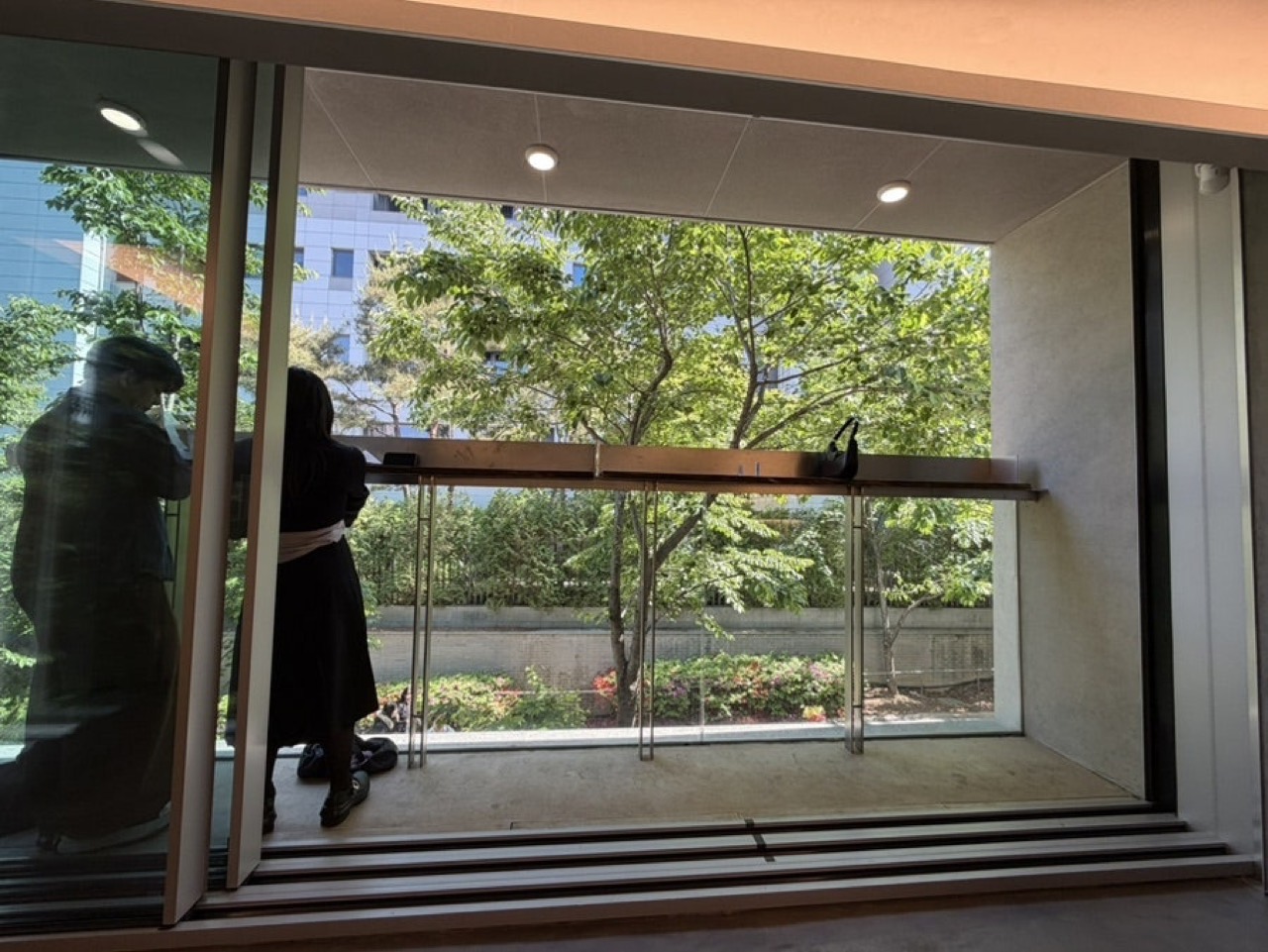
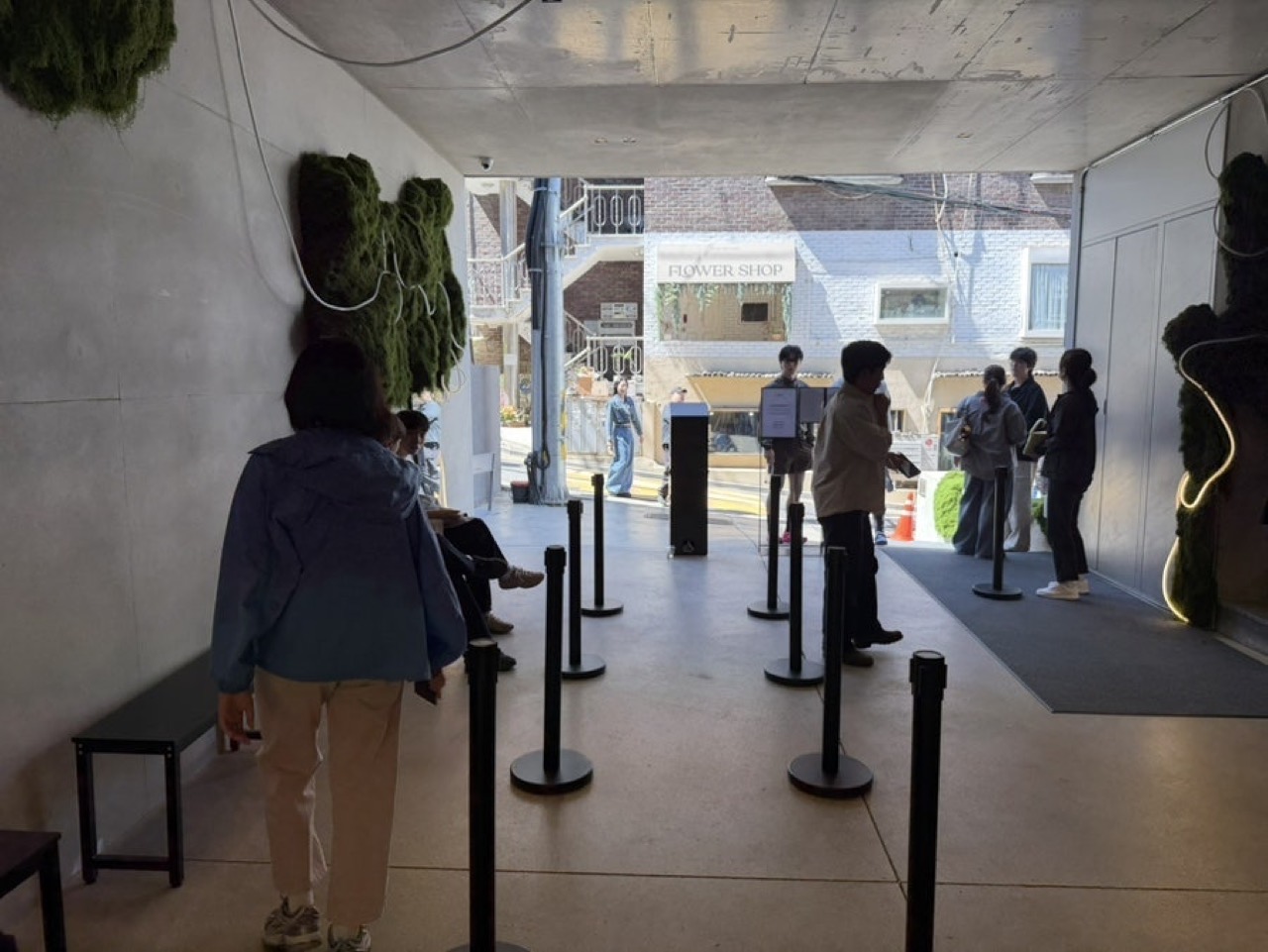
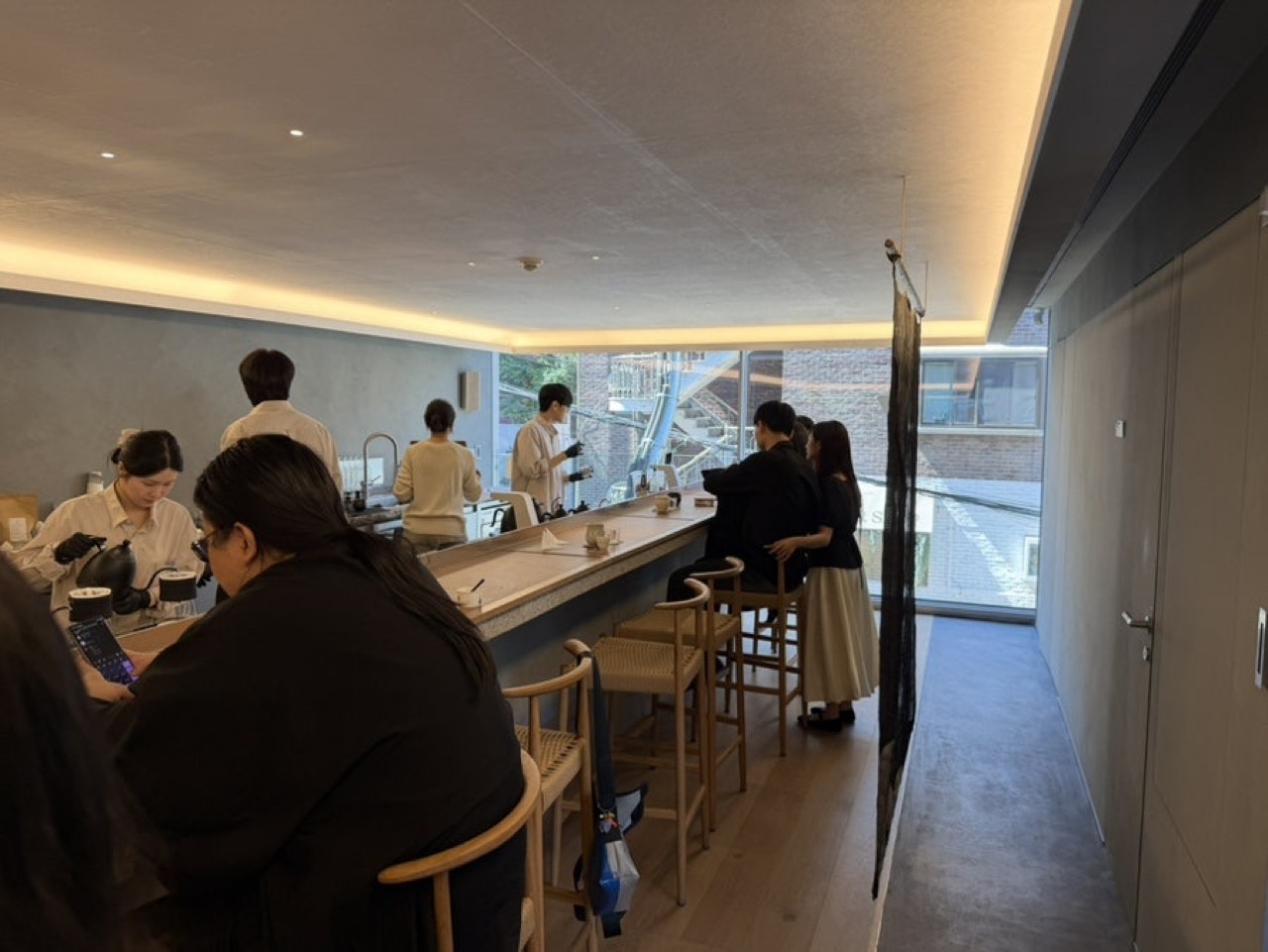
3.The building's structure split the route. You wait downstairs and go up to receive your cup. Seating comes in three kinds, a stone top, bar tables and standing room. Where the usual Hannam-dong cafes chose wide windows and large tables to lengthen the stay, this one went the other way. A decision not to add places to sit.
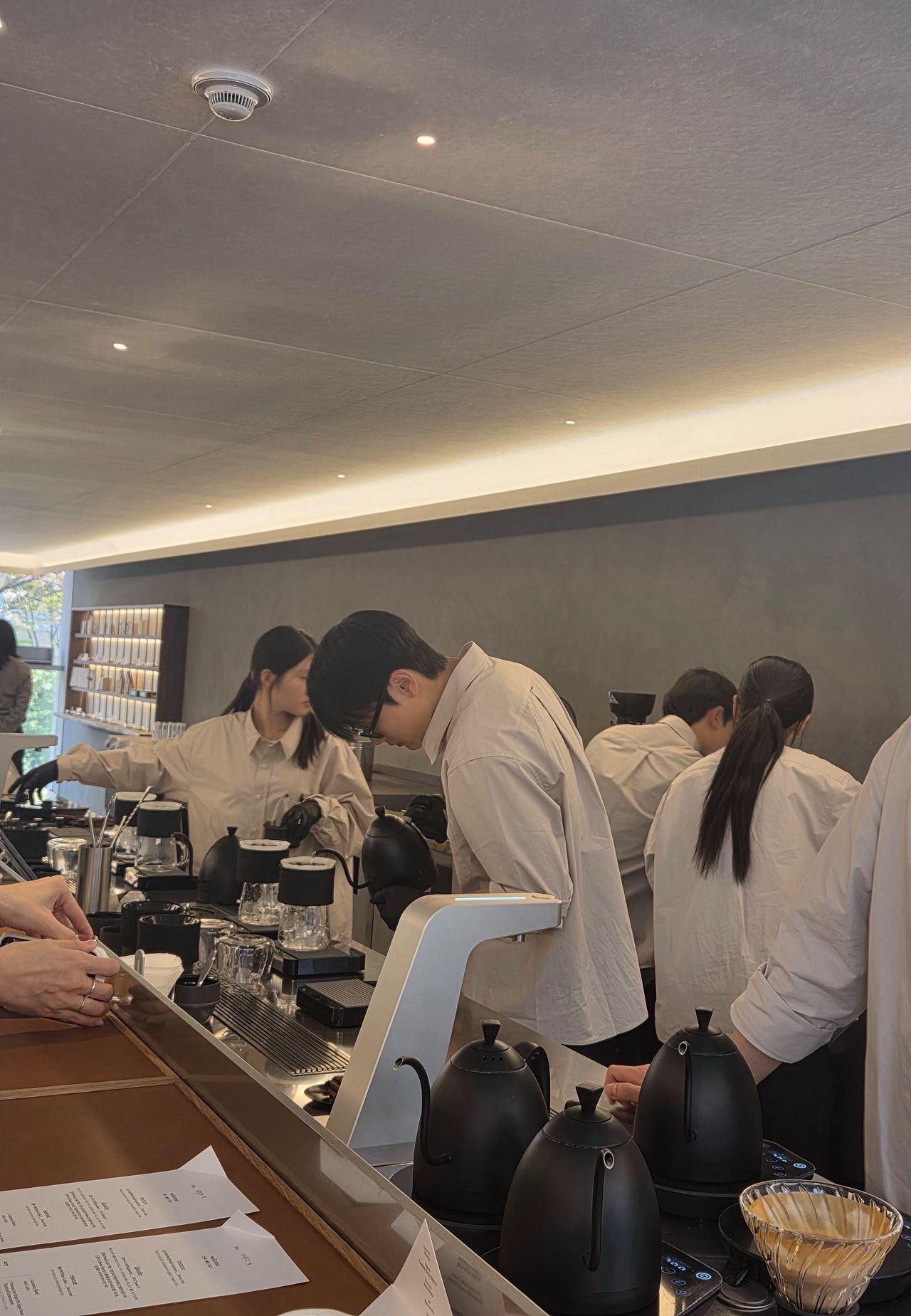
4.Stand at the bar and you see hands. Grinding, setting the water and extraction all run within view like the open kitchen of a fine dining room, and whoever makes the cup attaches its beans and intent in words. Water is mixed from five filter types including carbon and mineral, matched to the day's weather and the beans, the shop says. The milk is lactose-free, frozen and concentrated, and the ice is made dense so it melts slowly.
5.The flagship cup is Punch. A milk coffee made with the Shanghai coffee bar OPS, where milk washing strains out the milk solids, so the color runs clear and the texture light. Without butterfat covering the aroma, acidity stands in front. Sweet Tis lays lemon zest and milk foam over milk steeped with oolong, and the astringent finish of the tea and the bitter scent of citrus peel follow behind the sweetness of the milk. Filter coffee stands where the americano would be.
6.First question here. Why are people still queuing in the fourth month. A new cafe normally has to buy its early traffic. Bring in influencers, run ads, survive the first month. This store's cost for that is close to zero. Two hundred thousand people had already watched six years of coffee talk, and to them this brand was not an advertisement but the conclusion of someone they had watched for a long time.
7.Second. Dropping the americano is not a matter of taste. An americano is fast and cheap. Sell that cup in a shop with twenty seats where the bar attaches an explanation to every drink, and the bottleneck fills with the cheapest product. Filter coffee and signatures are slow but take three times as much. Keeping only the slow cups is a design that protects throughput.
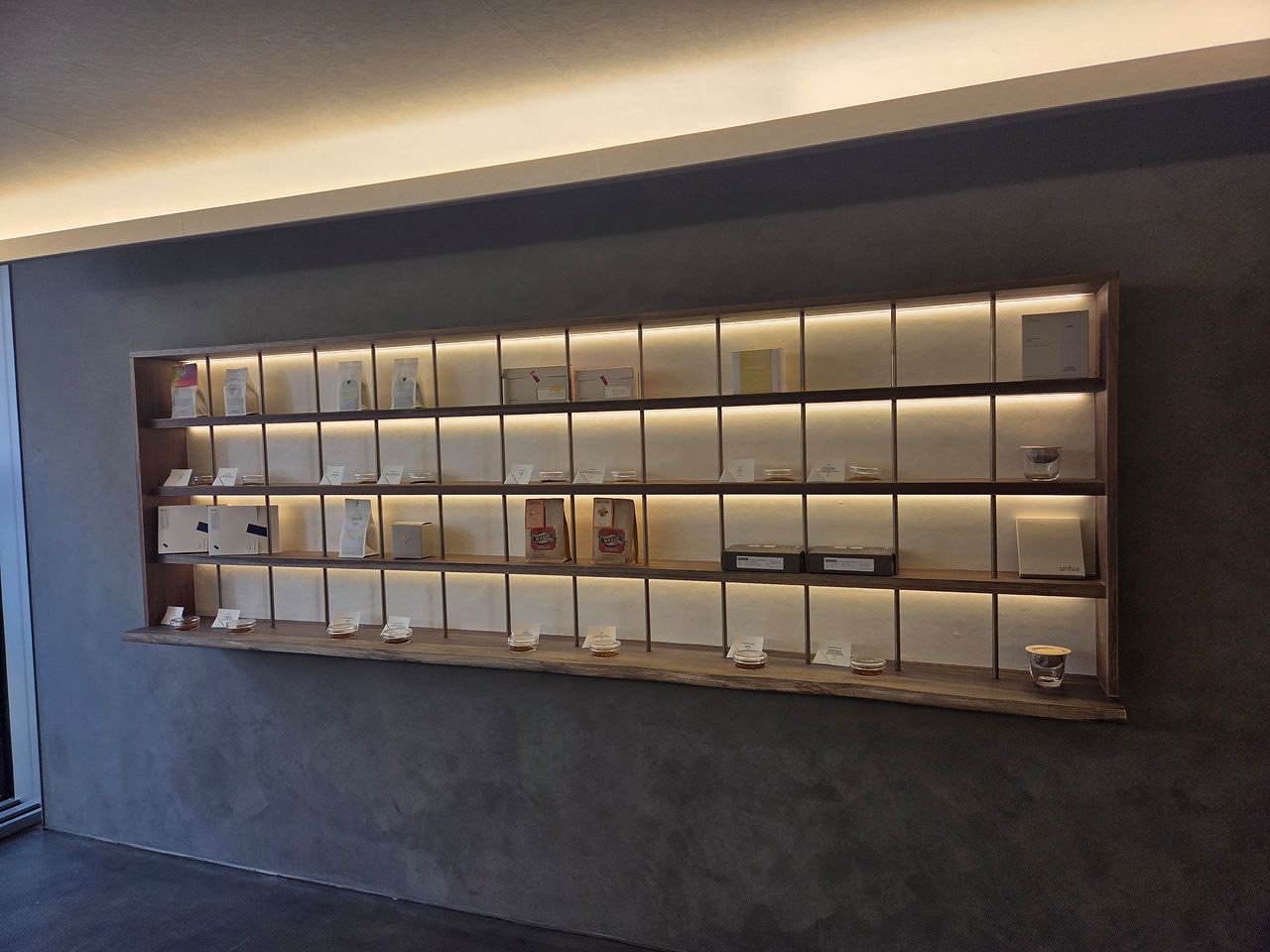
8.The third is the beans. This shop does not roast. It takes beans from five roasteries chosen on taste, and that lineup changes. Exactly the way the Unspecialty shop has introduced a different roastery each month. Names like Magpie and Tiger, Torch Coffee and Kuness came up month by month. For the customer it is a structure where a reason to return appears fresh each month, and for the roasteries it is a place to have their name on the curation.
9.Now the arithmetic. Twenty seats, seven hours a day, 26 days a month. At a bar where every cup carries an explanation, put hourly throughput at 25 to 35 cups and the day runs 175 to 245, an estimate. Given the steady reports of 15 to 40 minute waits even on weekdays, it must be turning near that ceiling. Average spend, allowing for retail bean sales on top of drinks at 14,000 to 15,000 won, lands around 15,000, an estimate.
10.Multiply and it comes to 2.63 to 3.68 million won a day, 68 to 95 million a month. Put the area at around 22 pyeong and monthly revenue per pyeong is 3.1 to 4.3 million won, an estimate. Set beside the 1 million range where Korean cafes usually sit per pyeong, that is close to triple. The cost side widens further. Average spend at a Korean coffee shop is 5,500 won with variable cost around 35%, while at this store, even putting material cost at 2,000 to 3,000 won a cup, the cost ratio lands between 13 and 20%, an estimate.
11.Look at the cost of the site and the second floor explains itself. Ground floor street frontage in Hannam-dong runs well past 500,000 won per pyeong a month, while a second floor on a back street reads at under half that, an estimate. At 22 pyeong that is 4.4 to 6.6 million won a month. Five to nine percent of revenue. Far below the usual line where rent above 10 to 15% of sales turns dangerous in food service. For a customer who comes on purpose, the floor number is not a cost. A trade that halved the rent in exchange for giving up passing trade.
12.The line traces back to the multi-roaster cafe. Choosing and selling beans from several roasteries became familiar in Europe after Prufrock Coffee in London, and shops rotating their beans are not rare in Korea either. The standard path Korean specialty cafes have walked ran the other way, though. Roast to cut cost and turn the surplus into wholesale, which is to say become a roaster.
13.What splits is how far you draw the income statement. Eight tenths of this company's revenue comes from the bean shop. The store is where the beans that shop sells can be drunk in person, the first point of contact for someone who spent five years seeing them only on a screen. Calculate one cafe's result alone and it looks like a small shop with twenty seats and seven hours, when what this store actually sells is trust in a 6 billion won shop. Recovery happens outside the store.
14.An online company selling beans opened a twenty-seat store on the second floor of a Hannam-dong back street, dropped the americano and tripled the price of a cup. The number that stays is monthly revenue of 3.1 to 4.3 million won per pyeong, and what made it is neither the seats nor the site but the 200,000 subscribers already banked before opening. Put the same price list up without that asset and turnover dies first. The next snag is people, because service that attaches beans and brewing intent to every cup in words does not get hired by the hour. Before copying the price list, counting how many people can give that explanation is faster.