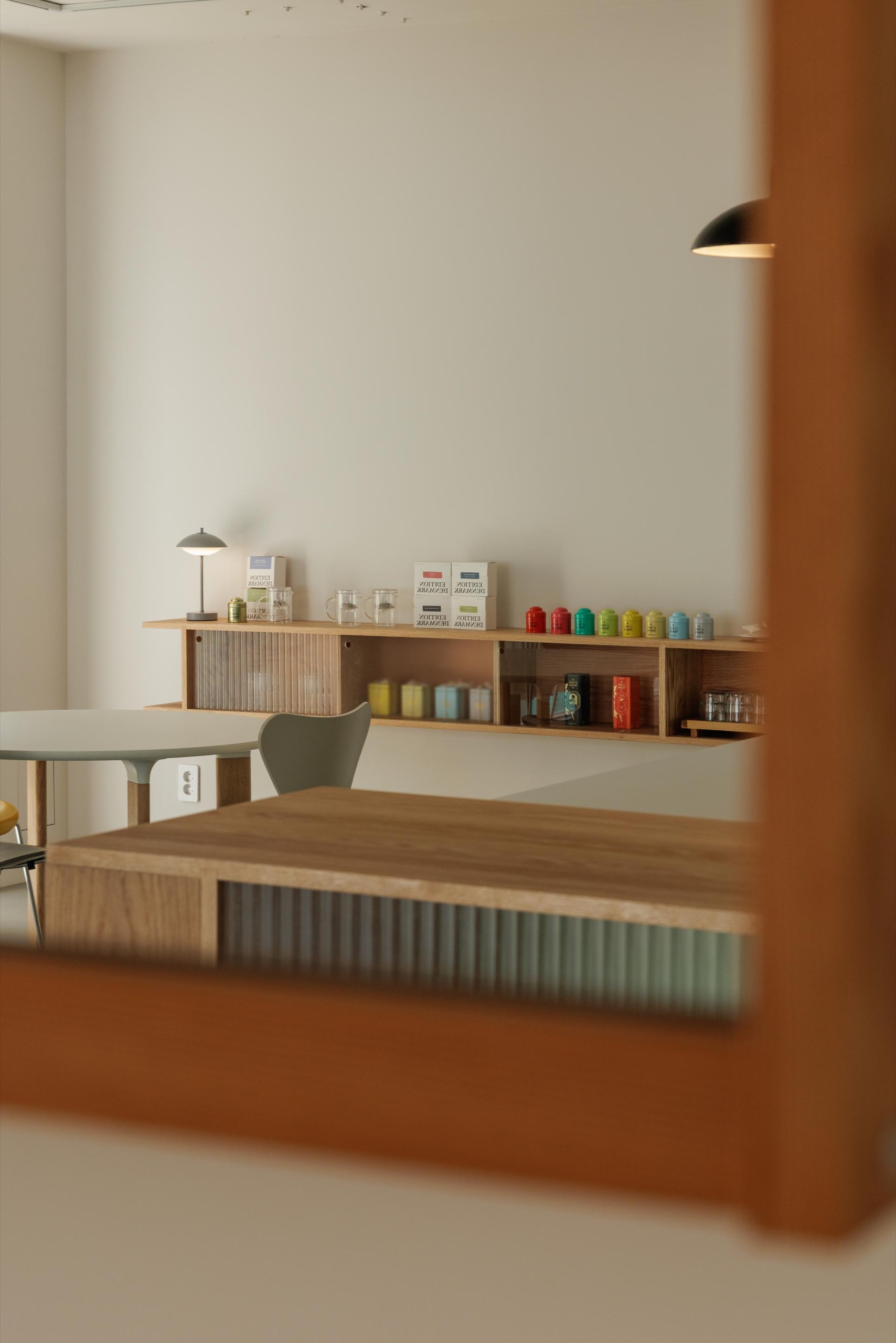
On March 25 a Danish furniture brand opened a standalone store at 244 Noksapyeong-daero, Yongsan-gu, Seoul. Three floors above ground, and the ground floor holds no furniture for sale. Tea, coffee and tableware sit there instead, and the company running that floor is not the furniture brand but a subsidiary of a KOSDAQ-listed firm. What it sells is drinks. How the money moves is not what a cafe does.
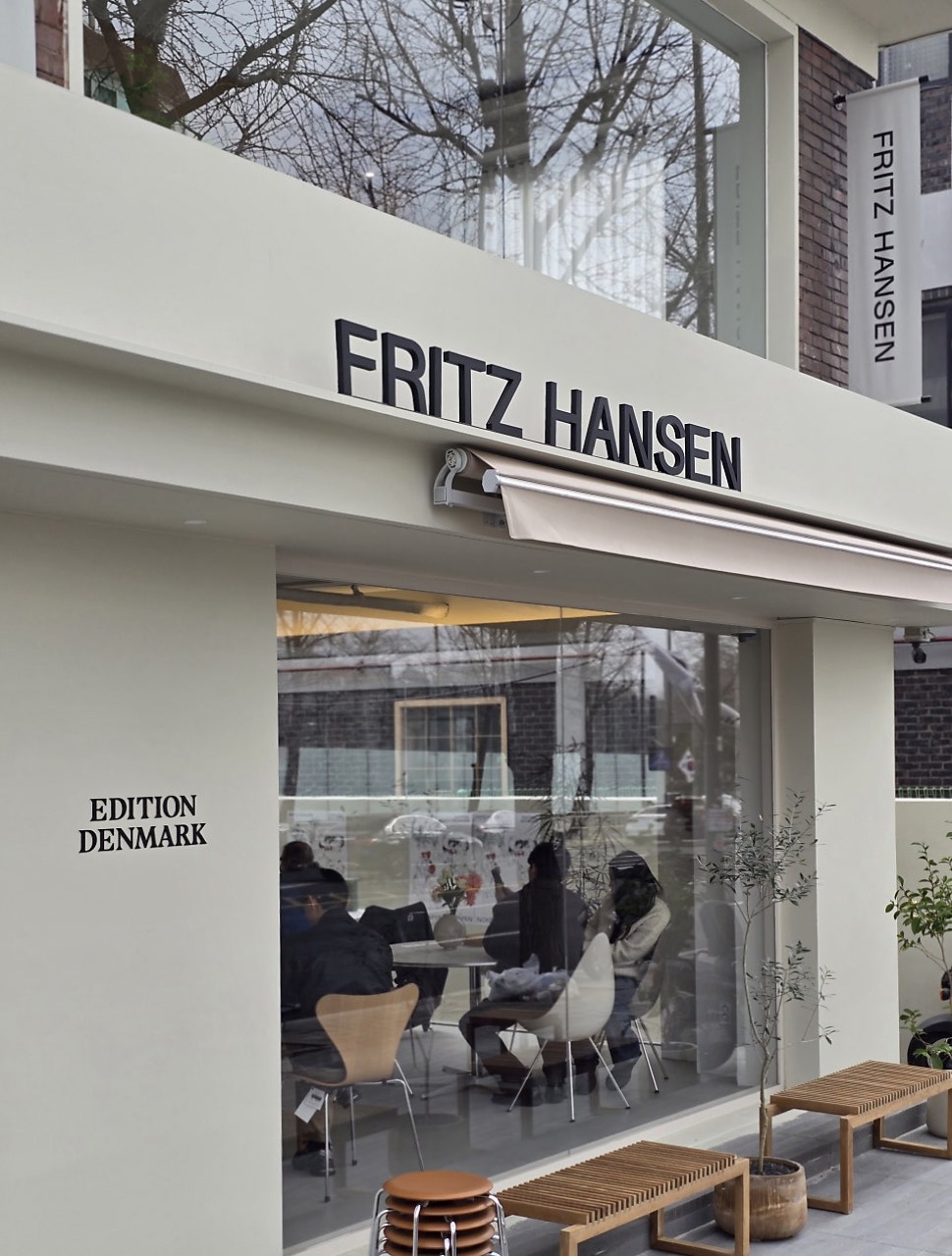
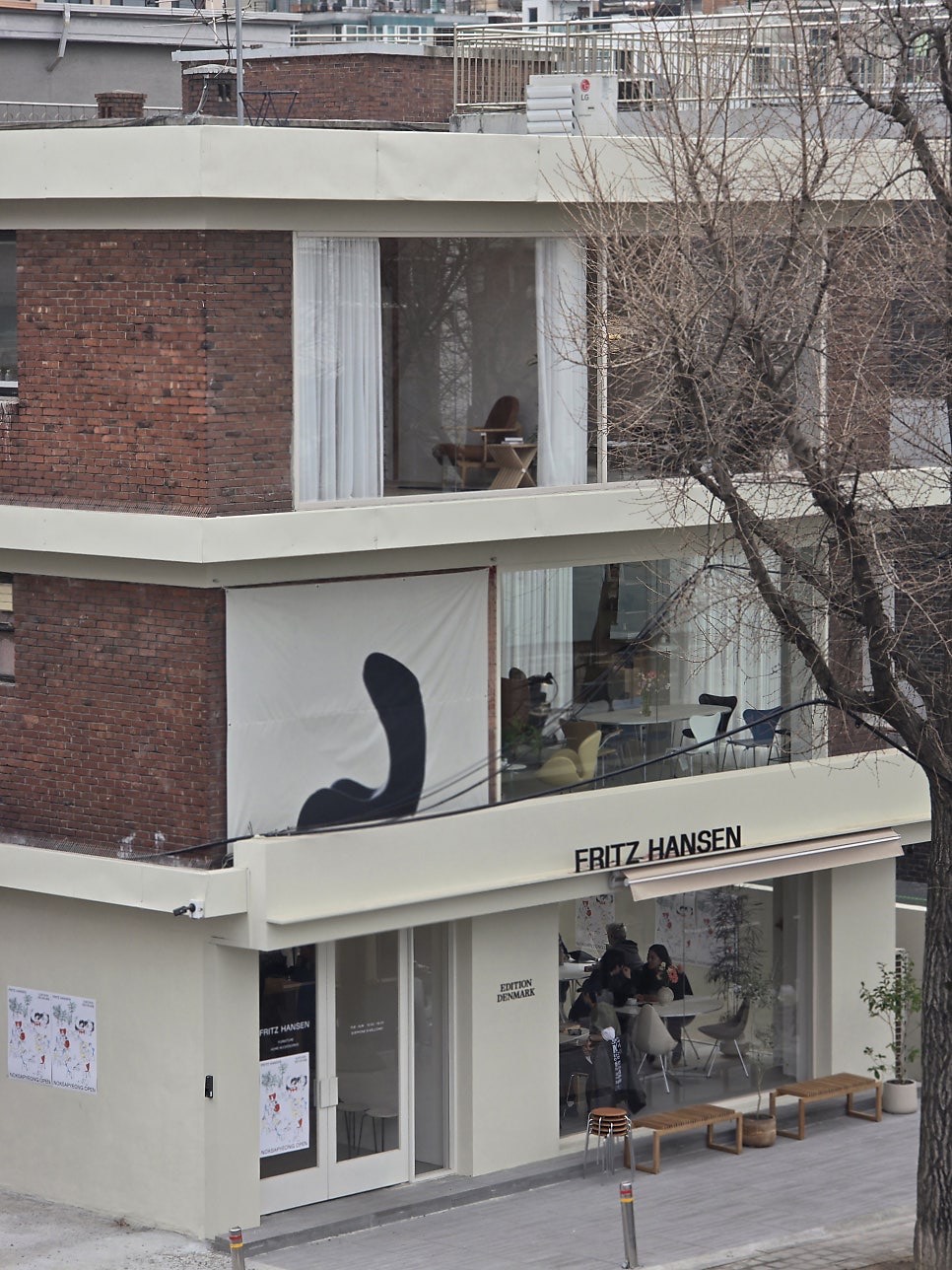
1.The store is called Fritz Hansen Noksapyeong. The address is 244 Noksapyeong-daero, Yongsan-gu, Seoul, and it opened on March 25. Furniture occupies the second and third floors of the three-storey building. The ground floor belongs to Edition Denmark, a Danish lifestyle curation brand. Drinks, desserts, and tableware. Open Tuesday through Sunday, 10am to 7pm, closed Mondays.
2.Fritz Hansen has made furniture in Copenhagen since 1872. Its Korean office dates to 2019. In March 2024 it opened its largest Korean store on Jeju. This is the first time it has taken a whole building to itself in Seoul. And in that first building, the ground floor puts no chair on sale.
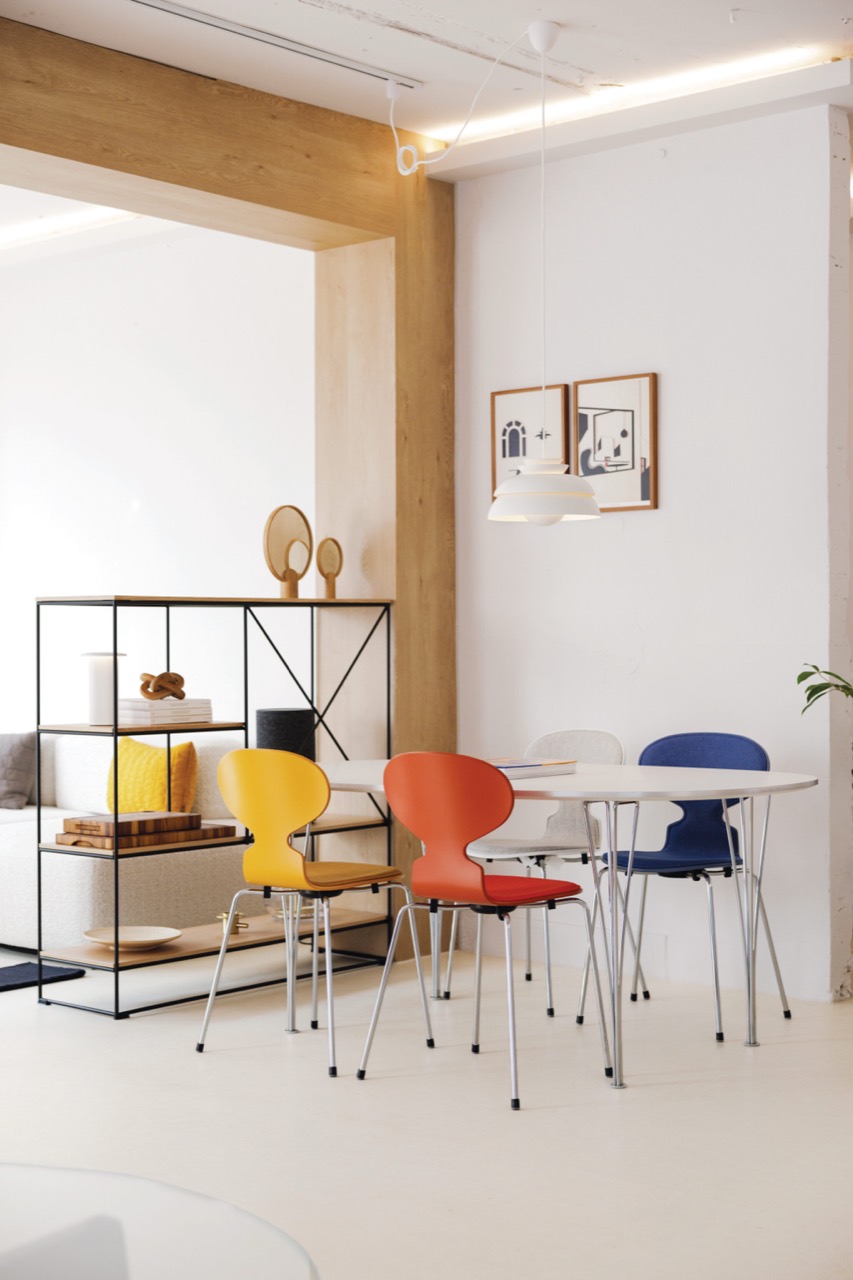
3.The upper floors read as a home rather than a showroom. Instead of lining pieces along the walls, the layout drops them into rooms and circulation at domestic scale, so you can picture what happens when the piece lands in your own living room. One zone stands the same chair several times over in different fabrics and leathers. Same design, different material, different object, and nobody has to say it out loud.
4.The stair linking the second and third floors is pale green. Noksapyeong means a field thick with green grass, and the colour comes from there. Daylight climbs that colour on its way up, and from below the landing is the first thing you see.
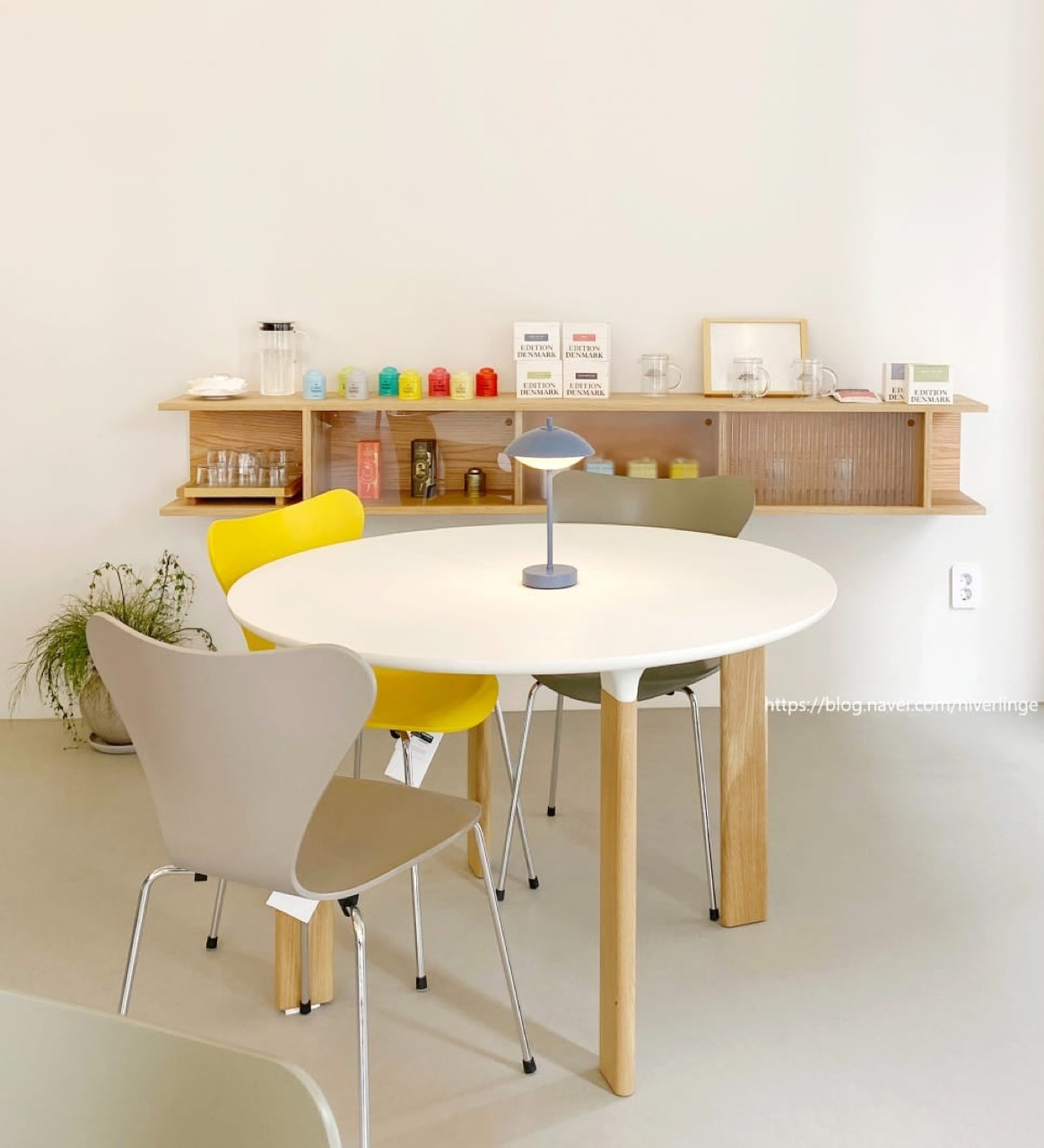
5.On the ground floor the order reverses. Tea tins run along the counter, and the table you set your cup on, along with the chair under you, is merchandise from upstairs. Nobody came to look at furniture, yet the moment they sit they start testing seat angle and back height. Being invited to try a chair in a store and holding a coffee in it for thirty minutes are not the same thing.
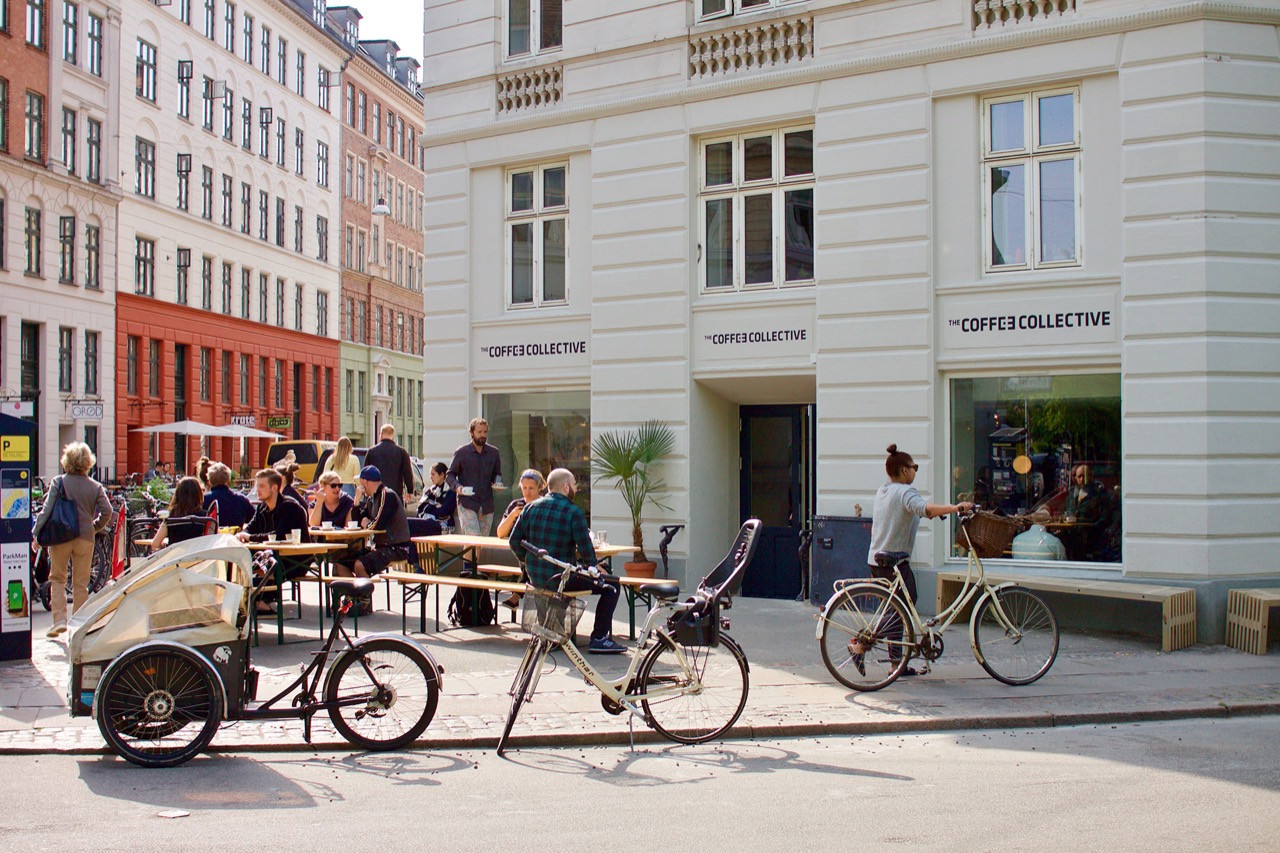
6.Two brands fill the cups. Coffee comes from Coffee Collective, which started as a Copenhagen roastery in 2007 and opened its first cafe on Jægersborggade the following year. Co-founder Klaus Thomsen won the World Barista Championship in 2006. The company trademarked the phrase direct trade and has published what it pays growers. Eight shops in Copenhagen now, one in Aarhus.
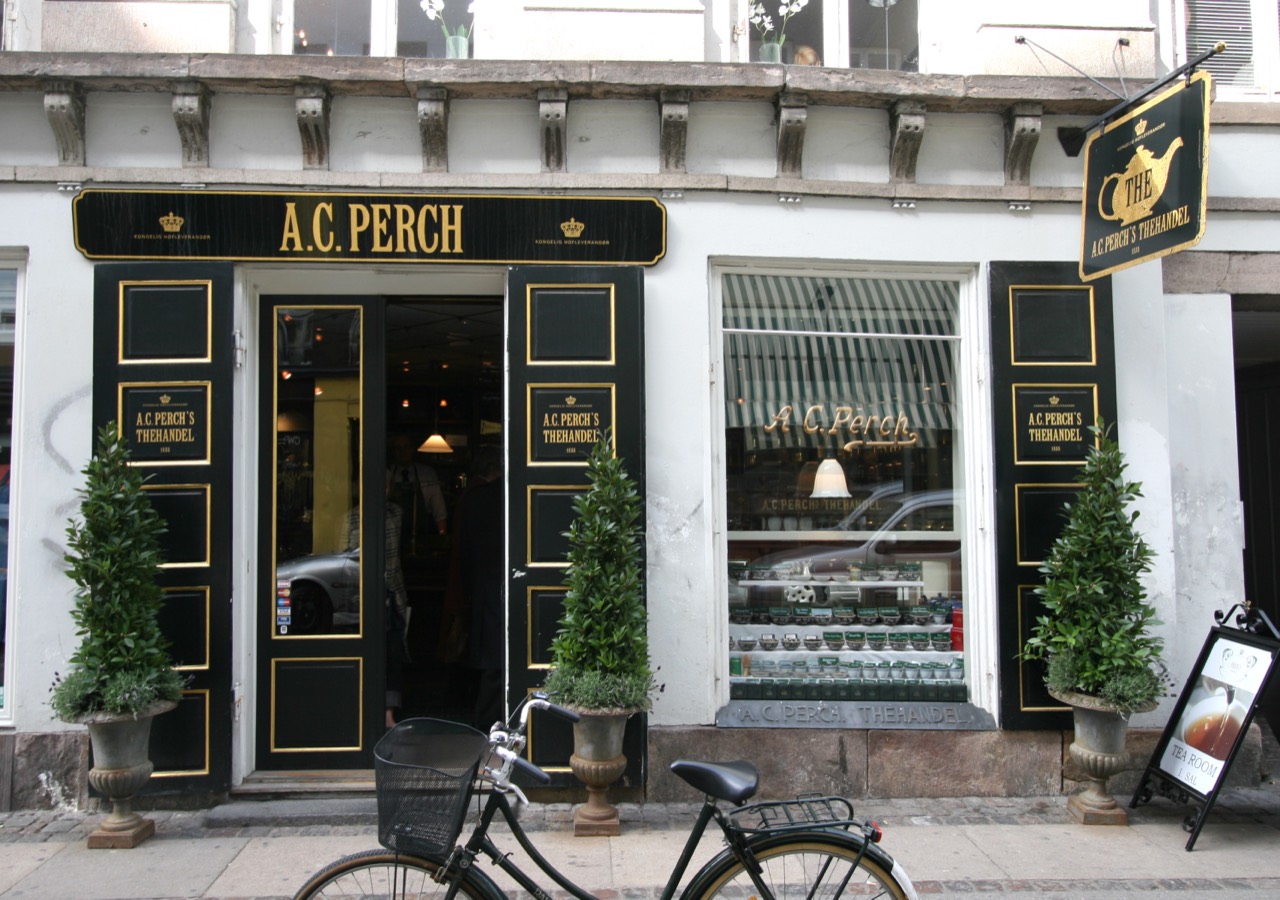
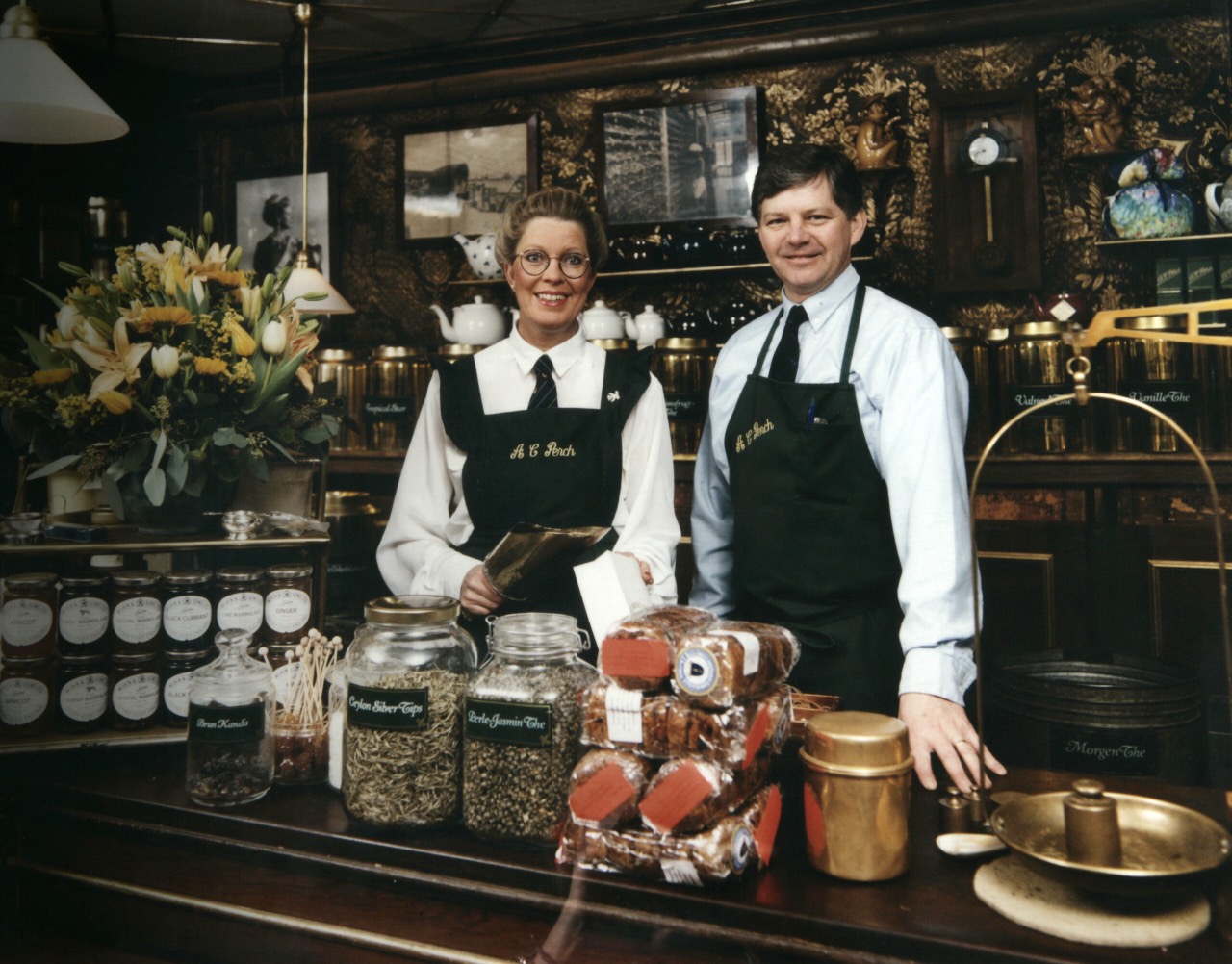
7.The tea is A.C. Perch's Thehandel. Niels Brock Perch opened it at Kronprinsensgade 5 in Copenhagen in 1835 and put his third son's name on the sign. The Hincheldey Ravn family took it over in 1894, and in 2002 Queen Margrethe II named it a purveyor to the court. An English-style tearoom went in upstairs in 2005. It is usually described as the eighth oldest shop in Copenhagen.
8.You can guess how both drinks behave in the mouth. Nordic roasting stays light, so the acidity held down while the cup is hot rises as it cools and the sweetness settles behind it. Leaf tea runs the other way. Steep it longer and the astringency tightens the sides of the tongue. Both are drinks that pay off only when you sit down, and half of each is thrown away in a takeaway cup. On a floor with goods upstairs, that is not a flaw.
9.Start with the company holding the ground floor. Edition Denmark was founded in 2018 by the Dane Johan S. Fuglsbjerg and creative director Lee Ji-eun, and the brand launched in April 2019. It is now a subsidiary of HPO, listed on KOSDAQ, a company that posted consolidated revenue of KRW 240.8 billion last year on its premium supplement brand Denps. What Edition Denmark imports from Denmark is tea, honey and coffee, and those three became the ground floor menu.
10.Measured as a cafe P&L, this floor is small. Neither the area nor the seat count is public, but a floor of a three-storey brand store of this kind usually runs 40 to 60 pyeong with roughly 25 seats. With directly imported beans and royal-warrant tea, put the average ticket at KRW 8,000, and 120 cups a day over 25 trading days gives KRW 24 million a month. On 50 pyeong that is KRW 480,000 per pyeong per month. Seoul specialty cafes tend to sit between KRW 600,000 and 1 million, so this lands under them. All of it is an estimate built from public material and industry norms, not a figure either company has released.
11.Cups are not what this company sells. Tea tins, coffee bags and tableware share the same floor, and none of them occupies a seat. For an importer, the store is a retail window and a tasting room. The same goods carry margin twice. Once wholesale on import, once again in the cup.
12.The bigger customer may not be standing at the counter. This company's tea also entered Olive Better, run by Olive Young. If the store works as the place where department store buyers and hotel purchasing managers check the brand, this floor gets measured in wholesale contracts for the year rather than cups per day. So is the fair comparison here really the cafe down the alley?
13.The furniture side has its own arithmetic. Giving the ground floor to drinks removes a floor of display, and what comes back is a reason to visit. Furniture moves in large single amounts, and buyers show up only a few times a year. A coffee costs under KRW 10,000 and brings people in who have no intention of buying. The chair they sit in carries an upstairs price tag, and the stair is right behind it.
14.Putting a cafe inside a furniture store is nothing new. Usually the brand runs it directly and books the drinks loss as marketing spend. This is where it splits. The ground floor operator is a separate company, and rather than promoting somebody else's brand it sells what it imports itself. Two companies share one path and take profit from different products, though neither the rent nor whatever stood in place of rent has been disclosed.
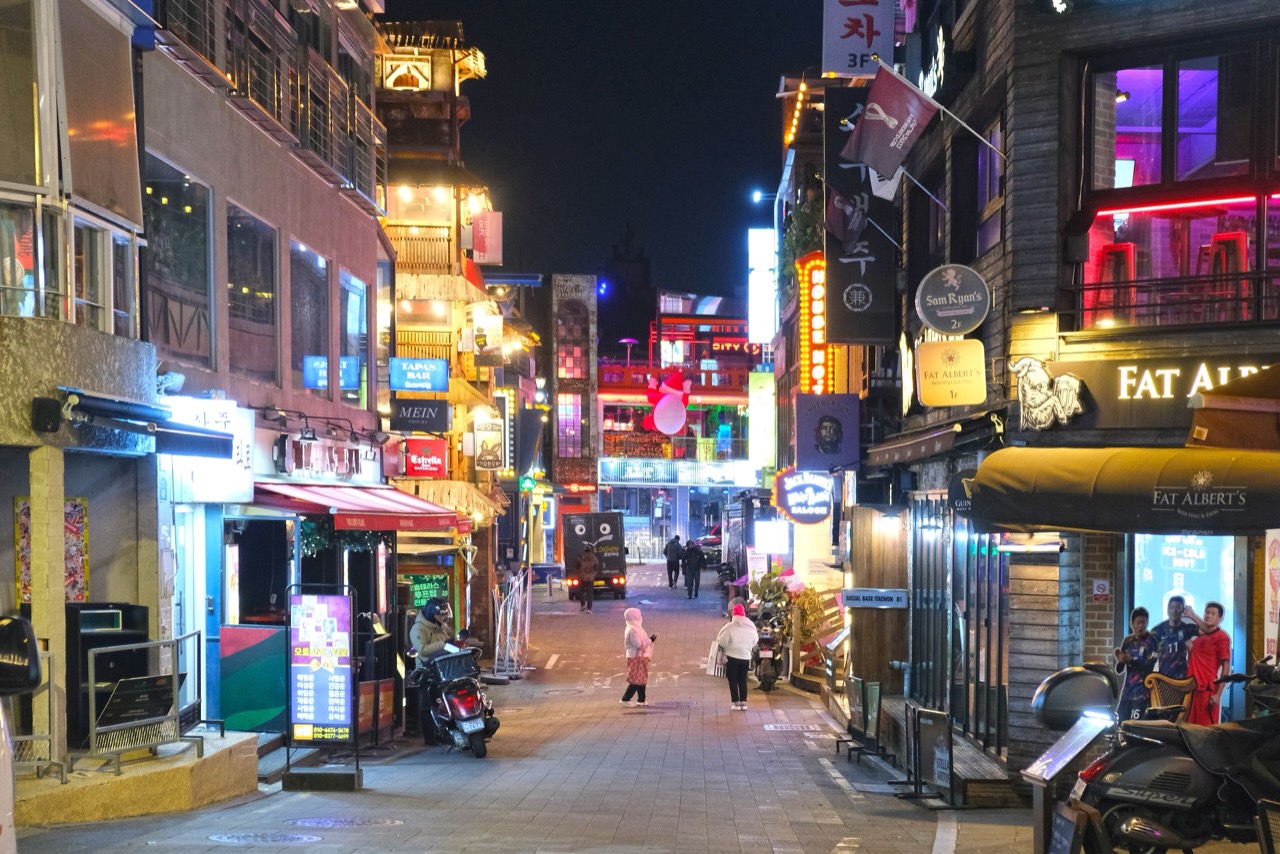
15.The site sits between Itaewon and Gyeongnidan-gil, on the main road within walking distance of Noksapyeong station. Local reporting this year describes a district where the main-road units vacated by large brands have yet to fill while the back lanes recovered first. In the Korea Real Estate Board survey for the first quarter of 2026, national vacancy ran 8.3% for small retail units and 6.5% for ground floors of general retail. Taking a whole main-road building and handing one of its floors to drinks is a decision that arrives when lease terms go soft.
16.A Danish furniture company gave the entire ground floor of its first standalone Seoul store to drinks, and that floor is run by a different company that imports tea and coffee. Counting cups alone puts it at an estimated KRW 480,000 per pyeong per month, which does not explain the floor. Retail, wholesale and the consultations upstairs have to go in before the numbers stand. In Korea the first thing you hit is the contract. For two businesses to hold separate registrations and sell different goods in one space, the food business filing unit, the hygiene partition, revenue attribution and separate card terminals all have to be written down in advance. Leave them out and the arrangement runs on the landlord's goodwill, and goodwill is not in the contract.