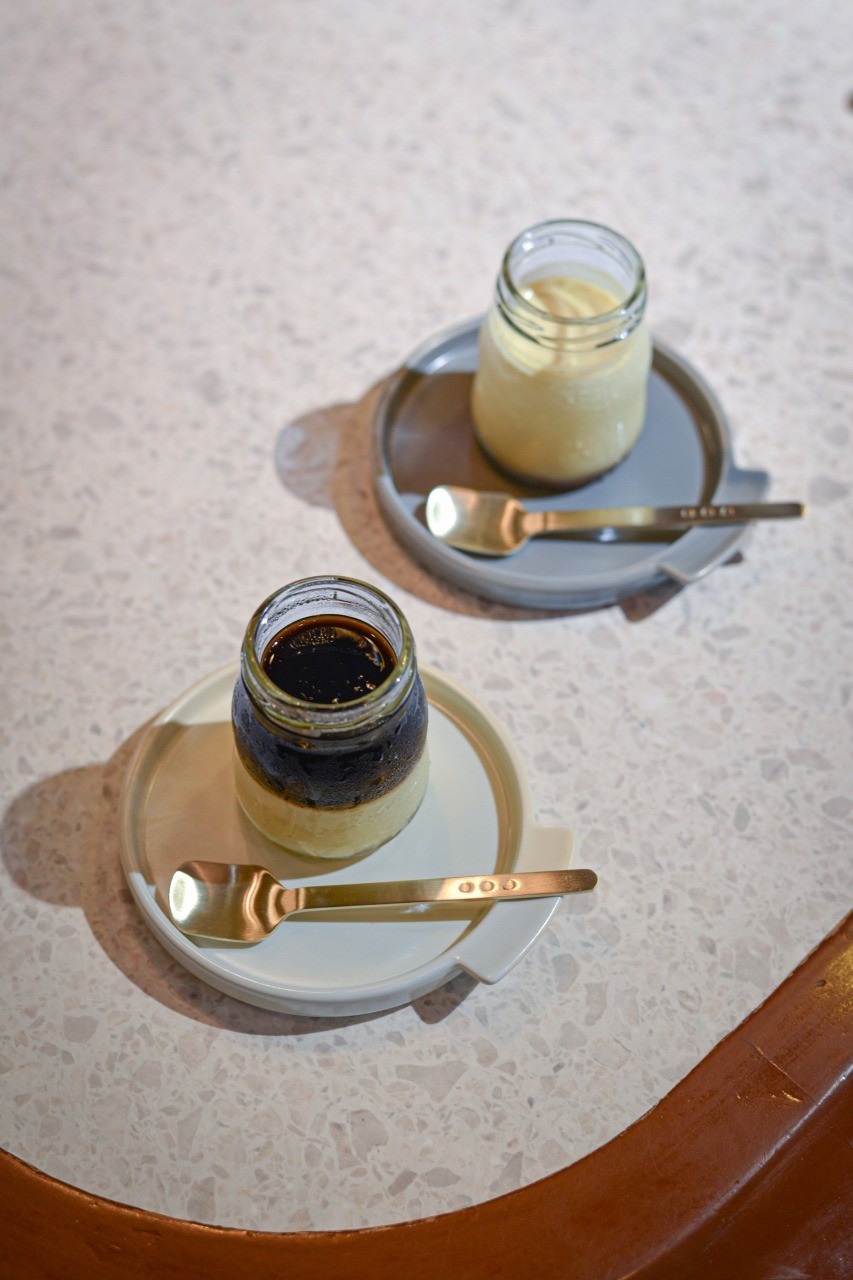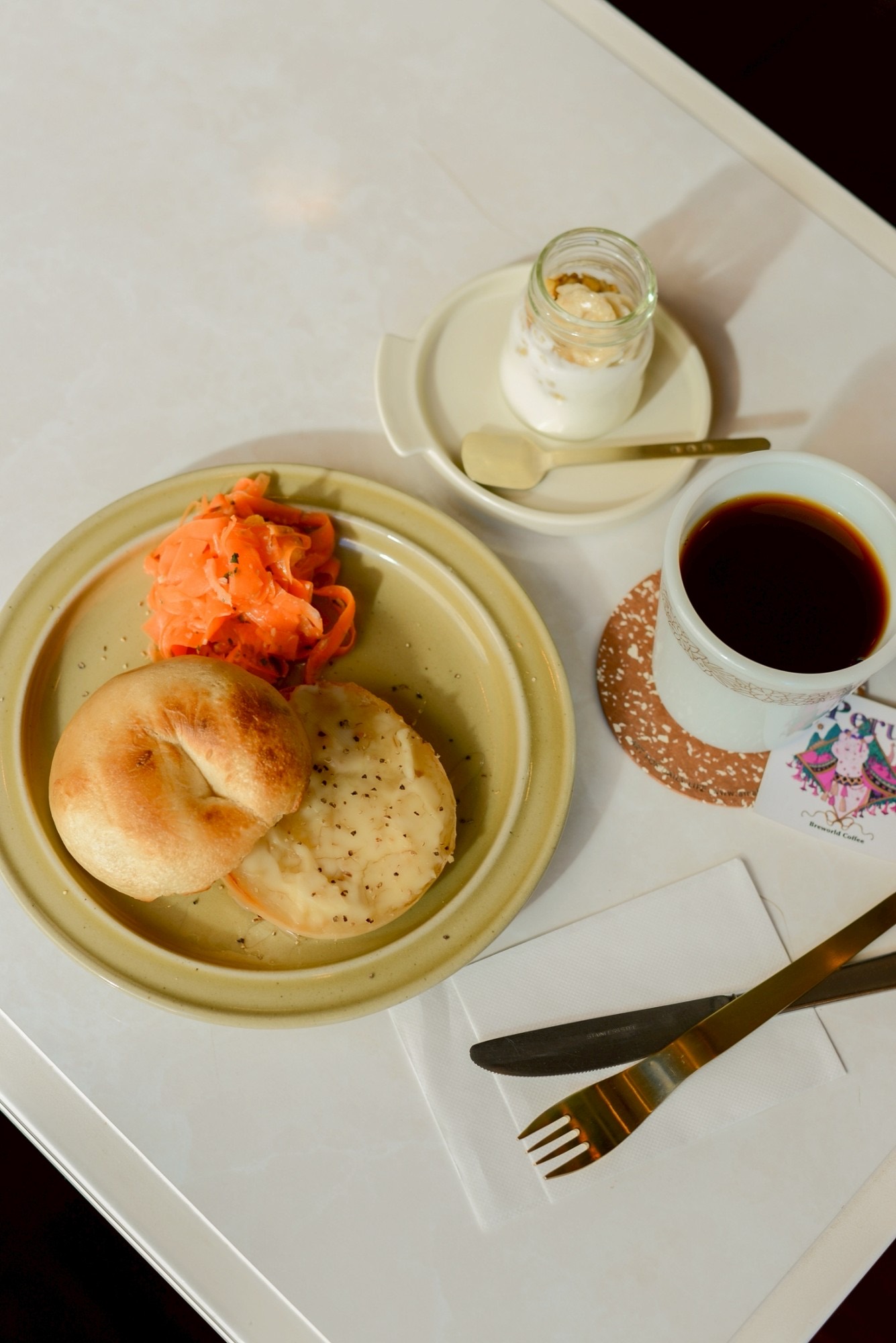
On June 5 a specialty coffee shop opened across the wall from the Kyoto Imperial Palace grounds. The building has sold coffee since 1977, and this is its third tenant. Two months later the shop pulled its opening time forward to 8 a.m. Morning trade in Japan usually means charging for the coffee and throwing in the bread. Here the set starts at 980 yen.
1.The name is Breworld Coffee Kyoto. The address is 440-3 Sancho-cho, Kamigyo-ku, Kyoto, a ten-minute walk from Imadegawa Station on the Karasuma subway line. Cross the western wall of Kyoto Gyoen and you are there. It opened on June 5 and closes on Tuesdays. Drip coffee starts at 650 yen, cafe latte at 700 yen. More than 50 kinds of house-roasted beans sit on the shelf, and each cup is hand-brewed after the order comes in.
2.The operator is U.Branding, headquartered in Tokyo. The roastery sits not in Kyoto but in Yamato-Takada, Nara Prefecture, and opened in September 2023. The shop attached to that roastery has only eight seats. They built the place that roasts first and came into the city after. Kyoto is the second location.
3.What changed recently is the clock. Since July 27 the doors open at 8 a.m. Weekday hours moved two hours earlier, 8:00 to 16:00, with weekends running 8:00 to 17:30. The company says people living nearby kept asking for somewhere to drop into in the morning. An adjustment made two months after opening.
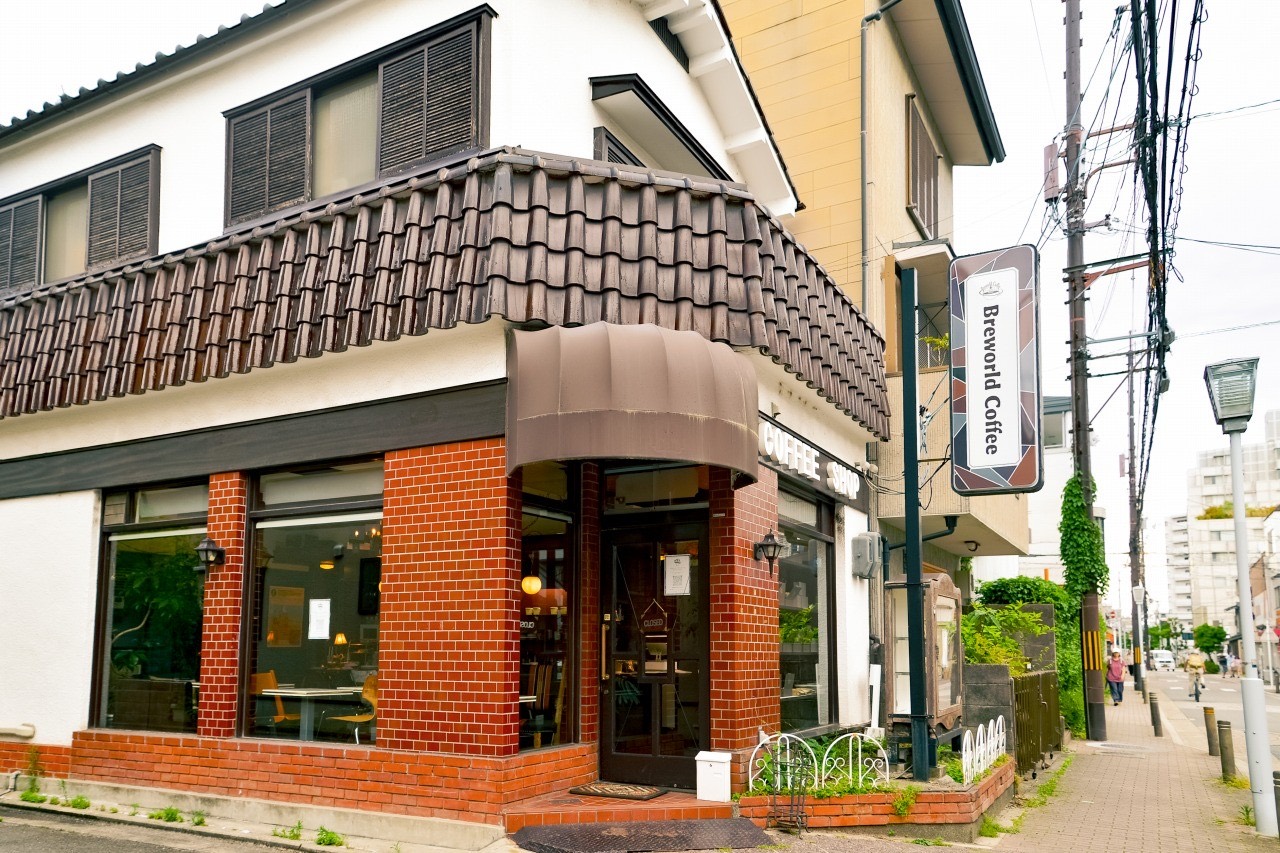
4.Look at the building's history and the schedule turns out to be old news. In 1977 a kissaten called Brazil started here and sold coffee for more than forty years, and in April 2019 a miso maker from Aichi opened Kissa Zou. Six counter seats and three four-tops. The miso company was not in the shop for the coffee; it wanted its miso seen outside Nagoya, and in 2023 it dropped the meal menu and moved toward crepes. This year a third coffee business moved in.
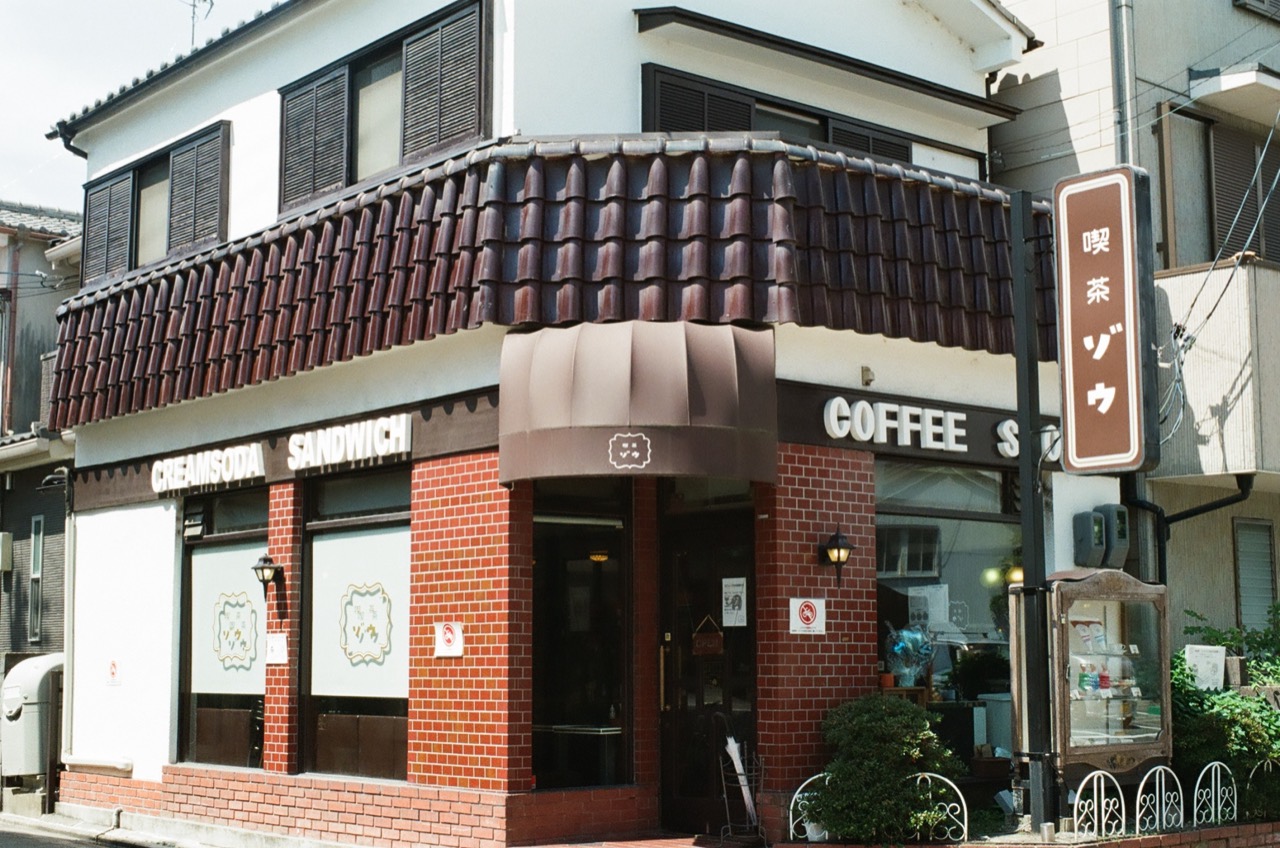
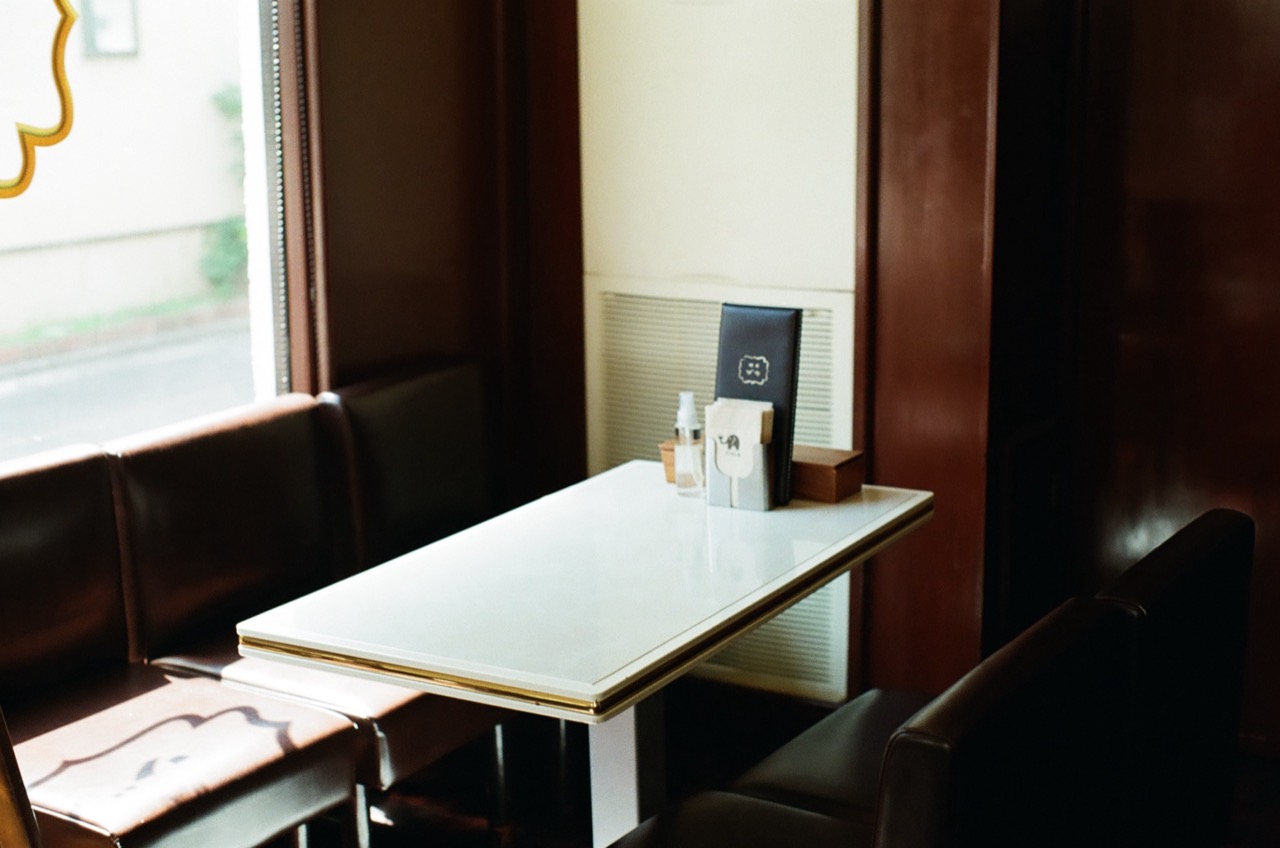
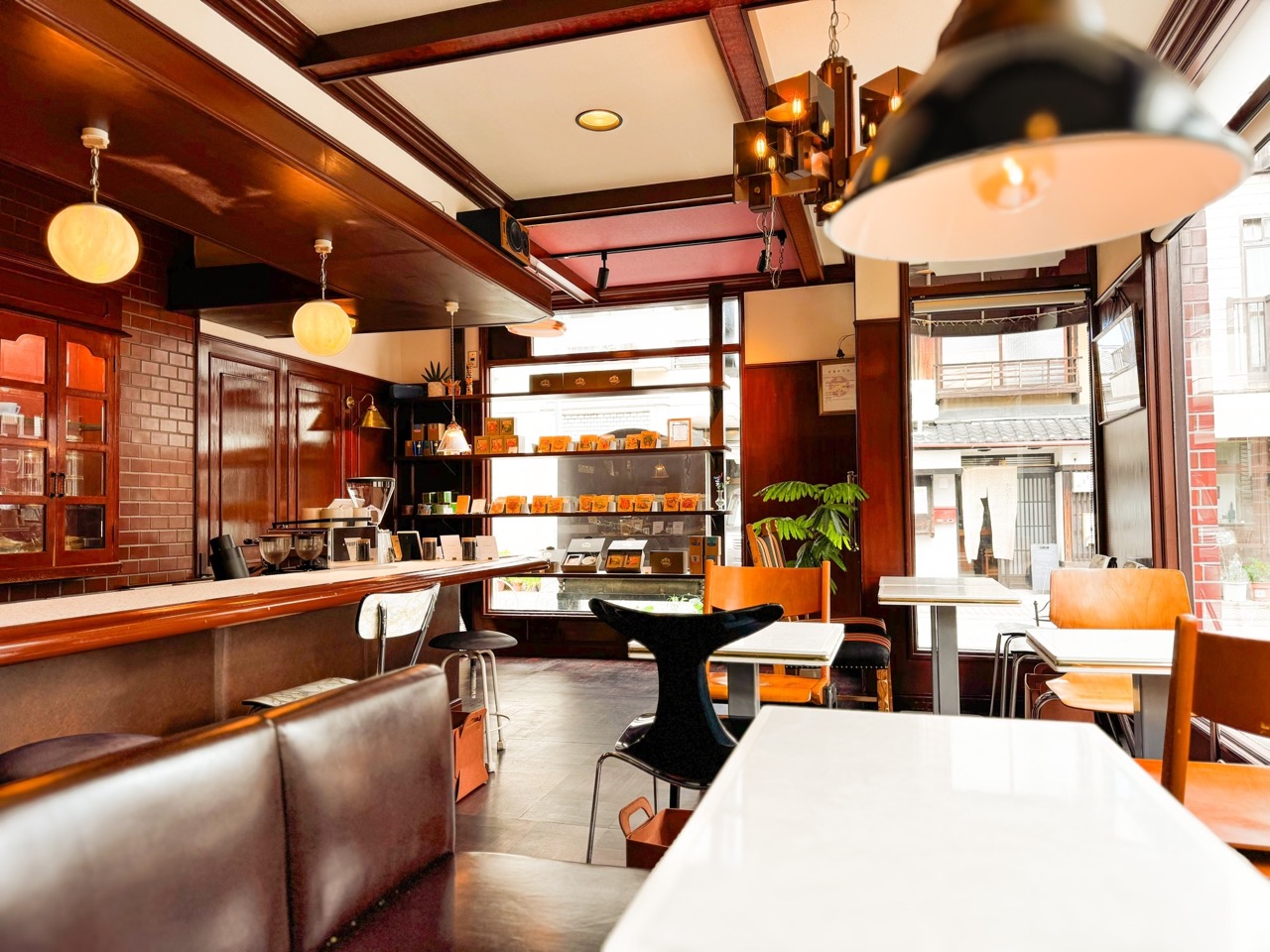
5.Step inside and the bones of the old kissaten are still standing. Lights hung low, a wooden counter worn smooth by hands, seats close enough that your back touches the wall. What changed is the bean shelf covering one wall, and a PROFITEC machine on the bar. Not a model you see often in Kyoto.
6.Putting out 50 kinds means telling the customer to choose. A lightly roasted African bean pushes its acidity forward as the cup cools, with the sweetness arriving behind it. At the other end sits a dark-roasted Mandheling, and pulled as espresso into milk it settles heavily toward dark chocolate. Selling both directions from one shop means holding the roasting yourself. Buy someone else's beans and every bag that does not move is a loss.
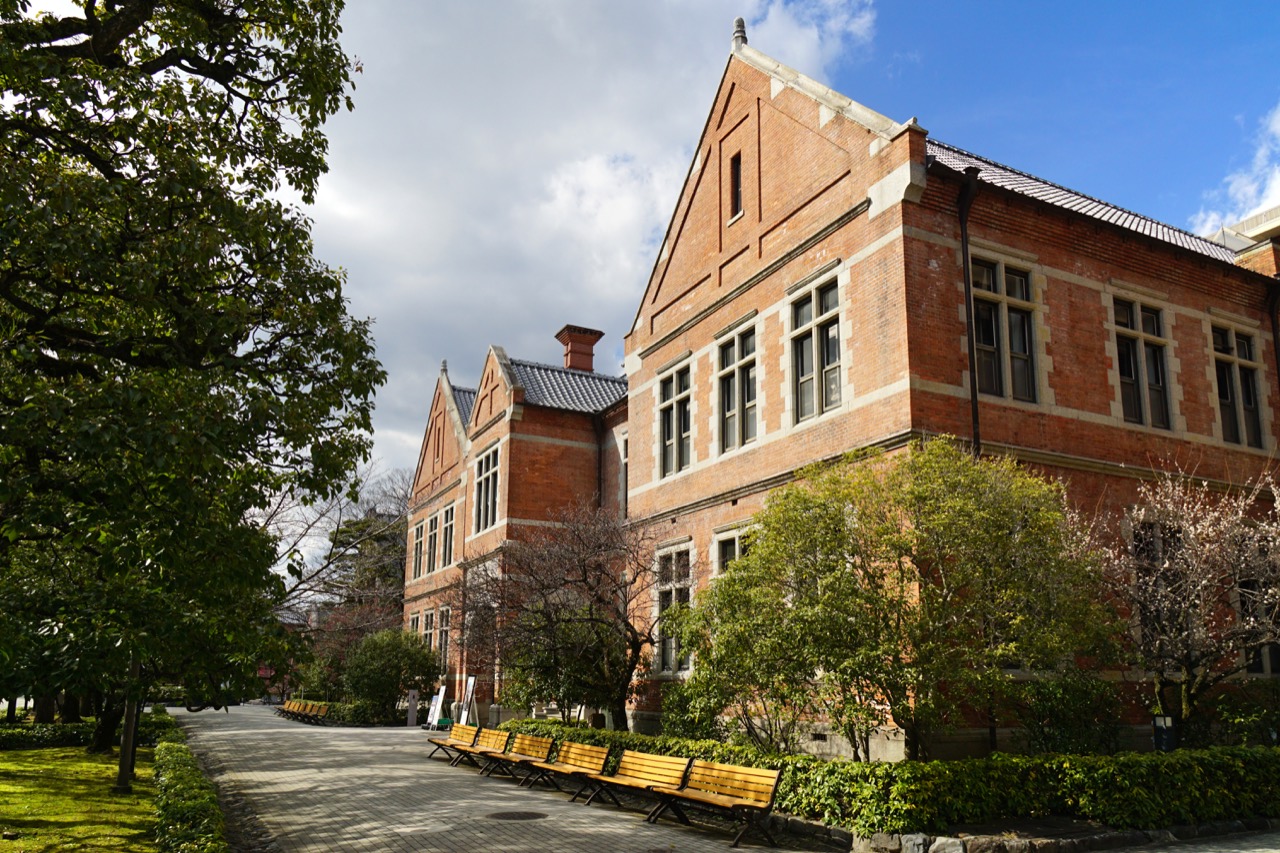
7.The location tells you who the shop is opening for. This is not the tourist route toward Kiyomizu-dera or Arashiyama. Kyoto Gyoen is across the street and Doshisha University's Imadegawa campus is a few steps up, with close to 20,000 students and staff moving through it. Tourists are not sitting in a neighborhood coffee shop at 8 a.m. Opening at that hour means taking students on their way in, staff heading to work, and residents coming back from a lap around the palace grounds.
8.The question is the price. Morning trade in Japan settled into a standard shape long ago. Charge for one cup, add toast and a boiled egg: that pattern hardened in Nagoya and the national chains carried it over intact. Komeda's morning service runs from opening until 11 a.m., and ordering a drink brings bread with it. Breakfast solved for 460 yen.
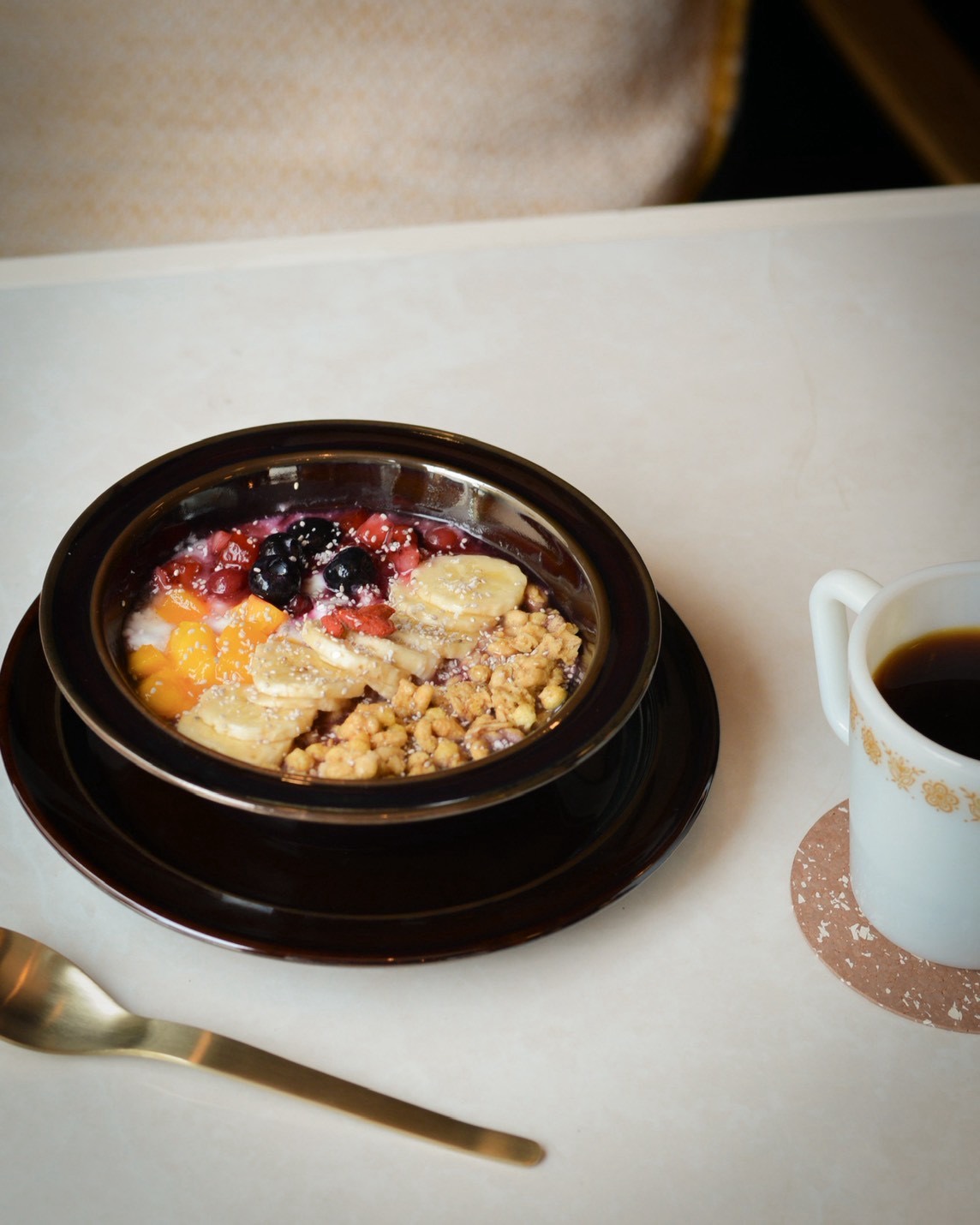
9.Here the morning starts with a croissant set at 980 yen and climbs through a bagel set at 1,280, bagel and croissant at 1,380, cheese omelette croissant at 1,580, and an acai bowl set at 1,680. All of them include coffee, salad and yogurt. If the chain morning is bait, this one is merchandise.
10.Line up the numbers and the reason shows. A house-roasting cafe buys green and roasts it. Specialty-grade green at 1,500 yen per kilo loses about 15 percent in the roast, which puts roasted beans at 1,765 yen per kilo. At 15 grams a cup the bean cost lands near 26 yen. That is a bean cost of roughly 4 percent on a 650-yen drip, and even with milk and a cup the drink still goes out cheap.
11.The set runs the other way. Put a croissant in at around 200 yen wholesale, add salad and yogurt, and the food cost climbs toward 300 yen. The cost ratio on a 980-yen set lands near 30 percent. More than seven times what the cup alone carries. Yet the money left over rises from 624 yen to 680. The trade is a worse ratio for a bigger take from the same seat, and so far this is arithmetic rather than strategy.
12.The real reason is the hour. From 8 to 10 there used to be no revenue at all. Rent runs through those two hours anyway, and whoever prepares for a 10 a.m. open is already in the shop at 8. Set sales land on fixed costs that were being paid regardless, so nearly all of that 680 yen stays as profit. Twenty extra morning customers a day, 25 days a month, comes to 340,000 yen.
13.Seat count has not been disclosed. The previous tenant ran six at the counter and three four-tops, so around 18 seats is the fair read, and the floor works out to roughly 50 square meters. At an average spend of 1,100 yen, 90 customers a day and 25 days a month, that is 2.47 million yen. Across 50 square meters that clears 32,000 yen per square meter per month. So how heavy is rent on a floor this size? With Kyoto city-center retail running between 6,000 and 21,000 yen per square meter per month, rent falls below 20 percent of revenue. All of it is estimated from public material and standard industry figures, not disclosed by the shop.
14.One more thing beyond cups and sets. Around 15 kinds of drip bags sit at 300 yen each, and beans go out by the bag. That revenue uses no seat, so it owes nothing to turnover. For a company that keeps its roasting equipment in Nara and opened a shop in Kyoto, the city location is also a sales channel. A roastery has never come downtown for cup revenue alone.
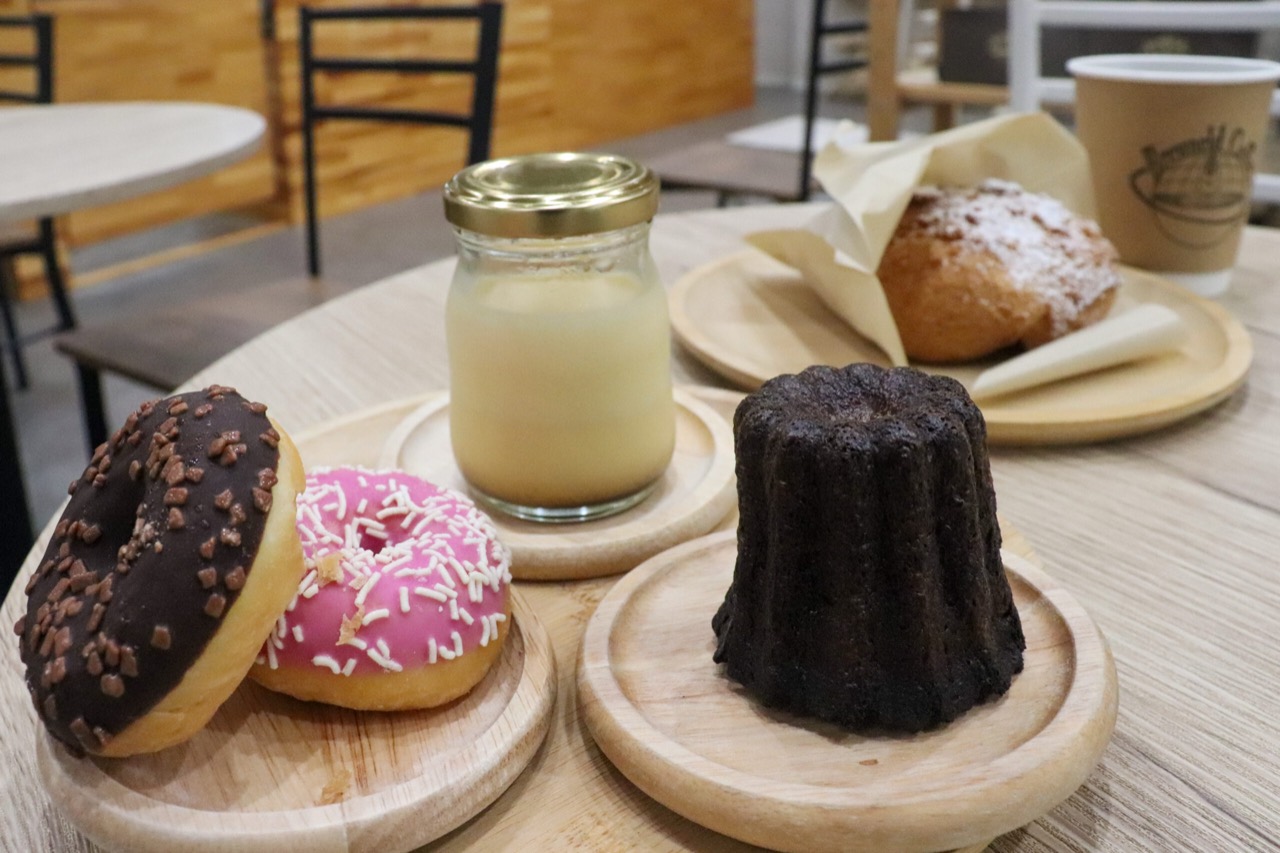
15.Japan counted 154,630 kissaten in 1981, its peak, and 58,669 by 2021. Sixty-two percent disappeared over forty years, and this building's first tenant sits inside that decline. What vanished, though, was the kissaten, not the morning demand. The lights come on again at 8 in the same spot, and this time a company that roasts coffee has taken the hour.
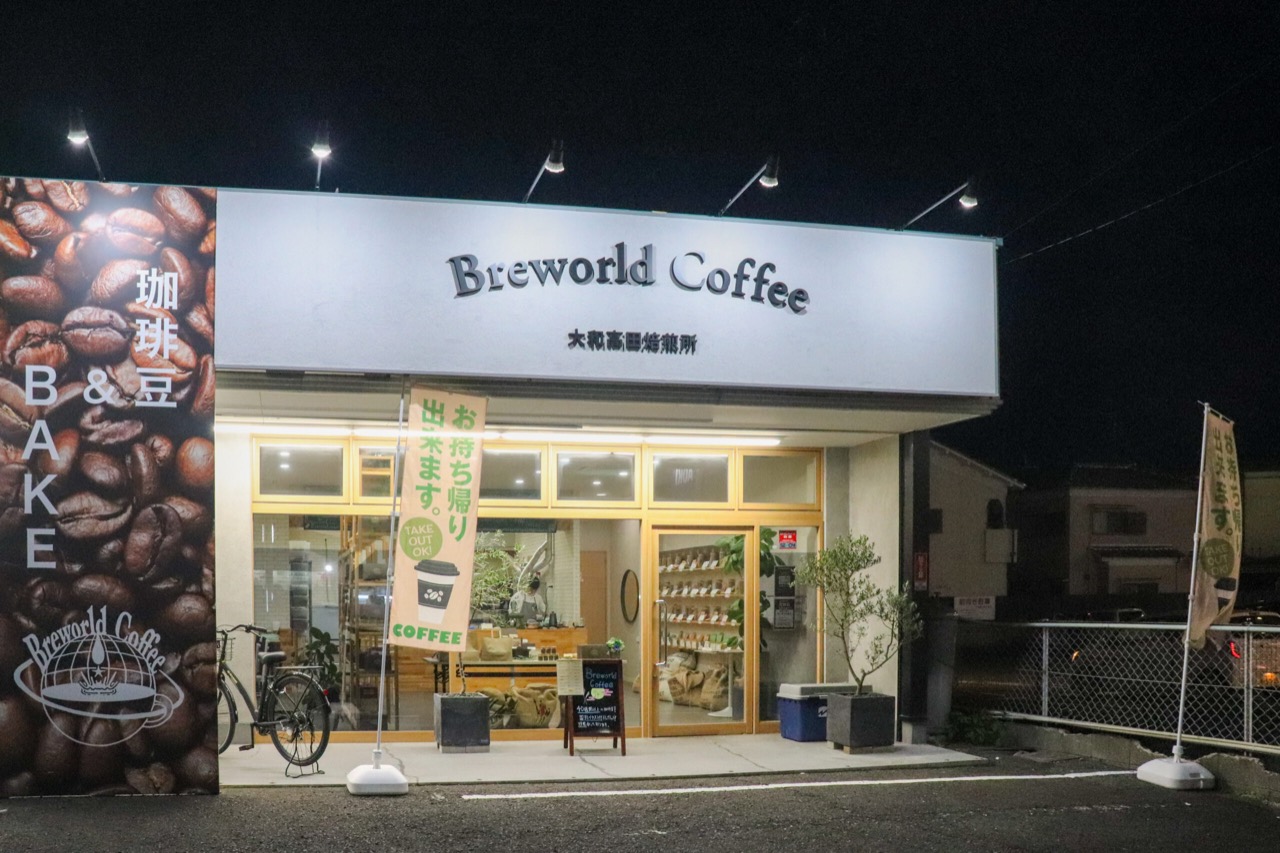
16.In roughly 50 square meters of former kissaten beside the Kyoto Imperial Palace grounds, a house-roasting operation has started trading at 8 a.m., and instead of the local custom of throwing in the bread it charges 980 yen for the set. The cost ratio worsens from 4 percent to 30, while the money left from one seat rises from 624 yen to 680. In Korea the first thing you hit is labor. Opening two extra morning hours means someone arrives that much earlier, and once weekly holiday allowance and early-shift premiums enter the calculation, twenty customers a day often fails to cover it. Whether to open that window is a decision to make after drafting the roster, not the menu.