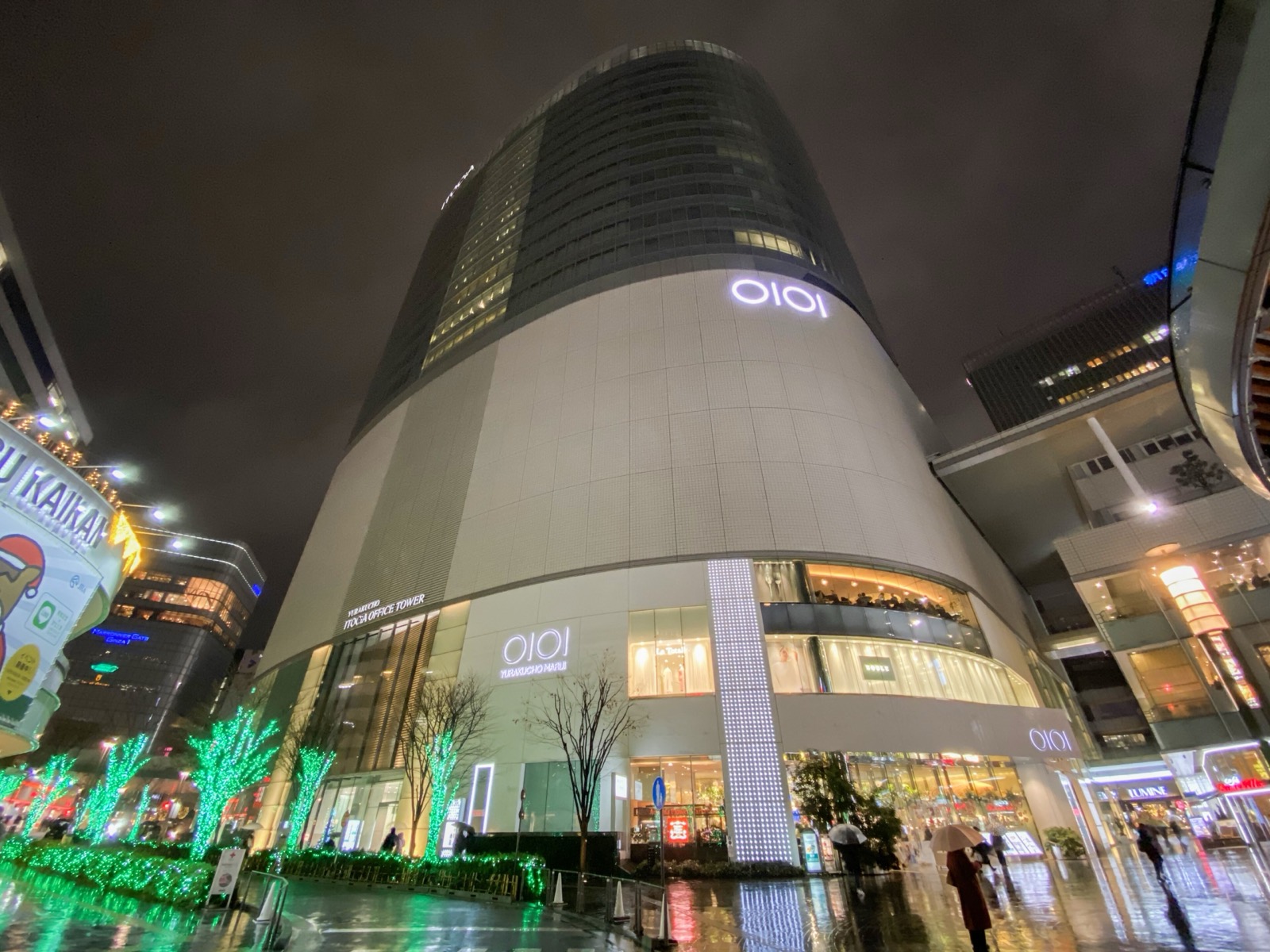
A coffee brand from Busan has taken the ground floor of a retail complex in front of Tokyo's Yurakucho Station. At the sidewalk line an americano is 250 yen. At the seats inside it is 600 yen. Different beans, different cups, and opening hours three hours apart. Thirty-two seats.
1.The address is 2-7-1 Yurakucho, Chiyoda City, Tokyo, a street-level unit on the first floor of Yurakucho ITOCiA. The name is JMCOFFEE GINZA LOUNGE. It opened quietly on 8 August and formally on the 14th. This is the first Japanese store for JM Coffee Group, which began in Busan. Thirty-two seats, open every day of the year.
2.The sign board on the sidewalk carries two figures. Under the seated one, IN. Under the walking one, T/O. Across the top, DUAL SPACE. The takeaway line opens at 7:30 in the morning, the seating at 10. Closing times split as well, 21:00 and 21:30.
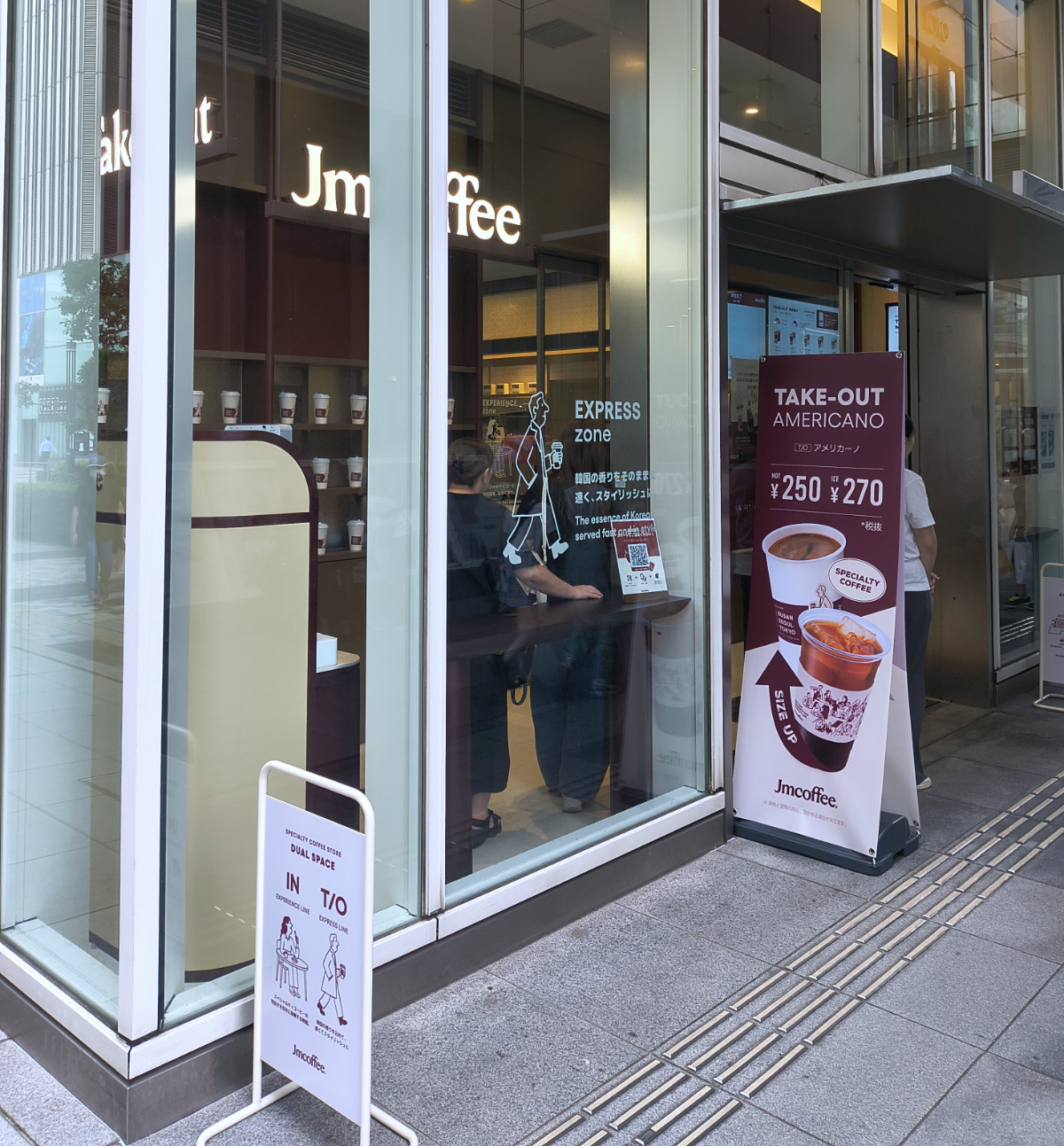
3.The EXPRESS zone is a single counter behind glass. Paper cups are stacked on the wall shelves, and orders go through a QR code beside the screen into a messenger app. No app to install, and about three minutes to collect. The 250 and 270 on the sidewalk banner are before tax.
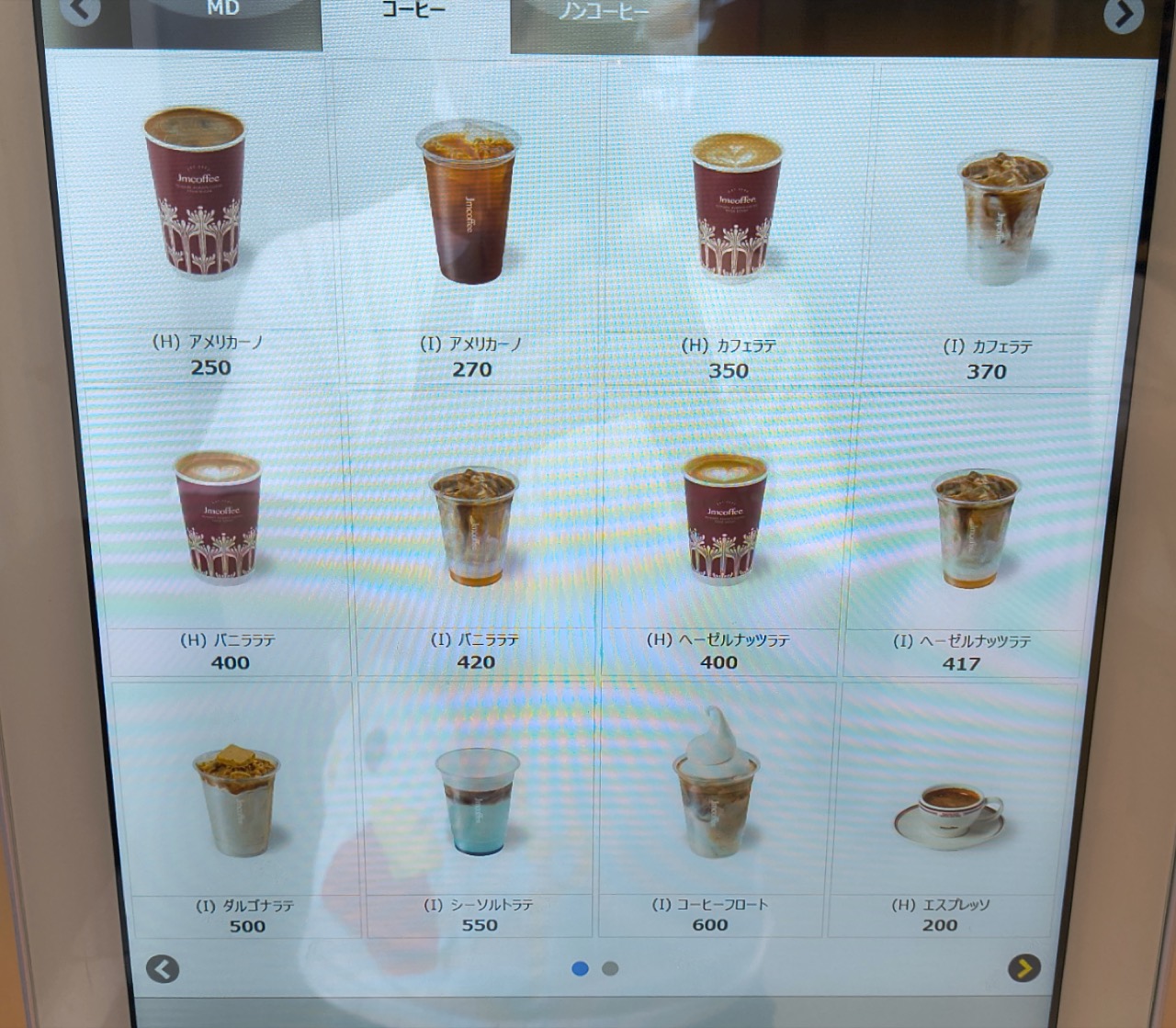
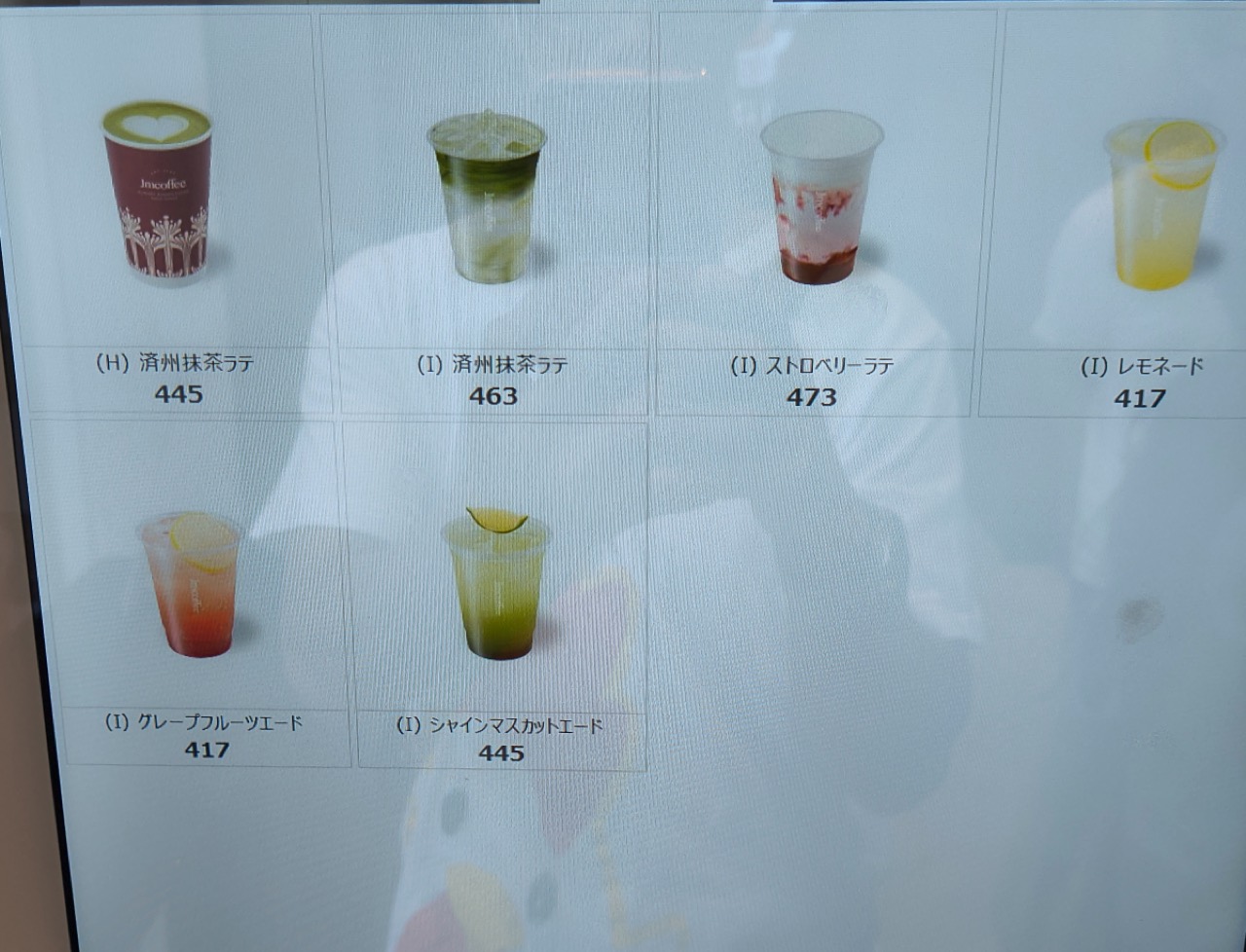
4.The EXPERIENCE zone at the back starts with the beans. STRADA is described as milk chocolate sweetness with a thin line of plum and a thick body, PRIMO as jasmine and orange blossom over ripe berry and tropical fruit. Choosing PRIMO adds 100 yen. Here an americano is 600 yen hot and 650 iced, a flat white 650 and 700.
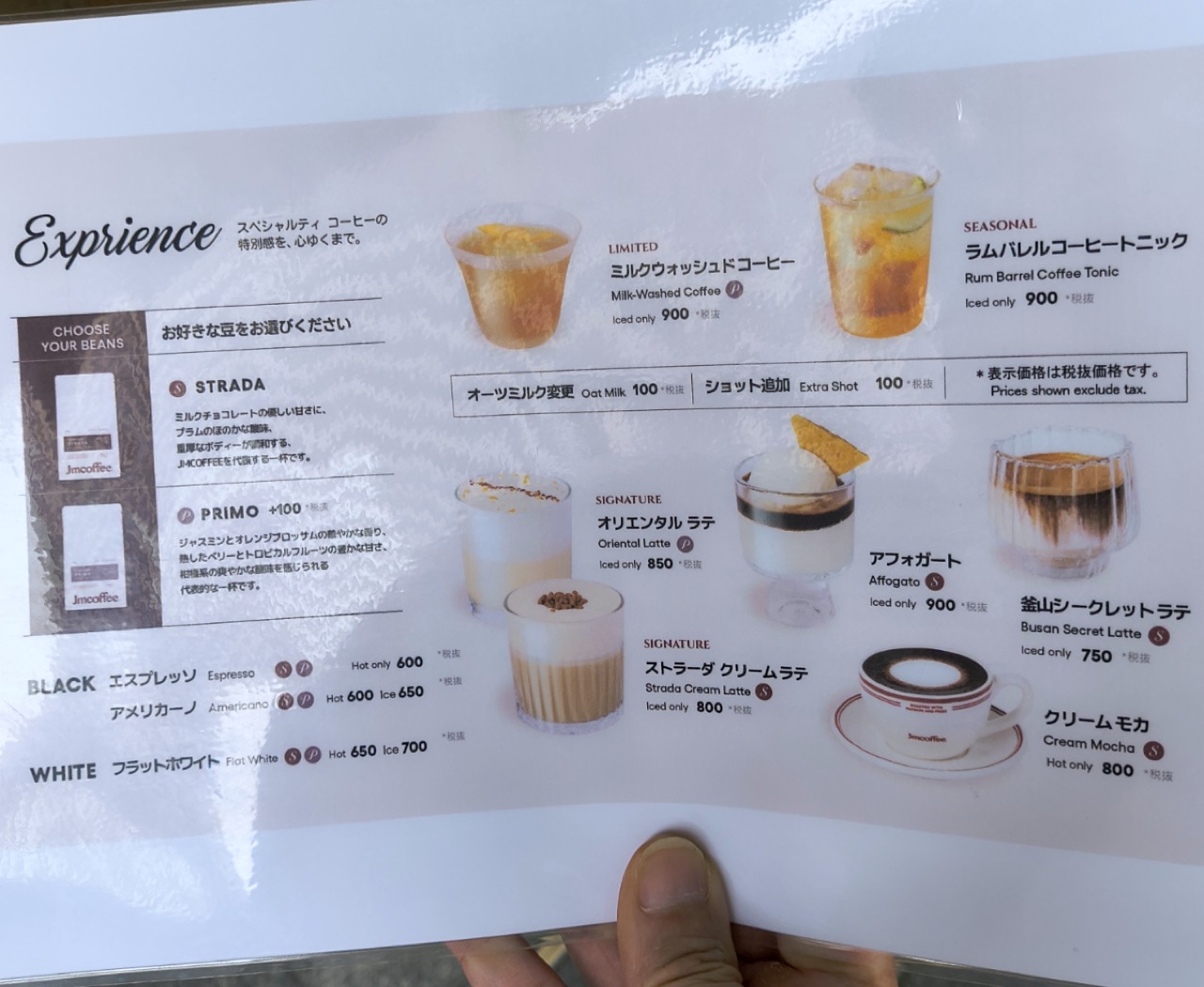
5.The two beans arrive in a different order in the same cup. The chocolate and molasses side lands in the middle of the tongue first, and as it cools a plum-skin acidity comes up late. The floral side does the opposite: it reaches the nose the moment the cup is lifted, then leaves cleanly. Milk cuts that difference in half, but the aroma survives on top of it. That is why putting the floral bean into the 850 yen oriental latte adds up.
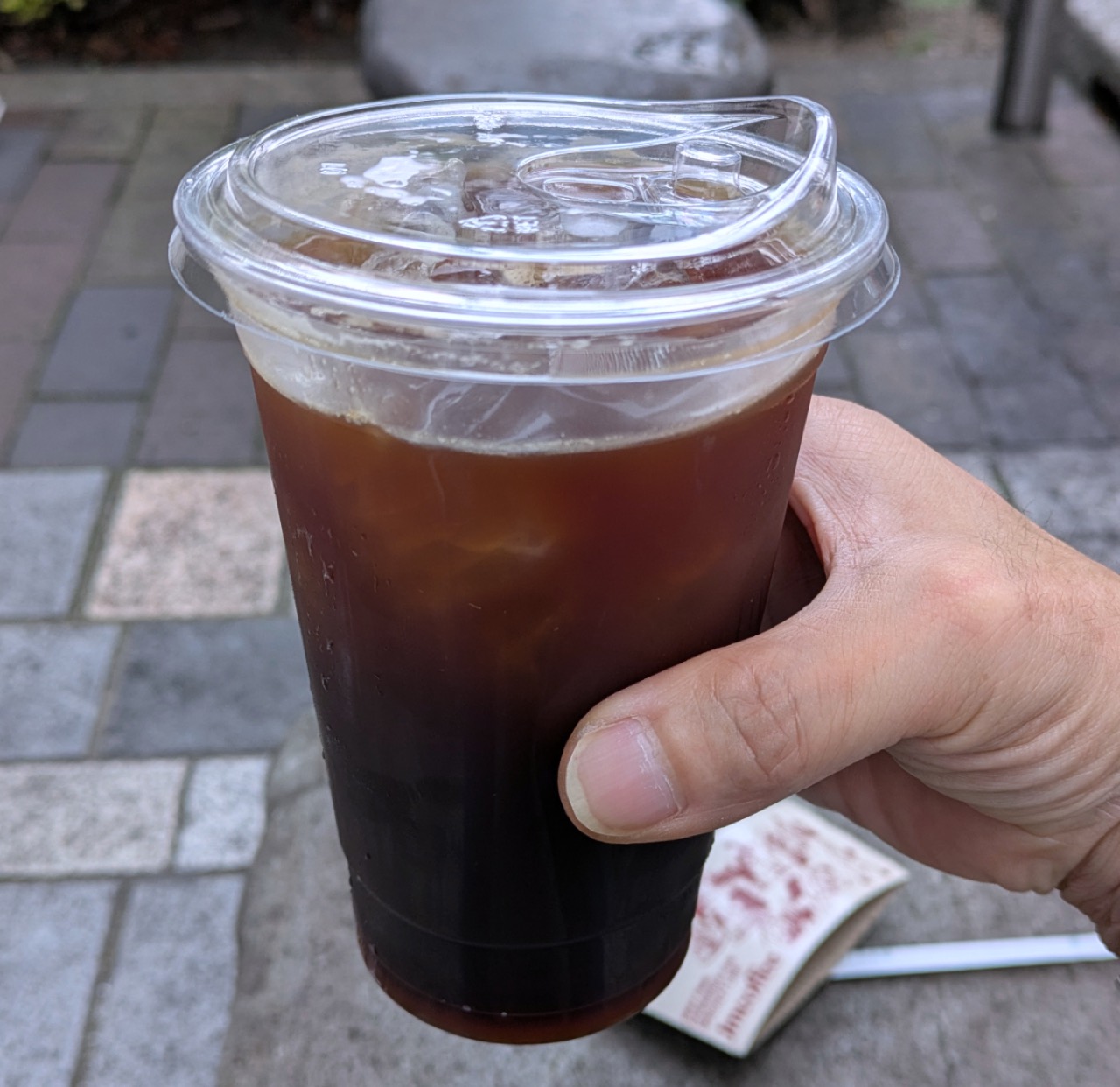
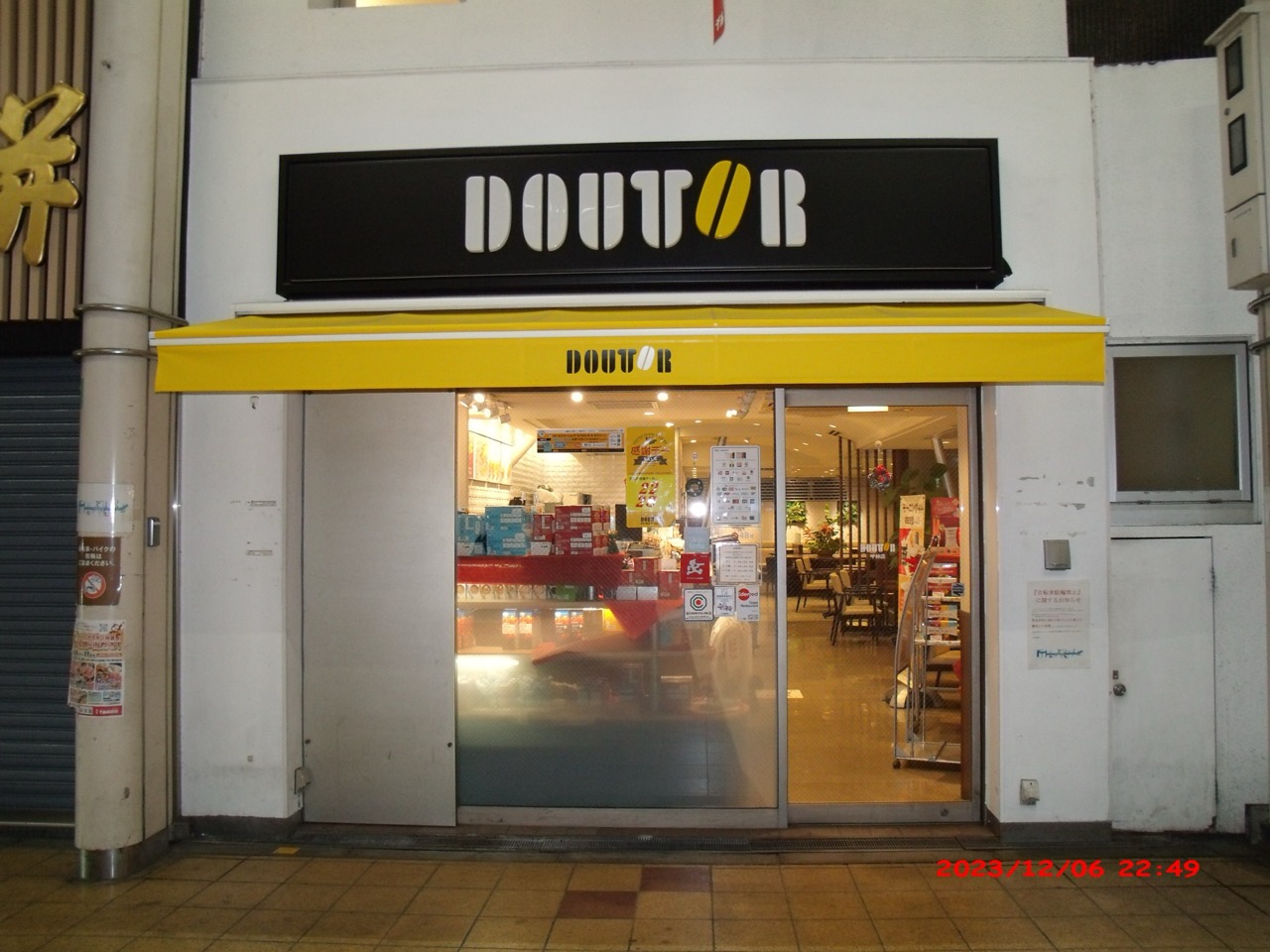
6.On 23 July, Doutor raised its small blend coffee from 280 yen to 300. The change hit roughly 1,200 stores at once, and the company cited raw material and packaging costs. In the same month that Japan's most common benchmark became 300 yen, a new store selling itself on specialty beans posted 250. Not cheap, but cheaper than the cheapest tier.
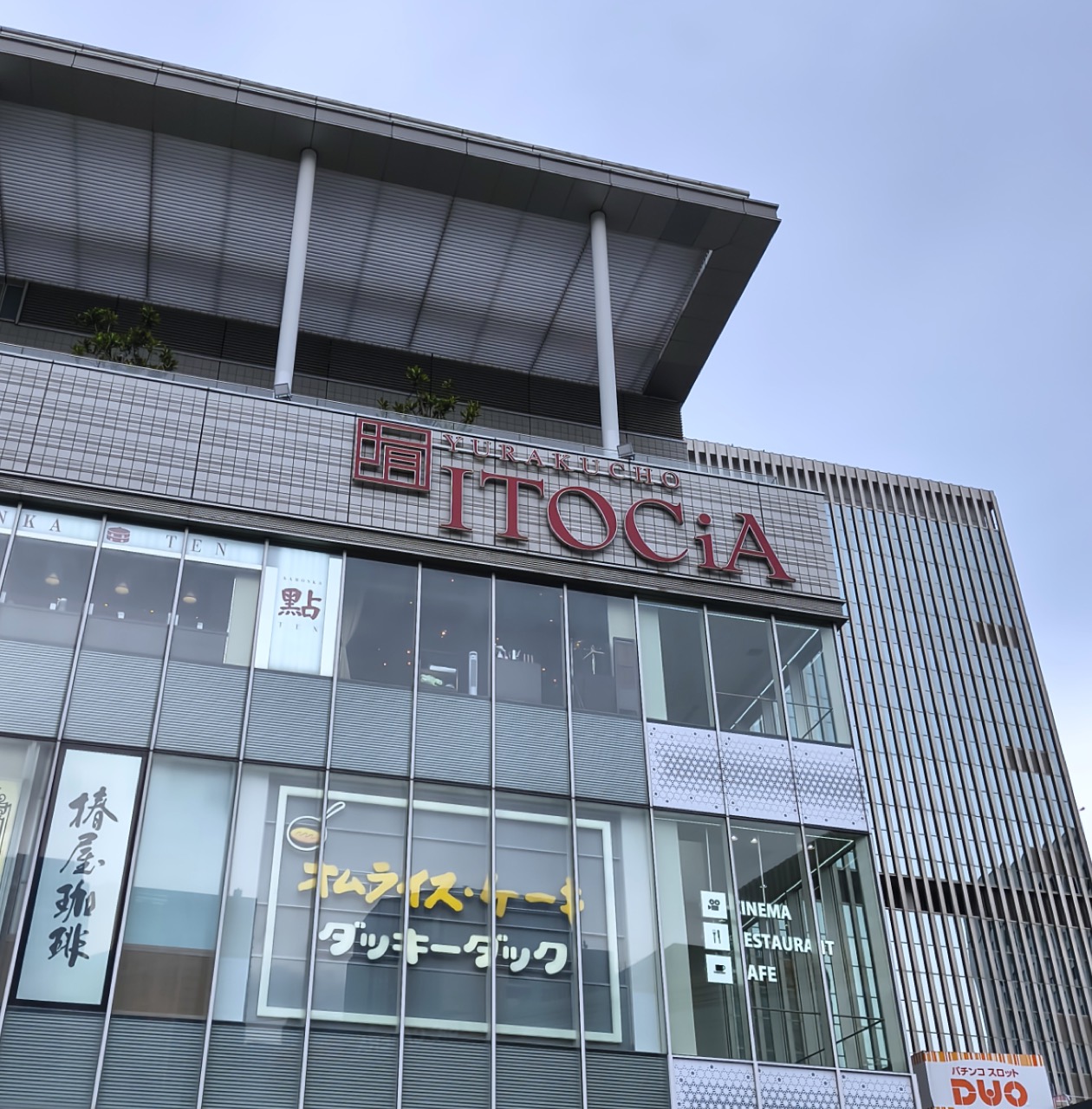
7.Two floors up in the same building sits Tsubakiya Coffee Yurakucho Saryo, where a coffee is 1,180 yen. Within one building 250 and 1,180 stack vertically. One floor apart, 4.7 times the price. Has the street level redrawn the floor price of a cup of coffee? Closer to the truth is that a gap which always existed has been pulled inside a single address.
8.The three-hour gap in opening times comes from the same structure. Yurakucho is a station people pass through on their way to work, and at 7:30 in the morning a seat earns nothing. In the evening the reverse holds: fewer people drinking while walking, more people staying put. So the takeaway line opens first and closes first.
9.Street-level retail around Ginza Station is quoted at 88,557 yen per pyeong a month. The Ginza average is 66,086, and the most expensive block reaches 150,001. Treat this store, with 32 seats and two service lines, as 40 pyeong and the rent lands near 3.54 million yen a month. Every figure below is an estimate built from public sources.
10.The timing on wages is poor. Tokyo's minimum wage is 1,226 yen and becomes 1,280 on 1 October, a rise of 54 yen or 4.4 percent. From 10:00 to 21:00, when both lines run, the floor needs at least three people, dropping to one or two at open and close, so call it 36 labour hours a day. At the new rate that is 1.38 million yen a month.
11.What a single cup leaves behind differs completely between the two lines. The 250 yen cup carries 15 grams of coffee plus a paper cup, lid and sleeve, roughly 75 yen out, leaving 175. The 600 yen cup goes into ceramic, so there is no packaging, and even a generous dose costs 60 yen, leaving 540. The prices differ by 2.4 times, the margins by 3.1.
12.Rent and wages together come to 4.92 million yen a month, or 164,000 a day. Covering that with 250 yen cups alone means 937 of them daily. Over 13.5 trading hours that is 69 an hour. The seated line alone would need 304, which works out to 9.5 turns per seat across 32 seats and does not hold. The answer only appears when the two lines overlap. 450 takeaway cups plus four turns of the seats clears the day's rent and wages.
13.Money attaches outside the drinks too. The store says the beans it brews are for sale on the spot, and the ordering screen carries a separate merchandise tab. From 12 August a stamp card offered a tote bag for ten stamps. Single origins come in two sets: Honduras and Panama split across three ceramic cups, and Brazil and Kenya brewed in front of the guest with a dripper. The 900 yen milk-washed coffee is seated only.
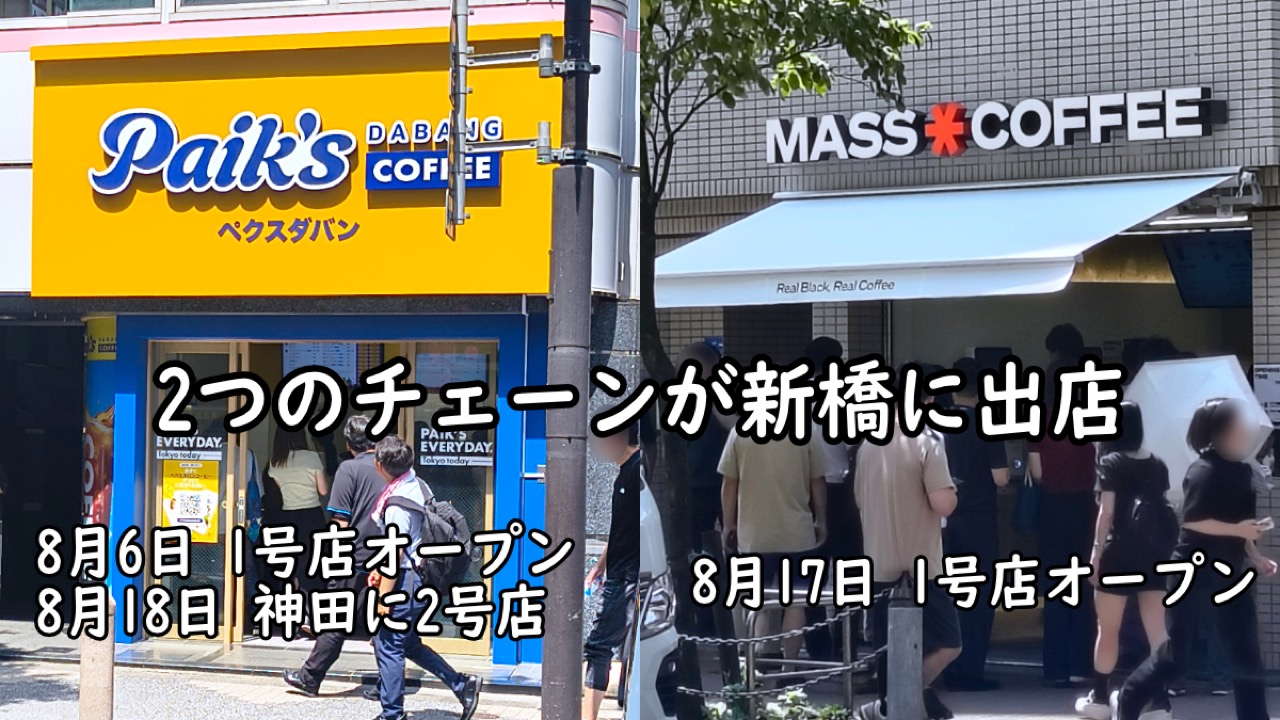
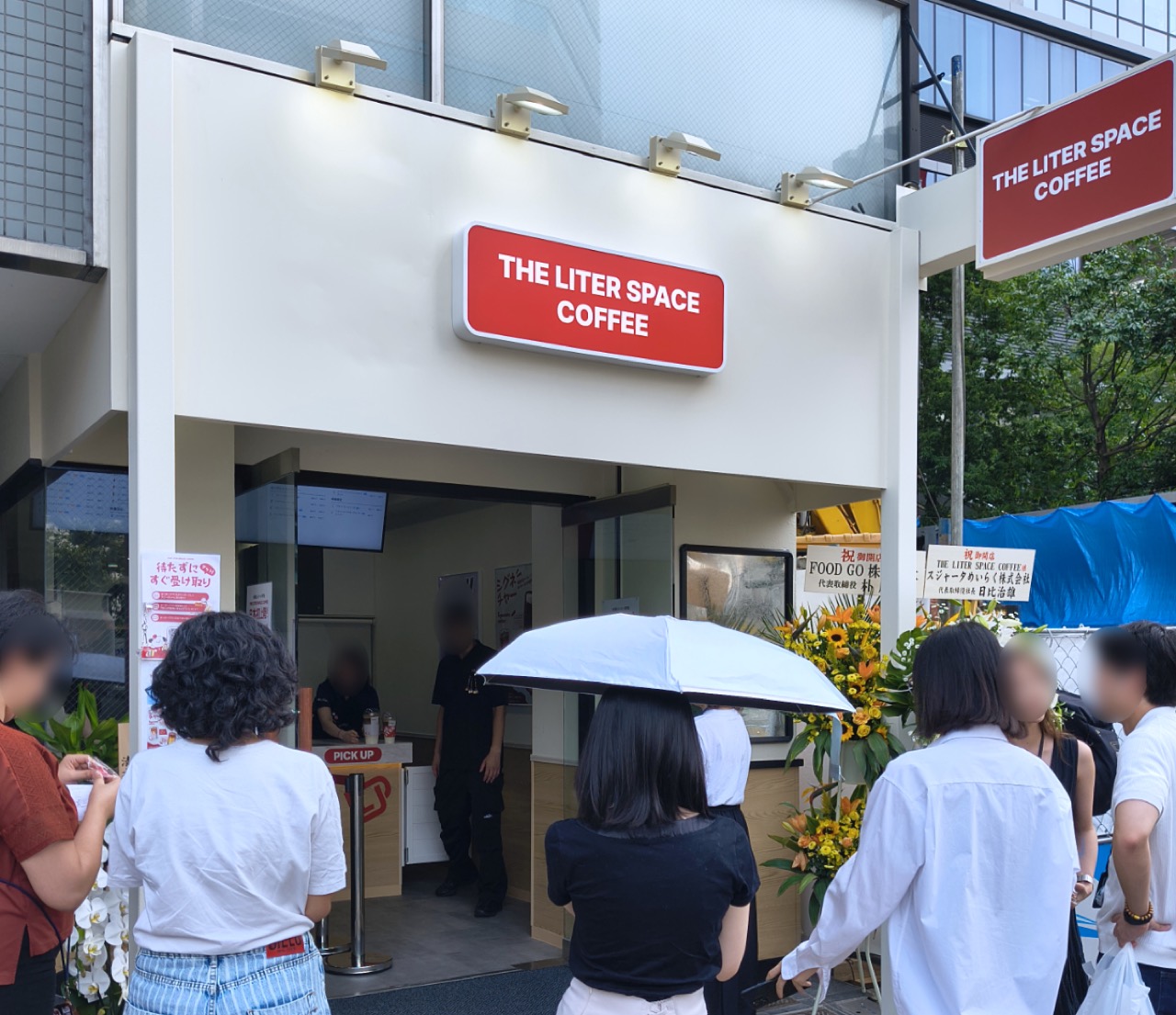
14.This is not the only Korean coffee brand to land in Tokyo in August. Paik's Coffee opened its first Japanese store in Shimbashi on the 6th and a second in Kanda on the 18th, and MASS COFFEE opened in Shimbashi on the 17th. On the 20th THE LITER SPACE COFFEE opened in Gotanda with a one-litre cup. Behind that month of arrivals sit the numbers back home: Korea's Fair Trade Commission counts 921 coffee brands, 29,101 franchised stores and a closure rate of 9.3 percent.
15.JM Coffee Group started in 1999 in distribution, opened a factory-style cafe in 2013, and launched the low-price brand Compose Coffee the following year. That brand reached 2,600 stores by 2023, and in July 2024 all of its shares went to Jollibee Foods of the Philippines and other buyers for 340 million dollars, about 470 billion won. Reports at the time said the founder agreed not to re-enter the low-price coffee market. The 250 yen in Tokyo undercuts Doutor by Japanese standards. Which market that agreement covered has not been made public.
16.A store in central Tokyo has put two service lines under one address, split its opening hours between 7:30 and 10:00, and sells the same coffee at 250 yen and 600. Covering rent and wages with the 250 yen line alone would take 937 cups a day. One cheap line cannot buy this site. Anyone trying the same thing in Korea runs into floor area first. A takeaway counter and a seated room ruin each other the moment their circulation overlaps. Keeping them apart needs at least two bays of street frontage, and in Seoul's main districts a ground floor that wide carries its own premium.