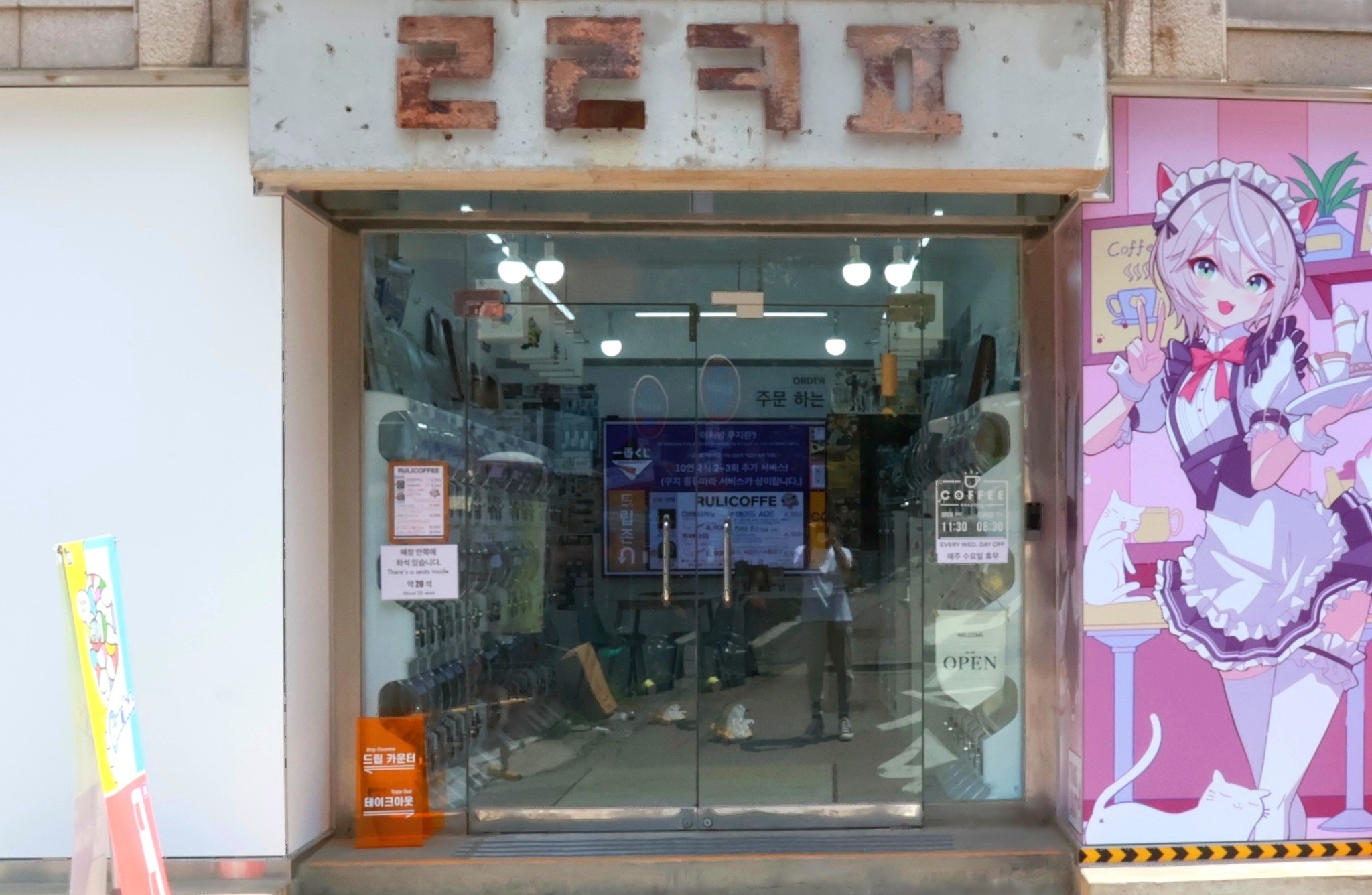
Walk up one hill from Myeongdong Station and you reach a shop with four brick letters mounted on the ground floor of a hotel. ㄹㄹㅋㅍ. The beans come from Panama and nowhere else, more than a hundred lots on the list, and among them are auction lots that cost 90,000 won a cup. At a window in the same building, an americano goes for 4,900 won. Last February, one year and five months after opening, this place landed at No. 51 on the world's hundred best coffee shops.
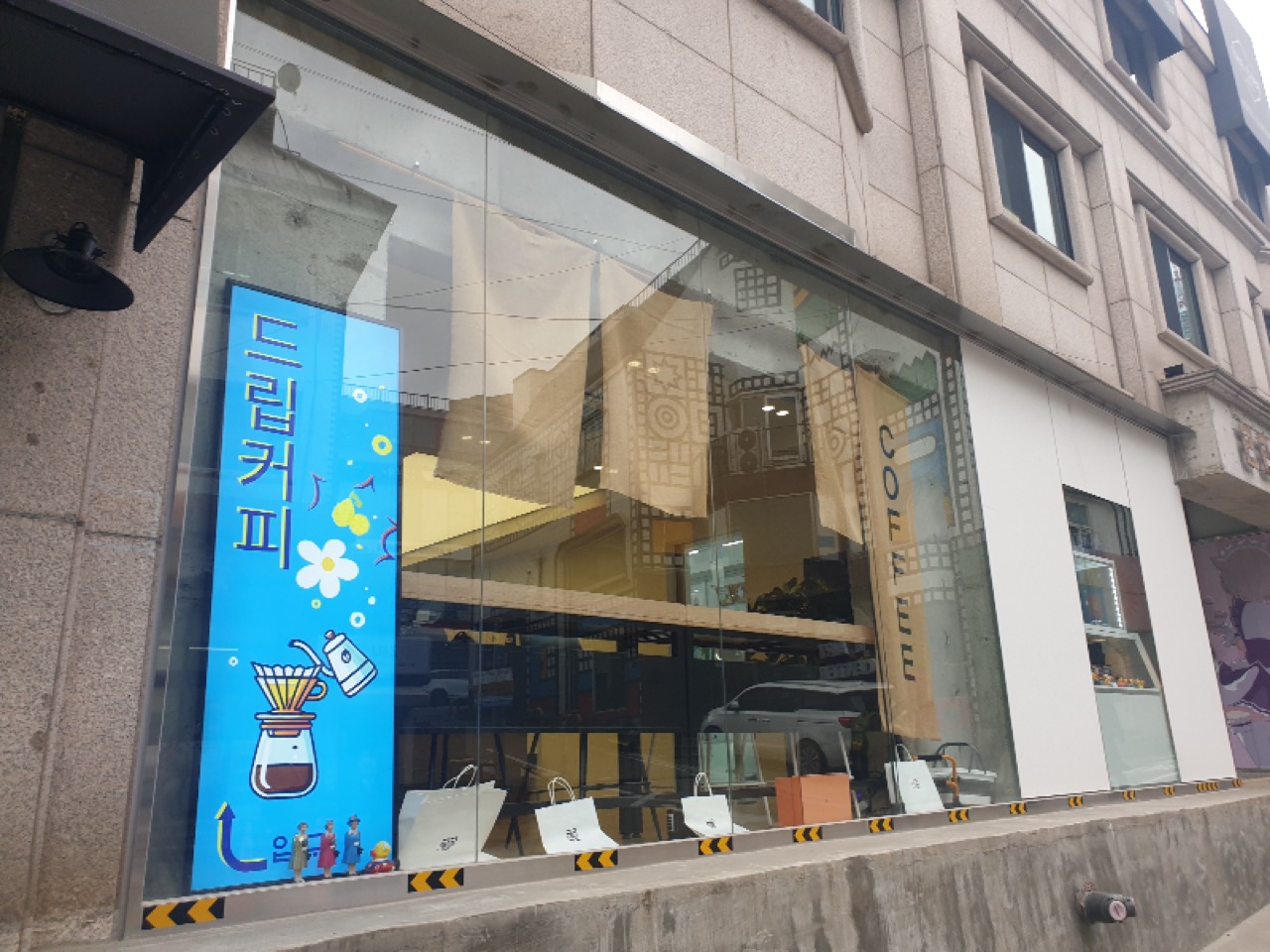
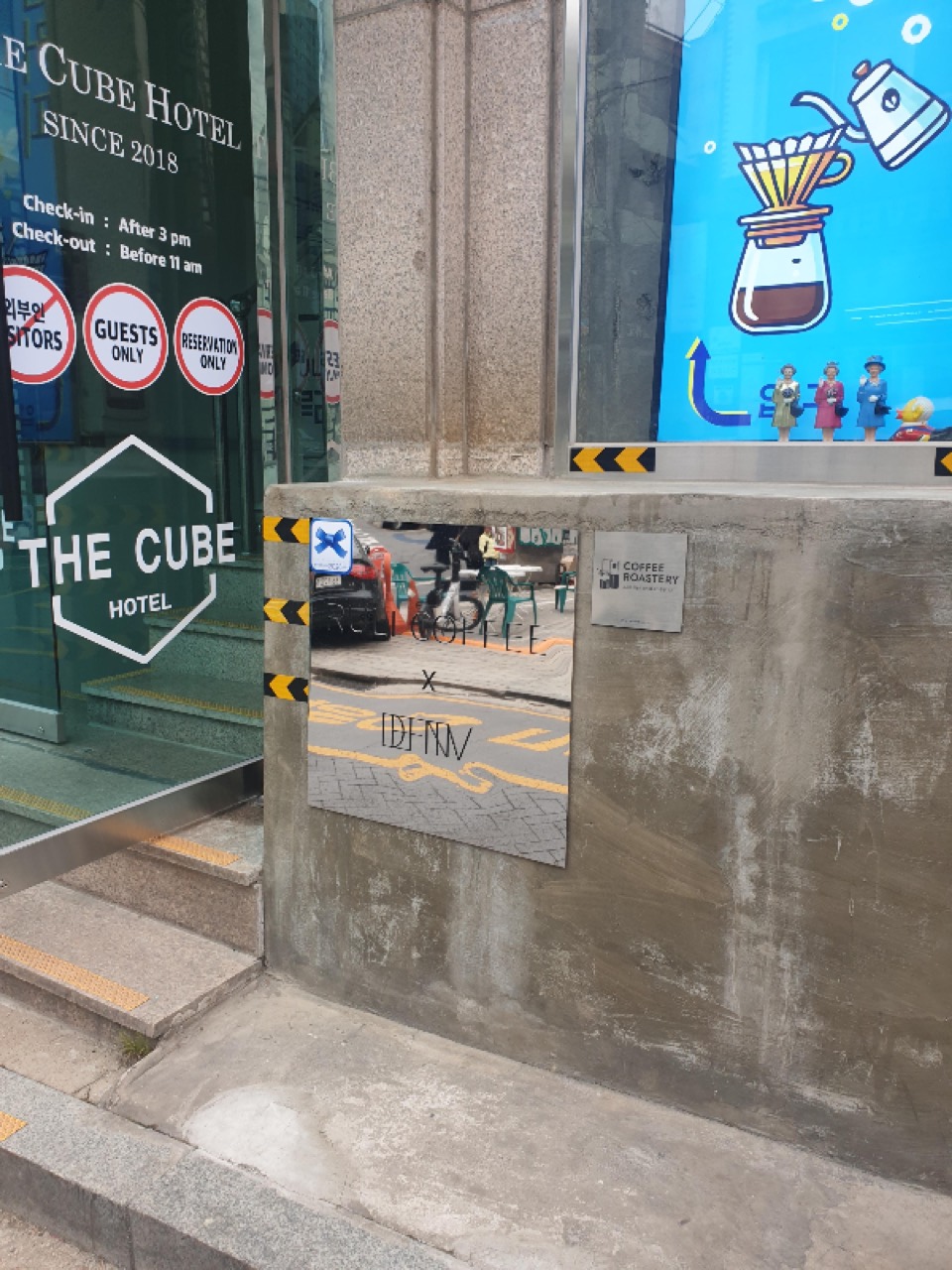
1.The name is RULI COFFEE. It sits at 31 Toegye-ro 20-gil, Jung-gu, Seoul, on the ground floor of THE CUBE HOTEL, which opened in 2018, about a five minute walk from Exit 3 of Myeongdong Station. It opened in September 2024. Hours run from 11:30 in the morning to 6:30 in the evening, closed Wednesdays. The address is not on the main strip either, but on a back road one turn up the hill.
2.Park Byung-wook runs it. His main work is not coffee but community. He operates RULIWEB, a gaming and subculture community founded in 2000, and inside it he also runs LiveRuli, a virtual YouTuber business. RULIWEB draws roughly 63 million visits a month. That makes it the largest gaming community in the country. A man who already held the customer list went and opened a cafe.
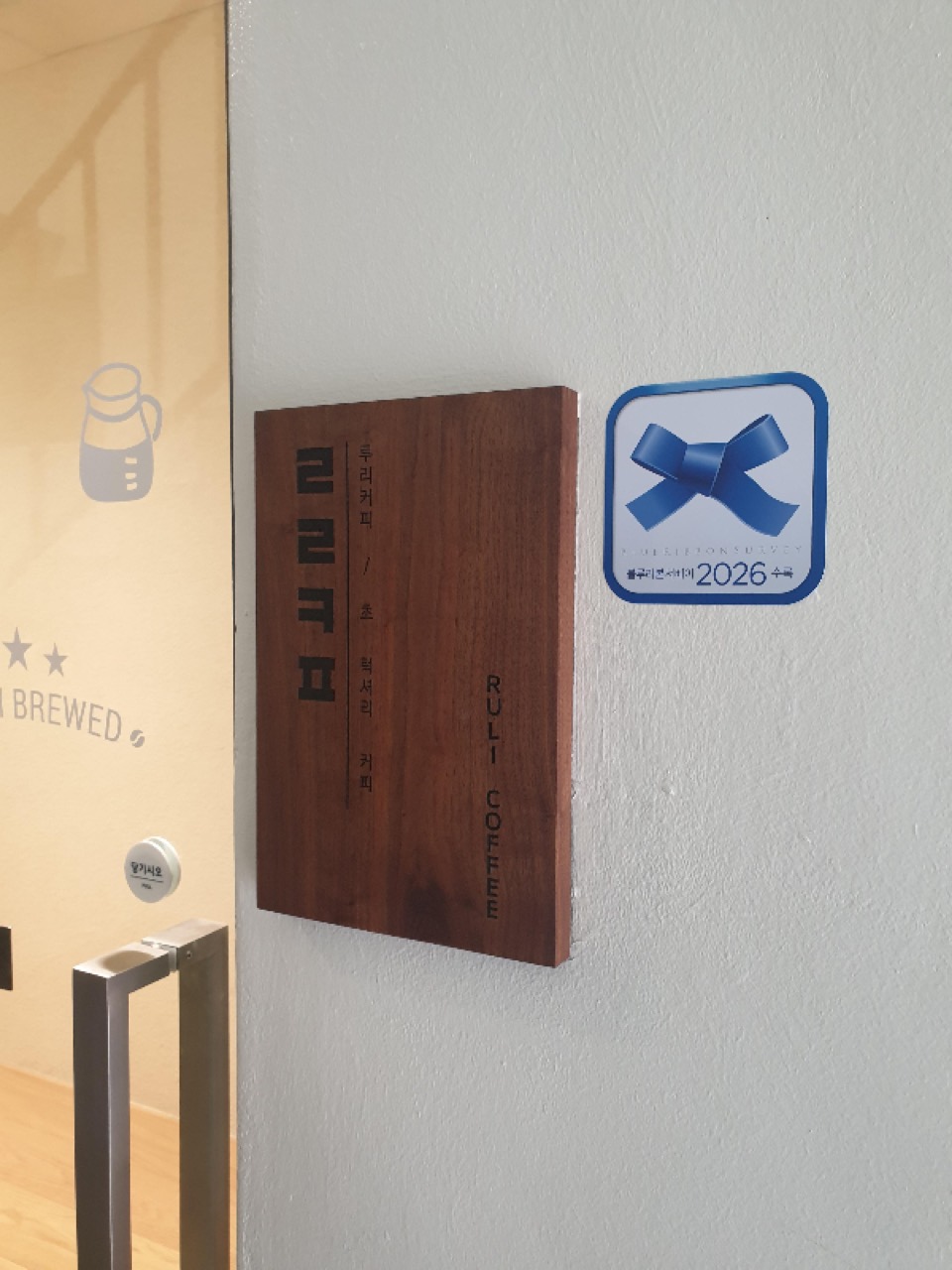
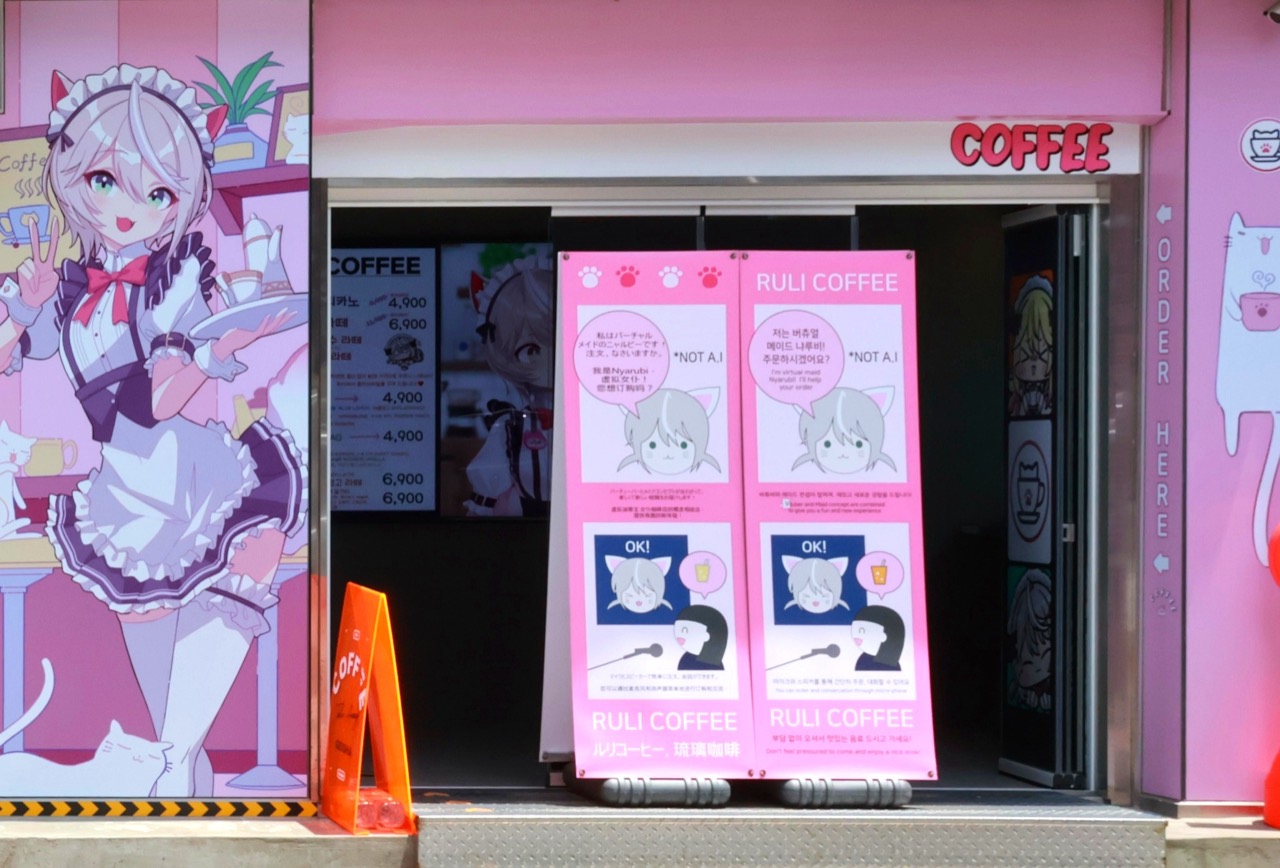
3.Four letters were cut from brick and set above the concrete canopy. ㄹㄹㅋㅍ. They are the initial consonants of the shop name, a shorthand this community has used for years. The entire wall to the right of the glass door is covered by an illustration of a cat-eared character in a maid uniform. Inside, a walnut plaque hangs with the same initials carved vertically, and beside it sits a blue ribbon certification sticker.
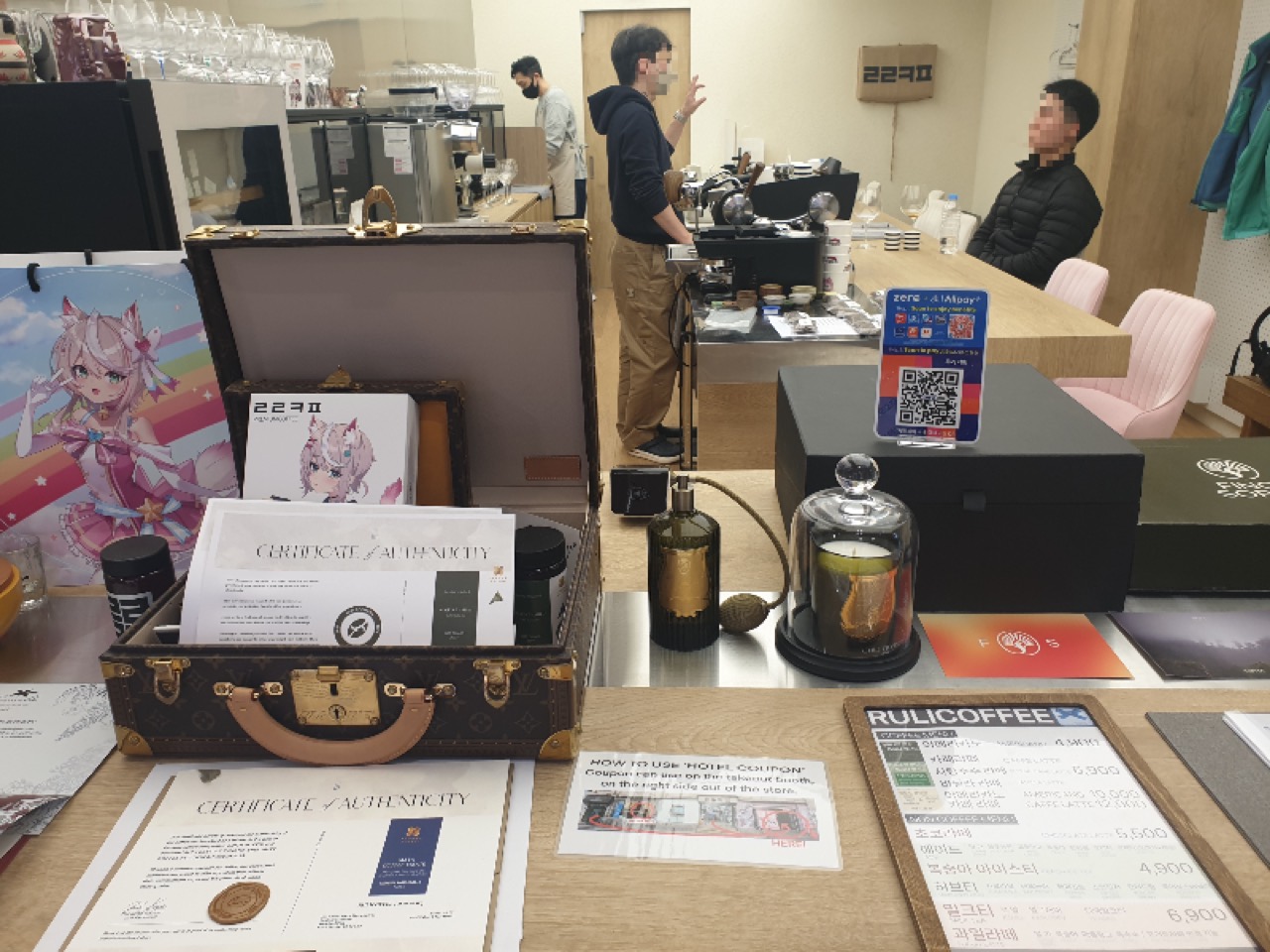
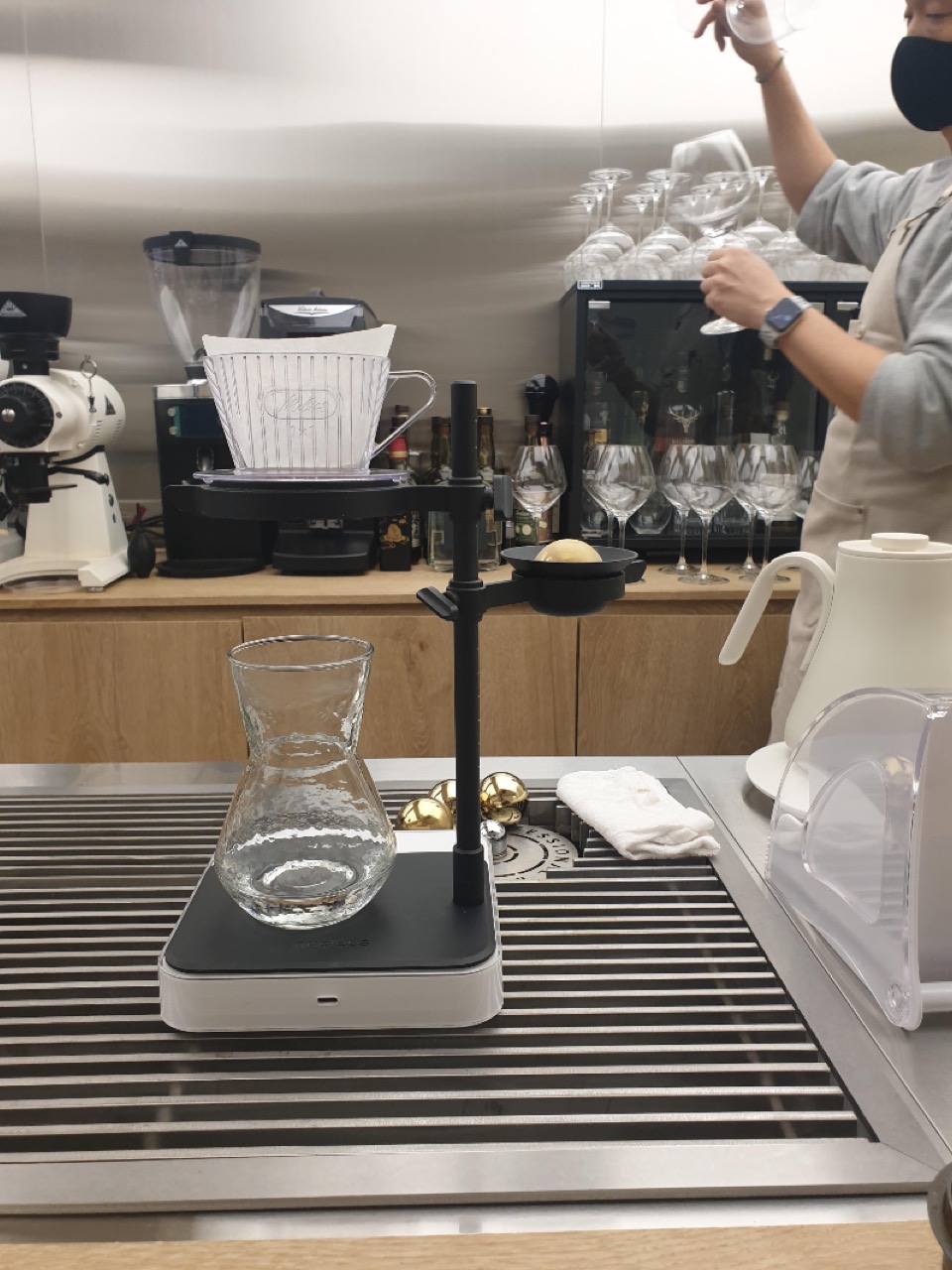
4.The space splits in two. On one side, past the glass door, a goods zone lined with gacha machines and a takeaway window. On the other, a drip counter wrapped in an oak top. Eight seats at that counter. Burgundy glasses hang in a row from the wall shelf, and a refrigerated case below holds a few bottles of whisky. Behind the bar sit two grinders, a stainless drain tray and a black drip stand.
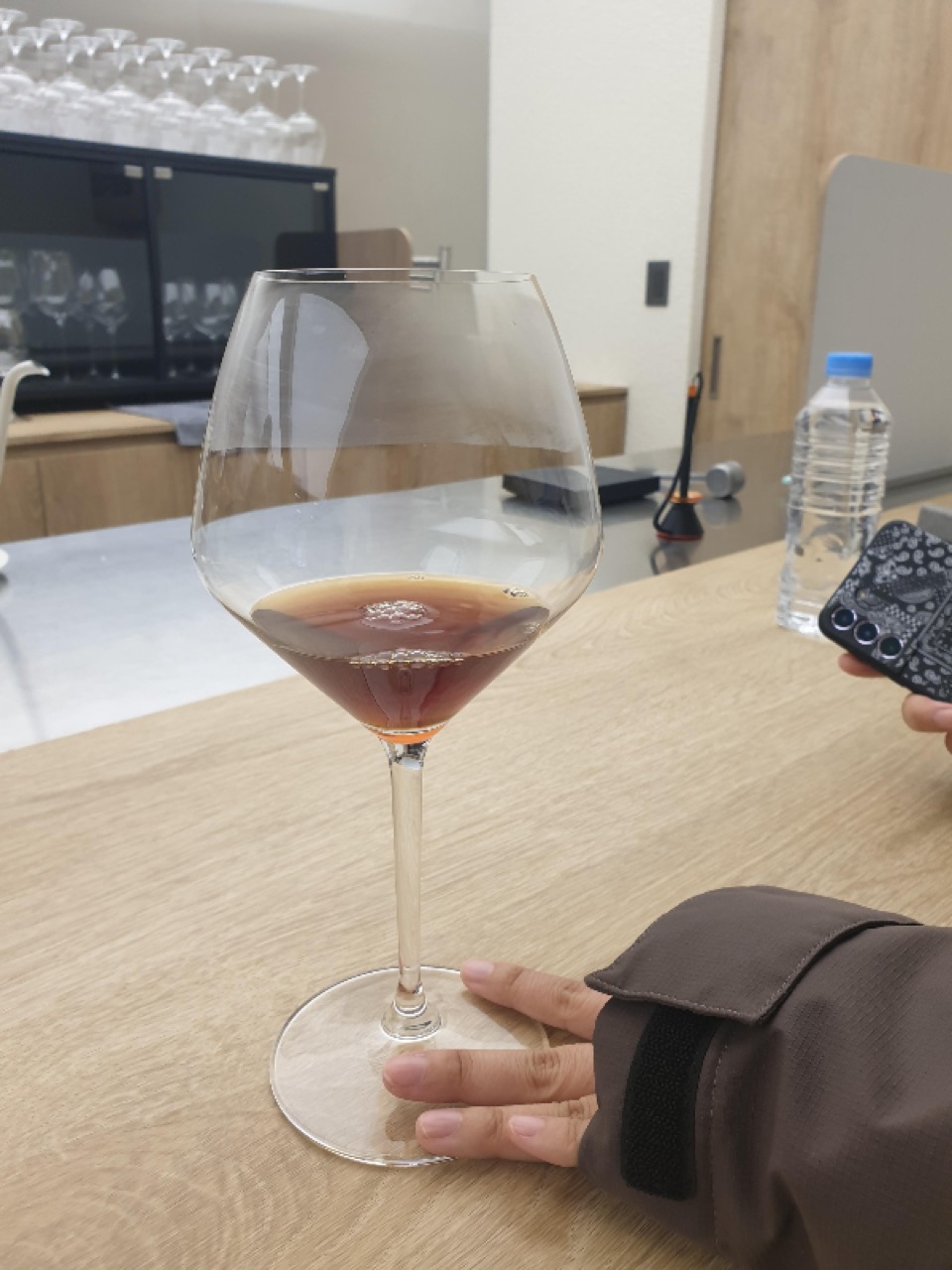
5.Brewing starts with 8 grams of coffee in a ceramic Melitta dripper. Water goes in over four pours, and a brass chilling ball rests in the first one. It drops the temperature before the aromatics escape. What comes out arrives not in a cup but in a burgundy wine glass, and 8 grams yields little enough that it only films the bottom of the bowl. Swirl it and the aroma gathers upward across that narrow surface.
6.Washed geisha usually carries notes toward jasmine and bergamot. Naturals run toward ripe tropical fruit and fermented sweetness. Eight grams thins the body without erasing the outline of the aroma. No one can report the taste of a specific cup without having drunk it. But the pour volume alone explains why this place dropped the handled cup and chose a wine glass.
7.The coffee list is a single grey fabric binder. Open it and the pages divide by farm. One page for Hacienda La Esmeralda, one for Finca Nuguo in Renacimiento in western Panama, another splitting the geisha list into washed and natural. The last page belongs entirely to auction lots, twenty of them. Every line is priced per 8 grams, running from 10,000 to 90,000 won.
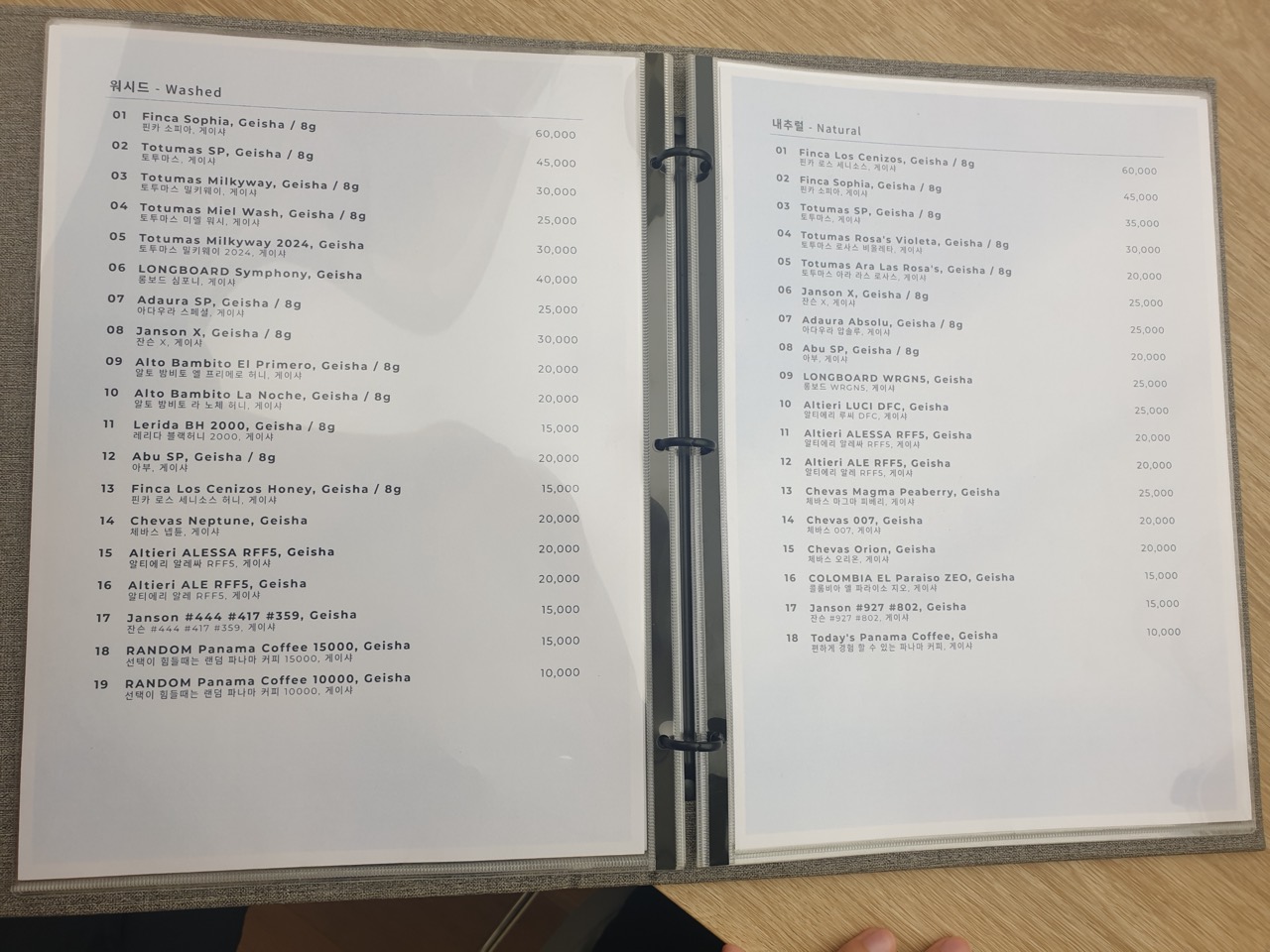
8.The bottom two lines of the binder read Random Panama Coffee 15,000 and Today's Panama Coffee 10,000. They pick for the customer who cannot decide. The same logic as the gacha machines standing in the goods zone, moved onto a coffee list. On the counter a travel case lies open, holding the authenticity certificates for the auction lots.
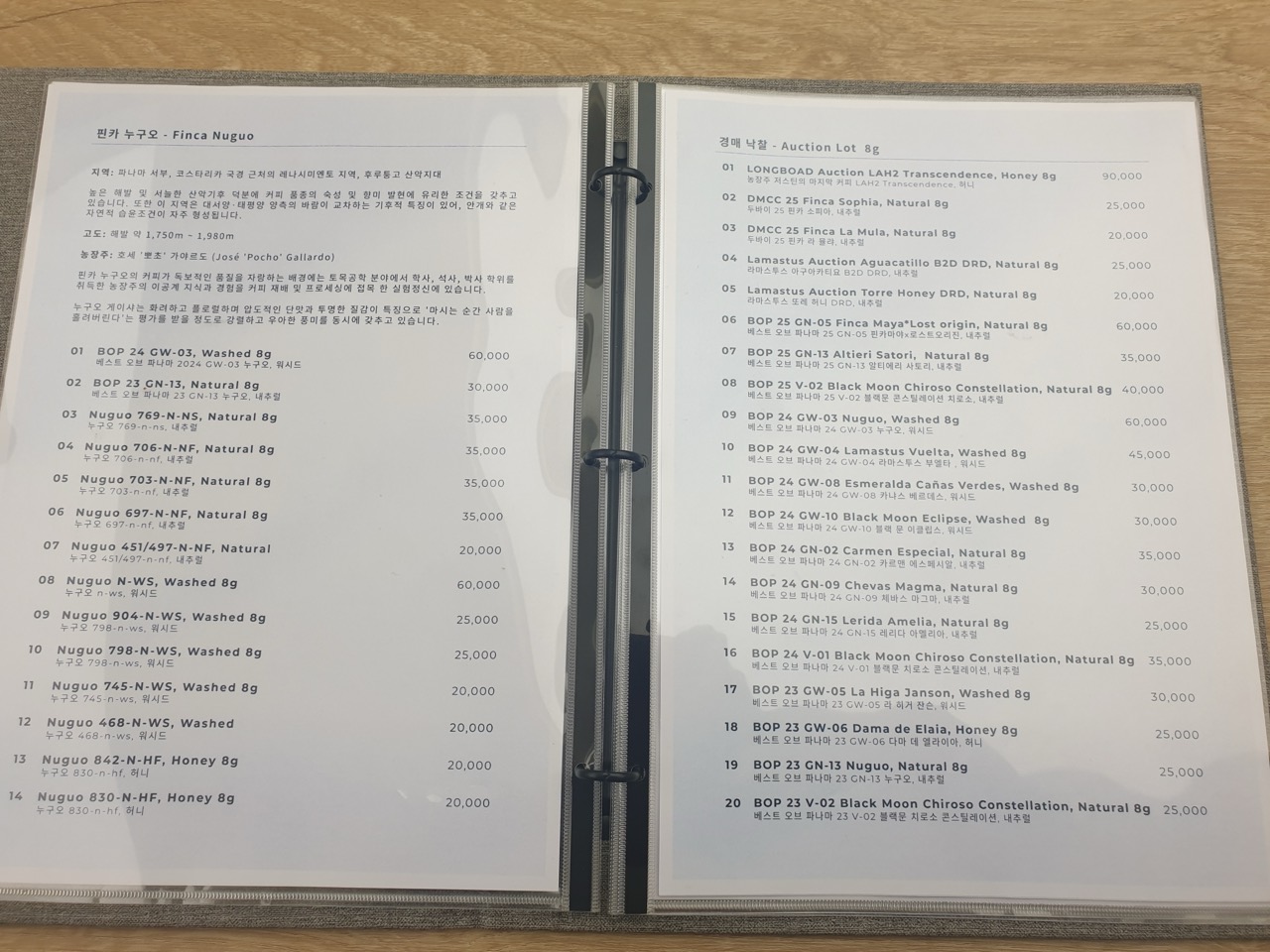
9.An americano is 4,900 won, a latte 6,900, a chocolate latte 5,500. The most expensive line in the binder next to it is 90,000. Inside one shop, the price of a single drink spreads eighteenfold. Special lots at 15,000, nano lots at 40,000, auction lots above that. The steps sit close enough together that a customer can stop wherever their budget stops.
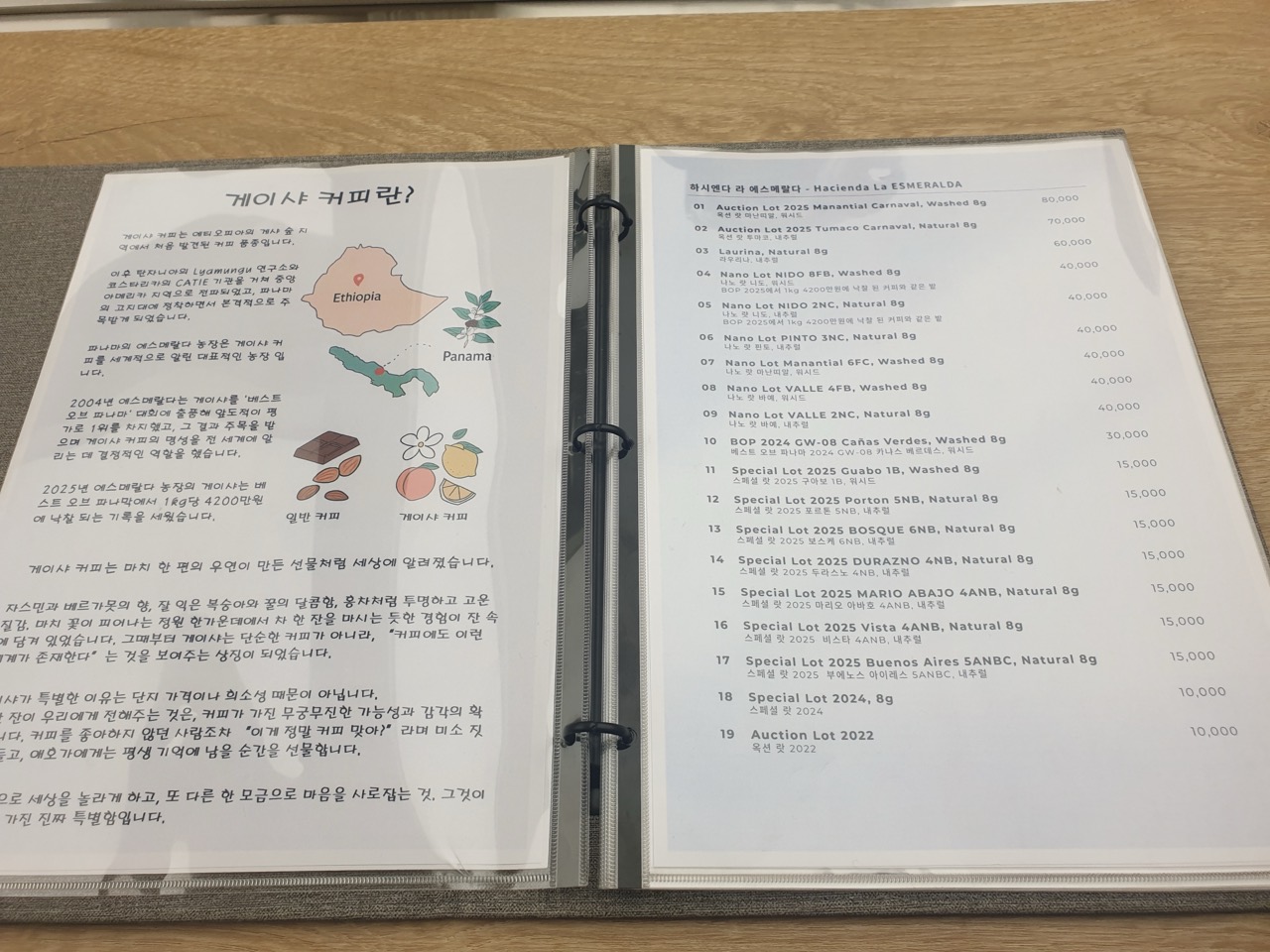
10.The price can be sliced this finely because a cup uses only 8 grams. Korean hand drip normally runs 15 to 20 grams, and halving that doubles the cups from the same green coffee. Last year's top lot at the Best of Panama auction sold for 30,204 dollars per kilogram. Even cut to 8 grams the beans alone come to more than 320,000 won, so the 90,000 won line cannot be that grade.
11.That does not mean the expensive lines carry the revenue. With eight seats and roughly fifteen minutes to brew a cup and talk it through, the day's drip output stops around thirty cups. Meanwhile the takeaway window sells two or three times that count at 4,900 won. Two lines eighteenfold apart end the day at roughly the same revenue.
12.The expensive lines do something else. That list is what put this place on the world hundred best coffee shops. In the 2026 ranking announced last February at Coffee Fest Madrid it came in at 51, and only two Korean shops made the list, Momos Coffee in Busan and this one. The ranking is decided by votes, and votes are cast by people. For a man holding a community with 63 million visits a month, votes are not a hard thing to find.
13.A banner stands in front of the pink takeaway window, and across it in large type is NOT A.I. The character on screen takes the order, but a live person is moving it, and the banner says so. That exchange goes out as a broadcast, and viewer chat runs on a monitor inside the shop. This is not labour cut away. It is one person's working hours collected twice, once as service and once as content.
14.Selling rare lots by the glass is nothing new in itself. Tokyo, Hong Kong and Seoul have run it for years, and this page has covered it more than once. What differs is the order. Usually the cafe comes first and the fans arrive later. Here a 26 year old community came first and the cafe was built afterward. That is where the nerve came from to skip the main strip in Myeongdong and take a hotel ground floor up a back hill.
15.A community built a cafe and reached a world ranking in one year and five months. It runs two lines eighteenfold apart under one roof, the expensive side earning the name and the cheap side earning the cash. Anyone in Korea trying to copy this hits neither the beans nor the interior first, but the question of whether anyone will cast a vote. Earning a ranking through brewing and starting out holding a list require entirely different supplies, and the second cannot be bought overnight.