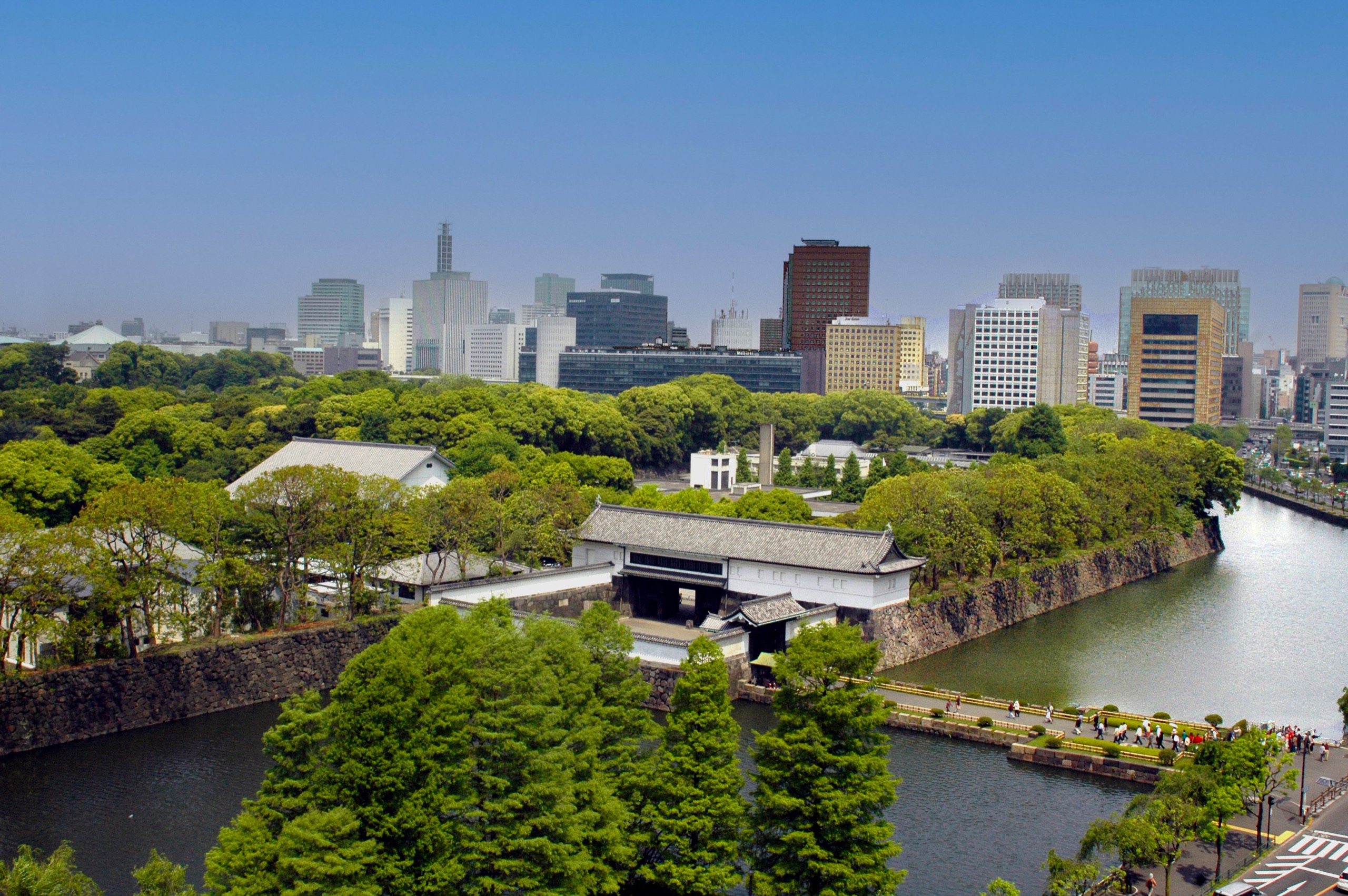
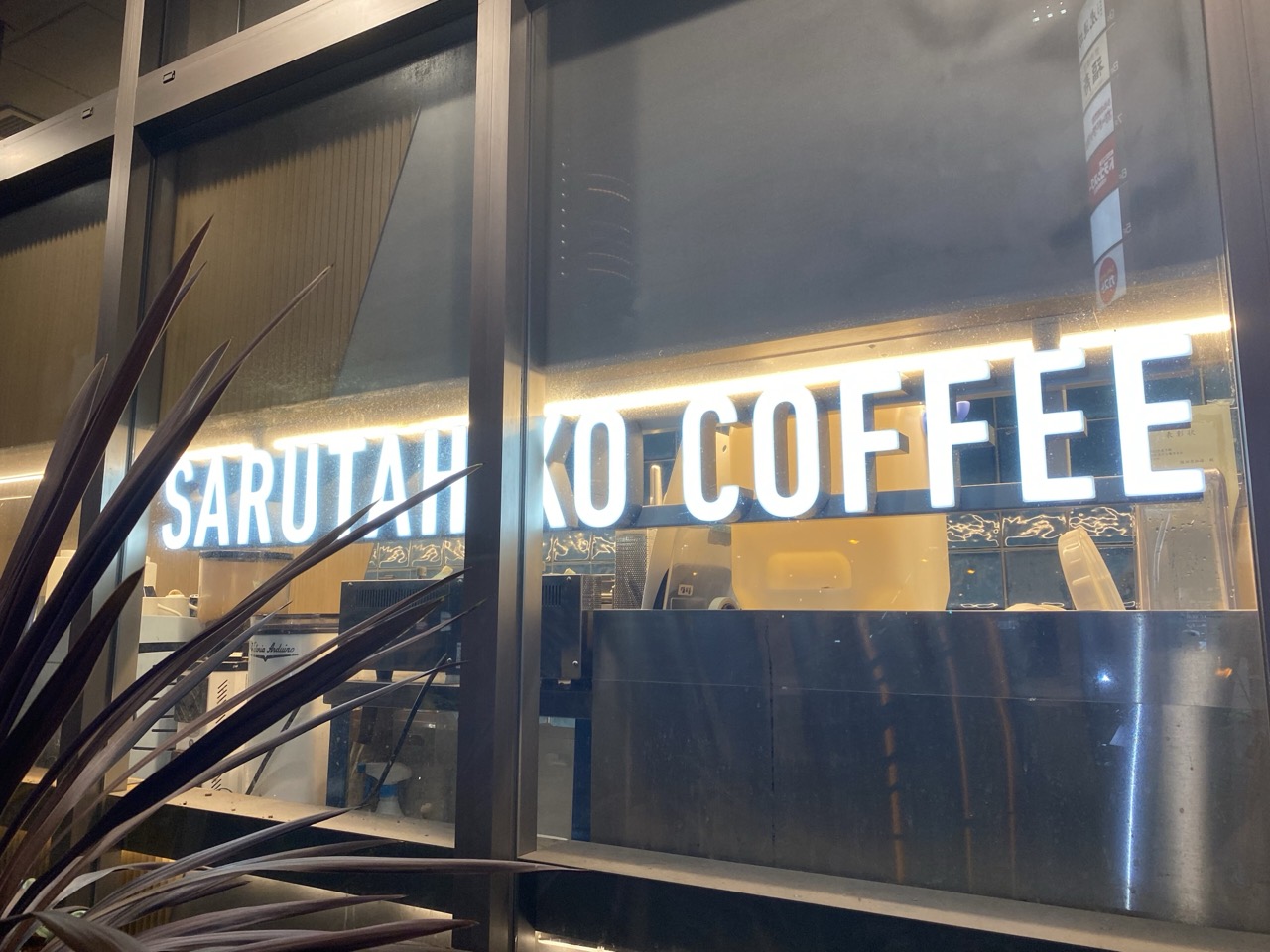
Last year 2,136,978 people walked into the East Gardens of the Imperial Palace in Tokyo. Of those, 58.3 percent were foreign visitors. A loop past the Ote-mon gate, across the lawns and around the castle ruins takes about ninety minutes, and the only place to sit and drink anything was a bench beside a vending machine. The Imperial Household Agency has now built a single-storey timber pavilion on that spot and ran an open tender to pick a cafe operator. Sarutahiko Coffee won it. Opening day is 3 November, and not one drop of alcohol may be sold.
1.The address is 1-9 Chiyoda, Chiyoda-ku, Tokyo, inside the Ote Rest House in the East Gardens. Its English name is the Imperial Palace Visitor Center. A few steps left after you pass through the Ote-mon gate, 2,800 square metres of single-storey timber sit under a rooftop terrace. A shop adjoins it, along with a large LED wall running Japan's four seasons and monitors covering the imperial family's activities. The cafe gets 46 seats plus ten standing places.
2.Construction cost roughly 7.5 billion yen. That is over 70 billion won. The funding source is unusual: the international tourist tax, the departure levy charged per head when you leave Japan. The stated reason for building was that rising foreign visitor numbers had left the gardens crowded with nowhere to sit. The people who paid for it and the people who will use it are largely the same. Sarutahiko Coffee secured preferred negotiating rights on 3 April and announced the opening formally on 4 September.
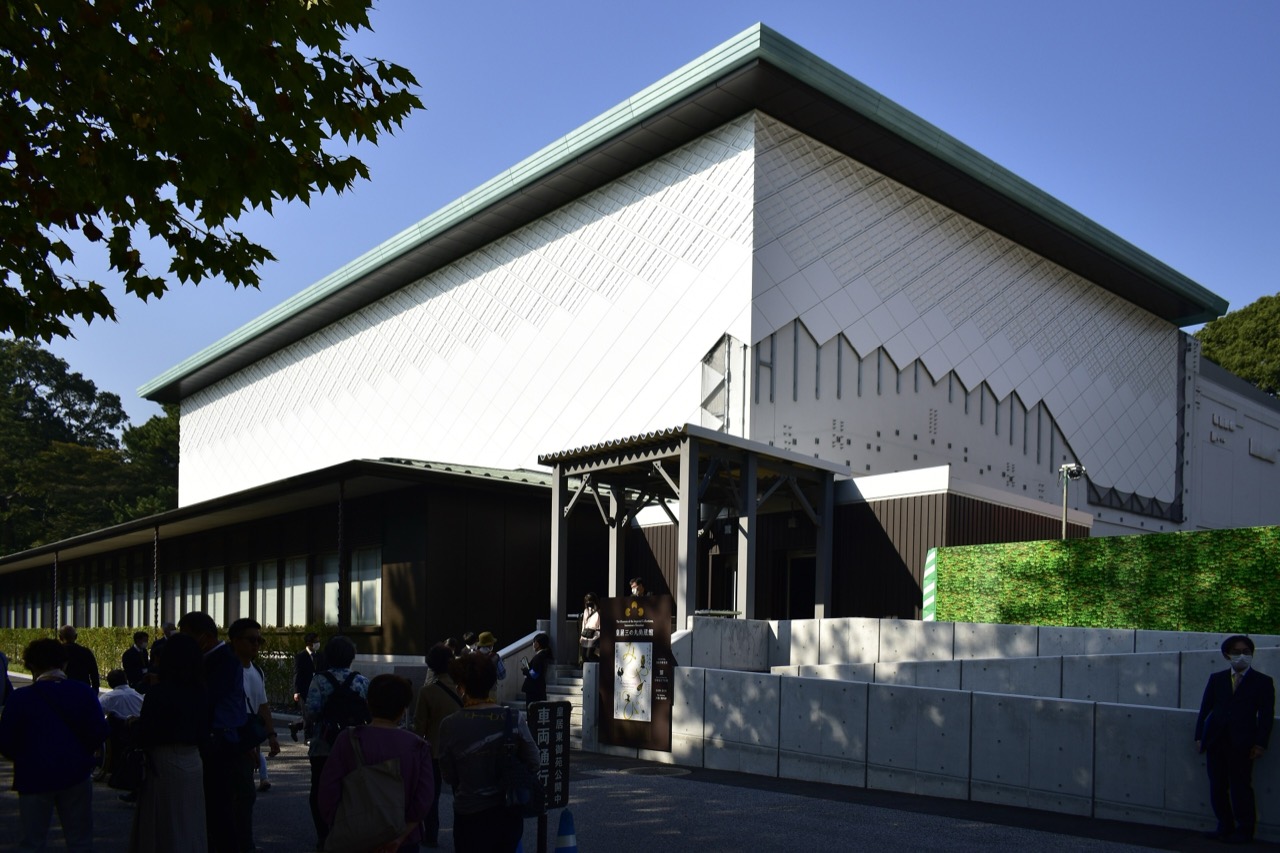
3.The building next door opens the same day. The Museum of the Imperial Collections, Sannomaru Shozokan, holds artworks handed down within the imperial family. Its first phase opened in November 2023, then closed on 7 May 2025 for construction. When it fully reopens on 3 November its exhibition floor grows from the old 160 square metres to 1,300. Admission is 1,000 yen. A spot where visitors leaving the galleries flow straight in.
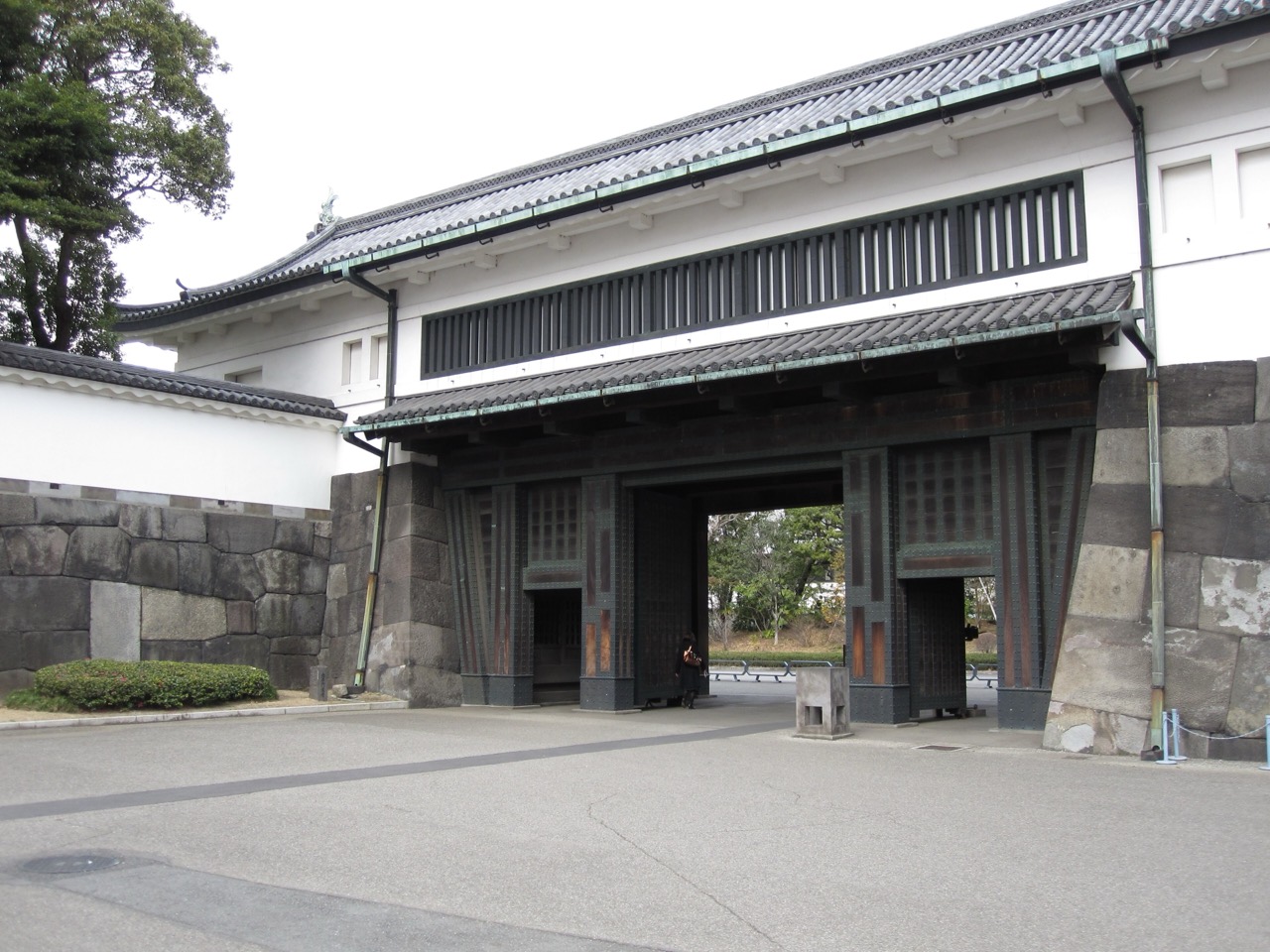
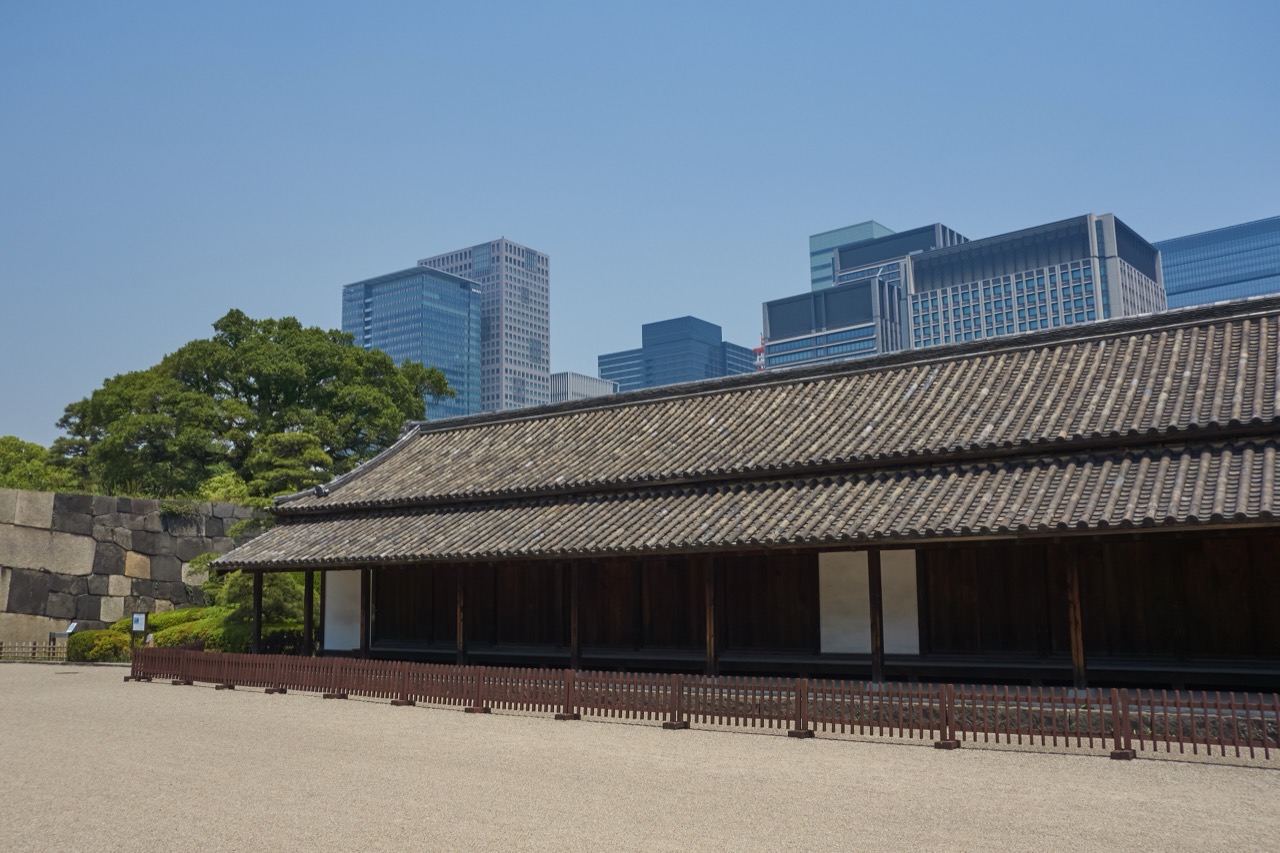
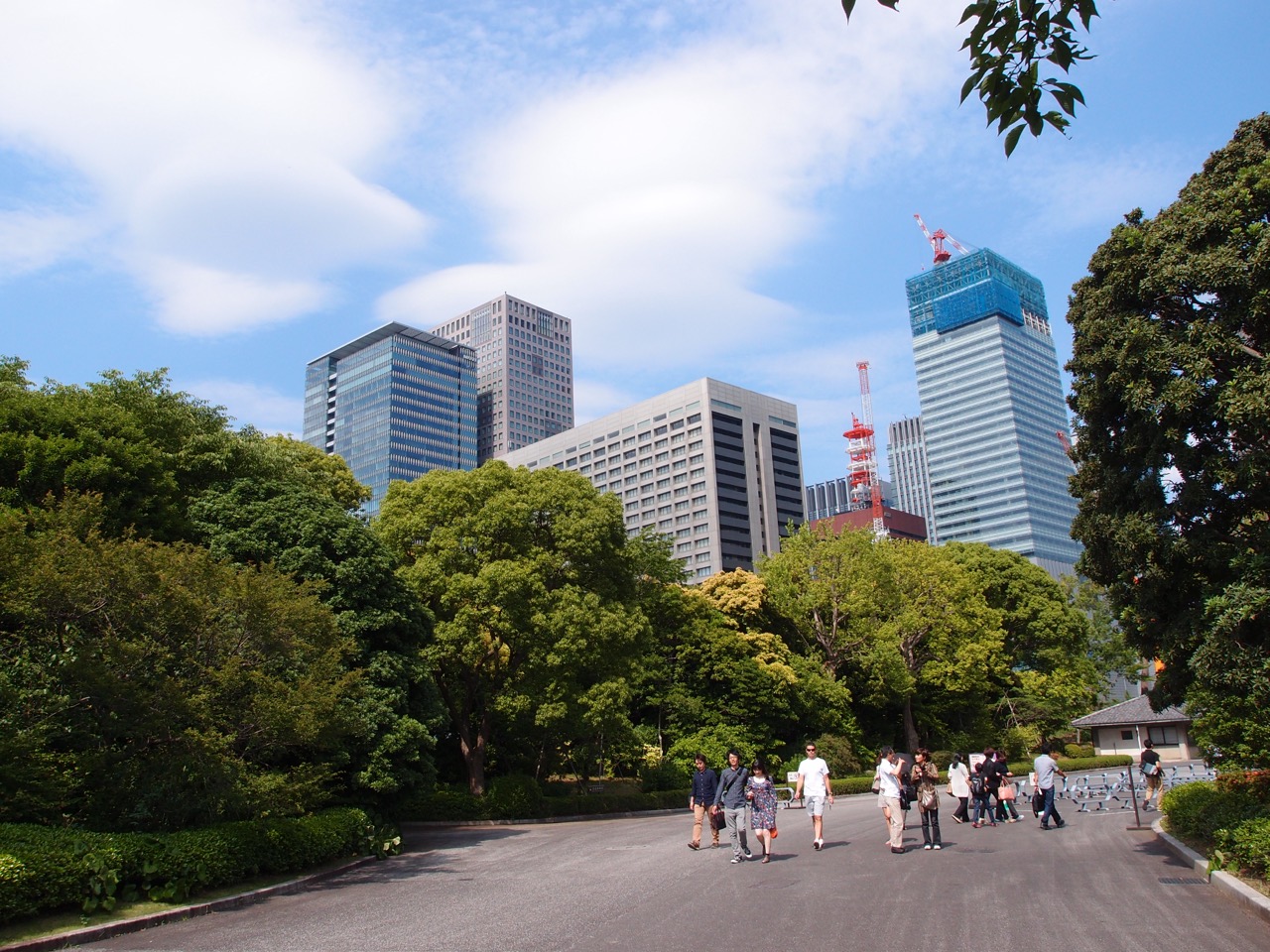
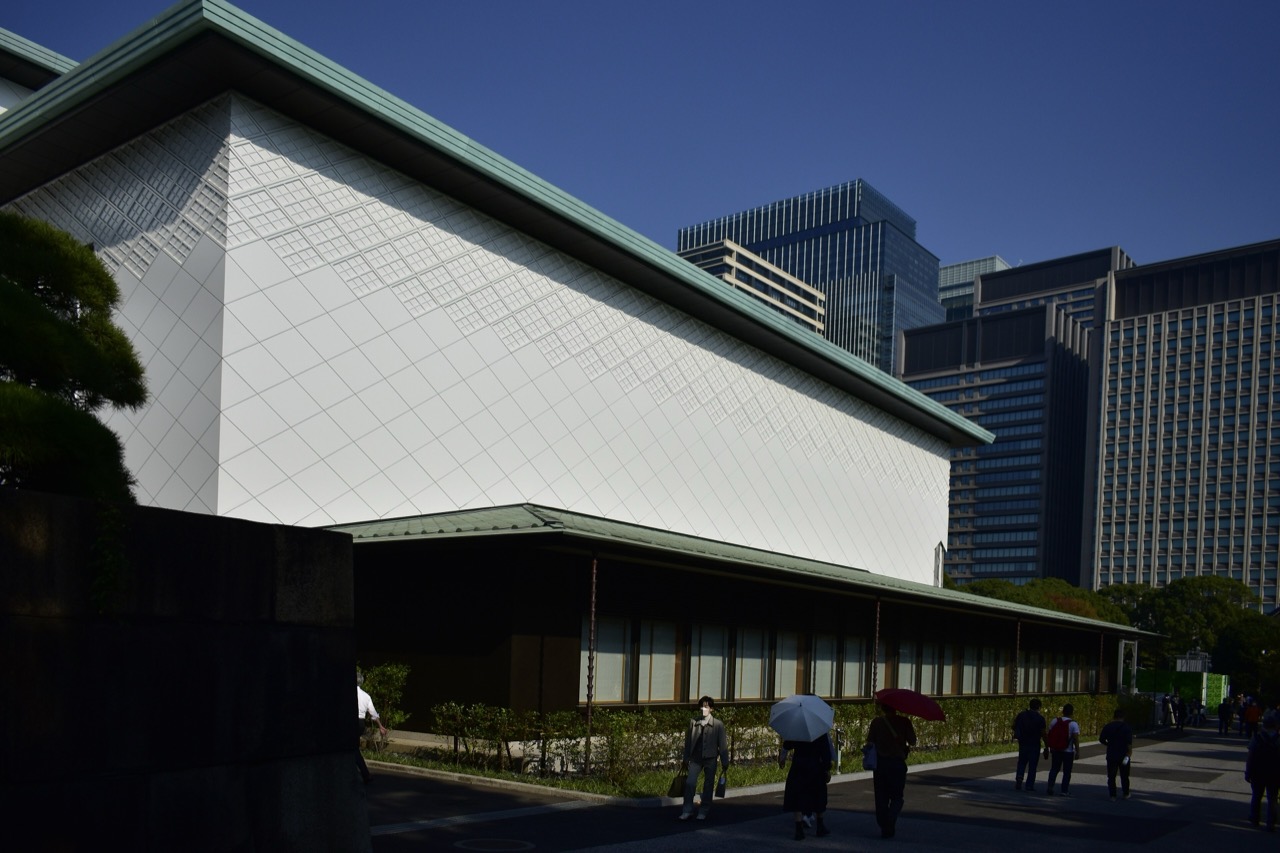
4.The East Gardens occupy the main compound of Edo Castle. What remains is the donjon base, the stone walls and the site of the Matsu no Oroka corridor. Ninomaru holds a garden built around a pond. Enter the gate and the long eaves of the Hyakunin-bansho guardhouse run away to the right, with the Marunouchi office towers stacked up behind its roof. Tiled roof and glass facade land in one frame. Photographs of this garden usually take that composition.
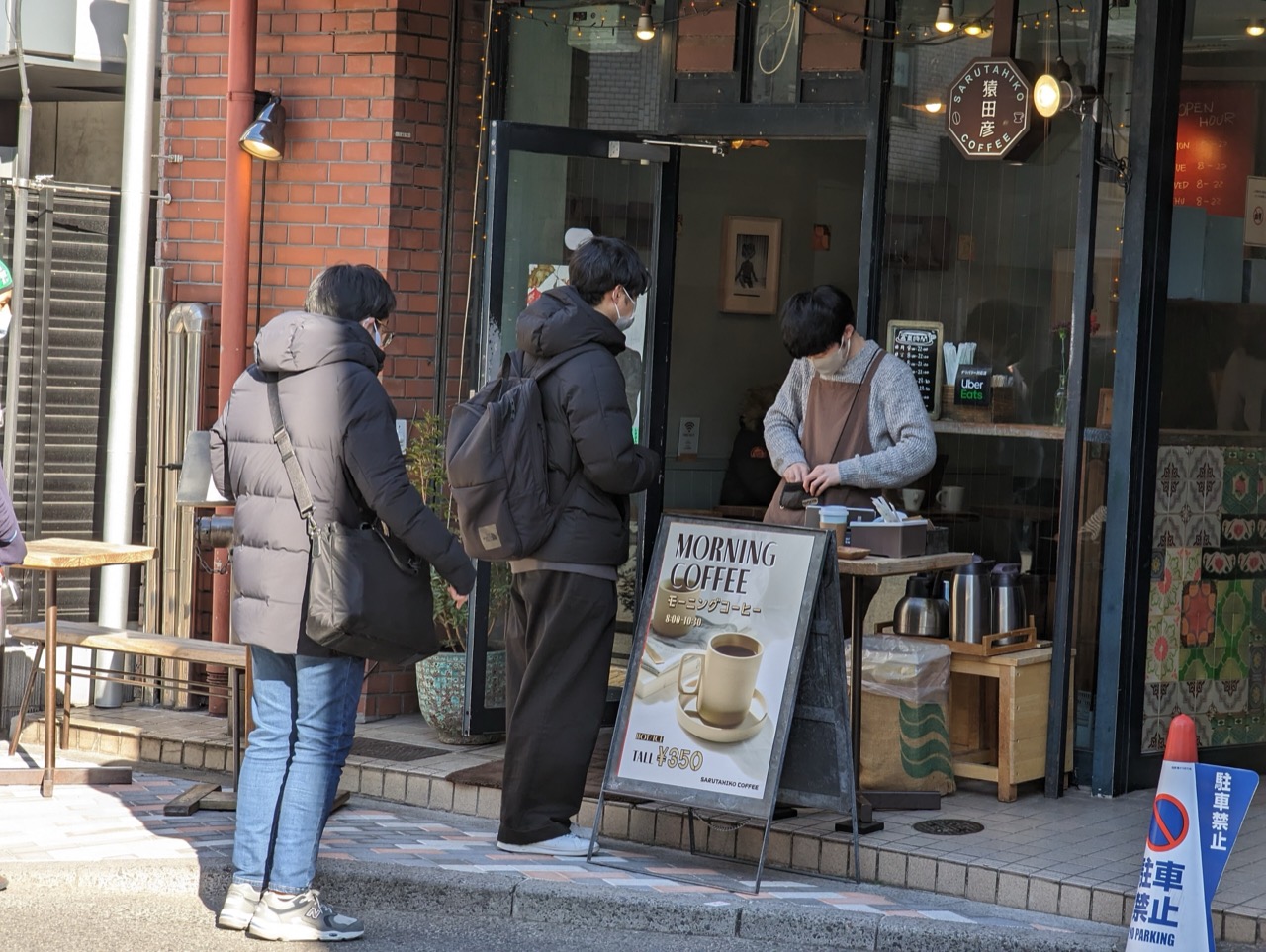
5.Sarutahiko Coffee splits its latte in two. The strong one comes in a small cup at 550 yen, the mild one in a large cup at 650. A bigger cup means more milk and a lighter taste, so the customer picks the strength under a single name. On the strong side, roast aroma arrives first and milk comes in behind it. On the mild side the order flips, milk sweetness leads and the coffee lingers at the back. Drip is 680 yen, and oat milk takes it to 780.
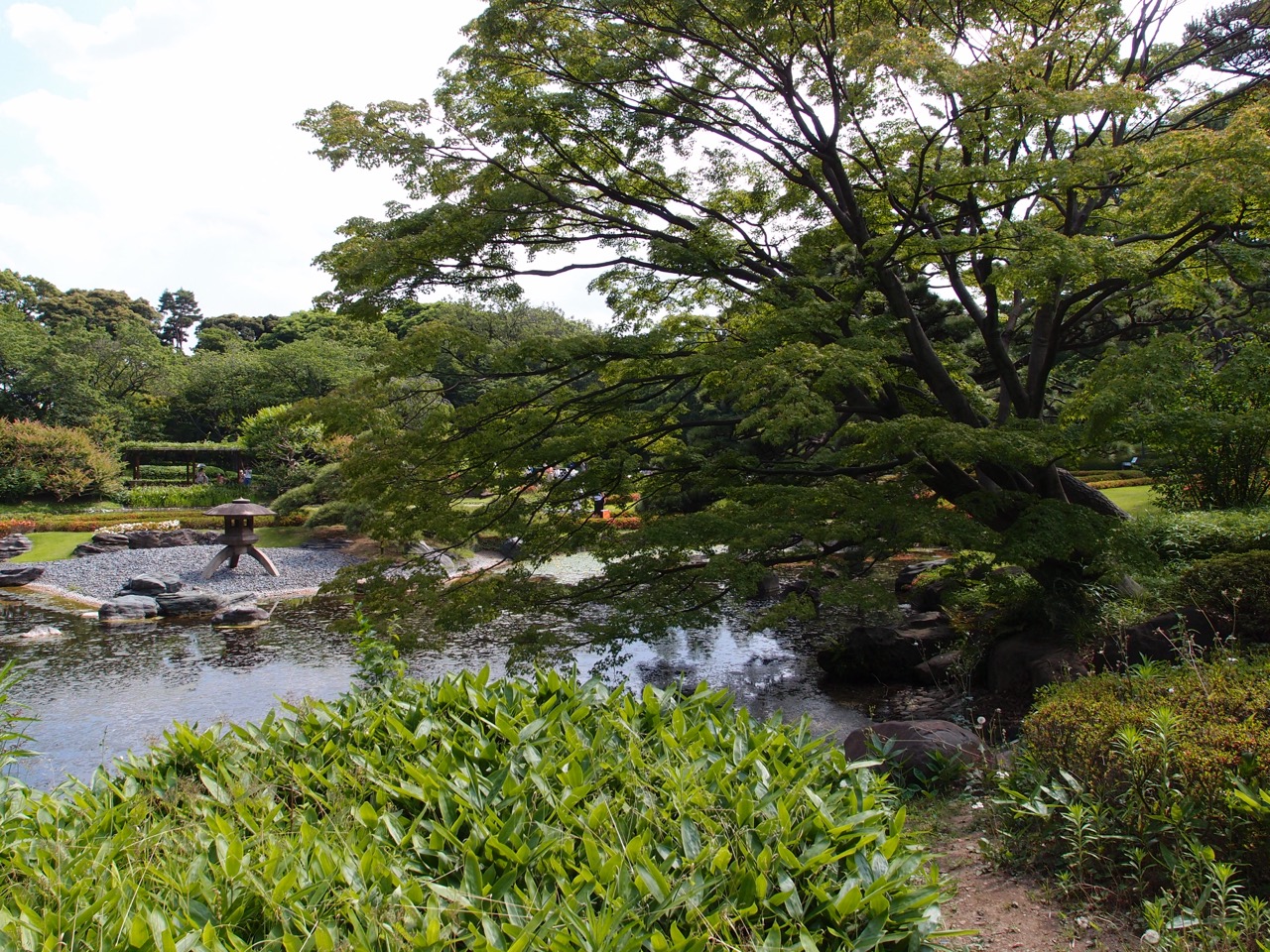
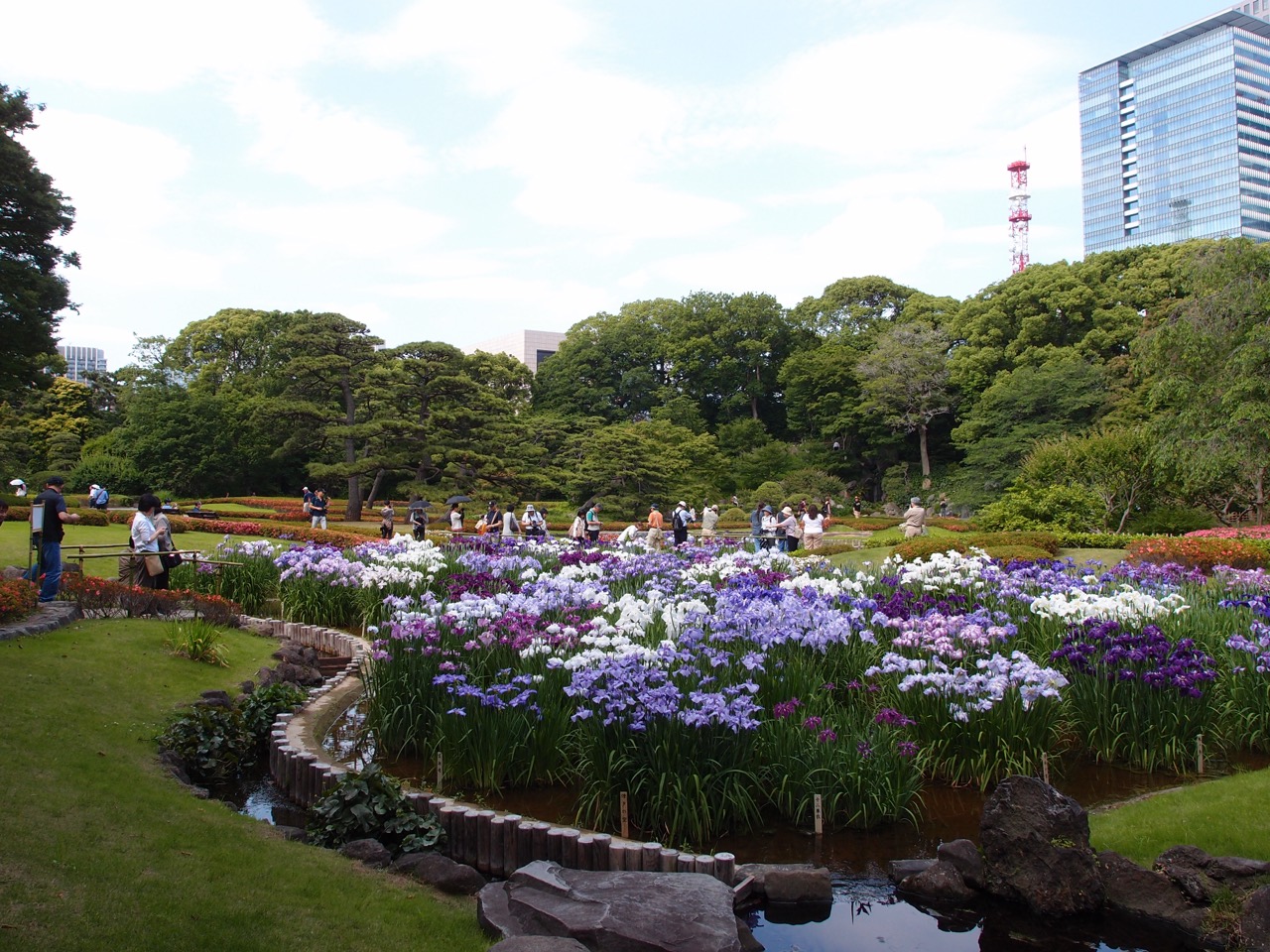
6.The gardens open at nine. At that hour they are quiet, and in summer a grassy, faintly brackish smell rises off the Ninomaru pond. Nothing has ever layered coffee over it. What the Imperial Household Agency wants here is not only cafe revenue. Give people somewhere to sit and they stop finishing one loop and leaving, and longer stays pull the shop's takings up with them.
7.Where else do you find a site that needs no work to bring customers in. Half of running a cafe is getting people as far as the door, and here they have already bought a ticket and walked inside. Zero advertising spend, zero catchment analysis. In exchange, the cafe controls nothing about when those people arrive or leave.
8.The name fits the site too. Sarutahiko comes from Sarutahiko Okami of Japanese myth, described as the god who opens the way. A shrine bearing that name stands in Mie prefecture. Founder Tomoyuki Otsuka (大塚朝之) left acting, took a job behind the counter of a coffee bean shop, and in June 2011 opened a shop of about 29 square metres in Ebisu. That name now goes inside the palace grounds.
9.Divide last year's 2,136,978 visitors by the 260 open days and an average of 8,219 people passed through the gardens each day. Apply the trade's rule of thumb that a cafe inside a tourist site captures 10 to 15 percent of visitors and you get 820 to 1,230 a day. Take the middle at 1,000, put a drink plus one item at 900 yen, and the day comes to 900,000 yen (estimates from here on).
10.The problem is selling hours. Cafe trading is tied to the gardens' opening times: 9am to 5pm from March to mid-April, to 6pm from mid-April through August, 4.30pm in October, and 4pm from November through February. Seven hours a day in winter. There is no evening trade and no alcohol, so the calculation starts with the two highest-spend lines already missing.
11.Closed days come in two layers as well. The gardens shut on Mondays and Fridays and lock up from 28 December to 3 January. The cafe does slightly better. On days the Shozokan is open, museum visitors may use the rest house, which cuts the regular closing day down to Monday alone. Multiply 900,000 yen by 260 days and you get 230 million yen a year, about 2.2 billion won.
12.Set that number inside the company and the scale shows. Sarutahiko Coffee was reported to have passed 2 billion yen in annual sales when it had 17 stores, which works out at roughly 120 million yen each. It now has 33. On the estimate above, this single store alone lands close to double the company average. That is 4.1 million yen per seat per year.
13.The building's numbers are a different animal. Divide 7.5 billion yen by 2,800 square metres and you get 2.68 million yen per square metre. That is several times the usual build cost for a single-storey timber commercial building. It stays high even allowing for the exhibition fit-out and the shop sitting under the same roof. The cafe did not pay this money. It enters as operator of a building the state put up, and the usage terms have not been published.
14.Handing the food and drink space of a cultural institution to a private operator is nothing new. The cafes at the Louvre in Paris, and those at the Tokyo National Museum and the National Museum of Western Art, all run that way. In Japan, Starbucks set the precedent by moving into a machiya on Kyoto's Ninenzaka and into Ueno Park. Those sites were museums or parks. Inside a palace wall is a first.
15.This company has never won abroad, and that belongs in the picture. It opened in Taipei in September 2018, closed every Taiwanese store by 2022, took capital from Mitsubishi Corporation during the pandemic and then bought the shares back to regain independence. In October 2024 one of its baristas won the Japan Barista Championship, and the following year placed fifth at the world championship. What it could not win overseas it now takes in the form of the domestic site more foreign visitors walk past than any other.
16.In a garden where 2.13 million people a year walked past with nowhere to buy a coffee, a timber building funded by 7.5 billion yen of departure tax and a 46-seat cafe open together on 3 November. A single condition, zero cost to bring customers in, is what carries seven-hour days with no evening and no alcohol. Doing the same thing in Korea stops at the first step, putting commercial space inside a palace wall. The Korea Heritage Service manages the palaces and royal tombs directly and visiting hours are short, so the site where this arithmetic works is not inside the wall but immediately outside it.