In Over-the-Rhine, a neighborhood in Cincinnati, Ohio, there is a shop selling drip coffee for $2. The median price at an American cafe is $3.75. The name is Radical Bean Cooperative. The workers own it, and right now there is exactly one worker. It opens Thursday through Monday, 8 a.m. to 2 p.m. The address is a Civil War era grocery storefront, a building that was waiting for the wrecking ball only a few years ago.
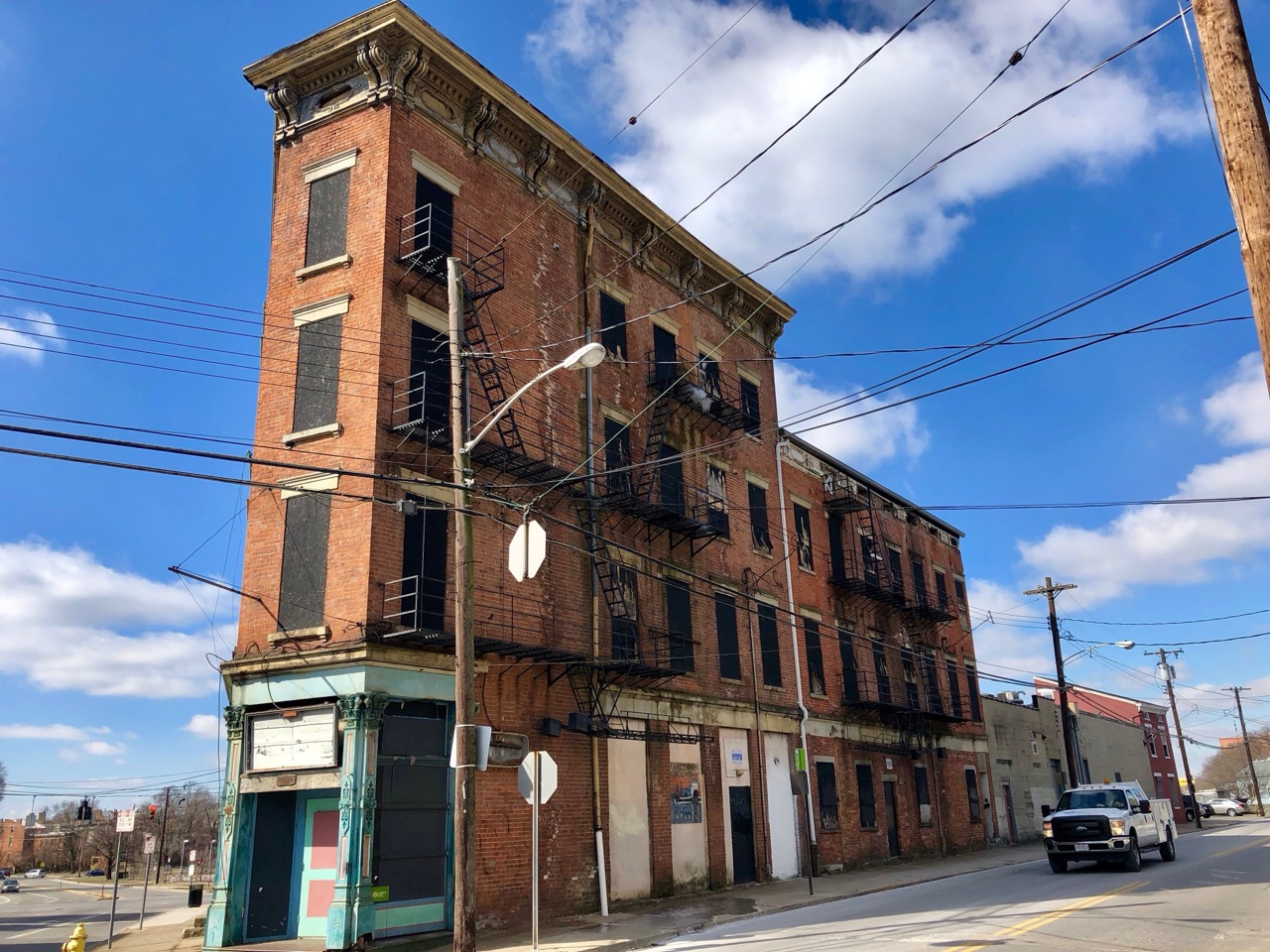
1.123 E. McMicken Ave. The building is called the Volkshaus, German for the people's house. The old grocery footprint was kept as it was, which leaves about 1,000 square feet. Room enough for one counter and a few sofas.
2.Its predecessor was Topia Coffee Cooperative, opened under shared ownership in November 2024. Rayan Saoud joined the following summer. After the people who started it stepped away, the shop closed, then reopened this past May under a new name. The beans come from Urbana, which roasts at Findlay Market. Espresso drinks and cold brew lattes run up to $5.
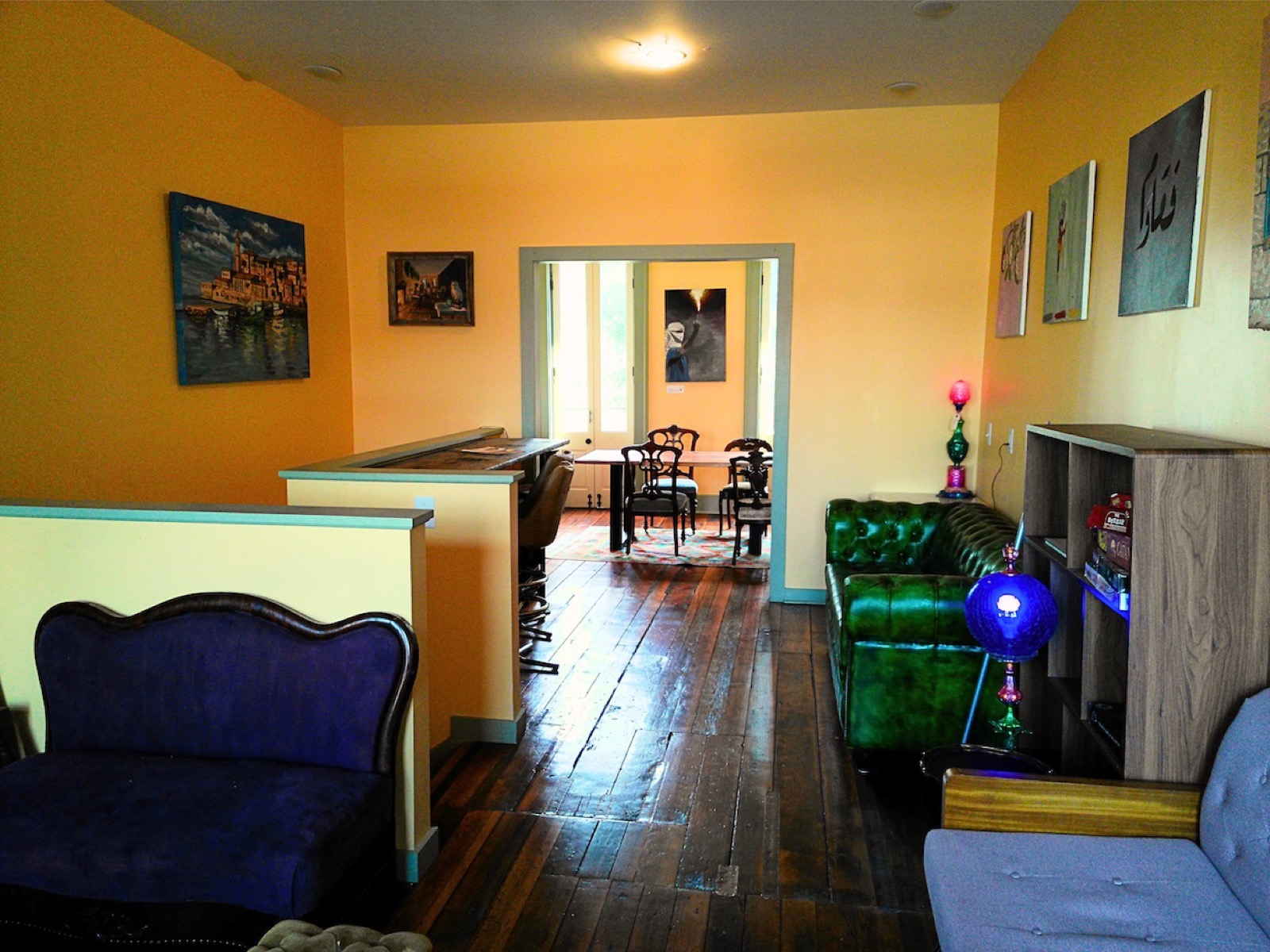
3.The walls are painted orange and the plank floor was left alone. A green leather chesterfield and a purple settee face each other across the aisle. Two harbor paintings and a piece of Arabic calligraphy hang on the wall. Because the counter is tucked behind a waist high partition, the first thing you see on walking in is not a register but a sofa.
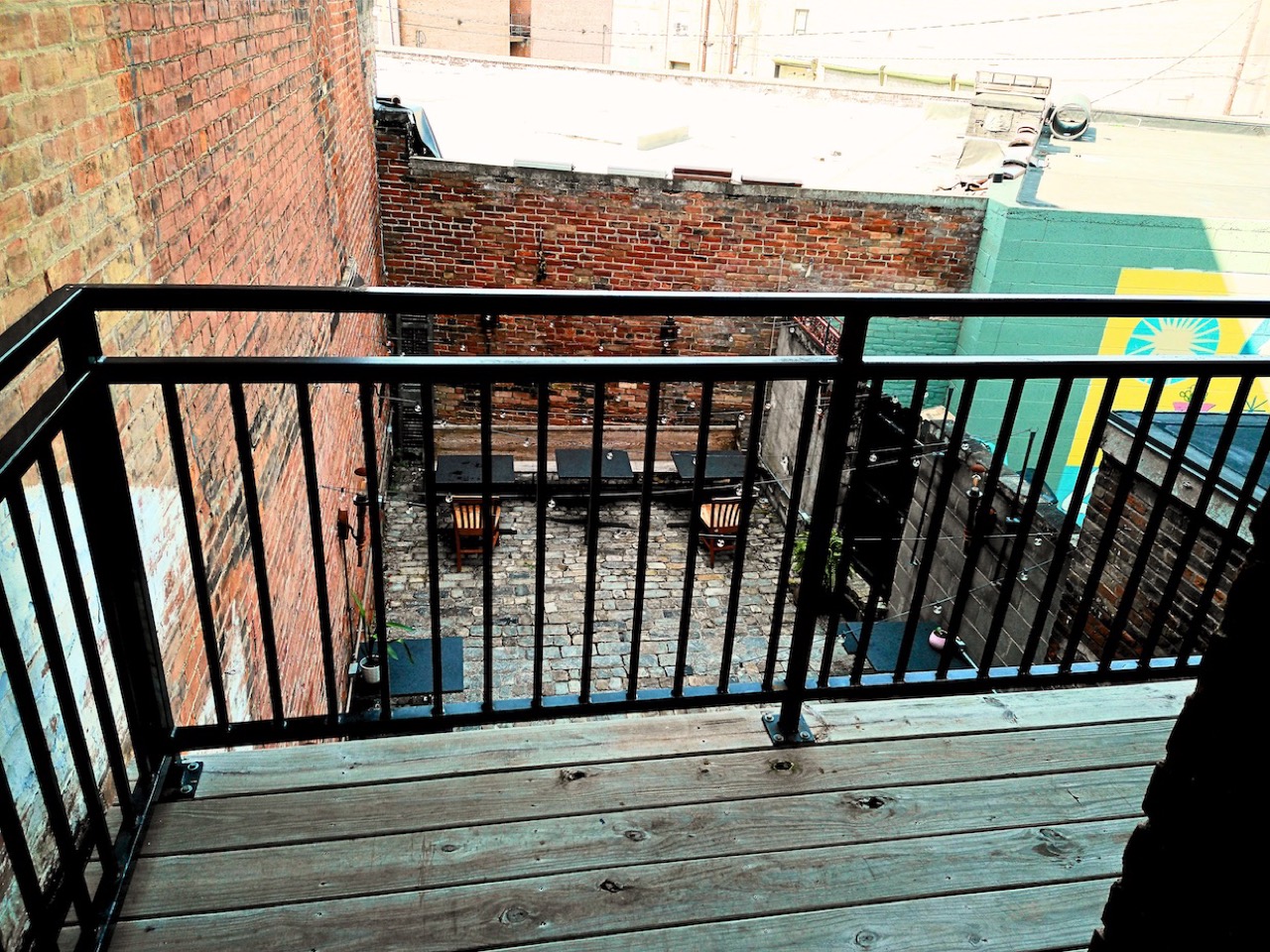
4.From the second floor railing you look down into the back courtyard. A wall stripped to bare brick, old stone paving, two folding chairs and one long table. It reads less like a job left undone than a decision not to touch it. Evenings gather in that courtyard and on the ground floor.
5.Coffee is not the whole menu. Chai is brewed from cinnamon, star anise and cardamom ground in a mortar, and horchata and agua fresca are made in house. Turkish coffee too, and French press. Tea comes from Churchill's Fine Teas, and the Lebanese pastries are baked by Dean's Mediterranean. Ginger and cinnamon arrive first, with the coffee holding up the back. What a customer remembers from that blend is not the origin of the beans.

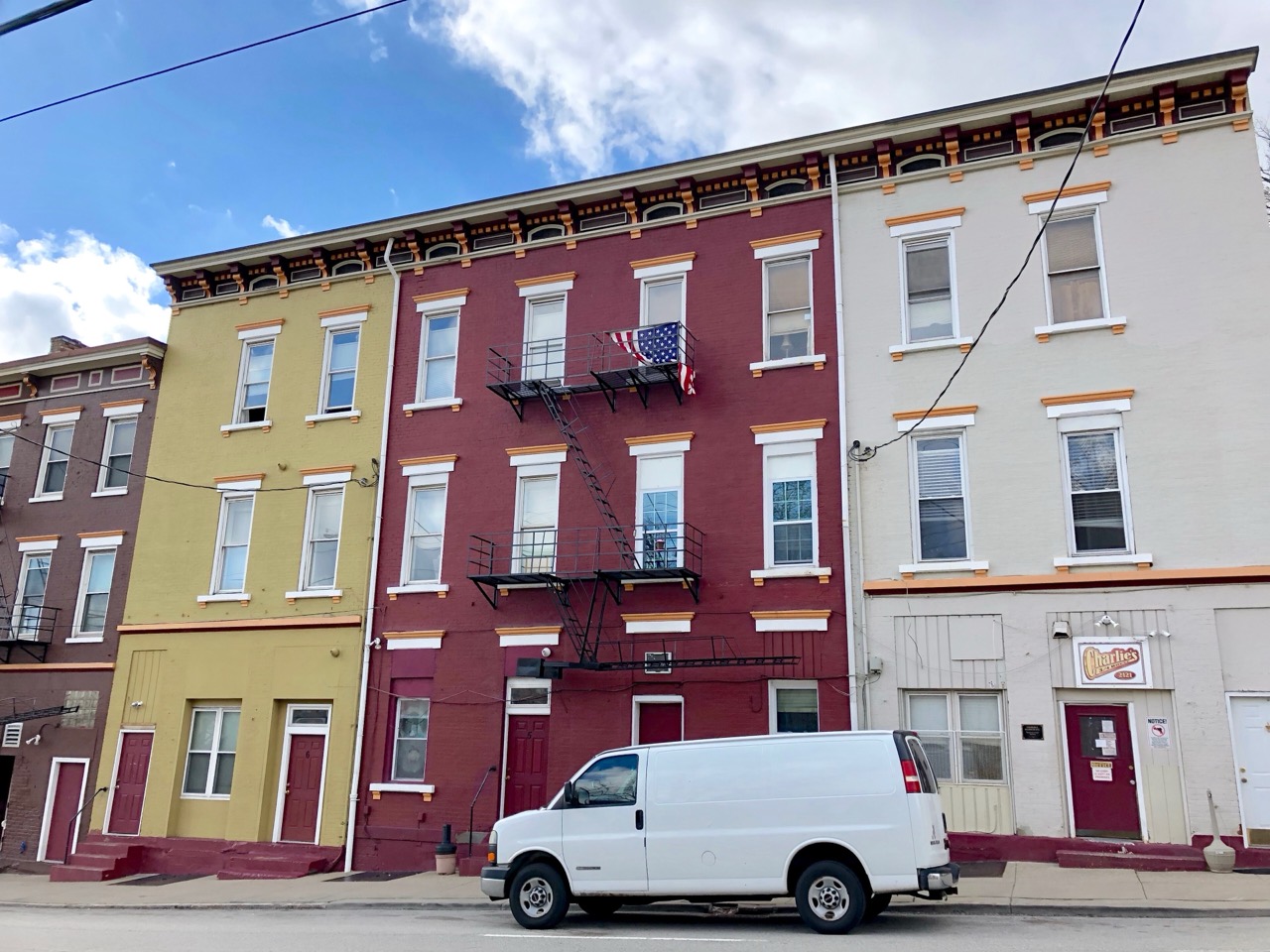
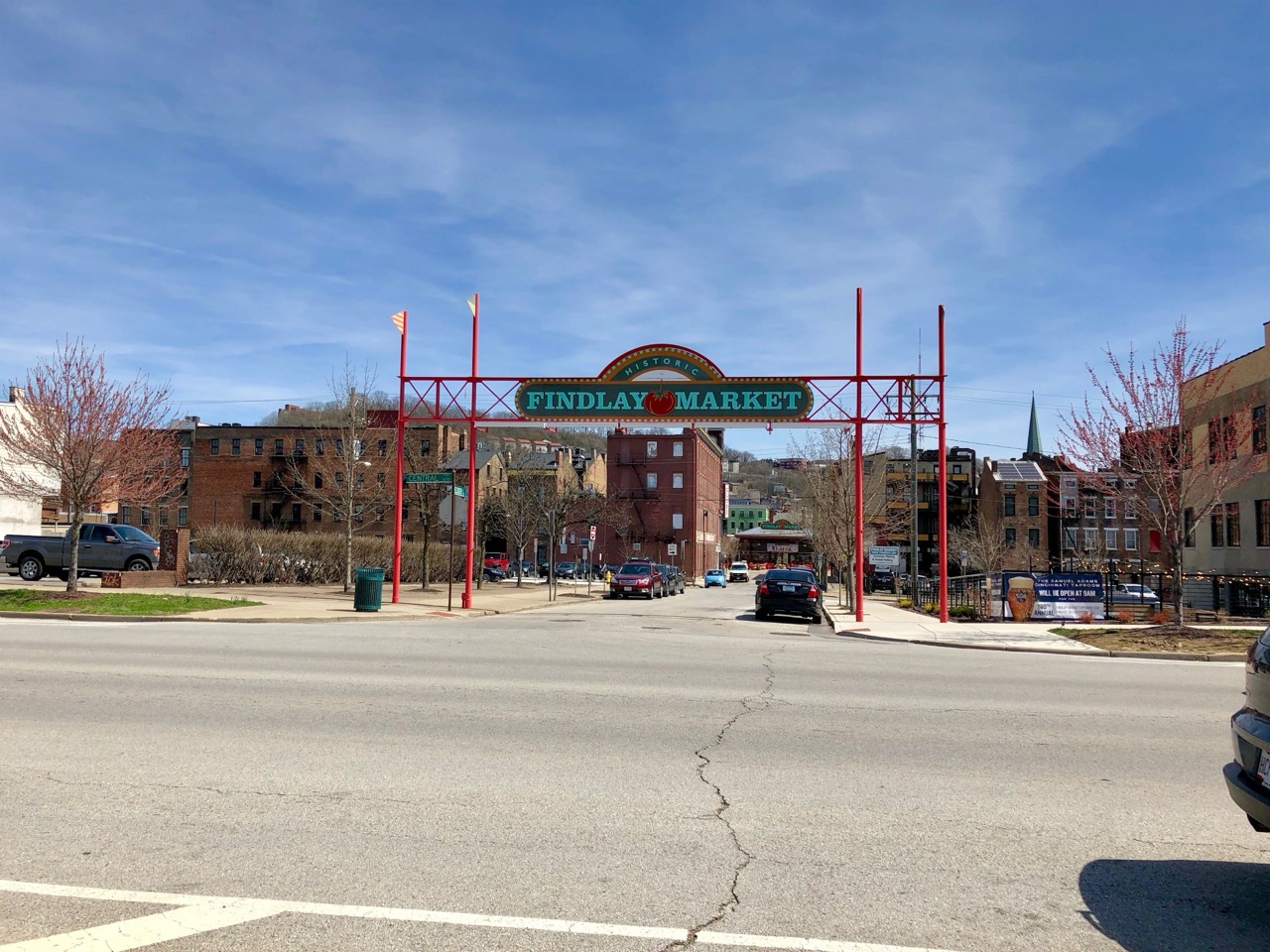
6.The price makes sense once you know the neighborhood. The redevelopment corporation 3CDC has poured $1.7 billion into the urban core, most of it into Over-the-Rhine. Brick rowhouses were restored, the park was rebuilt, restaurants moved in. Over that stretch the Black share of residents fell from 80 percent to 72 percent. New shops filled the places longtime residents left behind.
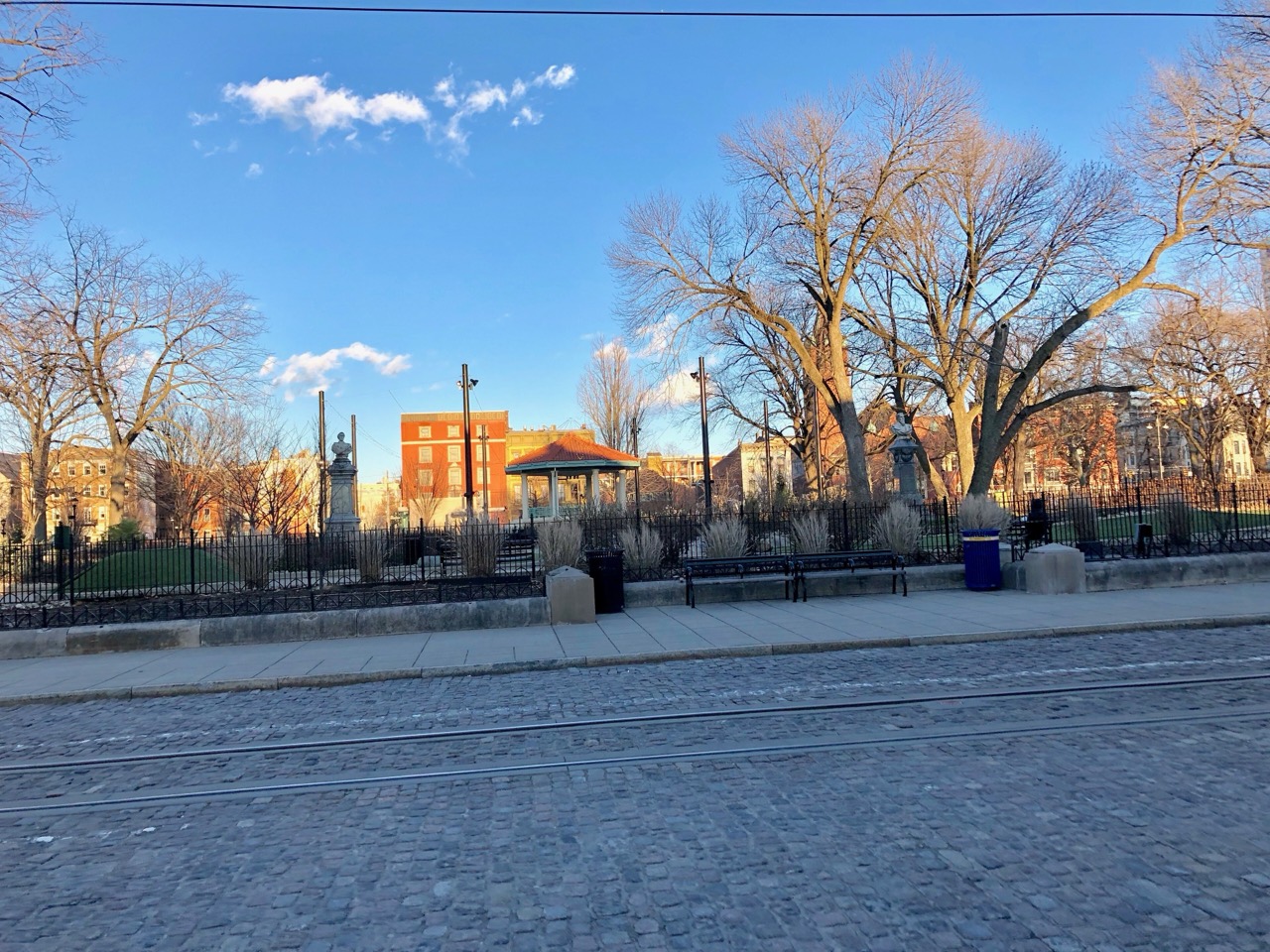
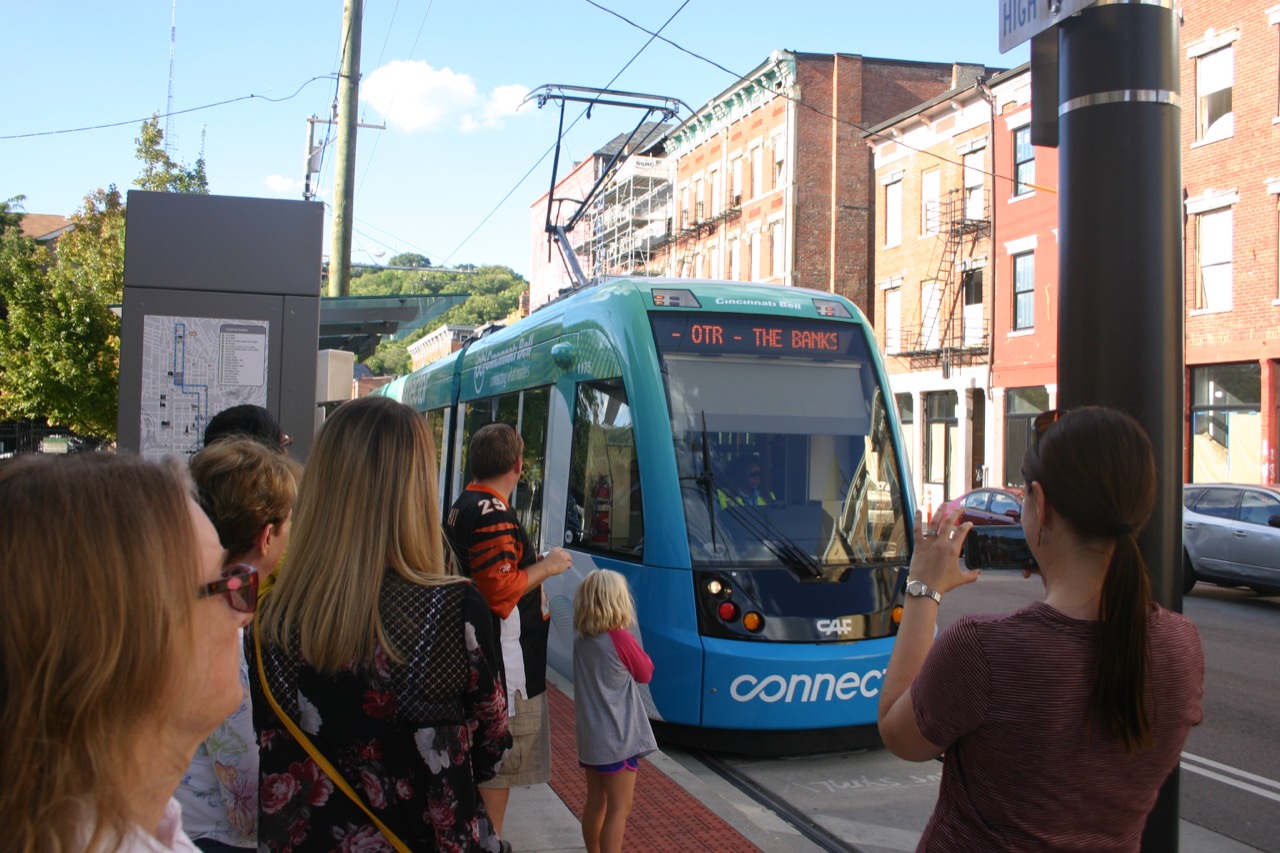
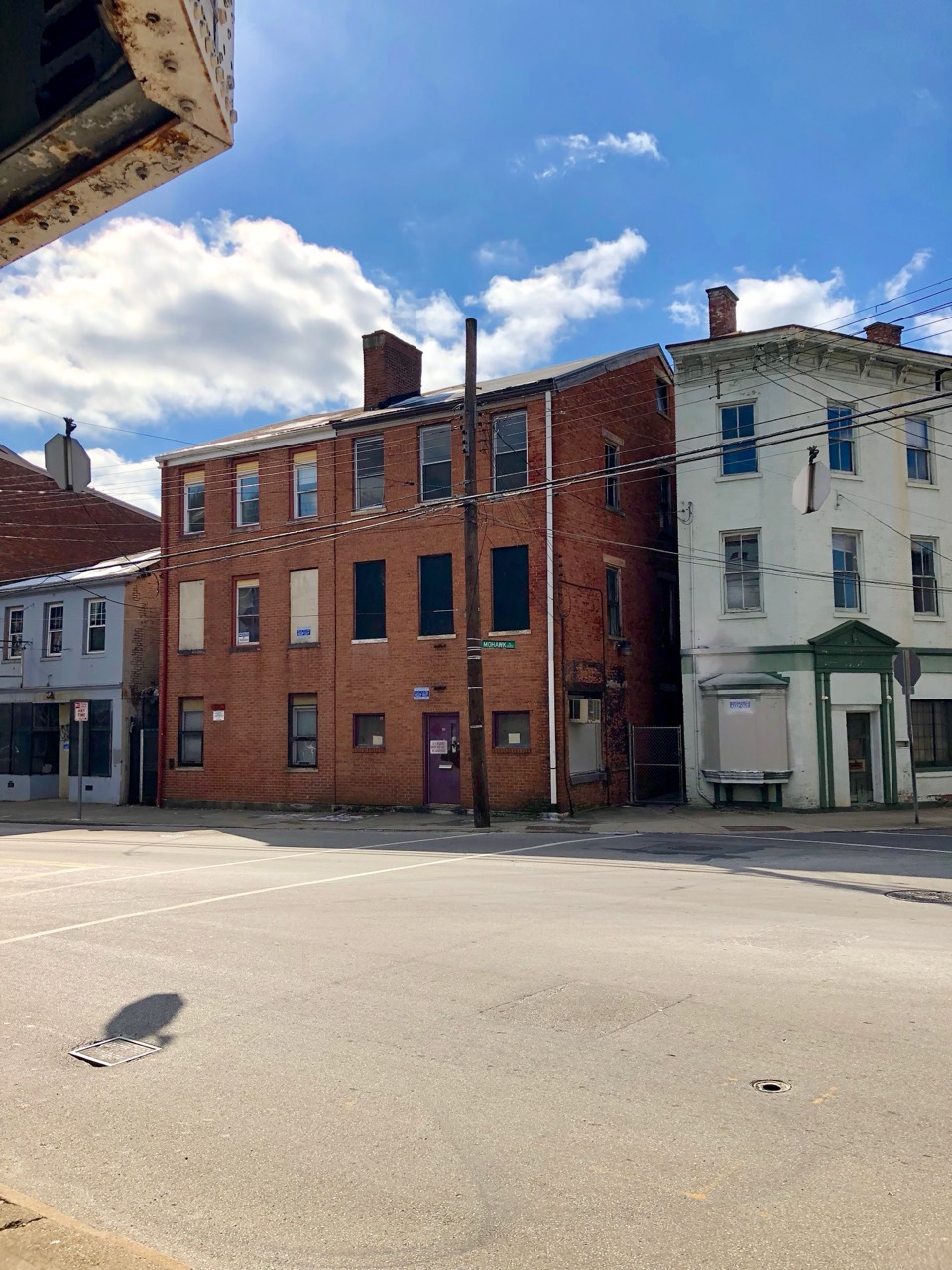
7.The rails tell you how far the money got. The Cincinnati Bell Connector runs a 3.6 mile loop whose northern end is Henry Street, just above Findlay Market. McMicken Avenue falls outside it. Three blocks past the line that public investment drew.
8.Saoud calls the place a coffee-second coffee shop and says what he is building is an organizing hub. Keeping the price low is part of that same sentence. Game nights, karaoke, and workshops on cooking and filing taxes run out of the space. He says he wants more evening gatherings that do not involve alcohol.
9.Break the $2 cup apart and the cost of goods is not the problem. Beans for a drip cup run about $0.28 and the cup and lid about $0.20, taking the midpoint of published industry ranges. The rest stays in the till. On that number alone the price is sound.
10.The trouble starts one step later. Ohio's minimum wage rose to $11 an hour in January. To cover one person for one hour on coffee alone, you have to sell 7.2 cups at $2. A shop charging the median gets there on fewer than half that many. Selling cheap is paid for in turns, not in margin.
11.With two people on the floor that becomes 14.5 cups an hour, or 87 across a six hour day. That much barely covers wages. Rent, card fees, insurance and utilities all sit on top of it. The short hours are not a lifestyle choice. They are closer to the result of this arithmetic.
12.There is one opening in the law. Ohio applies its state minimum only to businesses grossing more than $405,000 a year; below that the federal floor governs. A 1,000 square foot shop open 30 hours a week is not going to cross that line. So the legal floor sits on the low side, and the moment the co-op decides to pay above it, the number of cups climbs again.
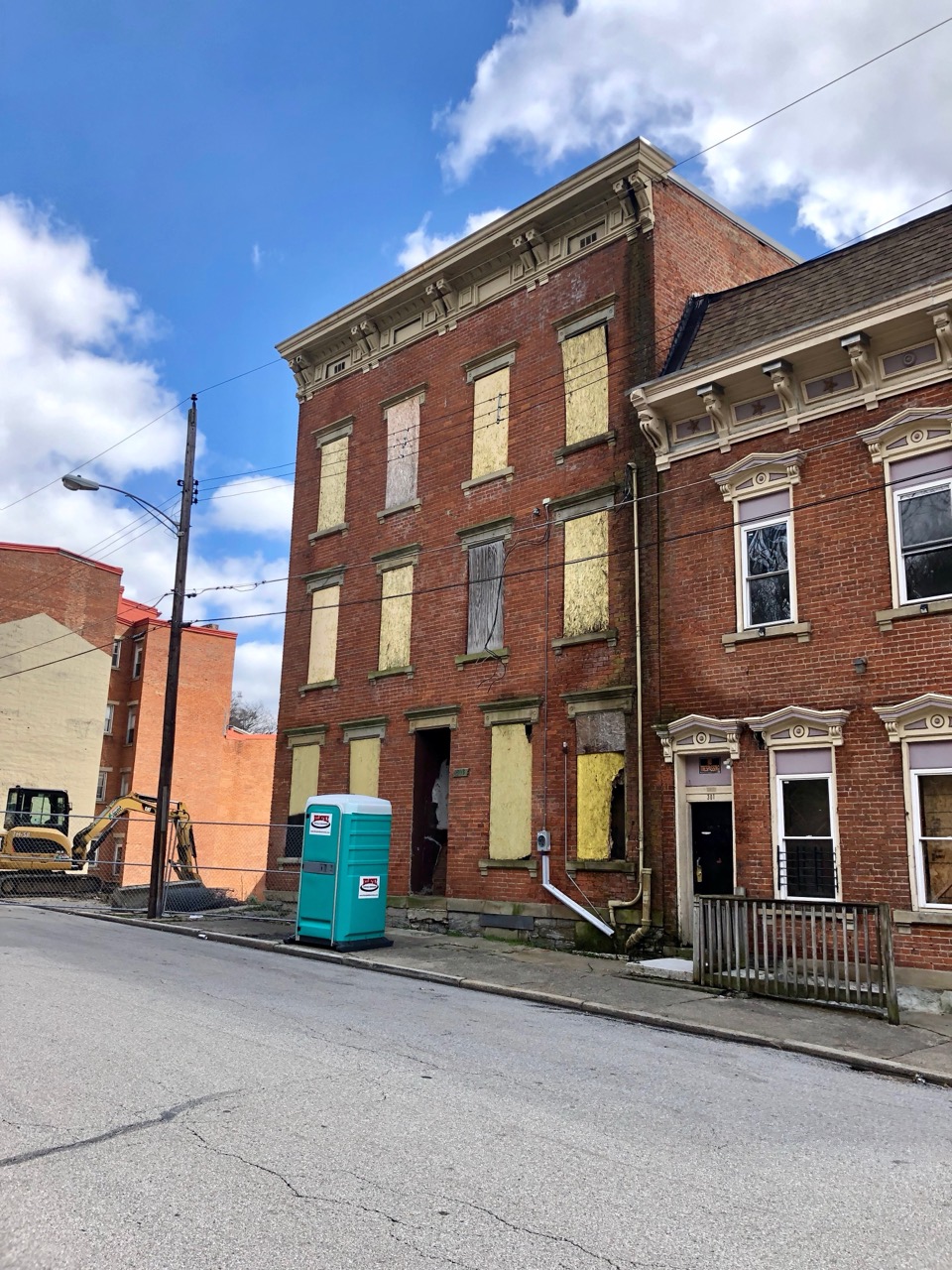
13.So where does the price come from. The landlord is a nonprofit. OTR A.D.O.P.T., which takes over buildings headed for demolition and brings them back, saved this Civil War era storefront, and state and federal historic tax credits paid part of the construction. The ground floor stays open for neighborhood events while the upper floor and patio run as sliding scale coworking. What holds up the $2 cup is not the cooperative but this ownership structure.
14.Worker owned cooperatives are not rare in American coffee. Cincinnati has Co-op Cincy, which helps co-ops get started, and Topia's seed funding came from there. In a trade with light equipment and modest material costs, a design that returns all profit to people fits reasonably well.
15.The strain shows when someone leaves. The co-op started with four owners and today Saoud is the only one. The person said to be joining soon is Sara Jane Kennelly-Gaither, who ran Viva Coffee Roasters. That the doors stayed shut for two months in between says plenty about where this structure is thin. What broke was not the capital. It was the decision making.
16.Just outside the line where redevelopment stopped, in a 1,000 square foot former grocery, drip coffee goes out at $2, about 53 percent of the American median. That price holds not because the beans are cheap but because a nonprofit owns the building and historic tax credits covered part of the work. Building the same conditions in Korea starts with the building itself. Putting a private cafe inside a public building rebuilt with urban regeneration money means clearing the permit route and the occupancy fee calculation, and registering instead as a social cooperative means the law blocks any distribution of surplus. Which is the whole point of making workers owners.