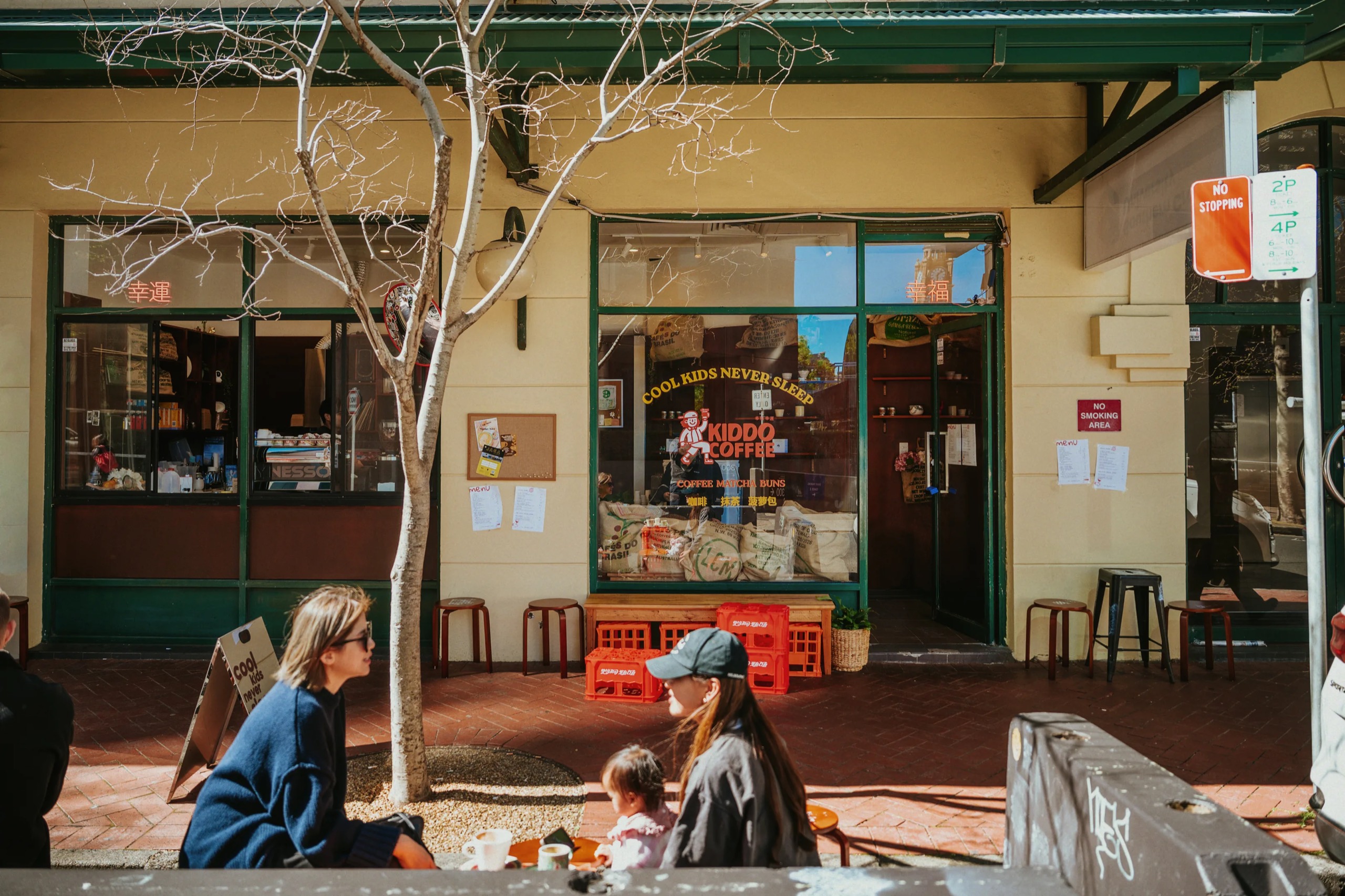
A coffee shop opened on a back street in Sydney's Surry Hills on September 10. Customers sit on spray painted Ikea stools, red plastic drink crates and a concrete kerb on the footpath. The coffee, though, arrives in Chinese porcelain cups ringed with longevity motifs, carried out on a silver tray. Twenty two drinks on the board. Where the money went, and where it didn't, is visible at a glance.
1.The name is Kiddo Coffee, the address 84-86 Mary Street. The official launch is set for Sunday September 20, with a DJ and free pineapple buns. The door had already been open for ten days.
2.Weekdays run 7am to 3pm, weekends start half an hour later. No evening trade on that timetable. The owner is Pakasit Wawongmoon, known to everyone as Zen. Until two years ago he co-owned a shop of the same name in Bondi, and after leaving it he built this one alone. Money was tight and he did every part of it himself, by his own account.
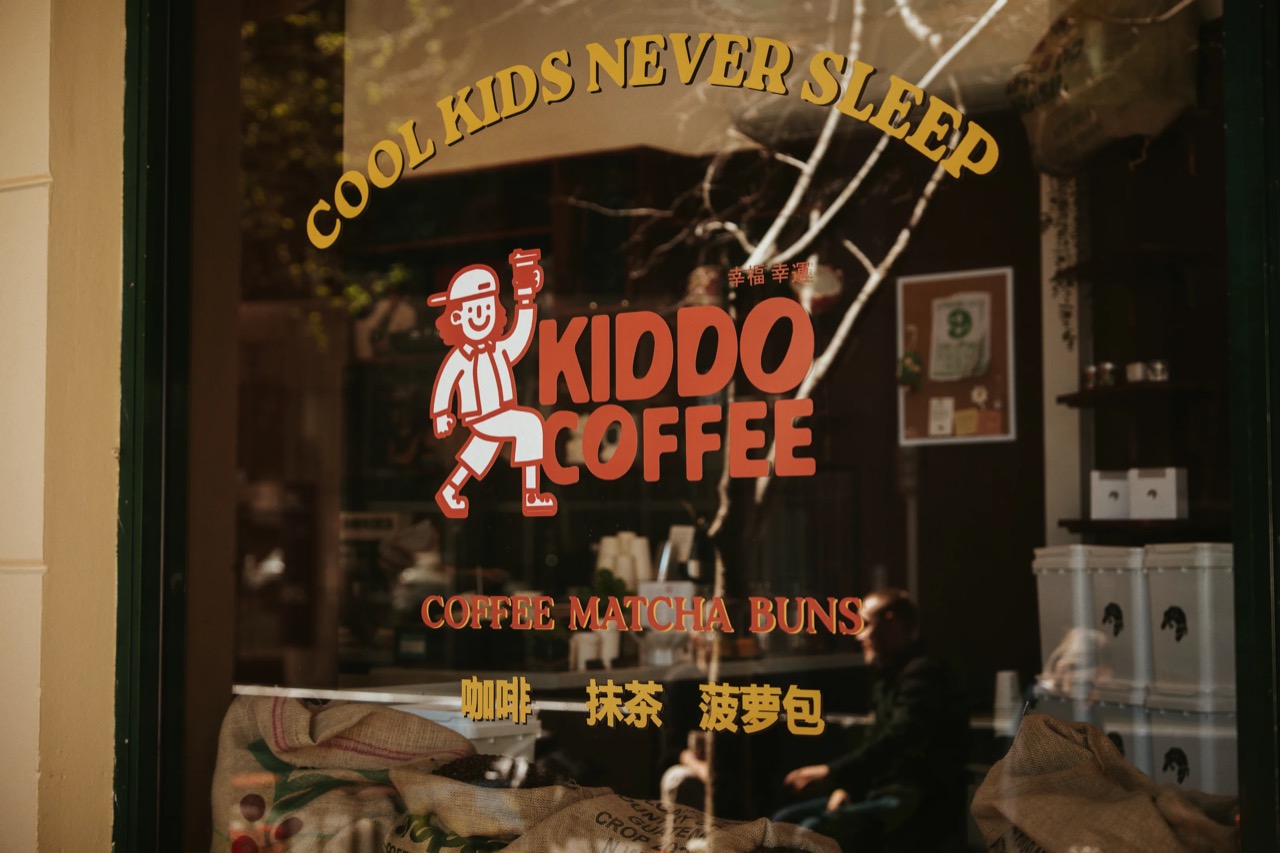
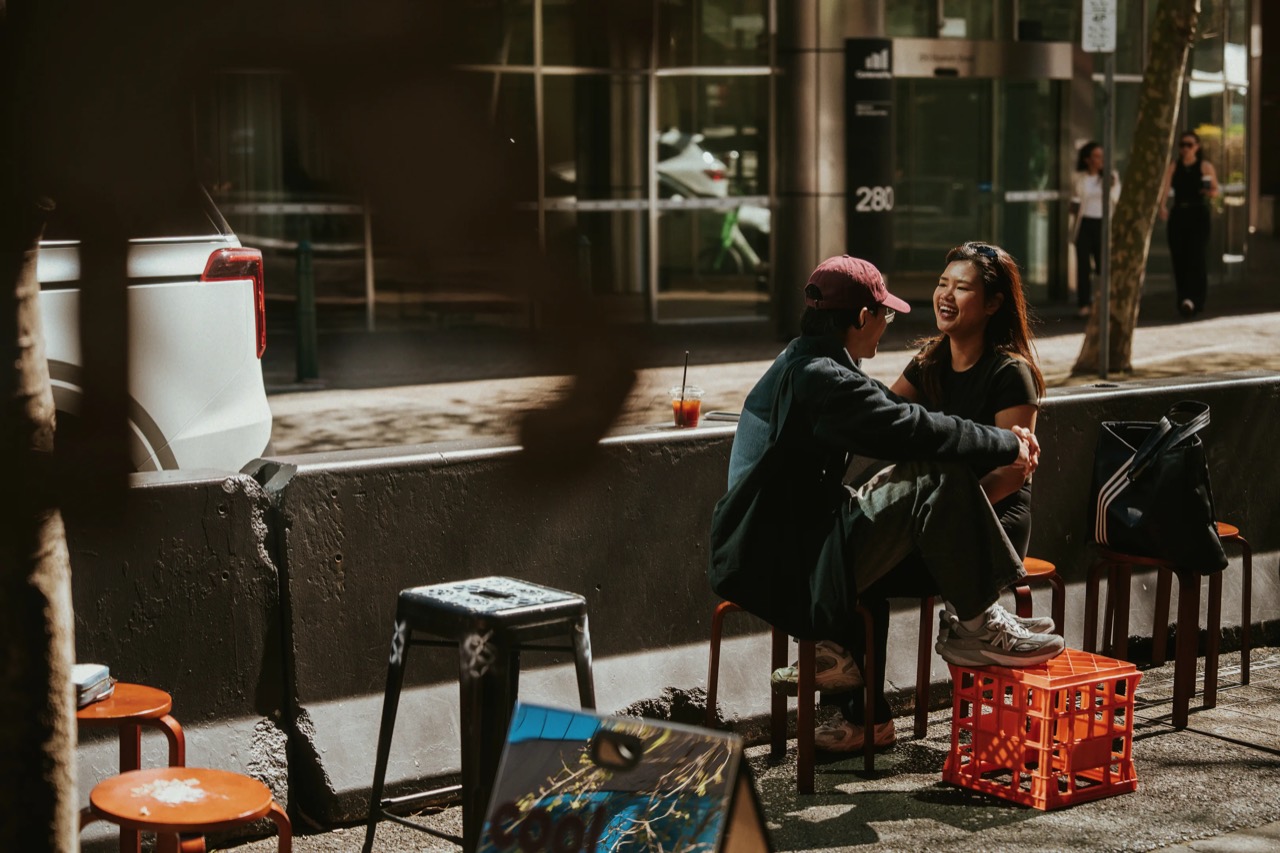
3.The facade is pastel yellow, the window frames deep green. The lettering on the glass reads COOL KIDS NEVER SLEEP, and below it coffee, matcha and buns appear in English and Chinese. The footpath is too narrow for a terrace. What runs along it instead is a long concrete traffic barrier, and customers perch on stools with the barrier at their backs. The red crate in front of their knees is the table.
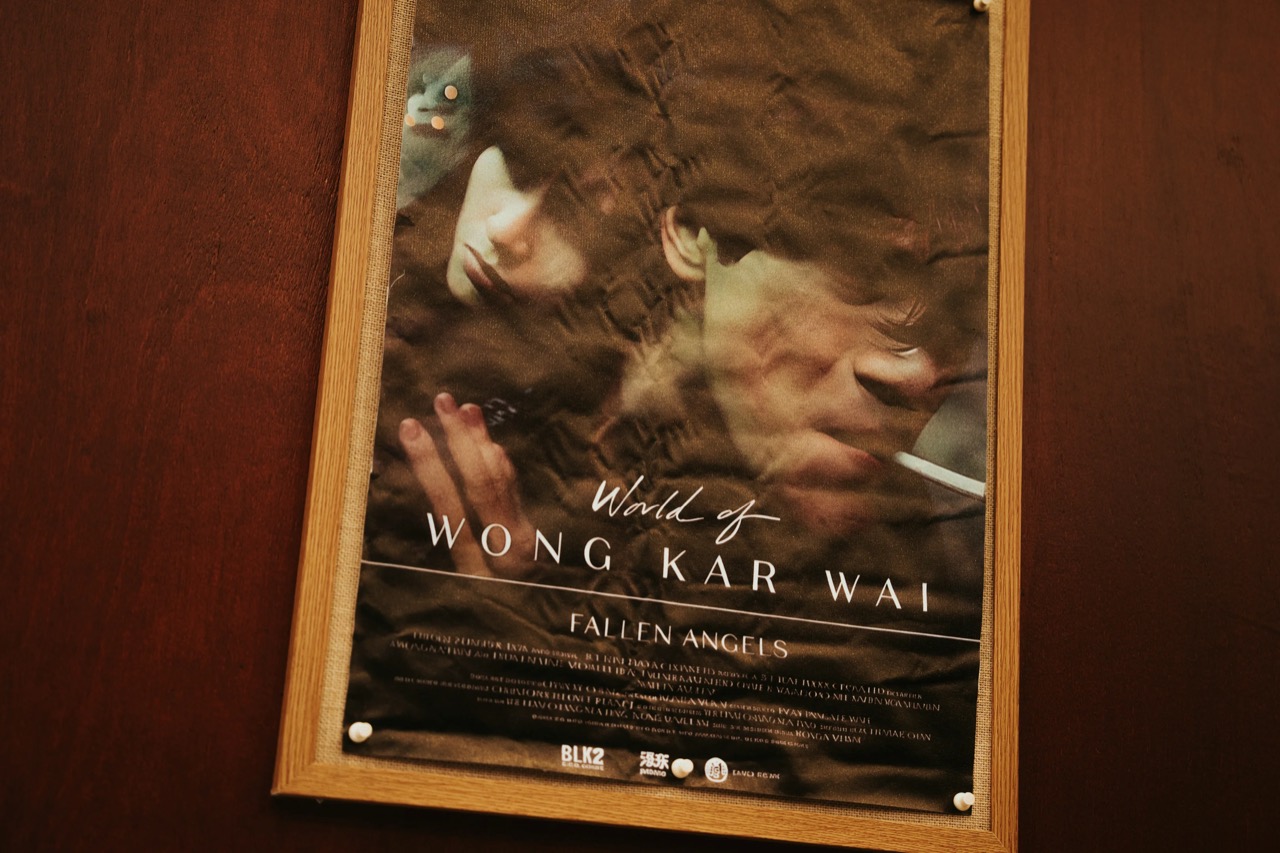
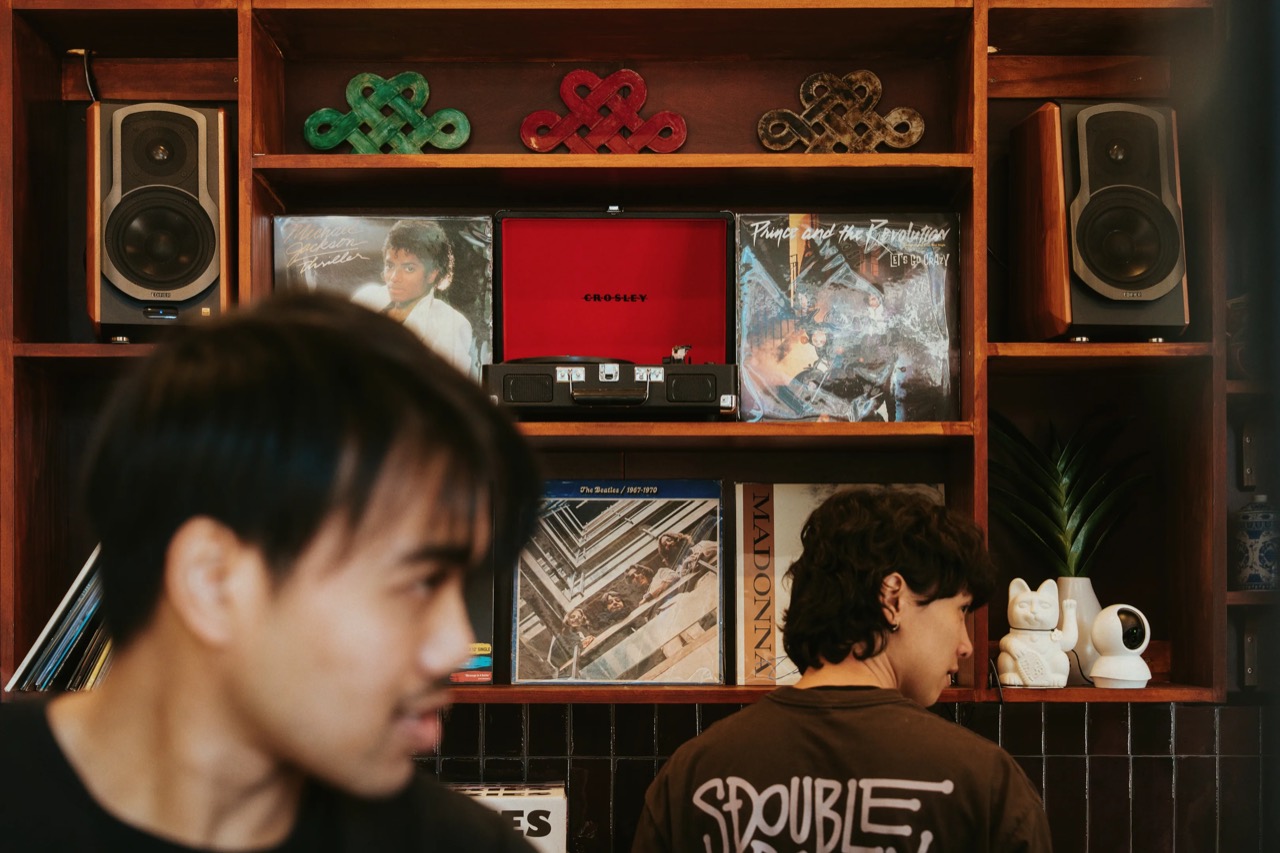
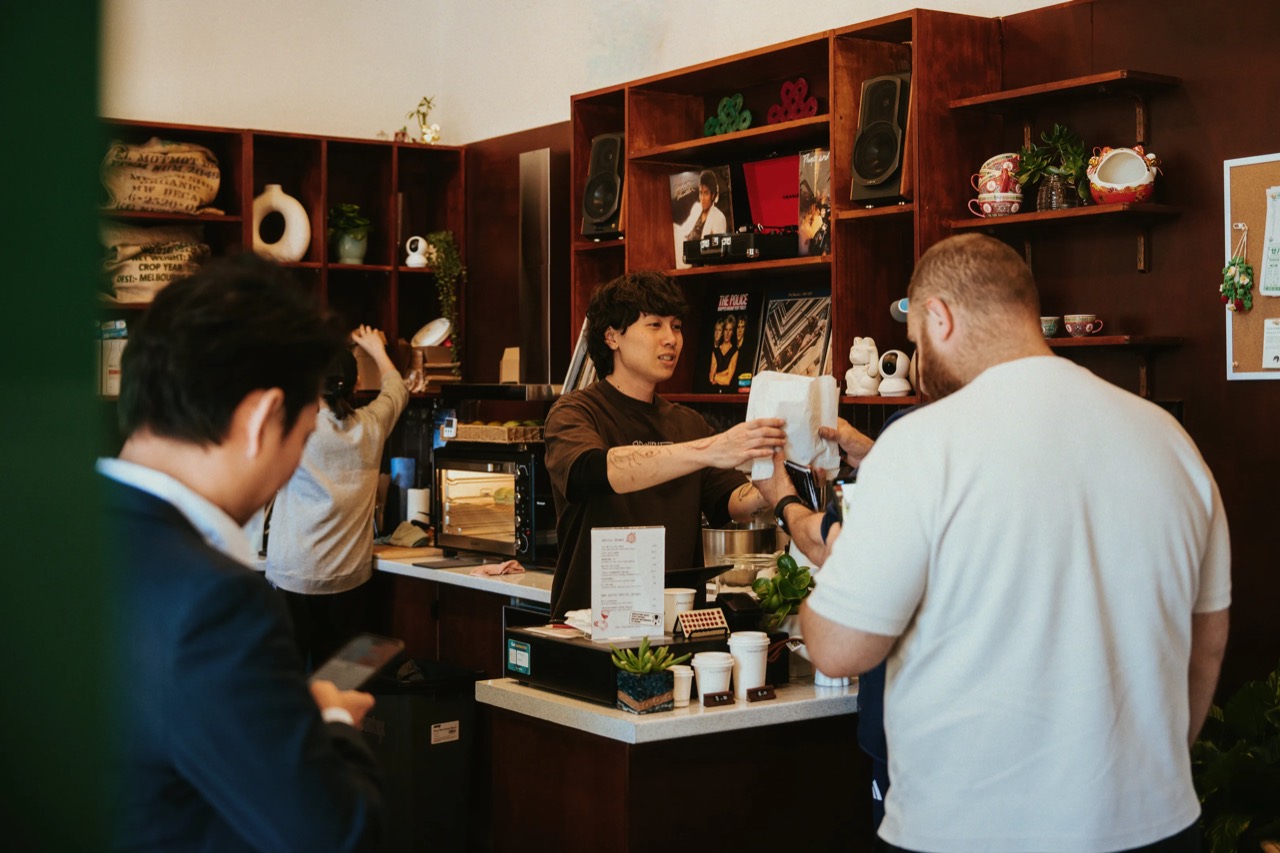
4.Step inside and the register changes. One wall is black tile, and above it red timber shelving climbs to the ceiling, every compartment packed with coffee bags, ceramics and plants. A poster for Wong Kar-wai's Fallen Angels hangs pinned in a wooden frame, and a red Crosley turntable sits among a few records at the centre of the shelf. Hong Kong cinema and the old tea houses of that city. Those are the two sources the owner names.
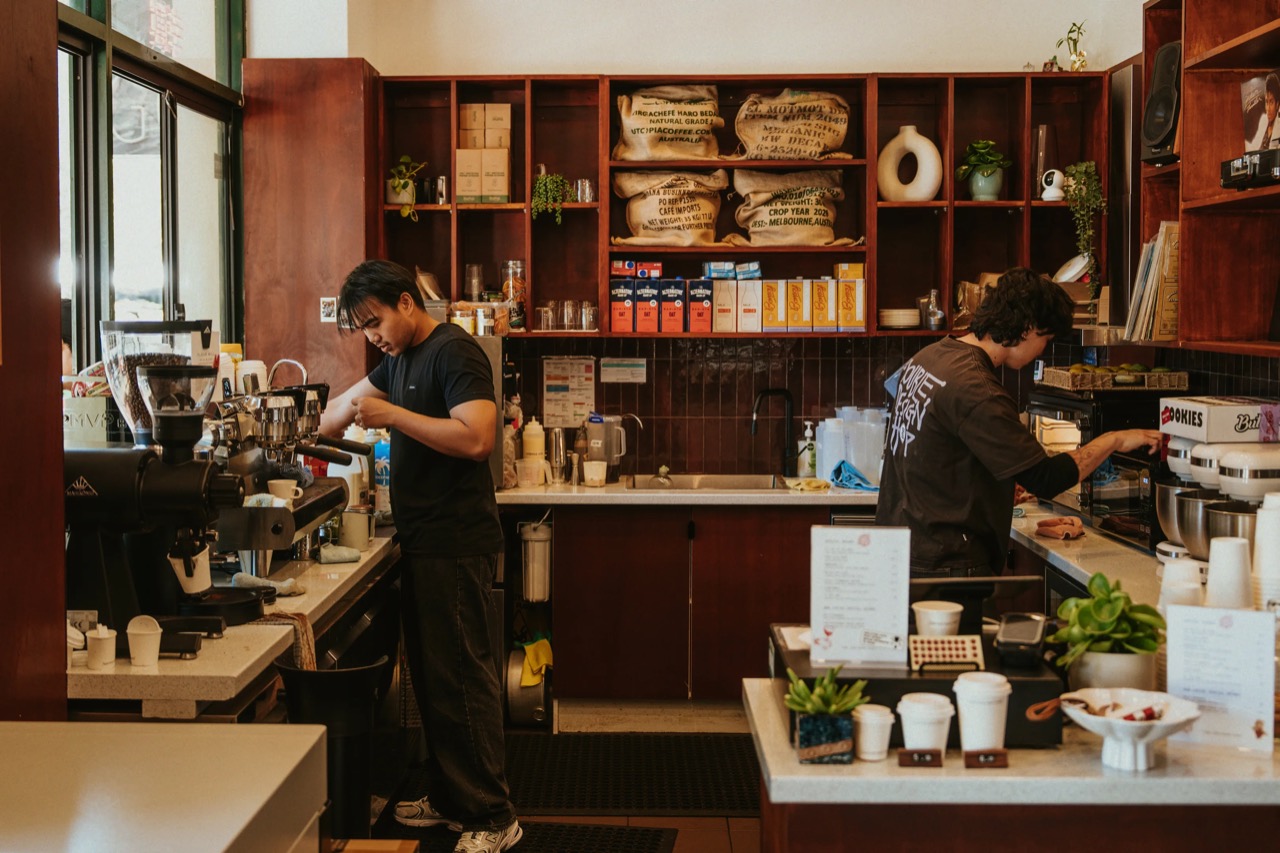
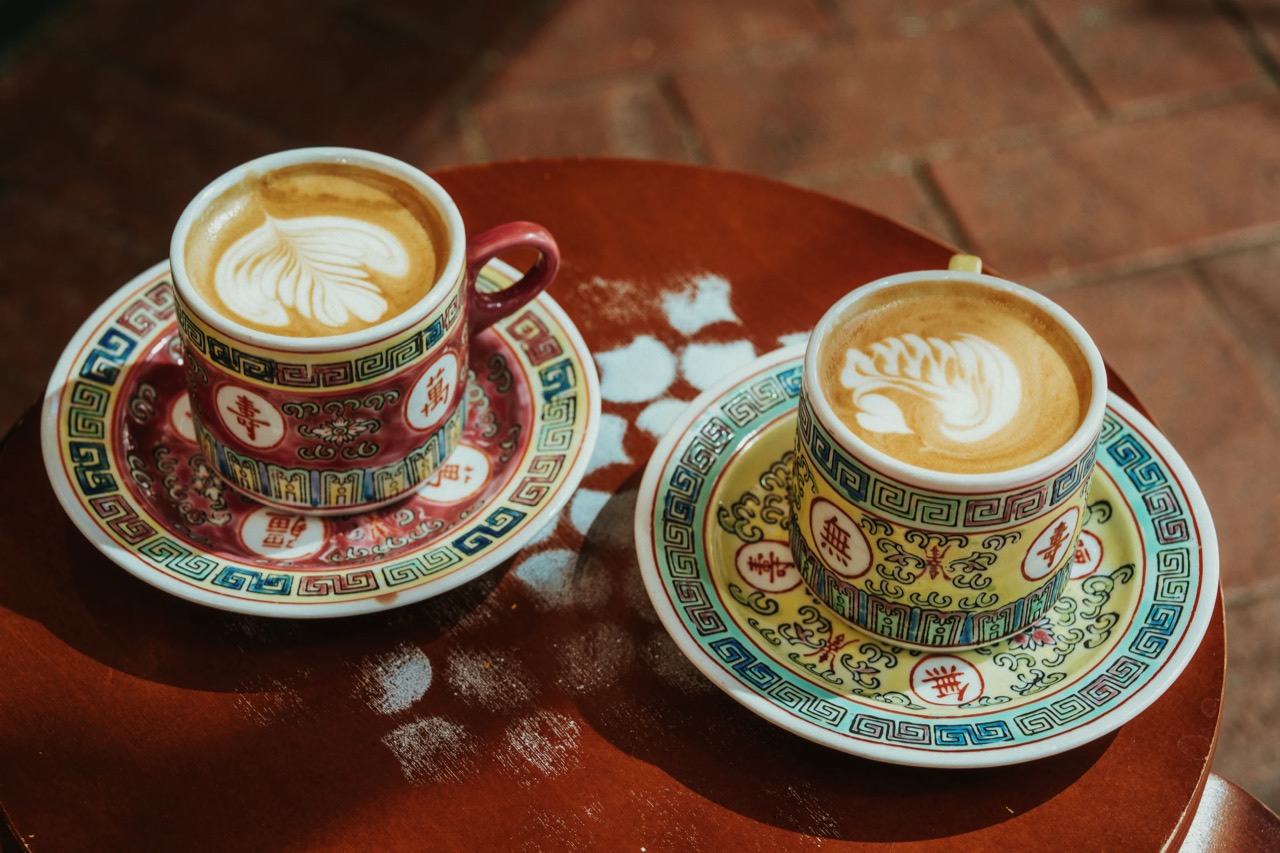
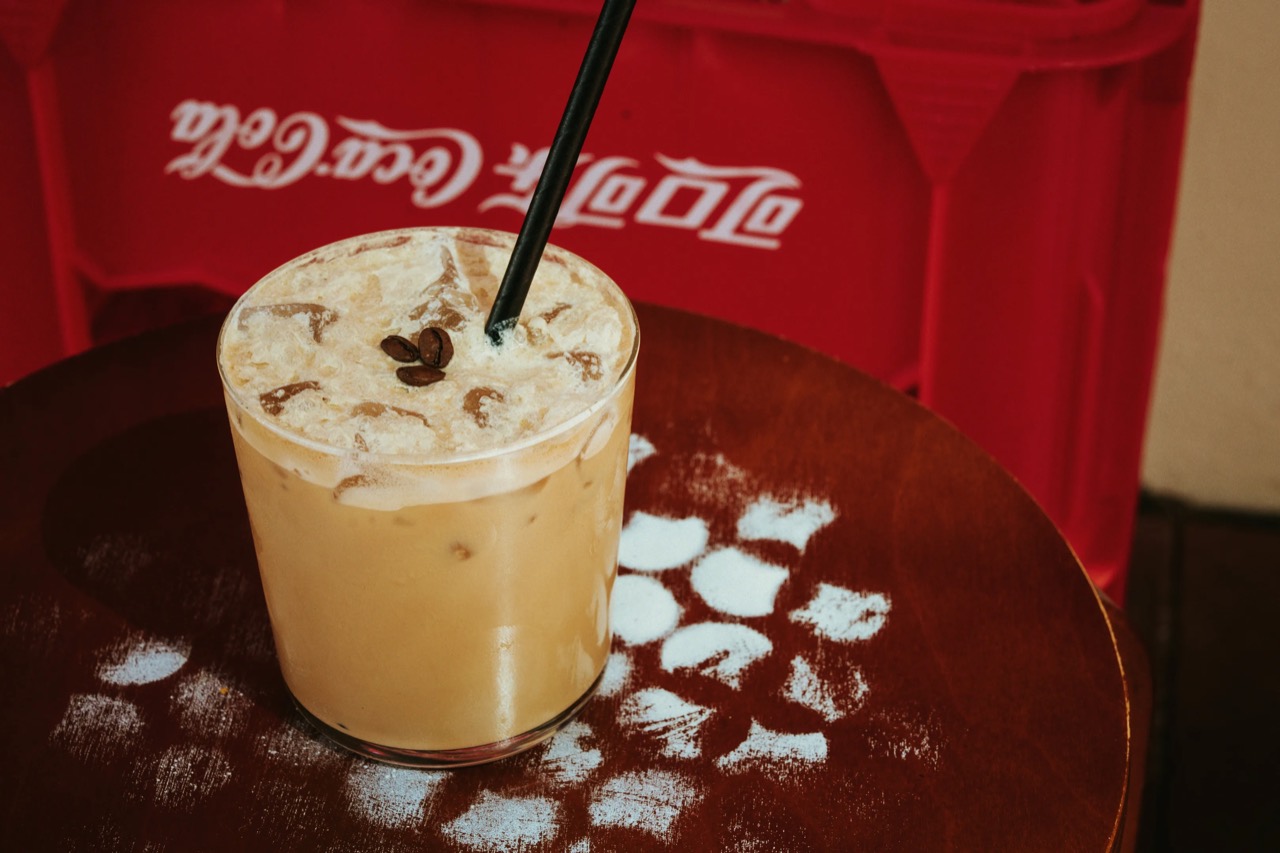
5.Twenty two drinks. At one end sits batch brew from Headlands, a roaster in Summer Hill. At the other end are the cups that take real work. Fly Me To the Moon is a Mont Blanc read as coffee, and Momokawa layers non dairy cream and genmaicha over espresso. There is an einspanner, and a Thai iced coffee. The cups are Chinese porcelain with longevity motifs, the trays are silver.
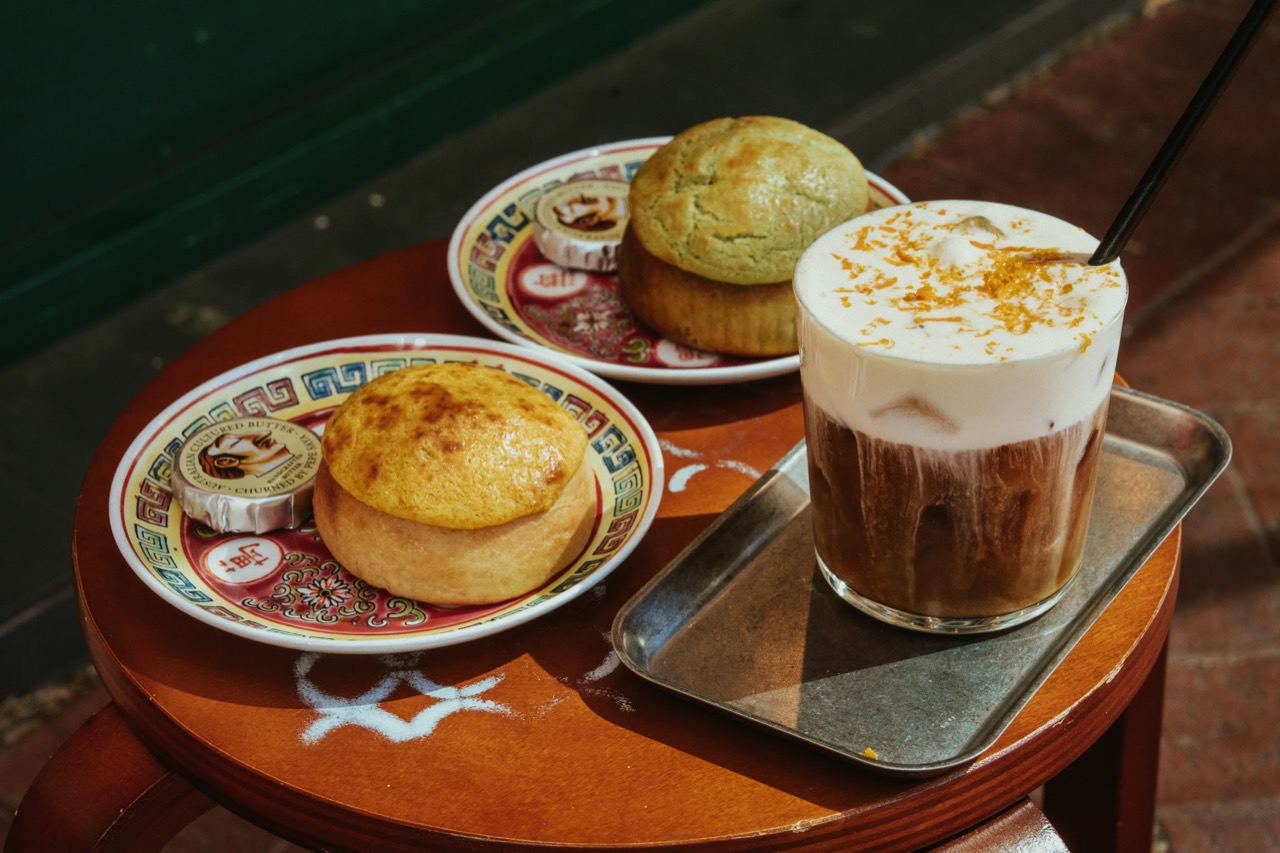
6.Only two things to eat. A Hong Kong style pineapple bun, the polo bao, and a pandan bun filled with coconut. Each is warmed in a small oven to order and served with a knob of Pepe Saya butter. Steam rises from the cracks in the yellow crust, and the green pandan bun pulls apart to a coconut filling that stretches while it's still warm. The buns come from friends in Hong Kong, the siblings Jansen Li and Joyce Li, made to their family recipe.
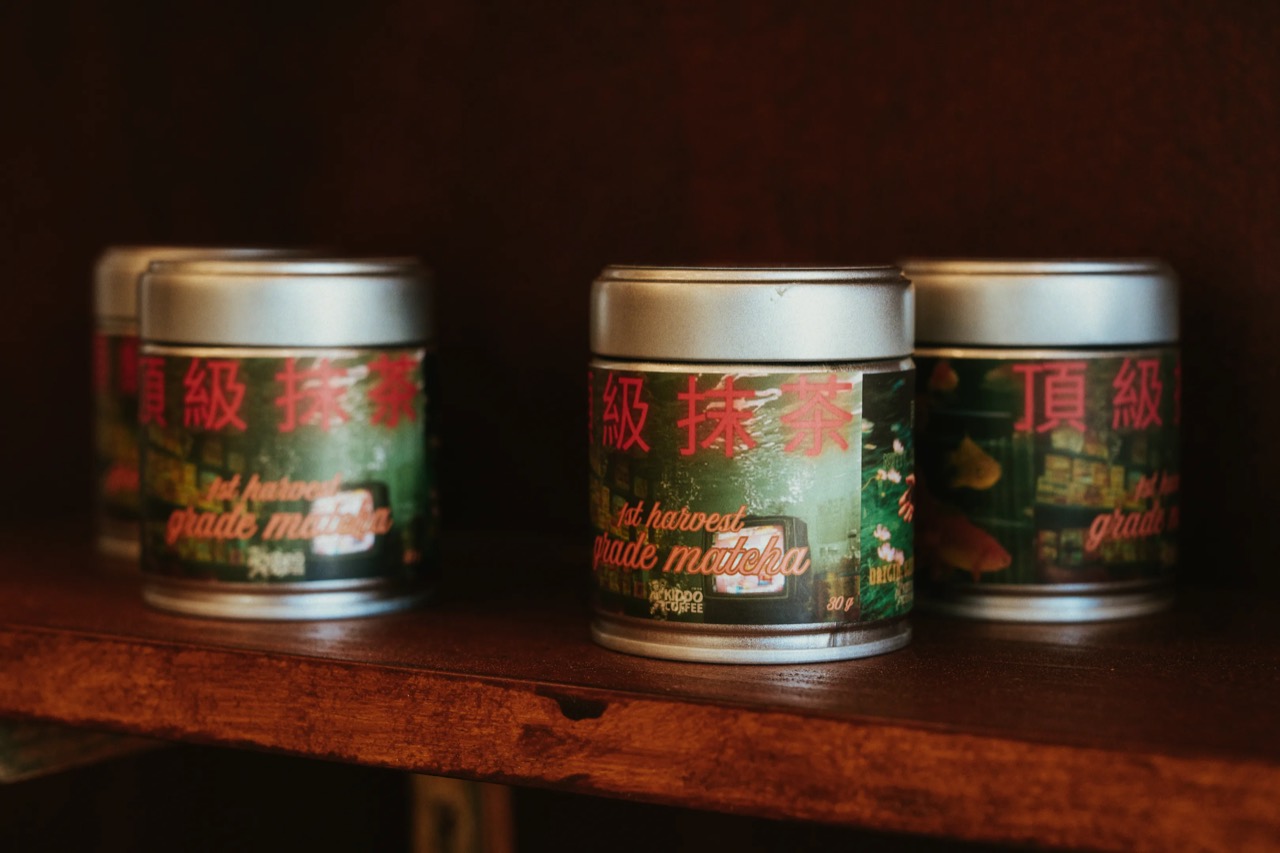
7.The Thai iced coffee keeps its Thai name. The owner wanted people to remember where this style of coffee comes from. Oliang, Thailand's old coffee, is ground from robusta roasted almost black with corn, soybean and sesame. Wartime shortages forced grain into the roast to stretch it, and the stretching became the flavour.
8.That drink now sits on a menu board rather than in a shortage report. The spread of twenty two drinks points the same way. Someone who walks in for the photogenic glass has to be worth a batch brew next time, or the shop doesn't run. The records and the turntable on the wall are there for that second visit.
9.Are the stools on the street a matter of taste? Closer to arithmetic. Thirty seats indoors means renting that much more floor, and seated area drags toilets, circulation and climate control along with it. Stools on the footpath never enter the lease schedule. Council approval sets the limit, so the number of those seats is not the owner's to raise.
10.Opening a small cafe in Australia usually runs 80,000 to 200,000 Australian dollars, by the industry guides. Roughly 77 to 190 million won. Fit out 30 to 50 seats with a kitchen and the range climbs to 150,000 to 350,000. This shop's spend was never published, but if spray painted Ikea stools and drink crates are the seating, the saving in that line is easy enough to picture.
11.Prices stay close to the Sydney average. A small flat white in this city runs 5.5 to 6.5 dollars, and a cream topped signature glass around 9 (estimated). Add a bun and one customer's spend climbs towards 15. Assume 220 drinks across an eight hour day and monthly revenue lands near 50,000 dollars, about 50 million won (estimated).
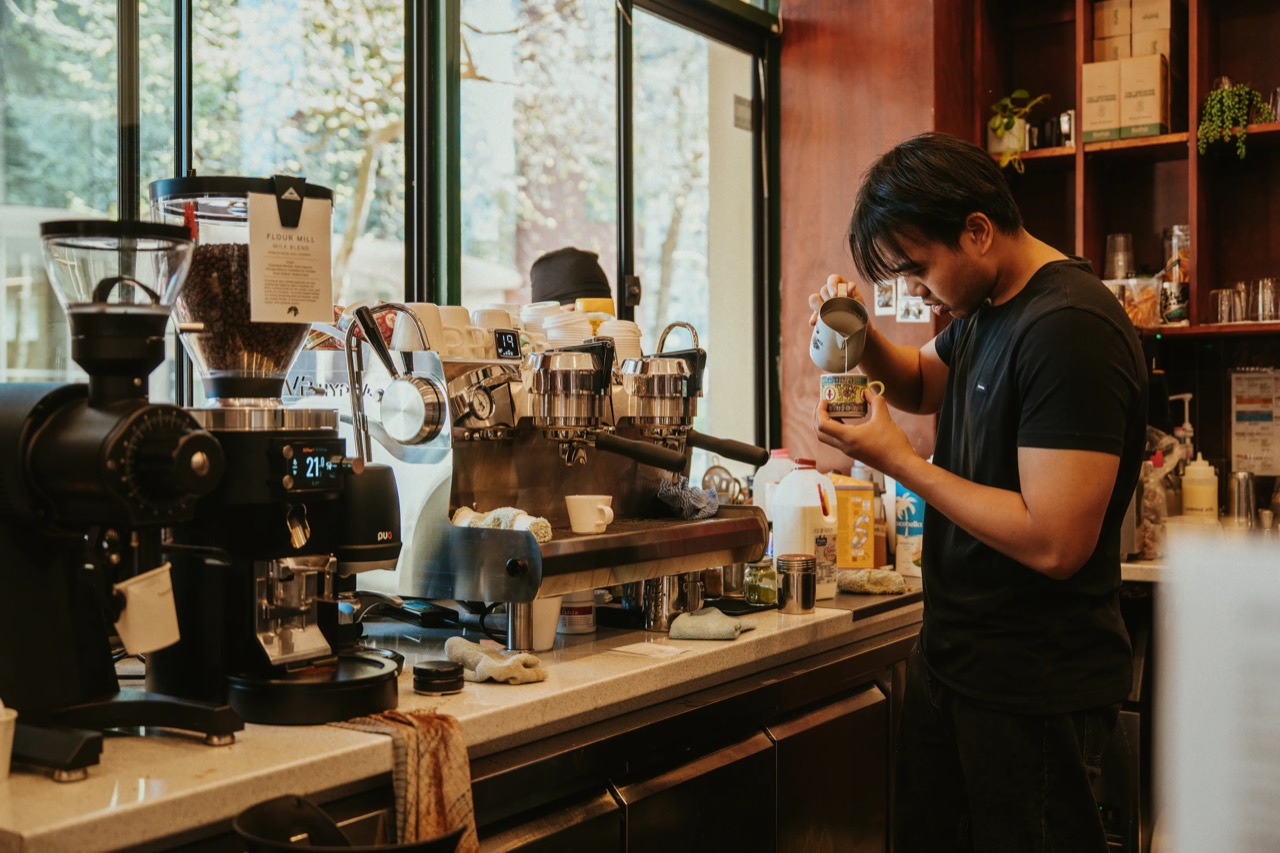
12.Wages are the hard part. The lowest grade casual rate under Australia's restaurant award is 33.05 dollars an hour, over 30,000 won, and it rose another 4.75 percent this July. Weekends and public holidays carry penalty rates on top. Staff a three person day entirely with employees and wages reach 38 percent of revenue, while an owner filling one of those positions brings it down near 25 (estimated). The 3pm close comes out of that same calculation.
13.Sydney has seen shops like this before. Coffee bars borrowing the Hong Kong tea house format, stands pouring Vietnamese condensed milk coffee, brunch rooms with Thai desserts attached, all opening in a run over recent years. Second generation migrants putting their parents' food on inner city price lists. Most such shops pick one country and build the menu around it. This one puts Thai coffee inside a Hong Kong frame and buys its beans from an Australian roaster.
14.Bondi is a beachside tourist trade, and Mary Street in Surry Hills is a quiet lane behind the offices. He left the address where visitors flow through for one where the same people pass at the same hour every day. That suits a shop opening at 7am. At the time of reporting the cabinets were still being assembled and staff were glancing at each other as they took orders.
15.A coffee shop that spent almost nothing on seating chose porcelain for its cups and plates, and stretched the drinks list to twenty two. Whether wages stay pinned at 25 percent is the whole of this structure, and that number is set by how many hours the owner stands behind the bar. Anyone trying the same thing in Korea runs into the footpath first. Putting chairs on it requires a road occupancy permit, and where permits are granted the width and the count are fixed, so it is a poor way to add customers. The plan to shrink the indoor floor and cut the rent stalls right there.