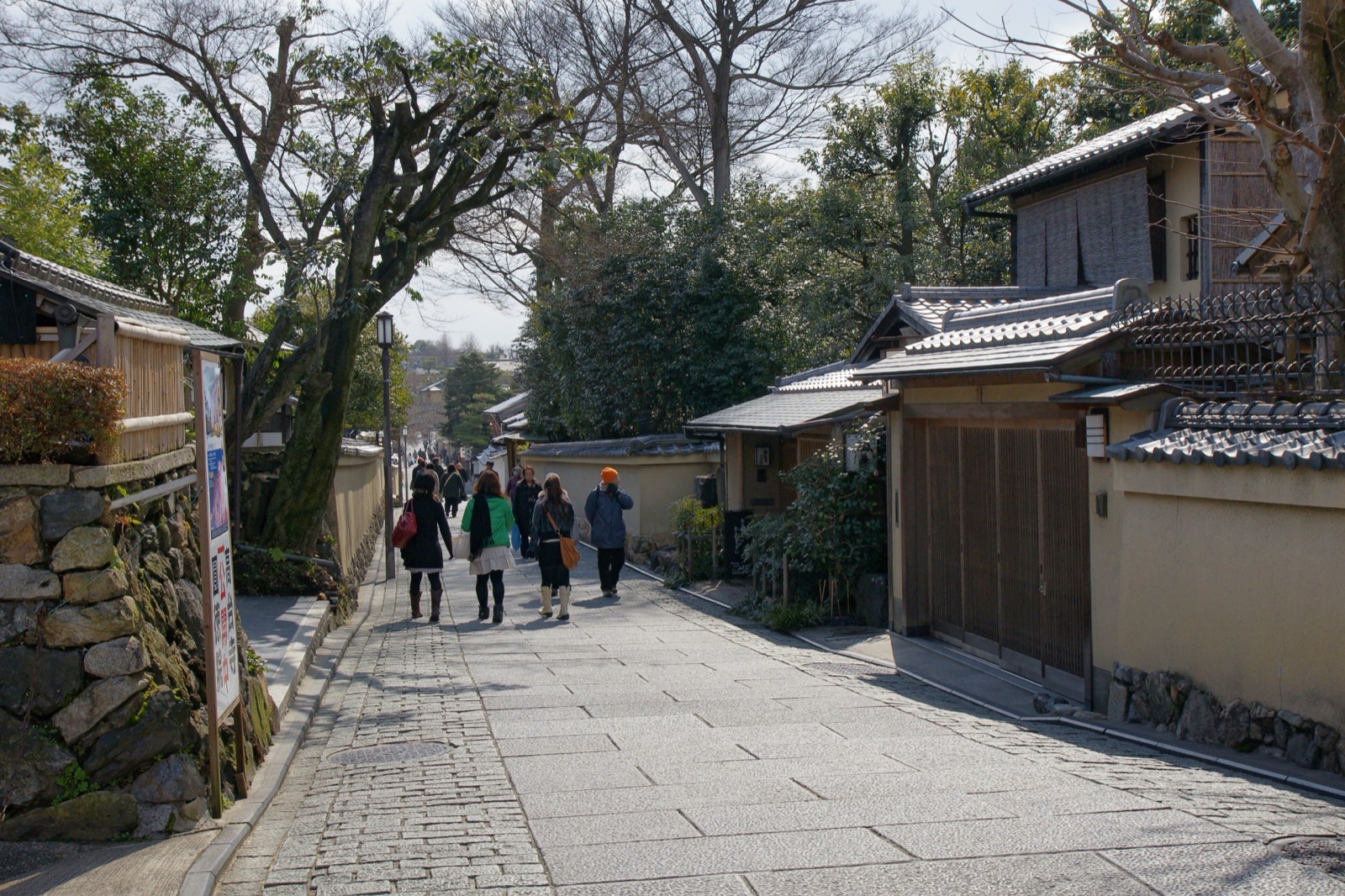
On March 19, 2026, a roastery cafe from Toyama opened on a stone lane in Kyoto's Higashiyama. It is the fifth shop from a brand that started as a single coffee stand by a tram stop, and a month later a sixth opened in Nagano. All four shops it has opened outside Toyama sit on streets that tourists walk up.
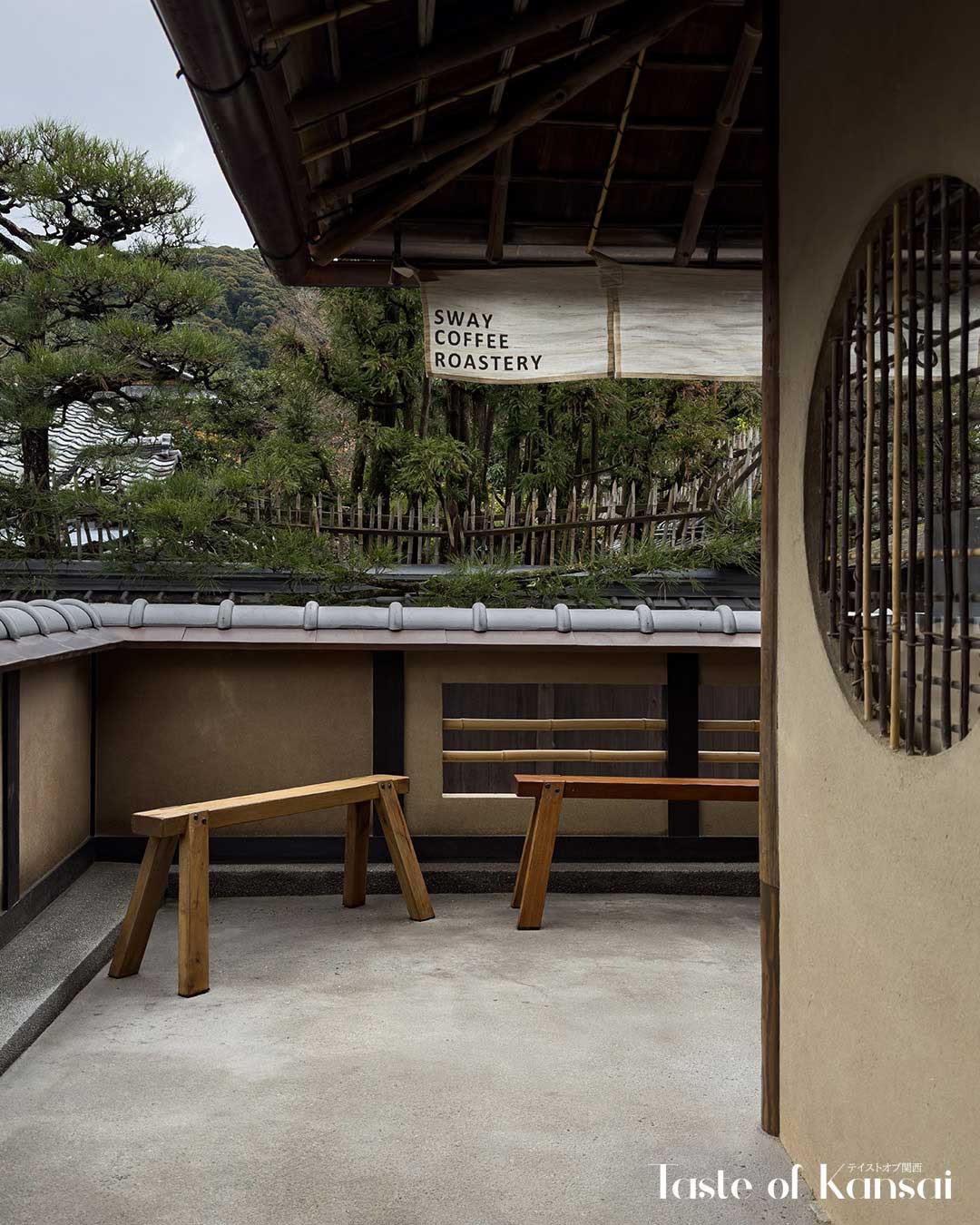
1.The address is 513 Washio-cho, Higashiyama-ku, Kyoto, right in the middle of Nene-no-michi, the stone lane that runs from Yasaka Shrine to Kodai-ji. A two-story machiya was refitted with a bar and benches downstairs and tatami seating upstairs, and the doors open at 9 a.m. and close at 6 p.m. Seat count and floor area have not been disclosed. Tabelog puts the spend per person in the 1,000-1,999 yen band.
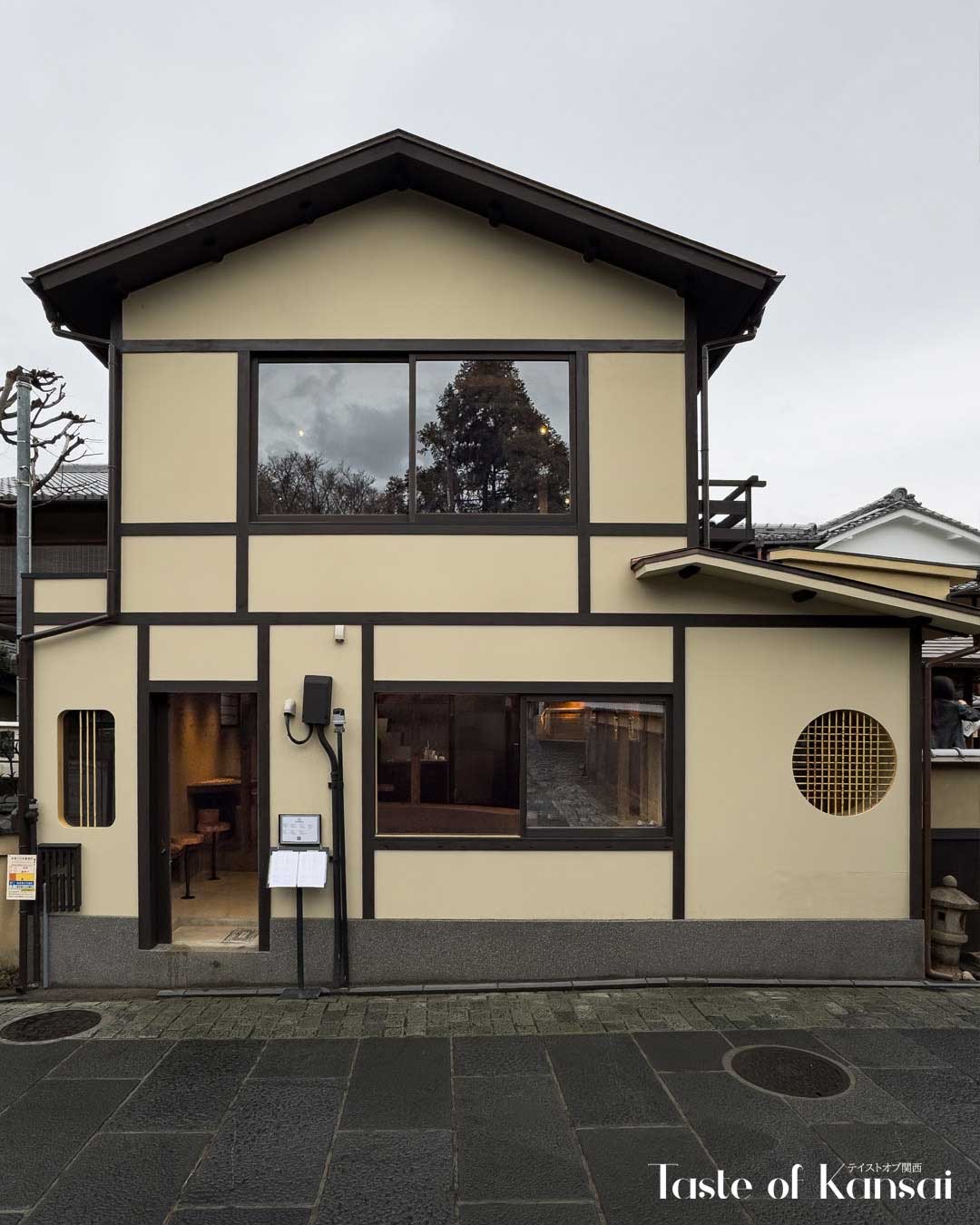
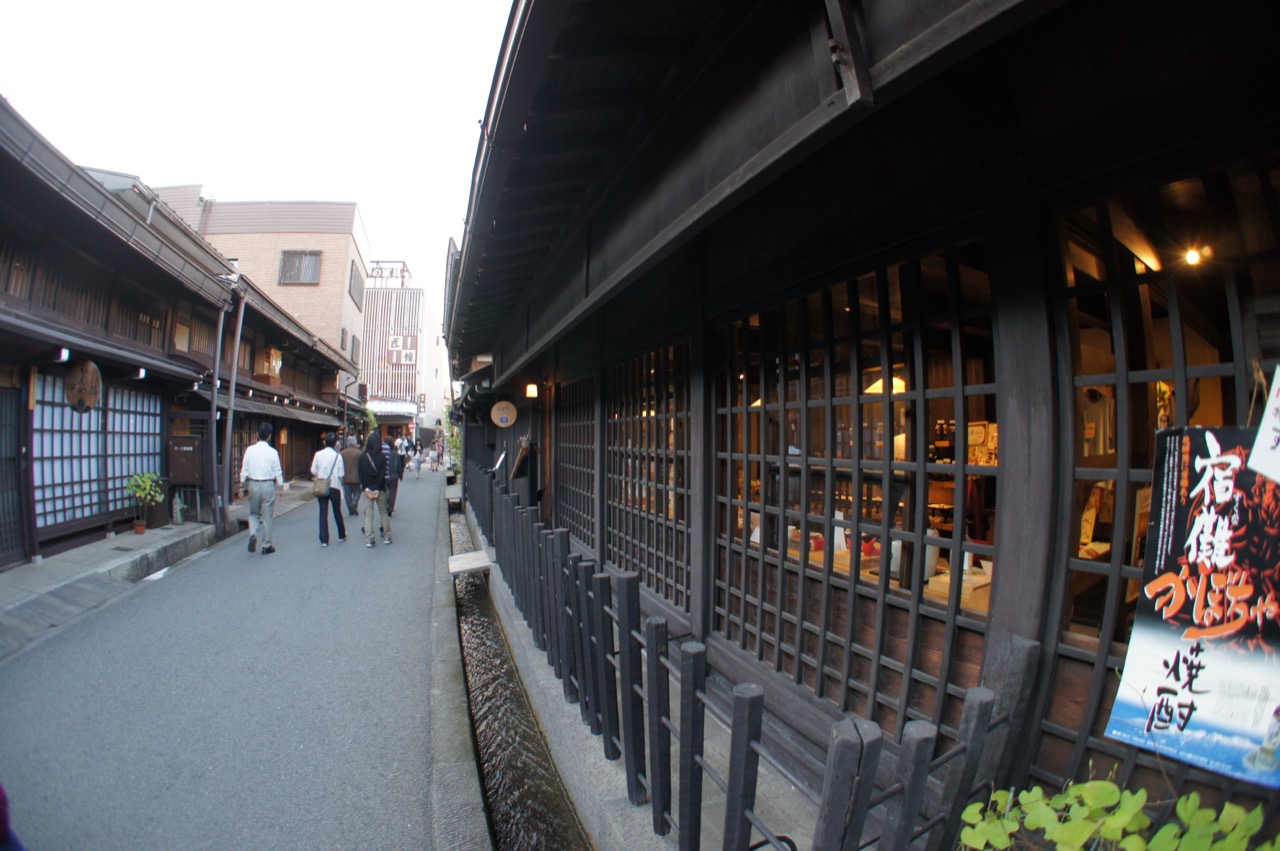
2.The sign reads SWAY COFFEE ROASTERY. It began in April 2023 as a coffee stand by the tram stop in Sogawa, central Toyama, and has become six shops in three years. Two in Toyama, four outside. The four are on the slope in front of Kenrokuen in Kanazawa, the old streets of Hida-Takayama, Nene-no-michi in Kyoto, and Nakamise-dori, the approach to Zenko-ji in Nagano. Every one of them stands on a street that tourists climb on foot.
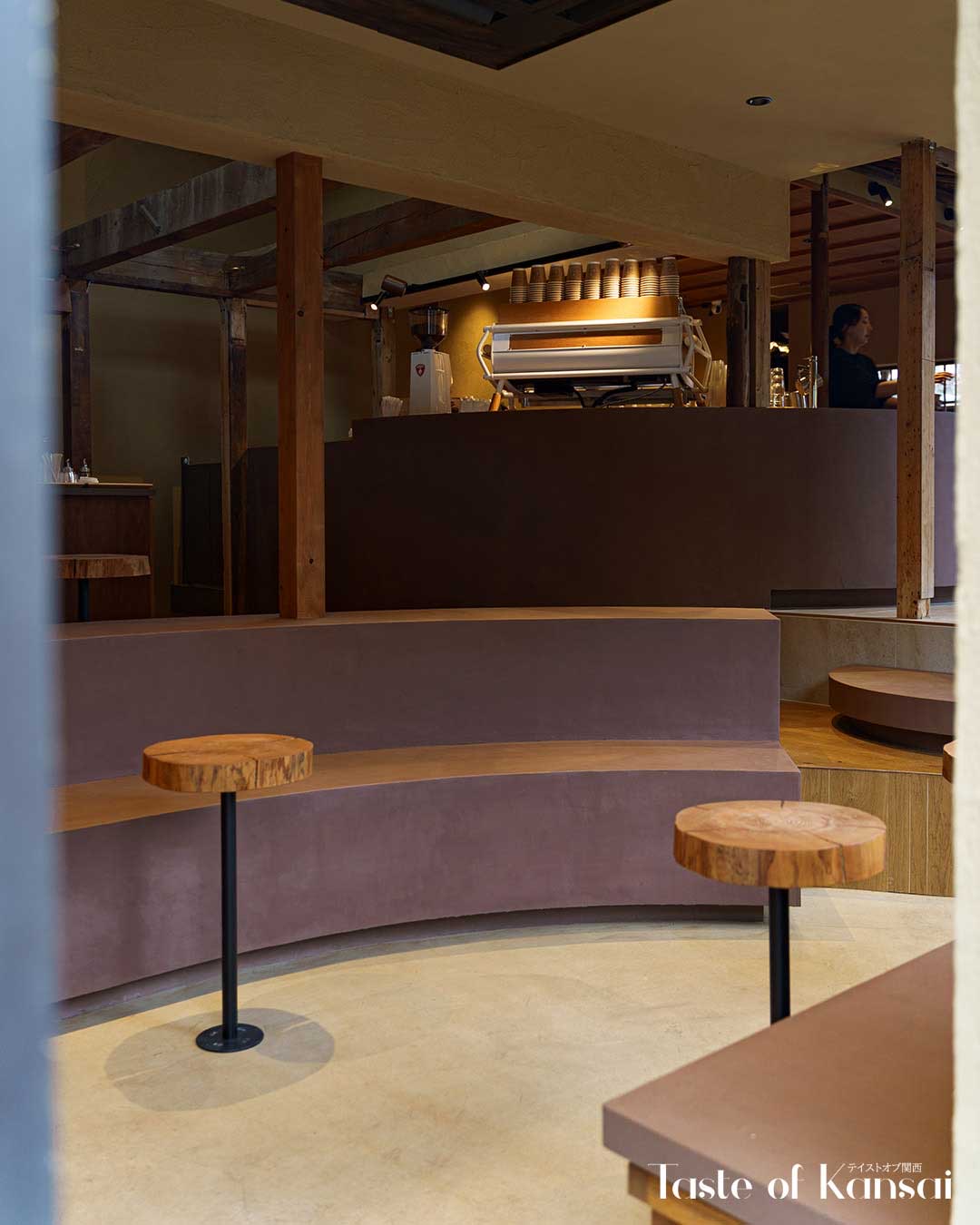
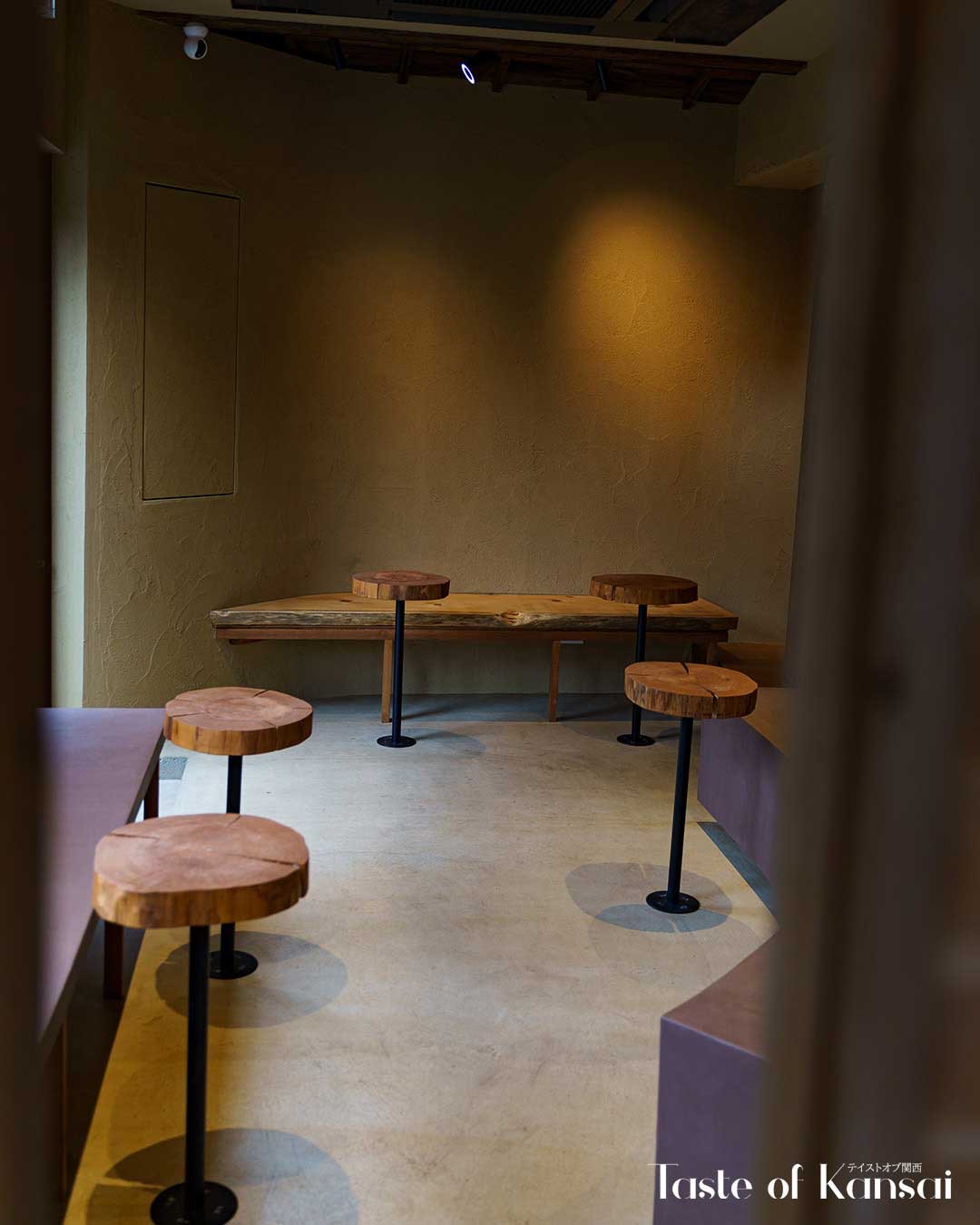
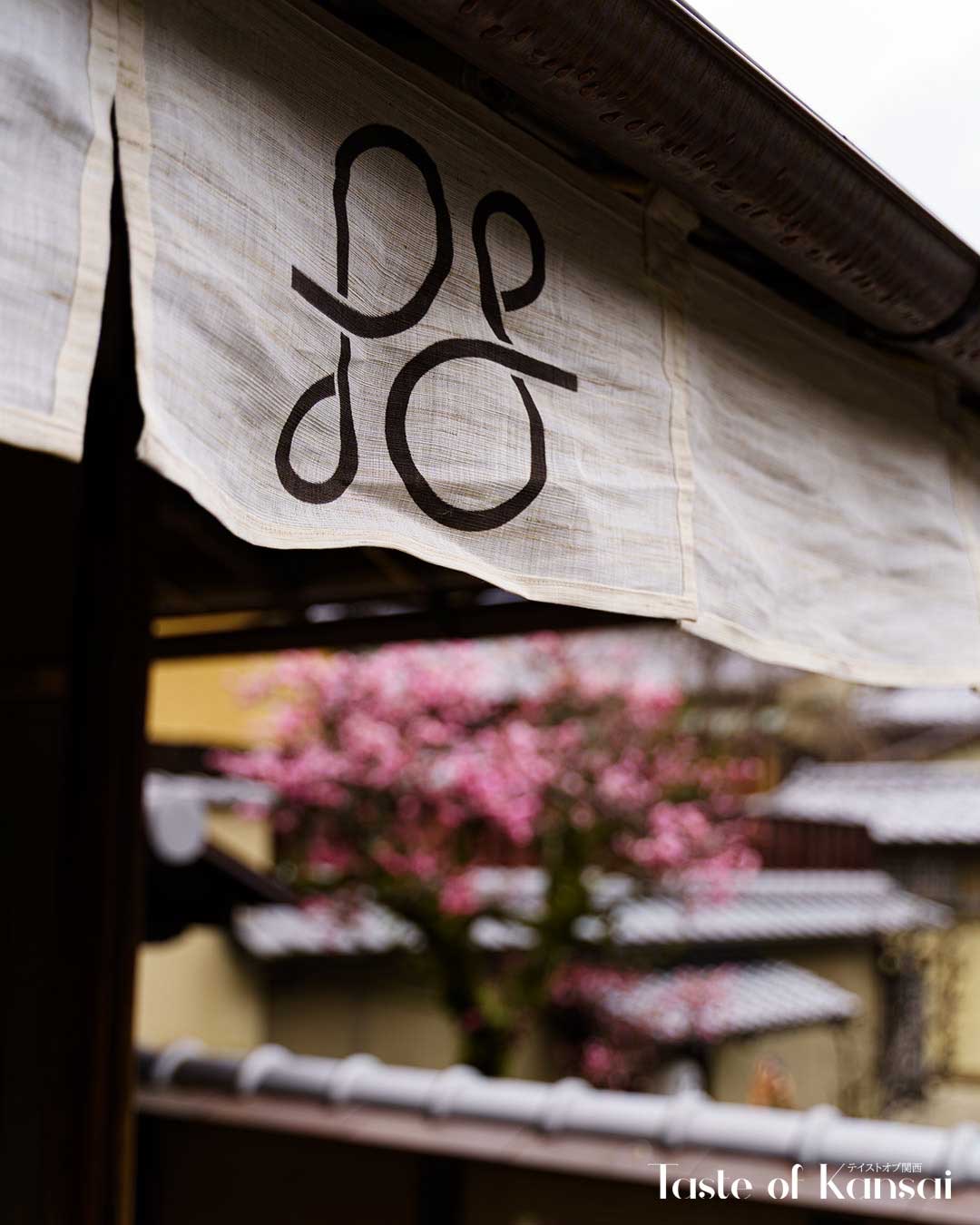
3.The ground floor curves. Round stool tables topped with solid wood stand at intervals in front of a bench that bends along the wall, and at the far end of the bench sits a bar with the espresso machine. The walls are earthen plaster. The tabletops are cross-sections of logs, so the growth rings show. At the entrance hangs a white noren printed with the logo.
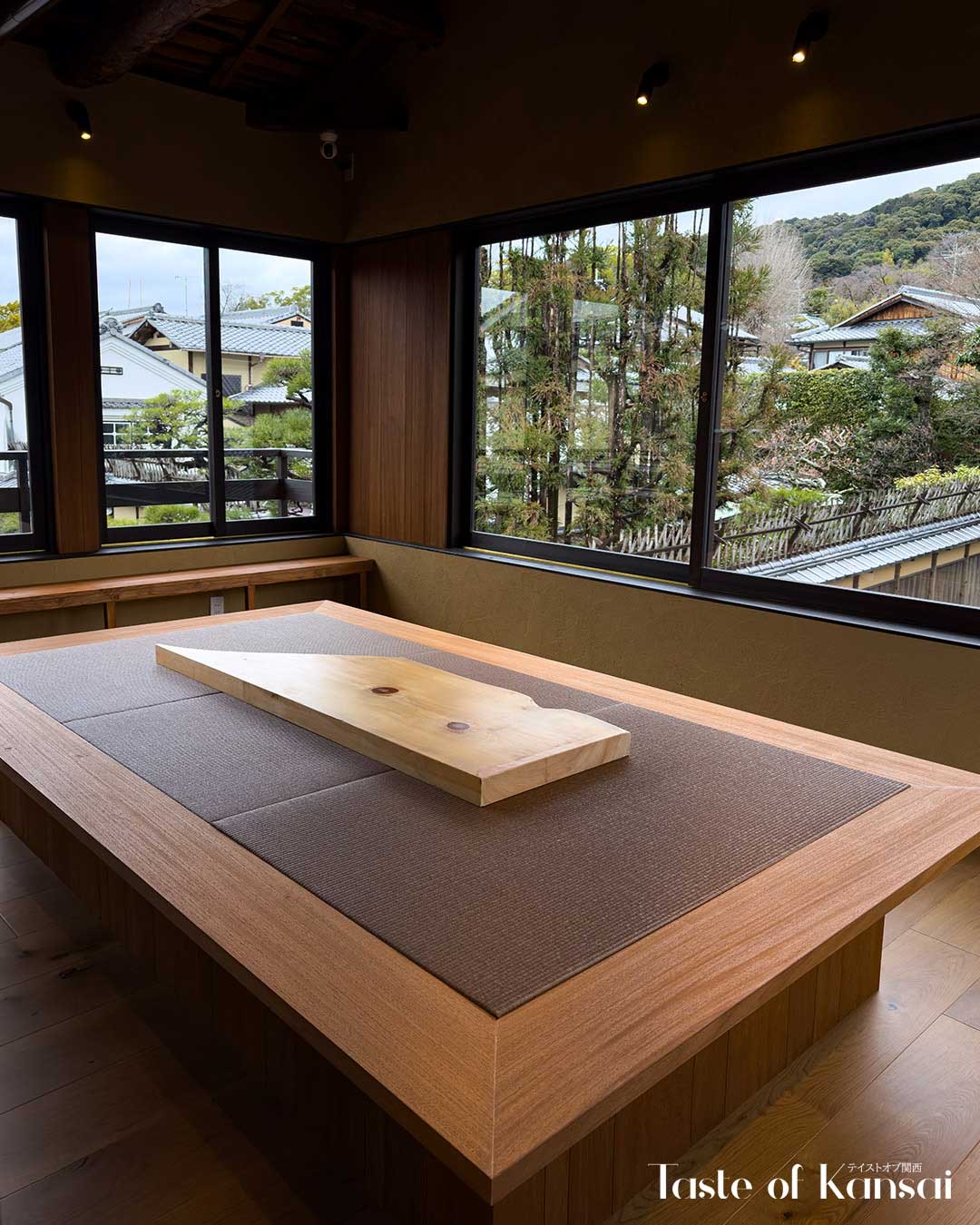
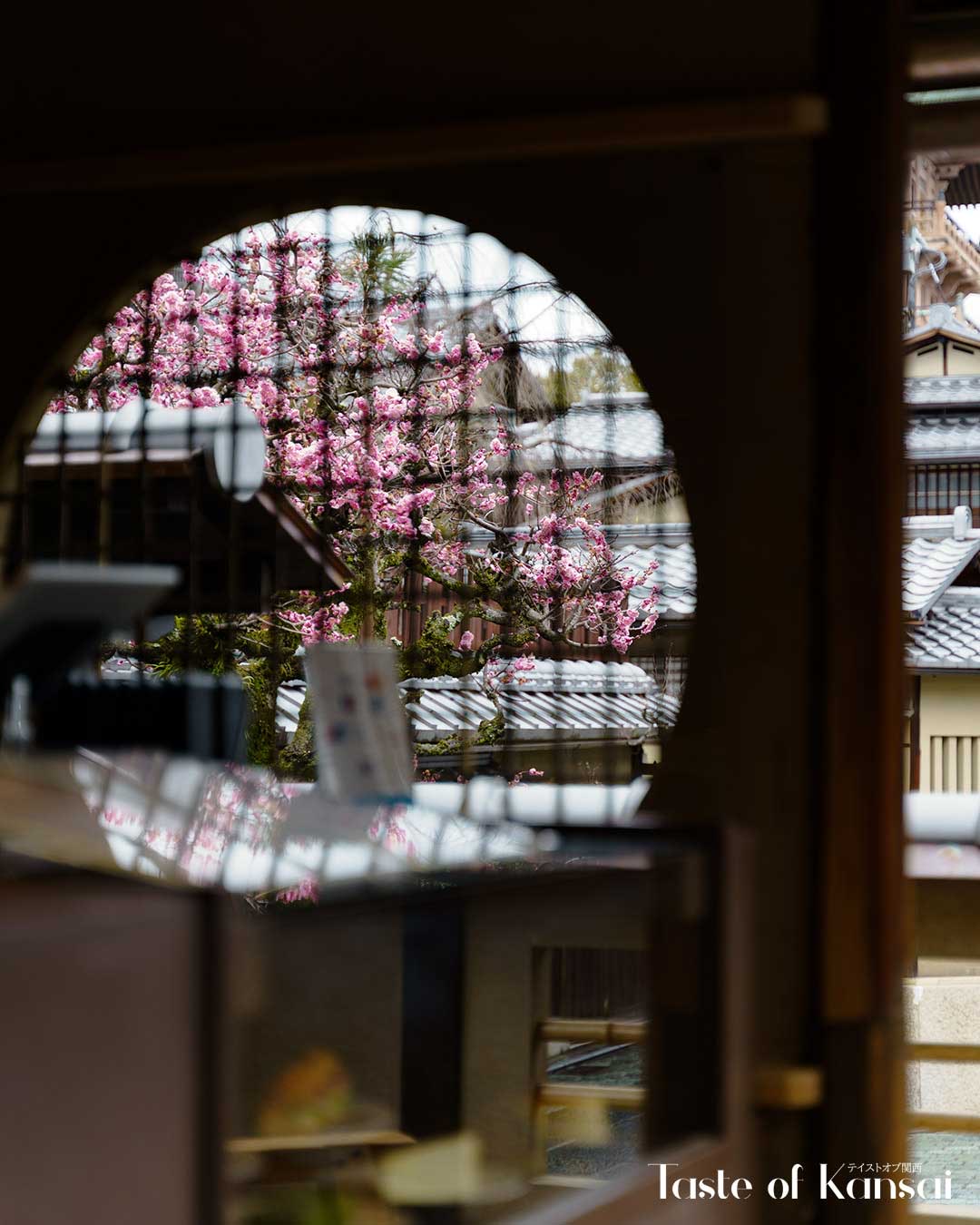
4.Climb the stairs and you take off your shoes. A long rectangular tatami platform fills the middle of the second floor, and through the wide windows hang the tiled roofs of Higashiyama and the tower of Gion-kaku. Rickshaws roll along the stone lane below. If the ground floor is for a quick sit, the second floor is for staying. In spring, cherry branches fill the round window cut into the wall.
5.A standing board by the door lists the seven coffees brewed that day. Four are Ethiopian, all at the lightest roast. The washed Kochere carries notes of jasmine, Darjeeling and orange; the natural Harusuke, strawberry, peach and Earl Grey. With cups like these, what reaches the nose first is flowers and black tea rather than roast, and as the coffee cools the acidity rounds into fruit.
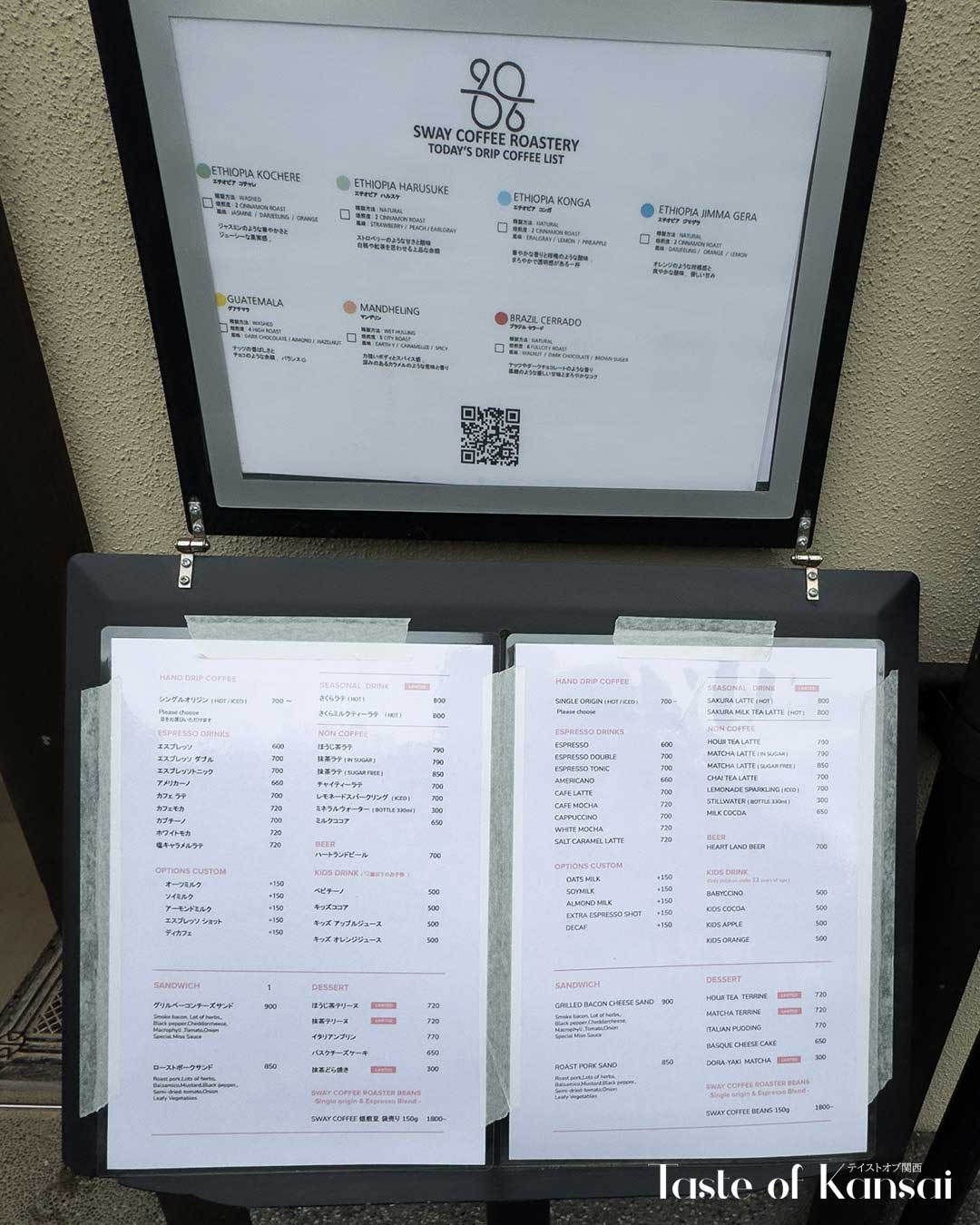
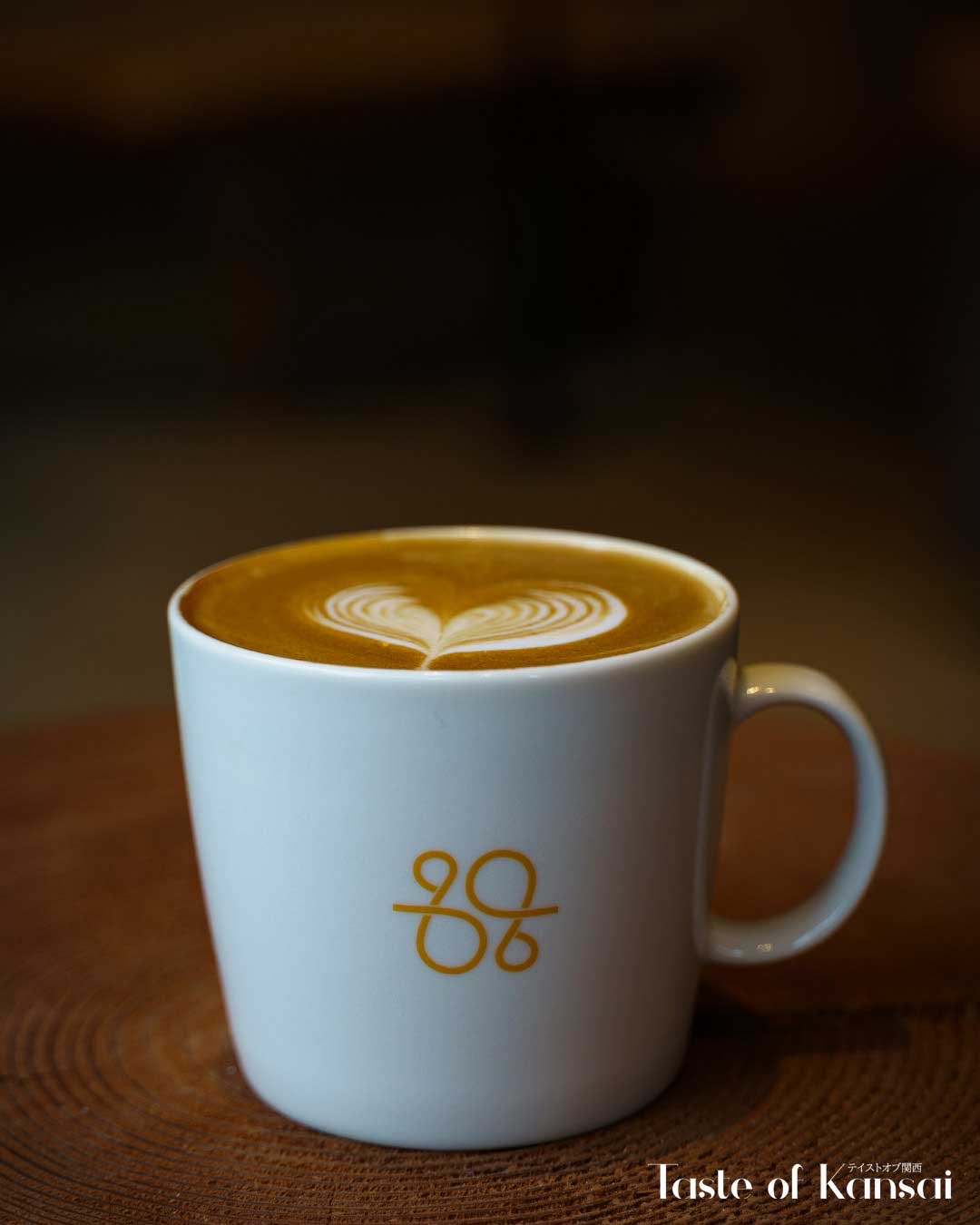
6.The other three sit at the opposite end. The washed Guatemala leans to dark chocolate and almond, the Mandheling to earth and caramel, the Brazil Cerrado to walnut and brown sugar. The darker roasts meet milk and become the latte, at 700 yen. Alongside it goes a 770 yen Italian pudding, baked firm enough to push back against the spoon, local media report. The bitterness of the caramel runs the same way as the coffee's, which is why the two share a tray.
7.New customers walk past the four shops every day. Takayama drew 4,795,000 tourists in 2025, the most since the city's merger, and Kenrokuen admitted more than 2.64 million visitors in fiscal 2025. Zenko-ji is said to receive around 6 million worshippers a year. Most people on these streets never come back to the same shop. The seats fill anyway.
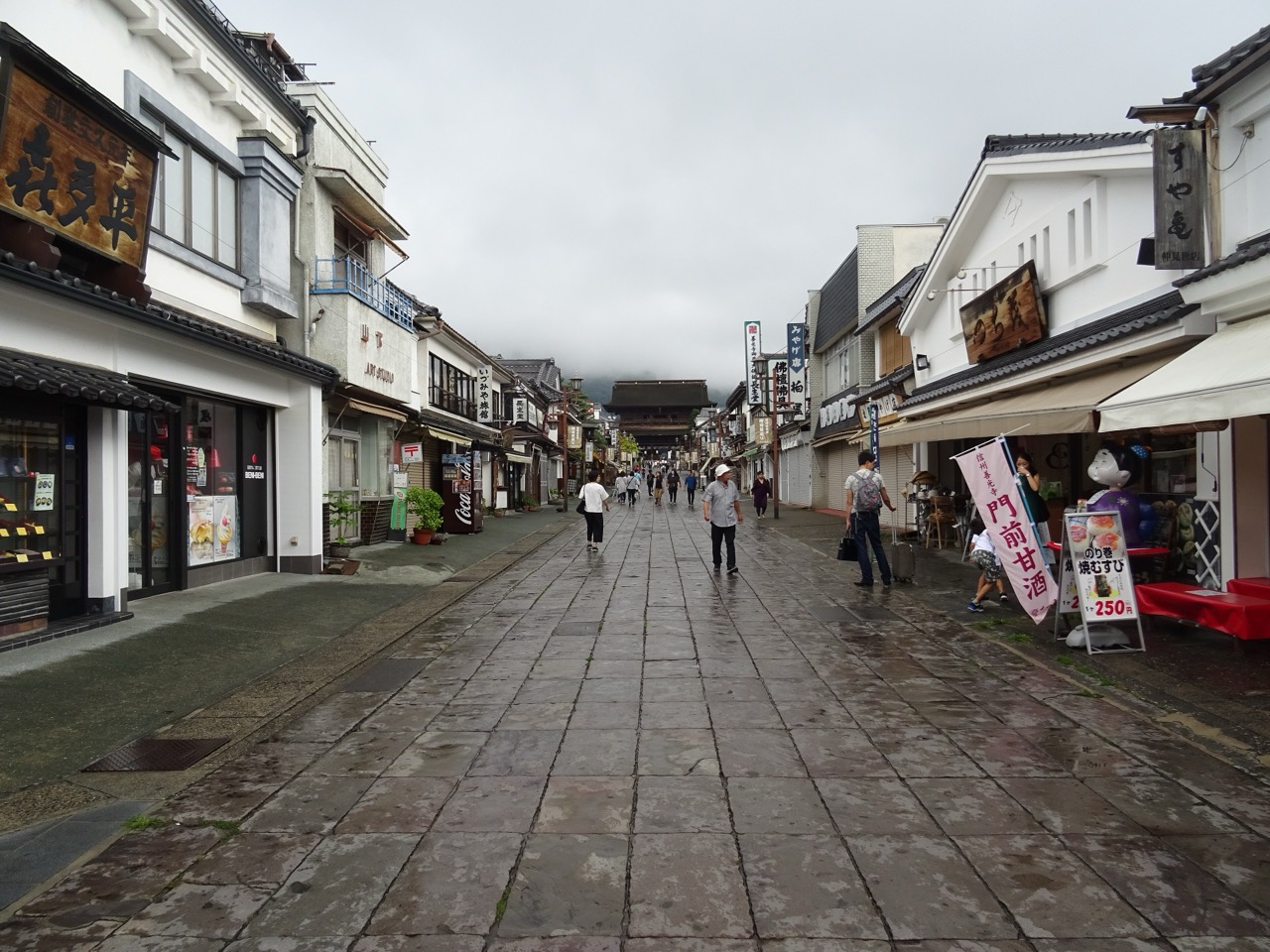
8.The shops are built from a stamp. The Nagano shop also has the bending bench and round stool tables, mixes concrete texture with timber posts and earthen walls, and serves in the same white mug with a gold logo as Kyoto. The menu travels too. The 770 yen pudding has kept its price since the Toyama stand in 2023, and the bacon cheese sandwich and Basque cheesecake move from shop to shop. The customer is seeing the place for the first time. The company is building it for the sixth.
9.Put the opening hours side by side and two businesses appear. On weekdays the Sogawa stand in Toyama stays open until 10 p.m., a neighborhood timetable built around the commute. The tourist shops close at 6 p.m. in Kyoto and 5 p.m. in Nagano. When the temples and gardens close, the streets empty.
10.Single-origin hand drip starts at 600 yen at the Hanamizuki shop in Toyama and at 700 yen in Kyoto. The pudding is 770 yen everywhere. Desserts carry one national price; only the coffee is priced up by location. The Basque cheesecake, 500 yen in Kanazawa in 2024, is 650 yen in Kyoto and Nagano.
11.Sales at the Kyoto shop have never been published. Assume 1,200 yen per person and 300 people a day, and monthly sales come to a little over 10 million yen. An estimate. Adding a single pudding to a drink already takes a bill past that line, so the figure is not a stretch.
12.Take ground-floor shop rents around Gion and Higashiyama at 20,000-40,000 yen per tsubo a month, and a two-story machiya comes to roughly 700,000-1.4 million yen a month, 7-14% of the sales above. Not a heavy share for the middle of a temple approach. Also an estimate. And since tourists walk past the door on their own, advertising costs next to nothing, so is it really an expensive spot?
13.All the beans are roasted on the large roaster at the Hanamizuki shop in Toyama and shipped out, with Yonezawa in charge of roasting. Even allowing for green coffee prices and weight lost in roasting, the beans in a 700 yen cup are estimated at around 40 yen. Sold by the bag, the same beans start at 1,800 yen. As shops are added, the single roasting machine turns out more, while the number of people roasting stays the same.
14.For coffee lines on the Higashiyama approach, % Arabica came first, opening below the Yasaka pagoda in 2014. A brand that started in Hong Kong made that shop its flagship and grew its stores worldwide. SWAY moved the other way. It roasts in Toyama and spread along the Hokuriku Shinkansen: Kanazawa and Nagano connect to Toyama by Shinkansen, Takayama by the JR Takayama Main Line. It picked only tourist spots within easy shipping distance of the roaster, with Kyoto one step farther out.
15.When it opened the Hanamizuki shop in 2025, the brand said it would skip limited-time items and sell a fixed menu for the long run. A year later, the Kyoto menu carries LIMITED tags on a sakura latte, a hojicha terrine and a matcha dorayaki. Locals come back for what they always have; tourists look for a cup they can only drink in that city in that season. Less a broken rule than a menu admitting that a tourist shop is a different business. The cost is that four of six shops now hang on a single number, tourist arrivals.
16.The Toyama roastery that began as a stand by a tram stop has placed four of its six shops on streets tourists climb, carrying beans roasted in one place, the same bench and a pudding that costs 770 yen everywhere. In Korea, the same plan hits people first. Beans can go on a truck; baristas cannot. Tourist shops fill on weekends and in peak season, so part-timers make up more of the staff, and once someone works more than 15 hours a week, weekly holiday pay kicks in and the real hourly wage rises by about 20%. Anyone planning several such shops in the hanok lanes of Gyeongju or Jeonju will find the numbers decided by the shift roster before the roasting equipment.