A roaster that began as a siphon kissaten in Nara in 1974 opens a shop today in Fukuoka's Tenjin Chikagai underground mall. Twenty-seven months after it first left Nara, its fourth shop is again inside a commercial facility attached to a station.
1.Today ROKUMEI COFFEE opens its Tenjin Chikagai shop in Fukuoka's underground mall, Tenjin Chikagai. It is the Nara roaster's first shop in Kyushu. There are 25 seats, and it opens every day from 8 a.m. to 9 p.m. The drip coffee of the day costs 580 yen a cup, a caffè latte 680 yen.
2.The operator is Rococo (路珈珈) of Nara, and its president, Koji Ida, is the roaster who won the 2018 Japan Coffee Roasting Championship. The company opened its first shop outside Nara in the summer of 2024. Since then it has added three in Tokyo and one in Fukuoka, and all four sit inside commercial facilities that are either attached to a station or a one-minute walk from one.
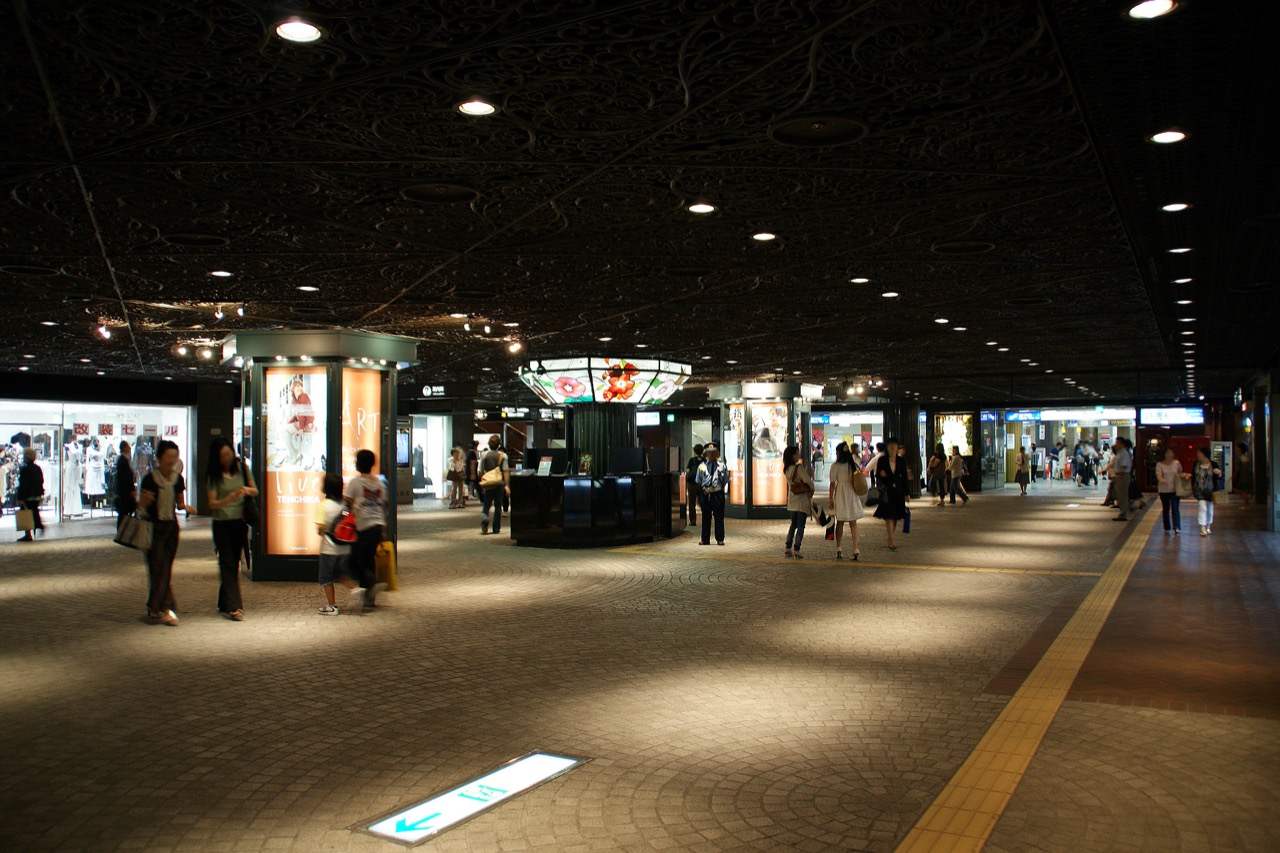
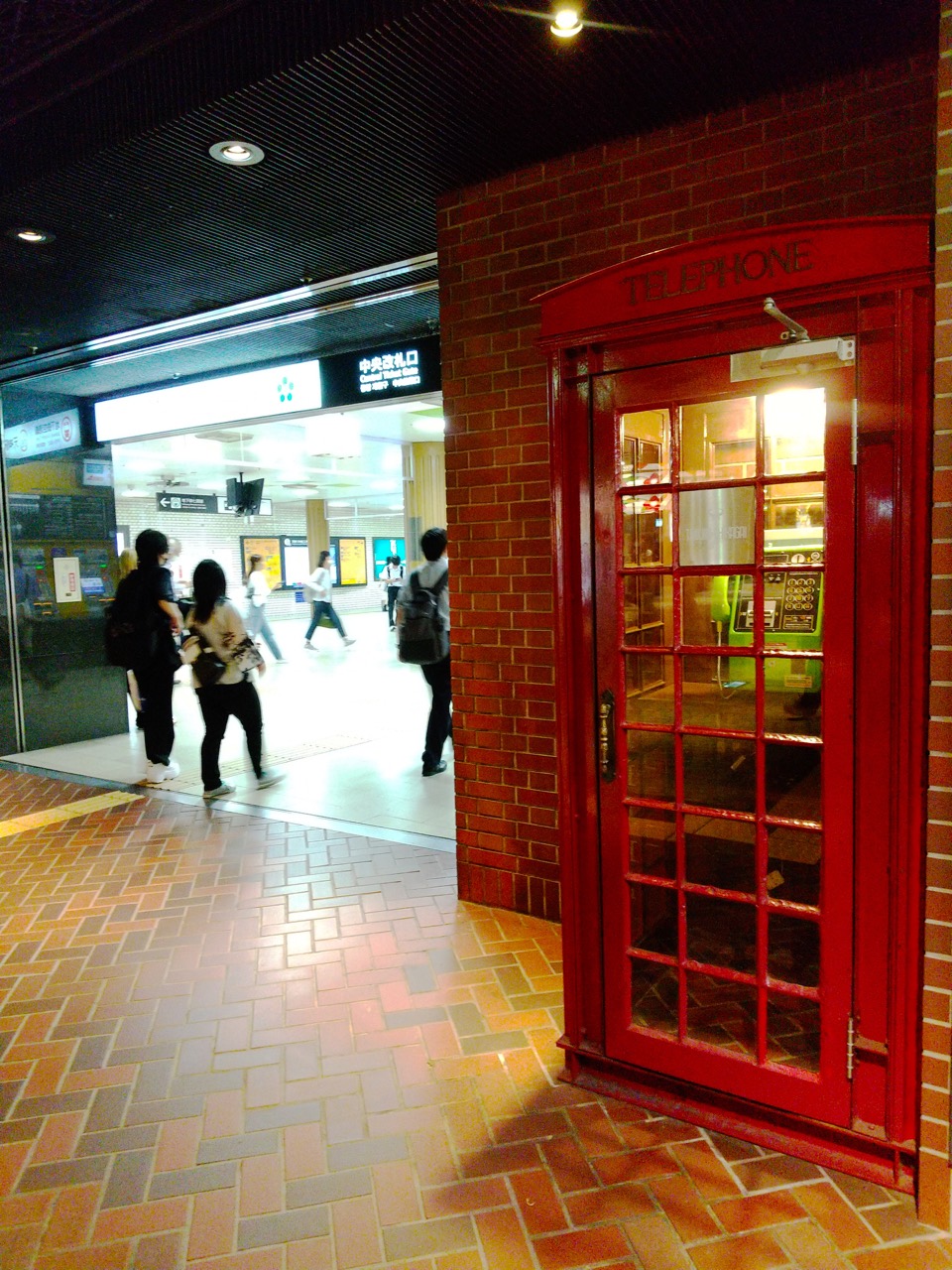
3.Tenjin Chikagai opened in September 1976 and turned 50 last month. A market survey before opening found that residents most wanted 19th-century Europe, so the builders laid stone on the floor, finished the walls to look like brick and carved vine scrolls into the ceiling. A red telephone box and stained glass arrived at the same time and are still there. Between 200,000 and 300,000 people a day walk this corridor, which links the Tenjin and Tenjin-Minami subway stations.
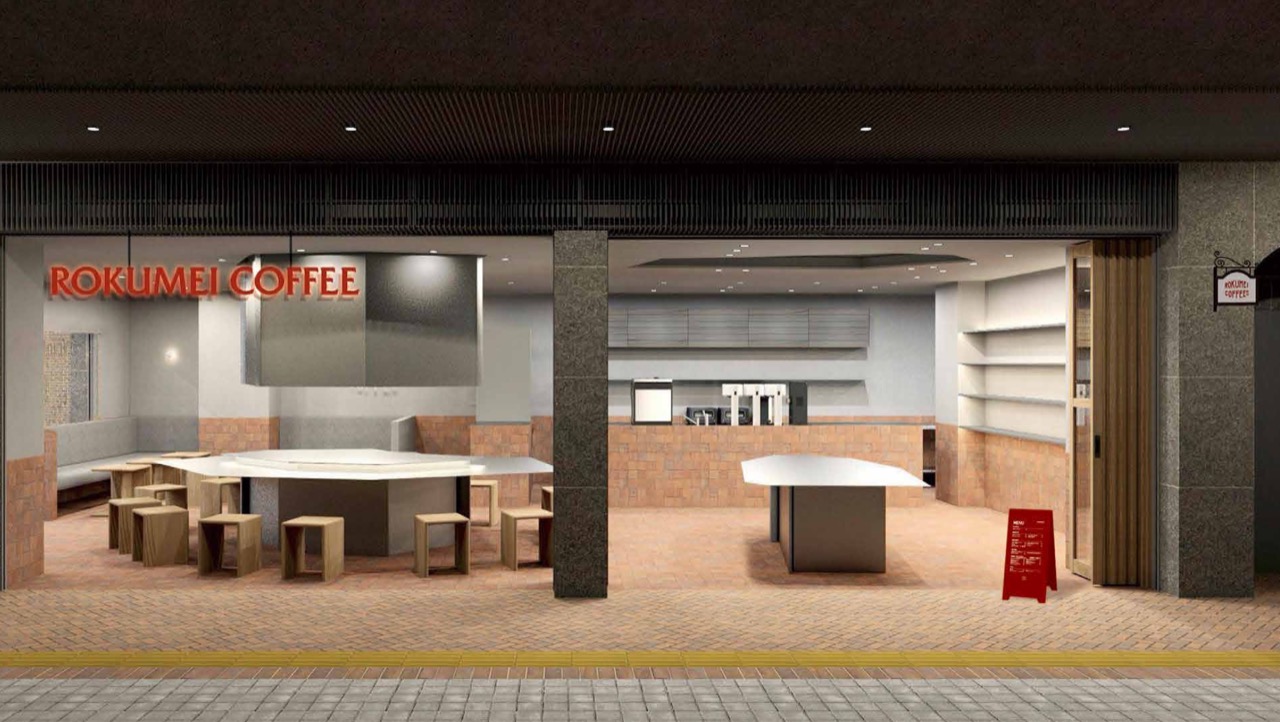
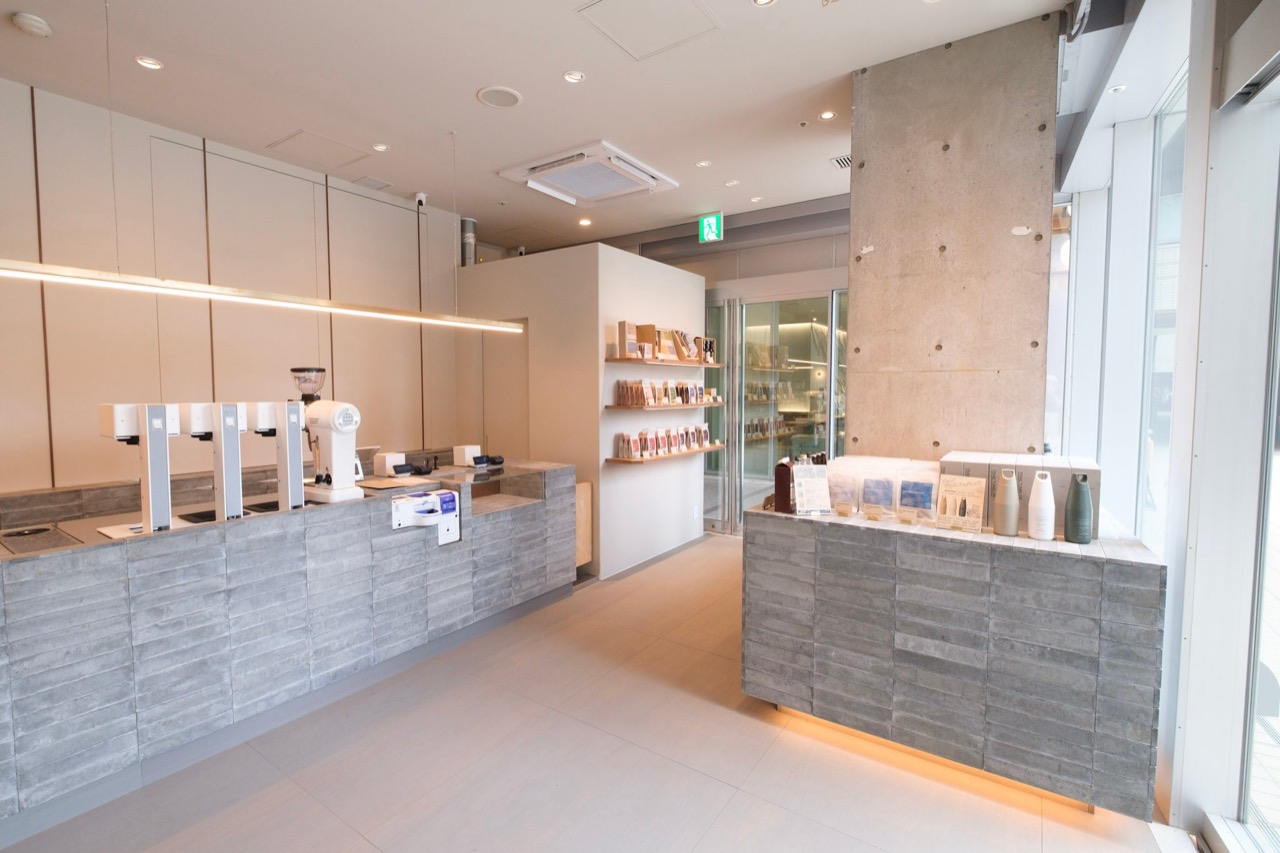
4.The rendering the company released shows no wall on the corridor side. Brick-toned tile, close to the corridor's own, runs into the shop, and wooden stools ring tables with rounded white tops. The bar stands along the back wall, and shelves for coffee bags line the right-hand wall. People walking past can see all the way to the bar without breaking stride.
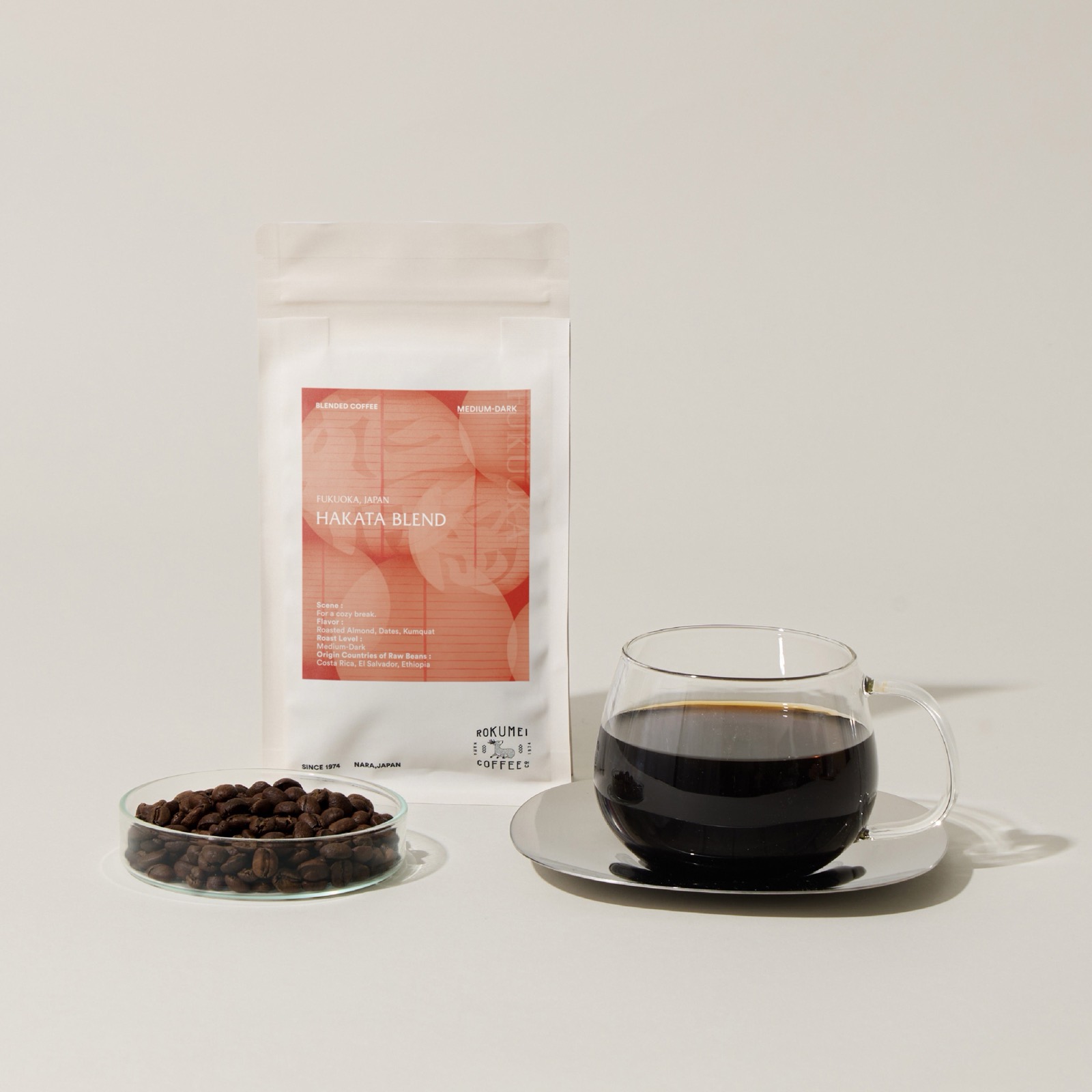
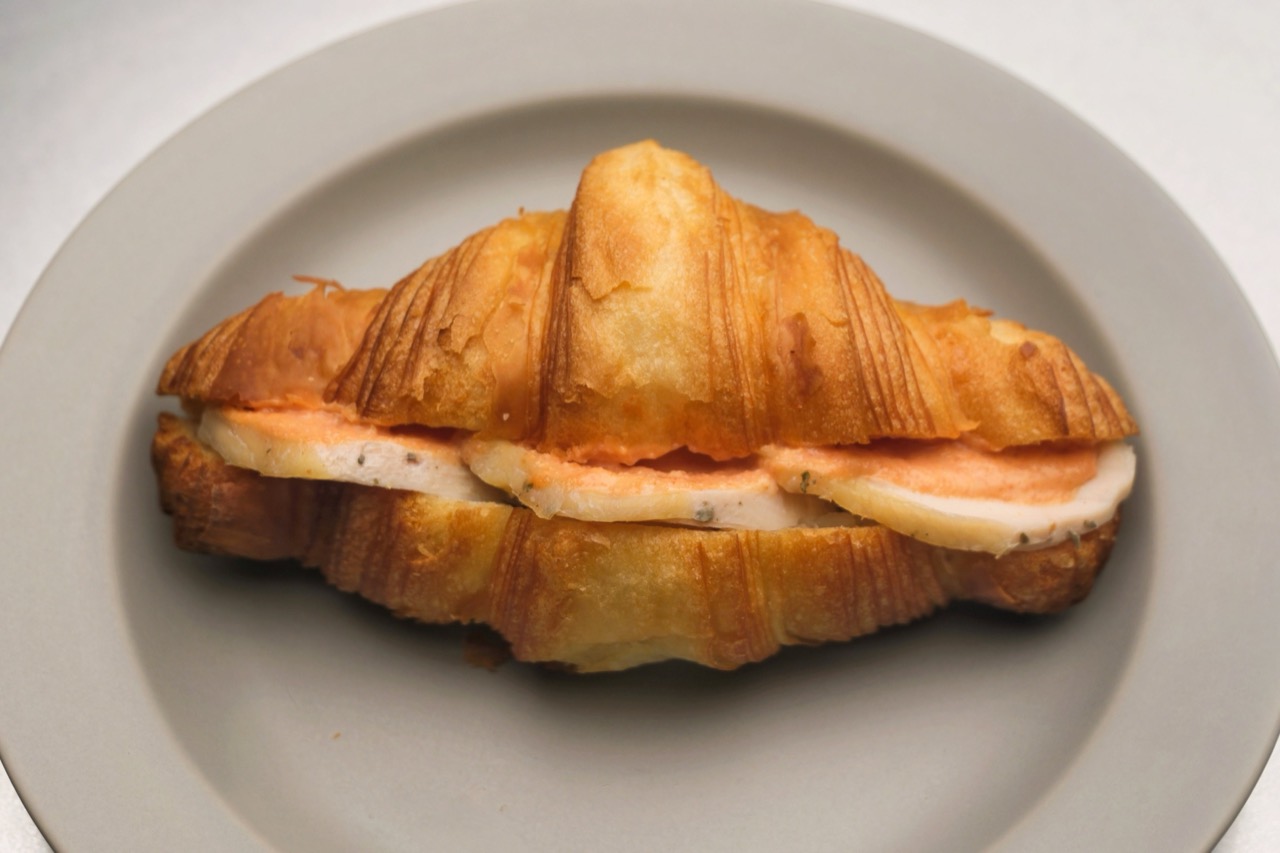
5.Each shop gets a blend sold only there. Tenjin's is the Hakata Blend: 2,000 yen for 150g of beans, 700 yen by the cup. The pastry is local too, a croissant sandwich filled with mentaiko and chicken ham for 540 yen. The Tokyo Station shop has its Tokyo Blend, and the Shibuya shop its Shibuya Scramble Square Blend.
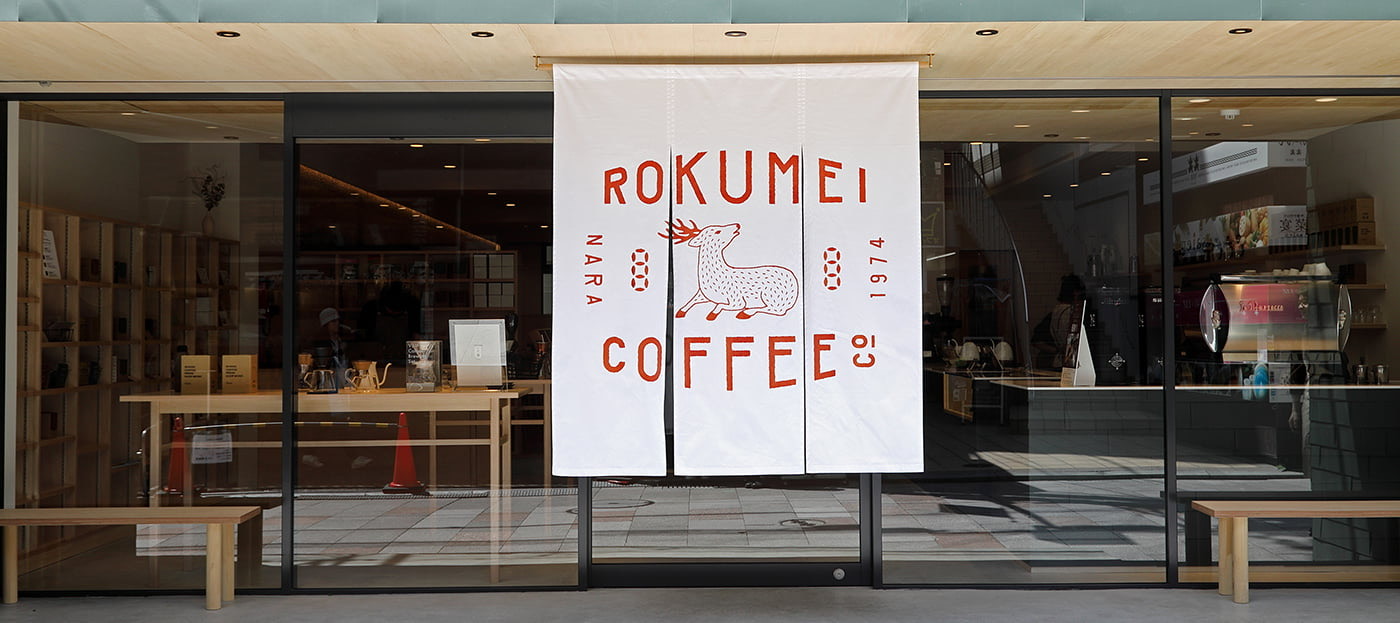
6.At the Nara flagship, a barista grinds beans for each order, brews every cup by hand and explains how that coffee tastes while pouring. The beans are roasted light on purpose to keep fruity sweetness and acidity. For the house Rokumei Blend, the shop lists the fruitiness of tree nuts, a clean finish and a sweetness that lingers. The cups are Mino ware, matte outside with a thin rim, in a red the shop chose as its own.
7.The Tokyo Station shop put its effort into the ice. Its double-origin iced coffee, 720 yen, pours Ethiopian coffee over ice made from frozen Guatemalan coffee. Ordinary iced coffee grows thinner as the ice melts and water takes over; here the melting ice is a second coffee. Going by the usual character of the two origins, the bright acidity of a light-roast Ethiopia arrives first, and the rounder sweetness of the Guatemala folds in over time. It is a cup built to hold up during the walk to the ticket gate.

8.The company picks places people pass through, not places they come to sit. The Gransta Marunouchi shop, outside the ticket gates on Tokyo Station's first basement level, has 10 seats and opens at 7 a.m.; the shop on the second floor of Shibuya Scramble Square has only 6. Short on seats, both stack beans and drip bags on the shelves. The demand for a gift to carry onto a train lines up with station retail. Even at the Nara flagship, many customers reportedly buy the packages, dressed in traditional Japanese colors, as gifts.
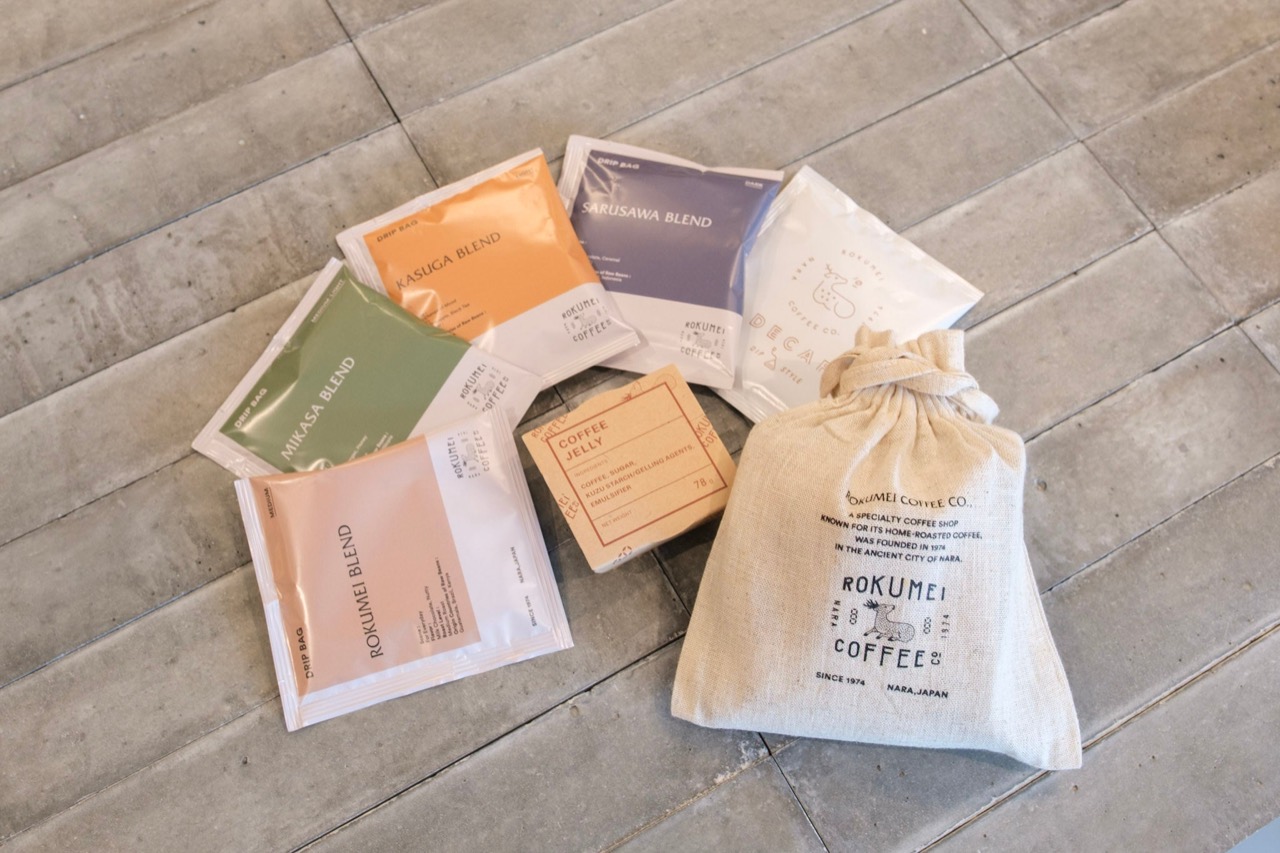
9.At 2,000 yen for 150g, the beans come to more than 13,000 yen a kilo. If a drip cup uses 15g, the beans alone are worth 200 yen at retail (an assumption). Buy the same beans by the cup and you pay nearly three times that; the difference is water, labor and the seat.
10.Because the company roasts its own beans, the real cost is far lower. Taking specialty green coffee at 2,500 yen a kilo and a 15% weight loss in roasting, the bean cost of a 580-yen cup comes to about 45 yen (an estimate). What a cup earns depends on seats and staff, not beans.
11.Tenjin Chikagai as a whole posted sales of 22.53 billion yen in fiscal 2025, its highest since opening. Spread across roughly 150 tenants, that is 150 million yen per shop per year. For a 25-seat cafe to match that average, it has to sell 410,000 yen a day.
12.If each customer spends 900 yen on a drink and pastry, that means about 460 customers a day (an estimate). With an average stay of 40 minutes and 40% of seats filled through opening hours, about 190 of them sit down. The other 270 have to be takeaway customers for the numbers to work. Station retail in Japan often charges rent in proportion to sales, so in a slow month the rent falls too.
13.Lay out the seat counts in opening order and a pattern appears. The first two are grab-and-go shops for commuters and travelers; since this summer, the company has been opening shops where people sit. The Musashi-Koyama shop has 29 seats inside Park City Musashi-Koyama The Mall, a one-minute walk from the station, and sells a thick French toast set for 1,250 yen. Food draws the money local residents spend sitting down.
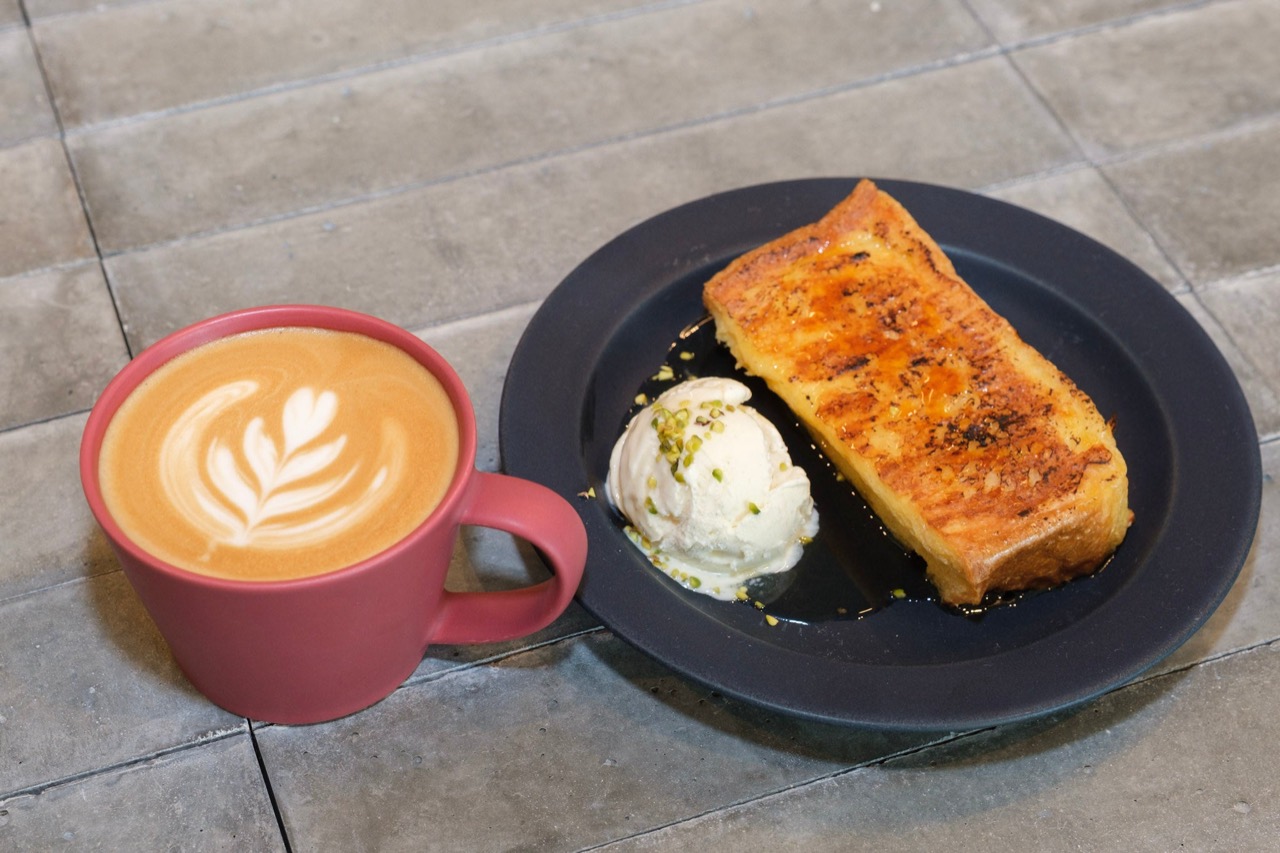
14.One kissaten in Tenjin Chikagai has held the same spot since the mall opened, and it still sells cheese dogs and coffee. Rokumei started in the same era. In 1974 Ida's father opened a pure kissaten called ROCOCO in Nara and served siphon coffee; his son helped out from his university days and began roasting in 2010. In 2019 the shop itself took the name Rokumei. The name comes from a Chinese story of deer calling to one another across the herd, and the company says it carries the wish to be "a shop where people bring people."
15.When a regional roaster comes to a big city, it usually starts with a ground-floor spot on a well-known side street. Rokumei skipped that step. Its first Tokyo shop was 10 seats outside a ticket gate, and since then it has chosen only places where the facility gathers the crowd. In return, the facility sets the hours: the Tokyo Station shop opens at 7 a.m. and closes at 10 p.m. on weekdays. On the sourcing side, it bought pulpers, drying beds and fermentation tanks for a village in Myanmar's Ywangan area and specifies honey processing for the coffee it buys there.
16.A roaster run by the second generation of a Nara kissaten has opened 25 seats in a Fukuoka underground mall in its 50th year, and all four of its shops outside Nara sit inside stations and commercial facilities. The bean cost of a 580-yen cup is about 45 yen, yet reaching the mall's average sales takes some 460 passers-by buying every day. In Korea the first obstacle is how tenants get in. Station retail there is often let by open tender to whoever bids the highest rent, so the Japanese arrangement of rent that rises and falls with sales is hard to count on.