Till White, the café Hyundai Department Store built itself, has opened its third location 13 months after the first. Every branch runs a different menu, and everything inside, from the beans to the brunch plates, carries an outside name.
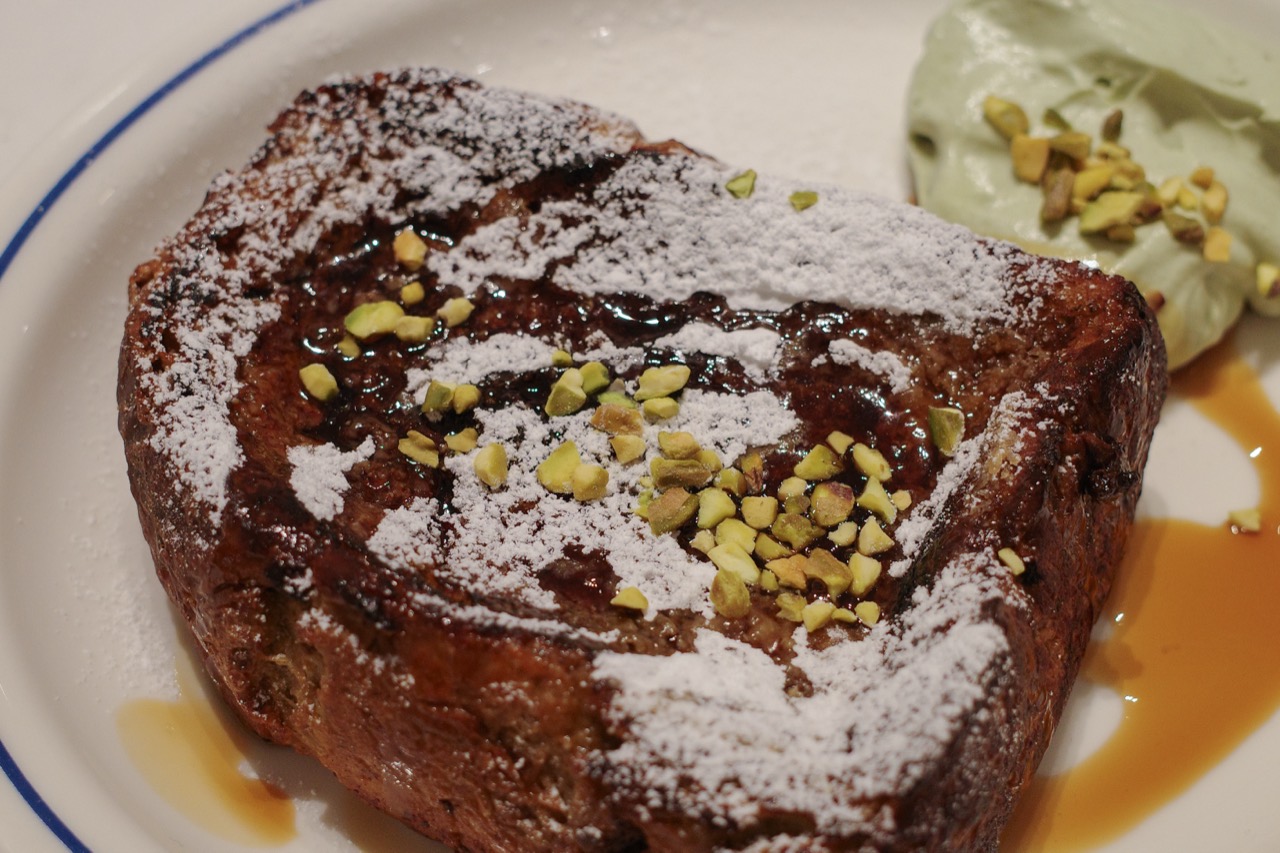
1.On September 4, Till White opened on the 10th floor of Hyundai Department Store's Trade Center branch in Samseong-dong, Seoul, inside a new dining floor called EP.1. This branch serves brunch all day, and its 11 dishes were developed with chef Yoo Gi-young of the restaurant Ppomo. Seasonal French toast costs KRW 17,000; kimchi fried rice and a chicken Caesar salad are KRW 19,000 each. A café that started out selling coffee now charges the price of a meal at its third shop.
2.It is the first café brand a Korean department store has planned and run on its own. The first branch opened on August 7, 2025 on the second floor of The Hyundai Seoul in Yeouido; the second opened on June 5 this year on the fourth floor of the Apgujeong flagship. A Pangyo branch is due before year-end. The three shops share a name and little else on the menu board. Hyundai says it will change the menu, the space and the partners to fit each store's catchment and customers.
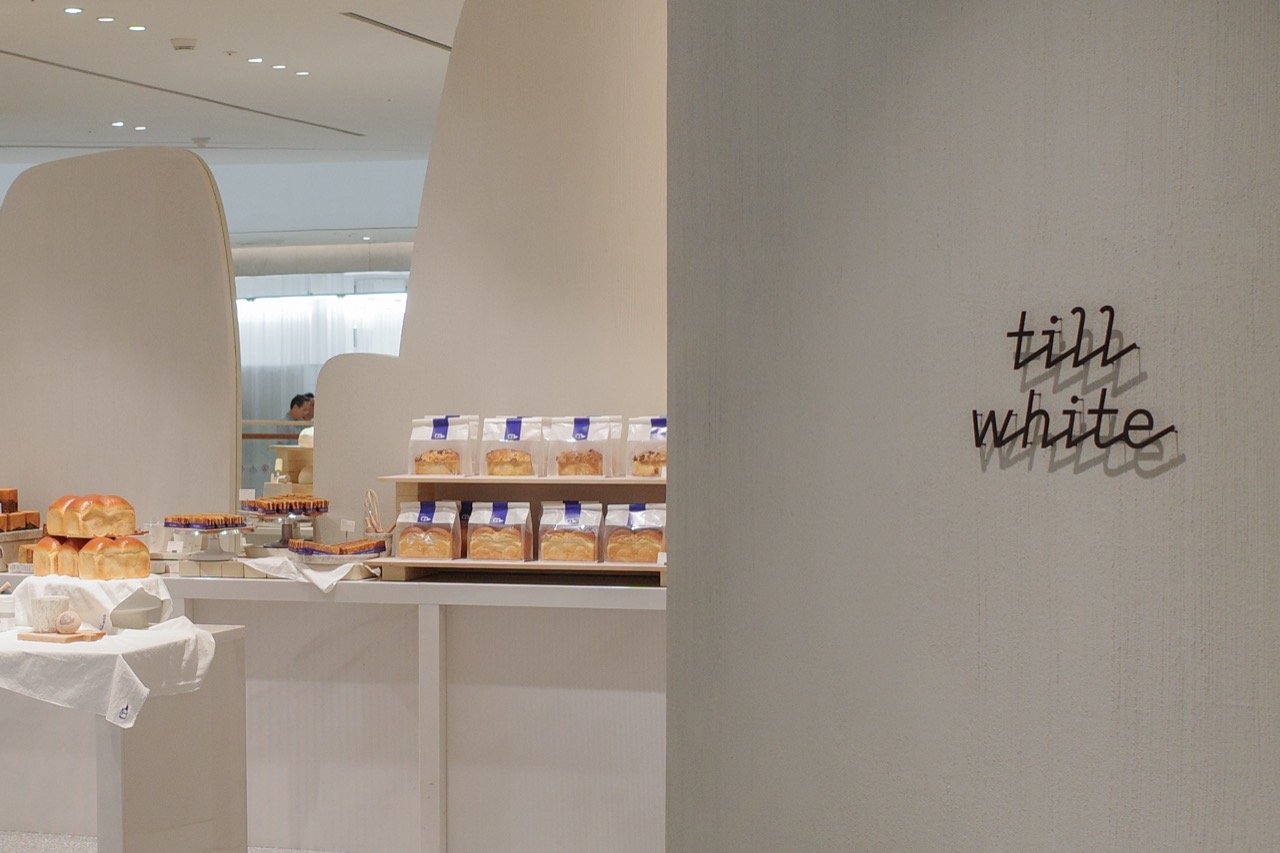
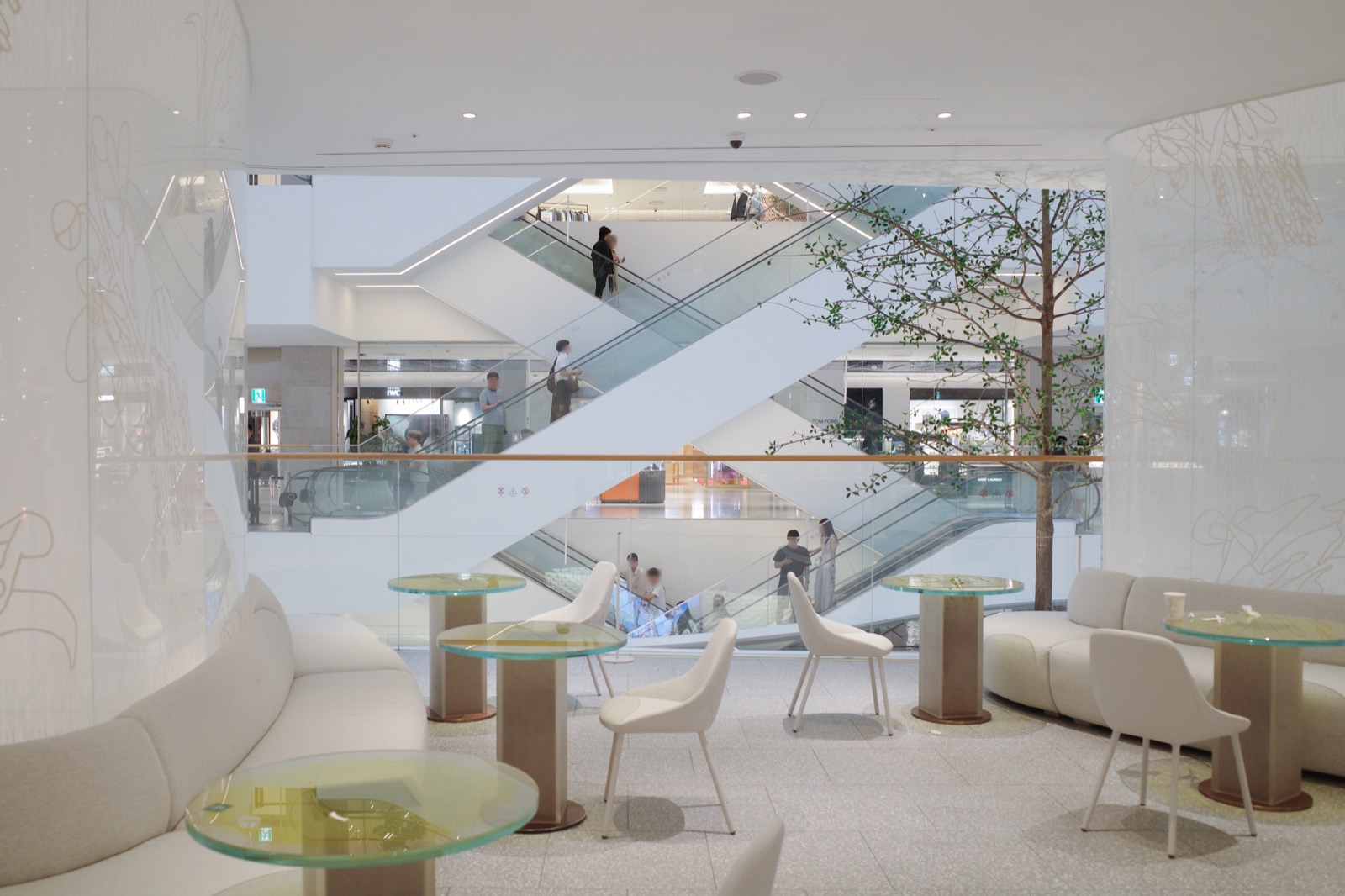
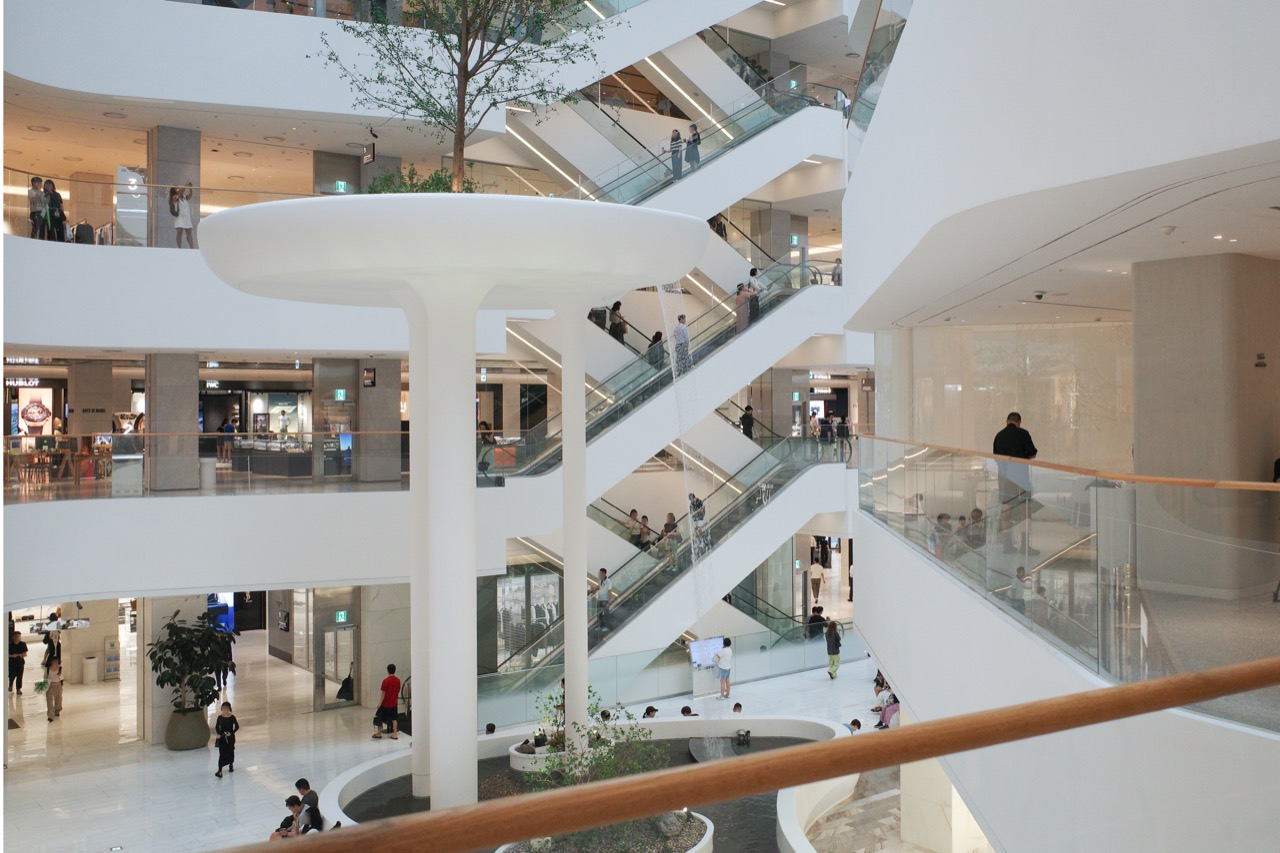
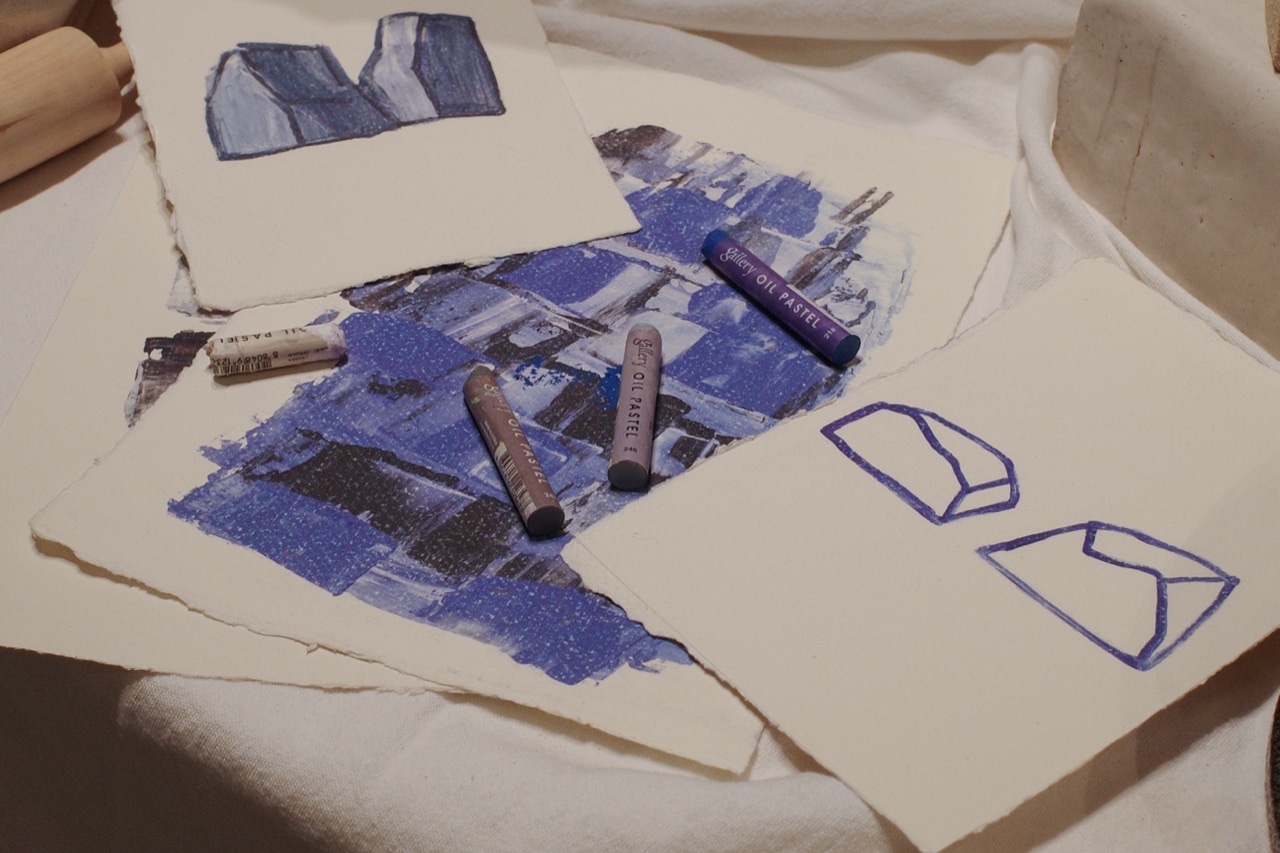
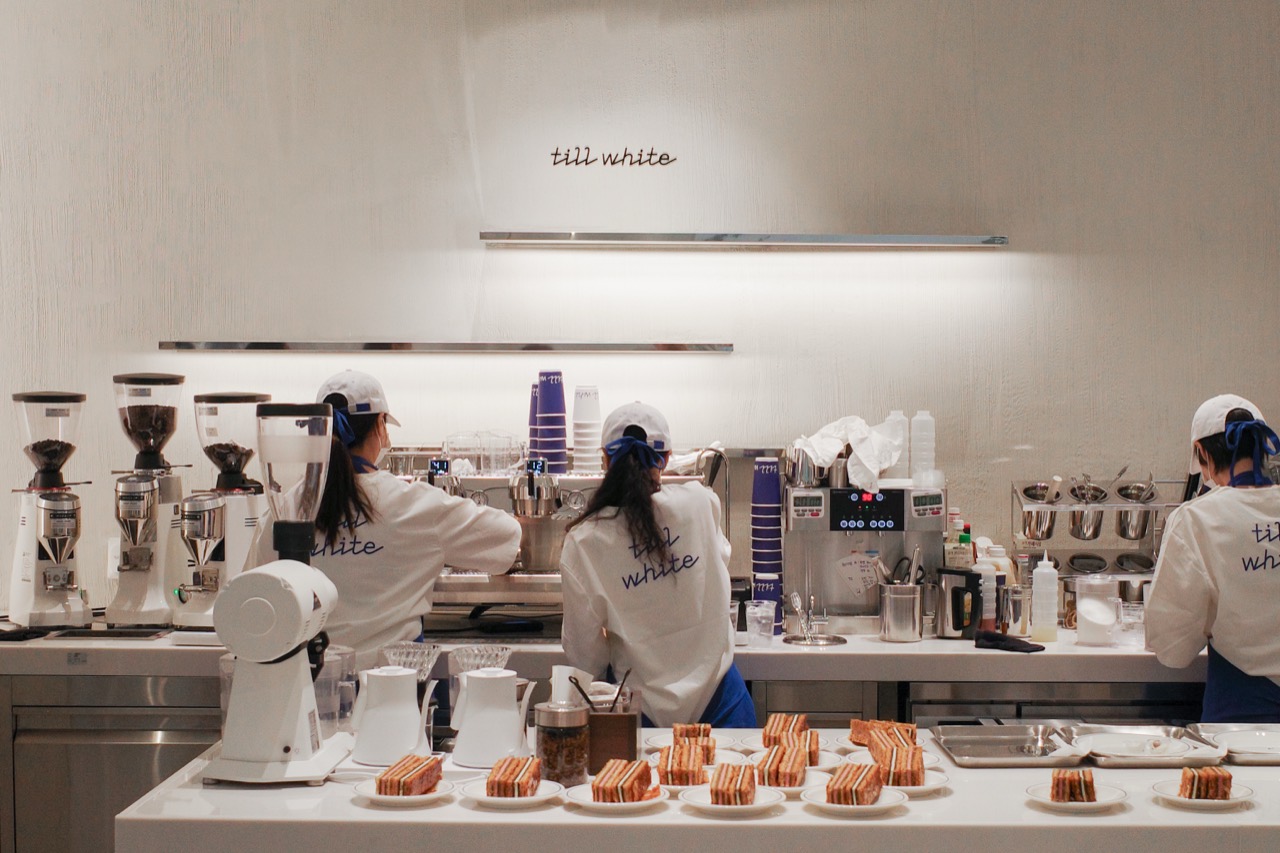
3.The first branch hugs a second-floor corner overlooking Waterfall Garden, the central atrium where a 12m artificial waterfall drops. Walls and furniture are white, with a single accent color, a deep blue called Till Blue. Drawings by artist Eom Yu-jeong appear on the walls, the packaging and the plates, and wrap the column lights in the middle of the room. The spot where customers turn their backs on the waterfall to take photos is this white wall.
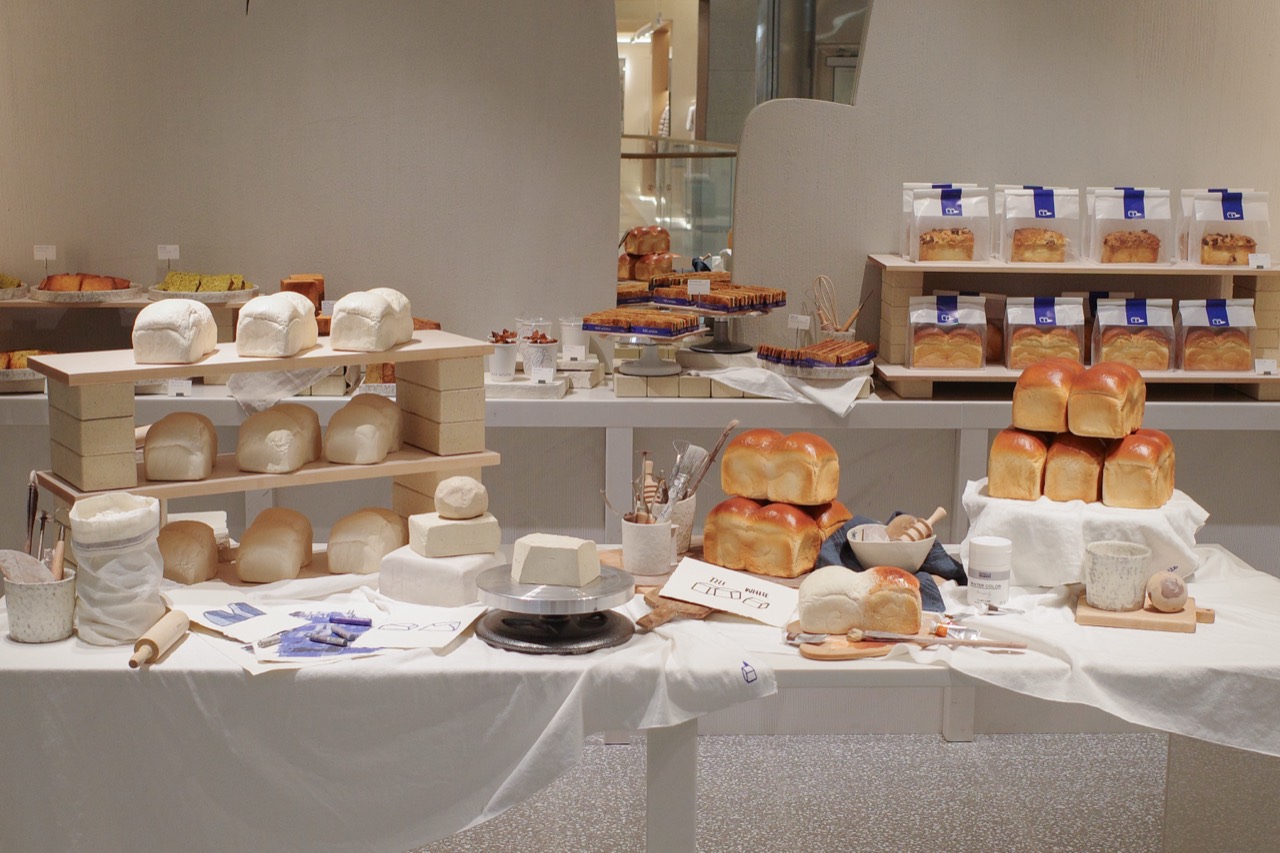
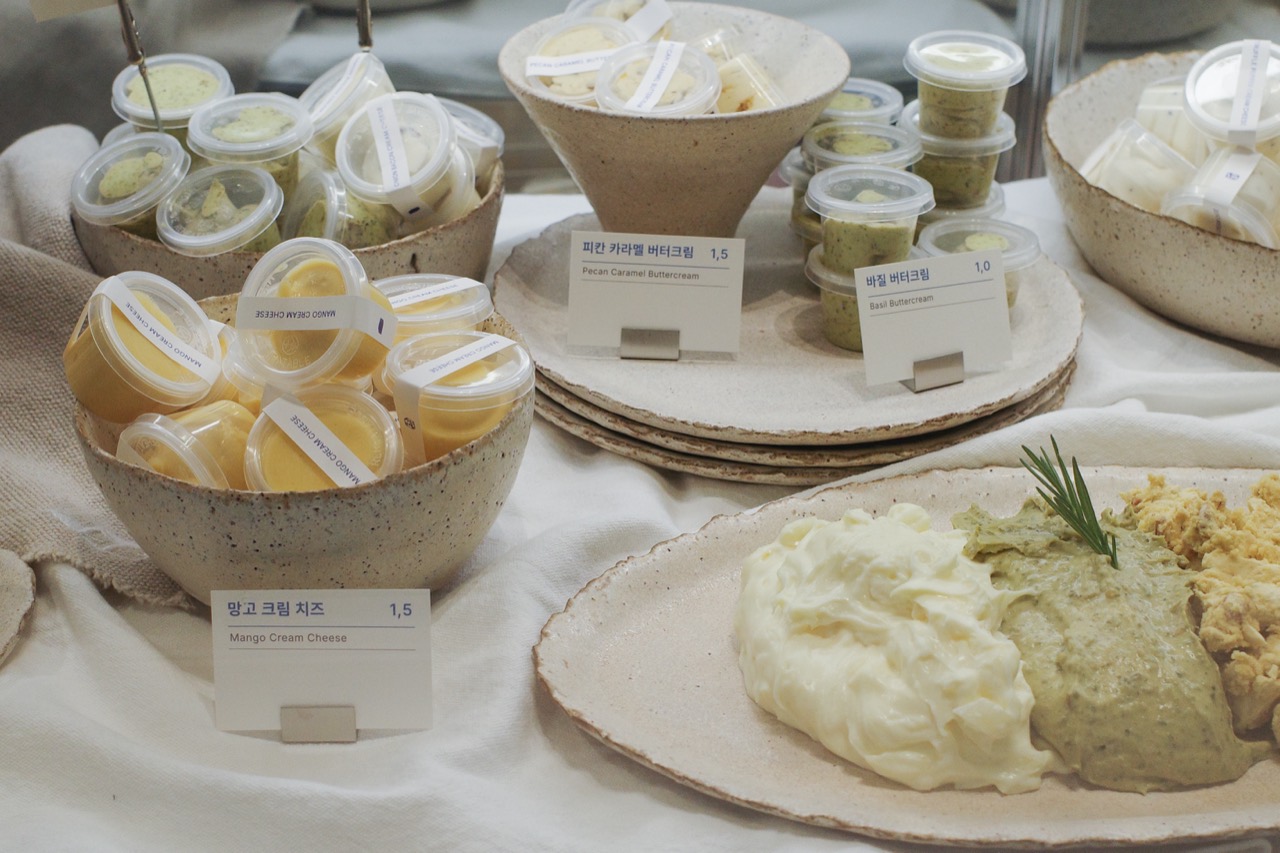
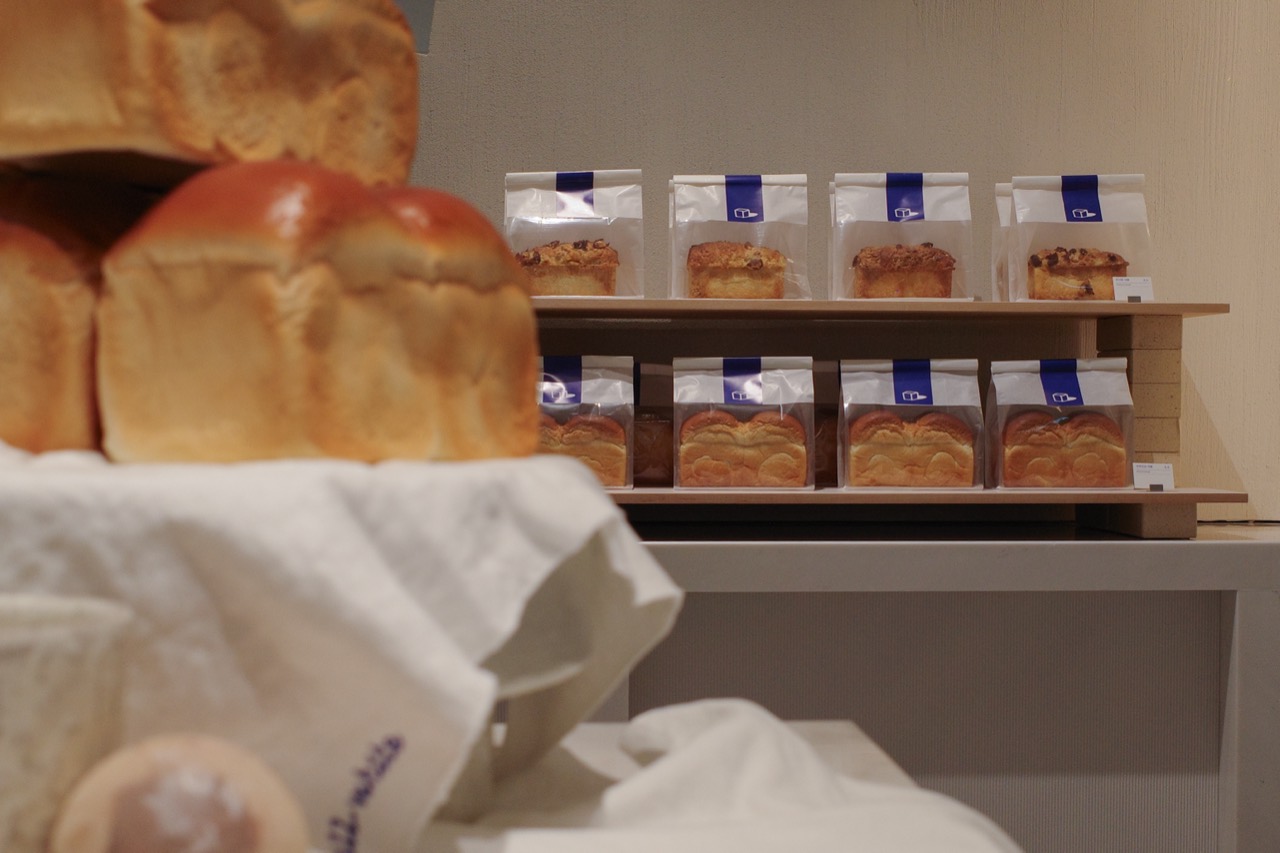
4.The beans come from Coffee Libre, a Seoul roastery. At launch the menu listed 11 coffee drinks and 9 non-coffee drinks, but bread takes up more of the menu board. Pick one of 7 loaves, one of 16 spreads and how dark you want it toasted, and out comes a plate; the company says this tartine has 112 combinations. The milk loaf and the chestnut loaf, which many customers buy whole, are still the first branch's best-known products.
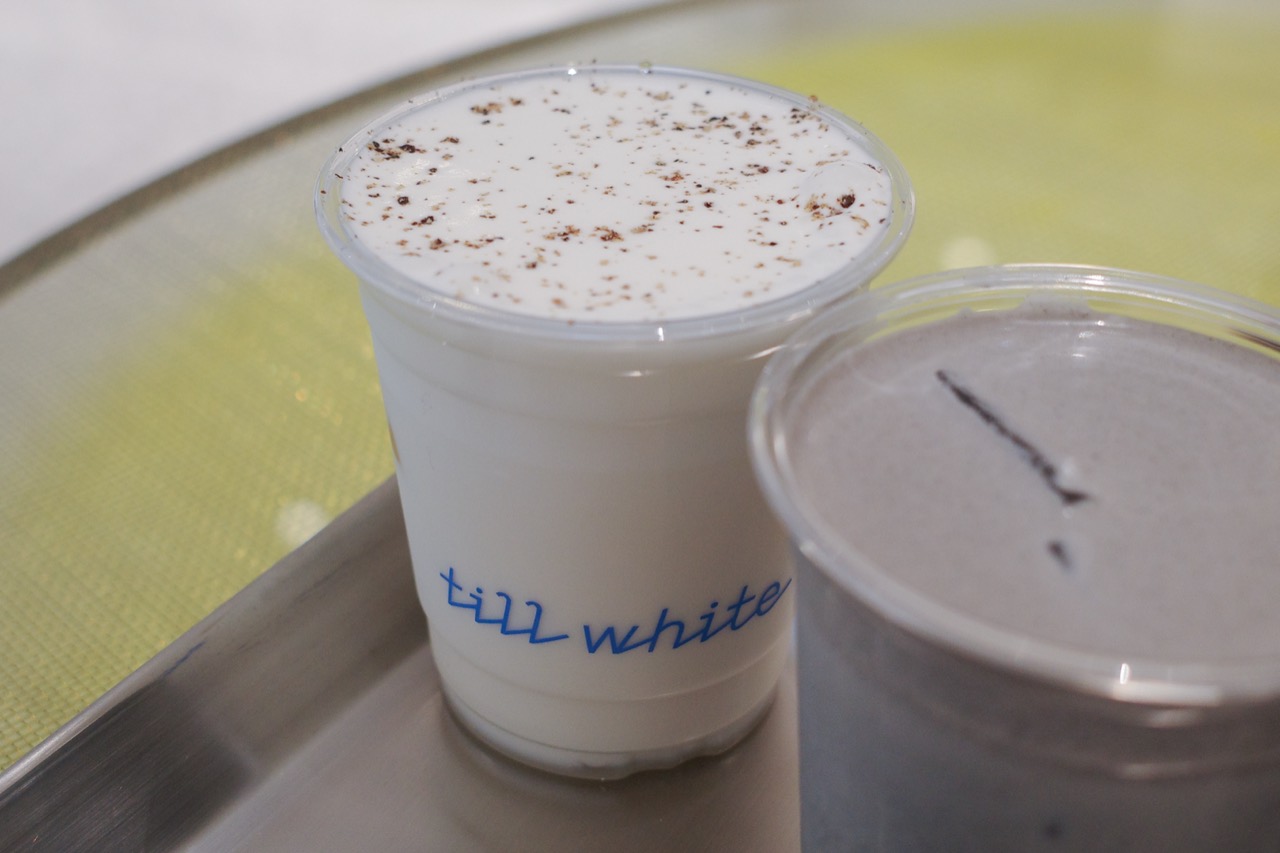
5.The signature Till White Latte is made with cardamom. What rises first from the brown dust on the milk foam is a cool scent somewhere between ginger and eucalyptus, and underneath, the milk and espresso are an ordinary latte. The KRW 6,500 Till Black Latte is blended with black sesame, which turns the drink a cloudy grey, and the oily nuttiness of toasted seeds covers the coffee's bitterness. One spice or one grain, added to bend a familiar latte just slightly.
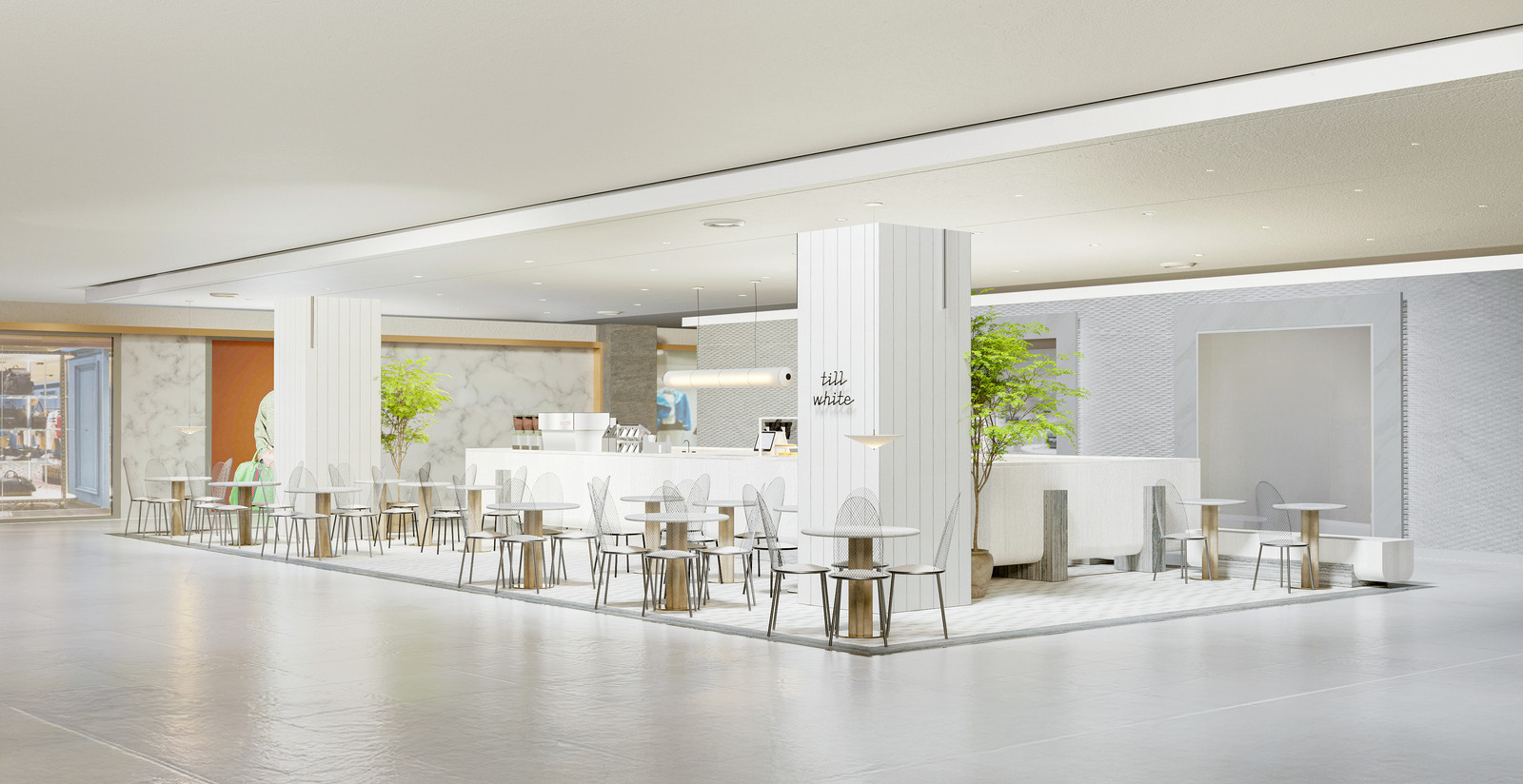
6.The second branch at Apgujeong has no walls at all. The bar and seats sit like an open island, so customers walk from the neighboring luxury boutiques into the café and back out again without crossing a wall. The 10 drinks sold only here were developed with Leesar Coffee, one of Korea's first standing espresso bars, and the bread with dessert company Doré Company. The signature Till Plate puts an espresso with almond spread, a cardamom latte and an orange granita on one tray. A strong sip, a soft cup, and a spoonful of ice to clear the palate.
7.Put the three price lists side by side and what shows up? At the first branch a customer adds a KRW 8,000-12,000 loaf to a KRW 6,500 latte; at the Trade Center branch, customers order KRW 17,000-19,000 plates. Under the same name, spend per person jumps two to three times, and the location, more than the menu, makes the difference. Samseong-dong, where the Trade Center branch stands, is an office district.
8.One afternoon last December at 3 p.m., about 20 people were queuing outside the first branch, according to an on-site report by The Korea Economic Daily. The same report added that it was a line rarely seen any more in a department store where the opening-time rush outside Chanel and Dior had faded. Visitors on the first weekend of the Christmas menu were 1.7 times the previous week's, and the KRW 10,000 Stollen loaf, the German Christmas cake baked in the shape of a loaf, often sold out by midmorning.
9.Women aged 20 to 40 make up 80% of customers, and a customer in her thirties quoted in the report said the menu design was great for photos. People leave a department store when their legs give out, so why do they take one more lap when there is somewhere good to sit? While the legs rest, they pick the next shop. That is also why the second branch removed its walls. From a café seat, the display cases of the store next door come straight into view.
10.Outside, the café market is moving the other way. National Tax Service data put the number of coffee shops in Korea at 95,337 in the first quarter of 2025, down 743 from a year earlier and the first decline since the count began in 2018. While neighborhood cafés closed, department stores added cafés. Shinsegae opened Categoric, a 40-seat café on the 11th floor of its Gangnam store, in June this year, and Lotte brought in Bacha Coffee, a coffee brand that began in Morocco, now at four locations.
11.Hyundai has released only two numbers for the first branch. Coffee sales passed 8,000 cups in the first month, and visitors average 30,000 a month. 8,000 cups over 30 days is about 270 a day; at KRW 6,500 a cup that is roughly KRW 52 million a month from coffee alone (estimate). With 1,000 visitors and 270 coffees a day, many of the rest must be buying bread and non-coffee drinks, so the shop likely makes more from bread than from coffee.
12.When a department store hands a café slot to an outside brand, it collects a share of sales as commission. The effective sales commission rate for department stores, published every year by the Korea Fair Trade Commission, sits around 20%. Running the café directly puts all the revenue on the store's books, but the store also pays for the beans and milk, the flour and butter, and the baristas' and bakers' wages. Plugging in typical Korean café costs, what is left from direct operation comes to 15-25% of sales (estimate), not far from the 20% a landlord collects without lifting a finger.
13.So this café is not graded on what happens inside it. By The Scoop's tally, Hyundai Department Store's standalone revenue growth fell from 20.1% in 2021 to 1.3% in 2024, and The Hyundai Seoul shrank 1% in the first half of 2025, its first decline. Till White's first branch opened that August. The math underneath: keep a customer one hour longer, and what they spend at the shops next door in that hour outweighs the café's profit.
14.Luxury brands were first to put cafés inside their stores to keep customers around. Louis Vuitton runs Le Café LV and Gucci runs Gucci Osteria, and Handsome, the fashion company within Hyundai Department Store Group, opened Café Time in a flagship store. But those cafés exist to sell their own clothes and bags; nobody else's goods. A department store's merchandise is spread across hundreds of brands, so its café has to make people remember the building itself rather than any single label.
15.Take this so-called in-house brand apart, though, and the store made less of it than you would think. The beans are Coffee Libre, the second branch's espresso is Leesar Coffee, the bread is Doré Company, the third branch's brunch is chef Yoo Gi-young. What the store holds is the name, the space, the white walls and the blue line drawings. Picking good brands and gathering them on one floor, in other words what a department store always did, is now happening again inside a single café.
16.In 13 months Hyundai Department Store has opened its own café in three stores, changing partners each time to build separate coffee, bread and brunch programs. The first branch sold 8,000 coffees in its first month, but the goal the company put forward was not cups; it was how long customers stay in the store. For anyone who owns a mall or a mixed-use complex and wants a directly run café, the first obstacle is people. The baristas and bakers an incoming tenant would have brought must be hired directly, and shifts must be built around department store hours that run without a day off.