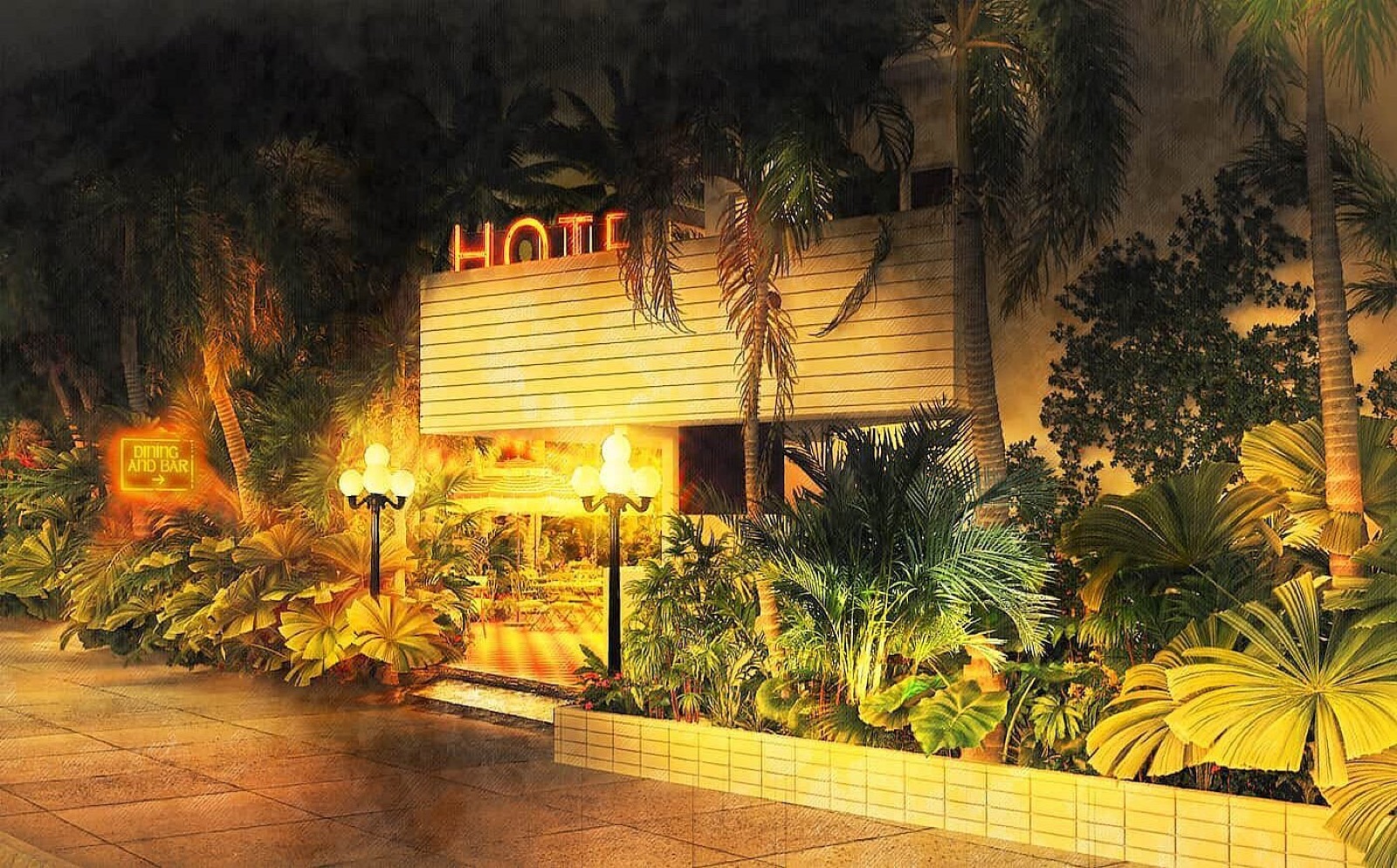
No brand name on the signThe front door at night. The neon simply reads HOTEL, and the red sign to the left points to drinks and food. Palms and tropical planting cover the entrance. ⓒThe Baby Grand
Daily Hotel
The Baby Grand: 31 rooms paid back by an oyster bar
2026.07.30
On an island off San Diego, an old motel reopened as a 31-room hotel. Six years of work, KRW 25 billion of money. KRW 800 million went into each room, close to three times the average for a hotel in this city. The people behind it are not a hotel company but a restaurant group running twenty-four bars and restaurants. If they built it knowing the rooms would not pay it back, where does the money come from.
1.On 14 May 2026, at 1315 Orange Avenue in Coronado, California, a 31-room independent hotel called The Baby Grand opened. Coronado is a small beach town across the bay from San Diego. What stood on the site was a tired motel called the La Avenida Inn.
2.Construction took six years and cost USD 18 million, about KRW 25 billion at KRW 1,390 to the dollar. The developer is the San Diego restaurant group CH Projects (registered as Consortium Holdings), founded by Arsalun Tafazoli. Post Company handled the design, led by partner Leigh Salem.
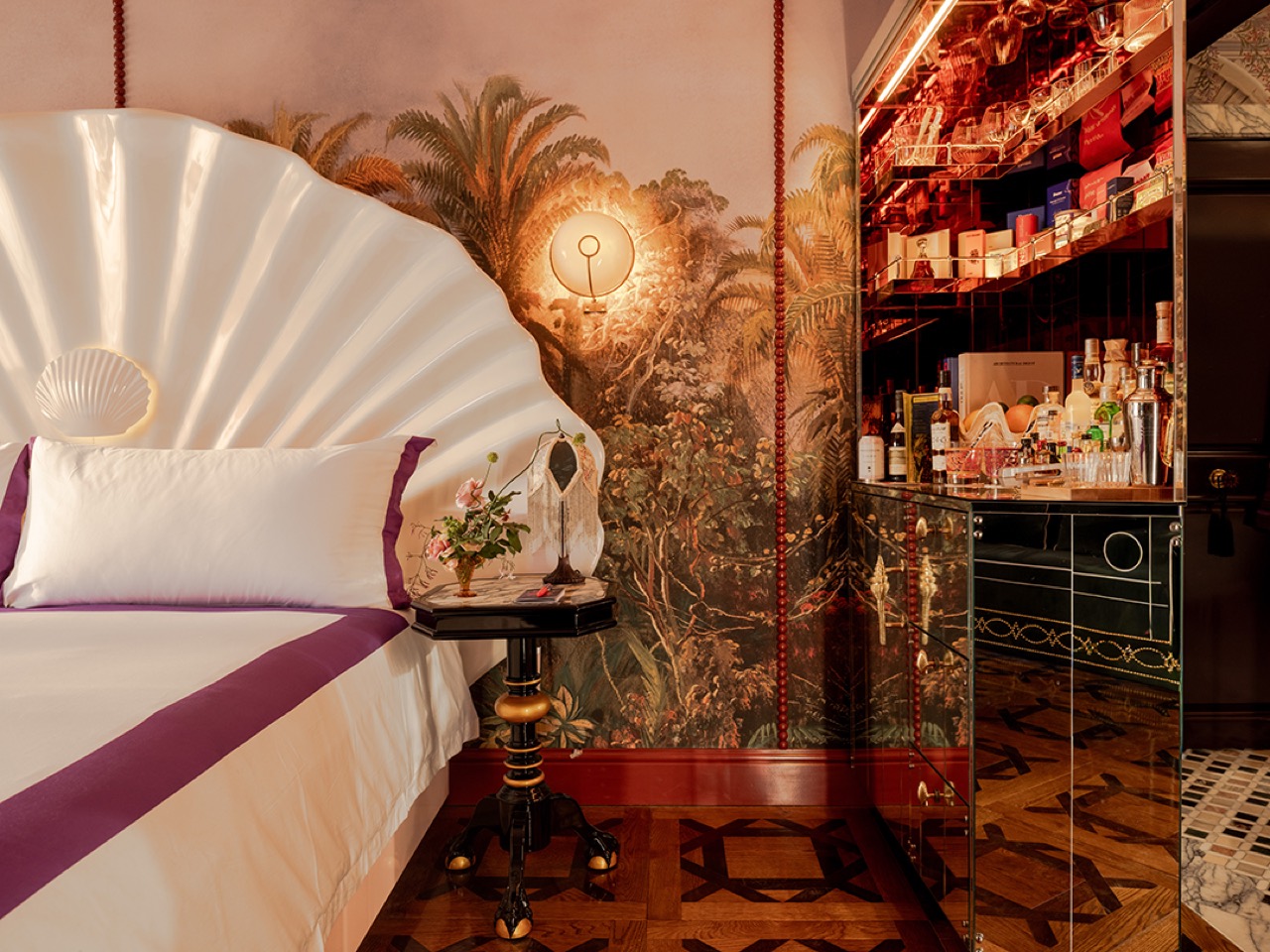
The sea beside the bedA shell headboard wrapped in white satin, a palm mural, and a glass cabinet lit red on the right. That is where the ocean lives in each room. ⓒThe Baby Grand, photograph Ethan Jones
3.Start with the rooms. The headboard is built as an iridescent shell and the walls carry tropical scenic wallpaper. An animal print chair, a marble table, one generous bar inside the room. This is a room that steps straight around the white and blue grammar of a beach hotel. The sea is right there and the room does not imitate it. Nobody goes this far unless the room was made to be photographed.
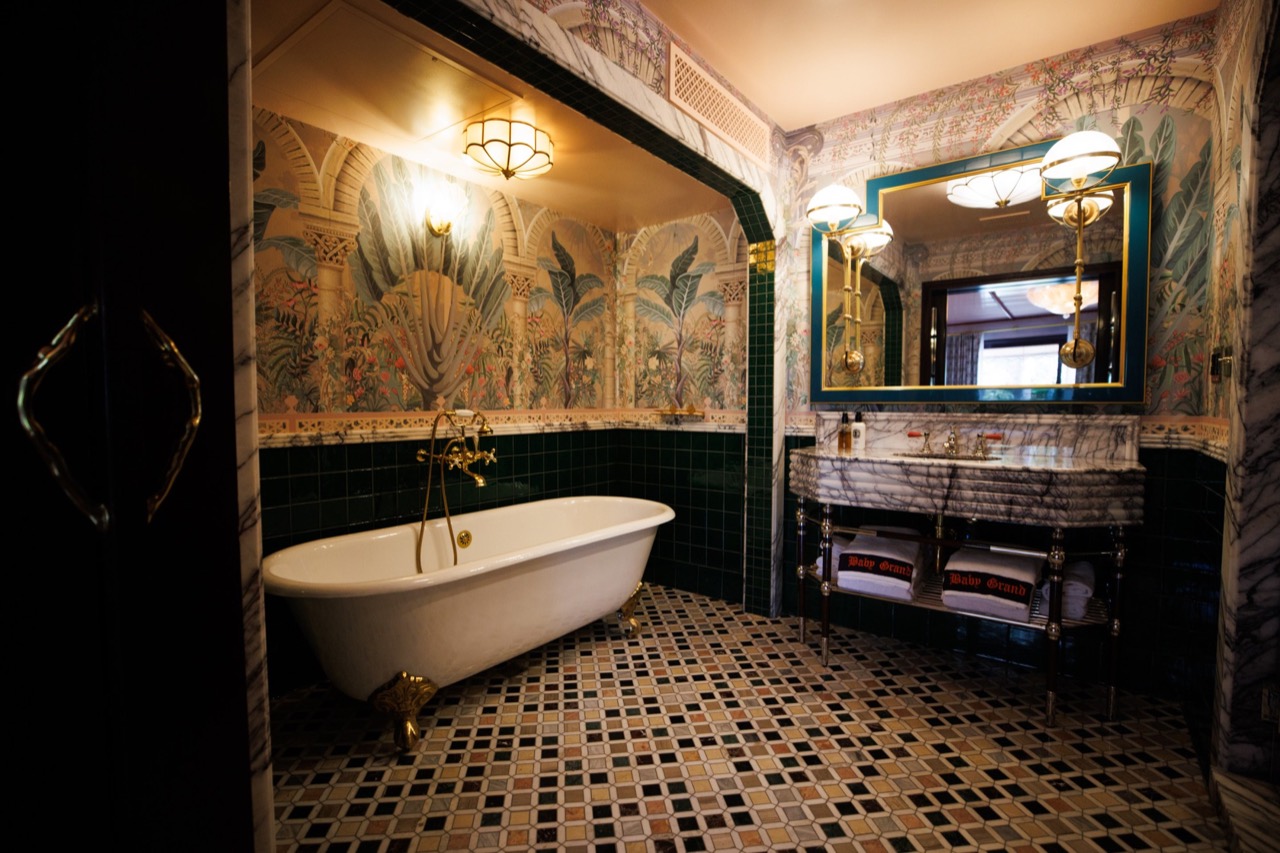
4.The bathroom stands out more. Close to half the room area goes to the bathroom. A mosaic tile floor, a shower box closed in glass, a clawfoot tub, a fluted marble basin. The opposite of the usual move, which shrinks the bathroom to fit the bed.
Half the room is bathroomA tub on brass feet sits in the middle of the room, the floor is mosaic tile and the lower wall is deep green tile. The area went to bathing rather than to the bed. ⓒSan Diego Union-Tribune
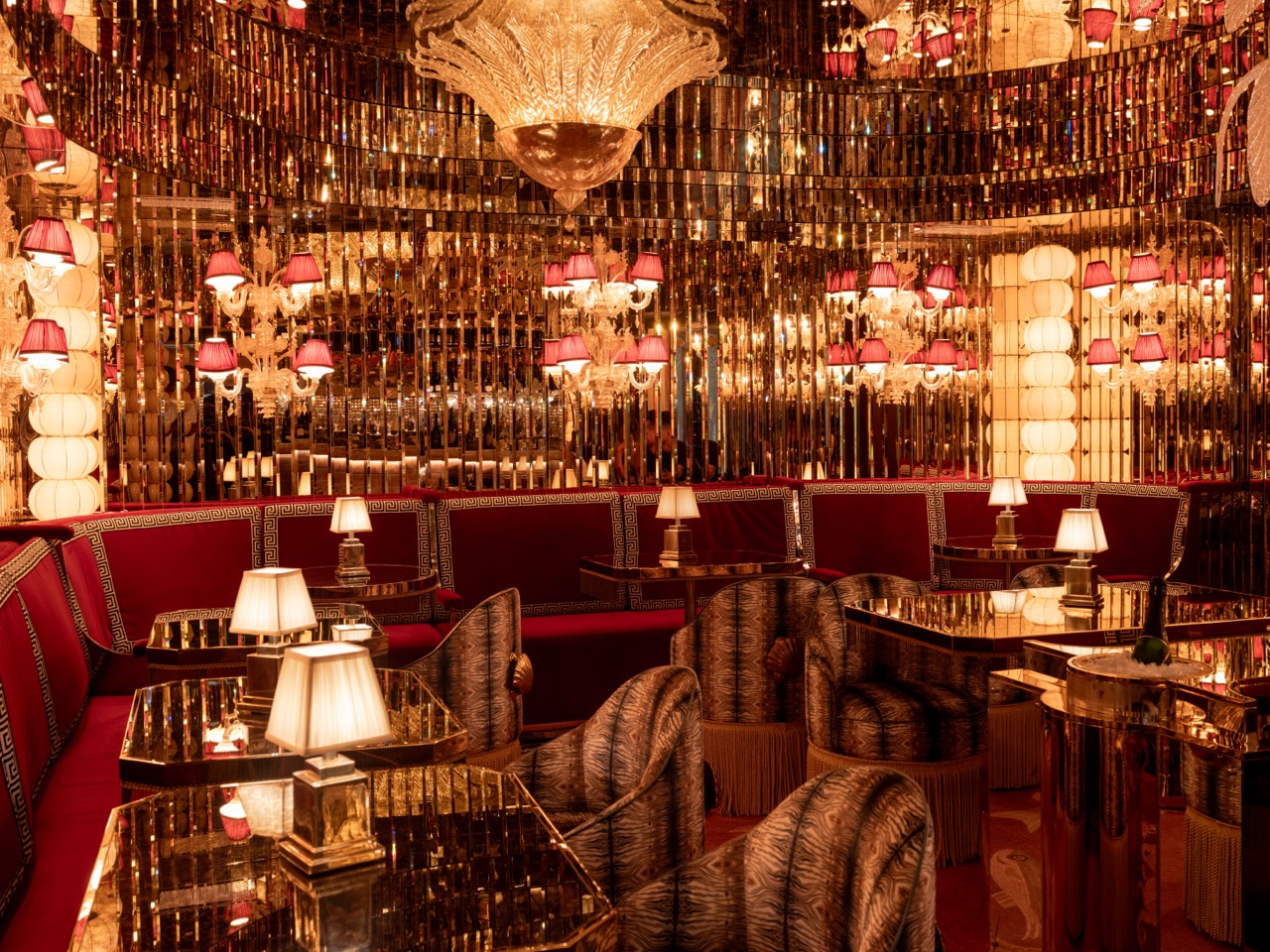
5.Some 1,800 sqm of former parking was torn up and turned into outdoor space, and two restaurants went into it. Fallen Empire, an oyster and champagne bar hidden behind the lobby in a room lined with mirror and gold, takes reservations only. Brass booths upholstered in red mohair sit inside. A room with no intention of adding covers. Taking reservations means turnover was given up in favour of average spend.
A wall done entirely in mirrorFallen Empire, which serves only oysters and champagne. Red-shaded sconces run along a wall of gold mirror tile, with red velvet benches and tasselled armchairs. Reservations only. ⓒThe Baby Grand, photograph Ethan Jones
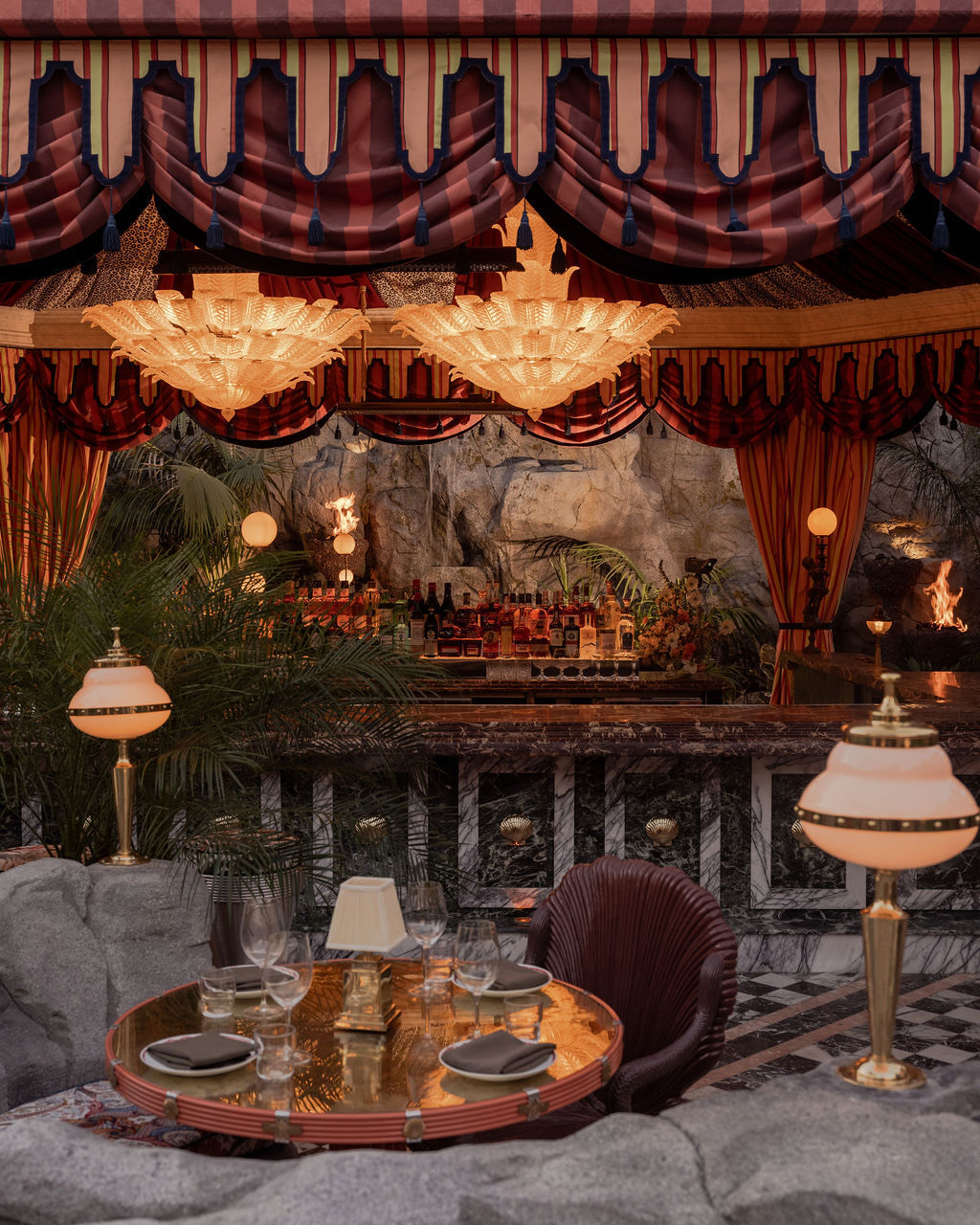
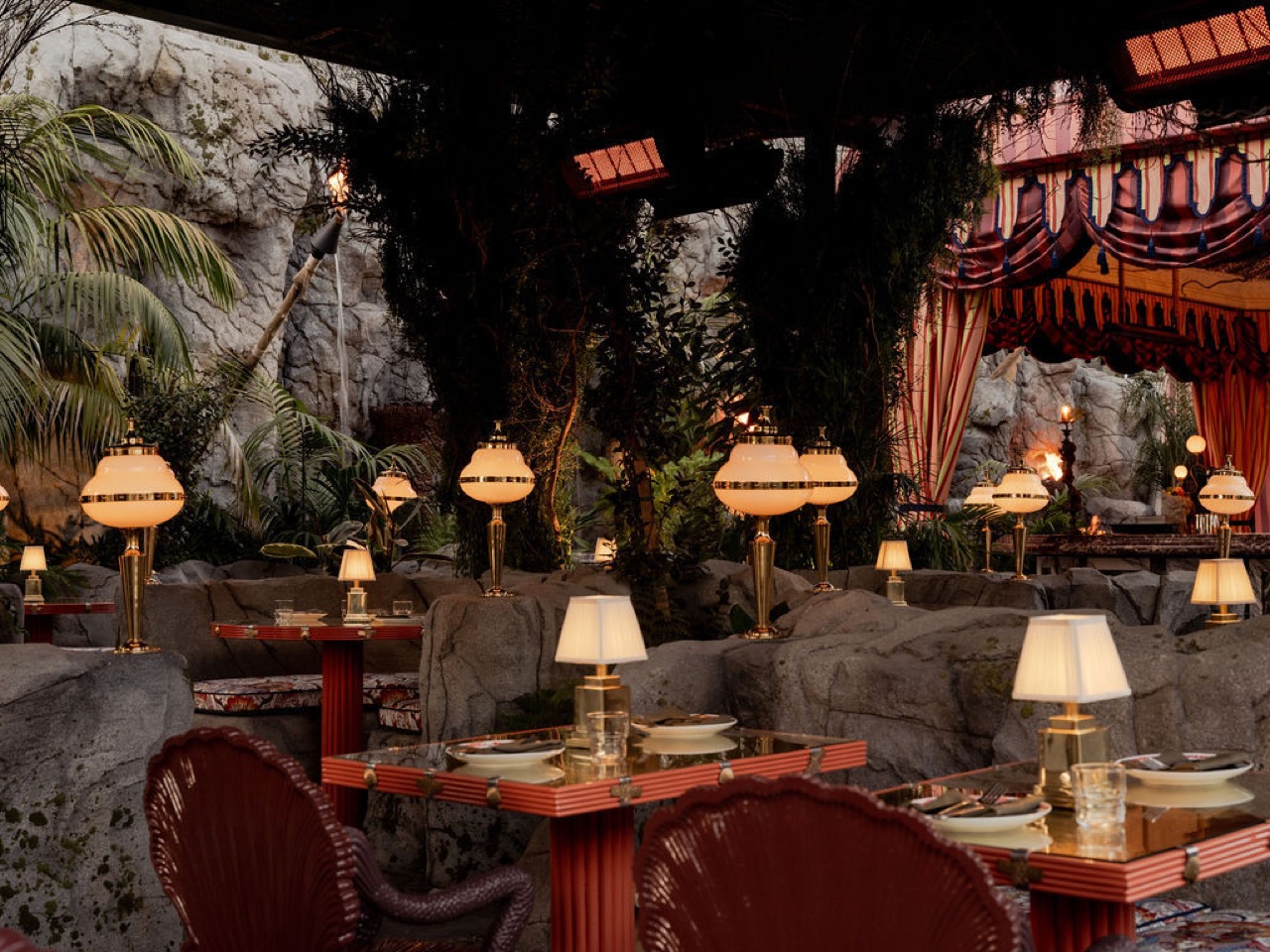
6.The other is Night Hawk, cooking Greek food over a wood fire. It is pushed into the landscaping so it reads as a restaurant in a garden rather than one inside a hotel. That means it was not built as a place only guests reach, and this is where the money conversation starts. Hotel restaurants usually hide behind the lobby and give locals no reason to walk in. This one was set out toward the street instead.
Rock and fire under an awningThe bar at Night Hawk. A shell chandelier hangs from a striped awning, with a fire burning against the rock wall behind. Not an interior but a yard. ⓒThe Baby Grand
7.Into operations and revenue. Opening rates run from USD 350 a night, about KRW 487,000. The San Diego market average room rate that month was USD 234.79, so it started 1.5 times above the market. Occupancy in this market was 84.4 percent in June with RevPAR of USD 198.18. Drop to January, though, and it sinks to 64.7 percent occupancy at USD 189.22. That is how summer and winter split in a beach market.
8.Occupancy is not published. What follows is estimated. Twelve-month occupancy in this market runs above 70 percent, so putting the first year conservatively at 70 percent gives RevPAR of USD 245, and one room earning USD 89,425 a year. Times 31 rooms, that is USD 2.77 million of annual rooms revenue, about KRW 3.85 billion. Since USD 350 is a starting rate, the real average could sit above this, and being the first year, it could equally sit below. Either way the order of magnitude holds.
9.Now set that beside the investment. Divide USD 18 million by 31 and it is USD 580,000 a room, about KRW 807 million. On rooms revenue alone, the investment equals 6.5 years of turnover. Put the operating margin at 35 percent and annual profit is a little over USD 970,000, which takes more than eighteen years to pay back. Not a number that works as a rooms business. Land and financing costs are not even in there.
A business built in reverse orderTwo hotels by the same company three years apart. Cutting the scale by 4.5 times pushed investment per room up 2.6 times. They went in knowing rooms revenue would not pay it back.
10.Lay the published benchmark for US independent boutique hotels against it and the picture completes. The average for that group is 78 percent occupancy, a USD 274 room rate, and total revenue including rooms above USD 330 per room. Total revenue runs more than 20 percent above the room rate, and restaurants and bars make that difference. At chain hotels the gap is far thinner, because breakfast and a minibar do not produce this much. Whether the lobby is somewhere you pass through or somewhere you stay is what splits it.
11.Apply that ratio here and total revenue lands at USD 3.73 million a year, about KRW 5.19 billion (estimate). Rooms are USD 2.77 million and the remaining USD 960,000 is food and beverage. Two restaurants split a little over KRW 1.3 billion, so KRW 650 million each. That is the scale of one neighbourhood restaurant doing well. The money a full-service hotel makes from banqueting and weddings is made here by a plate of oysters and one wood-fired oven. They are not too small to do banqueting; they chose not to.
The car park became a yardMade by tearing up some 1,800 sqm of asphalt parking. Red tables and shell-backed chairs sit among the rocks, with a brass lamp on every table. ⓒThe Baby Grand
12.First, the people who built it are a restaurant company. CH Projects has run twenty-four bars and restaurants around San Diego, with Polite Provisions and Born and Raised as its signatures. A hotel normally gets built and then looks for a food and beverage operator. Here a restaurant company that already had a following added rooms. Food and beverage was not attached to a hotel; rooms were laid on top of something they already did well, so the order runs backwards.
13.Second, with only 31 rooms the top of the rate card opens up. A shell bed and a room that is half bathroom is not something a large chain can make from a standard drawing set. Thirty-one rare rooms are easy to fill, and easy to fill means no reason to cut the price. USD 350 comes from that position. Turn it around: with three hundred rooms this room does not exist. What giving up scale bought was the top of the rate card. Third is distribution. Being independent, there are no brand fees to pay, and the channel where bookings gather is the restaurant customers they already hold.
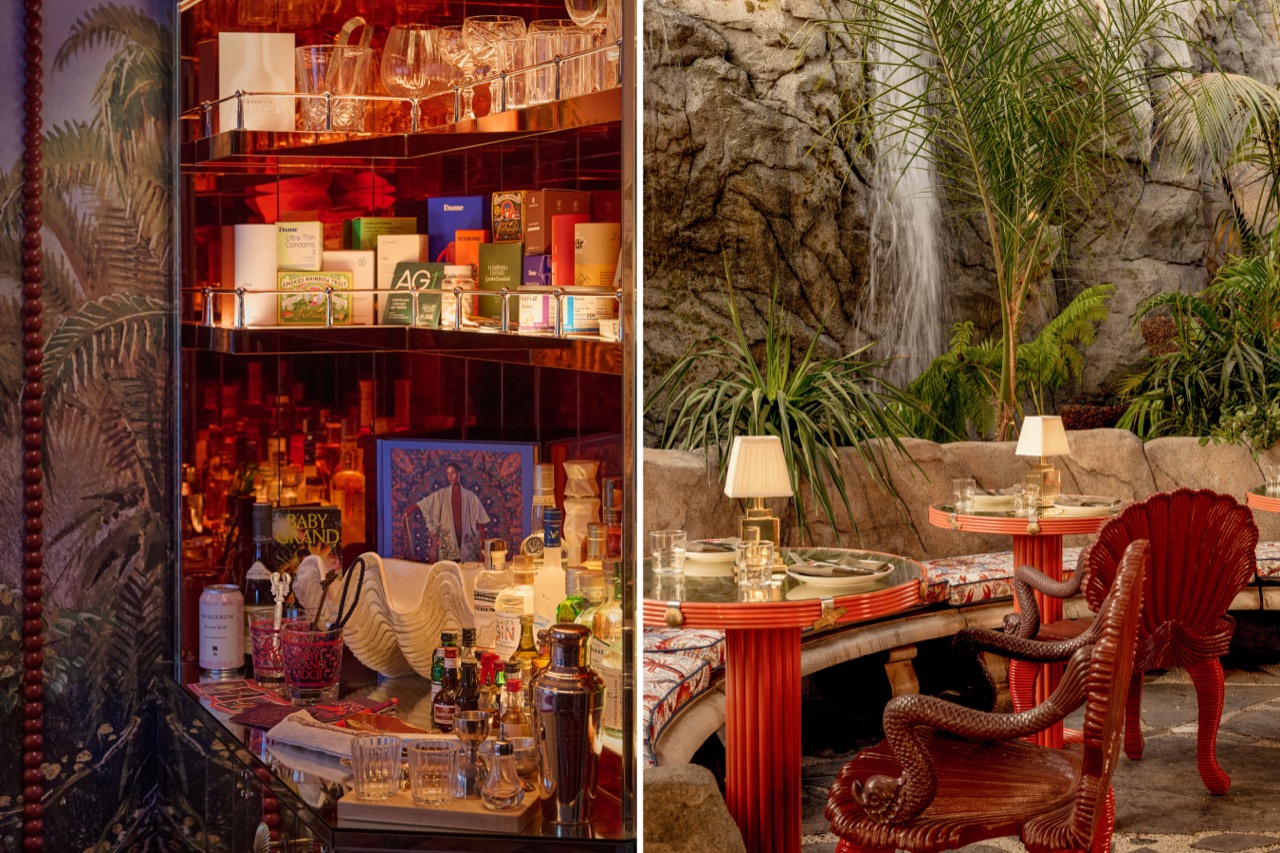
A bar in the room and a bar in the yardOn the left, the minibar set into the guest room, complete with glassware, bottles and shell-shaped dishes. On the right, outdoor seating among rocks and running water. Places to drink were laid out in both the room and the yard. ⓒLos Angeles Times
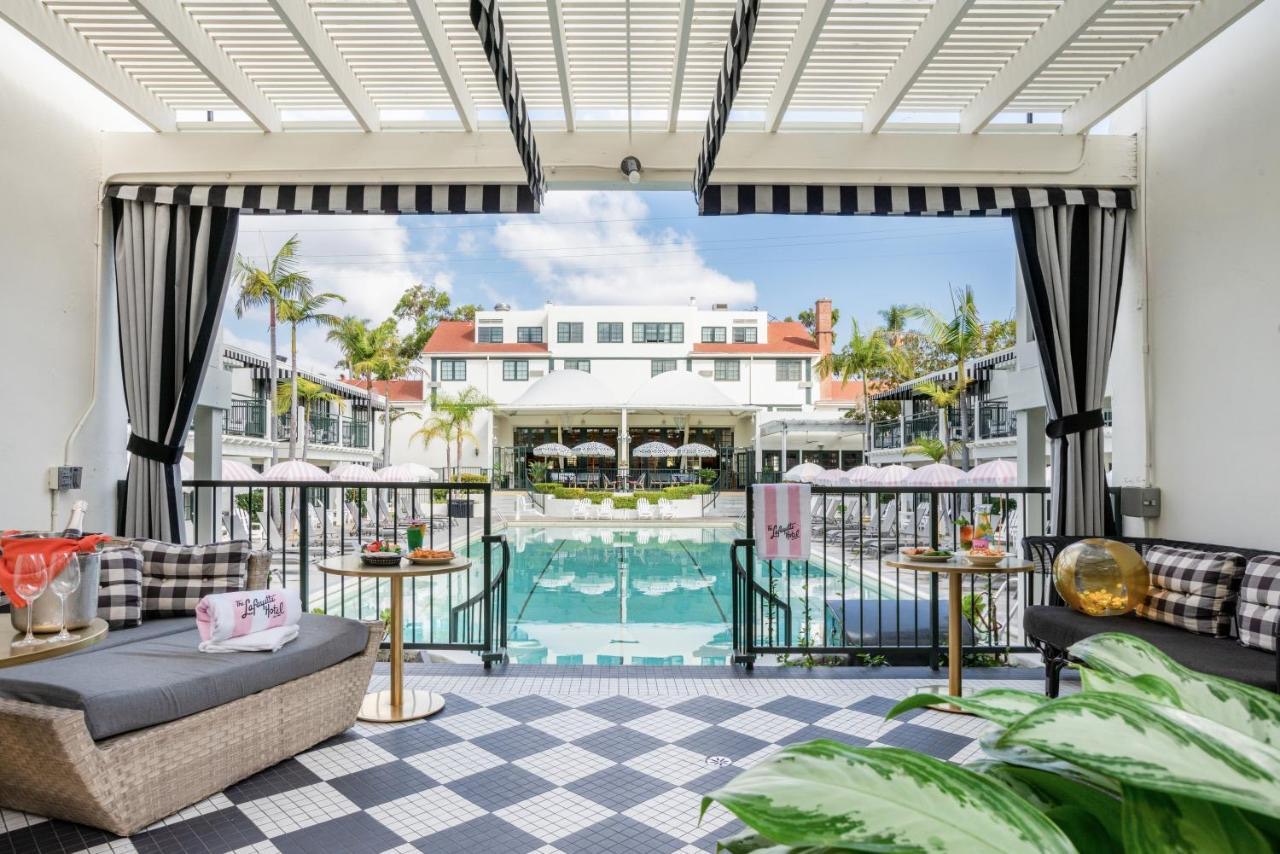
14.There is a lineage. This company's first hotel was The Lafayette, reopened in North Park, San Diego in July 2023, 139 rooms in a 1946 building. It started on a USD 26 million budget, phase one alone came to USD 31 million, and eight food and beverage outlets went in. A lobby bar and cafe, a 24-hour diner, a Parisian restaurant, a music venue, a bowling alley, a pool bar, a chef's table and an Oaxacan restaurant.
The first hotel had 139 roomsThe Lafayette, reopened in 2023. The pool and the white main building sit beyond black and white striped cabanas. Eight food and beverage outlets went into a 1946 building. ⓒThe Lafayette Hotel
15.The ratio is what to watch. Eight outlets across 139 rooms is one per seventeen rooms; two across 31 rooms is one per sixteen. They cut the scale by 4.5 times and carried the food and beverage density across unchanged. In exchange, investment per room jumped from USD 223,000 to USD 580,000. They knew going smaller makes each room more expensive and built the second one that way regardless. 139 rooms give you plenty of keys to spread construction cost across; 31 rooms give you none. Holding the density anyway looks like something learned at the first hotel, that cutting food and beverage stops this business from working (estimate). The first hotel's budget swelling from USD 26 million to USD 31 million came out of the same place.
The street the restaurants have to lean onOrange Avenue, where the hotel sits. Low retail lines a median planted with palms. It is a good street to walk, but this island does not have many residents. ⓒNH / Wikimedia Commons
16.The weakness sits in the same place. With 31 rooms, a few points of occupancy flips the profit and loss, and if food and beverage bunches into the tourist season, winter leaves nothing but fixed cost. The two restaurants also have to be filled by locals rather than guests. Fill all 31 rooms and that is around sixty people a night, not enough to run two restaurants. And Coronado is an island with few residents. Beautiful, and a business resting on the season and the neighbourhood.
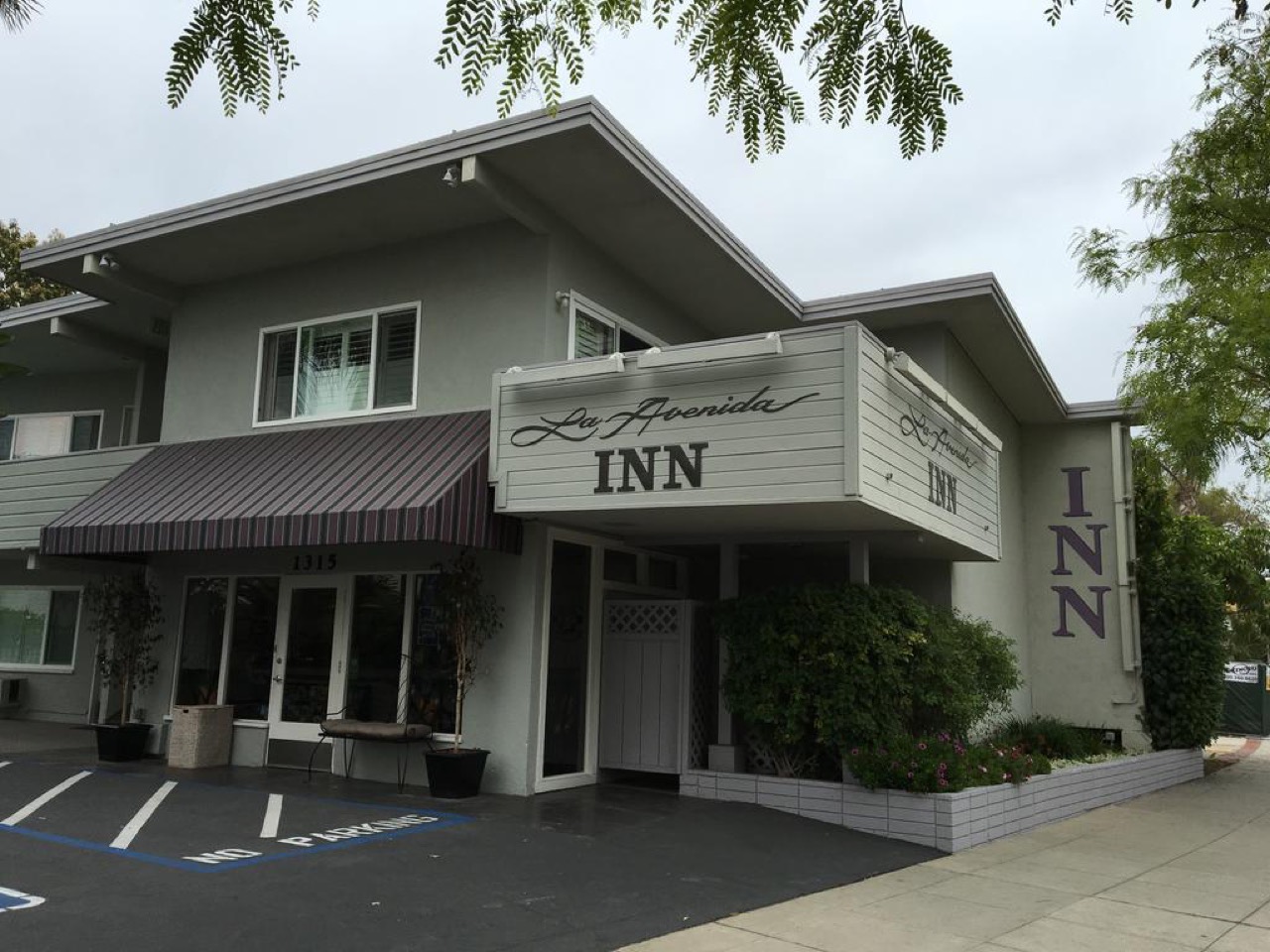
This was the motelThe La Avenida Inn before the rebuild. An ordinary two-storey beach town motel. ⓒLa Avenida Inn
Summary
A tired motel in a beach town came through six years and KRW 25 billion to reopen as a 31-room hotel, and the people behind it are not a hotel company but a restaurant group running twenty-four venues. If one number survives, it is KRW 807 million per room, which equals 6.5 years of rooms revenue and more than eighteen years to cover with profit. The payback comes from the oyster bar and the oven, not from the rooms. The first thing anyone bringing this to Korea meets is not the construction cost but who fills the restaurants. The room count cannot run two restaurants on guests alone, so local customers are essential, which means the location has to be a trade area rather than a tourist spot. Lay this model onto a site chosen for tourist demand and the restaurants collapse first in winter. Reverse the order, pick a site where the restaurant works first and lay rooms on top of it, and that at least is the route this case has shown.