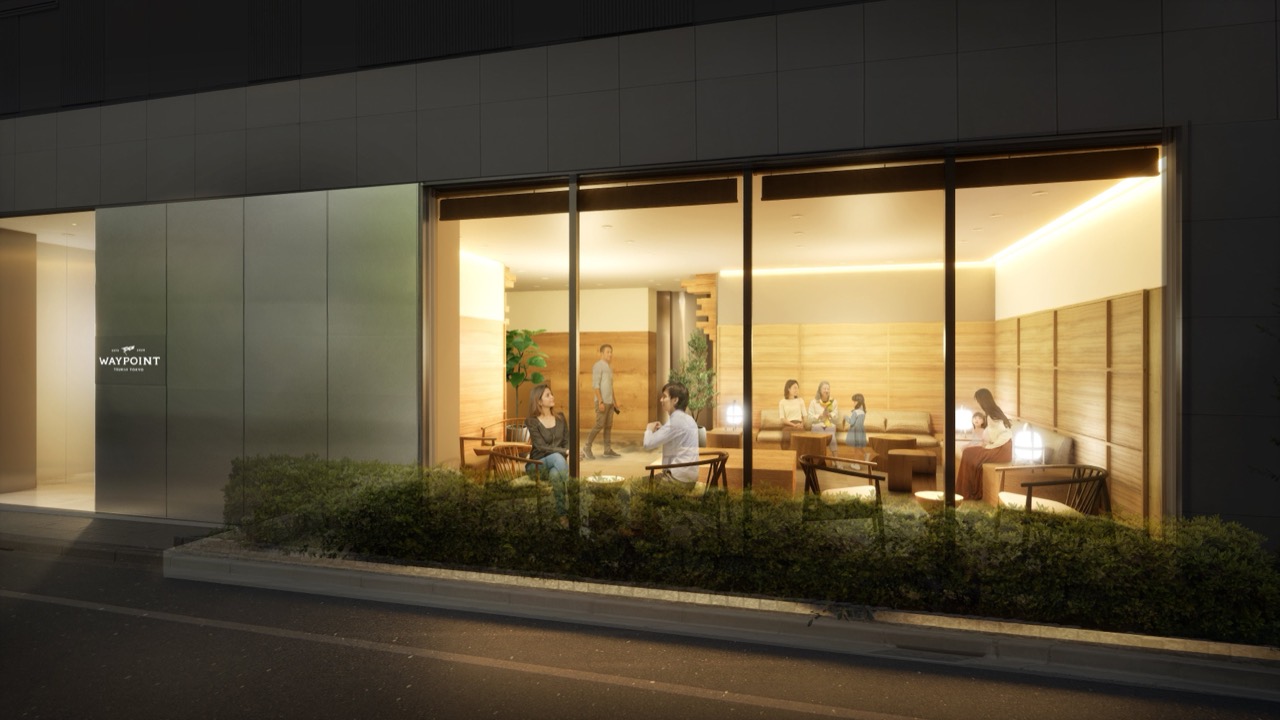
A small signThe entrance of WAYPOINT TSUKIJI TOKYO, opened 1 April 2026. One minute on foot from Tsukiji station on the Hibiya line. ⓒMitsubishi Estate Hotels & Resorts
Daily Hotel
WAYPOINT Tsukiji: 103 rooms cut to 52, capacity up
2026.08.01
A nine-storey business hotel in Tsukiji, Tokyo, tore down its walls. The work of joining two rooms into one ran through the whole building, and 103 rooms became 52. The room count halved while the number of people who can sleep there at once went up, and cleaning happens once every three days. Cut the rooms and revenue should fall, and this building runs the other way.
1.On 1 April 2026, a 52-room apartment hotel called WAYPOINT TSUKIJI TOKYO opened at 2-9-3 Tsukiji, Chuo-ku, Tokyo. One minute on foot from Tsukiji station on the Hibiya line, with Shintomicho station on the Yurakucho line a few minutes away as well. What stood there was a 103-room business hotel.
2.Mitsubishi Estate secured and planned the property, and Mitsubishi Estate Hotels & Resorts operates it. Renovation design went to Mitsubishi Jisho Home, with furniture and fittings by Mec Design International. The brand is called WAYPOINT, and ten locations are announced by 2030. That the first is a renovation of somebody else's building rather than a new build says most of what this brand is.
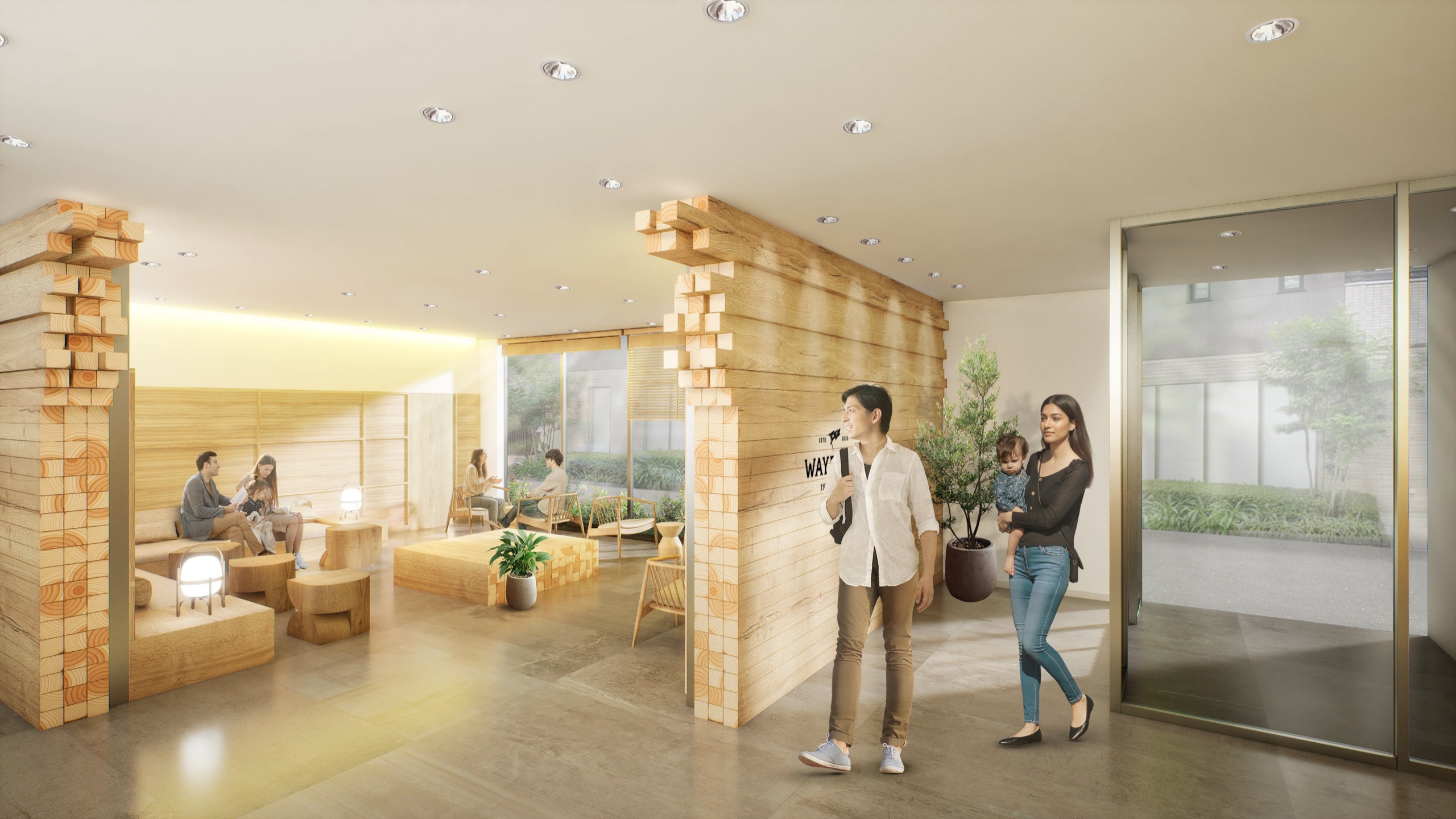
The ground floor holds only a lobby and loungeNo restaurant and no room service. What remains on the ground floor is a front desk and one timber-lined lounge. ⓒMitsubishi Estate Hotels & Resorts
3.The work comes down to one line. Walls came out and two rooms became one. Nine storeys above ground, 2,392.77 sqm of floor area, 724 pyeong. A building that divided that area into 103 pieces now divides it into 52, so the floor area each room sits on doubled from 23 sqm to 46 sqm. Neither the frame nor the core was touched. All that came out were partitions.
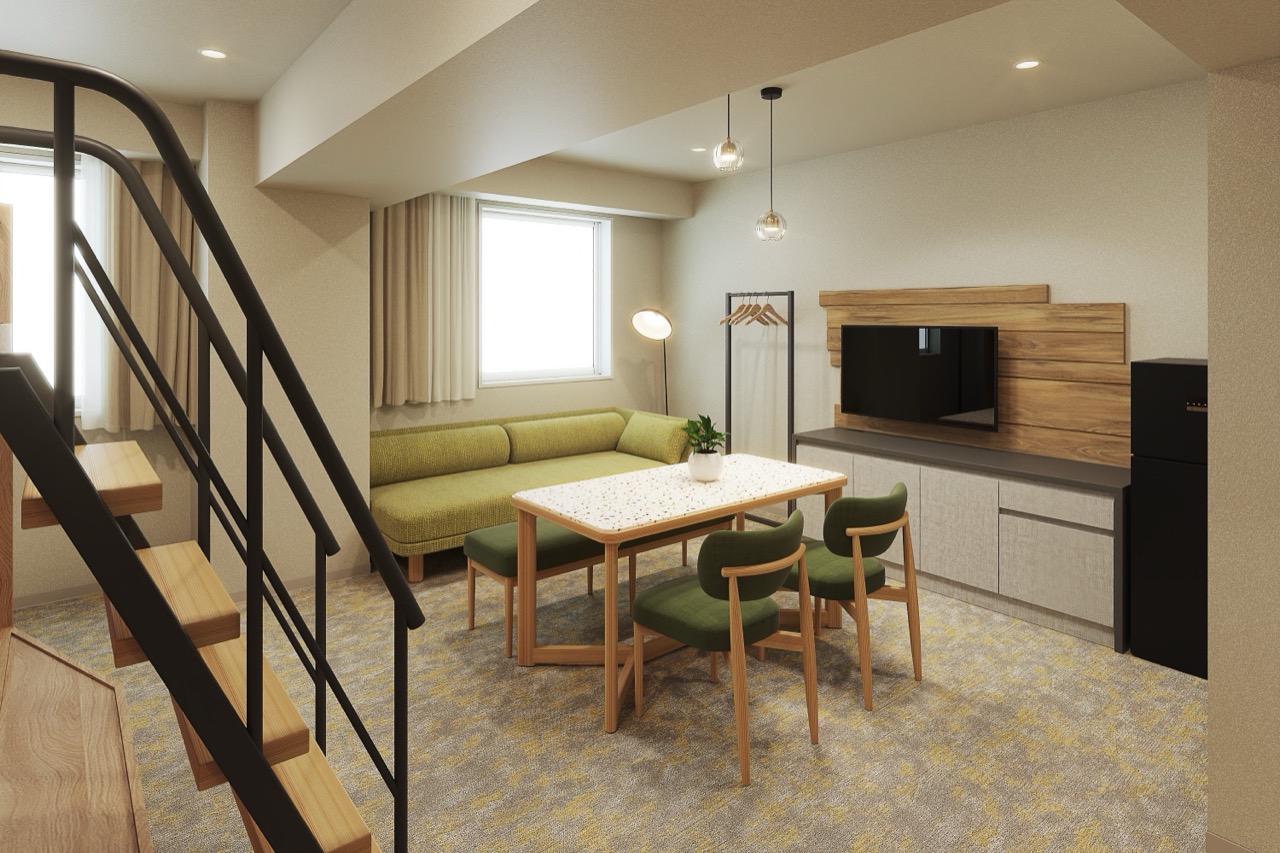
4.There are eight room types. The smallest, a universal room, is 21.2 sqm for two, and the largest, a suite bunk room, is 68.2 sqm for six. In between sit 26.0, 26.5, 31.8, 35.5 and 37.28 sqm. A standard room in a Tokyo business hotel runs around 13 to 15 sqm, so the smallest room here is one and a half of those, and the largest takes the space of five.
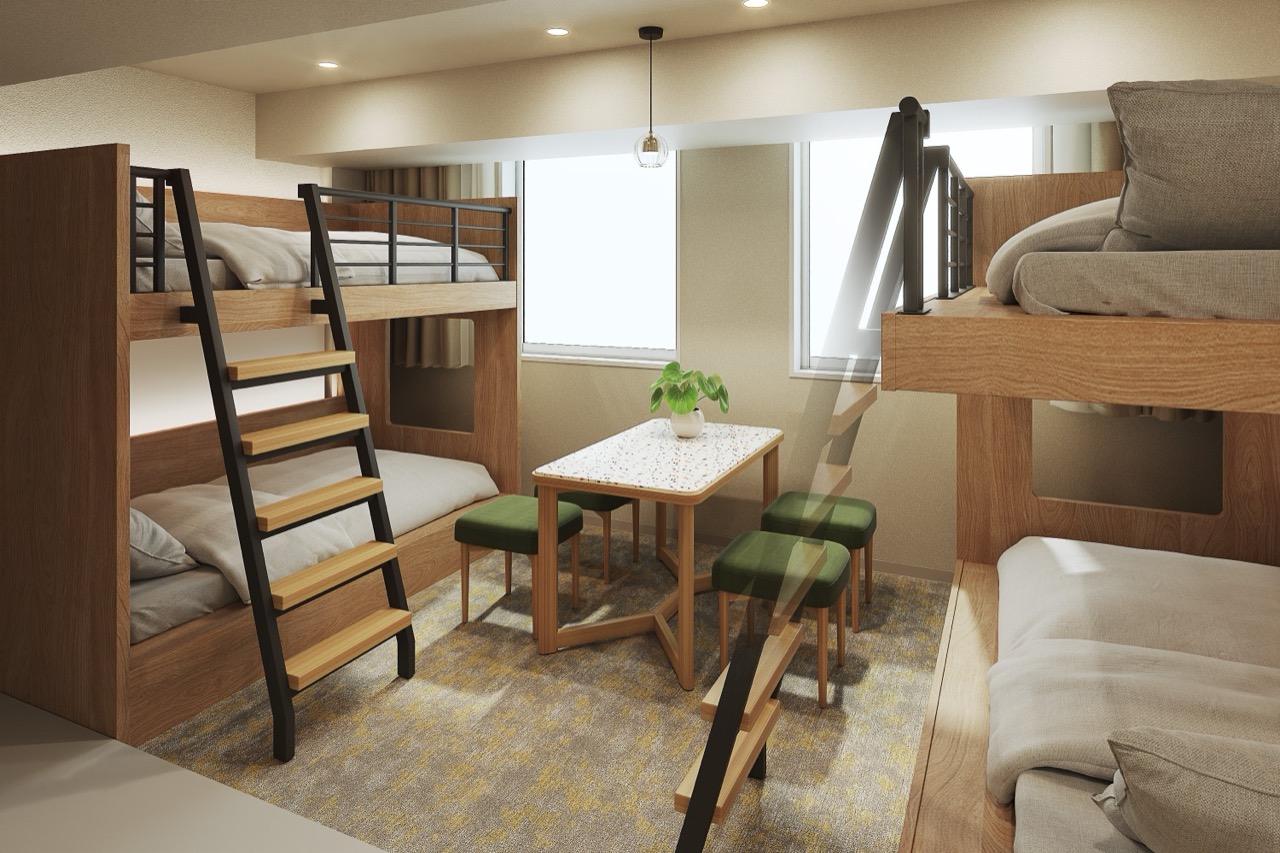
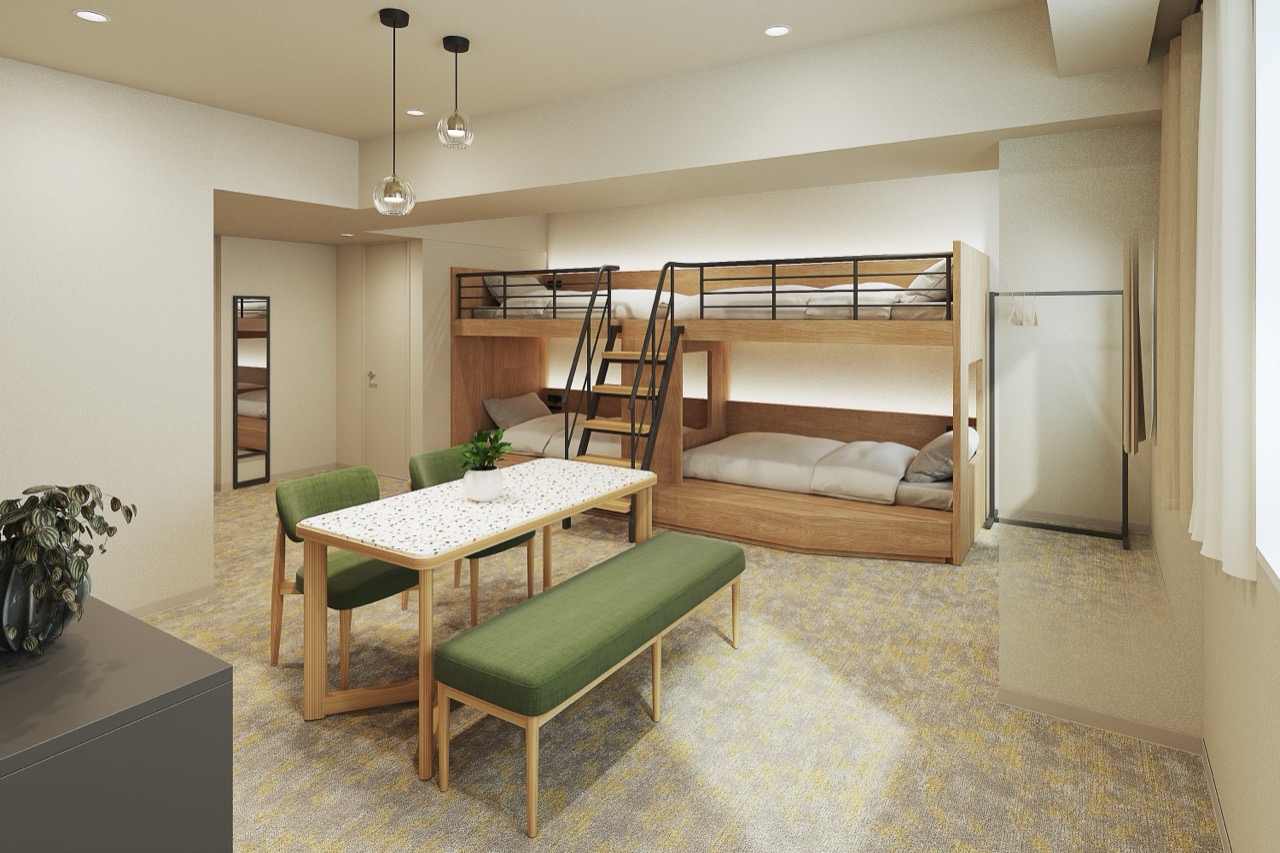
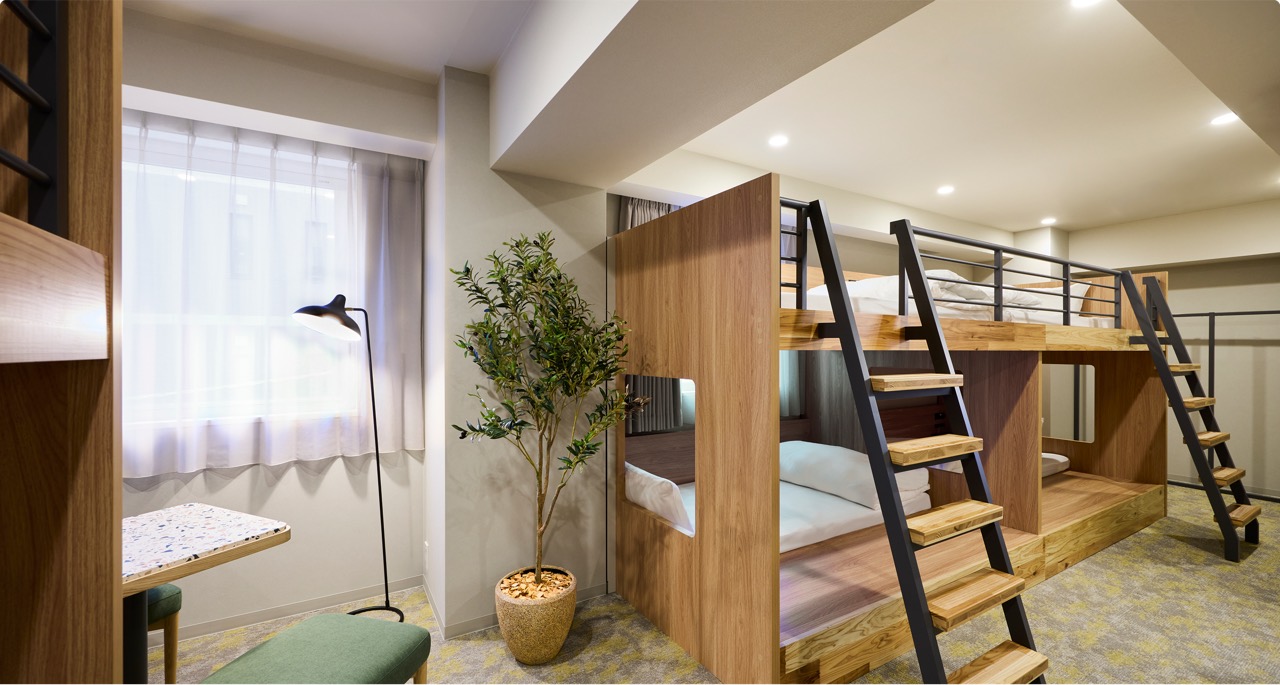
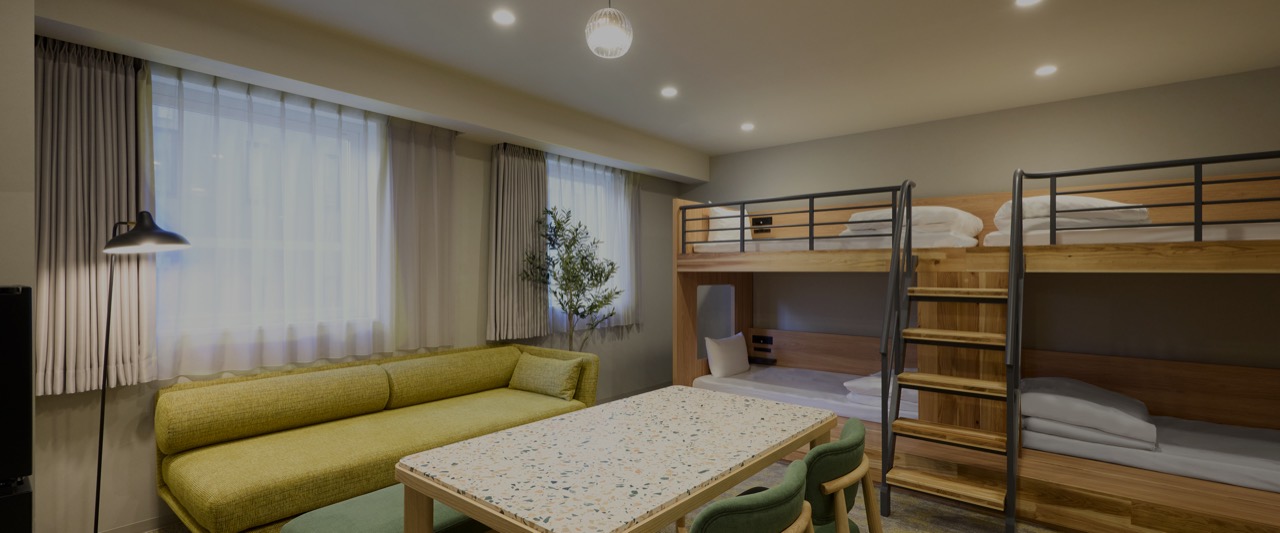
Beds stacked upward rather than sidewaysSeveral bunk beds make up the capacity. Lay the beds out on the floor and the room would need to be twice as large. ⓒMitsubishi Estate Hotels & Resorts
5.Walls and furniture are wrapped in domestic cedar in imitation of a mountain cabin, the operator explains. Thin the finish on cedar and a fingernail catches, and when humidity rises the smell comes up first. Lie down on the upper bunk and the ceiling is a hand and a half from your face. The feeling is less hotel than sleeping in somebody's attic, and that feeling is what lets the rate card be split by head.
Domestic cedarWalls, beds and furniture matched in the same timber. The operator says it imitates a mountain cabin. ⓒMitsubishi Estate Hotels & Resorts
6.Into operations. The front desk runs from 7am to 10pm, after which entry is by keypad. Check-in happens on a phone and doors open with a code or a QR. Floors five to nine each have a shared kitchen, microwave and coin laundry, and the only room with its own kitchen and washer dryer is the 68.2 sqm suite bunk room. Wet services were gathered into one place per floor.
One kitchen per floorOnly the 68.2 sqm suite has a kitchen and washing machine inside the room; everyone else uses the shared kitchen on floors five to nine. ⓒMitsubishi Estate Hotels & Resorts
7.Then cleaning. Rooms are cleaned once every three days, with the first clean arriving on the fourth night. Towels go into a collection box outside the door between 7 and 10 in the morning and are exchanged free, and anyone who wants cleaning more often pays separately. There is no picture in this building of room maids working the corridor every morning.
Only the doors went downThe room count halved while capacity rose. Cleaning labour arises per room, so it falls exactly as far as the number of doors. Capacity and rooms cleaned are not published and were calculated by the writer.
8.The rate card is written per head. A 37.28 sqm deluxe bunk room is from JPY 11,000 per person for four, and a 68.28 sqm suite bunk room from JPY 12,833 per person for six. At KRW 930 to JPY 100 that is around KRW 100,000 a head. Converted to rooms, one room runs JPY 44,000 to 77,000, KRW 410,000 to 720,000. Guests sleep cheap per person and the hotel charges dear per room.
Six people in 68.2 sqmThe largest suite bunk room. The per-person rate starts at JPY 12,833, and with six inside, one room comes to JPY 77,000. ⓒMitsubishi Estate Hotels & Resorts
9.Occupancy and actual average rate are not published. What follows is estimated. MIMARU, which runs more than 2,200 rooms on the same model across Tokyo, Osaka and Kyoto, publishes an average rate of about JPY 52,000 at 76 percent occupancy, so the first year is taken conservatively at JPY 50,000 and 76 percent. That gives RevPAR of JPY 38,000, and times 52 rooms, about JPY 720 million a year. A little over KRW 6.7 billion.
10.Set it beside the business hotel days. Put a mid-grade business hotel in a Tsukiji location at JPY 15,000 and 85 percent occupancy and 103 rooms earn about JPY 480 million a year (estimate). Revenue rises 1.5 times and cleaning cost falls below a third. Contract room cleaning in Tokyo runs JPY 1,500 to 3,500 a room, and here the rooms are large with many beds so the unit price is higher, while the number of cleans is a third. Both axes moved the same way.
Both axes moved the same wayCutting rooms normally cuts revenue with them. Here the rate per room rose further than that, so revenue grew, while labour followed the number of doors down. All estimates using published market figures.
11.First, a family of four staying at a Tokyo business hotel has to book two rooms. Two rooms at JPY 15,000 is JPY 30,000, and the parents and children sleep apart. Here four sleep together in one room at JPY 44,000, and per person it actually costs less. It is rare for the guest's arithmetic and the hotel's arithmetic to improve at the same time, and a room that builds its capacity upward creates that position.
The family does not get split upFour people at a business hotel need two rooms. Here four go into one room, and the price per person comes down. ⓒMitsubishi Estate Hotels & Resorts
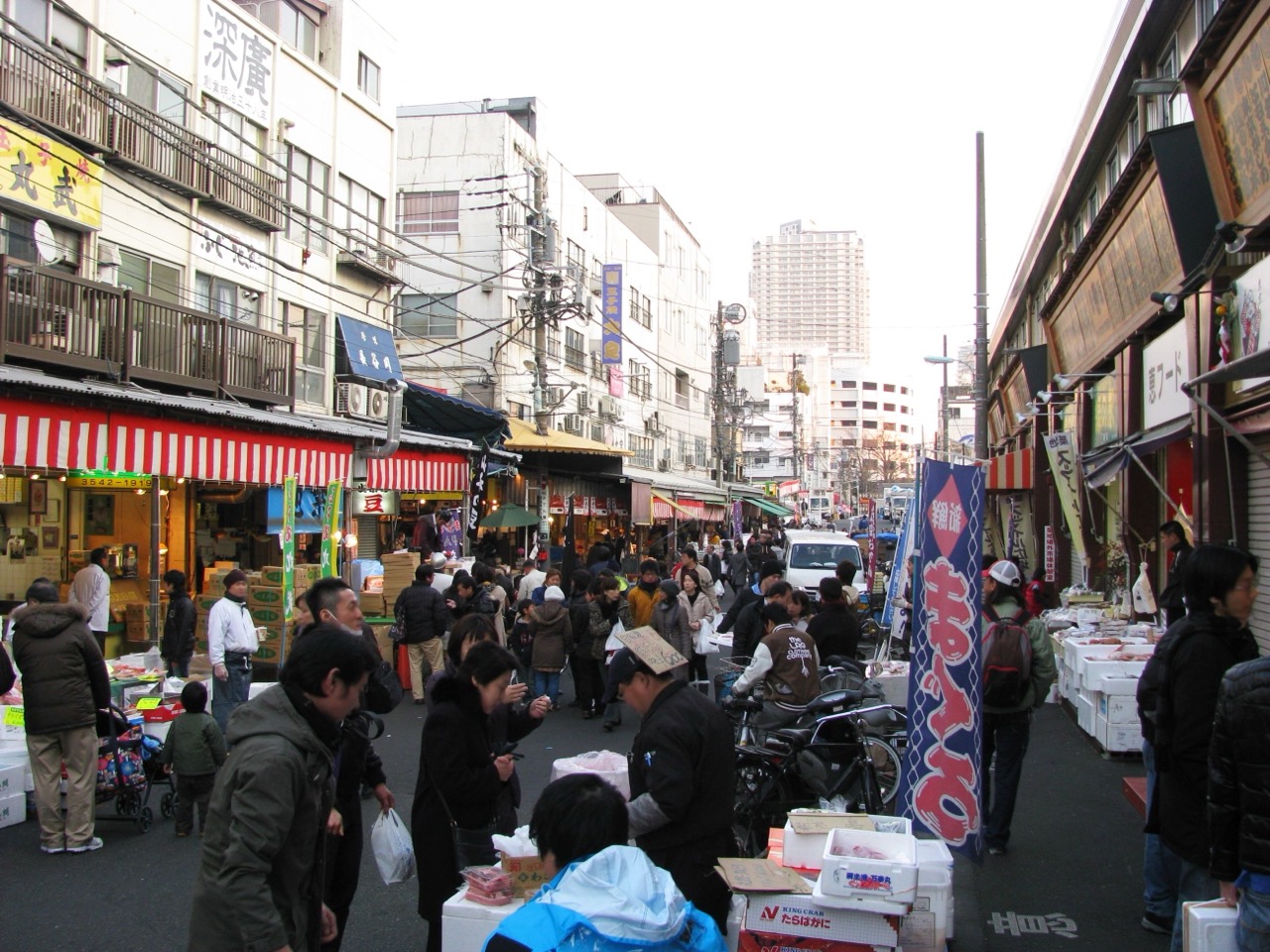
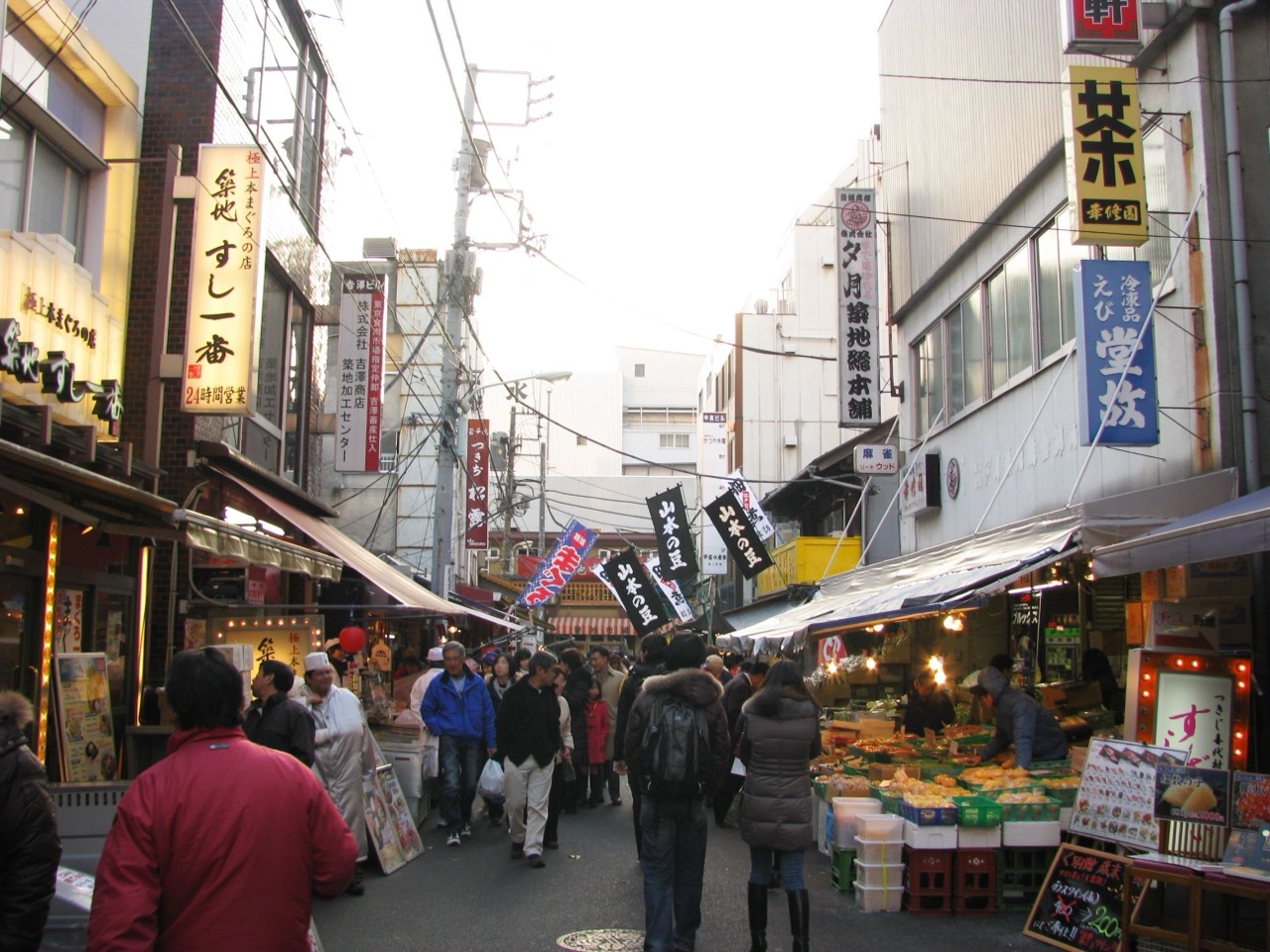
12.Second, it does not sell food. No breakfast, no restaurant and no room service, and guests eat in the morning at Tsukiji Outer Market, four or five minutes on foot. Where a full-service hotel earns from breakfast buffets and banqueting, this one chose to leave the space empty. Kitchen staff and pre-dawn shifts were wiped out entirely, and the value of that was not written into the room rate. Lay this design onto a site with nowhere to eat breakfast within five minutes and it turns straight into a weakness.
The breakfast room is outside the hotelTsukiji Outer Market, four or five minutes on foot. More than 400 shops opening from before dawn are what let the hotel erase its kitchen. ⓒAimaimyi / Wikimedia Commons, CC BY-SA 3.0
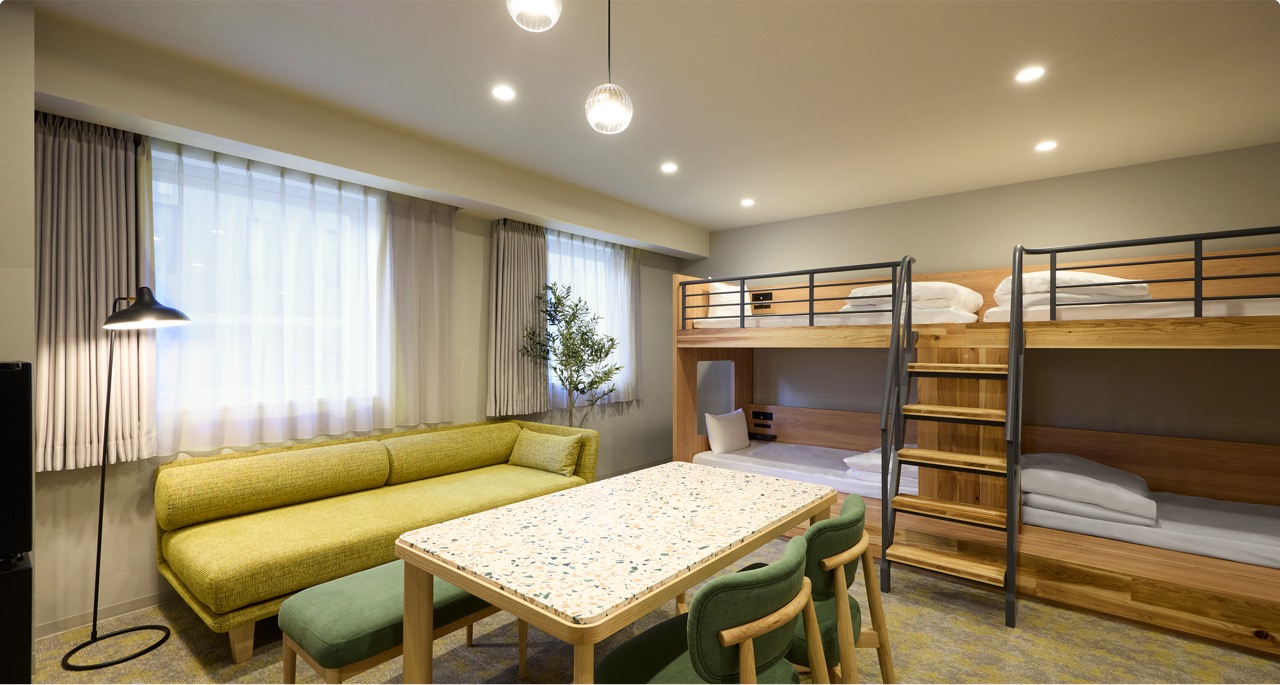
13.Trace the line and this model has already had a generation in Japan. Cosmos Initia, which runs MIMARU, has stacked up more than 2,200 rooms and set out 3,000 by 2030, and says 95 percent of its guests are foreign, mostly families of four to six travelling with children. Japan's apartment hotel and serviced apartment market is forecast to grow to USD 7 billion by 2030. Mitsubishi Estate entering it is the news value of this case.
Eight room types in one buildingEight types mixed from 21.2 sqm to 68.28 sqm. Because two rooms were joined at a time, the sizes split by which pairs were combined. ⓒMitsubishi Estate Hotels & Resorts
14.The answer lies in occupancy. MIMARU's 76 percent is not a number that came from selling badly. Guests stay four or five nights across a weekend, so the booking sheet is left with one- and two-night holes in between, and nobody comes to fill them. Built as a product for families of four to six, it does not take the business traveller staying one night. The Tokyo market average hovers above 80 percent while for this model 76 percent is close to the ceiling. So is there a way to fill those holes. Taking one-night guests means splitting the rooms again, and the moment they split, this stops being the same business.
15.One more weakness. Cleaning every three days means guests staying three nights or fewer get no cleaning at all, and the shared kitchens and laundries on floors five to nine draw queues between six and eight in the evening. The problem of six people sharing one bathroom in the morning remains too. A structure where 95 percent of guests are foreign is revenue that holds only while the yen is cheap. The price of getting large rooms and low labour in one move is the condition of not being able to choose your guests.
Ten minutes on foot from GinzaAnother lane in Tsukiji Outer Market. It sits against Ginza while accommodation rates form below Ginza's, with both the Hibiya and Yurakucho lines within walking distance. ⓒAimaimyi / Wikimedia Commons, CC BY-SA 3.0
Summary
A 103-room business hotel in Tsukiji, Tokyo, tore down walls and reopened as a 52-room apartment hotel, halving the room count while raising the number of people it sleeps at once from 155 to 208. If one number survives, rooms cleaned per day fall from about 88 to about 13. Rooms were made large to cut labour, and the labour saved was taken rather than passed back through the rate. The first thing anyone bringing this to Korea meets is not the construction cost but one kitchen. The Public Health Control Act splits accommodation with cooking facilities out of general accommodation and into residential accommodation, and the moment a building becomes a residential accommodation facility it must have a front desk and lobby and one linen room per 30 rooms. A design that empties the front desk at night to cut labour catches right there. Give up cooking and keep only the bunks and the notification passes, but then half the reason a long-stay guest would book disappears. The order is to decide which of the two to drop before drawing anything.