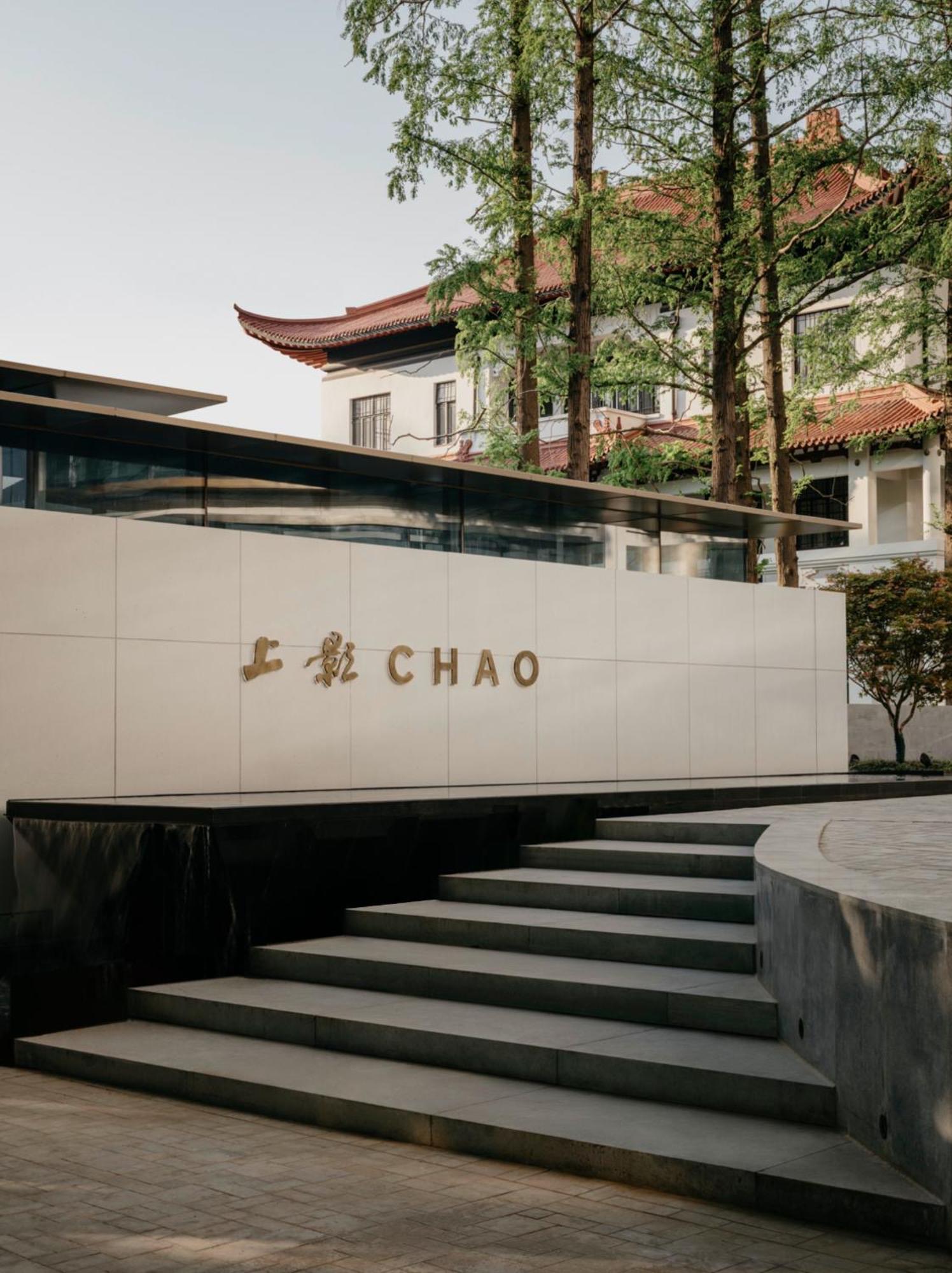
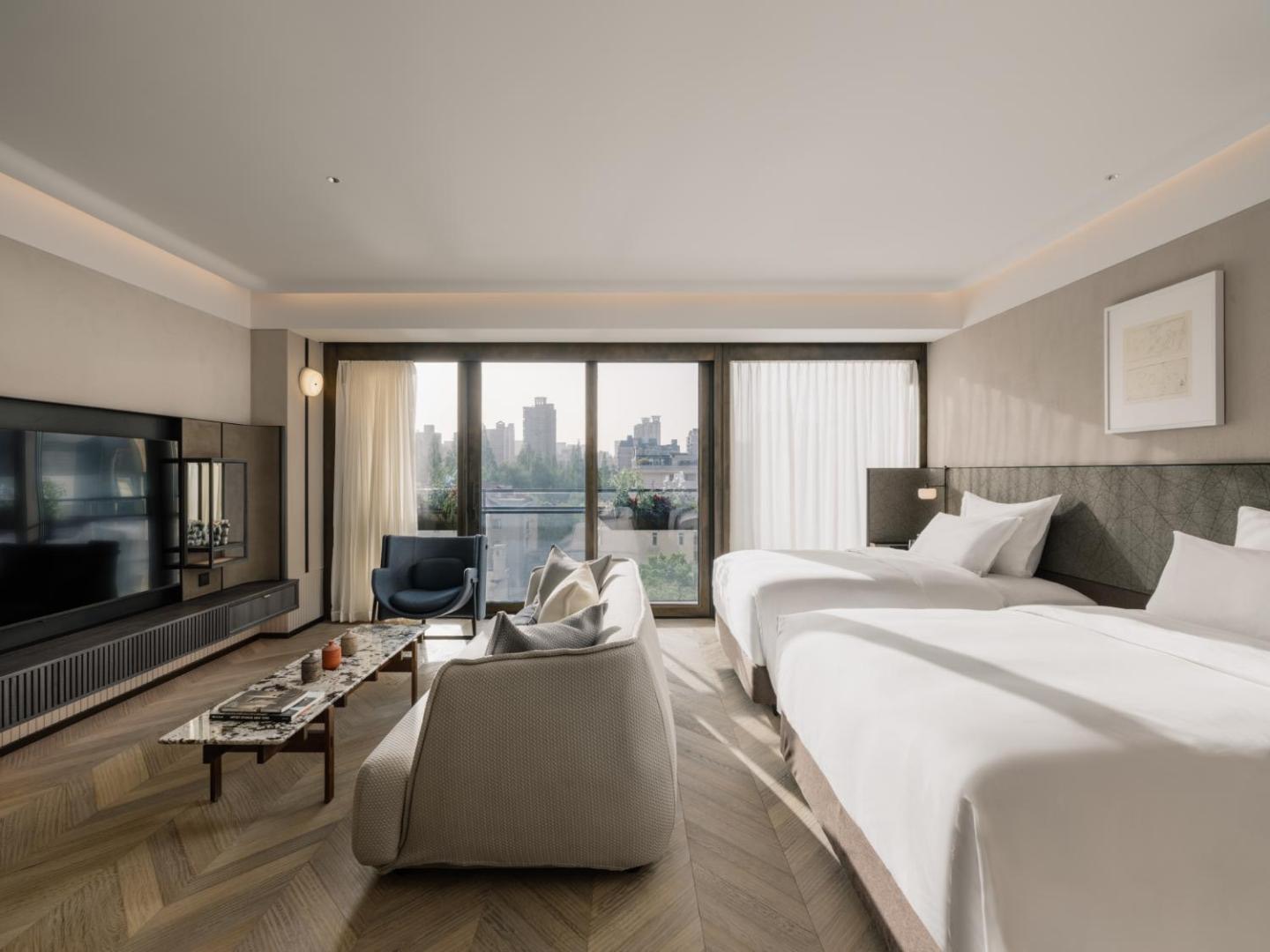
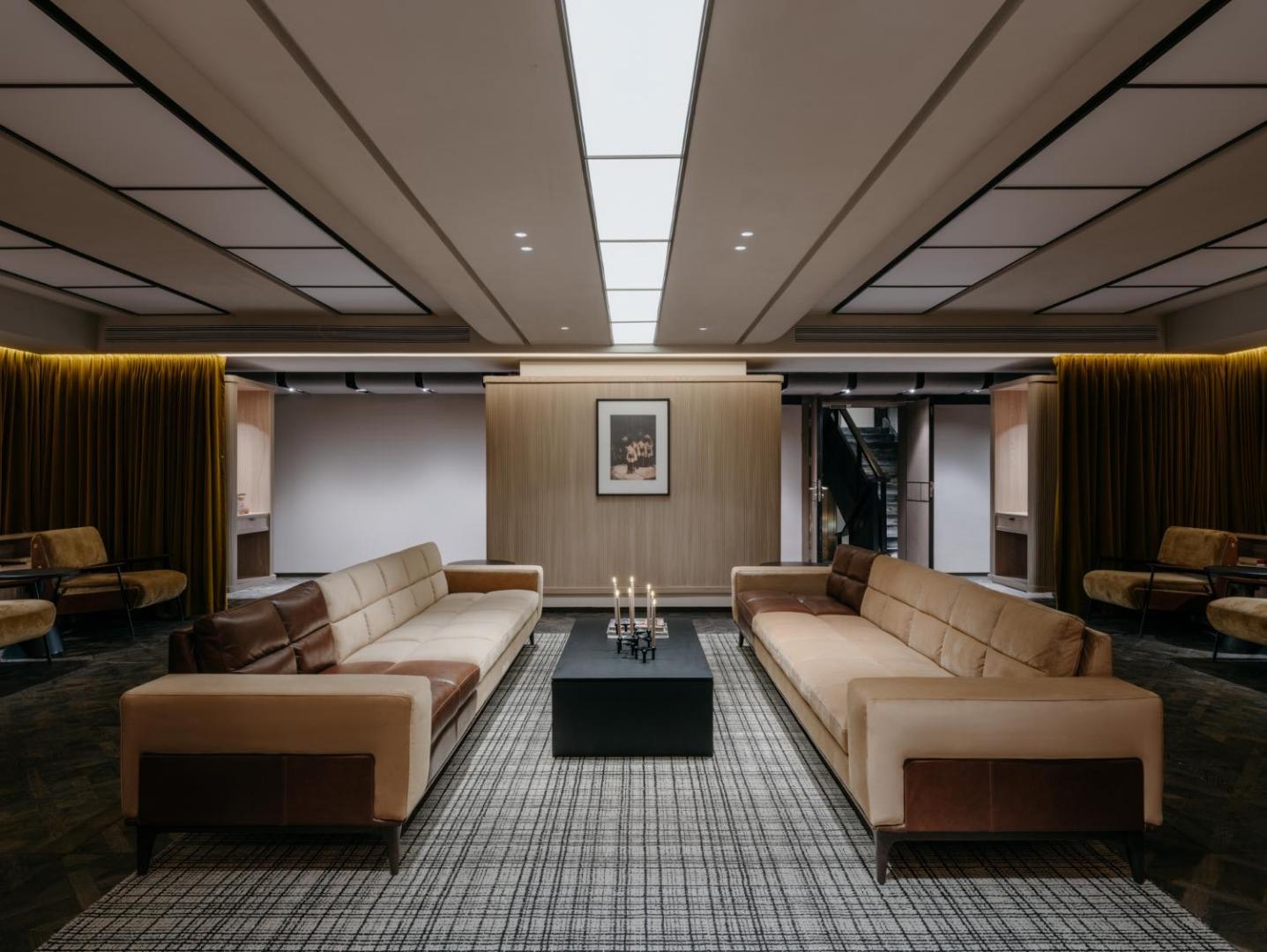
Standing behind the plane treesThe Shangying CHAO Hotel on Xinhua Road, Changning, Shanghai. A 72-room boutique where every room has a balcony. ⓒ上海上影CHAO酒店 / Booking.com listing
Daily Hotel
A 72-room Shanghai boutique asks 2.5 times the city average, because the cinema is next door
2026.08.03
The average room rate at a five-star hotel in Shanghai is 960 yuan a night. A 72-room boutique that opened last summer on a plane-tree street in Changning asks 2,380. Not because the rooms are special, but because the building next door is a cinema. That cinema took first place in the country for box office at a single site during a half-year when national cinema takings fell more than 40%.
1.On June 17, 2025, a hotel opened where Xinhua Road meets Panyu Road in Changning district, Shanghai. The name is Shanghai Shangying CHAO Hotel. It has only 72 rooms, and it was built together by Shanghai Film Group and CHAO, a lifestyle brand out of Beijing. The opening fell during the Shanghai International Film Festival.
2.Lay out the numbers first and you can see what this hotel did. The average room rate at Shanghai five-star hotels in 2024 was 960 yuan, with occupancy at 68.5%. The national five-star average rate was 599 yuan. The 2,380 yuan a new 72-room boutique asks is 2.5 times the city average and close to four times the national one.
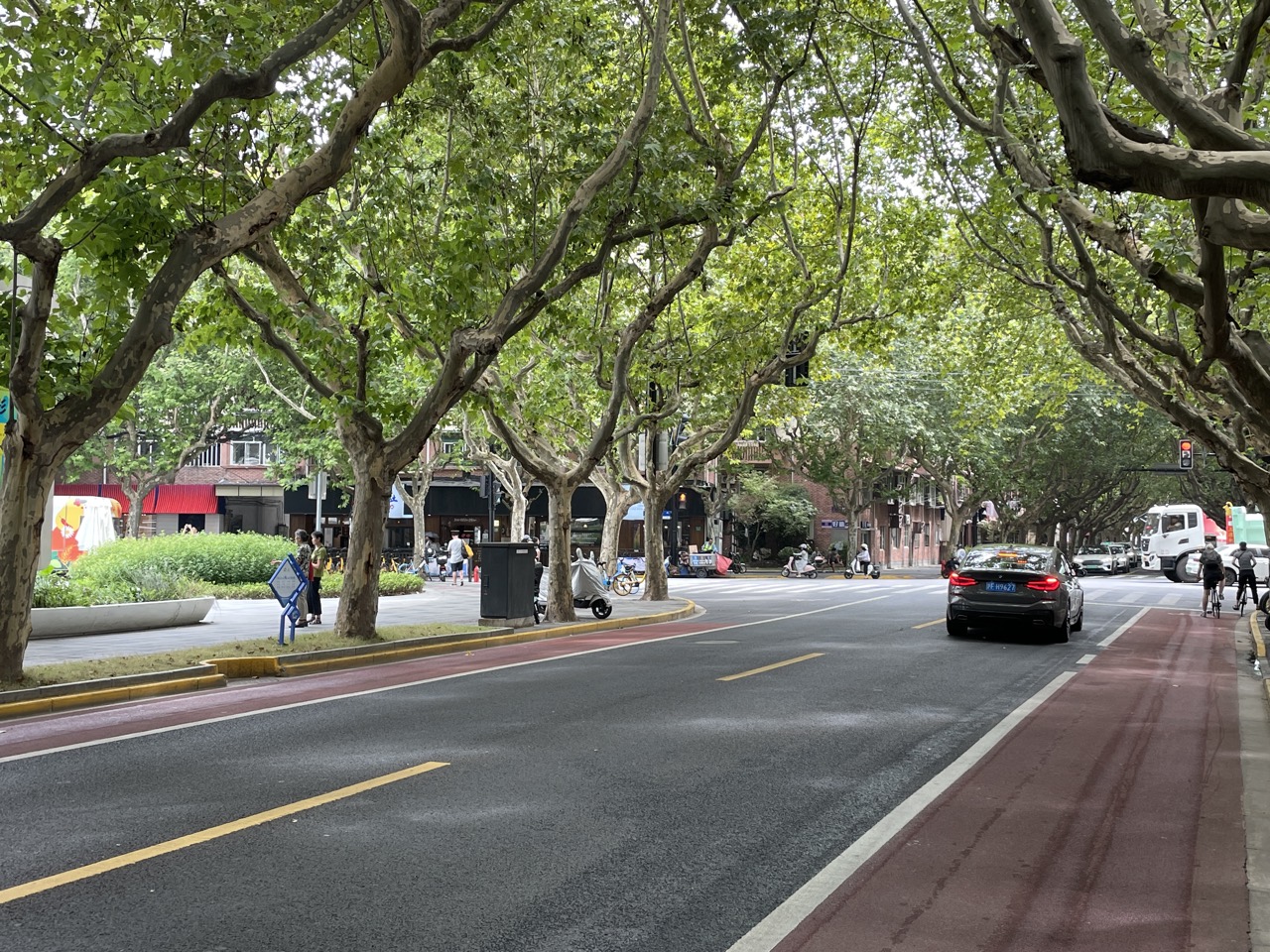
3.Start with the site. Xinhua Road is called Shanghai's premier garden street. The foreign lane quarter that the Hungarian architect Laszlo Hudec planned in the 1920s curves like a horseshoe through Lane 211 and Lane 329, and twenty-nine garden houses in British, American, German and Spanish styles remain inside it. One Xinhua Road villa recently sold at 500,000 yuan per square meter.
This crossing is the whole thingThe stretch where Xinhua Road meets Panyu Road. Hotel, cinema, historic buildings and club stand within a three-minute walk. ⓒWikimedia Commons
4.On a summer afternoon this street sounds different before it looks different. Plane trees cover the road whole, so the cicadas drop from above and the traffic catches in the leaves and comes through pressed a layer down. Step onto a balcony and those leaves move at arm's height. Attaching a one-step balcony to every room was not taste but a calculation that pulls the only thing this street sells into the room.
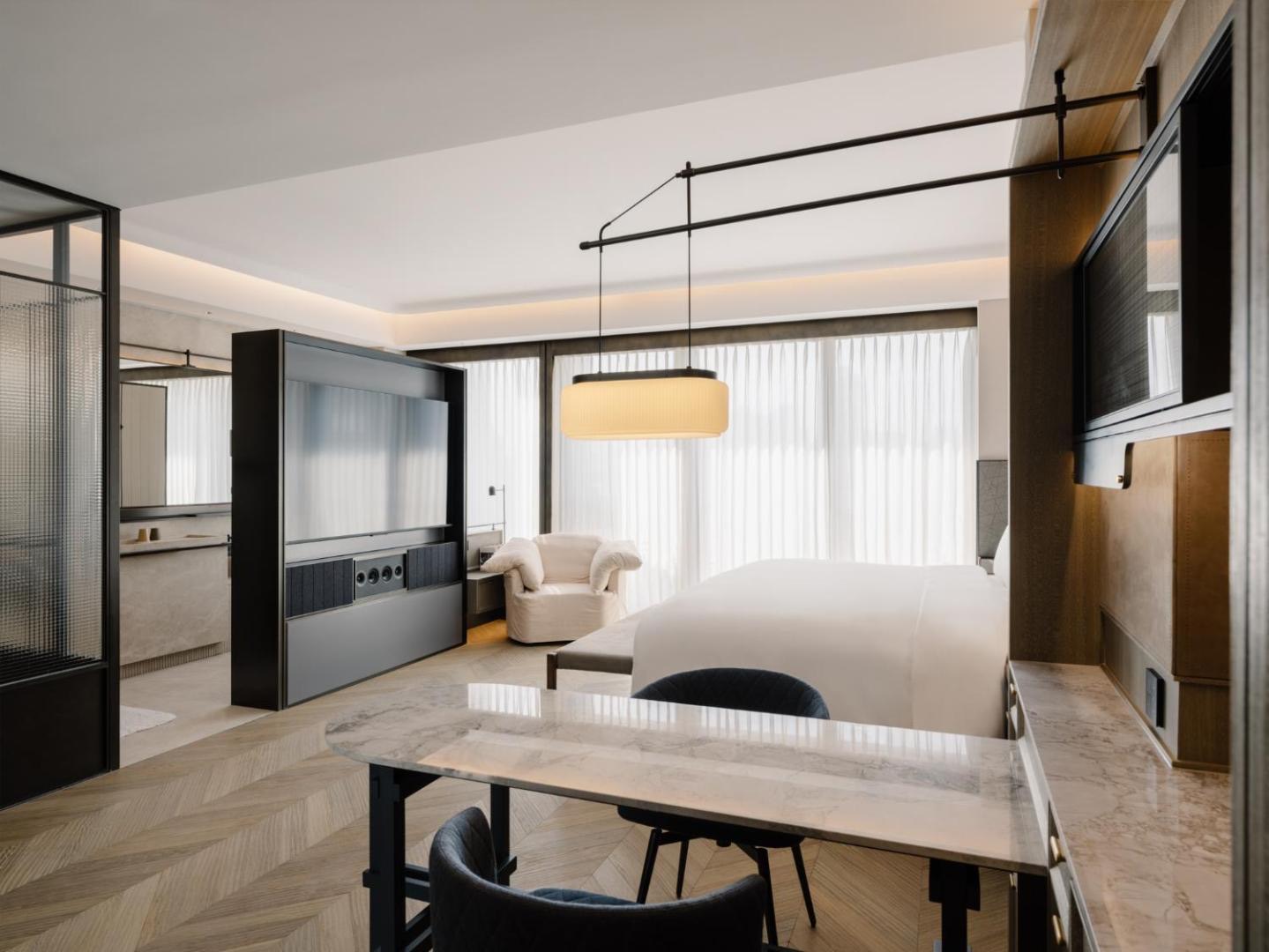
Every room gets a balconyThe balcony double, the base room. It starts at 49㎡ and sits on floors three to eight. ⓒ上海上影CHAO酒店 / Booking.com listing
5.The room mix is unusual. The base balcony double is 49㎡, the Wutong suite 75㎡, the executive suite 85㎡, and the garden suite on the 13th floor 165㎡. The smallest room is 49㎡. A standard Korean five-star room usually runs around 35㎡ and an urban boutique will sell at 25. Using this area across 72 rooms puts room floor area alone near 4,300㎡, a little over 1,300 pyeong.
They did not shrink the roomsA guest room. Instead of splitting units small to raise the count, they held the count down and raised the rate. ⓒ上海上影CHAO酒店 / Booking.com listing
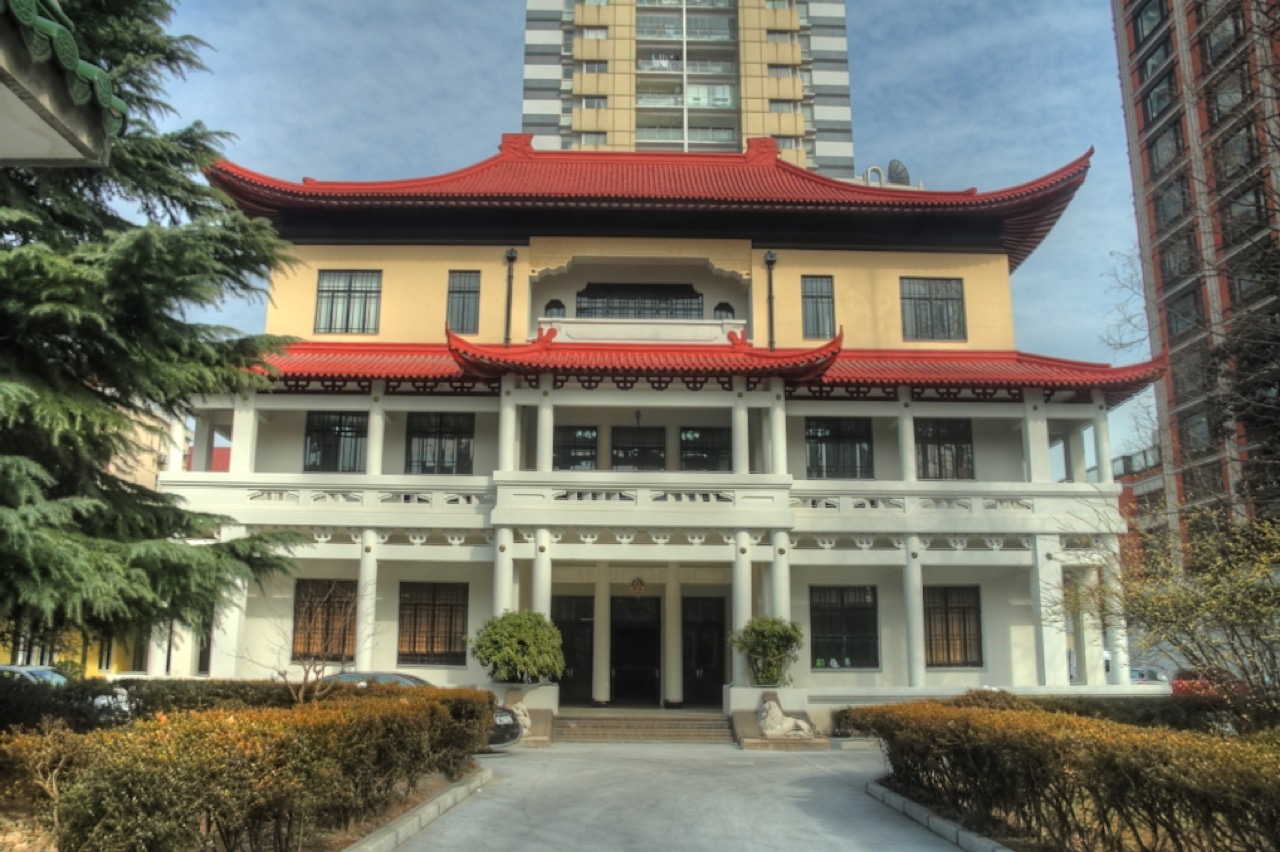
6.Right beside the hotel stands 200 Xinhua Road. A garden house designed by Gan Shaoming in the 1930s, set on the former site of Guangfo Temple, on a 4,100㎡ plot with 1,259㎡ of building across three floors. Glazed tile over a traditional Chinese hipped roof with four corners lifted, the only building in Chinese vernacular style in this neighborhood. Chen Guofu lived there, and later a dictionary editorial office and a publisher used it. Designated a Shanghai outstanding historic building in 1999. Fully repaired in 2023 and now used as a screening venue.
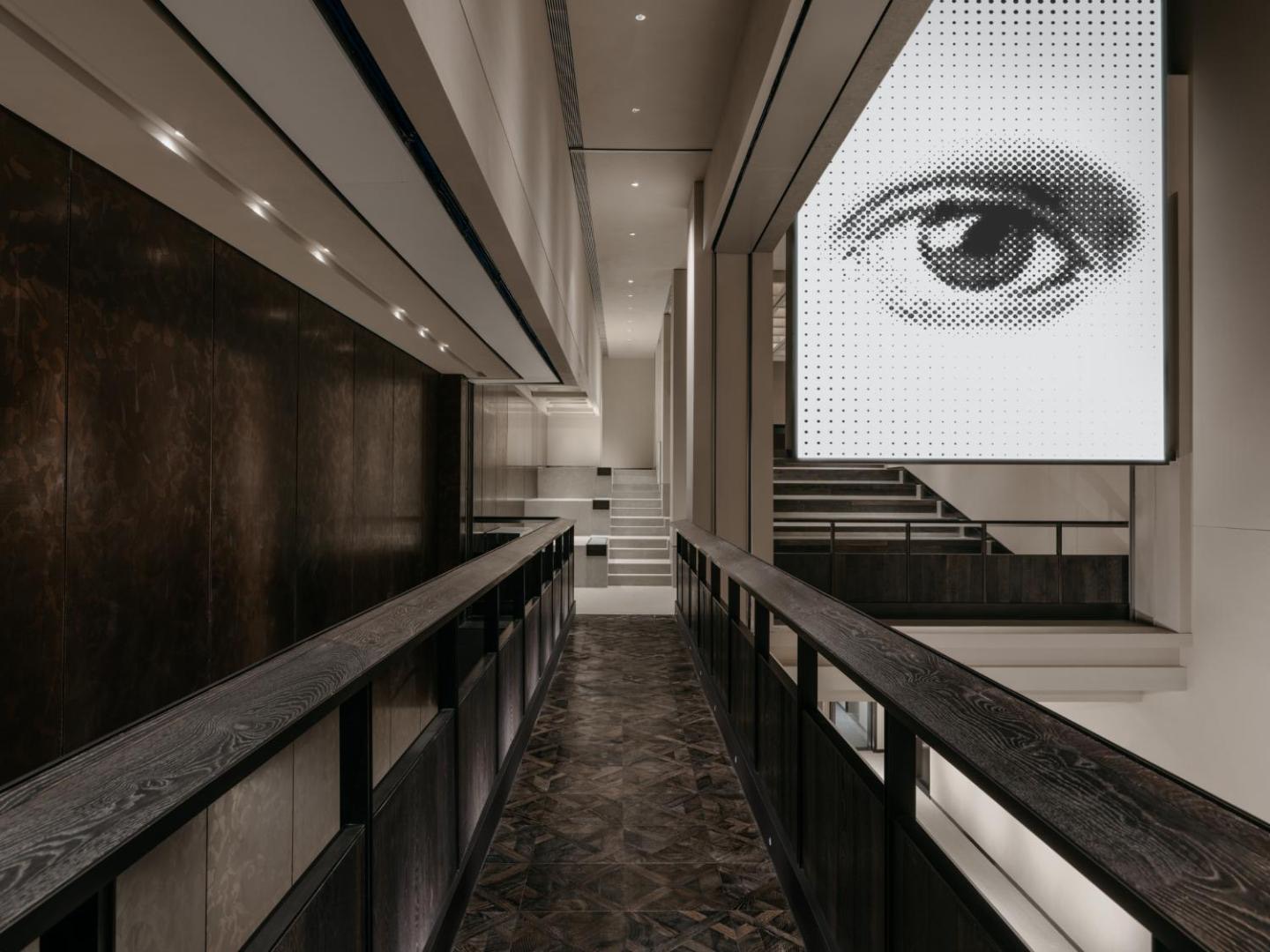
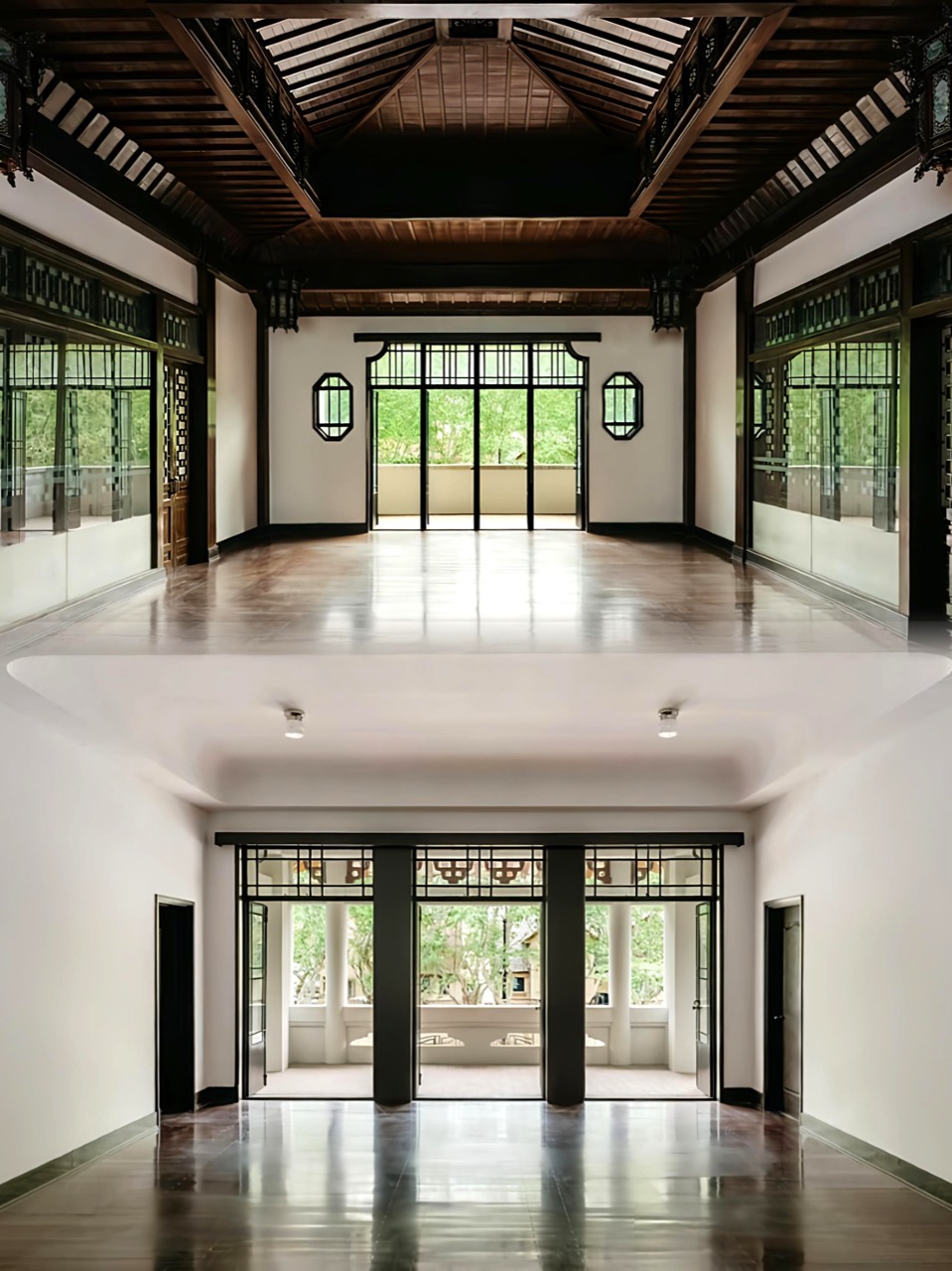
A 1930s house became a screening room200 Xinhua Road. A three-story garden house on a 4,100㎡ plot with 1,259㎡ of building, designated a Shanghai outstanding historic building in 1999. ⓒWikimedia CommonsThe lobby doubles as a galleryThe INspace art area. Premieres and product launches are received across three levels, the fifth floor event room, the second floor hall and the ground floor corridor. ⓒ上海上影CHAO酒店 / Trip.com listing
7.On to operations. From here, revenue and cost figures are all estimates, not company disclosures. As a property barely a year old, take it conservatively. An achieved room rate of 2,400 yuan and occupancy of 60%. Revenue per available room comes to 1,440 yuan, and 72 rooms make around 37.8 million yuan a year in room revenue. At 195 won to the yuan, about 7.4 billion won.
Where the rate standsSet beside the five-star average in the same city. The five-star figures are averages across the whole grade and cannot be compared directly with an individual hotel.
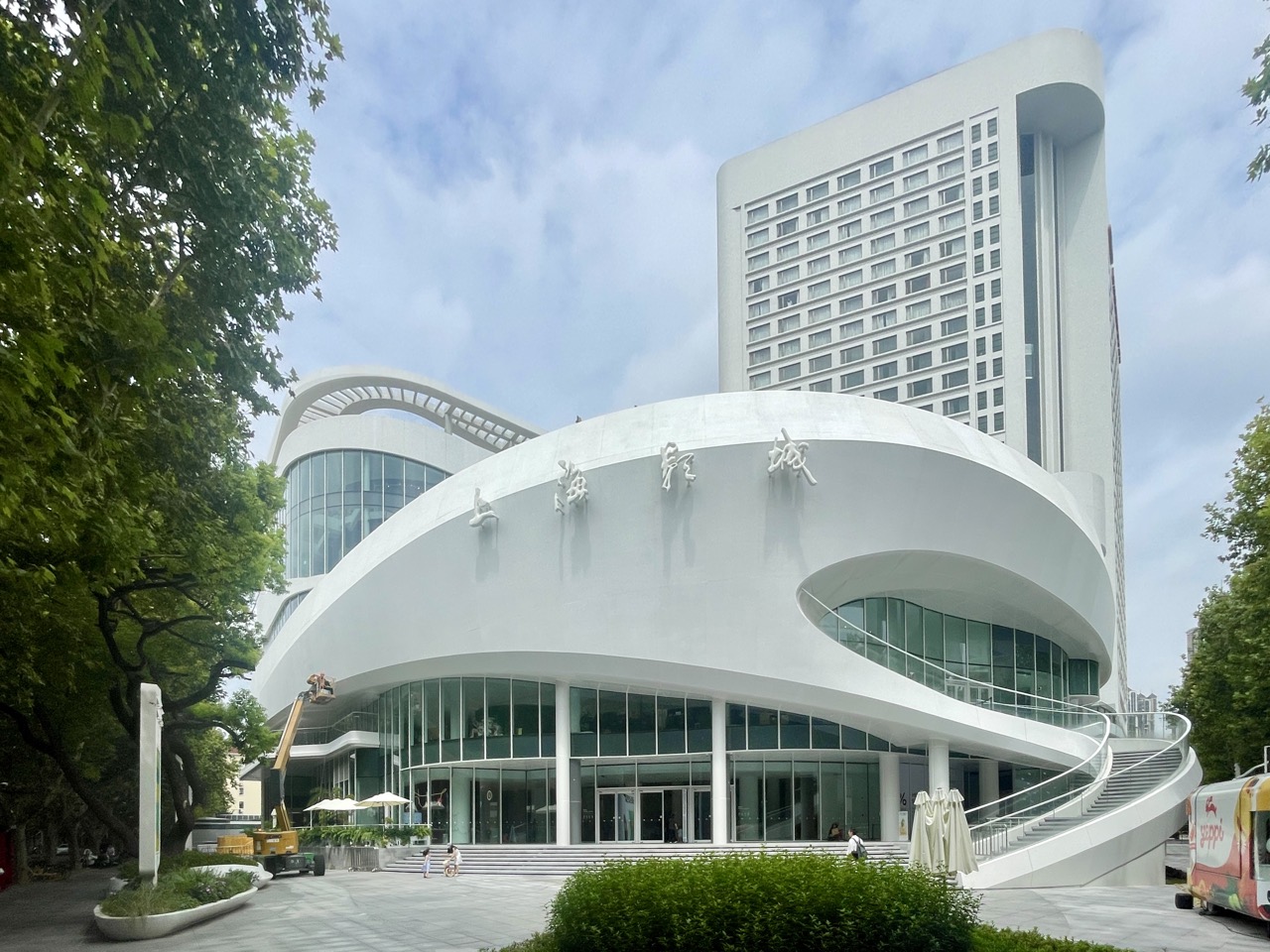
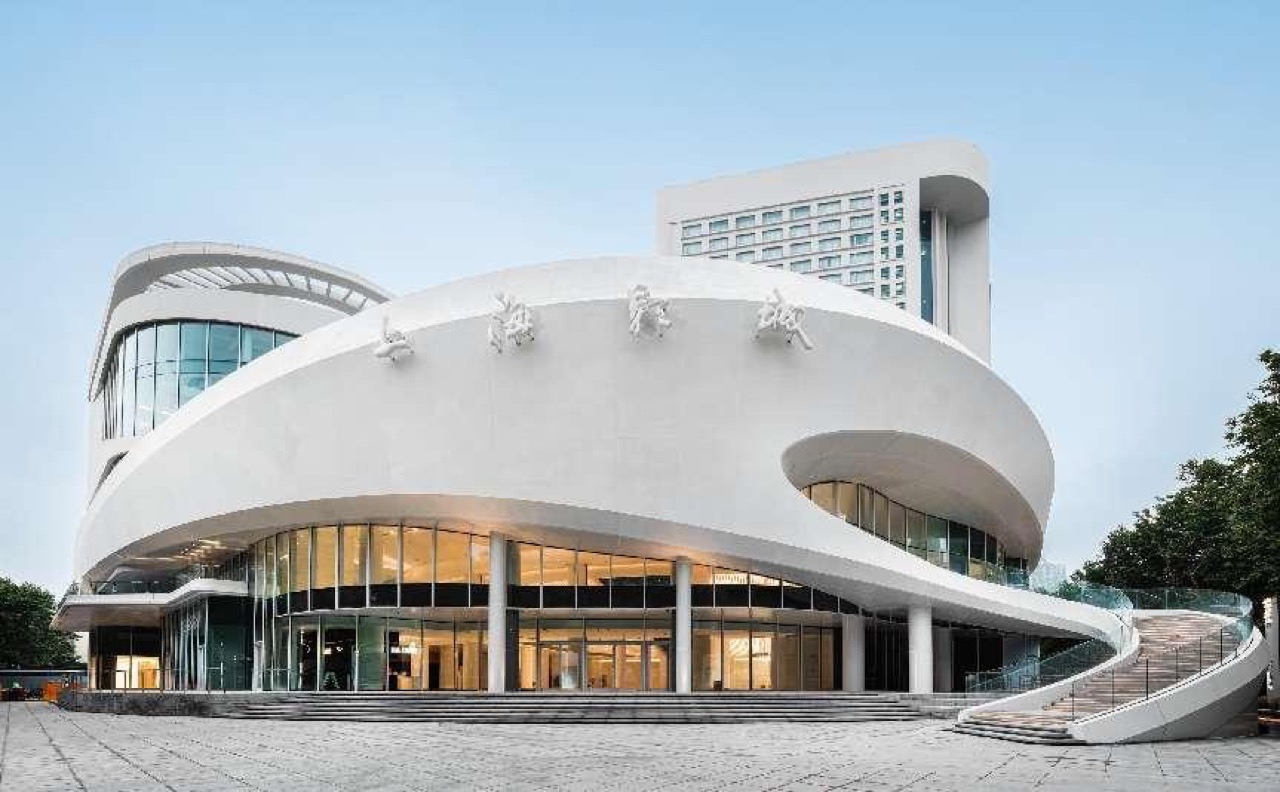
8.This hotel's real face is in the building next door. Shanghai Film Art Center was rebuilt over more than a year from February 2022, reopened on June 8, 2023, and switched its brand to SHO. Hall 1 is a 1,008-seat Dolby cinema, the first in Asia past a thousand seats. Hall 2 becomes a 500㎡ black box theater when the seats fold away, and the lobby carries a 29m by 6m LED canopy and is called Hall 0.
The hotel is attached to this buildingShanghai Film Art Center SHO. Reopened in June 2023 and linked to the hotel, club and historic buildings across 5,000㎡ of space. ⓒWikimedia Commons1,008 seatsHall 1, the Shanghai Dolby Cinema. The first Dolby-standard auditorium in Asia to pass a thousand seats. ⓒ人民网 上海频道 listing
9.That cinema posted 18.3 million yuan in box office in the first half of 2026, first in the country for a single site. Net ticket sales, with online fees excluded. Over the same six months, total Chinese box office collapsed more than 40% year on year to 17.354 billion yuan. While the market halved, one cinema took first place nationally. Screenings themselves came to 73.29 million, the highest first-half figure in Chinese film history, so screens were not short. Audiences picked where to go.
Food and drink attach to the lobbyThe Living Room restaurant and bar. There is no pool, the fitness room is free, and breakfast is sold separately at 280 yuan for an adult. ⓒ上海上影CHAO酒店 / Booking.com listing
10.One trap here. Box office is not money the cinema keeps whole. In China, a 5% film industry development fund and 3.3% tax come off the ticket price first, and the remainder splits roughly in half between the cinema chain and distribution. Apply those ratios to 18.3 million yuan and the cinema's actual share lands near 8.4 million, a little over 1.6 billion won for the half year. Estimated room revenue over the same six months is 18.9 million yuan, so the room side is more than twice as large.
11.So is the cinema keeping the hotel alive. No. It is closer to saying the flow of people and the justification the cinema creates lift the room rate 2.5 times. Shanghai Film Group calls this bundle FOD, a film-centered destination, and divides it into five parts. The film center, the Dolby cinema, the hotel, the international film professionals club, and 200 Xinhua Road. What links hotel and cinema is a single 5,000㎡ space.
Which side earns morePublished box office with public split ratios and market averages applied, matched to the same six months. The room side is entirely assumed.
12.Set this against graded hotels and its position sharpens. Luxury hotels build revenue outside the room through banquet halls, weddings, buffets and club lounges, and that share can pass 40%. This hotel has no banquet hall. Premieres, product launches, fashion shows and award ceremonies fill that slot instead. The art area called INspace, split across the fifth floor event room, the second floor hall and the ground floor corridor, receives those events. A banquet hall taking premieres instead of weddings.
13.Staffing is framed differently from a graded hotel too. Seventy-two rooms with no pool, a fitness room open free of charge, and food and drink built as one Living Room with a cafe and bar attached. Put it at 0.8 to 1.2 people per room and it comes to 60 to 85. But this hotel also has to run an art space and a members' club, so curation and event staff a normal boutique would not carry sit on the payroll permanently. Not a model that cuts labor cost but one that converts labor cost into content.
The shared areas are wideThe hotel's public space. Area outside the rooms makes no revenue directly, and events and member programs turn that area instead. ⓒ上海上影CHAO酒店 / Booking.com listing
14.CHAO is originally a Beijing thing. It opened in Sanlitun in 2016 with 180 rooms, designed by GMP. The method of binding hotel, arts center, members' club and online media into one piece was set then, so Shanghai is the second edition of that grammar. What differs is the partner. In Beijing the brand made the content itself. In Shanghai a state-owned film company walked in carrying cinemas, a film festival and historic buildings it already had.
15.The price shows up on the other side of the rate card. A smallest room of 49㎡ means giving up close to half the room count on the same floor area, and a hand like that hurts immediately if occupancy wobbles. Drop occupancy from 60% to 45% and annual room revenue falls from 7.4 billion won to 5.5 billion. Demand built by the film festival and premiere season swings hard with the season. Beside that sits the fact that in the year one cinema led the country, the whole market still fell 40%.
Summary
A state-owned film company bound its cinema, an old house and a film festival into one block and put 72 rooms inside it. If one number stays, it is 2,380 yuan a night against a five-star average of 960 in the same city, 2.5 times over. The rate holds not because the rooms are good but because the building next door led the country in half-year box office, and in fact the room share works out more than twice the cinema's. For anyone drawing the same picture in Korea, the first obstacle is not the brand but the use classification. A cinema is a culture and assembly facility under the Building Act and rooms are lodging, so mixing them in one building means recalculating fire compartments, escape routes and parking counts, and even split into separate blocks, which use the connecting passage belongs to becomes a matter for consultation from the start. Bring in a registered cultural heritage or a locally designated architectural asset and a permit for alteration is added on top, and a lodging filing under the Public Health Control Act and a cinema registration sit with different departments to begin with. Individual sites need confirmation from the competent department. A decision to attach content and raise the room rate pays its first price on the permit drawings.