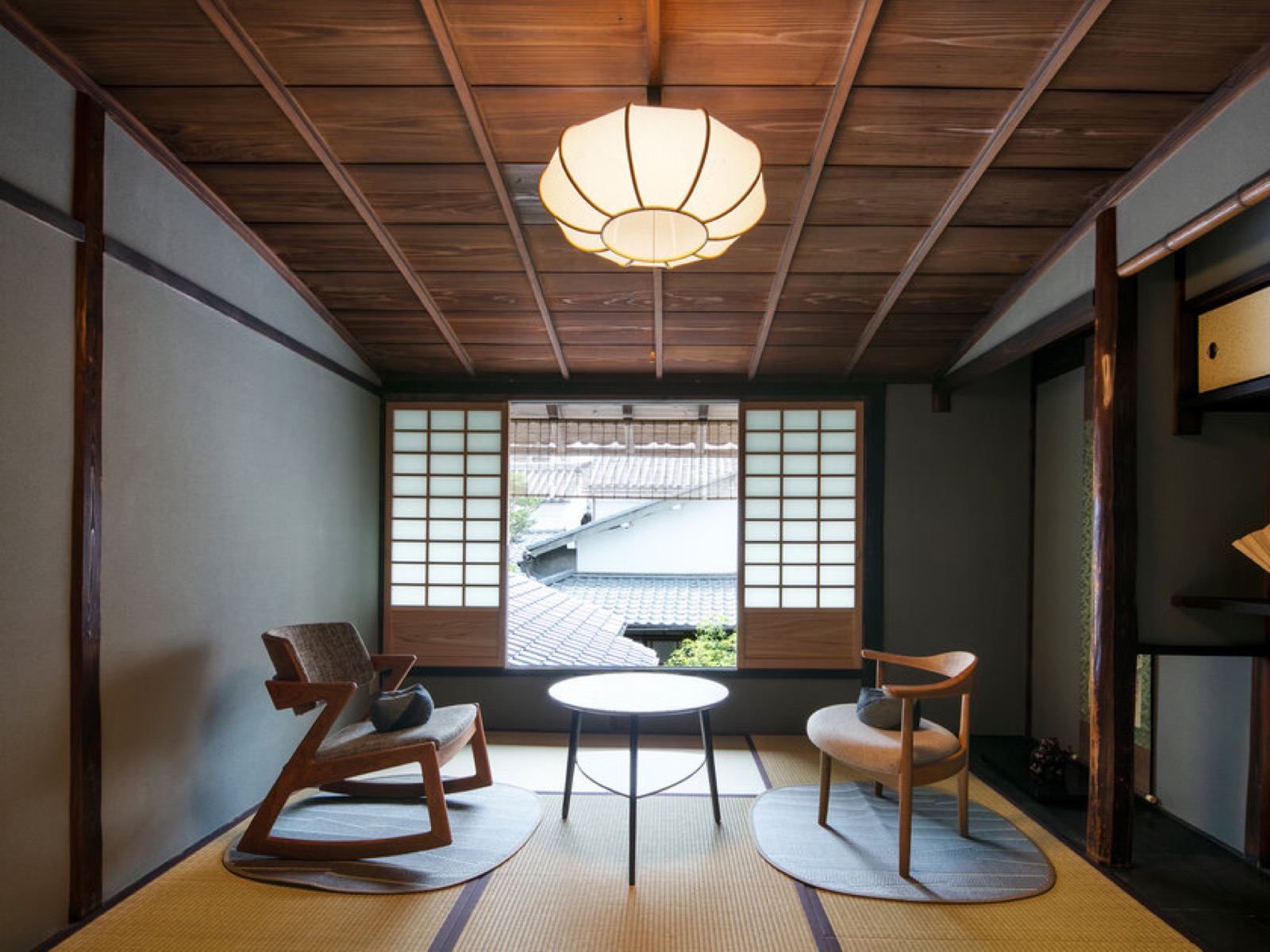
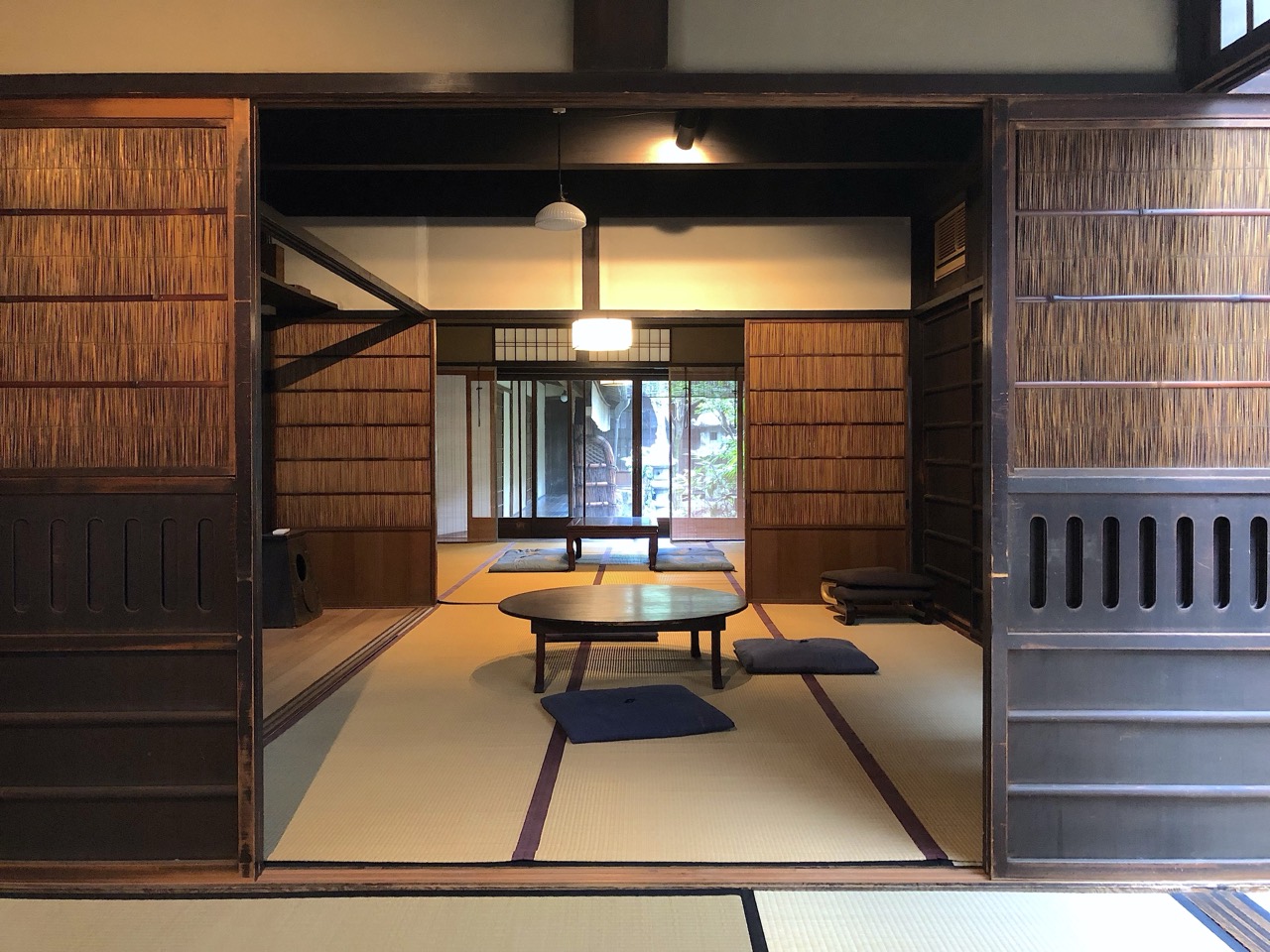
Only this one building is soldThe north wing of the main house, now open as lodging. It went up in 1868, and its interior was left out of the designation notice. ⓒ株式会社レアル / via AtPress
Daily Hotel
One Room in a Kyoto Machiya of Six Designated Buildings
2026.08.05
An old kimono wholesaler's house in central Kyoto, 13m wide and 54m deep. All six of its buildings are city-designated cultural properties. In January one of them opened as lodging. One room, four guests.
1.On 15 January 2026 a lodging opened deep inside Ayanokoji-dori in Shimogyo-ku, Kyoto. It carries the name of the house itself, the Nagaeke Residence. What is sold is the north wing of the main house, one room with a capacity of four. The building is owned by Hoosiers Corporation, a developer listed in Tokyo, and run by Real Co., which operates 73 buildings and 403 rooms across Kyoto.
2.The family settled here in the middle of the Edo period and wholesaled kimono fabric under the shop name Fukuroya. The north wing went up in 1868 and the south wing in 1907, and in April 2005 six buildings, the north and south wings of the main house, the dressing room, the detached residence and two storehouses, were designated tangible cultural properties by the City of Kyoto. The eighth-generation head passed the house to Hoosiers in 2015, and the 2018 restoration reportedly took on seismic and fire performance at the same time.
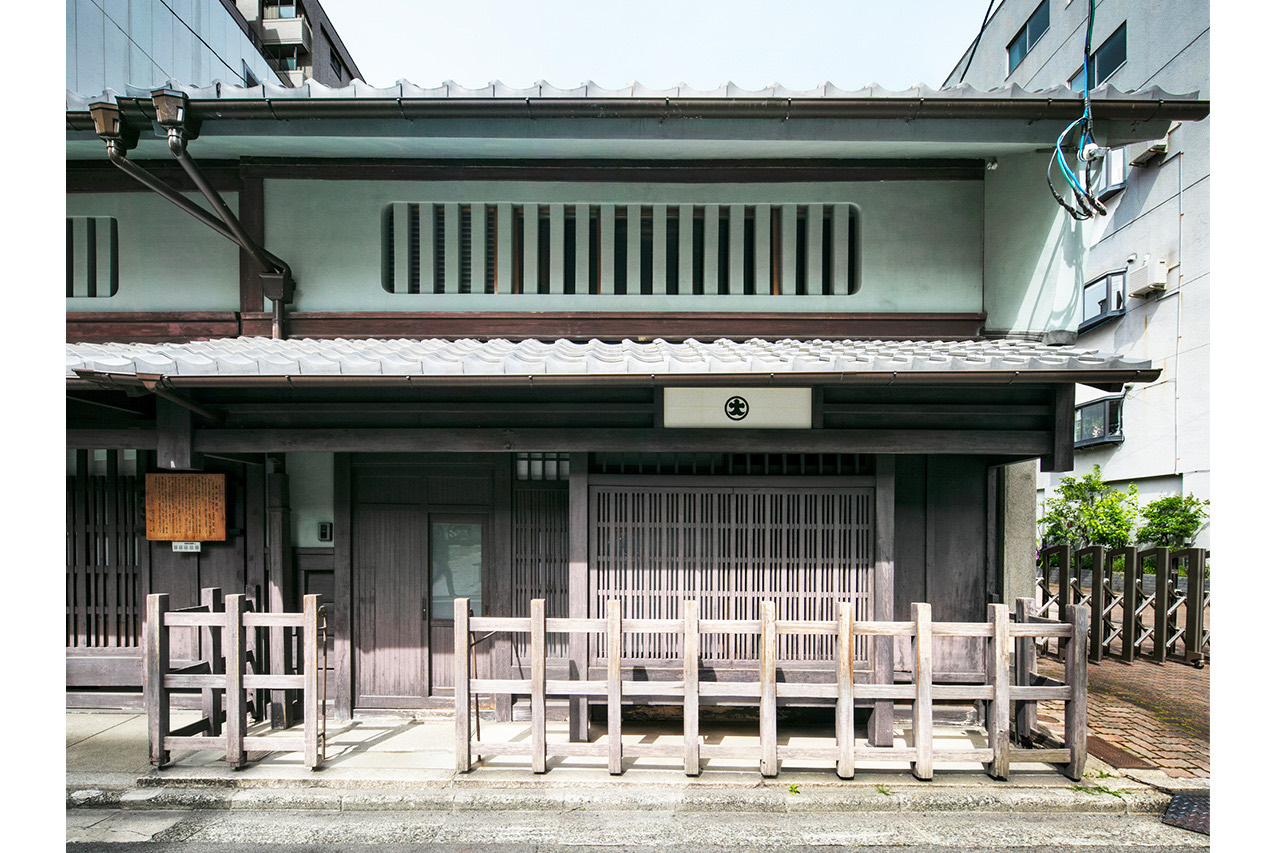
Seven ken wide toward the streetThe street facade. This run of lattice and eaves is what makes the streetscape of the Yamahokocho district. ⓒNagaeke Residence official site
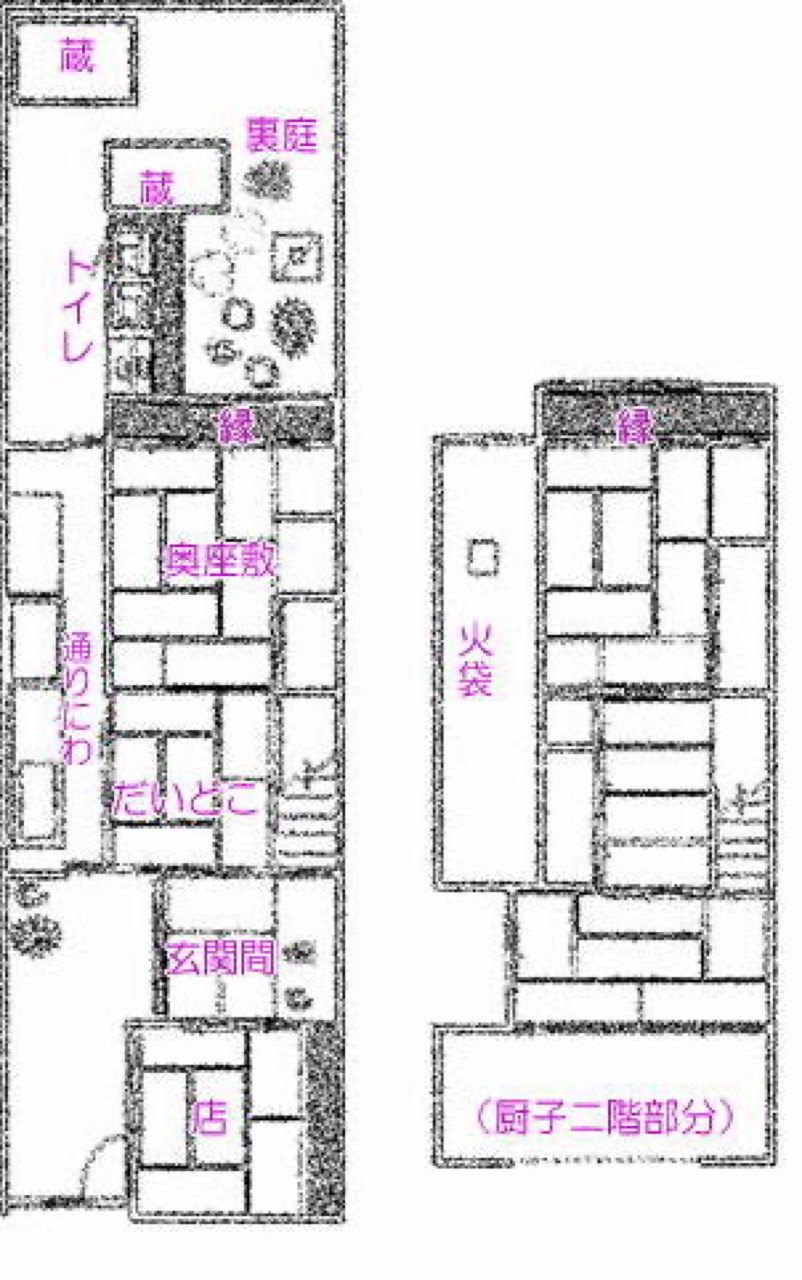
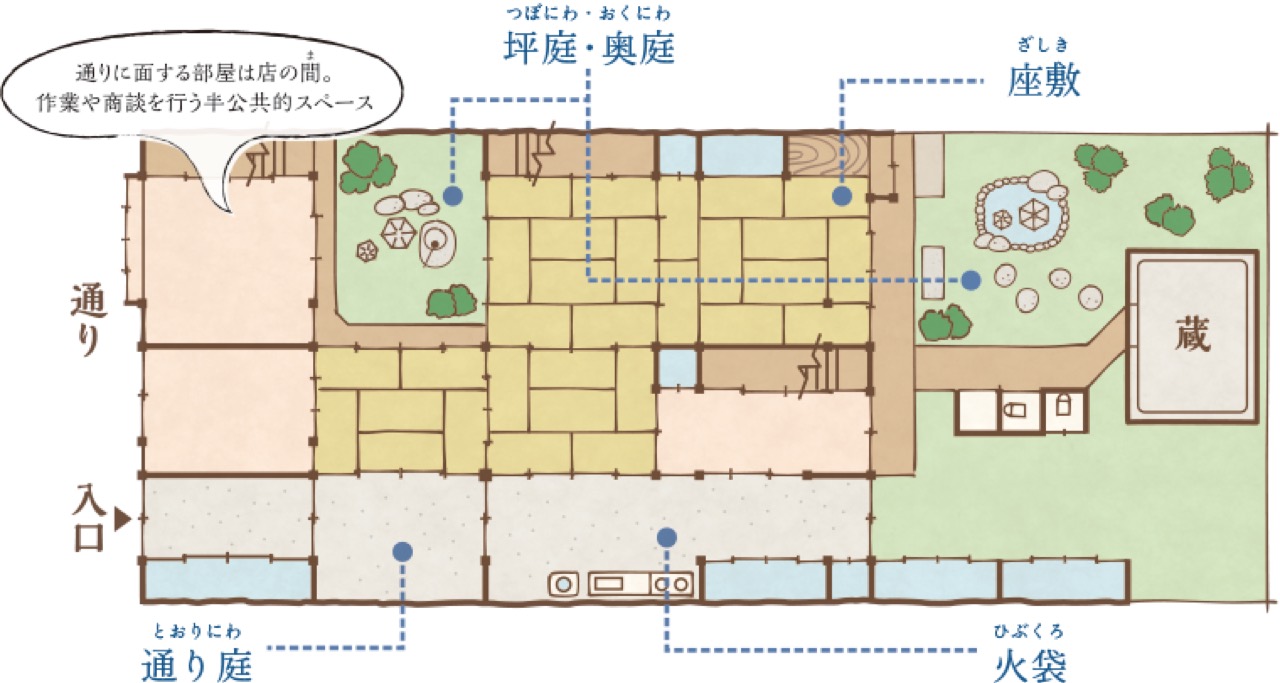
3.The plan follows the omoteya-zukuri type. From the street inward come the shop, the entrance hall, the kitchen and the inner room in one line, with a detached parlour beyond a garden. Seven ken wide and thirty ken deep, which in metres is 13 by 54. Kyoto people call this proportion an eel's bed, and this house pushes it as far as it will go.
One line, front to backA typical omoteya-zukuri plan of a Kyoto machiya. Shop, living quarters and inner room line up front to back while a through-passage cuts along the flank. ⓒdiagram published in Kyo-machiya ni tsuite
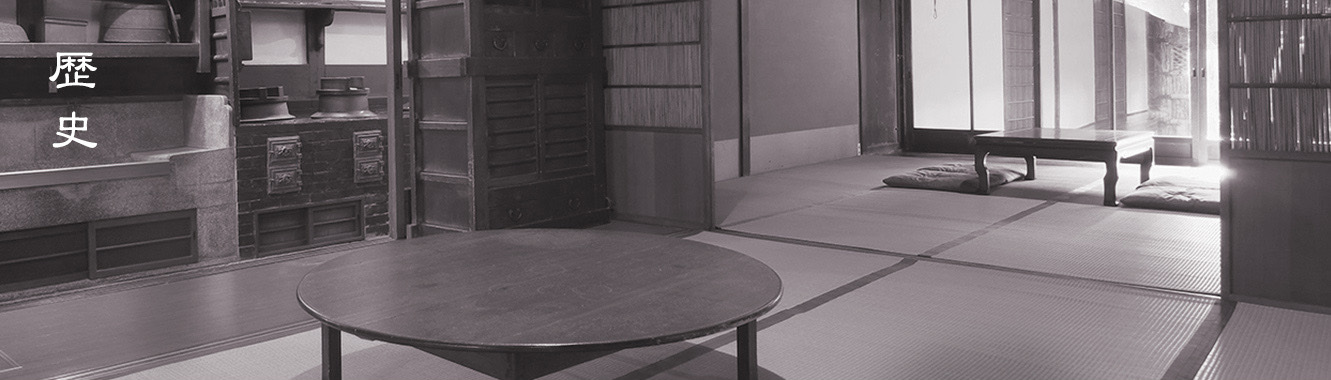
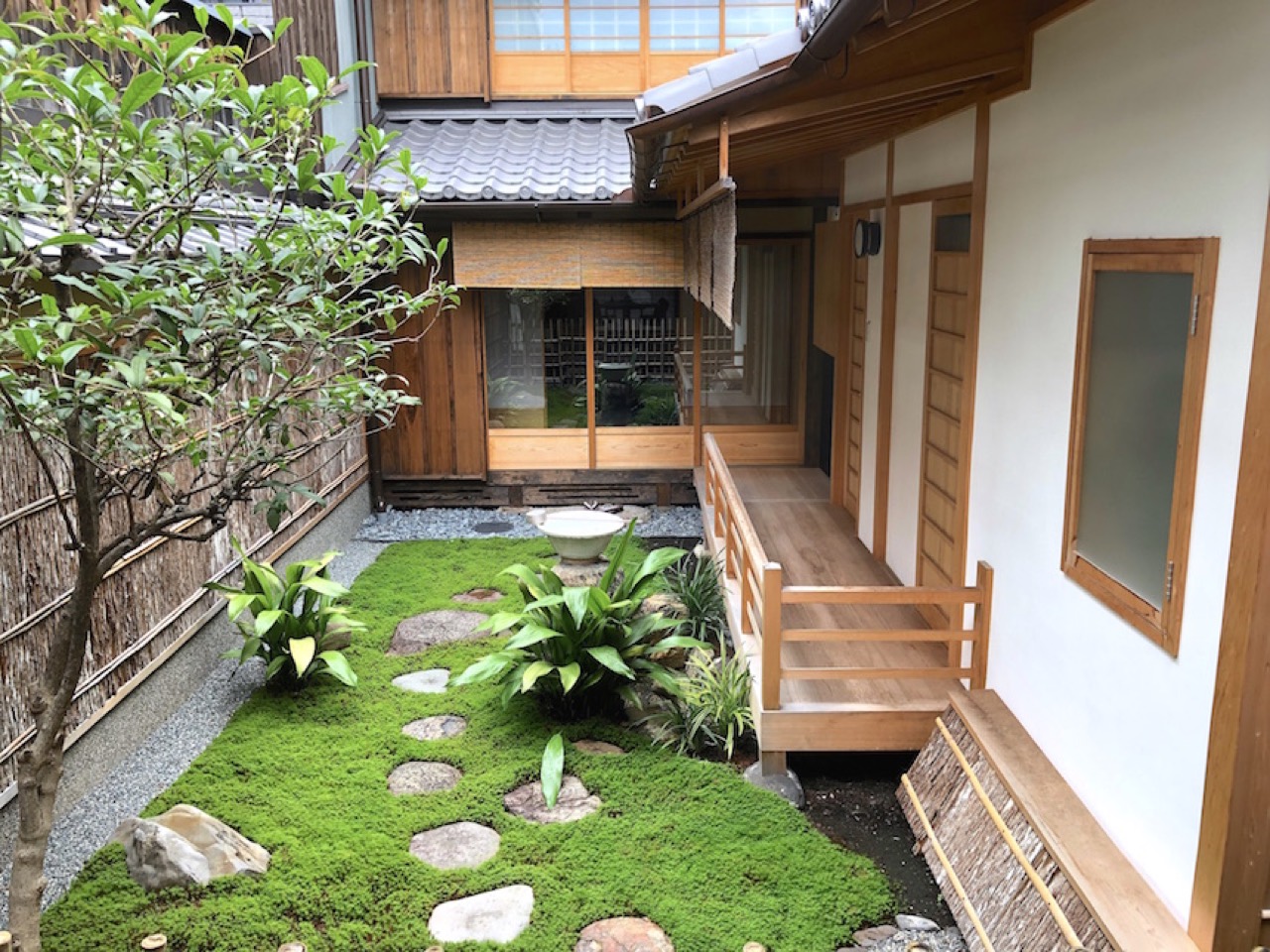
4.Above the kitchen there is nothing but air. Over the three okudosan hearths a hollow shaft called a hibukuro rises to the roof, pulling smoke out and dropping light in. When summer comes the fittings are swapped whole for reed screens, and wind runs the length of the flank. These were devices for getting through summer without cooling, and now guests come to look at them.
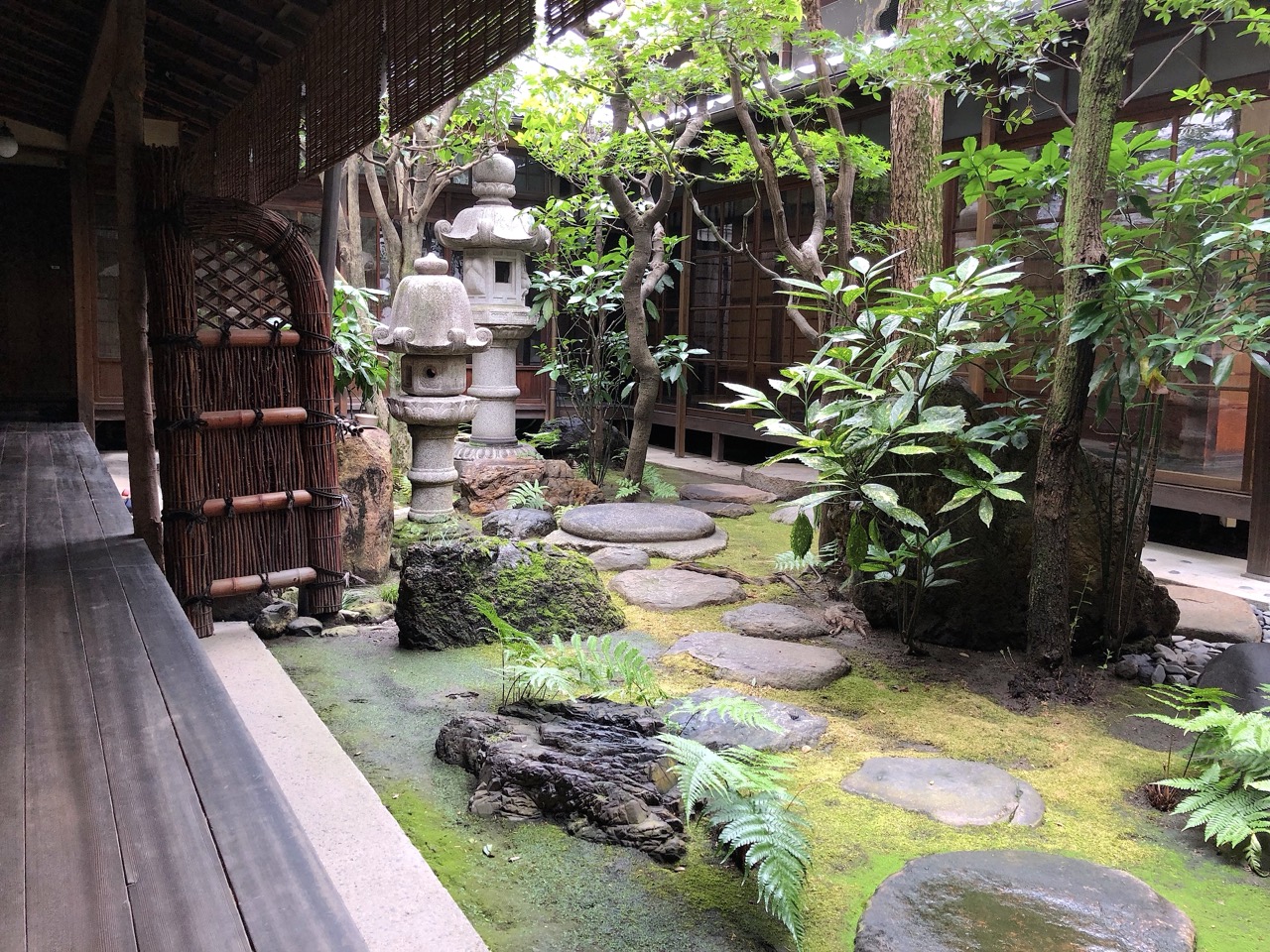
Light falls from the insideToward the inner court. In a house this long, this is where light and air get pulled in. ⓒOniwasanThe garden cuts between roomsThe detached wing sits across the garden. Rooms are not pushed up against each other but broken apart by open ground. ⓒOniwasan
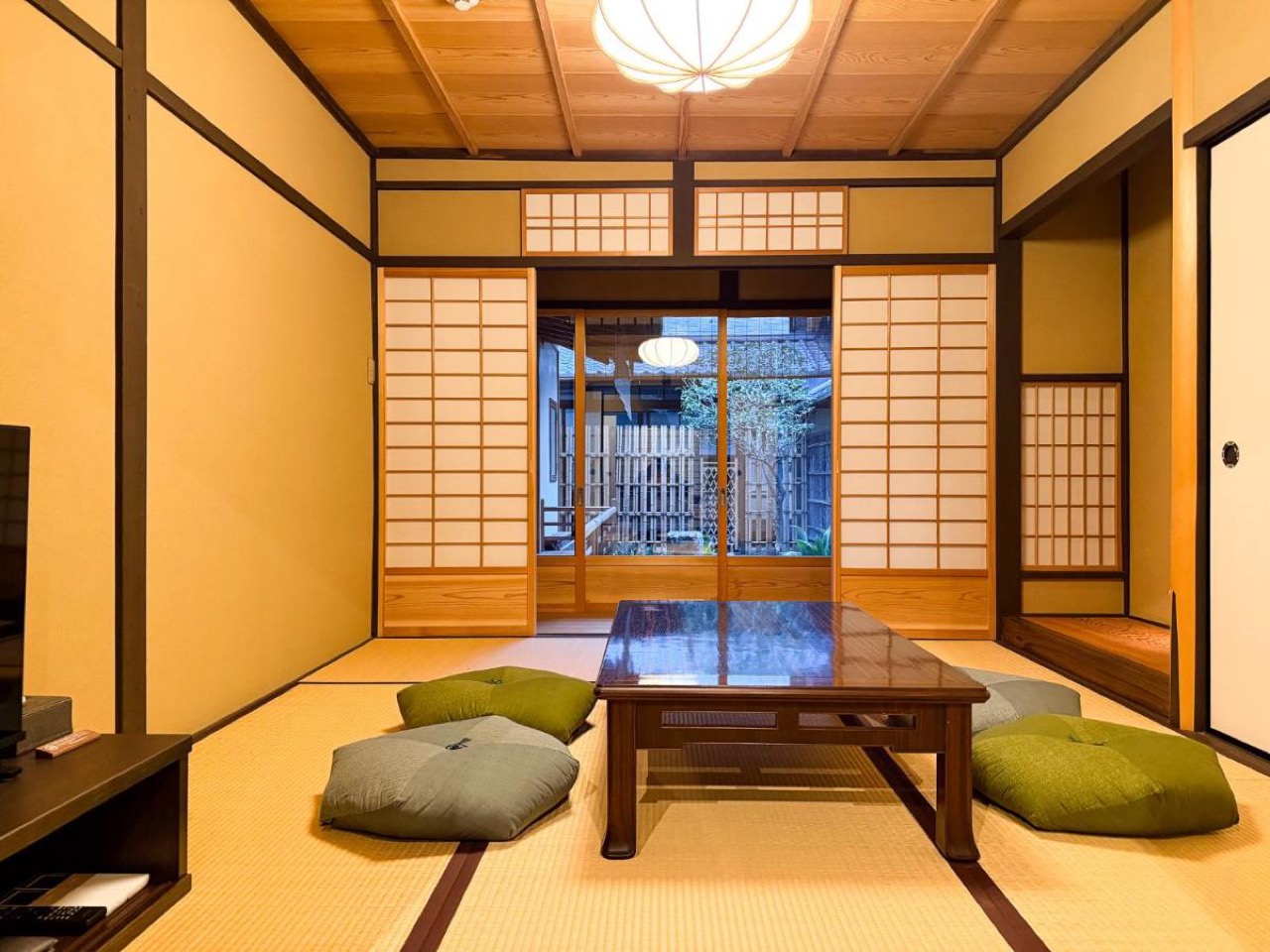
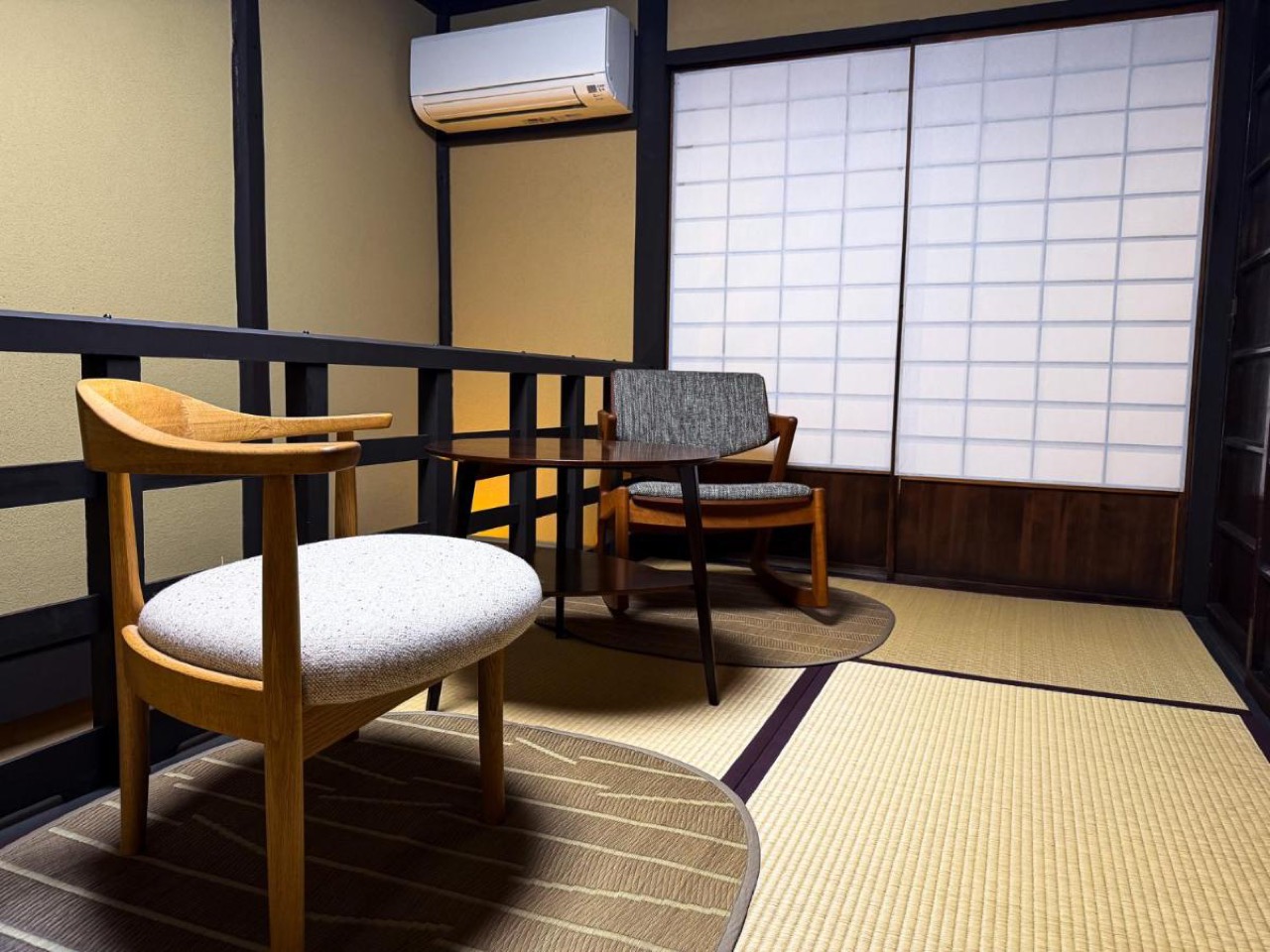
5.Read the designation notice and the north wing alone carries a different condition. The interior of the north wing was left out of the designation. That is what allowed the water rooms and the bedding to be swapped to present-day standards, giving 124㎡ over two floors. The room that can be sold comes out of that one line.
Where preservation and use partInside the north wing. Frame and joinery were brought back to their old form, and only the fittings a hand touches were changed to modern spec. ⓒNagaeke Residence / via Booking.com
6.Now the operation. From here on, revenue and cost are all the writer's estimates, not figures the company has published. The site runs about 700㎡, 212 pyeong. Six designated buildings stand on it, and only 124㎡ is sold as lodging. Eighteen percent of the site makes the rate.
The area sold and the area keptLodging that carries a cultural property turns on how the unsellable area gets fed.
7.What happens to the other 82 percent? The shop section of the south wing has served as the owner's Kyoto office, and the north wing housed staff until it opened. The detached residence and the storehouses open for the Byobu Matsuri during Gion Matsuri. Before the pandemic that drew about 1,500 people over three days. More than 1,000 stored items went to Ritsumeikan University.
This part is not soldThe inner parlour. Public events and the office use this floor area, so it never lands in room revenue. ⓒOniwasan
8.The rate card is not public. Renting a whole machiya in Kyoto for four runs between 22,000 and 28,000 yen, and a city-designated cultural property with a restoration behind it will not sit in that band. In April 2026 the average room rate across 117 Kyoto hotels was 31,296 yen, occupancy 85.1 percent, RevPAR 26,633 yen. Take the night as landing somewhere between 80,000 and 150,000 yen, and the arithmetic below runs on the 100,000 yen midpoint.
One party a nightA room in the north wing. One party a day means no corridor and no front desk. ⓒNagaeke Residence / via Booking.com
9.With one room, the stock that can be sold in a year stops at 365 nights. Put occupancy at 60 percent and the year comes to 21.9 million yen, a month to 1.82 million. Divide by 37.5 pyeong and it is about 49,000 yen per pyeong a month. At Kyoto's average RevPAR over the same period one room makes 800,000 yen a month, and this house clears more than double that with a single room. This is not a structure that wins on room count.
10.Staffing runs further to the edge. There is no front desk, and the operator leaves cleaning on consecutive nights out of the base service. Stay past three nights and the free clean comes at set intervals, with anything else charged. Cleaning, linen and guest response run across 73 buildings from one control desk, so almost no hands sit on this house alone. The fixed cost that a graded hotel carries in a front desk, housekeeping, breakfast and banqueting is carried here at one seventy-third.
11.One more tax landed. The Kyoto lodging tax moved to five bands for stays from 1 March 2026, and 100,000 yen or more per person per night carries 10,000 yen. Four people splitting 100,000 yen come to 25,000 each, which puts them in the 1,000 yen band, 4,000 yen for the night. Under the old rate it was 2,000. The tax climbs in steps as the rate climbs, so a whole-house rental, where the per-person figure lands low, takes less of a hit from this revision.
Three steps became fiveThree bands grew to five and the upper end steepened. The heavier the nightly rate, the heavier the revision falls.
12.Why does this work now? A City of Kyoto survey counted 34,580 machiya remaining in 2024, 5,566 fewer than the survey eight years earlier. That is about 700 a year, two houses a day. Kept as a home, the upkeep is simply money going out. Turned into lodging, the same money moves into cost of sales.
The ones torn down and the ones leftA diagram of the parts of a Kyoto machiya. The houses that never found a use able to carry the upkeep go first. ⓒCity of Kyoto cultural heritage materials
13.The guest's reason is simple. A whole-house product drops the per-person price as the party grows, and the cultural property label holds up the top of the rate. It is not something a few photographs can replace. In exchange the sellable days stop at 365, so the ceiling hangs low as well.
14.The lineage runs back to the Italian mountains. Albergo diffuso, which repairs empty houses one at a time and ties them to a single front desk, is the original form, and in Japan it moved across to machiya and old farmhouses. Real Co. is called the largest operator of that kind in the country. It now runs 21 hotel-type and 52 machiya-type buildings.
It opened in JanuaryThe Nagaeke Residence at opening. Ownership stays with the developer and only the operation went to a specialist. ⓒvia Leaf KYOTO
15.That company filed for civil rehabilitation on 25 March 2021. Seventy-eight facilities, debt of 1.828 billion yen. Revenue of 5.09187 billion yen for the year to September 2019 fell to 3.93947 billion the next year with a loss of 716.82 million, and about 80 percent of the facilities closed. Miki Corporation of Hokkaido came in as sponsor and the company became a subsidiary on 1 December that year. A dispersed model adds stock easily, but most of the buildings belong to someone else, so when guests stop coming the product disappears and the rent stays.
16.The floor is still moving. Kyoto hotel occupancy of 85.1 percent in April 2026 is 4.8 points below the same month a year earlier, and foreign guest nights fell 11.5 percent. China dropped 64.3 percent, and Japanese guests rising 11.1 percent filled that hole. Rates are at a record while the mix of guests turns over whole.
Summary
A house of six designated buildings on a 212 pyeong site opened one wing as lodging, with ownership held by a listed developer and only the operation handed to a dispersed-model business. If one number survives, 18 percent of the site makes the rate and the other 82 percent gets by on an office and three days of public opening a year. What trips up anyone drawing the same picture in Korea is not the rate but the permits. A designated property needs an alteration approval before anything is touched, and putting lodging use into a timber building brings fire compartmentation, escape stairs and fire service standards that block one another. Using a hanok for lodging also splits between hanok stay under the Tourism Promotion Act and lodging business under the Public Health Control Act, with different rules on cooking, capacity and registration, and taking over an existing building adds a change-of-use procedure under the Building Act. The arithmetic that feeds a cultural property is settled in the permit drawings well before it reaches the rate card.