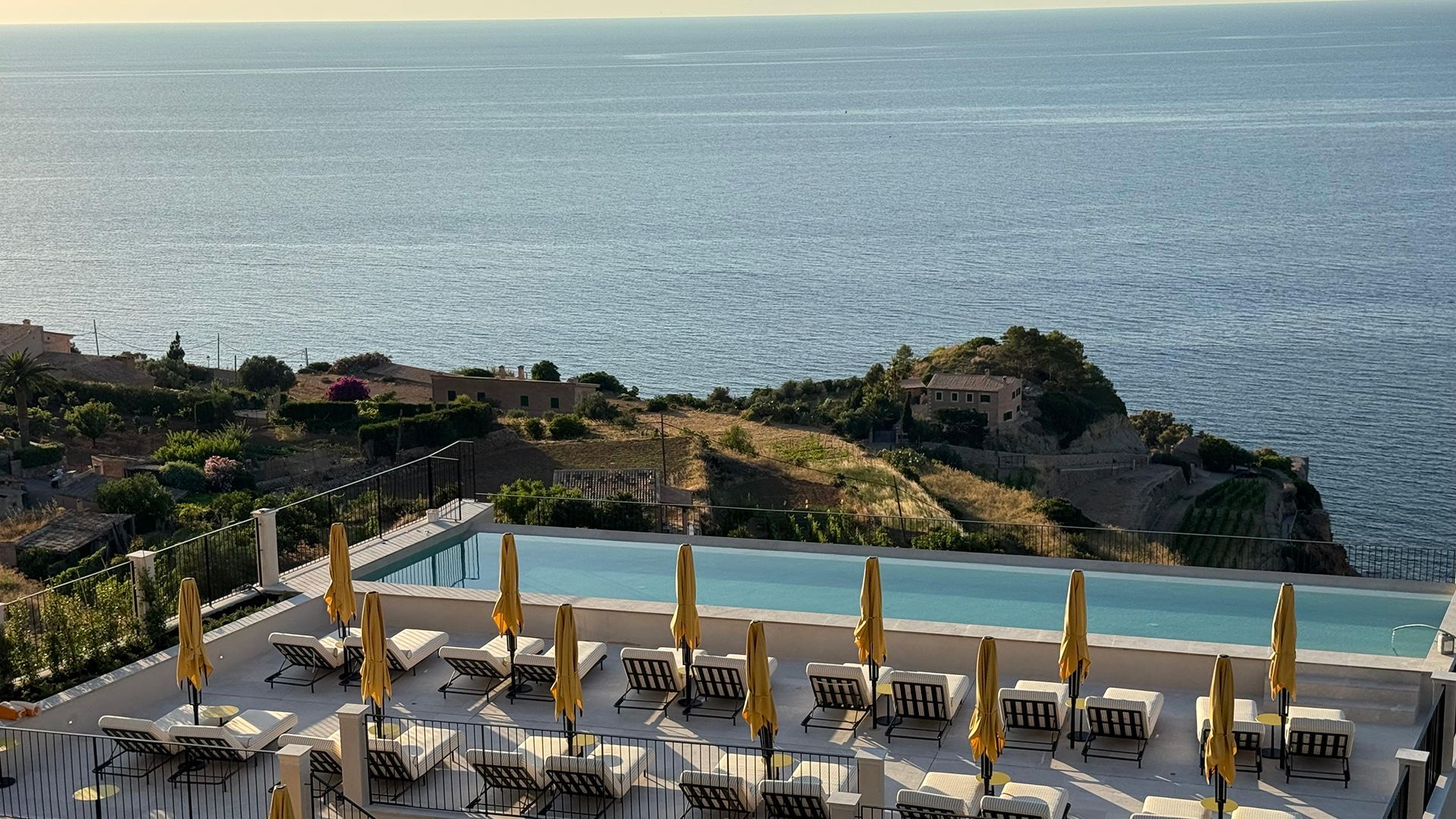
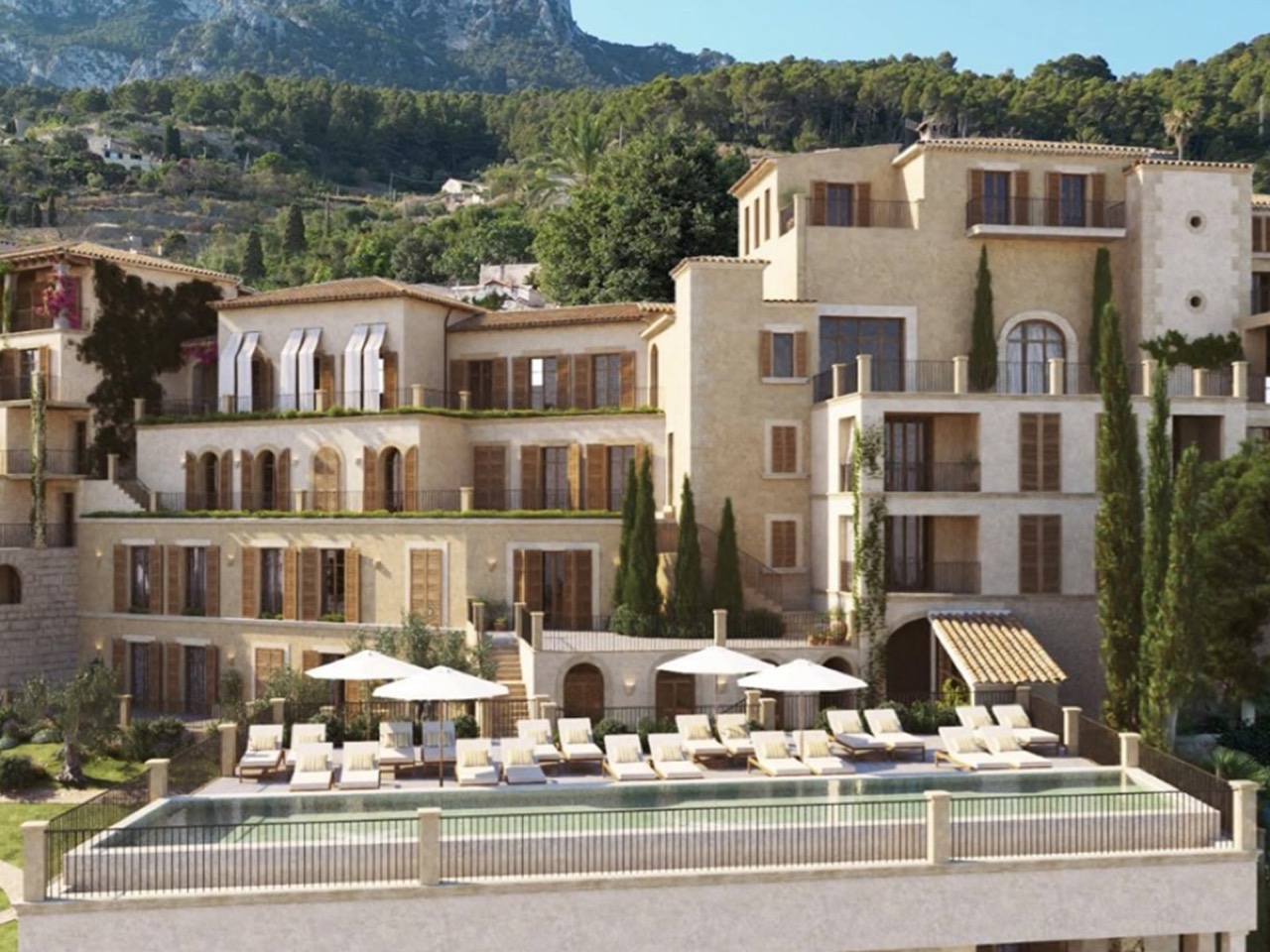
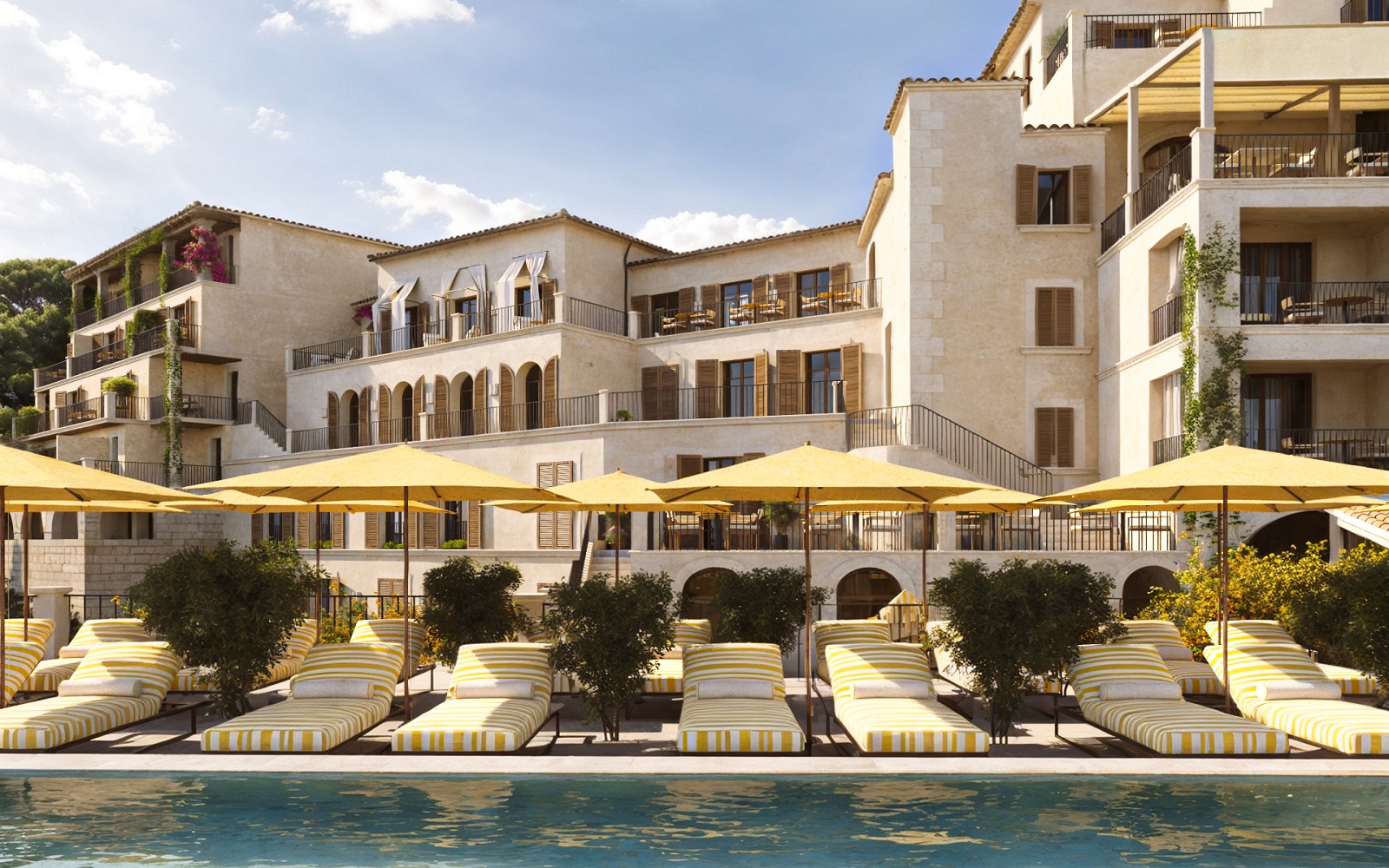
Water laid over terraced fieldsThe pool cut into the slope behind the village. Nothing stands between here and the sea. ⓒAnnua Signature Hotels / via Condé Nast Traveller
Daily Hotel
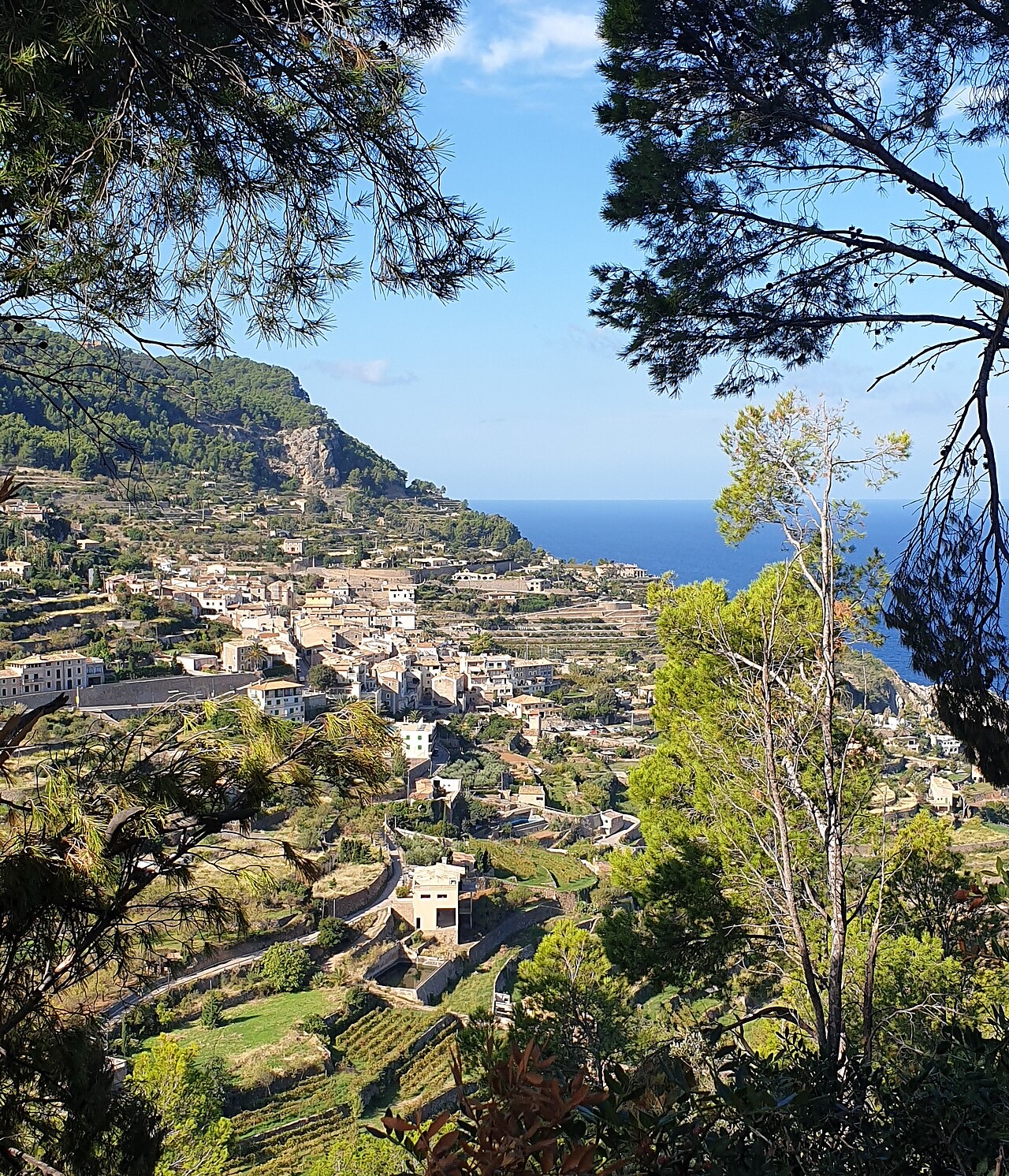
A 29-Room Hotel in a Mallorcan Cliff Village of 573 People
2026.08.06
On the west coast of Mallorca, 2,000 terraces of stone-walled field drop to the sea in a cliff village. In the middle of it an old house opened this summer as a 29-room hotel. The most expensive room is 1,850 euros a night. The average room rate for hotels on the same island is 153 euros.
1.Gran Hotel Margalida opened this summer in Banyalbufar on Mallorca's western shore. Twenty-nine rooms, all facing the sea. It is run by ANNUA Signature Hotels, which has operated four small hotels across the Balearics and the Canaries, and this is the fifth. Architecture is by Álvaro Onieva and Estudio Mesonero Romanos, with interiors by Virginia Nieto of Madrid.
2.The hotel's name was not invented. The woman who owned the house was called Margalida, and that name went straight onto the sign. The building is an old house facing the village's main street, and its oldest part is said to be the tower. The address is 49 Carrer Major. The village has 573 residents.
A slope where 573 people liveBanyalbufar seen whole. The village reached 894 people in 1920 and fell to 200 within a decade. ⓒWikimedia Commons
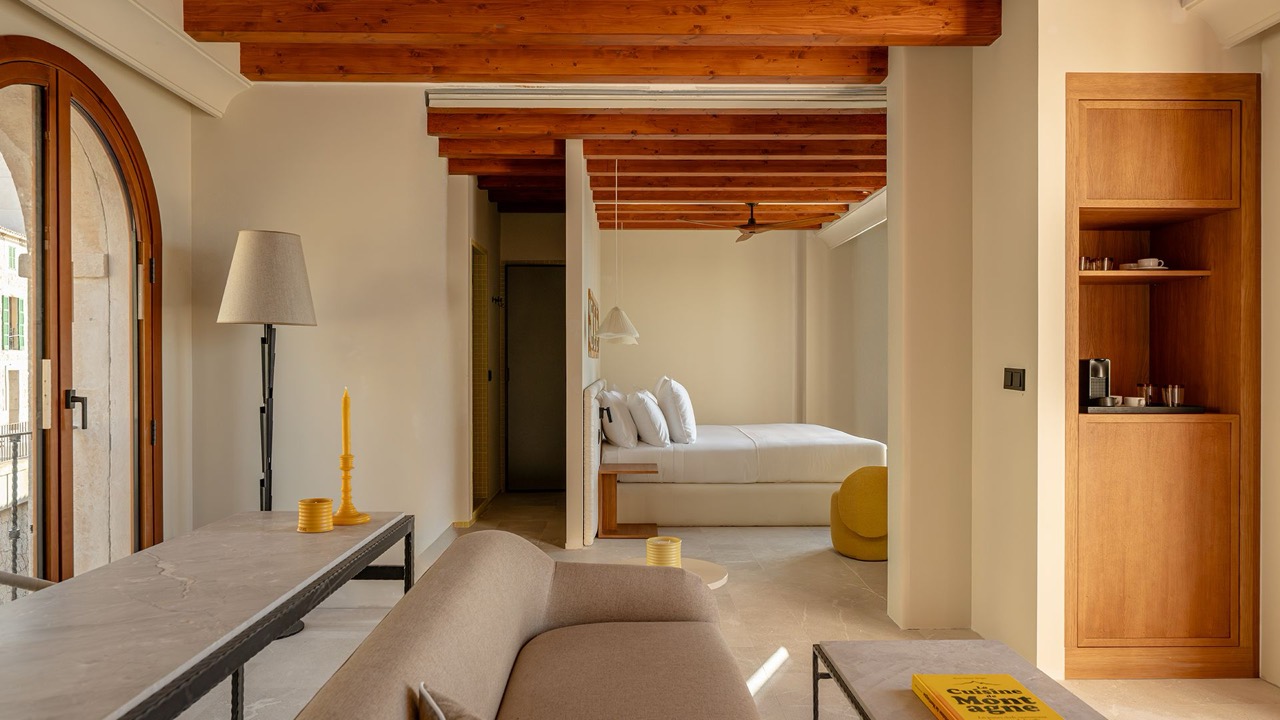
3.Rooms split into six grades. They start at a 20㎡ double, then a 30㎡ superior, a superior terrace with 9㎡ of terrace attached, a 35㎡ junior suite, a 55㎡ sunset suite with 15㎡ of terrace, and up to the 55 to 70㎡ Margalida Suite with a wine cabinet and a bathtub. Under-16s are not admitted.
It sells grades, not roomsA junior suite with a terrace. Inside one building, floor area runs from 20㎡ to 70㎡. ⓒAnnua Signature Hotels / via Condé Nast Traveller
4.The colour was pushed to one note. A yellow mixed for this hotel runs across walls, textiles and joinery, taken from morning light, mimosa and mountain honey. Curved medieval-style furniture, hand-woven traditional Mallorcan linen, undressed stone. After noon the foot of the Tramuntana pushes shadow down over the village, and wind climbs the dry stone walls of the terraces and splits on the terrace.
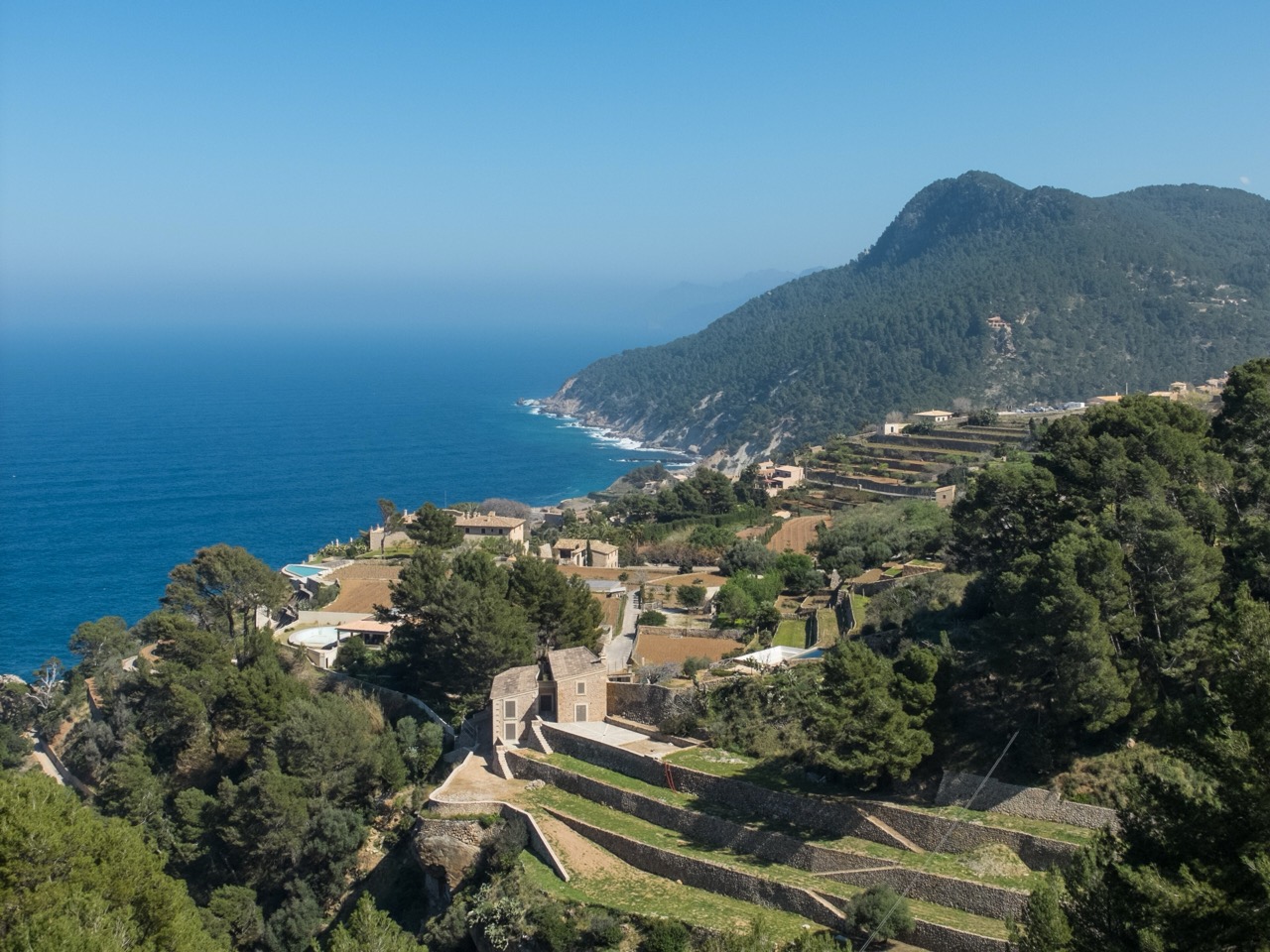
Two thousand terraces of dry stoneMarjades. The terraced fields were built to grow Malvasia grapes, and this landscape entered the UNESCO World Heritage list in 2011. ⓒvia Accés MallorcaA face on the village streetThe front sits directly on the village lane. This is not the resort method of walling itself in. ⓒAnnua Signature Hotels / via Hotelier Middle East
5.What sits outside the rooms is where this house really plays. A spa with treatment rooms carries a heated pool, a vitality shower, a eucalyptus steam room and a sauna, a separate gym holds Technogym equipment and reformer Pilates, and there is an outdoor yoga platform facing the sea. Food and beverage splits three ways. The main restaurant with Mallorcan cooking by Joan Escalas, a raw bar serving oysters and raw dishes, and a poolside restaurant. The wine list is built by Sébastien Longo.
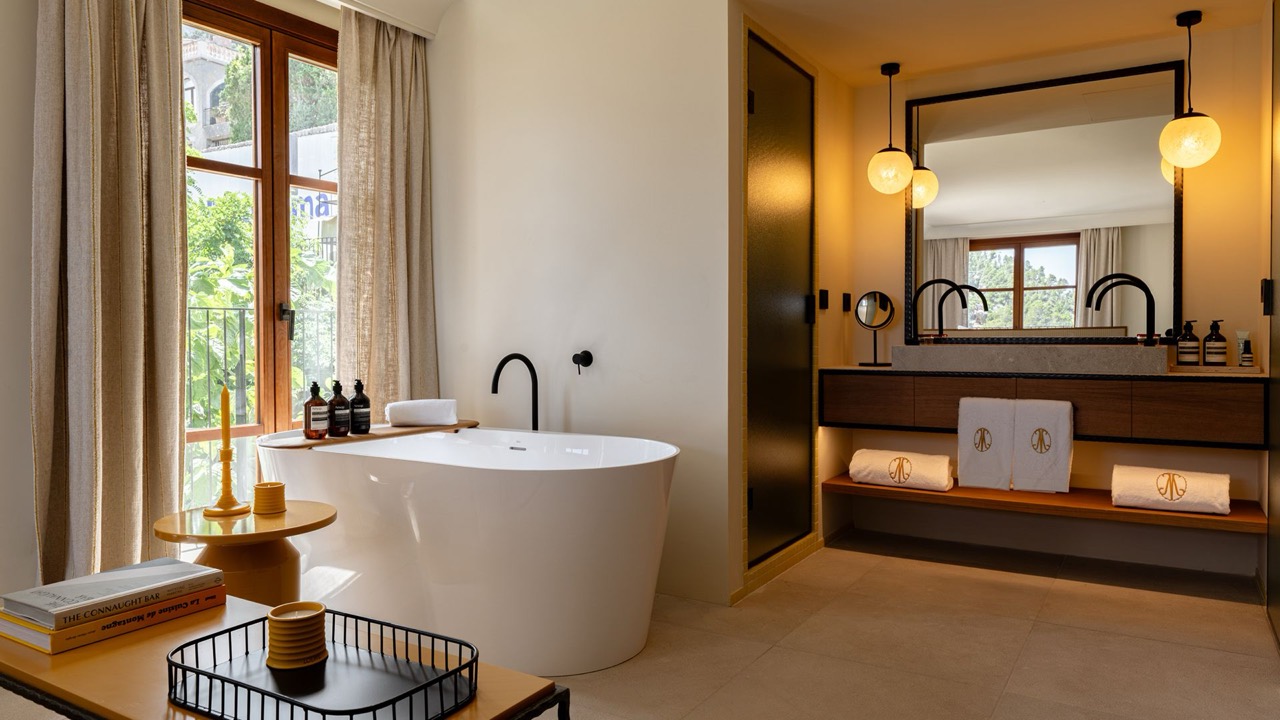
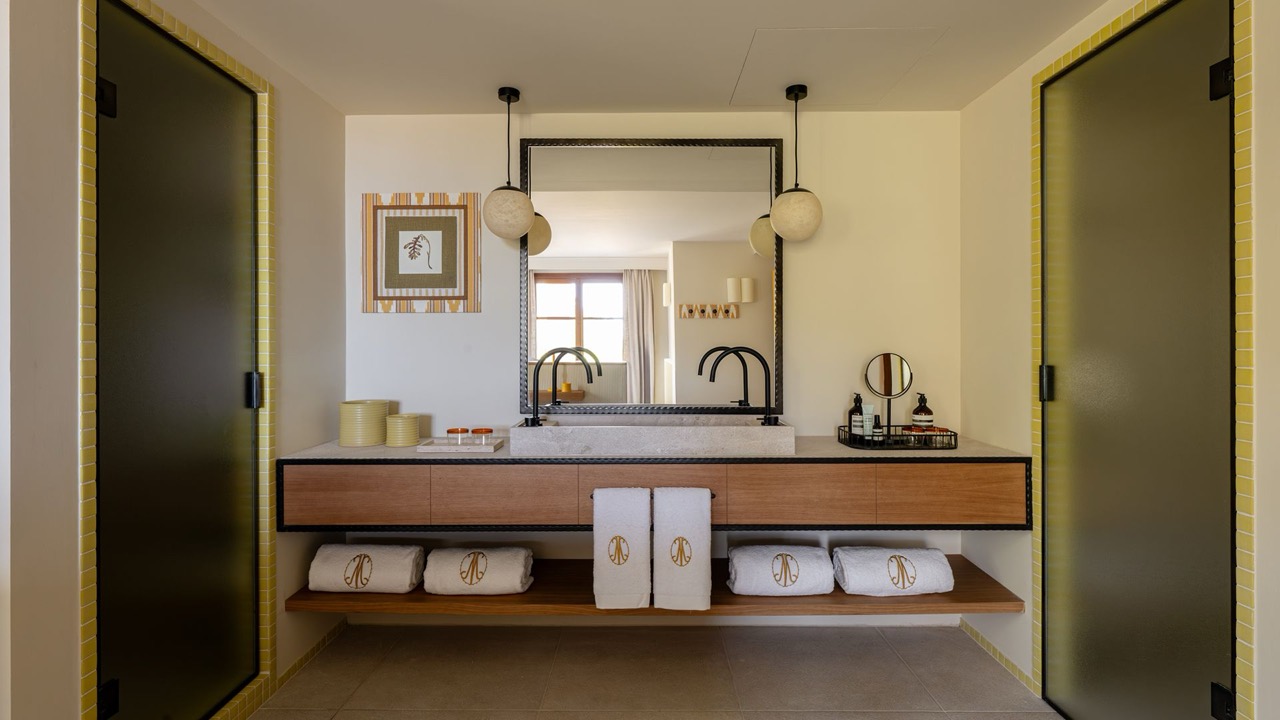
Even the bathroom faces the seaA terrace suite bathroom. Putting the wet rooms on the outer wall loads the view onto the rate. ⓒAnnua Signature Hotels / via Condé Nast Traveller
6.From here, revenue and cost are my estimates, not figures the company has given. Start with the published rates: the cheapest room begins around 600 euros a night and the Margalida Suite is 1,850. In 2025 the average room rate for Balearic hotels was 153 euros, RevPAR 129 euros, occupancy 84 percent. The rate card hangs between four and twelve times the island average, and the question is whether room area makes that gap.
A ladder area does not explainRates open threefold inside one building. What holds up the top two grades is terrace and view.
7.Every calculation starts from the fact that there are 29 units of stock. Open all year and there are 10,585 room nights to sell, and running only April to October as small hotels on Mallorca's west coast usually do brings it near 6,000. Put peak occupancy at 80 percent and what actually sells is under 5,000 nights. Leave one room empty for one night and 500 to 1,000 euros simply goes.
The opening dates are setSmall hotels on mountainous Mediterranean coasts usually close in winter. Fewer days to sell means the daily rate has to rise by that much. ⓒAnnua Signature Hotels / via Condé Nast Traveller
8.So the profit on a house like this is decided in four summer months. Balearic occupancy in the first half of 2026 was 74.1 percent with RevPAR of 121.2 euros, and that average does not include the winter when doors are shut. In a market where winter occupancy falls below 40 to 50 percent, a 29-room hotel that insists on year-round operation watches payroll eat revenue from November to March. Closing is design, not incompetence.
Thirty-eight percent from outside the roomsThree restaurants, the spa and events together barely reach six tenths of room revenue. Without that share, four summer months cannot carry a year.
9.Where would a graded hotel find this money? A five-star in a city builds non-room revenue from banqueting, business demand and a buffet and lounge that local residents pay for. None of that is here. The village has 573 people, and Palma is 30 minutes over a mountain road, so there is little reason for dinner guests to drive up. One method was left. Raise the total a single guest spends while staying. The spa, the raw bar and the yoga platform are not a matter of taste but the only device for making non-room revenue in a location with zero local demand.
Public areas only guests seeNobody walks in off the street, so the only people the public areas can earn from are the guests. ⓒAnnua Signature Hotels / via Hotel Designs
10.Staffing is harder still. A 29-room hotel running three restaurants and a spa struggles to get staff per room below 1.5, which puts it in the forties. The arithmetic says one hotel would have to employ 7 percent of the whole village, which is impossible in practice, so people come in from Palma. Thirty minutes of mountain road, twice a day, all season. There is nothing romantic about why small Mediterranean hotels take on staff housing.
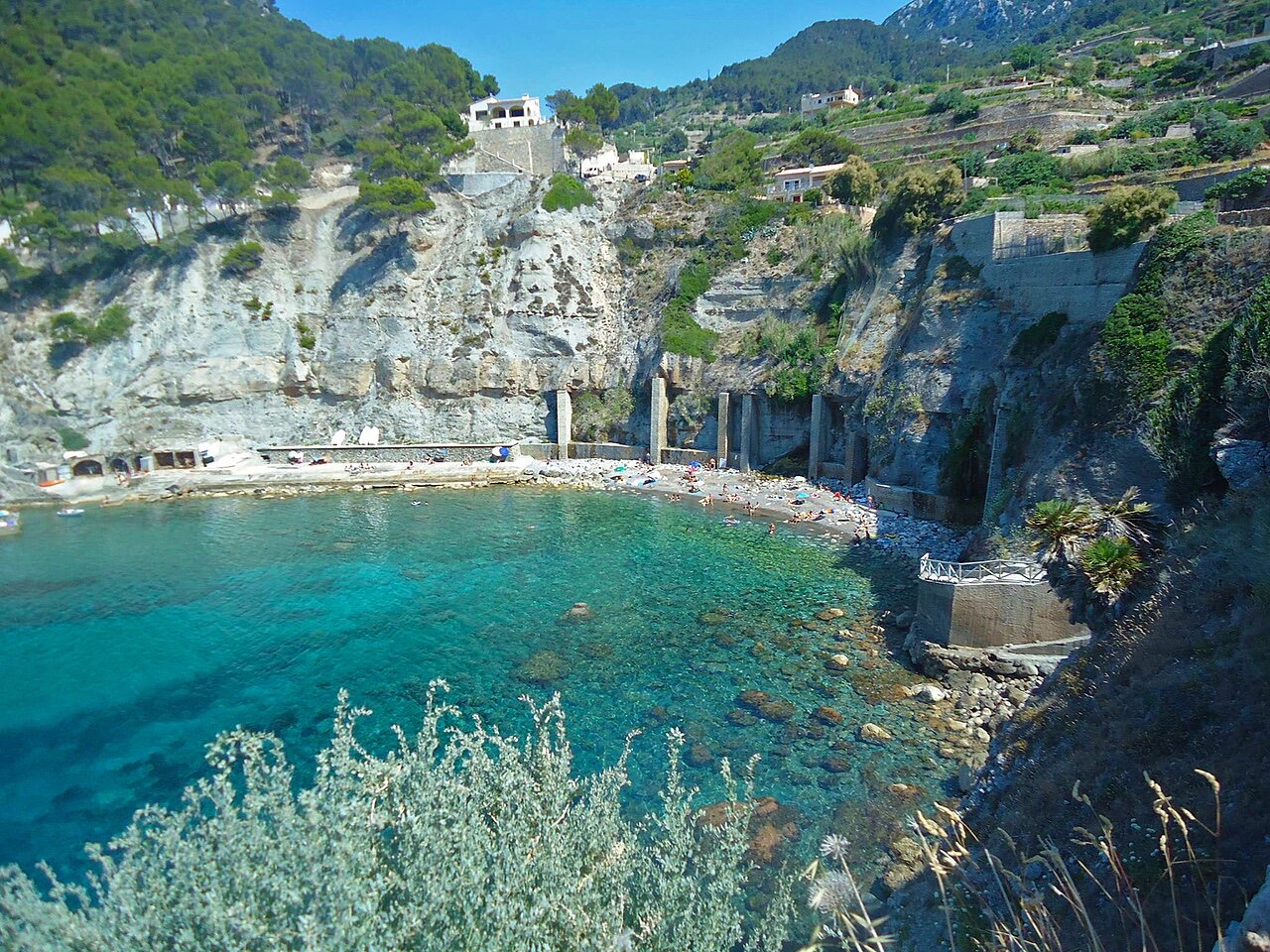
11.So why does a guest pay more to sleep here? On Mallorca's west coast, having nothing behind you is the product. This shore running through Deià and Valldemossa is a UNESCO World Heritage landscape with development locked down, and because of that the view out of the window will not change. What holds up the rate is not the building but the regulation.
Nothing behind itThe small bay below the village. Large resorts are barred from this coastline. ⓒWikimedia Commons
12.The decision to refuse under-16s comes from the same arithmetic. Going adults only frees the pool from noise and the breakfast service from turnover, and lifts the spend per head in the spa and the evening restaurant. In exchange it drops the July and August family market whole. Giving up the island's best-selling guest, it bet on selling quiet instead.
13.This ground already had its method. La Residencia in Deià turned two old manor houses into a hotel in 1984, and small luxury on Mallorca's mountain coast started there. Below that sits agroturisme, farmhouses across the island repaired and sold as stays. Margalida uses that grammar as it is while pulling spa and wellness to the front. Selling a reason to stay rather than a bed.
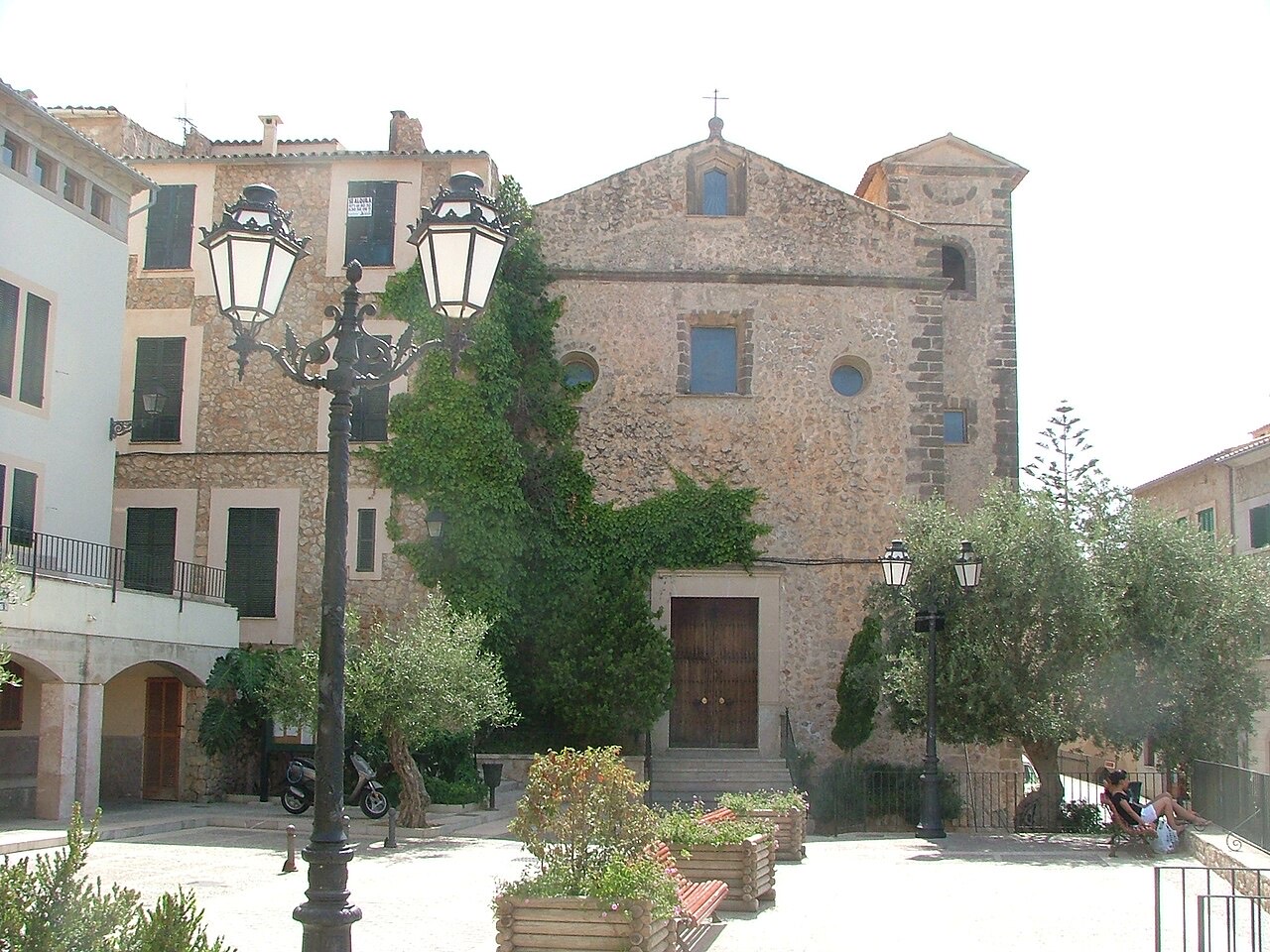
The village stays as it wasThe church in Banyalbufar. One hotel arriving does not add shops to the village. ⓒWikimedia Commons
14.What blocks the way is the permit. The Balearic government froze new tourist accommodation places from 2022, and the freeze covers hotels and holiday rentals alike. New beds cannot be made. So there is effectively one way to open a hotel on this island, which is to buy a property that already holds places and rebuild inside them. The real value of 29 rooms is not the building but the accommodation places attached to it, and in a market where supply is locked, that holds up the top of the rate. The regional parliament is reported to be discussing a cap of 17.8 million visitors a year.
Summary
An old house in a cliff village of 573 people opened as a 29-room hotel, and in a location with no local demand it makes non-room revenue from a spa and three restaurants so that four summer months carry the year. If one number survives, the estimate that one room makes 218,000 euros a year, more than four times the island's average RevPAR stretched over a year. What trips up anyone moving this is the rate card least of all. It is the places. Turning an existing building into lodging in Korea puts change of use under the Building Act first, followed in a row by lodging registration under the Public Health Control Act, escape and fire standards under the Fire Facilities Act, the parking count, and a recalculated septic tank capacity. Whether it registers as hotel business under the Tourism Promotion Act or only as lodging business under the Public Health Control Act also changes the required room count and support facilities. In a market where supply is locked, what makes the value is not the drawing but the permit that already exists, and that much holds in any country.