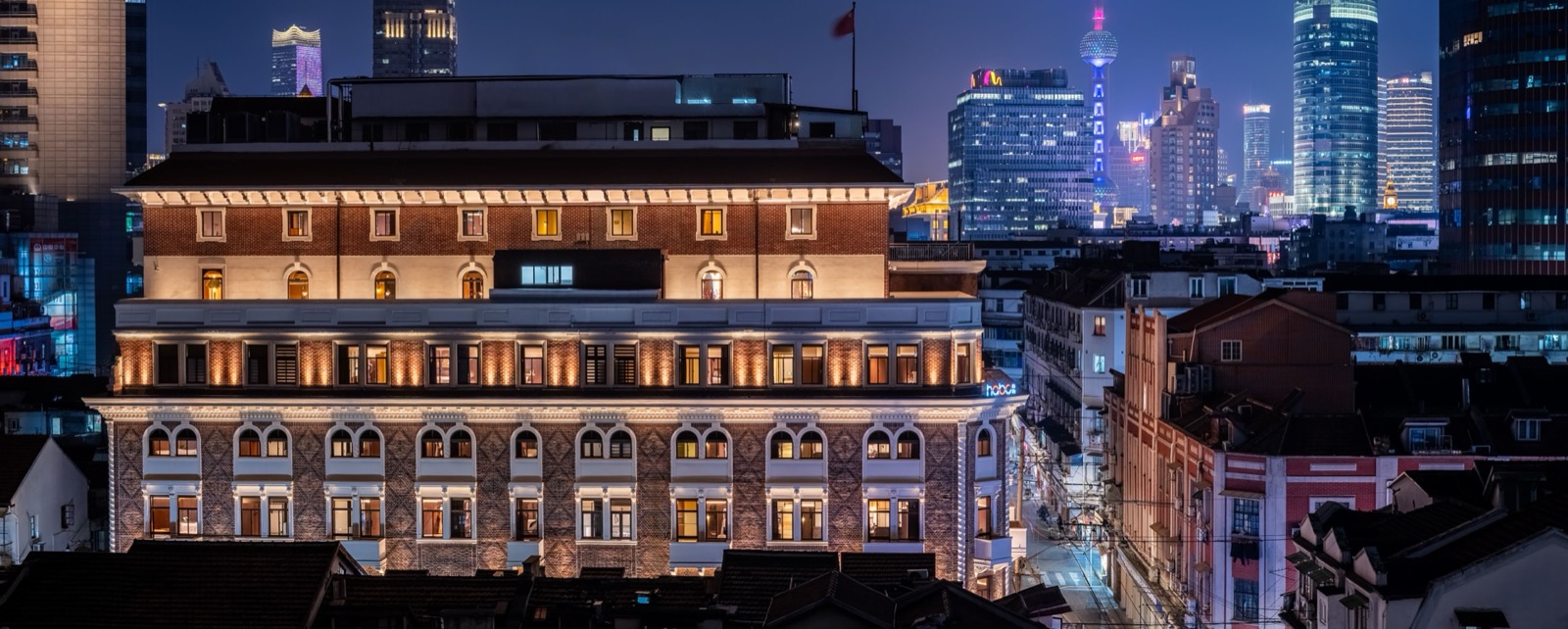
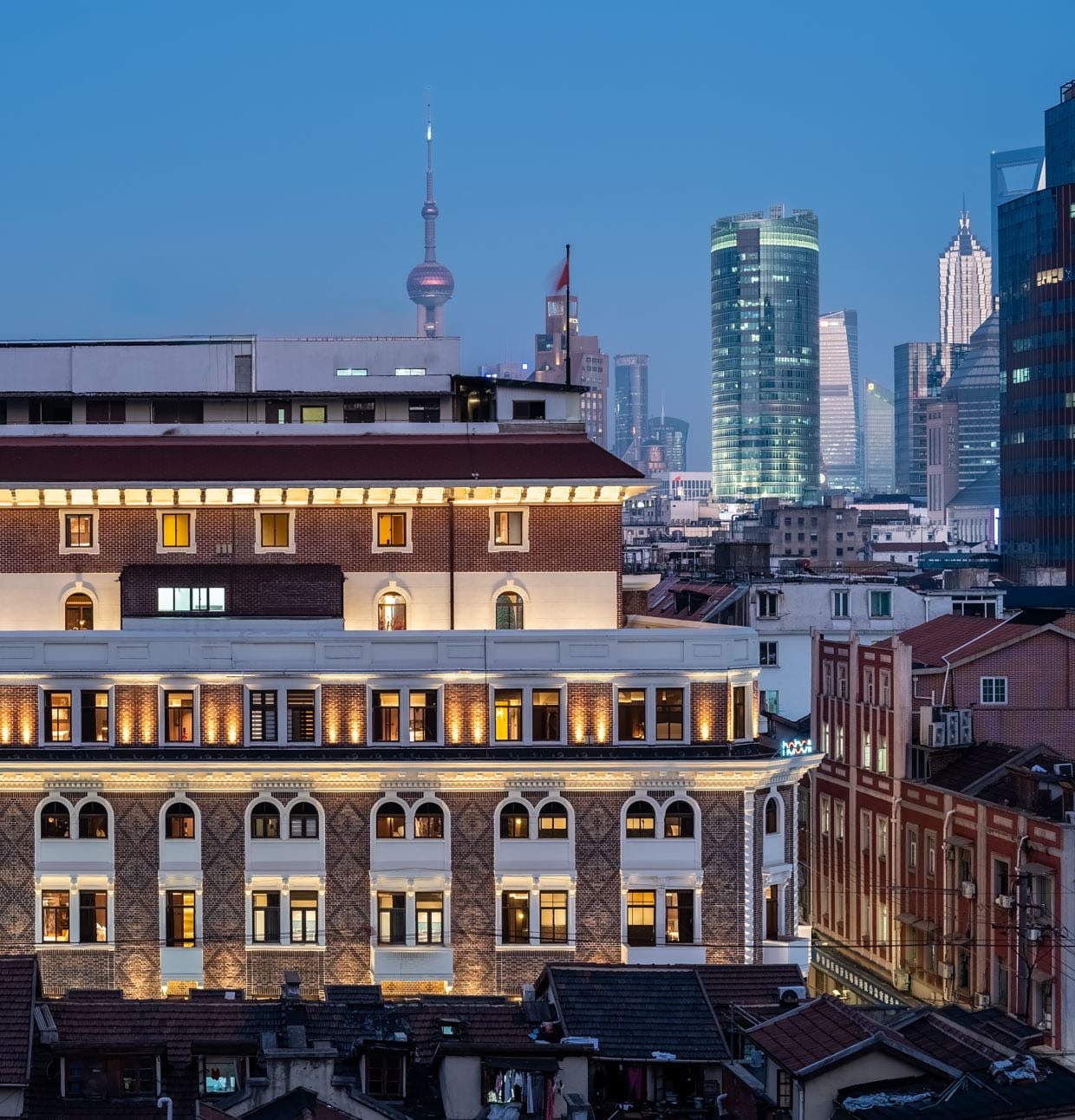
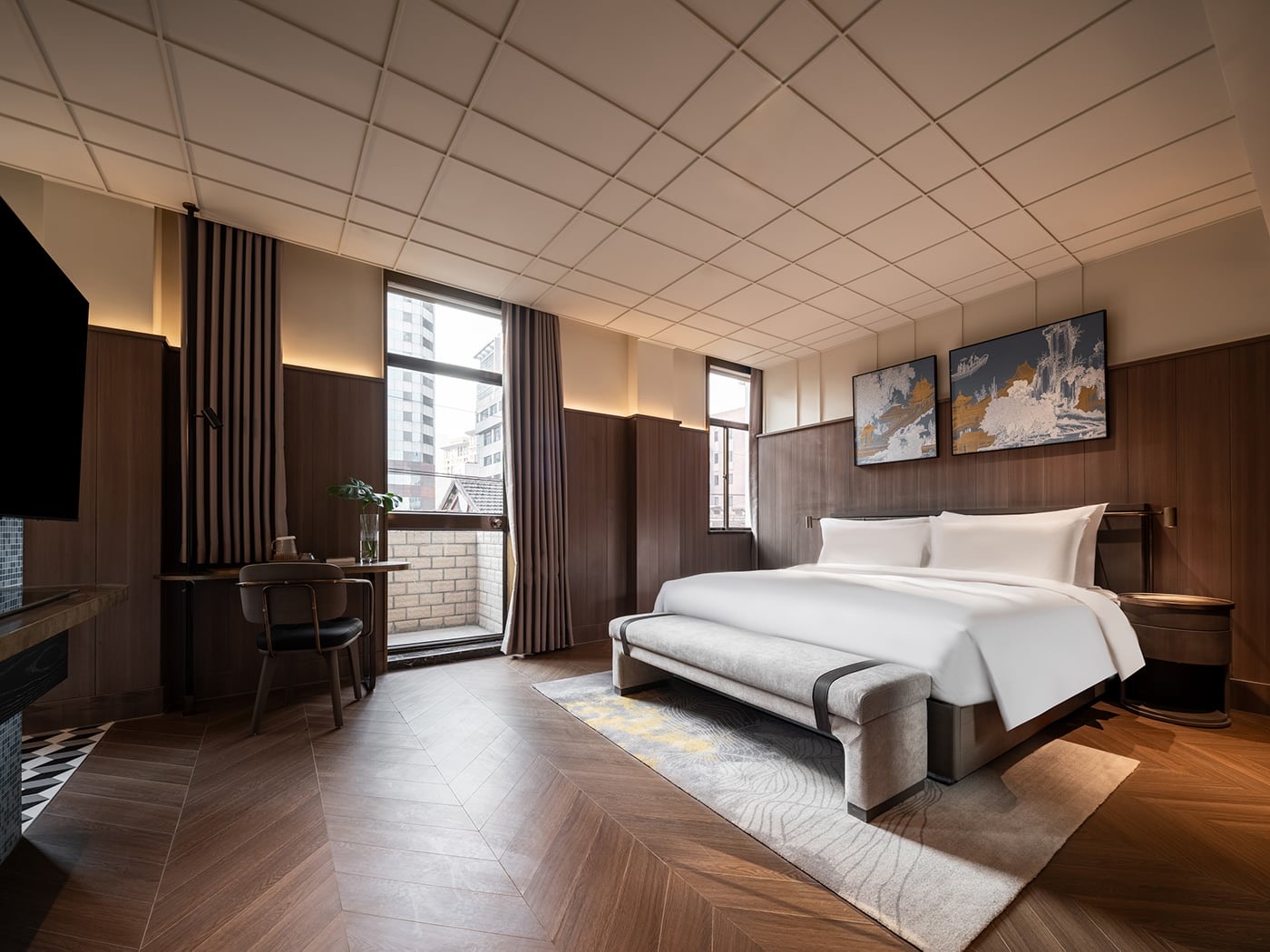
160 Guizhou RoadA 1930 building reopened in October 2025 as a hotel with 86 rooms. ⓒHabo Hotel Shanghai, a Member of Design Hotels / Marriott International
Daily Hotel
The lobby went to the sixth floor, and the ground floor went to shops (Shanghai, heritage boutique)
2026.08.12
Huangpu District, 160 Guizhou Road. A building put up in 1930 reopened last October as a hotel with 86 rooms. Guests check in on the sixth floor.
1.Habo Hotel Shanghai, known in Chinese as Shuxiang Xinbo Hotel (书香心泊酒店). It opened in October 2025 with 86 rooms, one block in from the East Nanjing Road pedestrian street. Marriott International built it together with the Shuxiang Hotel Group of Suzhou, and it is presented as the first property in mainland China to carry Design Hotels, Marriott's soft brand.
2.The building's first name was the China Hotel. It came from the Shanghai practice of the American architect Elliott Hazzard (哈沙德洋行), which made its name in Art Deco from the late 1920s. The city listed it as an Excellent Historical Building in 2005, and the restoration and conversion were designed by FARNEAR DESIGN.
The 1930 frameThe city listed this building as a Shanghai Excellent Historical Building in 2005. ⓒHabo Hotel Shanghai / Design Hotels
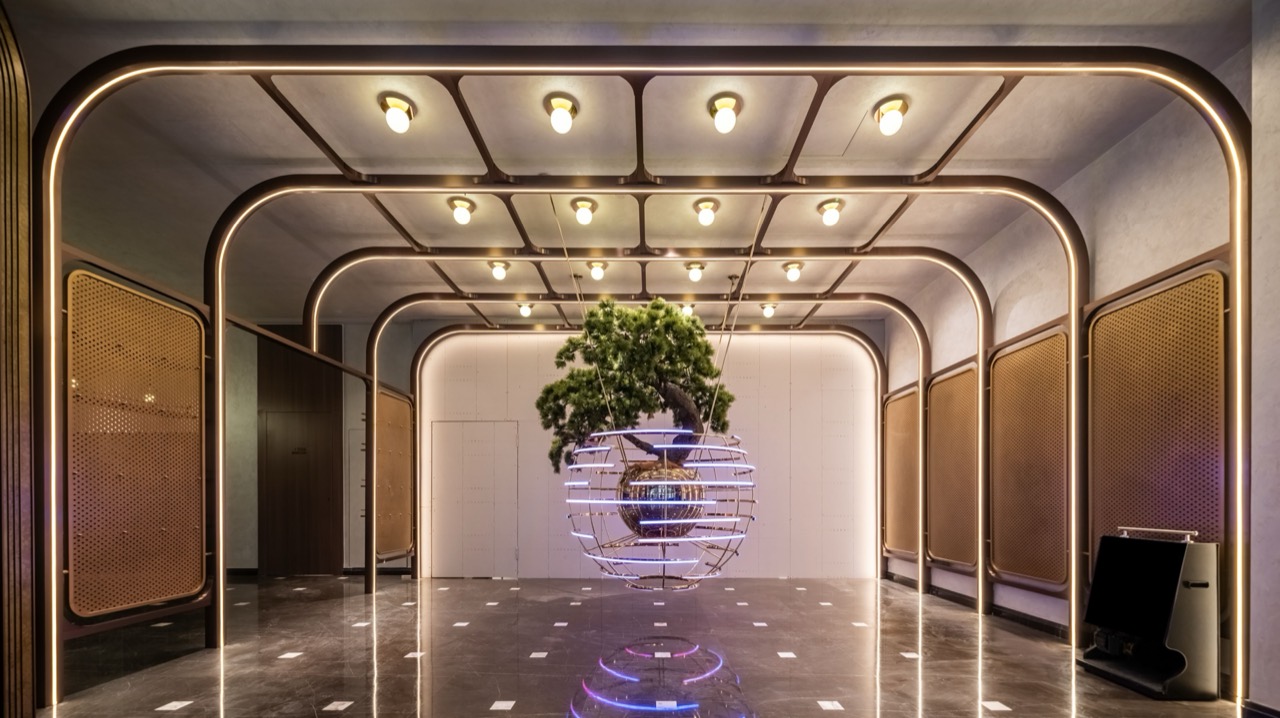
3.The stacking is not what a hotel usually does. The ground floor holds shops, food and drink, an exhibition space and a bar, while the lobby, the lobby bar and the function hall sit on the sixth. The courtyard and terrace share that floor. All 86 rooms are spread from the second to the seventh, so guests on the lower floors ride up to six, check in, then come back down. The most expensive floor was not spent on greeting anyone.
Floor by floorProgram follows the rent value of each floor rather than guest circulation. The right column is a typical stack drawn for comparison.LobbyThe lobby, lobby bar and function hall share the sixth floor, along with the courtyard and terrace. ⓒHabo Hotel Shanghai, a Member of Design Hotels / Marriott International
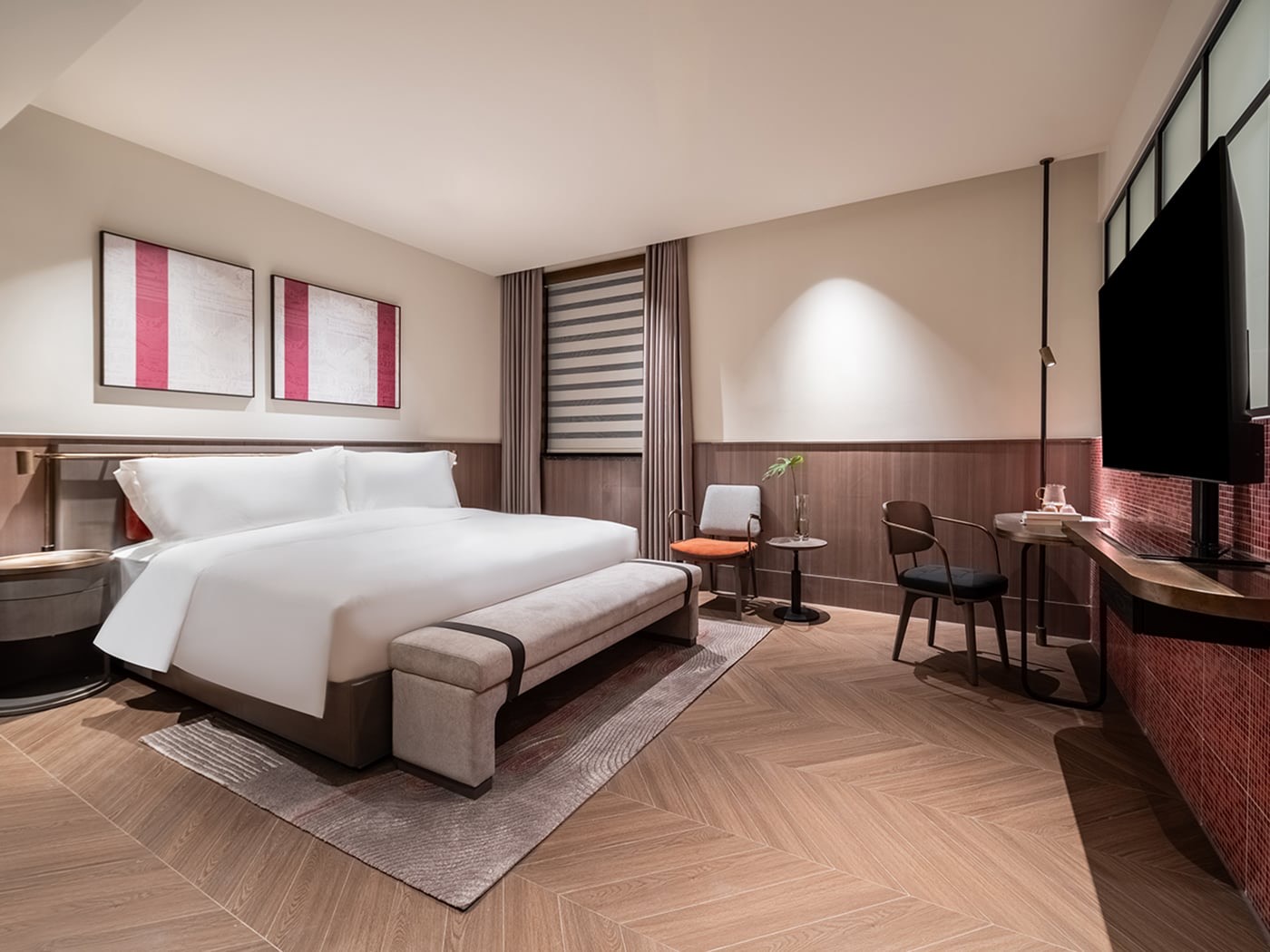
4.Rooms come in four sizes. The smallest runs 20 to 22㎡, the next 23 to 28㎡, the king 32㎡, and the family type 30 to 40㎡. The hotel says each room takes plum, orchid, bamboo or chrysanthemum as its theme. Put the average at 26㎡ across 86 rooms and the guest rooms alone come to 2,236㎡.
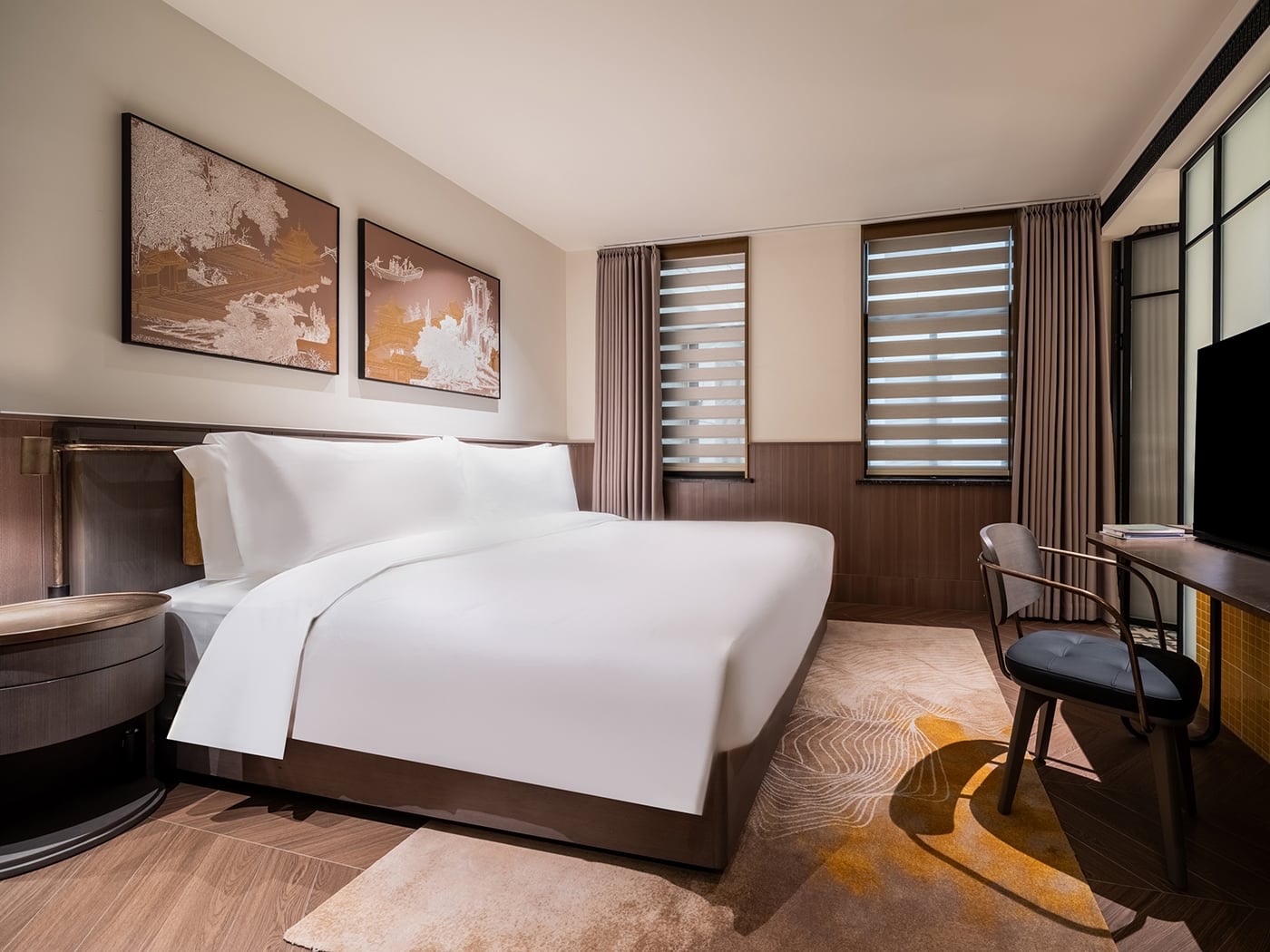
Guest roomThe smallest room runs 20 to 22㎡, the largest family room 30 to 40㎡. ⓒHabo Hotel Shanghai / Design Hotels
5.The corridors are finished in mosaic tile. Because the building went up in 1930, the ceiling heights and window positions do not match the dimensions a hotel drawing gives you today, and the walls are thick enough that sound does not carry between rooms. Step onto the sixth floor terrace at night and the noise off East Nanjing Road arrives filtered through one layer. Height is what this hotel bought. On the ground floor noise turns into money, on the sixth it disappears.
Guest room, 23 to 28㎡The thick 1930 frame filters sound between rooms. ⓒHabo Hotel Shanghai / Design Hotels
6.Start with the price. The lowest rate posted on booking sites is USD 105. The Shanghai Municipal Bureau of Statistics put the average room rate for star-rated hotels at RMB 813 in April 2026, and RMB 1,048 for five-star properties alone. For January to April the figures were RMB 783 and RMB 998. Habo sits below five-star, close to the city average.
The king roomThe larger rooms here fall between 32 and 40㎡. ⓒHabo Hotel Shanghai / Design Hotels
7.Take a rate of RMB 800 and occupancy of 65 percent. Shanghai's star-rated hotels ran 65.86 percent across 2025, so that is no stretch for a hotel in its first year. RevPAR lands at RMB 520, and multiplying by 86 rooms and 365 nights puts annual room revenue at RMB 16.32 million, roughly KRW 3.1 billion. Per key that is RMB 190,000 a year. The rate and the occupancy are this article's estimate, not figures the hotel has published.
8.Divide by area and the picture sharpens. Apply 65 percent efficiency to 2,236㎡ of guest room area and the room floors come to 3,440㎡, and adding roughly 900㎡ for ground floor retail and sixth floor public rooms puts the building near 4,300㎡. Room revenue alone works out to RMB 3,800 per ㎡ a year, RMB 320 a month, about KRW 60,000 per ㎡ a month. That is not far from what a small lodging property in central Seoul pulls.
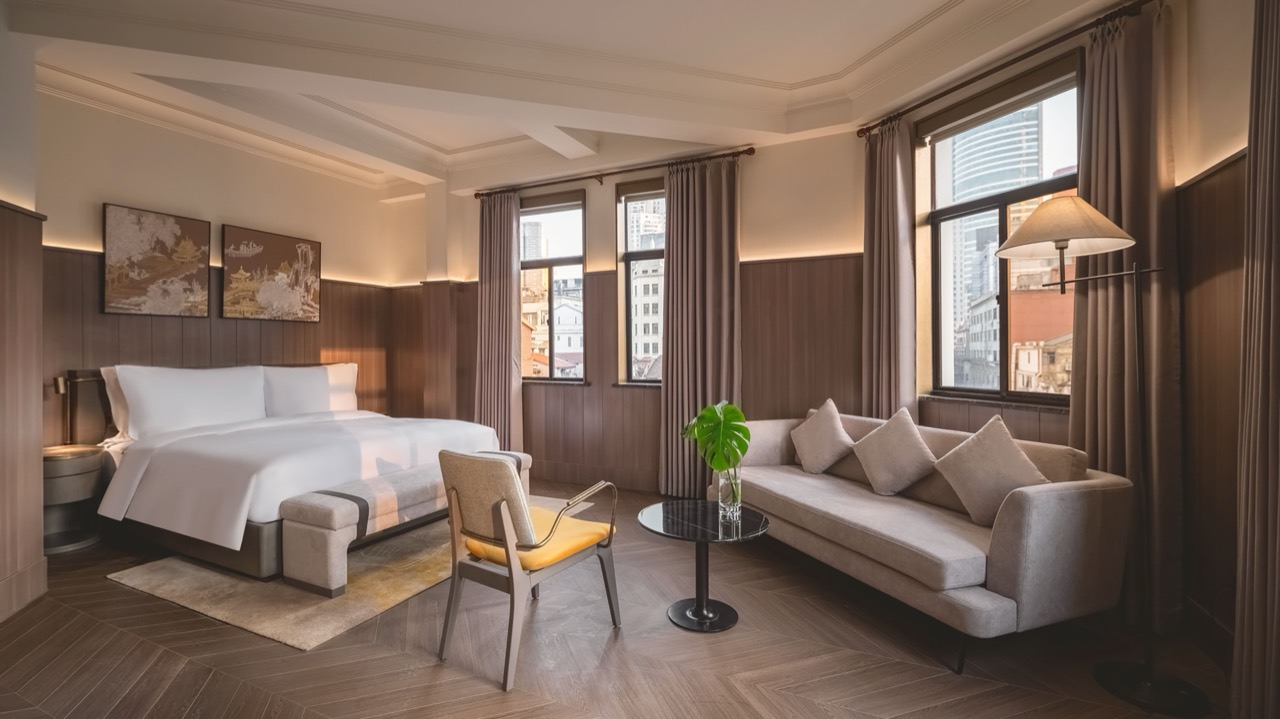
A suite themed on the 1930sThe decade the building went up carries straight into the room names and their finishes. ⓒHabo Hotel Shanghai, a Member of Design Hotels / Marriott International
9.Distribution is where the real arithmetic sits. In China a comfort-tier hotel or above pays Trip.com Group (携程) a commission of 10 to 20 percent, Meituan (美团) 8 to 10, Fliggy (飞猪) 2 to 8. OTAs took more than 60 percent of hotel bookings in 2024, and even large groups such as Huazhu (华住) and Jin Jiang (锦江) keep direct sales at 35 to 40 percent. Add the joining fee, royalty, marketing contribution and system charges on a soft brand and the total usually runs 8 to 12 percent of revenue.
What the sign costsCutting OTA dependence does not help when the brand takes more than it saves. What is left is whether the room rate can go up.
10.So the money a star-rated hotel makes from banquets, weddings and a large buffet, this one takes from ground floor retail and a sixth floor function hall. A 1930 building has neither the ceiling height nor the column spacing for a banquet room, and 86 rooms cannot carry a standing banquet crew. At 0.45 staff per room the payroll runs to about forty people. Rent the ground floor out and that revenue arrives without adding anyone.
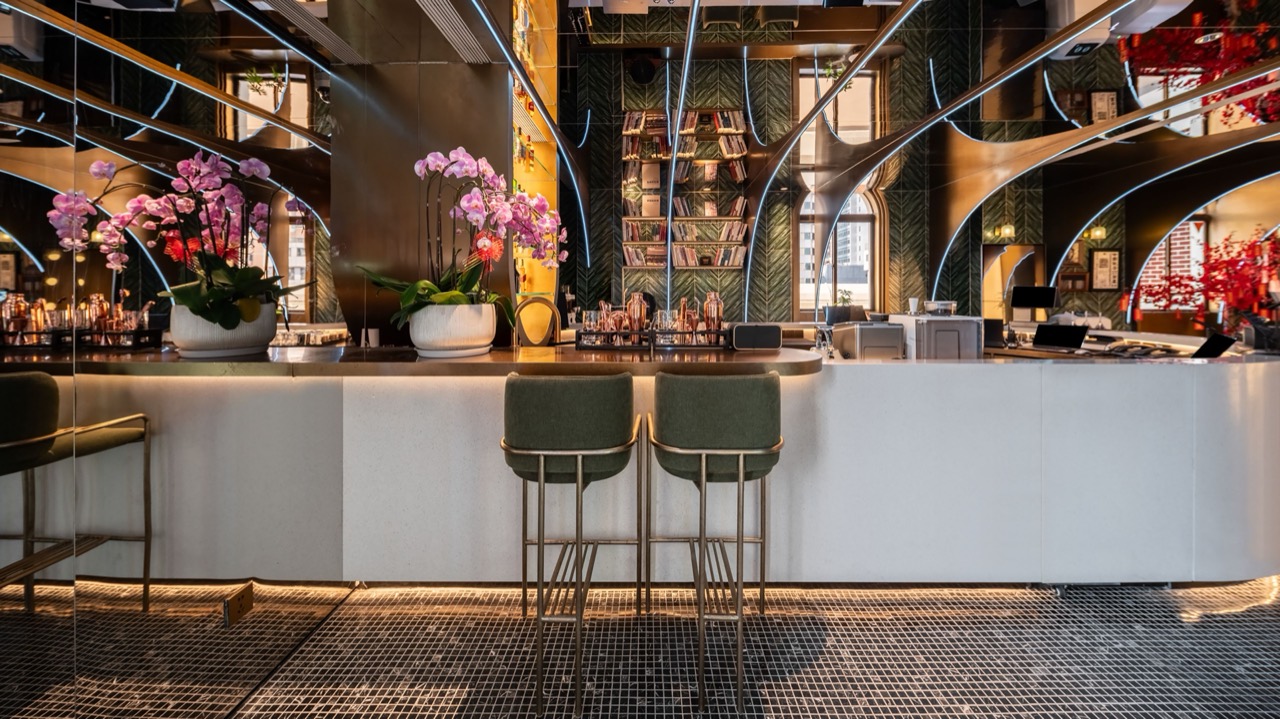
The barThe hotel calls this bar Violin Lane. It is the room that brings people in during the hours when nothing is being sold upstairs. ⓒHabo Hotel Shanghai, a Member of Design Hotels / Marriott International
11.So why would a guest pay more here? Look at the state Shanghai is in. The city took 8.28 million overseas visitors from January to November 2025, up 38.8 percent on the year and past the same span in 2019. Hold on to Trip.com alone and those guests never appear. Whether a Marriott Bonvoy member sees this property when searching Shanghai in the app comes before anything happening on the ground floor.
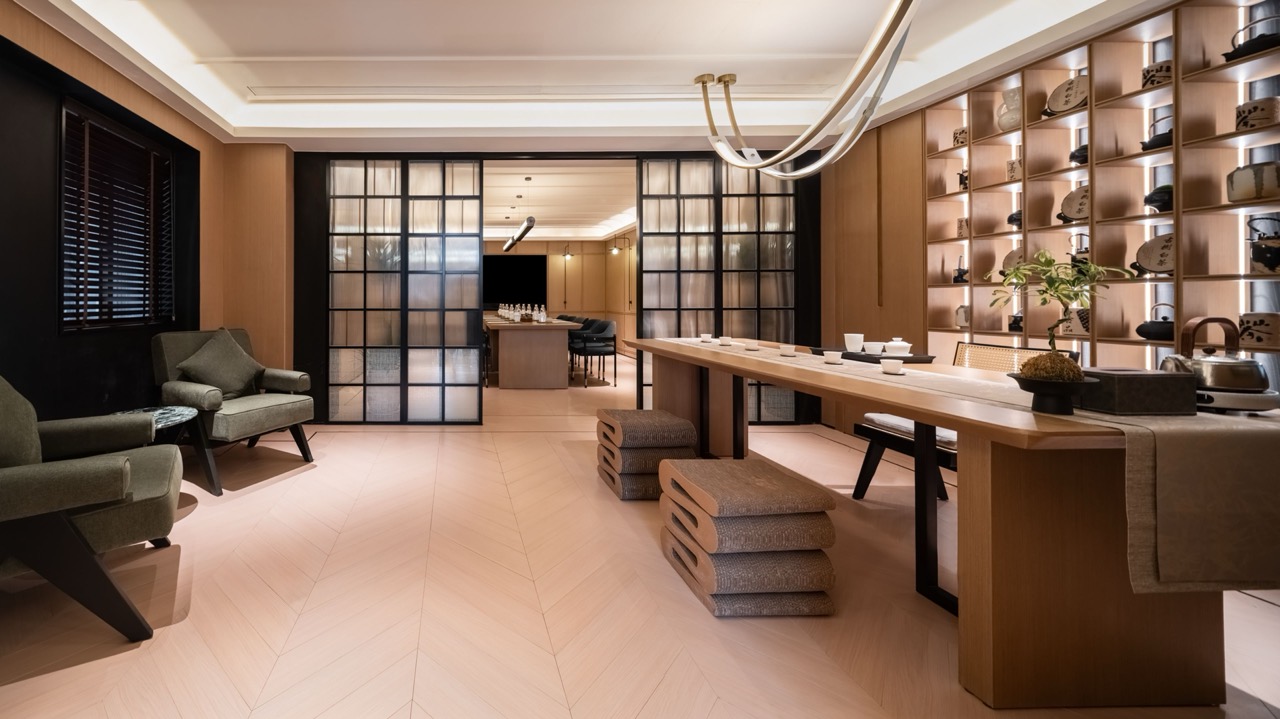
Tea roomAn 86-room hotel set aside a separate tea room and library. ⓒHabo Hotel Shanghai, a Member of Design Hotels / Marriott International
12.The Shuxiang Hotel Group opened its first hotel in Suzhou in 2003. It now runs close to sixty properties across twenty cities in eleven provinces, and it placed 46th on the China Hotel Association's 2023 ranking of the fifty largest hotel groups. Xinbo (心泊) is the group's smart-hotel brand, built to a four-star standard. A company like that has no way to put up a new building in central Shanghai. Borrowing ninety-six years from someone else's is far quicker.
13.In Shanghai, turning an old building into a hotel has usually meant something big and expensive. The Shanghai EDITION attached a new tower to the 1929 Shanghai Power Company headquarters and opened with 145 rooms, and most conversions around the Bund went five-star. Eighty-six rooms at the city average rate is a different animal.
14.The risk instead lands on the core. Ground floor shoppers, guests riding up to the sixth floor lobby and room guests between the second and seventh all share the same lifts. Shanghai's ordinance requires that adding interior systems such as lifts or plumbing to an Excellent Historical Building follow the protection terms attached to that building. Cutting a new core into a 1930 structure is not an option. The queue does not form at check-in, it forms at the lift.
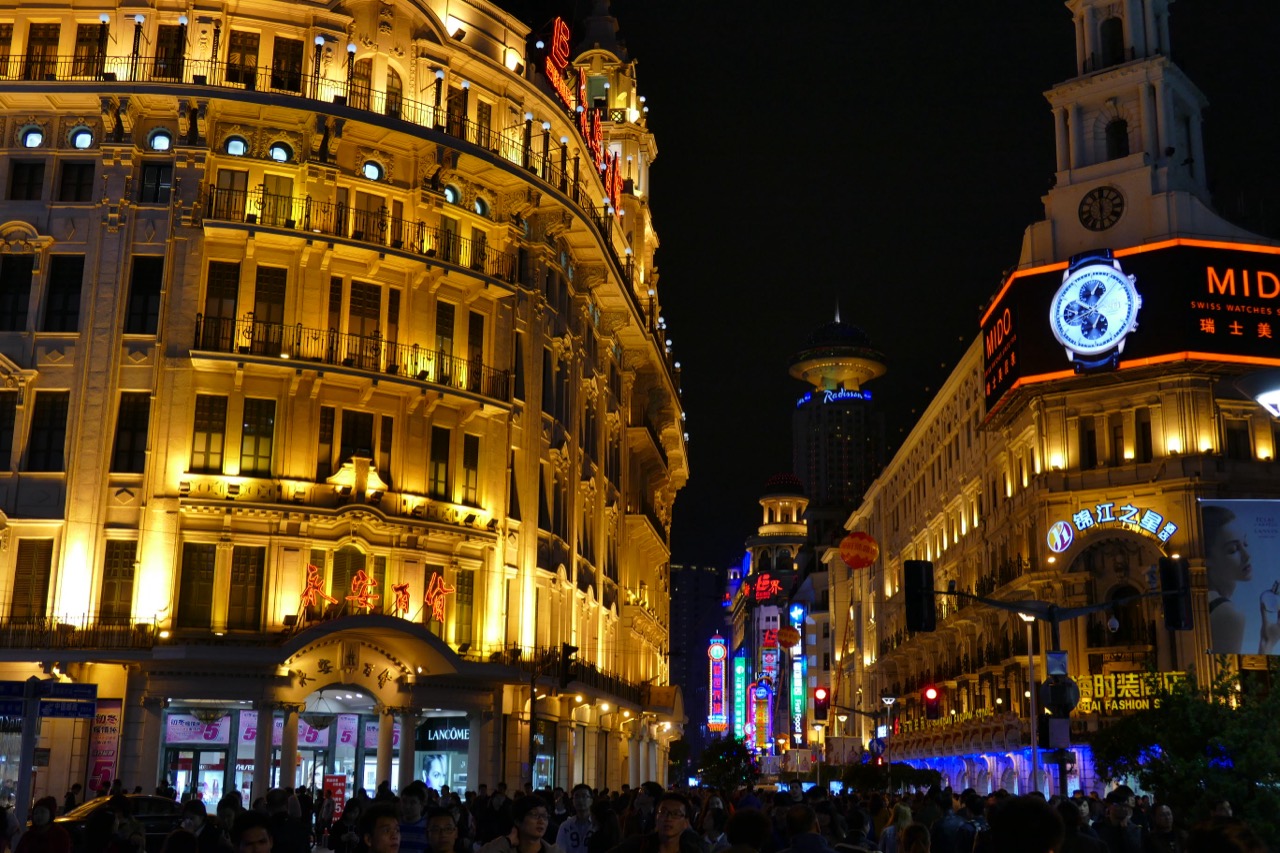
East Nanjing Road pedestrian streetOne block from the hotel. The foot traffic on this street is the case for giving the ground floor to shops instead of a lobby. ⓒWikimedia Commons
15.The market helped. In April 2026 occupancy at Shanghai's star-rated hotels reached 72.3 percent, and 77.5 for five-star, with cumulative January to April figures of 62.0 and 67.6. The average room rate for January to April was up 5.0 percent on the year. The decision to hang a new sign came while both rate and occupancy were rising.
In closing
A seven-storey building from 1930 became a hotel with 86 rooms, handed its ground floor to shops, an exhibition space and a bar, and lifted the lobby to the sixth floor. At RMB 800 and 65 percent occupancy, annual room revenue lands at RMB 16.32 million, roughly KRW 60,000 per ㎡ a month. Doing this in Korea runs into the lift first. Article 64 of the Building Act requires passenger lifts in buildings of six storeys or more with a gross floor area of 2,000㎡ or more, and the number is counted from habitable floor area above the sixth storey. The traffic climbing from a ground floor arcade to a sixth floor lobby never enters that formula. Meet the legal minimum and the queue starts the day after completion.