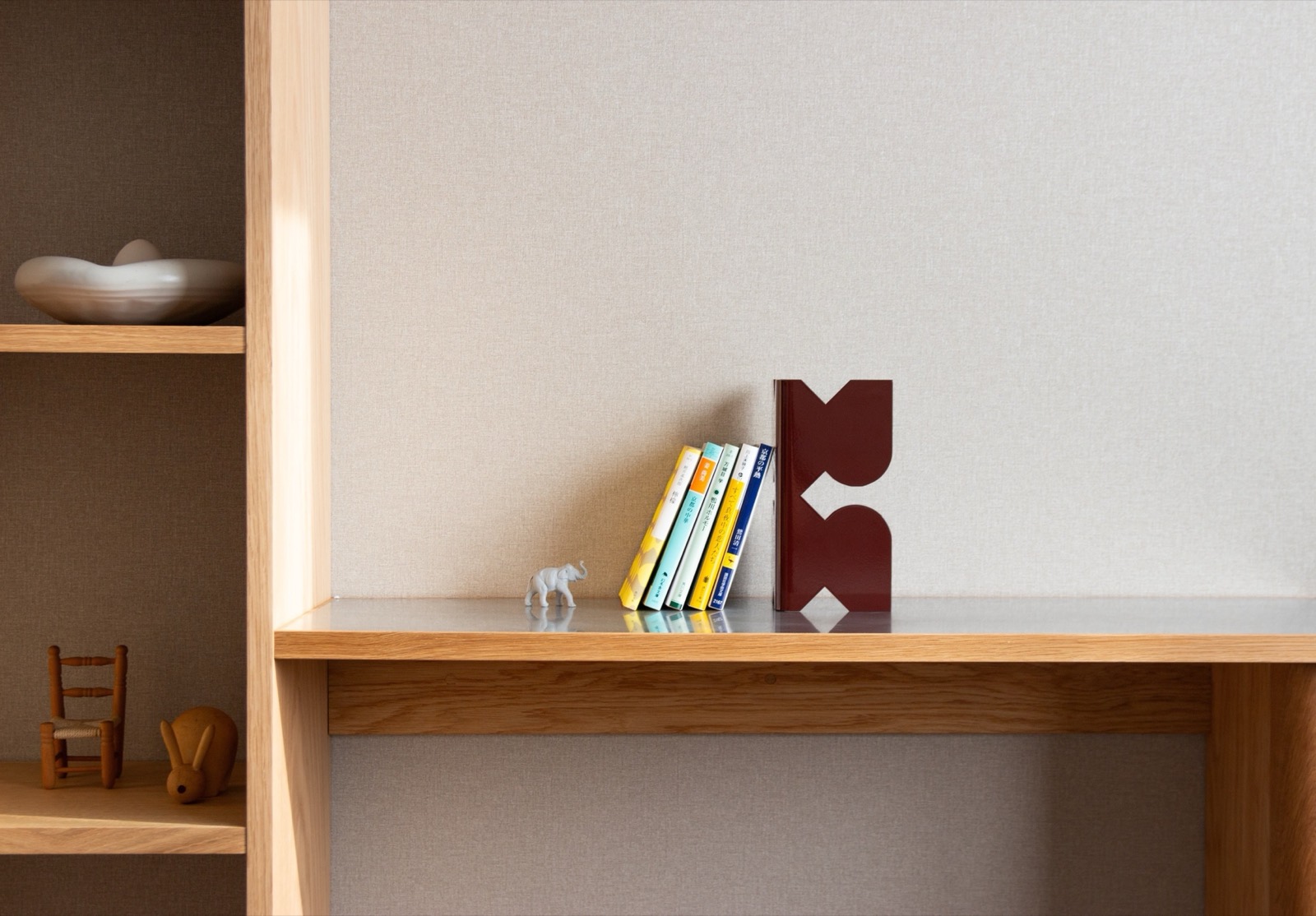
The deskEverything on the desk and the shelf is for sale. The maroon bookend was made for this hotel by graphic designer Kazuki Kobayashi. ⓒSuisei Inc.
Daily Hotel
Ten rooms, and everything inside is for sale. The retail line pays 2%.
2026.08.30
A ten-room hotel has opened south of Kyoto Station. The beds, the chairs, even the bowls on the shelf can be tried for a night and taken home. Yet that retail line brings in about 2% of room revenue. The real arithmetic sits elsewhere.
1.someone, kyoto (by HOTEL SHE,) opened on 9 August. The address is 36-19 Higashikujo Minamikarasuma-cho, Minami-ku, Kyoto; three storeys above ground, ten rooms, every one of them a 22㎡ twin. The operator is Suisei Inc. Its founder, Shoko Ryuzaki, started the company while still at university and has been running hotels in this neighbourhood since 2016.
2.What is on sale is not only the night. The furniture, the tools, the tableware and the amenities placed in the room can be used overnight and bought on the spot if you like them. A catalogue sits in the room and leads to an online store. The brand describes it as trying on somebody else's daily life.
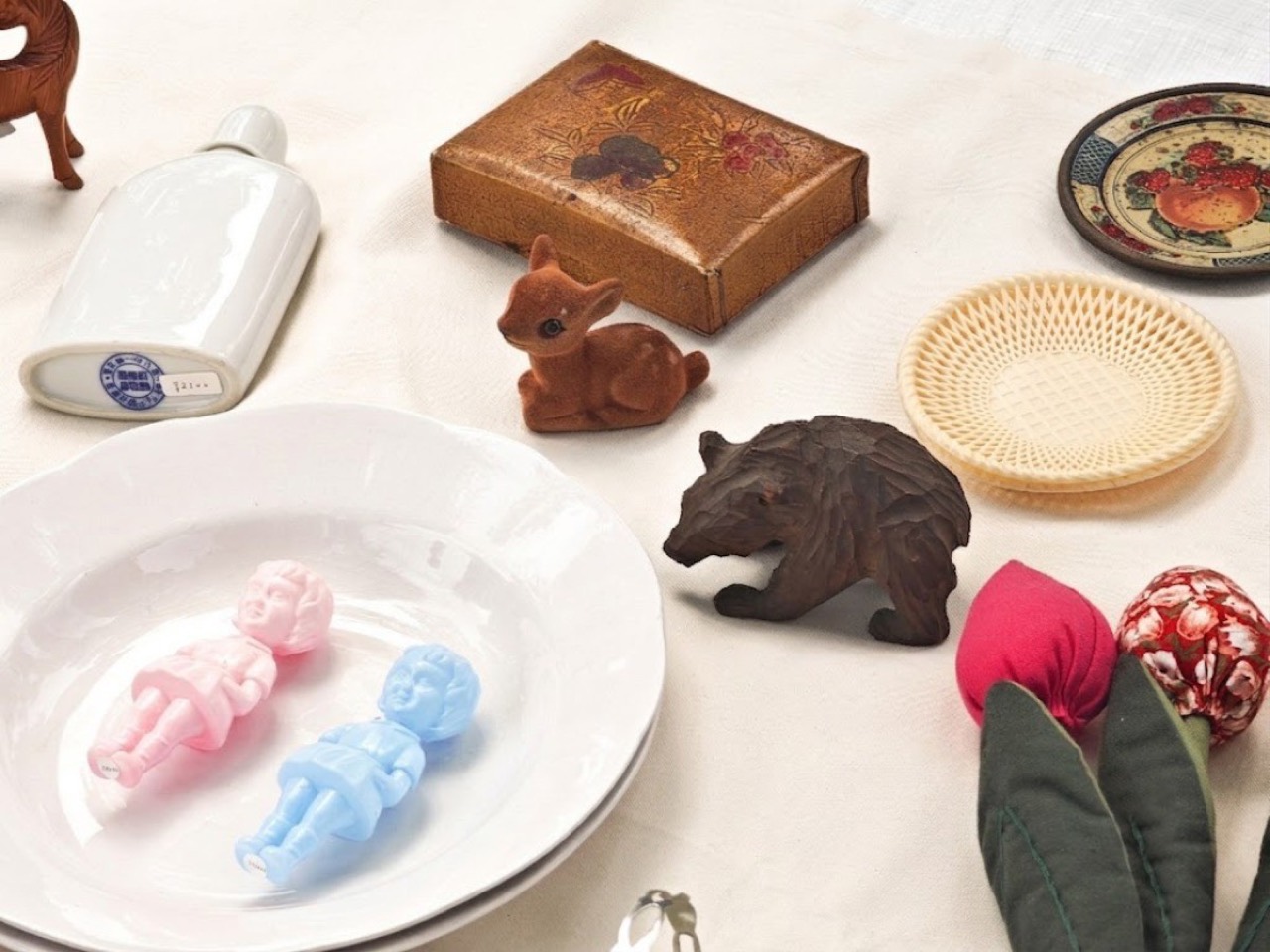
3.The pieces were chosen with makers and shops based in Kyoto. Flea-market antiques are mixed in, and some items were made for the hotel by graphic designer Kazuki Kobayashi. Interiors and fixtures were designed by Monoya.
The piecesNew products and flea-market finds sit side by side. One set per room, and all ten rooms differ. ⓒSuisei Inc.
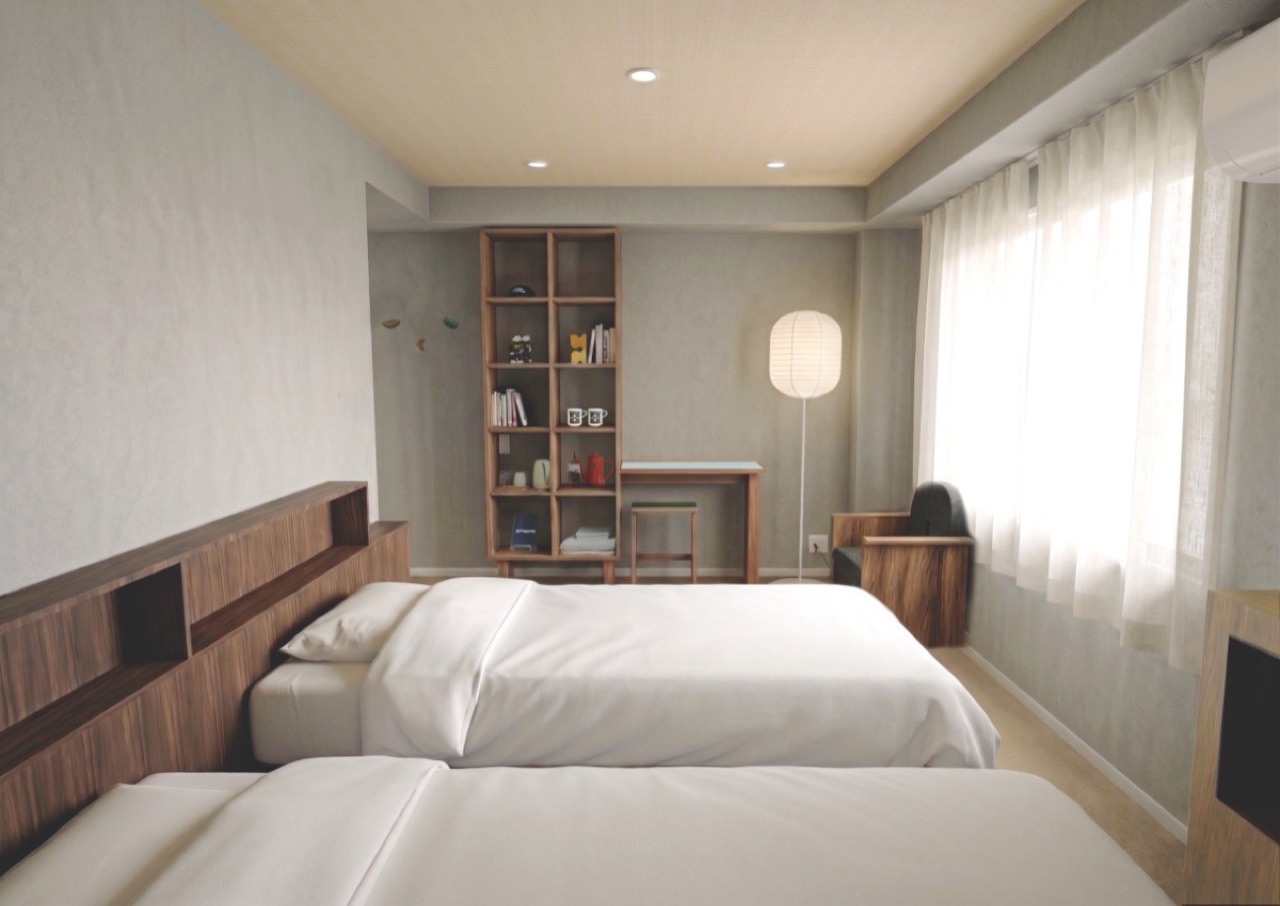
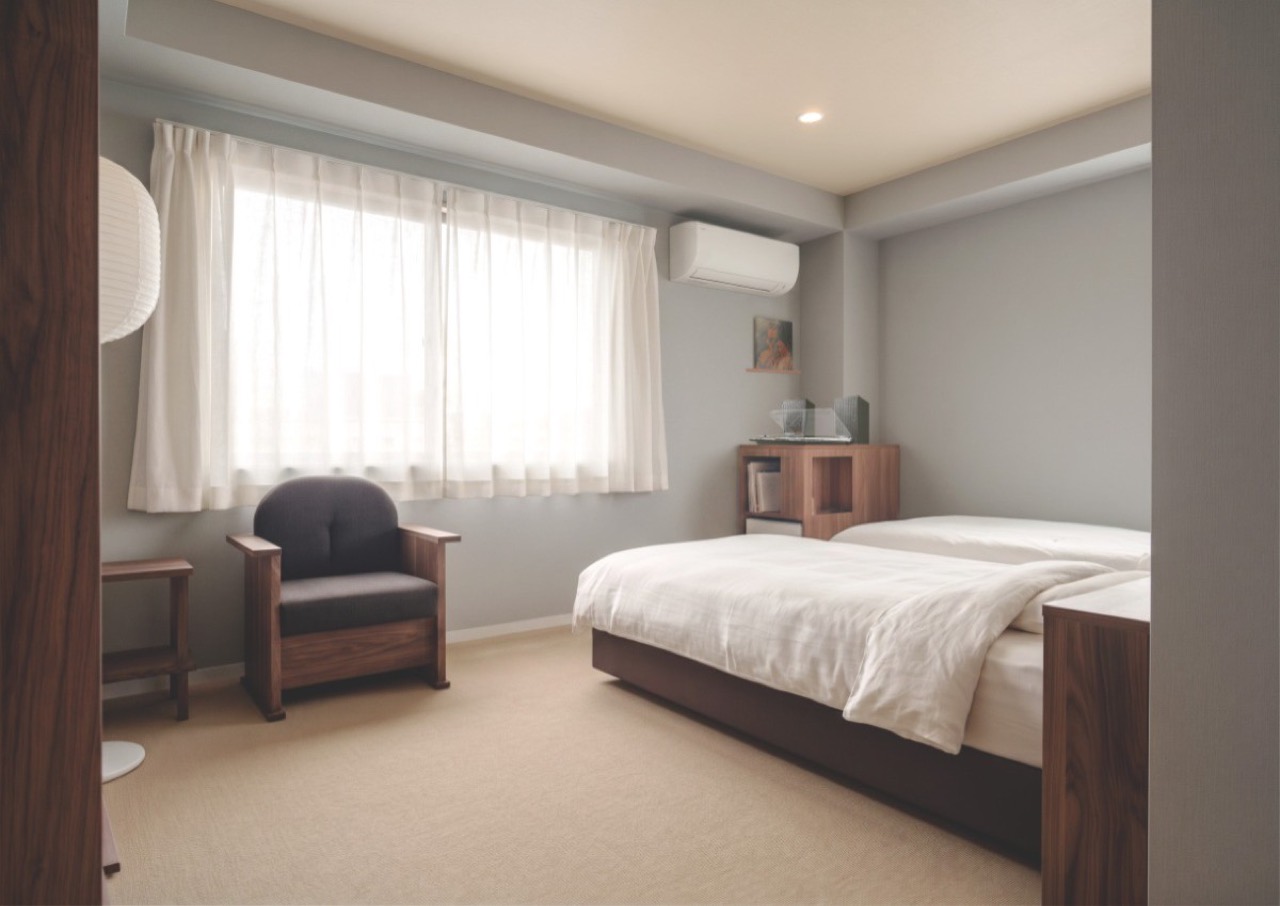
4.Each of the ten rooms carries its own name and a slightly different set of objects. Inside 22㎡: two twin beds, one armchair by the window, a grid display shelf filling the wall, a desk, a paper-shaded lamp, and a turntable. The shelf is both room fixture and display stand.
22㎡ twinEvery room has the same floor area and the same layout. What differs is what stands on the shelf. ⓒSuisei Inc.
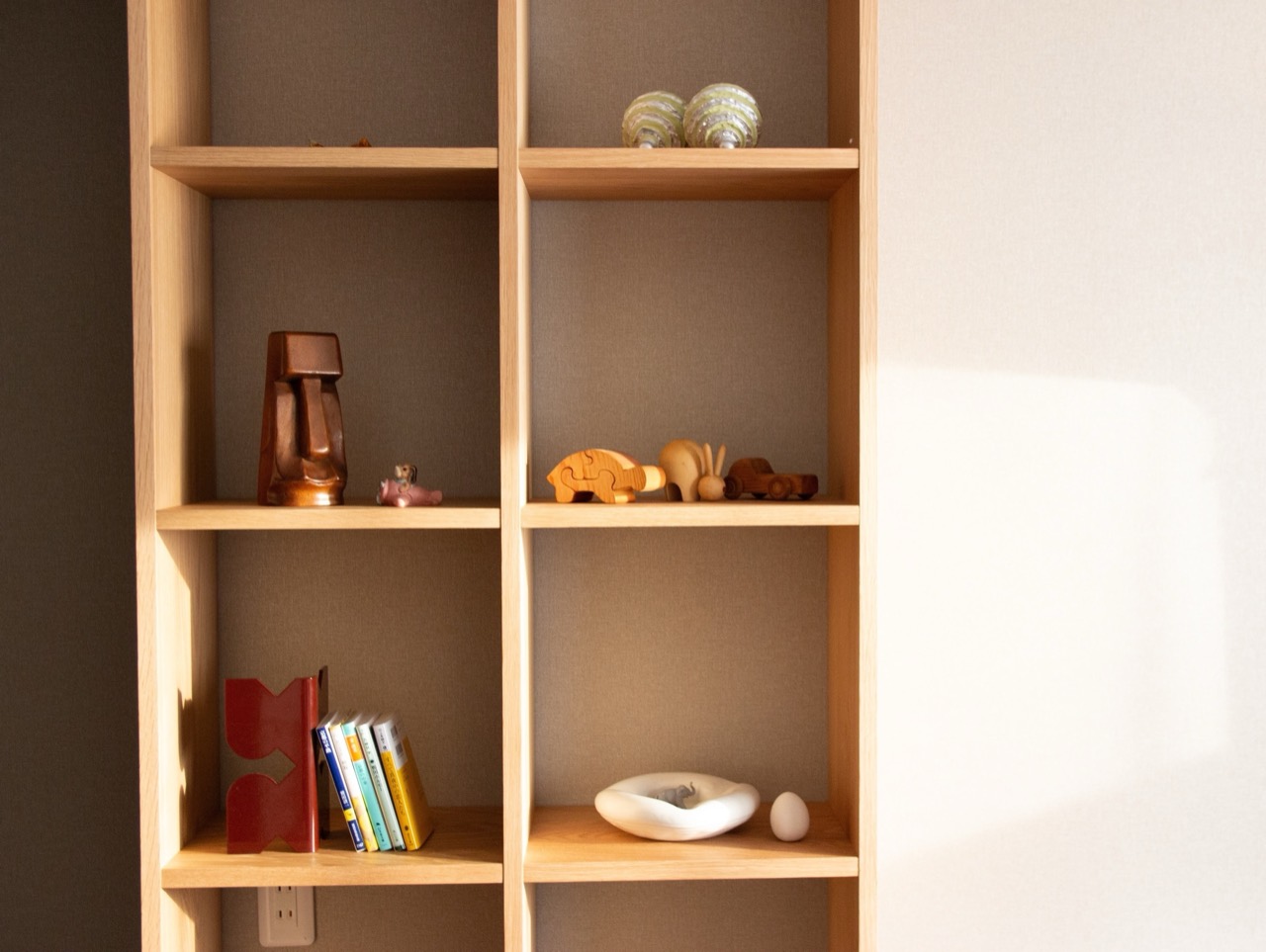
5.Stand in front of the shelf and your hand moves first. A carved wooden figure, a white bowl without a lid, a few paperbacks with worn covers. Afternoon light comes in low and lays the shadow of the grid long across the wall; at night the paper shade takes that light over. Drop a record on the turntable and the room feels a little smaller. The old retail premise that people buy what they have touched, stretched here into a twelve-hour demonstration.
Display shelfEach compartment holds work by a different maker. A room fixture and a sales counter at once. ⓒSuisei Inc.By the windowThe armchair differs from room to room. This one is also on the sales list. ⓒSuisei Inc.
6.The lowest rate showing on booking sites is around USD 97 a night. The Kyoto City Tourism Association put the May average daily rate across 117 major properties at 31,296 yen, the highest single month since the survey began, and this hotel comes in under half of that. Higashiyama Ward averaged 94,600 yen in April, so the same city holds more than one market.
Rates by districtThe figure for someone, kyoto is an estimate converted from the lowest rate displayed on booking sites, not a figure released by the operator.
7.Take those conditions and build a year. At a 15,000 yen rate and 80% occupancy (Kyoto ran between 81.1% in April and 76.5% in July this year), ten rooms produce 43.8 million yen of annual room revenue. This is the writer's calculation from public statistics, not an operator disclosure.
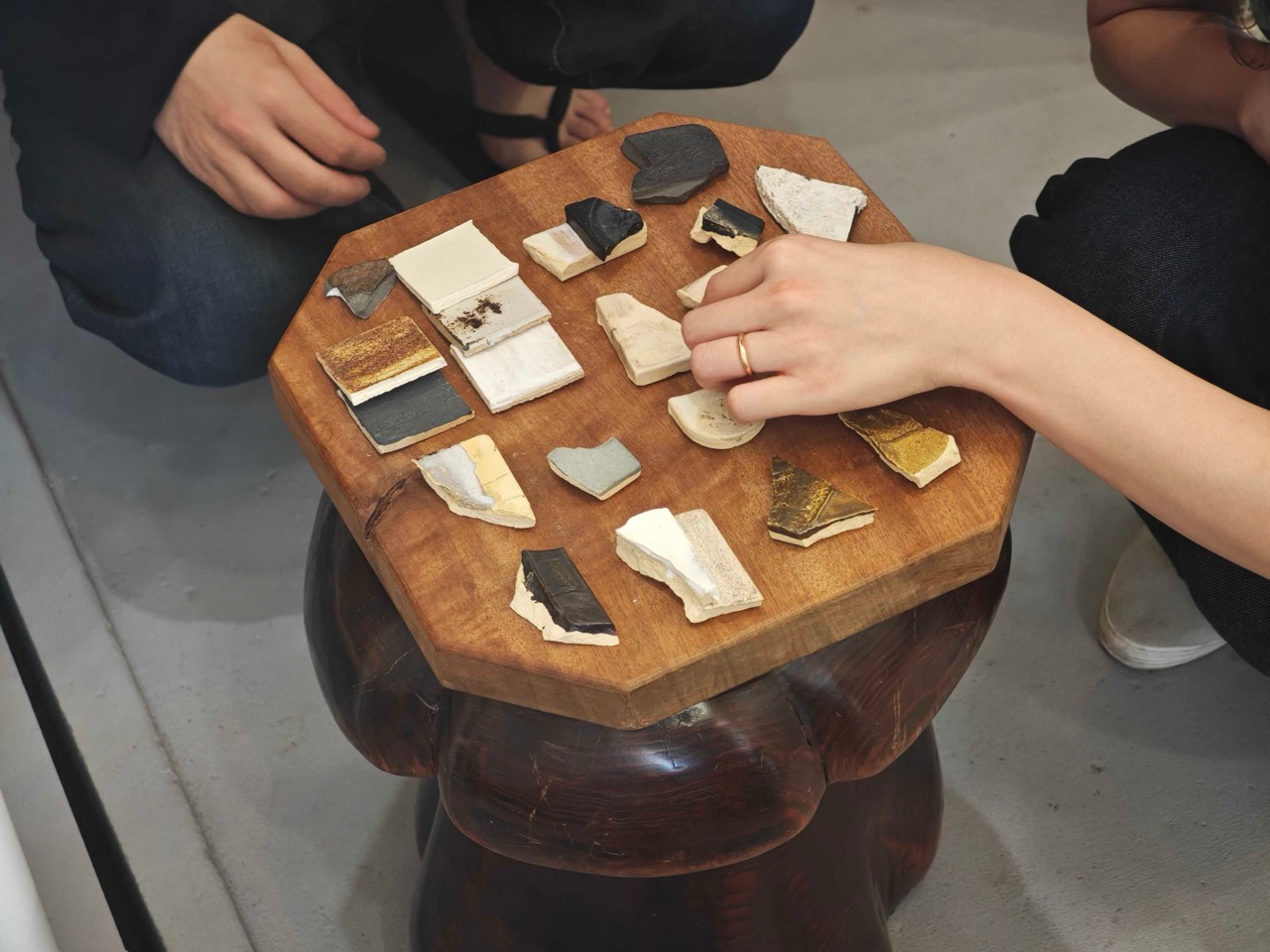
Choosing materialsFinishes and fixture materials are picked from physical samples. Making ten rooms all different means doing this ten times. ⓒSuisei Inc.
8.Guest-room floor area comes to 220㎡. Add stairs and corridors spread over three floors, the laundry and the lobby, and gross floor area lands somewhere near 310㎡. Room revenue alone works out to roughly 11,800 yen per ㎡ per year. Small lodging properties in central Seoul sit between 14,000 and 21,000 yen on the same basis, so this is on the low side.
9.So how much does the furniture bring in? Ten rooms at 80% is 2,920 room-nights a year, and roughly that many parties if each stays one night. Assume generously that 5% buy something and spend 20,000 yen each: sales of 2.92 million yen, and at a 30% commission the hotel keeps 880,000 yen. Two per cent of room revenue. The signboard of the business disappears into a rounding line on the income statement.
Revenue estimateAll three lines were calculated from public statistics and published commission rates. Not an operator disclosure, and the actual conversion rate is unknown.
10.Payroll explains why this hotel stands where it does. Check-in runs until 22:00, so somebody has to be at the desk, and covering two shifts plus days off takes three or four people. Payroll alone at 14 million yen is 32% of revenue. A ten-room hotel standing on its own breaks right here. But a few minutes' walk away sits the same company's 33-room flagship. Run the two as a single 43-room operation and staff per room halves.
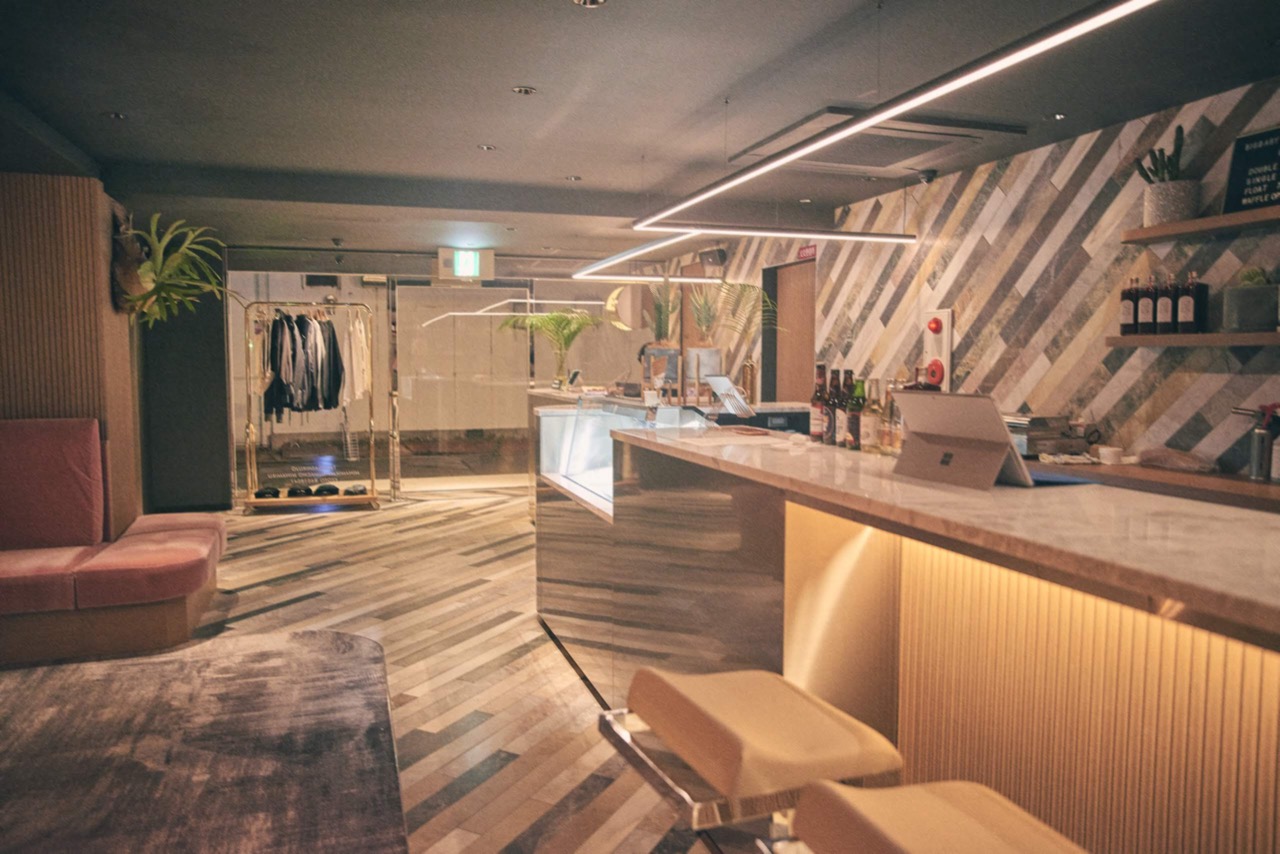
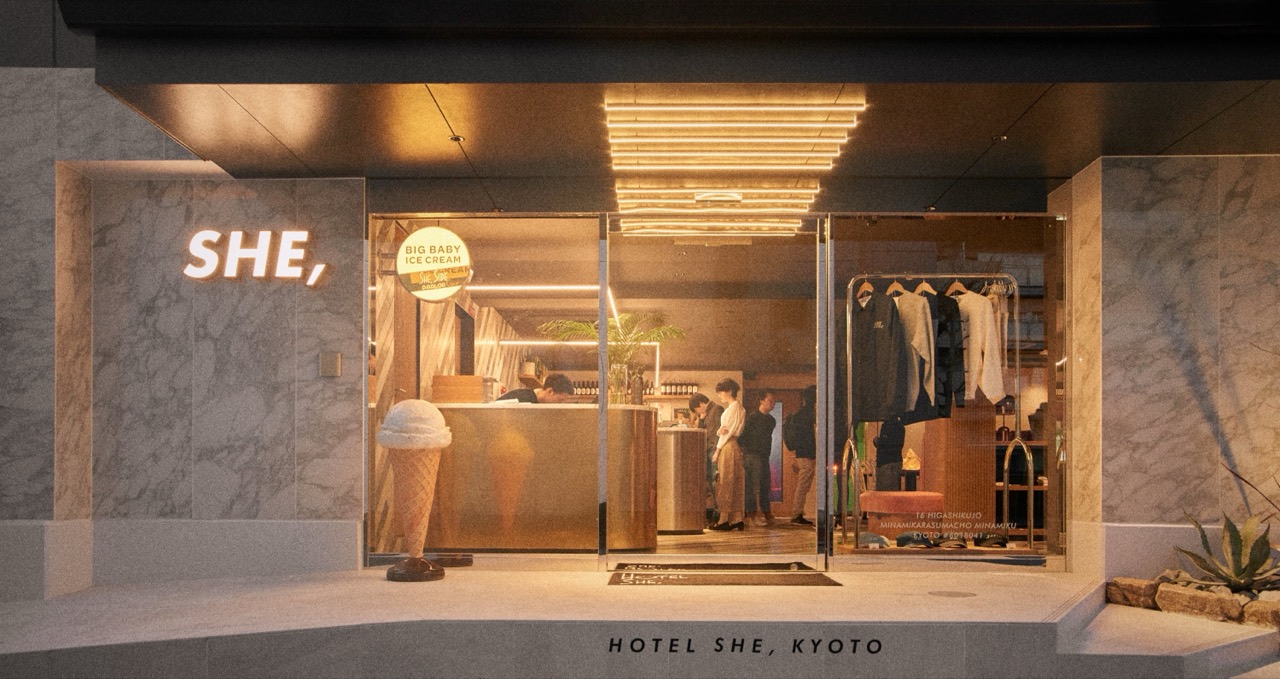
Flagship lobbyHOTEL SHE, KYOTO, run by the same company. Front desk, bar, ice cream case and a clothing rail share one room. ⓒSuisei Inc.
11.Higashikujo lies south of Kyoto Station. Neither Kiyomizu-dera nor Gion is within walking distance, and tourists do not open a map and come down here on purpose. Where you cannot sell temples, the reason to pay for a room has to be built inside the room. What this company chose as that reason was somebody else's taste.
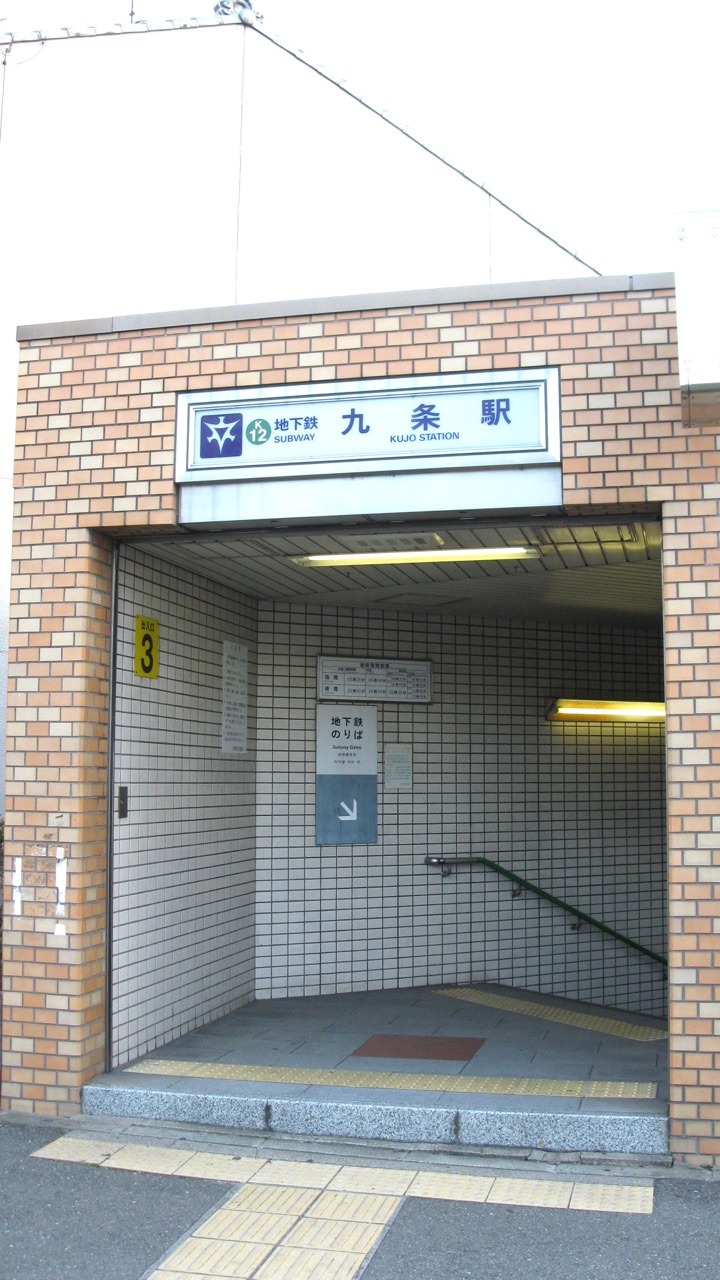
Nearest stationExit 3 of Kujo Station on the Kyoto Municipal Subway, a few minutes' walk from the hotel. A commuter stop, not a tourist one. ⓒLERK · CC BY-SA 4.0
12.A company that has long said it wants to use hotels as media. Here that sentence turns into concrete contracts. If an object on a shop shelf wins a few seconds of a customer's attention, an object in a guest room wins an entire night. Touched before sleep, seen again in the morning. Would a maker buy that placement? They filled all ten rooms, so evidently it sells.
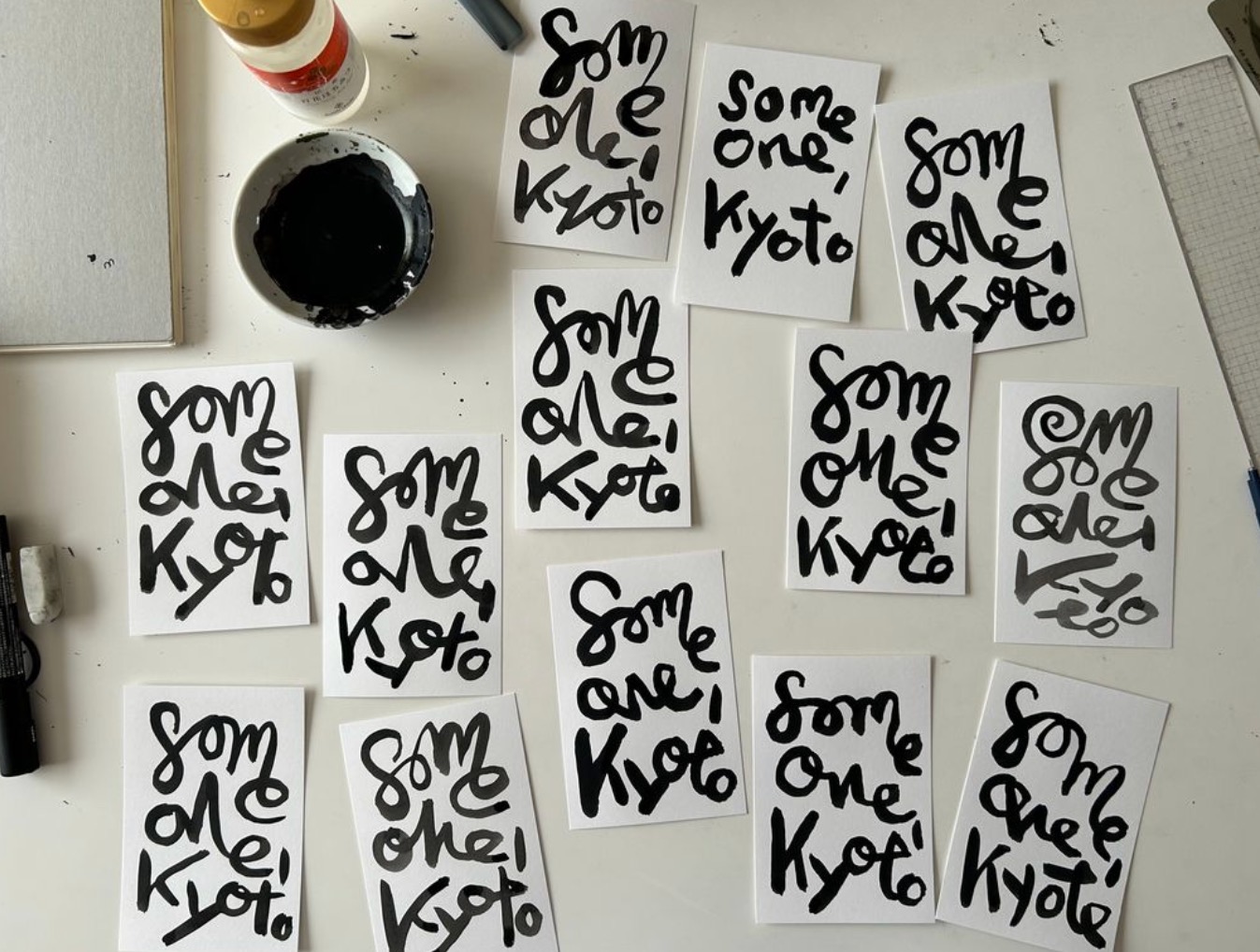
Logo studiesThe brand lettering was drawn by hand many times over before one was chosen. Work by Kazuki Kobayashi. ⓒSuisei Inc.
13.Rooms have been used as showrooms before. MUJI opened hotels in Shenzhen and Beijing in 2018 and in Ginza the following year, filling the rooms with its own products and attaching a store. Furniture brands dressing a single room as a pop-up is common enough. The difference is who owns the goods. Those hotels sold their own things; here a company with no products of its own sells other people's. No inventory risk, and curation itself becomes the product.
HOTEL SHE, KYOTOThe 33-room flagship, open since 2016. Through the glass you can see the desk, the ice cream counter and the clothing rail at once. ⓒSuisei Inc.
14.The risk is in the land. Published land prices near Higashikujo rose 21.9%, Courtyard by Marriott Kyoto Station opens this autumn, and a mixed-use complex is due east of Kyoto Station in 2028. Local reporting says almost no buildable hotel sites remain. In a district where chains arrive 200 rooms at a time, ten rooms survive only by refusing to compete on rate, yet this hotel currently charges half the market average. If the value of being a demonstration space cannot be written into the rate, 880,000 yen of side income will not cover the gap.
Brand imageGuest-room furniture carried out onto the riverbank and photographed there. An advertisement claiming the objects hold up outside the room too. ⓒSuisei Inc.
15.If a guest buys the chair, is the next guest's room empty? All ten rooms are furnished differently, so every departure means sourcing the same piece again or swapping in another, and who carries that replacement cost and effort is the real unit cost of this business. A flea-market antique cannot be found twice. The moment room fixtures are booked as consumables they stop being depreciation and become cost of sales, and that is not a line hotel operators are used to reading.
A ten-room hotel put every piece of furniture and tableware in its guest rooms on the sales list, and that retail line is estimated at 880,000 yen, two per cent of 43.8 million yen in room revenue. The real arithmetic lies in the 5.26 million yen saved by taking bookings through the company's own engine, and in sharing staff with a 33-room flagship a few minutes' walk away. Anyone trying this in Korea is stopped first by the act of selling. Retail has to be added to the business registration before goods can be sold on lodging premises, and taking payment inside the room brings a mail-order sales filing with it. Where the goods belong to somebody else, e-commerce law requires disclosing in advance that you are an intermediary rather than the seller; omit that notice and you carry the seller's liability in full. Who accepts defects and returns, the hotel or the maker, also has to be settled in the contract first. Putting a price on the things laid out on the bed is a matter of contracts, not interiors.