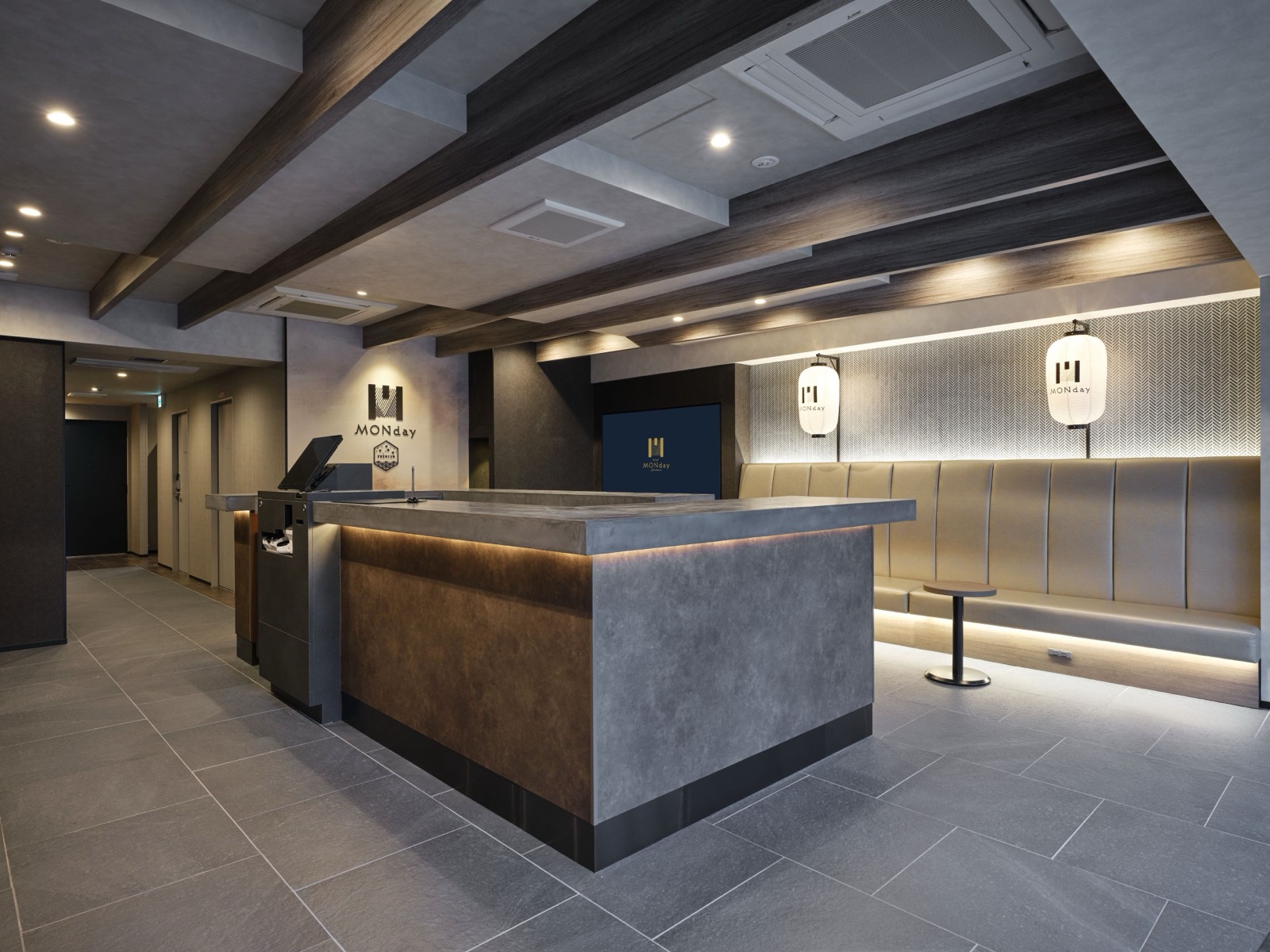
A 29-room property has opened in Shinsaibashi, Osaka. Every room is over 33 sqm, and each one has a kitchen and a washer-dryer. One room sleeps up to six. Divide the rate by that number and you can see what this building is really competing against.
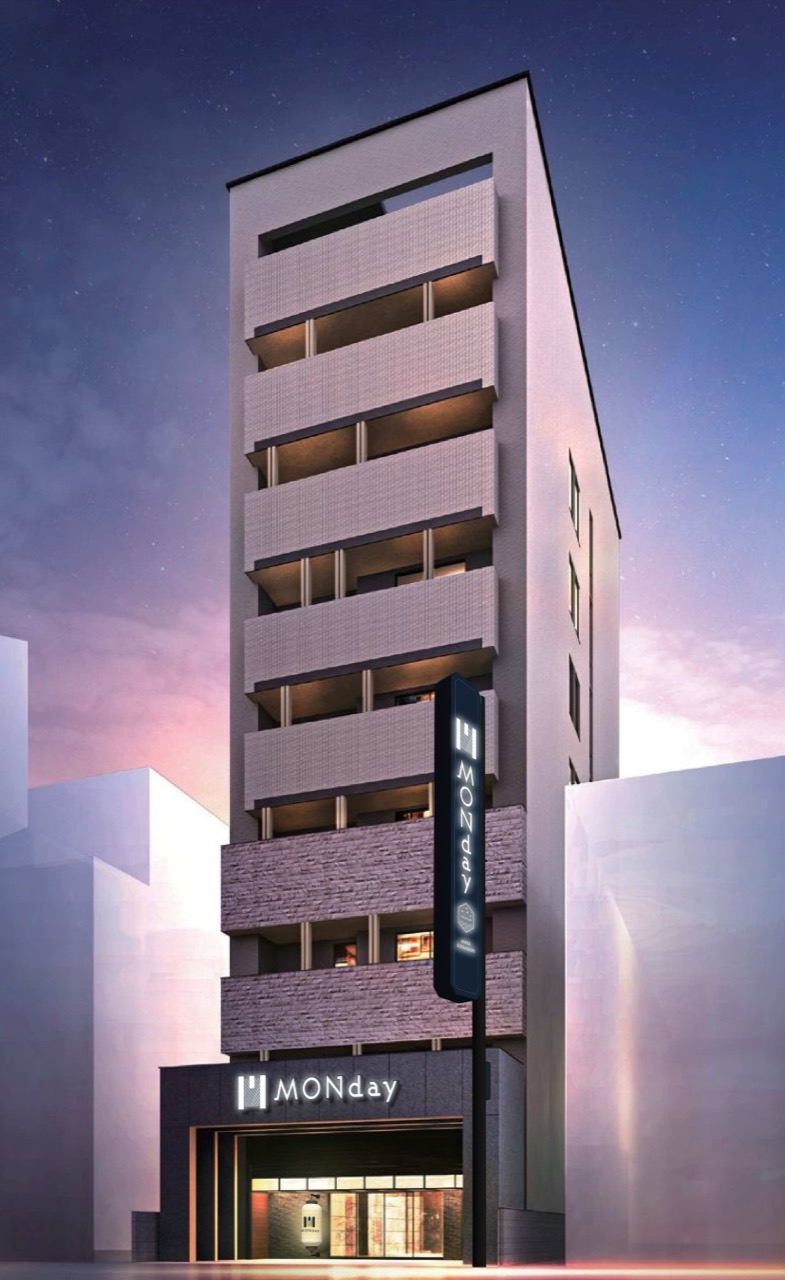
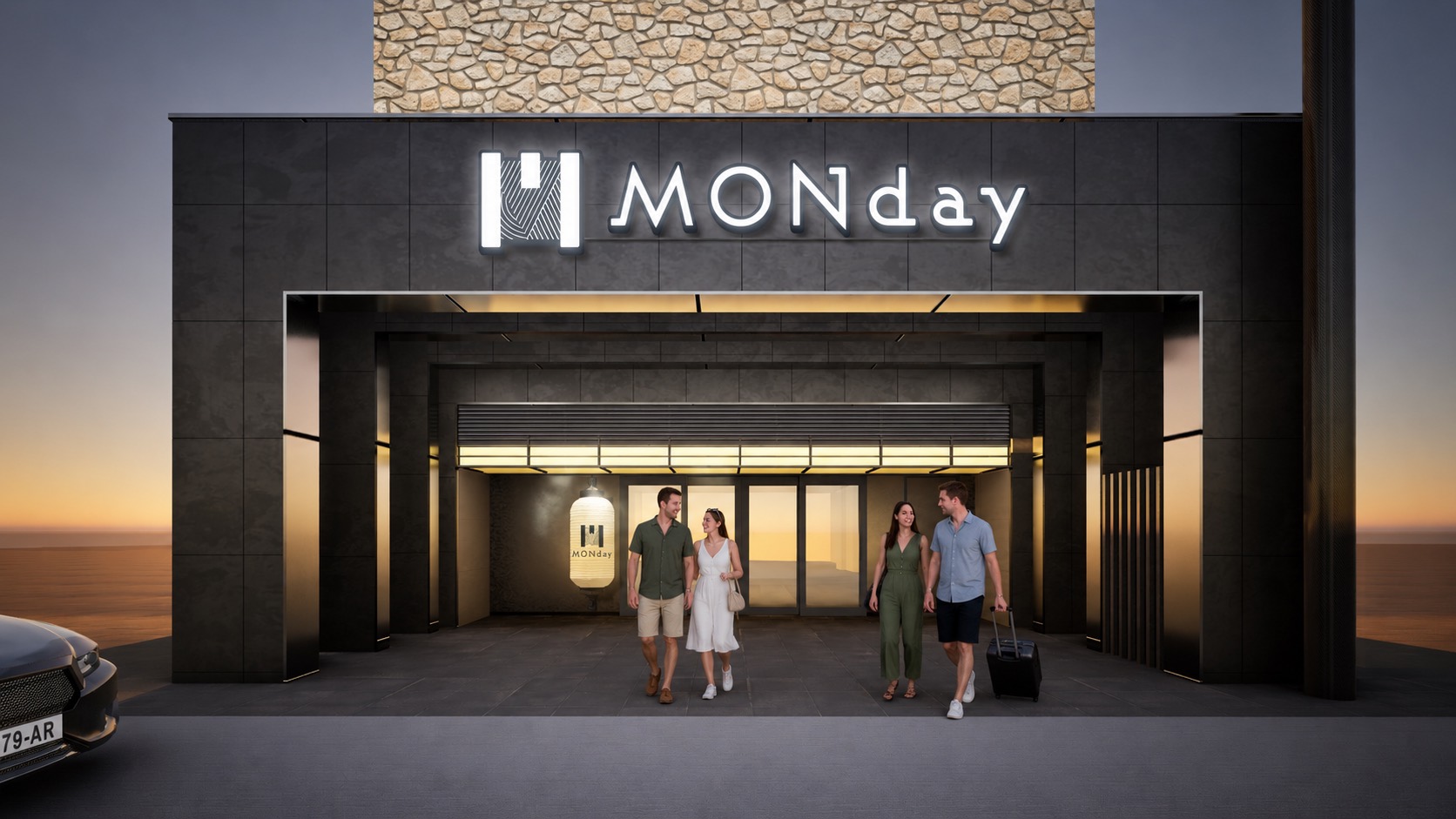
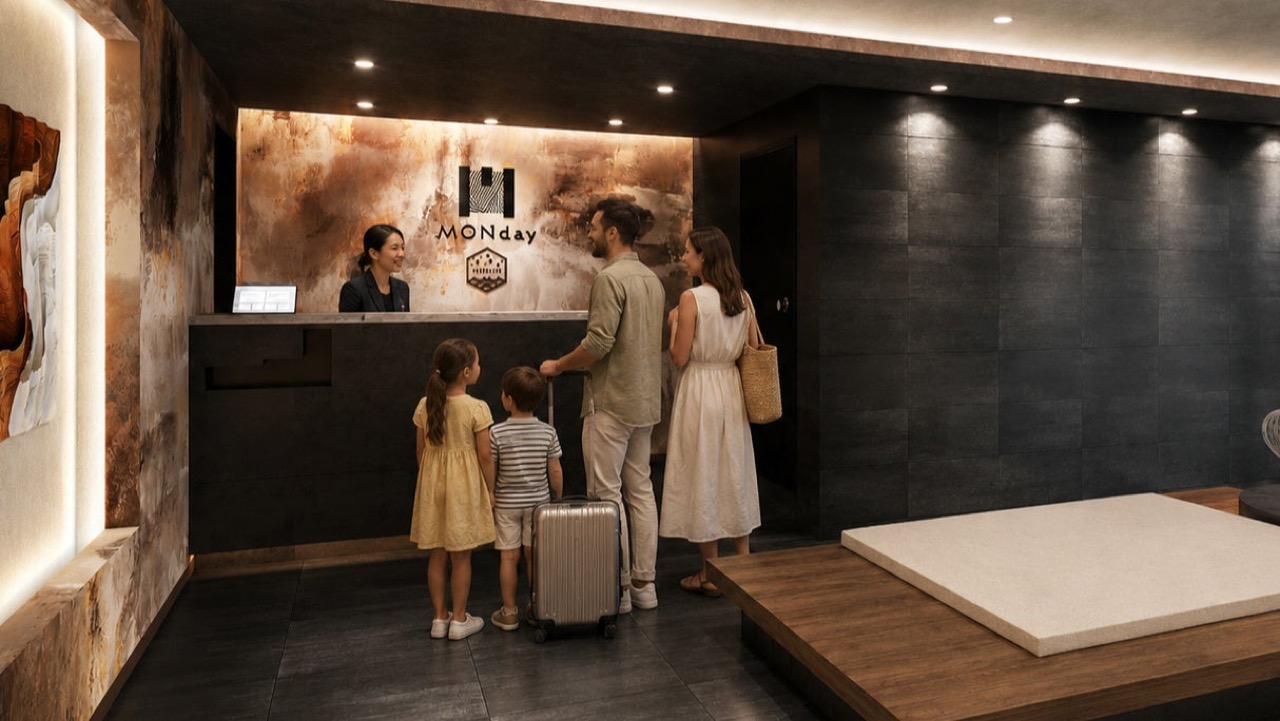
1.Premium MONday Osaka Shinsaibashi opened on 31 July. The address is 1-17-31 Higashi-Shinsaibashi, Chuo-ku, Osaka, a three-minute walk from Shinsaibashi Station. Eight storeys hold just 29 rooms, running from the second floor to the eighth. The operator is JHAT Inc., founded in 2018 and built entirely around inbound visitors to Japan.
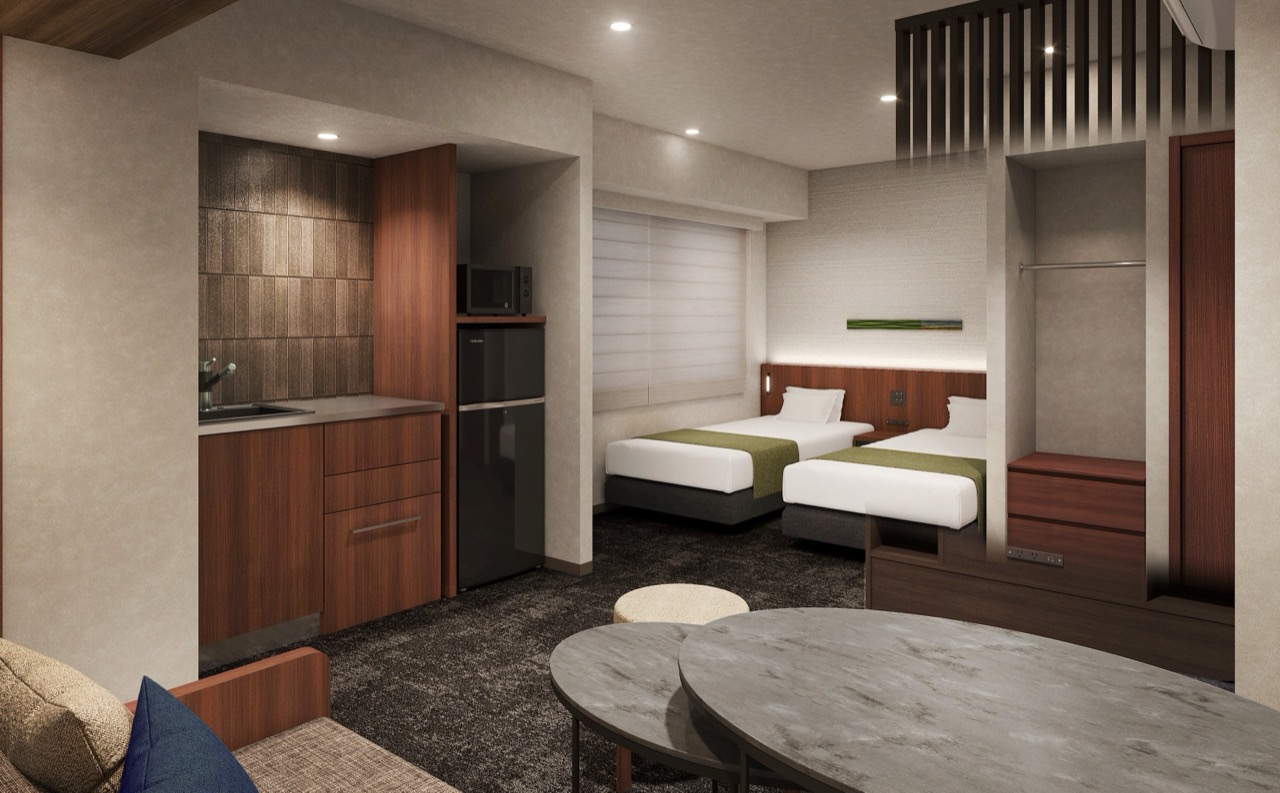
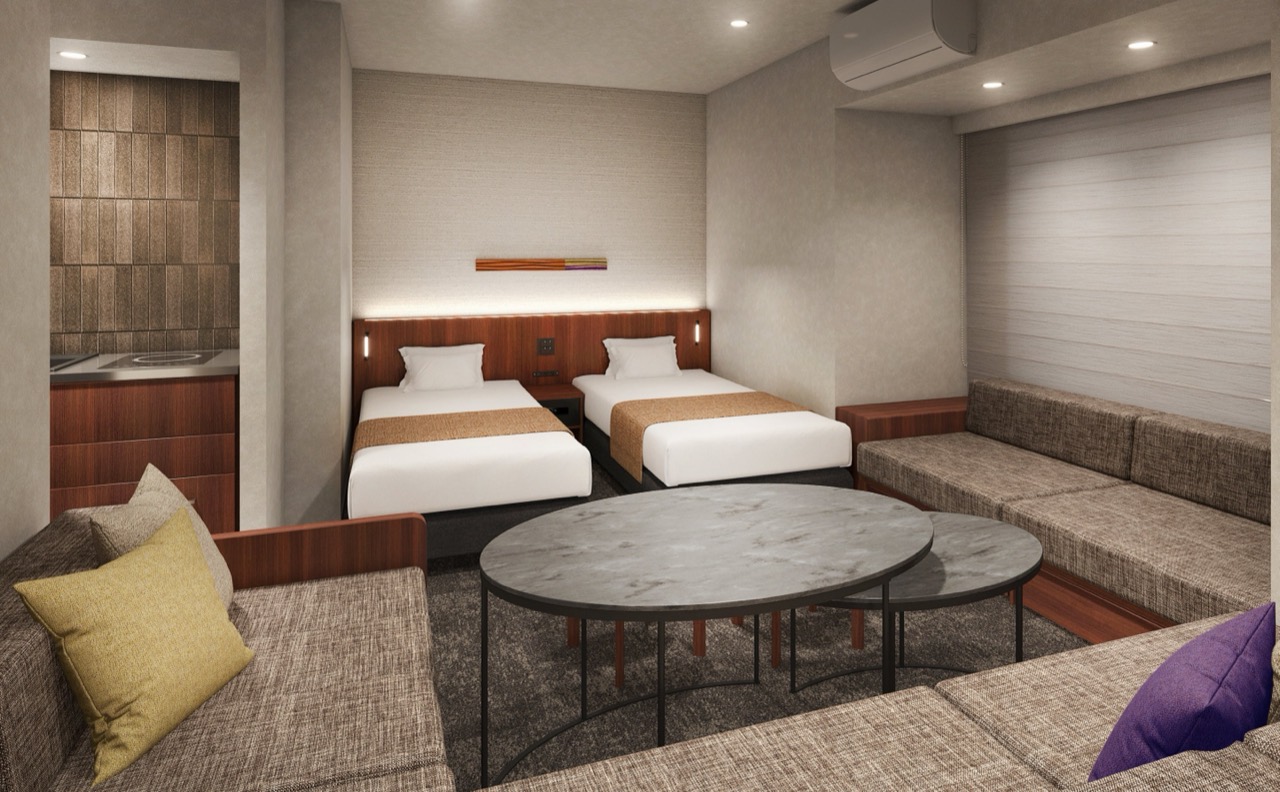
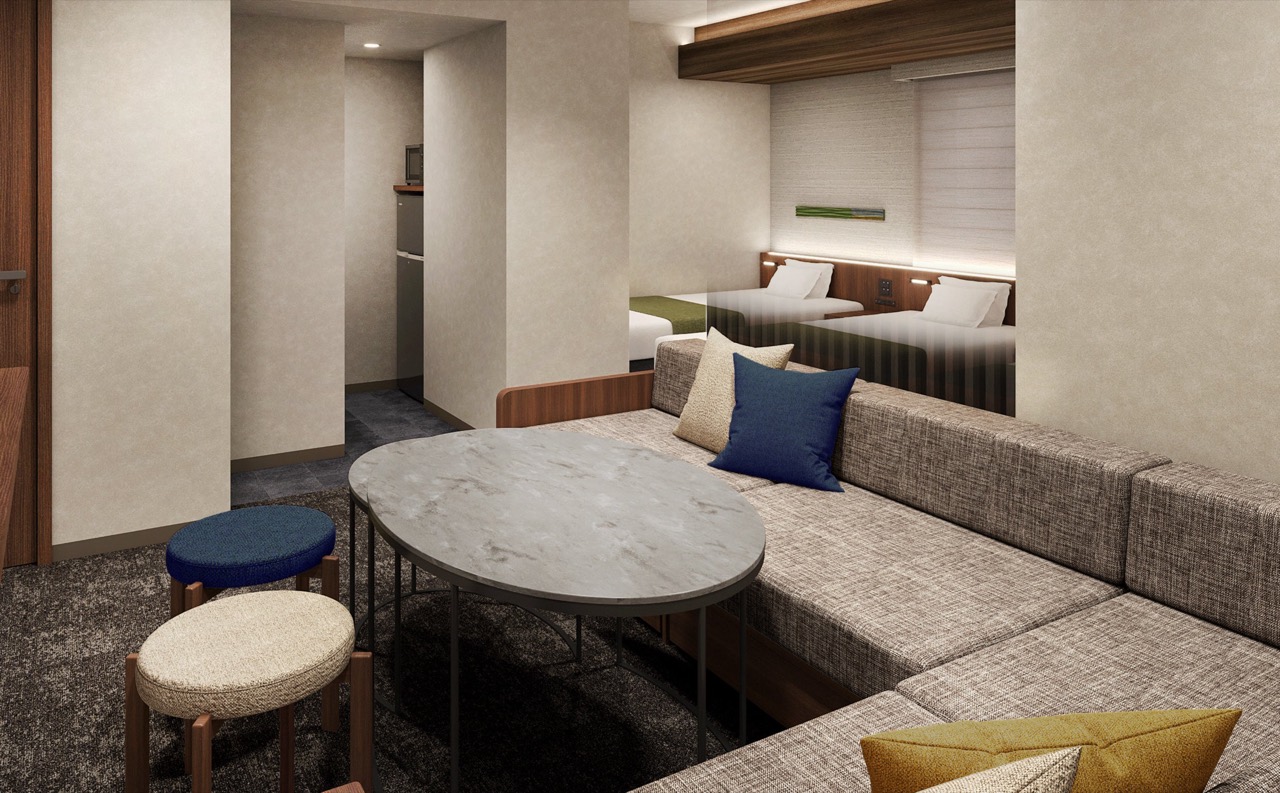
2.The inventory list inside each room reads less like a hotel and more like a household. Kitchen, washer-dryer, full-size fridge, microwave, tableware and cookware, vacuum cleaner. The operator names Panasonic for the washer, BALMUDA for the microwave and makita for the vacuum. All 29 rooms are fitted the same way.
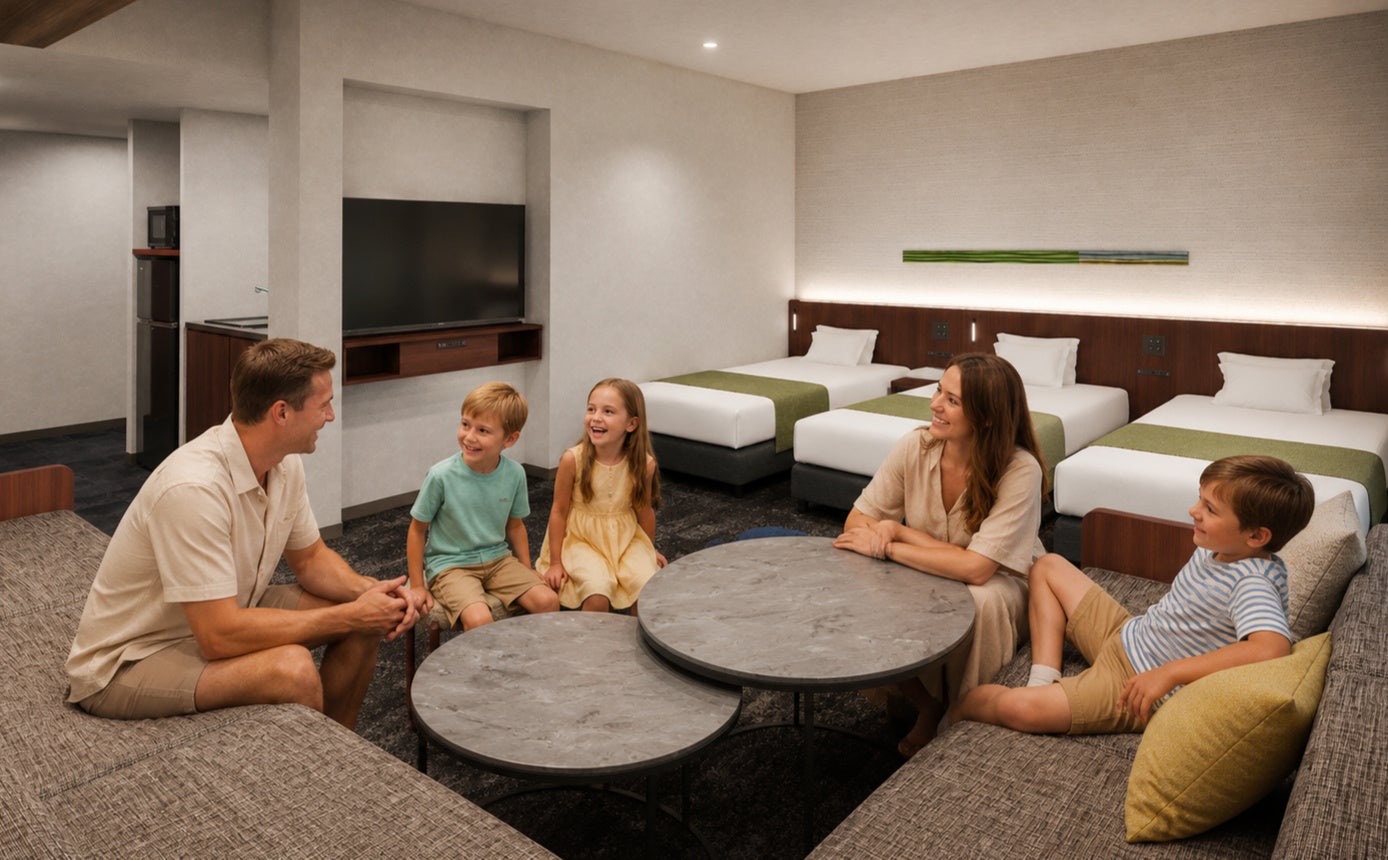
3.There are four room types. Superior Family runs 33.55 to 34.98 sqm for up to four guests, Deluxe Family Twin and Triple sit in the 38 sqm range for up to five, and a single Premium Family room measures 48.90 sqm for up to six. The smallest room here is roughly double a standard Korean business-hotel room.
4.Look at the plan and every wet function has been pushed to one side. Coming through the door, the kitchen and washer sit on the left with the bathroom behind them, while the beds are pinned to the wall furthest from the window. Stacking the plumbing in a single line is what lets the same floor plan repeat upward. That is the condition for putting identical rooms on eight floors.
5.The corridor sounds different in the evening. Behind one door a washing machine shifts into its spin cycle and rattles the floor, while from another the smell of reheated food pushes through the gap. What hotels work to erase, the traces of daily life, this building sells. The price is paid in noise between floors, in ventilation, and in appliances that break.
6.The same brand's Osaka Namba property, opened in December two years ago, publishes a lowest rate of 25,868 yen for two people per night, or 12,934 yen each. The Shinsaibashi property does not publish rates, so that figure serves as the baseline here. It is a number this writer chose, not one the operator released.
Rate per personRoom rates rise with occupancy, so this division shows the structure rather than an actual bill.
7.Run a year on those terms. At an average rate of 25,000 yen and 80 percent occupancy (Osaka Prefecture recorded 78.8 percent in 2025, the highest of any prefecture), 29 rooms produce annual room revenue of 211.7 million yen, roughly 2 billion won at 950 won to 100 yen. That is 7.3 million yen per room.
8.Now divide by floor area. Guest rooms account for roughly 1,070 sqm; add stairs, corridors and the ground-floor lobby and the gross floor area lands near 1,450 sqm, about 439 pyeong. That works out to 40,000 yen per pyeong per month, around 380,000 won. Set against the 400,000 to 600,000 won per pyeong that small Seoul city-centre properties tend to make, it is not a high figure. The rooms are this large.
9.The real arithmetic sits in the number of cleans. At 80 percent occupancy the year holds 8,468 room-nights, which means 8,468 departure cleans if guests stay one night each, but only 2,823 if the average stay is three nights. Put the cost of cleaning a 37 sqm room at 4,000 yen and the gap comes to 22.58 million yen, or 10.7 percent of room revenue. That unlisted line is what separates the margins.
Estimated cleaning costThe cleaning rate and average length of stay are figures this writer chose. They are not operator disclosures.
10.So how is the roster built. A single 29-room building cannot carry a 24-hour front desk on its own, but this company runs two properties in Osaka, at Namba and Shinsaibashi, along with 29 in Tokyo and five in Kyoto. This is its 36th property. With the same plans, the same appliances and the same booking system, a staff member learns the job once, and people can be pulled from the building next door when things get tight.
11.Where the booking comes from also moves the numbers. Book through the official site as a member and you get 10 percent off plus a 2 p.m. check-in, the company says. Travel booking sites typically take around 15 percent, so even after the discount there is a 5 point spread. Shift half the revenue direct and the company keeps something in the 5 million yen range each year.
12.In a star-rated hotel, where would this money have come from? Buffet breakfast, the banquet hall, coffee in the lobby lounge. None of those three exist here. Instead the room capacity was raised from four to six, buying more people out of the same floor area. With no breakfast service, kitchen staff and pre-dawn shifts vanish entirely, and the induction hob in the room takes their place. A breakfast a guest cooks does not register as revenue, but it is not money going out either.
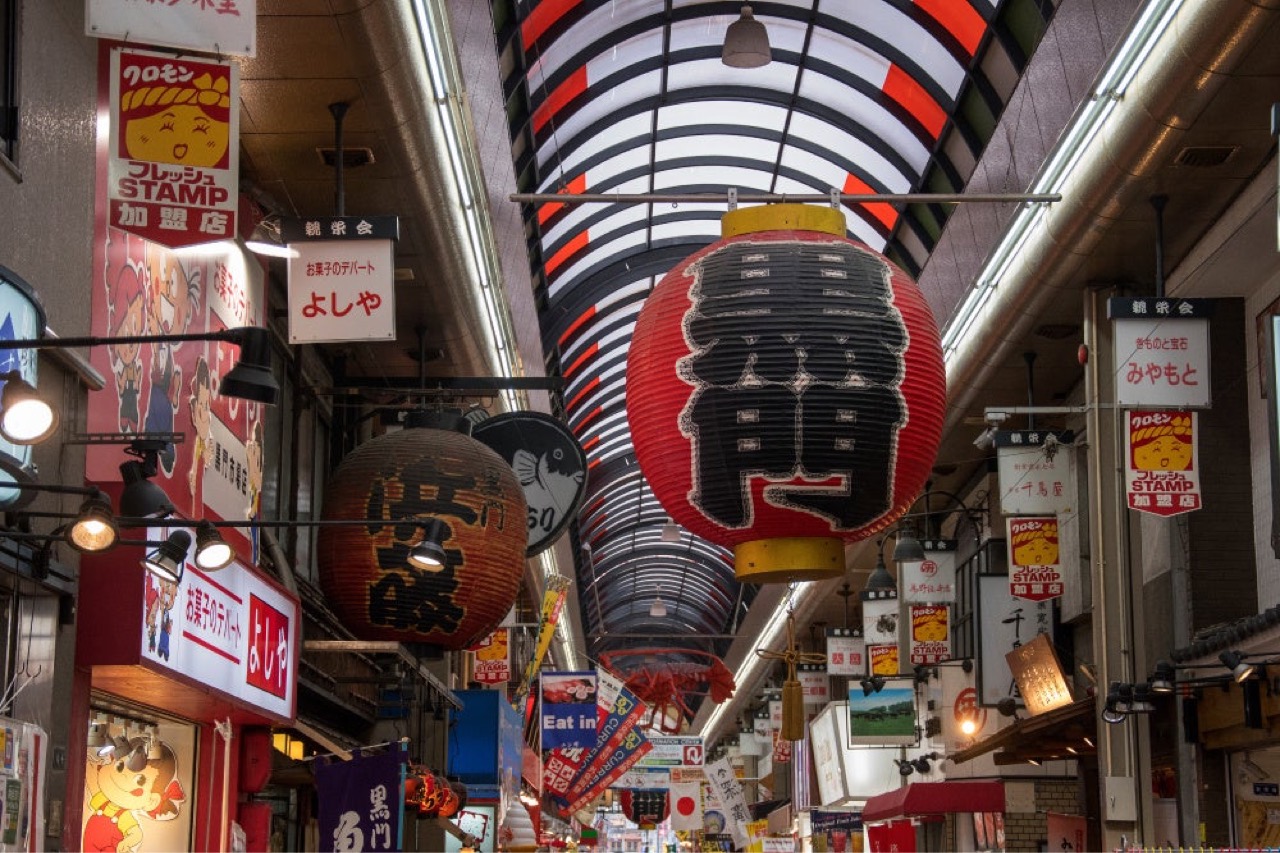
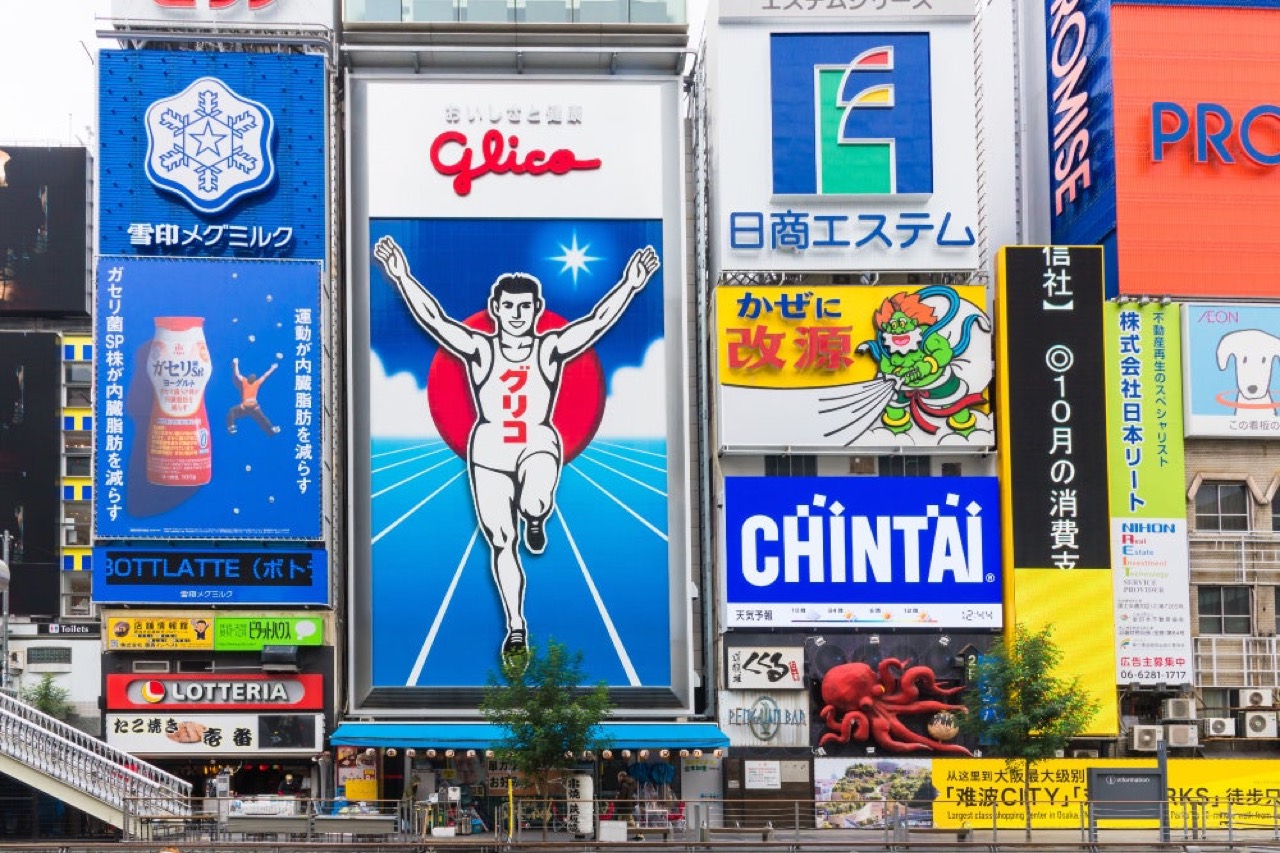
13.The neighbourhood explains the design. Kuromon Market and Dotonbori are both within walking distance, and whatever you buy at the market can be cooked in the room. The operator says it is targeting guests from Europe and North America who stay several days to a week and want local food and culture. What those guests need is not a breakfast buffet but a fridge and a flame.
Kuromon MarketWalking distance from the hotel. Put a burner in the room and this market becomes dinner. Photograph included in the operator's press release.
14.There is a law behind the rise of this format in Japan. When the Private Lodging Business Act took effect in 2018 and capped minpaku operation at 180 days a year, buildings licensed under the Inns and Hotels Act absorbed the same demand. Fit the kitchens and washers, register as a hotel, sell all 365 days. These rooms are not hotels imitating minpaku; they are hotels built to do what minpaku is no longer allowed to do.
15.During Expo 2025 Osaka, Kansai, average occupancy across Kansai reached 87.9 percent and RevPAR in some months ran 62 percent above the prior year. That number is now the baseline, and rooms are pouring into Umeda, Namba and Shinsaibashi, with forecasts of rates sliding toward the 7,000 to 9,000 yen band. If that happens, a family of four can take two business-hotel twins for 16,000 yen, and the question is whether a single 25,000 yen room still wins. The defence here is not the square metres. It is the kitchen.
DotonboriWalking distance, and the tourist route. That footfall sets the rates, and the new supply is heading the same way. Photograph included in the operator's press release.
A 29-room property put a kitchen and a washer-dryer in every room and raised capacity from four to six. Divide the rate by those heads and it falls into the 6,000 yen range per person, under half what a business hotel in the same city charges, and the moment guests stay three nights instead of one, departure cleans drop from 8,468 to 2,823 and 10.7 percent of room revenue stays in the building. In Korea the kitchen is what stops you first. The Enforcement Decree of the Public Health Control Act splits lodging into general and residential categories, placing anything with cooking facilities in the residential class, so installing an induction hob and sink in a building licensed for general lodging puts you outside your permit. Take the residential lodging route from the start and you inherit the ban on residential use and the zoning dispute that comes with it, a dispute that is still unsettled. Putting a flame in a guest room is not an interiors decision. It is a licensing one.