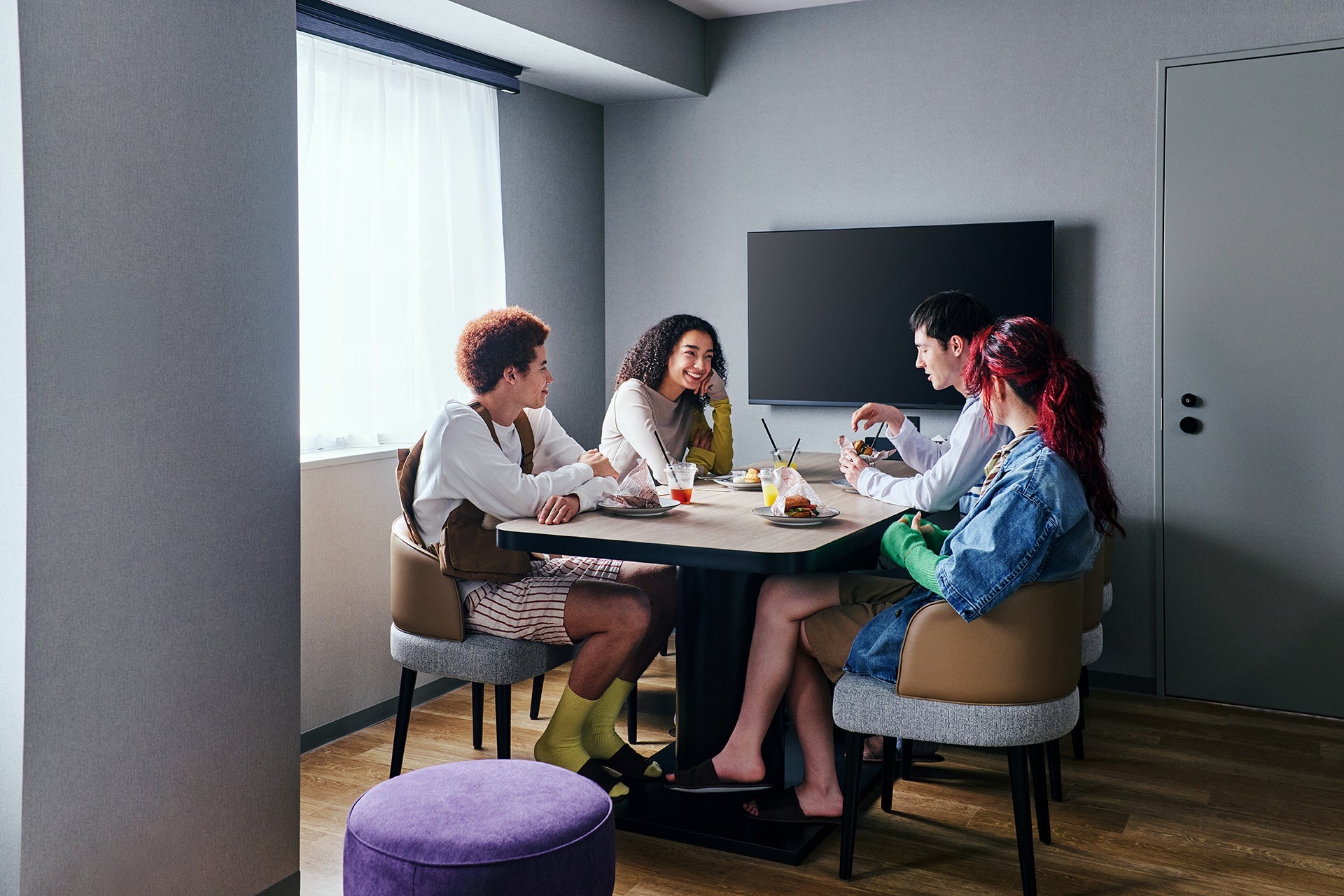
Premium Suite Room63㎡, up to six guests. The largest room in the hotel and the top end of the rate card. ⓒORIX Hotel Management
Daily Hotel
One night per person costs 7,000 yen, and the room costs twice a business hotel
2026.09.04
A 78-room hotel opened in Asakusa, Tokyo on July 3. Until four years ago the same building held a business hotel selling 190 rooms, which left when its lease ran out. A room here goes for 22,000 to 63,000 yen, but put four people in it and each one pays about half the Tokyo business-hotel average.
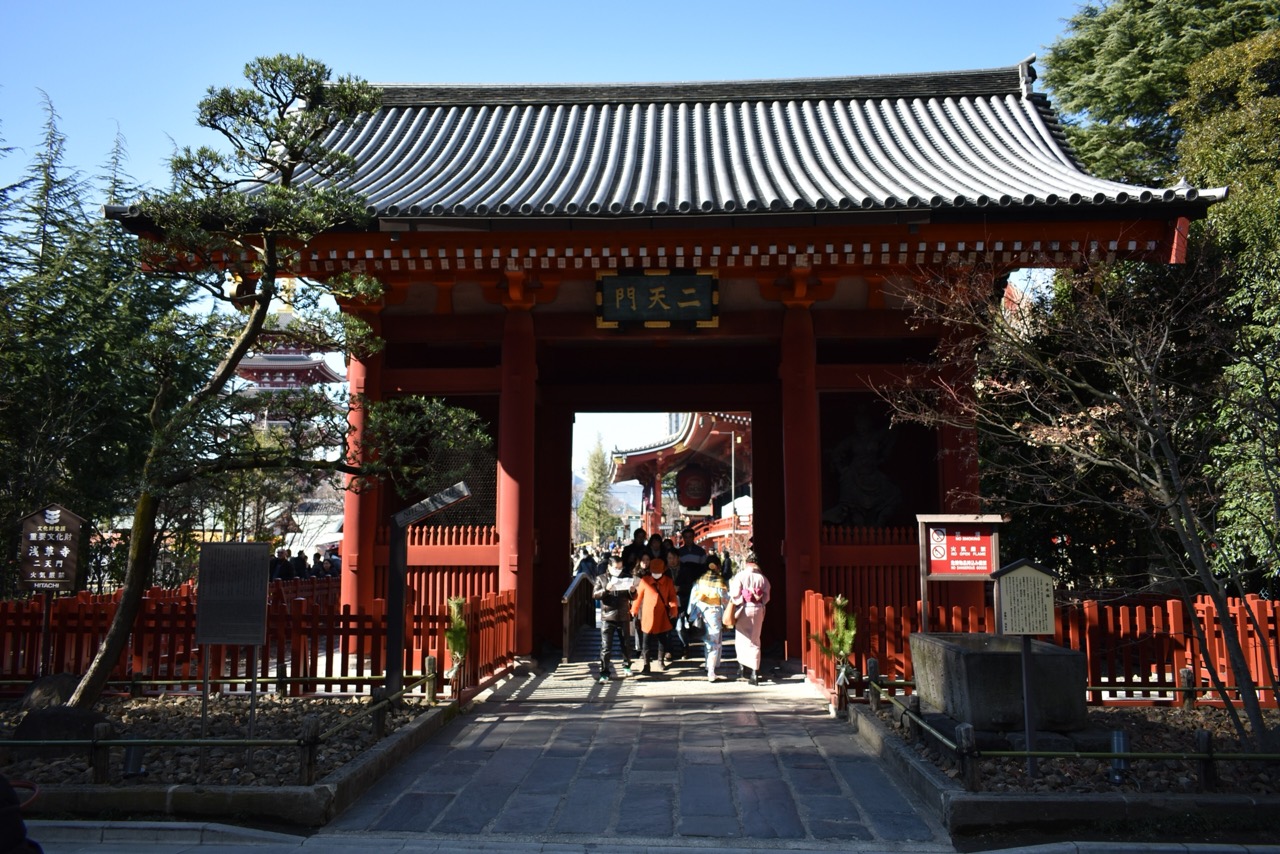
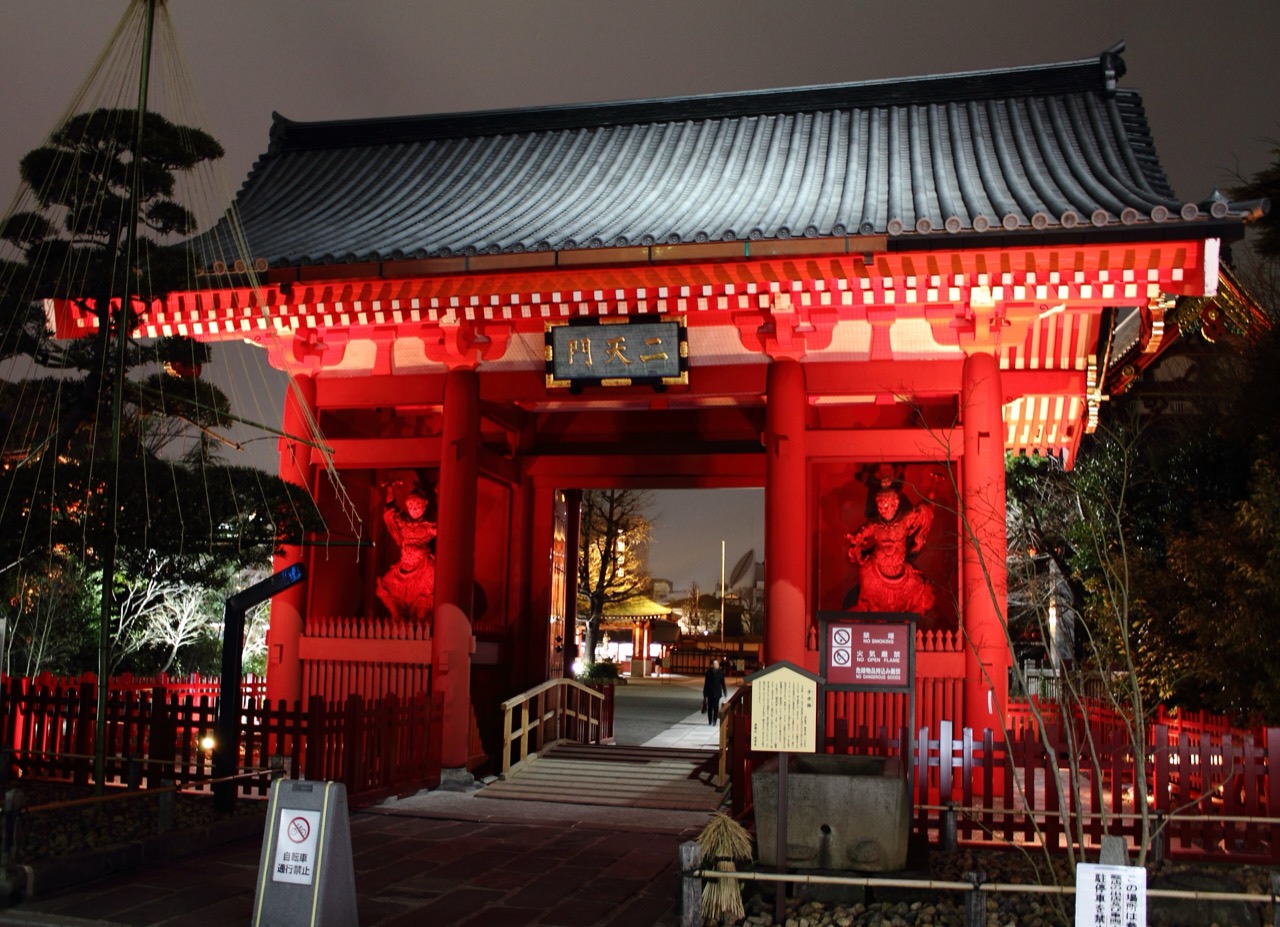
1.It is called CROSS Suites Tokyo Asakusa. ORIX Real Estate bought the building and ORIX Hotel Management runs it. The address is 2-33-7 Asakusa, Taito-ku, Tokyo, right beside Nitenmon, the eastern gate of Senso-ji, and a five-minute walk from Asakusa Station on the Ginza Line.
2.The building went up in 1997. Its first sign read Blue Wave Inn Asakusa; from 2014 a JR West affiliate leased it and ran 190 rooms as Via Inn Asakusa. It closed at checkout on May 12, 2022, and the operator said the reason was the end of the building lease rather than weak trade. What sits inside now is the third hotel in thirty years.
NitenmonThe eastern gate of Senso-ji, built in 1649. The hotel stands in the lane immediately beside it. ⓒEdomura no Tokuzo · CC BY-SA 4.0
3.Ten storeys above ground, 6,106㎡ of floor area. There are 78 rooms in 11 types, the smallest 25㎡ and the largest 63㎡. About half take four or more guests and 22 are suites. The workhorse is the Deluxe Triple, and connecting rooms take a single booking up to nine people.
4.Every room has a worktop with a sink, a microwave sitting on it. The fridge has a freezer compartment, and open the drawer and there is a wine opener beside the dishes and cutlery. Some rooms have a dining table and a washer-dryer as well. None of this is for someone staying one night.
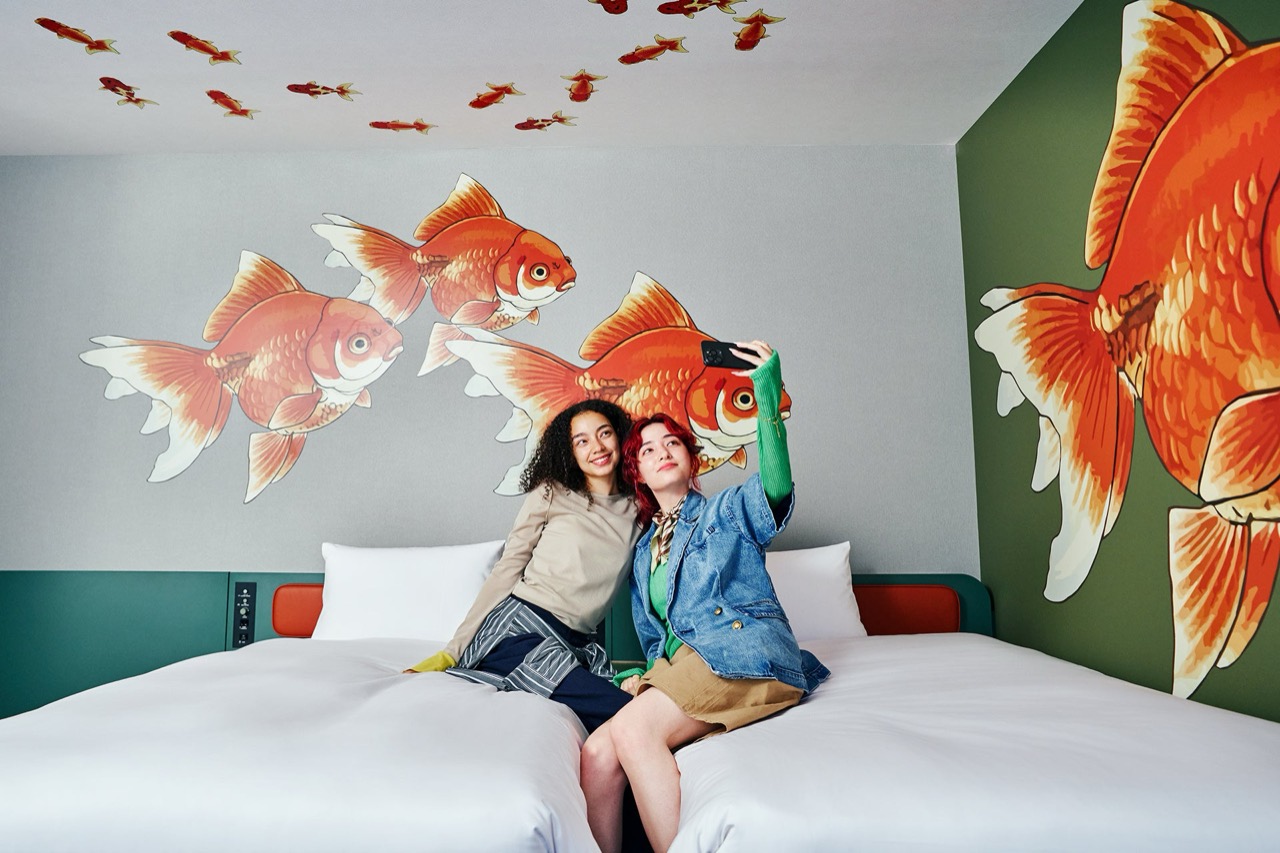
Tokyo Kingyo Suite RoomMade together with Sumida Aquarium. Goldfish have been bred in this neighbourhood since the Edo period. ⓒORIX Hotel Management
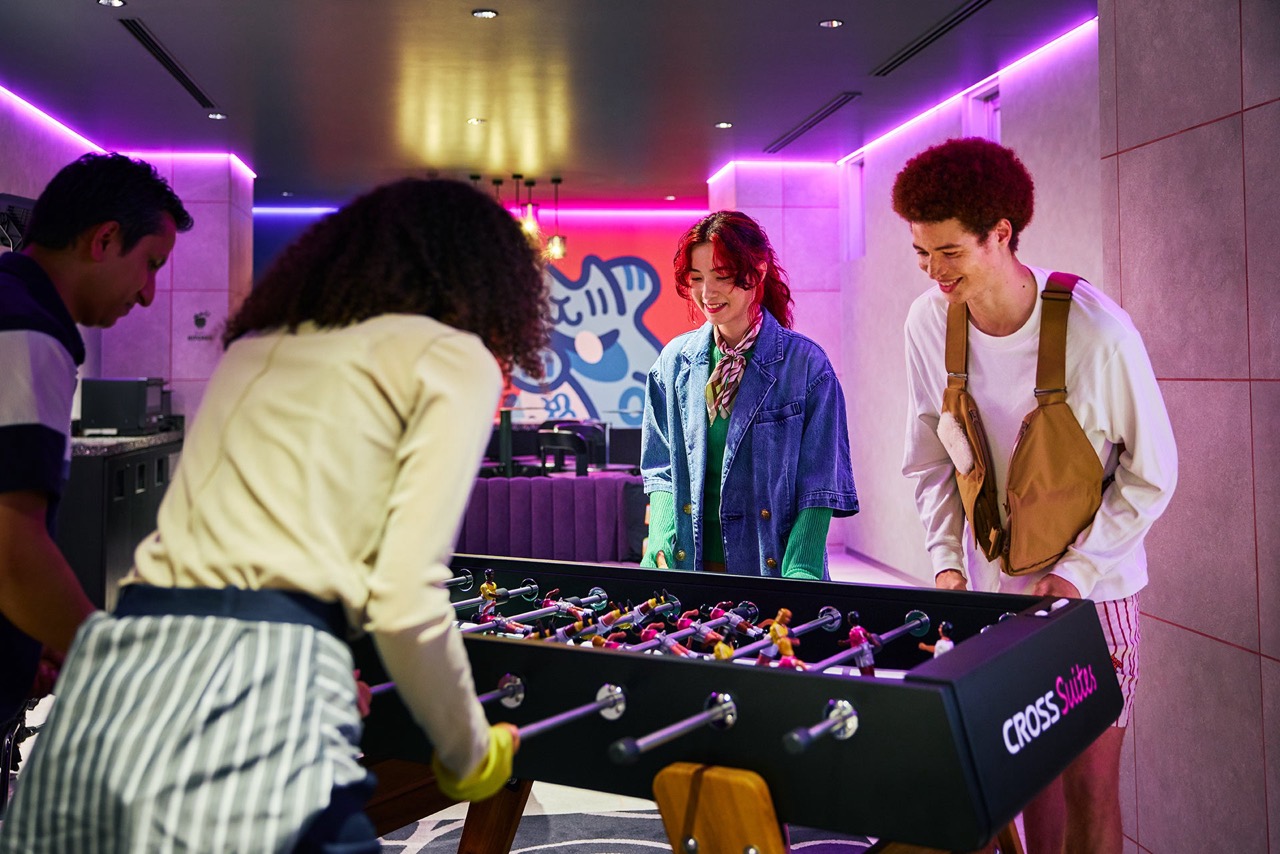
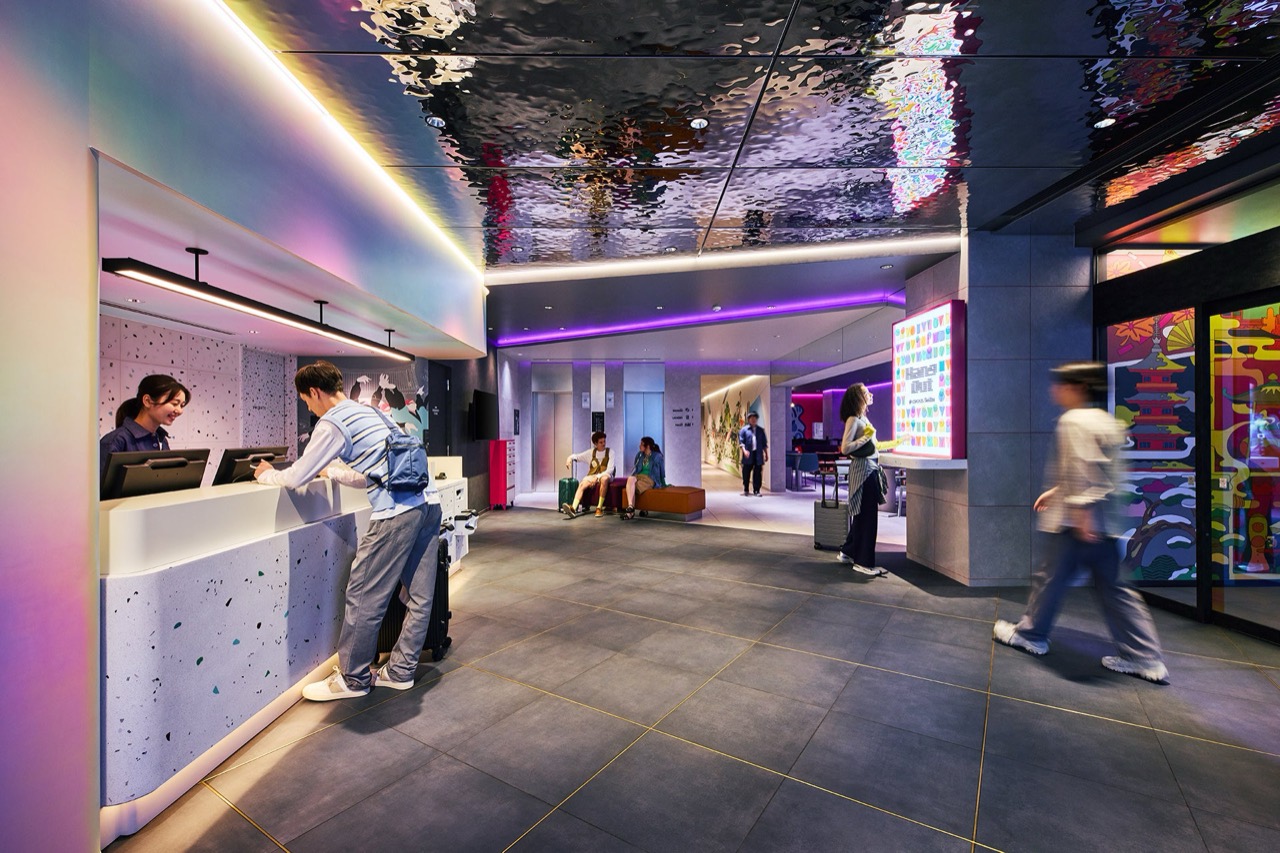
5.The ground-floor lounge is called Hang Out @CROSS Suites. A foosball table stands in the middle and board games line the shelves. Around it: a public kitchen with a toaster oven and induction hobs, a laundry room, a gym open from 7am to 10pm, self-service lockers, a front desk staffed 24 hours. They did not build a restaurant. Eat out on the street, or buy ingredients and cook.
Hang Out @CROSS SuitesThe ground-floor lounge with foosball and board games. The toaster oven and induction hobs are behind this. ⓒORIX Hotel Management
6.Rates run from 22,000 to 63,000 yen a night. The average daily rate for Tokyo business hotels in July 2026 was 17,147 yen, so room for room this place charges 1.3 to 3.7 times as much. But capacity runs from two to six, which changes the division. Four people in a 30,000-yen room come to 7,500 yen each.
Room rate and cost per headThe rate band is published; the per-person figure for four guests is arithmetic on that band.
7.Run 78 rooms at an average 30,000 yen and 85% occupancy and daily room revenue is 1.99 million yen, roughly 730 million yen a year. Run the same building's 190 rooms at today's business-hotel rate and the same 85% and you get 2.77 million yen a day, 1.01 billion a year. The version with fewer rooms earns about 280 million yen less each year. An estimate built on assumed occupancy and average rate.
8.The reason for choosing the smaller number sits on the cost side. Fill 190 rooms at 85% and 161 rooms have to be cleaned every day; put guests averaging 3.5 nights into 78 rooms and there are 19 checkouts a day. Cleaning and linen turns drop to an eighth. With no breakfast restaurant, kitchen and floor staff never enter the roster. Calculated at 3.5 nights per stay, excluding mid-stay cleans.
Revenue and labourRevenue falls by 30%, cleaning turns by nearly 90%. That gap is the arithmetic behind the conversion.
9.The sales channel leans hard one way. When the company opened its pre-launch bookings, about 90% had come through overseas OTAs from foreign travellers. Taiwan led, followed by other Asian markets, the United States, Canada and Europe. Until direct booking grows, commission goes out in full.
10.Those bookings clustered at three and four nights. Taking 190 one-night guests and taking 20 four-night guests are not the same business: the front desk is staffed differently and the bookings land at different times. Long stays come in months ahead and rarely collapse, but when one does, four nights empty at once.
Front deskStaffed around the clock. They kept people rather than switching to unmanned operation, and the company calls this team the Moment Makers. ⓒORIX Hotel Management
11.The target the company set is families and groups of friends in their twenties to forties, staying long, domestic or foreign alike. To a lone business traveller a 25㎡ room with a kitchen is more than they need; to a family of four it is cheaper than booking two rooms. Redefine the guest and the same building becomes a different product.
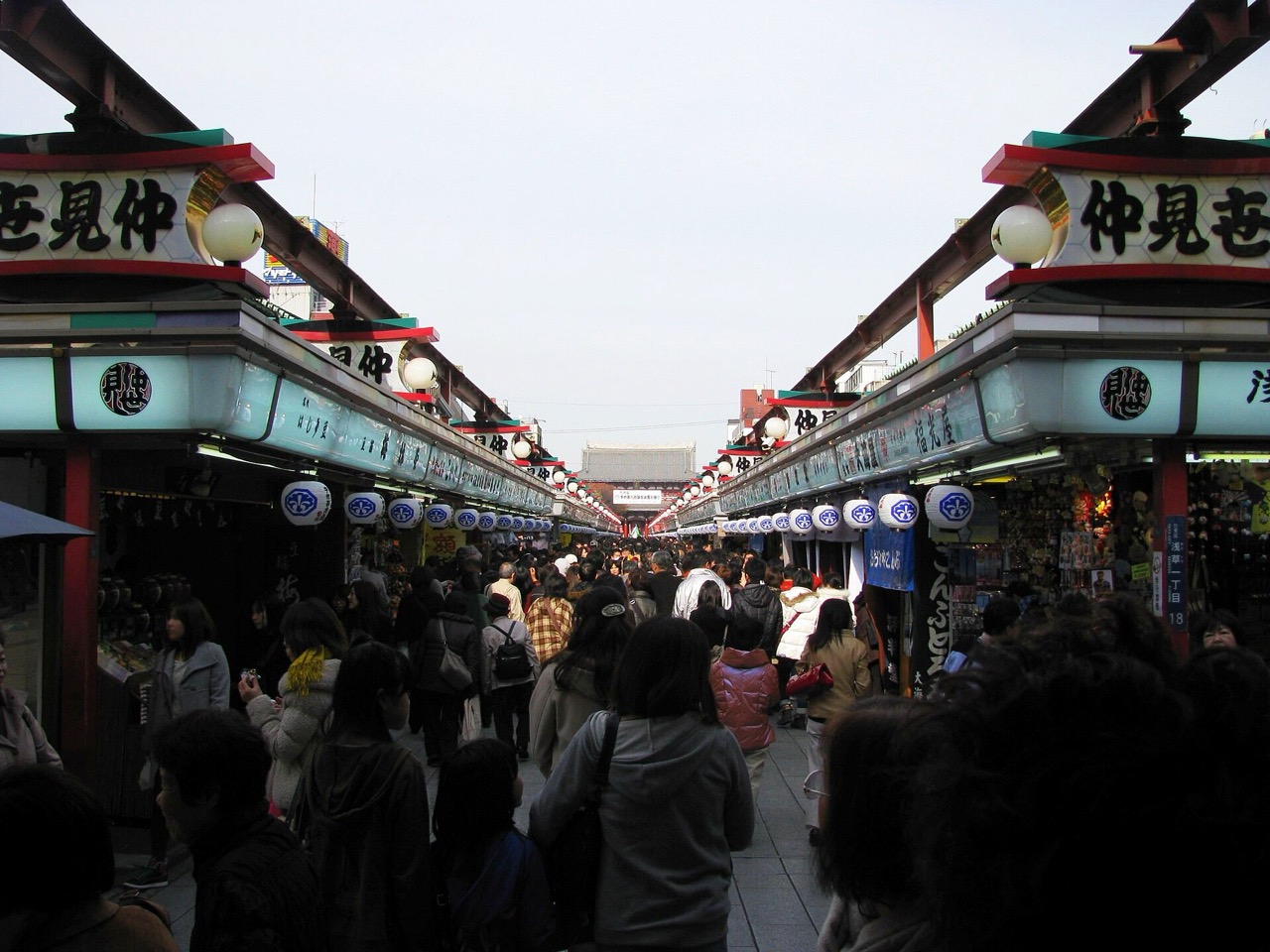
NakamiseThe shopping street leading to Senso-ji. The reason the hotel can skip a restaurant is laid out along here. ⓒAimaimyi · CC BY-SA 3.0
12.Skipping the restaurant also came out of the location. In a neighbourhood with hundreds of places to eat along the temple approach and the lanes behind it, an in-house restaurant is a fight you lose, and sending guests out means no low-turnover seats to keep alive. Instead they put induction hobs in the lounge. For every hour a guest spends cooking what they bought, that guest is spending money in the local shops.
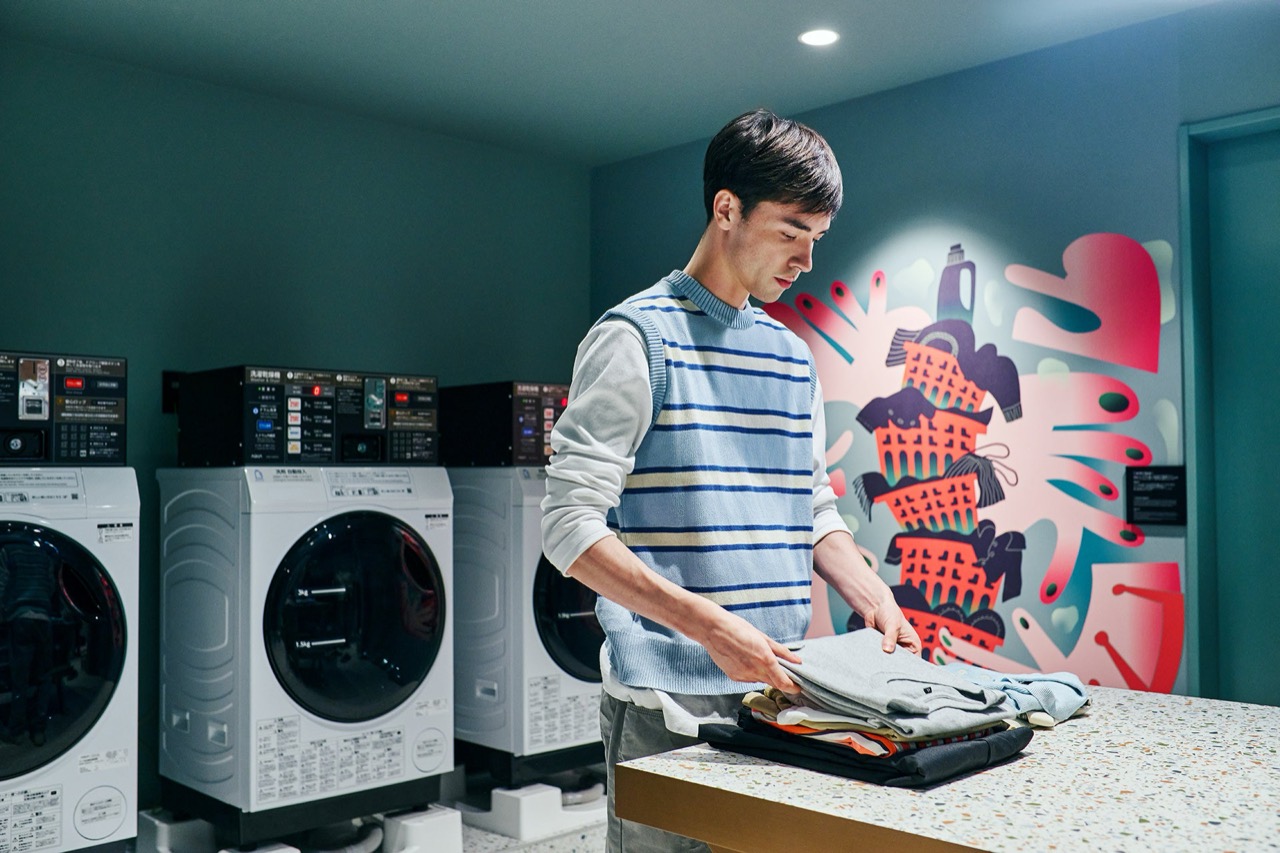
Laundry roomSome rooms have a washer-dryer inside. For a guest staying more than four nights that matters more than breakfast. ⓒORIX Hotel Management
13.The evidence behind the brand is one hotel the company ran for fifteen years. HUNDRED STAY Tokyo Shinjuku, 106 rooms beside Okubo Station, sold kitchen-equipped long-stay rooms from 2010 and, on groups of three or more from Europe, North America and Australia, the company says it held occupancy above 85%. That hotel closed on August 31, 2025. The building was let go, and ten months later the numbers it produced were used to build again somewhere else.
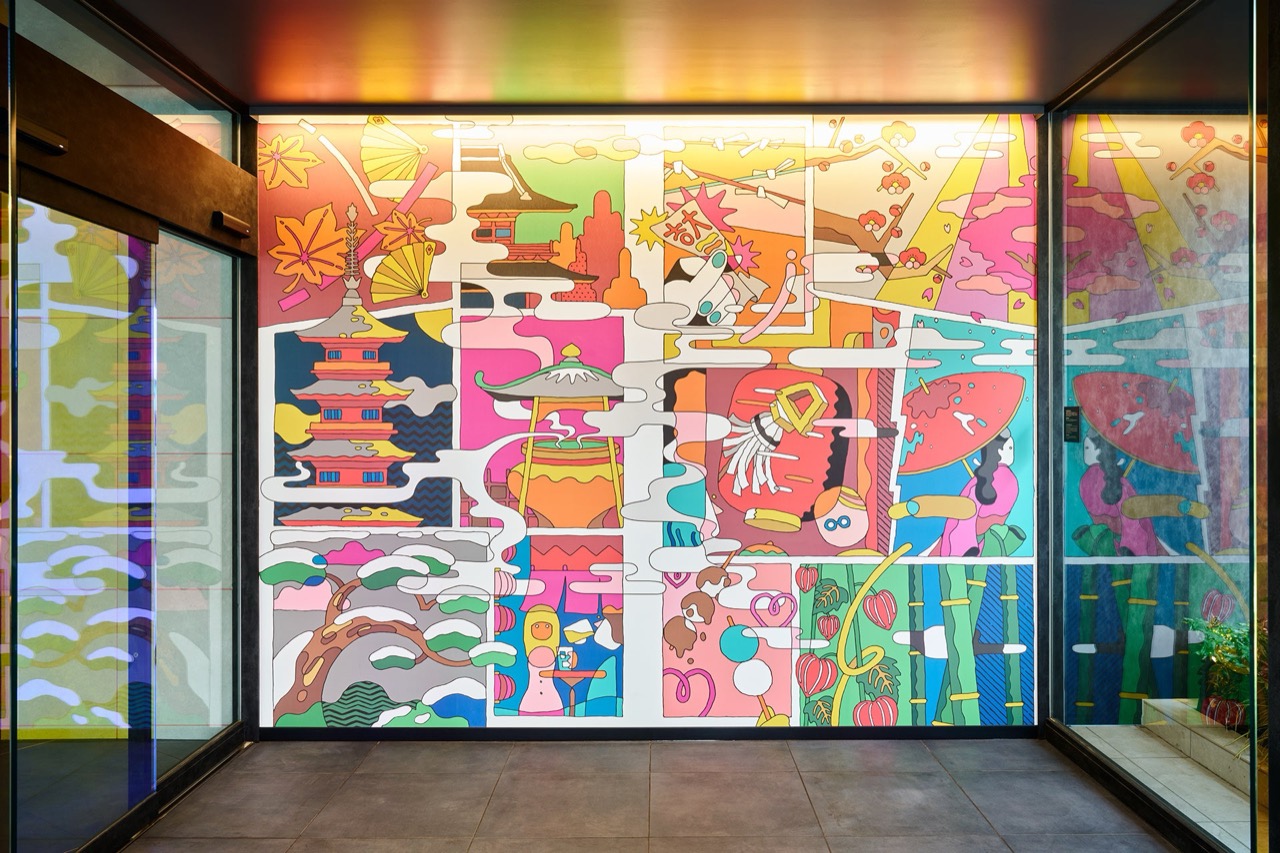
Wall artIn-house artwork drawn from Tokyo and Asakusa. Along with the two concept rooms, it carries the hotel's story. ⓒORIX Hotel Management
14.ORIX Hotels currently runs 28 properties and 6,717 rooms, with six directly operated brands including the luxury Karaku and the upscale Suginoi Hotel. CROSS Suites is the third in the midscale tier, and the company has set a target of 10,000 rooms within ten years. President Takaaki Nitanai says they will use renovation and conversion, not only new build. With construction costs up, the premise behind this first property is that buying an empty hotel is cheaper.
Senso-ji at nightWhat comes after the daytime crowds leave is the hour that belongs to people staying here. ⓒKakidai · CC BY-SA 3.0
15.The risks come with it. Ninety per cent through overseas OTAs means commission, but it also means a currency swing or a change in flight capacity in one country lands directly on this hotel, and a cancelled three or four-night booking costs more nights than a one-night one. On top of that, new hotels keep arriving in this neighbourhood. Building the rooms large is hard to undo: if rates slide, there is no way to turn 78 back into a bigger number.
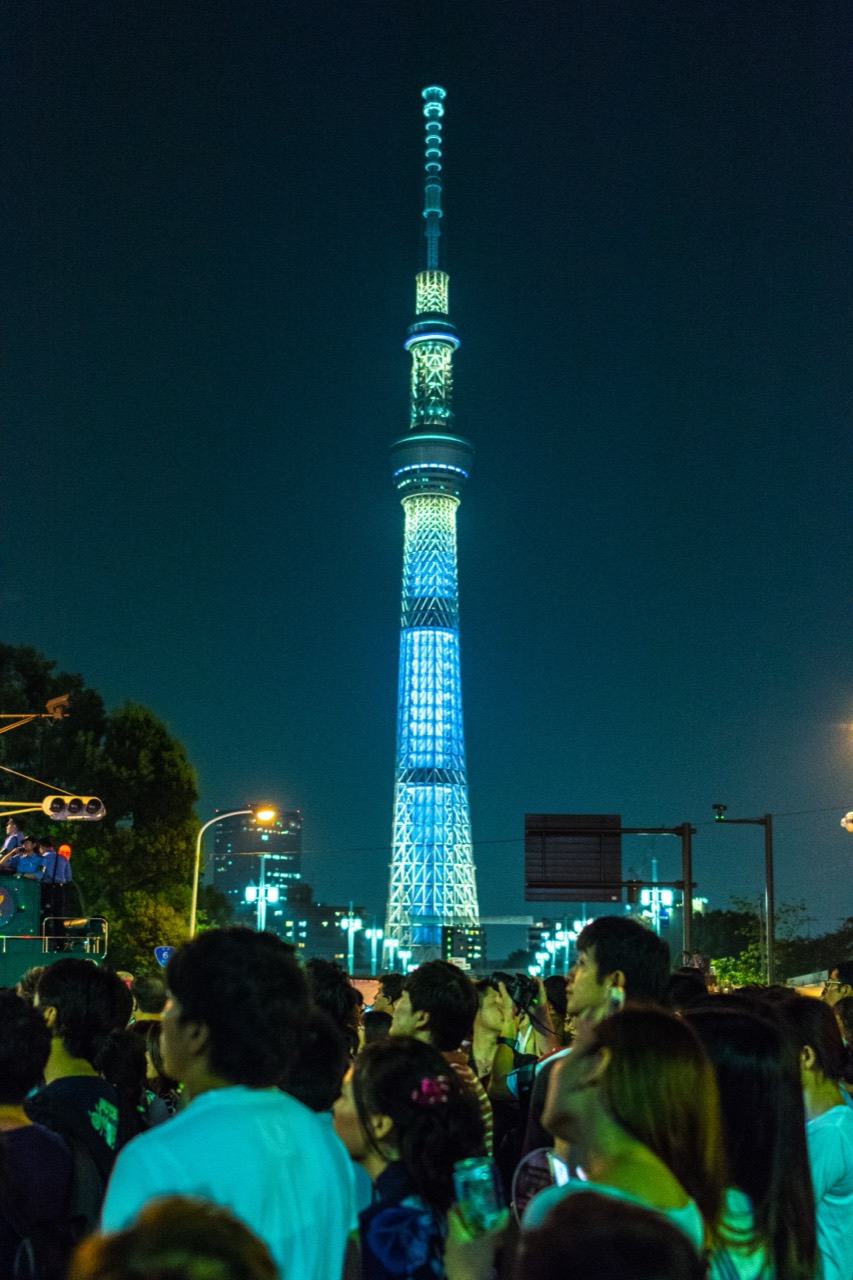
Across the SumidaCross the river from Asakusa and the Skytree is right there. One of the reasons people stay three nights or more in this neighbourhood. ⓒYoshikazu TAKADA · CC BY 2.0
A 190-room business hotel building that closed when its lease ended has been bought, cut to 78 rooms and enlarged to between 25㎡ and 63㎡, and has opened in Asakusa. Room revenue works out roughly 280 million yen a year lower, but the rooms cleaned each day fall from 161 to 19 and there is no breakfast restaurant at all, so the difference is recovered on the cost side. Anyone trying this in Korea hits the kitchen first. The Public Health Control Act splits lodging into a general category without cooking facilities and a residential category with them, so the moment a fitted kitchen goes into a guest room the business crosses into the residential lodging category. Residential lodging facilities carry a different use classification under the Building Act, which changes the land you may build on, the parking count and the ventilation-window standard, and since 2021 there are additional rules against living in them without a lodging business registration. Cutting the room count and making rooms bigger takes a day on the drawings. Putting one sink into those rooms changes the building's legal use.