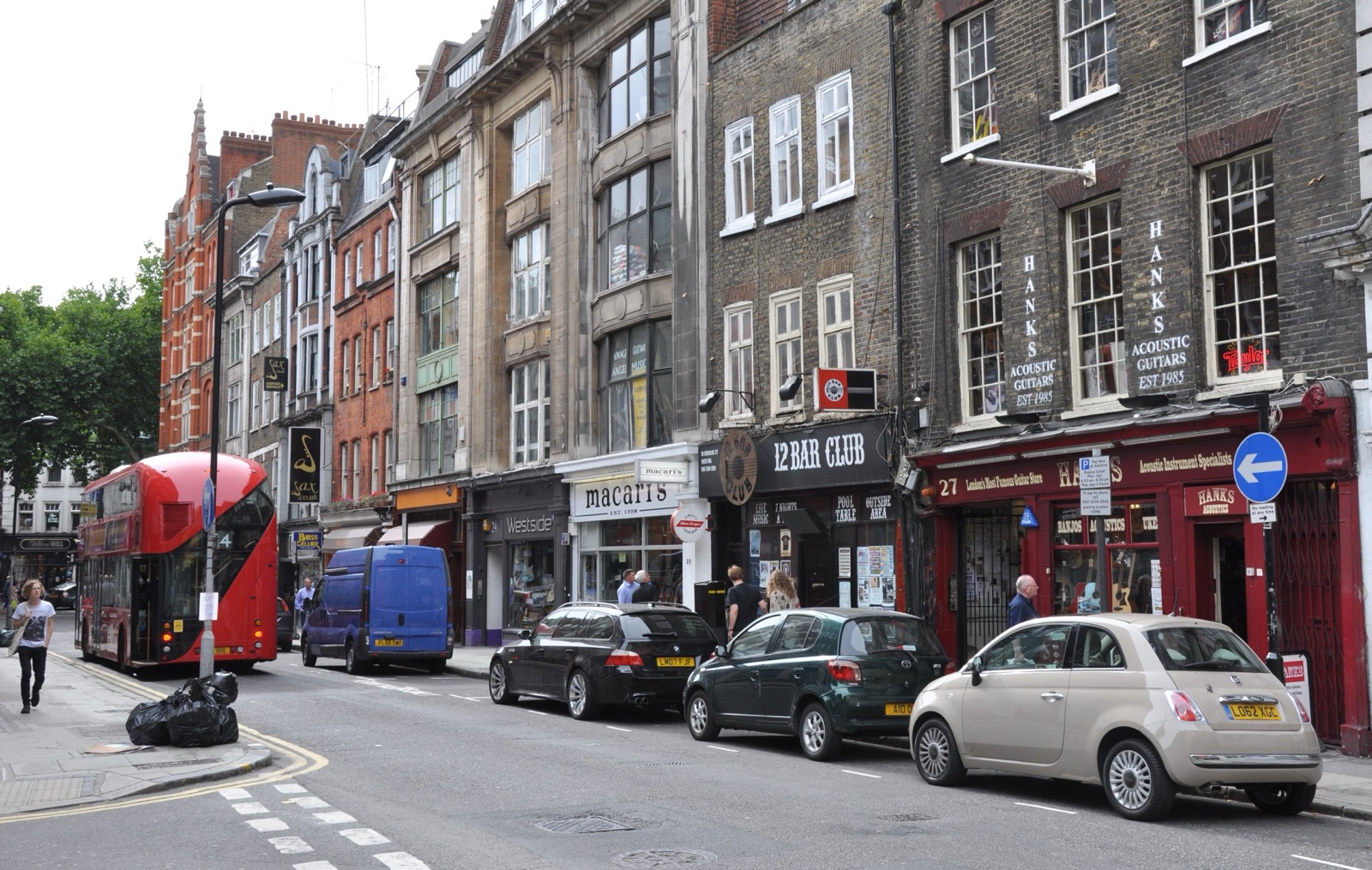
Denmark StreetPhotographed in 2013, before the redevelopment works began. The signage alone tells you what this street lived on. ⓒmorebyless · CC BY 2.0
Daily Hotel
Fifty-five rooms across sixteen buildings, and a £6.5m loss in one year
2026.09.10
A hundred-metre lane in central London. A hotel that spread its rooms across sixteen old buildings closed last month, and a month later the next operator was named. A record company.
1.On 4 August 2026, Chateau Denmark stopped trading on Denmark Street in London's Soho. It had opened in April 2022, so it lasted four years and four months. Fifty-five rooms and apartments in all, spread across sixteen buildings.
2.The successor was announced a month later. UMusic Hospitality & Lifestyle (UMHL), the lodging arm of Universal Music Group (UMG), is teaming up with Outernet London to open UMusic Hotel Denmark Street in the same cluster of buildings. Opening is set for the fourth quarter of this year. The operator files it as its first hotel in the UK and its second in Europe.
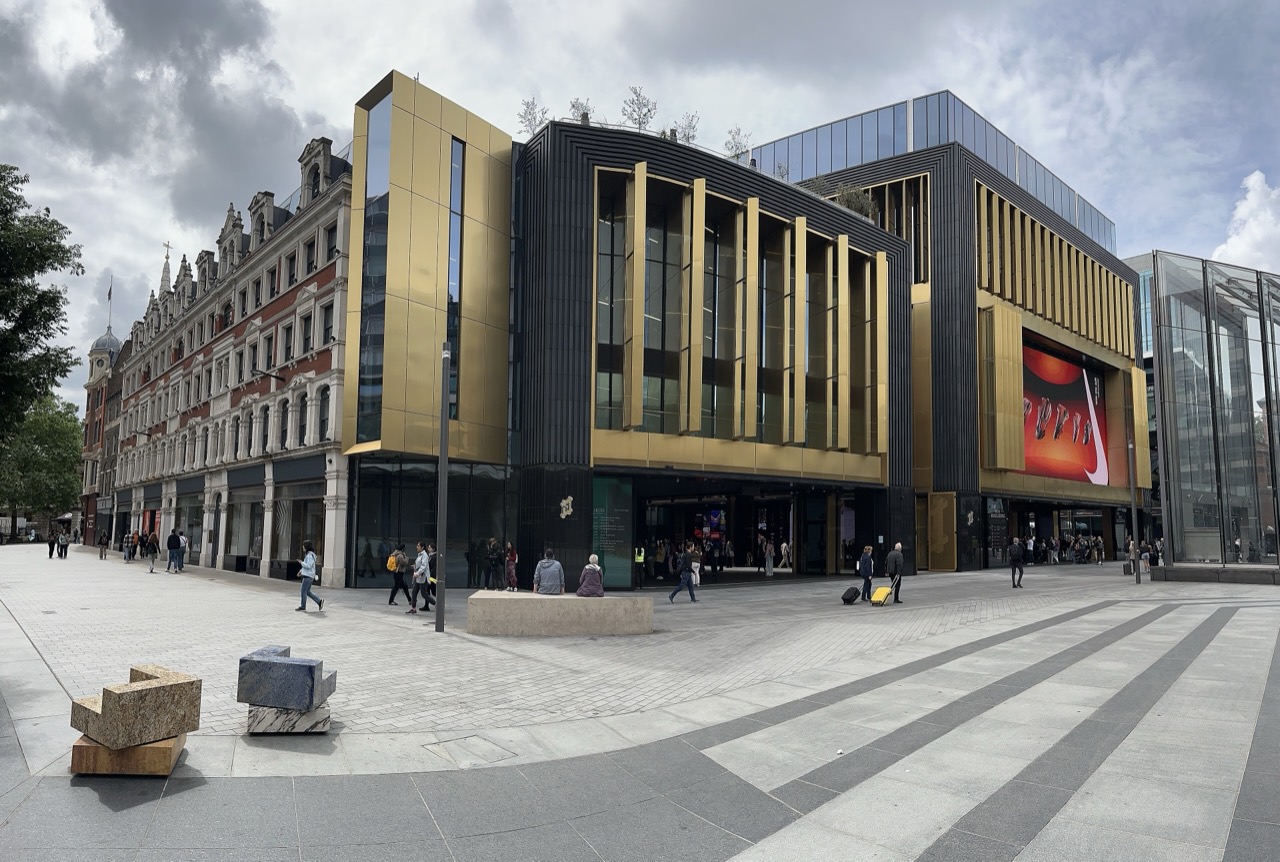
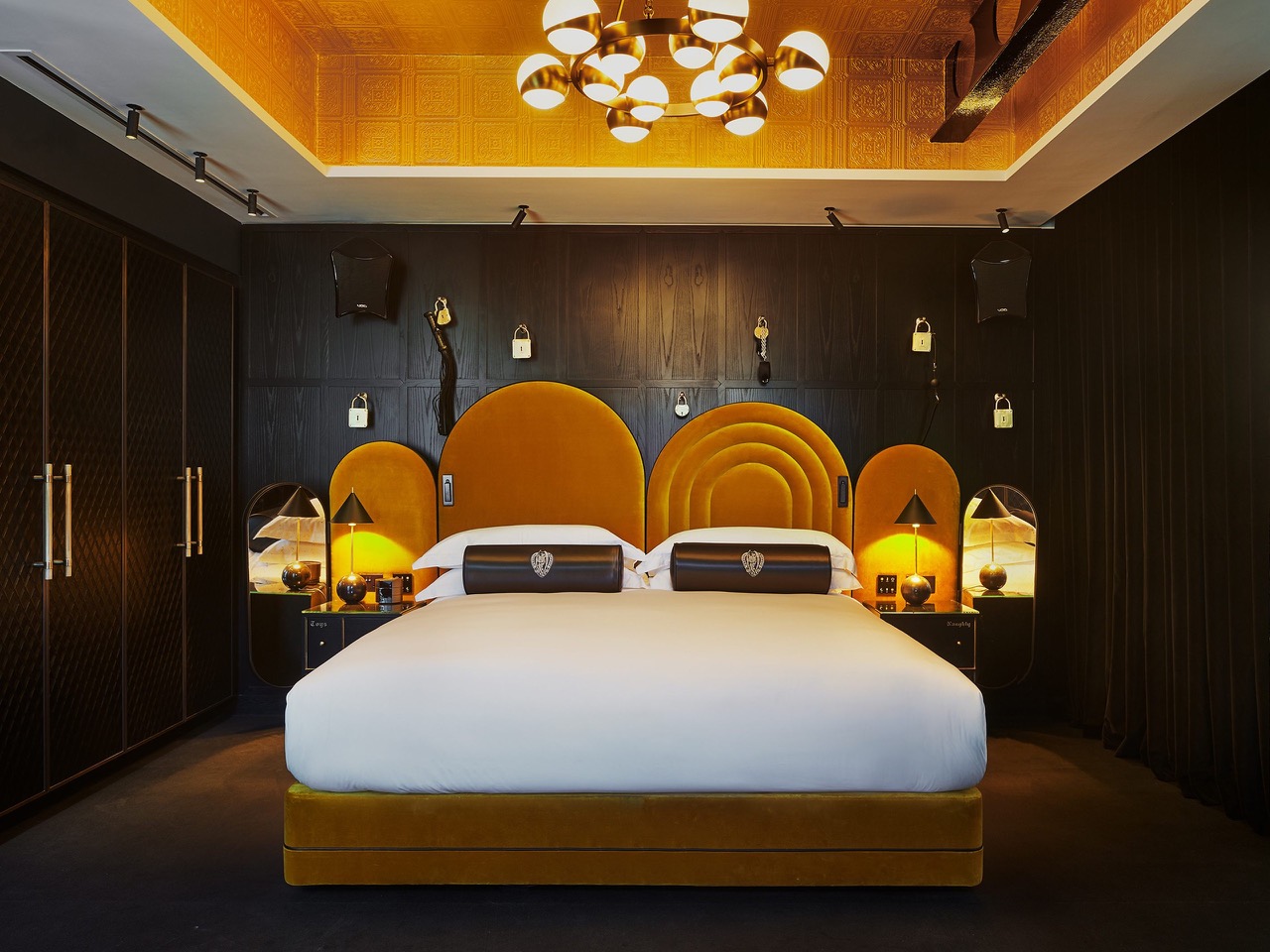
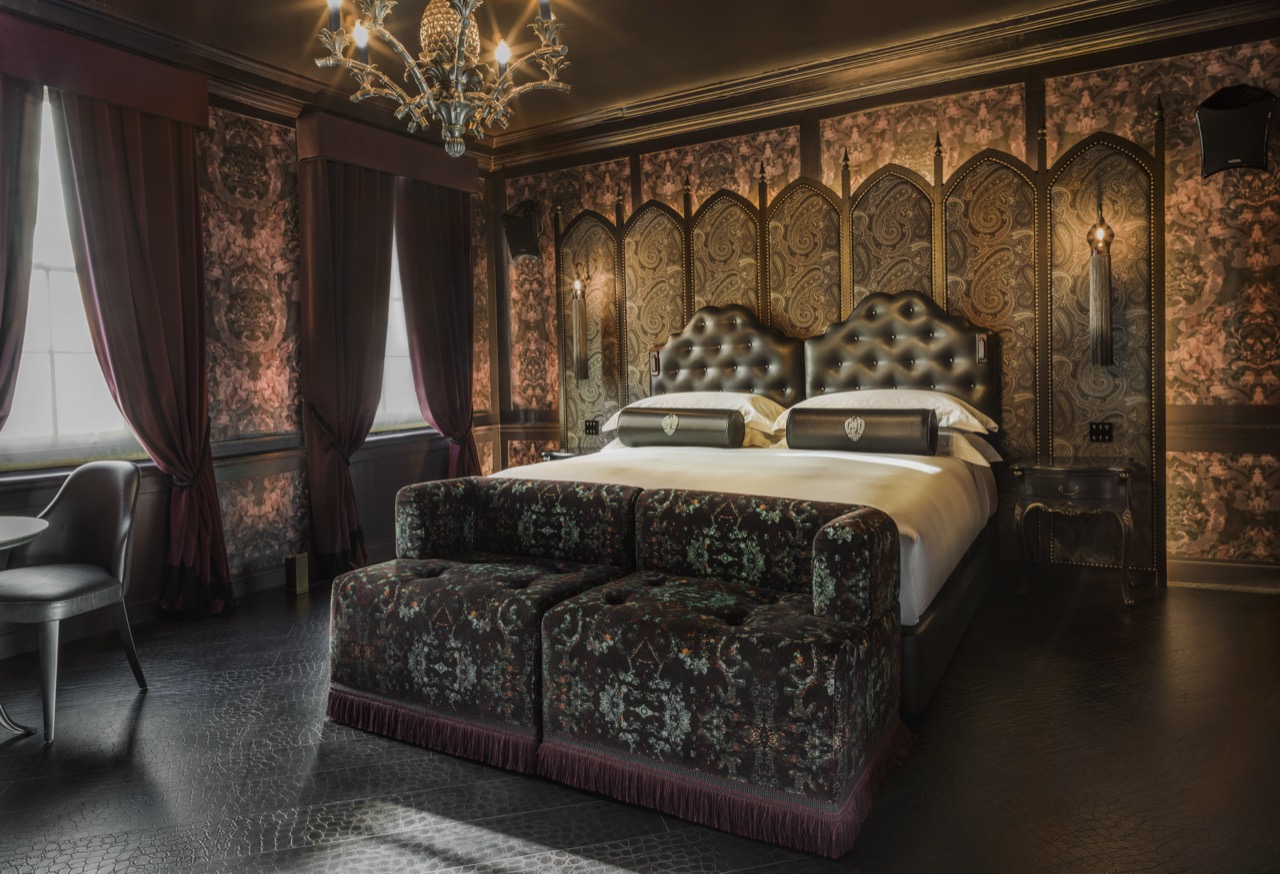
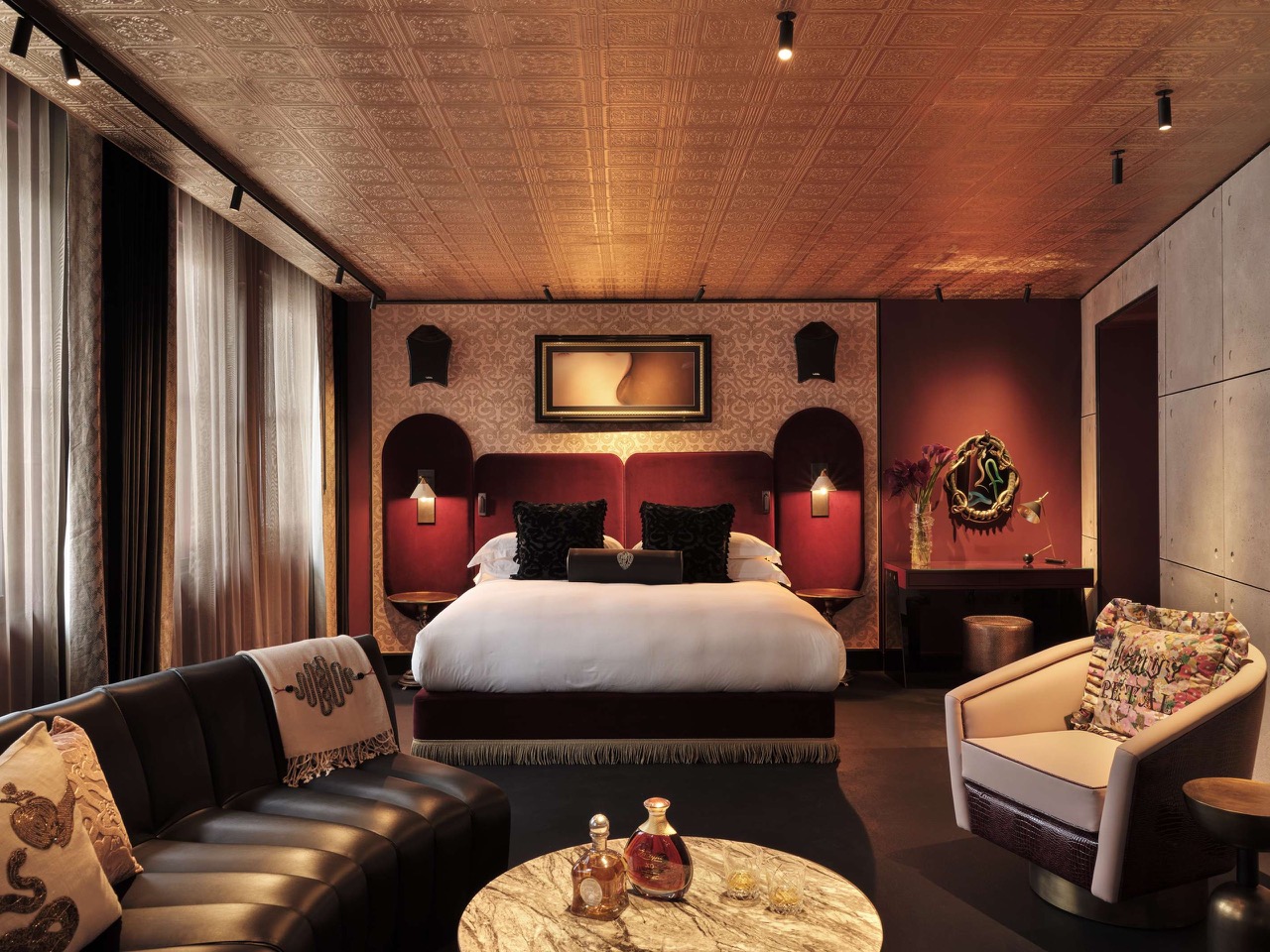
The Now BuildingThe centrepiece of Outernet London. Some of the hotel's rooms sat inside this building. ⓒMatt Brown · CC BY 2.0
3.Denmark Street is a lane of a little over a hundred metres linking Charing Cross Road and St Giles High Street. Sheet-music publishers began clustering here around 1911, which earned it the name Tin Pan Alley, and the ground floors are still mostly guitar shops.
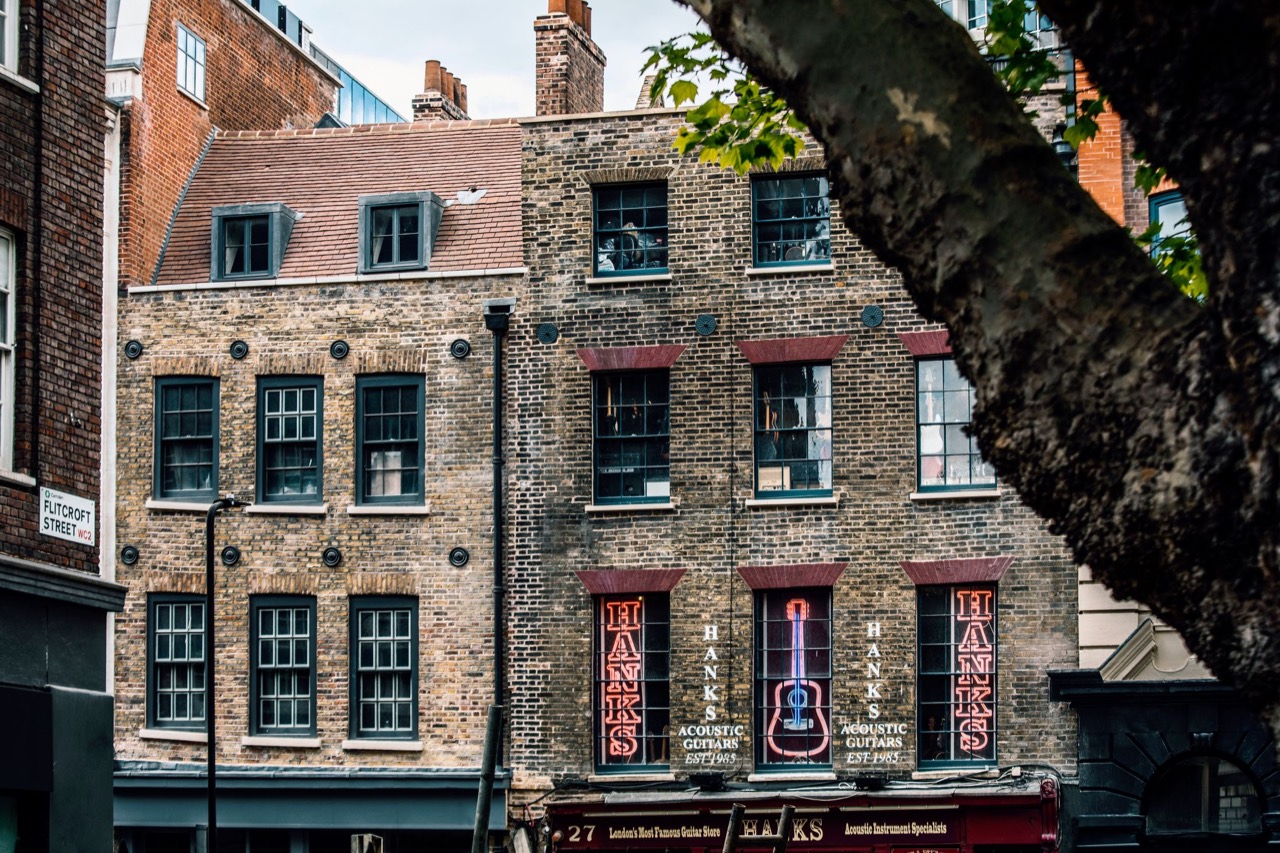
No. 27A guitar shop trading since 1985. The brick house on the left is one of the surviving listed terraces. ⓒChateau Denmark
4.The street earned its name in the recording studios. The Rolling Stones cut their first album at Regent Sound Studios, which opened in 1961, and two members of the Sex Pistols lived in a room above No. 6. Malcolm McLaren paid £1,000 for the lease on that room.
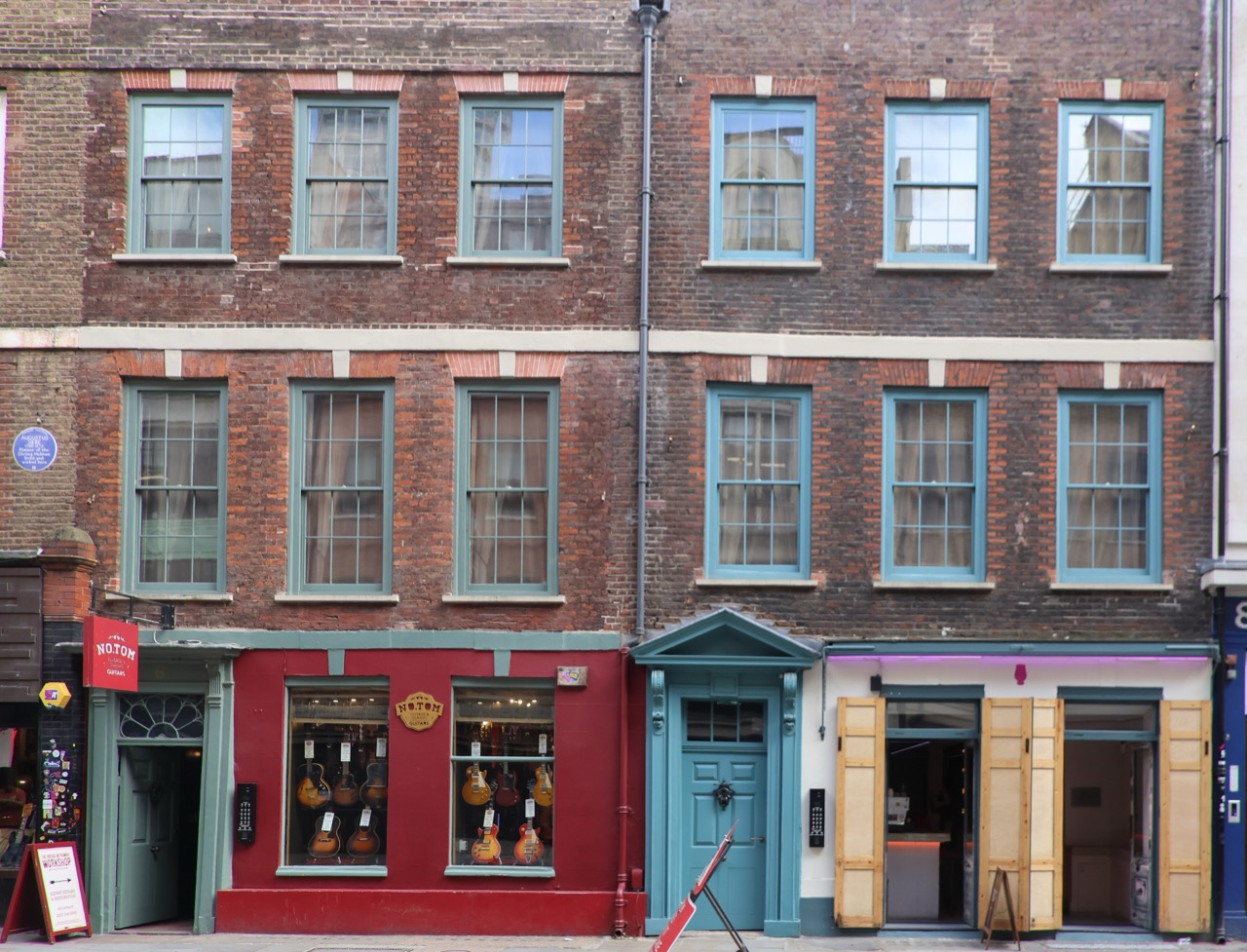
Nos. 6 and 7Terraced houses built in the 1680s. They carry Grade II* status, held by only 5.5 per cent of England's listed buildings. ⓒTony Hisgett · CC BY 2.0
5.Eight terraced houses on the street are listed, and Nos. 6 and 7 sit a notch higher at Grade II*. When the area was rebuilt, the council attached a condition that the restored buildings stay in music-industry use. With the use written into the consent, these ground floors will keep filling with instruments and music.
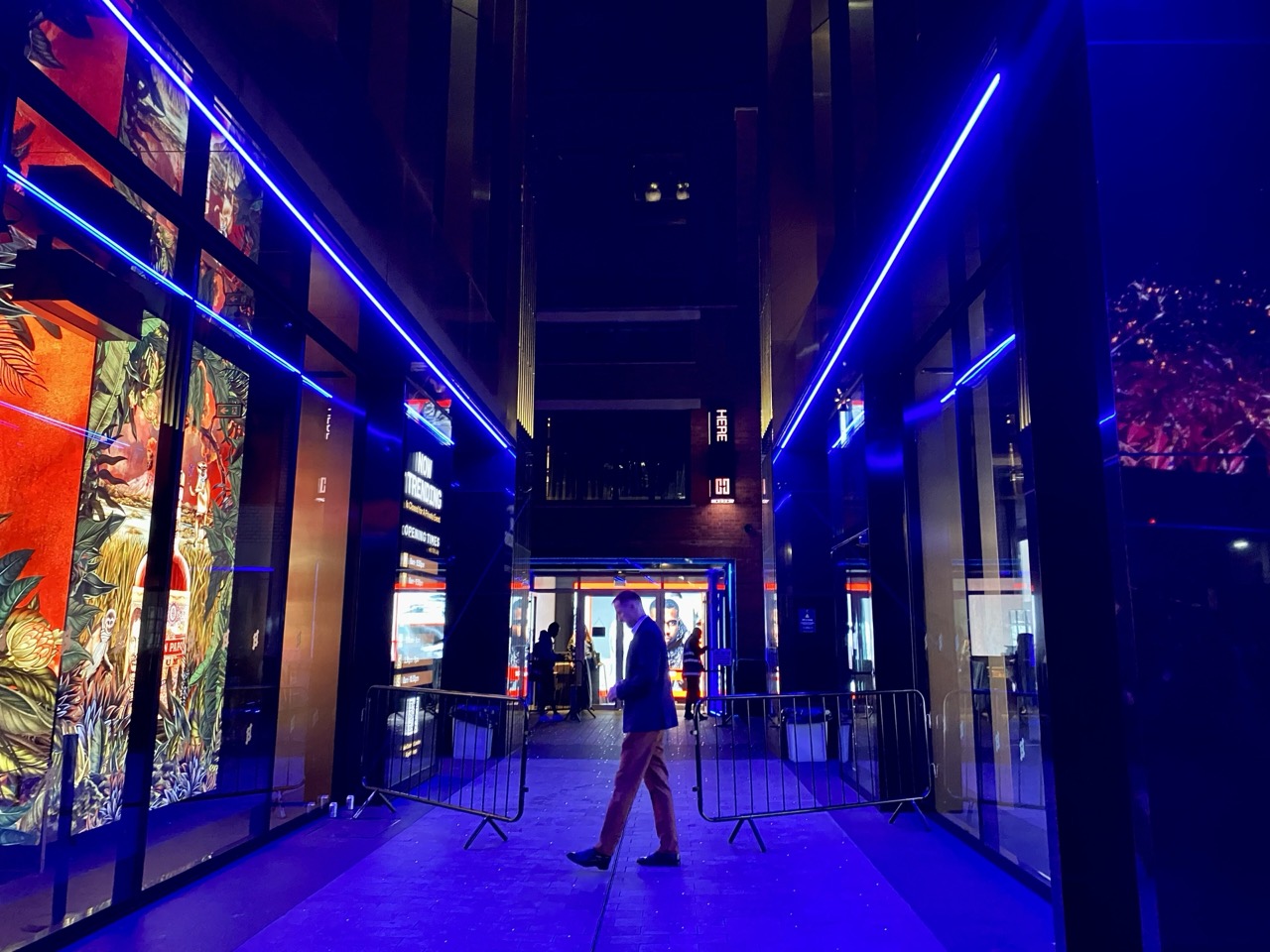
6.Chateau Denmark's rooms came in two kinds. One was the Session Rooms, inside The Now Building, reached from the Denmark Place passage. The other was apartments, scattered through the listed terraces and a mews house. Fifty-five rooms across sixteen buildings works out at 3.4 apiece.
A Session RoomMustard velvet arches against blackened timber. The ceiling is pressed gold tile. ⓒTaylor Howes
7.The rooms are dark. Velvet arches form the headboards against scorched timber walls, and pressed metal tiles cover the ceilings. Some rooms carry padlocks and keys mounted on the wall beside the bed, and paisley paper runs across every surface. Everything within reach has one more layer of finish on it. Rooms like this take time to clean and to repair.
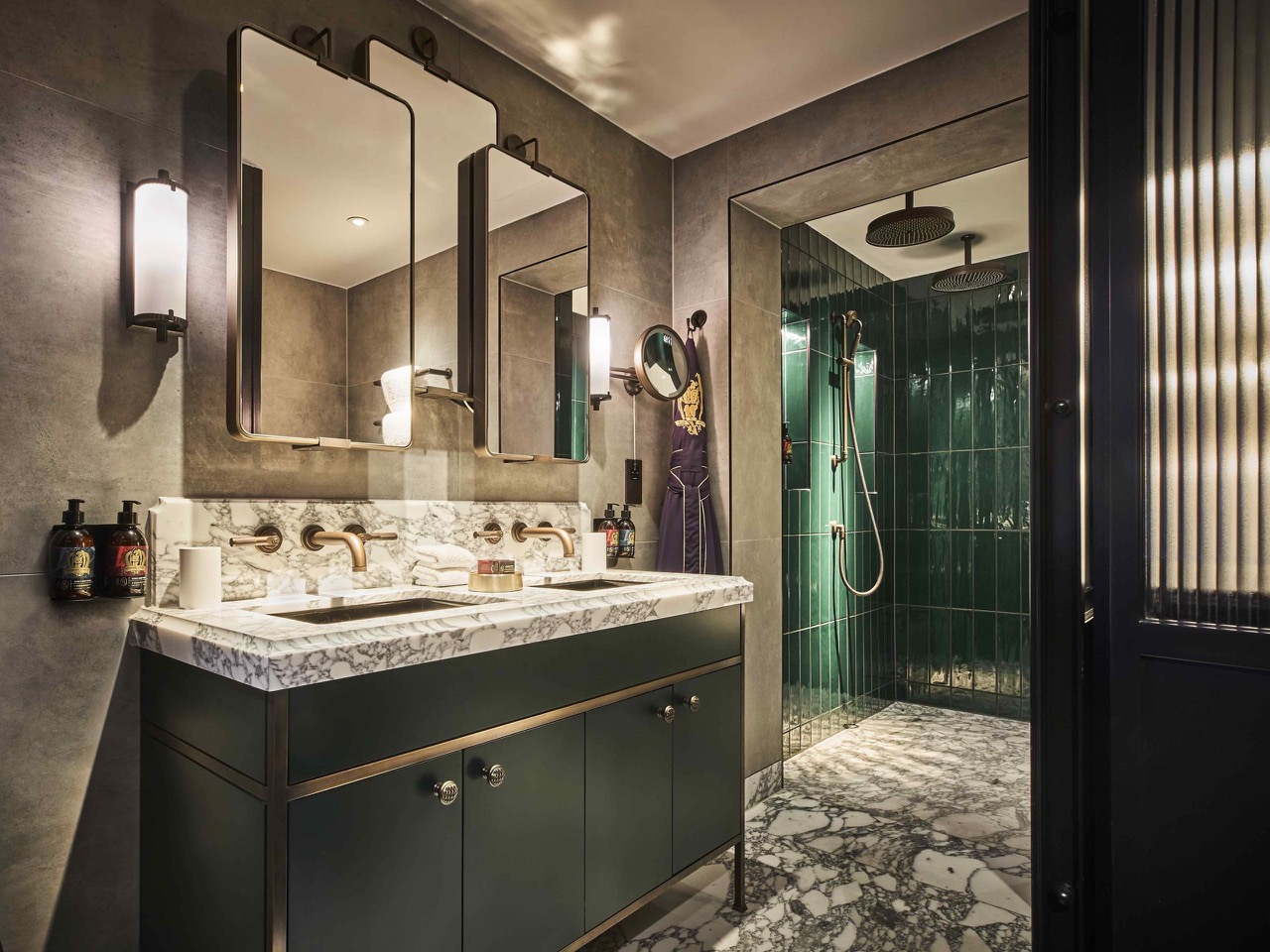
A room the wallpaper swallowedPaisley wraps the entire wall. The two sofas at the foot of the bed use fabric from the same family. ⓒChateau DenmarkBathroomTwo basins, two showerheads. Marble and brass throughout. ⓒTaylor Howes
8.In the financial year ended December 2023, the hotel lost £6.5m before tax. Divide that by 55 rooms and each room burned about £118,000 over the year.
Two numbers side by sideSelling every room would not have closed this gap.
9.London hotels averaged £202 a night at 77.4 per cent occupancy this April. Put an upper-boutique rate of £300 against 70 per cent occupancy and a year of room revenue comes to roughly £4.2m. No revenue figure was published, so this is an estimate built on market norms, and the loss is larger than the estimate.
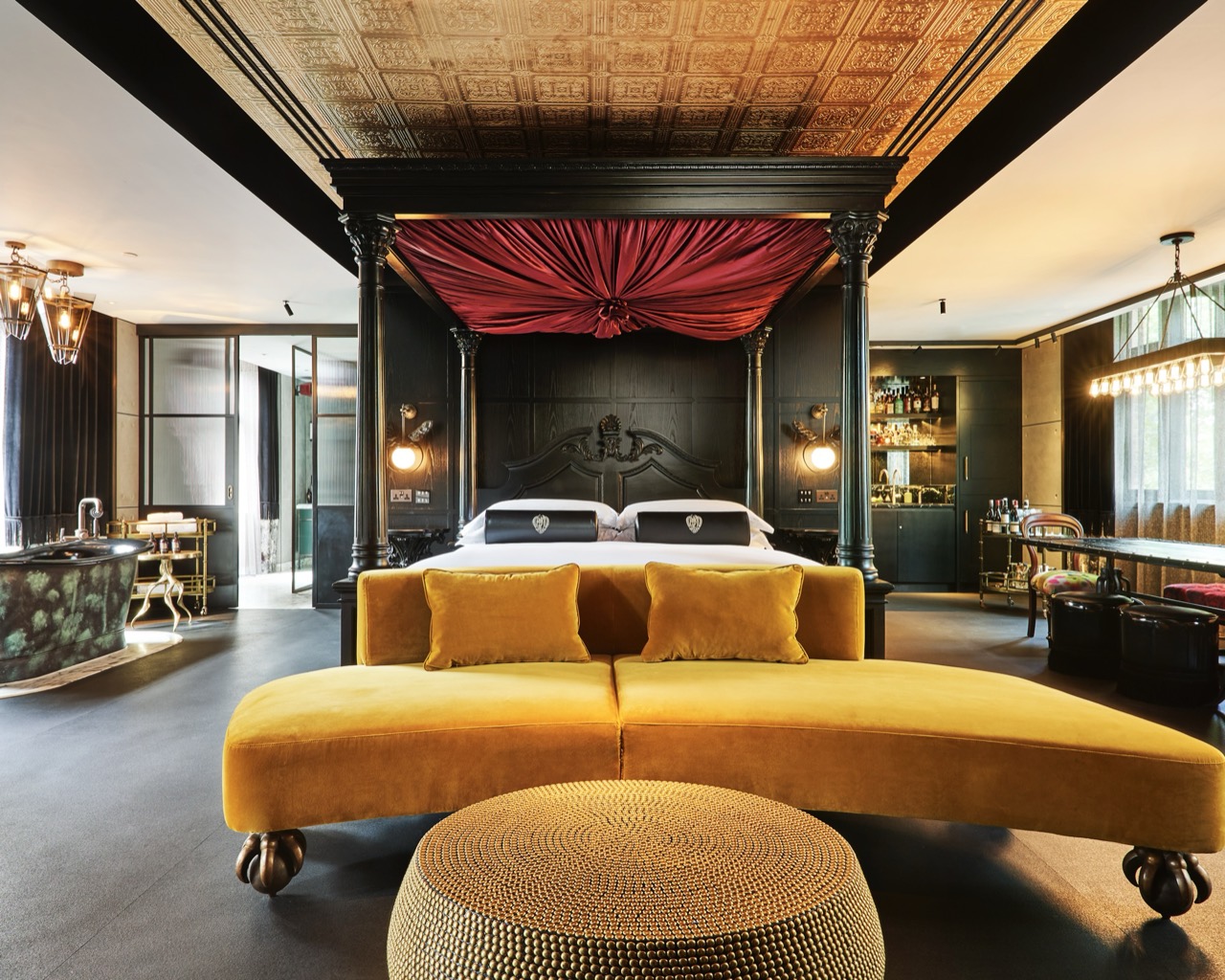
An apartmentBath, minibar and a long worktop in one space. Rooms like this sat inside the listed terraces. ⓒChateau Denmark
10.Fifty-five rooms are scattered through sixteen buildings on a hundred-metre lane. Housekeeping trolleys go up and down stairs and across the street, and listed status rules out cutting in a new lift. Can one front desk hold sixteen buildings overnight? Labour here can never match a hotel that stacks 55 rooms in a single building.
A room with a sitting areaA sofa and a drinks table set apart from the bed. The wall on the right is left as concrete panel. ⓒTaylor Howes
11.UMG is not buying these buildings. UMHL takes the operation and the programming, while ownership stays with Outernet. The venture was set up in October 2020 with the investment group Dakia U-Ventures, and UMG does not break out hospitality in its results.
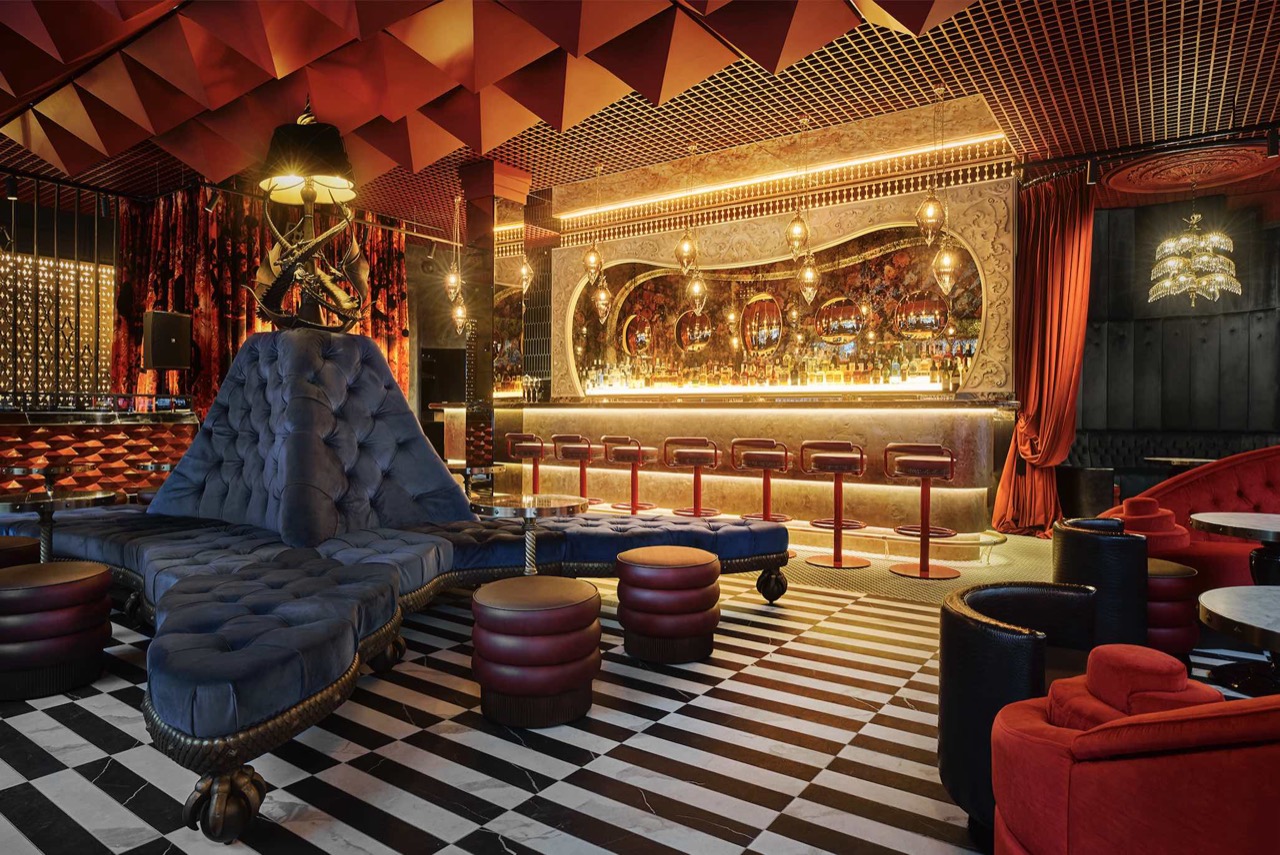
12.The deal covers more than rooms. Below ground sits Outernet Live, a 2,000-capacity venue, and on the lane stands The Lower Third, a 250-capacity room that took over the old 12 Bar Club site. UMHL takes on running and programming that smaller venue too. Money a graded hotel would have made from ballrooms and large restaurants is meant to arrive here through tickets and bars.
Denmark PlaceThe entrance to the underground venue is at the far end. Part of the hotel was reached through this passage. ⓒNo Swan So Fine · CC BY-SA 4.0
13.The Now Building is screen from wall to ceiling. More than 2,100 square metres of 16K display holds people in place, and nobody pays to walk in. The operator counts 85,000 visitors a week, which puts the year in the four-million range. Fifty-five hotel rooms sat on top of that crowd.
A corridor turned screenWalls and ceiling are all display. With no admission charge, people simply walk in. ⓒMatt Brown · CC BY 2.0The block, taken apartThe shortest bar is the room count, and that is the premise of the business.
14.Why would a record company sell beds? In a January staff memo, chairman Lucian Grainge put superfan business at the top of the list, citing the company's own stores in Tokyo, Madrid, New York and London. Goldman Sachs has sized that market at $4.3bn a year. When what you sell is access rather than a bed, the ceiling on price moves.
The hotel barThe rooms are gone, but this bar and the private room keep trading. ⓒChateau Denmark
15.There is still a distance between what has been announced and what actually runs. The only hotel UMHL operates is the 130-room Madrid property that opened in November 2022, built around the 898-seat Teatro Albéniz. A 57-key Tulum property opens in the first week of December, while 169 rooms in Kansas City and 150 in Austin have yet to break ground.
16.The sixteen buildings stay as they are. The listing constraints, the scattered circulation and the labour cost they create do not change. What changes is who programmes the audience next door. Conditions have got worse if anything: London occupancy in April fell 1.5 points year on year, and the government is moving to let local authorities levy a tourist tax.
Fifty-five rooms were spread across sixteen buildings on a hundred-metre lane of 1680s terraces, and the hotel folded after four years. It lost £6.5m before tax in 2023 alone, roughly £118,000 per room. The next operator is not buying the buildings; it takes the operating rights along with the programming rights to the venues next door. Below ground there are 2,000 seats, 250 more on the lane, and a screen building that some four million people walk through each year for free. Doing the same thing in Korea splits at the licensing stage. A lodging licence under the Public Health Control Act is issued per premises, so floors inside one building can share a lobby and a staircase, but separate buildings each need their own filing. Running several houses from a single front desk is blocked on paper first. Add a registered cultural property or a hanok and the fire and egress standards are recalculated house by house. Put an underground venue in the mix and the building use shifts to assembly, at which point parking counts and escape stairs are sized by audience capacity rather than by room count.