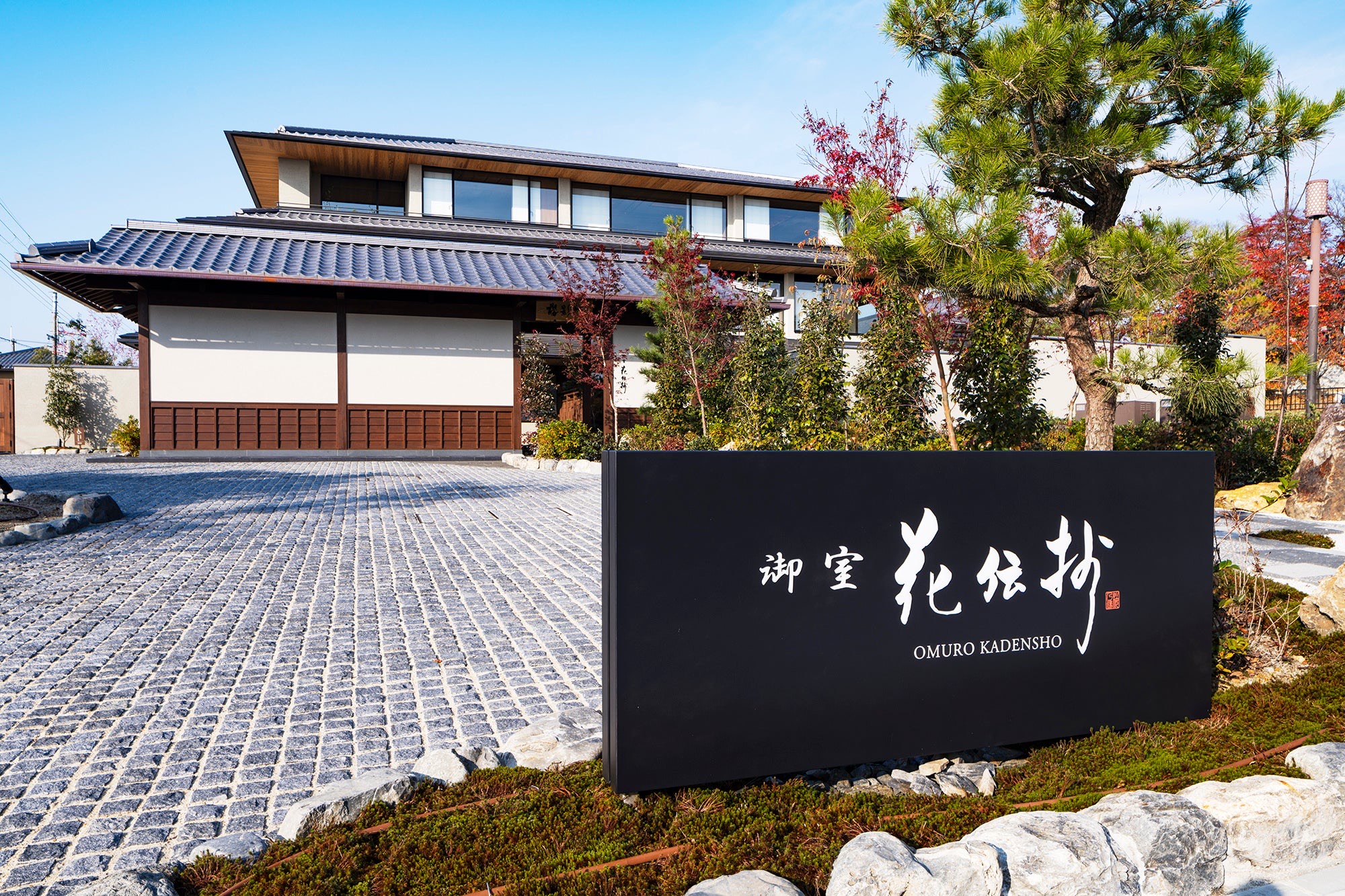
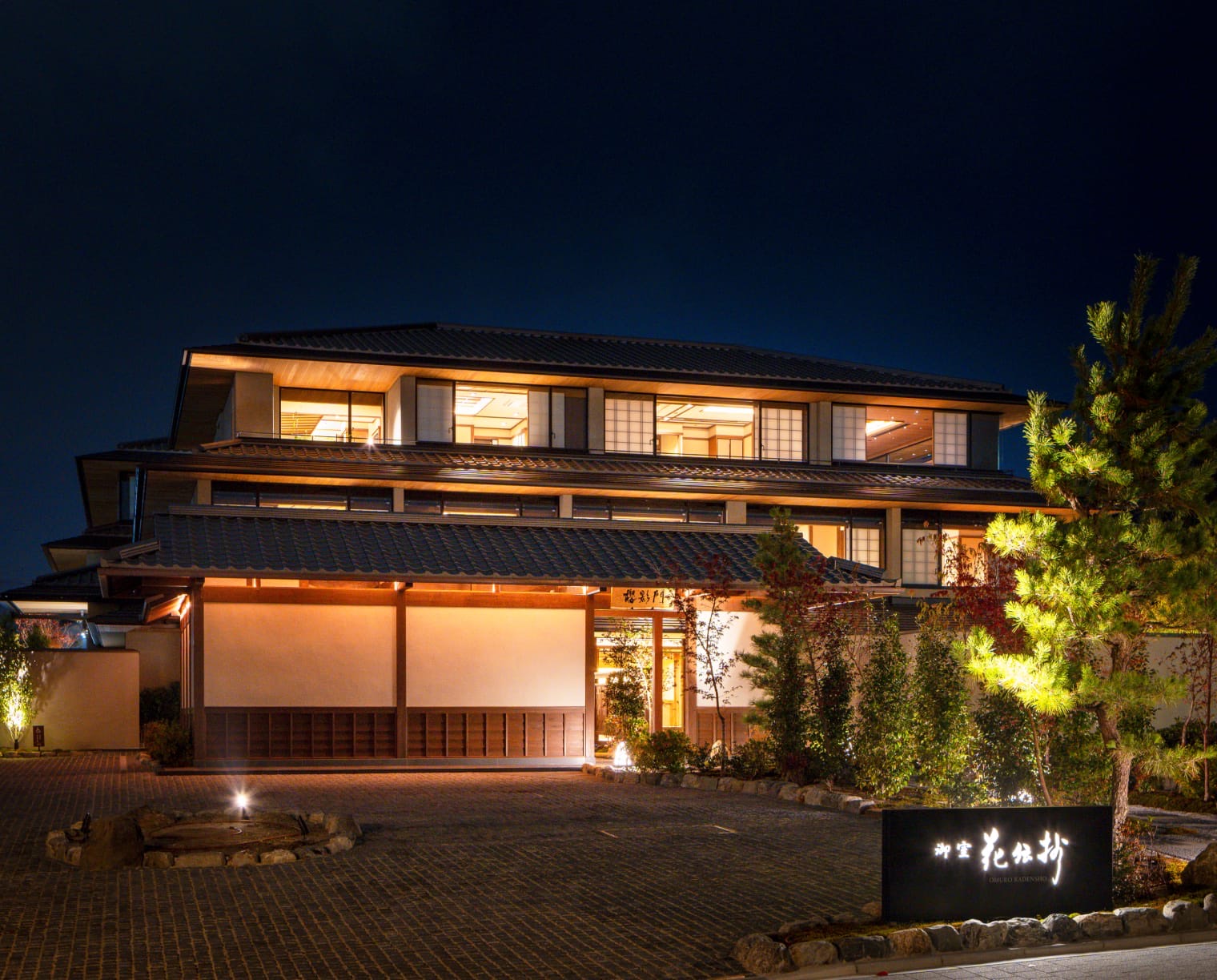
Gravel forecourt and signTiled roofs layered low. The building stands 9.98m tall, just under the site's 10m height limit. ⓒKyoritsu Maintenance
Daily Hotel
They built 67 rooms at twice the residential cap, and made every room over 40㎡
2026.09.23
A ryokan-style hotel has opened on a plot in front of Ninna-ji, a World Heritage temple in Kyoto, that sat empty for more than 20 years. The land is zoned residential, which normally caps a hotel at 3,000㎡ of floor area. Kyoto City lifted the cap and asked for room sizes and 50 years of operation in return.
1.Omuro, Ukyo Ward, Kyoto. On a 3,867㎡ plot facing the Niomon, the main gate of Ninna-ji, Kyoto Omuro Kadensho soft-opened on May 24 and officially opened on June 21. It has three floors above ground and one below, 67 rooms, and sits a two-minute walk from Omuro-Ninnaji Station on the Randen line.
2.The builder and operator is Kyoritsu Maintenance, a company that grew on student dormitories and the Dormy Inn business hotel chain, with a separate resort division running its onsen ryokan-style hotels. This is the third Kadensho, after Arashiyama and Umekoji. The land had been empty for over 20 years. Earlier plans for a gas station and a convenience store were reportedly blocked by residents and the temple.
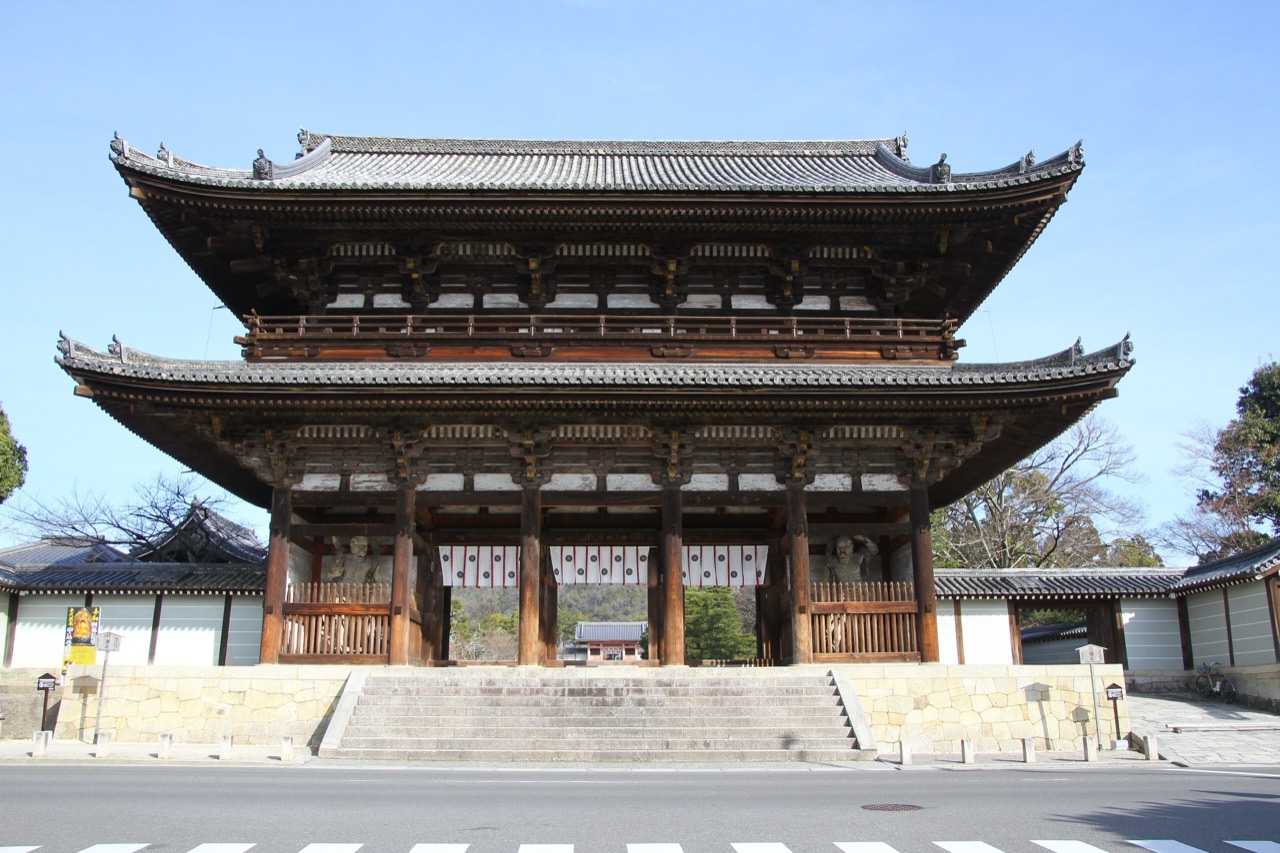
Ninna-ji NiomonThe hotel faces this gate across a single road. Ninna-ji was inscribed as a World Heritage site in 1994 along with other Kyoto temples. ⓒHyppolyte de Saint-Rambert, CC BY-SA 4.0 / Wikimedia Commons
3.Zoning was the obstacle. Most of the site lies in a Category 1 Residential Zone, where hotels are allowed up to 3,000㎡ of floor area, and this building has 5,819㎡. It needed a special permit under Article 48 of the Building Standards Act, and this was the first project to use Kyoto City's program for attracting high-quality lodging facilities. The city selected it in January 2022.
The price of exceeding the capFloor area came close to double the limit, but the operator committed to room sizes and 50 years of operation, and kept the height under the local limit.
4.The program trades scale for grade. The conditions: include suites, make every room at least 40㎡, and provide facilities such as a restaurant, bar and spa. So the smallest of the 67 rooms is 40㎡, the largest reaches 87.69㎡, and there are 22 room types. Divide floor area by rooms and each key carries 87㎡. A business hotel typically runs about 30㎡ per key, so this is nearly three times as much.
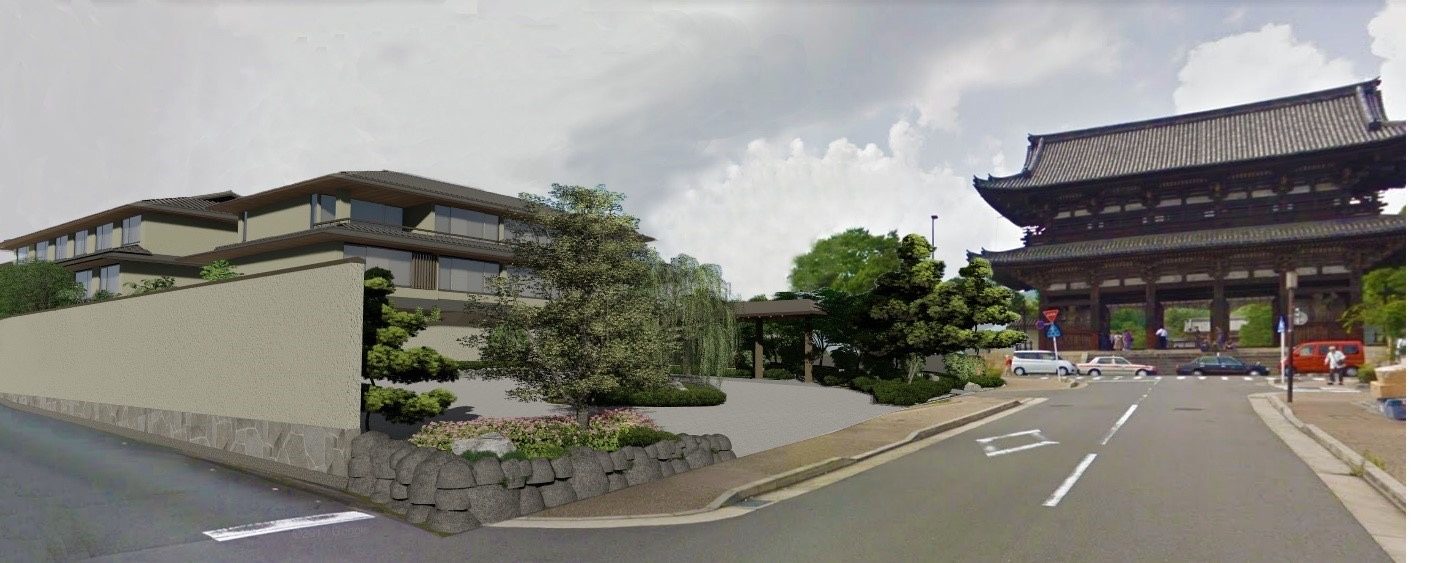
Rendering from the planning stageThe hotel wall and Ninna-ji's Niomon stand on either side of a single road. The building sits back behind the wall. ⓒKyoritsu Maintenance / Kyoto City
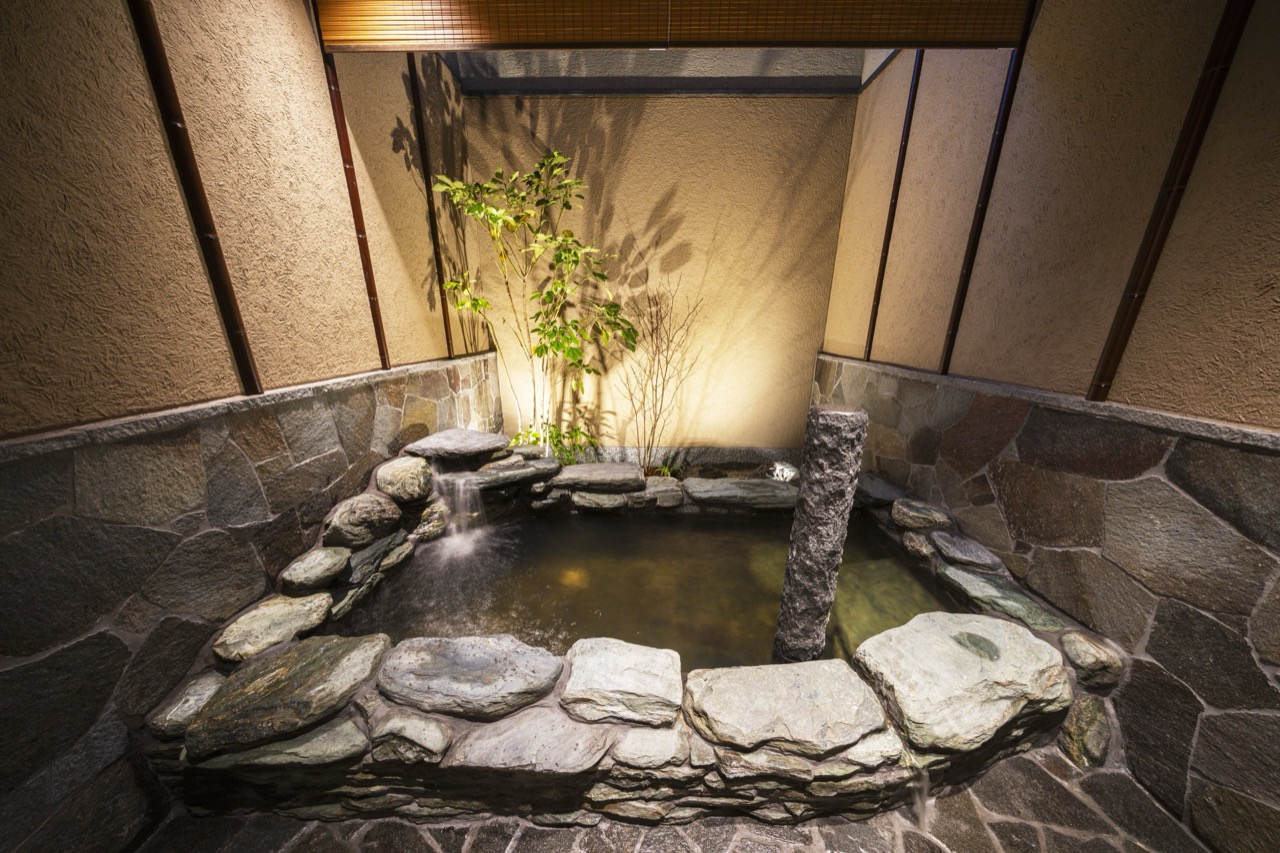
5.Height stops at 9.98m. With a 10m height limit on the site, the building was pressed down to three floors, and tiled roofs step down at each level so that from the street it reads as a row of two-storey houses. Every room has tatami and is furnished with textiles, ceramics and timber made in Kyoto. Some rooms offer in-room dining and some have stone baths.
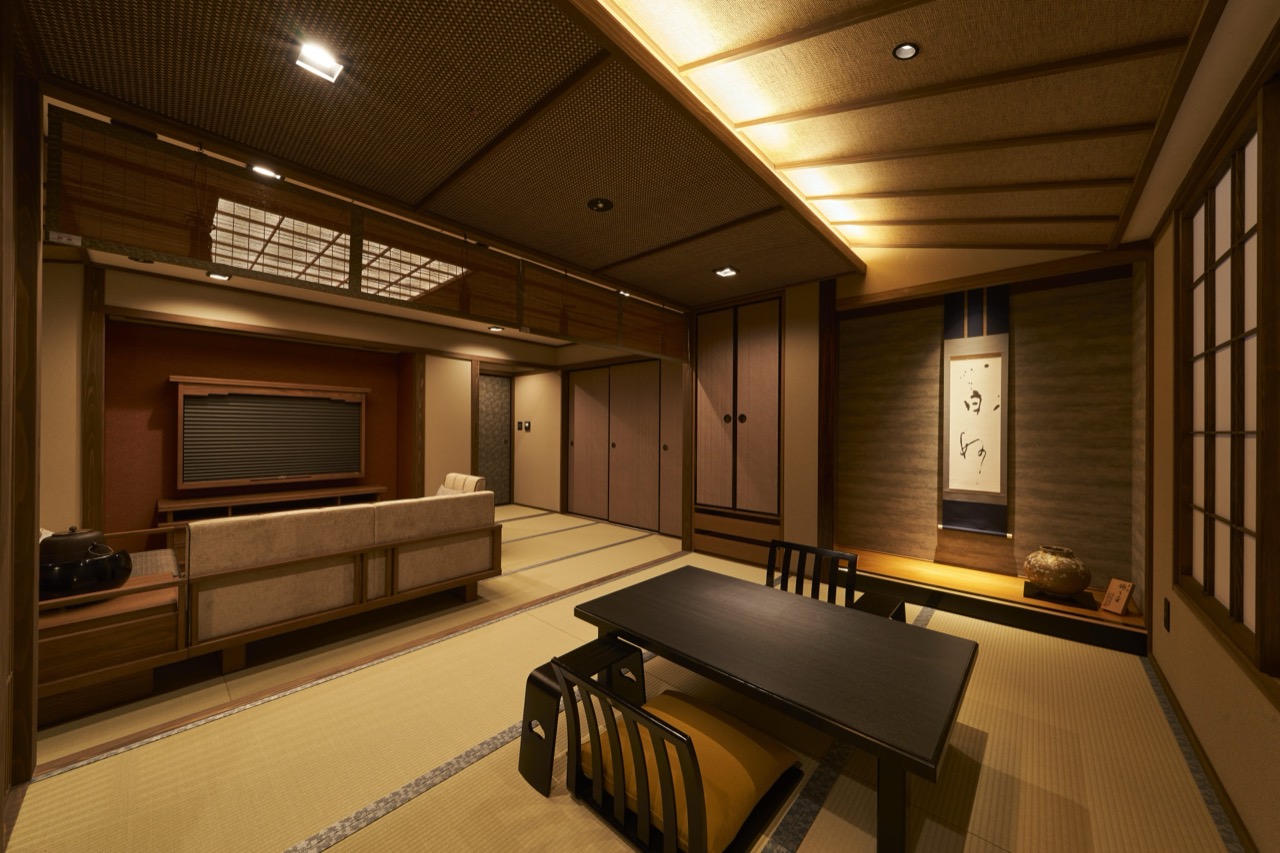
Height from the streetA three-storey building, with its tiled roof split into two tiers. ⓒKyoritsu Maintenance / Kyoto CityTatami roomAll 67 rooms are tatami, and even the smallest is 40㎡. ⓒKyoritsu Maintenance
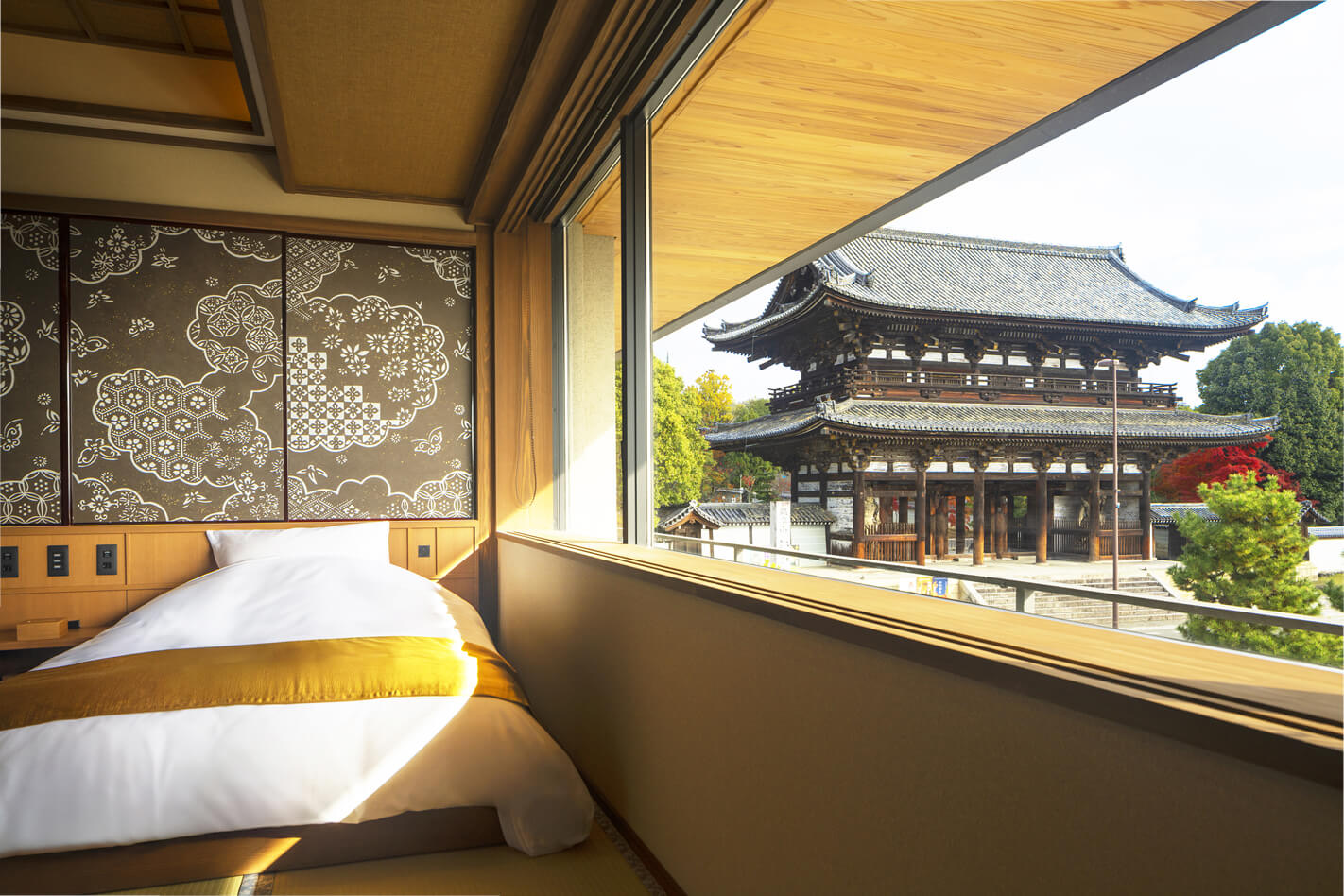
6.Some rooms look straight at the Niomon. When the sun comes in, the shadow of the eaves slides to the edge of the tatami, and the crunch of gravel carries over from the temple. Early morning, before the tourists arrive, lying in bed and watching the gate's roofline is part of what the rate buys. Ninna-ji is known for its late-blooming Omuro cherry blossoms, which gives this site a second spring peak after the rest of Kyoto.
The Niomon outside the windowFrom some rooms the gate's roofline and pillars sit close behind the glass. ⓒKyoritsu Maintenance
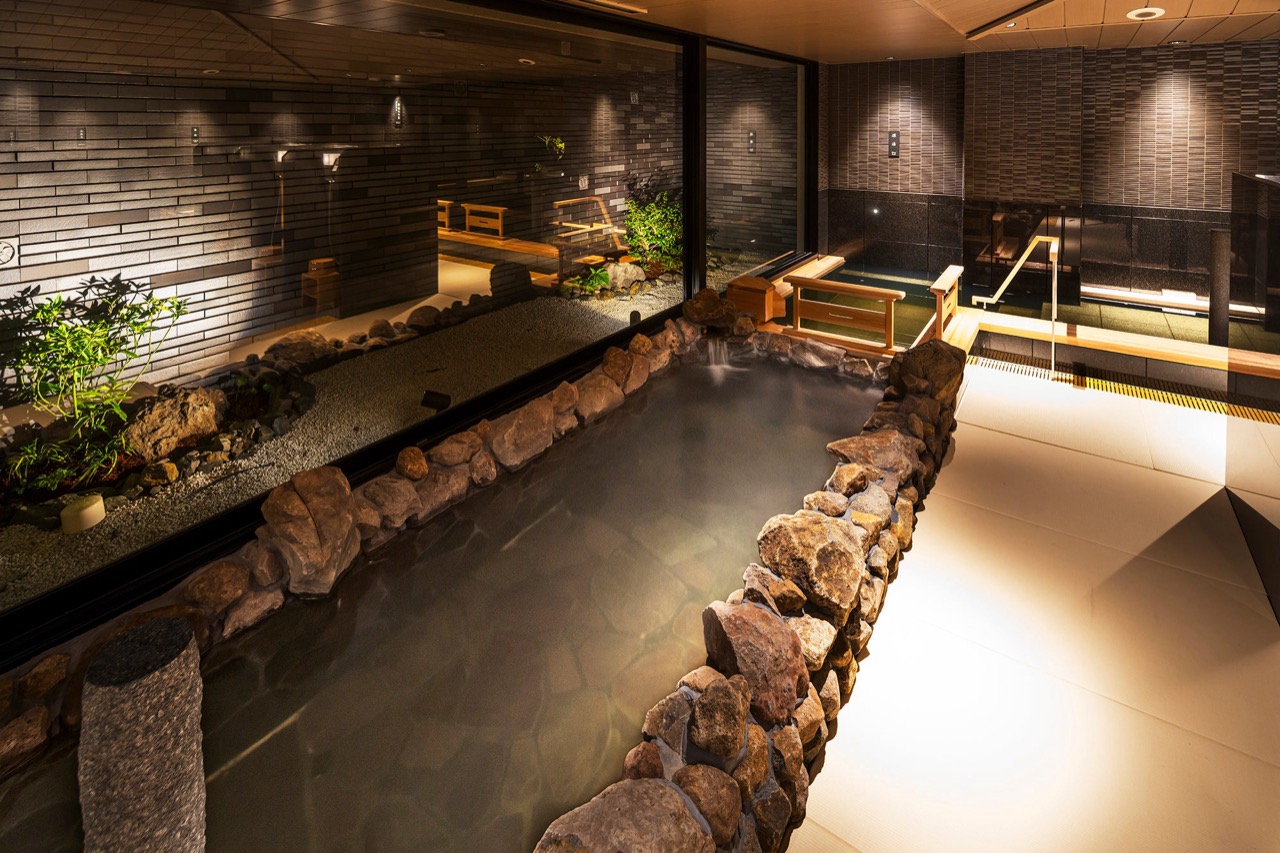
7.The basement holds a large bath fed by the Kinukake-no-yu hot spring. It is an alkaline simple spring, low in temperature at the source, so the water is heated. A dry sauna and cold plunge sit alongside, and four private baths in cypress and stone can be used free, without booking, as often as guests like. Only guests of junior-high age and older are accepted, and there is no parking at all. Cars and noise at night were exactly what residents raised in their lawsuit.
Basement large bathAn indoor bath edged with rock. A small garden shows through the window. ⓒKyoritsu MaintenanceRoom with a stone bathSome rooms have a bath built of stone inside the room. ⓒKyoritsu Maintenance
8.The list price is 46,000 yen per person for two sharing a room with dinner and breakfast, or 92,000 yen per room. During the soft opening it sold from 31,000 yen per person. The average room rate across Kyoritsu's whole resort business last fiscal year was 48,300 yen per room. This hotel's list price is close to double that.
9.In the year to March 2026, Kyoritsu's resort business made 57.0 billion yen in revenue and 1.95 billion yen in operating profit, a margin of just 3.4%. Occupancy rose to 82.1%, yet rising labor, linen and cleaning costs plus pre-opening expenses cut profit by 1.1 billion yen from the year before. The company opens only two new resorts this fiscal year, and Kadensho is one of them.
Double the company averagePer room, the list price is 1.9 times the resort division's average room rate. Annual revenue is an estimate.
10.This hotel's own revenue is not disclosed. Assume an actual average selling price of 75,000 yen, below list, and 80% occupancy: annual room revenue comes to 1.47 billion yen, or 21.9 million yen per room (estimate). Per square meter of floor area that is a little over 250,000 yen a year. Does the room rate cover the cost of building this generously? With 87㎡ per key, the per-㎡ figure comes out lower than a city business hotel.
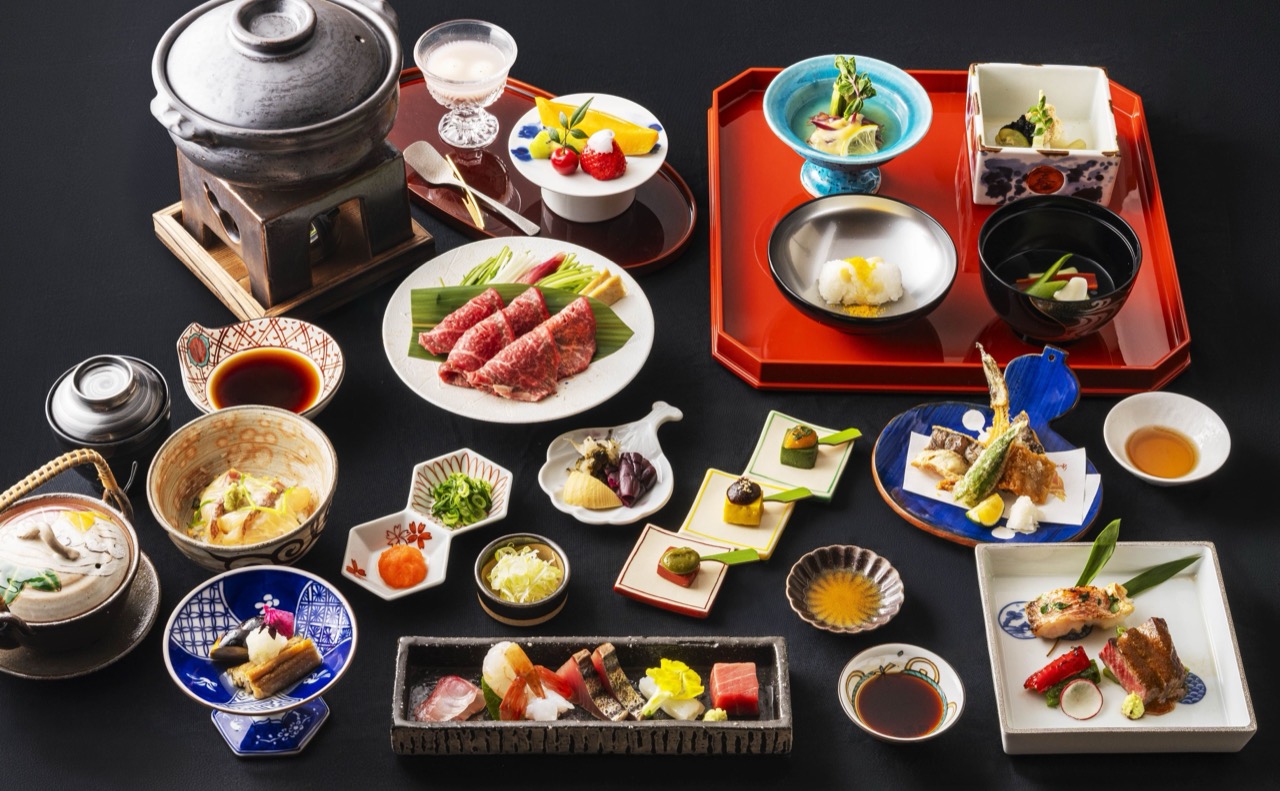
11.At a star-rated hotel, dinner revenue rings up separately at the restaurant till. Here Kyoto kaiseki dinner and breakfast are inside the room rate, so the number of guests is the restaurant's revenue. If meals account for around 15,000 yen per person, about a third of the 92,000 yen comes from the kitchen (estimate). The restaurant runs on how many rooms are filled rather than how many times seats turn, and it does not need to attract outside diners for dinner.
Dinner included in the rateKyoto kaiseki, included in the dinner-and-breakfast rate. ⓒKyoritsu Maintenance
12.Distribution still leans heavily on others. Across the resort business, the direct booking ratio is 23.7% and the share of international guests is 14.9%. While central Kyoto fills with overseas visitors, the ryokan-style hotels have filled rooms with domestic Japanese guests, three in four of whom arrive through travel agents and booking sites.
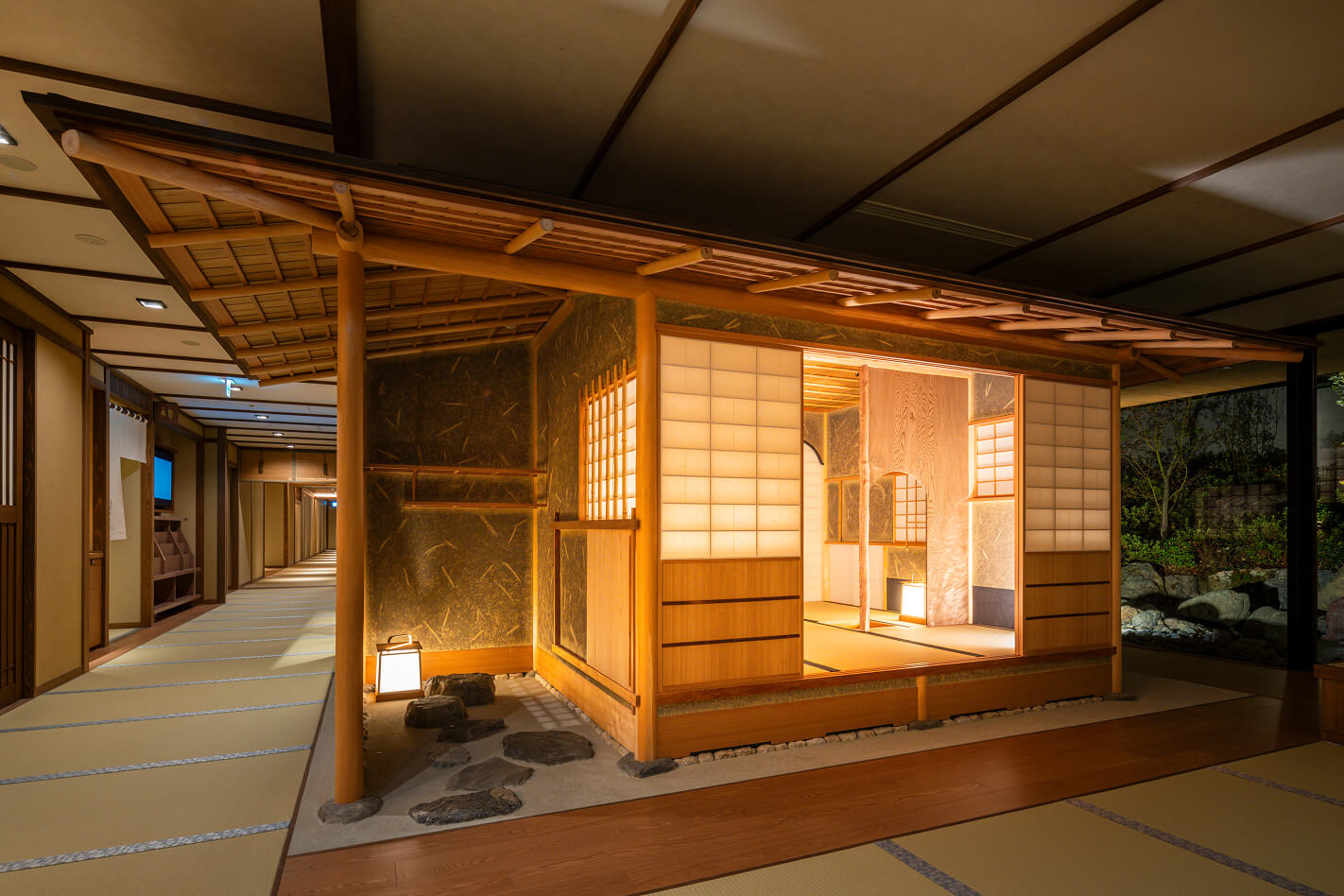
A tea room inside the buildingA tea room built of Kyoto timber stands in the middle of a tatami corridor. ⓒKyoritsu Maintenance
13.Guests pay this rate for the gate more than the room. Ryokan in central Kyoto hide down lanes, and the view is often the wall next door. Here, the main gate of a World Heritage temple fills the window frame. Arashiyama and Kinkaku-ji are nearby, yet the neighborhood goes quiet in the evening, and that also goes into the rate. That quiet is what residents set out to protect.
14.In June 2024, 51 residents sued Kyoto City to revoke the special permit, arguing that traffic would clog, night-time quiet would be broken and the temple's landscape harmed. On May 23, 2025, the Kyoto District Court dismissed the claim, ruling that the permit fell within the administration's broad discretion, and the residents appealed to the Osaka High Court. The outcome of the appeal could not be confirmed in public sources. The building was completed on August 31, 2025, then sat for nine months before the soft opening, for reasons that have not been disclosed.
The exterior at nightAfter dark, warm lights come on under the eaves and in the windows. With no parking, the forecourt holds only gravel and the sign. ⓒKyoritsu Maintenance
15.Raising prices has a ceiling too. Kyoto City revised its lodging tax in March 2026: where the room charge excluding meals is 20,000 to 50,000 yen per person, the tax is 1,000 yen, and above 50,000 yen it is 4,000 yen. Because a dinner-and-breakfast rate is taxed after the meal portion is deducted, it climbs the brackets more slowly. Still, once the room portion passes 50,000 yen the tax per guest quadruples, and that number becomes a hard line when raising rates.
On a plot in front of Kyoto's Ninna-ji that stood empty for 20 years, a 5,819㎡ ryokan-style hotel, close to double the residential cap, has risen, and in exchange every room was built over 40㎡ with a 50-year operating commitment. The list price of 92,000 yen per room with two meals is nearly twice the operator's resort average, but the lawsuit filed by 51 residents is still on appeal. In Korea, hotels cannot be built in general residential zones, and the only ways to sell lodging in residential areas are small-scale categories such as hanok stay businesses or urban homestays for foreign tourists. With no Kyoto-style route to relax floor-area caps through review, putting 67 rooms on a comparable plot would first require an urban planning process, either rezoning or a new district unit plan.