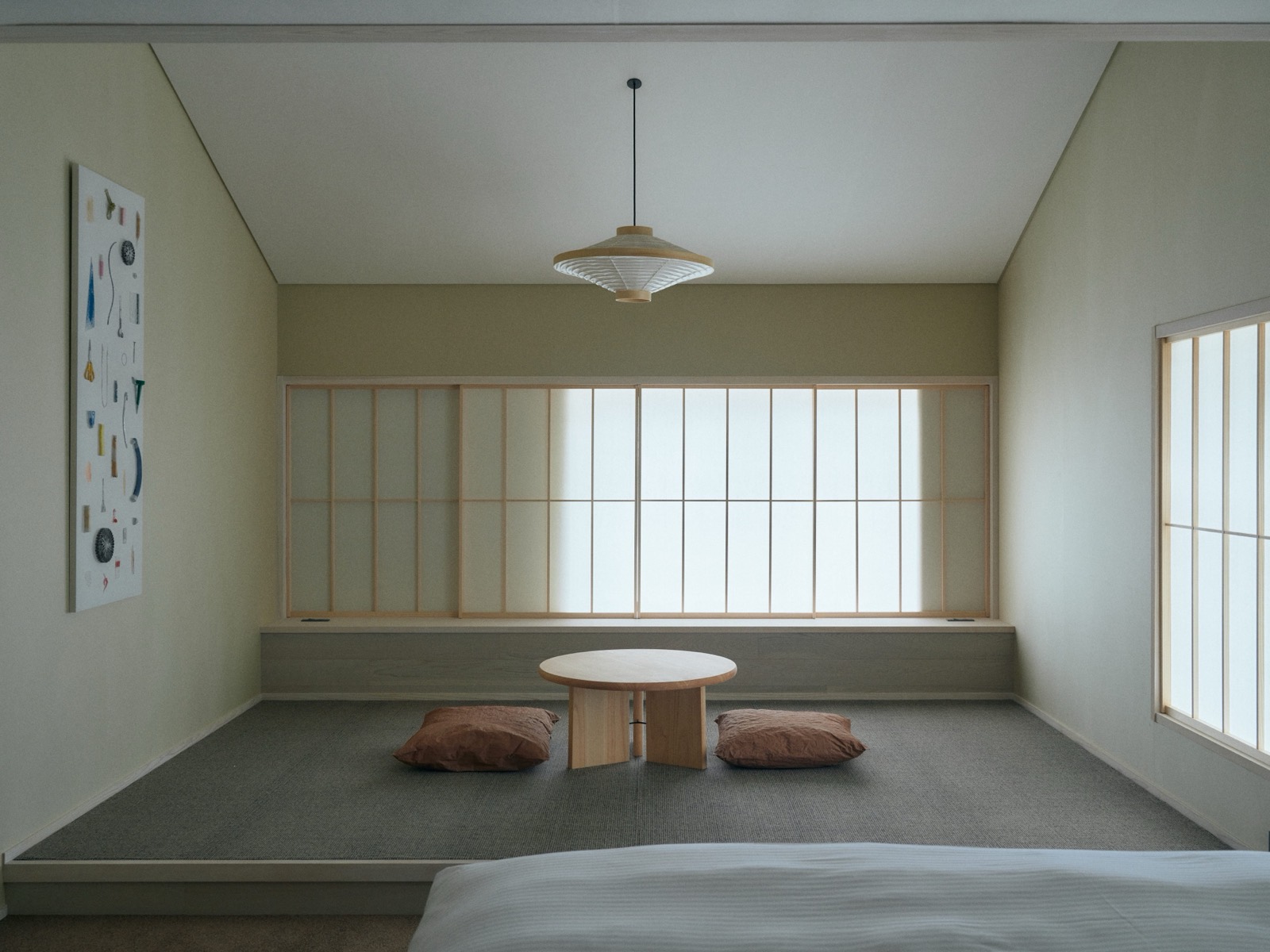
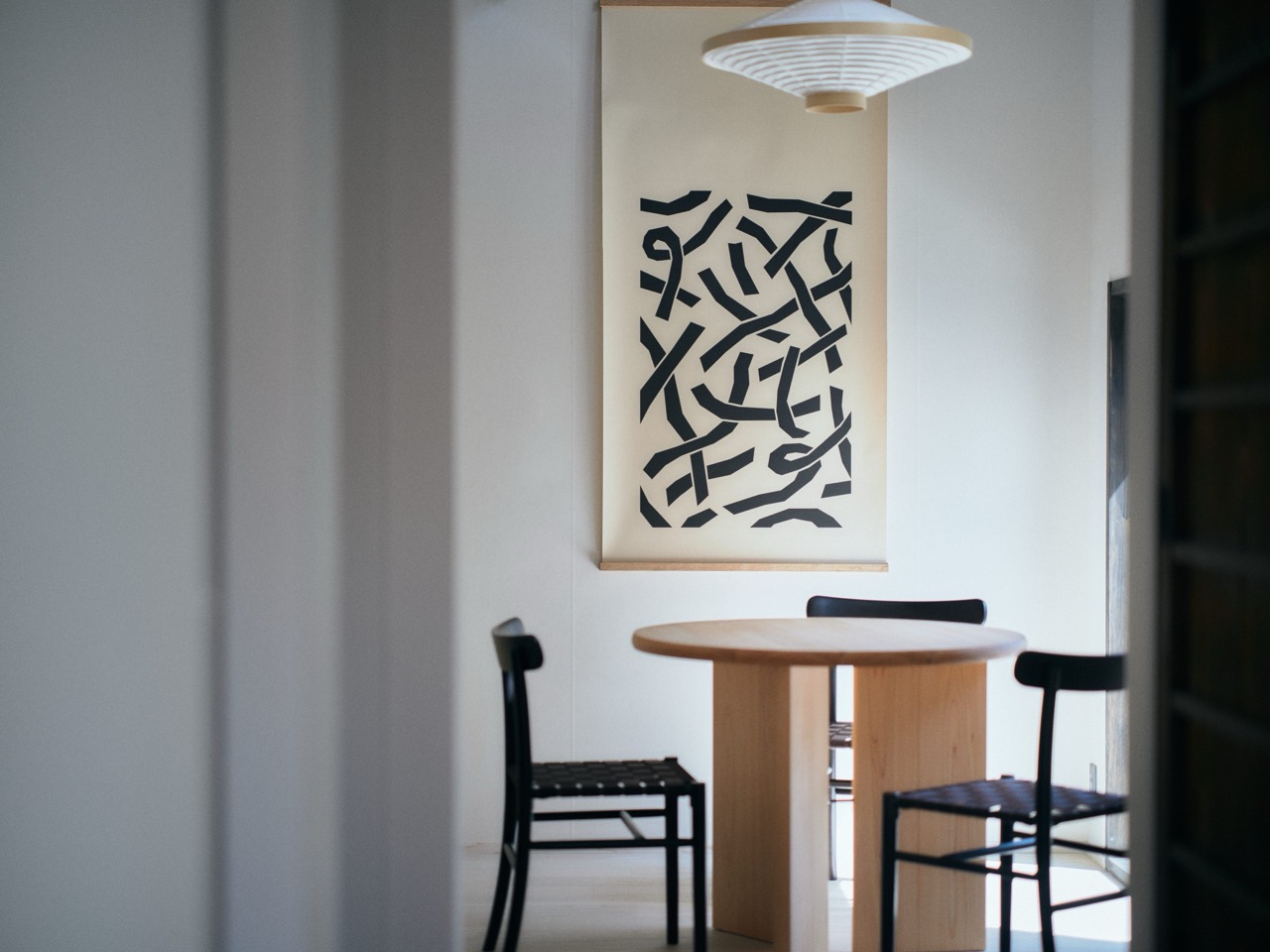
A main-house room lit through shojiThe walls, shoji screens and lampshades use paper made by the village's own workshops. ⓒSOE
Daily Hotel
A five-room inn in a paper village that draws 55,000 visits in three days
2026.10.04
A three-room inn called SUKU opened last year in a washi papermaking district of Fukui Prefecture, Japan, and on the 1st of this month it added a two-room annex. The operator is not a hotel company but a regional tourism body that runs an open-factory festival. The inn was built with an eye less on room revenue than on the money guests leave behind in the village.
1.On October 1, a two-room lodging called SUKU hanare opened in Iwamoto-cho, in the Imadate district of Echizen City, Fukui Prefecture. The main house, SUKU, a one-minute walk away, opened with three rooms last November 9, so the inn now has five. It is run by SOE, a general incorporated association based in neighboring Sabae City. The annex opening was timed to land just before RENEW (October 9-11), the open-factory festival the same association organizes.
2.Imadate has been making Echizen washi for 1,500 years, and more than 50 workshops still make paper here. The district ranks first in Japan for handmade washi shipments, with a 22.2% national share (2009). A papermaking workshop takes half a day at most, and SOE opened the inn to turn the district into a place people stay the night.
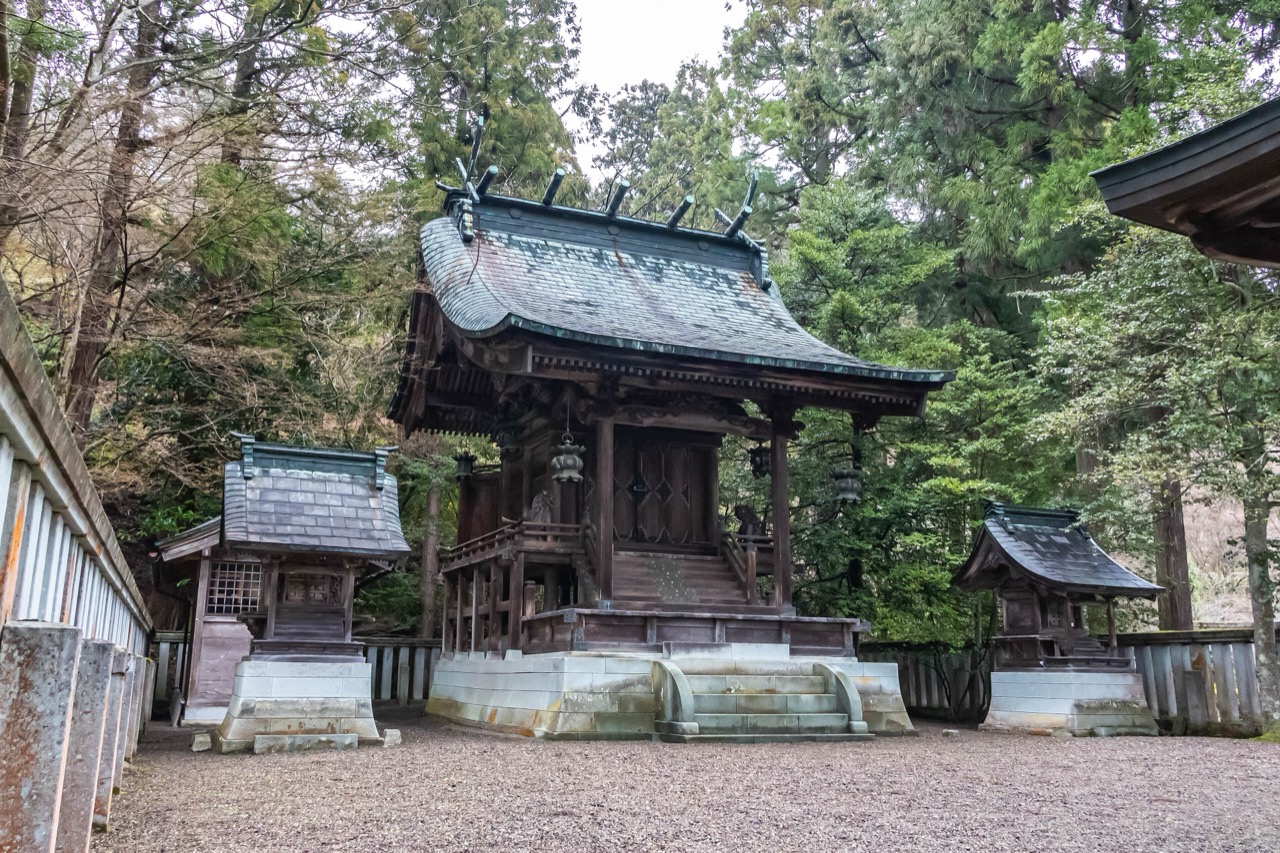
Okamoto Shrine, home of the paper deityImadate's Okamoto Shrine enshrines the deity said to have taught the village to make paper. This is the main hall in the forest. ⓒNaokijp · CC BY-SA 4.0
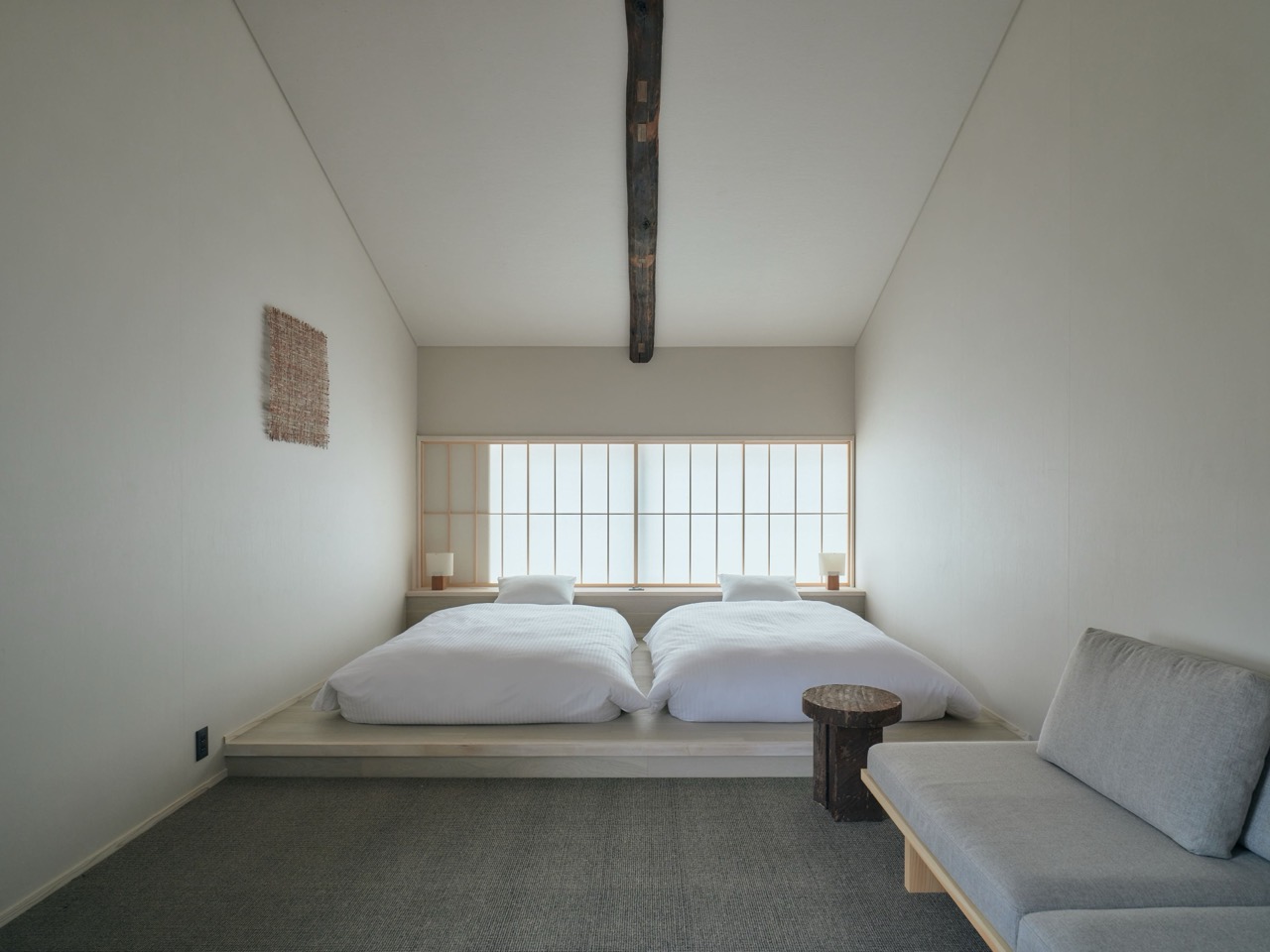
3.The main house is a merchant townhouse more than a century old plus a 130-year-old kura storehouse. Together the two buildings come to about 180㎡. The original posts and beams stay exposed, with a living room on the ground floor and bedrooms upstairs, so each room spans two levels. Architecture is by zelt; overall direction by TSUGI, a design firm in Sabae.
A ground-floor living room finished in paperOne wall is covered in paper with the fiber flecks left in. ⓒSOE
4.The rooms are named after washi's three raw materials: Kozo, Mitsumata and Ganpi. Mitsumata sleeps up to five, and Ganpi, which takes up the whole storehouse, sleeps three. Fill all three rooms and you still have only ten guests.
A second-floor bedroom with the beam exposedThe original beam was left visible in the bedroom ceiling. ⓒSOE
5.Papered walls don't bounce light back; they hold it. Daylight through the shoji spreads evenly to the back of the room, and at night the paper-shaded lamps throw the grain of the fibers onto the walls. The paper on the walls, ceilings, shoji and lights was made by 16 craftspeople from the village. The walls double as a sample book, and if a sheet catches your eye you can visit that workshop the next morning.
A paper artwork above a round tableEach room hangs a paper piece named after its raw material. ⓒSOE
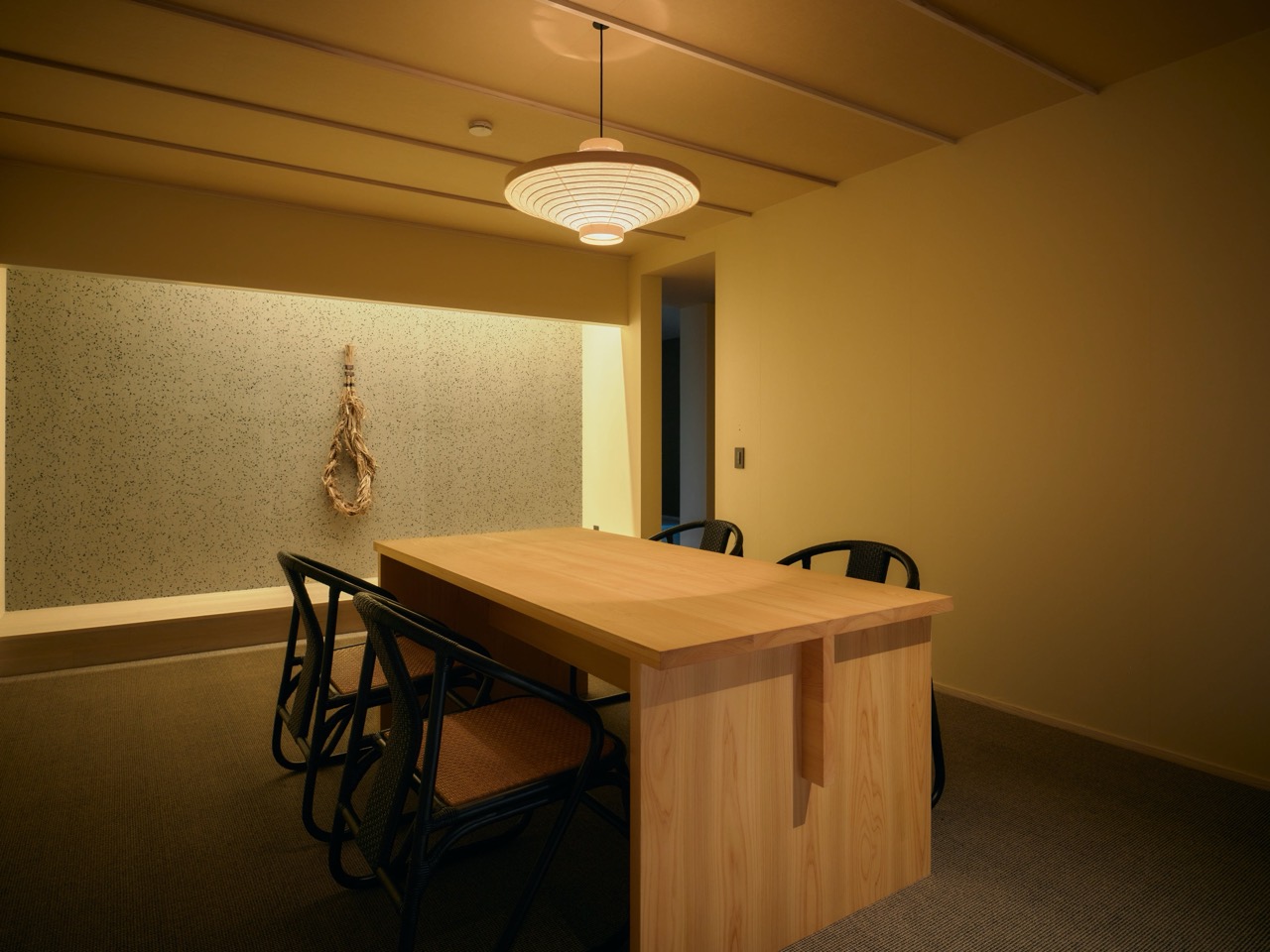
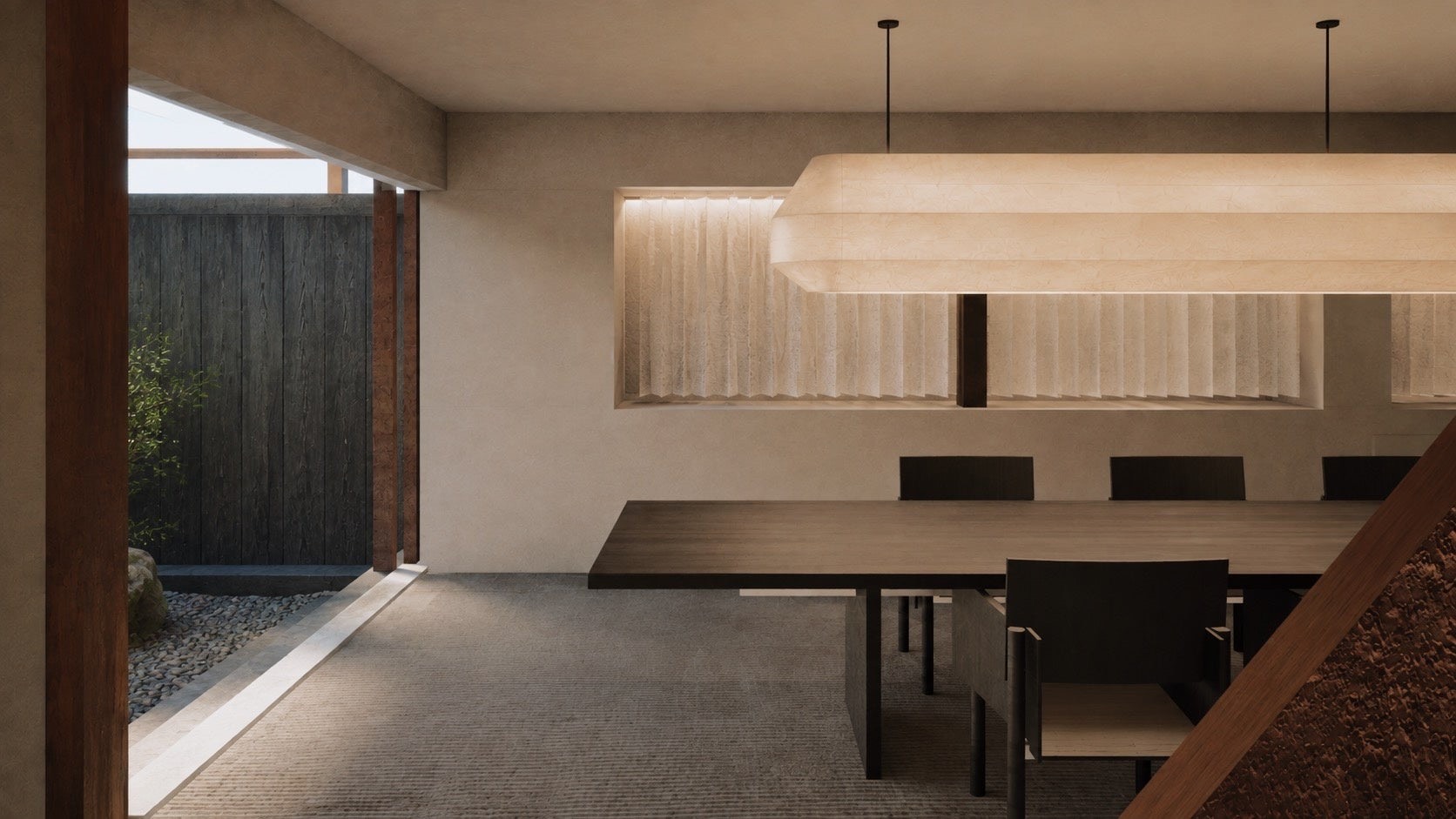
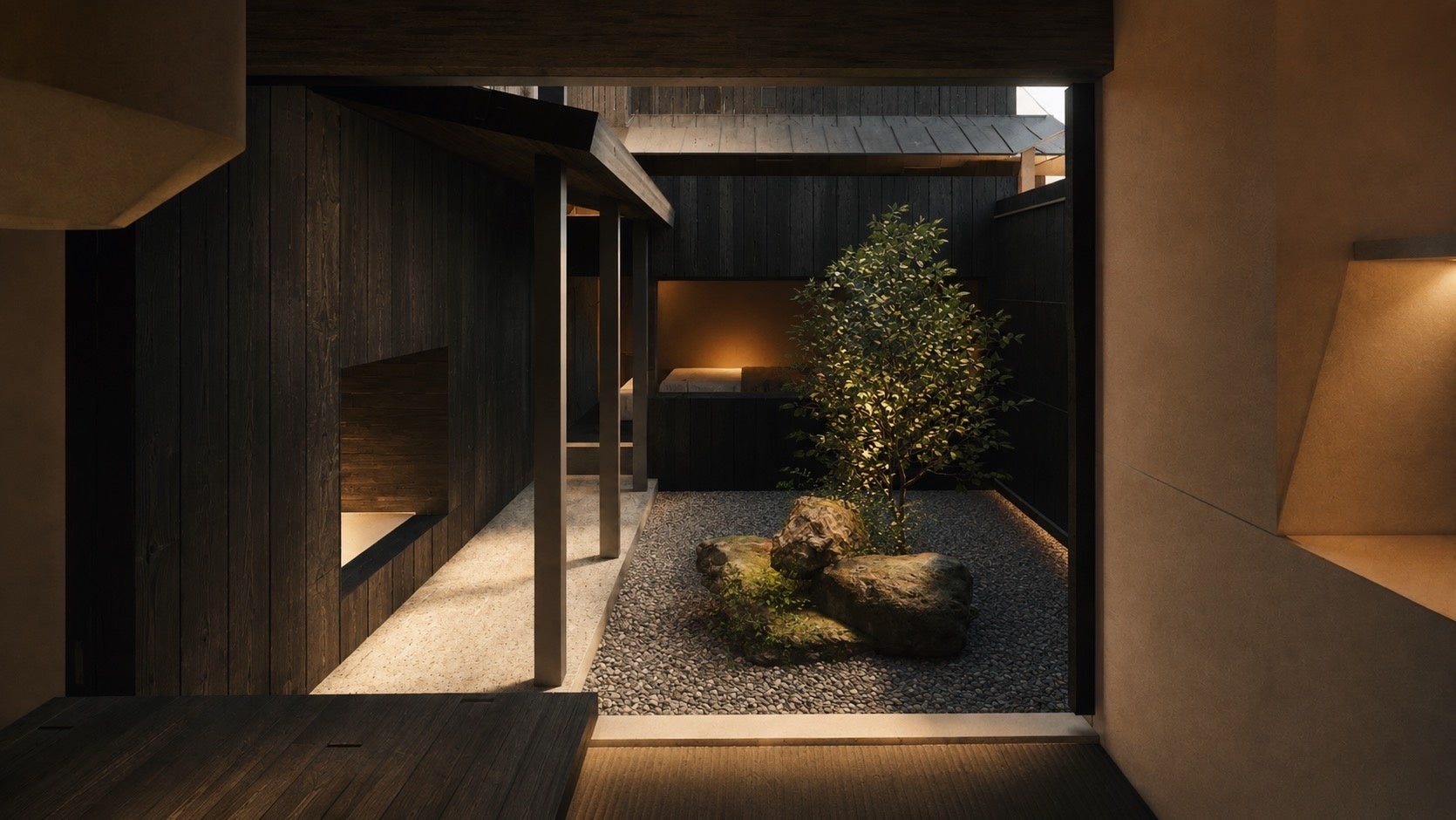
6.The annex is a converted former joinery shop. KETA, which sleeps up to six, wraps its living room and bedrooms around an inner courtyard and has a jar-shaped tub, while KAI, for two, is aimed at long stays and remote workers. Both have kitchens stocked with Echizen pottery, Echizen lacquerware and Echizen forged knives. The names come from the papermaking frame (keta) and the paddle used to stir pulp (kai), and the interiors are by SEN, a local creative collective.
The dining table in the annex unit KETA, beside the courtyardImage of the annex released before opening. ⓒSOEThe annex courtyardThe living room and bedrooms surround this courtyard. Image of the annex released before opening. ⓒSOE
7.The main house charges per person; the annex charges per room. Before opening, the local paper reported main-house rates of 15,000-20,000 yen per person per night, meals not included. KETA in the annex starts at 22,000 yen per room, which works out to a little over 3,700 yen each when six people share it.
A day workshop versus a night's stayMain-house rates per local newspaper reports before opening; annex rates per the operator's announcement (tax included).
8.Assume two guests in each of the three main-house rooms at 17,500 yen per person, and a fully booked night brings in 105,000 yen. Japan Tourism Agency statistics put ryokan room occupancy at around 40%; at that rate, the main house earns about 15 million yen a year in room revenue. Run the two annex rooms at the same occupancy and another 6 million yen comes in, for a total of around 21 million yen, or roughly 200 million won (all estimates).
Room revenue leaves little on the tableThe subsidy is a one-off; payroll comes every year.
9.There are just two resident concierges. At a little over 4 million yen a year each, a regional wage, staffing alone runs past 8 million yen (estimate). Add heating, cooling, cleaning and linen for two wooden buildings over a century old. Fukui Prefecture and Echizen City each put 10 million yen in subsidies toward renovating the main house, and the project also raised donations through furusato nozei hometown tax giving. This is not an inn that clears a comfortable profit from room rates alone.
10.At a star-rated hotel, revenue outside the rooms would come from the in-house restaurant, banquet rooms and shop. A ryokan selling half board also keeps dinner under its own roof. SUKU sends that money outside. Dinner is a menu supervised by chef Yohei Tanihashi of MarPe, a French restaurant in neighboring Echizen town, served in the room; papermaking happens at nearby workshops; and the annex kitchens send guests out to shop in the neighborhood.
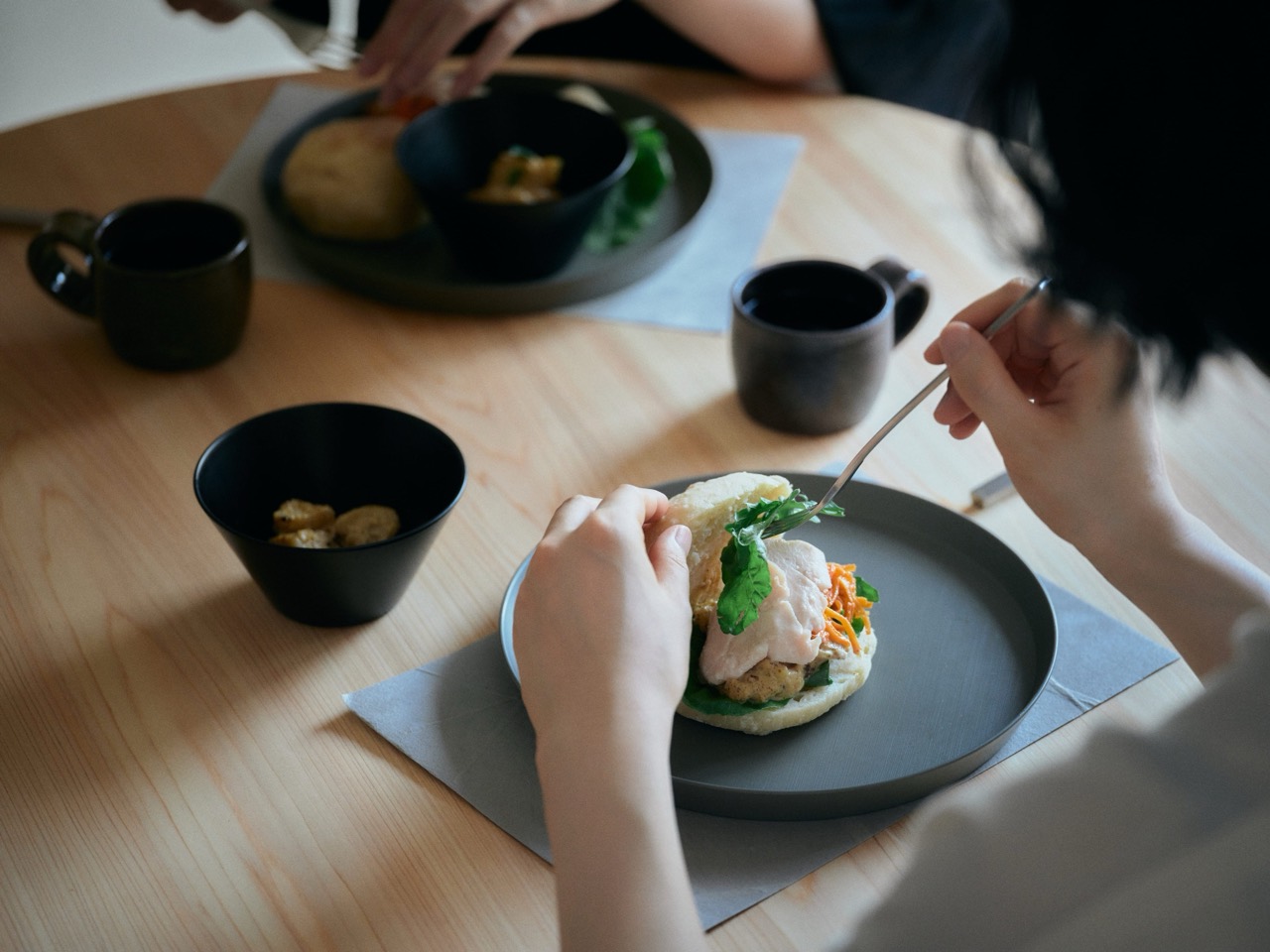
Breakfast on Echizen tablewareLocal ingredients served on dishes from the neighboring craft districts. ⓒSOE
11.The one bundling that money is the operator, not the inn. SOE, founded in July 2022, is a regional tourism organization (DMO) with a travel agency registration, so it can sell packages that combine a stay with workshop tours and hands-on sessions. It also runs RENEW, when workshops across Sabae and Echizen open their doors for three days. The inn is one component of the craft-district trips the association sells.
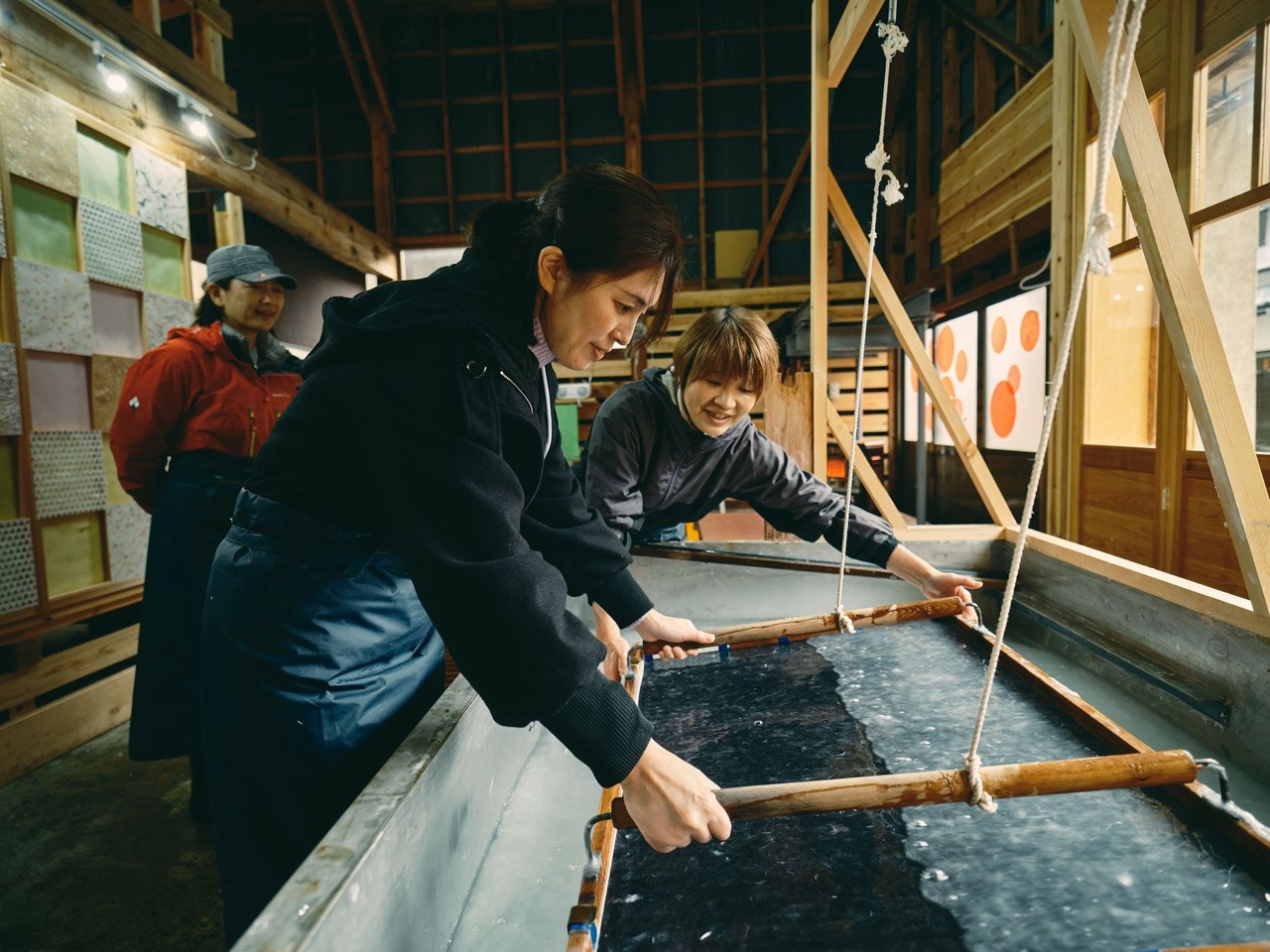
A guest trying papermaking at a workshopOvernight guests make paper at a nearby workshop. ⓒSOE
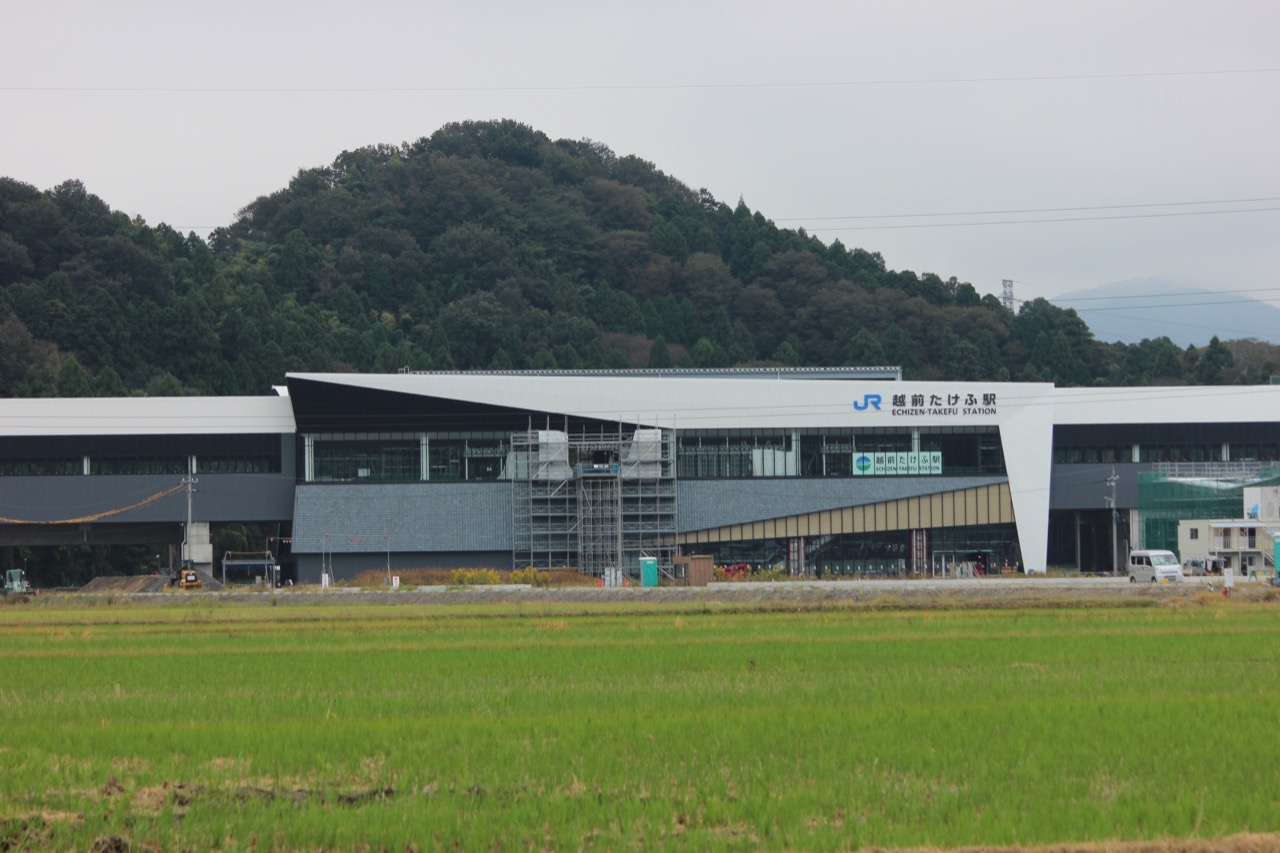
12.RENEW 2025 drew 55,000 visits over three days, with 122 workshops and companies opening up. Echizen-Takefu Station, built when the Hokuriku Shinkansen was extended to Tsuruga in March 2024, is a ten-minute drive from SUKU. So what fills the other 362 days, outside the three when the crowds come? SOE's answer is "year-round industrial tourism."
Echizen-Takefu Station beyond the rice fieldsTaken while still under construction, before its March 2024 opening. Ten minutes by car to SUKU. ⓒSONIC BLOOMING · CC BY-SA 4.0
13.Making a postcard-sized sheet at Papyrus House, the public workshop center, costs 700 yen. The same person staying at SUKU's main house pays more than 20 times that for the bed alone. A day-tripper sees only a sliver of a workshop's routine. What an overnight guest buys is not a sheet of paper but a day spent beside the people who make it.
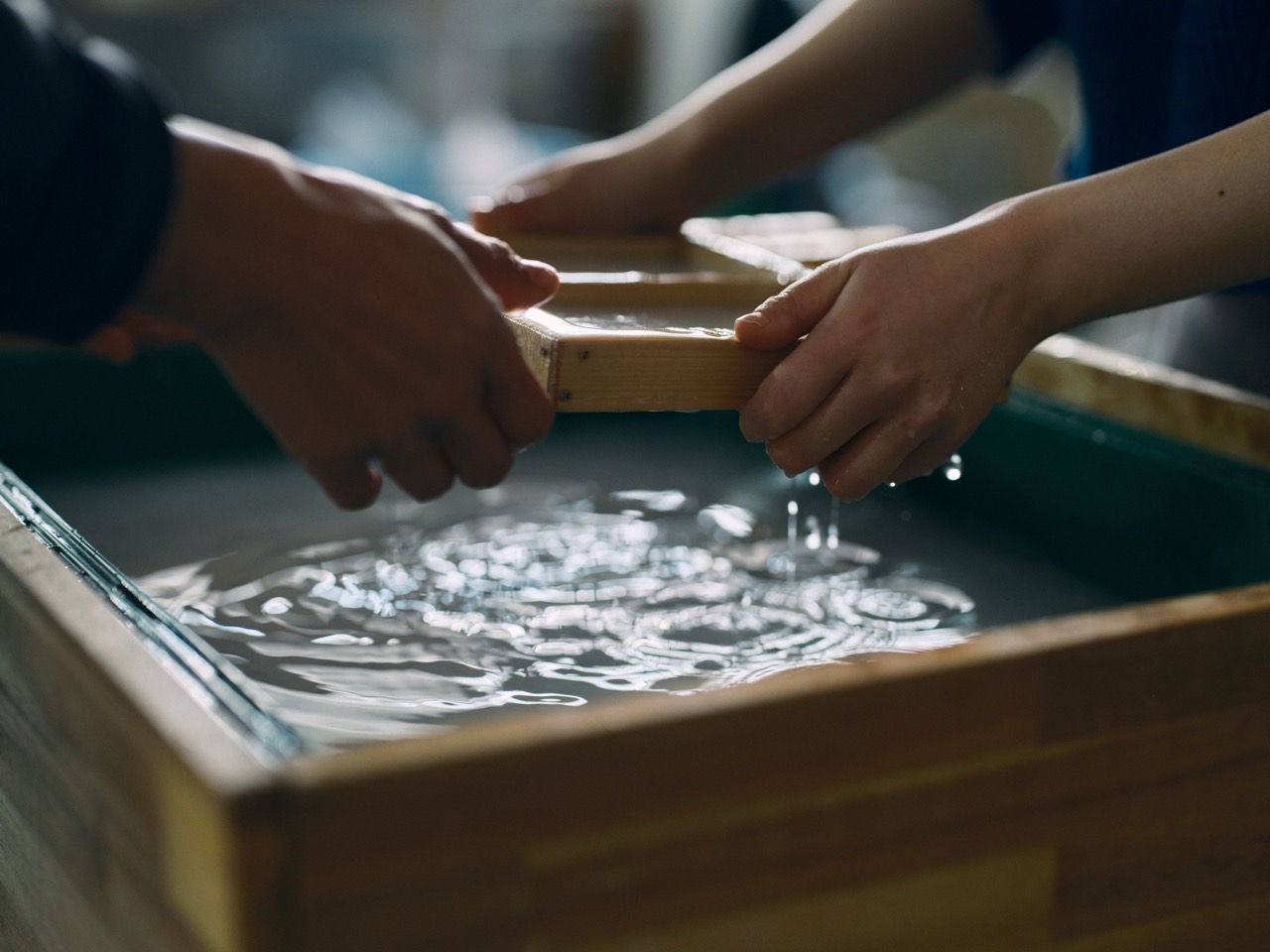
Hands lifting the frame out of the vatA wooden frame scoops pulp-laden water to form a single sheet. ⓒSOE
14.Japan has precedents for stitching several old houses into one lodging. After NIPPONIA HOTEL in Sasayama, Hyogo Prefecture, turned empty houses in a castle town into guest rooms in 2015, the model spread nationwide. What changes with SUKU is who runs it: not a hotel company, but the tourism body behind a craft-district festival that has run for more than a decade.
15.Five rooms and two resident staff come to 0.4 staff per room. There is no unstaffed operation; a person greets guests during the 3-6 pm check-in window. Putting kitchens in the annex and pricing it by the room looks like a way to lighten that load. Fewer hands are needed for breakfast, and six people sharing one room means one check-in (estimate).
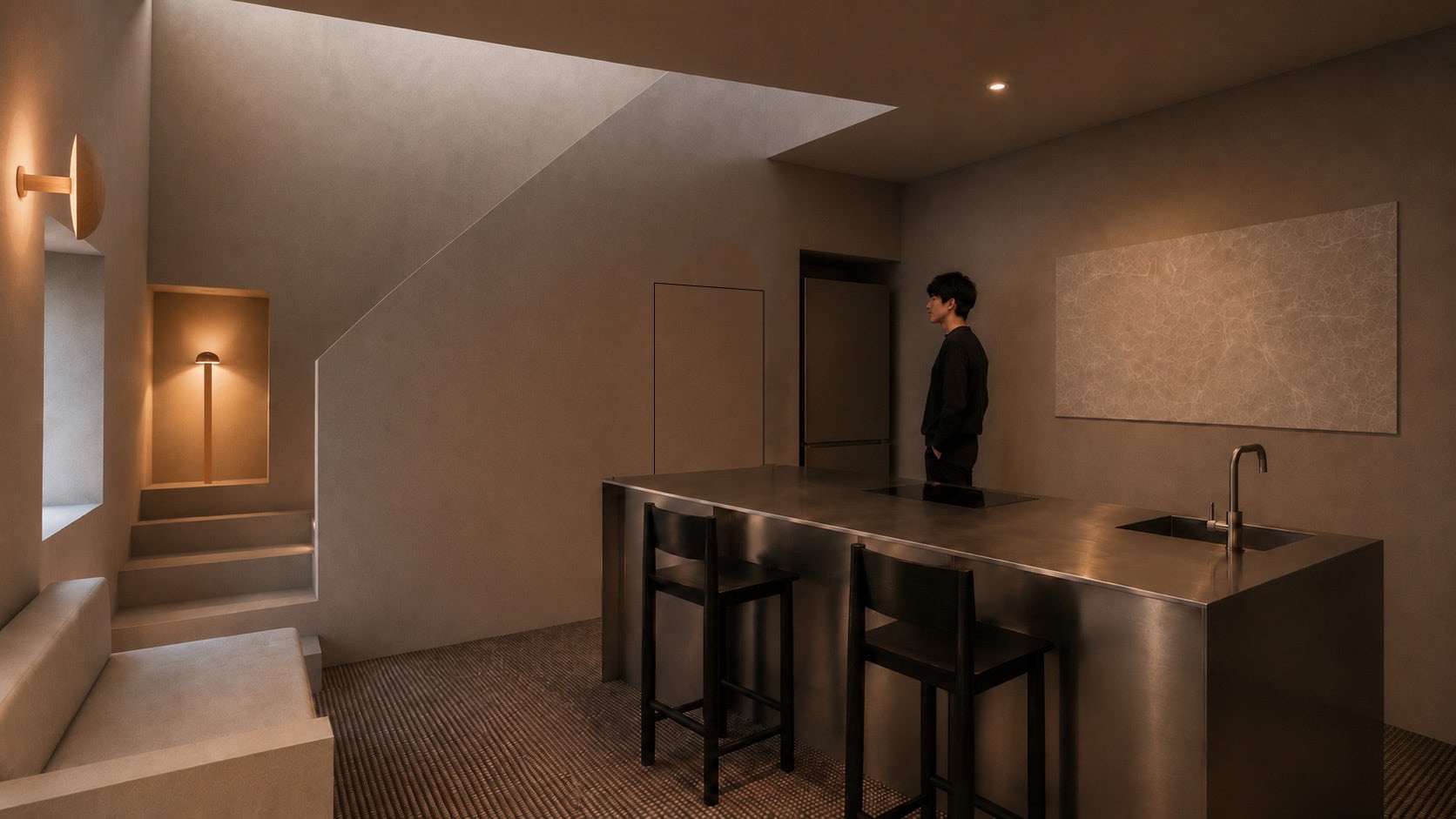
The annex kitchenA long counter for guests who shop and cook for themselves. Image of the annex released before opening. ⓒSOE
A five-room inn has opened in a 1,500-year-old papermaking district, and the tourism body running it is looking less at room rates than at what guests spend at workshops and restaurants. Room revenue alone is estimated at around 21 million yen a year. In Korea, anyone converting an old house into lodging in a craft district would first hit the licensing question. Farm-stay and urban homestay licenses for foreign tourists require the operator to actually live in the house, and turning an old shop-house that is not a hanok into a general lodging business means a change of building use plus fire-safety and parking requirements. How much of the renovation a local-government subsidy covers is the next calculation.