There is a gold jewelry brand with only 45 stores in China. It is called Laopu Gold, and its 2025 revenue was RMB 27.3 billion, about KRW 5.2 trillion. Annual revenue per department store site runs close to RMB 1 billion, and at a top Beijing mall it sold KRW 64 billion a year from a little over 19 pyeong. Yet the gold price fell 28% in the first half of this year, and last week gold priced by the gram appeared on this brand's counters. How a business that sells at a fixed price stands on a commodity, and how it shakes, taken apart in numbers.
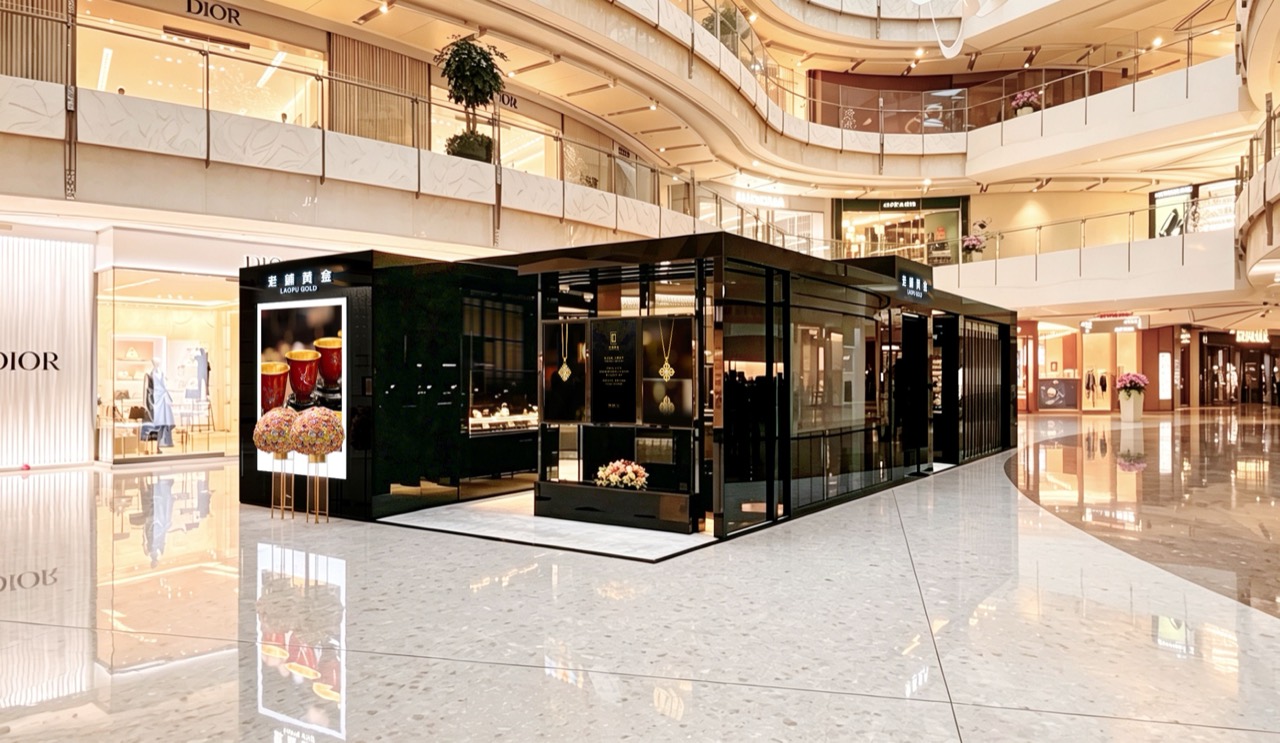
1.The facts first. Laopu Gold started in Beijing in 2009 as an ancient-method gold brand and listed in Hong Kong in June 2024. As of July 2026 it has 45 directly operated stores in 16 Chinese cities. There are no exceptions on location, since it enters only the ground floor of the most expensive mall in each city, SKP, Wanxiangcheng, IFC.
2.Revenue in 2025 was RMB 27.303 billion, up 221% year on year, with net profit of RMB 4.868 billion, about KRW 920 billion. Divided across 45 stores that is RMB 600 million, about KRW 115 billion, per store a year. Not a brand taking a whole department store floor, a figure produced by boutiques of a few dozen square meters.
3.What this brand sells is not gold but a technique. Ancient-method gold comes from the skills of the craftspeople at the filigree workshop of Beijing Gongmei, whose line runs back to the Qing imperial workshops, and it uses techniques designated national intangible cultural heritage in China, filigree, inlay, chasing and enamel. The company states it has registered some 2,000 original designs and 1,300 copyrights.
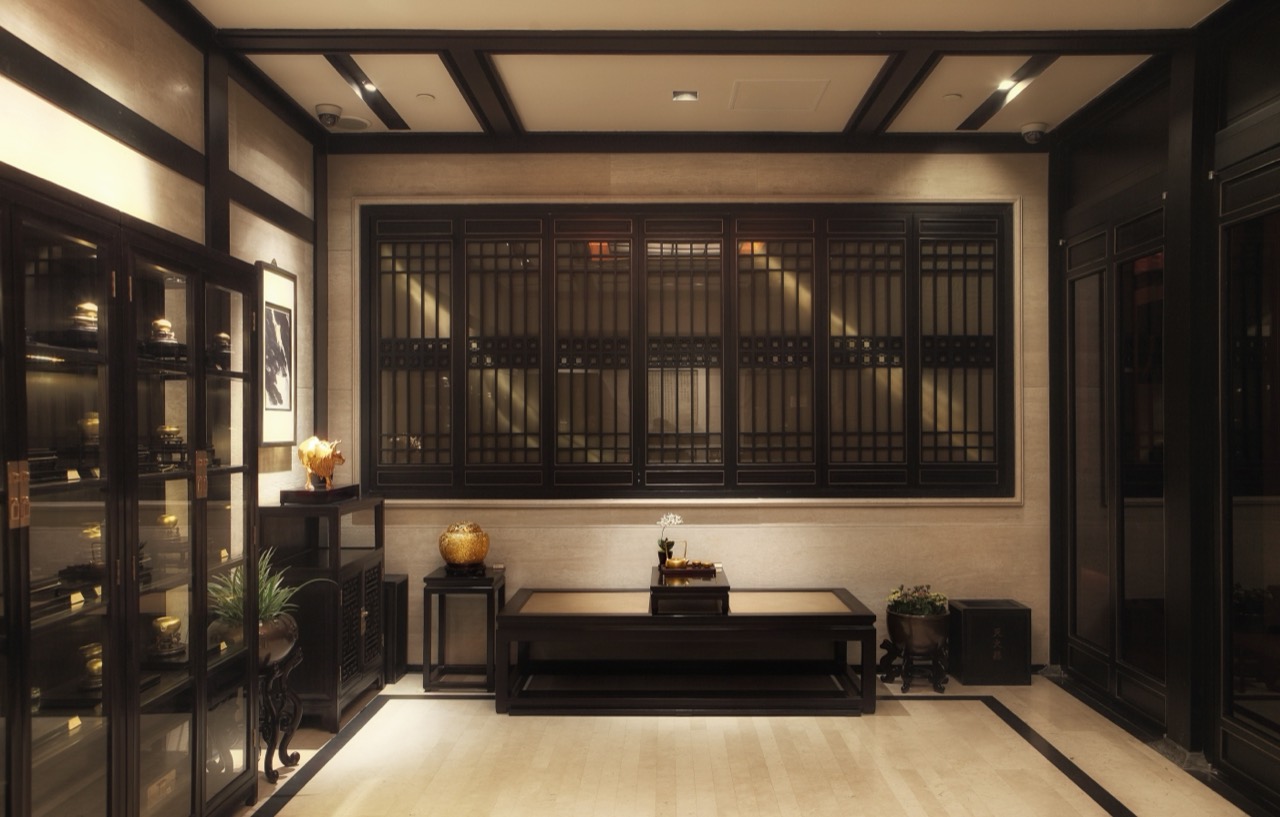
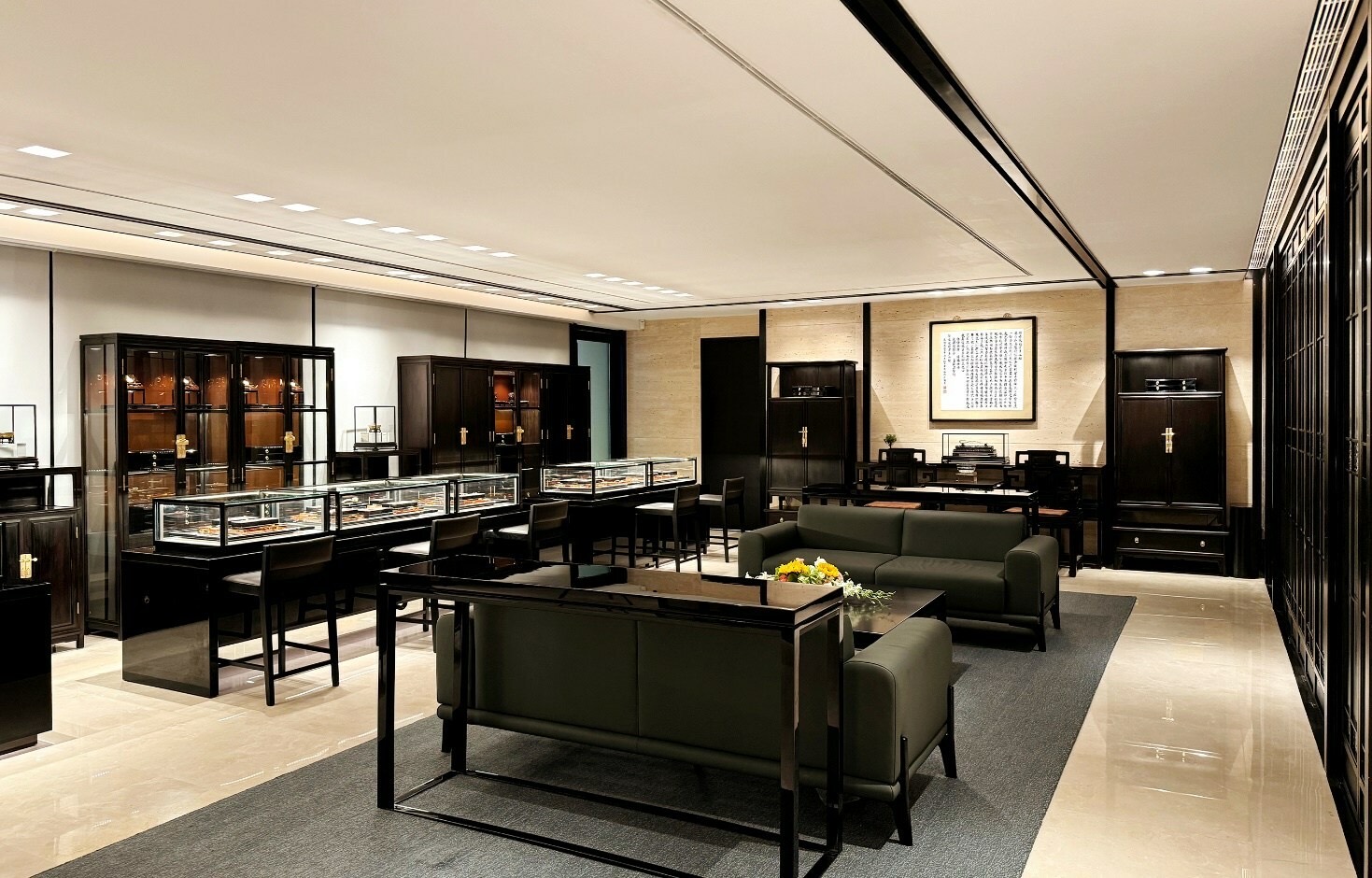
4.Where ordinary pure gold reflects like a mirror, ancient-method gold eats the light. A surface where the marks of hammering and carving were never removed. The stores follow that material, with lattice ceilings hanging low over rosewood cases and a reception room fitted out like a study at the back. In that space, which customers call the small room, consultation happens one to one. The same grain as the hospitality apparatus of a European maison.
5.The area is the most striking number in this issue. In 2023 two Laopu stores in Beijing SKP together sold RMB 336 million, about KRW 64 billion, and the indicator local reporting carried beside it was RMB 440,000 per square meter a month. Reconcile the two and the combined area of the two stores works out to about 64㎡, 19 pyeong. Less floor than one convenience store unit.
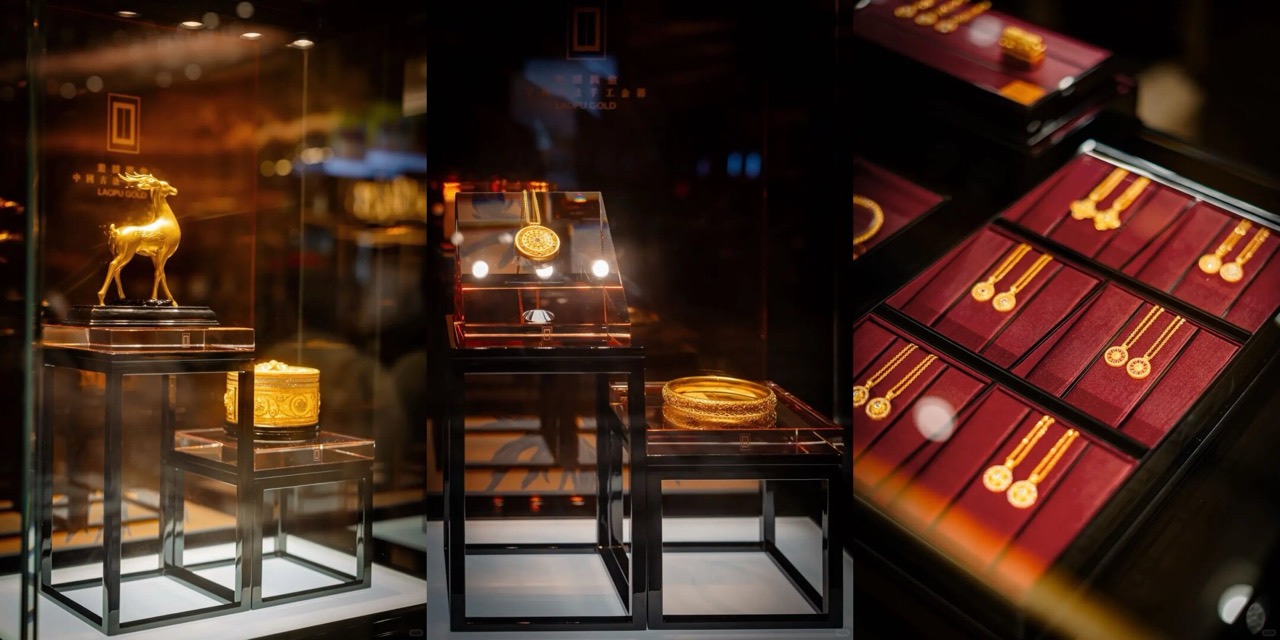
6.First, it moved gold from an asset into consumption. In China pure gold was long something you kept, bought at the market price and sold back at the market price, with no reason for design to attach. Put craft in front and that gold comes out of the wardrobe and hangs on a neck every day. It began charging for the wearing rather than for the resale.
7.Second, the sense of saving while spending. A bag halves in value the moment you buy it while gold has a market price holding the floor, and that one sentence opens a wallet. Industry surveys put about 77% of this brand's customers as overlapping with Hermès, Tiffany, Cartier and Bulgari customers, so these are not people who cut back on luxury but people who bought luxury and moved across intact.
8.The third is the real one. Demand for a domestic luxury to replace Western brands existed first, and pattern took that place instead of a logo. Asked why this necklace costs three times that one, the brand answers with process and lineage rather than advertising. The moment a price is explained by culture, there is nothing left to compare it to.
9.Move to the money. The heart of this business is the single fixed price. The standard in Chinese gold shops is a per-gram market price plus a making charge, with the customer checking today's price on a phone and bargaining, while Laopu erases that calculation entirely and sells at a set price. On published comparisons this brand's effective selling price is about RMB 1,677 a gram against about RMB 1,009 at large traditional gold shops. 66% attaches to the same weight.
10.That 66% prints straight onto the income statement. In 2025, gross margin was 37.63% and net margin 17.83%. Numbers that cannot come out of a business laying a thin making charge over a market price. Citi put Laopu's premium at more than 55% over traditional gold shops, and some estimates run higher.
11.The price of that piled up on the balance sheet. Inventory in 2025 swelled 292.5% from RMB 4.088 billion to RMB 16.044 billion, operating cash flow was a net outflow of RMB 6.848 billion, and borrowing went from RMB 2.4 billion to RMB 10.1 billion. When a brand selling at a fixed price buys raw material in advance and stacks it, that warehouse stops being a product warehouse and becomes a position fully exposed to the gold price.
12.In the first half of 2026 that position turned against it. International gold fell 28% from USD 5,598.75 an ounce to USD 4,018.44, and June's 10.45% fall was the largest since October 2008. In February, in the middle of that, the company raised prices 20 to 30%, following a cumulative 45% increase across 2025. The market price was falling while the price tags rose, so the premium became visible, and monthly store revenue fell by mid double digits from March to May. The share price sits 65% down over a year.
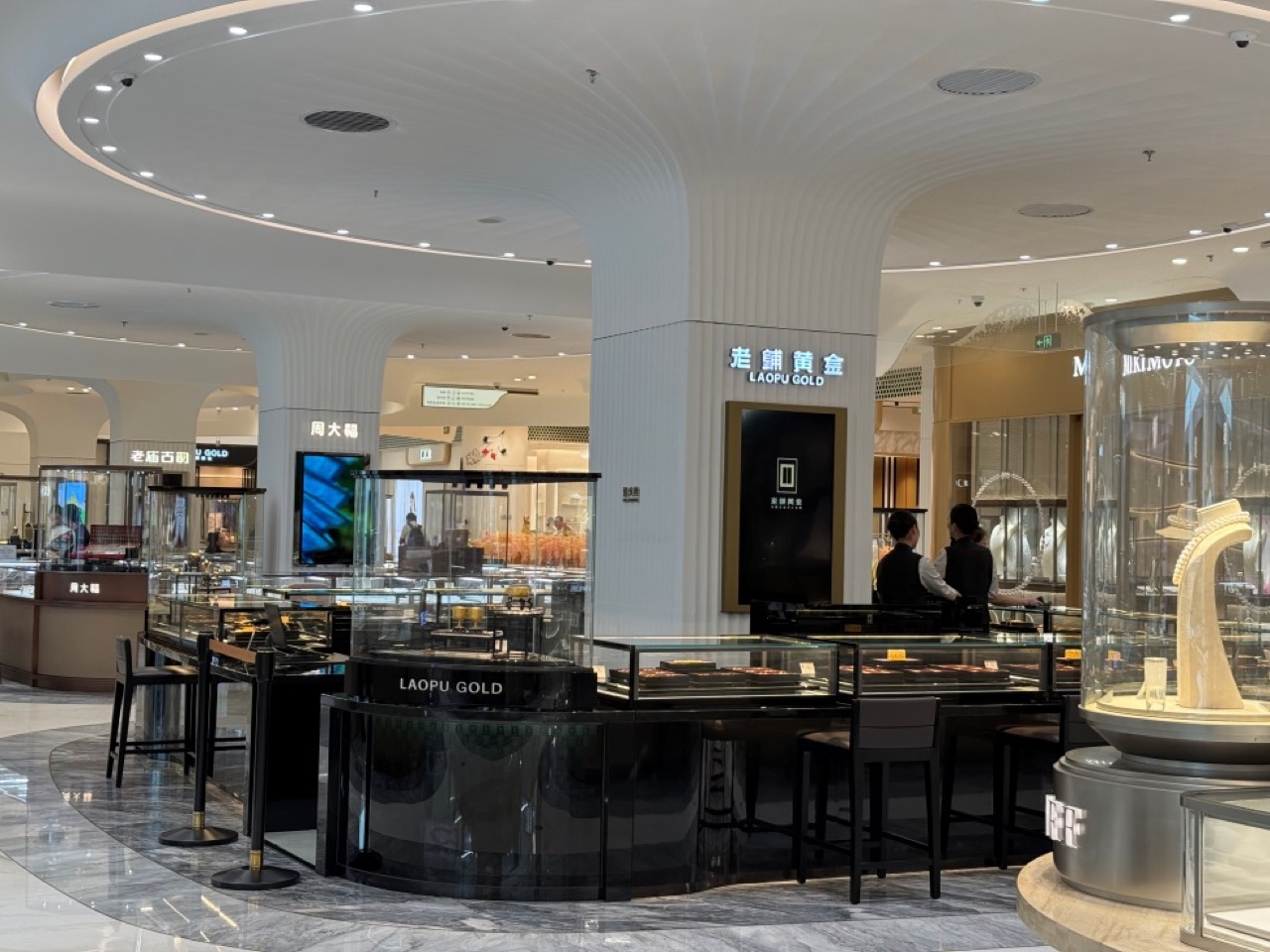
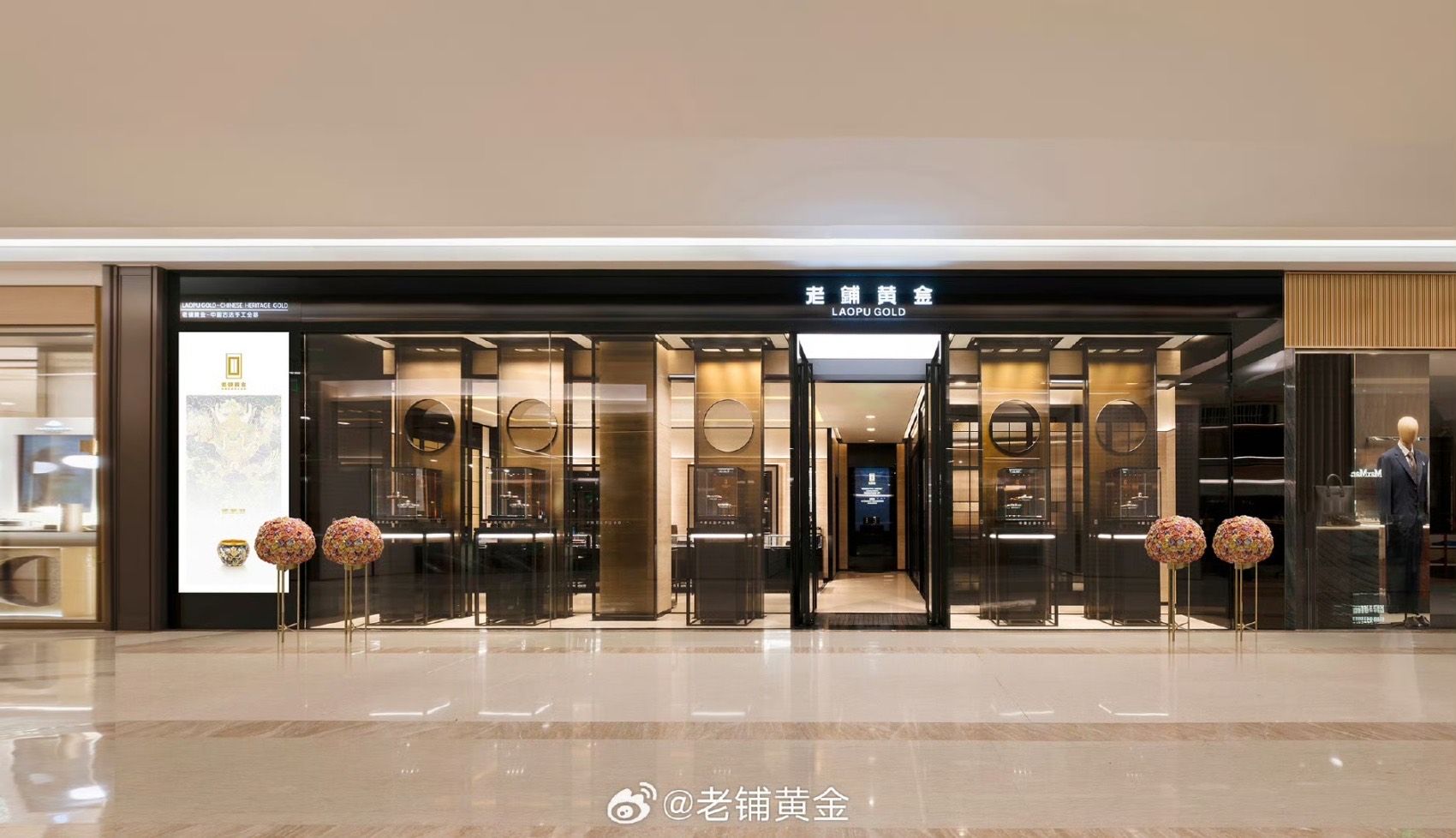
13.There is no new invention. Direct operation only, top malls only, selling one to one in a reception room, holding the price. All that differs is that this grammar was laid over a commodity whose price is published daily. Competitors are already following, and three ancient-method lines at Chow Tai Fook produced HKD 3.4 billion in the latest half year, up 48%. Perhaps the moat was on the side of the price story rather than the technique.
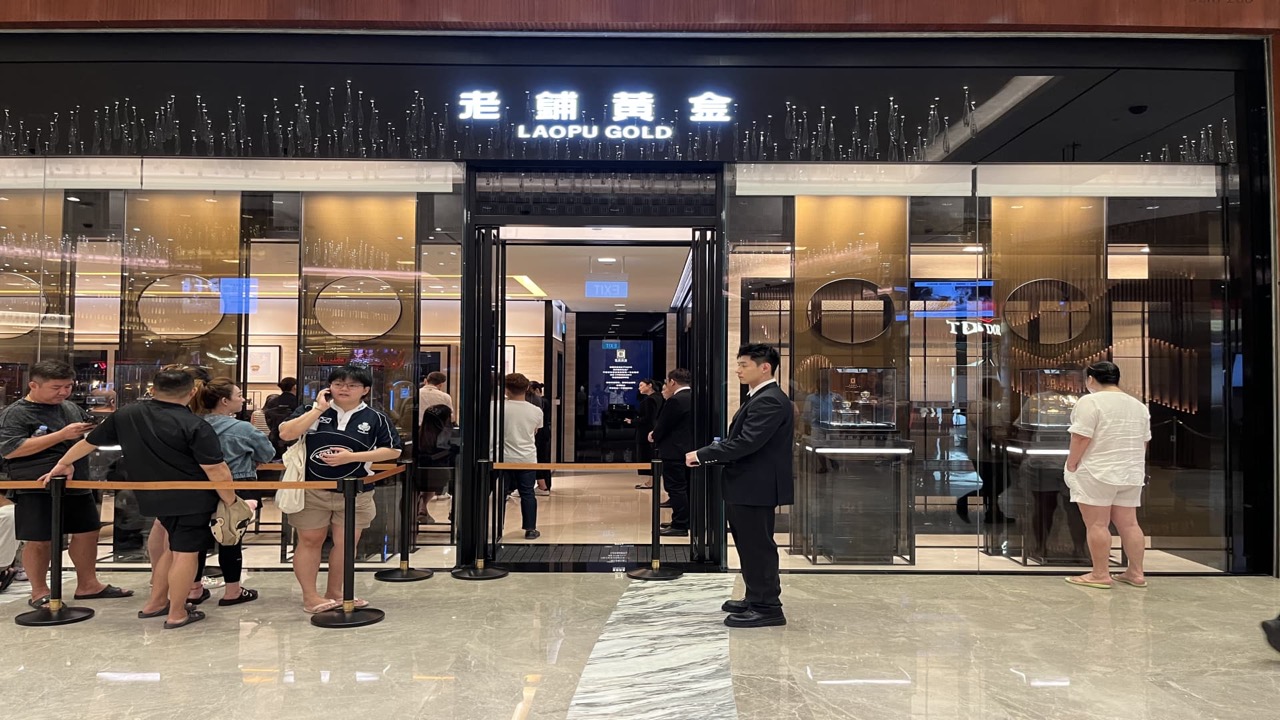
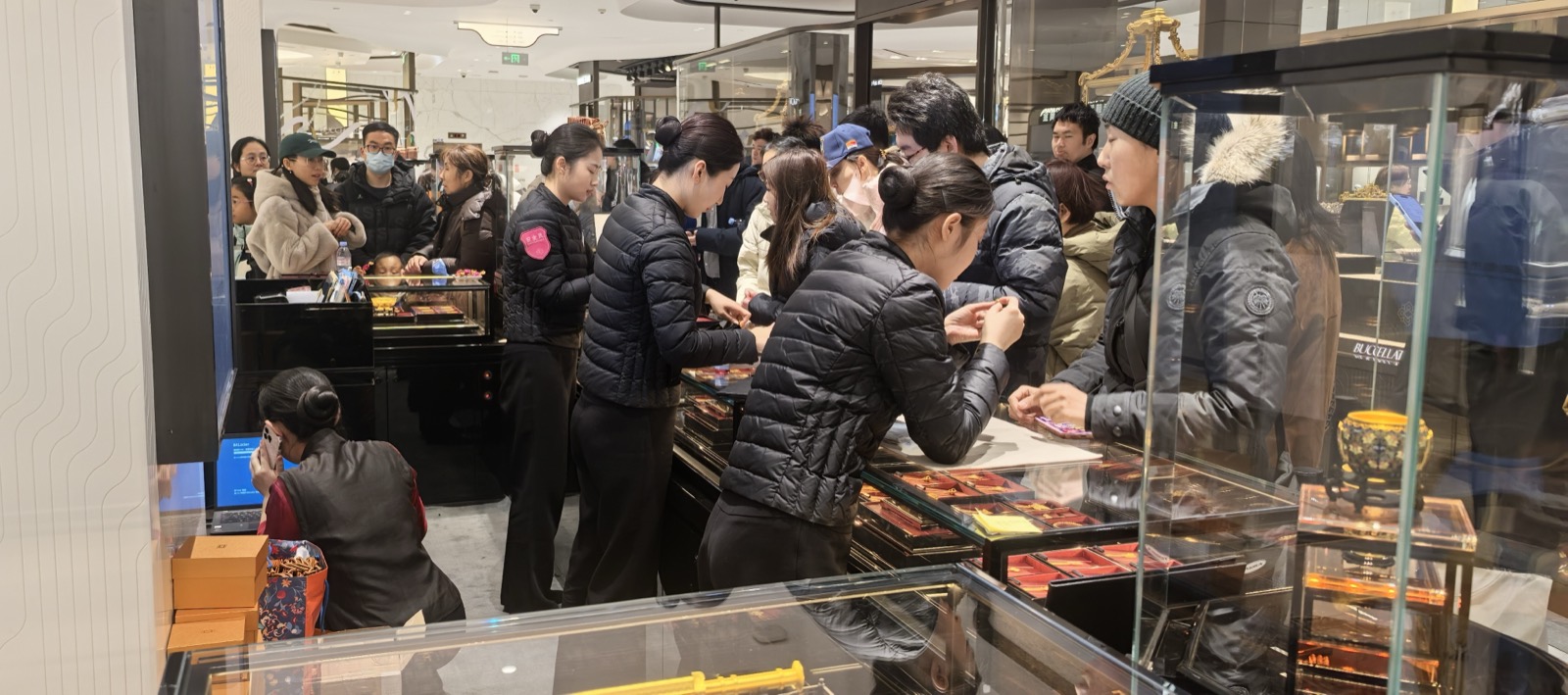
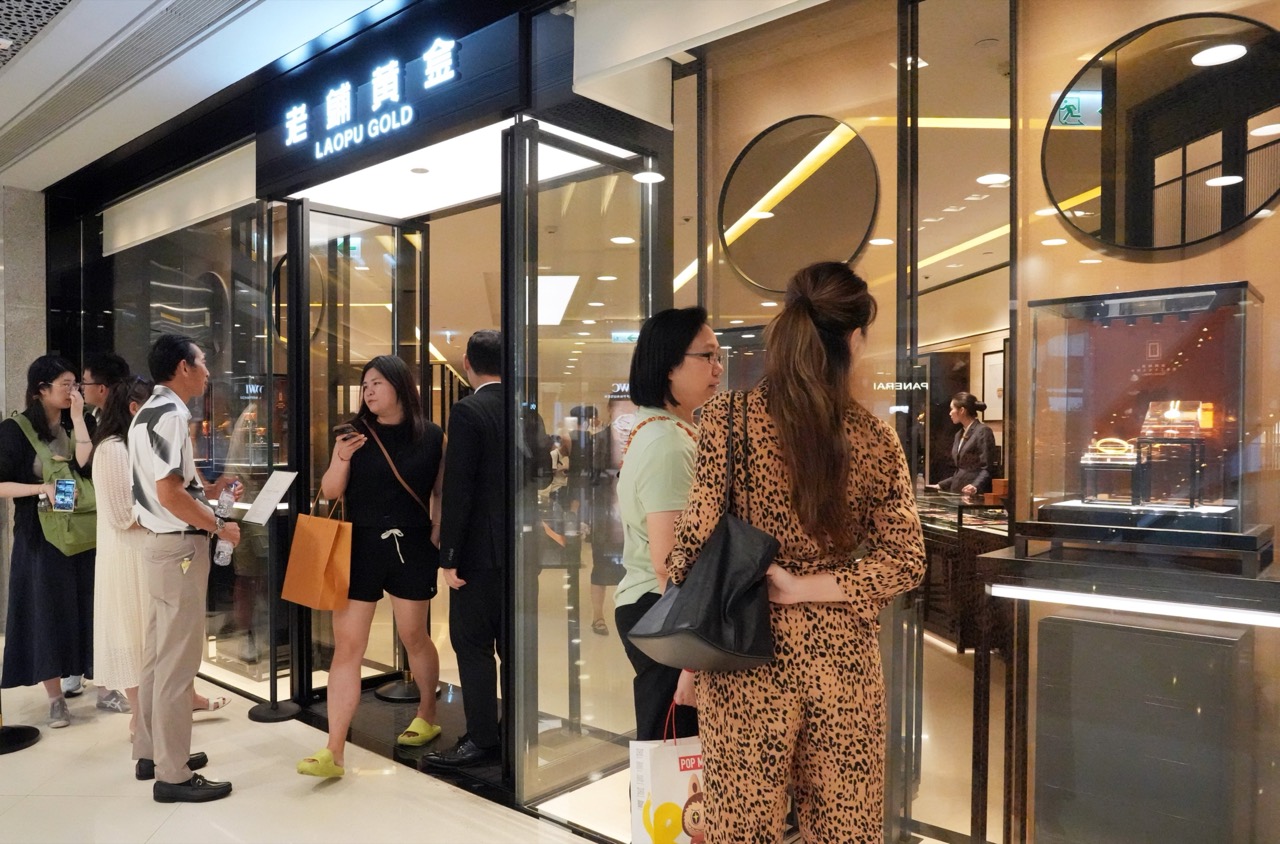
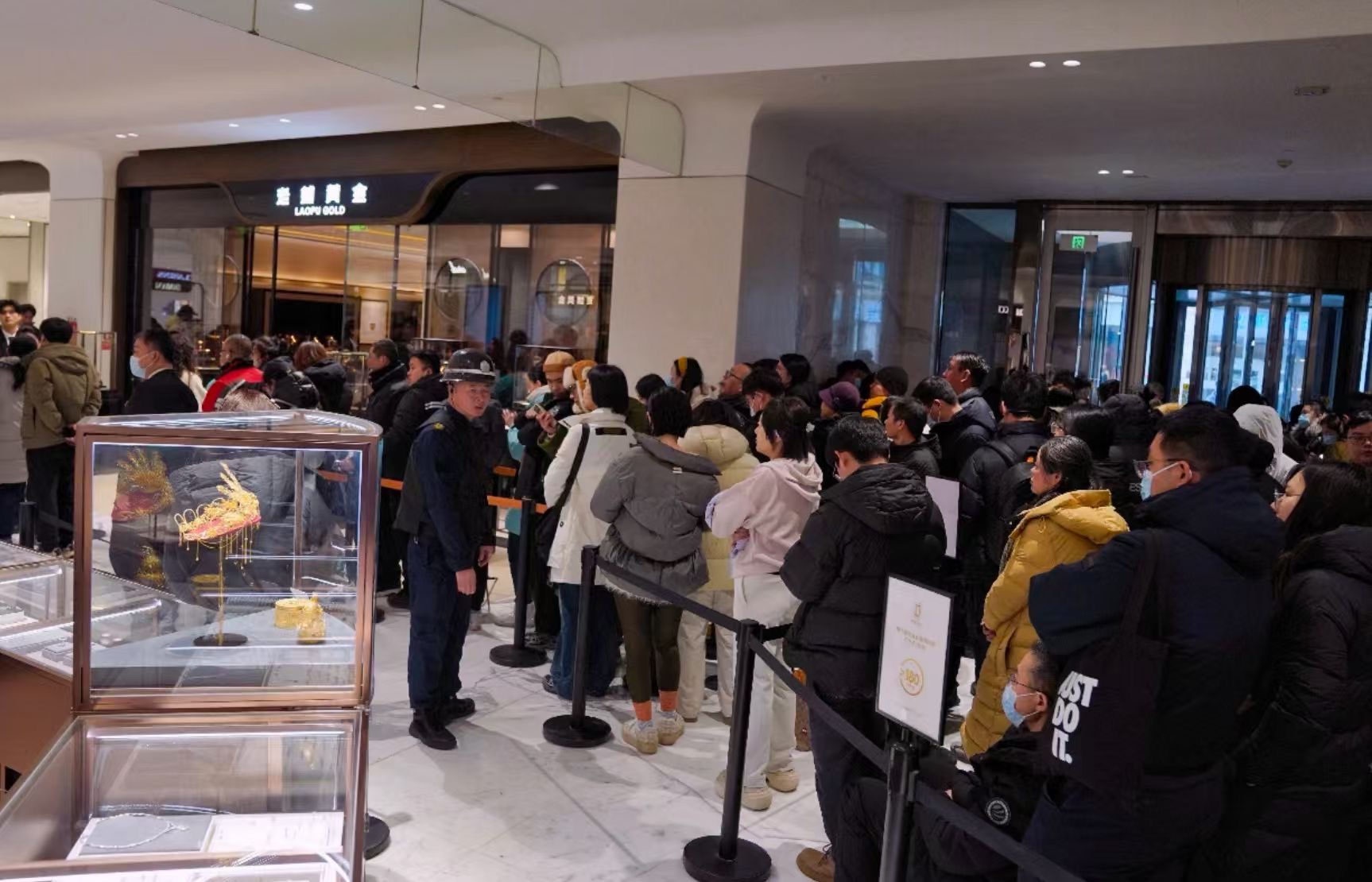
14.Last week that turned over. On July 23, the first day of the Qixi event at Beijing SKP, queues of two to three hours formed again outside both stores. Local media report people standing outside the mall's north gate from 8 in the morning on a weekday, and industry counts put the brand first among global luxury on single-mall store productivity and revenue per pyeong in January to June 2026, following 2025. In the same month, gram-weighted products previously kept to a few stores appeared on the counters of another SKP store. The queue holds while the fixed-price story takes half a step back.
15.A brand with 45 stores made RMB 27.3 billion a year through one method of selling at a fixed price, and when that method moved against the commodity price, HKD 120 billion of market value was erased in half a year, and now the queue and the gram counter coexist in the same month. The number to remember is neither the revenue nor the share price but KRW 64 billion a year from 19 pyeong. It is a measured reading of how high the ceiling on revenue per pyeong goes once craft and story are attached. Putting this in Korea, the first thing in the way is neither rent nor permits but price transparency. The Korean jewelry market grew 13.5% to about KRW 8.77 trillion in 2024, and much of that growth was a nominal figure pushed up by gold, while actual transaction volume fell. In a market where the per-gram price is published in real time and even making charges are compared in wholesale arcades, earning a 55% craft premium takes a lineage that explains the price before it takes an interior. Gold at least leaves the market price behind, while a premium with no explanation becomes inventory the day the price turns.