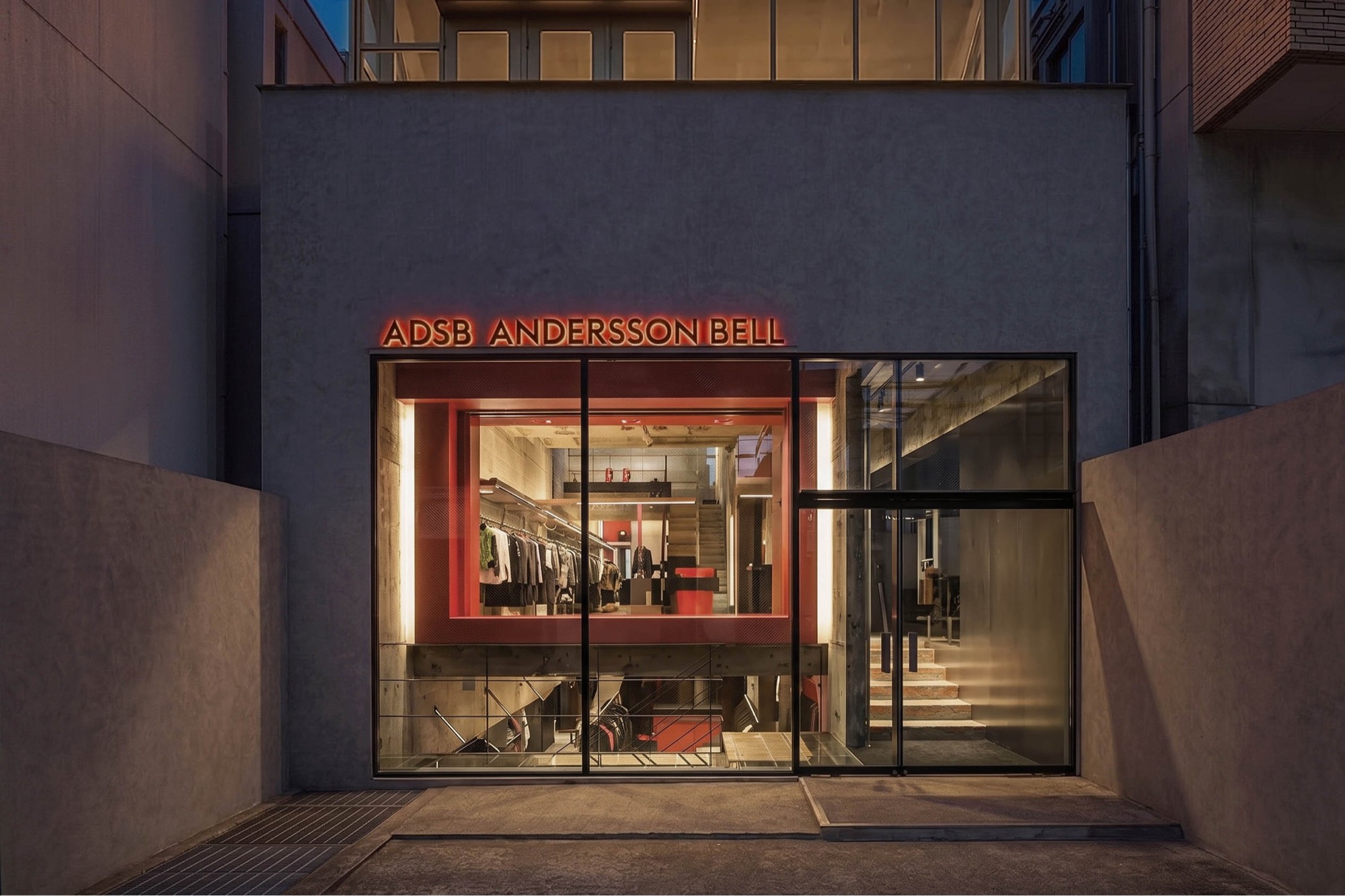
A Seoul brand opened today at 5-49-2 Jingumae, Tokyo. Three floors, 307 square metres, vacated last September by Vivienne Westwood. That is 92.9 pyeong in Korean units. Eighty percent of this brand's revenue comes from Europe and North America, and its first overseas flagship is neither Paris nor New York. Why it left the market where it sells well and leased 92 pyeong in the market where it did not is today's subject.
1.The facts first. On 1 August 2026, ADSB ANDERSSON BELL AOYAMA opened at 5-49-2 Jingumae, Shibuya-ku, Tokyo. Three floors from basement one to level two, 307 square metres. The Japanese official online store opened the same day, and the opening exclusives are a T-shirt with a face graphic at JPY 19,800 and a heart keyring with a tape measure at JPY 9,900. Hours are from noon on weekdays and 11am on weekends and public holidays, closing at 8pm.
2.The brand started in Seoul in December 2014. The company is Stuart, the creative director is Kim Do-hoon and the chief executive is Choi Jung-hee. The name joins a familiar Kim to an unfamiliar Andersson, and what the brand states for itself is the fit of things that do not fit. It has 150 overseas retail accounts, more than 80 of them in Europe and North America. It has shown twice in Milan and been given the same slot times as Prada and Valentino.
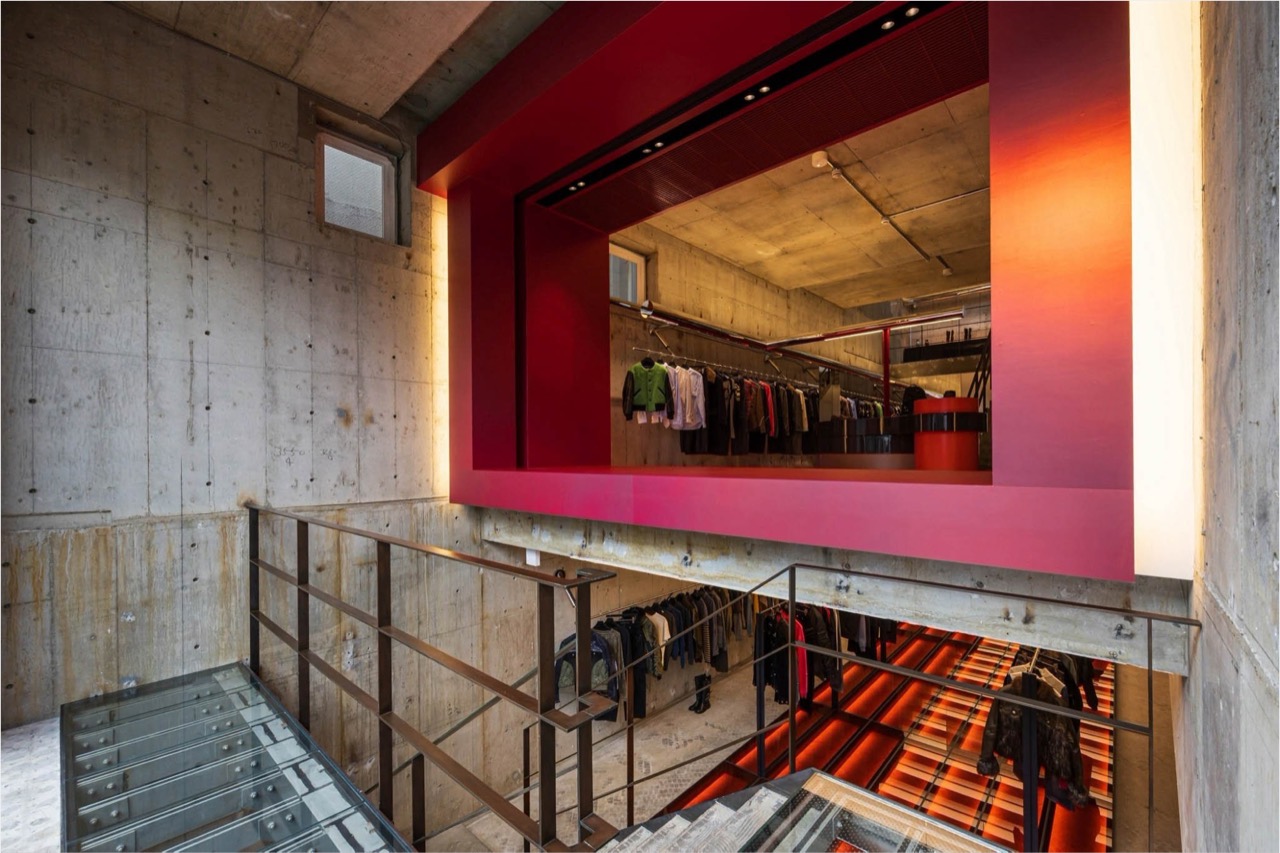
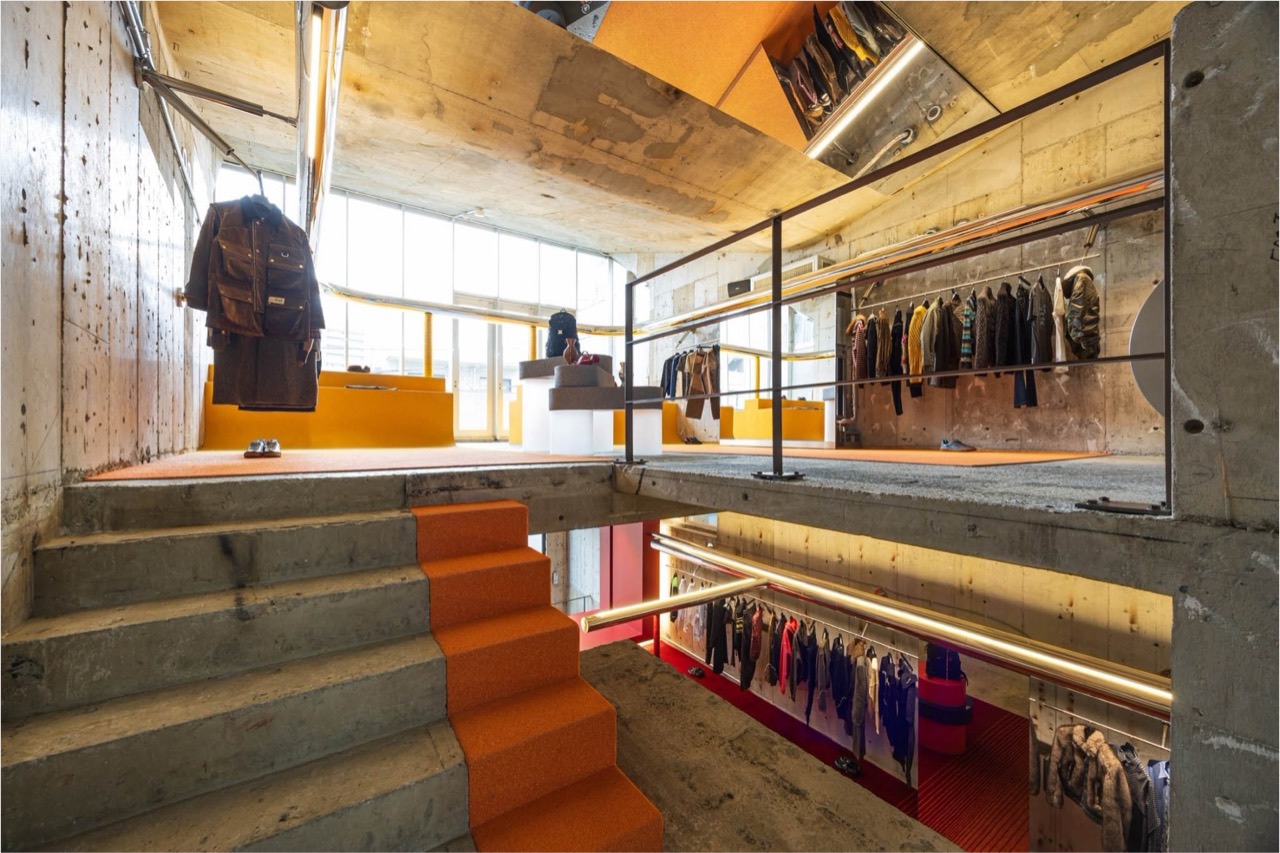
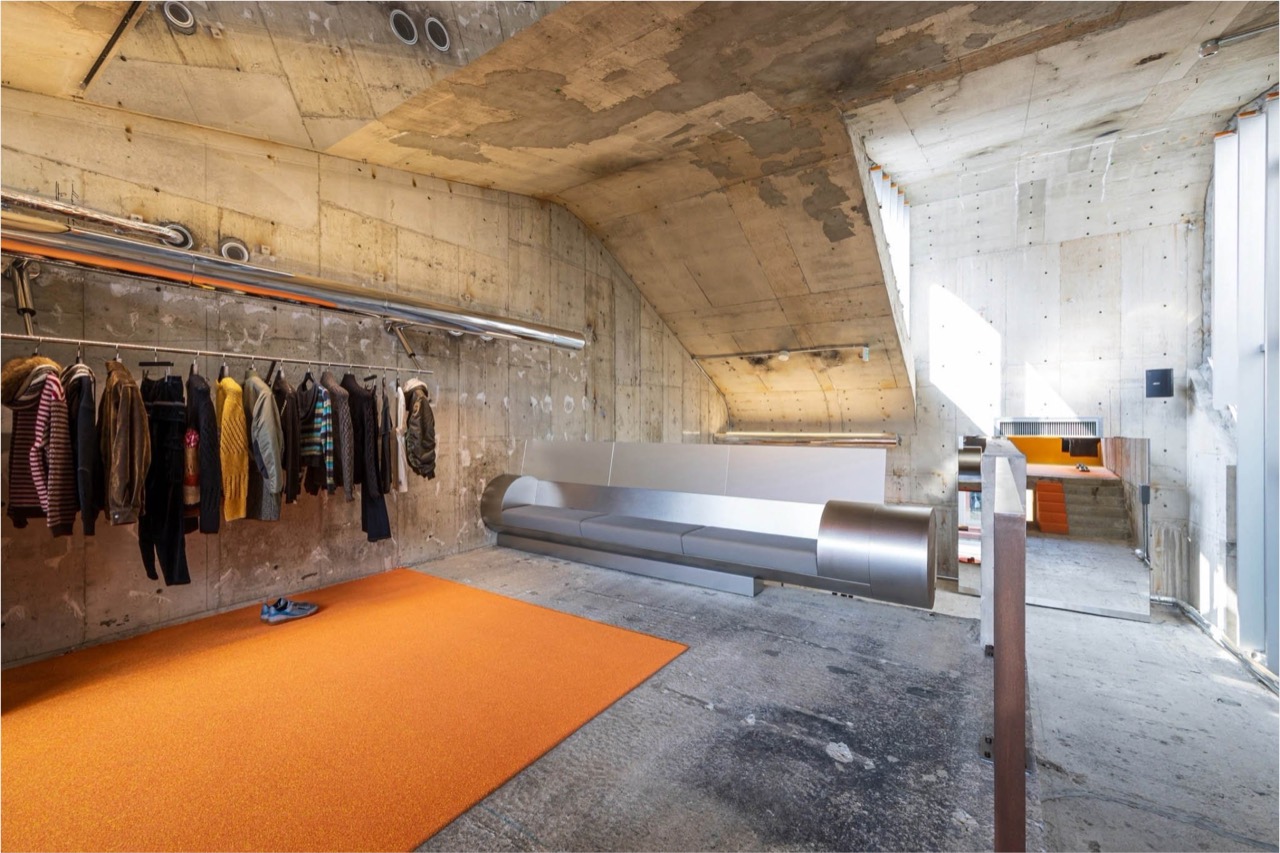
3.The building catches the eye first. Three storeys put up in 1993, brutalist with exposed concrete and brick. Until 10 September last year this was Vivienne Westwood Aoyama, and that brand moved on to a new flagship in Minami-Aoyama. A Seoul brand took over an address British punk had used and left.
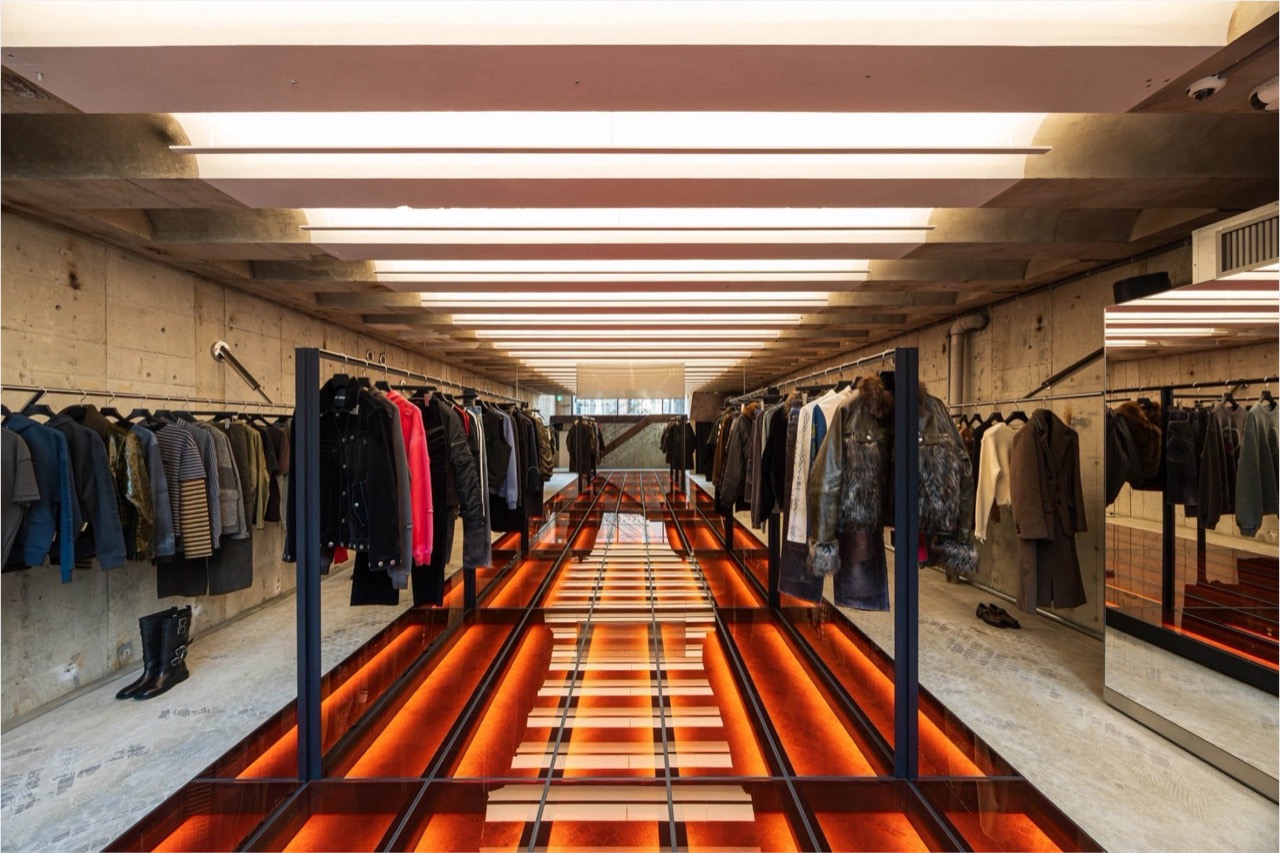
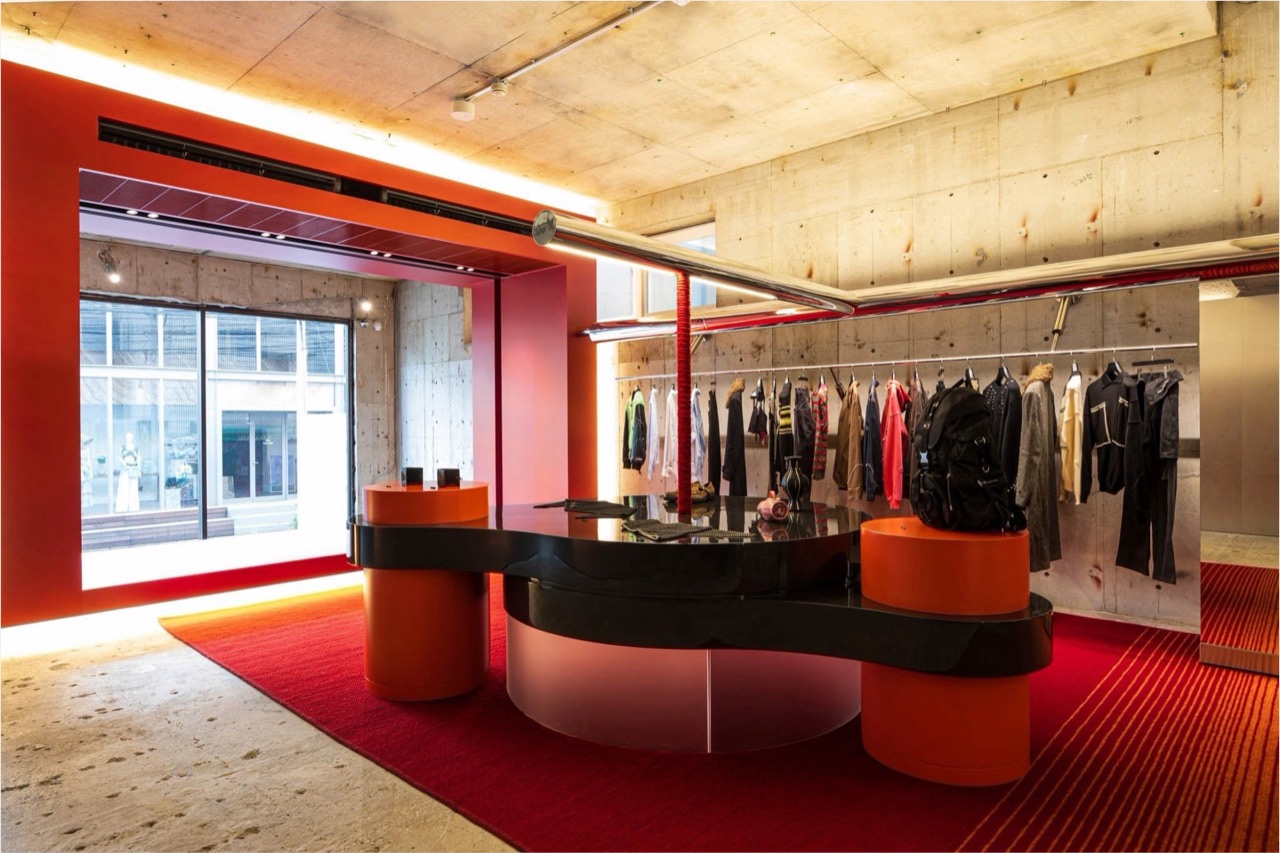
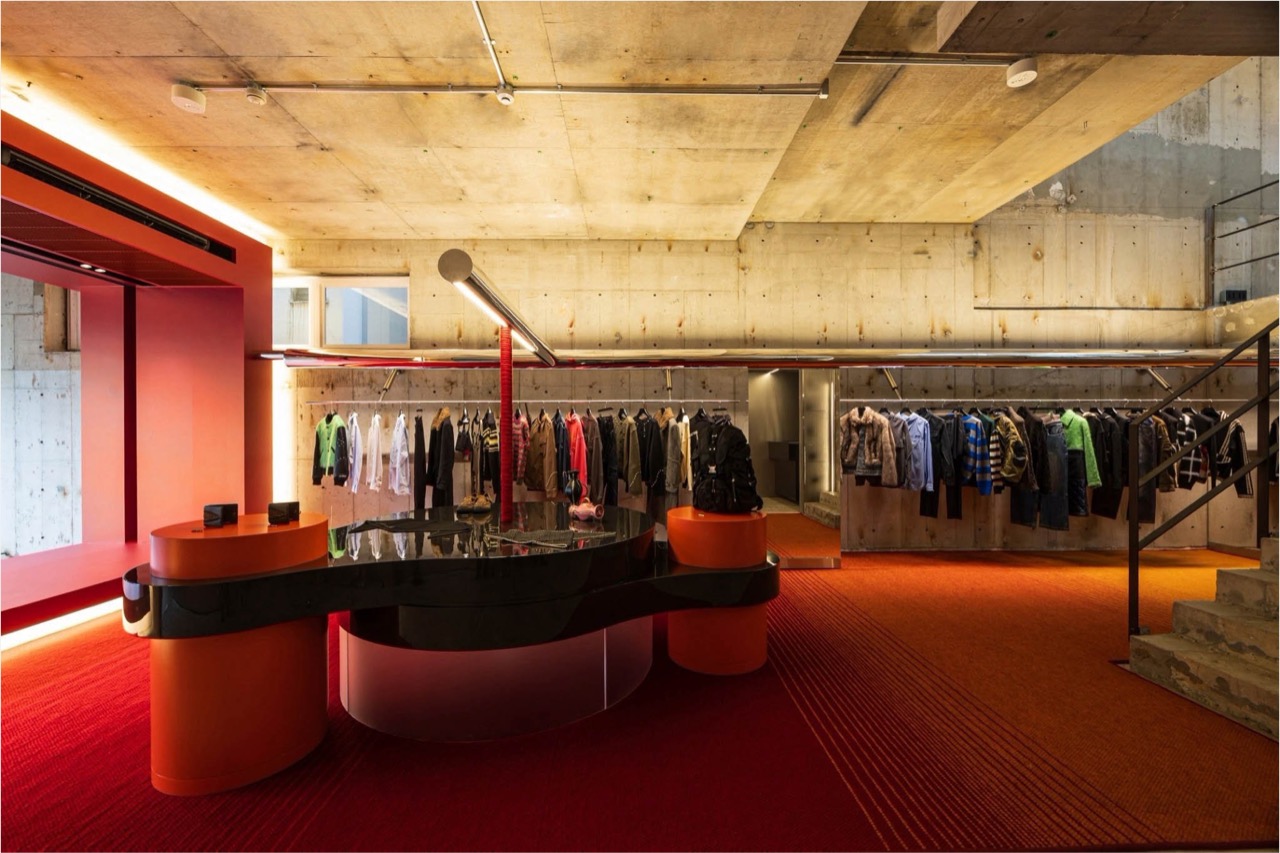
4.The design went to I IN of Tokyo. Founded in 2018, the practice drew the Cartier Tokyo head office and Blue Bottle Japan stores. Vivid colour and glossy materials sit on grey surfaces still carrying formwork marks, and the lighting picks out only that colour. While the concrete eats the light, the colour in front of it throws the light back. A board that used the wall as a background rather than tearing it out.
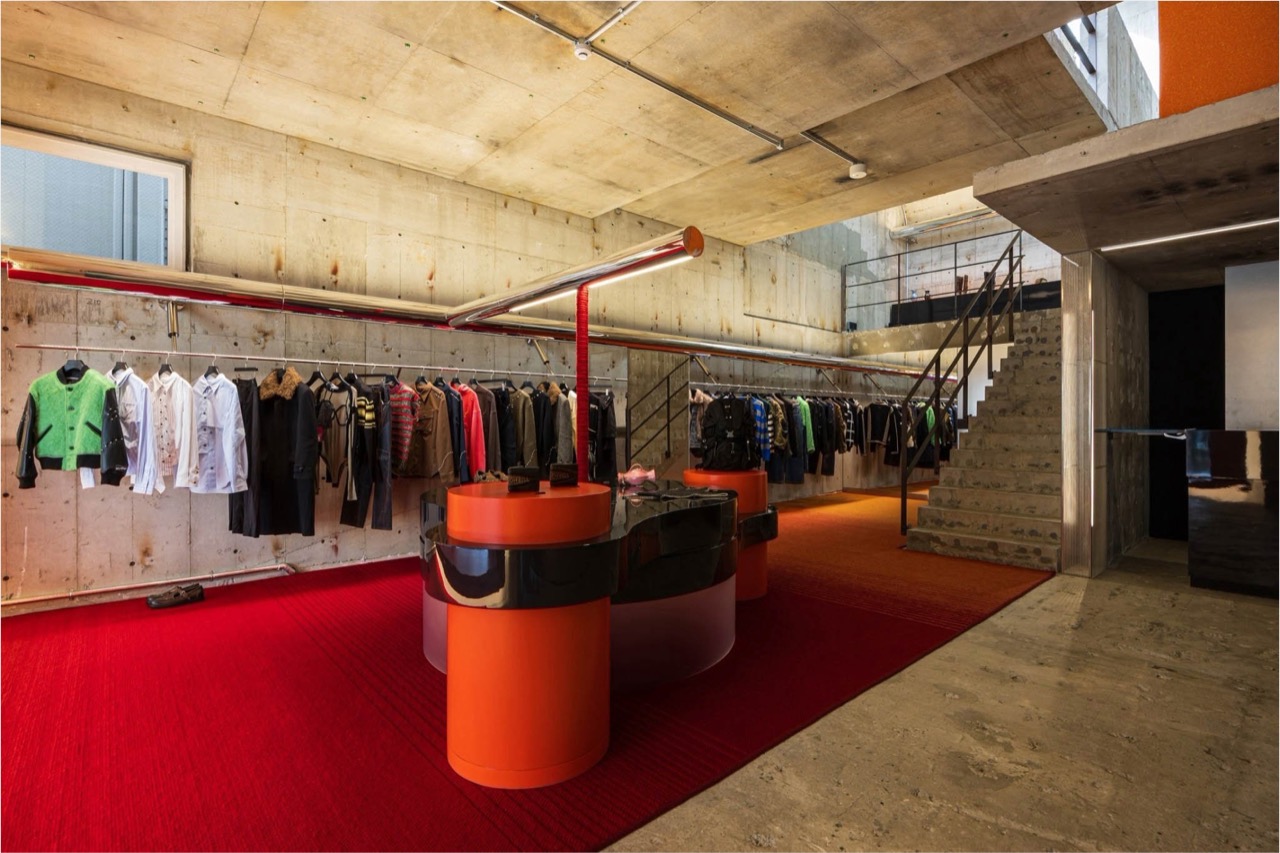
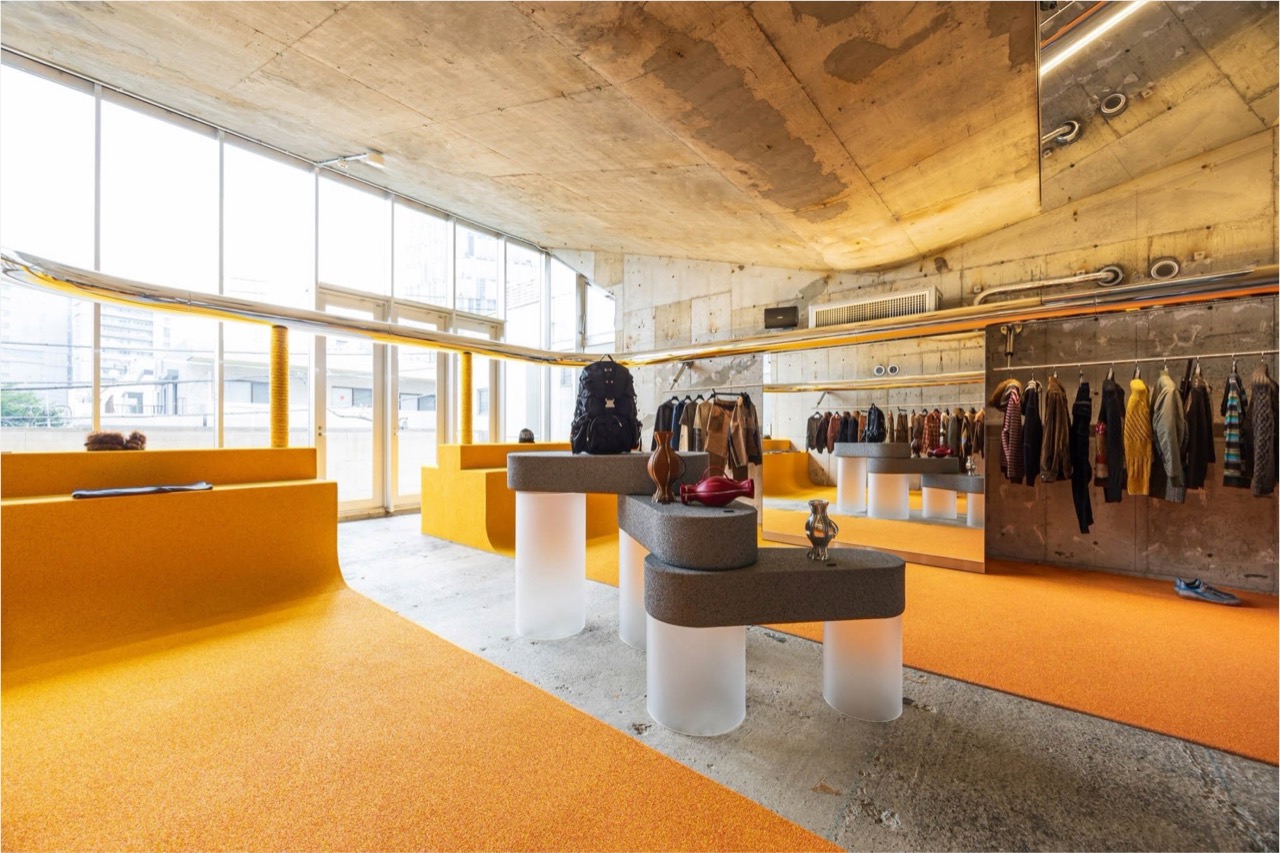
5.All clothing, footwear and accessories plus the seasonal collection went into three floors. Kim Do-hoon says he wants a place where people feel space, music, materials and objects as one experience rather than a place where they only look at clothes. The company's stated approach is to run Aoyama alone as a cultural platform rather than to add stores quickly.
6.The first reason is the habits of Japanese customers. They buy after trying on, and they rarely return what they bought online, quietly stopping repeat purchases instead. A market where the fitting room is the conversion rate, so a street-level flagship is priced higher there than in other countries.
7.The second is the empty position. Japan's fashion market shrank close to 30 percent after the pandemic and is recovering, and while it shrank it split into high and low with the middle emptying out. K-fashion walked into exactly that position. Design that reads as upper tier at a mid-tier price. A JPY 19,800 T-shirt is neither expensive nor cheap in Tokyo.
8.The third is the address. Aoyama and Omotesando are among the few streets where brand hierarchy is marked by street number, and hanging a sign here is itself a signal to Asian buyers. 92 pyeong is floor area for selling clothes and at the same time a business card.
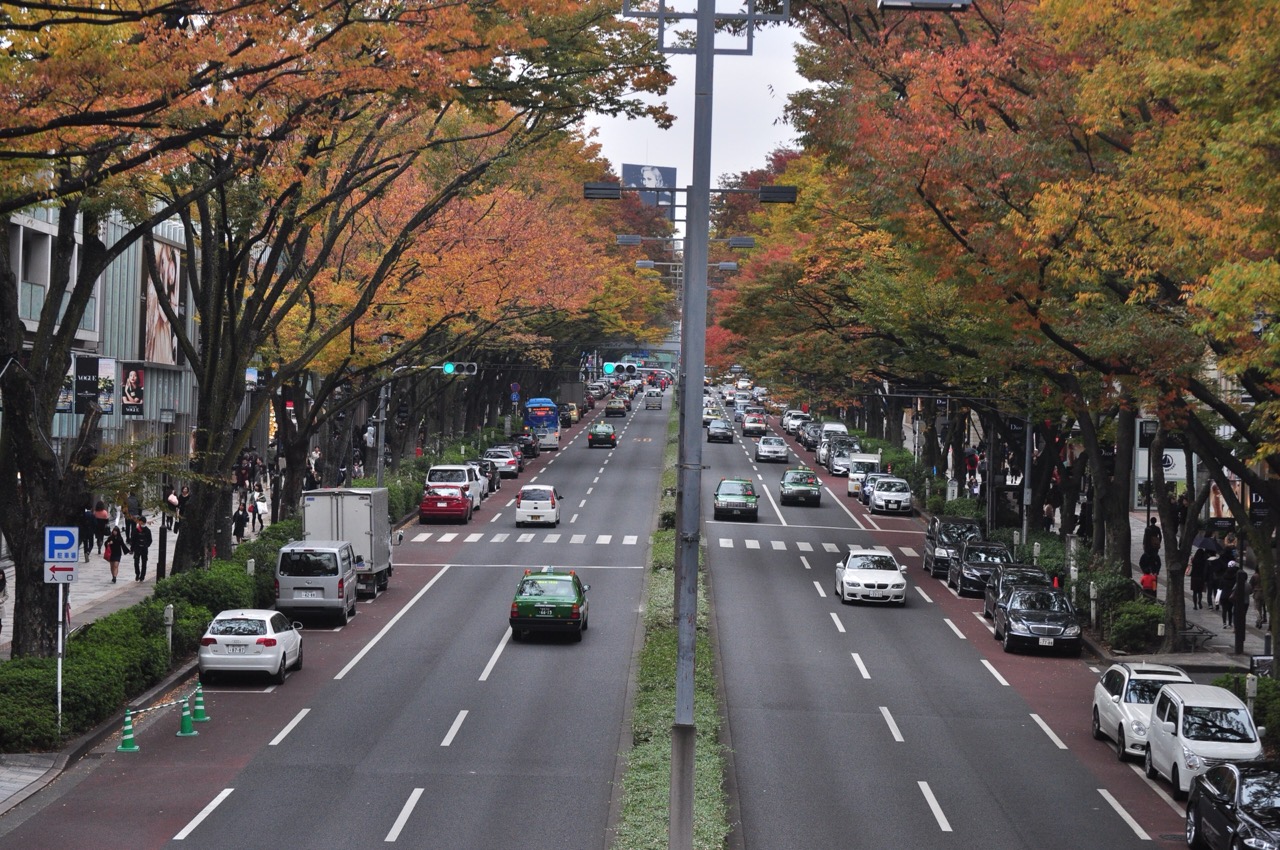
9.Now the money. Ground floor street-level rent on Omotesando was JPY 54,000 per pyeong a month in the second half of 2025. Jingumae 5-chome and Minami-Aoyama 3-chome are prime back streets, though, and listings there rose and pulled the average down. Take 31 pyeong a floor and put JPY 54,000 on the ground floor and JPY 30,000 on the basement and level two, and it comes to about JPY 3.53 million a month, JPY 42 million a year. Around KRW 33 million a month. That is an estimate from market asking rents multiplied by area, and the actual lease terms are not public.
10.For the store to pay that rent out of its own sales. Trade wisdom holds that a clothing street-level store is in trouble once rent passes 15 percent of revenue, so the monthly revenue needed is about JPY 23.5 million. That is JPY 250,000 per pyeong a month, KRW 2.35 million. For reference, this brand sold KRW 400 million in a month at a ground floor pop-up in Lotte World Mall last November.
11.The corporate numbers change the picture. Stuart posted revenue of KRW 13.46 billion in 2024 with an operating loss of KRW 1.19 billion. The reason those figures differ from the KRW 20 billion often quoted at brand retail value is that this brand is wholesale-led. The chief executive has said they spend around KRW 1 billion on one collection. 150 wholesale accounts pass inventory risk to buyers, while one directly operated store means every unsold garment comes back to your own warehouse.
12.This is not the first, judging by the lineage. Matin Kim opened two floors of 195 square metres, 59 pyeong, in Harajuku on 26 April this year, with Musinsa handling distribution. Before that came KRW 500 million over twelve days at a Tokyo PARCO pop-up in October 2025 and KRW 700 million in a week at the Hankyu Umeda main store in February 2026. Mardi Mercredi took KRW 150 million on its first day on ZOZOTOWN.
13.The turn is on the map. Eighty percent of revenue comes from Europe and North America and the first overseas flagship is Tokyo. The company has said itself that Japan and China had carried low weight. The flag went into the market where it sold worst, not the market where it sells best. Open a flagship where wholesale is laid thick and you end up fighting your own accounts for the same customers, and a flagship is only safe in a market where there are no accounts to take from.
14.The Asian axis was already moving. On 1 October 2025, China's National Day, a collaboration with Li-Ning launched simultaneously in eleven cities including Beijing and Shanghai, with a first show at the Shanghai Post Museum. The Tokyo flagship is one point on that axis. Earn in Europe and plant in Asia, in that order.
15.A Seoul brand earning eighty percent of its revenue in Europe and North America took an Aoyama address vacated by a British punk house and opened a 92-pyeong flagship, with rent estimated at around JPY 3.5 million a month. The number to remember is not the floor area but JPY 250,000 per pyeong a month. That is the revenue needed to cover one line of rent, and it is also the point where a brand built on wholesale takes on inventory risk itself for the first time. Bring this to Japan and what catches first is not the design but the deposit. Ten months of deposit is ordinary for commercial street-level leases in Tokyo, with a clause deducting two or three of those months as amortisation on termination. Sign a fixed-term lease and there is no renewal right either. A lump sum gets tied up before opening stock and local logistics are even added.